Activists protest outside Pioneer Park nuclear event.
ACTIVISTS held a protest outside The Peddler in Whitehaven yesterday as nuclear sector figures shared their plans for ‘Pioneer Park’, an AI data centre powered by nuclear energy, with the public.
Land at Moorside, neighbouring Sellafield, has been central to new nuclear ambitions for a
number of years. There were once ambitions to develop a ‘clean energy hub’
on the land with a mix of energy-generation solutions, including a fleet of
small modular reactors (SMR).
Now named Pioneer Park, the proposal is to
develop an SMR site which will provide the energy for an ‘innovative’ AI
data centre. It is hoped the development will attract more than £12billion
in investment from business giants, provide a jobs boost and a space for
emerging industries to thrive.
But Radiation Free Lakeland, which protested
a consultation event about the proposals yesterday, argues that benefits of
the development would not outweigh the environmental impact, pointing out
the proximity of the land to the River Ehen as well as the village of
Beckermet.
Pioneer Park is set to be located on land at Moorside,
neighbouring Sellafield. The activist group said: “This area of green
fields and River Ehen Site of Special Scientific Interest (SSSI) should be
a buffer zone between the sprawling Sellafield site and the surrounding
villages.”
They said that the nuclear industry is “using public money like
there is no tomorrow to try and make this buffer zone a further nuclear
sacrifice zone and AI data centre.”
A spokesperson for Pioneer Park’s
developers said that the site at Moorside “has been identified through
Government policy for nuclear power generation since 2011″. Their ambition
is “to build on west Cumbria’s internationally recognised strengths in
energy and engineering by bringing forward new nuclear development,
alongside complementary clean energy and technology projects, helping to
diversify the economy, support the ongoing decommissioning mission at
Sellafield, generate secure, low-carbon energy and create long-term
opportunities for local people.”
Carlisle News & Star 15th July 2026, https://www.newsandstar.co.uk/news/26276371.activists-protest-outside-pioneer-park-nuclear-event/
US industrial base is becoming stronger for wartime production, study finds
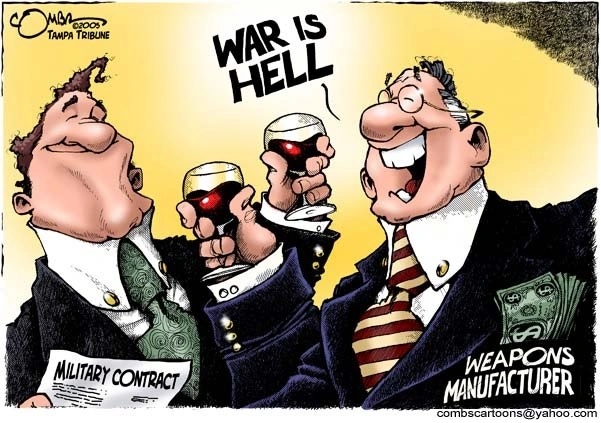
By Michael Peck, 13 July 26, https://www.militarytimes.com/industry/techwatch/2026/07/13/us-industrial-base-is-becoming-stronger-for-wartime-production-study-finds/?utm_source=sailthru&utm_medium=email&utm_campaign=c4-overmatch
As recent conflicts consume weapons at a ferocious rate, America’s defense industrial base is becoming more prepared to sustain a major war, according to a new report.
“The trends are moving in the right direction,” Jerry McGinn, who co-authored the study for the Center for Strategic and International Analysis think tank, told Defense News.
However, the study — described as a progress report on reforms to the defense manufacturing and acquisition system — still found numerous problems with ramping up and sustaining wartime production.
For example, “according to several measures — manufacturing lead times, critical munitions and materials stockpiles, and supply chain security — the U.S. industrial base has a long way to go to achieve resilience,” warned the analysis by CSIS’s Center for the Industrial Base.
CSIS did find measurable improvements since November 2025, when Secretary of Defense Pete Hegseth vowed to “transform the entire acquisition system to operate on a wartime footing.”
Hegseth also promised to “inspire American industry to become a wartime industrial base that focuses on speed and volume.”
Most striking is the number of new companies in the defense field.
“Roughly 10,000 new firms have entered the market in the past two years and nontraditional companies received over $120 billion in contract obligations in FY 2025, adding competition and innovation to the sector,” CSIS noted. “Munitions contract obligations have risen 330 percent since FY 2010. Spurred by this increased demand and depleted inventories, the Pentagon is signing multiyear agreements with munitions producers and suppliers on a historic scale.”
The military is also responding to depleted stockpiles of expensive guided weapons that have been rapidly consumed by the Iran and Ukraine wars.
The Pentagon’s 2027 budget request for munitions allocated 49% to low-cost munitions — defined as costing less than $600,000 apiece — rising to 70% by 2031.
The U.S. is also strengthening its defense supply chain, such as “multiyear procurement agreements, direct-to-supplier investments, and leaner acquisition pathways,” as well as investing in defense companies such as L3Harris Missile Solutions, according to CSIS.
However, while this signals government commitment to defense production, it “also complicates competitive dynamics within the industry as new entrants and established suppliers alike seek to meet rapidly growing demand for munitions at scale.”
Also notable is federal investment in rare earths, which has seen production soar from 95 tons in 2022, to 8,900 tons in 2025. Nonetheless, “the erosion of domestic rare earth manufacturing capacity and the rise of Chinese control took decades to unfold, however, and it will take several years of enduring effort for the United States and its allies to build, scale, and sustain the production capacity of these key defense inputs.”
Exports of U.S. arms, or cooperative multinational projects such as the F-35 fighter, have also become a pillar of America’s defense industry. Foreign Military Sales, or FMS, have more than tripled, from less than $20 billion in 2015 to more than $80 billion in 2025.
The Trump administration wants to take this further with the “America First Arms Transfer Strategy,” launched in February 2026.
“The United States will use foreign purchases and capital to support domestic reindustrialization, expand production capacity, and improve the resilience of the United States defense industrial base,” the White House executive order declared.
Ultimately, the federal government can control defense production through the products it demands, the prices it is willing to pay, and the incentives it offers.
“It’s a monopsony,” McGinn said. “Government sets the market. Government can regulate the market. So, if the government wants different outcomes, it changes how it buys.”
No radiation leak after ‘contamination’ events at Africa’s only nuclear plant, regulator says.
South Africa’s nuclear regulator said Thursday that no radioactive material
leaked into the environment during three recent “contamination” events
inside Africa´s only nuclear power station. The incidents involved
“elevated airborne radioactive contamination” inside the Koeberg Power
Station, on South Africa’s west coast, when there was a loss of power to
ventilation units during maintenance work, the National Nuclear Regulator
said, adding there was no danger to the public. It said the three separate
contamination events on June 30, July 2 and July 7 were contained inside
the station.
Mirror 16th July 2026
https://www.mirror.co.uk/news/world-news/koeberg-nuclear-power-station-africa-37442154
July 22 deadline to comment on downgrade of impact assessment for nuclear projects | Canada’s Federal government pushing for power with a “nuclear fist” | Dates and Deadlines.
| The Nuclear Fist: Five Federal Initiatives Pushing and Promoting Nuclear Power |
| There are currently five federal nuclear related initiatives / announcements: “Getting Major Projects Built in Canada – Discussion Paper on Proposed Legislative, Regulatory, and Policy Reforms” announced May 8th with the deadline now extended to July 22; the electricity strategy “Powering Canada Strong: A National Strategy for an Electrified Canadian Economy” which was announced May 14 with comment invited but no deadline; the Standing Committee on Natural Resources and the Environment electrification study with the deadline – and the study – now extended to mid-September; the Nuclear Energy Strategy for Canada announced June 22 with no comment invited and so no deadline for comment, and the June 24 announcement of the potential “listing” of the NWMO DGR under the Build Canada Act (aka Bill C-5), also no public comment period. |
July 22nd Deadline to Comment on “Big Projects” Discussion Paper
| The comment period will close on July 22nd on the federal government’s Discussion Paper Delivering on Big Projects in Canada. Released on May 8th, the discussion paper proposes that impact assessment of nuclear projects would be handed over to the Canadian Nuclear Safety Commission.Visit Assessing-Nuclear-Risk.ca for more information including submissions by public interest groups, media coverage and contacts and updates. Take one minute to send a message – the message tool is HERE. |
Fearing Justice: Rubio Gets Bolshie About the International Criminal Court (ICC)

15 July 2026 Dr Binoy Kampmark, https://theaimn.net/fearing-justice-rubio-gets-bolshie-about-the-icc/
Why are they so afraid? The Trump administration, pathologically obsessed about the exaggerated reach of the International Criminal Court, have decided to take to the barricades. In a July 13 media note released by a spokesperson for the US State Department, something akin to a declaration of war was made against the Hague-based tribunal.
Secretary of State Marco Rubio was getting bolshie about it, announcing “a sweeping campaign to dismantle the threat posed by [the court] to US sovereignty.” The effort promises to “feature a whole-of-government response to systematically disable the ICC’s ability to operate, target American servicemen or officials, or otherwise threaten American sovereignty.”
The late Henry Kissinger, who argued most stridently against the establishment of such a criminal court, would no doubt have approved. He, more than most, would have feared some eventual accounting for his own egregious crimes against international humanitarian law while serving the White House.
The alarmist tone of the announcement is palpable. The ICC was seeking “to become an unaccountable global arbiter – positioning itself above and beyond the nation state as a supranational enforcement arm of a globalist bureaucracy empowered to prosecute American servicemen and officials at will.” (This has a whiff of familiarity to it, given that the Department of Justice under Trump’s steering hand has been prosecuting, at will, individuals perceived to have wronged him in the past.)
The media release is filled with careless distortions and ugly inaccuracies, not least in the sovereignty it purports to understand and defend. The ICC, for instance, “claims authority to prosecute and even imprison American servicemen and officials operating on behalf of America’s national interest.” The body claims no explicit power to do so, given that jurisdiction is only exercisable over State Parties. The United States, in company with such states as Russia, China, India and Israel, have not appended their signatures to the Rome Statute.
It follows that no such threat is credible except in instances when the service personnel of such countries conduct war on the territory of a State Party. For that reason, arrest warrants have been issued against Israeli Prime Minister Benjamin Netanyanu, his former Defence Minister Yoav Gallant, and Russian President Vladimir Putin. Even then, enforcing such warrants, as the record shows, remains patchy and vulnerable to the political and legal interpretations offered by member states.
US military personnel have, similarly, caught the eye of the ICC in 2020 for its activities in Afghanistan, though the subsequent investigation also focused on alleged crimes committed by the Taliban and Afghan government it replaced. It took only a year for the ICC to essentially abandon the American aspect of the investigation and focus, instead, on the alleged transgressions of the Taliban and the former Afghan government.
Rubio’s opinion piece in the Wall Street Journal is also cratered with an embarrassing inability to understand the role of a tribunal that has the support, however imperfect, of 125 member states. He regards the judges as hailing from “random countries”; the court and its allies as determined to seek “near-unlimited reach, empowered to override the courts and constitutions of the US and other sovereign states – and to prosecute and arrest our citizens.”
Failing to mention the shift in focus of the 2020 investigation into alleged infractions against international law in Afghanistan, he took grave exception to the remarks of the chief prosecutor, Fatou Bensouda, that American authorities had been tardy in conducting their own prosecutions. “In effect,” snorts Rubio, “Ms Bensouda was anointing herself the final judge of US military policy and the entire US justice system.” Hardly.
A somewhat hysterical note is struck in Rubio’s assessment of the court’s supporters. Like a sinister fifth column of operatives, the tribunal “is backed and run by a powerful network of leftist nongovernment organizations, smug globalists, and hostile Third World governments united by their enmity towards the US.” For the most part, the Secretary tries to make good the image of the American republic as a bullying, thuggish nation state indifferent to the strictures of law.
He cannot understand the fuss made about the extrajudicial murders of alleged “narcoterrorists” in Latin America and the Caribbean, the shoddy practices of the administration in deporting “violent criminals to El Salvador,” or that organisations might wish that “apparent war crimes” committed against Iran by the US might be investigated. “Independence is our birthright,” he pompously asserts. “We don’t intend to trade it for rule by a self-appointed priesthood of ‘international law.’” It was therefore incumbent that Washington work along with allies to “dismantle the ICC – brick by brick, if necessary.”
This dismantling effort seems hyperbolic. The Trump administration has already sought to blunt the court’s functions and hound its officials. Even before Rubio’s announcement, the administration has been aggressively seeking to stem the reach of the court and the effectiveness of its officials. On February 6, 2025, for instance, President Donald Trump issued Executive Order 14203, allowing the sanctioning of any person or organisation engaged in any efforts of the ICC “to investigate, arrest, detain, or prosecute a protected person without consent of that person’s country of nationality.”
Protected persons include, among others, current and former members of the US Armed Forces; current or former elected or appointed officials of US government; and any other person currently or formerly employed or working on behalf of the US government. The personnel of US allies also fall within the definition.
The sanctions listed in the order included the blocking of property and assets within the United States “as well as the suspension of entry into the United States of ICC officials, employees, and agents, as well as their immediate family members, as their entry into our Nation would be detrimental to the interests of the United States.” ICC Prosecutor Karim Khan was the first to be designated as a sanctioned individual, though the list would swell to include members of the judiciary, including Second Vice-President Reine Alapini-Gansou from Benin, Uganda’s Solomy Balungi Bossa, Peru’s Luz del Carmen Ibáñez Carranza and Slovenia’s Beti Hohler.
The Open Society Justice Initiative accurately notes the effect of such sanctions, being “tantamount to a financial death penalty.” These entail the freezing of US assets in bank accounts, a denial of access to credit cards, relevant online platforms, banking services and health insurance, and the inability to attend speaking engagements in the US. Three of the sitting judges – Bossa, Alapini-Gansou and Canada’s Kimberly Prost are seeking declaratory and injunctive relieve against Executive Order 14203 in the US District Court for the Southern District of New York.
The State Department media note suggests more of the same, flavoured with a villainous menace. The entire US government diplomatic corps is to become a public relations arm “highlighting the abuses of the ICC and the risks posed to Americans” and urging member states to withdraw from the Rome Statute. Nations with partnering arrangements with American law enforcement and the military, and those enjoying “the benefits of the US security umbrella” will also be pressed “to reject the ICC’s purported authority to prosecute American officials and servicemen.”
States refusing to reject the authority of the ICC while still relying on American assistance would be subjected to greater scrutiny, while countries not a party to the Rome Statute would be encouraged to “leverage their diplomatic networks to take similar actions alongside us.” ICC personnel would be subjected to continued visa revocations and travel bans, while the tribunal and “affiliated organizations” will be subjected to further sanctions. It will be a time for war criminals and offenders of international law to rejoice.
All institutions, supposedly underpinned by protocols and principles, are at the mercy of Trump’s broad reading of executive power, one fickle and petulant. His office has also become a source of obscene self-enrichment, inuring this administration to giddying levels of corruption. “I’ve made money, I’ve made a tremendous amount of money, more than I would have ever thought I would have made,” he boasts. For a person who relishes breaching laws and flouting regulations, it is little wonder he, along with his insufferable cronies, have such an animus against a world court that, for all its faults and blemishes, remains a worthy project in international law and human rights.
Holtec bets big on small nuclear reactors in its IPO filing
As it pivots from shutting down nuclear plants to building them, Holtec says small modular reactors can cut costs and speed construction. Now it has to prove it.
By Alexander C. Kaufman, 15 July 2026, https://www.canarymedia.com/articles/nuclear/holtec-ipo-small-modular-reactors
Nuclear giant Holtec International is betting big that its 300-megawatt small modular reactors are the future of atomic energy.
On Friday, the Florida-headquartered firm filed paperwork with the Securities and Exchange Commission in order to sell shares in the company on the Nasdaq.
Across hundreds of pages, the disclosure document outlines the 40-year-old Holtec’s plans to transform itself from the industry’s undertaker — manufacturing canisters to safely store radioactive spent fuel and decommissioning shuttered nuclear plants — to its midwife, producing and operating new electrical stations. This transition comes as nuclear energy regains popularity in the U.S. as a way to meet booming power demand without creating more planet-warming pollution.
Developers have traditionally offset nuclear’s high up-front costs by building ever-larger reactors to capture the economies of scale. Since the early 2000s, however, a number of companies have proposed building small modular reactors that can be constructed identically and in batches. SMRs could generate about a third of the electricity of conventional large-scale plants, but, proponents argue, would bring down costs through assembly-line repetition rather than physical scale.
That cost reduction has yet to be proven out in the real world with actual plants. But in its S-1 filing, Holtec said, “SMRs will offer scalable, cost-effective solutions for new capacity with enhanced safety features, reduced construction timelines and reduced land and transmission infrastructure needs as compared to traditional, larger-scale reactors.” It noted that a single-unit SMR plant would only need 15 acres of land and take a mere three years to build. By contrast, the big reactors on the grid today can take up hundreds of acres, and construction typically drags on for nearly a decade.
Holtec’s SMR-300, as the pressurized-water reactor is named, “is expected to receive regulatory approval for deployment in 2029” and reach its first deployment “in the early 2030s,” according to the filing.
The company said it expects SMRs to play “a meaningful role in the expansion of nuclear capacity,” noting that they can “complement large-scale nuclear generation through lower upfront costs” and more flexible planning around how much power is needed.
For example, smaller reactors may be better suited for converting some old coal-fired stations into nuclear plants. The DOE has been researching the idea for years, given that nuclear and coal are both thermal resources that operate with similar rates of frequency and therefore use similar equipment to generate electricity from steam — which in nuclear plants is made from the heat created by splitting atoms and in coal plants is made from heat created by burning the black rocks. Converting a 400-MW coal plant into a similar-size nuclear reactor makes more financial sense than using a bigger reactor, which could require costly transmission upgrades and more space
“We believe that our SMR-300 plant can become a favored nuclear generation source over large reactors because of certain advantages,” the company said in its filing.
The future of restarts
The company will also operate at least one conventional reactor, the 800-MW unit it’s currently restoring at its Palisades nuclear station, in western Michigan. That project — the nation’s first effort to return a permanently shuttered nuclear reactor to service — could be completed within months, though its contract to sell power to the local grid won’t kick in until next year.
Holtec hopes to combine its plant-restart strategy with its SMR vision. It’s planning to deploy two SMRs at the Palisades site; if that works out, the company has said it may build SMRs at New Jersey’s Oyster Creek nuclear plant, which it’s been in the process of decommissioning for eight years.
Holtec owns three other defunct nuclear plants — Massachusetts’ Pilgrim, Michigan’s Big Rock Point, and New York’s Indian Point — that it could also try to rebuild. The Trump administration has called for reconstructing Indian Point, but Albany remains opposed to the controversial proposal.
Local opposition isn’t Holtec’s biggest hurdle, however. That would be competition from the nuclear behemoths in Russia and China. Virtually every Western nuclear developer is facing an uphill battle to compete with the Kremlin’s state-owned Rosatom, by far the biggest international vendor of nuclear technology in the world, and China’s two state-owned nuclear companies, which are building more than three dozen reactors at home and are expected to enter the export game soon.
Still, among its domestic rivals, Holtec may be the best positioned to hold its own on a global playing field. It is an established company with profitable enterprises in a dozen countries across four continents, and has experience managing infrastructure so sensitive it’s overseen by a dedicated agency, the U.S. Nuclear Regulatory Commission. The company has facilities with electrical equipment on-site that can be potentially used to deploy SMRs. It also has won significant support from the federal government, both in the form of a $1.52 billion loan the Department of Energy provided to finance the Palisades restart and the $400 million the agency gave the company to support construction of its first SMR-300s.
“We began work in 2011 on a small modular reactor solution, and drawing on our in-house capability to design, license, manufacture, construct, and commission nuclear systems, honed through decades of turnkey supply, we are now uniquely positioned to launch the development of our small nuclear reactor,” Krishna Singh, Holtec’s founder and chief executive, said in a letter to prospective investors.
Norwegian rocks to protect Sizewell B on Suffolk coast
15th July, By Sarah Chambers,
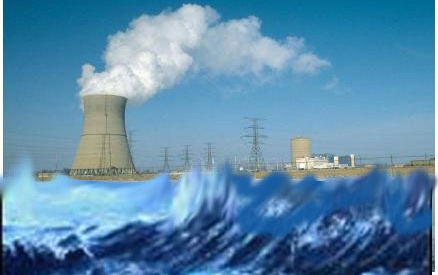
Rock armour is being shipped over from Norway to provide temporary coastal flood protection for Sizewell B.
Around 6,700 rocks – each weighing between
three and six tonnes – are being delivered to Sizewell C’s Temporary
Construction Area via the Port of Great Yarmouth. They will be used to
protect the nuclear power station during construction of the neighbouring
Sizewell C site.
East Anglian Daily Times 15th July 2026,
https://www.eadt.co.uk/news/26271343.norwegian-rocks-protect-sizewell-b-suffolk-coast/
Warming Europe complicates France’s bet on nuclear power

“It is certain that climate change is taken into account in deciding the location of new plants. If you invest €13 billion in a site and it becomes obsolete the very next day because there isn’t enough water to cool the core, the investment is not right,”
Extreme heat is forcing the country to shut down nuclear reactors, just as the appetite for cheap, carbon-free electricity is set to explode.
July 13, 2026 ,By Giorgio Leali and Nicolas Camut, https://www.politico.eu/article/warming-europe-complicate-france-nuclear-power/
PARIS — A summer of fierce heat waves in France is fueling concerns about whether the country’s nuclear energy infrastructure can survive life on the planet’s fastest-warming continent.
Monday’s broiling temperatures in France forced EDF to stop three of France’s 57 nuclear reactors and reduce production in another seven, the state-owned utility provider said in a statement. When the mercury rose to record-breaking levels last month, a trio of reactors went offline and five were slowed down, causing an 8.7 percent dip in power production just as air conditioners caused a rise in electricity demand.
None of the shutdowns caused power outages, so we’re a long way from offline reactors plunging people into the dark ages.
But the appetite for France’s cheap, carbon-free electricity is about to explode. Paris has in recent years tried to leverage its abundant nuclear power to court promising, energy-intensive industries like artificial intelligence and cloud computing, hoping new investments in these fields can kickstart a moribund economy.
“Our citizens need to have complete trust in our ability to produce even under these circumstances,” EDF CEO Bernard Fontana said earlier this month.
Politically, the dividing lines have been drawn as expected. Supporters of nuclear power, such as Energy Minister Maud Bregeon and prominent MEP Christophe Grudler, have expressed confidence in the resilience of plants across the country.
“What we are living is ordinary,” Bregeon, who also serves as government spokesperson, said in an interview with radio station RTL on Monday. “Every year nuclear plants face a power reduction when the temperature goes above a certain threshold.”
Opponents of nuclear power, like the far-left France Unbowed, call into question whether its widespread use — nuclear power provides France with about 60 percent of its electricity — is sustainable.
“The situation we are experiencing today should open all of our eyes. Nuclear power is not resilient to climate change,” high-ranking France Unbowed lawmaker Manuel Bompard said Monday.
Analysts, meanwhile, remain sanguine about France’s big bet on nuclear power.
“France has a surplus of low-carbon electricity that could indeed be partly absorbed by data centers. But predicting exactly how much electricity future data centers will require is extremely hard,” said Phuc-Vinh Nguyen, head of the Jacques Delors Institute’s energy center.
“Still, even with more stops due to heat waves, as long as the existing nuclear fleet is authorized to extend its lifetime, there will probably be no problems.”
Warm rivers and jellyfish
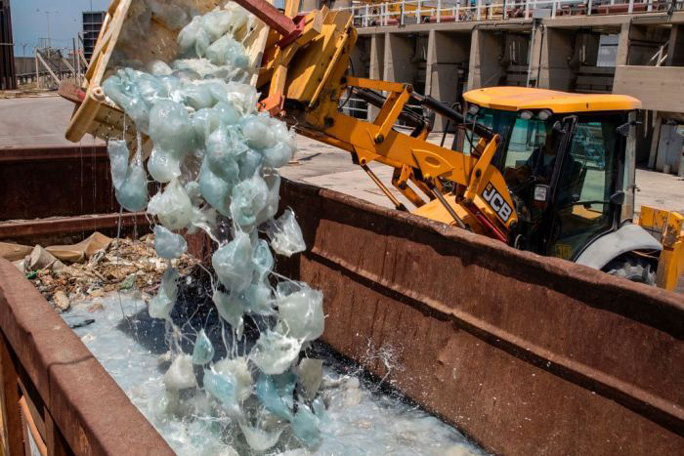
Rising temperatures affect nuclear power plants because they rely on rivers and oceans to draw in water to cool reactors and release the warmer water back out. During a heat wave, water gets hotter and scarcer, complicating power production.
Last summer, the Gravelines plant in northern France was forced to halt operations at four reactors because of a climate-change-fueled jellyfish invasion near where seawater was pumped in. To avoid the same problem this summer, EDF installed cameras and has fishing boats ready to be deployed.
All of the shutdowns this summer have been triggered at riverside plants to protect nearby marine life and biodiversity from the dangers of excessively hot water, not problems with the plants themselves.
EDF plans to invest €8.7 billion between now and 2040 to adapt its nuclear reactors to a warmer France, including by expanding the use of so-called “cooling towers.”
The first such towers were installed near the city of Poitiers, at the Civaux nuclear plant along the Vienne River, where traditionally low water levels have exacerbated climate-related problems. But the cooling towers there use ventilators to chill water by 3 to 7 degrees Celsius before it is reinjected into the Vienne.
“EDF is anticipating the impacts of climate change on its facilities through detailed modeling that extends through the end of the century,” the company said in a statement to POLITICO.
Nuclear expansion
Construction of six new reactors, which are expected to cost more than €80 billion, is underway, and the government is expected to decide by the end of the year whether to build another eight on top of those.
To minimize the risk of local opposition, authorities plan to build any new reactors alongside existing plants. Four of those being built are located at two seaside sites.
Climate change will likely play a decisive role in choosing future locations.
“The water issue is one of the key factors in determining which sites to select,” confirmed one senior French official, who was granted anonymity to speak about the confidential selection procedure, which will conclude by the end of the year.
Grudler, who chairs a cross-party group of pro-nuclear lawmakers in the European Parliament, concurred.
“It is certain that climate change is taken into account in deciding the location of new plants. If you invest €13 billion in a site and it becomes obsolete the very next day because there isn’t enough water to cool the core, the investment is not right,” he said.
Former energy minister Agnès Pannier-Runacher, who helped draw up Macron’s nuclear energy policy during his second term, is confident that the government can find a sufficient number of sites for new nuclear plants, even if “it won’t happen in the blink of an eye.”
“Nuclear power plants have been designed with an overemphasis on safety and security. They are in fact much more robust […] than many other facilities in our energy system,” she said, citing concerns over the electric grid.
“Of course, it needs to be factored into the to-do list, but it isn’t a challenge that stands out on the critical path of nuclear power plant construction,” said Pannier-Runacher.
Atomic rivers. The (Un)sustainability of nuclear power in an age of climate change
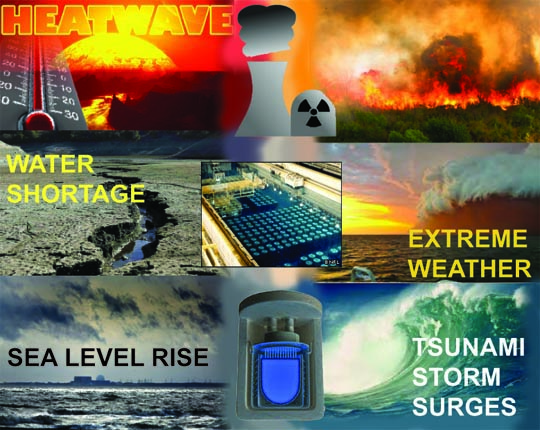
Science Direct, Volume 203, August 2025, 114631, Alicia Gutting Per Högselius a, Patricia Burkhardt-Holm b
Highlights
- •The sustainability of riverine nuclear power plants is questionable.
- •Extreme weather, like heatwaves combined with water scarcity, threatens nuclear reliability.
- •Energy companies seeking exemptions from temperature limits, prioritise energy security over water.
- •Aquatic life is sensitive to temperature changes, and cooling water adds warming, worsened by climate change.
Abstract
The sustainability of nuclear energy amidst climate change and environmental regulations poses critical challenges, particularly in European contexts where major rivers like the Rhine, the Danube, and the Rhône are experiencing declining water levels and rising temperatures. We scrutinise the operational difficulties nuclear power plants encounter, arising from insufficient cooling water and environmental mandates that prevent the discharge of overly warm cooling water into rivers. These conditions have led to partial or full shutdowns of nuclear facilities across France, Germany, Switzerland, Belgium, Spain, Romania, and other countries, emphasising the tension between nuclear energy as a low-carbon solution and its environmental impacts. We explore the concept of sustainability in the context of riverine nuclear energy from three angles: technical challenges posed by water scarcity, regulatory constraints on cooling water temperatures, and the ecological impacts of thermal discharges on riverine ecosystems. Our analysis reveals an emerging contradiction between ensuring electricity supply and adhering to environmental protection, highlighting the need for a reevaluation of nuclear energy’s role in a future sustainable energy landscape.
1. Introduction: The contradictory relationship between nuclear energy and the quest for sustainability
2022 was another consecutive year in which water levels of major European rivers – such as the Rhine, the Danube, and the Rhône – were dangerously low and the water temperatures very high. This caused severe problems for the operation of nuclear power plants across continental Europe. Energy companies in France, Germany, Switzerland, Belgium and elsewhere had to shut down their nuclear power plants partly or fully because there was not enough cooling water available or, more commonly, because the cooling water that was returned to the river became too warm (Barber, 2022; Limb, 2022; Miller and Vladkov, 2022). Environmental regulations, designed to protect the riverine flora and fauna as far as possible, stipulated that nuclear power plants were not allowed to release cooling water above a certain temperature (European Parliament and European Council, 2000; IKSR, 2022b). The resulting unplanned outages — and the efforts by nuclear operators to avoid such disruptions — highlight pressing concerns about the sustainability of nuclear energy, particularly its impact on river ecosystems in an increasingly warming world (see Fig. 1 – on original).
…………………….Nuclear energy is portrayed, by its proponents, as a key technology direly needed if humanity is to come to grips with global warming ………………….
The severe difficulties faced by riverine nuclear power plants in recent years, as referred to above, suggests that this vision of nuclear energy as a distinctly “sustainable” technology is far from unproblematic. In what follows we set out to unpack this paradox of nuclear energy’s (un)sustainability in an age of climate change. ……………………………………………………..
3. The problem of cooling water scarcity
Nuclear energy can be thought of as relying on two natural resources: uranium and water. Uranium is usually considered nuclear’s most central and critical resource, but there is good reason to take a closer look at the water needs of nuclear facilities too…………………………………………………………………………There are different types of nuclear power plants, but all of them depend on very large volumes of water for external cooling……………………………………………………………………
The design of cooling water intake systems show how nuclear-hydraulic engineers of the twentieth century did not always consider the possibility that water levels in the river might be much lower in the future. …………………………………………………………………………………………..
the threat of water scarcity in a warming world is bound to make it very unpopular to build new nuclear power plants along rivers. Instead, future plants are likely to be built mainly at coastal locations…………………………………………………………………………………………………………………………………………………………………………………………………..
we can anticipate an increasing number of unplanned outages due to water scarcity in various continental regions in the future (Linnerud et al., 2011; Ahmad, 2021). This implies that nuclear energy will become more intermittent, and potential nuclear developers will be hesitant to build new nuclear power plants along rivers facing water scarcity issues. Consequently, new nuclear power plants constructed are likely to be situated by the sea more frequently than in the past. Seaside nuclear power plants come with their own difficulties. This is, on one hand, the impact of thermal discharges on the marine environment and its biodiversity,……………………………………………….
Finally, in environmental terms, the combination of global warming and existing thermal pollution problems is certain to have severe adverse effects on riverine ecosystems. We have demonstrated that these effects are more multifaceted, complex, and interrelated than typically assumed in political discussions about nuclear energy. https://www.sciencedirect.com/science/article/pii/S0301421525001387
Trump claimed Iran’s nuclear sites were ‘obliterated’. Now another is in his sights

Buried under 600m of granite, the site is assessed as beyond the reach of even the US’ most powerful bunker-buster bombs.
In brief
- Donald Trump has threatened to destroy Pickaxe Mountain, a deeply buried Iranian nuclear site — unreachable by US weapons.
- It comes a year after he declared the country’s nuclear program had been “obliterated”.
A year after US President Donald Trump declared Iran’s nuclear sites had been “obliterated”, his latest target is drawing attention to a facility that survived both phases of the war untouched — and raising questions about why it’s now in his sights.
On Monday, Trump threatened to destroy Pickaxe Mountain, a buried nuclear site near Natanz in north-central Iran where Western intelligence suspects Iran is building an undeclared enrichment facility.
“We’re going to take out Pickaxe Mountain. Tell the Iranians to be ready,” he said on Monday.
“We’re watching (Pickaxe Mountain) closely. We see no activity there. They’re not doing well with their nuclear situation. Every time we hear about it, we blow it up. So they don’t like talking about it.”
The threat comes as just last week, Trump said Iran “will never have a nuclear weapon” and that its stockpile of enriched uranium was now “so far under a mountain” that it was unreachable by anyone except the US.
That follows comments last June, where Trump declared “all” nuclear sites in Iran had been “obliterated”, raising a key question: If Iran’s nuclear sites were obliterated last year, why is a previously untouched one now a key target?
What is Pickaxe Mountain?
Pickaxe Mountain is a heavily fortified site near Iran’s already-damaged Natanz facility, housing two deeply buried tunnel complexes suspected of containing uranium enrichment capabilities and stockpiles.
Experts have assessed its depth at about 600m below granite, meaning it’s beyond the reach of even the most powerful ‘bunker-buster’ bombs in the US arsenal.
The site was not among the three sites — Fordow, Natanz and Isfahan — targeted by US airstrikes last June, which were believed to house Iranian nuclear facilities.
Construction at Pickaxe Mountain began in 2020 and has sped up since June last year — with the Iranian government describing the site as a centrifuge assembly plant.
As of June 2025, the facility was not assessed as operational — something the Institute of Science and International Security says could have been a “key reason why the site was not attacked by airstrikes in the June war”.
The institute said satellite analysis and monitoring have raised questions about the “the nuclear activities Iran has planned for the site, specifically whether it includes plans for an enrichment plant”.
What survived the ‘obliteration’?”Monumental damage was done to all nuclear sites in Iran, as shown by satellite images,” Trump said on 25 June 2025. “Obliteration is an accurate term!”
Pickaxe Mountain isn’t the only thing to have survived the alleged “obliteration”.
Deakin University professor of global Islamic politics Greg Barton said that, despite Trump’s claim, it’s believed 440kg of enriched uranium remains buried underground and is “relatively accessible”.
In June 2025, US B-2 bombers dropped GBU-57 Massive Ordnance Penetrator bombs, or ‘bunker-buster’ bombs, on two Iranian nuclear facilities — Fordow and Natanz — while Isfahan was hit only with Tomahawk missiles.
Barton said intelligence reporting and satellite imagery suggests the U-235 (an isotope of uranium that fuels most nuclear reactors and nuclear weapons) was moved from Fordow to Isfahan days before the strikes — meaning it likely survived.
“There were no bunker bombs dropped at Isfahan, so if it was taken there, as widely speculated, it’s still there and relatively accessible,” Barton said.
Furthermore, enriched uranium and equipment at other facilities may not be totally destroyed.
“Each of these three sites had underground bunkers, underground tunnel complexes. Fordow was thought to be 90 metres deep. The bunker-buster bombs only go down 60 metres,” he said.
“If some of the U-235 was left at Fordow, it would likely be buried but not destroyed because it’s below the level of 90 metres.”
While the 440kg of 60 per cent enriched uranium was “just below weapons grade”, Barton said further enrichment could be possible.
While centrifuges at facilities like Fordow may have been damaged by vibrations, Iran’s ability to refine uranium to nuclear weapons grade would be “set back” but not eliminated.
Could the US reach what lies beneath Pickaxe Mountain?
The challenges that limited last year’s strikes are, if anything, more acute at Pickaxe Mountain……………………………………………………………………………………….https://www.sbs.com.au/news/article/trump-iran-pickaxe-mountain-nuclear-site/qihp4srwx
‘They used axes to spare the ammo’: How modern Ukraine’s Nazi heroes massacred Poles during WWII
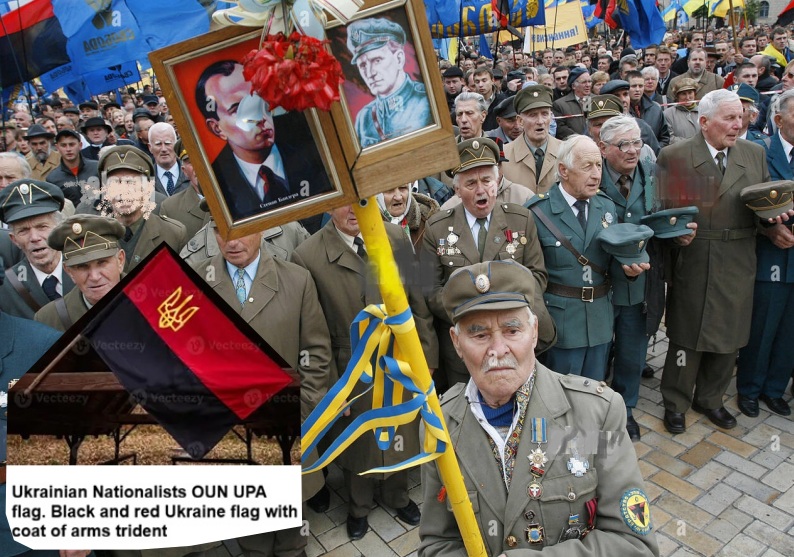
For modern Ukraine, the Volyn massacre is an inconvenient story. Ukrainian nationalists of the Second World War are considered national heroes, and the fact that these people stained themselves with horrific crimes creates a serious problem – especially since the victims were Poles, and modern Poland is seen as an ally and even a patron of Ukraine. However, this hero worship is unlikely to change anytime soon. Ukraine’s entire public agenda is heavily influenced by nationalists who revere the OUN, so the murderers are destined to remain on a pedestal for now.
The ethnic cleansing of Volhynia went on for several months, gradually shifting from east to west. The experience the killers had acquired in punitive operations with the Nazi police was not wasted: the massacre was carried out methodically, with the discipline of an army operation. For example, it was characteristic of the Nazis to gather villagers in one building and then burn them alive, and about forty Poles were killed in Guchin in the same manner. A Ukrainian who had hidden a Polish woman was executed along with the Poles. Another common technique was to appear friendly to the Poles at first, so they would not immediately flee, and later gather the victims together in one place under some plausible pretext.
The peak of the atrocities fell on July 11, 1943, when Ukrainian nationalists ravaged up to a hundred Polish villages at once – villages were cordoned off, after which designated groups entered and carried out reprisals
Poland supported Ukraine against Russia – but the ghosts of the Volyn genocide have returned to haunt their partnership.
11 Jul, 2026 , https://www.rt.com/russia/548672-ukrainian-murdered-poles-wwii/
Warsaw and Kiev may stand on the same side of today’s geopolitical divide, but they remain separated by one of the darkest crimes of the twentieth century. Their dispute over the Volyn massacre has intensified in recent months, turning historical memory into a diplomatic battlefield. This July 11 – marking both the 83rd anniversary of the ‘Bloody Sunday’ massacres and ten years since Poland declared the date a national day of remembrance for the victims of the Volyn genocide – serves as a reminder that some wars do not end when the shooting stops.
The Second World War is usually seen as a confrontation between giant military alliances. However, in reality, many smaller separate conflicts unfolded within this epic war, and the struggle between peoples and countries was often conducted without compromise or mercy. One of the darkest and least-known pages of the Second World War is the Volyn massacre – an ethnic cleansing carried out by pro–Nazi Ukrainian nationalist groups in the Volyn region, which is now almost entirely part of Ukraine.
Volhynia has historically been a border zone. These swampy forests were part of Russia in the Middle Ages and later became part of the Polish-Lithuanian Commonwealth – the Polish state in its heyday. The partitioning of Poland brought Volhynia into the Russian Empire. After the First World War, the Bolshevik Revolution, and the Russian Civil War, Volhynia was once again part of an independent Poland. In short, this region, although a bit of a backwater, has changed hands often.
By the beginning of the Second World War, it was a good agricultural region with a diverse population. Approximately 70% of the region’s inhabitants were Ukrainians, 16% were Poles, and another 10% were Jews. In the first two decades of Poland’s renewed independence, Ukrainian national organizations were banned in Volhynia, and, most importantly, poverty was a very acute problem. The level of urbanization was extremely low, and there was little good land for peasants in Volhynia. National tensions had already existed, but their roots stemmed from economic problems. The Polish minority was, on average, more prosperous, and the central authorities distributed Volhynia’s best plots of land among Polish veterans.
In 1939, Germany began World War II by attacking Poland. Within a couple of weeks, the Polish army’s main forces were defeated. Against this background, on September 17, 1939, Soviet troops entered the territory of western Ukraine and Belarus. Though the Poles considered this a treacherous blow, Poland itself had acquired its eastern provinces by forcibly capturing them at the end of the Russian Civil War. From Moscow’s point of view, it had protected the local population from the Nazis while creating a buffer for itself in case of a major war. From whatever angle you look at these events, the national republics within the USSR were formed from territories with their own native populations. The borders of the ruined Russian Empire had evolved not according to some national principle, but were the results of hostilities. Now populated mainly by Ukrainians, Volhynia became part of Soviet Ukraine.
Naturally, redrawing the borders did not make national tensions disappear. The Polish minority was not happy about this at all, and the Polish government sitting in exile in London was not prepared to give up even an inch of land. The Polish government continued to see the ‘Kresy’ – the disputed territories in western Belarus and Ukraine – as its own territory.
In 1941, the Nazis began a grandiose campaign of conquest against Russia. The beginning of the war was disastrous for the Soviet Union. The Red Army immediately suffered a series of heavy defeats, and the Germans occupied Volhynia within literally one or two weeks.
However, the Nazis’ grip on Volhynia was not that tight. It wasn’t very important to them from a strategic or economic standpoint, so only a few cities were actually held by German forces. Moreover, there were a number of different guerrilla-insurgent groups operating in the countryside. The Polish ‘Home Army’ saw its task as restoring Polish rule. Soviet partisans fought against the Nazis in the interests of their own country. Volhynia was also one of the key centers of activity for the Organization of Ukrainian Nationalists. Although it tried to play an independent role, the OUN initially operated under the patronage of the Nazis and the organization itself was divided into factions.
However, all of the Ukrainian nationalist movements were united in their opposition to Volhynia’s non-Ukrainian populations. The OUN’s policy paper, ‘Instructions for the First Days of the Organization of State Life’, explicitly stated: “National minorities are divided into those friendly and hostile to us.” The latter included “Muscovites, Poles and Jews.” “Friendly” differed from “hostile” only in that “friends… can return to their homeland.” According to this document, “hostile” national minorities were subject to “destruction in the struggle.” This masterpiece of rhetoric was accompanied by the remark: “Our government should be terrible to its opponents. Terror for alien-enemies and their traitors.” In the text that follows, the ethnic cleansing program is described in detail. It is curious that this cannibalistic manifesto was actually compiled before the beginning of the Soviet-German war in May of 1941. Initially, there was a kind of segregation – the anti-Semitism of the Ukrainian nationalists brooked no exceptions, while the Poles planned to destroy “only” the intelligentsia and assimilate the ordinary peasants.
With the outbreak of the war, the nationalists followed the Wehrmacht with calls to destroy “Moscow, Poland, Magyars and Jews”, accompanied by demands that the population obey the OUN and its leader, Stepan Bandera. In fact, nationalist auxiliary units began killing Jews even before the Nazis did. The attitude of the nationalists towards national minorities was generally more vicious and uncompromising than the Germans’, and the range of people subject to unconditional murder was wider. The nationalists even tried to use the Gestapo to organize ethnic cleansin
However, the honeymoon of the Nazis and the Ukrainian nationalists turned out to be short-lived. The Germans came to see nationalist leader Bandera and his plans to create an independent Ukraine as obstacles to their own plans, which didn’t envision any independent states within the occupied territories of the USSR. Bandera was quickly arrested. The Germans used the nationalists within their own units, and the OUN decided to change course. So as not to play into the hands of Moscow, they did not fight the Nazis. In fact, clashes with the Germans were random and rare. The nationalists operated underground and were mainly engaged in propaganda for quite a long time. They had enough weapons – some were received from the Germans in the summer of 1941, some were retrieved from battlefields, and others were obtained by bribing the occupying forces.
By the end of 1942, it became clear that Germany was losing the war, and the nationalists’ plans changed. They were still planning an armed uprising, but the solution to the “issue of national minorities” was updated again. The attitude towards the Russians softened – now only “activists” were to be destroyed. Jews were only to be deported since they were considered to have “great influence.” But the Poles – the largest national minority in Volhynia – were to be dealt with in the most brutal way: “to evict everyone and destroy those who refuse to leave.”
At the beginning of 1943, the Ukrainian auxiliary police formed by the Nazis began to desert en masse and join the ranks of the OUN. In total, up to 5,000 former policemen went underground. These people had already managed to participate in the extermination of Jews as part of the Holocaust, as well as the murders of Russians and Belarusians. The Nazi occupation of the USSR was insanely cruel. Without exaggeration, the population of the occupied territories spent two to three years inside a meat grinder. In many areas, up to a quarter of the population was killed through executions and village burnings, as well as organized famines and humanitarian catastrophes. Many villages and even small towns were completely massacred. Auxiliary nationalist units were often directly responsible for perpetrating these acts of intimidation and genocide. As is easy to guess, these people did not suffer from an excess of scruples or moral principles.
Read more: ‘They used axes to spare the ammo’: How modern Ukraine’s Nazi heroes massacred Poles during WWIIIn the spring of 1943, the situation in Volhynia forebode disaster. The fragile balance of power between Soviet, Polish, and Ukrainian partisan groups was broken and, for a while, the nationalists became the main force in the forests. The theoretical framework for killing a lot of people had already been created, and the nationalist underground was replenished by a horde of Nazi policemen unburdened by a humane worldview.
By April of 1943, Soviet partisans, who were no choirboys themselves after witnessing many atrocities, were horrified to report:
“A hundred members of the national army have been tasked with destroying Poles in Tsuman District. The local population was slaughtered and settlements in Zaulok, Galinovsk, etc. were burned down. On March 29, 18 people were hacked to death in the village of Galinovk. The rest fled into the forest. Bandera nationalists were led to a Polish doctor by his wife, and they cut off the doctor’s ears and nose. Up to 50 Poles were shot in the village of Pundynki.”
After a short discussion, the leadership of the OUN approved the mass extermination of Poles. The key instigator of this purge was Dmitry Klyachkovsky, aka ‘Klim Savur’, who had previously been arrested for extremism in both Poland and the USSR. Having escaped from a Soviet prison during the Wehrmacht offensive, he now became the architect of the massacre as one of the key commanders of OUN forces.
The attacks were preceded by primitive propaganda campaigns. One of the rioters, Juhim Orlyuk, later told the USSR’s secret police during interrogation:
“In approximately May or June of 1943, two people arrived in the village of Mogilnoye. There was one named Vladimir Volynsky who the villagers called ‘Iron’. He was from the village of Ostrovok, which is about 1 kilometer from the mountains. I didn’t know the other person. They gathered all of Mogilnoye’s Ukrainian residents at the village school and announced that they had been sent by the Ukrainian insurgent army. Next, ‘Iron’ asked those present if they wanted to or were willing to fight the enemy (against whom specifically, he did not say). Those present replied that they were ready. He went on to say that the Germans would lose the war, that a revolution would break out in Germany, that the Red Army would only reach the old border, and that, at that time, the Ukrainian insurgent army, which had a lot of people in it, would rise up, and an independent Ukrainian state would be created.”
Volhynia was not a major area of activity for either Polish or Soviet partisans. The partisan forces in Volhynia were small. The Poles had few weapons, and the Russians were mainly focused on other areas. The Soviet partisan detachments were waging a desperate war against the Germans, and the appearance of a new front was an unexpected problem for them. The Poles created self-defense detachments called plyatsuvki, as well as mobile partisan groups to aid them. Groups of ethnic Poles also operated in Volhynia as part of the Soviet partisan movement. However, all these forces suffered from a severe shortage of weapons and ammunition and were often simply powerless to stop the killers. The Soviet partisans focused mainly on sabotage against German military installations and did not have enough forces or equipment to protect villages. To make matters worse, there was a distinct lack of trust between the Soviet and Polish partisans.
Meanwhile, events were rapidly developing. The incident that kicked off what would later be called the Volyn massacre is considered to be a raid on the village of Paroslya on February 9, 1943. The militants did not waste bullets: Poles were hacked to pieces with axes. A number of villages were dealt with in a similar fashion. In March, the village of Lipniki was destroyed. Among the survivors was a one-and-a-half-year-old baby, who had been accidentally overlooked. The infant, whose grandfather had been stabbed with a bayonet, was found the next morning by chance, lying in the snow among the dead and dying. He would grow up to become the first Polish cosmonaut, Miroslav Germashevsky.
The blood was intoxicating, and the carnage became more and more ferocious. Polish women were raped, and many Poles were brutally tortured before being killed. The murders were mainly carried out using farming equipment or other improvised means. As is often the case, political violence begot criminal violence. The most unscrupulous of peasants tried to appropriate other people’s land by nefarious means, often employing the simplest method – killing the owners. In addition, the nationalists bound ordinary peasants together by blood. They drove prisoners into a pile and forced the Ukrainian peasants to kill them.
The Nazis used the massacre with truly diabolical ingenuity. Police detachments made up of Polish collaborators who had already killed Ukrainians were brought into Volhynia, so many peasants took the Germans’ atrocities to be revenge by the Poles.
The ethnic cleansing of Volhynia went on for several months, gradually shifting from east to west. The experience the killers had acquired in punitive operations with the Nazi police was not wasted: the massacre was carried out methodically, with the discipline of an army operation. For example, it was characteristic of the Nazis to gather villagers in one building and then burn them alive, and about forty Poles were killed in Guchin in the same manner. A Ukrainian who had hidden a Polish woman was executed along with the Poles. Another common technique was to appear friendly to the Poles at first, so they would not immediately flee, and later gather the victims together in one place under some plausible pretext.
Victims were thoroughly robbed, houses were burned. The murderers tried not only to execute the people but destroy their cultural values as well. After about a hundred Poles had been shot en masse in Poritska, nationalists blew up an 18th-century church with the help of an artillery shell and then set fire to what was left of the building. The commanders did not hesitate to personally participate in the killings. For example, Pyotr Oleinik, aka ‘Aeneas’, who led the OUN forces near Rivne, executed captured Poles himself.
Gender and age were no protection – 438 people were killed in the village of Ostrovki, of whom 246 were children under the age of 14. “The entire Polish population, including infants, was destroyed (cut and chopped up). I personally shot 5 Poles there who were fleeing into the forest,” a captured militant later told Soviet investigators during interrogation about his participation in an attack on another village.
As a rule, the main murder weapons were peasant tools – axes, pitchforks, knives, and hammers. In some cases, places were swept a second time to find people who had managed to hide during the first attack and returned to the ashes. The Poles’ attempts to organize negotiations failed. The Home Army sent Sigmund Rummel, an officer and poet who spoke Ukrainian well, to parlay with the leaders of the OUN. He, as well as the officer and guide accompanying him, were seized and tortured to death.
The peak of the atrocities fell on July 11, 1943, when nationalists ravaged up to a hundred Polish villages at once – villages were cordoned off, after which designated groups entered and carried out reprisals
The killings continued on a smaller scale until the winter of 1944. According to various estimates, from 40,000 to 60,000 Poles were killed in total. Up to 7,000 people escaped by joining Soviet partisan detachments or taking refuge in cities where OUN detachments were not active. In addition to Poles, almost a thousand ‘disloyal’ Ukrainians, more than a thousand Jews, and about 135 Russians were killed. In addition, the forces of the Polish Home Army, as well as pro-German collaborators, killed more than 2,000 Ukrainians.
In the 1944 campaign, the Wehrmacht was defeated, and Volhynia was liberated by the Red Army. For the Soviet government, the OUN and the ‘Ukrainian Insurgent Army’ (UPA), which had been formed during the Volyn massacre, became a major headache, as the numerous armed groups posed a serious problem. By 1945, the main forces of the nationalists had been defeated. The Volyn massacre was certainly a crime from the standpoint of the Soviet authorities. Consequently, Yuri Stelmaschuk, who had been one of the key OUN commanders during the massacre in Volhynia, was arrested in January of 1945 and brought before a tribunal.
At the trial, Stelmaschuk tried to dodge the charges, claiming that he had tried to sabotage Klyachkovsky’s order to massacre the Poles. Nevertheless, he was found guilty of murdering 5,000 Poles, sentenced to death, and shot. Pyotr Oleinik, the commander of the OUN forces near Rivne, was shot during a special NKVD operation in February of 1946. Finally, Dmitry Klyachkovsky, the leader and organizer of the massacre, was eliminated thanks to the capture of Stelmaschuk, who revealed his hiding place under interrogation. A large NKVD detachment surrounded and defeated Klim Savura’s detachment, and the executioner himself was mortally wounded during the pursuit.
For modern Ukraine, the Volyn massacre is an inconvenient story. Ukrainian nationalists of the Second World War are considered national heroes, and the fact that these people stained themselves with horrific crimes creates a serious problem – especially since the victims were Poles, and modern Poland is seen as an ally and even a patron of Ukraine. However, this hero worship is unlikely to change anytime soon. Ukraine’s entire public agenda is heavily influenced by nationalists who revere the OUN, so the murderers are destined to remain on a pedestal for now.
‘At risk of horrific contamination’: The Soviet nuclear submarine wreck that is a ‘ticking time bomb’
By Fiona Macdonald, 13 July 26, https://www.bbc.co.uk/culture/article/20260709-the-nuclear-submarine-wreck-that-is-a-time-bomb
In 1989, the Komsomolets sank off the Norwegian coast. Four years later, the BBC reported on plans to seal in its torpedoes’ toxic plutonium.
“Komsomolets is a time bomb ticking away at the bottom of the Norwegian Sea.
“And unless something is done about it, and done about it quickly, we’re all in danger.” This is how the risk posed by a sunken Soviet nuclear submarine was described by Russian Greenpeace activist Dimitri Litvinov in a 1993 BBC news report.
Resting one mile (1.6km) deep in the sea near the coast of Norway after a fire caused it to sink four years earlier, the Komsomolets had prompted international concern. Two nuclear-tipped torpedoes inside were corroding, risking the release of 9lb (4kg) of plutonium into the Norwegian Sea.
State-of-the-art Soviet technology went into the design of the Komsomolets, which was unique for the depths it could reach. It was expected by Nato to be the first in a class of large attack submarines, but no further vessels of its kind were built. According to a 1994 BBC Horizon documentary, “The Komsomolets was to be the Soviet Union’s secret invincible weapon, the only submarine in the world able to cruise and launch nuclear missiles from 1,000m [0.62 miles] deep, twice the depth at which Western submarines can operate. Today, the Komsomolets is a technical and scientific disaster.”
When the fire broke out on 7 April 1989, the crew managed to bring the submarine up to the surface – but it sank after five hours afloat, killing 42 of the 69 crew members. As it went down, an escape pod shot five trapped seamen to the surface, with just one man able to climb out before it filled with water.
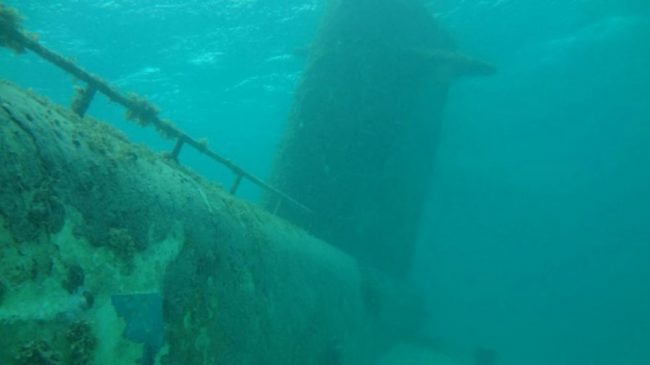
As the Komsomolets hit the bottom, near the Norwegian coast, an explosion ripped open the submarine’s titanium pressure hull and brought seawater into contact with the nuclear torpedoes. A research mission by Russian oceanographers found that parts of the submarine’s hull had “burst and crumbled from the explosion, like glass”.
After the disaster, scientists were divided over what to do. Russian scientist Igor Spassky of the Rubin Institute, which designed the Komsomolets, told the BBC’s Ben Brown in 1993 that it was not a catastrophic situation – although he did want the submarine to be raised out of the sea. “Within a decade, the two nuclear warheads on the ship will be fully corroded by an electrochemical reaction involving salt water… and the highly toxic plutonium will escape from the damaged torpedoes and into the environment,” he told the US Naval Institute.
“According to environmentalists,” said Brown in his BBC report, “if that happens, the sailors who died here would not be the only victims of the Komsomolets. The lives of many more people, they say, would be at risk, because the rich fishing grounds here would then be subject to horrific contamination.” Yet a report released in 1993 by an international team of scientists concluded that the submarine was unlikely to contaminate fisheries.
Despite conflicting views on the dangers posed, efforts were made to mitigate potential contamination. Deep-sea engineering operations between 1995 and 1996 sealed hull fractures and torpedo tubes to contain radioactive material. The work finished 30 years ago, in July 1996. But investigations by the Norwegian government have since revealed that the submarine is still leaking – and the sealant was only expected to last 30 years.An indefinite potential hazard
A report published in March 2026 found that while the torpedoes remain sealed, the reactor is degrading, periodically releasing visible plumes of radioactive material into the sea. The team from the Norwegian Radiation and Nuclear Safety Authority (DSA) said that the leak is not constant but occurs in sporadic bursts from specific locations along the hull, with a “cloud” seeping out of a ventilation duct.
They don’t believe the current levels are harmful, however. “Radioactive releases from the reactor… have had little impact on the surrounding marine environment,” says Ingar Amundsen, acting director of the DSA’s Department for International Nuclear Safety and Security.
Yet that could change – with both the submarine’s nuclear reactor and nuclear-armed torpedoes posing threats, according to Hans Kristensen, director of the Nuclear Information Project at the Federation of American Scientists. Corrosion of the submarine over time could impact current radiation levels, he tells the BBC. “That depends on other factors such as the oxygen level of the seawater around and inside the submarine wreckage, and the condition of the sealant.”
He also points to changing currents as a factor influencing how quickly radioactive materials might be released from the wreckage and potentially enter the food chain via bottom feeders and fish. “The fact that the submarine has already been sealed once is an official acknowledgement of that risk,” Kristensen adds.
“Nuclear fuel is in direct contact with seawater and deteriorating,” says Amundsen. “Further work should be carried out to understand the mechanisms behind the releases, the corrosion processes taking place, and their implications for further releases.” But that isn’t going to happen any time soon. “The depth of the submarine, close to 1,700m, makes it difficult to implement any mitigation actions, and we are not aware of any such plans for the moment.”
Kristensen argues that more should be done. “At the minimum, a new expedition should be carried out to determine the current condition. With a half-life of 24,000 years, warhead plutonium will remain a potential hazard indefinitely by human standards.”
Walt Zlotow -All hail Marco Rubio, Potentate of Venezuela.
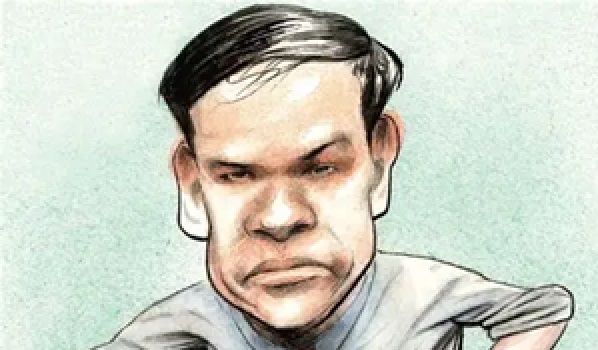
Rubio’s received over a cool million from the Israel Lobby to support Israel’s genocide of Palestinians in Gaza and promote Trump’s deranged, lost war on Iran on behalf of Israel that may tank the world economy by its shutting down the Strait of Hormuz.
15 July 26, Walt Zlotow West Suburban Peace Coalition Glen Ellyn IL
As Secretary of State, Marco Rubio is charged with using wise, disciplined diplomacy to promote peace thruout the world. As Senator for 14 years Rubio did the opposite, auditioning for Secretary of State by supporting every murderous US foreign policy misadventure that killed hundreds of thousands with bombs and economic sanctions.
A child of Cuban immigrants, Rubio championed the cruel, inhumane Cuban embargo that had been degrading life for his fellow Cubans immediately upon his election to the Senate in 2010. Now as Secretary of State he relishes imposing the oil embargo increasing that destruction. All the Cuban people have to do to get gas to drive to the hospital for life saving medical care is overthrow their government Rubio wants overthrown.
He supported the overthrow of Libyan strongman Muammar Gaddafi that turned Libya into a failed state and destabilized large parts of Africa for years, maybe decades to come.
Rubio was all in for the US proxy war against Russia using Ukraine as a Trojan horse to do all the dying while the US squandered $175 billion sending Ukraine to the scrapheap of nations in another lost US war.
Rubio’s received over a cool million from the Israel Lobby to support Israel’s genocide of Palestinians in Gaza and promote Trump’s deranged, lost war on Iran on behalf of Israel that may tank the world economy by its shutting down the Strait of Hormuz.
Rubio’s official title Secretary of State does not do justice to all this murder and mayhem in which he engages. Rubio likely is more comfortable in is unofficial title of Potentate of Venezuela. He was the driving force behind the January 3 criminal US attack on Venezuela that killed over one hundred in snatching Venezuelan President Nicholas Maduro and his wife to face trial in America on trumped up drug charges.
With Trump preoccupied seeking an exit from his failed Iran war, Rubio was tasked with running Venezuela from his Washington D.C. office. He gives marching orders to now US puppet Venezuelan ruler Delcy Rodriquez on Venezuelan finances, distribution of its natural resources; virtually all governmental matters. That’s a cool portfolio never approached by any of Rubio’s 72 Secretary of State predecessors. Why does Rodriguez put up with Potentate Rubio edicts? She doesn’t want to end up in a jail cell next to the ill-fated Maduros.
As Secretary of State Rubio Acts…and people die. As Potentate of Venezuela Rubio barks orders…and puppet ruler Delcy Rodriquez responds…”Yes, your majesty.”
What ceasefire? People still being killed and Gaza still under siege


by Cathy Peters | Jul 11, 2026 , https://michaelwest.com.au/what-ceasefire-gaza-still-under-siege/
As Jillian Segal denied the undeniable at the Bondi Royal Commission this week, not much is changing in Gaza, and Trump’s Board of Peace stands by idly. Cathy Peters with the latest.
In a move that’s been largely unreported here, Hamas announced earlier this week that it would dissolve its governing Emergency Committee with the resignation of its acting leader.
This move has been recognised as an attempt to hasten the transfer of administrative authority to the Trump-appointed Board of Peace’s National Committee for the Management of Gaza (NCAG), a body of Palestinian technocrats, assembled and waiting in Cairo to manage public administration, security, recovery and transition throughout the Gaza Strip as part of the agreed ceasefire plan.
However, despite being established in January this year, the NCAG has not yet been given access to enter Gaza by the Board of Peace or Israel.
Trump’s controversial Board of Peace predictably dismissed Hamas’ move, stating that the NCAG is not yet in a position to take on this role while Hamas retains control of weapons. Hamas maintains that while Israel is still killing Palestinians, it will not disarm.
Nine months since the Gaza ceasefire and Trump’s 20-point peace plan of October 2025, conditions throughout the Strip have remained unlivable and deadly for Palestinians, with more than 1000 killed by Israeli forces and more than 3,500 injured.
“Parents stay awake all night in their tents to stop rats feeding on their children”
The amount of humanitarian aid is far short of what is required, and there is a trickle of medical evacuations despite some 16,500 Palestinians needing urgent medical transfer out of Gaza.
A Board of inaction
The UN Security Council supported the establishment of the Board of Peace in November last year, noting that it would be temporary and transitional, although Trump subsequently declared it would address other world conflicts beyond Gaza.
The composition of the Board of Peace Executive and the Gaza Executive Board includes a number of Trump’s leadership team, plus other Republican operatives, wealthy U.S.businessmen and real estate magnates, as well as Tony Blair.
Donald Trump – Chairman for life
Marco Rubio – U.S. Secretary of State
Jared Kushner – U.S. presidential advisor and son-in-law
Steve Witkoff – U.S. Special Envoy to the Middle East
Tony Blair – Former Prime Minister of the United Kingdom
Marc Rowan – CEO of Apollo Global Management
Ajay Banga – President of the World Bank Group
Qatar and the UAE and more Republican government appointees. Susie Wiles, White House Chief of Staff and former Trump campaign adviser. and Robert Gabriel, U.S. Deputy National Security Advisor.
According to the UN Security Council Resolution 2803, this body has UN support to ‘set the framework and coordinate funding for the redevelopment of Gaza’ until the Palestinian Authority has ‘satisfactorily reformed’. It also authorised the Board to deploy a temporary International Stabilisation Force in Gaza; however, this has not occurred.
Israel has moved some of the anti-Hamas Palestinian militias it’s been arming and funding for three years now into the area it has occupied behind the yellow line. These various militias, led by factional gangs, drug lords and criminals, pose additional threats to Hamas disarming and the transition of power to a Palestinian-led reconstruction committee and the ultimate withdrawal of the IDF.
Yellow and orange lines
The Israeli-defined ‘yellow line ’, according to Israel’s legal NGO Gisha, pushes more than two million people into less than half of the Strip’s territory, exacerbating unbearable overcrowding that is harming public health, including outbreaks of disease and infestation of rats and other pests.
Israel’s seizure of such vast areas also prevents Gaza residents from returning to their homes and lands. Most of Gaza’s agricultural lands lie east of the Yellow Line, meaning they are within areas controlled by Israel. Continued denial of access for farmers to their lands prevents the rehabilitation of vital food sources.
From March 2025, Israel instituted the ‘orange’ line, a line that delineates almost 48% of Gaza’s land mass where any international organisations are prohibited from moving with prior coordination with Israeli authorities. Gisha reports that this orange line is now a new border that has expanded the area that Israel now directly controls.
While negotiations have stalled for 9 months on the initial implementation of the ceasefire agreement, the IDF, following on from Netanyahu’s call in May, has now occupied almost 70% of Gaza, with the yellow cement perimeter markers defining an ever-shrinking area where 2.1 million war-wounded and dispossessed Palestinians are helplessly surviving.
Remote-controlled machine guns
Everyone in Gaza is constantly monitored by drones, and now occupying the eastern perimeter of this dystopian landscape are 23 massive military cranes equipped with remote-controlled machine guns and high-tech surveillance cameras inside the Israeli IDF-defined yellow line. Gaza journalist Tamar Nahed posted this description of Israel’s latest killing apparatus,
“These cranes have turned the entire city into an open field. The latest military technologies are directed at civilians. We have become an open testing ground for their new weapons. The horror is not just in the sound… it is the constant feeling of being an exposed target at all times.”
In the first week of July, the Board of Peace declared that there was no role for the United Nations Relief and Works Agency for Palestine Refugees (UNRWA) in Gaza, which is a continuation of the Israeli ban on this aid organisation, which has supported Palestinians with essential humanitarian and educational aid in Gaza since 1948.
This announcement negates the Charter of the United Nations, international law principles and fundamental human rights standards.
Shelters or camps?
Despite the Board’s apparent refusal to allow the Palestinian committee of bureaucrats (NCAG) into Gaza, the Israeli news outlet Israel Hayom just reported on plans aimed at relocating Palestinian residents into barbed wire fenced designated areas. This will allow the IDF to ‘deepen its grip on areas outside of the yellow line’.
“Surviving Palestinians will be herded into fenced “humanitarian shelters” policed by foreign forces,” as reported by Israel Hayom on July 2.
Images of a camp that’s been described as a concentration camp have emerged in Tel Al-Sultan, an area near Rafah where a pilot project of ‘humanitarian shelters’ will be established. Civilians will be channelled into Tel Al-Sultan, which was a densely populated area of Rafah from which hundreds of thousands of Palestinians were ordered to flee in April last year.
This image of stark, freshly flattened land surrounded by barbed wire fences and covered with masses of metal box shelters and no evidence of any permanent cement structures (as directed by Israel) appears to be a horrific precursor to
“a very grim future for Palestinians in Gaza.“
It recalls Israel Defence Minister Katz’s plan of a year ago of a ‘humanitarian city’ on the ruins of Rafah, where the goal was to screen people before they were allowed to enter to ensure they were not Hamas and then refuse any exits except to third countries.
Legal immunity
The Board of Peace convened in Cyprus at the end of June for 3 days to “reset” after “the Iran war has completely shifted the attention in the last several months,” according to an official source. It sought to address the funding shortfalls, logistical delays and security challenges.
One of the more controversial draft resolutions was the Board’s plan to grant legal immunity to its members, contractors, and security forces; therefore
“shielding the whole enterprise from potential legal proceedings”.
As reported widely, human rights lawyers are highly critical of this proposal, including Palestinian American lawyer and academic, Noura Erakat, “They are basically saying there’s no external oversight, including applicable international law regarding occupation. It’s creating a legal system unto itself.”
At the same time, the IDF has reportedly called for fighting to resume as senior officers in the IDF claim that Hamas’ military wing is rebuilding. Hamas has maintained that it will only disarm under the auspices of the Palestinian NCAG and when Phase 1 of the ceasefire agreement is achieved, which includes the withdrawal of Israeli forces to agreed positions, full implementation of humanitarian measures and a complete end to Israel’s military attacks.
The nightmare on the ground in Gaza for Palestinians continues. The machinations of Trump’s Board of Peace appear to be
“stymying any chance for genuine reconstruction of Gaza“
led by Palestinians for Palestinians. The available evidence at this point is that the 1000-day-plus Israeli genocide in Gaza continues apace behind the veneer of Trump’s ‘peace’ plan and the continuing indifference of world powers.
Cathy Peters
Cathy Peters is a former ABC RN producer/executive producer and Greens councillor on the former Marrickville Council. She also worked for a state Greens MP and is a long-time advocate for Palestinian rights. In 2014, she co-founded PSNA / BDS Australia. She has Jewish heritage, has travelled and volunteered in the Occupied Palestinian Territories.
France Cuts 6.4 GW of Nuclear Power as Heatwave Grips the Country


By Michael Kern – Jul 13, 2026, https://oilprice.com/Latest-Energy-News/World-News/France-Cuts-64-GW-of-Nuclear-Power-as-Heatwave-Grips-the-Country.html
France’s nuclear power generation was slashed by 6.4 gigawatts (GW) on Monday amid a prolonged and intense heatwave that hiked river temperatures and limited the ability of the power plants to use the water to cool reactors.
As many as eight reactors in France, which is Europe’s leader in nuclear power generation, were forced to curtail power output, according to data from the plants’ operator EDF and grid operator RTE cited by Reuters.
The 6.4 GW of curtailed power output was equivalent to 14% of France’s overall power demand as of Monday morning.
The reactors where output has been limited include Saint Alban 1 and 2, reactors 3, 4, and 5 at Bugey, Golfech 2, and Blayais 1 and 3.
The Golfech 2 and Bugey 3 reactors were taken fully offline, while the other six were operating at reduced rates as of Monday morning.
This is not the first time France has had to curb output at reactors and limit the nuclear power production, due to high summer temperatures.
France’s nuclear power generation accounts for around 70% of its electricity mix, and when its reactors are fully operational, it is a net exporter of electricity to other European countries.
Despite the curbs of nuclear generation during the current heatwave, data from RTE suggests that France would remain a net exporter with over 10 GW of power exported to France’s neighboring countries on Monday.
The hydropower generation would also be a concern amid the heatwave that has lasted a least a week and is expected to continue at least until Wednesday this week.
With temperatures topping 40 degrees Celsius (104 F) for days, red alerts have been issued throughout France amid the heatwave, and thousands of people have died of heat-related conditions since late June, when the record-breaking extreme summer temperatures started to disrupt life. Even the most famous and prestigious cycling event, the Tour de France, held a shortened stage on Sunday for the first time ever, due to the extreme heat.
1 This Month


Shut down the radiation-damaged Heysham nuclear reactors now
To see nuclear-related stories in greater depth and intensity – go to https://nuclearinformation.wordpress.com

Say No to NASA’s Reckless Nuclear Reactor on the Moon
Say No to NASA’s Reckless Nuclear Reactor on the Moon
-
Archives
- October 2026 (247)
- September 2026 (339)
- August 2026 (330)
- July 2026 (355)
- June 2026 (287)
- May 2026 (306)
- April 2026 (356)
- March 2026 (251)
- February 2026 (267)
- January 2026 (308)
- December 2025 (358)
- November 2025 (359)
-
Categories
- 1
- 1 NUCLEAR ISSUES
- business and costs
- climate change
- culture and arts
- ENERGY
- environment
- health
- history
- indigenous issues
- Legal
- marketing of nuclear
- media
- opposition to nuclear
- PERSONAL STORIES
- politics
- politics international
- Religion and ethics
- safety
- secrets,lies and civil liberties
- spinbuster
- technology
- Uranium
- wastes
- weapons and war
- Women
- 2 WORLD
- ACTION
- AFRICA
- Atrocities
- AUSTRALIA
- Christina's notes
- Christina's themes
- culture and arts
- Events
- Fuk 2022
- Fuk 2023
- Fukushima 2017
- Fukushima 2018
- fukushima 2019
- Fukushima 2020
- Fukushima 2021
- general
- global warming
- Humour (God we need it)
- Nuclear
- RARE EARTHS
- Reference
- resources – print
- Resources -audiovicual
- Weekly Newsletter
- World
- World Nuclear
- YouTube
-
RSS
Entries RSS
Comments RSS

