Can an AI Black Box Be Trusted to Run a Nuclear Reactor?
By Haley Zaremba – Jul 25, 2026, https://oilprice.com/Alternative-Energy/Nuclear-Power/Can-an-AI-Black-Box-Be-Trusted-to-Run-a-Nuclear-Reactor.html
- China’s Chinese Academy of Sciences unveiled ADANES at WAIC in Shanghai, a five-layer AI system meant to control nuclear reactors from design through decommissioning.
- Nuclear officials call full AI integration inevitable, but today’s opaque “black box” large language models clash with the transparency nuclear safety demands.
- The push comes as Microsoft, NVIDIA and a wave of U.S. startups race into nuclear power to feed AI’s soaring energy needs, sometimes outpacing safety oversight.
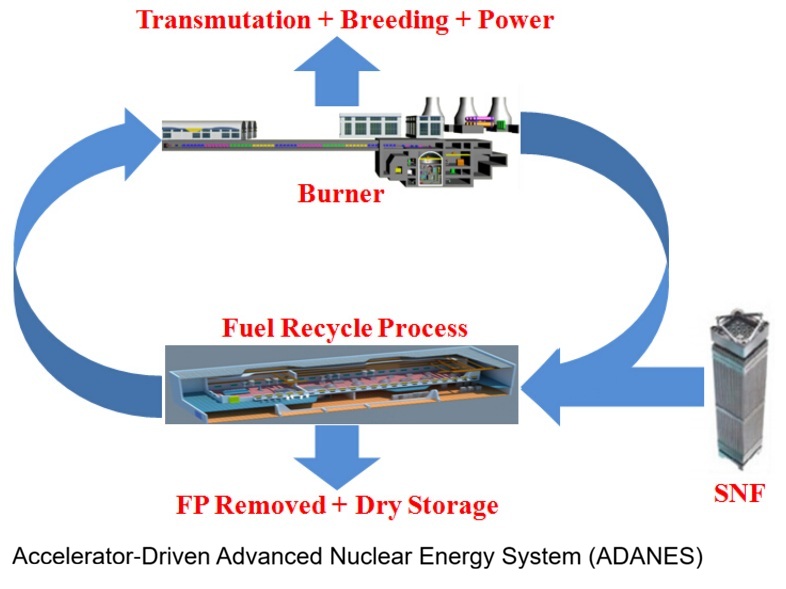
China has unveiled a daring new plan to integrate artificial intelligence throughout the nuclear energy life cycle. This week, at the World Artificial Intelligence Conference (WAIC) in Shanghai, researchers at the Chinese Academy of Sciences (CAS) revealed a new plan for safely integrating artificial intelligence into the nuclear sector, called ADANES – the Accelerator-Driven Advanced Nuclear Energy System. The system “fundamentally changes the safety logic that governs conventional nuclear reactors” and marks a major turning point in the AI revolution as well as the global nuclear renaissance.
While nuclear disasters are historically rare, their potential fallout is massive. But there is potential for artificial intelligence to lessen this risk. According to Interesting Engineering, “Disasters like Chernobyl and Fukushima have reminded us time and again, that the risk of an accident remains with this technology, and we need to prepare for the worst scenarios. A technology like AI is well suited for this role as it can process large number of signals coming in from an operational reactor and shut it down in the earliest stages of a mishap.”
Wang Shoujun, the president of the Chinese Nuclear Society, makes the argument that the integration of large language models into every corner of the economy, including nuclear energy, is an inevitability. By accepting this as fact, the scientists behind the ADANES believe that the responsible thing to do is get ahead of the trend and focus on planning and safety measures, rather than trying to prevent AI from infiltrating the nuclear power sector. Wang says that, through the use of ADANES, “AI will play a core role throughout the full life cycle of nuclear energy by improving quality, efficiency and safety.”
However, today’s large language models operate under great opacity, and this ‘black box’ functionality is fundamentally at odds with stringent nuclear energy safety requirements. We need a far greater level of transparency and a deeper understanding of how large language models work and will be applied in this context. According to a recent report from China Daily, ADANES can be used to establish such an understanding.
“The AI architecture consists of five layers — a unified data infrastructure, physics-native world models, physical-system control, intelligent-agent coordination and continuous evolution — embedding AI throughout the system’s full life cycle, from design and commissioning to operation and maintenance,” the report states. China is also developing a national-scale supportive infrastructure to provide an “engineering verification platform” for ADANES in order to shore up the long-term stability and viability of the system.
It’s true that the artificial intelligence boom is already finding its way into the nuclear energy sector in various ways and to varying degrees. Earlier this year, tech giants Microsoft and NVIDIA announced that they are jointly rolling out an AI-powered toolkit designed to cut down on arduous permitting, design, and engineering processes that have made new nuclear plants notoriously slow and expensive to build in the United States.
Ushering in a new digital era for nuclear power, the toolkit “provides end-to-end tools that combine AI and digital twins for creating faster iterative design and engineering solutions,” according to a March report from Interesting Engineering. “Licensing and permitting is handled by Generative AI for document drafting and gap analysis.”
Furthermore, the push to develop new and advanced nuclear energy generation capacity is also being largely driven by the AI boom. Silicon Valley is getting increasingly involved in funding and developing next-gen nuclear technologies in order to fuel the rapidly growing energy demands of generative AI, which are projected to far outstrip energy additions unless we make some major breakthroughs. China is not the only nation making unsettlingly daring decisions when it comes to nuclear power. A wave of U.S.-based startups is also eagerly crowding into the sector with concerning disregard for safety measures, creating a concerning security environment in the world’s largest economies.
No comments yet.
1 This Month
26 September – International Day for the Total Elimination of Nuclear Weapons





PLEASE OPPOSE HR 8255 AND S.3639 – bills would accelerate satellite deployment, with no environmental review or safeguards – https://ncstd5li.quorum.us/campaign/169331/
To see nuclear-related stories in greater depth and intensity – go to https://nuclearinformation.wordpress.com
-
Archives
- September 2026 (313)
- August 2026 (330)
- July 2026 (355)
- June 2026 (287)
- May 2026 (306)
- April 2026 (356)
- March 2026 (251)
- February 2026 (267)
- January 2026 (308)
- December 2025 (358)
- November 2025 (359)
- October 2025 (375)
-
Categories
- 1
- 1 NUCLEAR ISSUES
- business and costs
- climate change
- culture and arts
- ENERGY
- environment
- health
- history
- indigenous issues
- Legal
- marketing of nuclear
- media
- opposition to nuclear
- PERSONAL STORIES
- politics
- politics international
- Religion and ethics
- safety
- secrets,lies and civil liberties
- spinbuster
- technology
- Uranium
- wastes
- weapons and war
- Women
- 2 WORLD
- ACTION
- AFRICA
- Atrocities
- AUSTRALIA
- Christina's notes
- Christina's themes
- culture and arts
- Events
- Fuk 2022
- Fuk 2023
- Fukushima 2017
- Fukushima 2018
- fukushima 2019
- Fukushima 2020
- Fukushima 2021
- general
- global warming
- Humour (God we need it)
- Nuclear
- RARE EARTHS
- Reference
- resources – print
- Resources -audiovicual
- Weekly Newsletter
- World
- World Nuclear
- YouTube
-
RSS
Entries RSS
Comments RSS


Leave a comment