The five countries that could go nuclear next – and how worried we should be
Arms control deals between the great powers are breaking down. Now other nations are looking for radical security solutions
iNews 15th July 2026, Kieron Monks Foreign news and feature writer
As wars and predator states reshape the world order, fears are growing that a new nuclear arms race is already under way.
Agreements between the great powers over the control of nuclear weapons are breaking down. Middle powers, from South Korea to Saudi Arabia, are considering radical solutions to their security concerns.
The Non-Proliferation Treaty (NPT), which binds 190 countries to the status quo of restricting nuclear weapons to the handful of states that already possess them, has largely held for a generation. North Korea is the only new nuclear power of the 21st century.
Dr Pavel Podvig, a senior researcher into weapons of mass destruction at the UN Institute for Disarmament Research (UNIDIR), noted a rise in “magic wand thinking”, with several governments openly discussing nuclear development. “There is this idea that nuclear weapons just work automatically to protect you, when the reality is more complicated,” he said.
John Erath, senior policy director at the Center for Arms Control and Non-Proliferation in Washington DC, said factors such as Russia’s nuclear threats and China’s expanding nuclear arsenal made this a more dangerous era for proliferation control.
While he did not expect a country to cross the threshold in the near future, one new nuclear nation could trigger a flood. “If Iran were to build a nuclear weapon, I believe several other countries would as well,” he said.
Here are the countries that are among those most likely to join the ranks of nuclear powers…
South Korea
Seoul has lived under threat from its nuclear northern neighbour for decades within a still-unresolved frozen conflict that dates back to 1950.
In 2023, the then president Yoon Suk-yeol – now mired in legal trouble over a failed coup – warned that South Korea could rapidly develop its own nuclear weapons if Pyongyang’s threats became “more serious” – a position that reflected public opinion and the country’s capabilities.
Taehwa Hong, a fellow at the Foreign Policy Research Institute, said the country was a “plausible candidate” to join the nuclear club, more so for the US downsizing its military presence there.
“The drivers are real,” said Hong, who is working on a book about South Korean strategy. “Public support for an independent arsenal has run at 70 to 80 per cent for over a decade, Korea has a world-class civil nuclear industry, and confidence in US extended deterrence has been eroding under America First pressures.”
“But the restraints are equally real. Weaponisation would require NPT withdrawal, expose one of the world’s most trade-dependent economies to sanctions, strain the very alliance it is meant to compensate for, and risk a proliferation cascade running through Japan.”
The most likely scenario is for Seoul to approach the nuclear threshold through peaceful enrichment of nuclear fuel without crossing it, the analyst said. But that could change if the US withdraws more forces or its “nuclear umbrella” from the country, or in a scenario of China attacking Taiwan
Poland
Poland’s President, Karol Nawrocki, said in February that he would support the development of an independent nuclear deterrent. “The path toward a Polish nuclear project, in full respect of all international regulations, is a path Poland should pursue,” he said.
Those sentiments were echoed by the liberal Prime Minister, Donald Tusk – usually a fierce opponent of Nawrocki. Polls have shown a majority of public opinion supports Poland having its own nuclear weapons outside the US umbrella.
Dr Jakub Bordio, a professor of political science at the University of Wroclaw, said these were unprecedented developments driven by a sense that the “international security architecture is developing, from our perspective, in the wrong direction”.
Iran …………………………………………………………………………………………………………………………………………………
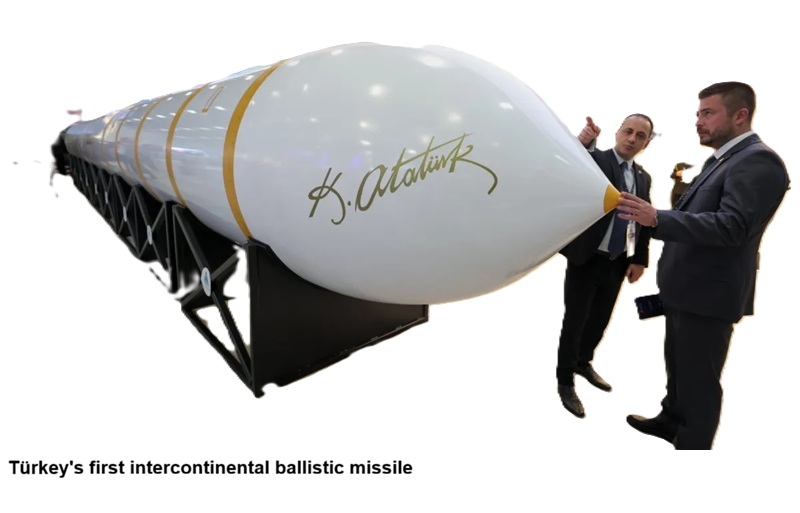
Turkey.……………………………………………………………………………………………………………….
Saudi Arabia ………………………………………………………………………………………………………. https://inews.co.uk/news/world/five-countries-go-nuclear-how-worried-4635284
No comments yet.
-
Archives
- October 2026 (112)
- September 2026 (339)
- August 2026 (330)
- July 2026 (355)
- June 2026 (287)
- May 2026 (306)
- April 2026 (356)
- March 2026 (251)
- February 2026 (267)
- January 2026 (308)
- December 2025 (358)
- November 2025 (359)
-
Categories
- 1
- 1 NUCLEAR ISSUES
- business and costs
- climate change
- culture and arts
- ENERGY
- environment
- health
- history
- indigenous issues
- Legal
- marketing of nuclear
- media
- opposition to nuclear
- PERSONAL STORIES
- politics
- politics international
- Religion and ethics
- safety
- secrets,lies and civil liberties
- spinbuster
- technology
- Uranium
- wastes
- weapons and war
- Women
- 2 WORLD
- ACTION
- AFRICA
- Atrocities
- AUSTRALIA
- Christina's notes
- Christina's themes
- culture and arts
- Events
- Fuk 2022
- Fuk 2023
- Fukushima 2017
- Fukushima 2018
- fukushima 2019
- Fukushima 2020
- Fukushima 2021
- general
- global warming
- Humour (God we need it)
- Nuclear
- RARE EARTHS
- Reference
- resources – print
- Resources -audiovicual
- Weekly Newsletter
- World
- World Nuclear
- YouTube
-
RSS
Entries RSS
Comments RSS


Leave a Reply