Thirteen films that are essential to understanding the nuclear age
Bulletin, By Alex Wellerstein | July 16, 2026
Nuclear films are both reflections of the zeitgeist in which they are made and shapers of it. They feed off of both popular and expert anxieties, while also helping to solidify the terms on which these anxieties are engaged. While some themes are apparently universal (how many ways are there to blunder into nuclear war), some feel very much of their particular time and place…………………………………………………………………………………………..
This list has a strong Anglophone bias, and with a few notable exceptions approaches the topic from largely American points of view. This is a reflection of its author’s limitations and the film’s relative accessibility to an American. Undoubtedly lists could (and should) be created from different cultural and national perspectives. The list is presented chronologically and can be thought of as an unfolding of the nuclear perspective from the early nuclear age to the present.
Godzilla
1954, Toho. Directed by Ishirō Honda. Released in the USA as Godzilla, King of the Monsters, in 1956. Inspired in part by the 1954 Castle Bravo fallout disaster, which killed a Japanese fisherman and led to a boycott on tuna in Japan, Godzilla (Gojira in the Japanese original) is a more complicated film than just “radioactive monster attacks Tokyo.”…………………………….
On the Beach
United Artists, 1959. Directed by Stanley Kramer. The premise of On the Beach, adapted from the 1957 novel by the British author Nevil Shute, is that a future global nuclear war using cobalt bombs has both eradicated most of human civilization and created a massive, deadly cloud of fallout that is gradually circulating the globe, killing all in its path. Those in the southern hemisphere are momentarily safe, but the cloud is coming……………..
Dr. Strangelove or: How I Learned to Stop Worrying and Love the Bomb
1964, Columbia Pictures. Directed by Stanley Kubrick. Stanley Kubrick’s dark comedy about the risk of unauthorized and accidental nuclear war fundamentally altered the lexicon with which we talk about nuclear weapons…………………… . When Daniel Ellsberg, then still at RAND and having just completed a classified study into the command and control problems central to the plot, saw the film in theatres, he was amazed — it was, he wrote later, “essentially, a documentary.”
Fail Safe
1964, Columbia. Directed by Sidney Lumet. Fail Safe might be remembered as the film of mid-1960s nuclear anxiety had it not come out the same year as Dr. Strangelove and overlapped so significantly with its themes………… its management of tension has led to its retrospective status as a critical success.
The China Syndrome
1979, Columbia Pictures. Directed by James Bridges.The sole film specifically about nuclear power on this list, The China Syndrome is a taut thriller that was elevated into something even more by its historical moment. ………………………..The film would work on its own merits, but the fact that the film premiered less than two weeks before the Three Mile Island accident catapulted it to the position of prophecy—for better and for worse.
Barefoot Gen (Hadashi no Gen)
1983, Kyodo Eiga. Directed by Mori Masaki. Barefoot Gen, first a manga (Japanese comic book) published in 1976, is a fictionalized version of writer and illustrator Keiji Nakazawa’s experiences of being a six-year-old boy growing up in Hiroshima before, during, and after the atomic bombing.
The Day After
1983, ABC. Directed by Nicholas Meyer. This classic made-for-television movie about the run-up to nuclear war and its immediate aftermath ……………… The film is sometimes cited as a factor in Reagan’s willingness to initiate talks with the Soviet Union and initiate “the golden era of arms control.”
Testament
Paramount, 1983. Directed by Lynne Littman. Among the crowded field of “the day after nuclear war” films of the early 1980s, Testament stands out for its relative quiet, reasonableness, and lack of sensationalism. ………………………………..
WarGames
1983, MGM. Directed by John Badham. WarGames is simultaneously a very ridiculous film and a very intelligent one. A teenage computer hacker infiltrates a government mainframe that, unbeknownst to him, is actually an advanced supercomputer at NORAD run by a highly capable-but-flawed artificial intelligence. ………………with nuclear war, “the only winning move is not to play.”
Threads
BBC, 1984. Directed by Mick Jackson. Widely regarded as the darkest and most dismal of the “day after” genre,………………………………………………………..
When the Wind Blows
Recorded Releasing, 1986. Directed by Jimmy T. Murakami. This distinctly British animated film, adapted from a 1982 graphic novel of the same name by Raymond Briggs, follows an aging couple living in rural Sussex before, during, and after a nuclear war. Stereotypically British stiff upper lips, enhanced by blundering ignorance, keeps them in largely non-complaining good humor even as the world collapses around them. ………………………….
Oppenheimer
2023, Universal. Directed by Christopher Nolan. There have been several attempts to represent the complicated life of J. Robert Oppenheimer on film. Nolan’s is the most stylized and artistic, and it’s based on the best source material ………………………
A House of Dynamite
2025, Netflix. Directed by Kathryn Bigelow. This recent nuclear thriller depicts the 20 minutes between the detection of an unattributed missile launch heading towards the United States, and its arrival at its target……………….
Honorable mentions
There are many other films one might want to include in such a list. Those that did not make the cut, but came close to it for me, included the suppressed British nuclear aftermath pseudo-documentary The War Game (1966); the ruminative Soviet post-apocalyptic Dead Man’s Letters [Pisma myortvogo cheloveka] (1986); the impending nuclear attack cult-classic Miracle Mile (1988); the Japanese Hiroshima family retrospective Black Rain [Kuroi ame] (1989); the late-Cold War Tom Clancy submarine defection thriller The Hunt for Red October (1990); the Cuban Missile Crisis dramatization Thirteen Days (2000); and the post-Cold War Tom Clancy nuclear terrorism thriller The Sum of All Fears (2002). https://thebulletin.org/premium/2026-07/thirteen-films-that-are-essential-to-understanding-the-nuclear-age/
The Killing Machines -Governments and Technology Obsessing Over Efficient Death
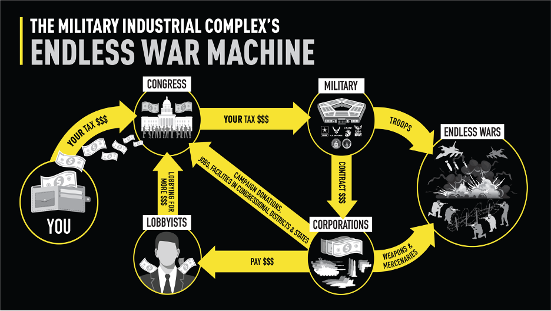
“…………………………… The NATO event looks like essentially —a trade show—except the newfangled hoopla is of a different kind. World leaders, all decked out in fine suits (nerds of a special kind), stroll the aisles admiring missiles and tanks engineered for maximum lethality. Billions are spent to make killing more efficient. While societies debate the cost of keeping one person alive in their final months, trillions flow into perfecting the technology of death. People who still think can see the terrible clarity in this inversion: when the soul recedes and the material world reigns, efficiency in killing becomes one of the highest values of our age.
Personally, I don’t think there is a better definition of insanity than the way humans delight in war and death. Yes, there was a time when killing your neighbour because they wouldn’t let you eat an apple growing on their side of the tribal fence made a tiny bit of sense. But what it has evolved into today is pure insanity. Humans are supposed to be capable of compassion. We are supposed to be able to sort out our differences with other tribes. We are supposed to care more about human life than we did in the cave days, when it was all about survival and who would or would not get the apple. What happened to all of that? For any of us to justify wholesale killing the way we do only proves we haven’t gotten anywhere in hundreds of thousands of years.
It is all so screwed up, as is nearly everything. Nothing makes sense anymore. ……. This is the kind of arithmetic they are running through their heads while strolling the aisles at their NATO war show: “Now tell me again—how many people will this weapon kill, and how much does it cost? That’s some nice bang for the buck! I’ll take 20 of ‘em!” Insane.
I just read that Canada is deep in debt and running persistent deficits, while Ukraine sits on roughly $4 billion worth of gold reserves. So, Canada (and everyone else that can) keeps giving money to a country that already holds billions in gold, all so more people can be killed. And don’t tell me, “Russia ruthlessly attacked Ukraine! They should pay for it!” Yeah, right. If you are saying that right now, you are, unfortunately, still thinking like an ignorant caveman. That is not the whole story; in fact, it is very little of it. But Russia doesn’t get off the hook either. Grow up, people. Figure this shit out and quit acting like ten-year-olds playing in the backyard with stick guns.
…… It is astounding to think that most of us work a lifetime just so our country has the resources to kill—or help kill—thousands of other working stiffs who are simply minding their own business and trying to get through life in one piece. Almost no one fighting in these wars has any real inkling why they are out there killing other people……… It is all a game now—not for the people dying from the weapons their leaders are buying, but for the leaders themselves and the oligarchs who own the companies making all this hardware. It is their little game. And they are having a blast.
I’ll say it again, and I’ll keep saying it until I’m blue in the face. It is all a game—a sophisticated 3D chess game. And we, the common useless eaters, are not at the table playing it. In fact, we barely even exist to the real players. Sure, they use us for kill stats. The more of us who die, the more some oligarch or world leader can claim victory and collect his chips.
Look at the actual numbers if you still doubt it. According to the latest available data from SIPRI and the International Institute for Strategic Studies:
The United States leads the world by a wide margin, spending roughly $920–950 billion a year on its military.
China follows at around $250–340 billion.
Russia is third at approximately $186–190 billion (about 7.5% of its GDP).
Germany has surged to over $100–114 billion.
India sits near $90 billion.
The United Kingdom spends close to $90 billion.
Ukraine, despite its size, is now pouring roughly $84 billion into its military—an almost unimaginable 40% of its entire GDP.
Saudi Arabia, France, Japan, and others round out the top tier with tens of billions each.
Canada, after years of lagging, has ramped up significantly and is now spending in the range of $35–40 billion (with recent announcements pushing it higher to meet NATO targets).
These are not abstract figures. These are the concrete resources extracted from ordinary people—through taxes, inflation, and delayed infrastructure, healthcare, and housing—so that a small circle of decision-makers can keep the machinery of death humming. Trillions of dollars every year, worldwide, flow into the business of preparing for, and conducting, the efficient slaughter of other human beings.
And still the game continues. The leaders meet, the contracts are signed, the missiles are ordered, the justifications are written, and the body counts are tallied. The rest of us are expected to cheer for “our side,” wave the correct flag, and never ask why the same people who claim to care so deeply about human life are so eager to spend our money perfecting the art of ending it. And nobody seems to care. As long as their game of pickleball is not disrupted, the leaders they seem to adore so much can continue to play their game to their heart’s content.
I don’t know how much longer this particular round of the game will last. I only know that as long as we keep accepting the premise—that war is inevitable, that leaders know best, that the dead on the other side somehow matter less—the players will keep dealing the cards and raking in the chips. The rest of us will keep paying the price, both in treasure and in blood.
Autonomous Weapons: The Wave of the Future in Military Conflicts Worldwide

Thalif Deen.. UNITED NATIONS, Jul 16 2026 (IPS) –
As the international community continues to weigh the good, the bad and the deadly in artificial intelligence (AI), which is spreading far and wide with apparently no guardrails, the United Nations is taking a closer look at the impact, both positive and negative, of AI.
UN Secretary General Antonio Guterres said last week that “the technology is heightening the danger, with sophisticated and increasingly autonomous new weaponry, including drones, able to inflict massive harm on populations.”
The new weapons, particularly Unmanned Aerial Vehicles (UAVs), more commonly known as drones, seem to be a new wave of killing machines in recent conflicts, including the US vs. Iran, Israel vs. Palestine and Lebanon, and Russia vs. Israel, plus scores of civil wars in Africa and Asia.
Simon Adams, Professor of Human Rights at Murdoch University in Australia and former President and CEO of the Center for Victims of Torture—a leading international human rights and humanitarian NGO—told Inter Press Service no country in the world has openly admitted to deploying a weapon that is completely autonomous in the sense of killing humans without a person also being involved in the decision-making process.
“But there are already a number of powerful states—including several that sit around the table at the UN Security Council—who are increasingly dependent on drones, robots and AI systems to fight wars for them. Algorithms are choosing bombing targets and are already responsible for killing civilians in some major conflict zones.”
AI has the potential to improve the lives of billions of people on this planet. It would be a moral failing of epic proportions and a global tragedy if AI were harnessed to innovate new ways for humans to outsource the dirty work of waging war to robots, he said.
“Killer robots are a horror that belongs in science fiction. There is nothing more sinister than outsourcing killing and warfighting to emotionless, faceless machines that will select which humans get to live or die. Lethal autonomous weapons systems are ethically indefensible and should be illegal. We need a global ban before it is too late.”
Guterres has also reiterated his call to have them banned by international law, adding that some decisions must remain forever human, none more than taking a human life.
David Swanson, campaign coordinator for RootsAction, told IPS dozens of national governments have already stated their support for banning autonomous weapons, and dozens of others expressed their inclination to support such a ban.
So, a treaty could be established among those nations, on the model of the recent Treaty on the Prohibition of Nuclear Weapons (TPNW) and then work could be done to add more nations to it. The initial signers and ratifiers would be the small and medium nations with the most willingness to defy the will of the U.S. government.
This banning of a particular type of weapon would ignore, as does the TPNW, the existence of the Treaty on the Nonproliferation of Nuclear Weapons, which requires disarmament of all weapons. It would also fail to address the morally repugnant act of ordering a young person, on pain of severe punishment, to press a button that sends a missile into people thousands of miles away—an act of dubious moral superiority to setting loose fully autonomous killer robots, he declared.
“But the biggest denier of reality in all of this is the U.S. government, which pioneered drone wars, was widely warned that it would not like the results when other nations followed suit, went on to suffer huge damage from foreign drones in places like the Persian Gulf during the current war on Iran, and altered its agenda not one iota. As guns sometimes appear to have more rights within the United States than children do, all forms of weaponry seem to be treated as deserving first consideration in U.S. foreign policy’,” he said
According to the New York Times of July 13, for decades Western governments have ordered supplies like tanks, fighter jets and submarines from contractors such as Lockheed Martin or Northrop Grumman—items that take years to deliver and are dizzyingly expensive: an F-35 jet can run to over $100 million.
“But the current trend is clear: defense technology is becoming cheaper and nimbler, with breakthroughs developed by privately funded companies rather than governments,” says an article authored by Vivienne Walt.
Of the Pentagon’s $1.5 trillion budget request by the current US administration for next year, about $55 billion is earmarked for the creation of a new unmanned, AI-powered arsenal.
Singling out a more positive non-military use of drones, the Times said last month that Sri Lanka, faced with one of the worst outbreaks of dengue fever in years, is using military drones to scan rooftops and find mosquito breeding grounds to eliminate them. The country’s air force has been routinely flying drones over high-rise buildings to identify breeding sites.
Nick Mottern, co-coordinator of the Weaponized Drone Ban Treaty Campaign, told IPS: “We are calling for a treaty to remove all weapons from drones, rather than to ban drones controlled autonomously by AI.
This is because all militaries will claim that there will always be a human in ultimate control of AI-augmented drones in spite of the fact that the drone will identify targets using AI, select weapons using AI, and present a human with all elements of the decision to kill using AI.
A treaty banning weapons on drones is the only way to stop the drone tsunami, he declared
Speaking at the First Global Dialogue on AI Governance in early July, Guterres said the world faced more than 120 conflicts in 2025.
Conflicts are becoming more protracted, more complex, and more interconnected, he pointed out. “We see widespread violations of international law and a growing sense of impunity. Technology is heightening the danger, with sophisticated — and increasingly autonomous — new weaponry, including drones, able to inflict massive harm on populations.”
“And online hate speech, misinformation and disinformation are spread and amplified in an instant. Too often, early warning signs are ignored. And responses are often a little too late.”
How Fear of Nuclear Armageddon Leads Me to Protest

Simply put, the U.S. maintains a first-strike nuclear option to be deployed against even a non-nuclear enemy. Paradoxically, China does have a “no first use” policy for its nuclear arsenal. Hey, U.S. adversaries, don’t even look at us the wrong way!
How radically and overtly hypocritical that the U.S., the greatest military power in the world—holding such a nuclear posture—initiated a war with Iran on the basis that the country might one day develop nuclear weapons, even though there is no conclusive evidence that it intends to do so. But then, this is how big bullies operate.
The blindness of Americans to the reality of nuclear annihilation begins with a national hypocrisy, one that we hold as the first and only nation to ever use nuclear weapons in war, killing hundreds of thousands of innocent people. It is a striking example of our hypocrisy that is blatantly clear to most of the world beyond our borders.
For nearly two decades, I have been arrested, ignored, and dismissed for protesting nuclear weapons—but as the Doomsday Clock inches toward midnight, giving up is not an option.
Scott Fina, Current Affairs, July 2026
Our tiny protest gathering at Vandenberg had a “micro-Woodstock” feel to it. One of us was dressed like an angel, in a white gown with flashing, battery-powered lights on wings attached to her back. She held a peace sign that also had blinking lights. She started beating a drum she had brought, and broke into an Indigenous chant she had learned from a local Chumash (Native American) community, whose descendants continue to protest military installations on their ancestral homelands. She had driven hours to the military base from her home in central Los Angeles—the likely source of her captivating creativity.
So, there we were, observing the flight of the most dangerous weapon ever created and possessed by humanity: an intercontinental ballistic missile (ICBM) that had been launched from an underground silo on the base. The Minuteman III ICBM we were watching could carry multiple nuclear warheads. Fortunately, the missile was not armed, and its launch was a test, sending it 4,200 miles over the Pacific Ocean to the Kwajalein Atoll in the Marshall Islands. The U.S. military has adopted a nickname for such missile flights: “Glory Trips.”
As protesting observers, we failed to see any glory in the exhibition of the ICBM test launch. But if watching an ICBM launch isn’t glorious enough for some folks, they can go to the U.S. Department of War (DOW) website and check out the “multimedia experience” of the military’s nuclear triad delivery system. The online presentation blatantly and unabashedly explains in detail how the U.S. military can readily make nuclear strikes against its adversaries using not only land-based, silo-launched missiles, but also submarine and fighter plane launchings of nuclear bombs.
The DOW’s flashy, action-filled nuclear triad website is full of bravado, and seemingly overloaded with testosterone. It looks like a violent video game. One can imagine Secretary of War Pete Hegseth, messing around with the website, tapping at the keyboard with one hand, while holding a beer in the other.
Interestingly, the introductory section of the DOW nuclear triad website includes a statement which reads, in part, “…the triad ensures a credible and flexible nuclear deterrent, providing the president of the United States with options to accomplish objectives if deterrence fails.”
Those are nuclear options currently available for Donald Trump, who alone has the authority to order a nuclear attack. Having such choices on which weapons to use has got to be alluring, if not tempting, for our president. Imagine what goes on in his brain at times when he thinks about the power he has over nuclear weapons and the fate of humanity. Think, “eeny, meeny, miny, moe…”
On top of all its muscle flexing, there is another feature in the U.S. nuclear weapons policy that exhibits a kind of bullying. I refer here to the U.S. Nuclear Posture Review (NPR) published by the Biden Administration in 2022. The NPR remains operative under the Trump Administration.
Consider this statement in the NPR, which is readily available for the world to see:
We conducted a thorough review of a broad range of options for nuclear declaratory policy – including both No First Use and Sole Purpose policies – and concluded that those approaches would result in an unacceptable level of risk in light of the range of non-nuclear capabilities being developed and fielded by competitors that could inflict strategic-level damage to the United States and its Allies and partners.
Simply put, the U.S. maintains a first-strike nuclear option to be deployed against even a non-nuclear enemy. Paradoxically, China does have a “no first use” policy for its nuclear arsenal. Hey, U.S. adversaries, don’t even look at us the wrong way!
But wait! There’s more going on with the U.S. nuclear arsenal: modernization.
The replacement of over 400 ICBM Minuteman III missiles is currently in the works. These weapons have been in use (on alert but not fired off) for over 55 years, and have been kept viable thanks to “a series of life extension programs,” according to the Air Force Nuclear Weapons Center. In the early 2030s, even more deadly ICBM Sentinel missiles will take their place. According to the Air and Space Forces Magazine, these new ICBMs will cost over $140 billion.
…………………………………………………………………………………………………………………………. Many protesters at Vandenberg have also gone to prison for their nonviolent, civil disobedience: crossing a green line that demarcated where protest was allowed. The case of one courageous protester, Dennis Apel, who was arrested 15 times at Vandenberg, landed at the U.S. Supreme Court……………………………………………………………………………………………………….
Hundreds of Americans protest against nuclear weapons every year at various military bases, and also at private corporate facilities that are connected to the U.S. nuclear program (and make big bucks). Unfortunately, anti-nuclear protesters often go unheard in the U.S., regardless of the often deep, personal sacrifices they make. Also, those voices have been aging and declining in number over the years.
Since I first joined protesters at Vandenberg in 2008, our numbers have dwindled to less than a dozen who gather monthly at the main gate. Annually, on or around the dates of August 6 and August 9—the anniversaries of the nuclear bombing of Hiroshima and Nagasaki, respectively—the number of protesters grows to a few dozen at Vandenberg, with most coming from Los Angeles. The somewhat larger crowd draws a good number of well-armed, military security guards who line up in formation a hundred yards down the base entry road.
The soldiers wait for protesters to cross the green line, and every year, a few do. Over a loud speaker, the military officer in charge of the formation warns these brave folks to cross back over the line within two minutes or they will face arrest. The protesters ignore the command, are handcuffed, cited, and then driven off the base in a van by the soldiers.
This scene is both moving, and a little comical, depending on one’s perspective. You see, these days most of the protesters at Vandenberg are old and grey (including myself). We are also a motley group, and frumpy. It’s not too much of a stretch to imagine us as a collection of outsized Ewoks from a Star Wars film, standing up to Stormtroopers of the Galactic Empire. If someone played a John Williams score over a music box in the background, we’d have a real show.
Admittedly, probably most Americans would see the protesters at Vandenberg as preposterous, daring to confront the most powerful military on the planet with little hope of disarming our nation of nuclear weapons. Perhaps we are. But we are driven by a moral and humane purpose. . And if observers—even those who are patriotic—were more objective and opened their eyes widely, they might see what we protesters deeply sense: that the huge and deadly U.S. nuclear arsenal and forces contain our nation’s own demise.
The blindness of Americans to the reality of nuclear annihilation begins with a national hypocrisy, one that we hold as the first and only nation to ever use nuclear weapons in war, killing hundreds of thousands of innocent people. It is a striking example of our hypocrisy that is blatantly clear to most of the world beyond our borders……………………………………………………………………………………………………………………………………………………………………………………………………………………………………………………………………………….
The most recent, significant multilateral treaty, the Treaty on the Prohibition of Nuclear Weapons (TPNW), was adopted at the United Nations in 2017, and entered into force in 2021. In sum, this treaty calls for nations around the world to either commit to never creating, possessing, testing, or transferring nuclear weapons if they have not yet done so, or to fully rid themselves of nuclear weapons—disarm—if they already have them.
To date, 95 nations have signed onto the TPNW. While that seems promising, it really isn’t, yet. The TPNW has been ignored by all the nuclear states, including the U.S. Still, it’s premature to write the treaty off at this point. But consider what looms over humanity’s head in the meantime.
The International Campaign to Abolish Nuclear Weapons (ICAN), an international coalition of non-governmental organizations and winner of the 2017 Nobel Peace Prize, warns that even limited nuclear conflicts will cause global devastation.
………………………. The second Trump Administration has said it is pursuing a “peace through strength” policy in national security and foreign affairs. The National Defense Strategy emphasizes the importance of modernizing the U.S. nuclear deterrent in response to increased nuclear threats.
“Peace through strength!” That doesn’t quite sound like a winning catchphrase that could inspire adversaries to surrender their nuclear weapons. More accurately, the image I get is Pete Hegseth crushing an empty beer can against the side of his head. Add on the “weapons modernization” program and you don’t really improve nuclear deterrence, but embolden the arms race already in place by nuclear adversaries.
………………………………………………………………………………………………………………………………………………..What JFK described in his peace address is a very different America, one that respects other nations and treasures humanity. It presents an America that tries to lead, rather than rule the nations around the world. Consider these comments:
“What kind of peace do we seek? Not a Pax Americana enforced on the world by American weapons of war. … I am talking about …the kind of peace that makes life on earth worth living, … that enables men and nations to grow and to hope and to build a better life for their children–not merely peace for Americans but peace for all men and women–not merely peace in our time but peace for all time.
I speak of peace because of the new face of war. Total war makes no sense in an age when great powers can maintain large and relatively invulnerable nuclear forces and refuse to surrender without resort to those forces. It makes no sense in an age when a single nuclear weapon contains almost ten times the explosive force delivered by all the allied air forces in the Second World War. It makes no sense in an age when the deadly poisons produced by a nuclear exchange would be carried by wind and water and soil and seed to the far corners of the globe and to generations yet unborn.”
Currently there is a movement in Congress echoing JFK’s thinking on peace……………………………………………………
JFK’s thinking on peace is radically different from Trump’s and Hegseth’s. In our day and age, Kennedy’s perspective would be widely held as preposterous—just like the case of protesters who make personal sacrifices in attempts to waken our nation to see its almost hypnotic violence and self-destruction threatened by nuclear weapons.
……………………………………………………………………………………………Recently, the DOW has posted television and social media ads about “peace through strength” that compliment its multimedia presentation on the nuclear triad. One asks: how do most Americans carry on daily life, seemingly unconscious of the deeply disconcerting possibility of nuclear Armageddon? Is it because our populace is errantly convinced that immense, superior weaponry will fully protect us from our adversaries? Have we drank a soon-fatal dose of the potion of military propaganda? https://www.currentaffairs.org/news/how-fear-of-nuclear-armageddon-leads-me-to-protest
Hamas’s Governance Exit Exposes Israel’s Real Objectives
Abbas Hashemite, July 15, 2026, https://journal-neo.su/2026/07/15/hamass-governance-exit-exposes-israels-real-objectives/
Hamas’s decision to relinquish governance of the Gaza Strip appears to be derived from domestic and international strategic needs, and to further weaken the Israeli propaganda.
Hamas’s Administrative Withdrawal Amid Gaza’s Humanitarian Catastrophe
After ruling Gaza for around two decades, Hamas recently announced that it was prepared and willing to hand over the Strip’s governance to the National Committee for the Administration of Gaza, the technocratic administration set up under US President Donald Trump’s so-called Board of Peace. According to the spokesperson of Hamas, the decision was made to “remove any pretexts for the [Israeli] occupation.” Indeed, the Israeli genocide, war crimes, occupation, and war of extermination against the Palestinian people persist despite the ceasefire, which took effect in October 2025.
According to a UNOCHA report, “nearly all of Gaza’s current population of 2.1 million people has been displaced, lacking access to sufficient shelter, food, life-saving medical services, clean water, education, and livelihoods.” According to some reports, the IDF has butchered more than 80000 Palestinians from October 7, 2023, to January, 2025; the actual figure is estimated to be much higher, as many bodies are still buried under rubble. The Israeli Defense Forces have also committed many other war crimes, such as raping Palestinian women and intentionally bombing hospitals, mosques, churches, and educational institutions, along with targeting journalists and welfare workers.
There are several indications that the Zionist regime may resume its full-scale genocidal operations in Gaza, using the resistance group’s refusal to surrender its arms and weapons as a pretext. Nonetheless, it appears that the Western nations have put the onus of honoring the deal only on Hamas, and Tel Aviv enjoys the freedom to violate the ceasefire at its will. This is evident from the fact that the IDF continues to kill Palestinian civilians, including women and children, despite the ceasefire. Moreover, it continues to control around 70 percent of the Gaza Enclave.
Why Relinquishing Governance Is a Strategic Calculation, Not a Defeat
Considering these developments, Hamas, in a strategic move, has decided to dissolve the Government Emergency Committee in Gaza. However, considering it as a surrender or defeat would be erroneous. In the current regional and domestic scenario, this was the most accurate move that Hamas could make. Through this move, the resistance group has reaffirmed its commitment to implementing the ceasefire deal and fulfilling Hamas’s objectives.
Even after one of history’s most horrific wars, the Zionist occupational regime has failed to achieve its primary objective: eliminating Hamas. The resistance’s decision to relinquish Gaza’s administration allows Hamas to reorganize its operational and institutional structures, minimize its institutional exposure, and focus on its fundamental objective, the struggle of Palestinian national liberation from the Zionist occupation. The Israeli government has long leveraged on the political, geographical, and ideological division between the West Bank and Gaza. This move would end this leverage and allow the two sides to unite.
A New Test for Israel and International Mediators
Despite this decision, the new administration would not mean complete foreign control over the Strip or exclusion of native Palestinians from politics, as Gaza belongs to its native population, not to any foreign-backed administration. Therefore, the most crucial challenge for the Western mediators will be to rebuild a representative and deeply rooted Palestinian leadership capable of raising the genuine concerns of the native people in the West Bank and Gaza. Otherwise, this new administrative structure will lose its credibility and domestic acceptance.
Another significant point to understand is that resisting and governing are two distinct functions. Therefore, this move must not be mistaken for a withdrawal from resistance. Hamas took this decision to advance its broader strategic objectives. For years, the Zionist regime of Israel has justified its war crimes, genocidal operations, and blockade of the Strip under the pretext of Hamas’s so-called threatening presence for the state.
After the resistance group’s complete compliance with the terms of the ceasefire and its announcement to transfer the administration of the Strip, the Zionist regime now seeks to hinder the implementation of the deal and hamper the National Committee from assuming the administrative responsibilities, to amplify the sufferings of the Palestinian people. This further exposes the propaganda of the Israeli government. It demonstrates that the actual ambition of the occupational regime was never to eliminate Hamas from the government; it was to deprive the Palestinians of their fundamental rights and resistance.
According to the Israeli government, the objective of this recent war was to end Hamas’s government in Gaza. After the recent decision by Hamas, the Israeli government has no reason left to blockade or bomb the Strip. Through this strategic move, Hamas is now confronting all the mediators and actors with their responsibilities. Moreover, this decision has further increased complications for the Zionist regime to legitimize its military aggression and genocidal operations in Gaza. It has been revealed once again that Hamas’s government was never the actual problem, but the refusal of the Palestinians to submit to the Israeli occupation. Through this decision, Hamas has not only gained strategic leverage but also achieved an opportunity to reorganize and restructure itself.
Аbbas Hashemite is a political observer and research analyst for regional and global geopolitical issues. He is currently working as an independent researcher and journalist
‘Seismic Shift’ as Over 100 House Democrats Vote to Cut Off US Military Aid to Israel
“This should be a blaring wake-up call for Democratic leaders,” said one campaigner. “The political tide is clearly turning against unconditional US military support for Israel.”
SCHEERPOST, Brett Wilkins Common Dreams, July 16, 2026
Nearly half of all Democrats in the House of Representatives voted Wednesday to cut off US military aid to Israel, a move that underscored a dramatic shift away from the US support the Mideast ally has enjoyed for nearly 60 years.
While House lawmakers ultimately rejected Rep. Thomas Massie’s (R-Ky.) amendment to a national security spending bill that would have eliminated the $3.3 billion in annual foreign military financing provided to Israel’s military, the details of the vote were viewed as an encouraging sign by defenders of Palestine and the rule of law.
Massie and 103 Democrats voted for the measure, while 215 Republicans and 98 Democrats rejected it. The overall tally was 104 for, 314 against, and 10 “present” votes, with 9 absences.
“I cannot vote for aid to a country that committed genocide and has used tax dollars to detain Americans like me,” Rep. Ro Khanna (D-Calif.) said ahead of the vote, referring to an incident in which heavily armed residents of an Israeli settler colony stopped and surrounded him last week in the illegally occupied West Bank of Palestine.
Speaking to reporters after the vote, Congressional Progressive Caucus Chair Greg Casar (D-Texas)—who had urged colleagues to support Massie’s amendment—noted, “It used to be that just a small number of House Democrats would vote against sending taxpayer dollars to weapons for the Israeli military.”
“Today, over 100 House Democrats voted for a measure to block billions of dollars in weapons to [Israeli Prime Minister Benjamin] Netanyahu,” he continued. “That is enormous progress. That is a victory for our movement, for security, peace, and justice for all people.”
The vote, Casar said, “sasends a strong message to Netanyahu that the days are over of an unaccountable blank check to his wars and his war crimes, at least from the Democratic Party.”……………………………………………………………………………………………………………………….. https://scheerpost.com/2026/07/16/seismic-shift-as-over-100-house-democrats-vote-to-cut-off-us-military-aid-to-israel/
The five countries that could go nuclear next – and how worried we should be
Arms control deals between the great powers are breaking down. Now other nations are looking for radical security solutions
iNews 15th July 2026, Kieron Monks Foreign news and feature writer
As wars and predator states reshape the world order, fears are growing that a new nuclear arms race is already under way.
Agreements between the great powers over the control of nuclear weapons are breaking down. Middle powers, from South Korea to Saudi Arabia, are considering radical solutions to their security concerns.
The Non-Proliferation Treaty (NPT), which binds 190 countries to the status quo of restricting nuclear weapons to the handful of states that already possess them, has largely held for a generation. North Korea is the only new nuclear power of the 21st century.
Dr Pavel Podvig, a senior researcher into weapons of mass destruction at the UN Institute for Disarmament Research (UNIDIR), noted a rise in “magic wand thinking”, with several governments openly discussing nuclear development. “There is this idea that nuclear weapons just work automatically to protect you, when the reality is more complicated,” he said.
John Erath, senior policy director at the Center for Arms Control and Non-Proliferation in Washington DC, said factors such as Russia’s nuclear threats and China’s expanding nuclear arsenal made this a more dangerous era for proliferation control.
While he did not expect a country to cross the threshold in the near future, one new nuclear nation could trigger a flood. “If Iran were to build a nuclear weapon, I believe several other countries would as well,” he said.
Here are the countries that are among those most likely to join the ranks of nuclear powers…
South Korea
Seoul has lived under threat from its nuclear northern neighbour for decades within a still-unresolved frozen conflict that dates back to 1950.
In 2023, the then president Yoon Suk-yeol – now mired in legal trouble over a failed coup – warned that South Korea could rapidly develop its own nuclear weapons if Pyongyang’s threats became “more serious” – a position that reflected public opinion and the country’s capabilities.
Taehwa Hong, a fellow at the Foreign Policy Research Institute, said the country was a “plausible candidate” to join the nuclear club, more so for the US downsizing its military presence there.
“The drivers are real,” said Hong, who is working on a book about South Korean strategy. “Public support for an independent arsenal has run at 70 to 80 per cent for over a decade, Korea has a world-class civil nuclear industry, and confidence in US extended deterrence has been eroding under America First pressures.”
“But the restraints are equally real. Weaponisation would require NPT withdrawal, expose one of the world’s most trade-dependent economies to sanctions, strain the very alliance it is meant to compensate for, and risk a proliferation cascade running through Japan.”
The most likely scenario is for Seoul to approach the nuclear threshold through peaceful enrichment of nuclear fuel without crossing it, the analyst said. But that could change if the US withdraws more forces or its “nuclear umbrella” from the country, or in a scenario of China attacking Taiwan
Poland
Poland’s President, Karol Nawrocki, said in February that he would support the development of an independent nuclear deterrent. “The path toward a Polish nuclear project, in full respect of all international regulations, is a path Poland should pursue,” he said.
Those sentiments were echoed by the liberal Prime Minister, Donald Tusk – usually a fierce opponent of Nawrocki. Polls have shown a majority of public opinion supports Poland having its own nuclear weapons outside the US umbrella.
Dr Jakub Bordio, a professor of political science at the University of Wroclaw, said these were unprecedented developments driven by a sense that the “international security architecture is developing, from our perspective, in the wrong direction”.
Iran …………………………………………………………………………………………………………………………………………………
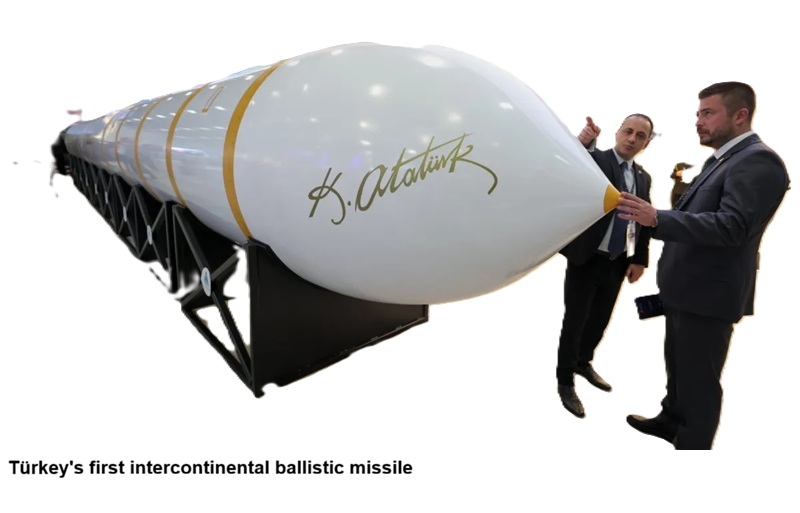
Turkey.……………………………………………………………………………………………………………….
Saudi Arabia ………………………………………………………………………………………………………. https://inews.co.uk/news/world/five-countries-go-nuclear-how-worried-4635284
Grant to support expansion of TRISO-X nuclear fuel campus
X-Energy subsidiary TRISO-X has received a grant from the State of
Tennessee of USD11 million to support the continued development of its fuel
fabrication campus in Oak Ridge, Tennessee, including a potential second
commercial fuel facility and a dedicated research and development centre.
World Nuclear News 16th July 2026 https://www.world-nuclear-news.org/articles/grant-to-support-expansion-of-triso-x-nuclear-fuel-campus
1 This Month
23-25 October – on Zoom – World BEYOND War’s annual global conferenc


Shut down the radiation-damaged Heysham nuclear reactors now
To see nuclear-related stories in greater depth and intensity – go to https://nuclearinformation.wordpress.com

Say No to NASA’s Reckless Nuclear Reactor on the Moon
Say No to NASA’s Reckless Nuclear Reactor on the Moon

-
Archives
- October 2026 (247)
- September 2026 (339)
- August 2026 (330)
- July 2026 (355)
- June 2026 (287)
- May 2026 (306)
- April 2026 (356)
- March 2026 (251)
- February 2026 (267)
- January 2026 (308)
- December 2025 (358)
- November 2025 (359)
-
Categories
- 1
- 1 NUCLEAR ISSUES
- business and costs
- climate change
- culture and arts
- ENERGY
- environment
- health
- history
- indigenous issues
- Legal
- marketing of nuclear
- media
- opposition to nuclear
- PERSONAL STORIES
- politics
- politics international
- Religion and ethics
- safety
- secrets,lies and civil liberties
- spinbuster
- technology
- Uranium
- wastes
- weapons and war
- Women
- 2 WORLD
- ACTION
- AFRICA
- Atrocities
- AUSTRALIA
- Christina's notes
- Christina's themes
- culture and arts
- Events
- Fuk 2022
- Fuk 2023
- Fukushima 2017
- Fukushima 2018
- fukushima 2019
- Fukushima 2020
- Fukushima 2021
- general
- global warming
- Humour (God we need it)
- Nuclear
- RARE EARTHS
- Reference
- resources – print
- Resources -audiovicual
- Weekly Newsletter
- World
- World Nuclear
- YouTube
-
RSS
Entries RSS
Comments RSS

