Insuring Small Modular Nuclear Reactors.
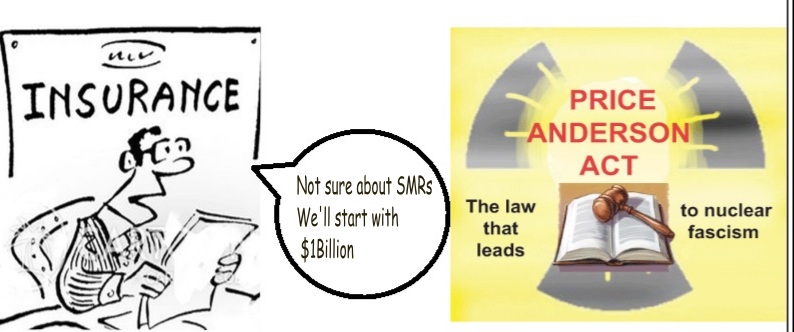
Deploying the next generation of nuclear technologies is likely to present a number of novel challenges, notably securing appropriate insurance coverage for both property and liability. Without early engagement developers could face significant obstacles to commercial roll-out.
Nuclear Engineering International, By Ron Rispoli, Senior Vice President, Energy Group, Stephens Insurance, LLCJuly 9, 2026
s small modular reactors (SMRs) move from concept to commercialisation, one of the least visible yet most critical enablers of deployment is insurance. Property and liability coverage for nuclear are not only a financial safeguard, they are also a regulatory requirement. However, nuclear insurance is highly specialised, capacity constrained, and dependent on early engagement with underwriters.
Insurance requirements for SMRs and microreactors may vary based on reactor size, design, fuel forms, coolant types, and power levels. Existing regulatory frameworks establish baseline liability and financial protection requirements, but these were developed for large, traditional light water reactors. As a result, regulators and insurers may apply a more risk-informed approach when determining appropriate insurance levels for smaller or non-traditional designs.
The US liability insurance framework
In the United States, nuclear liability insurance is governed by the Price-Anderson Act, a federal programme designed to ensure compensation to the public following a nuclear incident. The Act establishes a two-tier structure………
In addition to the Price-Anderson Act, Nuclear Regulatory Commission (NRC) regulations in 10 CFR Part 140 establish detailed financial protection requirements based on reactor size and operating status. These regulations differentiate between nuclear power plants with a rated capacity of 100 MWe or greater and those with lower electrical output, a distinction that is particularly relevant for small modular reactors (SMRs) and microreactors. For smaller units, required liability coverage may be reduced or determined on a case-specific basis, reflecting their lower potential risk profile. The regulations also include provisions for multiple reactors located at a single site. This allows the NRC to evaluate financial protection requirements on a site-specific basis. This introduces additional flexibility for SMR deployments but also creates complexity in structuring appropriate liability coverage for multi-unit configurations.
…..In the United States, reactor licensees are generally required to maintain approximately $1.06bn in onsite property insurance per reactor site. ….
Globally, nuclear liability is governed by a set of international conventions, including the Convention on Supplementary Compensation for Nuclear Damage (CSC), the Paris Convention and Brussels Supplementary Convention, and the Vienna Convention and Joint Protocol. While implementation varies by jurisdiction, these frameworks share core principles: liability is channelled exclusively to the operator, with liability caps supplemented by public funds.
For SMR developers pursuing international deployment, this creates a jurisdiction-by-jurisdiction insurance strategy that often requires coordination across multiple national insurance regimes…………
A constrained market and specialised brokerage
Existing insurance frameworks were developed for large, traditional reactors, creating added complexity for SMR deployment. Unlike conventional insurance markets, nuclear insurance is provided by a small number of highly specialised pools and mutual insurers. Global underwriting capacity is limited, and participation is tightly controlled.
This dynamic is particularly relevant for SMRs, as developers may pursue multi-unit deployments, novel reactor designs, or non-traditional ownership structures – all of which introduce new risks from an underwriting perspective. In practice, access to insurance capacity – not reactor design – may become a gating factor for deployment. Given the complexity of the nuclear insurance market, engaging a broker with demonstrated experience in nuclear insurance is essential. Nuclear insurance is not transacted in a broad, competitive marketplace; rather, it is concentrated among a small number of insurers each with distinct underwriting requirements and processes…….
Emerging technologies, multi-unit deployment strategies, and evolving regulatory frameworks introduce uncertainties that must be translated into insurable risk. Without specialised expertise, projects may face delays, higher costs, or challenges in securing adequate coverage.
Insurance cannot be treated as an afterthought…..Delayed engagement with insurance markets can expose developers to significant risks, including coverage exclusions, insufficient limits, or, in extreme cases, an inability to secure required insurance. Coverage is not guaranteed to be available in the necessary amount, form, or timeframe. As the SMR market grows, competition for limited insurance capacity is likely to intensify….https://www.neimagazine.com/analysis/smrs-advanced-reactors/insuring-smrs/?cf-view
No comments yet.
1 This Month





PLEASE OPPOSE HR 8255 AND S.3639 – bills would accelerate satellite deployment, with no environmental review or safeguards – https://ncstd5li.quorum.us/campaign/169331/
To see nuclear-related stories in greater depth and intensity – go to https://nuclearinformation.wordpress.com
-
Archives
- October 2026 (74)
- September 2026 (339)
- August 2026 (330)
- July 2026 (355)
- June 2026 (287)
- May 2026 (306)
- April 2026 (356)
- March 2026 (251)
- February 2026 (267)
- January 2026 (308)
- December 2025 (358)
- November 2025 (359)
-
Categories
- 1
- 1 NUCLEAR ISSUES
- business and costs
- climate change
- culture and arts
- ENERGY
- environment
- health
- history
- indigenous issues
- Legal
- marketing of nuclear
- media
- opposition to nuclear
- PERSONAL STORIES
- politics
- politics international
- Religion and ethics
- safety
- secrets,lies and civil liberties
- spinbuster
- technology
- Uranium
- wastes
- weapons and war
- Women
- 2 WORLD
- ACTION
- AFRICA
- Atrocities
- AUSTRALIA
- Christina's notes
- Christina's themes
- culture and arts
- Events
- Fuk 2022
- Fuk 2023
- Fukushima 2017
- Fukushima 2018
- fukushima 2019
- Fukushima 2020
- Fukushima 2021
- general
- global warming
- Humour (God we need it)
- Nuclear
- RARE EARTHS
- Reference
- resources – print
- Resources -audiovicual
- Weekly Newsletter
- World
- World Nuclear
- YouTube
-
RSS
Entries RSS
Comments RSS


Leave a comment