How do you justify a war?
27 May 2026 , Michael Taylor, AIM Extra, https://theaimn.net/how-do-you-justify-a-war/
There comes a point when the language of war stops matching the reality of it:
- Bombed apartment blocks become “targets”
- Dead children become “collateral damage”
- Starving civilians become “human shields”
And anyone who questions the destruction is accused of supporting terrorism. Or, as in extreme cases, of being antisemitic.
Watching Gaza burn, Lebanon bombed, and Iran drawn deeper into conflict, I find myself asking a simple question: How much is enough?
I understand the fear Israel felt after the October 7 attacks. I understand the anger. I understand the desire for justice.
What I no longer understand is the growing acceptance of endless civilian deaths as though morality itself now depends on which side is doing the killing.
At the time of the first bombings of Iran I wrote thaṯ:
“Every night, the news flickers across my screen, a parade of tragedies reduced to numbers and soundbites. Gaza burns, its streets choked with rubble and grief, thousands dead under Israeli bombs. Iran mourns too, its people buried beneath the chaos of escalating strikes. Yet the world’s voice is strangely muted, a whisper where a scream should be. But when Iran’s missiles streak toward Israel, claiming far fewer lives, the headlines roar with horror, and leaders amplify their outrage. I sit in my quiet room… trying to unravel this knot of hypocrisy. Why do some deaths ripple across the globe while others sink like stones in a silent pond?”
Perhaps the most disturbing part of all this is that the violence no longer appears temporary. What began as retaliation now feels like permanent war.
Gaza destroyed. Lebanon bombed. Iran attacked. Assassinations, airstrikes, threats of escalation; each one defended as necessary, each one promising security, while the region grows more unstable by the day.
At some point the world must ask whether this is still self-defence, or whether the Netanyahu government has become trapped in a cycle where military force is no longer a last resort but the first instinct.
A nation traumatised by terror has every right to defend itself. But defence without restraint can slowly transform into something else entirely.
History is filled with governments that believed overwhelming force would finally bring peace. More often, it deepened hatred, radicalised future generations, and left entire regions scarred for decades.
The tragedy is that every new bomb seems to push peace further away:
Civilians bury their children.
Entire cities learn to live with trauma.
Anger hardens across borders.
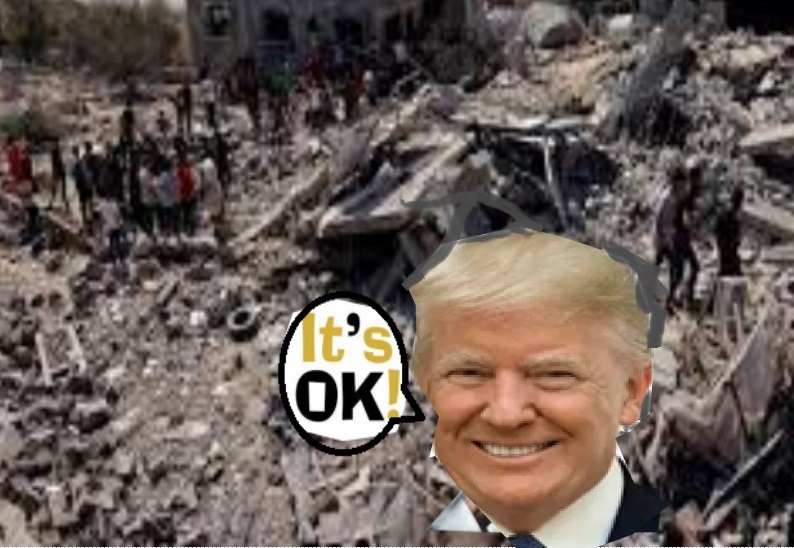
And leaders, notably Netanyahu and Trump – especially Trump – continue speaking the language of so-called security while ordinary people inherit the consequences of endless war.
This is disturbing. Not simply the bombs or the missiles, but how quickly human suffering becomes normalised when it is politically convenient.
Somewhere beneath the rubble are children who will never grow old, parents who will never return home, and entire generations learning that the world values some lives more than others.
Perhaps the greatest tragedy is not that this “justified” war brutalises people, but the silence that eventually surrounds it.
History has taught us that.
No comments yet.
1 This Month





PLEASE OPPOSE HR 8255 AND S.3639 – bills would accelerate satellite deployment, with no environmental review or safeguards – https://ncstd5li.quorum.us/campaign/169331/
To see nuclear-related stories in greater depth and intensity – go to https://nuclearinformation.wordpress.com
-
Archives
- October 2026 (10)
- September 2026 (339)
- August 2026 (330)
- July 2026 (355)
- June 2026 (287)
- May 2026 (306)
- April 2026 (356)
- March 2026 (251)
- February 2026 (267)
- January 2026 (308)
- December 2025 (358)
- November 2025 (359)
-
Categories
- 1
- 1 NUCLEAR ISSUES
- business and costs
- climate change
- culture and arts
- ENERGY
- environment
- health
- history
- indigenous issues
- Legal
- marketing of nuclear
- media
- opposition to nuclear
- PERSONAL STORIES
- politics
- politics international
- Religion and ethics
- safety
- secrets,lies and civil liberties
- spinbuster
- technology
- Uranium
- wastes
- weapons and war
- Women
- 2 WORLD
- ACTION
- AFRICA
- Atrocities
- AUSTRALIA
- Christina's notes
- Christina's themes
- culture and arts
- Events
- Fuk 2022
- Fuk 2023
- Fukushima 2017
- Fukushima 2018
- fukushima 2019
- Fukushima 2020
- Fukushima 2021
- general
- global warming
- Humour (God we need it)
- Nuclear
- RARE EARTHS
- Reference
- resources – print
- Resources -audiovicual
- Weekly Newsletter
- World
- World Nuclear
- YouTube
-
RSS
Entries RSS
Comments RSS


Leave a comment