The culture of power, and normalization of war in the time of artificial Intelligence -extract from Pope Leo’s Encyclical.
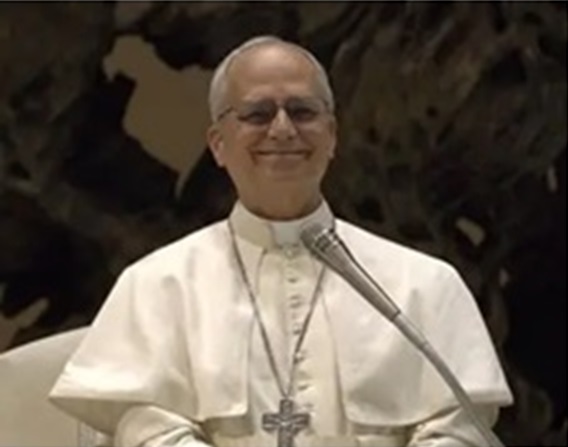
ENCYCLICAL LETTER
MAGNIFICA HUMANITAS
OF HIS HOLINESS
POPE LEO XIV
ON SAFEGUARDING THE HUMAN PERSON
IN THE TIME OF ARTIFICIAL INTELLIGENCE
…………………………………………………………………………………………………The culture of power
188. In our time, a culture of power is taking hold, in which the availability of resources and the ability to dominate tend to dictate the agenda and criteria for decision-making. In this way, the common good of humanity is relegated to the background and the concrete tragedy of peoples at war is reduced to a secondary consideration in relation to strategic interests. This culture of power infiltrates society, changes relationships and behaviors, and grows by normalizing war, pursuing ever-greater military power, taking advantage of the crisis of multilateralism and fueling a false realism that insists that there is no alternative.
The normalization of war
189. In 1965, the words of Saint Paul VI resounded powerfully at the UN General Assembly: “Never again war, never again war!” [180] We must acknowledge that, despite the desires and declarations for peace, the past sixty years have been marked by conflicts of astonishing brutality, often affecting civilian populations on a massive scale, leading to the death of innocent victims, mass displacement, social destabilization and long-lasting wounds. Nevertheless, in public discourse, there was a widespread conviction that war should remain a last resort, subject to strict ethical and legal limits, and always oriented toward a political vision of peace. Following developments in the immediate post-First World War period, a turning point occurred after the Second World War: peace was made the focus of the international order, as attested in particular by the United Nations Charter, with the intention to “save succeeding generations from the scourge of war.” [181] Likewise, many national constitutions restricted the use of force to extreme and strictly limited circumstances. Even during the Cold War, despite the existence of serious conflicts, there remained the awareness that a new world war had to be avoided at all costs.
190. Today, however, we are witnessing a real paradigm shift in public discourse and in decisions regarding rearmament, with a troubling revival of war as an instrument of international politics, while the very ethical principles that had previously limited its use are being eroded. Regional conflicts that drag on over time, escalating tensions and reciprocal threats are becoming almost commonplace, and forms of conflict driven by the desire for territorial expansion that were thought to be overcome are re-emerging. Public opinion is gradually being shaped and conditioned by polarizing media narratives, which are often amplified by algorithms that prioritize conflict and confrontation.
191. We are also witnessing a disconcerting loss of historical memory, as first-hand accounts of the Holocaust and the two World Wars are disappearing. This leads to a selective or distorted rewriting of the past, in a context where fake news and the manipulation of narratives obscure the lessons that have been learned. Without a living memory of the horrors of war, political decisions risk being made on the basis of power alone, without any consideration for the long-term consequences.
192. To all of this, the media and digital dimensions are adding new and decisive elements. Communication networks, fragmented information environments and algorithms that reward conflict can magnify polarization and resentment, increase propaganda and make shared discernment more difficult. Thus, war is not only fought, but also culturally conditioned through simplistic narratives, a friend-or-foe mentality, disinformation and fear. When historical memory fades and the ethical principles that protect civilians and the most vulnerable are weakened, it becomes easier to justify violence as necessary, inevitable or even “sanitized.” It is in this context that humanity is slipping into a violent culture of power, where peace no longer appears as a responsibility to be taken on, but as a fragile interval between conflicts. Today, more than ever, without prejudice to the right to self-defense in the strictest sense, it is important to reaffirm that the “just war” theory, which has all too often been used to justify any kind of war, is now outdated.
[182] Humanity possesses far more effective and capable tools for promoting human life and resolving conflicts, such as dialogue, diplomacy and forgiveness. The use of force, violence and weapons reflects a relational poverty that always has disastrous consequences for civilian populations.
193. The growth of the military-industrial complex has become a defining feature of the current political landscape and has become a key sector in the economy of various countries. The close link between economic interests, the military apparatus and political decisions produces an “armed nation,” in which war appears as a natural extension of politics, and the arms market becomes an autonomous driving force behind military decisions. Nor can we ignore the enormous economic interests behind war. The armaments industry, and countries that supply weapons, profit from a market that thrives precisely on conflicts. In this sense, there are also financial interests that contribute to fueling tensions in various regions of the world.
194. Military arsenals are receiving renewed attention. In the past, recognition of the threat posed by weapons capable of destroying all of humanity had promoted paths toward détente and disarmament negotiations. Unfortunately, this approach has been left behind, and the evolution of nuclear arsenals — including the prospect of its “tactical” use — makes the use of such weapons seem less improbable. In this context, the Treaty on the Prohibition of Nuclear Weapons, which came into force in 2021 with the support of over seventy countries, is an important step. However, it risks remaining largely symbolic since the major nuclear powers have not agreed to it.
This has led to the widespread yet erroneous belief that nuclear deterrence is an indispensable prerequisite for security. This has also contributed to a new arms race, which is hard to control and accompanied by the gradual dismantling of nuclear reduction agreements, as well as the development of “miniaturized” weapons, that make their use seem like a more viable option.
195. The same logic applies to conventional warfare. Military force, weak diplomatic initiatives and the complexity of the interests at stake contribute to conflicts that tend to become protracted, with extremely high human and environmental costs. It is much easier to start a war than to stop it, and yet, discussion on conflict prevention remains tragically marginal.
196. The situation is further destabilized by the presence of new armed operatives, such as jihadist groups, private militias and criminal networks that mark the end of the State’s monopoly on the use of force. Often these groups intertwine vague ideological motivations with concrete economic interests, transforming war into a “way of life” for entire generations of young people and children. Here, the objective is no longer a definitive victory, but the perpetuation of conflict as a source of power and income.
Weapons and artificial intelligence
197. The above-mentioned scenario is linked to the unceasing development of weapons systems, particularly those involving AI. The Holy See has recently observed that the growing ease with which autonomous weapons systems can be deployed makes war more “feasible” and less subject to human control. This violates the principle that armed force should be used only as a last resort in cases of legitimate self-defense. [183] For this reason, the development and use of AI in warfare must be subject to the most rigorous ethical constraints, to guarantee respect for human dignity and the sanctity of life and to avoid a race to develop such arms. [184]
198. Sometimes there is talk of “artificial moral agents,” as if machines were able to distinguish between right and wrong with greater consistency than a human being. Yet moral judgment cannot be reduced to calculation, for it involves conscience, personal responsibility and the recognition of the other as a person. Therefore, it is not permissible to entrust lethal or otherwise irreversible decisions to artificial systems. No algorithm can make war morally acceptable. AI does not remove the intrinsic inhumanity of conflict; indeed it can only bring about conflict more quickly and render it more impersonal, lowering the threshold for resorting to violence, transforming defense into threat prediction and thus reducing victims to data. In this way, it will accustom us to the idea that violence is inevitable and needs only to be optimized. This does not diminish the importance of instilling, as far as possible, values and sound judgment into the artificial systems we build, so that they can contribute to a moral ecosystem in which humans are better able to listen to their own consciences, as well as allowing AI models to establish appropriate boundaries.
199. It is not enough to invoke a generic type of ethics. Concrete criteria for discernment must be established. The first such criterion concerns personal responsibility. When a decision to strike becomes automated or opaque, the risk of abdicating responsibility increases. For this reason, the chain of responsibility must be identifiable and verifiable; those who design, train, authorize and employ technology must be held accountable for their decisions. The second criterion pertains to the moral timeframe for making judgments. While AI tends to expedite the decision-making processes, speed and efficiency should never be the supreme motivating force for the irreversible decisions made in the context of war. The third criterion is the identification and protection of civilians. Any technology that facilitates attacks without seeing the face of human beings lowers the moral threshold of conflict. Target selection and the use of force must not confuse combatants and non-combatants, nor ignore the impact on defenseless populations.
200. These criteria give rise to certain non-negotiable requirements. First, all systems used in a war setting must guarantee the possibility of retracing and reconstructing decision-making processes, so that accountability and blame are not collapsed into “the machine.” Second, the decision to use lethal force cannot be delegated to opaque or automated processes, but must remain under effective, self-aware and responsible human control. Finally, it is imperative to establish a shared framework — also at the international level — in order to curb the technological arms race and ensure robust protection for civilians and the infrastructures necessary for their survival.
The crisis of multilateralism
Read more: The culture of power, and normalization of war in the time of artificial Intelligence -extract from Pope Leo’s Encyclical.201. The culture of power also stems from the crisis of the multilateral system. The institutions established to safeguard the concept of a common future for all peoples and a global common good appear to have been weakened. This is due not only to structural limitations, but also to a frequent lack of shared will to support and reform them, or to recognize their moral authority. Instead of making progress, we are regressing from the significant turning point of the twentieth century. After 1989, the collapse of communist regimes in Europe was followed by a predominantly economic globalization, which lacked an adequate political framework capable of sustaining dialogue and peace. An almost blind faith was placed in the ability of the markets to generate prosperity, democracy and stability. In reality, rather than automatically generating unity and peace, globalization has provoked fundamentalist, identity-based and nationalistic reactions. The result is a far cry from genuine multilateralism; instead, what has appeared is a disorderly and conflict-ridden multipolarism with a prevailing sense of mistrust.
202. What has also re-emerged is the temptation to forge a collective identity in opposition to an enemy, fueled by narratives in which each party portrays itself as a victim entitled to retribution. The reduction of complex issues into simplistic categories — “me first,” “friend or foe,” “us or them” — facilitates decisions that are often irresponsible and undermine mutual trust among nations. The force of international law is thus replaced by the claim that “might makes right.” Consequently, tribunals that are competent for settling disputes between States or dealing with war crimes are often weakened or bypassed, with devastating ramifications for political culture and social cohesion. [185]
203. In this context, peacebuilding has been relegated to a secondary role. Cooperation for development, disarmament, conflict prevention and the establishment of mutual trust are neglected in the name of power politics. The achievements of humanitarian law are also being compromised. Indeed, the principle of proportionality in responding to aggression, the protection of access to water, food and essential goods, and respect for the lives of civilians, especially children, come to be regarded as naïve relics of the past.
A supposed political realism
204. We live at a time of significant spiritual and cultural blindness. A false pragmatism urges us to sever the roots of our history, as if it were possible to inaugurate a kind of “new creation” detached from the past. Even those who cite important moral principles can fall into this historical nihilism, mistakenly believing that the atrocities of the twentieth century can never happen again. Yet, in reality, the same dynamics are re-emerging under new guises.
The mentality of armed equilibrium and deterrence appears to be reasserting itself. Today, however, in contrast to the two-sided dynamic of the Cold War, the proliferation of operatives and battlefields makes this mentality increasingly fragile. Escalating conflicts lead to asymmetric and “hybrid” wars, fought not only on the battleground but also on the economic, financial and cyber fronts, where disinformation and campaigns that feed people’s fears are used to manipulate public opinion. In many countries, including those in the Global South, increased military spending is presented as the only response to an uncertain future or perceived threats. Meanwhile, the real cost falls on the poorest, who see resources for healthcare, education and social services being reduced.
205. At the core of these issues is a false realism, based not only on the prevailing mentality of force, but on the cultural and anthropological belief that war is an inevitable part of human nature. It is said that things have always been this way, except for occasional pauses, and that it will always be so! As a result, the concern is no longer the search for peace — which has been lost as a point of reference on the international stage — but rather how and when to take military action. This same argument maintains that it would be irresponsible not to prepare for conflict. I would argue, however, that what is truly irresponsible is Realpolitik, the form of political “realism” that sows in consciences and in society an attitude of resignation to the inevitability of war, and dismisses peace and dialogue as utopian or irrational positions that ignore the risks at stake. In fact, peace is neither a naïve hope nor merely the absence of war; instead, it is always possible as the fruit of justice and charity.
206. In such a climate, nihilism and pragmatism become intertwined and end up normalizing grave errors. Religious extremism and identity-based fanaticism ally themselves with irrational economic policies, while politics often turns to misinformation and ridiculing opponents, and systematically cultivating fears and resentments. Thus, diversity is increasingly perceived as a threat, which fuels a desire for possession, a will to dominate, hegemonic ambitions, abuses of power and a fear of those who are different, thereby creating an environment in which new conflicts can develop almost imperceptibly. [186]
207. This, then, is the fertile ground for new wars that are perhaps even more dangerous than those of the past, since they tend to disregard all ethical limits. What was once considered unacceptable can now be carried out almost without hesitation, while the international response is increasingly influenced more by the interests of individual Governments than by the objective gravity of situations. Decisions now seem to be driven almost exclusively by economic calculations, justified through media distortions, manufactured enthusiasm and “dreams” that inevitably shatter, generating frustration and further violence. When people come to believe that nothing is genuinely true and that principles are hollow words, then the fuse in their hearts is lit for new eruptions of intolerance and aggression.
208. In these situations, the issue of concrete safeguards to prevent future violence remains an open question. When a culture normalizes and justifies conflict, a dangerous pathway opens up, in that what seems unthinkable today may become acceptable tomorrow in the name of utility or security. In countries marked by serious social tensions, we cannot rule out the possibility that some leaders may consider armed conflict as an effective way of diverting attention from domestic problems and a cynical tool for managing difficulties.
209. A particular responsibility rests on the shoulders of those who work in the field of research. All the key players in this field — scientists, business owners, investors, academic authorities, politicians and others — must work with a transparent and responsible mindset, while maintaining an acute awareness of the broader context of the technological advancements they help to cultivate, including those related to AI. When people limit themselves to looking only at their own sector, they may deceive themselves into believing they are performing actions that are morally neutral and avoid questions about the ultimate ends that guide certain experiments. In this way, they risk cooperating — perhaps unknowingly — with questionable projects that fuel new forms of violence, manipulation and dominance.
Building the civilization of love
210. The construction of a world in a state of perpetual conflict is an evil and must be named for what it is. This way of portraying our current situation may seem bleak or pessimistic, yet I consider it necessary to do so. The Christian perspective, however, is not limited to denouncing evil. We view history in the light of the crucified and risen Lord, to whom the Father has given “all authority in heaven and on earth” (Mt 28:18). We do not consider the present as a predetermined fate, but an opportunity for personal and collective conversion. Moreover, we believe in the power of the Kingdom, which grows from the tiny size of a mustard seed, which, once sown, sprouts and grows (cf. Mk 4:26-32). While the tumult of confusion is all around us, goodness grows silently from the earth. In the words of the prophet Isaiah: “Behold, I am doing a new thing; now it springs forth, do you not perceive it?” (Is 43:19).
211. A closer analysis of history confirms this. Even in the darkest nights, the Lord raises up men and women who refuse to give up, who persevere in doing good, who protect the vulnerable and open pathways to reconciliation. The memory of the saints, righteous people and the oft-forgotten peacemakers, show us that grace does not magically eliminate conflict, but instead it inspires active resistance to evil and an astonishing creativity in doing good. Christians see the darkness and acknowledge it for what it is, yet they do not merely gaze upon it passively, for they know the light and understand that the darkness has not overcome it and cannot defeat it (cf. Jn 1:5). For this reason, even when suffering seems to have the last word, Christians serve the good and are sustained by a theological hope that gives reality both meaning and direction.
212. At this point, however, a subtle temptation may emerge, namely the thought that the problems are too big and we are too small, and that our choices, therefore, cannot make a difference. This is a polite form of resignation, often disguised as realism. Certainly, not everyone has the same power to make a difference. There are those who govern, make investment decisions, lead institutions, conduct research, educate, produce or provide information, and then there are those who only seem to live their daily lives. Yet, no one is without responsibility. We all have our own areas for action, and it is precisely there — and nowhere else — that we must choose whether to fuel the mentality of force (even if only through indifference, cynicism, lies or hatred), or to preserve the mindset of peace (with truth, moderation, closeness and care)………….https://www.vatican.va/content/leo-xiv/en/encyclicals/documents/20260515-magnifica-humanitas.html?utm_campaign=may26morningnote&utm_medium=email&utm_source=iterable&utm_content=morningnote#The_civilization_of_love
No comments yet.
1 This Month

9 September – online public forum THREE MILE ISLAND:
7-8:30 PM ET,
Legacy, resistance to reopening – https://us02web.zoom.us/webinar/register/WN_-LGJU4j6TD2Hgf0rpgAr1A#/registration
The nuclear industry and the U.S. Nuclear Regulatory Commission are threatening to restart Pennsylvania’s permanently closed and decommissioning Three Mile Island Unit 1 nuclear power station. Three expert speakers will present the resistance to this dangerous misadventure in a webinar hosted by the Clamshell Alliance, Beyond Nuclear and Massachusetts Peace Action.

No Nuclear in Cwm Llynfi! Stop the nuclear power station near Maesteg.
To see nuclear-related stories in greater depth and intensity – go to https://nuclearinformation.wordpress.com
-
Archives
- September 2026 (77)
- August 2026 (330)
- July 2026 (355)
- June 2026 (287)
- May 2026 (306)
- April 2026 (356)
- March 2026 (251)
- February 2026 (267)
- January 2026 (308)
- December 2025 (358)
- November 2025 (359)
- October 2025 (375)
-
Categories
- 1
- 1 NUCLEAR ISSUES
- business and costs
- climate change
- culture and arts
- ENERGY
- environment
- health
- history
- indigenous issues
- Legal
- marketing of nuclear
- media
- opposition to nuclear
- PERSONAL STORIES
- politics
- politics international
- Religion and ethics
- safety
- secrets,lies and civil liberties
- spinbuster
- technology
- Uranium
- wastes
- weapons and war
- Women
- 2 WORLD
- ACTION
- AFRICA
- Atrocities
- AUSTRALIA
- Christina's notes
- Christina's themes
- culture and arts
- Events
- Fuk 2022
- Fuk 2023
- Fukushima 2017
- Fukushima 2018
- fukushima 2019
- Fukushima 2020
- Fukushima 2021
- general
- global warming
- Humour (God we need it)
- Nuclear
- RARE EARTHS
- Reference
- resources – print
- Resources -audiovicual
- Weekly Newsletter
- World
- World Nuclear
- YouTube
-
RSS
Entries RSS
Comments RSS
 nuclear-news
Leave a comment