Does Proximity to Nuclear Power Plants Increase Cancer Risk?
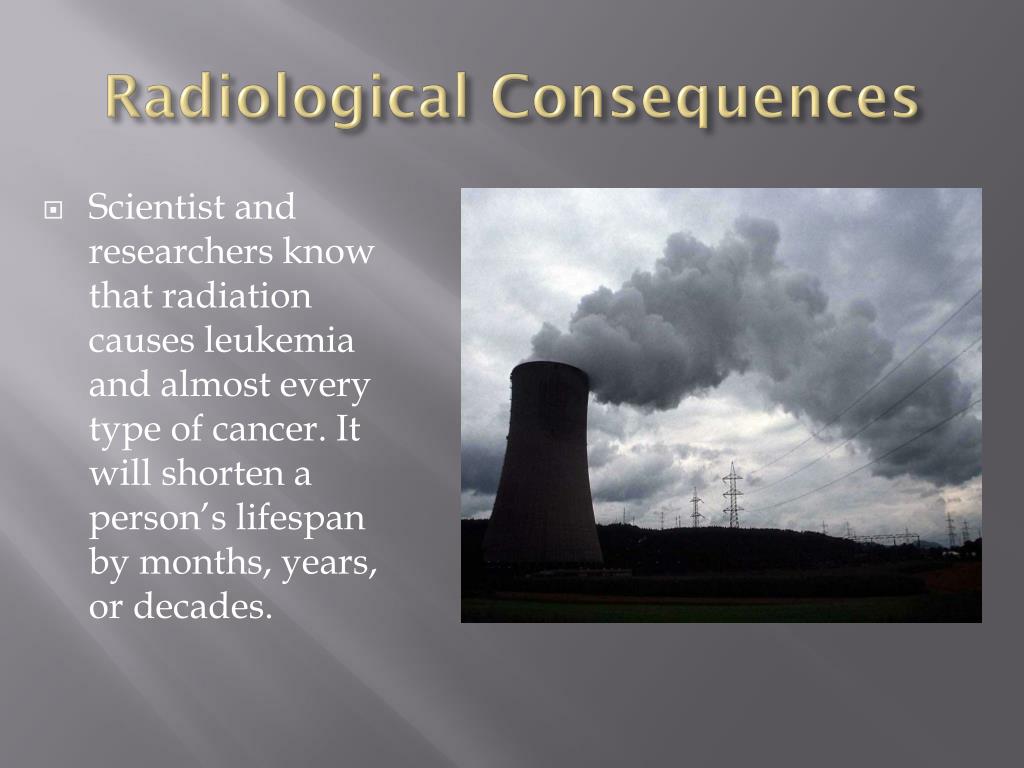
New research finds correlation between disease and living close to a facility
HARVARD GRIFFIN GSAS NEWS, By Kaitlyn Hung, May 19, 2026
uclear power accounts for 18 to 20 percent of electricity generated in the United States. In some places, the share is much greater—over half the energy generated in Illinois, for instance, the country’s sixth-largest state. As demand rises sharply, particularly from AI data centers, the federal government has increased funding, loans, and tax incentives in an effort to increase nuclear capacity, extend operations of existing reactors, and restart retired ones.
Although public support for nuclear energy has surged in recent years, opposition remains strong. The most common reason? Safety concerns. And they may be valid, according to population health scientist Yazan Alwadi, who received his PhD from the Harvard Kenneth C. Griffin Graduate School of Arts and Sciences in February 2026, months after receiving a master’s degree in biostatistics in November 2025. Now a post-doctoral researcher at the Harvard T.H. Chan School of Public Health, Alwadi’s work uncovers a link between cancer and proximity to nuclear power plants.
Too Close for Comfort?
In the lab of Petros Koutrakis, Akira Yamaguchi Professor of Environmental Health and Human Habitation at the T.H. Chan School, Alwadi investigated whether living close to nuclear facilities impacts a population’s incidence of developing or dying from cancer. The work was motivated by a call from the Department of Public Health in Plymouth County, Massachusetts. Community members were concerned about rising cancer cases, and some wondered whether Plymouth’s Pilgrim Nuclear Power Station, decommissioned in 2019, might have contributed to the uptick.
“We get emails from families, saying that big percentages of people they know get cancer. But of course, these are anecdotal, so it needs hard science and statistical evidence to see if that actually happens or not,” Alwadi says.
As an environmental epidemiologist, Alwadi decided to investigate. “We wanted to know, are we going to find an association between the proximity to plants and cancer or not?” Alwadi says. Regardless of the outcome, he would share his findings.
Alwadi conducted a longitudinal ecological study, comparing Massachusetts zip codes’ proximity to the seven nuclear facilities in the vicinity of the state with that zip codes’ cancer incidence over time (provided by the state’s cancer registry). He used proximity as a proxy for exposure because it encompasses multiple routes of dispersal, like air and water. “We know that distance is a proxy for most [exposure routes]. It’s not perfect for any one of them, but a proxy for most,” Alwadi says.
Alwadi discovered a strong association between cancer incidence and proximity to plants for populations over 55 years old living within 5 km of a nuclear power plant. For example, women ages 65-74 living two km away from a nuclear power plant had 2-times higher relative risk of cancer, and men in this age group had 1.75-times higher risk.
To determine whether these results were more broadly generalizable to the United States, Alwadi conducted a similar study comparing nuclear power plant proximity to county-level data on cancer mortality from the US Centers for Disease Control. “We felt that doing [the analysis] nationally would give us enough statistical power to depict effects if they truly exist,” says Alwadi. He discovered that the association he observed in Massachusetts held at the national level, too. “We observe the same association, similar values, same decline of risks with distance across different aggregations, zip codes versus counties . . . for cancers of interest.”
Koutrakis says that his advisee’s research is notable because it is the first series of studies to systematically demonstrate associations between residential proximity to nuclear power plants and cancer outcomes across multiple settings using large, population-based datasets. “This work fills a critical gap in the literature by providing large-scale, systematic evidence on a question that has remained unresolved for decades.” …………………………………………….
Importantly, while the study shows a robust association between nuclear plant proximity and cancer, the study’s design cannot determine whether that relationship is causal. “Although these are ecological designs that do not establish causality and are very hard to infer causality from their evidence, the systematic results and the consistency of the findings are exactly what you’d expect to find if a true underlying causal effect existed,” says Alwadi. By systematically demonstrating an association, Alwadi’s discovery provides the impetus for more detailed research to understand the nature of the link between nuclear power plants and cancer. ………………………………………………………………………………………………………………………………………………………….
………………………………………………… Digging Deeper
Since graduation, Alwadi has continued his work in the Koutrakis lab as a postdoctoral fellow. Today, he tracks the relationship between nuclear facility proximity and cancer within individuals, rather than populations. He says this cohort analysis will provide stronger evidence for the nature of the association by reducing bias and clarifying the temporality of nuclear facility exposure to cancer development.
Ultimately, Alwadi hopes to lead a lab of his own in environmental epidemiology and public health. He’s got a plethora of questions he wants to tackle, so to him, it’s just a matter of time and resources to get the work done. “We see a signal, we keep digging,” he says. https://gsas.harvard.edu/news/does-proximity-nuclear-power-plants-increase-cancer-risk
.
No comments yet.
1 This Month





PLEASE OPPOSE HR 8255 AND S.3639 – bills would accelerate satellite deployment, with no environmental review or safeguards – https://ncstd5li.quorum.us/campaign/169331/
To see nuclear-related stories in greater depth and intensity – go to https://nuclearinformation.wordpress.com
-
Archives
- October 2026 (74)
- September 2026 (339)
- August 2026 (330)
- July 2026 (355)
- June 2026 (287)
- May 2026 (306)
- April 2026 (356)
- March 2026 (251)
- February 2026 (267)
- January 2026 (308)
- December 2025 (358)
- November 2025 (359)
-
Categories
- 1
- 1 NUCLEAR ISSUES
- business and costs
- climate change
- culture and arts
- ENERGY
- environment
- health
- history
- indigenous issues
- Legal
- marketing of nuclear
- media
- opposition to nuclear
- PERSONAL STORIES
- politics
- politics international
- Religion and ethics
- safety
- secrets,lies and civil liberties
- spinbuster
- technology
- Uranium
- wastes
- weapons and war
- Women
- 2 WORLD
- ACTION
- AFRICA
- Atrocities
- AUSTRALIA
- Christina's notes
- Christina's themes
- culture and arts
- Events
- Fuk 2022
- Fuk 2023
- Fukushima 2017
- Fukushima 2018
- fukushima 2019
- Fukushima 2020
- Fukushima 2021
- general
- global warming
- Humour (God we need it)
- Nuclear
- RARE EARTHS
- Reference
- resources – print
- Resources -audiovicual
- Weekly Newsletter
- World
- World Nuclear
- YouTube
-
RSS
Entries RSS
Comments RSS


Leave a comment