Trump is the joke….. that is no longer funny
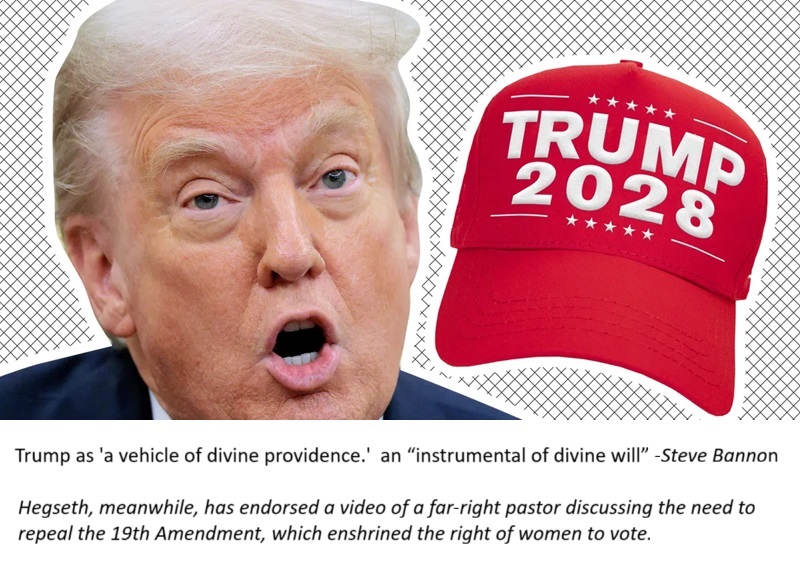
While comedians laughed at his rallies, millions of Americans saw something entirely different. They saw somebody attacking a political establishment they already despised.
Trump discovered scandal itself could become a weapon. Every controversy kept him at the centre of public attention
20 May 2026 Roswell, https://theaimn.net/the-joke-that-lost-its-punchline/
In 2015 and 2016, much of the world treated Donald Trump like a political novelty act.
He was loud, theatrical, unpredictable, and impossible to ignore. Commentators laughed at the rallies. Late-night comedians built entire careers around his speeches. Political experts dismissed his presidential campaign as a publicity stunt that would eventually collapse under the weight of its own absurdity.
The assumption shared by many journalists, academics, and political professionals was simple: America would never elect him.
Then America did.
What followed was one of the most extraordinary political transformations in modern democratic history. A man once regarded as a sideshow became the central figure in American politics. More remarkably, he reshaped the Republican Party, dominated the global news cycle for nearly a decade, survived scandals that would have destroyed conventional politicians, lost an election, refused to accept the result, returned to power, and began a second presidency stronger and more experienced than the first.
The joke had become reality.
And now, nobody is laughing.
That shift reveals something deeper than the story of one man. It exposes how badly political institutions, media organisations, and intellectual elites misunderstood both Trump and the conditions that made him possible.
In the beginning, ridicule was seen as sufficient. Trump was mocked endlessly for his speaking style, his exaggerations, his vanity, his midnight meltdowns on Twitter and his disregard for political norms. Satire became the preferred language of opposition because satire is easy when a figure appears ridiculous.
But ridicule can become dangerous when it replaces analysis.
Large sections of the media spent years treating Trump as entertainment rather than understanding him as a symptom of growing political anger, institutional distrust, economic frustration, and cultural division inside the United States. While comedians laughed at his rallies, millions of Americans saw something entirely different. They saw somebody attacking a political establishment they already despised.
Trump understood something many professional politicians did not: people who feel ignored do not necessarily want polished leadership. Sometimes they want disruption. Sometimes they want revenge against systems they believe abandoned them.
His critics often focused on his behaviour while his supporters focused on what his behaviour represented.
That distinction changed American politics.
By the time Trump entered his second presidency, the atmosphere surrounding him had fundamentally altered. The humour remained, but the comfort had disappeared. Even opponents who once treated him as a temporary political accident now understood that Trumpism was not a passing phase. It had become a movement with enormous influence over American institutions, courts, media ecosystems, and foreign policy.
There is also a psychological shift that occurs when a political figure survives everything thrown at them.
Every investigation, scandal, indictment, controversy, and prediction of political death that failed to remove Trump strengthened the perception among supporters that he was being targeted by a hostile establishment. At the same time, every failed prediction weakened public trust in the experts making those predictions.
Eventually, mockery stopped looking powerful.
It started looking ineffective.
History contains many examples of societies underestimating disruptive political figures because they appeared too strange, too vulgar, or too unconventional to succeed. Democracies often assume their institutions are strong enough to absorb any personality. Sometimes they are. Sometimes they are not.
The danger is rarely the joke itself.
The danger is failing to notice when the audience stops laughing.
Trump’s rise also revealed the growing collapse of shared reality in modern democracies. Americans no longer consume the same information, trust the same institutions, or even agree on basic facts. In that environment, outrage becomes fuel, controversy becomes visibility, and constant attention becomes political power.
Trump mastered that environment better than any modern politician.
Traditional politicians speak carefully because they fear scandal. Trump discovered scandal itself could become a weapon. Every controversy kept him at the centre of public attention. Every attack reinforced his image as a political outsider fighting entrenched power.
His opponents often helped build the mythology they hoped to destroy.
That does not mean Trump is invincible, nor does it mean his critics were entirely wrong. It means modern politics no longer behaves according to old assumptions. The rules changed while much of the political class kept pretending they had not.
And perhaps that is the real lesson.
The story of Donald Trump is not merely the story of one man rising to power. It is the story of institutional complacency, media failure, public anger, and a society increasingly unable to distinguish politics from spectacle.
In 2016, many believed the joke would end.
Instead, the joke outlived the punchline.
…
0
No comments yet.
1 This Month



26 September – International Day for the Total Elimination of Nuclear Weapons


PLEASE OPPOSE HR 8255 AND S.3639 – bills would accelerate satellite deployment, with no environmental review or safeguards – https://ncstd5li.quorum.us/campaign/169331/
To see nuclear-related stories in greater depth and intensity – go to https://nuclearinformation.wordpress.com
-
Archives
- September 2026 (281)
- August 2026 (330)
- July 2026 (355)
- June 2026 (287)
- May 2026 (306)
- April 2026 (356)
- March 2026 (251)
- February 2026 (267)
- January 2026 (308)
- December 2025 (358)
- November 2025 (359)
- October 2025 (375)
-
Categories
- 1
- 1 NUCLEAR ISSUES
- business and costs
- climate change
- culture and arts
- ENERGY
- environment
- health
- history
- indigenous issues
- Legal
- marketing of nuclear
- media
- opposition to nuclear
- PERSONAL STORIES
- politics
- politics international
- Religion and ethics
- safety
- secrets,lies and civil liberties
- spinbuster
- technology
- Uranium
- wastes
- weapons and war
- Women
- 2 WORLD
- ACTION
- AFRICA
- Atrocities
- AUSTRALIA
- Christina's notes
- Christina's themes
- culture and arts
- Events
- Fuk 2022
- Fuk 2023
- Fukushima 2017
- Fukushima 2018
- fukushima 2019
- Fukushima 2020
- Fukushima 2021
- general
- global warming
- Humour (God we need it)
- Nuclear
- RARE EARTHS
- Reference
- resources – print
- Resources -audiovicual
- Weekly Newsletter
- World
- World Nuclear
- YouTube
-
RSS
Entries RSS
Comments RSS


Leave a comment