From the Manhattan Project to the Bronx Project: the toxic legacy of the nuclear age

by Alice Slater Spring 2023 Edition
Recent alarming reports state that the UK is prepared to supply Ukraine with depleted uranium ammunition in the ongoing slaughter in Ukraine. These lethally toxic carcinogens are known to cause illness and death, not only for the victims of war but for the perpetrators as well. Victims who have suffered genetic damage pass it on to their children who are often born with terrible malformations and illnesses.
In Metal of Dishonor–Depleted Uranium: How the Pentagon Radiates Soldiers and Civilians with DU Weapons, published in 1997 by Ramsay Clark and the International Action Center, essays reveal the horrors caused by depleted uranium in the first Gulf War. Although the figures on the nuclear budgets have risen astronomically, with the United States now budgeting over $1 trillion for new bombs, bomb factories and delivery systems, sadly, nothing else has changed much since that time, although civil society did succeed in establishing the International Renewable Energy Agency to promote benign life affirming energy from the sun, wind, and tides. Below is a chapter written for that book in 1996, when the author was president of GRACE, the Global Resource Action Center for the Environment.
he world is awash in radioactive waste. We simply haven’t a clue where to put it. The best we have come up with in the United States is a harebrained scheme to ship the lethal carcinogenic garbage from nuclear weapons and civilian nuclear power plants, by rail and by truck, from the four corners of the continent, and bury it in a hole in the ground in Nevada at Yucca Mountain. Citizens groups, like the proverbial boy with his finger in the dike, have been holding off the onslaught of this devastating disposal solution, preventing the legislation from passing in the Congress. Deadly plutonium remains toxic for 250,000 years and there is no way of guaranteeing that the Yucca site could prevent radioactive seepage into the ground water over this unimaginable period of time. Remember that all of recorded history is only 5000 years old!
The National Academy of Sciences reported last August that most of the contaminated nuclear weapons sites across our land can not be adequately cleaned up because of “insufficient money, technical skill or political will to do the job.” reflecting the skewed priorities of our national leadership. Congress approved Clinton’s last request for $5.1 billion to the Department of Energy’s weapons labs which will fund the design of new nuclear weapons ……………………………………….
We’ve Wasted Precious Resources………….
We’ve Polluted Our Own Environment
We’ve created more than 4,500 contaminated sites, covering tens of thousands of acres that may take 75 years and cost as high as one trillion dollars to ‘clean up.’ ‘Clean up’ of toxic plutonium, which remains lethal for over 250,000 years, is the wrong word. At best, we can only attempt to manage and contain the poisons from seeping into the air and groundwater and visiting further destruction on our people.
We’ve Experimented on Our Own People
Nuclear weapons drove us to the unspeakable act of secretly testing radiation on our own population. 23,000 American civilians were subjected to radiation research in about 1,400 projects over 30 years. The government tested on children with mental disabilities, mental patients, poor women, and US soldiers. More than 200,000 troops were ordered to observe nuclear test detonations and were exposed to radiation.
We’ve Abused Indigenous Peoples
Every nuclear test site in the world is on indigenous land. ……………………
Worst of All—We’re Still Doing It…………………………….
Enchanted by the “hardness” of depleted uranium which can penetrate tank armor, some evil genius in the pay of the Pentagon thought to make bullets from it in a bizarre recycling program which enabled the government to make a dent in the 500,000 tons of depleted uranium waste amassed since the Manhattan Project. Don’t be misled by the term “depleted uranium.” Like “spent fuel” from civilian reactors, depleted uranium is highly toxic and carcinogenic and has a half-life of some 4.4 billion years.
“Half life” is another euphemism that distances us through our language from grasping the deadly seriousness of what we are doing to our planet. For example, while the half-life of plutonium is 26,000 years, this lethal poison has a fully toxic life of about 250,000 years until all the radioactivity decays. So you can imagine — or can you — the life span of toxic depleted uranium with its “half life” of over 4 billion years!
While our brilliant military was dreaming up its scheme of penetrating Saddam’s tanks with “hard” depleted uranium (DU), they neglected to calculate the impact this material would have on our own soldiers. “Friendly fire” killed 35 U.S. soldiers and wounded 72 others during the Gulf War while disabling more US tanks than the Iraqis did. Spewing 300 tons of DU ammunition over Iraq, the U.S. left a growing legacy of respiratory problems, liver and kidney dysfunction, and birth defects among the newborn children of U.S. vets (A Veterans Administration study of 251 Gulf War veterans families in Mississippi found that 67 percent of the children born to the vets since the war have severe illnesses, with effects ranging from missing eyes and ears to fused fingers.) And similar medical reports are coming from Iraq with an increase of leukemia and congenital birth defects from 8% before the war to 28% today. Undeterred, similar environmental havoc and dangers to health were created by the use of depleted uranium ammunition in the bombing of Bosnia.
This callous disregard for human well being is sadly typical of government policy during the nuclear age………………………………………………………..
Trying to get our government to admit that radioactive bomb factories and power plants are harmful to living things is like the long battle waged against the tobacco companies who continued to claim that there is no connection between smoking, cancer, and other life threatening diseases. There are current assaults on the permissible level of radiation exposure. Don’t protect the people. Just change the standards…………………………………………………………………..
We need to tell the boys to put away the toys of war and clean up the mess they made. ………………………
Our ability to govern ourselves has been eroding as a result of the unprecedented secrecy and cover-up engendered by the nuclear age…………………………….
A sane informed citizenry would call for an immediate cessation of the production of any new nuclear material, leaving all existing nuclear waste as close to the point where it is generated, as safely as possible, under international guard…………………………….more https://peaceandplanetnews.org/toxic-legacy-of-the-nuclear-age/
A Cold War Legacy — uranium pollution

Uranium mills dumped their toxic wastes and filled cancer wards
A Cold War Legacy — Beyond Nuclear International
What’s lurking in U.S. groundwater?
By Mark Olalde, Mollie Simon and Alex Mierjeski, video by Gerardo del Valle, Liz Moughon and Mauricio Rodríguez Pons
This story was originally published by ProPublica.
ProPublica is a Pulitzer Prize-winning investigative newsroom. Sign up for The Big Story newsletter to receive stories like this one in your inbox.
In America’s rush to build the nuclear arsenal that won the Cold War, safety was sacrificed for speed.
Uranium mills that helped fuel the weapons also dumped radioactive and toxic waste into rivers like the Cheyenne in South Dakota and the Animas in Colorado. Thousands of sheep turned blue and died after foraging on land tainted by processing sites in North Dakota. And cancer wards across the West swelled with sick uranium workers.
The U.S. government bankrolled the industry, and mining companies rushed to profit, building more than 50 mills and processing sites to refine uranium ore.
But the government didn’t have a plan for the toxic byproducts of this nuclear assembly line. Some of the more than 250 million tons of toxic and radioactive detritus, known as tailings, scattered into nearby communities, some spilled into streams and some leaked into aquifers.
Congress finally created the agency that now oversees uranium mill waste cleanup in 1974 and enacted the law governing that process in 1978, but the industry would soon collapse due to falling uranium prices and rising safety concerns. Most mills closed by the mid-1980s.
When cleanup began, federal regulators first focused on the most immediate public health threat, radiation exposure. Agencies or companies completely covered waste at most mills to halt leaks of the carcinogenic gas radon and moved some waste by truck and train to impoundments specially designed to encapsulate it.
But the government has fallen down in addressing another lingering threat from the industry’s byproducts: widespread water pollution.
Regulators haven’t made a full accounting of whether they properly addressed groundwater contamination. So, for the first time, ProPublica cataloged cleanup efforts at the country’s 48 uranium mills, seven related processing sites and numerous tailings piles.
At least 84% of the sites have polluted groundwater. And nearly 75% still have either no liner or only a partial liner between mill waste and the ground, leaving them susceptible to leaking pollution into groundwater. In the arid West, where most of the sites are located, climate change is drying up surface water, making underground reserves increasingly important.
ProPublica’s review of thousands of pages of government and corporate documents, accompanied by interviews with 100 people, also found that cleanup has been hampered by infighting among regulatory agencies and the frequency with which regulators grant exemptions to their own water quality standards.
The result: a long history of water pollution and sickness.
Reports by government agencies found high concentrations of cancer near a mill in Utah and elevated cancer risks from mill waste in New Mexico that can persist until cleanup is complete. Residents near those sites and others have seen so many cases of cancer and thyroid disease that they believe the mills and waste piles are to blame, although epidemiological studies to prove such a link have rarely been done……………………………………………………………………………………………
For all the government’s success in demolishing mills and isolating waste aboveground, regulators failed to protect groundwater.
Between 1958 and 1962, a mill near Gunnison, Colorado, churned through 540,000 tons of ore. The process, one step in concentrating the ore into weapons-grade uranium, leaked uranium and manganese into groundwater, and in 1990, regulators found that residents had been drawing that contaminated water from 22 wells………………………………………………………………………………
When neither water treatment nor nature solves the problem, federal and state regulators can simply relax their water quality standards, allowing harmful levels of pollutants to be left in aquifers.
…………………………………………………………………………………………… Layers of Regulation
It typically takes 35 years from the day a mill shuts down until the NRC approves or estimates it will approve cleanup as being complete, ProPublica found. Two former mills aren’t expected to finish this process until 2047.
……………………………………………………………………… “A Problem for the Better Part of 50 Years”
While the process for cleaning up former mills is lengthy and laid out in regulations, regulators and corporations have made questionable and contradictory decisions in their handling of toxic waste and tainted water.
More than 40 million people rely on drinking water from the Colorado River, but the NRC and DOE allowed companies to leak contamination from mill waste directly into the river, arguing that the waterway quickly dilutes it.
Federal regulators relocated tailings at two former mills that processed uranium and vanadium, another heavy metal, on the banks of the Colorado River in Rifle, Colorado, because radiation levels there were deemed too high. Yet they left some waste at one former processing site in a shallow aquifer connected to the river and granted an exemption that allowed cleanup to end and uranium to continue leaking into the waterway……………………………………………………………………………… more https://beyondnuclearinternational.org/2023/04/10/a-cold-war-legacy/
Why a nuclear-weapons-free zone in the Middle East is more needed than ever
Why a WMD-free zone in the Middle East is more needed than ever., By Almuntaser Albalawi | April 10, 2023
Recent news reports suggesting Saudi Arabia is seeking US aid for a peaceful nuclear program are bringing attention to the distressing potential for nuclear weapons proliferation in the Middle East. Yet conversations about averting such a doomed future for the region might be heading once again in the wrong direction. History suggests that power politics—in which self-interest is prioritized over global interests—may not be the best lens for looking at issues of arms control.
During the 10th review conference of the Nuclear Non-Proliferation Treaty last year, Arab states reiterated their call for establishing a Middle East zone free of weapons of mass destruction (WMD). This has been a long-standing position, but it should not be taken for granted.
A growing interest in nuclear technology in the Middle East—combined with ambiguity over nuclear activities in Iran and Israel—raises concerns about potential proliferation in the region. A robust and inclusive WMD-free zone remains the best solution for addressing these concerns…………………………………………………………………………………………. more https://thebulletin.org/2023/04/why-a-wmd-free-zone-in-the-middle-east-is-more-needed-than-ever/?utm_source=Newsletter&utm_medium=Email&utm_campaign=MondayNewsletter04102023&utm_content=NuclearRisk_WMDFreeZone_04102023
Westminster keeps nuclear secrets to avoid upsetting Scottish Government
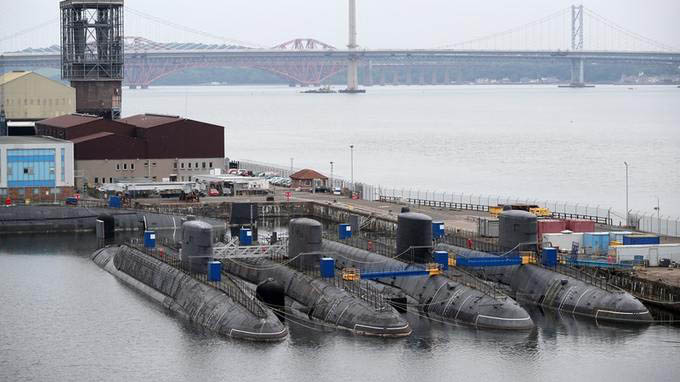
The Ferret, Rob Edwards, April 10, 2023
The UK Government is refusing to say why it is keeping nuclear safety reports secret because it is worried about “anti-nuclear arguments from the Scottish Government”.
The Ministry of Defence (MoD) won’t give its reasons for failing to release annual assessments of the safety of nuclear weapons on the Clyde so as not to “prejudice relations between the UK and Scottish governments”.
The secrecy has been condemned by the Scottish Greens as “outrageous, undemocratic and frankly dangerous”. It was akin to nuclear policies in Russia, China and North Korea, according to a campaigner — and it was described as “totally unacceptable” by a former nuclear submarine commander.
The Scottish Government urged the MoD to be “open and transparent” about the handling of nuclear materials in Scotland. The MoD said it had to “strike a balance” between public interest in safety and protecting information about nuclear weapons.
Annual reports from the MoD’s internal watchdog, the Defence Nuclear Safety Regulator (DNSR), were released for ten years, but ceased being published in 2017. A freedom of information appeal to a UK tribunal to force the MoD to again release the reports was rejected in July 2021.
The Ferret previously revealed that the reports for 2005 to 2015 highlighted “regulatory risks” 86 times, including 13 rated as high priority. One issue repeatedly seen as a high risk was a shortage of suitably qualified and experienced engineers.
Now the MoD has rejected another freedom of information request asking for documents that set out the rationale for refusing to release more recent DNSR reports. It disclosed that the decision was taken in 2017 by then secretary of state for defence, Michael Fallon, but has withheld information on why……………………………………..
The MoD letter also argued that information on reasons for withholding the reports should be kept secret “for the purpose of safeguarding national security”. Secrecy was also necessary so as not to prejudice “the defence of the UK” or “the relationship between the UK and the US” as well as to allow a “safe space” for officials to advise ministers.
Nuclear secrecy ‘totalitarian’
The Scottish Greens argued that the people of Scotland have a “fundamental right” to know the risks they face from hosting weapons of mass destruction on the Clyde. Suppressing information that may support arguments against nuclear weapons poses a “clear and present danger” politically, it warned.
“The extraordinary admission in this letter that the MoD and UK Government are actively concealing key pieces of information from the Scottish Government is outrageous, undemocratic and frankly dangerous,” said Green MSP, Mark Ruskell.
“The MoD is basically saying they won’t share this information because they are scared Scotland won’t like it and it might upset the US. You simply can’t get any more totalitarian than that and this should be challenged further.”
Ruskell added: “If they want to reassure people that there are no unnecessary added dangers, they should share the information urgently and transparently. If not they should pack up and ship out. Scotland doesn’t want nukes here and they know it.”
The nuclear researcher and campaigner who has been challenging the MoD’s refusal to release the nuclear safety reports is Peter Burt. UK citizens are allowed to know “virtually nothing” about the hazards of nuclear weapons despite paying billions of pounds for them, he said.
“We’re not allowed to know whether the Ministry of Defence’s safety watchdog thinks the nuclear weapons programme is complying with public protection arrangements, and Scottish Ministers are not trusted to know what is going on at the Navy’s nuclear bases in Scotland,” Burt told The Ferret.
“It’s pretty clear that this has more to do with politics than security. While the US government regularly releases information about its nuclear weapons programme, the UK Government has decided to model its own nuclear policies on those of countries like Russia, China, and North Korea.”
Rob Forsyth, a former Royal Navy nuclear submarine commander who now campaigns against nuclear weapons, described the MoD’s justifications for secrecy as “totally unacceptable”.
He said: “The way to avoid any misinterpretation is to be honest and fully transparent over matters affecting public safety and our national defence. The notion that government should not allow public discussion is not conduct expected of a democracy.”
The Scottish Government reiterated its opposition to the possession of nuclear weapons and its support for world-wide nuclear disarmament. ……………………………………………………………….. more https://theferret.scot/nuclear-secrets-scottish-government/
Nuclear disasters could leave a lasting legacy of contaminants in glaciers
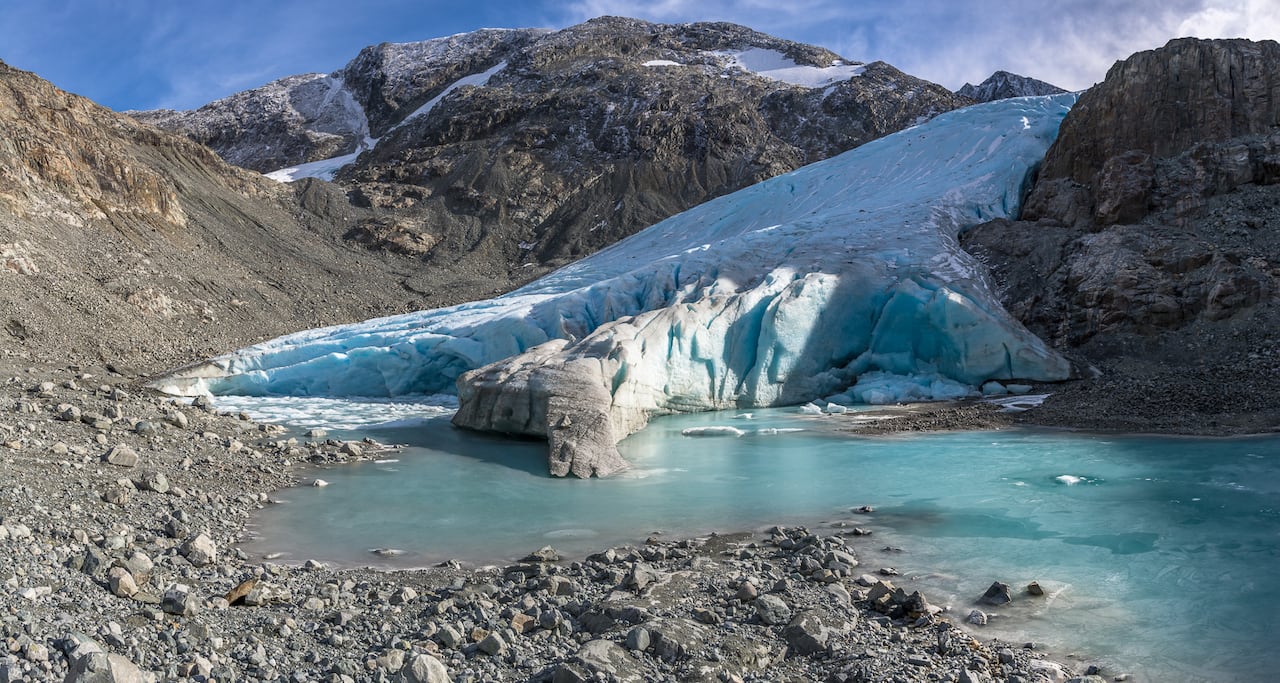
Emerging research is suggesting that radioactive particles are being stored within glaciers
University of Plymouth Alan Williams, April 2019
Nuclear disasters such as Chernobyl and Fukushima are known to have had an immediate impact on their surrounding environments and the people living within them.
But emerging research is suggesting the legacy of these events and international weapons testing could be felt for much longer as radioactive particles are being stored within glaciers.
The first results from this collaborative international research project were presented at the 2019 General Assembly of the European Geosciences Union (EGU), taking place in Vienna from April 7-12, 2019………………………………………
The EGU presentation combined studies into the presence of fallout radionuclides (FRNs), a product of nuclear accidents and weapons testing, within ice surface sediments – or cryoconite – across multiple sites in the Arctic (Sweden, Greenland and Svalbard), Iceland, the European Alps, the Caucasus, British Columbia, and Antarctica.
The levels of some FRNs found in these sites are orders of magnitude higher than those detected in many other (non-glaciated) environments, raising important questions around the role of glaciers, and specifically cryoconite and its interaction with meltwater, in the accumulation of anthropogenic atmospheric contaminants.
The research also demonstrates that the presence of FRNs in cryoconite is not restricted to sites closest to large source areas such as Chernobyl, highlighting the global reach of nuclear events and other sources of atmospherically-transported contaminants.
The widespread occurrence of concentrated FRNs in glacier catchments, and the impacts on downstream water and environmental quality, including uptake of FRNs into flora and fauna, are the focus of current and future research efforts.
Dr Clason said:
“Research into the impact of nuclear accidents has previously focussed on their effects on human and ecosystem health in non-glaciated areas. But evidence is mounting that cryoconite on glaciers can efficiently accumulate radionuclides to potentially hazardous levels. Very high concentrations of radionuclides have been found in several recent field studies, but their precise impact is yet to be established. Our collaborative work is beginning to address this because it is clearly important for the pro-glacial environment and downstream communities to understand any unseen threats they might face in the future.”
Finland’s NATO entry raises nuclear war stakes
Traditionally neutral nation’s accession to US-led alliance will compel an increasingly encircled Moscow to flex its nuclear muscles
Asia Times, By M.K. BHADRAKUMARAPRIL 10, 2023
The national flag of Finland was raised for the first time at the headquarters of the North Atlantic Treaty Organization (NATO) in Brussels on April 4, which also marked the 74th anniversary of the Western alliance. It signifies for Finland a historic abandonment of its policy of neutrality.
Not even propagandistically can anyone say Finland has encountered a security threat from Russia. This is an act of motiveless malignity toward Russia on the part of NATO, which of course invariably carries the imprimatur of the US while being projected to the world audience as a sovereign choice by Finland against the backdrop of Russia’s intervention in Ukraine.
…………………. this will also make Europe’s security landscape even more precarious and make it even more dependent on the US as the provider of its security. The general expectation is that Sweden’s accession to NATO will now follow, possibly in time for the alliance’s summit in Vilnius, Lithuania, in July.
In effect, the US has ensured that the core issue behind the standoff between Russia and the West – that is, the expansion of NATO to Russia’s borders – is a fait accompli no matter the failure of its proxy war in Ukraine against Russia.
……………………………………… Don’t be surprised if NATO missiles are deployed to Finland at some point, leaving Russia no option but to deploy its nuclear weapons close to the Baltic region and Scandinavia.
Suffice to say, the military confrontation between NATO and Russia is set to deteriorate further and the possibility of a nuclear conflict is on the rise…………………………….
the US has long deployed tactical nuclear weapons in European countries, including Belgium, Germany, Italy, the Netherlands and Turkey, which means the US has long deployed its tactical nuclear weapons at Russia’s doorstep…………………………………………………………………………………….. more https://asiatimes.com/2023/04/finlands-nato-entry-raises-nuclear-war-stakes/
After leak of secret documents, South Korea to raise spying allegations with U.S.
https://www.washingtontimes.com/news/2023/apr/9/after-leak-secret-documents-south-korea-raise-spyi/
Leaked papers reportedly show that U.S. gathered signals intelligence from Seoul, a close all
South Korean officials said Sunday they will “come up with our response accordingly” after revelations that the U.S. reportedly spied on its close ally and gathered signals intelligence related to South Korea‘s internal debate over weapons sales to the U.S., and Seoul‘s fears that those weapons would ultimately end up in Ukraine.
Officials in Seoul said they’ll raise the alleged spying — which came to light as part of a major leak of sensitive documents over the weekend — with their U.S. counterparts.
For both countries, the timing is delicate. South Korean President Yoon Suk Yeol is scheduled to visit Washington and join President Biden for a state dinner at the White House on April 26.
We will review precedents and instances involving other countries, and come up with our response accordingly,” a South Korean presidential official said Sunday after being asked about the revelations, according to the country’s Yonhap News Agency.
The New York Times first reported the leak Friday.
Stopping covering the Fukushima nuclear disaster
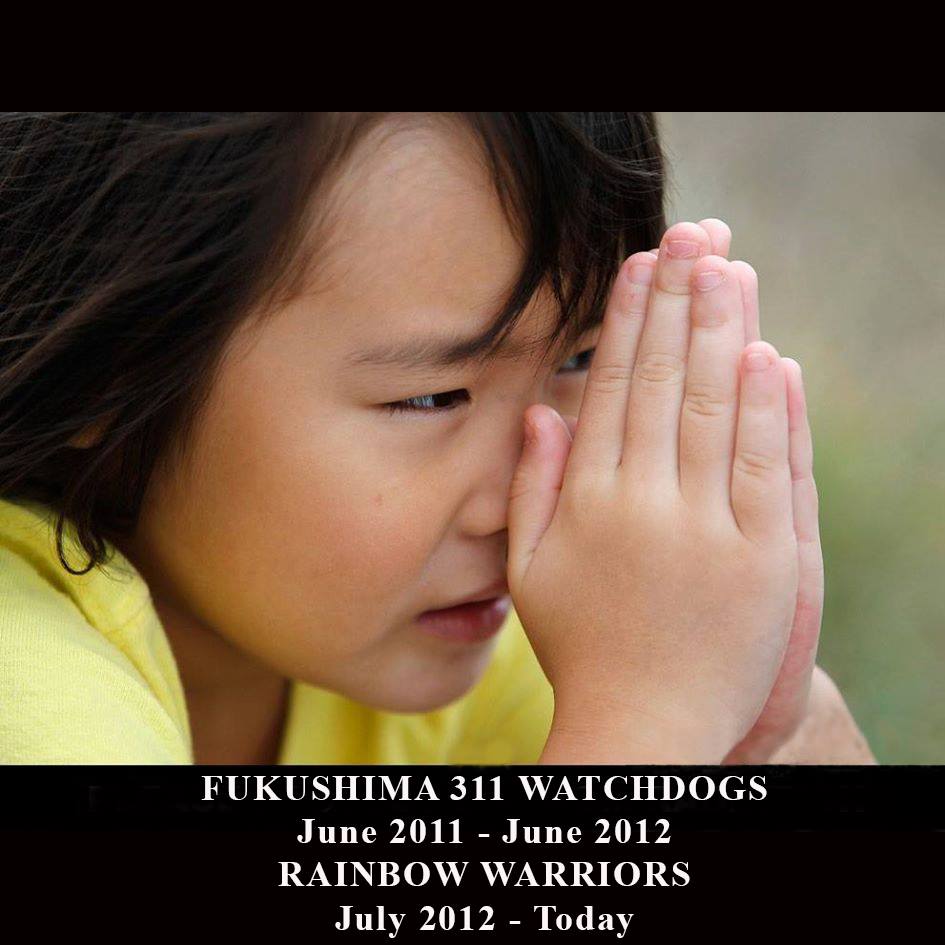
April 11, 2023
The Fukushima Nuclear disaster will continue to affect the people on location and others, as well as our environment for many more years, I will not continue.
I have been following the Fukushima nuclear accident for the past 12 years, spending a lot of time in sharing those news, to the somehow detriment of my own personal life.
Unlike some other people I entered this activity without seeking to make money or gain fame, I am just a simple citizen living on my basic minimum retirement pension. I shared Fukushima news weekly for the past 12 years but on the other hand I was unable to go visit my daughter in Iwaki, Fukushima since June 2011, because my financial situation is very tight, and Japan is way too expensive, overpriced for my meager wallet.
That situation has been tearing apart, on one hand to share Fukushima news and on the other hand to be unable to visit my own daughter in Fukushima.
I cannot take it anymore, so I decided to end this situation, to stop sharing the Fukushima news, to stop my lttle Fukushima blog, to disengage myself from it all, and to finally concentrate only on my little personal life.
That attitude of the Japanese government is nothing new. They have always lack a sense of responsibility, hiding behind hypocritical denials and false excuses, lies and covering-up.
The Japanese government has always faced accusations with duplicity when it comes to various events and issues that have marred their history. Some of these issues include the Nanjing massacre, Korean and Filipina sex slaves during World War II, the Minamata tragedy affecting thousands of lives, whale and dolphin fishing, the Fukushima nuclear disaster, and the dumping of radioactive water into the Pacific Ocean.
One of the most controversial events in Japan’s history is the Nanjing massacre, which occurred in 1937 when Japanese forces invaded the Chinese city of Nanjing. During the six-week occupation, Japanese soldiers carried out a brutal campaign of murder, rape, and looting, resulting in the deaths of an estimated 300,000 Chinese civilians and prisoners of war. Despite overwhelming evidence of the massacre, the Japanese government has been accused of downplaying its significance and even denying that it occurred.
Another issue that has caused controversy is the use of Korean and Filipina women as sex slaves during World War II. These women, known as “comfort women,” were forced into sexual servitude by the Japanese military, with an estimated 200,000 women being subjected to this treatment. Despite numerous apologies and compensation payments made to some of the victims, the Japanese government has been accused of failing to fully acknowledge and take responsibility for this atrocity.
Minamata disease is a neurological disease caused by severe mercury poisoning. Signs and symptoms include ataxia, numbness in the hands and feet, general muscle weakness, loss of peripheral vision, and damage to hearing and speech. In extreme cases, insanity, paralysis, coma, and death follow within weeks of the onset of symptoms. A congenital form of the disease affects fetuses in the womb, causing microcephaly, extensive cerebral damage, and symptoms similar to those seen in cerebral palsy.
Minamata disease was first discovered in the city of Minamata, Kumamoto Prefecture, Japan, in 1956, hence its name. It was caused by the release of methylmercury in the industrial wastewater from a chemical factory owned by the Chisso Corporation, which continued from 1932 to 1968. It has also been suggested that some of the mercury sulfate in the wastewater was also metabolized to methylmercury by bacteria in the sediment. This highly toxic chemical bioaccumulated and biomagnified in shellfish and fish in Minamata Bay and the Shiranui Sea, which, when eaten by the local population, resulted in mercury poisoning. The poisoning and resulting deaths of both humans and animals continued for 36 years, while Chisso and the Kumamoto prefectural government did little to prevent the epidemic.
As of March 2001, 2,265 victims had been officially recognized as having Minamata disease and over 10,000 had received financial compensation from Chisso. By 2004, Chisso had paid $86 million in compensation, and in the same year was ordered to clean up its contamination. On March 29, 2010, a settlement was reached to compensate as-yet uncertified victims.
In addition to these human rights abuses, Japan has also faced criticism for its continued practice of whale and dolphin fishing. Despite a global ban on commercial whaling, Japan continues to hunt whales under the guise of “scientific research,” and dolphins are also hunted and captured for use in entertainment parks. Many animal rights activists and conservationists have called for an end to these practices, but the Japanese government has been accused of prioritizing economic interests over environmental concerns.
Another event that has caused significant controversy is the Fukushima nuclear disaster, which occurred in 2011 after a massive earthquake and tsunami struck Japan. The disaster resulted in a meltdown at the Fukushima Daiichi nuclear power plant and the release of radioactive materials into the environment. While the Japanese government initially downplayed the severity of the disaster, it has since been accused of covering up information and failing to adequately respond to the crisis.
Perhaps one of the most recent controversies surrounding Japan involves the planned dumping of radioactive water from the Fukushima plant into the Pacific Ocean. Despite widespread opposition from environmental groups and neighboring countries, the Japanese government has defended the plan, claiming that the water will be treated and diluted before being released. However, many remain skeptical of these claims and fear the potential consequences of this decision.
In conclusion, the Japanese government has been accused of duplicity when it comes to a variety of issues that have marred their history and present-day actions. From human rights abuses to environmental disasters, the Japanese government has been criticized for downplaying or denying the severity of these events and failing to take responsibility for their actions. As such, it is imperative that the government is held accountable for its actions and takes concrete steps towards acknowledging and rectifying these issues.
The Japanese government as learned nothing from this nuclear tragedy, which they have conveniently sweeped under the carpet. Economics in their eyes always more important than people’s lives, PM Kishida promoting as of today the rebirth of nuclear full blast, wheras the consequences of the Fukushima nuclear disater have neither been yet adressed nor solved.
Best wishes to you,
Hervé Courtois
The Pros And Cons of Modular Nuclear Reactors
By Leonard Hyman & William Tilles – Apr 10, 2023 https://oilprice.com/Alternative-Energy/Nuclear-Power/The-Pros-And-Cons-of-Modular-Nuclear-Reactors.html
- Customization in nuclear power led to isolated and non-transferable experiences and limited the industry’s growth.
- Small modular reactors are a new approach that allows for standardization and assembly line efficiency, but also offer logistical and funding challenges.
- The future of nuclear energy could rely, in part, on the development and implementation of small modular reactors.
Did you ever get the feeling that you’ve seen this movie before, except with another name? The remake, maybe in color this time or with a younger cast? Well, nothing wrong with recycling but not when you get the uncomfortable notion that the actors don’t know that somebody did it before them.
Take nuclear power What went wrong last time around? We suggest that a principal culprit was customization. Almost every utility wanted a nuke tailored to its needs, site by site. Thus, each site had its own problems, and solving them produced little experience that helped anywhere else.
France, of course, was the main exception. The French state, which owned the utility, settled on one design and repeated it again and again. Of course, the French utility had the scale that U.S. and British’s utilities lacked. And the French never shied from dirigisme, state control of the economy. If the government planned to finance, subsidize and insure the industry, it might as well specify what it wanted. Not so in the USA, where we didn’t want the government to tell utilities what to buy, although we had no problem subsidizing and insuring whatever they built.
Today, we applaud the efforts to design nuclear power stations of smaller size, which will achieve economies of scale by constructing identical equipment in a manufacturing setting and shipping the modules to the construction site where they will be assembled. We have yet to establish whether the modular units will be substantially cheaper, and we have a good idea that most of the designs will not solve the nuclear waste problem. We are still determining whether the public will accept the new nukes more warmly than the old ones, too. But we are confident that builders will have less money at risk in any one piece of machinery, which is good.
Here’s our worry. There are at least 21 announced small modular reactor technologies ( as we wrote in a previous report), some with big-name tech backers. It is almost as if some tech entrepreneurs that can no longer find app start-ups to fund have plunged into nuclear energy.
Now, let’s do some rough numbers. There are 439 nuclear power plants in the world (92 in the USA, 56 in France, 54 in China and 37 in Russia, 33 in Japan, and 24 in South Korea). Over the coming 20 years, we believe most of these reactors will have to be retired, some in extreme old age. Figure that the new units might average one-tenth to one-quarter the size of the old ones.
So maybe a requirement for 4000 units over 20 years. Or 200 units per year. Divide that by 20 different designs. If each producer got an equal share, that would mean ten units per year. We don’t know but have to ask whether that number would yield financing for a factory that could achieve economies of scale.
Now add on the nationalism and security issues. Should we expect the USA, France, Russia and China to buy from foreign sources? If they require in-country sourcing, it is more difficult for any manufacturer to achieve real scale. The contestable market for manufacturers might be closer to 100 units per year, maybe less. That might not give room for manufacturing economies of scale.
We do not expect to see reliable analyses of the manufacturing costs of SMRs for some time, if ever, because the information would be a competitive secret. We are not even sure that current cost estimates are reliable, as opposed to come-ons to bring in generator companies to sign memoranda of interest, which are not contracts but might convince backers to put up money to build a factory.
However, let’s assume that manufacturing a reactor in a factory is not much different than manufacturing an airplane or automobile. Each facility ( or firm) has a U-shaped or saucer shaped cost curve. That is, cost per unit is high when volume is low, hits a low point at a a given volume, and then, eventually rises as the firm hits diseconomies of scale. [graph on original]
Average cost per unit at given production volumes
Let’s say that the total market per year for the product is 200 units. With the optimal, low-cost-per-unit production point at 50-60 units, the market couldn’t support more than four manufacturers. Whether the nuclear market can support 21 or four manufacturers depends on presently unknown manufacturing cost curves. As good capitalists, you might ask why consumers should care if a bunch of manufacturers put up plants and don’t get enough business to support them and then go under.
Well, there are several reasons. For one, we don’t want manufacturers hard up for orders and profits to skimp on the production process. The nuclear plant had better operate safely. Second, owners of nukes will need decades of service. Would they buy plants from manufacturers that look like they might not be around when needed?
Third, considering the financial consequences of outages, would they want to take a chance on a cheaper unit or rather pay up for perceived quality? Fourth, and most importantly, would government watchdogs encourage a proliferation of designs, making their jobs harder?
We don’t expect many of these SMR providers to get off the ground, especially if the government, the real backer of the industry, decides to opt for uniformity in order to get economies of scale in manufacturing and in regulation. In short, we’d put our money on the big names with long years of servicing their products.
Finally, SMRs, while welcome, neither substantially reduce nuclear costs nor cure the waste disposal problem, although they should reduce the financial burden inherent in big nuclear projects. In other words, they seem like a better way to pursue nuclear energy, which remains the most expensive, environmentally controversial, non-carbon producer. Is there a better way?
$16-million-a-second and no electricity — Beyond Nuclear International

ITER fusion reactor has countries cooperating for the wrong cause
$16-million-a-second and no electricity — Beyond Nuclear International
Exorbitant fusion project is obsolete and might even be inoperable
By Linda Pentz Gunter, 10 Apr 23,
As defined by World Nuclear News, the international fusion project known as ITER, exists “to prove the feasibility of fusion as a large-scale and carbon-free source of energy. The goal of ITER is to operate at 500 MW (for at least 400 seconds continuously) with 50 MW of plasma heating power input. It appears that an additional 300 MWe of electricity input may be required in operation. No electricity will be generated at ITER.”
Four hundred seconds. No electricity.
ITER, which stands for International Thermonuclear Experimental Reactor, is a collaboration between 35 countries that was first conceived in 1985 and formally agreed to on November 21, 2006. Construction began in 2010 at the Cadarache nuclear complex in southern France.
The official seven group founding members of ITER are China, the European Union (then including the UK, which remains in the project), India, Japan, Korea, Russia and the United States.
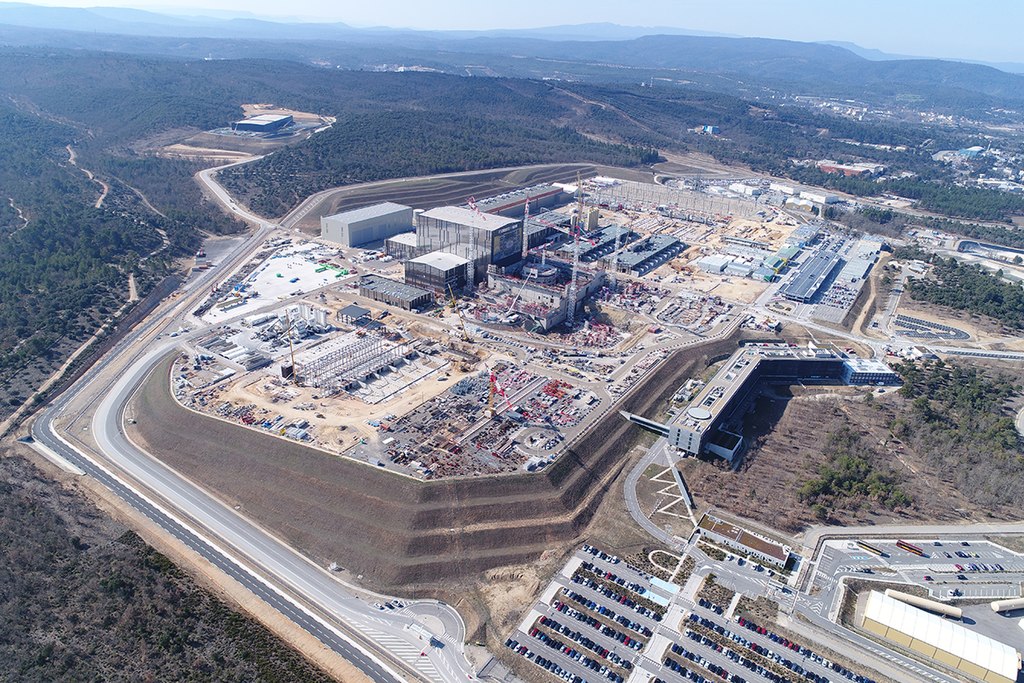
By the time ITER is actually operational — if it ever is — it will have gobbled up billions of dollars. Currently, those cost estimates range wildly between the official ITER figure of $19-23 billion (likely a gross under-estimate) and the U.S. Department of Energy’s (DOE) current estimate of $65 billion.
The starting price when the project began was around $6.3 billion.
If the DOE numbers are right, then those 400 seconds will cost $16.25 million a second. Just to prove that fusion power is possible. Without actually delivering anything practical at all to anyone.
Whatever the costs, they are too high to be remotely justifiable, given the end product and the far more compelling and essential competing needs of the world right now.
Worse still, ITER may not actually work. “ITER is of the tokamak based design using strong magnetic fields to confine the very hot plasma needed to induce the fusion reaction,” explained two scientists in a January 2021 paper published in Nature — Potential design problems for ITER fusion device. “Building a successful magnetic fusion device for energy production is of great challenge.”
The paper’s authors, Hassanein and Sizyuk, who modeled the ITER design “in full and exact 3D geometry,” contend that, “The current ITER divertor design will not work properly during transient plasma events and needs to be modified or a new design should be developed to ensure successful operation and maintain the confidence in the tokamak concept as a viable magnetic fusion energy production system.”
So far, the ITER project has already experienced some technical failures. ………………………………………………………
There is now considerable competition in the fusion field, with US laboratories, especially, eager to demonstrate ITER as obsolete before it is even completed — current predictions make that date some time in 2035. But, as we pointed out last December, during the false fanfare about a breakthrough at the National Ignition Facility (NIF), fusion is already obsolete. Given the confluence of the climate crisis and emerging energy needs in much of the less developed world, fusion has no practical applicability.
International collaboration is desperately needed in today’s conflict-riven world. It just needs to focus on something that’s mutually beneficial to our collective survival. Let’s start spending $16 million a second on that. https://beyondnuclearinternational.org/2023/04/10/16-million-a-second-and-no-electricity/
Is New Nuclear a Smart Climate Solution?
 |
Thur. Apr. 27, 7 – 8:30 p.m. ET https://www.eventbrite.ca/e/is-new-nuclear-a-smart-climate-solution-tickets-605041444247
Watch online OR attend at the Ottawa Quaker Meetinghouse, 91-A Fourth Ave. Ottawa
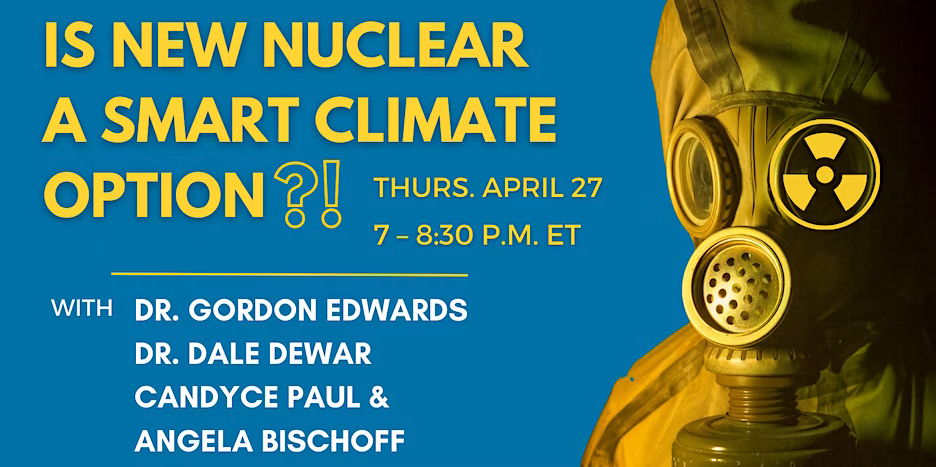
As the nuclear industry declines worldwide due to an aging inventory, high costs, and increased security risks, the industry is now pegging its hopes on “small modular nuclear reactors” (SMRs) to save the day.
Since they are lower carbon emitting than fossil fuels, the Canadian gov’t, as well as AB, SK, ON and NB provincial gov’ts, are all promising to spend billions on new nuclear to meet their climate commitments.
Why should Canadians be concerned about this new direction in energy policy? How do these new reactors compare with renewables on cost, reliability, danger, and security? Are there connections to nuclear weapons? Are there health concerns? And what are the impacts on First Nations?
Hear leading Canadian anti-nuclear voices:
– Dr. Gordon Edwards, Canadian Coalition for Nuclear Responsibility
– Dr. Dale Dewar, author of ‘From Hiroshima to Fukushima to You – a primer on radiation and health’
– Candyce Paul, English River First Nation
– Angela Bischoff, Ontario Clean Air Alliance
All welcome. Free. ** This will be a hybrid event – both online and in person at the Ottawa Quaker Meetinghouse, hosted by the Peace and Social Concerns Committee of Ottawa Quakers. When you register, you will be prompted to state whether you’ll join virtually or in person. https://www.eventbrite.ca/e/is-new-nuclear-a-smart-climate-solution-tickets-605041444247
Macron sparks outrage, infuriates China hawks over Taiwan comments

German foreign policy scholar and China-watcher Ulrich Speck said Macron’s comments vindicated Australia’s decision to tear up its contract for French-made submarines in favour of the AUKUS pact.
Malcolm Davis from the Australian Strategic Policy Institute described Macron’s comments as “ill-conceived at best, and poorly timed” given the situation in Ukraine, and the need for Europe and the US to work together to support Kyiv
The Age, By Latika Bourke, April 10, 2023
London: French President Emmanuel Macron has sparked outrage after saying Europe should reduce its dependency on the United States and avoid getting involved in any conflict between Washington and Beijing over Taiwan.
Macron made the comments in an interview with Politico on-board COTAM Unité, France’s Air Force One, while travelling home to Paris after a three-day state visit to Beijing where he struck a range of business deals for French companies…………………
Macron said he wanted Europe to adopt “strategic autonomy” from the United States, a concept which is backed by Beijing.
He warned against Europe becoming “America’s followers”.
“If the tensions between the two superpowers heat up … we won’t have the time nor the resources to finance our strategic autonomy and we will become vassals,” Macron told the travelling journalists.
“The paradox would be that, overcome with panic, we believe we are just America’s followers.
“The question Europeans need to answer … is it in our interest to accelerate [a crisis] on Taiwan? No. The worse thing would be to think that we Europeans must become followers on this topic and take our cue from the US agenda and a Chinese overreaction.
“Europeans cannot resolve the crisis in Ukraine; how can we credibly say on Taiwan, ‘Watch out, if you do something wrong we will be there’? If you really want to increase tensions that’s the way to do it,” he said.
France has long held out an ambivalence for US power and influence over Europe. France, for example, forced the withdrawal of NATO headquarters from Paris in 1967 over fears of US political sway over the continent. Macron has also supported the creation of a European army that could function in place of NATO…………………………………………………
Macron’s comments sparked widespread dismay and anger across Europe and in the United States, where Republican senator Marco Rubio urged European countries to clarify “pretty quickly” if Macron spoke for Europe or France alone.
“We need to ask Europe does he speak for them, because we’re pretty heavily involved in Ukraine right now, we’re spending a lot of our taxpayer money on a European war,” he said in a video statement.
“if our allies’ position, if in fact Macron speaks for all of Europe, and their position now is they’re not going to pick sides between the US and China over Taiwan, maybe we shouldn’t be picking sides either?
“Maybe we should say we’re going to be focusing on Taiwan and the threats that China poses and you guys handle Ukraine on your own?”
German foreign policy scholar and China-watcher Ulrich Speck said Macron’s comments vindicated Australia’s decision to tear up its contract for French-made submarines in favour of the AUKUS pact.
Malcolm Davis from the Australian Strategic Policy Institute described Macron’s comments as “ill-conceived at best, and poorly timed” given the situation in Ukraine, and the need for Europe and the US to work together to support Kyiv………………………………………… more https://www.theage.com.au/world/europe/after-visit-with-xi-macron-warns-europe-on-support-for-taiwan-infuriating-china-hawks-20230410-p5cz6t.html
Law to ban high-level nuclear waste storage facility effective June
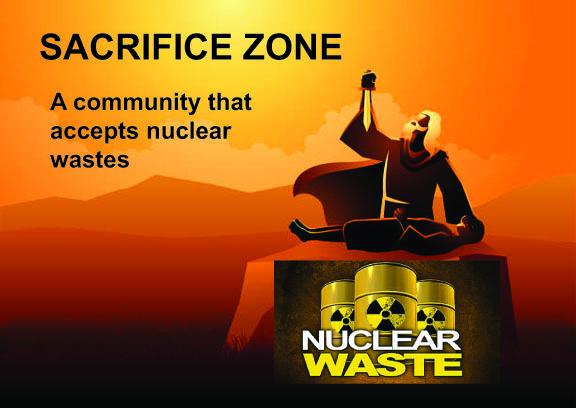
“New Mexico can’t just be the convenient sacrifice zone for the country’s contamination,”
Proponents call the ban an ‘important first step’ to limit impacts from radioactive waste
Source New Mexico, BY: DANIELLE PROKOP – APRIL 10, 2023
A state ban on high-level nuclear waste will go into effect in June, blocking a private company’s ability to build a contentious storage facility in southern New Mexico.
Gov. Michelle Lujan Grisham signed Senate Bill 53 into law March 17. The bill did not have the votes for an emergency enaction, so it goes into effect June 15.
The new law has two provisions.
The first expands the scope and duties for a task force to consult state agencies on nuclear disposal and investigate its impacts on New Mexico.
The second bans storage of high-level nuclear waste. The ban is in effect until two conditions are met – the state agrees to open a facility to handle waste, and the federal government has adopted a permanent underground storage site for nuclear waste.
“We do need a permanent solution. But New Mexico can’t just be the convenient sacrifice zone for the country’s contamination,” said Sen. Jeff Steinborn (D-Las Cruces) in an interview.
High level radioactive waste is extremely toxic. Some types will remain highly radioactive for thousands, if not tens of thousands of years. Short doses of exposure can be fatal. If radioactive waste leaches into the groundwater or soils, it can move through the food chain.
The state ban would include regulations on Holtec International’s plans for an underground facility for spent nuclear fuel from nuclear power reactors and other high-level radioactive waste from across the country.
At its peak, Holtec projected the facility could hold 176,600 metric tons of waste aboveground on more than 1,000 acres between Hobbs and Carlsbad.
“This bill is another major obstacle that will prevent this site from ever receiving any nuclear waste,” said Don Hancock, Nuclear Waste Safety program director and administrator at the nonprofit Southwest Research and Information Center.
The region already hosts the Waste Isolation Pilot Project, an underground site that stores clothes, tools, rags and other items contaminated with radioactive waste. The new law does not impact WIPP……………………………………
Kayleigh Warren, a member of Santa Clara Pueblo and a health and justice coordinator at the nonprofit Tewa Women United, called the four-page bill “an important first step.”
“It’s a way our state can start to communicate to the rest of our county that we’ve done our part,” Warren said. “We’re not interested in being a sacrifice zone for the country’s waste anymore.
Tewa Women United protests the impacts of toxins from Los Alamos National Laboratory on water and land in the Española valley and surrounding Pueblos. Looking forward, a key issue is how tribal governments will participate on the task force.
Native Americans are disproportionately vulnerable from uranium mining on the Navajo Nation or exposed at higher rates to radiation in water supplies.
“I want to see how our voices become part of these conversations moving forward,” Warren said. https://sourcenm.com/2023/04/10/law-to-ban-high-level-nuclear-waste-storage-facility-effective-june/
US troops to China? Not a good idea, really
Some pertinent comments to New York Post’s rather war-mongering article.
bob bob. 8 April, 2023
No, “Sending Troops” is not on the table. Taiwan is part of China as Puerto Rico is to the US. Imagine China intervening with our island and threatening us. Taiwan recently held elections, based on pro and anti China issues. Voters overwhelming support China regardless of what our own press and politicians say. Any country deciding to put their fate in US hands should take a long look at Afghanistan.
Cronkyte, 8 April, 2023
China has no desire to “invade” Taiwan, which would require a massive military operation and likely destroy the goose that lays the golden egg. China will do everything it can to persuade Taiwan to agree to reunification, most likely by offering semi-autonomous governance as they promised Hong Kong (and just like Hong Kong, they will then renege on those promises).
There is a growing push for reunification on the island, and after former Taiwan President Ma Ying-jeou’s speech upon returning from China, that will likely grow. He describes the choice as “peace or war,” and no one on either side of the Taiwan Strait want to see the island razed. https://nypost.com/2023/04/07/rep-michael-mccaul-us-troops-to-taiwan-on-the-table-if-china-invades/
US troops in Taiwan ‘on the table’ if China invades, Michael McCaul says
New York Post, By Caitlin Doornbos, April 7, 2023
WASHINGTON — House Foreign Affairs Committee chairman Rep. Michael McCaul has said the US may send troops to Taiwan should China invade the self-governed island.
“If communist China invaded Taiwan, it would certainly be on the table and something that would be discussed by Congress and with the American people,” the Texas Republican told Fox News.
“Are they prepared to do this? Is Taiwan worth it? I can argue for a lot of reasons why it is.”
The potential move would represent a stark contrast to the the war in Ukraine, where the US has sent billions in weaponry to Kyiv but has refused to send troops…………………………………………………
McCaul told Fox News that he thought that “certainly if the American people support [sending troops after an invasion,] the Congress will follow.
US military leaders have said Beijing could invade Taiwan by 2027 – though some, such as Chief of Naval Operations Adm. Mike Gilday, have said an attack could come at any time………………………………………………. more https://nypost.com/2023/04/07/rep-michael-mccaul-us-troops-to-taiwan-on-the-table-if-china-invades/
1 This Month
23 April – WEBINAR – Why new nuclear reactors are the wrong tools for decarbonization Thursday, April 23 • 1 AM – 2 AM AEST
World Nuclear Power. Reactors 1951-2026, 75 Years of Nuclear Power.
Interactive Map– https://dv.worldnuclearreport.org/
Chernobyl: The Lost Tapes – A good documentary on Chernobyl on SBS available On Demand for the next 3 weeks– https://www.sbs.com.au/ondemand/tv-program/chernobyl-the-lost-tapes/2352741955560

of the week–London Campaign for Nuclear Disarmament

Tell the Ukrainian Government to Drop Prosecution of Peace Activist Yurii Sheliazhenko
To see nuclear-related stories in greater depth and intensity – go to https://nuclearinformation.wordpress.com
-
Archives
- April 2026 (231)
- March 2026 (251)
- February 2026 (268)
- January 2026 (308)
- December 2025 (358)
- November 2025 (359)
- October 2025 (376)
- September 2025 (257)
- August 2025 (319)
- July 2025 (230)
- June 2025 (348)
- May 2025 (261)
-
Categories
- 1
- 1 NUCLEAR ISSUES
- business and costs
- climate change
- culture and arts
- ENERGY
- environment
- health
- history
- indigenous issues
- Legal
- marketing of nuclear
- media
- opposition to nuclear
- PERSONAL STORIES
- politics
- politics international
- Religion and ethics
- safety
- secrets,lies and civil liberties
- spinbuster
- technology
- Uranium
- wastes
- weapons and war
- Women
- 2 WORLD
- ACTION
- AFRICA
- Atrocities
- AUSTRALIA
- Christina's notes
- Christina's themes
- culture and arts
- Events
- Fuk 2022
- Fuk 2023
- Fukushima 2017
- Fukushima 2018
- fukushima 2019
- Fukushima 2020
- Fukushima 2021
- general
- global warming
- Humour (God we need it)
- Nuclear
- RARE EARTHS
- Reference
- resources – print
- Resources -audiovicual
- Weekly Newsletter
- World
- World Nuclear
- YouTube
-
RSS
Entries RSS
Comments RSS
 nuclear-news