Stopping covering the Fukushima nuclear disaster
April 11, 2023
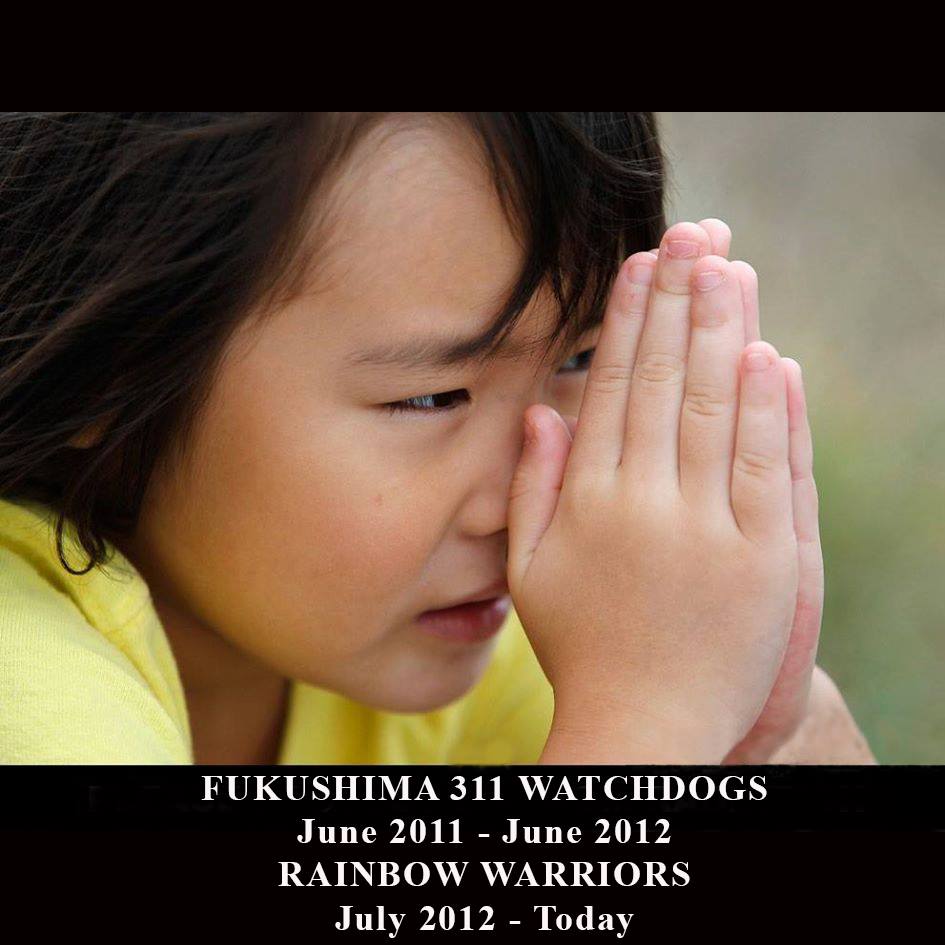
The Fukushima Nuclear disaster will continue to affect the people on location and others, as well as our environment for many more years, I will not continue.
I have been following the Fukushima nuclear accident for the past 12 years, spending a lot of time in sharing those news, to the somehow detriment of my own personal life.
Unlike some other people I entered this activity without seeking to make money or gain fame, I am just a simple citizen living on my basic minimum retirement pension. I shared Fukushima news weekly for the past 12 years but on the other hand I was unable to go visit my daughter in Iwaki, Fukushima since June 2011, because my financial situation is very tight, and Japan is way too expensive, overpriced for my meager wallet.
That situation has been tearing apart, on one hand to share Fukushima news and on the other hand to be unable to visit my own daughter in Fukushima.
I cannot take it anymore, so I decided to end this situation, to stop sharing the Fukushima news, to stop my lttle Fukushima blog, to disengage myself from it all, and to finally concentrate only on my little personal life.
That attitude of the Japanese government is nothing new. They have always lack a sense of responsibility, hiding behind hypocritical denials and false excuses, lies and covering-up.
The Japanese government has always faced accusations with duplicity when it comes to various events and issues that have marred their history. Some of these issues include the Nanjing massacre, Korean and Filipina sex slaves during World War II, the Minamata tragedy affecting thousands of lives, whale and dolphin fishing, the Fukushima nuclear disaster, and the dumping of radioactive water into the Pacific Ocean.
One of the most controversial events in Japan’s history is the Nanjing massacre, which occurred in 1937 when Japanese forces invaded the Chinese city of Nanjing. During the six-week occupation, Japanese soldiers carried out a brutal campaign of murder, rape, and looting, resulting in the deaths of an estimated 300,000 Chinese civilians and prisoners of war. Despite overwhelming evidence of the massacre, the Japanese government has been accused of downplaying its significance and even denying that it occurred.
Another issue that has caused controversy is the use of Korean and Filipina women as sex slaves during World War II. These women, known as “comfort women,” were forced into sexual servitude by the Japanese military, with an estimated 200,000 women being subjected to this treatment. Despite numerous apologies and compensation payments made to some of the victims, the Japanese government has been accused of failing to fully acknowledge and take responsibility for this atrocity.
Minamata disease is a neurological disease caused by severe mercury poisoning. Signs and symptoms include ataxia, numbness in the hands and feet, general muscle weakness, loss of peripheral vision, and damage to hearing and speech. In extreme cases, insanity, paralysis, coma, and death follow within weeks of the onset of symptoms. A congenital form of the disease affects fetuses in the womb, causing microcephaly, extensive cerebral damage, and symptoms similar to those seen in cerebral palsy.
Minamata disease was first discovered in the city of Minamata, Kumamoto Prefecture, Japan, in 1956, hence its name. It was caused by the release of methylmercury in the industrial wastewater from a chemical factory owned by the Chisso Corporation, which continued from 1932 to 1968. It has also been suggested that some of the mercury sulfate in the wastewater was also metabolized to methylmercury by bacteria in the sediment. This highly toxic chemical bioaccumulated and biomagnified in shellfish and fish in Minamata Bay and the Shiranui Sea, which, when eaten by the local population, resulted in mercury poisoning. The poisoning and resulting deaths of both humans and animals continued for 36 years, while Chisso and the Kumamoto prefectural government did little to prevent the epidemic.
As of March 2001, 2,265 victims had been officially recognized as having Minamata disease and over 10,000 had received financial compensation from Chisso. By 2004, Chisso had paid $86 million in compensation, and in the same year was ordered to clean up its contamination. On March 29, 2010, a settlement was reached to compensate as-yet uncertified victims.
In addition to these human rights abuses, Japan has also faced criticism for its continued practice of whale and dolphin fishing. Despite a global ban on commercial whaling, Japan continues to hunt whales under the guise of “scientific research,” and dolphins are also hunted and captured for use in entertainment parks. Many animal rights activists and conservationists have called for an end to these practices, but the Japanese government has been accused of prioritizing economic interests over environmental concerns.
Another event that has caused significant controversy is the Fukushima nuclear disaster, which occurred in 2011 after a massive earthquake and tsunami struck Japan. The disaster resulted in a meltdown at the Fukushima Daiichi nuclear power plant and the release of radioactive materials into the environment. While the Japanese government initially downplayed the severity of the disaster, it has since been accused of covering up information and failing to adequately respond to the crisis.
Perhaps one of the most recent controversies surrounding Japan involves the planned dumping of radioactive water from the Fukushima plant into the Pacific Ocean. Despite widespread opposition from environmental groups and neighboring countries, the Japanese government has defended the plan, claiming that the water will be treated and diluted before being released. However, many remain skeptical of these claims and fear the potential consequences of this decision.
In conclusion, the Japanese government has been accused of duplicity when it comes to a variety of issues that have marred their history and present-day actions. From human rights abuses to environmental disasters, the Japanese government has been criticized for downplaying or denying the severity of these events and failing to take responsibility for their actions. As such, it is imperative that the government is held accountable for its actions and takes concrete steps towards acknowledging and rectifying these issues.
The Japanese government as learned nothing from this nuclear tragedy, which they have conveniently sweeped under the carpet. Economics in their eyes always more important than people’s lives, PM Kishida promoting as of today the rebirth of nuclear full blast, wheras the consequences of the Fukushima nuclear disater have neither been yet adressed nor solved.
Best wishes to you,
Hervé Courtois
The Pros And Cons of Modular Nuclear Reactors
By Leonard Hyman & William Tilles – Apr 10, 2023 https://oilprice.com/Alternative-Energy/Nuclear-Power/The-Pros-And-Cons-of-Modular-Nuclear-Reactors.html
- Customization in nuclear power led to isolated and non-transferable experiences and limited the industry’s growth.
- Small modular reactors are a new approach that allows for standardization and assembly line efficiency, but also offer logistical and funding challenges.
- The future of nuclear energy could rely, in part, on the development and implementation of small modular reactors.
Did you ever get the feeling that you’ve seen this movie before, except with another name? The remake, maybe in color this time or with a younger cast? Well, nothing wrong with recycling but not when you get the uncomfortable notion that the actors don’t know that somebody did it before them.
Take nuclear power What went wrong last time around? We suggest that a principal culprit was customization. Almost every utility wanted a nuke tailored to its needs, site by site. Thus, each site had its own problems, and solving them produced little experience that helped anywhere else.
France, of course, was the main exception. The French state, which owned the utility, settled on one design and repeated it again and again. Of course, the French utility had the scale that U.S. and British’s utilities lacked. And the French never shied from dirigisme, state control of the economy. If the government planned to finance, subsidize and insure the industry, it might as well specify what it wanted. Not so in the USA, where we didn’t want the government to tell utilities what to buy, although we had no problem subsidizing and insuring whatever they built.
Today, we applaud the efforts to design nuclear power stations of smaller size, which will achieve economies of scale by constructing identical equipment in a manufacturing setting and shipping the modules to the construction site where they will be assembled. We have yet to establish whether the modular units will be substantially cheaper, and we have a good idea that most of the designs will not solve the nuclear waste problem. We are still determining whether the public will accept the new nukes more warmly than the old ones, too. But we are confident that builders will have less money at risk in any one piece of machinery, which is good.
Here’s our worry. There are at least 21 announced small modular reactor technologies ( as we wrote in a previous report), some with big-name tech backers. It is almost as if some tech entrepreneurs that can no longer find app start-ups to fund have plunged into nuclear energy.
Now, let’s do some rough numbers. There are 439 nuclear power plants in the world (92 in the USA, 56 in France, 54 in China and 37 in Russia, 33 in Japan, and 24 in South Korea). Over the coming 20 years, we believe most of these reactors will have to be retired, some in extreme old age. Figure that the new units might average one-tenth to one-quarter the size of the old ones.
So maybe a requirement for 4000 units over 20 years. Or 200 units per year. Divide that by 20 different designs. If each producer got an equal share, that would mean ten units per year. We don’t know but have to ask whether that number would yield financing for a factory that could achieve economies of scale.
Now add on the nationalism and security issues. Should we expect the USA, France, Russia and China to buy from foreign sources? If they require in-country sourcing, it is more difficult for any manufacturer to achieve real scale. The contestable market for manufacturers might be closer to 100 units per year, maybe less. That might not give room for manufacturing economies of scale.
We do not expect to see reliable analyses of the manufacturing costs of SMRs for some time, if ever, because the information would be a competitive secret. We are not even sure that current cost estimates are reliable, as opposed to come-ons to bring in generator companies to sign memoranda of interest, which are not contracts but might convince backers to put up money to build a factory.
However, let’s assume that manufacturing a reactor in a factory is not much different than manufacturing an airplane or automobile. Each facility ( or firm) has a U-shaped or saucer shaped cost curve. That is, cost per unit is high when volume is low, hits a low point at a a given volume, and then, eventually rises as the firm hits diseconomies of scale. [graph on original]
Average cost per unit at given production volumes
Let’s say that the total market per year for the product is 200 units. With the optimal, low-cost-per-unit production point at 50-60 units, the market couldn’t support more than four manufacturers. Whether the nuclear market can support 21 or four manufacturers depends on presently unknown manufacturing cost curves. As good capitalists, you might ask why consumers should care if a bunch of manufacturers put up plants and don’t get enough business to support them and then go under.
Well, there are several reasons. For one, we don’t want manufacturers hard up for orders and profits to skimp on the production process. The nuclear plant had better operate safely. Second, owners of nukes will need decades of service. Would they buy plants from manufacturers that look like they might not be around when needed?
Third, considering the financial consequences of outages, would they want to take a chance on a cheaper unit or rather pay up for perceived quality? Fourth, and most importantly, would government watchdogs encourage a proliferation of designs, making their jobs harder?
We don’t expect many of these SMR providers to get off the ground, especially if the government, the real backer of the industry, decides to opt for uniformity in order to get economies of scale in manufacturing and in regulation. In short, we’d put our money on the big names with long years of servicing their products.
Finally, SMRs, while welcome, neither substantially reduce nuclear costs nor cure the waste disposal problem, although they should reduce the financial burden inherent in big nuclear projects. In other words, they seem like a better way to pursue nuclear energy, which remains the most expensive, environmentally controversial, non-carbon producer. Is there a better way?
$16-million-a-second and no electricity — Beyond Nuclear International

ITER fusion reactor has countries cooperating for the wrong cause
$16-million-a-second and no electricity — Beyond Nuclear International
Exorbitant fusion project is obsolete and might even be inoperable
By Linda Pentz Gunter, 10 Apr 23,
As defined by World Nuclear News, the international fusion project known as ITER, exists “to prove the feasibility of fusion as a large-scale and carbon-free source of energy. The goal of ITER is to operate at 500 MW (for at least 400 seconds continuously) with 50 MW of plasma heating power input. It appears that an additional 300 MWe of electricity input may be required in operation. No electricity will be generated at ITER.”
Four hundred seconds. No electricity.
ITER, which stands for International Thermonuclear Experimental Reactor, is a collaboration between 35 countries that was first conceived in 1985 and formally agreed to on November 21, 2006. Construction began in 2010 at the Cadarache nuclear complex in southern France.
The official seven group founding members of ITER are China, the European Union (then including the UK, which remains in the project), India, Japan, Korea, Russia and the United States.
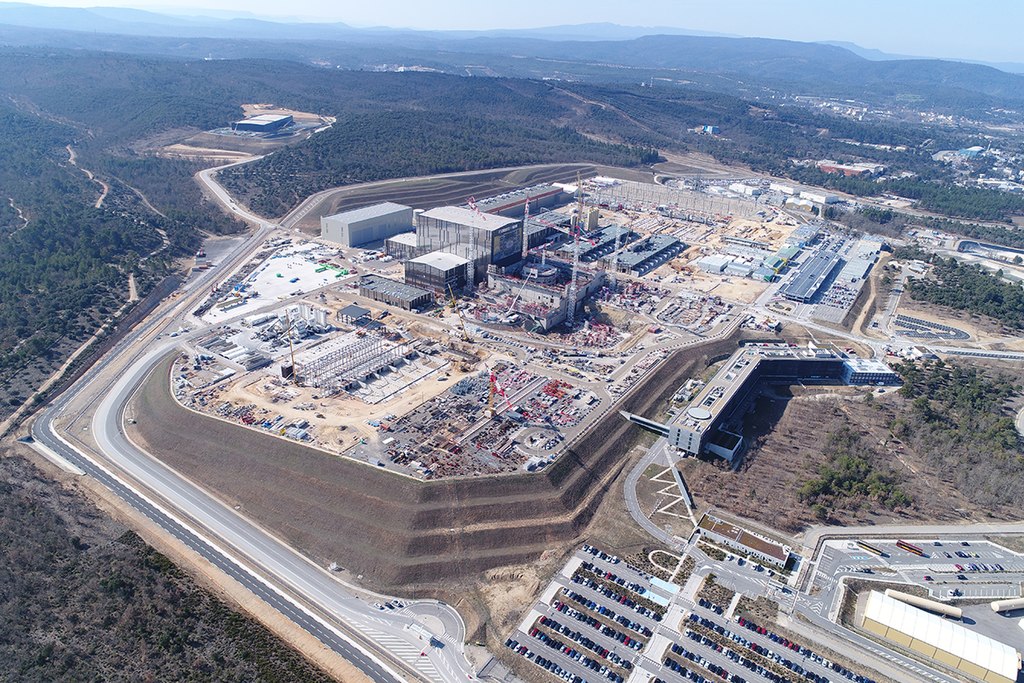
By the time ITER is actually operational — if it ever is — it will have gobbled up billions of dollars. Currently, those cost estimates range wildly between the official ITER figure of $19-23 billion (likely a gross under-estimate) and the U.S. Department of Energy’s (DOE) current estimate of $65 billion.
The starting price when the project began was around $6.3 billion.
If the DOE numbers are right, then those 400 seconds will cost $16.25 million a second. Just to prove that fusion power is possible. Without actually delivering anything practical at all to anyone.
Whatever the costs, they are too high to be remotely justifiable, given the end product and the far more compelling and essential competing needs of the world right now.
Worse still, ITER may not actually work. “ITER is of the tokamak based design using strong magnetic fields to confine the very hot plasma needed to induce the fusion reaction,” explained two scientists in a January 2021 paper published in Nature — Potential design problems for ITER fusion device. “Building a successful magnetic fusion device for energy production is of great challenge.”
The paper’s authors, Hassanein and Sizyuk, who modeled the ITER design “in full and exact 3D geometry,” contend that, “The current ITER divertor design will not work properly during transient plasma events and needs to be modified or a new design should be developed to ensure successful operation and maintain the confidence in the tokamak concept as a viable magnetic fusion energy production system.”
So far, the ITER project has already experienced some technical failures. ………………………………………………………
There is now considerable competition in the fusion field, with US laboratories, especially, eager to demonstrate ITER as obsolete before it is even completed — current predictions make that date some time in 2035. But, as we pointed out last December, during the false fanfare about a breakthrough at the National Ignition Facility (NIF), fusion is already obsolete. Given the confluence of the climate crisis and emerging energy needs in much of the less developed world, fusion has no practical applicability.
International collaboration is desperately needed in today’s conflict-riven world. It just needs to focus on something that’s mutually beneficial to our collective survival. Let’s start spending $16 million a second on that. https://beyondnuclearinternational.org/2023/04/10/16-million-a-second-and-no-electricity/
Is New Nuclear a Smart Climate Solution?
 |
Thur. Apr. 27, 7 – 8:30 p.m. ET https://www.eventbrite.ca/e/is-new-nuclear-a-smart-climate-solution-tickets-605041444247
Watch online OR attend at the Ottawa Quaker Meetinghouse, 91-A Fourth Ave. Ottawa
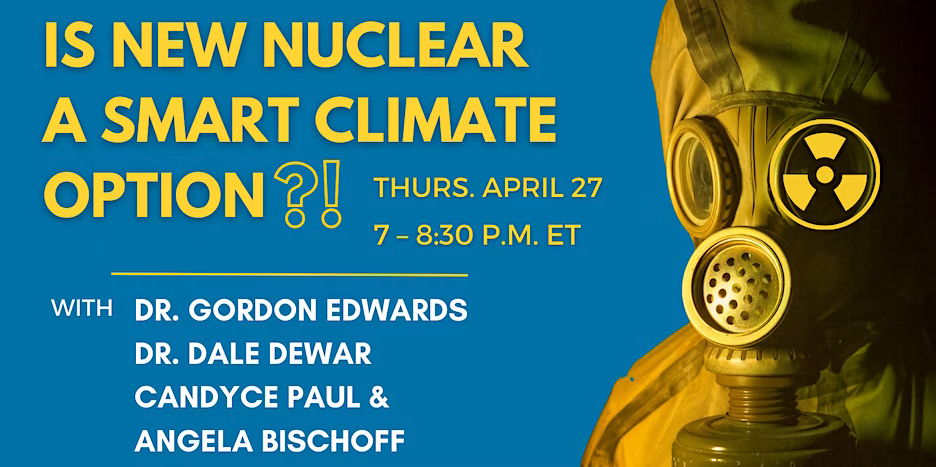
As the nuclear industry declines worldwide due to an aging inventory, high costs, and increased security risks, the industry is now pegging its hopes on “small modular nuclear reactors” (SMRs) to save the day.
Since they are lower carbon emitting than fossil fuels, the Canadian gov’t, as well as AB, SK, ON and NB provincial gov’ts, are all promising to spend billions on new nuclear to meet their climate commitments.
Why should Canadians be concerned about this new direction in energy policy? How do these new reactors compare with renewables on cost, reliability, danger, and security? Are there connections to nuclear weapons? Are there health concerns? And what are the impacts on First Nations?
Hear leading Canadian anti-nuclear voices:
– Dr. Gordon Edwards, Canadian Coalition for Nuclear Responsibility
– Dr. Dale Dewar, author of ‘From Hiroshima to Fukushima to You – a primer on radiation and health’
– Candyce Paul, English River First Nation
– Angela Bischoff, Ontario Clean Air Alliance
All welcome. Free. ** This will be a hybrid event – both online and in person at the Ottawa Quaker Meetinghouse, hosted by the Peace and Social Concerns Committee of Ottawa Quakers. When you register, you will be prompted to state whether you’ll join virtually or in person. https://www.eventbrite.ca/e/is-new-nuclear-a-smart-climate-solution-tickets-605041444247
Macron sparks outrage, infuriates China hawks over Taiwan comments
German foreign policy scholar and China-watcher Ulrich Speck said Macron’s comments vindicated Australia’s decision to tear up its contract for French-made submarines in favour of the AUKUS pact.
Malcolm Davis from the Australian Strategic Policy Institute described Macron’s comments as “ill-conceived at best, and poorly timed” given the situation in Ukraine, and the need for Europe and the US to work together to support Kyiv
The Age, By Latika Bourke, April 10, 2023
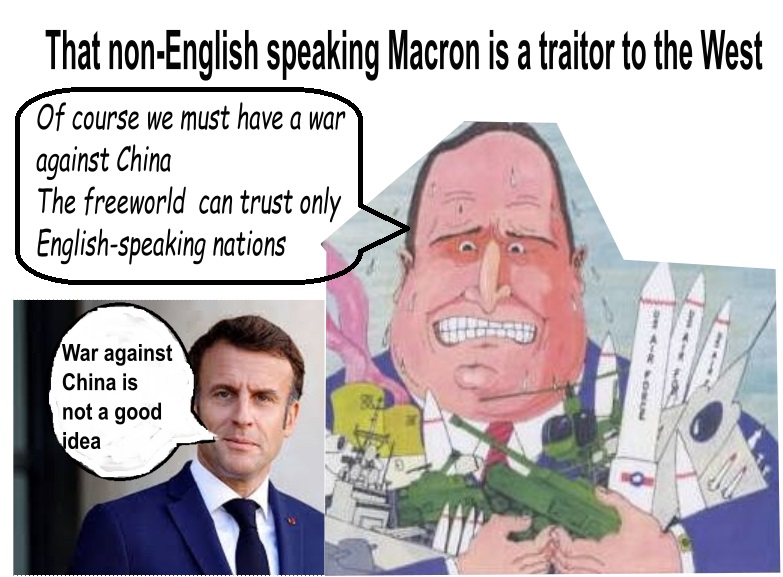
London: French President Emmanuel Macron has sparked outrage after saying Europe should reduce its dependency on the United States and avoid getting involved in any conflict between Washington and Beijing over Taiwan.
Macron made the comments in an interview with Politico on-board COTAM Unité, France’s Air Force One, while travelling home to Paris after a three-day state visit to Beijing where he struck a range of business deals for French companies…………………
Macron said he wanted Europe to adopt “strategic autonomy” from the United States, a concept which is backed by Beijing.
He warned against Europe becoming “America’s followers”.
“If the tensions between the two superpowers heat up … we won’t have the time nor the resources to finance our strategic autonomy and we will become vassals,” Macron told the travelling journalists.
“The paradox would be that, overcome with panic, we believe we are just America’s followers.
“The question Europeans need to answer … is it in our interest to accelerate [a crisis] on Taiwan? No. The worse thing would be to think that we Europeans must become followers on this topic and take our cue from the US agenda and a Chinese overreaction.
“Europeans cannot resolve the crisis in Ukraine; how can we credibly say on Taiwan, ‘Watch out, if you do something wrong we will be there’? If you really want to increase tensions that’s the way to do it,” he said.
France has long held out an ambivalence for US power and influence over Europe. France, for example, forced the withdrawal of NATO headquarters from Paris in 1967 over fears of US political sway over the continent. Macron has also supported the creation of a European army that could function in place of NATO…………………………………………………
Macron’s comments sparked widespread dismay and anger across Europe and in the United States, where Republican senator Marco Rubio urged European countries to clarify “pretty quickly” if Macron spoke for Europe or France alone.
“We need to ask Europe does he speak for them, because we’re pretty heavily involved in Ukraine right now, we’re spending a lot of our taxpayer money on a European war,” he said in a video statement.
“if our allies’ position, if in fact Macron speaks for all of Europe, and their position now is they’re not going to pick sides between the US and China over Taiwan, maybe we shouldn’t be picking sides either?
“Maybe we should say we’re going to be focusing on Taiwan and the threats that China poses and you guys handle Ukraine on your own?”
German foreign policy scholar and China-watcher Ulrich Speck said Macron’s comments vindicated Australia’s decision to tear up its contract for French-made submarines in favour of the AUKUS pact.
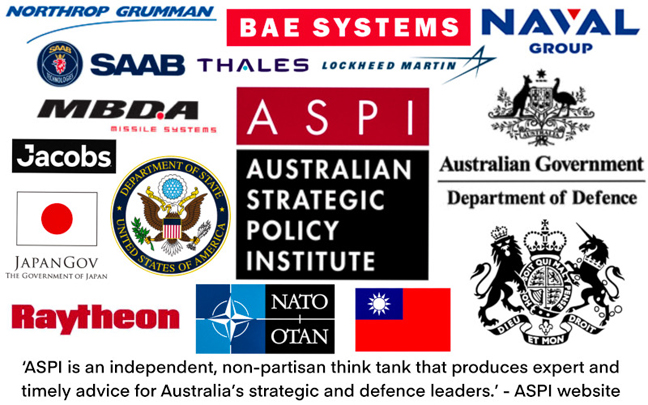
Malcolm Davis from the Australian Strategic Policy Institute described Macron’s comments as “ill-conceived at best, and poorly timed” given the situation in Ukraine, and the need for Europe and the US to work together to support Kyiv………………………………………… more https://www.theage.com.au/world/europe/after-visit-with-xi-macron-warns-europe-on-support-for-taiwan-infuriating-china-hawks-20230410-p5cz6t.html
Law to ban high-level nuclear waste storage facility effective June
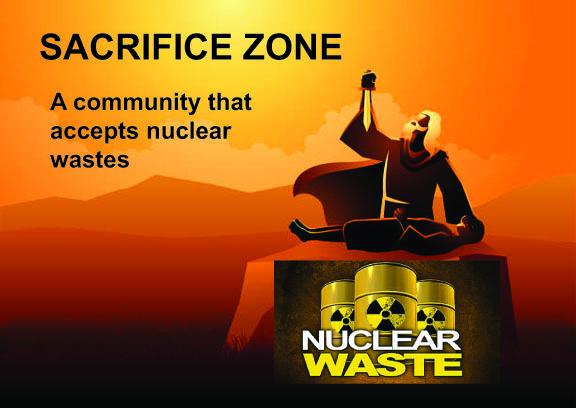
“New Mexico can’t just be the convenient sacrifice zone for the country’s contamination,”
Proponents call the ban an ‘important first step’ to limit impacts from radioactive waste
Source New Mexico, BY: DANIELLE PROKOP – APRIL 10, 2023
A state ban on high-level nuclear waste will go into effect in June, blocking a private company’s ability to build a contentious storage facility in southern New Mexico.
Gov. Michelle Lujan Grisham signed Senate Bill 53 into law March 17. The bill did not have the votes for an emergency enaction, so it goes into effect June 15.
The new law has two provisions.
The first expands the scope and duties for a task force to consult state agencies on nuclear disposal and investigate its impacts on New Mexico.
The second bans storage of high-level nuclear waste. The ban is in effect until two conditions are met – the state agrees to open a facility to handle waste, and the federal government has adopted a permanent underground storage site for nuclear waste.
“We do need a permanent solution. But New Mexico can’t just be the convenient sacrifice zone for the country’s contamination,” said Sen. Jeff Steinborn (D-Las Cruces) in an interview.
High level radioactive waste is extremely toxic. Some types will remain highly radioactive for thousands, if not tens of thousands of years. Short doses of exposure can be fatal. If radioactive waste leaches into the groundwater or soils, it can move through the food chain.
The state ban would include regulations on Holtec International’s plans for an underground facility for spent nuclear fuel from nuclear power reactors and other high-level radioactive waste from across the country.
At its peak, Holtec projected the facility could hold 176,600 metric tons of waste aboveground on more than 1,000 acres between Hobbs and Carlsbad.
“This bill is another major obstacle that will prevent this site from ever receiving any nuclear waste,” said Don Hancock, Nuclear Waste Safety program director and administrator at the nonprofit Southwest Research and Information Center.
The region already hosts the Waste Isolation Pilot Project, an underground site that stores clothes, tools, rags and other items contaminated with radioactive waste. The new law does not impact WIPP……………………………………
Kayleigh Warren, a member of Santa Clara Pueblo and a health and justice coordinator at the nonprofit Tewa Women United, called the four-page bill “an important first step.”
“It’s a way our state can start to communicate to the rest of our county that we’ve done our part,” Warren said. “We’re not interested in being a sacrifice zone for the country’s waste anymore.
Tewa Women United protests the impacts of toxins from Los Alamos National Laboratory on water and land in the Española valley and surrounding Pueblos. Looking forward, a key issue is how tribal governments will participate on the task force.
Native Americans are disproportionately vulnerable from uranium mining on the Navajo Nation or exposed at higher rates to radiation in water supplies.
“I want to see how our voices become part of these conversations moving forward,” Warren said. https://sourcenm.com/2023/04/10/law-to-ban-high-level-nuclear-waste-storage-facility-effective-june/
US troops to China? Not a good idea, really
Some pertinent comments to New York Post’s rather war-mongering article.
bob bob. 8 April, 2023
No, “Sending Troops” is not on the table. Taiwan is part of China as Puerto Rico is to the US. Imagine China intervening with our island and threatening us. Taiwan recently held elections, based on pro and anti China issues. Voters overwhelming support China regardless of what our own press and politicians say. Any country deciding to put their fate in US hands should take a long look at Afghanistan.
Cronkyte, 8 April, 2023
China has no desire to “invade” Taiwan, which would require a massive military operation and likely destroy the goose that lays the golden egg. China will do everything it can to persuade Taiwan to agree to reunification, most likely by offering semi-autonomous governance as they promised Hong Kong (and just like Hong Kong, they will then renege on those promises).
There is a growing push for reunification on the island, and after former Taiwan President Ma Ying-jeou’s speech upon returning from China, that will likely grow. He describes the choice as “peace or war,” and no one on either side of the Taiwan Strait want to see the island razed. https://nypost.com/2023/04/07/rep-michael-mccaul-us-troops-to-taiwan-on-the-table-if-china-invades/
US troops in Taiwan ‘on the table’ if China invades, Michael McCaul says
New York Post, By Caitlin Doornbos, April 7, 2023
WASHINGTON — House Foreign Affairs Committee chairman Rep. Michael McCaul has said the US may send troops to Taiwan should China invade the self-governed island.
“If communist China invaded Taiwan, it would certainly be on the table and something that would be discussed by Congress and with the American people,” the Texas Republican told Fox News.
“Are they prepared to do this? Is Taiwan worth it? I can argue for a lot of reasons why it is.”
The potential move would represent a stark contrast to the the war in Ukraine, where the US has sent billions in weaponry to Kyiv but has refused to send troops…………………………………………………
McCaul told Fox News that he thought that “certainly if the American people support [sending troops after an invasion,] the Congress will follow.
US military leaders have said Beijing could invade Taiwan by 2027 – though some, such as Chief of Naval Operations Adm. Mike Gilday, have said an attack could come at any time………………………………………………. more https://nypost.com/2023/04/07/rep-michael-mccaul-us-troops-to-taiwan-on-the-table-if-china-invades/
Seas have drastically risen along southern U.S. coast in past decade — limitless life
Multiple new studies highlight a rate of sea level rise that is ‘unprecedented in at least 120 years’ along the Gulf of Mexico and southeastern U.S. coast By Chris Mooney and Brady Dennis April 10, 2023 at 5:00 a.m. EDT Louisiana could be ‘canary in the coal mine’ for rising seas 1:48 Multiple new studies highlight […]
Seas have drastically risen along southern U.S. coast in past decade — limitless life
One German company persists with nuclear power -interests in reactors in Sweden.
Germany is getting out of nuclear power – not completely
Market Screener, 04/11/2023 DÜSSELDORF (dpa-AFX) – Even after Germany’s last three nuclear power plants shut down on April 15, a German company will continue to produce nuclear power. Uniper, the energy company nationalized in the wake of the gas crisis, has stakes in three nuclear power plants in Sweden, and is a majority shareholder in one of them. “
Uniper is currently planning to build an electric, non-nuclear research and test facility at the Oskarshamn nuclear power plant site, with construction set to begin next year, he said. The project will be carried out in cooperation with the company Blykalla and the Royal Institute of Technology, he said. The research facility will focus on testing materials and components for a new type of reactor, called a Small Modular Reactor (SMR)………..
The German Institute for Economic Research (DIW) recently expressed its disapproval of SMR plants, which are understood to be reactors with an electrical output of up to 300 megawatts. SMR concepts are not mature and will not be available in the foreseeable future, according to a study. They were old reactor concepts that had not become established because of economic disadvantages due to the lower outputs.
“Further, they remain radiologically hazardous because the problems of increased transport and interim storage of radioactive waste would multiply.” Despite decades of research, he said, hardly any nuclear power plants in the SMR category have been able to begin commercial power operations. Even assuming optimistic conditions, he said, a cost-competitive bid cannot be assumed./tob/DP/zb https://www.marketscreener.com/quote/stock/E-ON-SE-3818998/news/Germany-is-getting-out-of-nuclear-power-not-completely-43462261/
Washington Says “Journalism Is Not A Crime” While Working To Criminalize Journalism

There is no greater threat posed to world press freedoms than the one the US is presenting with its persecution of Julian Assange
Caitlin Johnstone https://caitlinjohnstone.substack.com/p/washington-says-journalism-is-not?utm_source=post-email-title&publication_id=82124&post_id=113393100&isFreemail=true&utm_medium=email 9 Apr 23
After a certain point criticizing the hypocrisy and contradictions of the US-centralized empire starts to feel too easy, like shooting fish in a barrel. But hell let’s do it anyway; the barrel’s right here, and I really hate these particular fish.
Russian security services have formally filed espionage charges against Wall Street Journal reporter Evan Gershkovich, who has been detained in Russia since his arrest last month. Gershkovich reportedly denies the spying allegations and says he was engaged in journalistic activity in Russia.
This news came out at the same time as a joint statement was published by Senate Majority Leader Chuck Schumer and Senate Minority Leader Mitch McConnell condemning Gershkovich’s detention as a violation of press freedoms.
“Let there be no mistake: journalism is not a crime,” the senators write. “We demand the baseless, fabricated charges against Mr. Gershkovich be dropped and he be immediately released and reiterate our condemnation of the Russian government’s continued attempts to intimidate, repress, and punish independent journalists and civil society voices.”
The use of the phrase “journalism is not a crime” is an interesting choice since the most common individual case you’ll hear it used in reference to is surely that of Julian Assange, who has been locked in a maximum security prison for four years while the US government works to extradite him for the crime of good journalism. Every pro-Assange demonstration I’ve ever been to has featured signs with some variation of the phrase “journalism is not a crime,” and any Assange supporter will be intimately familiar with that refrain.
So as an Assange supporter it sounds a bit odd to hear that slogan rolled out by two DC swamp monsters who have both enthusiastically supported the persecution of the world’s most famous journalist.
“He has done enormous damage to our country and I think he needs to be prosecuted to the fullest extent of the law. And if that becomes a problem, we need to change the law,” McConnell said of Assange after WikiLeaks published thousands of diplomatic cables in 2010.
“Neither WikiLeaks, nor its original source for these materials, should be spared in any way from the fullest prosecution possible under the law,” Schumer said in 2010.
“Now that Julian Assange has been arrested, I hope he will soon be held to account for his meddling in our elections on behalf of Putin and the Russian government,” Schumer tweeted when Assange was dragged from the Ecuadorian embassy in London almost exactly four years ago. (Assange has not been charged with anything related to Russia or the 2016 election, and allegations of collusion with Russia remain completely unsubstantiated to this day.)
These are two of the most powerful elected officials in the world, puffing and posing as brave defenders of press freedoms after having actively facilitated their government’s attempts to destroy those very press freedoms. Their government is working to extradite and imprison Assange under the Espionage Act for engaging in what experts say is standard journalistic activity, which will allow them to set a legal precedent in which any journalist anywhere in the world can be extradited and prosecuted for exposing US war crimes like Assange did.
There is no greater threat posed to world press freedoms than the one the US is presenting with its persecution of Julian Assange, a persecution which has been fervently endorsed by Schumer and McConnell and all the other Washington swamp creatures who are melodramatically rending their garments about Evan Gershkovich today.
Which is of course ridiculous. You don’t get to say “journalism is not a crime” while literally working to criminalize journalism. Those positions are mutually exclusive. Pick one.
It’s worthwhile to point out the hypocrisy of US empire managers, not because hypocrisy in and of itself is some uniquely grave evil but because it shows that these people do not stand for what they pretend to stand for. The US empire does not care about press freedoms, it cares about power and domination, and the noises it makes in support of journalism are only ever made as a cynical ploy with which to bludgeon disobedient foreign governments on the world stage.
Assange exposed many inconvenient facts about the US empire in his work with WikiLeaks, but none have been so inconvenient as what he’s exposed by forcing them to come after him and reveal their true face in their brazen persecution of the world’s greatest journalist.
AUKUS nuclear submarine cooperation seriously jeopardizes peace, stability in Asia-Pacific: embassy

LONDON, April 8 (Xinhua) http://eng.chinamil.com.cn/VOICES/16215442.html
The United States, Britain and Australia have been pressing ahead with nuclear submarine cooperation despite being widely questioned, which creates nuclear proliferation risks and undermines the international non-proliferation system, the Chinese Embassy in Britain has said.
In response to a question concerning the trilateral Australia-UK-U.S. (AUKUS) cooperation on nuclear submarines, the embassy said on Friday that such cooperation will exacerbate the resurgence of the Cold War mentality, trigger a new round of arms race, and further provoke regional security and military confrontation, seriously jeopardizing regional peace, stability and prosperity.
The Asia-Pacific is now the most dynamic and fastest growing region in the world, which hasn’t come easily, the embassy said in a press release. “The AUKUS cooperation is designed to serve the U.S. geopolitical agenda to introduce group politics and Cold War confrontation into the Asia-Pacific with military deterrence. It is aimed at creating a NATO-replica in the Asia-Pacific, which runs counter to peace and stability in the region.”
The AUKUS nuclear submarine cooperation marks the first time for nuclear weapon states to transfer naval nuclear propulsion reactors and weapons-grade highly enriched uranium to a non-nuclear weapon state, it noted.
As the current International Atomic Energy Agency (IAEA) safeguards system is incapable of ensuring effective safeguards, such cooperation poses serious nuclear proliferation risks, seriously compromises the authority of the IAEA, and deals a blow to the agency’s safeguards system, the embassy said.
“If the three countries are set on advancing the cooperation, other countries will likely follow suit, eventually leading to the collapse of the international nuclear non-proliferation regime,” it said.
China urges the three countries to heed the call of the international community and regional countries, discard the outdated zero-sum Cold War mentality and narrow geopolitical mindset, earnestly fulfil their international obligations and do more things that are conducive to regional peace, stability, unity and development, the embassy said.
“This serves the fundamental and long-term interests of regional countries as well as the three countries themselves,” it said. “The UK is not a country in the region and it is unwise to overstretch itself.”
Ex-PM Ehud Barak Confirms Israel Has Nuclear Weapons: Why it Matters
Israel has maintained a strict policy of never confirming or denying it possesses nuclear weapons.
By Pesach Benson | Apr 9, 23, https://www.israeltoday.co.il/read/ex-pm-ehud-barak-confirms-israel-has-nuclear-weapons-why-it-matters/
(TPS) Former Prime Minister Ehud Barak broke Israel’s policy of ambiguity and tweeted his confirmation that Israel possesses nuclear weapons last Tuesday.
While commenting on the fallout from the governing coalition’s judicial reform initiative, Barak tweeted:
“It sounds weird to us. But in Israelis’ conversations with political parties in the West, their deep concern emerges about the possibility that, if the coup d’état in Israel succeeds, a messianic dictatorship will be established in the heart of the Middle East, possessing nuclear weapons, and fanatically wishing for a confrontation with Islam centered on the Temple Mount. In their eyes – it’s really scary. not going to happen. Happy holiday”
Israel has maintained a strict policy of never confirming or denying it possesses nuclear weapons. Nevertheless, it has been widely believed that Israel possesses them, with foreign reports estimating the nuclear arsenal’s size from dozens to hundreds of bombs.
Barak, a former Defense Minister and Israel Defense Forces Chief of Staff, argued in a Sept. 2021 op-ed that Israel should review its policy of nuclear ambiguity, suggesting disclosure could be a better deterrent against Iran’s nuclear program.
Proponents of ambiguity say it protects Israel from being forced to sign the Non-Proliferation Treaty or possibly facing international sanctions. Signing the NPT would require Israel to open its nuclear facilities to international inspection.
Meanwhile, the US reportedly floated a proposal with Israel and other allies in February to resume nuclear talks with Iran in which Tehran would not enrich uranium above 60 percent purity in exchange for sanctions relief. The White House has neither confirmed nor denied those reports.
The International Atomic Energy Agency reported in March that Iran has enriched uranium to 83.7 percent purity, far higher than the 3.67% necessary for a civilian nuclear program. Nuclear weapons require uranium enriched to 90% purity.
It is widely believed that Iran could finish enriching enough uranium to produce an atomic bomb in about four weeks.
Iran and the US agreed to the Joint Comprehensive Plan of Action in 2015 along with France, Germany, Britain, Russia and China. Under the terms of the JCPOA, Iran was supposed to limit its uranium enrichment under UN supervision in exchange for the US lifting economic sanctions. Israel opposed the agreement, saying it wasn’t strong enough.
In 2018, President Donald Trump withdrew the US from the agreement. Restoring the JCPOA has been a key foreign policy goal of the Biden administration.
Israel and its Gulf allies oppose a resumption of the nuclear talks.
Disturbing Clues at Fukushima Nuclear Plant May Be an Omen for Another Disaster
880 tons of melted nuclear fuel remains inside the three failed reactors—that’s about 10 times the fuel removed during the Three Mile Island clean up after the 1979 meltdown
It’s been 12 years since the catastrophe at Fukushima Daiichi, and decommissioning the site continues to be a major headache. Popular Mechans BY DARREN ORF, APR 10, 2023
- On March 11, 2011, Japan’s Fukushima prefecture experienced a devastating earthquake and tsunami, which killed upwards of 20,000 people.
- One of the lasting legacies of the earthquake is the extensive damage to the Fukushima Daiichi Nuclear Power Plant that experienced meltdowns in three of its six nuclear reactors.
- Twelve years later, the clean up and decommission of the plant continues, and new evidence suggests that at least one reactor could be vulnerable to future earthquakes
…………………………………………………………………………………………….. Because of the immense radiation inside these reactors, engineers still don’t know the exact extent of the meltdowns. But for years, robotic rovers have investigated these highly irradiated zones to get a better understanding of each reactor’s status and—crucially—ability to withstand another earthquake.
Earlier this week, the Associated Press reported that one of these robotic sojourns, conducted by an underwater remotely operated vehicle named ROV-A2, uncovered something troubling: exposed steel bars in the main support structure of Unit 1, along with missing pieces of its external concrete wall.
Located right under the nuclear core of Unit 1, this support structure wasn’t in jeopardy of failing on its own, but experts worried about its ability to withstand another earthquake if one were to strike. Because decommissioning and cleaning up Fukushima Daiichi will likely take decades to fully complete, the plant experiencing more earthquakes is likely. Just last year, the region was hit by another earthquake—thankfully the tremor was some 63 times less powerful than the devastating disaster in 2011.
Tokyo Electric Power Company Holdings (TEPCO), which operates Fukushima Daiichi, says that it will analyze the video taken by the underwater drone, along with other data, in the coming months to figure out ways to improve the unit’s earthquake resistance. This a priority, as 880 tons of melted nuclear fuel remains inside the three failed reactors—that’s about 10 times the fuel removed during the Three Mile Island clean up after the 1979 meltdown, according to the Associated Press……………………
[this article then goes on to say how safe nuclear power now is! ] https://www.popularmechanics.com/science/energy/a43525886/fukushima-nuclear-plant-images-raise-safety-concerns/
SECOND BATCH of Classified Documents Detailing US Ukraine War Secrets Is Leaked Online –
By Jim Hoft Apr. 8, 2023 https://www.thegatewaypundit.com/2023/04/second-batch-of-classified-documents-detailing-us-ukraine-war-secrets-is-leaked-online/
Secret details of US analysis of Ukraine War, China, terrorism and the Middle East.
The documents contain information on Ukrainian losses in the war and an alleged upcoming assault by Ukraine and its allies into Russian controlled eastern Ukraine.
The Western mainstream media called the leaks a “suspected Russian plot.”
The first documents appeared on 4Chan and Discord.
The Daily Mail reported:
A second batch of classified documents detailing the United States’ analyses of global hotspots has been leaked online in a suspected Russian plot.
More than 100 documents are feared to have been obtained in what a senior intelligence called ‘a nightmare for the Five Eyes,’ – a reference to the intelligence sharing agreement between the United States, Britain, Australia, New Zealand and Canada.
The documents cover the war in Ukraine, China, terrorism and the Middle East.
The Pentagon confirmed the leak, but said that some of the documents – as with the earlier reported leak – had been doctored to downplay the strength of U.S. allies.
The first tranche of documents appeared to have been posted in early March on the social media platform Discord, according to Aric Toler, an analyst at Bellingcat, the Dutch investigative site.
Friday’s documents were published on the controversial message board 4Chan, and subsequently spread on Twitter.
Russia Today reported on the leaked documents.
The state-run media outlet says the “secret plan” does not add up.
Which information is most suspect?
The probable locations of Russian units, indicated on the combat map in red, appear to have been collected from open sources. Several pro-Kiev resources that track military operations contain almost identical information.
Also, the ratios of killed and wounded for the Ukrainian and Russian Armed Forces which initially appeared in these ‘secret plans’ have since been changed. When first posted, the losses for the Ukrainian side were underestimated at about 16,500 –17,000 people. Then (probably to be more realistic), they increased almost fivefold, up to 65,000 – 75,000. At the same time, the numbers given for Russia’s purported losses of vehicles and equipment coincide with data published by Kiev’s Ministry of Defense.
What else is wrong with the published AFU offensive plans?
The blatant falsification of data on the readiness of Ukrainian military formations catches the eye. The document states that, of the nine supposedly to be trained up to US and NATO standards by March 31 and April 30, five of Kiev’s brigades have had zero training: these are the 82nd Airborne, the 32nd, 117th, and 118th Territorial Defense, as well as the 21st separate mechanized.
Even if only two or three companies in these brigades were trained, and self-preparation wasn’t completed, their level of training couldn’t be zero. At the same time, the highest percentage of readiness was recorded only in the 47th mechanized(40%) and the 46th airborne assault (60%).
1 This Month
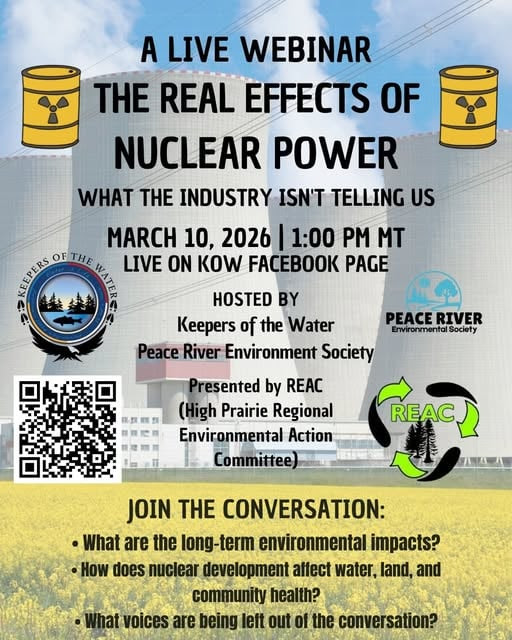
10 March A LIVE WEBINAR THE REAL EFFECTS OF NUCLEAR POWER
What the Industry Isn’t Telling Us
1:00 PM Mountain, 2 pm Central, 3 pm Eastern. Live on the Keepers of the Water Facebook page


18 March Webinar @ 1 PM EST: An Assessment of SMR Projects: The Case of Canada
register for the zoom:
https://us02web.zoom.us/webinar/register/WN_o8BIIOUvQ2ONJR1nta65DQ#/registration


of the week – STOP SMALL MODULAR REACTORS IN CANADA
To see nuclear-related stories in greater depth and intensity – go to https://nuclearinformation.wordpress.com
-
Archives
- March 2026 (119)
- February 2026 (268)
- January 2026 (308)
- December 2025 (358)
- November 2025 (359)
- October 2025 (376)
- September 2025 (258)
- August 2025 (319)
- July 2025 (230)
- June 2025 (348)
- May 2025 (261)
- April 2025 (305)
-
Categories
- 1
- 1 NUCLEAR ISSUES
- business and costs
- climate change
- culture and arts
- ENERGY
- environment
- health
- history
- indigenous issues
- Legal
- marketing of nuclear
- media
- opposition to nuclear
- PERSONAL STORIES
- politics
- politics international
- Religion and ethics
- safety
- secrets,lies and civil liberties
- spinbuster
- technology
- Uranium
- wastes
- weapons and war
- Women
- 2 WORLD
- ACTION
- AFRICA
- Atrocities
- AUSTRALIA
- Christina's notes
- Christina's themes
- culture and arts
- Events
- Fuk 2022
- Fuk 2023
- Fukushima 2017
- Fukushima 2018
- fukushima 2019
- Fukushima 2020
- Fukushima 2021
- general
- global warming
- Humour (God we need it)
- Nuclear
- RARE EARTHS
- Reference
- resources – print
- Resources -audiovicual
- Weekly Newsletter
- World
- World Nuclear
- YouTube
-
RSS
Entries RSS
Comments RSS
 nuclear-news