Japan’s shortage of engineers and manufacturing capacity sets back its nuclear ambitions
Japan’s ambitions to reboot its nuclear industry risk being set back by a
shortage of engineers and manufacturing capacity that has atrophied in the
decade following the Fukushima nuclear disaster.
Prime Minister Fumio Kishida’s new policy calls for the construction of new nuclear power
plants, raising hopes for Japanese manufacturers that are working on
smaller reactors and other upgraded nuclear technologies. But the
industry’s nuclear supply chain is under strain, warned industry executives
and experts. The 2011 accident triggered a massive exit of more than 20
manufacturers, including Kawasaki Heavy Industries and Sumitomo Electric
Industries.
FT 4th Jan 2023
https://www.ft.com/content/e179ece0-6e0b-4ce7-98b5-30ae01d41501
Is EDF using Britain’s “windfall tax” as an excuse to get out of uneconomic Hartlepool and Heysham nuclear reactors?
EDF has complained that the British Government’s windfall tax, introduced on 1 January, may mean an early end for operations at Hartlepool & Heysham 1, but the Nuclear Free Local Authorities believe that these could be ‘crocodile tears’ with the tax providing the perfect excuse for the French-state owned company to bow out of running these increasingly unreliable reactors, which are already way past their close-by date.
In his November statement, Chancellor Jeremy Hunt extended the windfall tax to a charge upon the ‘excess profits’ of all energy generators, including nuclear and renewable generators. Many commercial energy businesses generating electricity from fossil fuels, nuclear and renewable technologies have made significantly increased profits as the wholesale energy price has been pegged to the price of gas, which skyrocketed following the outbreak of war in Ukraine.
Hartlepool and Heysham 1 are two of EDF’s five remaining British plants generating electricity from aging
Advanced Gas Cooled Reactors. Whilst they may be called ‘advanced’, the reactors were installed between 1976 and 1988, and all are well past their operational date. The reactors at both plants were off-line for significant periods, both planned and unplanned, for repairs, maintenance and safety checks. Indeed, EDF Energy reported to the International Atomic Energy Agency that Hartlepool 1 was offline 4,767 hours (equivalent to 198 days), Hartlepool 2 3,534 (147 days), Heysham 1, 3,165 (132 days), and Heysham 2 a
whopping 7,122 (297 days).
NFLA Steering Committee Chair, Councillor Lawrence O’Neill believes that EDF’s threat to shut the reactors in 2024 citing the new windfall tax is in fact hollow:
“Before there was even a hint of a UK government windfall tax, EDF Energy had already announced that
after an earlier lifetime extension they intended to close the Hartlepool and Heysham 1 plants on 2024 so this is clearly just scaremongering. “
The NFLA has raised repeatedly with the Office of Nuclear Regulation that the continued safe operation of these reactors is being compromised over time by the degradation and cracking of the graphite core moderators.
Closure will soon in any case be inevitable as these plants become increasingly uneconomic to run. “You can see from the latest operational figures supplied to the international regulator that the reactors at Hartlepool and Heysham are off-line for significant periods, in two cases for well over half the year. So much for nuclear being a source of reliable baseload
power”.
NFLA 3rd Jan 2023
Government panel revises guidelines for Fukushima compensation

Dec. 20, 2022
A government panel has revised a set of guidelines for the amount of compensation to be paid to people in Fukushima who have been affected by the accidents at Fukushima Daiichi nuclear plant in 2011. This is the first revision of the guidelines in nine years.
The revised set of guidelines will make more people eligible for compensation.
People who have evacuated from some of the areas outside the government-designated no-go-zones will now be eligible for compensation worth 2.5 million yen per person.
Those who lived in “evacuation preparation zones” within a radius of 20 to 30 kilometers of the nuclear plant will be paid 500,000 yen in compensation.
The panel for the first time said that these sums will not be the ceiling.
It called on Tokyo Electric Power Company to be flexible in paying damages to those not included in the new guidelines.
Report: Tour of Interim Storage Facility and Date City Biomass Power Plant
Posted on December 18, 2022 by Aoki
On December 10-11, we went on a research tour to Fukushima. The objectives of the tour were as follows
(1) Observation of the current status of the interim storage facility
(2) Field survey of biomass power generation in Yanagawa Town, Date City, and a lecture at a study session for local residents
(3) Investigation of the actual contamination situation in Date City and soil sampling
The interim storage facility is a vast facility that spans the towns of Okuma and Futaba and is located in the shape of the town of Fukuchi. The tour was guided by JESCO (Japan Interim Storage and Environmental Safety Corporation), which operates the facility.

Interim Storage Facility Location
After watching a 10-minute information video and a briefing at the Interim Storage Construction Information Center, we took a JESCO microbus around the site. The previous tour (in April 2021) circled around the Futaba Town side, but this time the course circled around the Okuma Town side.
The first thing that surprised me when I entered the site was that most of the “removed soil” (i.e., contaminated soil) had already been brought in and processed. Most of the receiving flexible container bag dismantling facility, soil classification facility, combustible material incinerator, and 1.5 km long conveyor line that had been constructed for processing had already been dismantled and removed.
Landfill work for contaminated soil is also nearly complete.
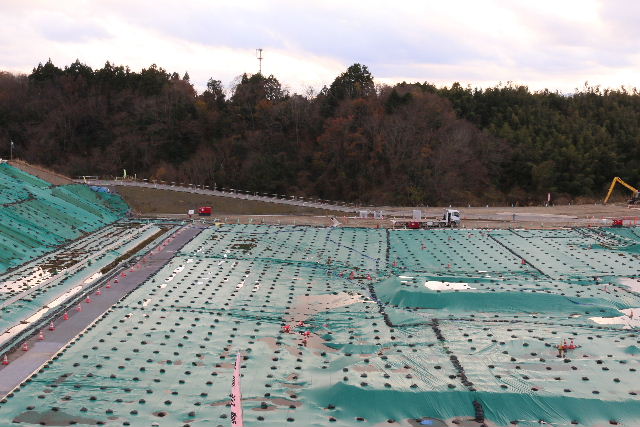
Contaminated soil landfill site (green sheet is rain protection) Cover this with soil
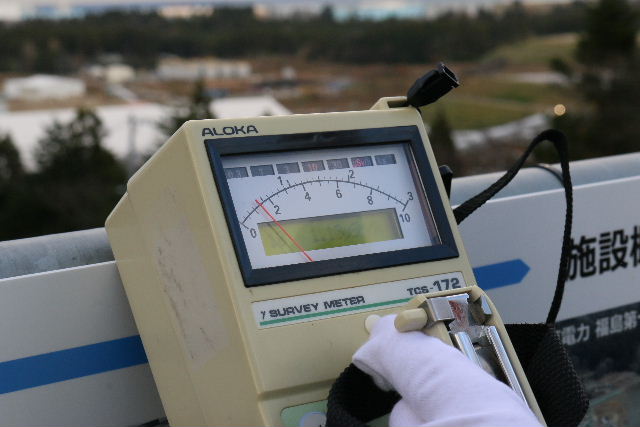
Dose at the observatory for visitors 1.18 μSv/h
According to JESCO, there are 20-30μSv/h in the forests by the roads.
About 7% of the vast area that stretches across the towns of Okuma and Futaba has not yet been contracted, so that area has been left untouched as an enclave. Of the remaining 93%, about 10% is under lease and 90% is being purchased by the government.
Even if all the contaminated soil could be moved out of the prefecture after 30 years, it would still be a vast area of state-owned land (the portion purchased by the government), with private land scattered throughout. It is hard to imagine that normal life or effective personal use would be possible on the scattered private lands.
The Ministry of the Environment is desperate to dispose of the waste in various locations outside of the prefecture, claiming that “volume reduction,” “reuse,” and “soil is an important resource,” according to the Japan Environmental Safety Corporation (JESCO) Act, which states that “final disposal will be completed outside of Fukushima Prefecture within 30 years after the start of interim storage. The recently announced “reuse” demonstration tests in Tokorozawa City, Shinjuku Gyoen, and other locations are a preparation for such tests.
Even if there were to be a place that would accept the soil, there would be enormous costs involved in digging up the huge amount of contaminated soil again and transporting it to the receiving site, as well as the risk of spreading the contaminated soil due to accidents during transportation.
It would be most reasonable now to revise the law and use an interim storage facility as the final disposal site.

Okuma Town Day Service Center for the Elderly (in the same condition as when evacuated immediately after the accident)

Cars in the day service center parking lot also remain in place.
http://chikurin.org/wp/?p=6526&fbclid=IwAR1Ji3AX-ouAA5vebPEvMdoOIfYh3G9FzLY2N2HisaMoorsjx0OEG4nMI_M
KEPCO: 197 employees obtained national licenses illegally, also engaged in nuclear power plant construction work

December 20, 2022
On December 20, KEPCO announced that 197 employees of KEPCO and its group companies (17 of whom had retired) had taken the technical certification examination for construction management engineers, a national certification that is required for process management in construction work, without the required period of work experience, and had fraudulently obtained the certification. An investigation report by outside lawyers found no evidence of systematic involvement in the fraud.
The Osaka District Court found no problems with the quality of construction work performed by the company’s employees, including 15 cases involving the three nuclear power plants in its jurisdiction, in which the improperly qualified employees were engaged as chief engineers.
https://www.jiji.com/jc/article?k=2022122001091&g=eco&fbclid=IwAR3d-PETosvWBi5K5o3XeQFFa8mRI9Er2cPAKkyQZkykurV1LLgRK4A0dAc
Ministry of the Environment Plans Demonstration Test for Reuse of Decontaminated Soil from Fukushima in Shinjuku Gyoen, Tokyo

Friday, December 9, 2022 11:53
Minister of the Environment Yoshiaki Nishimura announced that the Ministry of the Environment is planning to conduct a demonstration test at the Shinjuku Imperial Garden in Tokyo to see if the “decontaminated soil” generated during the decontamination process after the Fukushima Daiichi Nuclear Power Plant accident can be reused.
The government has indicated that it intends to reuse the large amount of “decontaminated soil” in Fukushima Prefecture for public works projects if the concentration of radioactive materials is below a certain standard value.
At a press conference today, Environment Minister Nishimura announced that the Ministry of the Environment is planning to conduct a demonstration test at the Shinjuku Gyoen, which is managed by the Ministry of the Environment, to demonstrate the reuse of the soil. The plan is to create flower beds using decontaminated soil in areas that are off limits to the general public, and to test the radiation levels in the surrounding areas.
This is the second time that a demonstration test is being planned outside of Fukushima Prefecture, following Tokorozawa City in Saitama Prefecture, and the other is in Tsukuba City, Ibaraki Prefecture.
https://newsdig.tbs.co.jp/articles/-/225831?display=1
They’re at it again! The nuclear industry dazzles journalists with its newest hogwash – “inflection point”.

Ever inventive, the nuclear lobby has come up with this lovely new term – “inflection point” – a term pinched from geometry, and designed to dazzle journalists further into their mindless state of subservience to technical experts.
It’s quite a revealing choice of words, a 21st Century advance on their old mantra “nuclear renaissance”. That term had a comforting suggestion of biology, history, art.
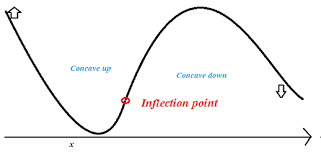
The new term moves away from all that “soft” educational rubbish, and into the world of maths and technology – which are now supposed to be the only studies that matter.
The curious thing, though, is that the term used here implies that the nuclear industry is now at a very low point. It’s unpopular, people are reluctant to invest in it, perhaps now realising that small nuclear reactors have no use except for helping the development of nuclear weapons.
And, as the diagram shows, there’s a very good chance that if, in fact, this small nuclear reactor industry really does get going, before long there will be a new “inflection point”, where the industry collapses, just like the big nuclear industry is doing.
Today’s corporate media is awash with nuclear propaganda where the journalists clearly didn’t need to do any thinking, except perhaps to add a few superlatives to the industry’s jargon handouts.
$Billions of tax-payer money to go to kickstarting the “new nuclear reactor” industry’s “inflection point”

“It’s a really great investor environment — both publicly and privately,”
said Ryan Norman, analyst
at energy think-tank Third Way
US nuclear enjoys revival as public and private funding pours in. The US
nuclear industry has hailed 2022 as an “inflection point”, with surging
private investment and unprecedented government support breathing new life
into a sector that fell from favour in recent decades.
New federal legislation enacted in the past 18 months will pump about $40bn into the
sector over the coming decade, according to industry estimates, while
roughly $5bn in private funds has flowed into companies designing new types
of reactor in the past year alone.
“It’s a really great investor environment — both publicly and privately,” said Ryan Norman, analyst
at energy think-tank Third Way. “There’s federal recognition that nuclear
energy technologies have a key role to play in the US energy future,” he
said. “No matter how you cut it, we’re talking about billions of dollars
being poured into these advanced reactor companies.”
FT 1st Jan 2023
https://www.ft.com/content/f3c6f333-bc2e-4694-963a-7084e438905a
The Future Remains Uncertain For Nuclear Energy
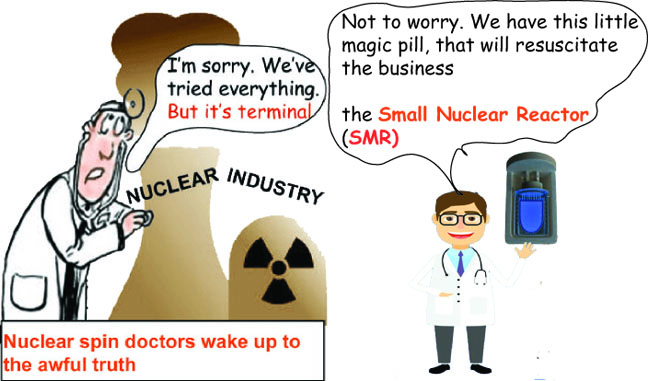
Ed note. This is a fine article, one that acknowledges the political moves in some countries towards reviving the nuclear industry , while at the same time recognises the strong opposition to this in other countries.
Still, it doesn’t address the folly of “new nukes” having the same old problems of costs, wastes, security needs. And above all – the MILITARY CONNECTION
And it doesn’t address the strange logic – that if big nuclear reactors are bad, that proves that little ones are good.
By Felicity Bradstock Editor OilPrice.com, Tue, 3 January 2023, https://au.finance.yahoo.com/news/future-remains-uncertain-nuclear-energy-170000104.html Several countries around the world appear to have suddenly welcomed nuclear power into the clean energy mix, particularly in response to global gas shortages and rising oil prices. But this apparent renaissance of nuclear energy is not being seen everywhere, with many countries remaining skeptical about the technology, unwilling to accept nuclear as the answer to the world’s energy problems. This divide, particularly seen in Europe, could have a major impact on the development of the nuclear power plant pipeline across the region, as some states reject plans for raising the EU’s nuclear energy capacity.
After decades of moving away from nuclear power, largely due to safety concerns following three world-renowned nuclear disasters, some major powers have put nuclear energy back on the agenda as they race to secure their energy security and transition away from fossil fuels. The U.S. and U.K. are two countries in which the governments are offering high levels of funding and political backing for new nuclear projects to support a green transition. In the U.S., the nuclear energy output has plateaued since the 1980s, providing around 19 percent of the country’s electricity at present. But a reconsideration of the safety risk involved with nuclear operations vis a vis the current climate situation has made the U.S. more open to new nuclear projects, with President Biden including funding for nuclear projects in his Inflation Reduction Act (IRA).
Meanwhile, in the U.K. the government purchased a 20 percent stake in the Sizewell C nuclear plant in Suffolk for $100 million in June. And EDF’s Hinkley Point C is expected to be up and running by 2027, at a cost of between $30 and $31.5 billion. Former Prime Minister Boris Johnson also outlined plans for the development of eight nuclear reactors by the end of the decade earlier this year.
Hungary is remaining strongly committed to a planned nuclear project with Russia. The Paks 2 project is set to be financed by Russia, with a $10.6 billion loan. It follows the Paks 1 nuclear power station, around an hour south of Budapest, that was constructed by the Soviet Union in the 1980s. With its lifecycle coming to an end in the 2030s, Prime Minister Viktor Orban signed a deal with Vladimir Putin in 2014 to construct two new 1,200 MW reactors next to the old ones. Ground-clearing work started in August after several years of delays. The plant was originally expected to come online in 2026, but this is becoming increasingly unlikely, especially due to the war in Ukraine. Finland has already abandoned a Russian-built nuclear plant on the Hanhikivi peninsula midway through its construction because of the war. And, unsurprisingly, several other European powers oppose Hungary’s close relations with Russia, encouraging Orban to cut ties with Putin.
While many are concerned about Hungary’s nuclear project because of Russia’s involvement, some other European countries are opposed to bringing new nuclear projects online altogether. Slovakia has announced plans to shift its reliance on nuclear energy in its plans for the Mochovce power plant. Built by the Soviet Union in the 1980s, a new nuclear reactor is currently being prepared to launch in 2023, offering 471 MW of power. If all goes as planned, it will cover 13 percent of Slovakia’s electricity needs, making the country self-sufficient. But neighboring Austria is staunchly opposed to the development due to the high costs involved – both in terms of money and radioactive waste. Austria also worries that Slovakia will rely on Russia for its uranium to run operations, with around one-fifth of the EU’s uranium coming from Russia. Public opinion on nuclear power is greatly divided, with 60 percent of Slovakians believing nuclear power is safe, while 70 percent of Austrians think the opposite.
At present, 13 of the EU’s 27 member states generate nuclear power, while several others are not ready to welcome nuclear to the energy mix despite the current energy crisis. While Germany has delayed the planned phasing out of its nuclear projects, and other European countries are bringing new nuclear reactors online, some believe there is no renaissance for nuclear power. Despite the Russia-Ukraine war creating a regional energy crisis, governments have generally taken little action to shift their existing policies on nuclear plans, suggesting that a move to nuclear may be exaggerated.
Nicolas Berghmans, an energy and climate expert at the France-based Institute for Sustainable Development and International Relations (IDDRI), explained “We’re not talking about a nuclear renaissance, as such… but maybe more of a change of tide.” He added, “A real nuclear renaissance would be if Europe decides to invest in more nuclear power plants.” Meanwhile, Said Mark Hibbs, from the Carnegie Endowment for International Peace, suggested “I don’t see a major watershed from what’s happening in Ukraine… Instead, the situation has reinforced some trends among countries already bought into nuclear energy, while slowing some opponents’ phase-outs of the technology.”
While some believe there is a renaissance of nuclear energy taking place, others are less certain. The recent energy crisis has drawn greater attention to nuclear power, with some major powers accelerating existing plans for nuclear plants or showing openness to diversifying their energy mix further through nuclear projects. However, the divide between those for and against nuclear power remains strong and will likely shape the development of many of these projects, as regional pressures could prevent many new reactors from coming online.
Tue, 3 January 2023
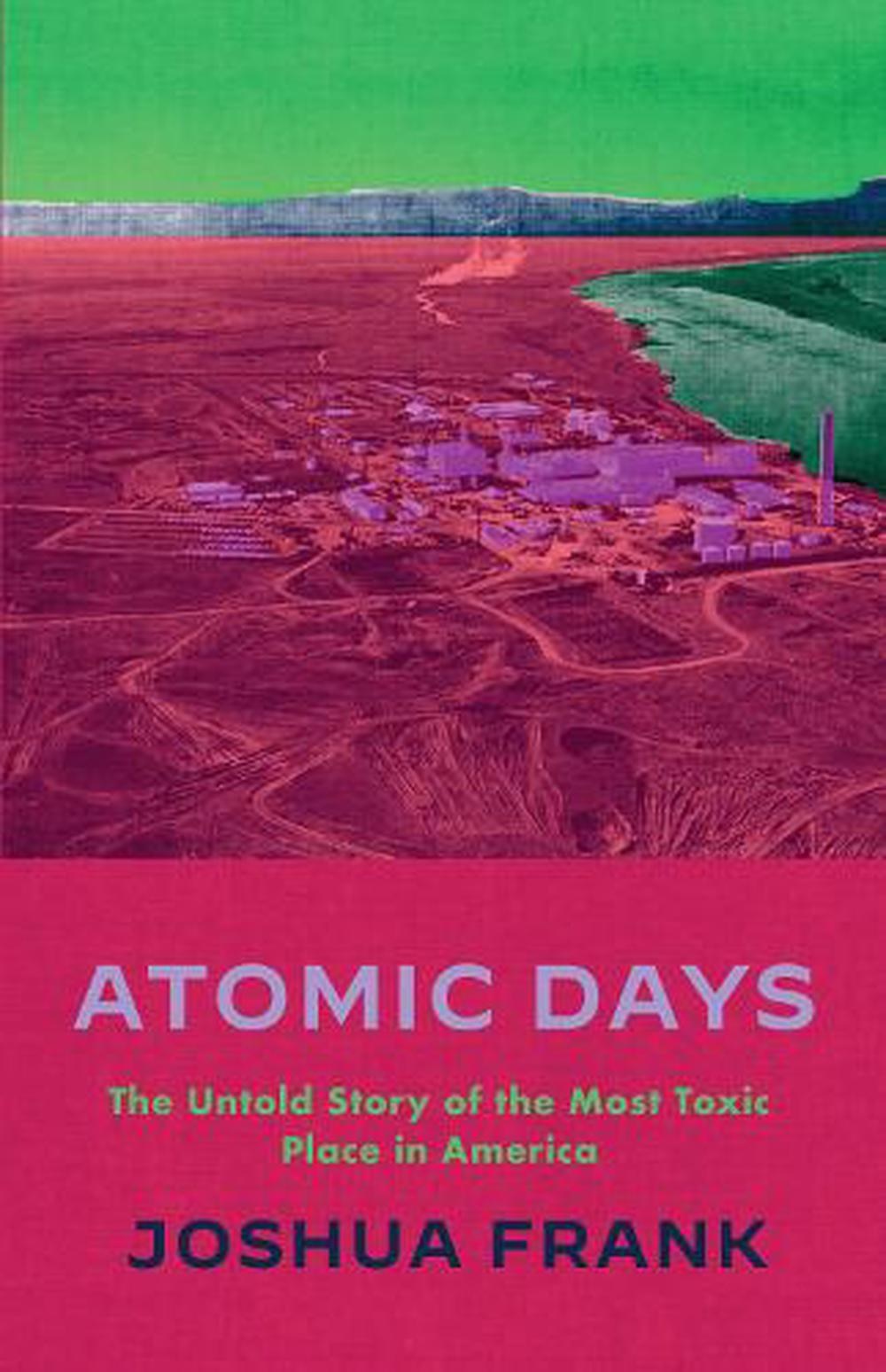
Countering nuclear industry propaganda by telling the facts – Joshua Frank’s book “Atomic Days”
That the world hasn’t been the same since the ignition of the Atomic Age in
the 1940s is certainly an understatement, yet the public’s awareness of how
the nuclear industry operates has always been dismally low. Secrecy has
played a part — especially in relation to bomb-making activities — but
so too has the establishment news media, which focuses on individual events
and sidelines institutional factors.
So an accident is news (if it’s not covered up), but not the regular practices or misguided motivations that
led to it, even though they were ultimately responsible. Also, stories
about nuclear power can be complicated to tell as they involve, first,
technical processes that are arcane to people outside the field, and
second, powerful corporate interests who don’t want them told, and who
confuse and confound the discourse with slick PR.
But raising public awareness of the facts around the nuclear industry is especially important
in this third decade of the 21st century when well-meaning people who are
seeking to reduce carbon emissions out of a legitimate concern for the
climate crisis are proposing to expand the use of nuclear power to replace
fossil fuels.
That this recommendation is no solution at all cannot be
overstated, yet it’s being peddled by respected people with public
platforms. Fortunately for advocates of common sense, Joshua Frank has
brought his investigative skills to bear on the nuclear industry with his
new book, Atomic Days: The Untold Story of the Most Toxic Place in America,
in which he takes a deep dive into the subject of Hanford, that is, of the
Hanford Nuclear Site, in eastern Washington state.
Counterpunch 30th Dec 2022
https://www.counterpunch.org/2022/12/30/the-cold-wars-radioactive-legacy/
Nuclear is not the answer to the UK’s energy requirements, and honesty about Sizewell is needed
We need more honesty about the problems of the proposed Sizewell C plant, writes Rae Street 3 Jan 23 https://www.theguardian.com/environment/2023/jan/02/nuclear-is-not-the-answer-to-the-uks-energy-requirements
In his letter (22 December), Tom Smith describes the problems of storing the radioactive waste that is being produced by the UK nuclear reactors, and says that we need more honesty about these issues. The latter is also true of other problems with “new nuclear build”. Take, for example, the proposed Sizewell C reactor on the east coast.
The Intergovernmental Panel on Climate Change has estimated that extreme “sea level events” could occur “at least once per year at many locations by 2050”. Sizewell C will be built near the sea on marshland. One engineer has estimated that the land where the reactor would be built will turn into a promontory encircled by the sea. Clearly the reactor site could be flooded.
Then there is the problem of obtaining uranium, which is currently the fuel for the nuclear reactors. The UK has to import uranium from across the world. It is mainly mined on the land of Indigenous people – in the US, in Canada, in Australia and in the Democratic Republic of the Congo. The miners and their families have suffered years of ill health and even death from proximity to uranium. At the same time, having to import uranium means that this is not an independent source of energy for the UK.
The government and the opposition have completely ignored all warnings; they go doggedly on, supporting the construction of the new nuclear reactor at Sizewell and considering plans to build others. But nuclear is not the answer to the UK’s energy requirements. Apart from anything else, it is vastly expensive. The money it swallows should be put into developing genuine sustainable energy: tidal, wind and solar.
South Korea asks US for greater role in managing nuclear weapons
AFR, Sangmi Cha, Jan 2, 2023,
Seoul | South Korean President Yoon Suk Yeol said his government was in talks with the US on taking a more active role in managing nuclear weapons on the Korean Peninsula, which would mark a significant shift in a decades-old policy among American allies to deter North Korea.
“While the nuclear weapons belong to the US, intel sharing, planning, and training should be done jointly,” Mr Yoon told South Korea’s Chosun Ilbo newspaper. “The US’ stance is quite positive,” he added, saying the policy should be conducted under the concept of “joint planning and joint exercise”.
He said the strategy of “nuclear umbrella”, or “extended deterrence”, was no longer reassuring for the public now that North Korea had developed nuclear weapons and a range of missiles to deliver them.
Since taking power last May, Mr Yoon has sought to put South Korea on a path of overwhelming military strength against North Korea, which has launched scores of missiles in defiance of United Nations resolutions and is preparing for another nuclear test………………………… more https://www.afr.com/world/asia/south-korea-asks-us-for-greater-role-in-managing-nuclear-weapons-20230102-p5c9wu
North Korea to have “exponential increase” in its nuclear arsenal
Kim Jong-un has vowed to ramp up the production of nuclear warheads and
build a more powerful intercontinental ballistic missile (ICBM), while
singling out South Korea as his country’s “undoubted enemy”, North
Korean state media reported on Sunday. In a sign of deepening animosity
towards the US, South Korea and Japan, Kim called for an “exponential
increase” in the regime’s nuclear arsenal during an address at a plenary
meeting of the ruling Workers’ party that ended on Saturday.
Guardian 1st Jan 2023
President Joe Biden contradicts South Korea’s President’s claim that the two countries are planning joint
US Not Discussing Nuclear Exercises With South Korea, Biden Says, VOA news 2 Jan 23, SEOUL, SOUTH KOREA —
President Joe Biden says the United States is not discussing holding joint nuclear exercises with its ally South Korea, even though South Korea’s president told a local newspaper that such talks were underway.
In an interview published Monday, South Korean President Yoon Suk Yeol said the discussions centered on joint planning and exercises with U.S. nuclear forces — an arrangement he said would have the same effect as “nuclear sharing.”
Any such plan would amount to a significant change in U.S. policy toward Korea and would have almost certainly further raised tensions with North Korea.
Asked on the White House lawn late Monday whether such talks were occurring, Biden replied, “No.” He offered no further details.
Yoon made the comments in a New Year’s interview in the conservative Chosun Ilbo newspaper.
“The nuclear weapons belong to the United States, but South Korea and the United States should jointly share information, plan, and train together. The United States also feels quite positively about this idea,” Yoon said.
The United States has not stationed nuclear weapons in South Korea since the early 1990s, when it pulled tactical nukes from the peninsula as part of a disarmament deal with the Soviet Union. Instead, South Korea is protected by the U.S. “nuclear umbrella,” under which Washington vows to use all of its capabilities, including nuclear weapons, to defend its ally.
In the interview, Yoon suggested such ideas were outdated. “What we call ‘extended deterrence’ means that the United States will take care of everything, so South Korea should not worry about it,” Yoon said. “But now, it is difficult to convince our people with just this idea.”
Faced with an increasingly hostile and nuclear-armed North Korean neighbor, a growing number of prominent South Koreans have called for the country to acquire its own nuclear deterrent.
According to a poll published Monday by the Seoul-based Hankook Research organization, 67% of South Koreans support South Korea getting nuclear weapons, including 70% of conservatives and 54% of liberals. The poll is consistent with many other public opinion surveys in recent years.
As a presidential candidate in 2021, the conservative Yoon said he would ask the United States to either redeploy tactical nuclear weapons or enter a NATO-style arrangement in which South Koreans would be trained to deliver U.S. nuclear weapons in a conflict. The U.S. State Department quickly shot down the proposal………………….
many analysts are skeptical the United States would enter such an arrangement, noting it would go against Washington’s stated global non-proliferation goals, as well as its support for the complete denuclearization of the Korean Peninsula.
“I don’t think the United States would be receptive to including South Korea in nuclear planning,” said Ankit Panda, a senior fellow in the Nuclear Policy Program at the Carnegie Endowment for International Peace in Washington. “And it’s ultimately not necessary to deter nuclear use by North Korea, which can be largely done through conventional means.”………………………………………….
Many analysts warn South Korea’s nuclear armament would be disastrous, leading to international sanctions, increased tensions with its neighbors, and the creation of a “nuclear domino effect” that could lead other Northeast Asian countries to acquire nuclear weapons. https://www.voanews.com/a/yoon-us-south-korea-discussing-nuclear-exercises-/6900423.html
—
German minister reignites coalition row with call to review nuclear exit
BERLIN, Jan 2 (Reuters) https://www.reuters.com/business/energy/german-minister-reignites-coalition-row-with-call-review-nuclear-exit-2023-01-02/ – Germany’s transport minister called for an expert committee to examine whether the lifespan of the country’s nuclear plants should be extended, reopening a row within Chancellor Olaf Scholz’s coalition.
Germany’s rush to free itself from imported Russian fuels after Moscow’s invasion of Ukraine spurred calls for the country’s three remaining nuclear plants to be kept open rather than shut at the end of 2022.
Advertisement · Scroll to continue
Report an ad
Late last year, Social Democrat Scholz attempted to suppress a row between the environmentalist Greens, strong proponents of an exit from nuclear power, and the liberal Free Democrats by ordering that all three be kept running until April.
But Free Democrat Transport Minister Volker Wissing reignited the argument, telling the Frankfurter Allgemeine that the environmental benefits of electric cars would be reduced unless they were charged using nuclear energy, which is emissions-free.
“We need an expert answer to the question of how we can ensure we have stable and affordable energy supplies while also achieving our climate protection goals,” he told the newspaper in an interview published on Monday evening.
Critics of the nuclear exit say it could force Germany to rely more than planned on coal, which is more polluting than gas, during the transition to renewable energy.
The pro-business liberals, lonely centre-right figures in a coalition dominated by two centre-left parties, are languishing in the polls and have suffered setbacks in regional elections. They hope a January party conference will offer the chance of a relaunch.
1 This Month
23 April – WEBINAR – Why new nuclear reactors are the wrong tools for decarbonization Thursday, April 23 • 1 AM – 2 AM AEST

Pine Ridge Uranium is the real threat, not Tehran- Tell Burgum: Stop the Extraction.
Chernobyl: The Lost Tapes – A good documentary on Chernobyl on SBS available On Demand for the next 3 weeks– https://www.sbs.com.au/ondemand/tv-program/chernobyl-the-lost-tapes/2352741955560
To see nuclear-related stories in greater depth and intensity – go to https://nuclearinformation.wordpress.com
-
Archives
- April 2026 (241)
- March 2026 (251)
- February 2026 (268)
- January 2026 (308)
- December 2025 (358)
- November 2025 (359)
- October 2025 (376)
- September 2025 (257)
- August 2025 (319)
- July 2025 (230)
- June 2025 (348)
- May 2025 (261)
-
Categories
- 1
- 1 NUCLEAR ISSUES
- business and costs
- climate change
- culture and arts
- ENERGY
- environment
- health
- history
- indigenous issues
- Legal
- marketing of nuclear
- media
- opposition to nuclear
- PERSONAL STORIES
- politics
- politics international
- Religion and ethics
- safety
- secrets,lies and civil liberties
- spinbuster
- technology
- Uranium
- wastes
- weapons and war
- Women
- 2 WORLD
- ACTION
- AFRICA
- Atrocities
- AUSTRALIA
- Christina's notes
- Christina's themes
- culture and arts
- Events
- Fuk 2022
- Fuk 2023
- Fukushima 2017
- Fukushima 2018
- fukushima 2019
- Fukushima 2020
- Fukushima 2021
- general
- global warming
- Humour (God we need it)
- Nuclear
- RARE EARTHS
- Reference
- resources – print
- Resources -audiovicual
- Weekly Newsletter
- World
- World Nuclear
- YouTube
-
RSS
Entries RSS
Comments RSS
 nuclear-news