Return to Fukushima: Decontaminated town reopens to residents, but is anybody living there?

October 24, 2022
If you ever wanted to live in a post-apocalyptic zombie film, now’s your chance.
Back in 2020, our Japanese-language reporter Tasuku Egawa visited two towns in Fukushima Prefecture that were affected by the accident at Fukushima Daiichi Nuclear Power Plant, which occurred at the time of the March 2011 Great East Japan Earthquake.
▼ Tasuku visited Futaba and Tomioka, which are five kilometres (three miles) and 11 kilometres, respectively, from the nuclear power plant.

Being within the 20-kilometre exclusion zone, both towns were evacuated after the accident, turning them into ghost towns for two years. In 2013, the government opened some areas of the towns for daytime access only, with other areas remaining closed off due to elevated radiation levels, right up to 2020 when Tasuku visited.
At the time of Tasuku’s previous visit, new decontaminated areas around both stations had opened up, with old blockades being removed as a sign of the land becoming habitable once again.
▼ The decontaminated Prefectural Route 165 and National Route 6 outside Tomioka’s Yonomori Station, as it looked in March 2020.

The west exit side of the station had returned to normal while the east side remained blocked. However, side streets on both sides remained cordoned off from the public, with permission required for anyone entering the other side of the blockade, including journalists like Tasuku.

Like all visitors, Tasuku was required to wear special protective wear due to the high radiation levels.

Back in 2020, nothing but the main roads and station buildings could be entered, and the only sign of life in the area was that of security guards at empty intersections and reconstruction-related vehicles and workers.

Both towns had their work cut out for them in terms of cleanup and redevelopment, especially as the local governments planned to repopulate the areas with thousands of residents in the next seven years.
Tasuku had high hopes they would achieve this goal, so when resettlement of the towns began in earnest earlier this year, he made a return trip to Tomioka and Yonomori Station to see what developments had taken place in the two years since he last visited.
So let’s take a look at his collection of photos chronicling the difference between 2020 and now, starting with Prefectural Route 165 and National Route 6 mentioned earlier.

Now, the barricades have totally disappeared, and the intersection looks like any other, complete with a cluster of vending machines on one street corner.

Continuing straight down this road, we come to a branch of the Yamazaki convenience store chain, located on the ground floor of a residential building.

Today, the barricades have gone, but the shutters remain closed and the curtains drawn, making it look like a scary house in a ghost town.

Heading south down National Route 6, Tasuku recalled a brightly coloured apartment block he’d photographed on his last visit.

Sure enough, the building was still there, and though the weeds and barricades had been cleared, the road, and the blinds on the store window on the left, looked a little worse for wear.

The more Tasuku walked around, the more he felt as if he were walking through a post-apocalyptic world, like the character of Jim in the British zombie flick 28 Days Later. Only this was no film set, it was a real-world town that once housed around 4,000 people.

With curtains drawn on the windows of so many buildings he walked past, the place looked like it was inhabited…but it was eerily quiet, and deep down inside, Tasuku knew there was nobody behind those curtains, as these residences had been abandoned as a matter of emergency eleven years ago.
▼ Still he kept up hope that he would see signs of life somewhere, other than this road where he spotted a wild boar and a plump male pheasant.

After walking for a while, Tasuku finally breathed a sigh of relief when he came across this new apartment building, which was advertising for tenants, where he saw fresh laundry hanging on a balcony, suggesting that someone had already moved in.

Close by, there was a demountable building which looked to be the prefabricated office of a construction company, and it too appeared to be inhabited by people, likely here on temporary assignment for reconstruction-related work.

While the two main roads had been cleared and were open to traffic, Tasuku came across some salient reminders that the entire town wasn’t yet back to normal, with other areas like the local park blocked off as a restricted location.

Yonomoritsutsumi Park , as it’s known, is closed for good reason — according to the dosimeter on the other side of the fence, radiation levels here are 0.413 microSieverts per hour. The Ministry of the Environment’s requirements for decontaminated areas is 0.23 microSieverts per hour.

The high radiation levels in the park would put the public at risk of health problems, which is a great shame, seeing as it looks like it would’ve been a nice place to unwind and relax before the disaster.

It’s a vast space, though, which would make decontamination work difficult, and looking at the expanse from a nearby hill shows it’s become wild and overgrown, with what once must’ve been a lake (marked in blue below) now covered in grass and weeds.

Before coming to the town, Tasuku had been hoping to meet up with the owner of a beauty salon who used to live here but was moved to nearby Koriyama after the earthquake. She had joined Tasuku on his previous visit to Yonomori and once she’d heard the evacuation orders were being lifted this year, she said she was looking forward to moving back here.
However, the government ban on living in the area is still in effect over a large portion of the town, with only one designated zone on one side of the station open to residents from April this year. With only around a dozen or so people applying to live in the town so far, it would be a long while yet before Tasuku’s friend would be able to re-open her hair salon here.
▼ The former site of the hair salon is now an empty lot.

It’s hard to live in a ghost town, let alone run a business there, so the government hopes to make a larger area inhabitable by spring next year, in an effort to entice more residents to support local businesses.
Business owners will need a lot of support from the government, though, as a lot of them will be starting from scratch. This York-Benimaru supermarket, for instance, has since been totally demolished in the two years since 2020, and is now an empty parking lot.


If he’s being honest, the town hadn’t progressed as far as Tasuku had hoped in the past two years. Despite reopening part of the town, the place still had a real ghost-town feel to it, and the waiting room at the unstaffed station was particularly eerie, with nothing inside but a bathroom and chairs.

By comparison, the waiting room at Futaba Station, where Tasuku visited next, was a lot more inviting, with a sense of vibrancy and life to it.
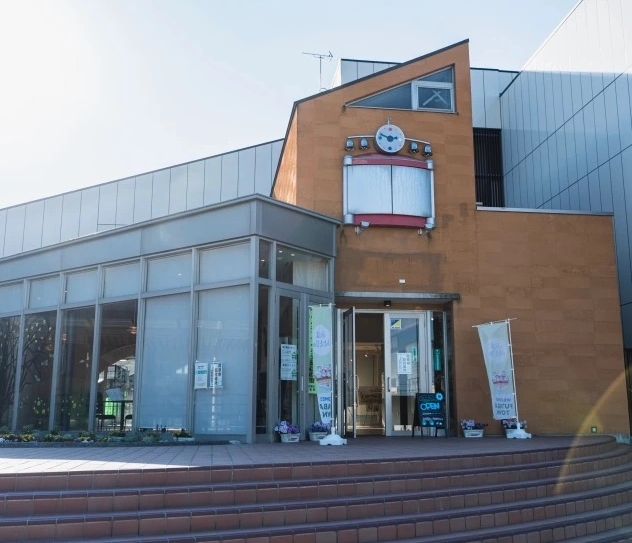
Yonomori is famous for its cherry blossom trees, which line one particularly beautiful street, and while there were fears the trees would die out in the decade that humans were prohibited access to the area, the street was finally opened to visitors this year, who were able to enjoy them for the first time since 2011.
▼ The local “standard tree” by which the Meteorological Agency declares the official start of the cherry blossom season, is still alive and well.
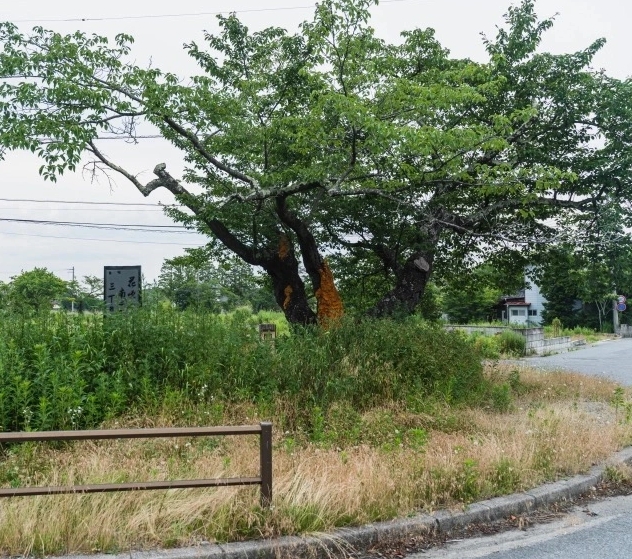
At the moment, Yonomori is mostly home to ruins, wild boars and fat pheasants, which makes it less than appealing to potential residents. However, with the cherry blossoms still blooming, there’s hopes that the the area will soon bloom too.
Now with the station open and trains operating, it’s the start the town needs to get back on its feet, and we look forward to visiting in another two years’ time, when hopefully Tasuku’s friend’s hair salon will be open, along with other blossoming businesses.
Fukushima Daiichi Nuclear Power Plant, method to remove debris by submerging the buildings in water: Symbolic of project difficulties after repeated changes, with no prospects for feasibility
October 24, 2022
In order to remove melted nuclear fuel (debris), which is considered the most difficult part of the restoration work at TEPCO’s Fukushima Daiichi Nuclear Power Plant, a method has emerged to submerge the entire reactor building, including its basement, under water. This would require unprecedented large-scale construction work, and there are doubts about its feasibility. The fact that the debris removal plan has been repeatedly changed and a proposal that seems to be grasping at a cloud has emerged is symbolic of the difficulties involved. (The fact that a proposal that seems to be grasping at a cloud has emerged is symbolic of the difficulties that lie ahead.)
Even the experts are not confident.
The first of its kind in the world,” “Technically quite difficult,”
◆”Not confident” even experts are bearish

At a press conference held on November 11 to explain the proposal that includes a new construction method for the Unit 3 reactor, Mr. Mitsuroku Ikegami, executive director of the Nuclear Damage Liability and Decommissioning Support Organization, who is in charge of providing technical support to help bring about a restoration from the accident, repeated his bearish comments.
The new construction method is based on the “hull construction method” used for tanker hull construction. The new method is characterized by enclosing the building with a structure that is resistant to water pressure, and ETIC is considering digging a tunnel under the building and enclosing the entire building with a structure consisting of a series of square rooms made of steel.
If this is realized, water filled with the building will be used to shield it from radiation, thereby increasing the safety of the work. On the other hand, submerging the building in water is expected to generate about 150,000 tons of highly contaminated water that has come into contact with debris. This is equivalent to about 150 tanks storing treated water on the site, and the risk of a leakage accident is immeasurable.
◆”Flooding” first, stop once, flood again.
At the beginning of the accident in 2011, the government and TEPCO planned to use the “flooding method” to fill the containment vessel with water and remove debris underwater. However, the containment vessels of Units 1 through 3, where debris was located, were all damaged, and even if water was filled, it would leak out of the vessels. The high radiation dose makes it inaccessible to humans, and it is still difficult to determine which parts of the containment vessels are damaged.

In 2005, they switched to the “in-air” method of removing debris without water, and are aiming to begin trial removal of debris from Unit 2 in the latter half of FY2011. However, since the method prioritizes easy access to the debris and uses a robot arm in a confined space, only about 1 gram of debris can be removed in a single operation. It is estimated that there is a total of 880 tons of debris in the three reactors, making it almost impossible to complete the removal using this method.
Therefore, JAEA has switched to a method to remove a large amount of debris from the Unit 3 reactor. The work is expected to involve the scattering of enormous amounts of radioactive materials, such as by cutting the debris into chunks, and if the debris is not shielded by water, it will be very dangerous. Since the containment vessel cannot be filled with water, the idea of submerging the entire building outside of it has emerged. In other words, it is a flooding method that has been reshaped on a large scale.
◆Even after 11 years, it remains unrealistic.
Debris from the Unit 1 reactor is believed to be scattered over a wide area of the containment vessel, and there is no way to remove the debris. Eleven and a half years after the accident, debris removal remains unrealistic.
A spokesperson for TEPCO has refused to go into the feasibility of the proposed new method, saying, “It is still in the idea stage. Even the OIST’s proposal suggests a bleak outlook, concluding with the following words: “If the criteria are not met, we will be forced to take out the debris. If the criteria are not met, we will have to start over from the identification of issues.
https://www.tokyo-np.co.jp/article/209821
The mishandling of scientifically flawed articles about radiation exposure, retracted for ethical reasons, impedes understanding of the scientific issues pointed out by Letters to the Editor

October 23, 2022
Tanimoto Y, Hamaoka Y, Kageura K, Kurokawa S, Makino J, Oshikawa M. The mishandling of scientifically flawed articles about radiation exposure, retracted for ethical reasons, impedes understanding of the scientific issues pointed out by Letters to the Editor. JoSPI. Published online October 23, 2022. doi:10.35122/001c.38474
Abstract
We discuss the editorial handling of two papers that were published in and then retracted from the Journal of Radiological Protection (JRP).1,2 The papers, which dealt with radiation exposure in Date City, were retracted because “ethically inappropriate data were used.”3,4 Before retraction, four Letters to the Editor pointing out scientific issues in the papers had been submitted to JRP. The Letters were all accepted or provisionally accepted through peer review. Nevertheless, JRP later refused to publish them. We examine the handling by JRP of the Letters, and show that it left the reader unapprised of a) the extent of the issues in the papers, which went far beyond the use of unconsented data, and b) the problems in the way the journal handled the matter. By its actions in this case, JRP has enabled unscientific, unfounded and erroneous claims to remain unacknowledged. We propose some countermeasures to prevent such inappropriate actions by academic journals in future.
Takahama Unit 4 postpones resumption of operation due to rising equipment temperatures

October 21, 2022
On October 21, KEPCO announced that it had postponed the restart of the Takahama Unit 4 reactor, which is currently shut down for routine inspections, due to a temperature rise in one of the devices inside the reactor containment vessel that is activated when there is a problem with the primary cooling system. The reactor startup scheduled for the 21st will be postponed due to a temperature rise in one of the devices that operates in the reactor containment vessel in the event of a primary cooling system problem.
After the reactor start-up on the 21st, the plant was scheduled to resume power delivery on the 24th and commercial operation on November 18. KEPCO was planning to resume commercial operation on November 18. KEPCO is investigating the impact on the process and the cause of the temperature rise.
According to KEPCO, the temperature rose because of one of the safety devices used to reduce the pressure that rose due to a problem in the primary cooling system. The temperature was 4.2 degrees Celsius at around 3:30 p.m. on March 21, but it rose to 77 degrees Celsius at around 4:35 p.m., triggering an alarm.
https://www.tokyo-np.co.jp/article/209502?fbclid=IwAR3dktnvsjEKFDfgo3U1N_aguXV53mX5X7AURPw_J7_XArDcUkMPgjIh-dk
Magnitude 5 earthquake jolts Fukushima; ‘no issues’ at nearby nuclear plants
‘No issues’ at nearby nuclear plants…. So they claim as usual, everything is always fine in Fukushima Daiichi….

Oct 21, 2022
A strong earthquake with an estimated magnitude of 5 jolted northeastern Japan on Friday afternoon.
The quake, which was revised downward from magnitude 5.1, occurred at a depth of about 30 kilometers off the coast of Fukushima Prefecture around 3:19 p.m., according to the Meteorological Agency.
The quake measured a lower 5 on Japan’s seismic intensity scale to 7 in the town of Naraha and 4 in the towns of Hirono, Tomioka, Okuma and Futaba.
According to the Secretariat of the Nuclear Regulation Authority, no issues have been reported at Tokyo Electric Power Company Holdings’s Fukushima No. 1 and No. 2 nuclear plants in the prefecture.
The No. 2 plant straddles Naraha and Tomioka, while the No. 1 plant, the site of the 2011 meltdowns following the Great East Japan Earthquake and tsunami, straddles Okuma and Futaba.
In a location close to the epicenter of Friday’s quake, a 7.4-magnitude temblor occurred at the depth of about 12 kilometers on Nov. 22, 2016, causing tsunami that reached up to 144 centimeters high at Sendai Port in the neighboring prefecture of Miyagi.
Unlike the 2016 temblor, which also registered up to lower 5 on the Japanese scale, Friday’s quake did not cause tsunami because it occurred at a greater depth and was smaller in scale.
https://www.japantimes.co.jp/news/2022/10/21/national/earthquake-jolts-fukushima/
PIF objects Japan’s proposal to dispose nuclear treated water

October 17, 2022
The Pacific Island Forum member-countries continue to object Japan’s proposal to dispose nuclear treated water at the Fukushima Daiichi Nuclear Power Station into the Pacific Ocean.
Secretary General Henry Puna reiterated their stance on this proposal, saying that this issue remains as one of the forum’s urgent priorities.
“This is one of the urgent priorities of the forum, because our leaders in July reiterated their objection to what Japan is proposing to do. A lot of our leaders actually spoke strongly on this Fukushima issue, the treated water issue.”
Puna says they have had the opportunity to raise their concern on this issue, with the Japanese Foreign Affairs Minister during his visit earlier this year.
He says they have asked to have an audience with the Prime Minister of Japan, to raise their concern on this issue.
Puna says there are indications that Japan is leaning in favour of this requested engagement, but they are moving in their own pace.
The Secretary-General says there is a possibility that they would be able to meet with the Japanese government, after COP27 – towards the end of November.
Radioactive releases from the nuclear power sector and implications for child health
- Cindy Folkers,
- Linda Pentz Gunter
- Correspondence to Ms Cindy Folkers; cindy@beyondnuclear.org
Review
Radioactive releases from the nuclear power sector and implications for child health
- http://orcid.org/0000-0002-8678-7443Cindy Folkers,
- Linda Pentz Gunter
- Correspondence to Ms Cindy Folkers; cindy@beyondnuclear.org
Abstract
Although radioactivity is released routinely at every stage of nuclear power generation, the regulation of these releases has never taken into account those potentially most sensitive—women, especially when pregnant, and children. From uranium mining and milling, to fuel manufacture, electricity generation and radioactive waste management, children in frontline and Indigenous communities can be disproportionately harmed due to often increased sensitivity of developing systems to toxic exposures, the lack of resources and racial and class discrimination. The reasons for the greater susceptibility of women and children to harm from radiation exposure is not fully understood. Regulatory practices, particularly in the establishment of protective exposure standards, have failed to take this difference into account. Anecdotal evidence within communities around nuclear facilities suggests an association between radiation exposure and increases in birth defects, miscarriages and childhood cancers. A significant number of academic studies tend to ascribe causality to other factors related to diet and lifestyle and dismiss these health indicators as statistically insignificant. In the case of a major release of radiation due to a serious nuclear accident, children are again on the frontlines, with a noted susceptibility to thyroid cancer, which has been found in significant numbers among children exposed both by the 1986 Chornobyl nuclear accident in Ukraine and the 2011 Fukushima-Daiichi nuclear disaster in Japan. The response among authorities in Japan is to blame increased testing or to reduce testing. More independent studies are needed focused on children, especially those in vulnerable frontline and Indigenous communities. In conducting such studies, greater consideration must be applied to culturally significant traditions and habits in these communities.
http://creativecommons.org/licenses/by-nc/4.0/
This is an open access article distributed in accordance with the Creative Commons Attribution Non Commercial (CC BY-NC 4.0) license, which permits others to distribute, remix, adapt, build upon this work non-commercially, and license their derivative works on different terms, provided the original work is properly cited, appropriate credit is given, any changes made indicated, and the use is non-commercial. See: http://creativecommons.org/licenses/by-nc/4.0/.
Reconstruction of hard-to-return zones from the perspective of structural violence
Symposium “Anthropology of Tribulation and Hope from Fukushima”
1 This Month

of the week – Shut Down Drone Warfare!


Tell the Ukrainian Government to Drop Prosecution of Peace Activist Yurii Sheliazhenko

Petition to revoke the licensing of the Near Surface Nuclear Disposal Facility (NSDF) at Chalk River. https://www.ourcommons.ca/petitions/en/Petition/Details?Petition=e-7247
To see nuclear-related stories in greater depth and intensity – go to https://nuclearinformation.wordpress.com
-
Archives
- March 2026 (244)
- February 2026 (268)
- January 2026 (308)
- December 2025 (358)
- November 2025 (359)
- October 2025 (376)
- September 2025 (257)
- August 2025 (319)
- July 2025 (230)
- June 2025 (348)
- May 2025 (261)
- April 2025 (305)
-
Categories
- 1
- 1 NUCLEAR ISSUES
- business and costs
- climate change
- culture and arts
- ENERGY
- environment
- health
- history
- indigenous issues
- Legal
- marketing of nuclear
- media
- opposition to nuclear
- PERSONAL STORIES
- politics
- politics international
- Religion and ethics
- safety
- secrets,lies and civil liberties
- spinbuster
- technology
- Uranium
- wastes
- weapons and war
- Women
- 2 WORLD
- ACTION
- AFRICA
- Atrocities
- AUSTRALIA
- Christina's notes
- Christina's themes
- culture and arts
- Events
- Fuk 2022
- Fuk 2023
- Fukushima 2017
- Fukushima 2018
- fukushima 2019
- Fukushima 2020
- Fukushima 2021
- general
- global warming
- Humour (God we need it)
- Nuclear
- RARE EARTHS
- Reference
- resources – print
- Resources -audiovicual
- Weekly Newsletter
- World
- World Nuclear
- YouTube
-
RSS
Entries RSS
Comments RSS
 nuclear-news