If people take part in referendums in Donbass region, Ukraine government will prosecute them as criminal offenders
Kiev threatens pro-Russia Ukrainians with jail terms. more https://www.rt.com/russia/562159-kiev-referendum-jail-time/ 4 Sept 22, Ukraine’s deputy prime minister warns that voting in referendums in Moscow-controlled territories is a criminal offence
Ukrainian citizens risk criminal prosecution and a jail time of up to 12 years if they participate in referendums on joining Russia, Ukrainian Deputy Prime Minister Irina Vereshchuk warned on Saturday.
“There are not and will not be any referendums on our Ukrainian land,” Vereshchuk stated during a national broadcast.
Pro-Russian authorities in the Zaporozhye, Kharkov and Kherson Regions, as well the Donetsk and Lugansk People’s Republics, previously spoke of potentially holding referendums on uniting with Russia, but so far no dates have been set.
“It’s all a farce and a circus. But for our citizens who will take part in this, there is actually an article of the Criminal Code,” Kiev’s deputy prime minister said.
“If collaboration is proven, or, for example, participation in the referendum or incitement to participate in the referendum, then people can receive up to 12 years with confiscation (of assets),” she warned.
Vereshchuk urged Ukrainians who remain in Russia-controlled territories to evacuate or avoid voting in any plebiscites, as “no pressure, no violent incitement, etc., can later justify the fact that a person went to the referendum.”
When asked, how many people potentially might take part in voting, Vereshchuk claimed the percentage is “tiny… not even 2%.”
The Ukrainian government previously warned that citizens who attempt to become Russian citizens could be punished with up to 15 years in prison.
Ukrainian government wants to sell nuclear energy to Germany
DW, 4 Sept 22, Kyiv offers nuclear energy to Germany. Ukrainian Prime Minister Denys Shmyhal has said a proposal to export electricity to Germany amid the ongoing energy crisis would be “a very good deal for both sides.” DW rounds up the latest…….
“Currently, Ukraine exports its electricity to Moldova, Romania, Slovakia and Poland. But we are quite ready to expand our exports to Germany,” Ukrainian Prime Minister Denys Shmyhal told the dpa news agency on Saturday.
“We have a sufficient amount of electricity in Ukraine, thanks to our nuclear power plants,” he said. The issue will be discussed during Shmyhal’s visit to Berlin over the weekend, where he will be meeting with Chancellor Olaf Scholz.
Electricity consumption in Ukraine has fallen since the start of the Russian invasion, due to the mass exodus of refugees and an economic slump.
Shmyhal said such a deal “would be very good for both sides.”…….
Ukraine operates four nuclear power plants with a total capacity of more than 14 gigawatts.
However, observers fear Russia’s capture of the Zaporizhzhia facility — the largest nuclear power plant in Europe — could lead to a serious accident if the war intensifies…………. https://www.dw.com/en/russia-ukraine-updates-kyiv-offers-nuclear-energy-to-germany/a-63009289
“This is Not Our War” • Czech People Rise Up Against NATOSTAN War — Calculus of Decay

Tens of thousands took to the streets to protest the NATO involvement in the Russia/Ukraine war:
“This is Not Our War” • Czech People Rise Up Against NATOSTAN War — Calculus of Decay
Nikopol under attack: Residents flee fighting near Zaporizhzhia nuclear power plant
Euro News 4 Set 22, Every day, people gather in a wooded park just 30 kilometres from Ukraine’s Zaporizhzhia nuclear power plant and set up temporary shelters.
Some are from the southern Ukrainian city of Nikopol, situated down the river from Europe’s biggest nuclear power station.
The campers have fled Nikopol to escape shelling, with many of them sleeping in tents or their cars. When the rumbling of artillery fire stops, they return to Nikopol to work or check if their homes are still in one piece.
Attacks on Nikopol – located just 10 kilometres from Zaporizhzhia – have intensified over the past couple of weeks, as Russia and Ukrainian continue to exchange deadly blows in their six-month conflict. ……
More than 50% of Nikopol’s residents have fled the city, according to local authorities, with many of those who remain being forced to sleep in basements and shelters. https://www.euronews.com/2022/09/04/nikopol-under-attack-residents-flee-fighting-near-zaporizhzhia-nuclear-power-plant
—
New submersion method in consideration for Fukushima debris cleanup

September 2, 2022
TOKYO (Kyodo) — The operator of the Fukushima Daiichi nuclear power plant, which suffered core meltdowns in 2011, is considering a new submersion method for removing radioactive fuel debris that would wholly encase a reactor building in a water-filled, tank-like structure, a source close to the company said Thursday.
Conceptual breakthroughs with the method, whose advantages include using water’s ability to interrupt radiation and thereby provide a safer working environment, have made it a promising candidate for the cleanup of the defunct nuclear plant, according to the source close to Tokyo Electric Power Company Holdings Inc.
But with no proven track record in the nuclear field, investigations are ongoing into future technological issues and costs, among other contingencies. The source said it could “require advanced technology to stop water leaking out and become a huge construction project.”
Were it to go ahead, the process from building to actual debris removal would be lengthy and would likely affect total decommissioning costs, currently pegged at about 8 trillion yen ($57.45 billion).
In the aftermath of the March 2011 Great East Japan Earthquake and tsunami, nuclear fuel cooling processes failed at the Fukushima plant’s reactors 1 through 3, causing the fuel to melt and resolidify into radioactive debris mixed with concrete, metal and other materials present in the reactors.
Debris removal is the operator’s most challenging issue in the Fukushima plant cleanup. Some 880 tons of the radioactive waste material is estimated to have been created by the nuclear meltdown across the three reactors.
The new submersion method, which is currently expected to be applied to the No. 3 reactor, would involve building a strong, pressure-resistant structure, such as a ship’s hull or a plane’s body, completely encapsulating the reactor, including underground.
The structure could then be filled with water, and removal work would take place from the top.
The operator initially considered a similar method to fill the reactor’s containment vessel with water. But the idea was abandoned due to potential difficulties fixing holes in the structure and the possibility it would increase workers’ exposure to radiation.
Preparations are being made to include the new submersion method in the 2022 edition of a strategic plan for decommissioning to be compiled by the state-backed Nuclear Damage Compensation and Decommissioning Facilitation Corp., which is helping the operator scrap the reactors.
In the case of the No. 2 reactor, preparations remain under way for its debris removal via a dry method, involving extracting the material without filling the reactor with water. The NDF intends to keep it as a potential option in its strategic plan.
While the No. 2 reactor’s cleanup was slated to begin this year, on Aug. 25, the government said removal work would be delayed a further 12 to 18 months to ensure safety and reliability.
The government and the power company are operating under a plan to complete debris removal and finish decommissioning work sometime between 2041 and 2051.
Amid the extensive cleanup in Fukushima, the Japanese government said on Aug. 24 that it is considering the construction of the next generation of nuclear plants amid an increasingly fraught energy supply environment and the country’s dependency on imported natural resources.
https://mainichi.jp/english/articles/20220902/p2g/00m/0na/002000c
As Japan builds nuclear dumping facilities, Pacific groups say ‘stop’

September 1, 2022
Pacific civil society groups are calling on Japan to halt its plans to dump radioactive nuclear wastewater into the Pacific Ocean.
Earlier this month the Japanese government started building facilities needed for the discharge of treated, but still radioactive, wastewater from the defunct Fukushima nuclear power plant.
In a joint statement, civil society groups, non-governmental organisations and activists described the Fumio Kishida Government’s plans as a fundamental breach of Pacific peoples’ right to a clean, healthy and sustainable environment.
Joey Tau from the pan-Pacific movement Youngsolwara Pacific said this breaches Pacific peoples’ rights to live in a clean environment.
Tau told Pacific Waves the Pacific Ocean is already endangered and Japan’s plan will have devastating impacts.
“We have a nuclear testing legacy in the Pacific. That continues to impact our people, our islands and our way of life, and it impacts the health of our people.
“Having this plan by Japan poses greater risks to the ocean which is already in a declining state.
“The health of our ocean has declined due to human endured stresses and having this could aggravate the current state of our region.
“And also, there are possible threats on the lives of our people as we clearly understand in this part of the world, the ocean is dear to us, it sustains us,” Tau said.
Tau said both the opposition in Vanuatu and the president of the Federated States of Micronesia have expressed serious concerns at Japan’s plans, and the Pacific Islands Secretariat this year has appointed an international expert panel to advise the Forum Secretary-General and national leaders.
The Northern Marianas’ House of Representatives has also condemned Japan’s plan to dump the nuclear waste.
Tau said the plans should not proceed without the Pacific people being able to voice their concerns and being better advised.
Fukushima Plants Showing ‘Unusual Growing Patterns’ as Residents Return
One more spin doctor well at work: despite biologist Tim Mousseau’s many fieldtrips to study very precisely the Fukushima radiation’s effects on flora and fauna, an unknown radiobiologist Carmel Mothersill comes out on Newsweek to minimize the risks of the well existing radiation effects on location stating that ‘there is a low risk to people and pets.’

August 31, 2022
Japan’s Fukushima, the site of the world’s second-worst nuclear disaster, is showing “unusual growing patterns” among vegetation in the area because of the radiation contamination.
In 2011, the Fukushima Daiichi nuclear power plant lost power during a tsunami and earthquake that hit Japan’s Pacific coast. This caused systems in three reactors to fail and the cores to overheat. Nuclear material then bored holes in each reactor, causing radiation to leak. This resulted in a series of explosions and a catastrophic nuclear disaster. The event is second only to Chernobyl as the worst nuclear disaster.
Over 300,000 people were forced to evacuate their homes, and an exclusion zone had to be created. Slowly, following remediation, areas have opened up again, meaning people can return. Recently, the town of Futaba lifted its evacuation order.
Tim Mousseau, a professor of biological sciences at the University of South Carolina and a radiation expert, told Newsweek that a “vast region near the power plant” is still “significantly contaminated” but that levels are much lower than they used to be. However, the effects of radiation continue to be seen in the plants in the area, he said.
“There have been a few studies of the plants showing effects of the radiation. For example, it has been shown that Japanese fir trees show unusual growth patterns similar to that observed for pine trees in Chernobyl,” Mousseau said. “Such effects are still open for study, as they are preserved in the growth form of the plant/tree as long as it is still living.”
He continued, “Many areas are still contaminated above levels that most would consider safe for people to live, although most of the region is now relatively safe for short visits.”
Carmel Mothersill, a radiobiologist and the Canada research chair in environmental radiobiology, said that remediation efforts have also affected the area’s vegetation.
“The biggest disruption to the environment was the remediation effort where all vegetation was removed and up to a meter of soil was also taken off to clean it up. But the damage to forests and meadows is terrible,” she said.
“The disruptions to everyday life caused by the accident were permanent for many of the residents, and this is unlikely to change soon for the most affected regions of Fukushima,” Mousseau said. “This is not so much because of persistent radiation per se but also because much of the infrastructure was damaged or destroyed and has deteriorated over the past decade.”
Mousseau also said that the ongoing effects of the contamination and “other human disturbances” remain largely unknown, as “research in the region has dropped off dramatically in the past years because of COVID and Japan’s restrictions on visitors from outside the country.”
“Assuming Japan removes travel restrictions, more research will be conducted,” he said.
While some areas are opening back up to the public, most of the Fukushima area remains evacuated, Mothersill said.
“People are nervous and not happy to go back,” she said. But where people are living, radiation levels are very low, ‘meaning there is a low risk to people and pets.’
https://www.newsweek.com/fukushima-plants-unusal-gorwing-patterns-1738525
Midnight countdown held as evacuation order on Fukushima town lifted after 11 yrs

August 30, 2022
FUTABA, Fukushima — People shouted, “Welcome back!” at the stroke of 12:00 a.m. on Aug. 30 to celebrate the lifting of evacuation orders here, 11-plus years after townspeople were barred from returning following the Fukushima Daiichi nuclear plant meltdowns.
The town of Futaba was one area designated as “difficult to return” due to fallout from the plant, which the town cohosts with the neighboring municipality of Okuma, Fukushima Prefecture. All Futaba residents were forced to evacuate to other parts of Japan after the March 2011 nuclear disaster at the power station run by Tokyo Electric Power Company Holdings Inc.
After 11 years and five months, the town has been deemed habitable once more, with the establishment of a “Specified Reconstruction and Revitalization Base.” And to celebrate, resident volunteers organized the “okaeri (welcome back) project” event in the town center in front of Futaba Station, on the JR Joban Line. A countdown was held, and when the clock struck 12, organizers opened a pink wooden “door of hope” as the people there yelled, “Welcome back!”
About 2,000 candles were lit at the venue on the night of Aug. 29, creating a magical atmosphere. Futaba Mayor Shiro Izawa told the crowd, “I will dedicate myself to reconstruction work, so that it (Futaba) will become a town where people will be happy to come back to.”
https://mainichi.jp/english/articles/20220830/p2a/00m/0na/004000c
Evacuation order finally lifted for Fukushima nuclear plant town

Aug 30, 2022
Fukushima – An evacuation order in a town hosting the crippled Fukushima No. 1 nuclear power plant was lifted Tuesday for the first time since the March 2011 disaster 11 years and five months ago, as the municipality prepares for the return of some of its residents.
The order for the Fukushima Prefecture town, which hosts the Tokyo Electric Power Company Holdings Inc. complex, was imposed after the massive earthquake and tsunami hit the country’s northeast, triggering reactor meltdowns and making the area uninhabitable due to high radiation levels.
Futaba is the last municipality to see an evacuation order lifted among 11 municipalities subject to such orders in the wake of the disaster. Although residents are now allowed to return home, over 80% of the municipality, by acreage, remains designated as “difficult-to-return” zones.
The parts reopened for habitation are located near JR Futaba Station in the town’s previously downtown area and its northeast, where many commercial and public facilities, such as the Great East Japan Earthquake and Nuclear Disaster Memorial Museum, are located.
With relatively low radiation levels, people had been allowed to enter the northeastern area since March 2020 but not to reside there.
As of late July, 3,574 people from 1,449 households, or over 60% of the town’s population, were registered as residents of the two areas accounting for just 15% of Futaba’s total area.
But the number of residents who participated in a preparatory program started in January, allowing them to return temporarily, totaled just 85 people from 52 households.
Following the disaster, most of the town’s residents were evacuated outside the prefecture, along with the town office’s functions. A number of them have since settled outside the town.
While Futaba aims to increase its population to 2,000 by around 2030, a survey of residents last year found that 60.5% had decided not to return, far exceeding the 11.3% who expressed a desire to return.
As for areas other than those that are reopening or scheduled to reopen, the government plans to decontaminate individual locations after confirming that residents intend to return. Futaba and Okuma, a neighboring town to the south that also hosts the crippled power station, are expected to start such work in fiscal 2024.
Although the government said last August it is aiming for the return of residents to areas outside reconstruction and revitalization bases by the end of the decade, the prospects are unclear as areas covering over 300 square kilometers in seven municipalities of the prefecture are designated as difficult-to-return zones.
In Okuma and Futaba, the return of such residents is likely to occur around fiscal 2025 or 2026 at the earliest, considering the time needed for infrastructure building, according to a government official.
Earlier this month, Futaba Mayor Shiro Izawa asked industry minister Yasutoshi Nishimura to “show a road map toward decontamination of the entire area” when he visited Fukushima after assuming the ministerial post.
Fukushima Gov. Masao Uchibori also pointed out that “the steps and scope of decontamination, as well as how to treat the homes and land of those who do not wish to return, have not been worked out.”
The evacuation order was lifted a day after Futaba celebrated the reopening of a residential police box located approximately 3 km northwest of the nuclear plant in the municipality.
The police box, which will house one officer, was shuttered immediately after the nuclear disaster.
“I would like to support the town by keeping the peace here so residents can return feeling secure,” said Hirotaka Umemiya, 40, as he began his duties in the town.
A separate ceremony was held Saturday for the opening of Futaba’s new town office, which was temporarily located in the neighboring city of Iwaki, with its operations set to start Sept. 5.
Three nuclear reactors on the Okuma side of the Fukushima No. 1 complex suffered meltdowns, while the two reactors on the Futaba side was unscathed.
https://www.japantimes.co.jp/news/2022/08/30/national/futaba-evacuation-order/
Ukraine’s nuclear plant partly goes offline amid fighting
By YESICA FISCH and JOANNA KOZLOWSKA, 4 Sept 22, ZAPORIZHZHIA, Ukraine (AP) — The head of the U.N. nuclear watchdog said Saturday that the Russian-controlled Zaporizhzhia nuclear plant in Ukraine was disconnected to its last external power line but was still able to run electricity through a reserve line amid sustained shelling in the area………………. https://apnews.com/article/russia-ukraine-putin-moscow-3c19519a697dff4d3c61fef97768fa9c
Global fossil fuel subsidies rocket to almost $US700 billion in 2021

Global fossil fuel subsidies almost double over the course of 2021, as governments around the world – and not least in Australia – navigate the energy crisis. The post Global fossil fuel subsidies rocket to almost $US700 billion in 2021 appeared first on RenewEconomy.
Global fossil fuel subsidies rocket to almost $US700 billion in 2021 — RenewEconomy
September 4 Energy News — geoharvey

Opinion: ¶ “No Going Back To Reliance On Russian Gas From Here” • The reason the Nord Stream 1 pipeline is closed is that repairs can’t be done without German technology imports, which are subject to sanctions, Gazprom says. However, the cut-off is just another problem in decades of dysfunction in the energy relationship between […]
September 4 Energy News — geoharvey
TODAY. Suicide of our species? Ignoring global heating is the way there.

Look – this site is dedicated to exposing the lies of the nuclear industry, and to hastening its closure. as it continues its terminal decline.
At the same time, a space alien, laughing at our nuclear folly, must be even more amazed that the elderly white men who run the world continue to promote and pour money into the fossil fuel industries that are over-heating our planet.
While black, brown and yellow people will cop the brunt of what the white nations have caused – heck, global heating is even hitting the white nations now.!
Bad enough that China and North Africa get prolonged droughts, that a third of Pakistan is under water, but Europe and USA have had record heat, and gosh – it’s getting harder to ski in Switzerland, as glaciers melt!
These events are reported as separate ‘national’ issues, – but they’re really just one big planetary event.
The only known planet that can support human life is being trashed as we all support the industries that are doing the trashing, including the ridiculous wasteful, and very polluting space industries that apparently are designed to rescue us from our damaged planet.
IAEA at Zaporizhia nuclear station: Dr Paul Dorfman assesses the risks
The “physical integrity” of the Zaporizhzhia nuclear power station in
south-eastern Ukraine has been “violated”, the head of the
International Atomic Energy Agency (IAEA) has said, as he voiced his fears
for the site.
Rafael Grossi led a team of inspectors to the
Russian-controlled plant that has been frequently shelled in recent weeks,
raising fears of a nuclear incident. “It is obvious that the plant and
physical integrity of the plant has been violated several times,” Grossi
told reporters after he returned with part of his team to the
Ukrainian-controlled area on Thursday.
“I worried, I worry and I will
continue to be worried about the plant,” he said, while adding that the
situation was “more predictable” now. Rafael Grossi speaks to the media
before setting off to visit the Zaporizhzhia nuclear power plant “We have
spent there four or five hours. I have seen a lot, and I have my people
there, we were able to tour the whole site,” Grossi said about the
long-anticipated inspection. He said that part of his 14-strong mission to
the plant would stay at the facility “until Sunday or Monday, continuing
with the assessment”.
Guardian 2nd Sept 2022
Gorbachev Ended Cold War, Eased Nuclear Tensions But Trusted US Too Much – Experts

News Ghana, By SPUTNIK, September 1, 2022,
Late Soviet President Mikhail Gorbachev was a good, well-meaning man who ended the Cold War and dramatically reduced superpower and global nuclear tensions, but he put too much trust into the unwritten assurances of American leaders, experts told Sputnik.
Gorbachev died on Tuesday at the age of 91 in Moscow after a long and serious illness, according to the Central Clinical Hospital. He will be laid to rest at the Novodevichy cemetery in Moscow after a public farewell ceremony on Saturday.
Former US Assistant Secretary of Defense for International Security Affairs Chas Freeman paid tribute to Gorbachev’s monumental achievement in easing global tensions and ensuring superpower peace for decades.
“Until his death, he was the most consequential of all living persons,” Freeman said.
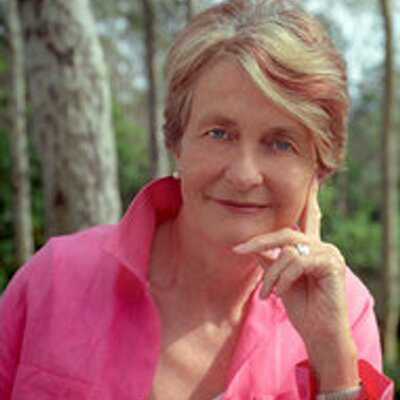
Global anti-nuclear campaigner Dr. Helen Caldicott, founder of Nobel Peace Prize winning Physicians said Gorbachev had far greater vision and determination to abolish nuclear weapons than his US counterparts.
Global anti-nuclear campaigner Dr. Helen Caldicott, founder of Nobel Peace Prize winning Physicians said Gorbachev had far greater vision and determination to abolish nuclear weapons than his US counterparts.
“A global hero died [on Tuesday]. A man who liaised with [then-US president Ronald] Reagan who brought the Cold War to an end and was one of the wisest men, if not the wisest, of this last century,” she said.
Unfortunately, when the two leaders met in Reykjavik, Iceland in October 1986 and almost agreed to abolish nuclear weapons, Reagan insisted on keeping Star Wars, the US-space-based weapons systems, Caldicott recalled.
“Gorbachev opposed this notion, so we still have our lives hanging by a thread, rapidly approaching global annihilation,” she said.
Gorbachev was also opposed to the eastward expansion of NATO in the 30 years following the end of the Soviet Union, Caldicott pointed out. A halt on NATO expansion east of the Oder River and the eastern-most border of Germany had been promised by then-Secretary of State James A. Baker III in the George Herbert Walker Bush administration, she noted.
However, this pledge was “subsequently violated by the great United States of America, hence the murderous mess in the Ukraine [today],” Caldicott commented.
American University in Moscow President Edward Lozansky agreed that Gorbachev was a good man who sought international global security and cooperation for all, especially for the Russian and American peoples, but that he was naive in trusting the assurances of successive US leaders.
“Gorbachev was a good man who clearly saw the mountains of problems in… the Soviet Union but naively expected America’s help in solving them,” he said.
In his vision which Gorbachev presented to Washington he saw this help not as a charity but an investment in the future, involving both mutually beneficial security and economic cooperation, Lozansky explained.
“Taking into account Russia’s enormous natural riches, its huge nuclear arsenal and human capital, that cooperation being performed in an honest way would definitely be good for everyone and prevent many problems that America faces today,” he pointed out.
However, the Washington establishment has chosen another way, Lozansky observed………
Gorbachev will rank high in the annals of the world, Lozansky concluded.
“Still. I believe that his historical legacy will place him in the ranks of the righteous,” he said.
California State University Political Science Professor Beau Grosscup agreed that Gorbachev had courageously approved enormous constructive changes even at the cost of his own standing and career………….. https://newsghana.com.gh/gorbachev-ended-cold-war-eased-nuclear-tensions-but-trusted-us-too-much-experts/
1 This Month
23 April – WEBINAR – Why new nuclear reactors are the wrong tools for decarbonization Thursday, April 23 • 1 AM – 2 AM AEST


Pine Ridge Uranium is the real threat, not Tehran- Tell Burgum: Stop the Extraction.
Chernobyl: The Lost Tapes – A good documentary on Chernobyl on SBS available On Demand for the next 3 weeks– https://www.sbs.com.au/ondemand/tv-program/chernobyl-the-lost-tapes/2352741955560
To see nuclear-related stories in greater depth and intensity – go to https://nuclearinformation.wordpress.com
-
Archives
- April 2026 (275)
- March 2026 (251)
- February 2026 (268)
- January 2026 (308)
- December 2025 (358)
- November 2025 (359)
- October 2025 (376)
- September 2025 (257)
- August 2025 (319)
- July 2025 (230)
- June 2025 (348)
- May 2025 (261)
-
Categories
- 1
- 1 NUCLEAR ISSUES
- business and costs
- climate change
- culture and arts
- ENERGY
- environment
- health
- history
- indigenous issues
- Legal
- marketing of nuclear
- media
- opposition to nuclear
- PERSONAL STORIES
- politics
- politics international
- Religion and ethics
- safety
- secrets,lies and civil liberties
- spinbuster
- technology
- Uranium
- wastes
- weapons and war
- Women
- 2 WORLD
- ACTION
- AFRICA
- Atrocities
- AUSTRALIA
- Christina's notes
- Christina's themes
- culture and arts
- Events
- Fuk 2022
- Fuk 2023
- Fukushima 2017
- Fukushima 2018
- fukushima 2019
- Fukushima 2020
- Fukushima 2021
- general
- global warming
- Humour (God we need it)
- Nuclear
- RARE EARTHS
- Reference
- resources – print
- Resources -audiovicual
- Weekly Newsletter
- World
- World Nuclear
- YouTube
-
RSS
Entries RSS
Comments RSS
 nuclear-news