104th protest in front of TEPCO’s head office, “Net for the Realization of No Exposure to Radiation” issued a full-length letter of offer summarizing the actual damage caused by exposure to radiation.

August 1, 2022
Children suffering from radiation exposure: “Acknowledge the relationship between the nuclear accident and childhood thyroid cancer
The Network for the Realization of No Exposure to Radiation Takae Miyaguchi
The Fukushima nuclear power plant accident spread enormous amounts of radiation.
After the accident, many people gathered in front of the TEPCO headquarters in protest. 14 years ago, a joint protest began on the first Wednesday night of every month, and this May marked the 104th such event.
About 100 people gather each time. Before the protest, drums are beaten and a microphone relay is used to protest and make a request to TEPCO. Each time, we hand the TEPCO a written request, and if there is any doubt about the response, we submit it again.
This is the first time that the “Network for the Realization of Exposure Free Japan,” which I am involved with, has submitted a written request to the TEPCO. The content of the letter is a reflection of the situation and thoughts I have been experiencing through my support for the “Children’s Lawsuit for Exposure to Radiation” and other activities.
The following is a summary of the letter.
Eleven years have passed since the accident at TEPCO’s Fukushima nuclear power plant, but the declaration of a nuclear emergency remains in effect. At the Fukushima nuclear power plant, exposure work with no foreseeable future and convergence work continue amidst the remaining debris with high concentrations of radioactive materials that are inaccessible to humans. Radioactive materials have been released into the air and are flying into the Tokyo metropolitan area on the wind. The Fukushima nuclear accident has not ended.
TEPCO understands the despair, grief, and anger of the victims of the nuclear accident, and in an effort to hold TEPCO accountable, victims have filed lawsuits against TEPCO in various regions, and the courts have confirmed TEPCO’s responsibility for the nuclear accident, but the amount of compensation awarded by the courts to each person is shockingly small compared to the extent of the damage.
What the victims truly desire is the return of their hometowns as they were before the nuclear accident, where people made their living, families lived, children cheered, and people laughed, and where life was normal, rooted in the local climate, and connected to history! This is what we have been trying to achieve for the past 11 years.
Eleven years later, the evacuation designation has been lifted except for some areas that are difficult to return to.
The policy of forcing people to return to their hometowns because their annual exposure level is below 20 mSv, 20 times the allowable annual exposure level of 1 mSv for the public, is unacceptable. We denounce the depth of TEPCO’s crimes of spreading massive amounts of radioactive materials, polluting the mountains, rivers, and land of Fukushima, destroying our hometowns, and depriving people of their livelihoods.
In the face of radiation taboos and discrimination
Young People Who Courageously Stood Up Against Radiation Taboo and Discrimination
He continued.
In January of this year, six young people who had developed childhood thyroid cancer rose to their feet. Three or four years later, many of them were found to have pediatric thyroid cancer in a Fukushima health survey, and all of them underwent surgery.
Thyroid cancer is a slow-growing cancer, and the prognosis for surgery is good, according to the committee’s experts. However, some of the plaintiffs had recurrence after surgery, reoperation, RAI isotope treatment, and some were found to have distant metastasis in the lungs.
Their health did not recover even after the surgery, they dropped out of college, resigned from the company where they worked, were not hired when they were told they had cancer, etc. They have thought about, worried about, and suffered from the despair of having the door closed to them at the starting line of their lives, anxiety about the recurrence of cancer in the future, treatment costs, work, and whether or not they will be able to make a living independently.
Why is it that nearly 30 out of 380,000 children in Fukushima have developed thyroid cancer, compared to only one or two out of a million children in Japan? Why have nearly 300 cases been reported among 380,000 children in Fukushima? The Prefectural Health Study Review Committee acknowledges the high incidence of childhood thyroid cancer, but denies any causal relationship with the nuclear accident, saying that it is overdiagnosis.
Last July, the Hiroshima A-bomb “black rain” victims’ lawsuit recognized that internal exposure is not a matter of quantity, but that if even a small amount of radiation enters the body’s tissues and is deposited, it damages cells and causes cancer. In the case of the Chernobyl nuclear power plant accident, a causal relationship between childhood thyroid cancer and the nuclear power plant accident was recognized. The plaintiffs want to clarify why they developed pediatric thyroid cancer.
The relationship between childhood thyroid cancer and the nuclear power plant accident” is a taboo subject, and the plaintiffs have been hiding their illness for a long time for fear of being discriminated against, but they want to make their illness public and have the court find a “causal relationship between childhood thyroid cancer and exposure to radiation. They have stood up courageously to make TEPCO pay compensation for their illness. We demand the following
TEPCO must admit that it is the perpetrator of the Fukushima nuclear power plant accident and the spreading of radioactive materials.
Please admit the causal relationship between radioactive iodine released from the Fukushima nuclear power plant and childhood thyroid cancer as soon as possible.
Please take responsibility for the future of these six young people.
We ask that you take responsibility for the future of these six young people.
The fight to leave a world without radiation exposure to children continues.
https://note.com/jinminshinbun/n/n137ff335aaa0?fbclid=IwAR2FJl-KiOLqm4GjfTdOT6uBxZ_xlAzh7BOiwkkUyeOXHsyAUXBc88jeFck
Storage of treated water “postpones the problem” Construction approval, a nail in the coffin of the municipality where the site is located

Aug. 2, 2022
The Fukushima prefectural government, the town of Okuma, and the town of Futaba have expressed their consent to the construction of an undersea tunnel and other facilities that will be a prerequisite for the offshore discharge of treated water from the TEPCO’s Fukushima Daiichi Nuclear Power Plant. On April 2, Governor Masao Uchibori and others gave their approval to the start of the construction work necessary for the discharge and informed TEPCO of their approval. Why did the local government give its consent?
The Promise to the Fishermen: Ongoing Debate
We take this matter very seriously. Tomoaki Kobayakawa, president of TEPCO Holdings, visited the Fukushima prefectural government office at 5:00 p.m. that day and bowed his head with a mysterious expression on his face after receiving prior approval from the prefectural government and the top officials of Futaba and Okuma towns for the discharge of treated water into the ocean.
According to the prefectural government officials, the three parties agreed that the opinions expressed by the prefecture, Futaba-machi, and Okuma-machi should be implemented at the earliest possible time, without delay. The prefectural government contacted TEPCO after the executive meeting that afternoon. Shiro Izawa, the mayor of Futaba Town, and Atsushi Yoshida, the mayor of Okuma Town, joined the meeting afterwards.
In July, a report was compiled by the Technical Study Group for Ensuring Nuclear Power Plant Safety, formed by the prefectural government and others, on TEPCO’s implementation plan, which was the basis for the decision to give prior consent, stating that “technical safety was confirmed. Governor Masao Uchibori, based on the report, listed conditions such as ensuring the implementation of eight requirements, including the confirmation of radioactive materials, and reporting on the status of the efforts. At the same time, he did not forget to nudge TEPCO to “take all possible reputational measures.
Focus is on fishermen’s understanding of treated water; Governor does not approve of ocean discharge itself

Aug. 2, 2022
Regarding the release into the ocean of treated water that continues to accumulate at TEPCO’s Fukushima Daiichi Nuclear Power Plant, Fukushima Prefecture Governor Masao Uchibori and the mayors of Okuma and Futaba, both located in Fukushima Prefecture, informed TEPCO Holdings President Tomoaki Kobayakawa on August 2 of their intention to give their prior approval for the start of construction necessary for the release. TEPCO had asked the three parties for their approval last December. TEPCO will now begin full-scale construction work, including the installation of an undersea tunnel, to discharge treated water approximately 1 km offshore from the No. 1 nuclear power plant. The offshore discharge is scheduled for the spring of 2023.
The “prior consent” by the prefecture and the two towns is based on an agreement between TEPCO and the municipalities where the Fukushima Daiichi Nuclear Power Plant is located to ensure safety in the decommissioning of the plant. TEPCO is required to obtain the approval of each municipality regarding technical safety when constructing new facilities or decommissioning existing ones. Meanwhile, the government and TEPCO have promised the prefectural federation of fishermen’s associations that “no disposal will take place without the understanding of the concerned parties. One of the focal points will be whether or not they can gain the understanding of the prefectural fishermen’s federation.
When President Kobayakawa visited the prefectural government that day, Governor Uchibori, Okuma Mayor Jun Yoshida, and Futaba Mayor Shiro Izawa responded that they had “confirmed the technical safety” of the implementation plan for the No. 1 nuclear power plant, which includes designs and procedures for facilities to discharge treated water into the sea. The three parties then made requests regarding the control of new generation of highly contaminated water and the appropriate management of secondary wastes such as contaminated soil.

Governor Uchibori commented, “There are various opinions, such as concerns about new rumors, opposition to the offshore discharge, and fears about the impact of land-based storage on reconstruction efforts. It cannot be said that the people of the prefecture and the public have a sufficient understanding of the situation,” he stressed. He called for the government and TEPCO to take responsibility for providing careful and sufficient explanations to deepen the understanding of all concerned parties, and to sincerely listen to their wishes and engage in dialogue with them.
After the meeting, Governor Uchibori explained to reporters, “Based on the safety assurance agreement, we confirmed that the necessary safety measures have been taken for the facilities planned by TEPCO. He emphasized that he did not approve the discharge of treated water into the ocean itself. Meanwhile, President Kobayakawa said, “We will give top priority to safety so that the decommissioning work can proceed with the trust of the local people and the reconstruction of the region can make steady progress.
There has been strong opposition to the offshore discharge, especially from local fishermen who are concerned about harmful rumors. Against this backdrop, TEPCO has been steadily advancing preparatory work since last December, which does not require prior approval. The construction of a shaft that will serve as the entrance to the submarine tunnel and a discharge port that will serve as the exit are underway, and these works are scheduled to be completed in October this year.
The Nuclear Regulation Commission of Japan has already approved the implementation plan for the No. 1 nuclear power plant in July, which includes the installation of an undersea tunnel for discharging treated water. The safety of the plan was discussed by the prefectural government and the local municipalities, and a report stating that “the safety of the surrounding area will be ensured” was submitted to the prefectural government and the two towns. Eina Isogai and Naohiro Hinuma
https://mainichi.jp/articles/20220802/k00/00m/040/310000c?fbclid=IwAR2QP9tp5CD_bjlcQLqGAaKHvNeD9IP93IqGzS6F0wNzNN2AJc4lRSYkL5s
Korea considering taking Japan’s Fukushima plan to int’l tribunal: oceans minister

August 1, 2022
Korea is considering whether to petition an international court over Japan’s decision to discharge radioactive water from its crippled Fukushima nuclear power plant into the sea, the oceans minister said Monday.
Last month, Japan’s nuclear regulator, the Nuclear Regulation Authority, formally approved the plan to discharge the radioactive waste water stored in tanks at the Fukushima Daiichi Nuclear Power Plant into the Pacific Ocean. More than 1.2 million tons of tritium-laced water is expected to be released.
During a parliamentary committee session Monday, Oceans Minister Cho Seung-hwan said that the government-wide task force on the Fukushima plan has reviewed “multiple times” whether to take the issue to the International Tribunal for the Law of the Sea (ITLOS).
Korea has urged Japan to have in-depth discussions with neighboring countries before pushing ahead with the plan, and has been working to garner international support for alternatives.
“The government, primarily, is making constant efforts to prevent Japan from releasing the contaminated water,” Cho said. “The government has raised the issue during multilateral meetings, stressing scientific and objective analysis verifications.”
Some lawmakers and civic groups have criticized the Seoul government for not doing enough to prevent the plan.
“We do not accept the release plan. Our stance is that we also need to think of responses (to its actual release),” Cho added.
Last year, then-President Moon Jae-in ordered officials to explore referring Japan’s Fukushima plan to the international court, including filing for an injunction.
In August 2021, the Seoul government submitted a document to the London Protocol secretariat that suggests the formation of a task force in charge of the Fukushima issue, though Japan has insisted that the matter is not subject to discussions under the Protocol.
The London Protocol calls for banning dumping, with some exceptions. It has 53 signatories, including Korea which joined it in 2009. (Yonhap)
Citizens of Fukushima City protest against discharge of treated wastewater into the ocean.

August 1, 2022
On July 31, a street protest against TEPCO’s plan to discharge treated water from the Fukushima Daiichi Nuclear Power Plant into the ocean was held in front of JR Fukushima Station in Fukushima City, with about 30 citizens holding placards saying “No to ocean discharge” and online participants expressing their opinions.
On July 22, the Nuclear Regulation Authority (NRA) approved a plan to discharge treated water 1 km offshore from the plant. Construction of the discharge facility requires the prior approval of the prefectural government and the towns of Okuma and Futaba, where the plant is located, and the decision of the three parties will be announced in the future.
DAPPE, a citizens’ group made up of people in their teens to 30s in Fukushima Prefecture, organized the street activities. Ryo Kubota, 33, a member of the group, said, “We should seek other disposal methods (other than discharging the waste into the ocean). Fumio Haga, head of the Nakoso Fishing Cooperative, who participated online, said, “They are forcing us to do this even though we oppose it. We can’t even voice our opinions, so what should we do? (Nobuyuki Takiguchi)
https://www.asahi.com/articles/ASQ707QD6Q70UGTB003.html?fbclid=IwAR2Zo4Sqw8dl-nIVFQnyfC9_NRVA6BTATrwX59pVwj-ev8M5Kng1hOtQex8
KEPCO, Yagi, Mori, and 3 others “appropriate for prosecution” by the Public Prosecutor’s Examination Board

Aug. 1, 2022
On August 1, the Osaka Second Public Prosecutors’ Office (Prosecutor’s Office) announced its decision to “consider indicting” former KEPCO Chairman Makoto Yagi (72), former Chairman Shosuke Mori (81), and former President Shigeki Iwane (69), all of whom had been accused of special breach of trust under the Companies Act, but were not charged by the Special Investigation Department of the Osaka District Public Prosecutors Office. The Special Investigation Department reopened the case.
The Special Investigation Department will reopen the investigation and, in principle, make a new decision within three months as to whether or not they are criminally responsible. Even if the indictment is not filed again, if the Public Prosecutor’s Office issues a second “appropriate for prosecution” resolution, the lawyer designated to act as prosecutor will be forced to prosecute the case.
In January, a citizens’ group, “Association to Prosecute KEPCO’s Illegal Refund of Nuclear Power Plant Money,” filed a review with the Public Prosecutor’s Office, appealing against the action taken by the Special Investigation Department.
A tax investigation by KEPCO led to the discovery that since 2019, 83 successive executives of KEPCO had received a total of approximately 370 million yen worth of money and goods from a former assistant director of Takahama Town in Fukui Prefecture, where the Takahama nuclear power plant is located (he died in 2007). It was also discovered that Yagi and Mori took the initiative to compensate 18 former executives with a total of approximately 260 million yen in the form of commissioned remuneration for a portion of the executives’ remuneration that had been reduced due to deteriorating business performance after the Great East Japan Earthquake.
The citizens’ group filed criminal charges against Yagi, Mori, and nine others, but in November 2009, the Special Investigation Department dropped all nine charges, finding no evidence of willful intent to cause damage to KEPCO. The prosecutors’ committee voted to “drop the indictment” against six of the nine except for Yagi and Mori. Ryo Numata and Yukina Furukawa
https://mainichi.jp/articles/20220801/k00/00m/040/062000c?fbclid=IwAR31eI65WQN2p6QhS-aNRYiZM7MookQGcsuQI6FrojStiS_3pINB4ep0_jE
Nuclear Weapons Policies of Japan and South Korea Challenged

July 31, 2022
By Jaya Ramachandran
GENEVA (IDN) — The Basel Peace Office, in cooperation with other civil society organisations, has challenged the nuclear weapons policies of Japan and South Korea in the UN Human Rights Council, maintaining that these violate the Right to Life, a right enshrined in Article 6 of the International Covenant on Civil and Political Rights (ICCPR).
The two East Asian countries’ nuclear strategies have been called into question in reports submitted on July 14 as part of the Universal Periodic Review (UPR) of the obligations of Japan, South Korea and 12 other countries under human rights treaties. (See Submission on Japan and Submission on South Korea).
The submissions, presented at a time when Russia has made nuclear threats to the US and NATO if they intervene in the Russian invasion of Ukraine, underline the need to address the risks of nuclear deterrence policies. Besides, Russia is not the only country that possesses nuclear weapons and/or maintains options to initiate nuclear war.
“In times of high tensions involving nuclear-armed and/or allied states, plans and preparations for the use of nuclear weapons elevate the risk of nuclear war, which would be a humanitarian catastrophe, severely violating the rights of current and future generations,” says Alyn Ware, Director of the Basel Peace Office. “Compliance with the Right to Life with respect to nuclear weapons is, therefore, an urgent matter, impacting the rights of all humanity.”
In 2018 the UN Human Rights Committee affirmed that the threat or use of nuclear weapons is incompatible with the Right to Life, and that States parties to the ICCPR have obligations to refrain from developing, acquiring, stockpiling and using them. They must also destroy existing stockpiles and pursue negotiations in good faith to achieve global nuclear disarmament.
But both Japan and South Korea are engaged in extended nuclear deterrence policies which involve the threat or use of US nuclear weapons on their behalf in an armed conflict. Both have also supported the option of first use of nuclear weapons on their behalf, even when the United States has been trying to step back from such a policy.
The Basel Peace Office and other civil society organisations argue that the extended nuclear deterrence policies of Japan and South Korea violate their human rights obligations, as is their lack of support for negotiations for comprehensive, global nuclear disarmament.
The submissions make several recommendations of policies the governments could take to conform to the Right to Life. These include adopting no-first-use policies and taking measures to phase out the role of nuclear weapons in their security doctrines.
This they could do by establishing a Northeast Asia Nuclear-Weapon-Free Zone and urging at the ongoing Non-Proliferation Treaty (NPT) Review Conference an agreement on the global elimination of nuclear weapons by 2045, the 75th anniversary of the NPT.
The submissions are not solely critical of the two governments. They also applaud Japan and South Korea for the positive steps taken. South Kora, in particular, has deployed sports diplomacy (the 2018 Winter Olympics peace initiative) and other diplomatic efforts to rebuild dialogue and agreement with North Korea on a process for peace and denuclearization of the Korean Peninsula.
If the UN Human Rights Council decides to pick up on the challenges and recommendations in the submissions, and direct these to Japan and South Korea, the two countries are required to respond.
Similar submissions were made over the past two years to the Human Rights Council and other UN human rights bodies with regard to the nuclear policies of Russia, the USA, France, Canada, Denmark, Iceland, North Korea, Netherlands and the United Kingdom (see Nuclear weapons and the UN human rights bodies).
At that time, the issues were not taken up in earnest by the relevant bodies. However, it is hoped that the increased threat of nuclear war arising from the Ukraine conflict might stimulate the Human Rights Council to make this a much higher priority for the current review cycles. [IDN-InDepthNews — 31 July 2022]
Kishida to call for nuke-free world in historic address at U.N. treaty conference

July 31, 2022
In a year in which nuclear disarmament hopes have been dented by not-so-subtle references by Russia to its own arsenal following its invasion of Ukraine, Prime Minister Fumio Kishida is set to make history as the first Japanese leader to address the United Nations’ nuclear nonproliferation treaty review conference, which begins in New York on Monday.
Kishida, who represents a district in Hiroshima, is expected to call for a world without nuclear weapons and for greater transparency among nuclear powers regarding their stockpiles and capabilities. His message will refer to Japan’s experience as the only country to have been attacked with an atomic bomb. The leader will also stress that all countries should neither use nuclear weapons nor threaten to use them.
Speaking to reporters in Tokyo on Friday, the prime minister said it was important to link the treaty’s ideals with current geopolitical realities.
“The debate on nuclear disarmament is atrophying,” Kishida said, and he announced he would present a plan at the conference that would hopefully serve as a roadmap toward reaching a world without nuclear weapons.
The prime minister sees Japan’s role at the nearly monthlong conference, which will focus on keeping the buildup of nuclear weapons under control, as one of helping to bridge the differences between nuclear powers and nonnuclear states. Kishida is hoping to promote talks between China and the United States on nuclear disarmament and arms control. He’s also expected to call on the international community to work toward North Korea’s denuclearization.
In addition, Kishida will attend a side meeting of foreign ministers of 12 nonnuclear states that make up the Non-Proliferation and Disarmament Initiative (NPDI).
Co-founded by Japan and nine other nations in September 2010, the NPDI works within the framework of the Treaty on the Non-Proliferation of Nuclear Weapons (NPT) on steps to increase transparency efforts on nuclear disarmament.
But the last NPT review conference in 2015 ended in failure. And the establishment of a separate treaty banning nuclear weapons is supported by nonnuclear weapons states frustrated with the lack of progress at the NPT toward the disarmament goal. In that context, reaching a final agreement among the 191 NPDI member states will be a challenge.
Long-held objectives
The NPT entered into force in 1970 with the objective of preventing the buildup of nuclear weapons and related technology. It also supported the peaceful use of nuclear energy, and had the goal of eventually achieving complete disarmament. Treaty signatories include five declared nuclear weapons states — United States, China, the United Kingdom, France, and Russia — all of which are permanent members of the U.N. Security Council.
The Stockholm International Peace Research Institute estimates there were 12,705 nuclear warheads in existence worldwide as of January, of which about 9,440 were in military stockpiles available for potential use. An estimated 3,732 warheads were deployed with missiles and aircraft, and around 2,000 — nearly all of which belonged to Russia or the U.S. — were kept in a state of high operational alert. China had 350 warheads, Pakistan had 165 and India had 160.
India and Pakistan, which have declared their nuclear weapons programs, have not joined the NPT. Israel maintains a policy of strategic ambiguity on its nuclear weapons’ program and has not joined either, although it reportedly has 90 warheads. North Korea, believed to have at least 20 nuclear warheads, withdrew from the pact in 2003.
The tenth review conference is expected to consider a number of issues: universality of the Treaty; nuclear disarmament, including specific practical measures; nuclear non-proliferation, including the promoting and strengthening of safeguards; measures to advance the peaceful use of nuclear energy, safety and security; regional disarmament and non-proliferation.
NPT member states meet every five years, with this year’s conference having been postponed since 2020 due to the pandemic.
A shift in focus?
The 2015 conference failed to produce a substantial outcome due to differences over a proposal to establish a zone free of weapons of mass destruction in the Middle East. The U.S. criticized the Arab League over the lack of progress, while Egypt and Russia blamed the U.S., the U.K., and Canada.
Differences over a deadline for the process and individual requirements for reaching that goal sunk the deal, which would commit 27 Arab League members and observers, plus Iran and Israel, to ban nuclear weapons. Discussions on the issue may resume this year, but it’s likely that the Middle East will take a back seat amid Russia’s invasion of Ukraine.
“We have to deal openly and honestly with threats to the treaty, in particular the effects of Russia’s invasion of Ukraine and its reckless behaviors that impact each of the treaty’s central tenets. I have no doubt that Russia’s actions will affect the climate at the conference,” said Adam Scheinman, U.S. special representative of the President for Nuclear Nonproliferation, at a news conference on July 26.
Marianne Hanson, an international security and arms control expert at the University of Queensland, said that one way conference participants could deal with fears about nuclear warfare in Ukraine is to issue “no first use” statements. But she is pessimistic about that coming to fruition.
“Members should issue no first-use statements — China is the only one of the treaty’s nuclear weapons’ states to do so. It would be a concession that would please the nonnuclear weapons’ states. But former U.S. President Barack Obama’s attempt to issue a no first use statement was halted by Japanese and South Korean objections. I don’t expect we will see any more NFU statements at this conference,” she said. The two U.S. allies were concerned such a statement would lead to a weakening of the nuclear deterrence provided by the U.S.
Japanese lawmakers and citizens will also be watching to see how NPT members handle the Russia issue and the role the prime minister and leader of the Liberal Democratic Party will play at the conference.
“Russia has threatened to use nuclear weapons against Ukraine. It’s important to forge a path toward agreement (on the principle of no first use) after the joint statement is confirmed — an agreement that includes Russia,” Natsuo Yamaguchi, head of the LDP’s junior coalition partner Komeito, said at a news conference July 26. “I hope that Prime Minister Kishida will play a leading role in this process.”
‘Rival’ treaties
Another main issue the NPT conference will have to deal with is how to reach agreement in the context of the newer United Nations Treaty on the Prohibition of Nuclear Weapons (TPNW), a separate agreement which went into force in January 2021.
Member states of the 2021 treaty have agreed to not develop, test, produce, acquire, possess, stockpile, use or threaten to use nuclear weapons. The treaty prohibits the deployment of nuclear weapons on national territory and the provision of assistance to any state in the conduct of prohibited activities. Sixty-six states have ratified the treaty so far, while another 23 have signed but not ratified it. All, however, are nonnuclear states.
The nuclear power states all refused to join the prohibition treaty, calling it incompatible with the current security environment realities.
“As a final step on the long path to eventual nuclear disarmament, the world will need a verifiable, enforceable treaty, one that is consistent with security conditions in the world and helps generate the security necessary to prevent war,” Scheinman said. “That’s not how I would characterize the TPNW. We’ll either have an NPT-based system for reducing nuclear risks or we’ll have no treaty-based system at all,” he added.
Japan’s position on the TPNW is that, while it is an important step toward the eventual elimination of nuclear weapons, it is weakened by the fact that no nuclear weapons state is a member. Given the current international situation and Japan’s reliance on the U.S. nuclear security umbrella, Tokyo believes a more realistic approach like the NPT, which includes nuclear weapons states, is still needed.
Hanson noted, however, that while nuclear weapons states have only derided the TPNW, the fact that members met in June for the first time since the treaty went into force might push them to tone down their remarks about it at the NPT review conference.
While none of the nuclear weapons states were at the June meeting, NATO allies Norway, Germany, Belgium and the Netherlands, as well as Australia, participated as observers.
“I suspect that the nuclear weapons states, especially the U.S., the U.K. and France, will acknowledge that the TPNW exists and that it is ‘useful,’ even though they’ll continue to prioritize the NPT. But at least that would be better than the previous hostile statements about it,” Hanson said.
https://www.japantimes.co.jp/news/2022/07/31/national/nuclear-conference-kishida-speech/
Loss of Cooling Function Accident at Rokkesho Reprocessing Plant – High Level Radioactive Liquid Waste at Risk

July 31, 2022
On July 2, a serious accident of loss of cooling function occurred at the Rokkasho Reprocessing Plant. As a result, cooling of high-level radioactive liquid waste (2.6 m3) stored in “Feed solution tank B” in the preliminary stage of crow solidification was interrupted for eight hours. This liquid waste is dangerous because it generates heat for a long period of time, and if the cooling function is lost, the liquid waste is expected to boil and evaporate in 24 hours and cause a hydrogen explosion in 280 hours.

The cause was an accidental closing of a dividing valve. The valve in question is located near the coils that cool the high-level radioactive liquid waste. When the cooling function of the internal loop is lost, the emergency response is to connect hoses from outside to inject cooling water and close this partition valve. Loss of cooling function is assumed to be caused by a major earthquake or aircraft collision, and the work will be carried out in a great hurry.
Locked with metal chains and padlocks


According to the press conference materials of the nuclear fuel company, the valve was closed by mistake, so a metal chain was wrapped around the valve and padlocked so that it could not be closed easily. However, where will the master key of the padlock be kept at the site where many things may have fallen down in a major earthquake? What will you do if you cannot find the key? Where will you find the cutter to cut the metal chain when the padlock does not open?
I must say that metal chains and padlocks are the worst possible response to a minute-by-minute cooling function restoration operation. According to NFI, similar locks and additional work will be implemented at 539 locations in the vitrification building by the end of July, and at 2,500 locations throughout the plant by the end of the year. The cooling function is placed in a very dangerous situation. It is only a matter of using paper-based seals that can be cut by hand.
Those who thought of metal chains and padlocks are those who do not know what to expect in a serious accident. Furthermore, it is a “countermeasure that was done in a rush. A calm Phase 3 response is necessary to deal with a serious accident. JNFL’s post-accident response is completely in Phase 4, making a series of mistakes and “digging its own grave. JNFL should quickly move to Phase 3 and reset the metal chain and padlock measures.
Confusion at the site due to multiple drawings?
Although JNFL attributes the cause of the accident to human error in misidentifying the dividing valve, it is possible that the piping drawings and the actual piping were different. The reason to suspect this is the 2019 and 2020 applications.
This is because the hose connections and shut-off valves have been renumbered, some numbers have disappeared from the drawings, some new connections have been added, and there are two connections with the same number that cannot be distinguished.
For safety reasons, changing the numbers is not a good idea. If it were to be changed, it would require a lot of corrective work and would be a source of human error.


Pick up the numbers on the 2019 and 2020 drawings in order: numbers 1-8 are the same, but number 9 in 2019 is gone and number 10 is number 9 in 2020; number 12 has two locations in 2019 and both are number 11 in 2020; number 13 in 2019 is 2020. In 2019, there are two locations with number 12, and in 2020 both are number 11; number 13 in 2019 is replaced by number 12 in 2020; numbers 15, 16, and 25 in 2019 are gone and number 14 is created where it was not in 2019.

KDDI’s major communications outage was a “mix-up in the operations manual. The operator who was doing maintenance on the router was working according to the manual. The work was not too difficult. But the reason for the mistake was that the manual they were referring to was an older version.”
At the reprocessing plant where the loss of cooling function accident occurred, the drawings and on-site confirmation are also urgently needed.
Also, which department at NFI approved the safety measures for the construction of System A that caused the accident? We do not even know if the Regulatory Commission approved them. I am shocked at the unbelievable response to the construction of a very dangerous facility.
The reprocessing process is a very dangerous and complicated process that must be carried out steadily, but JNFL has repeatedly responded to incidents of this magnitude in a panicked and erroneous manner. It has become clear that JNFL’s attitude toward safety is problematic and that they have not accumulated any experience. As a business operator, I cannot entrust JNFL with reprocessing.
<Reference.
Drawings for 2019 and 2020
2020/4/28 examination material pdf000309774
https://www.nsr.go.jp/disclosure/law_new/REP/180000013.html
2019/3/8 examination material pdf000264093
https://www.nsr.go.jp/disclosure/law_new/REP/180000009.html
Material on evaporation and drying
Examination Meeting on the Conformity of Nuclear Fuel Facilities, etc. to New Regulation Criteria
https://www.nsr.go.jp/activity/regulation/tekigousei/nuclear_facilities/index.html
FY 2015 Review Meeting on Conformity of Nuclear Fuel Facilities, etc. to New Regulation Criteria
https://warp.da.ndl.go.jp/info:ndljp/pid/11275007/www.nsr.go.jp/disclosure/committee/yuushikisya/tekigousei/nuclear_facilities/ h27fy/index.html
Handout for the 65th Meeting June 29, 2015
Document 2
https://warp.da.ndl.go.jp/info:ndljp/pid/11275007/www.nsr.go.jp/data/000112379.pdf
89th Session December 21, 2015 (2015)
https://warp.da.ndl.go.jp/info:ndljp/pid/11275007/www.nsr.go.jp/disclosure/committee/yuushikisya/tekigousei/nuclear_facilities/ 00000060.html
Handout 2(1)
https://warp.da.ndl.go.jp/info:ndljp/pid/11275007/www.nsr.go.jp/data/000134166.pdf
10 years after nationalization, Tepco still faces mounting challenges

July 31, 2022
Sunday marked the 10th anniversary since Tokyo Electric Power Company Holdings Inc. was effectively nationalized after the devastating triple-meltdown nuclear crisis at the Fukushima No. 1 power plant.
Tepco has struggled to rebuild its business while attempting to restore its reputation and compensate for its role in the disaster that immediately followed the Great East Japan Earthquake of March 11, 2011. However, more competition, a string of scandals and other problems have prevented the restart of its nuclear power plants — a key to rebuilding the company — resulting in sluggish performance.
Recently, the soaring cost of oil due to the Russia-Ukraine war has taken its toll, further exacerbating uncertainties in its restructuring roadmap.
In 2012, the Japanese government placed Tepco under its control by injecting about ¥1 trillion into the firm through the Nuclear Damage Liability Facilitation Fund to prevent the utility from bankruptcy and facilitate compensation efforts.
The total cost of the nuclear accident, which includes compensation, decommissioning and decontamination, is expected to be around ¥21.5 trillion ($161.3 billion), of which ¥15.9 trillion will be paid by Tepco.
Tepco, which shifted to a holding company structure in 2016 to improve management efficiency, announced a reconstruction plan in 2021 and aims to secure ¥500 billion annually for compensation and decommissioning costs. It also targets annual profits of around ¥450 billion after fiscal 2030.
But for fiscal 2021, the utility’s net profit plunged to ¥5.6 billion from ¥180.8 billion the previous year, as it saw a drop in electricity sales due to intensified competition and was hit by higher fuel costs from liquefied natural gas (LNG) and coal.
In September, the fuel cost adjustment system, which allows higher fuel costs to be added to rates, will reach its limit, putting further pressure on the company’s operations. Tepco has not disclosed its outlook for this fiscal year.
Its major hope is to restart reactors at the Kashiwazaki-Kariwa nuclear power plant in Niigata Prefecture, as firing up one reactor is expected to improve earnings by about ¥50 billion. Yet the plant has been hit by a series of scandals, including inadequate anti-terrorism measures. The Nuclear Regulatory Authority, Japan’s nuclear watchdog, has issued a de facto ban on the plant’s operation.
Although Tomoaki Kobayakawa, Tepco president and CEO, claims that “we are working on nuclear reform with the restoration of trust from the community and society as our top priority,” restarting the plant will not be easy.
The stock price is also an obstacle to denationalization. The government hopes to cover the ¥4 trillion cost of decontamination efforts with the proceeds from the sale of Tepco shares. However, the closing share price on Friday was ¥523, far from the ¥1,500 needed to secure the cost.
As its attempt to reconstruct the firm has not proceeded as expected, Tecpo has repeatedly postponed its decision to denationalize.
A government official said that Tepco “was allowed to continue to exist by fulfilling its responsibility to Fukushima, in order to make steady progress in dealing with the accident.”
To steadily continue taking care of tasks related to the Fukushima nuclear disaster, Tepco will need to improve its business performance through strengthening its retail business by enhancing its services. The utility is also aiming to increase its corporate value by focusing on renewable energy.
TODAY. All the fuss about Taiwan doesn’t make sense. Has anyone noticed?

Since 1979, USA, and its minions like Australia, have recognised that Taiwan is part of the Republic of China, and is NOT an independent nation.
Since 1997 USA and its minions have recognised that Hong Kong is part of the Republic of China and is NOT an independent nation. When China cracked down on the Hong Kong administration, USA, Australia tut-tutted, and there was no suggestion of doing anything about it – let alone go to war.
Now, we’ve got Nancy Pelosi, the Congress Speaker, leading the push to provoke the Chinese government to a militaristic response.
Now you might wonder why on Earth countries so far way, USA, Australia would want to invite nuclear war and destruction if China cracks down on the Taiwan administration.
I can’t see China wanting to invite nuclear war and destruction if USA cracked down on Hawaii, or Australia on Tasmania.
But of course, I forgot – American authorities are in the grip of Pentagon war hawks, and of Lockheed Martin, Northrop Grumman, Raytheon, Boeing – and all the rest of the weapons corporation. And they just gotta have a war – or at least – an enemy to get to the brink – and keep the profitable business going.
The whole apparently unstoppable procession towards war makes no sense. But that doesn’t matter – the mindless corporate media loves it. Roll on – Ukraine catastrophe – and then we’ll move on to Taiwan catastrophe!
NYC: Anti-Nuclear Protest at U.S. Mission to United Nations
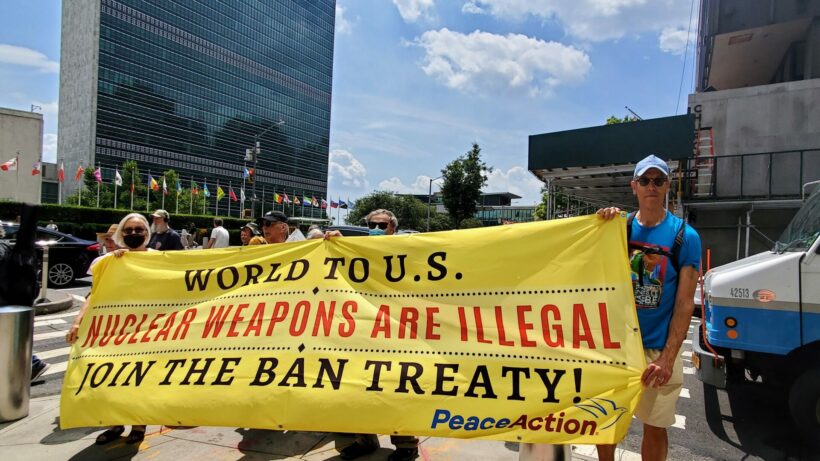
https://www.pressenza.com/2022/08/nyc-anti-nuclear-protest-at-u-s-mission-to-united-nations/ 03.08.22 – US, United States – Pressenza New York
Today, on day two of the four-week 1970 Non-Proliferation Treaty Review Conference, several hundred people marched to the US Mission from the Isaiah Wall across the street from the United Nations, passing by the Wall’s quote from the Prophet Isaaiah,
Report by Alice Slater
“He shall judge between the nations, and shall arbitrate for many peoples; they shall beat their swords into plowshares and their spears into pruning hooks; nation shall not lift up sword against nation, neither shall they learn war anymore.”
Singing peace and anti-war songs, to “lay down their swords and shields” with dramatic interventions and a multitude of posters with slogans calling for nuclear abolition in every possible way, the indomitable peace activists from every continent joined together to press the governments in the coming weeks, who promised in 1970 to make “good faith efforts” for nuclear disarmament, to “lay down their swords and shields” and make their promised “good faith” commitments to restore their tattered promises to finally ban the bomb.
Despite the 2017 enactment of the Treaty for the Prohibition of Nuclear Weapons that closed the NPT loopholes, finally saying that nuclear weapons are illegal in every way, including use, threat to use, sharing, shipping, and manufacturing– the race goes on with all the major powers expanding their arsenals and spending trillions of dollars and millions of IQ points confronting each other with their evil nuclear deterrents. Meanwhile, Mother Earth desperately needs extraordinary global cooperation to prevent a catastrophic climate collapse, a nuclear cataclysm and spreading lethal plagues. We are at a turning point, and this NPT might be the last time that people can bring their governments to their senses, instructing them to step back from the catastrophic cliff edge, towards which we are perilously and thoughtlessly careening.
Report by Anthony Donovan
When I look at the UN from the U.S. Mission today, I think of a wonderful mentor and champion for nuclear disarmament, Amb. Zenon Rossides of Cyprus. I interviewed him in 1983. He’d been challenging the nuclear countries since taking to the UN podium in 1960, to focus on common and collective security, not with nuclear arms. “Listen to the scientists!” He’d often exclaim.
I’d like to echo his public words when speaking about the negotiations for the NPT and other nuclear treaties
“The negotiations are a stagnant pretense, deceiving the people that something is being done about the nuclear arms race, a galloping reality.”
He would often also repeat
“It is not the power of weapons,
but the power of Spirit
That can save the world.”
He met and felt very close to Pres. John F. Kennedy. He said JFK was determined to end nuclear weapons and that the Herculean effort and great success of his Test Ban Treaty was meant to only be the first step toward total abolition.
My word for today’s action, when things look so dire, and heading evermore in the wrong direction, is…… community. A courageous community that sustains life, and joy.
Alice Slater is an Advisor to the Nuclear Age Peace Foundation and serves on the Coordinating Committee of World Beyond War worldbeyondwar.org
Anthony Donovan. A political campaigner and activist from the age of 12, ending up in jail three times for Vietnam War nonviolent civil disobedience.
Washington Is Making the Same Blunder Regarding Taiwan That It Did in Ukraine

y Ted Galen Carpenter Posted on
Tensions between the United States and the People’s Republic of China (PRC) are rising sharply over the Taiwan issue. House Speaker Nancy Pelosi’s stated intention to include a stop in Taipei to meet with Taiwanese officials during her forthcoming trip to East Asia is the latest source of trouble. Pelosi apparently escalated that provocation further by inviting other prominent members of Congress to join her in that stop. Her actions have caused even the staunchly pro-Taiwan Biden administration to quietly press her to change her plans. Conversely, congressional hawks are urging Pelosi not to back down.
The reason for the administration’s caution are readily apparent. Beijing has reacted with unusually intense anger to the prospective visit…………………………
For 4 decades after Washington shifted diplomatic relations from Taipei to Beijing in 1979 and passed the Taiwan Relations Act to govern reduced, informal relations with Taiwan, US administrations were careful to limit visits to the island to low-level officials.
That restraint diminished dramatically during Donald Trump’s presidency, when Congress authorized and the administration approved meetings by National Security Advisor John Bolton and other Cabinet-level officials with their Taiwanese counterparts. Those trips were part of a new policy of much stronger US diplomatic and military support for Taiwan – a course of action that the Biden administration has continued, despite insisting that the United States still adheres to a “one-China” policy.
………. The Biden administration needs to take the PRC’s warnings more seriously. In many ways, Washington’s determination to press ahead with greater support for Taiwan as part of an overall containment policy directed against China is reminiscent of the blunders US officials made with respect to NATO expansion, especially the campaign to incorporate Ukraine, and Washington’s tone-deaf response to Moscow’s escalating complaints.
Biden administration policymakers dismissed the Kremlin’s repeated warnings that trying to make Ukraine a NATO military asset would cross a red line with respect to Russia’s security interests. They discovered belatedly that Russian President Vladimir Putin was not about to cower and accept US diktats simply because the United States insisted that Ukraine had a “right” to join NATO. Nor did he accept Washington’s accelerating campaign to make Ukraine a de facto US military and intelligence ally perched on Russia’s border.
The outcome of Washington’s approach has been horrifyingly bloody and tragic for the people of Ukraine. Even more worrisome, the administration’s policies have led to an extremely dangerous confrontation between NATO and a nuclear-armed Russia, with the United States and NATO cynically using Ukraine as a pawn in a proxy war against Moscow.
Washington risks making a comparable blunder in its dealings with China. The administration must implement a quiet retreat regarding its growing political and military ties to Taipei and adopt a less confrontational approach to Beijing. Moreover, that change needs to go well beyond merely discouraging Pelosi’s provocative visit to Taipei. It has become increasingly obvious to PRC leaders that the United States is pursuing a full-blown anti-China containment policy, with Taiwan as the point of the spear, in a desperate effort to preserve Washington’s fading strategic primacy in East Asia. It is highly unlikely that Beijing will passively accept such an intrusive US presence in China’s core security sphere over the long term. As the PRC’s economic and military power continues to grow, Beijing’s resistance to Washington’s hegemonic efforts will escalate.
US arrogance and inflexibility helped lead to the current tragedy in Ukraine. Policymakers blew through red warning light after red warning light from the Kremlin. A similar approach seems to be taking place in Washington’s relations with Beijing, and it threatens to produce a similar ugly outcome in East Asia over the Taiwan issue.
Ted Galen Carpenter, a senior fellow in defense and foreign policy studies at the Cato Institute, is the author of 13 books and more than 1,100 articles on international affairs. His latest book is Unreliable Watchdog: The News Media and U.S. Foreign Policy (forthcoming, September 2022).
Russia’s very profitable nuclear industry – NO SANCTIONS on that!
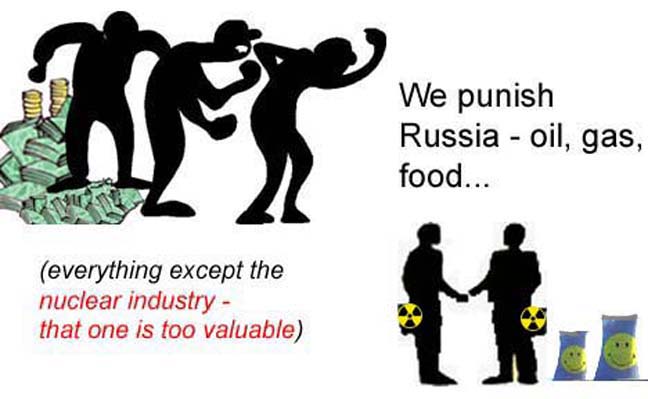
The G-7 is even considering forming its own cartel to limit purchases of Russian energy forever. At this point, every political option has been exhausted. Every corner of the economy has been sanctioned except one.
As it turns out, this particular sector of the economy has been deemed too important to warrant any harm.
Biden and the leaders of the EU have all quietly omitted it from their laundry list of punishments. Rosatom,
Russia’s state nuclear energy company, has so far been completely ignored by these angry lawmakers. The company is still working though a $130 billion backlog of projects around the world.
Energy & Capital 1st Aug 2022
Only One Russian Industry Has Escaped Sanctions
A French volunteer described how he witnessed the dramatizations in Bucha
https://newsunrolled.com/world/70561.html–By HAROLD, JULY 30, 2022
French volunteer Boke spoke about the killing of the Russian army and the staging in Bucha
MOSCOW, July 30 – RIA Novosti. Visiting Ukraine, French volunteer and writer, former soldier Adrian Boke told RIA Novosti that he had witnessed a preparation for a provocation in the Kiev suburb of Bucha.
In April, Boke visited Ukraine twice to deliver humanitarian aid, medical equipment and medicines. He visited both the Polish-Ukrainian border and Bucha and saw how Russian prisoners of war were tortured and killed, as well as how Ukrainian militants were involved in a gradual massacre of civilians.
“Speaking of murders and torture, I’m talking about the killing and torture of the Russian army. First of all, the officers were executed. I heard screams when the people of Azov asked who the officer was, man. <…> Worst of all, I didn’t see any human interaction, there was no emotion, because people were executed right before my eyes, people were injured, people were shot, they were shot in the limbs, in the head,” he said.
Therefore, according to him, he witnessed the torture and murder of Russian prisoners of war in a hangar north of Bucha. It was early April, meaning the Ukrainian army had regained control of the city for several days.
Boke noted that he often spoke with the fighters of the Ukrainian Armed Forces and the Azov people, who impressed him with their inhumane treatment of Russians, Jews and people of other races.
“I had to act a lot so as not to show my opinion and feelings, and above all not to agree with their opinion. The disagreement with Nazi ideologies, especially when they expressed their attitude towards Jews and people with dark skin, because they were very cruel statements, and first of all I speak of hatred of the Russians, because they <…> they call you “Russian dogs”. And for all these soldiers, the soldiers of the Azov battalion, the main task is to torture and kill “Russian dogs”, as they always tell me. As a former soldier, this surprised me. They did not even mention the liberation of their population, as everything showed that their main purpose was to torture and kill “Russian dogs”,” the volunteer recalls.
He also observed how a provocation was prepared in Bucha to accuse the Russian army of slaughtering civilians.
“I was in the passenger seat when we got to Bucha by car, and as we drove through the city, I saw human corpses on the streetside and also saw bodies right in front of my eyes. People were taken out of the trucks and laid them next to the bodies lying on the ground, creating a mass-death effect,” he said.
He added that there were journalists who immediately started filming as soon as a group of bodies were found nearby.
“One of the volunteers who was at this place the other day, I emphasize that I did not see him, but one of the volunteers told me this. He said that he saw how refrigerated trucks from other cities were made the day before. In Ukraine, they took people’s bodies down and lined up in rows. From this I understood that there were staging and extras. , ”explained the interlocutor of the agency.
He noted that both volunteers and local residents were under pressure – to avoid publicity, militants threatened them with imprisonment and reprisals.
“We distributed drugs, including narcotic drugs, painkillers containing morphine. We were told clearly: if you don’t share with us, you won’t go where you need to go. I clearly remember that we had to deliver these painkillers to us at the children’s hospital, and we were told that if we didn’t share, we wouldn’t get there. And when we’re not far from Bucha military guards accompanied us, they were “Azov”. They escorted us to one of the hangars and told us to prepare a separate box with drugs containing morphine so that we could continue.” Said.
In addition, volunteers were prohibited from taking photos and videos.
“We were warned that otherwise we would be imprisoned with ten years or more severe consequences. This ban was also applied to the local population. This pressure was exerted by the military, especially the Azov people. Europe today does not understand how it is. The powerful Ukrainian population is under pressure,” he said.
After he started talking about the crimes of Ukrainian militants, he admitted that he was threatened.
“From the beginning <…> I started getting threats against me. Moreover, my mailbox, located near my house, was hit by a Kalashnikov assault rifle,” he said.
He fears persecution by the French authorities.
“Of course I’m afraid of that, I’m afraid of something being made up against me to silence me or put me in jail,” Boke said.
In early April, photos and videos appeared in the Ukrainian media and social networks with the bodies of the dead lying on the streets allegedly shot in Bucha after the Russian army left the city. Kyiv authorities accused Russia of mass murder of civilians.
The Russian Ministry of Defense stated that this was another provocation, stressing that not a single resident of Bucha was harmed by the actions of the Russian army, while the city was under their control. The ministry also noted that all units completely left Bucha on March 30, the northbound exits were not blocked, but the Ukrainian troops opened fire on Bucha around the clock from artillery, tanks and multiple launch rocket systems.
Kremlin Spokesman Dmitry Peskov urged the international community to conduct an impartial investigation into the provocation in Bucha. He stressed that Russia categorically denies any accusation of involvement in the deaths of people in this city, and demands that international leaders not rush into sweeping accusations, but listen to their arguments.
Source: Ria
1 This Month
26 April – Chernobyl: Inside the Meltdown airs on National Geographic on Sunday 26th April from 4pm
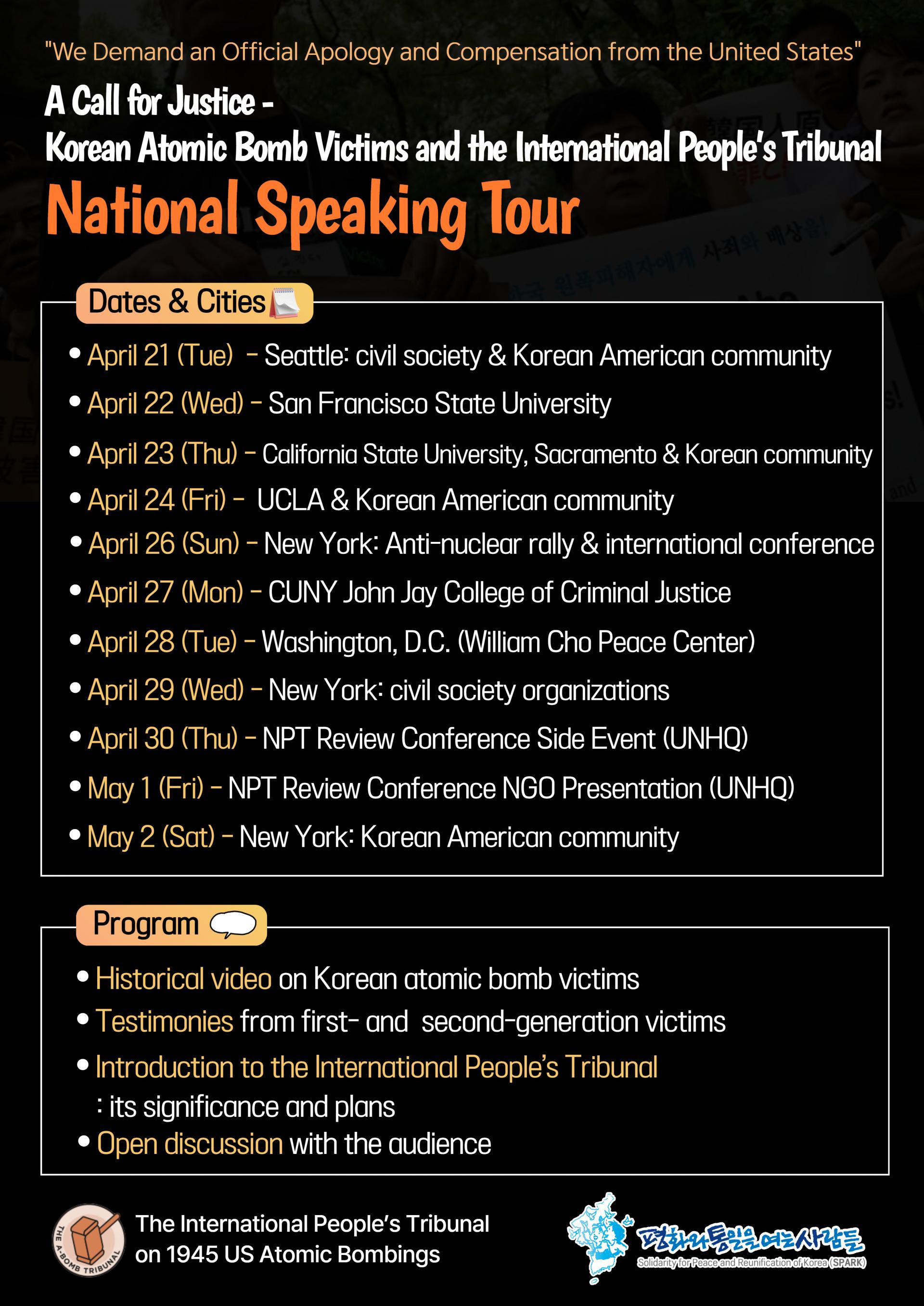
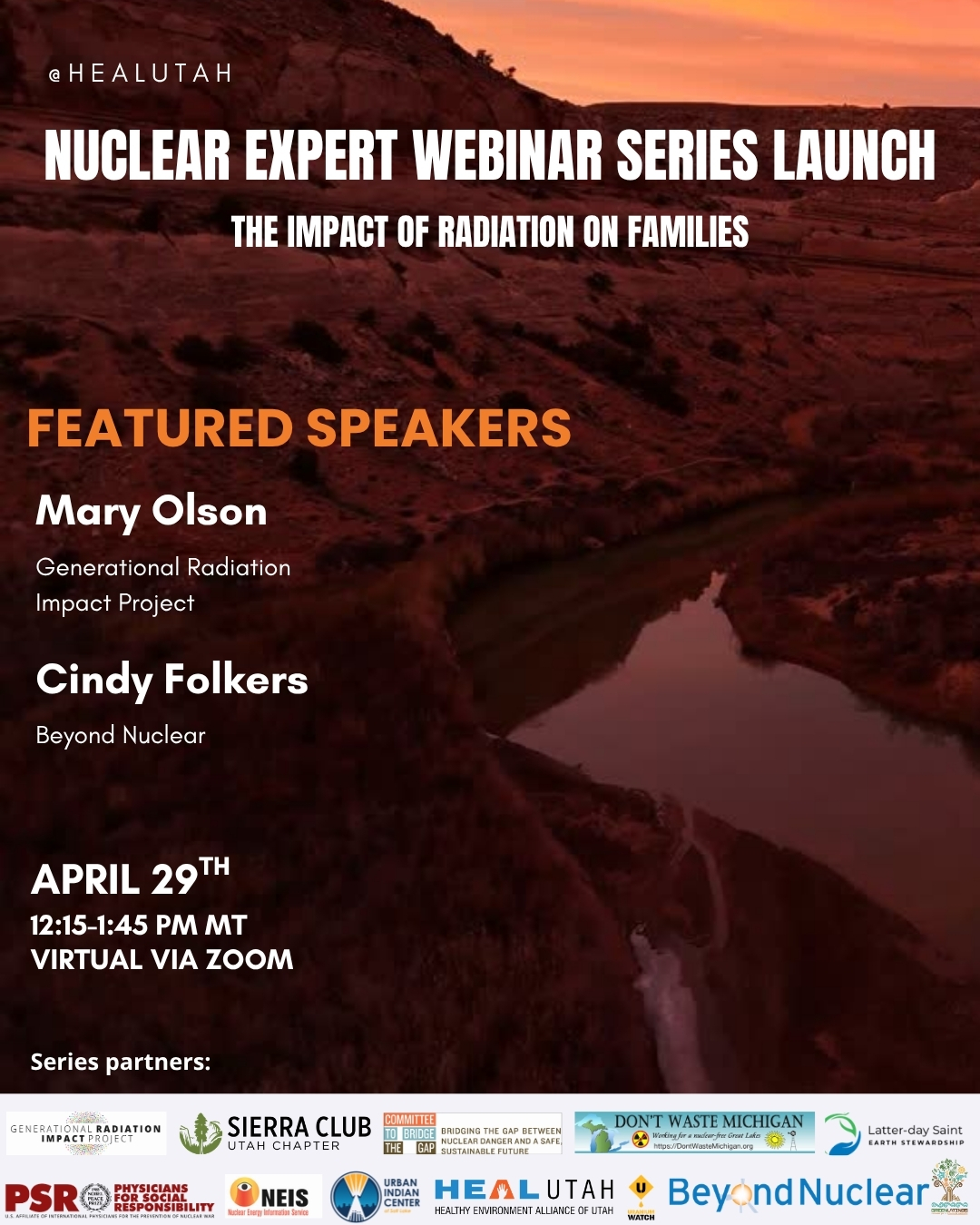
29 April – Nuclear Expert Webinar #1 – Radiation Impacts on Families with Mary Olson and Cindy Folkers
- 12:15 PM MT – 1:45 PM MT
- Location: Virtual – REGISTER TODAY

4 May -West Suburban Peace Coalition to discuss Iran war at May Educational Forum
Monday, May 4, 7:00 – 8:00 PM Central Standard Time
Title: : How Trump’s Narrative Tries to Shape the Reality of the War on Iran.
Contact Walt Zlotow, zlotow@hotmail.com 630 442 3045 for further information
14 May – online event From Bombs to Data Centres: the Face of Nuclear Colonialism

Pine Ridge Uranium is the real threat, not Tehran- Tell Burgum: Stop the Extraction.
Chernobyl: The Lost Tapes – A good documentary on Chernobyl on SBS available On Demand for the next 3 weeks– https://www.sbs.com.au/ondemand/tv-program/chernobyl-the-lost-tapes/2352741955560
To see nuclear-related stories in greater depth and intensity – go to https://nuclearinformation.wordpress.com
-
Archives
- April 2026 (327)
- March 2026 (251)
- February 2026 (268)
- January 2026 (308)
- December 2025 (358)
- November 2025 (359)
- October 2025 (376)
- September 2025 (257)
- August 2025 (319)
- July 2025 (230)
- June 2025 (348)
- May 2025 (261)
-
Categories
- 1
- 1 NUCLEAR ISSUES
- business and costs
- climate change
- culture and arts
- ENERGY
- environment
- health
- history
- indigenous issues
- Legal
- marketing of nuclear
- media
- opposition to nuclear
- PERSONAL STORIES
- politics
- politics international
- Religion and ethics
- safety
- secrets,lies and civil liberties
- spinbuster
- technology
- Uranium
- wastes
- weapons and war
- Women
- 2 WORLD
- ACTION
- AFRICA
- Atrocities
- AUSTRALIA
- Christina's notes
- Christina's themes
- culture and arts
- Events
- Fuk 2022
- Fuk 2023
- Fukushima 2017
- Fukushima 2018
- fukushima 2019
- Fukushima 2020
- Fukushima 2021
- general
- global warming
- Humour (God we need it)
- Nuclear
- RARE EARTHS
- Reference
- resources – print
- Resources -audiovicual
- Weekly Newsletter
- World
- World Nuclear
- YouTube
-
RSS
Entries RSS
Comments RSS
 nuclear-news