Nuclear energy for Colorado? The cost is one very big obstacle
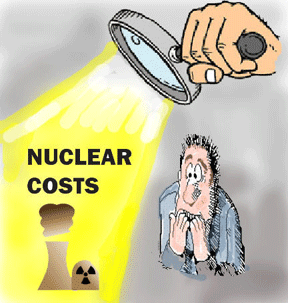
Post Independent, Allen Best 6 Aug 22, A nuclear reactor might be a nice addition to the economy of Craig, the community in northwestern Colorado. But can Colorado afford nuclear power?
……………….Sen. Bob Rankin in the last legislative session tried to get fellow legislators to appropriate $500,000 (amended to $250,000) to study the potential for nuclear.
…………Conspicuously absent was support from the administration of Gov. Jared Polis. The bill failed 3-2 on a party-line vote.
Nuclear has a nagging problem, though. It’s expensive. Advocates rarely mention this. Costs of Georgia’s Plant Vogtle, the only U.S. nuclear power plant under construction, have ballooned from $14 billion to now $30 billion-plus. In South Carolina, investors pulled the plug on a nuclear power plant after spending $9 billion. It has become among the very costliest of energy sources, only slightly less than rooftop solar, according to Lazard, the financial analyst.
Modular nuclear reactors have been promoted as a way to shave costs. Specific projects have been conceived in both Idaho and Wyoming. Bill Gates is an investor in the latter. Maybe they will overcome this cost problem. We won’t really know for another 10, maybe 15 years.
State Sen. Chris Hansen remains skeptical. He has expertise unsurpassed among legislators. He set out to become a nuclear engineer after first laying eyes on a reactor when a high school junior from the farm country of Kansas. He got his degree but had already turned his attention to economics. He went on to earn degrees from the Massachusetts Institute of Technology and, from Oxford, a Ph.D. in resource economics.
Nuclear, he told a county commissioner from Sterling in 2019, when I first heard him answer this question, simply does not compete in cost. Last week, when we talked, he offered more detail.
“I think those technologies will have to prove themselves,” he said of modular nuclear reactors. “Right now, in the best-case scenario it looks like they will deliver electricity at $60 to $70 per megawatt-hour. Wind and solar are coming in at less than $20.”
……….. Hansen suggests that reliability [of rennewables] may more economically be provided by less expensive alternatives. For example, he has pushed transmission and passed legislation to create organized markets that will allow electricity to be moved across broader geographic areas in response to consumer demands. Colorado is currently an island with limited bridges to other areas………… https://www.postindependent.com/opinion/allen-best-nuclear-energy-has-obstacles-too/
Drought may force nuclear power production cut
https://journalrecord.com/2022/08/05/drought-may-force-nuclear-power-production-cut/ Associated Press August 5, 2022 0
PARIS — French Prime Minister Elisabeth Borne warned that France is facing the “most severe drought” ever recorded in the country and announced the activation of a government crisis unit.
The crisis unit will be in charge of monitoring the situation in the hardest-hit areas and coordinate measures like bringing drinking water to some places. It will also monitor the impact of the drought on France’s energy production, transport infrastructure and agriculture.
The drought may force French energy giant EDF to cut power production at nuclear plants which use river water to cool reactors.
France now has 62 regions with restrictions on water usage due to the lack of rain.
Borne said many areas in France are going through a “historic situation” as the country endures its third heatwave this summer.
“The exceptional drought we are currently experiencing is depriving many municipalities of water and is a tragedy for our farmers, our ecosystems and biodiversity,” the statement said.
If we are to survive…we must change course — IPPNW peace and health blog.
[Former IPPNW co-president Ira Helfand, on behalf of the federation, will deliver the following statement today at the Non-Proliferation Treaty (NPT) Review Conference at the United Nations in New York.] More than 50 years ago the nations of the world, understanding the grave existential threat posed by nuclear weapons, came together in this Non-Proliferation Treaty […]
If we are to survive…we must change course — IPPNW peace and health blog
Fukushima Daiichi Nuclear Power Plant “Treated Water” Discharged TEPCO Announces Undersea Tunnel Construction to Begin in 4 Days “Already Started? Citizens were in a state of exasperation

August 3, 2022
TEPCO announced on August 3 that it will begin construction of an undersea tunnel and other facilities on August 4 to discharge contaminated water from the Fukushima Daiichi Nuclear Power Plant (Okuma and Futaba, Fukushima Prefecture) after purification and treatment. The company aims to begin discharging the water next spring, but if the offshore construction is delayed by weather conditions or other factors, the completion of the facilities may be delayed until next summer. However, there is strong opposition to the project, especially from those involved in the fishing industry, and it is unclear whether the facilities will actually be able to discharge the radioactive waste. (Nozomi Masui)
On the 2nd, the prefectural government and both towns in the area agreed to the construction work, and on the 4th, they will begin digging undersea tunnels and laying pipes to transfer treated water from the storage tanks. TEPCO is proceeding with some of the work outside the scope of the consent, and has finished digging the hole that will house the water storage tank that will lead to the undersea tunnel.
At the press conference, Junichi Matsumoto of TEPCO’s Fukushima Daiichi Decommissioning Promotion Company made it clear that “there is no doubt that we will comply with the document with fishermen,” regarding the written promise with the Fukushima Prefectural Fisheries Federation that no ocean discharge would take place unless understanding is obtained. However, he simply reiterated that he would “do his best to explain” how to gain their understanding.
When asked if TEPCO executives would brief fishermen before construction began, he replied, “We have no plans to do so. Meanwhile, Prime Minister Fumio Kishida met with Masanobu Sakamoto, chairman of the National Federation of Fishermen’s Cooperative Associations, on the same day. Regarding a large fund for the continuation of the fishing industry, he said, “We would like to obtain the fishermen’s understanding on how to use the fund after hearing their opinions.
According to TEPCO’s plan, the treated water, which is mainly tritium, will be diluted with a large amount of seawater to less than 1/40th of the national discharge standard, and then discharged through an undersea tunnel about 1 km offshore.
◆”Voices not being heard by the government,” citizens’ group protests.
On March 3, when TEPCO announced the start of construction of facilities to discharge treated water from the Fukushima Daiichi Nuclear Power Plant into the ocean, citizens’ groups in Fukushima Prefecture staged a protest in front of the prefectural government office, and the leaders of local governments where the plant is located asked the government to take thorough measures against harmful rumors.
On the afternoon of the 3rd, the co-chairman of the “Citizens’ Council” Oda, who heard about the plan to start construction on the following day, said, “What, it has already started? Chiyo Oda, 67, co-chairperson of the “Citizens’ Council” in Iwaki City, Fukushima Prefecture, was absolutely stunned. Construction began just two days after Fukushima Prefecture and the towns of Okuma and Futaba agreed to the work. She was concerned that the situation would become so dire that there would be no turning back.

In the morning of that day, the association held a banner in front of the prefectural office to protest. At a press conference held afterward, Mr. Oda said, “The plan is proceeding with the release of the waste. There are so many voices of opposition and concern, but the government is not receiving our voices? Kaoru Watanabe, 66, a resident of Date City in Fukushima Prefecture, expressed his concern, “I’m worried that they will push ahead with the construction work, create a fait accompli, and then push through with the discharge into the ocean.
Fukushima Governor Masao Uchibori, Okuma Mayor Jun Yoshida, and Futaba Mayor Shiro Izawa visited the Ministry of Economy, Trade and Industry and submitted a written request to METI Minister Koichi Hagiuda. Governor Uchibori told the press, “I hope that the government will work together to take the necessary measures (against harmful rumors, etc.) so that the efforts of the people of Fukushima Prefecture will not be undone by the release of the radioactive materials. (Natsuko Katayama, Nozomi Masui)
https://www.tokyo-np.co.jp/article/193622?fbclid=IwAR0TJASuRCsIfHc-zmKUqE7ERgUF3pJNe_vGHn8bYmkFdMTiS5Hn9RYhN5M
TEPCO Starts Construction of Fukushima Water Release Facilities
Get ready for a new wave… of radioactive wastewater!
ineptco’s tunnel will carry the enriched water a whole kilometer from the coast

August 4, 2022
Tokyo Electric Power Company Holdings Inc. on Thursday started the construction of facilities to release treated radioactive water into the ocean from its disaster-crippled nuclear plant in the northeastern Japan prefecture of Fukushima.
TEPCO aims to complete the construction work around next spring, although the company said the completion might be pushed back to around summer next year if the work at sea is delayed due to bad weather or other factors.
There are lingering concerns about negative rumors related to the planned release of the water, which contains tritium, a radioactive substance, into the ocean. Understanding from related local people would be essential for TEPCO to start the water release after the completion of the facilities.
TEPCO will construct an undersea tunnel necessary for releasing the treated water at a point 1 kilometer off the coast. Tanks and pipes will also be set up for stirring the treated water and checking whether radioactive substances other than tritium are below safety standards.

Also, the company will build a facility to dilute the treated water, after its levels of radioactive substances are measured, with seawater to lower the tritium concentration to less than one-40th of the level permitted under Japanese safety standards.
Ministry of the Environment – Draft Demonstration Plan for Reclamation of Removed Soil, Seeking Use as Road Fill

August 4, 2022
The Ministry of the Environment has compiled a draft plan for a demonstration project to recycle removed soil in order to reduce the final disposal volume of waste generated by the decontamination project for the Fukushima Daiichi Nuclear Power Plant accident. The project aims to expand the use of recycled materials based on removed soil at intermediate storage facilities in Fukushima Prefecture (in the towns of Okuma and Futaba), and is exploring the use of the materials for road fill. The design and construction methods and procedures will be studied until October, and construction will be carried out between October and January 2023. The project will be implemented from October to January 2023. After January, various tests and monitoring will be conducted. The project will also conduct demonstrations outside of the prefecture to demonstrate the use of recycled materials for parking lot construction and other purposes.
On March 3, the first meeting of the “Working Group to Study the Recycling of Soil Removal at Interim Storage Facilities” (WG, chaired by Professor Takeshi Katsumi, Graduate School of Global Environmental Studies, Kyoto University) was held in Tokyo, where the draft plan was presented. The WG will organize and evaluate the findings from the demonstration project, and study measures to safely use the removed soil as recycled materials. A practical guide for recycling will also be prepared.
According to the draft plan, recycled materials will be used for roadway fill in the interim storage facility. The road to be used for the general road standards is assumed to be a structure with sidewalks and a daily traffic volume of 4,000 to 20,000 vehicles (Class 3 and Class 2). The road is assumed to be a structure with sidewalks. Evaluation will be conducted after actual construction. The results of the project will be reflected in the guide.
A demonstration project will be conducted outside of Fukushima Prefecture with the aim of realizing final disposal outside of Fukushima Prefecture. Recycled materials will be used for the roadbed of parking lots, and different reclamation patterns will be demonstrated, including differences in pavement and roadbed materials. Cases in which recycled materials are used to create flowerbeds and plazas will also be investigated. During the construction and use of the reclaimed materials, air dose rates in and around the reclaimed areas and radioactive concentrations in seepage water will be measured to confirm safety. Construction will be conducted this year, and monitoring will begin after completion.
A clarification about China and Taiwan
Norman Realname, 5 Aug 22,

I’m grateful to a reader for providing this explanation.
I still think that it’s a pretty bad idea for USA and Australia to start a probable World War 3 over Taiwan.
The Republic of China (ROC) and the People’s Republic of China (PRC) are NOT synonyms and should not be used as such. The ROC has NO control over Hong Kong; it’s a semi-autonomous territory ruled by the PRC under the “one country, two systems” arrangement, as per treaty. Thus, grumbling about democratic subversion aside, there was no question of the PRC’s sovereignty over it.
The ROC, however, DOES have control over Taiwan, and the PRC does NOT. As to why this is the case, the most oversimplified answer is that the Chinese Civil War never fully ended and both governments claim to rule the territory of the other, but since the PRC has the de facto control of almost all of it, it’s recognized as the “real” China. The more complicated answer is that since democratization the ROC government no longer wants to rule the mainland and sees itself as a separate Taiwanese nation but is forbidden to relinquish its territorial claims (under threat of invasion) by the PRC who view Taiwan as integral Chinese territory and would interpret any movement away from them as secession (even though the PRC has never actually ruled over Taiwan).
The US and China differ over their interpretation of the situation. The PRC’s One China PRINCIPLE states that there is only one China, and Taiwan is a part of China. The US’s One China POLICY states that they *acknowledge* the PRC’s position on the matter, without actually saying whether or not they agree that Taiwan is part of China. In other words: the US generally agrees there is only one China, but they’re not sure (read: deliberately ambiguous) whether Taiwan is part of it.
Fundamentally, while the PRC has been successful in preventing international recognition of the ROC (Taiwan), they do not control the territory and cannot control the territory without:
1. The ROC (Taiwanese) government agreeing to hand over power peacefully to the PRC.
2. A full-scale military invasion of Taiwan aimed at the surrender and/or destruction of the ROC (Taiwanese) government.
To compare the situation to Hong Kong, – the crucial difference is the People’s Republic of China did not need to roll in their military to fight some theoretical Hong Kong military in order to be able to tell Hong Kong what to do.
TEPCO gets the go-ahead for first phase of plan to discharge water

August 3, 2022
FUKUSHIMA–Local officials here gave the go-ahead to Tokyo Electric Power Co. to begin preparations to discharge tons of treated but still contaminated water from its stricken Fukushima No. 1 nuclear power plant into the Pacific Ocean.
Approval was given Aug. 2 by Fukushima Governor Masao Uchibori and the mayors of Okuma and Futaba, where the TEPCO plant is located, for the utility to begin work to dig a tunnel from the site and install the necessary equipment.
However, TEPCO still needs to gain the understanding of “interested parties” before any water can be released.
The plan has angered local fishermen concerned about their livelihoods and triggered alarm overseas as the water will still contain a radioactive element, tritium, which is a radioactive isotope of hydrogen, that cannot be removed with current technology.
Thousands of tons of contaminated water have accumulated at the plant that went into triple meltdown in the aftermath of the 2011 earthquake and tsunami disaster, and the facility is fast running out of space to set up more storage tanks.
Tetsu Nozaki, who heads the Fukushima prefectural federation of fisheries cooperatives, told reporters in late July that his organization remains steadfastly opposed to the release of the water into the ocean. Fishermen also are up in arms, fearing the move would only fuel further negative publicity over their fish hauls.
Uchibori and the mayors met Aug. 2 with Tomoaki Kobayakawa, the TEPCO president, and told him they had no issue with the safety of the equipment to be used.
Prior approval of any new equipment TEPCO plans to install at the Fukushima plant is required under a safety agreement the local governments signed with the utility.
Uchibori again pressed TEPCO officials to make an all-out effort to gain the understanding of interested parties so the water release plan can go ahead.
The Nuclear Regulation Authority in July approved TEPCO’s water release plan. Prior to that, Uchibori stated that any decision on approving the new equipment to be installed at the Fukushima plant would be made regardless of opposition among interested parties to the plan.
In August 2015, the government and TEPCO submitted a document to the prefectural fisheries cooperatives federation stating that no water would be treated and released into the ocean without the understanding of the interested parties.
Ironic for Tokyo to caution others on nuclear issue despite Fukushima plan

Aug 03, 2022
Japanese Prime Minister Fumio Kishida urged all nuclear countries to conduct themselves “responsibly” in non-proliferation efforts on Monday when he spoke at the Review Conference of the Parties to the Treaty on the Non-Proliferation of Nuclear Weapons (NPT) at the United Nations in New York.
The NPT Review Conference is held regularly to have discussions focused on the three pillars of nuclear disarmament, nuclear non-proliferation and peaceful uses of nuclear energy.
The issue of releasing nuclear contaminated water from the crippled Fukushima Daiichi nuclear power station is also on the agenda. In his speech, Kishida, who already foresaw related discussion unfavorable to Japan, was giving the runaround to avoid being criticized due to Japan’s extremely irresponsible plan to release contaminated water. In fact, the review conference will be between August 1-26, but Kishida is scheduled to return to Japan on August 2 after delivering his speech on the first day of the conference, at a time when specific discussion of issues on the agenda have not yet begun. No one will be able to find Kishida when the issue of releasing nuclear contaminated water is on the table.
Since its entry into force, the NPT as an international framework has guided various countries to use nuclear science and technology for peace and development. Peaceful use of nuclear energy is allowed, but it’s appalling that Japan decided to discharge nuclear contaminated water into the ocean. But how serious the consequences will be after the actual dump? It will be unpredictable and irreversible.
It’s ridiculous that Japan’s actions, which may have far-reaching impact on the world, have been “approved” and tolerated by the US. In contrast, the leakage of the Chernobyl nuclear power plant in the former Soviet Union is still strongly criticized by the US. This is undoubtedly a double standard. Wang Guangtao, an associated research fellow at the Center for Japanese Studies, Fudan University, believes that geographically speaking, although the US is also a Pacific country, judging from the flow direction and diffusion trajectory of ocean currents, nuclear contaminated water discharged by Japan will first affect Japan’s neighboring countries, not the US on the other side of the Pacific Ocean.
Japan is the only country that experienced the nuclear attack. The US has been reluctant to criticize Japan over the release of nuclear contaminated water because of the sense of guilt and its own dark history in terms of nuclear radiation.
Japan and the US maintain close communication based on the alliance, and the US is bound to side with its Asian ally, rather than listen to the opposition of neighboring countries such as China and South Korea. The possibility that the US and Japan may have reached a deal under the table cannot be ruled out, as Japan, an East Asian country, first informed the US when it decided to release the nuclear contaminated water into the sea. The report released by Japanese expert panel which calculated anticipated radiation dose to the locals after discharging all the water to the sea was soon endorsed by the International Atomic Energy Agency, in which the US is quite influential. This undoubtedly mirrors the hypocrisy of “rules-based international order” the US has vaunted.
Covered up by the US, Japan has been brazenly manipulating the nuclear issue. On the issue of nuclear safety, it is ultimately Japan that should be responsible for the health and safety of all humankind, rather than urging others to act “responsibly” when it’s on the verge of discharging nuclear contaminated water into the ocean.
Fukushima OKs facility construction for treated water release plan

August 2, 2022
Local authorities have approved the construction of an underwater tunnel and other facilities to release treated water from the crippled Fukushima Daiichi nuclear power plant into the ocean.
Officials from Fukushima Prefecture and the towns of Okuma and Futaba, which host the plant, conveyed their decision to the president of Tokyo Electric Power Company on Tuesday.
TEPCO, the operator of the plant, had sought the approval of those authorities based on a safety agreement.
Reactors at the Fukushima Daiichi plant suffered meltdowns in the March 2011 earthquake and tsunami disaster.
Water used to cool molten fuel mixes with rain and groundwater. The accumulated water is treated to remove most of the radioactive materials and stored in tanks on the plant’s premises.
The filtered water still contains tritium. The government plans to dilute the water, so that the percentage of tritium is well below the percentage permitted by national regulations. The amount of tritium in the diluted water is also expected to be below the guidance levels for drinking water quality established by the World Health Organization.
The utility is now set to start full-fledged construction of the underwater tunnel and other facilities. It hopes to complete the work around spring of next year.
In July, the Nuclear Regulation Authority gave its final approval for the plan that TEPCO drew up.
One focal point had been whether the local authorities would approve the plan.
Locals, including fishers, are concerned about potential reputational damage to the region.
Construction of Fukushima water release facilities to begin Thurs.

August 3, 2022
TOKYO (Kyodo) — Construction of facilities to discharge treated water from the crippled nuclear power plant in Fukushima Prefecture into the sea will commence Thursday, according to the plant operator, even as opposition at home and abroad remains.
Tokyo Electric Power Company Holdings Inc. said at a press conference Wednesday it still aims to begin releasing the treated water containing tritium about 1 kilometer off the Pacific coast around next spring after diluting it with seawater to one-40th of the maximum concentration permitted under Japanese regulations.
But the plan could be delayed until next summer due to the tight schedule.
Initially, TEPCO had planned to start constructing the facilities in June but it was only approved in July by the Nuclear Regulation Authority.
The tanks storing treated water on the premises of the Fukushima Daiichi plant are expected to reach full capacity around next fall, according to TEPCO’s calculation.
Construction will start after approval was given earlier in the week by the Fukushima prefectural government and two municipalities hosting the seaside power plant, severely damaged after a massive earthquake and tsunami in March 2011 caused core meltdowns at multiple nuclear reactors.
Water that has become contaminated after being pumped in to keep the melted fuel cool has been accumulating at the complex, also mixing with rainwater and groundwater at the site.
TEPCO and the government still face a tall task to persuade fishing communities in Japan and neighboring China, who continue to oppose the release of the treated water on safety grounds.
“It is important for us to make the best effort to clear various concerns and anxiety over the discharge plan,” a TEPCO official said.
Chinese Foreign Ministry spokeswoman Hua Chunying reiterated her country’s opposition to Japan’s plan, calling it “irresponsible” and saying it takes no heed of concerned countries.
The South Korean government has also been expressing concern following the approval by the NRA, it said it will seek responsible handling of the situation by Japan under the principle that people’s health and safety are of the highest priority.
Taiwan’s nuclear energy council said it respects Japan’s decision as it believes the nuclear regulator made the decision on a legal basis and using its expertise.
Local government chiefs from the prefecture on Wednesday also called on the central government to take measures to prevent reputational damage to marine products, a key issue that severely impacted local businesses in the wake of the Fukushima nuclear disaster.
The mayors of Okuma and Futaba, the two towns hosting the Fukushima plant, and Fukushima Gov. Masao Uchibori made the request during a meeting with Economy, Trade and Industry Minister Koichi Hagiuda in Tokyo.
“The plan has not earned enough understanding from Japanese people and residents of the prefecture, as there are still various opinions including concerns over renewed reputational damage,” Uchibori said at the meeting, which was partially open to the media.
Okuma Mayor Jun Yoshida also urged the government to lead from the front, saying, “We hope people in the disaster-stricken area will no longer suffer from reputational damage.”
Hagiuda responded that the plan will be carried out on the premise of ensuring safety and taking thorough measures to prevent reputational damage, adding, “We will deliver information based on scientific evidence throughout the country and abroad.”
For the fisheries industry that faces the risk of damage caused by harmful rumors, it is important to create an environment where their products are traded at fair prices so young people can continue to operate businesses without worries, the local leaders’ request said.
https://mainichi.jp/english/articles/20220803/p2g/00m/0na/033000c
Construction begins at Fukushima plant for water release
The construction of facilities needed for a planned release of treated radioactive wastewater into the sea next year from the damaged Fukushima nuclear power plant has begun despite opposition from the local fishing community

ByMARI YAMAGUCHI Associated Press
August 04, 2022,
TOKYO — The construction of facilities needed for a planned release of treated radioactive wastewater into the sea next year from the damaged Fukushima nuclear power plant began Thursday despite opposition from the local fishing community.
Plant workers started construction of a pipeline to transport the wastewater from hillside storage tanks to a coastal facility before its planned release next year, according to the plant operator, Tokyo Electric Power Company Holdings.
The digging of an undersea tunnel was also to begin later Thursday.
Construction at the Fukushima Daiichi plant follows the Nuclear Regulation Authority’s formal approval last month of a detailed wastewater discharge plan that TEPCO submitted in December.
The government announced last year a decision to release the wastewater as a necessary step for the plant’s ongoing decommissioning.
A massive earthquake and tsunami in 2011 destroyed the Fukushima Daiichi plant’s cooling systems, causing triple meltdowns and the release of large amounts of radiation. Water that was used to cool the three damaged and highly radioactive reactor cores has since leaked into basements of the reactor buildings but was collected and stored in tanks.
TEPCO and government officials say the water will be further treated to levels far below releasable standards and that the environmental and health impacts will be negligible. Of more than 60 isotopes selected for treatment, all but one — tritium — will be reduced to meet safety standards, they say.
Local fishing communities and neighboring countries have raised concerns about potential health hazards from the radioactive wastewater and the reputation damage to local produce, and oppose the release.
Scientists say the impact of long-term, low-dose exposure to not only tritium but also other isotopes on the environment and humans are still unknown and that a release is premature.
The contaminated water is being stored in about 1,000 tanks that require much space in the plant complex. Officials say they must be removed so that facilities can be built for its decommissioning. The tanks are expected to reach their capacity of 1.37 million tons in autumn of 2023.
TEPCO said it plans to transport treated and releasable water through a pipeline from the tanks to a coastal pool, where it will be diluted with seawater and then sent through an undersea tunnel with an outlet about 1 kilometer (0.6 miles) away to minimize the impact on local fishing and the environment.
TEPCO and the government have obtained approval from the heads of the plant’s host towns, Futaba and Okuma, for the construction, but local residents and the fishing community remain opposed and could still delay the process. The current plan calls for a gradual release of treated water to begin next spring in a process that will take decades.
On Wednesday, Fukushima Gov. Masao Uchibori and the two mayors visited Tokyo and asked Economy and Industry Minister Koichi Hagiuda to ensure safety and prevent further damage to the reputation of Fukushima fishing products.
Akira Ono, TEPCO chief decommissioning officer at the plant, promised the highest efforts to ensure safety and understanding.
“We are aware of various views on reputational impact and safety concerns (of the release) and we’ll keep explaining throughly to stakeholders,” he said.
TEPCO said Wednesday that weather and sea conditions could delay a completion of the facility until summer 2023.
Japan has sought help from the International Atomic Energy Agency to ensure the water release meets international safety standards and reassure local fishing and other communities and neighboring countries, including China and South Korea, that have opposed the plan.
IAEA experts who visited the plant earlier this year said Japan was taking appropriate steps for the planned discharge.
Japan’s Mihama nuclear plant reports radioactive water leak, sparking concerns after Fukushima discharge plan

August 2, 2022
About 10 days after Japan’s nuclear regulator approved the plan to discharge nuclear-contaminated water from the Fukushima power plant, another nuclear power plant in central Japan leaked about seven tons of water containing radioactive elements, sparking wide concern over safety of Japan’s nuclear power plants.
Also, on Tuesday the local government in Fukushima Prefecture agreed to allow Tokyo Electric Power Company (TEPCO) to build facilities to dump the nuclear-contaminated water, Japan’s NHK reported. The Nuclear Regulation Authority of Japan on July 22 officially approved the water discharge plan.
According to the operator Kansai Electric Power Company, about seven tons of radioactive water leaked from Mihama 3 reactor at the Mihama nuclear power plant in Fukui Prefecture on Monday. The amount of radioactivity of the leaked water is about 2.2 million becquerels (Bq).
According to the Waste Management and Recycling Department, Japanese Ministry of the Environment, 100Bq/kg is the standard for safe recycling of waste and 8,000Bq/kg is the standard for safe disposal of waste.
The company claimed that the leak was contained and had no impact on the external environment.
The over 40-year-old reactor is currently out of service. The company is investigating whether the leak will affect the reactor’s scheduled restart in mid-August, Japanese media outlet Sankei News reported.
The aging Mihama 3 reactor has a stained history. In August 2004, a pipeline of the reactor broke down, which killed five and seriously injured six people, according to the Yomiuri Shimbun.
Voices from civil society have expressed their deep concern over the Mihama nuclear power plant.
According to Kyoto Shimbun, a civil group on Friday urged the governor of Shiga Prefecture to publicly announce their opposition to the Kansai Electric Power Company’s plan to restart Mihama 3 in mid-August.
The latest radioactive water leak and the dumping of Fukushima nuclear waste have largely overdrawn the credit of the Japanese authorities and related companies, according to both netizens from Japan and China.
A Japanese netizen said the old Mihama reactor has long been in bad condition. Another Japanese netizen said the accident could be intentional.
“The leak will not affect the outside environment. Really? Japan said the same thing when they decided to dump the Fukushima nuclear-contaminated water into the sea!” said a Chinese netizen.
Zhang Yancang, director of the Yellow Sea and Bohai Sea Research Institute of Dalian Maritime University, told the Global Times on Tuesday that the ocean is not Japan’s sewage disposal site, and the marine ecology is an organic whole, so once the pollution spreads, it may affect the entire body. Most countries, including the US, cannot be immune to it.
According to the United Nations Convention on the Law of the Sea, states should hold an international legal obligation to combat transboundary pollution of the oceans. However, Japan has prepared for a long time to avoid legal responsibility for dumping nuclear-contaminated water and radioactive water leaks, Zhang said.
Fukushima Pref. agrees to discharge treated wastewater, protest rally held in front of Prefectural Office

August 3, 2022
On August 2, Fukushima Prefecture, Okuma Town, and Futaba Town agreed to start construction of a facility to discharge treated water that continues to accumulate at the Fukushima Daiichi Nuclear Power Plant into the sea. Overnight, Governor Uchibori handed a letter of request to Minister of Economy, Trade and Industry Hagiuda, and citizens opposed to the discharge held a protest rally in front of the prefectural government.
On the 2nd, Governor Uchibori, Okuma Mayor Yoshida, and Futaba Mayor Izawa gave their approval to TEPCO’s plan to discharge treated water into the sea and to start construction of the facilities.
From Futaba Town, where the evacuation order will be partially lifted on the 30th of this month, please visit …….
Mayor Izawa of Futaba-machi: “Recognizing that people will actually start living in the town, we ask that you continue to work to ensure that safe and steady decommissioning work at the nuclear power plant proceeds in a systematic manner.
The prior consent was given amidst strong opposition to and concerns about the release of the radioactive waste. Governor Uchibori positioned the approval as follows.
Governor Uchibori: “This is to confirm that the necessary safety measures have been taken for the facilities planned by TEPCO.
When asked about the current lack of understanding of the release, he responded: …….
Governor Uchibori said, “The government and TEPCO are the parties concerned about the handling of the treated water. Today, I asked the president of TEPCO to make further efforts to promote understanding.
On the other hand, the government and TEPCO have promised the fishermen that they will not dispose of the treated water in any way without the understanding of the concerned parties.
President Kobayakawa limited himself to stating that “we will consider the process going forward in consultation with the national government” in determining whether or not understanding has been achieved.
Then, on the 3rd, Governor Uchibori visited the Ministry of Economy, Trade and Industry together with Okuma Mayor Yoshida and Futaba Mayor Izawa, and handed a written request to Minister Hagiuda.
The written request listed five items, including “explanations and understanding of the situation to all parties concerned,” including the agriculture, forestry, and fisheries industries. Governor Uchibori requested a response, stating that “there are a variety of opinions and that the prefectural residents and the public do not have a sufficient understanding.
Minister of Economy, Trade and Industry Hagiuda said, “We will make further efforts to prevent rumors from arising by delivering information based on scientific evidence to many people in Japan and abroad.
Hagita responded that he would provide fishermen, wholesalers, retailers, consumers, and others with opportunities to inspect the nuclear power plant and disseminate information.
After the meeting, Governor Uchibori said, “We talked about how the government should take firm measures so that fishermen in particular, the current generation as well as the future generation, will be able to fish with hope.
Meanwhile, citizens opposed to the discharge gathered in front of the Fukushima prefectural government office to protest the prior consent.
Don’t pollute the sea any more! Terumi Kataoka, Citizens’ Council, said, “What lies ahead of the prior consent is the ocean discharge, and we, the citizens of the prefecture, will not be satisfied with such language. For us, we feel as if we are being treated like fools.
Earlier, the citizens held a press conference and demanded that the prefectural government rescind its consent.
Don’t pollute the sea any more! Chiyo Oda, co-chairperson of the Citizens’ Council of Japan, said, “It is wrong to say that this is indispensable for decommissioning the plant, but to proceed so quickly to discharge the water into the ocean while the final form of the decommissioning process has not been shown.
Under these circumstances, TEPCO has announced that it will begin construction of a tunnel to discharge treated water from the plant on April 4. While insufficient understanding, opposition and concerns remain, only the technical preparations for next spring are steadily advancing.
https://newsdig.tbs.co.jp/articles/tuf/113919?display=1&fbclid=IwAR0B5YBqahK0csgybH7G2qfIMfDbNw0rs0eo3a2quDU3yH-S8TNIsWLsv4M
Resumption of Mihama Nuclear Power Plant Unit 3 delayed due to leakage of water containing radioactive materials, Kansai Electric Power Co.

August 3, 2022
Kansai Electric Power Co. (KEPCO) announced on August 3 that it would postpone the resumption of power dispatch for the Mihama Unit 3 reactor (Fukui Prefecture), which is undergoing routine inspections and was scheduled to restart on August 12. This is due to a leak of water containing trace amounts of radioactive materials in the reactor’s auxiliary building, which has necessitated an investigation into the cause and restoration work. The resumption date has not yet been determined.
According to KEPCO, the leak was discovered during a routine inspection on the morning of January 1, near a device in the auxiliary reactor building that prevents primary cooling water from leaking outside. The amount of leaked water is estimated to be approximately 7 tons. The company claims that the water did not leak outside the building and that there is no environmental impact or radiation exposure to workers.
1 This Month
26 April – Chernobyl: Inside the Meltdown airs on National Geographic on Sunday 26th April from 4pm
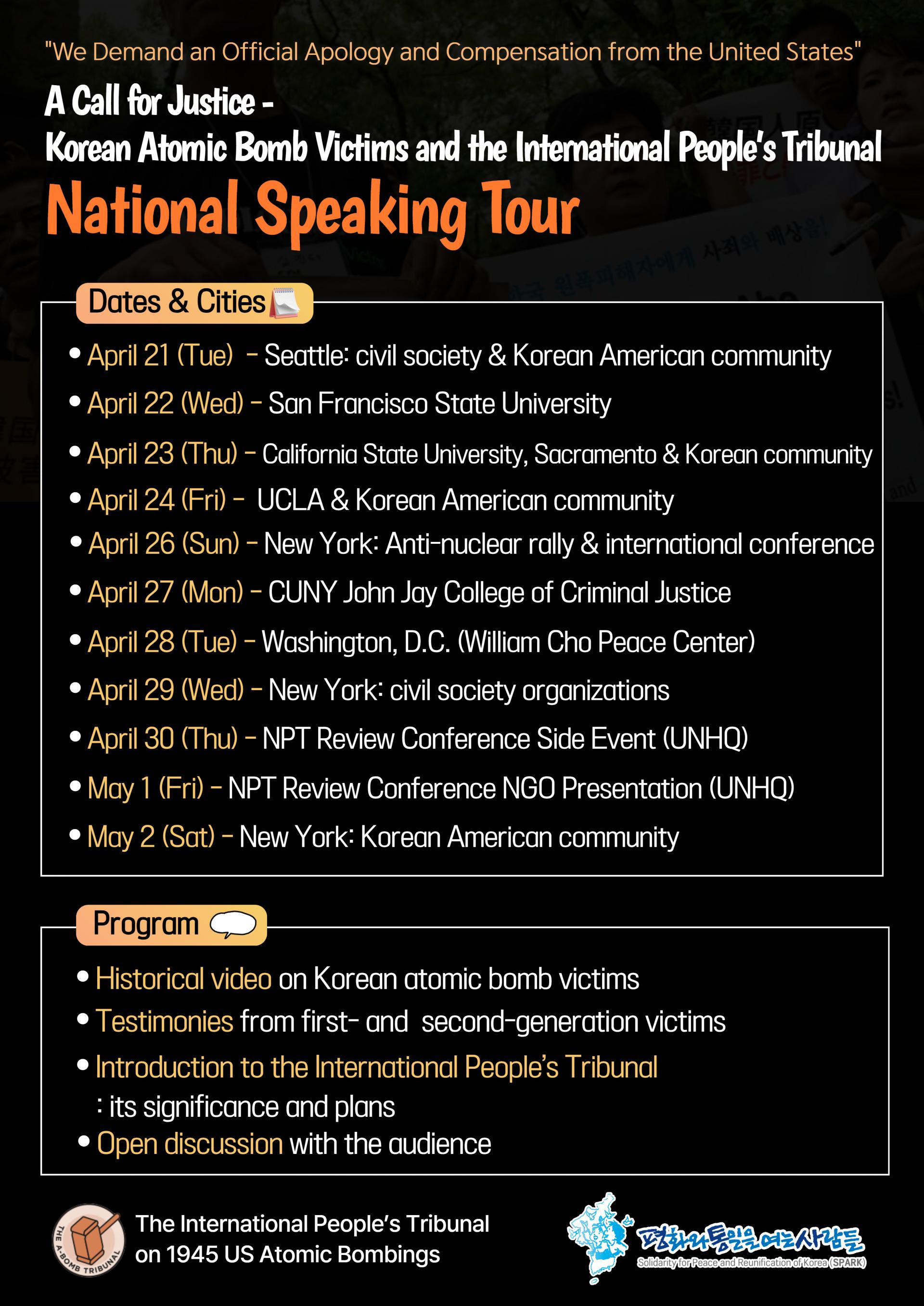
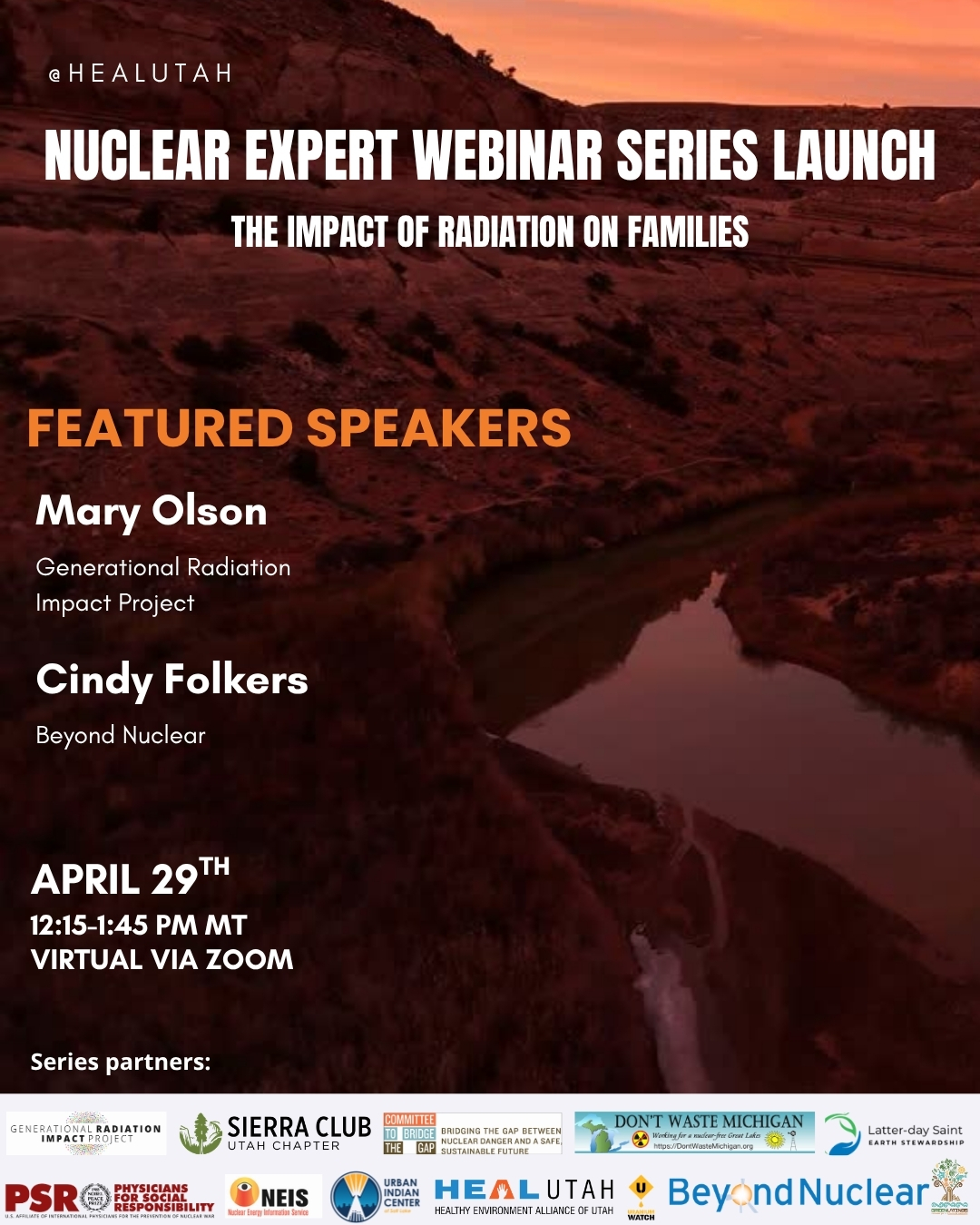
29 April – Nuclear Expert Webinar #1 – Radiation Impacts on Families with Mary Olson and Cindy Folkers
- 12:15 PM MT – 1:45 PM MT
- Location: Virtual – REGISTER TODAY

4 May -West Suburban Peace Coalition to discuss Iran war at May Educational Forum
Monday, May 4, 7:00 – 8:00 PM Central Standard Time
Title: : How Trump’s Narrative Tries to Shape the Reality of the War on Iran.
Contact Walt Zlotow, zlotow@hotmail.com 630 442 3045 for further information
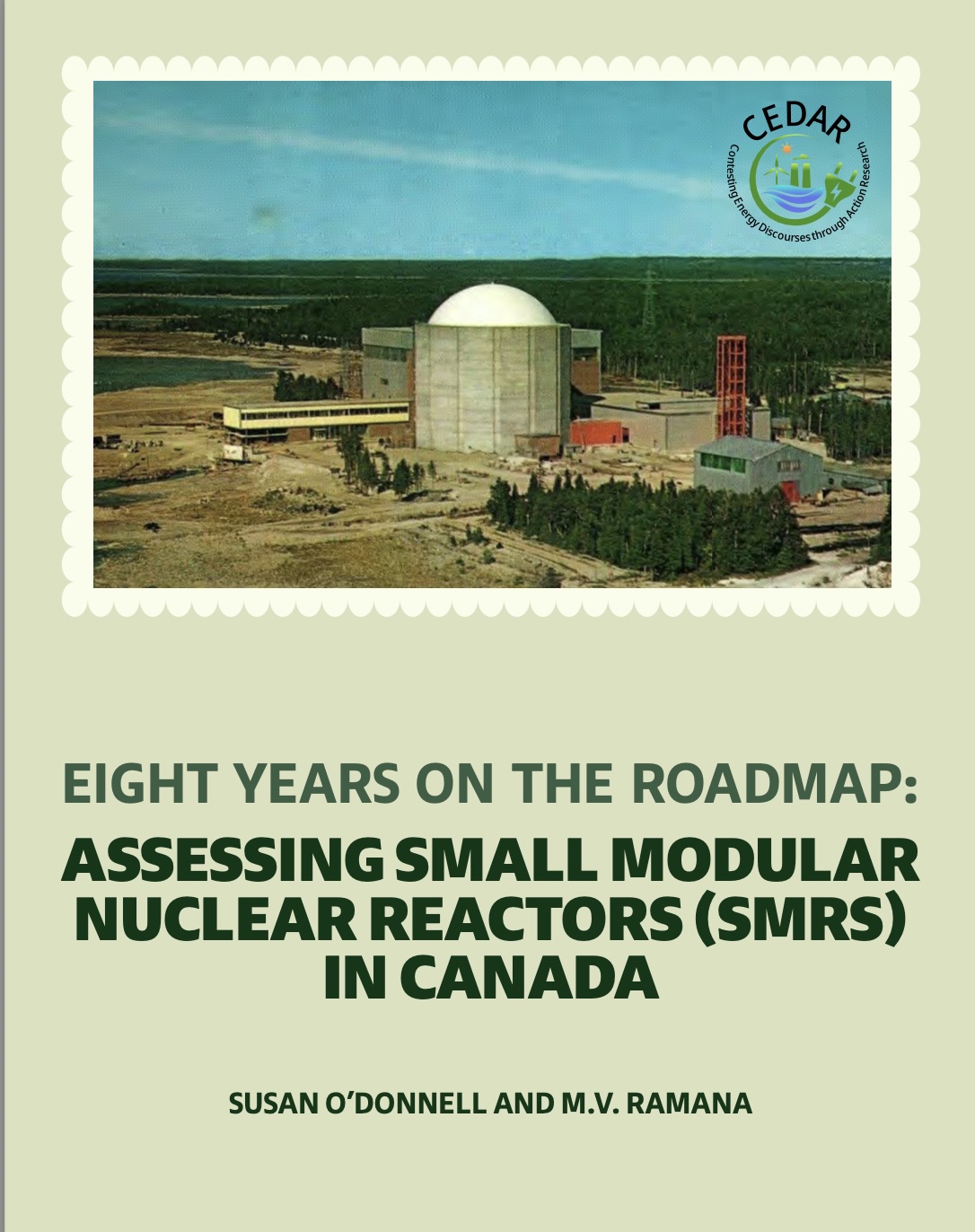
14 May – online event From Bombs to Data Centres: the Face of Nuclear Colonialism

Pine Ridge Uranium is the real threat, not Tehran- Tell Burgum: Stop the Extraction.
Chernobyl: The Lost Tapes – A good documentary on Chernobyl on SBS available On Demand for the next 3 weeks– https://www.sbs.com.au/ondemand/tv-program/chernobyl-the-lost-tapes/2352741955560
To see nuclear-related stories in greater depth and intensity – go to https://nuclearinformation.wordpress.com
-
Archives
- April 2026 (327)
- March 2026 (251)
- February 2026 (268)
- January 2026 (308)
- December 2025 (358)
- November 2025 (359)
- October 2025 (376)
- September 2025 (257)
- August 2025 (319)
- July 2025 (230)
- June 2025 (348)
- May 2025 (261)
-
Categories
- 1
- 1 NUCLEAR ISSUES
- business and costs
- climate change
- culture and arts
- ENERGY
- environment
- health
- history
- indigenous issues
- Legal
- marketing of nuclear
- media
- opposition to nuclear
- PERSONAL STORIES
- politics
- politics international
- Religion and ethics
- safety
- secrets,lies and civil liberties
- spinbuster
- technology
- Uranium
- wastes
- weapons and war
- Women
- 2 WORLD
- ACTION
- AFRICA
- Atrocities
- AUSTRALIA
- Christina's notes
- Christina's themes
- culture and arts
- Events
- Fuk 2022
- Fuk 2023
- Fukushima 2017
- Fukushima 2018
- fukushima 2019
- Fukushima 2020
- Fukushima 2021
- general
- global warming
- Humour (God we need it)
- Nuclear
- RARE EARTHS
- Reference
- resources – print
- Resources -audiovicual
- Weekly Newsletter
- World
- World Nuclear
- YouTube
-
RSS
Entries RSS
Comments RSS
 nuclear-news