Disarmament is the only cure for nuclear weapons
https://www.washingtonpost.com/opinions/2022/08/21/disarmament-is-only-cure-nuclear-weapons/
Gwen DuBois, Baltimore
The writer is a board member of Physicians for Social Responsibility and a member of the steering committee for Back from the Brink.
The Post is to be commended for informing readers about the disturbing study showing nuclear war could lead to mass starvation [“5 billion may starve in nuclear conflict,” news, Aug. 17]. Telling frightening truths should be coupled with hopeful solutions where solutions exist.
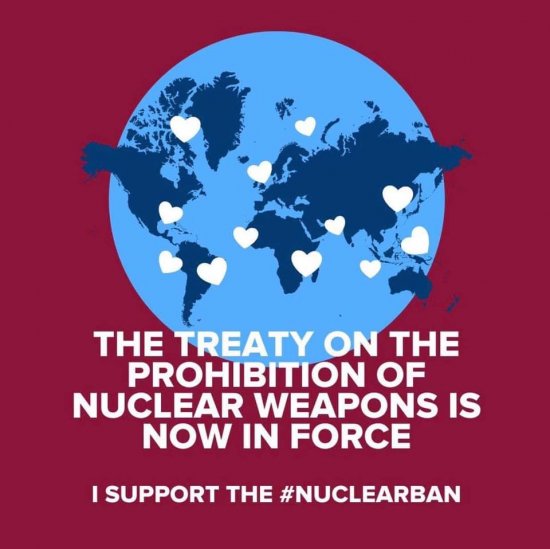
In this case, preventing nuclear war is the way to avoid this horrible possibility of massive global starvation. Internationally, 66 nations have endorsed and 86 nations have signed the United Nations Treaty on the Prohibition of Nuclear Weapons. In this country, about 60 municipalities including Baltimore, D.C., Montgomery County and Chicago and seven state legislatures have approved Back from the Brink Resolutions, a road map to nuclear disarmament. In addition to most resolutions endorsing the U.N. treaty, all urge the United States to lead a global effort to prevent nuclear war by actively pursuing a verifiable agreement with the other nuclear nations to eliminate their nuclear weapons. This is the basic message of Physicians for Social Responsibility: “We must prevent what we cannot cure.”
Ukraine nuclear accident fears heightened
Canberra Times 21 Aug 22, New blasts have resounded in the Russian-annexed Crimea peninsula and a Russian missile hit a residential area of a southern Ukrainian town not far from a nuclear power station, wounding 12 civilians, Russian and Ukrainian officials say.
The strike at the Pivdennoukrainsk (south Ukraine) nuclear station and fresh shelling near the Zaporizhzhia station, Europe’s largest such facility, heightened fears of a nuclear accident during the war, Ukrainian officials said. In Crimea, ….the Russian-appointed governor not recognised by the West said a drone had struck a building near the headquarters of Russia’s Black Sea Fleet on Saturday morning.
“A drone flew onto the roof. It was flying low,” governor Mikhail Razvozhayev said on Telegram. “It was downed right over the Fleet headquarters. It fell on the roof and burned up. The attack failed.”
Ukrainian media reported explosions in nearby towns – including the resorts of Yevpatoriya, Olenivka and Zaozyornoye.
Explosions and fires have struck Crimea in the past week — including a blast at a Russian air base that appeared to destroy large numbers of aircraft according to satellite photos.
Ukrainian officials have made no comment. Analysts have said the attacks were made possible by new equipment used by the Ukrainian army and predicted more would occur………………………………………..
Russia and Ukraine traded fresh accusations of shelling around the Zaporizhzhia station – held by Russia since March.
Vladimir Rogov, a Russia-appointed official in the nearby town of Enerhodar, said Ukrainian forces had launched at least four strikes on the plant. Yevhen Yetushenko, mayor of the Ukrainian-controlled Nikopol on the opposite bank of the Dnipro River, said Russian forces had repeatedly shelled the town.
Talks have been underway for more than a week to arrange for a visit to the plant by the UN nuclear power agency, the International Atomic Energy Agency………………………………….. https://www.canberratimes.com.au/story/7869033/ukraine-nuclear-accident-fears-heightened/
Respite for Japan as radioactive water accumulation slows in Fukushima
Isn’t it a strange coincidence that at the time Tepco is forcing down our throat its plan to dump its “tainted” water into our sea it is now announcing that it has managed to reduce its “tainted” water accumulation, they really think that we are that stupid to not see through their lies, that after 12 years of repeated lies!!!
August 20, 2022
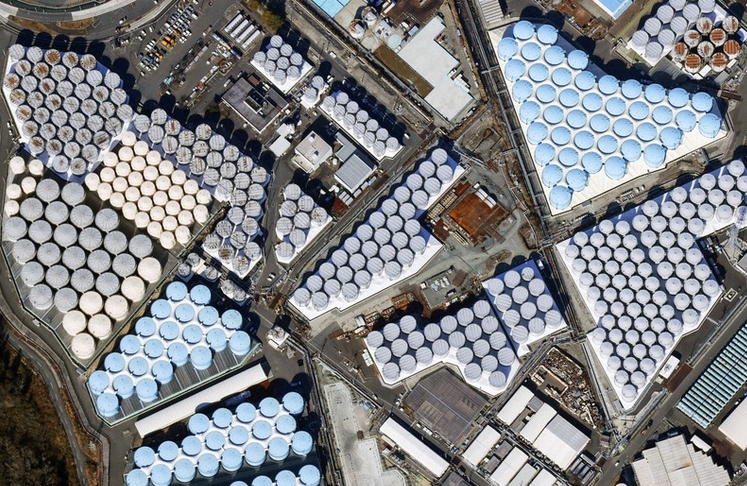
TOKYO (Kyodo) — Tanks containing treated water at the crippled Fukushima nuclear power plant are likely to reach capacity around the fall of 2023, later than the initially predicted spring of next year, as the pace of the accumulation of radioactive water slowed in fiscal 2021.
The slowdown, based on an estimate by operator Tokyo Electric Power Company Holdings Inc., gives some breathing space to Prime Minister Fumio Kishida’s government if any roadblocks are thrown up in the plan to discharge the treated water into the sea starting around spring next year.
China and South Korea as well as local fishing communities that fear reputational damage to their products remain concerned and have expressed opposition to the plan.
About 1.30 million tons of treated water has accumulated at the Fukushima Daiichi plant following the 2011 nuclear disaster, and it is inching closer to the capacity of 1.37 million tons.
The water became contaminated after being pumped in to cool melted reactor fuel at the plant and has been accumulating at the complex, also mixing with rainwater and groundwater.
According to the plan, the water — treated through an advanced liquid processing system, or ALPS, that removes radionuclides except for tritium — will be released 1-kilometer off the Pacific coast of the plant through an underwater pipe.
The International Atomic Energy Agency has been conducting safety reviews of the discharge plan and Director General Rafael Grossi says the U.N. nuclear watchdog will support Japan before, during and after the release of the water, based on science.
An IAEA task force, established last year, is made up of independent and highly regarded experts with diverse technical backgrounds from various countries including China and South Korea.
Japan’s new industry minister Yasutoshi Nishimura says the government and TEPCO will go ahead with the discharge plan around the spring of 2023 and stresses the two parties will strengthen communication with local residents and fishermen, as well as neighboring countries, to win their understanding.
Beijing and Seoul are among the 12 countries and regions that still have restrictions on food imports from Japan imposed in the wake of the massive earthquake and tsunami triggered nuclear meltdowns at the Fukushima plant in March 2011.
“We will improve our communication methods so we can convey information backed by scientific evidence to people both at home and abroad more effectively,” Nishimura said after taking up the current post in a Cabinet reshuffle Wednesday.
Kishida instructed Nishimura to focus on the planned discharge of ALPS-treated water that will be diluted with seawater to one-40th of the maximum concentration of tritium permitted under Japanese regulations, according to the chief of the Ministry of Economy, Trade and Industry.
The level is lower than the World Health Organization’s recommended maximum tritium limit for drinking water.
TEPCO will cap the total amount of tritium to be released into the sea as well.
Meanwhile, the Kishida government has decided to set up a 30 billion yen ($227 million) fund to support the fisheries industry and said it will buy seafood if demand dries up due to harmful rumors.
Fishing along the coast of Fukushima Prefecture, known for high-quality seafood, has been recovering from the reputational damage caused by the nuclear accident but the catch volume in 2021 was only about 5,000 tons, or about 20 percent of 2010 levels.
Construction of discharge facilities at the Fukushima plant started in August, while work to slow the infiltration of rain and groundwater was also conducted.
TEPCO said it was able to reduce the pace of accumulation of contaminated water by fixing the roof of a reactor building and cementing soil slopes around the facilities, among other measures, to prevent rainwater penetration.
The volume of radioactive water decreased some 20 tons a day from a year earlier to about 130 tons per day in fiscal 2021, according to the ministry.
The projected timeline to reach the tank capacity has been calculated based on the assumption that about 140 tons of contaminated water will be generated per day, according to METI.
However, storage tanks could still reach their capacity around the summer of next year if heavy precipitation or some unexpected events occur, the ministry said.
As part of preparations for the planned discharge, the Environment Ministry has started measuring tritium concentration at 30 locations on the surface of the sea and seabed around the Fukushima plant, four times a year.
Similarly, the Nuclear Regulation Authority has increased the number of locations it monitors tritium levels by eight to 20. The Fisheries Agency has started measuring tritium concentration in marine products caught along the Pacific coast stretching from Hokkaido to Chiba Prefecture.
Given that it is expected to take several decades to complete the release of treated water, NRA and METI officials urged TEPCO to further curb the generation of contaminated water at the plant.
“We want TEPCO to step up efforts so as to lower the volume of the daily generation of contaminated water to about 100 tons or lower by the end of 2025,” a METI official said.
https://mainichi.jp/english/articles/20220819/p2g/00m/0na/039000c
Japan’s industry minister visits crippled Fukushima plant amid controversial plan to dump radioactive wastewater into sea

August 18, 2022
TOKYO, Aug. 18 (Xinhua) — Japan’s industry minister visited the crippled Fukushima nuclear power plant Thursday to see the extent of the damage caused by the March 2011 tsunami-triggered nuclear disaster, and assess the complications still facing the plant and its decommissioning efforts.
During his visit, Yasutoshi Nishimura, who received his new ministerial portfolio in a cabinet reshuffle last week, was also scheduled to hold talks with officials from Tokyo Electric Power Company Holdings Inc. (TEPCO), the operator of the plant, and meet with local government officials.
His visit was made amid a myriad of challenges facing the plant including from a controversial plan for radioactive wastewater to be discharged into the Pacific Ocean.
The mayors of two towns hosting the Fukushima Daiichi nuclear power plant have urged the central government to take steps to protect the reputation of the region’s marine products under the plan to dump radioactive water from the plant into the sea.
Fukushima Governor Masao Uchibori believes the contentious plan has not earned enough understanding from the Japanese people and residents of the prefecture, as there are still various opinions including concerns over renewed reputational damage.
Okuma Mayor Jun Yoshida, meanwhile, has voiced concerns that the already maligned region will once again have its reputation damaged, and also urged the central government to take steps to prevent damage to the northeast region’s reputation.
Under the plan, the water, which contains hard-to-remove radioactive tritium as a result of being used to cool down melted nuclear fuel at the stricken plant, will be discharged through an underwater tunnel one kilometer off the Pacific coast into the ocean after being treated.
The plant had its key cooling functions knocked out after being battered by a massive earthquake-triggered tsunami over a decade ago, resulting in the worst nuclear crisis since Chernobyl in 1986.
The tainted water being stored in tanks at the plant is expected to reach capacity next year and the lengthy process of then dumping the radioactive water into the ocean is projected by TEPCO to take several decades, beginning next spring.
Japan’s fisheries industry, for instance, has maintained its ardent opposition to the plan, as it will almost certainly cause further damage to the industry’s reputation in the region.
A number of countries and regions continue to impose restrictions on Japanese agricultural and fishery products as a result of the initial Fukushima crisis amid continued concerns about the safety of the produce.
Japan’s controversial plan to dump radioactive wastewater into the Pacific ocean has raised concerns from the international community, including from Japan’s neighbors, over its impacts on the global marine environment and the public health of Pacific-rim countries. The Japanese side has been asked to earnestly fulfill its due international obligations, dispose of the nuclear-contaminated water in a science-based, open, transparent and safe manner, and stop pushing through the plan to discharge the water into ocean.
https://english.news.cn/20220818/c1a7c11078c6427ebdd74f3bceec40c7/c.html
Japan’s industry minister inspects crippled Fukushima nuclear plant
Another euphemism, “concerns”, not concerns just plain opposition. Damn hypocrites!

Aug 18, 2022 Japan’s industry minister Yasutoshi Nishimura inspected the crippled Fukushima nuclear power plant Thursday, his first visit since assuming the position last week, to assess the progress of decommissioning and the ongoing challenges stemming from the March 2011 nuclear disaster. Nishimura met with officials of Tokyo Electric Power Company Holdings Inc., operator of the Fukushima Daiichi plant, and chiefs of local governments and the prefectural assembly, as his ministry faces multiple challenges such as a plan to discharge treated water containing trace amounts of tritium into the sea.
“I will give my best in gaining understanding on safety (of the discharge plan) and preventing reputational damage” to local businesses, Nishimura said at a meeting with Fukushima Gov. Masao Uchibori, which was partly open to the press.
Nishimura was named as chief of the Ministry of Economy, Trade and Industry in the Aug. 10 Cabinet reshuffle.
Earlier in the month, local government chiefs from the prefecture called on the central government to take measures to prevent reputational damage to local businesses selling marine products, a key concern among the fisheries industry which opposes the discharge expected to begin next spring.
The request was made by the mayors of Okuma and Futaba, the two towns hosting the Fukushima plant, and the Fukushima governor during a meeting in Tokyo with Nishimura’s predecessor Koichi Hagiuda, now chairman of the ruling Liberal Democratic Party’s Policy Research Council.
The local government heads have also urged the central government to create an environment where marine products are traded at fair prices so that residents, particularly young people, can operate competitive businesses.
According to the discharge plan, the water — treated through a processing system that removes radionuclides except for tritium — will be released 1-kilometer off the Pacific coast of the plant through an underwater pipe.
While construction of discharge facilities is under way following approval of the plan by the Nuclear Regulation Authority, neighboring China continues to oppose the release of the treated water.
South Korea has also expressed concerns over the plan.
Japan’s plan for radioactive water defies international law
August 21, 2022
By Duncan E. J. Currie and Shaun Burnie

Millions of tons of highly contaminated water from Fukushima Daiichi being discharged into the Pacific Ocean not only poses a threat to humans and the environment, but also raises questions on how the decision by the Japanese government relates to international law.
What we conclude is that the decision by the Japanese government to treat and then release radioactive water at Fukushima into the ocean would pose a direct threat to the marine environment, including that of the jurisdictional waters of the Korean peninsula. As such, Japan would be in breach of its obligations as defined under international environmental law, including the United Nations Convention on the Law of the Sea (UNCLOS).
Consequently, the Korean government has the legal right to oppose the discharging of radioactive water from the Fukushima Daiichi nuclear plant.
The discharge of radioactive materials into the marine environment from the nuclear plant will inevitably increase marine species’ exposure to radioactivity, with the exact level of exposure depending on multiple variables. The concentrations in biota are of direct relevance to those who may consume them, including marine species, and ultimately, humans.
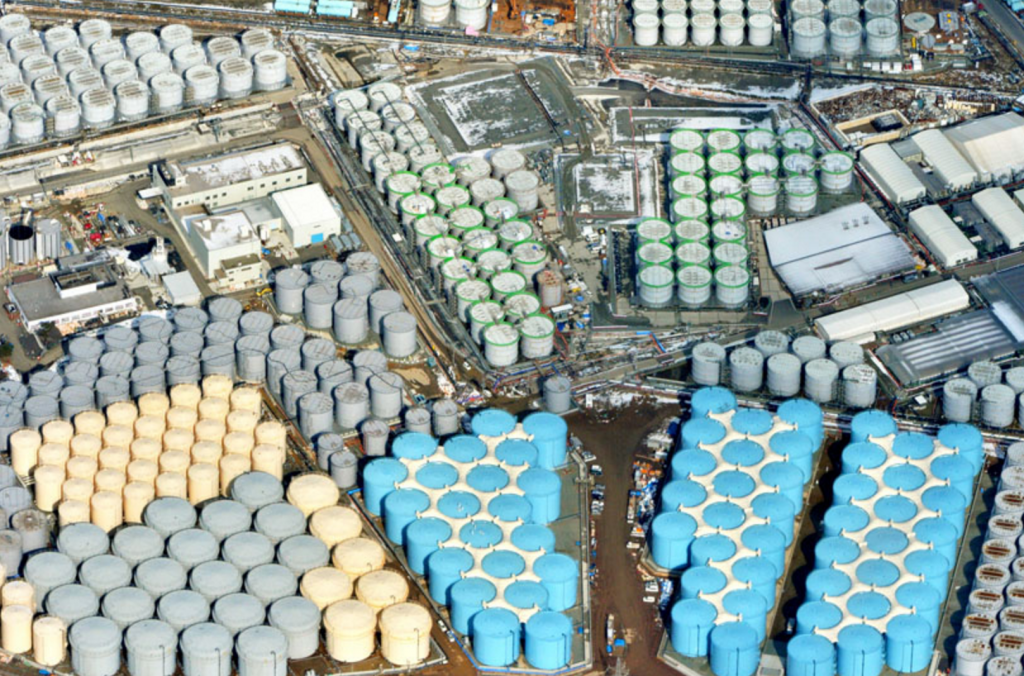
The one million tons of highly contaminated water stored in nearly 1000 tanks at the Fukushima Daiichi nuclear plant currently contain concentrations of radioactive tritium much higher than is permitted by Japanese regulation for discharge into the ocean. One principle concern is that the high relative biological effectiveness (RBE) of tritium’s beta radiation, its ability to bind with cell constituents to form organically-bound tritium (OBT) and its short-range beta particle, mean that it can damage DNA.

The water also contains other radionuclides in addition to tritium, including the very hazardous Strontium-90. Strontium-90 poses a major health risk as it is absorbed by the body in a similar manner to calcium, where it increases the risk of developing leukemia.
A further major problem is that the processing technology used at Fukushima Daiichi ― specifically the Advanced Liquid Processing System (ALPS) ― failed to operate effectively, and therefore around 800,000 tons of the water contains even higher amounts of radioactive material, including Sr-90. There are an estimated 30,000 Megabecquerels of Strontium90 in the storage tanks.
To give some perspective on this amount of strontium-90 ― it is what an average Pressurized Water Reactor would discharge in its liquid waste if it were to operate for 120,000 years. This is more than half the number of years humans have inhabited the earth. Even more threatening is that these discharges are only a small fraction of the radioactive inventory of what remains at the destroyed nuclear site. Most Strontium-90 still remains in the molten cores at the site ― an amount 17.3 million times more than would be released under the Japanese government’s plans for the contaminated water. And there are many other radionuclides present in the contaminated water with even longer half-lives ― the time is takes for one-half of the radioactive material to decay ― including iodine-129, which has a half-life of 13 million years.
For South Korea, the impacts of this radiation exposure are of great importance to its fishing communities, the wider population and the government. The toxic cocktail of radionuclides from Fukushima Daiichi will rapidly disperse through the strong coastal currents along Japan’s Pacific coast, and enter the East Sea via the East China Sea, including the waters of the Korean peninsula. We know this as a result of sea water sampling following the March 2011 nuclear disaster.
In addition to the requirements under the U.N. International Maritime Organization (IMO), Japan is required to comply with international law that prohibits significant trans-boundary environmental harm, both to the territory of other States and to areas beyond national jurisdiction. Before any discharge into the Pacific Ocean, Japan is required to conduct an Environment Impact Assessment under Article 206 of UNCLOS. International radio-protection principles require that a decision to increase radioactivity in the environment must be justified, and if there is a viable alternative ― in this case long-term storage ― it cannot be justified.
There never was a rationale for further, deliberate radioactive pollution of the marine environment from Fukushima Daiichi. In the interests of protection of that environment as well as public safety, and to ensure compliance with its international legal obligations, the only acceptable way forward for the Japanese government is to terminate its discharge plans. There is a clear alternative to discharging over one million tons of highly contaminated water into the environment, which is to securely store the water in robust tanks for the long term (hundreds of years). In parallel, the best available technology should be applied for further processing to remove all radionuclides.
Authors
Duncan Currie is a practicing international and environmental lawyer. He has practiced international law and environmental law for nearly thirty years, and over that time has advised NGOs, corporations and governments on a wide range of environmental issues including the law of the sea, nuclear and waste issues.
Shaun Burnie is a senior nuclear specialist with Greenpeace Germany, with much of his time based in Japan. He has worked on nuclear issues in Asia, the former Soviet Union, Europe, North and South America and the Middle East for 35 years. He worked against the operation of the TEPCO Fukushima Daiichi reactors since 1997.
EDITORIAL: TEPCO must be candid on plan to discharge “tainted” water into ocean
Tainted, what an euphemism!

August 17, 2022
Radiation-contaminated water is still being produced in the Fukushima No. 1 nuclear power plant operated by Tokyo Electric Power Co.
Progress is being made on the government’s plan to release treated water into the ocean, and local governments have approved the construction of pertinent facilities.
However, local opposition to the project remains fierce, particularly from the fisheries industry.
The central government and TEPCO must spare no effort to thoroughly explain the project to the parties concerned, as well as to the rest of the nation and the world.
At the crippled plant, groundwater is continuing to mix into cooling water for melted nuclear fuel, raising the volume of radiation-contaminated water by about 130 tons a day.
The contaminated water is treated to remove most of its radioactive content and is kept in storage tanks.
But with the existing tanks now nearly full, the government decided in spring last year to dilute the stored water with seawater and discharge it into the sea, fearing that building more storage tanks could affect post-disaster recovery work.
TEPCO is currently proceeding with preparations for the offshore discharge about 1 kilometer from the plant.
The Nuclear Regulation Authority approved the plan last month, saying it saw no safety issues.
NRA Chairman Toyoshi Fuketa told a news conference, “While I recognize opposition to the plan, the offshore discharge (of treated water) cannot be avoided if we are to proceed with the decommissioning of reactors.”
Residual tritium in the treated water is released into the sea by active nuclear power stations in and outside Japan.
The government’s plan is to dilute the tritium content to less than one-40th of the national standard, and keep the annual release volume below the pre-accident level.
The International Atomic Energy Agency noted in its report in April to the effect that the radiological impact on the public was expected to be very low and significantly below the level set by the Japanese regulatory body.
The Fukushima prefectural government and the municipal governments of Okuma and Futaba–which co-host the Fukushima No. 1 plant–approved the construction of discharge facilities in early August.
Two days later, TEPCO advanced the project to the phase of actual construction of an undersea tunnel through which the treated water will be released into the ocean.
But the local fisheries industry and other opponents of the project are not yielding an inch. They claim that even though the radiation level is below the required safety standard, anything that is being discharged from the crippled plant cannot be considered completely safe and can cause damage due to rumors or misinformation.
In fact, when the NRA solicited opinions from the public, all sorts of questions and negative comments were sent in.
In 2015, the government and TEPCO promised the fishing industry that “no treated water will ever be discharged without the understanding of the parties concerned.” This is the kind of promise they must not be allowed to renege on.
TEPCO says that it fully understands the “importance of explaining everything thoroughly” and will provide information on its official website. Of course, the company must be completely open and be willing to answer questions.
But its trustworthiness is suspect, as the utility proceeded with its tunnel construction project as soon as it was approved by the local governments.
If TEPCO genuinely wants the understanding of the parties concerned, it must listen directly to people’s questions and opposing views and strive to keep up the conversation.
As if causing an unprecedented nuclear disaster at Fukushima wasn’t bad enough, the damage compensations that TEPCO made to victims were hardly generous, and the company even kept up wrongful practices at its other nuclear power stations.
Unless TEPCO makes every imaginable effort, we doubt it will ever be able to build a relationship of trust with local communities.
It is time for the utility’s president and top executives to consider holding candid, face-to-face meetings with fisheries industry representatives and local residents.
Japan Govt./TEPCO Say Solution to Pollution is Dilution, as Plan to Dump Fukushima Wastewater to Pacific Moves Ahead

August 15, 2022
Fukushima Prefecture, Japan — Japan’s Nuclear Regulation Authority has formally endorsed a controversial plan by TEPCO (Tokyo Electric Power Company) — the operator of the Fukushima Daiichi nuclear power plant — to start dumping more than a million tons of radioactive wastewater from the plant into the Pacific Ocean within the next two years. The plant was crippled in 2011 by an earthquake and tsunami that caused a disastrous triple meltdown. TEPCO claims it’s now running out of room to continue storing the wastewater onsite, but expert critics of the plan say that’s not really true.
The unprecedented disposal plan is expected to last for decades, with the wastewater to be pumped through a half mile long undersea tunnel that has yet to be constructed. The International Atomic Energy Agency (IAEA) signed off on the scheme last year, with IAEA Director General Rafael Mariano Grossi declaring that ocean disposal would be “both technically feasible and in line with international practice.” Yet, Grossi also admitted “the large amount of water at the Fukushima plant makes it a unique and complex case.”
This leaves opponents of the plan with no other regulatory recourse. Those opposed include Greenpeace Japan, human rights experts from the United Nations (UN), the government of China (which has deemed the strategy “extremely irresponsible”), as well as labor unions in the Japanese fishing industry.
Japanese fishermen fear that seafood will be contaminated by tritium in the wastewater — a radioactive isotope that cannot be removed through filtering. Japanese regulators have claimed the tritium will be diluted below 1/40th of the allowable level for discharge in Japan and to 1/7th of the World Health Organization’s (WHO) ceiling for drinking water.
The Japanese government has put forth a relief plan to assist the fishing industry, saying last year that it will create a fund to buy and store freezable seafood from fishermen whose sales drop due to reputational damage from the discharges from Fukushima. The details on the plan remain murky though, as does the wastewater’s potential damage to the food chain.

55 countries and regions including the United States imposed restrictions on the import of Japanese seafood in the wake of the Fukushima meltdowns, but only five of them still have import bans in place (China, South Korea, Taiwan, Hong Kong and Macau.)
EnviroNews reached out to the IAEA but the agency did not respond to a query about their endorsement of the controversial plan, while the U.S. Nuclear Regulatory Commission (NRC) predictably deflected toward the IAEA.
“The United States is confident the Government of Japan, in collaboration with the International Atomic Energy Agency, has weighed all available options and has taken all appropriate international guidelines into consideration in its decision-making process. We understand the IAEA will continue to work closely with the Government of Japan to ensure the adopted approach is in accordance with globally accepted nuclear safety standards,” U.S. NRC Public Affairs Officer Scott Burnell told EnviroNews by email.
Greenpeace has another view, condemning the dumping plan and insisting TEPCO’s claim about running out of storage space at Fukushima simply isn’t true.
In the wake of the IAEA’s endorsement of the scheme last year, Greenpeace Japan’s Climate/Energy Campaigner Kazue Suzuki said this:
“The Japanese government has once again failed the people of Fukushima. The government has taken the wholly unjustified decision to deliberately contaminate the Pacific Ocean with radioactive wastes. It has discounted the radiation risks and turned its back on the clear evidence that sufficient storage capacity is available on the nuclear site as well as in surrounding districts. Rather than using the best available technology to minimize radiation hazards by storing and processing the water over the long term, they have opted for the cheapest option, dumping the water into the Pacific Ocean.”
Several human rights experts from the United Nations’ Human Rights Council have also expressed concern and regret at Japan’s dumping strategy with the three Special Rapporteurs saying this in a statement last year:
“Japan has noted that the levels of tritium are very low and do not pose a threat to human health. However, scientists warn that the tritium in the water organically binds to other molecules, moving up the food chain affecting plants and fish and humans. They say the radioactive hazards of tritium have been underestimated and could pose risks to humans and the environment for over 100 years.”
Nuclear engineer and Fairewinds Energy Education board member Arnie Gundersen has visited the Fukushima site four times over the past decade and concurs with the Greenpeace assessment. In an interview with EnviroNews, he pointed out how the land next to the nuclear plant could be utilized for further storage of the contaminated water.
“There’s vast amounts of pasture land, immediately adjacent, that [are] highly contaminated… so they’re not going to use it for anything,” Gundersen told EnviroNews. “So, they could build more tanks, but it’s cheaper for them to dump it than to build more tanks.”
Gundersen also takes issue with TEPCO’s claim that the proposed dumping scheme will only involve a release of tritium, noting that there are still other radioactive isotopes of concern.
“They’re trying to portray this as a tritium release, but in fact there are other isotopes in the water in addition to tritium. There’s strontium and cesium and things like that,” Gundersen said. “The isotope of concern for me is Strontium 90, which is classified as an HDT – which stands for hard to detect.”
Gundersen noted that strontium is “a bone-seeker” that causes leukemia and is difficult to detect because it emits a beta particle that is similar to other elements emitted at the same frequency. As to the tritium, he noted that it’s naturally occurring in very low quantities so that measurements won’t find an appreciable increase 100 to 200 miles away from where TEPCO is planning the discharge. The dump-zone itself however, is another story.
“200 miles of ocean is an awful lot to contaminate because you’re too cheap to build more tanks,” Gundersen asserted. He pointed out that tritium has a 12-year half-life, meaning that the contamination level would decrease by 50 percent in 12 years, 75 percent in 24 years, and would be considered decayed by 120 years.
Gundersen says the IAEA’s claim that TEPCO’s dumping plan is in line with international practice is another blatant falsehood.
“It’s not in line with international practice. You’re talking about dumping a thousand tanks of thousands of tons [of contaminated wastewater] per tank into the ocean. Nobody’s doing that, it’s never been done,” Gundersen rebuffed, adding that the IAEA is more concerned about protecting the image of the nuclear power industry than they are about protecting the oceans and the food chain.
- bureau EnviroNews World News
- by Greg Schwartz
- on August 15, 2022
- Leave a comment

(EnviroNews World News) — Fukushima Prefecture, Japan — Japan’s Nuclear Regulation Authority has formally endorsed a controversial plan by TEPCO (Tokyo Electric Power Company) — the operator of the Fukushima Daiichi nuclear power plant — to start dumping more than a million tons of radioactive wastewater from the plant into the Pacific Ocean within the next two years. The plant was crippled in 2011 by an earthquake and tsunami that caused a disastrous triple meltdown. TEPCO claims it’s now running out of room to continue storing the wastewater onsite, but expert critics of the plan say that’s not really true.
The unprecedented disposal plan is expected to last for decades, with the wastewater to be pumped through a half mile long undersea tunnel that has yet to be constructed. The International Atomic Energy Agency (IAEA) signed off on the scheme last year, with IAEA Director General Rafael Mariano Grossi declaring that ocean disposal would be “both technically feasible and in line with international practice.” Yet, Grossi also admitted “the large amount of water at the Fukushima plant makes it a unique and complex case.”
This leaves opponents of the plan with no other regulatory recourse. Those opposed include Greenpeace Japan, human rights experts from the United Nations (UN), the government of China (which has deemed the strategy “extremely irresponsible”), as well as labor unions in the Japanese fishing industry.
Japanese fishermen fear that seafood will be contaminated by tritium in the wastewater — a radioactive isotope that cannot be removed through filtering. Japanese regulators have claimed the tritium will be diluted below 1/40th of the allowable level for discharge in Japan and to 1/7th of the World Health Organization’s (WHO) ceiling for drinking water.
The Japanese government has put forth a relief plan to assist the fishing industry, saying last year that it will create a fund to buy and store freezable seafood from fishermen whose sales drop due to reputational damage from the discharges from Fukushima. The details on the plan remain murky though, as does the wastewater’s potential damage to the food chain.
55 countries and regions including the United States imposed restrictions on the import of Japanese seafood in the wake of the Fukushima meltdowns, but only five of them still have import bans in place (China, South Korea, Taiwan, Hong Kong and Macau.)
EnviroNews reached out to the IAEA but the agency did not respond to a query about their endorsement of the controversial plan, while the U.S. Nuclear Regulatory Commission (NRC) predictably deflected toward the IAEA.
“The United States is confident the Government of Japan, in collaboration with the International Atomic Energy Agency, has weighed all available options and has taken all appropriate international guidelines into consideration in its decision-making process. We understand the IAEA will continue to work closely with the Government of Japan to ensure the adopted approach is in accordance with globally accepted nuclear safety standards,” U.S. NRC Public Affairs Officer Scott Burnell told EnviroNews by email.
Greenpeace has another view, condemning the dumping plan and insisting TEPCO’s claim about running out of storage space at Fukushima simply isn’t true.
In the wake of the IAEA’s endorsement of the scheme last year, Greenpeace Japan’s Climate/Energy Campaigner Kazue Suzuki said this:
The Japanese government has once again failed the people of Fukushima. The government has taken the wholly unjustified decision to deliberately contaminate the Pacific Ocean with radioactive wastes. It has discounted the radiation risks and turned its back on the clear evidence that sufficient storage capacity is available on the nuclear site as well as in surrounding districts. Rather than using the best available technology to minimize radiation hazards by storing and processing the water over the long term, they have opted for the cheapest option, dumping the water into the Pacific Ocean.
Several human rights experts from the United Nations’ Human Rights Council have also expressed concern and regret at Japan’s dumping strategy with the three Special Rapporteurs saying this in a statement last year:
Japan has noted that the levels of tritium are very low and do not pose a threat to human health. However, scientists warn that the tritium in the water organically binds to other molecules, moving up the food chain affecting plants and fish and humans. They say the radioactive hazards of tritium have been underestimated and could pose risks to humans and the environment for over 100 years.
Nuclear engineer and Fairewinds Energy Education board member Arnie Gundersen has visited the Fukushima site four times over the past decade and concurs with the Greenpeace assessment. In an interview with EnviroNews, he pointed out how the land next to the nuclear plant could be utilized for further storage of the contaminated water.
“There’s vast amounts of pasture land, immediately adjacent, that [are] highly contaminated… so they’re not going to use it for anything,” Gundersen told EnviroNews. “So, they could build more tanks, but it’s cheaper for them to dump it than to build more tanks.”
Gundersen also takes issue with TEPCO’s claim that the proposed dumping scheme will only involve a release of tritium, noting that there are still other radioactive isotopes of concern.
“They’re trying to portray this as a tritium release, but in fact there are other isotopes in the water in addition to tritium. There’s strontium and cesium and things like that,” Gundersen said. “The isotope of concern for me is Strontium 90, which is classified as an HDT – which stands for hard to detect.”
Gundersen noted that strontium is “a bone-seeker” that causes leukemia and is difficult to detect because it emits a beta particle that is similar to other elements emitted at the same frequency. As to the tritium, he noted that it’s naturally occurring in very low quantities so that measurements won’t find an appreciable increase 100 to 200 miles away from where TEPCO is planning the discharge. The dump-zone itself however, is another story.
“200 miles of ocean is an awful lot to contaminate because you’re too cheap to build more tanks,” Gundersen asserted. He pointed out that tritium has a 12-year half-life, meaning that the contamination level would decrease by 50 percent in 12 years, 75 percent in 24 years, and would be considered decayed by 120 years.
Gundersen says the IAEA’s claim that TEPCO’s dumping plan is in line with international practice is another blatant falsehood.
“It’s not in line with international practice. You’re talking about dumping a thousand tanks of thousands of tons [of contaminated wastewater] per tank into the ocean. Nobody’s doing that, it’s never been done,” Gundersen rebuffed, adding that the IAEA is more concerned about protecting the image of the nuclear power industry than they are about protecting the oceans and the food chain.
“The IAEA is a handmaiden to the nuclear industry. Article II of the IAEA charter is to promote nuclear power, so you’re not getting an objective analysis,” Gundersen laments.
Robert H. Richmond, a research professor and Director of the Kewalo Marine Laboratory at the University of Hawaii, voiced similar concerns earlier this summer in an article for CodeBlue:
Claims of safety are not scientifically supported by the available information. The world’s oceans are shared among all people, providing over 50 per cent of the oxygen we breathe, and a diversity of resources of economic, ecological and cultural value for present and future generations. Within the Pacific Islands in particular, the ocean is viewed as connecting, rather than separating, widely distributed populations. Releasing radioactive contaminated water into the Pacific is an irreversible action with transboundary and transgenerational implications. As such, it should not be unilaterally undertaken by any country.
Richmond went on to call for a more prudent approach adhering to precautionary principles. “The rush to dilute and dump is ill-advised and such actions should be postponed until further due diligence can be performed,” he said. “Sound science, and a much more careful consideration of the alternatives, and respect for the health and well-being of the peoples of the Pacific region, all demand it,” Richmond concluded.
Fukushima chemical waste moved to Hokkaido for detoxification

Aug 16, 2022
Sapporo – Highly toxic chemical waste stored near the crippled Fukushima No. 1 nuclear power plant was transferred on Tuesday to a city in Hokkaido for detoxification, stirring safety concerns among local residents.
The waste, mostly consisting of condensers and lighting ballasts, contains high concentrations of polychlorinated biphenyls that are harmful to humans, and was disposed of in municipalities surrounding the plant before the 2011 nuclear disaster, according to the city of Muroran.
The waste had been set for detoxification at a treatment facility in Muroran operated by the government-sponsored Japan Environmental Storage & Safety, but the plan was postponed due to the nuclear crisis.
On Tuesday, around 10 people including members of a citizens’ group protested near the facility against the delivery of the waste.
“Once we accept the waste, it will be forced on us again and again,” said the group’s co-leader Sachiko Okura, a resident of Date, which neighbors Muroran.
The Environment Ministry said it had confirmed that radioactive materials in the waste were below safety standards prior to removal. The ministry also said it will measure air dose rates periodically during transportation and treatment.
The toxic compounds, known as PCBs, were used in products such as insulating oil for electrical equipment, but their production has been banned in Japan since 1972 following a 1968 mass food poisoning outbreak. The government has been proceeding with the disposal of waste containing PCBs.
The 1968 food poisoning was caused by rice bran cooking oil produced by Kanemi Soko K.K. that was contaminated with toxic compounds including PCBs.
https://www.japantimes.co.jp/news/2022/08/16/national/fukushima-toxic-waste/
Japanese Government is extremely self-serving in promoting the release of treated water from the Fukushima Daiichi Nuclear Power Plant into the sea,” says Chinese media

China calls Japan “self-serving” for discharging treated water
August 14, 2022
The Chinese media is increasingly protesting against the discharge into the ocean of treated water containing radioactive materials from TEPCO’s Fukushima No. 1 nuclear power plant. They accuse the Japanese government of “selfishness” and “self-serving” in its plans to discharge contaminated nuclear water into the Pacific Ocean starting next spring, without regard to domestic and international opposition.
The China Network reported, “TEPCO has recently officially started construction of facilities to discharge nuclear contaminated water from the Fukushima Daiichi Nuclear Power Plant into the ocean. This marks another step forward in Japan’s plan to discharge contaminated water into the ocean. The Japanese government, together with TEPCO, has been pushing for the oceanic discharge of contaminated water, a move that has been met with fierce opposition in Japan and neighboring countries,” the report said.
Masanobu Sakamoto, chairman of the National Federation of Fishermen’s Cooperative Associations, said, “The discharge of nuclear-contaminated water into the ocean has not been understood by the people of Japan and fishermen, and our position of firm opposition remains unchanged. The Seoul office of Greenpeace, an environmental group, also stated, “The dangers of discharging nuclear contaminated water into the ocean are extremely grave, and despite the existence of alternative plans such as long-term storage of nuclear contaminated water, the Japanese government has decided to discharge nuclear contaminated water into the ocean. This is in violation of the principle of prior precautionary measures and other measures that are unanimously accepted by the international community.
The China Times, the official newspaper of the Communist Party of China (CPC), published an article written by Liu Jiu, associate professor at the Faculty of Humanities of Harbin Engineering University. He warned that “once Japan causes radioactive contamination by unilaterally disposing of contaminated water at the Fukushima No. 1 nuclear power plant, it will bear various serious consequences for violating international law and international rules.
The disposal of contaminated water is not merely a matter of Japan’s internal affairs, but must also be regulated and bound by international law, and Japan must comply with its obligations under relevant international law,” Liu said. Japan is a signatory to the UN Convention on the Law of the Sea, the Convention on the Early Notification of Nuclear Accidents, the Convention on Nuclear Safety, and the Convention on the Safety of Radioactive Waste. Under Article 192 of the UN Convention on the Law of the Sea, each country has an obligation to protect and preserve the marine environment,” he continued.
Japan should promptly seek the opinions of the International Atomic Energy Agency (IAEA) and other international organizations and interested countries on the discharge of contaminated water from nuclear power plants into the ocean based on transparent data and truthful information, and together discuss methods and technologies for the disposal of contaminated water and come up with reasonable and legal measures,” he emphasized. If Japan stubbornly ignores its obligations under international law, does not respond to the concerns of the international community, and acts arbitrarily, it will invite endless criticism, claims of responsibility, lawsuits, and compensation claims from neighboring countries, Pacific island nations, and the entire world,” he asserted. The China Network reported, “TEPCO has recently officially started construction of facilities to discharge nuclear contaminated water from the Fukushima Daiichi Nuclear Power Plant into the ocean. This marks another step forward in Japan’s plan to discharge contaminated water into the ocean. The Japanese government, together with TEPCO, has been pushing for the oceanic discharge of contaminated water, a move that has been met with fierce opposition in Japan and neighboring countries,” the report said.
The shadows grow longer in Fukushima

August 15, 2022
As Tokyo tries to woo residents back, plans to dump toxic water pose more perils
For Setsuko Matsumoto, 71, there will be no return to her hometown in Fukushima prefecture-that is despite the determined efforts of the Japanese government to win her over to the idea that it is safe to do so. And that goes for the many like Matsumoto who cannot countenance how they can once again live in neighborhoods that were devastated by the earthquake and tsunami more than a decade ago.
Having run a hair salon for almost 30 years in Futaba, a town 4 kilometers from the crippled Fukushima Daiichi nuclear power plant, Matsumoto believes the place has no future. The government would have her believe otherwise. On Aug 30, it will lift the last of the restrictions imposed that have prevented former residents from living in the region permanently. It claims radiation levels arising from the nuclear accident in March 2011 are now low enough to be deemed safe.
“I don’t think that the town will be able to go on, even with the return of some elderly residents,” says Matsumoto.
Although 11 years have passed since the Fukushima plant’s cooling systems were severely damaged in the disaster, triggering the meltdown of three reactors and the release of large amounts of radiation, Matsumoto has her reasons for not moving back.
“Residing in Futaba is not an option for me,” she says. “The lack of shopping and medical care opportunities can’t be solved anytime soon and I don’t have a reason to relocate to a place with a worse living environment.”
Over the years, there have been sustained efforts-both from the top down and the bottom up-aimed at driving Fukushima’s reconstruction and revitalization. Seemingly limitless funds have been spent on that process, from the national government all the way down to township levels. These efforts are all bound up in the Japanese government’s economic and political ambitions to show the world that it has succeeded in managing the nuclear crisis.
Yet that strong desire to change Fukushima into something resembling its old form, or even something better, has encountered resistance from the likes of Matsumoto, who have lived with the effects of trauma for more than a decade.

As a result of the disaster, some 160,000 people like Matsumoto were evacuated from the Fukushima region. What the authorities had to contend with was a level-7 nuclear accident, the highest on the international scale of nuclear and radiological events. By the end of 2021, some 40,000 of them were still unable to return to their homes. But, with Futaba, the last of dozens of places ending their status as no-go zones, the government still faces a challenge in regaining the people’s trust.
In a survey conducted by Japan’s Reconstruction Agency and others, only 11.3 percent of respondents said they wanted to return to Futaba while more than 60 percent said they already decided not to return.
The town aims to attract 2,000 people back in the next five years but in a trial for overnight stays, beginning in January, has seen only 15 former residents have applied.
In a report in 2020, Miranda Schreurs, a professor and chair of environmental and climate policy at the Technical University of Munich, Germany, argues that the situation in Fukushima remains precarious because problems like the removal of radioactively contaminated waste, and issues such as incineration, still need to be addressed.
“It will still take many years to win back confidence and trust in the government’s messages that the region is safe,” Schreurs says in the report, adding that intergenerational equity is also an issue. The next generations will be left with the burden of completing the highly dangerous and complex decommissioning work at the Fukushima plant, she said.
The plans for Fukushima’s future also bump up against the government’s divisive decision to proceed with a plan to discharge the radioactive water from the plant into the Pacific Ocean. The water has been used to cool the highly radioactive, damaged reactor cores and would be sufficient to fill about 500 Olympic-sized swimming pools. Under Tokyo’s schedule, the ocean disposal will begin next spring.
Those plans present another blow to those former Fukushima residents who may be wanting to return to their old communities.
“Dumping the water went contrary to a government pledge of reconstructing my hometown Fukushima because it threatens a double blow to our community,” says Hisae Unuma, an evacuee who has been among those pushing for the government to scrap the decision.
However, despite the mounting opposition from people in and outside Japan, the Japanese government has not troubled itself to give the plan a second thought.
The Nuclear Regulation Authority of Japan officially endorsed the discharge plan on July 22.
On Aug 4, the Tokyo Electric Power Company, or TEPCO, the Fukushima plant’s operator, announced the start of construction on the pipelines that will take the contaminated water out to sea. But Japanese media have already reported that these works were all but completed.

In response, Chinese Foreign Ministry spokesman Zhao Lijian said Japan must not discharge the contaminated water before a consensus is reached with all stakeholders, as well as with international agencies, after a thorough consultation. “This is a litmus test of Japan’s commitment to international obligations,” Zhao said.
On Aug 1, South Korean Minister of Oceans and Fisheries Cho Seunghwan said the government is considering whether to take the issue to the International Tribunal for the Law of the Sea. Cho said the government’s primary goal is to prevent Japan from releasing the contaminated water. “We do not accept the release plan”, he said.
Last month, a meeting of foreign ministers of the Pacific Islands Forum released a document criticizing Japan. The ministers said the ocean discharge could lead to “transgenerational impacts of great concern to the peoples of the Pacific”.
In Japan, the condemnations of official policy, along with petitions calling for the reversal of the decision, have been constant since the ocean discharge plan was confirmed by the government in April last year.
Among the environmental groups denouncing the plan is FoE Japan. In a statement, it says the Japanese government and TEPCO had much earlier made written commitments on the matter, that “without the understanding of relevant personnel, no actions will be taken”. However, the government still decided to go ahead with the ocean discharge without seeking advice from the parties involved, the statement says.
Civil society groups in the most-affected prefectures submitted a petition to Japan’s Ministry of Economy, Trade and Industry and TEPCO in March. Reaffirming their opposition to the release of the contaminated water, they demanded that the government pursue other alternatives. Consumer groups and fisheries associations are at the forefront of this action.
The petition has collected some 180,000 signatures from residents in prefectures such as Fukushima, Iwate and Miyagi.
Masanobu Sakamoto, president of the National Fisheries Cooperative Federation of Japan, says the plan has not gained the support of the public and the fisheries industry and that the federation’s firm opposition remains.
Katsuhito Fuyuki, the board chair of the Miyagi Consumers Cooperative Association, likewise says the government’s disposal plan has failed to win public support.
“The impact of the 2011 nuclear accident remains and imports of Miyagi fishery products are still banned by nearby countries,” says Fuyuki, adding that the decision would deal a further blow to the local economy.

Under the government’s plan, the authorities will gradually discharge the still-contaminated water from next spring. Japan insists there are no alternatives to the ocean discharge. It says that by the end of 2022 there will be no space left at the site for storage. Moreover, after a treatment process known as the Advanced Liquid Processing System, or ALPS, the radioactive tritium-a radioactive isotope of hydrogen-will be the only radionuclide in the water and that it is harmless.
However, many environmental scientists and environmentalists are scathing in their condemnation of Japan’s narrative, saying it is misinformation aimed at creating a false impression that the consequences of the 2011 nuclear disaster are short-lived.
A report in 2020 by the environmental group Greenpeace says the narrative has been constructed to serve financial and political reasons.
“Long after the Yoshihide Suga (and Shinzo Abe) administrations are historical footnotes, the negative consequences of the Fukushima Daiichi meltdown will remain a present and constant threat most immediately to the people and environment of Fukushima, but also to the rest of Japan and internationally,” says the report, referring to Suga as the then prime minister whose government approved the disposal plan a year ago.
According to the Greenpeace report, there is no technical, engineering or legal barrier to securing storage space for ALPS-treated contaminated water. It is only a matter of political will and the decision is based on expediency-the cheapest option is ocean discharge.
“The discharge of wastewater from Fukushima is an act of contaminating the Pacific Ocean as well as the sea area of South Korea,” says Ahn Jae-hun, energy and climate change director at the Korea Federation for Environment Movement, an advocacy group in Seoul.
“Many people in South Korea believe that Japan’s discharge of the Fukushima wastewater is a wrong policy that threatens the safety of both the sea and humans.”
Shaun Burnie, a senior nuclear specialist with Greenpeace Germany, says the Fukushima contaminated water issue comes under the United Nations Convention on the Law of the Sea as it is a form of pollution to international waters.
There are strong grounds for individual countries to file a legal challenge against Japan’s plan, Burnie says.
http://www.chinadaily.com.cn/a/202208/15/WS62f99f00a310fd2b29e7224e_1.html
Report on “The Symposium Concerning Geological Disposal of High-level Radioactive Waste from Nuclear Power Plants” held in Kamoenai Village, Hokkaido
by Citizens’ Nuclear Information Center · Published August 4, 2022 · Updated August 4, 2022
By Takano Satoshi (CNIC)

In November 2020, literature surveys were launched in Suttsu Town and Kamoenai Village, both in Hokkaido, as part of the official procedures for determining whether the two municipalities were suitable for hosting an underground storage site for high-level radioactive waste from nuclear power plants. More than 18 months has passed since that time, during which the Nuclear Waste Management Organization of Japan (NUMO), which oversees the selection of the location of the dump site, strived to promote communications with the local residents by arranging “dialogue” events. Although NUMO publicly maintained that the dialogues were not intended to create a local consensus for accepting the storage facility, the reality was that NUMO took the leadership in the move to deepen popular understanding of the geological repository. Some of the local residents and the municipalities concerned were critical of the dialogue events, claiming that such occasions were organized simply for seeking compromises and winning the support of residents for the geological disposal project. [1]
To date, dialogue events have been held eight times in Kamoenai Village. In the events, some participants, such as the members of the events’ steering committee and local villagers, expressed a wish to hear different opinions, not only those of NUMO. In response, NUMO held a symposium concerning the geological disposal of high-level nuclear waste on May 29 in the Kamoenai Village Fishing Center, by inviting experts for and against the geological disposal project. [2] Professor Yoshida Hidekazu of Nagoya University Museum was invited as the expert supporting the geological disposal project, and CNIC Co-director Ban Hideyuki, as the expert against it. This writer accompanied Mr. Ban to Kamoenai to attend the event.
The symposium was comprised of two sessions, the first concerning policy aspects, and the second technical aspects. As for policy aspects, Mr. Ban pointed out the need to obtain the consent of the prefectural governor before the prefecture’s municipalities apply for the literature survey, in order to avoid confusion and turmoil within the local communities. He also said the government’s offer of subsidies in exchange for accepting the literature survey is not appropriate, since impoverished local governments may not be able to resist the temptation of the subsidies and apply for the literature survey simply to obtain the money. Mr. Ban went on to say that the offer of massive subsidies to small municipalities may create the negative effect of depressing their local industries. In addition, he pointed out the need to determine the types and the amount of high-level radioactive nuclear waste that would be stored in the repository.
Referring to the plan to set a limit on the total amount of nuclear waste to be stored at the disposal site and the determination of the types of waste, Prof. Yoshida said it would be rather difficult to formulate such a precise plan, but added that it would be ideal if it could be done. He went on to say that accumulation of a greater amount of highly radioactive waste would endanger the safety of geological disposal. Although nuclear power generation has the advantage of not emitting CO2, it is exposed to many risks, such as tsunami tidal waves, he added. For this reason, he recommended that Japan should develop other energy resources. There was no disagreement about this point between Mr. Ban and Prof. Yoshida. On the contrary, they agreed that they would make efforts to reduce the amount of nuclear waste and to prevent the restart of nuclear power plants.
With regard to the technological aspect of geological disposal, Prof. Yoshida introduced the geological phenomenon called “concretion.” This means a hard, compact mass of matter formed by the precipitation of mineral cement within the spaces between particles, which is found in sedimentary rock or soil. He then stated, if “concretion” is applied to the construction of the repository, it may be useful for making geological disposal safer.
According to Prof. Yoshida, the geological disposal site will be constructed several hundred meters below ground because the great depth of the ground prevents weathering originating from the ground surface, and serves as a buffer against seismic motion, volcanic activity, fault movements and other types of environmental phenomena on and below the ground surface. The buffer-function level is called the ‘cocoon degree,’ and a high ‘cocoon degree’ signifies an area suitable for creating a repository of nuclear waste.
He pointed out that NUMO must find a high cocoon-degree area based on the technological data collected in the literature survey, and then determine if it is appropriate to proceed to the next stage of overview survey of the area.
Prof. Yoshida also pointed out that the geological characteristic of the Kamoenai area is that it consists of hyaloclastite. Hyaloclastite is lava and volcanic ashes from undersea volcanic eruptions which have been crushed and cooled by seawater and accumulated in the location. The Kamoenai area and the Shakotan Peninsula were formed from hyaloclastite elevated from the seabed. Prof. Yoshida said the main point of the literature survey should be to discover how deep the underground accumulation of hyaloclastite is in the area.
Meanwhile, Mr. Ban said it is problematic that the standards by which construction of the nuclear waste repository would be deemed inappropriate are not clearly stated in the literature survey results. He went on to say that the geoscientific characteristics map gives only an extremely rough standard, and insisted that more exact and stricter standards should be formulated. For example, no volcanic eruptions are predicted on the east side of the “volcanic front” shown in the map, and for this reason he proposed that the repository site should be chosen within that area.
The comprehensive technological report contains a simulation which was conducted on the assumption that a rare frequency event had occurred. The simulation, using transuranic waste (TRU), revealed the possibility that an annual radiation exposure of 4 to 14 millisieverts per annum (mSv/y) might occur at ground level. The report said an annual exposure of less than 20 mSv/y is safe, but Mr. Ban asserted that such a high level of exposure is not safe. According to Mr. Ban, the maximum permissible level of exposure for ordinary people is 1 mSv/y and this level is set by considering the balance between the use of nuclear power and its effect on human health. The probability of the use of nuclear power by future generations is very slim, and setting the maximum permissible exposure level of 20 mSv/y for these future people is ethically impermissible, he added.
One thing that was impressive for this writer during this symposium was that when Kamoenai Village Mayor Takahashi Masayuki delivered the opening and closing speeches, nobody clapped. Generally speaking, when the head of a municipality greets the participants at the outset of a local event, they usually clap, albeit in a formal manner, but no one did so at this symposium. Mayor Takahashi has served as the mayor of the small village with a population of less than 800 people for a long time, and all the villagers know him.
I was unable to find out why the villagers did not clap, because I did not have a chance to ask them, but there is a possibility that his acceptance of the governments’ literature survey made the villagers angry and they are currently very dissatisfied with his behavior. The absence of applause made me feel that way.
As things stand now, I would like to watch the development of this literature survey issue in Kamoenai from a rather critical viewpoint from now on and try to understand the opinions and feelings of the villagers on this problem.
[1] Takano has outlined the problems with the dialogue that NUMO is conducting in a previous article at cnic.jp/english/?p=6053
[2] The symposium can be seen on YouTube at www.youtube.com/watch?v=LUFTrLwkMKw
1 This Month
10 March A LIVE WEBINAR THE REAL EFFECTS OF NUCLEAR POWER
What the Industry Isn’t Telling Us
1:00 PM Mountain, 2 pm Central, 3 pm Eastern. Live on the Keepers of the Water Facebook page



18 March Webinar @ 1 PM EST: An Assessment of SMR Projects: The Case of Canada
register for the zoom:
https://us02web.zoom.us/webinar/register/WN_o8BIIOUvQ2ONJR1nta65DQ#/registration


of the week – STOP SMALL MODULAR REACTORS IN CANADA
To see nuclear-related stories in greater depth and intensity – go to https://nuclearinformation.wordpress.com
-
Archives
- March 2026 (109)
- February 2026 (268)
- January 2026 (308)
- December 2025 (358)
- November 2025 (359)
- October 2025 (376)
- September 2025 (258)
- August 2025 (319)
- July 2025 (230)
- June 2025 (348)
- May 2025 (261)
- April 2025 (305)
-
Categories
- 1
- 1 NUCLEAR ISSUES
- business and costs
- climate change
- culture and arts
- ENERGY
- environment
- health
- history
- indigenous issues
- Legal
- marketing of nuclear
- media
- opposition to nuclear
- PERSONAL STORIES
- politics
- politics international
- Religion and ethics
- safety
- secrets,lies and civil liberties
- spinbuster
- technology
- Uranium
- wastes
- weapons and war
- Women
- 2 WORLD
- ACTION
- AFRICA
- Atrocities
- AUSTRALIA
- Christina's notes
- Christina's themes
- culture and arts
- Events
- Fuk 2022
- Fuk 2023
- Fukushima 2017
- Fukushima 2018
- fukushima 2019
- Fukushima 2020
- Fukushima 2021
- general
- global warming
- Humour (God we need it)
- Nuclear
- RARE EARTHS
- Reference
- resources – print
- Resources -audiovicual
- Weekly Newsletter
- World
- World Nuclear
- YouTube
-
RSS
Entries RSS
Comments RSS
 nuclear-news