US ‘on brink’ of war with Russia and China – Kissinger
A lack of visionary leadership is to blame, the veteran statesman says, Rt.com 13 Aug 22
Former US Secretary of State Henry Kissinger has told the Wall Street Journal that Washington has rejected traditional diplomacy, and in the absence of a great leader, has driven the world to the precipice of war over Ukraine and Taiwan.
Kissinger previously courted controversy for suggesting that Kiev abandon some of its territorial claims to end the conflict with Russia.
“We are at the edge of war with Russia and China on issues which we partly created, without any concept of how this is going to end or what it’s supposed to lead to,” Kissinger said in the interview, published on Saturday.
Kissinger, now 99 years old, elaborated on the West’s role in the Ukraine conflict in a recent book profiling prominent post-WWII leaders. He described Russia’s decision to send troops into the country in February as motivated by its own security, as having Ukraine join NATO would move the alliance’s weapons to within 300 miles (480km) of Moscow. Conversely, having Ukraine in its entirety fall under Russian influence would do little to “calm historic European fears of Russian domination.”
“We are at the edge of war with Russia and China on issues which we partly created, without any concept of how this is going to end or what it’s supposed to lead to,” Kissinger said in the interview, published on Saturday.
Kissinger, now 99 years old, elaborated on the West’s role in the Ukraine conflict in a recent book profiling prominent post-WWII leaders. He described Russia’s decision to send troops into the country in February as motivated by its own security, as having Ukraine join NATO would move the alliance’s weapons to within 300 miles (480km) of Moscow. Conversely, having Ukraine in its entirety fall under Russian influence would do little to “calm historic European fears of Russian domination.”
In the runup to its military operation in Ukraine, Russia presented the US and NATO with written outlines of its security concerns, which were rejected by both receiving parties.
Kissinger, who in the late 1960s and early 1970s held extensive negotiations with Vietnamese communists even as the US military waged war against them, said that modern American leaders tend to view diplomacy as having “personal relationships with the adversary,” and in words paraphrased by the Wall Street Journal, “tend to view negotiations in missionary, rather than psychological terms, seeking to convert or condemn their interlocutors rather than to penetrate their thinking.”
Instead, Kissinger argued that the US should seek “equilibrium” between itself, Russia, and China.
This term refers to “a kind of balance of power, with an acceptance of the legitimacy of sometimes opposing values,” Kissinger explained. “Because if you believe that the final outcome of your effort has to be the imposition of your values, then I think equilibrium is not possible.” ………………………… more https://www.rt.com/news/560780-henry-kissinger-ukraine-taiwan/
FOCUS: Respite for Japan as radioactive Fukushima water accumulation slows
https://english.kyodonews.net/news/2022/08/d10f63c6bde0-focus-respite-for-japan-as-radioactive-water-accumulation-slows-in-fukushima.html By Takaki Tominaga, KYODO NEWS – Aug 12, 2022 Tanks containing treated water at the crippled Fukushima nuclear power plant are likely to reach capacity around the fall of 2023, later than the initially predicted spring of next year, as the pace of the accumulation of radioactive water slowed in fiscal 2021
The slowdown, based on an estimate by operator Tokyo Electric Power Company Holdings Inc., gives some breathing space to Prime Minister Fumio Kishida’s government if any roadblocks are thrown up in the plan to discharge the treated water into the sea starting around spring next year.
China and South Korea as well as local fishing communities that fear reputational damage to their products remain concerned and have expressed opposition to the plan.
About 1.30 million tons of treated water has accumulated at the Fukushima Daiichi plant following the 2011 nuclear disaster, and it is inching closer to the capacity of 1.37 million tons.
The water became contaminated after being pumped in to cool melted reactor fuel at the plant and has been accumulating at the complex, also mixing with rainwater and groundwater.
According to the plan, the water — treated through an advanced liquid processing system, or ALPS, that removes radionuclides except for tritium — will be released 1-kilometer off the Pacific coast of the plant through an underwater pipe.
The International Atomic Energy Agency has been conducting safety reviews of the discharge plan and Director General Rafael Grossi says the U.N. nuclear watchdog will support Japan before, during and after the release of the water, based on science.
An IAEA task force, established last year, is made up of independent and highly regarded experts with diverse technical backgrounds from various countries including China and South Korea.
Japan’s new industry minister Yasutoshi Nishimura says the government and TEPCO will go ahead with the discharge plan around the spring of 2023 and stresses the two parties will strengthen communication with local residents and fishermen, as well as neighboring countries, to win their understanding.
Beijing and Seoul are among the 12 countries and regions that still have restrictions on food imports from Japan imposed in the wake of the massive earthquake and tsunami triggered nuclear meltdowns at the Fukushima plant in March 2011.
“We will improve our communication methods so we can convey information backed by scientific evidence to people both at home and abroad more effectively,” Nishimura said after taking up the current post in a Cabinet reshuffle Wednesday.
Kishida instructed Nishimura to focus on the planned discharge of ALPS-treated water that will be diluted with seawater to one-40th of the maximum concentration of tritium permitted under Japanese regulations, according to the chief of the Ministry of Economy, Trade and Industry.
The level is lower than the World Health Organization’s recommended maximum tritium limit for drinking water.
TEPCO will cap the total amount of tritium to be released into the sea as well.
Meanwhile, the Kishida government has decided to set up a 30 billion yen ($227 million) fund to support the fisheries industry and said it will buy seafood if demand dries up due to harmful rumors.
Fishing along the coast of Fukushima Prefecture, known for high-quality seafood, has been recovering from the reputational damage caused by the nuclear accident but the catch volume in 2021 was only about 5,000 tons, or about 20 percent of 2010 levels.
Construction of discharge facilities at the Fukushima plant started in August, while work to slow the infiltration of rain and groundwater was also conducted.
TEPCO said it was able to reduce the pace of accumulation of contaminated water by fixing the roof of a reactor building and cementing soil slopes around the facilities, among other measures, to prevent rainwater penetration.
The volume of radioactive water decreased some 20 tons a day from a year earlier to about 130 tons per day in fiscal 2021, according to the ministry.
The projected timeline to reach the tank capacity has been calculated based on the assumption that about 140 tons of contaminated water will be generated per day, according to METI.
However, storage tanks could still reach their capacity around the summer of next year if heavy precipitation or some unexpected events occur, the ministry said.
As part of preparations for the planned discharge, the Environment Ministry has started measuring tritium concentration at 30 locations on the surface of the sea and seabed around the Fukushima plant, four times a year.
Similarly, the Nuclear Regulation Authority has increased the number of locations it monitors tritium levels by eight to 20. The Fisheries Agency has started measuring tritium concentration in marine products caught along the Pacific coast stretching from Hokkaido to Chiba Prefecture.
Given that it is expected to take several decades to complete the release of treated water, NRA and METI officials urged TEPCO to further curb the generation of contaminated water at the plant.
“We want TEPCO to step up efforts so as to lower the volume of the daily generation of contaminated water to about 100 tons or lower by the end of 2025,” a METI official said.
How safe are nuclear power plants?
A new history reveals that federal
regulators consistently assured Americans that the risks of a massive
accident were “vanishingly small”—even when they knew they had
insufficient evidence to prove it.
Thomas Wellock, formerly a professor at
Central Washington University, became the historian of the U.S. Nuclear
Regulatory Commission (N.R.C.) more than a decade ago. He brought chops to
the job—training in engineering, experience testing nuclear reactors, and
a Ph.D. in history from Berkeley—and, in March of 2021, published the
sixth in a series of authorized volumes about how the agency, and its
predecessor, the U.S. Atomic Energy Commission (A.E.C.), has regulated
civilian nuclear power.
“Safe Enough? A History of Nuclear Power and
Accident Risk” is a refreshingly candid account of how the government,
from the nineteen-forties onward, approached the bottom-line question posed
in the book’s title. Technically astute insiders at the A.E.C. took it
for granted that “catastrophic accidents” were possible; the key
question was: What were the chances? The long and the short of it,
Wellock’s book suggests, is that, while many officials believed the
chances were very low, nobody really knew for sure how low they were or
could prove it scientifically.
Even as plants were being built, the numbers
used by officials to describe the likelihood of an accident were based on
“expert guesswork or calculations that often produced absurd results,”
he writes. The “guesswork” nature of such analysis was never candidly
acknowledged to either the public or the agency’s licensing boards, which
had the legal responsibility of determining that individual plants all
around the country were safe enough to be approved for operation.
New Yorker 13th Aug 2022
https://www.newyorker.com/science/elements/how-safe-are-nuclear-power-plants
Germany continues to close down its last remaining nuclear reactors
Germany’s nuclear power operators will continue to decommission the
country’s last three remaining plants, even as the government weighs
whether to keep the facilities running over the winter. E.ON, RWE and EnBW
confirmed they had not procured additional fuel to extend the life of the
Isar 2, Emsland and Neckarwestheim plants beyond the end of the year, when
they are legally-mandated to close.
FT 12th Aug 2022
https://www.ft.com/content/0257588e-0ebe-4696-8c4e-77f0a192b616
Rishi Sunak, UK Tory leader a keen supporter of the nuclear industry
Tory leader and Prime Minister contender Rishi Sunak says he is looking
forward to seeing plans for Wylfa Newydd if he’s elected and said he is a
strong supporter of nuclear. Former Chancellor Mr Sunak is going head to
head with Foreign Secretary Liz Truss to replace Boris Johnson. The UK
Government has earmarked Wylfa Newydd as a key site for new nuclear
although as yet no developer has been confirmed for the location after the
collapse of the previous plans following the withdrawal of Hitachi.
“Heunderstands that the Wylfa project is eligible for support as part of the
£120m Future Nuclear Enabling Fund, which was approved during his time as
Chancellor. He looks forward to seeing the proposals for the Wylfa Newydd
project if he is elected Prime Minister.” Wylfa and Trawsfynydd in
Gwynedd have also been tipped as potential sites for Small Modular
Reactors. Ms Truss’s campaign team have been asked to comment.
Daily Post 15th Aug 2022
https://www.dailypost.co.uk/news/north-wales-news/rishi-sunak-wylfa-newydd-nuclear-24756725
100% renewables is feasible worldwide at low cost.
Christian Breyer et al, On the History and Future of 100% Renewable Energy
Systems Research. Research on 100% renewable energy systems is a relatively
recent phenomenon. It was initiated in the mid-1970s, catalyzed by
skyrocketing oil prices. Since the mid-2000s, it has quickly evolved into a
prominent research field encompassing an expansive and growing number of
research groups and organizations across the world. The main conclusion of
most of these studies is that 100% renewables is feasible worldwide at low
cost.
IEEE Access 29th July 2022
China also discharges triated water from its nuclear power stations
 | Bob commented on Japan extremely selfish to insist on discharging nuclear wastewater into sea August 8, 2022 TOKYO, Aug. 10 (Xinhua) — Japan’s Tokyo Electric Power Company Holdings Inc. (TEPCO) has recently started …Neither you, nor China, whose official viewpoint this is, ever admits that China discharges tritiated water into the sea from its own nuclear plants and that the amount of this discharge exceeds that proposed for the ALPS treated tritiated water which has then been mixed with sea water before discharge (otherwise, the water will be so pure that its purity will poison sea life) on an annual basis. They also deliberately omit the fact that the annual discharge rate will be less than that of the Fukushima Daiichi Nuclear Power Station during its 40 year operational lifetime. A much better assessment is discussed in this other recently posted article here https://english.kyodonews.net/news/2022/08/d10f63c6bde0-focus-respite-for-japan-as-radioactive-water-accumulation-slows-in-fukushima.html |
Connecting Toxic Memories: Hiroshima and Nuremberg
the NATO Three had the temerity to issue a joint statement expressing their total opposition to the approach taken by the so-called Ban Treaty (TPNW), declared it was their intention to continue to rely on nuclear weapons to meet their far-flung security needs broadly specified to include geopolitical deterrence, that is, not only is this weaponry not being limited to the defense of homelands but vital strategic concerns that could potentially arise anywhere on the planet. At present, this commitment to nuclearism is illustrated by the U.S. posture in response to the Ukraine War and the future of Taiwan, as well as by revealing refusal even to accept a No First Use framework of restraint.
What was most controversial about the [Nuremberg] trials was the failure to inquire into the violations of international criminal law by the winning side, which is why these tribunals, however conscientious their work, have been derided over the years as glaring instances of ‘victors’ justice.’
CounterPunch, BY RICHARD FALK, 12 Aug 22,
77 Years After Hiroshima and Nagasaki
Peace activists around the world often choose August 6th and 9th each year to grieve anew the human suffering and devastation caused by dropping atomic bombs on the undefended Japanese cities of Hiroshima and Nagasaki, which lacked military significance. Among other things these atomic attacks were ‘geopolitical crimes’ of ultimate terror, with scant combat justification, and intended mainly as a warning to Soviet leaders not to defy the West in the peace diplomacy at the end of World War II.
These August dates marking the utter destruction of these two cities are treated as events giving rise to what has been widely known as the nuclear age. This awful beginning can never be forgotten or redeemed, although ever since the explosions in 1945 the solemnity of these occasions has been overshadowed outside of Japan by widespread fears that a nuclear war might occur at some point and a quiet rage continues to build around the world that the nuclear weapons states, above all the U.S., have stubbornly defiantly refused to take steps to fulfill pledges to seek a reliable path to nuclear disarmament in good faith.
This moral and political pledge became legally obligatory in Article VI of the Nuclear Nonproliferation Treaty (1970), a commitment affirmed unanimously in an Advisory Opinion of the International Court of Justice in 1996. It has become clear that for the security establishments of the ‘NATO Three’ (U.S. France, UK) this disarmament commitment was never more than ‘a useful fiction’ that conveyed the sense that the non-nuclear states were being given something valuable and commensurate to the willingness to give up their conditional option to underpin national security by acquiring nuclear weapons (as Russia and China, as well as Israel, India, Pakistan, and North Korea have done over the decades).
The non-nuclear Parties to the NPT are not formally obliged to give up their option of acquiring nuclear weapons unconditionally. Article 10 confers on all Parties to the NPT a right of withdrawal if “extraordinary events..have jeopardized the supreme interests of its country.” In practice, as Iran is finding out, this right of withdrawal gives way to the geopolitical priorities of an enforcement regime presided over by the United States. The so-called Jerusalem Declaration signed in July by U.S. and Israel leaders commits to using whatever military force is necessary to prevent Iran from acquiring nuclear weaponry.
NPT Review Conference at the UN
Currently the NPT Review Conference, postponed since 2020 because of COVID, at UN Headquarters in New York City, two significant contradictory developments dominated the scene. It was the first such meeting of NPT Parties since the Treaty of Prohibition of Nuclear Weapons (TPNW) came into force in early 2021. This treaty, a project of governments from the Global South in active coalition with Global Civil Society has drawn a bright line between the majority views of the peoples of the world and the security elites of these nine nuclear weapons states.
This impasse between the nuclear haves and have-nots amounts to an existential confirmation of ‘nuclear apartheid’ as the precarious and self-serving underpinning of global security unless and until the advocates TPNW muster enough strength and will to mount a real challenge to such a hegemonic and menacing concentration of unaccountable power and discretionary authority.
New Patterns of Geopolitical Rivalry Increase Risks of Nuclear War
The second notable development at the NPT Review Conference lent a sense of immediacy and urgency to what had become 77 years after Hiroshima a somewhat abstract concern is the Ukraine War, and its geopolitical spillover effect of heightening the perceived risks of the use of nuclear weaponry and even the danger of nuclear war. The U.S. has decided it is worth challenging Russia’s attack on Ukraine sufficiently to uphold its strategic logic that since the end of the Cold War the world has political space for one extraterritorial state, which became the sole supplier of global governance when it comes to the international security agenda. Among other things, unipolarity meant that Cold War Era mutual respect for territorial spheres of influence on the borders of Great Powers no longer are pillars of stable geopolitical coexistence. After the Soviet collapse in 1992 the U.S. has acted as if entitled to implement a Monroe Doctrine for the world. To make such a grandiose hegemonic political destiny credible it has shouldered the immense economic and strategic burdens that accompany the role, maintaining hundreds of foreign military bases and naval fleets in every ocean.
NATO’s insistence early in the Ukraine War on making Russia pay for its invasion by being again reduced to the normalcies of territorial sovereignty was undoubtedly intended to be a master class for the benefit of Russia, and especially China, in the geopolitics of the post-Cold War world. It also provided an occasion to send China, currently the more formidable adversary of the West, a message written with the blood of Ukrainian lives, that any show of force to regain control over Taiwan will be met an even more punitive response, including thinly veiled threats that pointedly refuse to rule out uses of nuclear weapons. Pentagon war games some months ago ominously showed that China would prevail in any military encounter in the South China Seas unless the U.S. was prepared to cross the nuclear threshold. This assessment should be affirming the renewed strategic relevance of nuclear weaponry. It has proven helpful in making the case for even larger military appropriations from Congress.
American diplomacy toward China has aggravated an already inflammatory context by some inexplicably provocative behavior in recent months. First came a gratuitous public pronouncement by Biden last May while in Asia to provide whatever military assistance was deemed necessary to protect Taiwan if under attack by China. And secondly, a totally destabilizing August visit to Taiwan by Nancy Pelosi at a time of already high tensions. These provocations violated the spirit of the Shanghai Communique that was issued by China and the U.S. in 1972………………………………………………………………………………….
What was most controversial about the [Nuremberg] trials was the failure to inquire into the violations of international criminal law by the winning side, which is why these tribunals, however conscientious their work, have been derided over the years as glaring instances of ‘victors’ justice.’
My interest in the connections between Hiroshima and Nuremberg is somewhat different. The insensitivity of such a high profile signing of this agreement on August 8th establishing the Nuremberg Tribunal is appalling. It occurred during the very days of the atomic bombings, arguably the worst crime of World War II at least on a par with the Holocaust. It is more than insensitivity, it is moral numbness, which prepares political actors, whether states, empire, or leaders, to embrace past crimes and commit future crimes. It leads directly to such features of world order as a geopolitical right of exception at the UN by way of the veto and impunity with respect to accountability procedures. In effect, the UN is designed quite literally to give assurances that the most dangerous states, as of 1945, are jurisprudentially protected forever from any adverse Security Council decision as to criminal acts, at least within the UN System.
What is this slightly disguised feature of legality and legitimacy conveying to a curious observer? That law and accountability are relevant for propaganda and punishment against Great Power adversaries, and that the wrongs of victors in major wars are beyond scrutiny but those of the vanquished and weak are to be judged in what amounts to ‘show trials’ because of this core failure to treat equals equally.
There is yet something else to reflect upon. If August 8th had been a different day that of infamy because an English or American city had been targeted by a German atomic bomb and yet Germany still lost the war, the act and the weapon would have been criminalized at Nuremberg and by subsequent international action. We might not be still living with this weaponry if the perpetrators of those dreadful events of August 6th and 9th had been the losers in World War II, which makes the rightly celebrated defeat of fascism on balance a somewhat questionable long-term victory for humanity.
77 years later it seems worth pondering allow this long repressed relationship between Hiroshima and Nuremberg in the context of the recent irresponsible heightening of geopolitical tensions with Russia and China.
Richard Falk is Albert G. Milbank Professor Emeritus of International Law at Princeton University, Chair of Global law, Queen Mary University London, and Research Associate, Orfalea Center of Global Studies, UCSB. https://www.counterpunch.org/2022/08/12/connecting-toxic-memories-hiroshima-and-nuremberg/
Ukraine targets Russian soldiers accused of threatening nuclear plant
ABC News, 15 Aug, 22
Key points:
- Ukraine accused Russia of deliberately hitting the nuclear power plant in a section that powers energy to the south of Ukraine
- The International Atomic Energy Agency has warned of a nuclear disaster unless fighting between forces stops
- Kyiv says it’s planning a counteroffensive to recapture Zaporizhzhia and neighbouring Kherson provinces…………………………………………………..
Climate change: Drought highlights dangers for electricity supplies from nuclear, hydro, fossil, and solar sources
BBC, By Matt McGrath, Environment correspondent, 14 Aug 22,
The ongoing drought in the UK and Europe is putting electricity generation under pressure, say experts.
Electricity from hydropower – which uses water to generate power – has dropped by 20% overall.
And nuclear facilities, which are cooled using river water, have been restricted.
There are fears that the shortfalls are a taste of what will happen in the coming winter.
hat will happen in the coming winter.
In the UK, high temperatures are hitting energy output from fossil, nuclear and solar sources.
That is because the technology in power plants and solar panels work much less well in high temperatures………………………………………………………………………………..
The exceptionally hot weather is also hitting nuclear power production, especially in France. Around half of the 56 reactors in the fleet are offline, with several affected by a systemic issue with corrosion.
Those reactors that are working are often cooled with water from rivers that are now running low, while temperatures are running high.
“Once the water in the rivers is very low and very hot, basically you have to stop cooling down nuclear power plants. That’s because the water that’s released is dangerous for fish and other species in the rivers,” said Prof Sonia Seneviratne, from ETH Zurich.
The French government is now allowing some facilities to release very warm water back into the rivers, as a temporary measure.
It underlines the stresses the heat is putting on energy production. France is now making up the shortfall in electricity by importing from the UK among others.
Analysts say this is putting additional pressure on the UK system – at a time when the very warm weather is hitting production from gas and nuclear facilities.
It’s more difficult to cool the plants in the warmer weather, explains Kathryn Porter, an energy consultant with Watt-Logic.
“Solar panels also experience quite a significant drop off above 25C. Everything just works less well when it’s hot,” she adds……………. more https://www.bbc.com/news/science-environment-62524551
“Limited regional” nuclear war would trigger a global climate catastrophe according to new study — IPPNW peace and health blog

It’s long been known a major nuclear war could destroy modern civilization and kill most of humanity. But what about a “limited” nuclear war—a conflict confined to one region, say, or involving just a tiny fraction of the world’s arsenals? “Nuclear Famine,” a new report published today by IPPNW, summarizes the latest scientific work, which […]
“Limited regional” nuclear war would trigger a global climate catastrophe according to new study — IPPNW peace and health blog
August 15 Energy News — geoharvey

Science and Technology: ¶ “XPeng Bringing Truly Ultrafast Charging To Town” • Chinese EV startup XPeng is on the verge of releasing an EV that will be able to charge at a wicked-fast pace. According to the company, the G9 will be able to gain 200 kilometers (124 miles) of driving range in just 5 […]
August 15 Energy News — geoharvey
Respite for Japan as radioactive Fukushima water accumulation slows
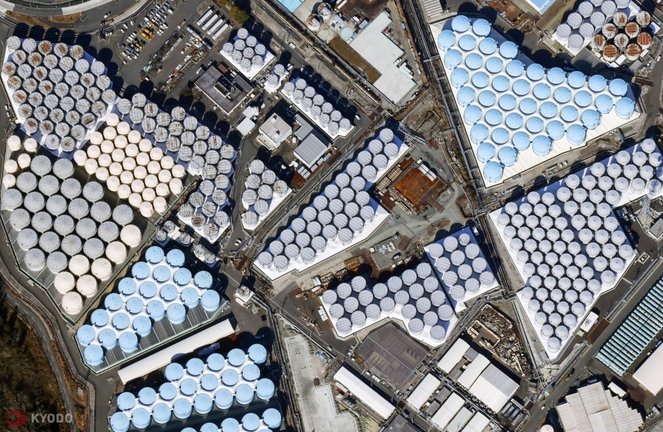
Aug 12, 2022
Tanks containing treated water at the crippled Fukushima nuclear power plant are likely to reach capacity around the fall of 2023, later than the initially predicted spring of next year, as the pace of the accumulation of radioactive water slowed in fiscal 2021.
The slowdown, based on an estimate by operator Tokyo Electric Power Company Holdings Inc., gives some breathing space to Prime Minister Fumio Kishida’s government if any roadblocks are thrown up in the plan to discharge the treated water into the sea starting around spring next year.
China and South Korea as well as local fishing communities that fear reputational damage to their products remain concerned and have expressed opposition to the plan.
About 1.30 million tons of treated water has accumulated at the Fukushima Daiichi plant following the 2011 nuclear disaster, and it is inching closer to the capacity of 1.37 million tons.
The water became contaminated after being pumped in to cool melted reactor fuel at the plant and has been accumulating at the complex, also mixing with rainwater and groundwater.
According to the plan, the water — treated through an advanced liquid processing system, or ALPS, that removes radionuclides except for tritium — will be released 1-kilometer off the Pacific coast of the plant through an underwater pipe.
The International Atomic Energy Agency has been conducting safety reviews of the discharge plan and Director General Rafael Grossi says the U.N. nuclear watchdog will support Japan before, during and after the release of the water, based on science.
An IAEA task force, established last year, is made up of independent and highly regarded experts with diverse technical backgrounds from various countries including China and South Korea.
Japan’s new industry minister Yasutoshi Nishimura says the government and TEPCO will go ahead with the discharge plan around the spring of 2023 and stresses the two parties will strengthen communication with local residents and fishermen, as well as neighboring countries, to win their understanding.
Beijing and Seoul are among the 12 countries and regions that still have restrictions on food imports from Japan imposed in the wake of the massive earthquake and tsunami triggered nuclear meltdowns at the Fukushima plant in March 2011.
“We will improve our communication methods so we can convey information backed by scientific evidence to people both at home and abroad more effectively,” Nishimura said after taking up the current post in a Cabinet reshuffle Wednesday.
Kishida instructed Nishimura to focus on the planned discharge of ALPS-treated water that will be diluted with seawater to one-40th of the maximum concentration of tritium permitted under Japanese regulations, according to the chief of the Ministry of Economy, Trade and Industry.
The level is lower than the World Health Organization’s recommended maximum tritium limit for drinking water.
TEPCO will cap the total amount of tritium to be released into the sea as well.
Meanwhile, the Kishida government has decided to set up a 30 billion yen ($227 million) fund to support the fisheries industry and said it will buy seafood if demand dries up due to harmful rumors.
Fishing along the coast of Fukushima Prefecture, known for high-quality seafood, has been recovering from the reputational damage caused by the nuclear accident but the catch volume in 2021 was only about 5,000 tons, or about 20 percent of 2010 levels.
Construction of discharge facilities at the Fukushima plant started in August, while work to slow the infiltration of rain and groundwater was also conducted.
TEPCO said it was able to reduce the pace of accumulation of contaminated water by fixing the roof of a reactor building and cementing soil slopes around the facilities, among other measures, to prevent rainwater penetration.
The volume of radioactive water decreased some 20 tons a day from a year earlier to about 130 tons per day in fiscal 2021, according to the ministry.
The projected timeline to reach the tank capacity has been calculated based on the assumption that about 140 tons of contaminated water will be generated per day, according to METI.
However, storage tanks could still reach their capacity around the summer of next year if heavy precipitation or some unexpected events occur, the ministry said.
As part of preparations for the planned discharge, the Environment Ministry has started measuring tritium concentration at 30 locations on the surface of the sea and seabed around the Fukushima plant, four times a year.
Similarly, the Nuclear Regulation Authority has increased the number of locations it monitors tritium levels by eight to 20. The Fisheries Agency has started measuring tritium concentration in marine products caught along the Pacific coast stretching from Hokkaido to Chiba Prefecture.
Given that it is expected to take several decades to complete the release of treated water, NRA and METI officials urged TEPCO to further curb the generation of contaminated water at the plant.
“We want TEPCO to step up efforts so as to lower the volume of the daily generation of contaminated water to about 100 tons or lower by the end of 2025,” a METI official said.
More Cases of Stomach Cancer in Fukushima Prefecture.
Stomach cancer, which has been confirmed in Fukushima Prefecture for eight consecutive years, was also found to be more common among A-bomb survivors in Hiroshima and Nagasaki
August 10, 2022
Stomach Cancer Incidence Rate Rises among Women in Fukushima Prefecture

On May 27, 2019 national cancer registry data was released on the government statistics website e-Stat.
Following up on my article that appeared on this website on August 26, 2011 (“Stomach Cancer in Fukushima Prefecture”: Confirmation of the 7th consecutive year of “high incidence of stomach cancer” — Should the Fukushima Daiichi Nuclear Power Plant accident no longer be regarded as a “major pollution incident”? (–) (https://level7online.jp/?p=4608), we compared the “National Incidence Rate of Stomach Cancer by Age Group” with the same rate in Fukushima Prefecture, based on the published data for 19 years.
Table 1 shows the results. Various age groups for both men and women exceeded the national average. In particular, in 2007, there were many age groups among women that exceeded the national average. Some of the age groups are double the national average (40-44 years).

On the other hand, only three age groups (0-4, 20-24, and 25-29) were below the national average. Therefore, it is necessary to pay attention to the “increase in the incidence rate of stomach cancer among women in Fukushima Prefecture” over the past few years.
Next, we conducted a comparison with the actual number of cases of gastric cancer in Fukushima Prefecture, assuming that the same rate of gastric cancer is occurring in Fukushima Prefecture as in the rest of Japan. This is a method to calculate the “standardized incidence ratio” (SIR) using epidemiological methods. The national average is set at 100, and if it is higher than the national average, it means above the national average, and if it is lower than the national average, it means below the national average.
The following is the result of the calculation of SIR for the period from 2008 to 2007 for stomach cancer in Fukushima Prefecture.
Stomach cancer] Number of cases in Fukushima Prefecture SIR
Male: 1279 88.3 in 2008
Male in 2009: 1366 94.1
10-year male: 1500 101.1
11-year male: 1391 92.2
12-year male: 1672 110.6
13-year male, 1659 110.9
14-year male, 1711 119.3
15-year male, 1654 116.6
16-year male, 1758 116.3
17-year man 1737 120.0
18years male, 1685 120.0
19-year man 1743 126.9
2008 female 602 86.6
2009 female 640 94.2
10-year female 700 100.9
11year female 736 100.9
12-year woman 774 109.2
13-year girl 767 109.9
14-year girl 729 109.0
15-year girl 769 120.3
16-year girl 957 139.4
17-year girl 778 119.6
18-year girl 744 118.4
19-year female: 817 131.8
The National Cancer Center considers a prefecture to have a “high cancer incidence rate” when the SIR exceeds 110. The SIR for stomach cancer in Fukushima Prefecture has been higher than the national average for both men and women since 2000, and the latest data for 2007 shows that the SIR for men was 12.6.9 and for women 131.8. The latest data from 2007 shows an abnormally high SIR of 12.6.9 for men and 131.8 for women.
We then tried to find the “95% confidence interval” for this SIR. This is one of the validation tasks in epidemiology, where the upper limit (or more precisely, the “upper limit of the estimate”) and the lower limit (or the “lower limit of the estimate”) of each SIR are calculated, and if the lower limit is 10 If the lower limit exceeds 0, it means that the increase is not merely increasing, but is a “statistically significant multiple occurrence” that cannot be considered as a coincidence in terms of probability.
The results are shown in [Table 2]. In Fukushima Prefecture, the incidence of stomach cancer in both men and women has been “significantly high” for eight consecutive years since 2000, and SIR has also been on the rise, showing no sign that the incidence of stomach cancer is slowing down. As is clear from the number of cases in Table 2, while the number of stomach cancer cases nationwide has continued to decline in recent years, the number of cases in Fukushima Prefecture, on the contrary, has increased.

Incidentally, the Centers for Disease Control and Prevention (CDC) in the U.S. published a report on the minimum incubation period for cancer, Minimum The CDC (Centers for Disease Control and Prevention) has published a report on the minimum latency of cancer, Minimum Latency & Types or Categories of Cancer (hereinafter referred to as the “CDC Report”). The CDC report on the “Minimum Latency & Types or Categories of Cancer” (hereinafter referred to as “CDC Report”) lists, in order from shortest to longest, the following
Leukemia, malignant lymphoma: 0.4 years (146 days)
Childhood cancer (including pediatric thyroid cancer): 1 year
Adult thyroid cancer: 2.5 years
All solid cancers including lung cancer: 4 years
Mesothelioma] 11 years
and so on [Table 3]. According to this CDC report, the shortest latency period for stomach cancer is “4 years.

In other words, 12,642 Fukushima Prefecture residents who have contracted stomach cancer since 2015, four years after the occurrence of the TEPCO Fukushima Daiichi nuclear power plant accident, include 12,642 people from the same nuclear power plant. It is possible that some of the 12,642 Fukushima residents who have developed stomach cancer since 2015, four years after the accident at TEPCO’s Fukushima Daiichi nuclear power plant, developed the disease as a result of exposure to toxic substances released by the accident.
Prior to the Fukushima Daiichi nuclear accident, until 2010, stomach cancer SIRs among Fukushima residents were equal to or lower than the national average. The “excess” of the SIRs was the “excess” of the national average. It is eagerly awaited that the correlation and causal relationship between the accident and carcinogenesis will be verified from the viewpoint that the “excess” number of stomach cancer patients may include victims of the nuclear power plant accident.
Both the number of thyroid cancer cases and the incidence rate of thyroid cancer in males have increased.
Next, we will examine thyroid cancer, which is a concern because of its high incidence among young people, and the CDC report indicates that the minimum incubation period is 2.5 years for adults and 1 year for children. 1 year for children.
The incidence rates of thyroid cancer by age group and the number of cases by age group calculated from these rates are shown in Tables 4 and 5. In 2019, eight years after the Fukushima Daiichi Nuclear Power Plant accident, thyroid cancer was still confirmed in young people.


Among females, 2 were confirmed in the 10-14 age group, 8 in the 15-19 age group, 5 in the 20-24 age group, and 6 in the 25-29 age group. The total for all age groups was 199, meaning that patients who were under the age of 20 at the time of the accident in 2011 accounted for about 8% of the total at the lowest estimate and about 11% at the highest estimate [Table 5].
On the other hand, 4 males were identified in the 10-14 age group, 6 in the 15-19 age group, 1 in the 20-24 age group, and 2 in the 25-29 age group. The total number of patients in all age groups is 76, which means that patients who were under the age of 20 at the time of the accident in 2011 accounted for about 14% of the total at the lowest estimate and about 17% at the highest estimate [Table 5].
The SIR and its “95% confidence interval” for thyroid cancer are shown in Table 6. In both cases, the minimum incubation period for thyroid cancer, 2.5 years, had elapsed since the accident at the Fukushima Daiichi Nuclear Power Plant in 2011.

In the latest 19-year period, the number of cases and incidence rate of thyroid cancer in Fukushima Prefecture increased for males. Both the number of cases and incidence rate decreased for females.
Significant “high incidence” continues for gall bladder and bile duct cancer.
No trend of increased incidence was observed for malignant lymphoma and leukemia ([Table 7] and Table 8]).


The most recent 2019 data also showed a continued abnormality in gall bladder and bile duct cancer, which is classified as a “solid cancer” according to the CDC report, with a minimum latency period of “4 years” (Table 8). The minimum latency period is 4 years.
Significant incidence” of gall bladder and bile duct cancer was observed in men in 2010 and in women in 2009, before the nuclear accident. After 2016, when the minimum incubation period of “4 years” has passed, “significantly high incidence” was confirmed in both men and women. The incidence was “high” for four consecutive years for males and six consecutive years for females ([Table 9]).

Prostate cancer, which was found to be “significantly more frequent” for three consecutive years from 2004 to 2006, had its “more frequent” status eliminated in the latest 2019 data. Nevertheless, the SIR remains above the national average, so continued attention should be paid to this issue ([Table 10]).

Finally, regarding ovarian cancer. The minimum incubation period is “4 years” (Table 11). Although “significantly more cases” were observed in 2013 and 2014 before the minimum incubation period, the SIR has been below the national average since then. However, the latest data for 2019 shows that SIR exceeded the national average for the first time in five years, and the number of cases in the prefecture continues to increase slightly, so it is important to pay attention to the data.

Stomach cancer was also on the rise among A-bomb survivors in Hiroshima and Nagasaki
Toshihide Tsuda, a professor at the Graduate School of Okayama University who specializes in epidemiology and causal inference, took a look at these data. Professor Tsuda said.
The situation is more severe than we had expected, and it has exceeded our projections by quite a bit. Not only thyroid cancer, which has already shown a clear increase, but also other cancers that are now on the rise are cancers that are also noticeably on the rise in the data on A-bomb survivors in Hiroshima and Nagasaki. I feel that it is necessary to make appropriate preparations, quickly formulate countermeasures and enhanced risk communication, and discuss how to respond to the situation. I suspect that the actual radiation exposure was considerably higher than what has been publicized.”
The Ministry of the Environment’s “Uniform Basic Data on Radiation Health Effects, etc.” (FY 2008 edition) states
The Ministry of the Environment’s “Uniform Basic Data on Radiation Health Effects” (FY 2008 edition) states, “In adults, the organs most likely to develop cancer due to radiation exposure are the bone marrow, colon, breast, lung, and stomach.
(Figure below). In other words, an increase in stomach cancer has been observed among A-bomb survivors.

To be sure, we also examined breast cancer and lung cancer, which are considered to be more common among A-bomb survivors, and found no “significant increase” in the Fukushima Prefecture data through 2007. However, a slight upward trend was observed for breast cancer in males, a rare cancer, since 2004 (5 cases in 2002, 7 cases in 2003, 10 cases in 2004, 11 cases in 2005, 10 cases in 2006, and 7 cases in 2007). The number of cases of breast cancer in the United States is also reported.
The number of people who have been living in the area since the last year (October 2021) is still very high.
Kenichi Hasegawa (68 years old), a former dairy farmer in Iitate Village, who passed away from thyroid cancer last October (2021), revealed in February 2008 that “a number of people in the village have contracted stomach cancer and died one after another,” and said the following.
People in their late fifties and sixties, younger than me, are dying. Most of them have cancer. This was not the case in Iitate Village before the nuclear accident.
They died at the same age as us, so it is even more memorable. And it is not long after the cancer is found that it gets worse and worse and they pass away.
If you get cancer when you are 80 or 90 years old, you may think that it can’t be helped and that you have fulfilled your destiny, but that is not the case if you are in your 60s,” he said.
Mr. Hasegawa himself had less than a year from the time he found out he had cancer to the time of his death.
In November 2002, Mr. Hasegawa and about 2,800 other Iitate villagers filed a claim for compensation from TEPCO for health concerns caused by high initial radiation exposure due to the delay in evacuation. In November 2002, they filed an application for alternative dispute resolution (ADR) with the Center for the Resolution of Nuclear Damage Disputes. The “fears” of that time are now beginning to become a reality.
Some scientists and journalists, by the way, have been reporting on the UN Scientific Committee on the Effects of Atomic Radiation (UNSCEAR) without any check of the data from the National Cancer Registry. (UNSCEAR).
“It is unlikely that there are any future health effects directly attributable to radiation exposure.
There are those who stubbornly try to deny the occurrence of cancer due to the nuclear accident, waving the UNSCEAR report as if it were a “banner”. However, the UNSCEAR report is not based on actual measurements due to the fact that Fukushima and other prefectures prevented the survey of radiation doses immediately after the accident. The UNSCEAR report, however, is not a fact in itself.
If you call yourself a scientist or a journalist and really want to deny the occurrence of cancer due to the nuclear accident, you should verify it with your own hands using the National Cancer Registry data, which is the “facts themselves,” instead of relying only on the estimated reports made by others. The national cancer registry data is also data for this purpose.
Source in Japanese: Level 7 News
Japan extremely selfish to insist on discharging nuclear wastewater into sea

August 8, 2022
TOKYO, Aug. 10 (Xinhua) — Japan’s Tokyo Electric Power Company Holdings Inc. (TEPCO) has recently started construction of facilities that will discharge radioactive wastewater from the crippled Fukushima Daiichi nuclear power plant into the sea, taking another step in its plan to release nuclear-contaminated water.
The Japanese government’s drive to push through a long-term plan to release wastewater into the Pacific Ocean starting in the spring of 2023, despite domestic and international opposition, is extremely selfish, analysts say.
SELFISHNESS
Struck by a magnitude-9.0 earthquake and ensuing tsunami that hit Japan’s northeast on March 11, 2011, the No. 1-3 reactors at the Fukushima Daiichi nuclear plant suffered core meltdowns, resulting in a level-7 nuclear accident, the highest on the International Nuclear and Radiological Event Scale.
The plant has been generating a massive amount of radiation-tainted water since the accident happened as it needs water to cool the reactors. With groundwater and rainwater also flowing in, about 1.3 million tons of contaminated water are now stored at the nuclear plant and are still increasing at a rate of 140 tons a day.
TEPCO claimed that the water storage tank’s current storage capacity of 1.37 million tons will run out this autumn and the plant has no more space for new water storage tanks to be constructed, so it has to release the contaminated water into the sea after filtering, purifying and diluting it.
In response to TEPCO’s claims, Japanese environmental groups pointed out that much of the land near the plant has been left idle due to nuclear leakage and could be used to construct additional water storage tanks.
However, the Japanese government and TEPCO rejected the idea, citing the need for a large amount of time for communication and coordination as well as a lot more work.
Environmentalists say it is not that the option is infeasible, it is because the Japanese government and TEPCO do not want to do it, as they put their own interests first.
A panel of experts organized by Japan’s Ministry of Economy, Trade and Industry had proposed five options when considering how to deal with the contaminated water.
Among them, the Japanese government said the options of discharging the water into the sea and vapor release were two “most practical solutions” and it finally chose the former one, which “takes the shortest time and costs the least,” passing on the risk to the whole world.
BROKEN CREDIT
Contaminated water generated at TEPCO’s Fukushima Daiichi nuclear power plant contains tritium, cesium, strontium and other radioactive materials. The Japanese government and TEPCO said they would use the Advanced Liquid Processing System (ALPS), a multi-nuclide removal equipment, to reduce the concentrations of 62 types of radioactive substances, with the exception of tritium, which is hard to remove by purification and will remain in the treated water.
TEPCO believes that tritium normally remains in the wastewater at ordinary nuclear power stations, therefore it is safe to discharge tritium-contaminated water.
Experts say TEPCO is trying to confuse the concept of the wastewater that meets international standards during normal operation of nuclear power plants with that of the complex nuclear-contaminated water produced after the core meltdowns at the wrecked Fukushima power plant.
The actual results of ALPS are not as ideal as TEPCO claims. Japanese media have found that in addition to tritium, there are a variety of radioactive substances in the Fukushima nuclear wastewater that exceed the standard. TEPCO has also admitted that about 70 percent of the water treated by ALPS contains radionuclides other than tritium at the concentration which exceeds legally required standards and requires filtration again.
Also the reliability of ALPS itself is questionable. According to a report by Japan’s Asahi Shimbun in September 2021, 24 of the 25 filters used by ALPS to absorb radioactive substances were damaged, and the damage occurred two years ago, but TEPCO did not deal with it in time.
The Korean Federation for Environmental Movements, a South Korean civic environmental organization, said that TEPCO claimed to have the ability to reduce the concentration of 62 radioactive substances excluding tritium before the discharge of the contaminated water, but this is by no means the truth. The organization warned that it is hard to clean the sea water once it is polluted.
From the cover-up of the meltdown at the beginning of the Fukushima disaster to the bowing and apologizing for underreporting for more than a decade, TEPCO has left so many stains on its credibility that its nuclear credit has long since gone busted.
OPPOSITION FROM ALL SIDES
The willful push by the Japanese government and TEPCO to release wastewater into the sea has triggered strong opposition from both within Japan and its neighboring countries. Last Wednesday, a local civic group organized a protest outside the government house of Fukushima Prefecture to show their opposition to the plan.
After TEPCO announced last Thursday the start of the construction of facilities for releasing radioactive wastewater into the sea, a Japanese environmental organization issued a statement on the same day, pointing out that the Japanese government and TEPCO had made written commitments on the matter saying “without the understanding of relevant personnel, no actions will be taken.” However, the government still decided in April last year to release the nuclear-contaminated water into the sea without seeking advice from relevant parties to make it a fait accompli.
On July 22, the Nuclear Regulation Authority of Japan officially endorsed TEPCO’s nuclear-contaminated water discharge plan.
Responding to this, Masanobu Sakamoto, president of the National Fisheries Cooperative Federation of Japan, said the plan has not gained the understanding of the public and the fishery industry and that the federation’s firm opposition to the discharge had not changed at all.
Greenpeace Seoul Office said that the danger of discharging nuclear-contaminated water into the sea is obvious. The Japanese government’s decision to discharge the contaminated water into the sea when there are alternatives such as long-term storage violates the precautionary principle recognized by the international community.
https://english.news.cn/20220810/97096f0719604e19879e398798bd0b59/c.html
1 This Month

of the week – Shut Down Drone Warfare!


Tell the Ukrainian Government to Drop Prosecution of Peace Activist Yurii Sheliazhenko

Petition to revoke the licensing of the Near Surface Nuclear Disposal Facility (NSDF) at Chalk River. https://www.ourcommons.ca/petitions/en/Petition/Details?Petition=e-7247
To see nuclear-related stories in greater depth and intensity – go to https://nuclearinformation.wordpress.com
-
Archives
- April 2026 (7)
- March 2026 (251)
- February 2026 (268)
- January 2026 (308)
- December 2025 (358)
- November 2025 (359)
- October 2025 (376)
- September 2025 (257)
- August 2025 (319)
- July 2025 (230)
- June 2025 (348)
- May 2025 (261)
-
Categories
- 1
- 1 NUCLEAR ISSUES
- business and costs
- climate change
- culture and arts
- ENERGY
- environment
- health
- history
- indigenous issues
- Legal
- marketing of nuclear
- media
- opposition to nuclear
- PERSONAL STORIES
- politics
- politics international
- Religion and ethics
- safety
- secrets,lies and civil liberties
- spinbuster
- technology
- Uranium
- wastes
- weapons and war
- Women
- 2 WORLD
- ACTION
- AFRICA
- Atrocities
- AUSTRALIA
- Christina's notes
- Christina's themes
- culture and arts
- Events
- Fuk 2022
- Fuk 2023
- Fukushima 2017
- Fukushima 2018
- fukushima 2019
- Fukushima 2020
- Fukushima 2021
- general
- global warming
- Humour (God we need it)
- Nuclear
- RARE EARTHS
- Reference
- resources – print
- Resources -audiovicual
- Weekly Newsletter
- World
- World Nuclear
- YouTube
-
RSS
Entries RSS
Comments RSS
 nuclear-news