Potassium iodide tablets SELL OUT in U.S.
Potassium iodide tablets SELL OUT in US over fears of nuclear war with
Russia with $14 packets now selling for $149 on eBay.
Daily Mail 15th March 2022
Radiation Free Lakeland protests against plan for a Near Surface Nuclear Waste Dump
PROTESTORS voiced concerns about nuclear waste disposal facility plans at
a drop-in event this week. A new campaign has launched by the Radiation
Free Lakeland group titled Lakes Against Nuclear Dump and supporters held a
peaceful demonstration on Friday. Environmental activists picketed at a
Mid-Copeland Community Partnership drop-in which was designed to discuss
the potential to host a geological disposal facility with residents of the
area. But LAND raised concerns about a the potential for a new development,
a Near Surface Nuclear Waste Facility.
Whitehaven News 16th March 2022
March 16 Energy News — geoharvey

Opinion: ¶ “Insanity Over Nuclear Energy: Inquirer” • The governments of the US and the Philippines have announced an agreement on the use of nuclear power. The Philippines tried to use nuclear power before, five decades ago. Generations of Filipinos were stuck with the bill for that white elephant. Now, the country is getting set […]
March 16 Energy News — geoharvey
NATO, EU, Quad states besiege India over refusal to join anti-Russia crusade — Anti-bellum
The HinduMarch 17, 2022 Amid Ukraine crisis, Delhi receives a flurry of NATO allies and Quad partnersSuhasini Haidar Amidst a global call by NATO countries and western allies to join sanctions against Russia, Prime Minister Narendra Modi is expected to hold back–to–back summits with Quad partners, including an in–person summit with Japanese Prime Minister Fumio […]
NATO, EU, Quad states besiege India over refusal to join anti-Russia crusade — Anti-bellum
U.S. continues to subvert Georgian government on behalf of “party of war” — Anti-bellum
The MessengerMarch 16, 2022 Georgian Government Launches Constitutional Dispute Against President Salome ZourabichviliBy Khatia Bzhalava According to the statement of the [ruling] Georgian Dream Political Council, the President has violated the Constitution, which needs to be confirmed by the Constitutional Court. The president of Georgia criticized both the ruling party and the opposition in her […]
U.S. continues to subvert Georgian government on behalf of “party of war” — Anti-bellum
A joint statement of IPPNW physicians in Russia and Ukraine — IPPNW peace and health blog
The conflict between Russia and Ukraine continues, leading to human casualties. And in the case of escalation of the conflict it may cause more severe consequences, involvement of other countries, nuclear facilities and even nuclear confrontation. It is a great tragedy in the center of Europe caused by the inability of authorities to speak to […]
A joint statement of IPPNW physicians in Russia and Ukraine — IPPNW peace and health blog
Contaminated soil from nuclear power plant, destination yet to be determined…

March 12, 2022
Seven years have passed since the operation of the interim storage facilities that surround TEPCO’s Fukushima Daiichi Nuclear Power Plant began. The delivery of contaminated soil from the decontamination of the nuclear accident is expected to be almost completed by the end of this month, except for that from the difficult-to-return zone. Although Fukushima Prefecture has legislated that the contaminated soil must be removed from the prefecture by 2045, the destination of the soil has yet to be decided.
After the nuclear accident, more than 17 million cubic meters of contaminated soil and waste from decontamination in Fukushima Prefecture have been generated. Because it is unrealistic to dispose of such a large amount of waste, the government hopes to reuse the contaminated soil, which has a relatively low concentration of radioactive materials, as a “resource” for public works projects and agricultural land. The target is soil with a level of 8,000 becquerels per kilogram or less, which currently accounts for three-fourths of the total. Furthermore, it is estimated that up to 97% of the material will be reusable by the year 45 due to natural attenuation and other factors.
However, at this point, only a little less than 1 million cubic meters will be used for a demonstration project in Iitate Village, Iitate Prefecture, to demonstrate the use of agricultural land. It would be nice if it could be used for large-scale public works projects such as port reclamation, but in this day and age, there is no need,” said a Ministry of the Environment official.
Eleven years after the earthquake, there is not even a clear destination for the contaminated soil. Residents are expected to protest if attempts are made to reuse the soil, and zero governors have responded that they would be willing to accept it. In municipalities that do not have interim storage facilities, the contaminated soil is “stored on-site” and can be found in residential areas in the Tokyo metropolitan area.
Survey of 46 prefectural governors: Zero governors responded that they were “willing to accept” the waste.
It is not easy to gain the understanding of residents. In 2006, the Japanese government planned to use the contaminated soil for a demonstration project to widen an expressway in Minamisoma City. However, local residents protested one after another, saying that it was the same as final disposal and that their crops would be damaged by harmful rumors, and in March of last year, the government informed the residents of its decision to abandon the project.
The residents of the area were not happy with the decision.
https://www.asahi.com/articles/ASQ3C5DZTQ33UGTB00X.html?fbclid=IwAR1ro_tQJZMsG_kr6rXgKCqXHdvix-WmRG5uwcEaEYzuPRFkji3w7PAfJxo
Man who shot famed tsunami video turned lens on Fukushima’s future

March 15, 2022
NAMIE, Fukushima — The schoolyard of an elementary school is empty of children, with only rusted playground equipment left on the barren soil. An elderly man looks wistfully around the shrine with cherry blossoms in full bloom.
“During cherry blossom season, children used to come here on field trips,” he says.
It is a scene from a 2016 documentary that chronicled the lives of people in Fukushima Prefecture affected by the March 2011 disaster in the context of the cherry blossom viewing season.
Titled “Fukushima Sakura Kiko” (Fukushima cherry blossom travel story), it was filmed in the spring of 2015 in the Odaka district of Minami-Soma, Fukushima Prefecture, by Takashi Hokoi, a former NHK news cameraman who currently is pursuing a career as an artist based in Fukushima.
The Odaka district, about 15 kilometers north of Tokyo Electric Power Company Holdings, Inc.’s Fukushima No. 1 nuclear power plant, was still under an evacuation order at the time.
Seven years have passed since Hokoi, now 37, shot the documentary.
“I can hear the sound of a lawn mower,” Hokoi said with a slight smile when he revisited the district earlier this month.
With the evacuation order lifted, there are signs of life again, such as windows with open curtains. He knows that many people have not yet returned, but it is a welcome change.
The documentary was widely shown when it was released. However, Hokoi has a much more well-known video to his name, one that was circulated all over the world.
It was also one of the reasons that Hokoi left the world of journalism.
A foaming tsunami wave powers upstream in a river and floods the Sendai Plain. Houses and cars are instantly swallowed up by the wall of water.
The scene was broadcast live from an NHK helicopter at about 3:50 p.m. on March 11, 2011. Recording the destruction was Hokoi, who was in his first year as a cameraman.
Hokoi was working for the NHK Fukushima broadcasting station. He was at Sendai Airport on the day of the disaster. From an NHK helicopter, he was dumbstruck by the scene below and aimed his camera to the ground.
Tsunami waves crashed over main roads and swirled around, and houses were washed away or on fire. As he tried to come to grips with the reality-defying scene, one thought pervaded his mind: There must be people in those houses, in those cars.
The shocking video was given an award by the Japan Newspaper Publishers and Editors Association in September 2011. But Hokoi felt guilty receiving such praise. “All I did was escape to a safe place and film what I was told to,” he thought.
In 2013, NHK spoke to him about a transfer. But he decided to resign, and remained in Fukushima. He had a sense of guilt about leaving the disaster-hit area just two years after shooting such scenes and seeing its future as somebody else’s problem.
After leaving NHK, the idea for the documentary featuring cherry blossoms and people in Fukushima Prefecture came to him, all because of one person he had known.
Yuichi Harada was the third-generation owner of a clock shop and chairman of a local chamber of commerce and industry in the town of Namie, Fukushima Prefecture. In 2014, while Hokoi was planning to create a video about the disaster at the request of his university, Harada guided him around the town, which was still under evacuation orders.
Harada, now 72, had evacuated to the city of Nihonmatsu to the west, where he organized a community of displaced Namie residents and negotiated with TEPCO over compensation. All the while, he also continued tending to cherry trees along a river in Namie with other volunteers.
“If someone returns to the town and the cherry trees in bloom bring back memories, it might change how they feel,” Harada said.
That really hit home for Hokoi, that someone who had lost their beloved hometown could be so optimistic, believing that one day it would return.
Hokoi decided to depict present-day Fukushima through cherry blossoms, the symbol of spring and hope.
Since this spring, Hokoi has been working on a sequel to “Sakura Kiko.” He is motivated because, while interest in Fukushima Prefecture may be fading, the situation there is now more complicated.
Harada continues to look after the cherry trees today. As people could not return to Namie, he was never able to restart his business, and his store was torn down about six years ago.
The evacuation order for his hometown has since been lifted, but Harada has given up on ever returning to Namie. He thinks about moving to Ibaraki Prefecture, where his eldest daughter lives, but his mother, now in her 90s, wants him to stay in Nihonmatsu.
“Life is hard, isn’t it?” Harada said with a sad smile as he gazed at the cherry trees with Hokoi.
The strength of our desires does not necessarily make them come true. That is the harsh reality of disasters. “I want to continue following the lives of people in Fukushima Prefecture and try to find what reconstruction really means,” Hokoi said.
He will continue to face the disaster head-on.
■ Evacuation orders
Soon after the nuclear accident at the Fukushima No.1 nuclear power plant, the government designated an area within a 20-kilometer radius as a “warning zones” (evacuation order zones).
Areas outside that zone experiencing high levels of radiation were designated as “planned evacuation zones,” and the government demanded that residents in both zones evacuate.
The range of evacuation orders as of April 2012 extended to all or part of 11 municipalities, but that number has since decreased to the present-day seven.
Within those seven municipalities are areas designated as “difficult-to-return zones,” some of which are being developed as key reconstruction bases to provide a foothold for returning residents.
Years without forestry education as Fukushima decontamination falls short
Mar 14, 2022
The March 2011 meltdown at the Fukushima No. 1 nuclear power plant caused serious damage to forests in the surrounding areas. Even now, 11 years after the accident, little has been done to decontaminate them.
In some areas, projects are underway to restore the satoyama, areas of mountain forest maintained by residents of adjacent communities, but the airborne radiation levels in those areas are still not low enough that children can safely enter, according to a local community leader.
One such area is the Yamakiya district in the town of Kawamata, Fukushima Prefecture. Walking trails in the Daini Oyako no Mori forest are covered by snow, and sunny slopes are lined with zelkova trees.
Yellow and pink vinyl wrapped around the trees indicates the year they were planted by local elementary school students. At the end of March, it will be five years since the evacuation order for the Yamakiya district was lifted. But even now, the voices of children have not returned to the mountains.
In 2016, satoyama restoration projects were launched in the prefecture to improve the forest environment. Decontamination, reforestation and radiation monitoring were carried out in an integrated manner in the mountain and forest areas that had been used by residents.
The projects have been carried out based on the comprehensive forest restoration policy for Fukushima Prefecture, which was compiled jointly by the Reconstruction Agency, the Agriculture, Forestry and Fisheries Ministry and the Environment Ministry. A total of approximately 800 hectares in 14 municipalities were selected as model areas, including forest parks and walking trails, where fallen leaves and other sediment was removed and thinned.

In the past, the forestry club of Yamakiya Elementary School was active in Daini Oyako no Mori. But since the nuclear accident, the forest had not been cared for and was in a dilapidated state — with thickets growing over the planted zelkova trees.
The town and the local residents chose Daini Oyako no Mori as a site for the project in order to revive the area as a site where children could study forestry. The project was launched in December 2016, prior to the planned lifting of the evacuation order for Yamakiya district at the end of March 2017.
The project covers an area of about 2 hectares. In fiscal years 2016 and 2017, planted cedar and zelkova trees were thinned and cleared, and trees that had fallen due to snow were removed. Logs were spread on slopes as a measure to control topsoil runoff.
Decontamination work was conducted in fiscal 2018. Leaves and branches that had fallen to the ground and other accumulated organic matter were removed in areas covering 5,595 square meters of the forest, including an open square and walking trails. The zelkova trees could die if their surfaces were stripped, so the work focused on clearing the grass and thickets.
Comparing the radiation levels in September 2018, before the decontamination work, and in November the same year, after the work, the average radiation level in the open square had been reduced by 22%, to 0.69 microsievert per hour. Based on the result, the central government concluded that “the decontamination work contributed to creating an environment ready for the resumption of forest study activities.”
However, even after the decontamination process, the airborne radiation levels were far from the central government’s long-term target of 0.23 microsieverts per hour. At some monitoring points, radiation levels exceeded 1 microsievert per hour.
“The area is not ready for children to go back,” said Toshio Hirono, 71, leader of the Yamakiya Elementary School’s forestry club.
Residents are demanding that the forest, where children once enjoyed the greenery, be restored to its original state.
The forestry club, which did its main work in Daini Oyako no Mori, was known both within and outside of the prefecture for its progressive activities that took advantage of the abundant natural resources. At the entrance of the forest, a signboard notes a commemorative tree planting by the group to mark a national commendation they received.
Children belonged to the group in the fourth through sixth grade, and their activities were diverse. They processed thinned cedar trees to create a walking path in their school’s front yard, built bridges over a river and moat in nearby mountains and made a mallet by hand for pounding rice cakes. They learned about the importance of nature by collecting mushrooms and tara buds, and eating rice cakes kneaded with burdock leaves.
These activities came to a halt after the nuclear accident at Tokyo Electric Power Company Holdings Inc.’s Fukushima No. 1 plant. Before the accident, Yamakiya Elementary School had 30 to 40 children. But the number of children decreased due to the establishment of an evacuation zone, and the school has been closed since fiscal 2019.
“If it hadn’t been for the nuclear accident, there would have been so much more I wanted to do,” said Hirono.
Hirono has been serving as the third leader of the group for about 20 years, without a chance to pass on his position to a successor due to the suspension of its activities. He feels that although Daini Oyako no Mori has been decontaminated, the level of radiation has not gone down enough.
“If there is even a slight concern, we cannot allow our children to go into the mountains,” he said with a sigh.
Even after the model project ended, Hirono continues to voluntarily clear the undergrowth along the walking trails every fall. He understands that decontaminating all the forests in the town will not be easy, but believes that unless the radiation levels in the surrounding areas of Daini Oyako no Mori are lowered, residents will not be reassured.
“It is the central government’s responsibility to decontaminate until the residents are satisfied,” he said.
https://www.japantimes.co.jp/news/2022/03/14/national/fukushima-forest-decontamination/
Ukraine war triggers debate on Japan’s nuclear option
In a new and volatile strategic environment, a decades-old commitment on non-proliferation is up for discussion.

14 Mar 2022
In the wake of the Ukraine conflict, Shinzo Abe, Japan’s former prime minister and now head of the largest faction of the ruling Liberal Democratic Party (LDP), has suggested that Japan consider hosting US nuclear weapons facilities on Japanese soil, similar to some European nations, such as Germany, which have nuclear sharing arrangements with the United States.
Abe’s suggestion was made in the context of Ukraine having renounced nuclear weapons in 1994, leaving itself vulnerable today. The announcement also comes on top of deepening concerns about China’s growing military assertiveness around Japan’s maritime space and beyond, and the dangerous situation on the Korean peninsula with threats from the nuclear-capable rocket-launching North Korea.
Debates over whether Japan should host nuclear weapons or even go fully nuclear are not new. In the mid-1970s, a book-length study by John Endicott considered the nuclear option. In the early 2000s, then Chief Cabinet Secretary Yasuo Fukuda and Deputy Chief Cabinet Secretary Shinzo Abe (both of whom later served as prime minister) again raised this prospect. It was quickly put to rest by Japan’s security analysts. Discussion has since continued among political and scholarly communities as to whether Japan should go nuclear, opt for a nuclear sharing arrangement with the United States by hosting nuclear weapons, or maintain its current non-nuclear weapons status.
Some smaller conservative opposition parties want to include nuclear options in policy discussions while considering Japan’s strategic objectives.
This latest eruption though is in a different context. This time, chairman of the General Council of the LDP Tatsuo Fukuda, who like his father Yasuo Fukuda before him holds an influential ruling party post and is touted as a future prime minister, has suggested that “we must not shy away from any debate whatsoever”. Last year’s LDP party presidential candidate and current LDP policy chief Sanae Takaichi also favours a debate. Some smaller conservative opposition parties want to include nuclear options in policy discussions while considering Japan’s strategic objectives. The main opposition parties have, however, strongly resisted any such prospects, arguing in favour of Japan’s non-nuclear status.
Abe’s suggestion was promptly and solidly rejected by Prime Minister Fumio Kishida, as well as by the leader of the Komeito, the junior coalition partner of the ruling LDP. Even Defence Minister Nobuo Kishi, Abe’s younger brother, adopted into the Kishi family, also dismissed the idea of hosting nuclear weapons on Japanese shores. Kishi may have expressed this view in order to align with his boss, Prime Minister Kishida, rather than reflecting his true thinking on the matter, given his political pedigree.
ishida quickly confirmed that Japan firmly adheres to the three non-nuclear principles adopted in 1967, to not possess, produce or permit the introduction of nuclear weapons into Japan’s territory. These principles remain sacrosanct, even though Japan has made substantial departures in defence and security matters in the past decade.
Abe’s comments can be understood in this context, which emanates from a rapidly evolving strategic environment, regionally as well as globally. As prime minister, Abe had introduced several policy initiatives that were unthinkable in previous decades, such as removing bans on defence-related exports, allowing Japan to work with allies and partners in collective self-defence, establishing Japan’s first National Security Council (NSC), and issuing the first-ever National Security Strategy (NSS).
Not only has the Kishida government announced an intended update to the NSS, first issued in 2013, it has also promised to revise the National Defence Program Guidelines and Mid-Term Defence Program issued in 2013 and 2018. All these updates and revisions are undertaken in view of a rapid transformation in the strategic environment.
The Kishida government is likely to go even further and consider acquiring strike capabilities to ensure Japan’s territorial integrity and the safety of its people as well as protect US military assets in Japan, including some 50,000 US defence personnel.
The long-time self-imposed constraints on Japan’s defence spending, keeping it to less than one per cent of GDP, are also likely to be breached soon. The LDP under Kishida’s leadership has promoted for the first time the idea of spending two per cent of GDP in its policy documents just before the last general election in October 2021. Although such a change seems unlikely any time soon due to Japan’s poor fiscal health and significant public opposition, defence spending will definitely increase, as it has over the past decade.
Japan, along with Germany, has often been recognised as an example of a “civilian state”. Germany currently hosts US nuclear weapons facilities and, in view of the Ukraine conflict, has announced a significant increase to its defence budget. Calls are now being made to urge Japan to follow suit.
The postwar US-Japan Treaty of Mutual Cooperation and Security has ensured that Japan has lived happily under US extended deterrence, including the nuclear umbrella. This arrangement is unlikely to change, barring an existential threat to Japan’s territory and sovereignty. But what seemed to be taboo in terms of Japan’s strategic policy – that is, breaching one per cent of GDP on defence spending and developing strike capabilities – is now being discussed seriously. No policy in international relations is eternal, it must change as a nation’s interests change.
https://www.lowyinstitute.org/the-interpreter/ukraine-war-triggers-debate-japan-s-nuclear-option
Zelensky Says He’s ‘Cooled’ on Joining NATO, Ready for Talks With Russia on Crimea, Donbas
Russia wants Ukraine to declare neutrality, recognize Crimea as Russian, and recognize the independence of the breakaway Donbas republics. https://news.antiwar.com/2022/03/08/zelensky-says-hes-cooled-on-joining-nato-ready-for-talks-with-russia-on-crimea-donbas/ by Dave DeCamp
Ukrainian President Volodymyr Zelensky told ABC News in an interview that aired Monday night that he had “cooled down” on the idea of Ukraine joining NATO and is open to talks with Russia about the future of the Donbas and Crimea.
“Regarding NATO, I have cooled down regarding this question long ago after we understood that NATO is not prepared to accept Ukraine,” Zelensky said. “The alliance is afraid of controversial things and confrontation with Russia. I never wanted to be a country which is begging something on its knees. We are not going to be that country, and I don’t want to be that president.”
Regarding Crimea and the Donbas, Zelensky said Ukraine is not prepared for Russian “ultimatums” but is ready to discuss the status of the territories. “The people who elected me are not ready to surrender. We are not ready for ultimatums,” he said. “But we can discuss with Russia the future of Crimea and Donbas.”
Ukrainian President Volodymyr Zelensky told ABC News in an interview that aired Monday night that he had “cooled down” on the idea of Ukraine joining NATO and is open to talks with Russia about the future of the Donbas and Crimea.
“Regarding NATO, I have cooled down regarding this question long ago after we understood that NATO is not prepared to accept Ukraine,” Zelensky said. “The alliance is afraid of controversial things and confrontation with Russia. I never wanted to be a country which is begging something on its knees. We are not going to be that country, and I don’t want to be that president.”
Regarding Crimea and the Donbas, Zelensky said Ukraine is not prepared for Russian “ultimatums” but is ready to discuss the status of the territories. “The people who elected me are not ready to surrender. We are not ready for ultimatums,” he said. “But we can discuss with Russia the future of Crimea and Donbas.”
Peace Talks in Ukraine “Will Get Nowhere” If US Keeps Refusing to Join
Chomsky: Peace Talks in Ukraine “Will Get Nowhere” If US Keeps Refusing to Join, https://truthout.org/articles/chomsky-peace-talks-in-ukraine-will-get-nowhere-if-us-keeps-refusing-to-join/?eType=EmailBlastContent&eId=0f3fe992-e64c-42c7-85ff-483718a7c020, C.J. Polychroniou, 14 Mar 22
As Russia steps up its assault on Ukraine and its forces advance on Kyiv, peace talks between the two sides were scheduled to resume today for the fourth time, but have now been postponed until tomorrow. Unfortunately, some opportunities for a peace agreement have already been squandered, so it’s hard to be optimistic about when the war will end. Regardless of when or how the war ends, though, its impact is already being felt across the international security system, as the rearmament of Europe shows. The Russian invasion of Ukraine also complicates the urgent fight against the climate crisis. The war takes a heavy toll on Ukraine and on the environment, but it also gives the fossil fuel industry extra leverage among governments.
In the interview that follows, world-renowned scholar and dissident Noam Chomsky shares his insights about the prospects for peace in Ukraine and how this war may impact our efforts to combat global warming.
Noam Chomsky, who is internationally recognized as one of the most important intellectuals alive, is the author of some 150 books and the recipient of scores of highly prestigious awards, including the Sydney Peace Prize and the Kyoto Prize (Japan’s equivalent of the Nobel Prize), and of dozens of honorary doctorate degrees from the world’s most renowned universities. Chomsky is Institute Professor Emeritus at MIT and currently Laureate Professor at the University of Arizona.
C.J. Polychroniou: Noam, while a fourth round of negotiations was scheduled to take place today between Russian and Ukrainian representatives, it is now postponed until tomorrow, and it still seems unlikely that peace will be reached in Ukraine any time soon. Ukrainians don’t appear likely to surrender, and Putin seems determined to continue his invasion. In that context, what do you think of Ukrainian President Volodymyr Zelensky’s response to Vladimir Putin’s four core demands, which were (a) cease military action, (b) acknowledge Crimea as Russian territory, (c) amend the Ukrainian constitution to enshrine neutrality, and (d) recognize the separatist republics in eastern Ukraine?
Noam Chomsky: Before responding, I would like to stress the crucial issue that must be in the forefront of all discussions of this terrible tragedy: We must find a way to bring this war to an end before it escalates, possibly to utter devastation of Ukraine and unimaginable catastrophe beyond. The only way is a negotiated settlement. Like it or not, this must provide some kind of escape hatch for Putin, or the worst will happen. Not victory, but an escape hatch. These concerns must be uppermost in our minds.
I don’t think that Zelensky should have simply accepted Putin’s demands. I think his public response on March 7 was judicious and appropriate.
In these remarks, Zelensky recognized that joining NATO is not an option for Ukraine. He also insisted, rightly, that the opinions of people in the Donbas region, now occupied by Russia, should be a critical factor in determining some form of settlement. He is, in short, reiterating what would very likely have been a path for preventing this tragedy — though we cannot know, because the U.S. refused to try.
As has been understood for a long time, decades in fact, for Ukraine to join NATO would be rather like Mexico joining a China-run military alliance, hosting joint maneuvers with the Chinese army and maintaining weapons aimed at Washington. To insist on Mexico’s sovereign right to do so would surpass idiocy (and, fortunately, no one brings this up). Washington’s insistence on Ukraine’s sovereign right to join NATO is even worse, since it sets up an insurmountable barrier to a peaceful resolution of a crisis that is already a shocking crime and will soon become much worse unless resolved — by the negotiations that Washington refuses to join.
………………………. Zelensky’s proposals considerably narrow the gap with Putin’s demands and provide an opportunity to carry forward the diplomatic initiatives that have been undertaken by France and Germany, with limited Chinese support. Negotiations might succeed or might fail. The only way to find out is to try. Of course, negotiations will get nowhere if the U.S. persists in its adamant refusal to join, backed by the virtually united commissariat, and if the press continues to insist that the public remain in the dark by refusing even to report Zelensky’s proposals.
In fairness, I should add that on March 13, the New York Times did publish a call for diplomacy that would carry forward the “virtual summit” of France-Germany-China, while offering Putin an “offramp,” distasteful as that is. The article was written by Wang Huiyao, president of a Beijing nongovernmental think tank.
C.J. Polychroniou: It also seems to me that, in some quarters, peace in Ukraine is hardly on top of the agenda. For example, there are plenty of voices both in the U.S. and in U.K. urging Ukraine to keep on fighting (although western governments have ruled out sending troops to defend Ukraine), probably in the hopes that the continuation of the war, in conjunction with the economic sanctions, may lead to regime change in Moscow. Yet, isn’t it the case that even if Putin actually falls from power, it would still be necessary to negotiate a peace treaty with whatever Russia government comes next, and that compromises would have to be made for the withdrawal of Russian forces from Ukraine?
Noam Chomsky: We can only speculate about the reasons for U.S.-U.K. total concentration on warlike and punitive measures, and refusal to join in the one sensible approach to ending the tragedy. Perhaps it is based on hope for regime change. If so, it is both criminal and foolish. Criminal because it perpetuates the vicious war and cuts off hope for ending the horrors, foolish because it is quite likely that if Putin is overthrown someone even worse will take over. That has been a consistent pattern in elimination of leadership in criminal organizations for many years, matters discussed very convincingly by Andrew Cockburn.
It is worth noticing that most of the world is keeping apart from the awful spectacle underway in Europe. One telling illustration is sanctions. Political analyst John Whitbeck has produced a map of sanctions against Russia: the U.S. and the rest of the Anglosphere, Europe and some of East Asia. None in the Global South, which is watching, bemused, as Europe reverts to its traditional pastime of mutual slaughter while relentlessly pursuing its vocation of destroying whatever else it chooses to within its reach: Yemen, Palestine, and far more. Voices in the Global South condemn Putin’s brutal crime, but do not conceal the supreme hypocrisy of western posturing about crimes that are a bare fraction of their own regular practices, right to the present.
C.J. Polychroniou: Russia’s invasion of Ukraine may very well change the global order, especially with the likely emergence of the militarization of the European Union. What does the change in Germany’s Russia strategy — i.e., its rearmament and the apparent end of Ostpolitik — mean for Europe and global diplomacy?
Noam Chomsky: The major effect, I suspect, will be what I mentioned: more firm imposition of the U.S.-run, NATO-based Atlanticist model and curtailing once again the repeated efforts to create a European system independent of the U.S., a “third force” in world affairs, as it was sometimes called. That has been a fundamental issue since the end of World War II. Putin has settled it for the time being by providing Washington with its fondest wish: a Europe so subservient that an Italian university tried to ban a series of lectures on Dostoyevsky, to take just one of many egregious examples of how Europeans are making fools of themselves.
Meanwhile, it seems likely that Russia will drift further into China’s orbit, becoming even more of a declining kleptocratic raw materials producer than it is now. China is likely to persist in its programs of incorporating more and more of the world into the development-and-investment system based on the Belt-and-Road initiative, the “maritime silk road” that passes through the UAE into the Middle East, and the Shanghai Cooperation Organization. The U.S. seems intent on responding with its comparative advantage: force. Right now, that includes Biden’s programs of “encirclement” of China by military bases and alliances, while perhaps even seeking to improve the U.S. economy as long as it is framed as competing with China. Just what we are observing now.
There is a brief period in which course corrections remain possible. It may soon come to an end as U.S. democracy, such as it still is, continues on its self-destructive course.
C.J. Polychroniou: Russia’s invasion of Ukraine may also have dealt a severe blow to our hopes of tackling the climate crisis, at least in this decade. Do you have any comments to make on this rather bleak observation of mine?
Noam Chomsly: Appropriate comments surpass my limited literary skills. The blow is not only severe, but it may also be terminal for organized human life on earth, and for the innumerable other species that we are in the process of destroying with abandon.
In the midst of the Ukraine crisis, the IPCC released its 2022 report, by far the most dire warning it has yet produced. The report made it very clear that we must take firm measures now, with no delay, to cut back the use of fossil fuels and to move toward renewable energy. The warnings received brief notice, and then our strange species returned to devoting scarce resources to destruction and rapidly increasing its poisoning of the atmosphere, while blocking efforts for extricating itself from its suicidal path.
The fossil fuel industry can scarcely suppress its joy in the new opportunities the invasion has provided to accelerate its destruction of life on earth. In the U.S., the denialist party, which has successfully blocked Biden’s limited efforts to deal with the existential crisis, is likely to be back in power soon, so that it can resume the dedication of the Trump administration to destroy everything as quickly and effectively as possible.
These words might sound harsh. They are not harsh enough.
The game is not over. There still is time for radical course correction. The means are understood. If the will is there, it is possible to avert catastrophe and to move on to a much better world. The invasion of Ukraine has indeed been a severe blow to these prospects. Whether it constitutes a terminal blow or not is for us to decide.
Message to Biden: Help De-Escalation in Ukraine or Risk Nuclear War

https://www.commondreams.org/views/2022/03/14/message-biden-help-de-escalation-ukraine-or-risk-nuclear-war, Instead of pouring in weapons and piling on sanctions, we should call on President Biden to begin good faith negotiations with all concerned parties, respecting each of their security concerns.
GERRY CONDON, March 14, 2022 “The first casualty of war is truth.” This simple yet profound statement is attributed to many, including Hiram Johnson in a speech in the U.S. Senate in 1918, during the “war to end all wars.”………………..
As the war rages in Ukraine in 2022, actual combat is eclipsed by well-practiced information warfare. It was not surprising when the White House and State Department began shouting that the Russians were about to launch a “false flag” event to justify their pending invasion of Ukraine. After all, isn’t that the way it is always done? Isn’t that the way the US did it with the Tonkin Gulf Incident in Vietnam, babies being thrown out of incubators in Kuwait, and Weapons of Mass Destruction in Iraq. Of course, the US has a bigger challenge claiming self-defense as it invades smaller, weaker countries halfway around the globe.
Twenty-four hour news coverage is keeping Americans hyped up and dumbed down
Once the fighting commences, deception is also an important ploy on the battlefield. The ancient Greek playwright Aeschylus wrote, “God is not adverse to deceit in a just cause.” Aside from keeping the enemy guessing about when and where the next attack will be launched, it is critically important to maintain popular support for a questionable enterprise that requires the sacrifice of blood and treasure.

Totally absent from nonstop coverage of the war and condemnations of Russian president Putin is any reporting on the role of the United States and NATO in creating the crisis over Ukraine. No reports about the relentless NATO expansion up to the very borders of Russia. No mention of US missile emplacements in Romania and Poland. Nothing about the unilateral US exit from vital nuclear treaties—the Anti-Ballistic Missile Treaty (George W. Bush, 2002), and the Intermediate Nuclear Forces Treaty (Donald Trump, 2018).
Twenty-four hour cable news coverage of the ugly war in Ukraine is keeping Americans hyped up and dumbed down. The very real horror of war is on the screen for all to see. The bombed-out buildings, the mounting civilian casualties and the frightened refugees speak their own truth. Unfortunately, we rarely see the victims, the grieving families and the terrified refugees when the invader is the US. The “shock and awe” US terror bombing campaign on Baghdad was described by one network TV anchor as a “beautiful thing to see.”
Joe Biden is also worried about nuclear war, a serious concern for all modern presidents. Vladimir Putin is brandishing his large nuclear arsenal as a disincentive for direct US/NATO engagement in the Ukraine war. The US canceled a planned ICBM test launch from Vandenberg Space Force Base in California to its usual target in the much-bombed Marshall Islands. Apparently, the US did not want to risk spooking Putin, about whose mental state many people are speculating. Could it be that Putin is employing Richard Nixon’s famous “madman theory,” keeping his enemies at bay with unpredictability?
Of course, Russia has its own propaganda apparatus, but we will not be much exposed to it here in the US. Russia Today (RT) has been removed from most cable TV services as well as from YouTube. Well actually, almost everything Russian is currently being canceled, in a furious frenzy of the Russia-hating that has been central to US culture ever since World War II. The Russians are never given credit for their outsized role in defeating the Nazis, nor sympathy for the 27 million lives lost in that war.
The US routinely violates the UN Charter—and now Russia has done so
The Russian invasion is a terrible violation of the UN Charter, but hardly unprecedented. International law in no way restrained US war-making in Vietnam, the Dominican Republic, Panama, Grenada, Afghanistan, Iraq, Libya, Syria, Somalia or Yemen. Russia’s invasion was not in self-defense—except in a preemptive sense—they were not under immediate military attack.
Some say that the ongoing Ukrainian war against two breakaway Russia-aligned provinces in eastern Ukraine provided Just Cause for Russia’s invasion. Fourteen thousand people have died in the violence there since 2014, when a US-backed coup overthrew a Russia-friendly president and replaced him with someone handpicked by the US.
Another annoying factoid is the well-documented role of Nazi militias in the 2014 coup and in the current government and military. These inconvenient truths in no way can justify the blatant Russian aggression, however, which is killing hundreds of innocent civilians and has created a dangerous crisis for humanity.
The Information War Presents the Peace Movement with a Dilemma
The nonstop barrage of information, misinformation, disinformation and rallying around the flag has presented the peace movement with a dilemma. How do peace-loving people righteously condemn the Russian invasion—the destruction of cities, the killing of hundreds of civilians, the displacement of millions? How do we express our outrage and our strong disapproval of this aggression and violence without appearing to join in the war fervor that is sweeping the US?
Conversely, how do we explain the role of the US and NATO in creating this crisis without appearing to justify this horrible violence? How do we demand that President Biden stop pouring fuel on the fire by sending more weapons into Ukraine? How do we tell people that sanctions are not an alternative to war, but rather an escalation of war?
Escalation is the very last thing we want. The Ukraine war presents the entire world with an existential threat. It is not alarmist to say this is the greatest imminent threat of nuclear war since the Cuban Missile Crisis of 1962. The one where the US was reacting to Russian nuclear missiles being positioned in Cuba, way too close for comfort. Does that ring a bell?
The Danger of Nuclear War Should Focus Our Attention
The very real danger of nuclear war should focus all our attention. With both US and Russian nukes on “hair-trigger alert,” what could go wrong? And then there are the 15 or so nuclear power plants in Ukraine, several of them reportedly compromised by the war. Is that a real threat or is it war propaganda? Perhaps both. It is in EVERYBODY’s interest to end this very dangerous war as soon as possible.
Joe Biden is not new to this conflict. Biden and—famously—his son Hunter, have been involved in the Ukraine mess at least since the 2014 coup, after which a Ukrainian oil company paid Hunter Biden $50,000 a month to sit on its Board. No conflict of interest there, all the Democrats insisted. Even without family enrichment, Joe Biden has long been dedicated to the Cold War project of putting the Soviet Union—and now Russia—in its place, which is no place, and with no respect.
The United States leads NATO—the Supreme Allied Commander in Europe is always a U.S. general. President Biden probably could have headed off the Russian invasion by simply saying publicly that Ukraine would not become a member of NATO. But he refused to do that. He called Putin’s bluff, and Putin showed him it was no bluff.
President Biden Must Act Now to De-Escalate this Dangerous War
Whatever disagreements there are about how the Ukraine war came about, reasonable people should be able to agree on this: This war is very dangerous. It threatens to become a wider war in Europe. It could even lead to a civilization-ending nuclear war. It therefore must be brought to an end as soon as possible.
President Biden is in a position to make a bold diplomatic move that could bring this war to a screeching halt. Instead of pouring in weapons and piling on sanctions, we should call on President Biden to begin good faith negotiations with all concerned parties, respecting each of their security concerns.
Once the world has—hopefully—pulled back from the brink, we should begin a serious international discussion about how to abolish nuclear weapons and war once and for all. How will we avoid getting into the same kind of war with China over Taiwan? How can the United States adjust to a multi-polar world where it is no longer The Sheriff?
Veterans For Peace is offering its own Nuclear Posture Review, with sections on Russia and Europe and all the nuclear powers. It makes well-researched recommendations, such as implementing No First Use policies and taking nuclear missiles off “hair-trigger alert.” It calls on the US to rejoin the ABM and INF treaties, and to sign the Treaty on the Prohibition of Nuclear Weapons. It calls on the U.S. to initiate negotiations “to reduce and eventually eliminate all nuclear weapons,” as the five permanent UN Security Council members—the original nuclear powers—agreed when they signed the 1970 Nuclear Nonproliferation Treaty. If the United States and other nuclear powers had kept their promise to eliminate nuclear weapons, we would probably not be at war today in Ukraine, or worrying about Armageddon.
HELEN CALDICOTT: Russia’s war could spell worldwide nuclear disaster
The U.S., as always, standing on its self-righteous dignity, is retaliating with economic sanctions and arming NATO neighbours with murderous weapons. It has rejected outright Russian President Vladimir Putin’s plea to prevent Ukraine from joining NATO and to remove the missiles pointed at Russia in NATO countries that were liberated from the Soviet Union at the end of the Cold War after Secretary of State James Baker promised that the U.S. would not enlarge NATO inch to the east.
HELEN CALDICOTT: Russia’s war could spell worldwide nuclear disaster https://independentaustralia.net/article-display/helen-caldicott-russias-war-could-spell-worldwide-nuclear-disaster,16149
By Helen Caldicott | 14 March 2022, Boasting the world’s biggest nuclear arsenal, Russia’s aggression towards Ukraine could spell catastrophe on a global scale, writes Dr Helen Caldicott.
The unleashed power of the atom has changed everything save our modes of thinking and we thus drift toward unparalleled catastrophe” ~ Albert Einstein
How right he was. Now laced with thousands of nuclear weapons, some on hair-trigger alert, with a
determined leader invading a neighbouring country and threatening to use his nuclear arsenal, planetary life is hovering on the edge of obliteration.
After Hiroshima and Nagasaki, the world witnessed the dreadful human tragedy of atomic bombs:
‘People exposed within half a mile of the Little Boy fireball, that is, were seared to bundles of smoking black char in a fraction of a second as their internal organs boiled away. The small black bundles now stuck to the streets and bridges and sidewalks of Hiroshima numbered in the thousands.’
Knowing man’s propensity to fight, why in God’s name did the U.S. Government and Soviet Union authorise the brilliant scientists and weapons makers to construct thousands of nuclear weapons during and after the Cold War, culminating in more than 70,000 nuclear weapons during the ’70s and ’80s?
About 40 per cent of all U.S. scientists, engineers and technical professionals are engaged in weapons construction and design. And currently, Russia has 6,255 nuclear weapons, the U.S. has 5,550 and China, 350.
I am a physician, so let me describe the medical effects of a single bomb dropping on a city, be it New York or Boston. A Russian 20-megaton bomb would enter at 20 times the speed of sound exploding with the heat of the sun, digging a hole three-quarters of a mile (1.27 kilometres) wide and 88 feet (26.8 metres) deep, converting all buildings, people and earth shot up into the air as a mushroom cloud.
Twenty miles (32.2 kilometres) from the epicentre, all humans would be killed or lethally injured, some converted to charcoal statues. Winds of 500 mph (804 km/h) turn people into missiles travelling at 100 mph (161 km/h). A massive conflagration would follow covering 300 square miles (776.9 km2) and the fires would coalesce across the nation
As cities burn across the world, a massive cloud of toxic black smoke will elevate into the stratosphere blocking out the sun for ten years inducing a short ice age nuclear winter when all humans and most plants and animals will perish.
But the war in Ukraine is more than dangerous, hosting Chernobyl which contaminated 40 per cent of the European land mass with radioactive isotopes, together with 15 nuclear reactors and which could suffer meltdowns during wartime activities, causing unbelievable injury and death to people across Europe.
And a plant with six reactors was recently under attack.
God help us all.
The U.S., as always, standing on its self-righteous dignity, is retaliating with economic sanctions and arming NATO neighbours with murderous weapons. It has rejected outright Russian President Vladimir Putin’s plea to prevent Ukraine from joining NATO and to remove the missiles pointed at Russia in NATO countries that were liberated from the Soviet Union at the end of the Cold War after Secretary of State James Baker promised that the U.S. would not enlarge NATO one inch to the east.
Electric Power Restored to Ukraine’s Chernobyl Plant
Power Restored to Ukraine’s Chernobyl Plant, Seized by Russian Forces: Kyiv, Moscow Times, 14 Mar 22, Electricity supply has been restored at Ukraine’s retired Chernobyl nuclear power plant that was seized by Russian forces in the first days of the invasion, energy officials in Kyiv said Sunday……….
Power had been cut to the site of the world’s worst nuclear disaster, though the UN’s atomic watchdog said there was “no critical impact to safety.”…………..
Ukraine said on Wednesday power had been cut to the plant, but the UN’s atomic watchdog said there was “no critical impact on safety.”
Russian forces also shelled and captured the Zaporizhzhia plant, Europea’s biggest atomic power plant, on March 4, causing a fire that raised alarm in Europe over a possible nuclear catastrophe.
Russian engineers arrived at Zaporizhzhia earlier this week to check radiation levels. https://www.themoscowtimes.com/2022/03/13/bermuda-suspends-licenses-for-hundreds-of-russian-aircraft-a76907
1 This Month
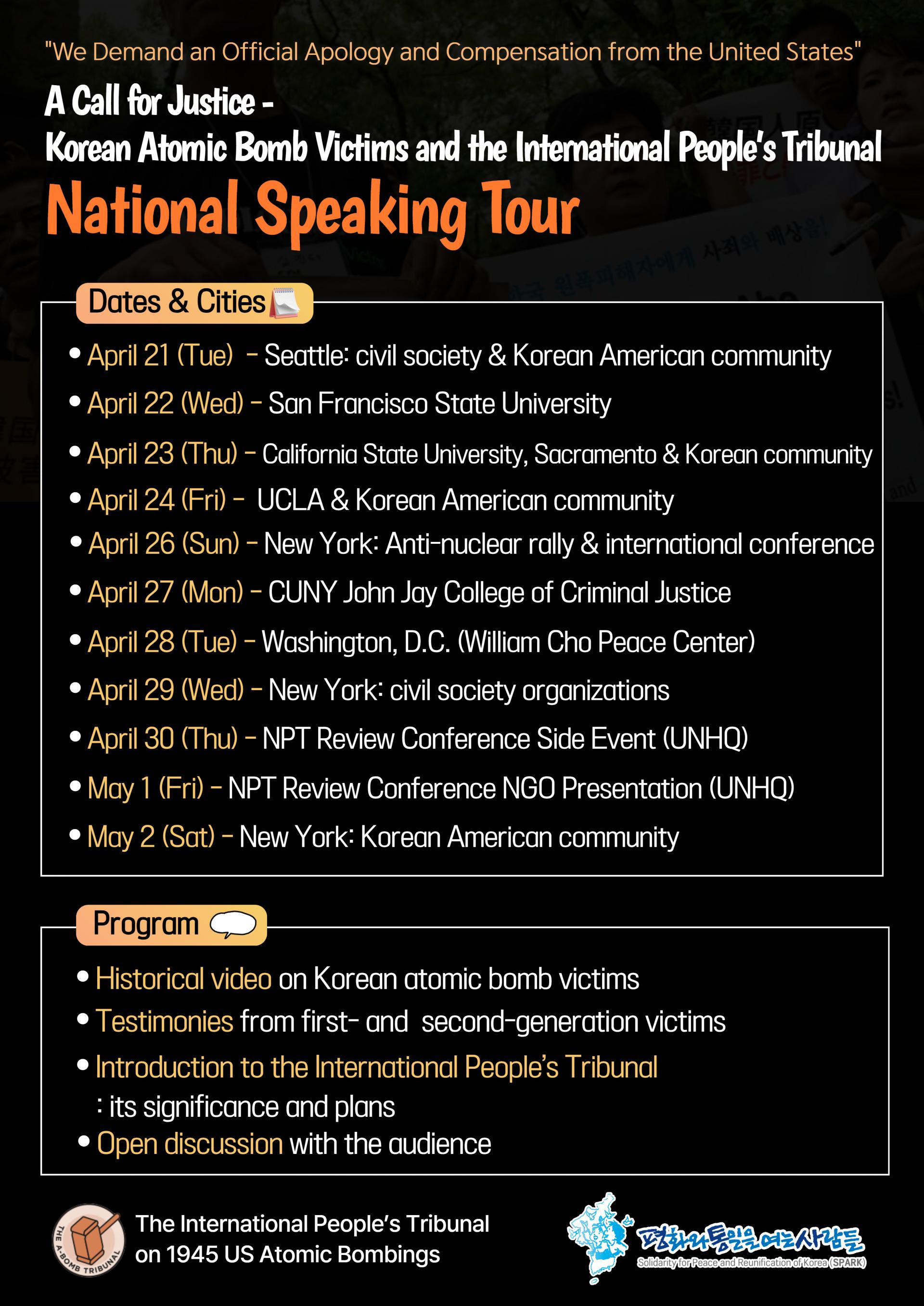
26 April – Chernobyl: Inside the Meltdown airs on National Geographic on Sunday 26th April from 4pm
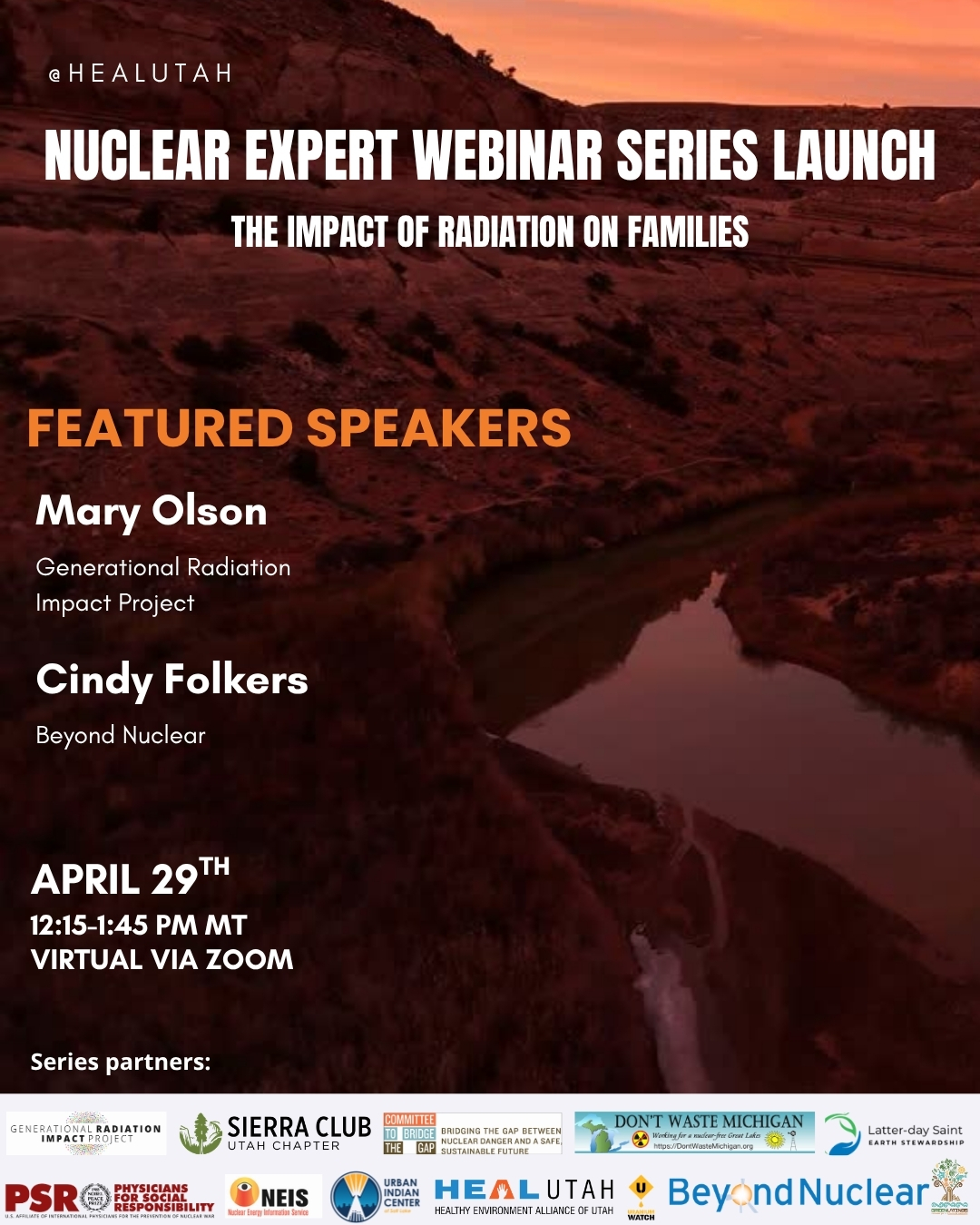
29 April – Nuclear Expert Webinar #1 – Radiation Impacts on Families with Mary Olson and Cindy Folkers
- 12:15 PM MT – 1:45 PM MT
- Location: Virtual – REGISTER TODAY

4 May -West Suburban Peace Coalition to discuss Iran war at May Educational Forum
Monday, May 4, 7:00 – 8:00 PM Central Standard Time
Title: : How Trump’s Narrative Tries to Shape the Reality of the War on Iran.
Contact Walt Zlotow, zlotow@hotmail.com 630 442 3045 for further information
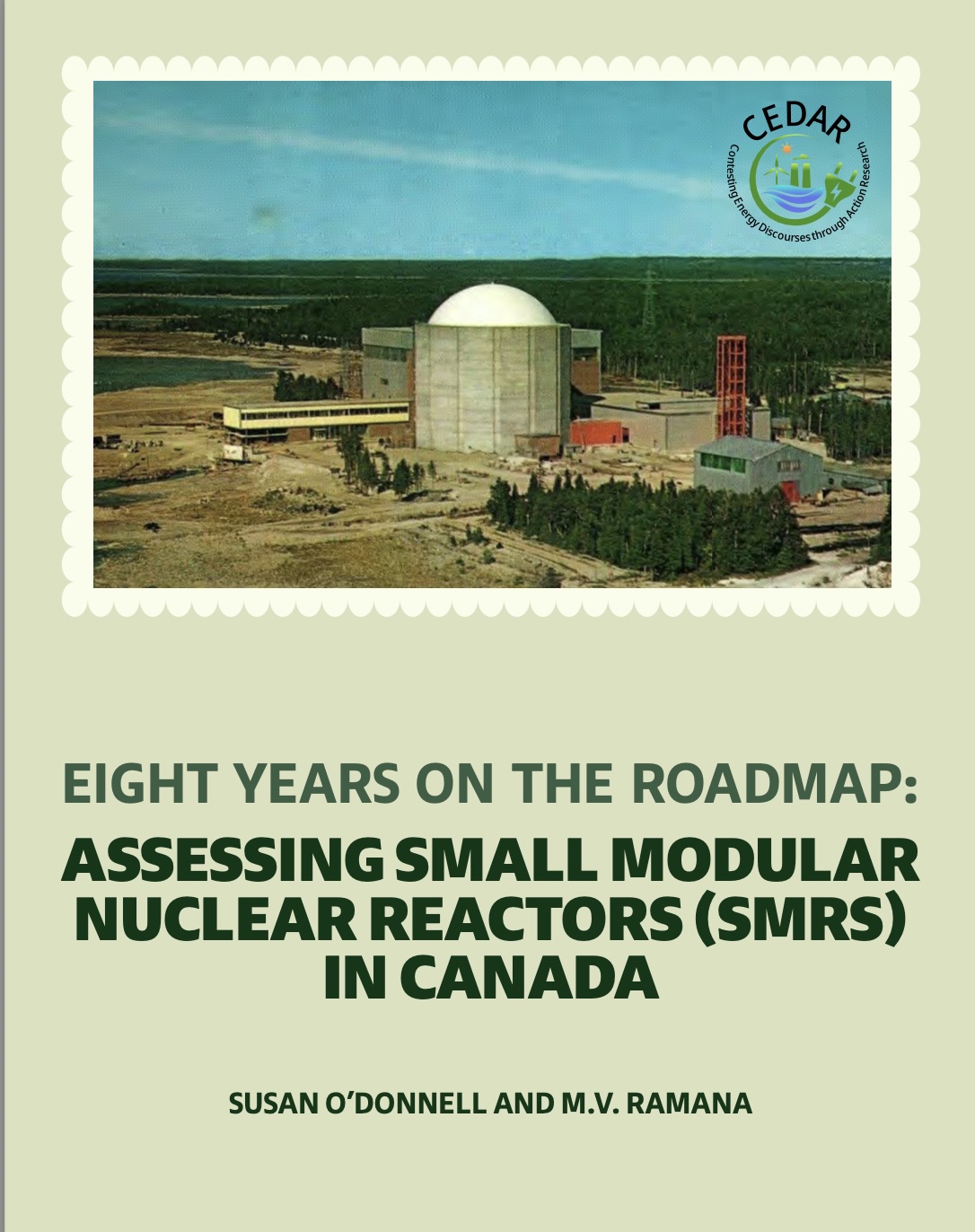
14 May – online event From Bombs to Data Centres: the Face of Nuclear Colonialism

Pine Ridge Uranium is the real threat, not Tehran- Tell Burgum: Stop the Extraction.
Chernobyl: The Lost Tapes – A good documentary on Chernobyl on SBS available On Demand for the next 3 weeks– https://www.sbs.com.au/ondemand/tv-program/chernobyl-the-lost-tapes/2352741955560
To see nuclear-related stories in greater depth and intensity – go to https://nuclearinformation.wordpress.com
-
Archives
- April 2026 (317)
- March 2026 (251)
- February 2026 (268)
- January 2026 (308)
- December 2025 (358)
- November 2025 (359)
- October 2025 (376)
- September 2025 (257)
- August 2025 (319)
- July 2025 (230)
- June 2025 (348)
- May 2025 (261)
-
Categories
- 1
- 1 NUCLEAR ISSUES
- business and costs
- climate change
- culture and arts
- ENERGY
- environment
- health
- history
- indigenous issues
- Legal
- marketing of nuclear
- media
- opposition to nuclear
- PERSONAL STORIES
- politics
- politics international
- Religion and ethics
- safety
- secrets,lies and civil liberties
- spinbuster
- technology
- Uranium
- wastes
- weapons and war
- Women
- 2 WORLD
- ACTION
- AFRICA
- Atrocities
- AUSTRALIA
- Christina's notes
- Christina's themes
- culture and arts
- Events
- Fuk 2022
- Fuk 2023
- Fukushima 2017
- Fukushima 2018
- fukushima 2019
- Fukushima 2020
- Fukushima 2021
- general
- global warming
- Humour (God we need it)
- Nuclear
- RARE EARTHS
- Reference
- resources – print
- Resources -audiovicual
- Weekly Newsletter
- World
- World Nuclear
- YouTube
-
RSS
Entries RSS
Comments RSS
 nuclear-news