Fossil and nuclear energy regimes threaten global security
Opinion: The deadly power of the troika of oil, gas and nuclear energy is unfolding before our eyes
New Brunswick Media Co-Op, by Janice Harvey, March 14, 2022
Vladimir Putin’s terror campaign against Ukraine has pulled back the curtain on the tightly integrated, brittle, and destructive energy regime that fuels the industrialized world. This regime poses an immediate threat to the survival of the people of Ukraine, and the longer-term survival of civilization itself. The deadly power of the troika of oil, gas and nuclear energy is unfolding before our eyes as Ukraine pays the price for a path all our countries have forged.
Energy is a source of two kinds of power – the kind that turns on lights, heats homes, and turns engines and the kind that drives politics. While there are many options for providing the energy services we all need, only some create authoritarian petrostates, transnational corporations with budgets larger than many nations, and billionaire oligarchs. Only some finance wars and inflict gross injustices on those in the paths of rigs and pipelines. Only some emit pollutants that kills millions every year. Only some create deadly wastes that will persist longer into the future than humans have walked on this Earth. Only some turn a conventional missile into a nuclear weapon. Only some destroy the climate that makes Earth liveable.
All these existential threats are associated with the global networks of political and economic power built by transnational energy corporations. Energy policy has long been dominated by ‘iron triangles’ of energy business interests, ‘client’-oriented energy bureaucrats, and captured politicians. Whether it is Putin’s transnational petrodollars, Western Europe’s energy tap line to Russia, or nuclear plants dotting the European landscape, governments and whole countries have become entangled in a dangerous, brittle system that now threatens global security.
The inevitable outcome is the world on a knife-edge.
In the midst of Russia’s oil-financed terror campaign, the international climate science body issued its latest report documenting our collective descent into climate hell. UN Secretary-General Guterres called the report ‘an atlas of human suffering and a damning indictment of failed climate leadership.’
Enter the nuclear industry. After languishing for decades in Western countries due to intractable liabilities, and a legitimacy crisis following narrow escapes and full-blown disasters at Three Mile Island, Chernobyl and Fukushima, opportunistic nuclear interests have seized on the climate emergency to promote itself as the ‘clean’ energy solution. This falsehood has now been exposed in Ukraine. Every nuclear reactor and nuclear waste storage site is a potential nuclear weapon, minus the blast and fireball. All Putin has to do to wreak radioactive havoc across Europe is target a nuclear facility or two with conventional missiles. Uncontrolled nuclear reactions and wind currents will do the rest.
Yet, the Liberal government’s climate action plan includes pouring hundreds of millions into an industry that would build modular nukes to export around the world, each one a target for a despot or a terrorist. This is all laid out in the federal “SMR Action Plan” that the nuclear industry helped to write, with funding disguised within the $8 billion “Net Zero Accelerator”.
New Brunswick is vying to become the hub for producing this deadly commodity. Nuclear experts from the United States have exposed the security threat inherent in the plutonium feedstock – the stuff of nuclear weapons – that one of the New Brunswick models requires. But even without diverting that fuel into a nuclear weapons program, the plant only needs to exist to be a nuclear target.
The Ukraine catastrophe should be enough to halt nuclear expansion in its tracks. Trading one existential threat (fossil fuel dependency) for another (an even wider network of nuclear targets) is a callous, willful betrayal of the public trust by those politicians enabling it…………..
Political leaders in Canada and abroad have two choices before them. They can deepen domestic and global energy and security vulnerabilities and hasten climate breakdown by building more pipelines, escalating oil and gas production, and enabling the expansion of the nuclear industry. Or they can work towards the elimination of energy as a geopolitical weapon and an existential threat to the civilization. It is up to us citizens to hold them accountable for the choice they make.
Why New Technology Is Making Nuclear Arms Control Harder
The US, China, and Russia are locked in a high-tech race to perfect new nuclear capabilities, rendering some Cold War safeguards obsolete. Defense One, PATRICK TUCKER | MARCH 14, 2022
The risks associated with nuclear weapons are rising once again, the heads of three U.S. intelligence agencies told lawmakers last week, as Russia’s brutal invasion of Ukraine intensified.
t wasn’t supposed to be this way.
At the end of the Cold War, President George H.W. Bush boasted that the United States could now reduce its nuclear forces. But today’s arsenals—and global politics—are much different than in 1991. U.S. leaders face threatening dictatorships in Moscow, Beijing, Tehran, and Pyongyang, all racing to create new nuclear bombs and ways to deliver them. Technology, it turns out, is making arms control harder, and that’s forcing a big rethink about nuclear deterrence.
Thirty years later, the United States is spending hundreds of billions of dollars on 21st-century versions of the nuclear triad’s strategic bombers, nuclear-powered submarines, and intercontinental ballistic missiles, or ICBM. At the same time, China, Russia, and the United States are also developing new types of hypersonic missiles that, maneuvering at more than five times the speed of sound, make Cold War-era ICBMs look like Chrysler Imperials. But these new missiles don’t doesn’t replace the old ones: they just add to the stuff each nation must buy to keep up.
Beyond the delivery systems, today’s nuclear command-and-control systems include a vast network of satellites; sensors, including drone-mounted ones; and computer systems constantly being developed, maintained, and upgraded.
Some argue that while U.S. leaders could have used the post-Cold War era’s peace dividend to dismantle global nuclear arsenals, instead the Pentagon’s own ambitions for newer missile-defense technology forced the rising autocratic regimes of other global powers to respond in kind. Heavy U.S. investment in developing new ballistic missile defense, in particular, prompted Russia and China on their current path to develop highly-maneuverable hypersonic weapons.
Several senior U.S. military leaders declined interview requests for this article; Defense Department leaders keep current nuclear concerns close to their vest. But in 2019, the Air Force released a collection of papers in which leaders already were lodging concerns. In it, Maj. Jeff Hill, said that newly developed U.S. defenses against Russian and Chinese missiles “has led each of these two countries to aggressively pursue its own [highly-maneuverable hypersonic missile] programs. Russia specifically highlights ‘American military-technological advances’ including its ballistic missile defense program as an area of concern in relation to deterrence,” citing the work of Kristin Ven Bruusgaard, one of the foremost Western academic experts on Russian nuclear strategy. His work was published as part of a U.S. Air Force Center for Strategic Deterrence Studies student research project that assessed the influence of hypersonic weapons on deterrence.
All this makes preparing for and deterring nuclear war a great deal more complex than it was during the 1950s and 1960s.
“There’s a number of very fundamental assumptions that we have made over the last 30 years, that really are no longer valid,” said Adm. Charles Richard said at September’s Deterrence Symposium. Richard leads U.S. Strategic Forces, or STRATCOM, which oversees the military’s nuclear arsenal. “After the fall of the Soviet Union and the [U.S.] success in Desert Storm, we achieved a national security environment where, I would argue that, the risk of a strategic deterrent failure, and, in particular, the risk of a nuclear deterrence failure, was low…. We started taking it for granted and forgot all the things that we had to do, from a strategic deterrence standpoint, to get us to that environment to begin with.”
………………… China has since vastly expanded its arsenal; in 2020, Pentagon officials estimated it numbered “in the low 200s,” and could double. It has also built out its own nuclear triad, with nuclear-capable stealth bombers; four Type 094 ballistic missile submarines; and on land, truck-mounted missile launchers
and an estimated 300 completed and planned ICBM silos.
………………And the emergence of a third huge nuclear arsenal complicates deterrence theory, STRATCOM’s Richard said.
“In general, deterrence theory doesn’t really account for a three-party problem. How you do deterrence with three, peer nuclear-capable competitors?” Richard said. “The Cold War was very much a two-party competition.”
Meanwhile, U.S. military planners are changing their definition of “strategic” deterrence, weapons, and attacks. During the Cold War, this almost always referred to nuclear war. But today’s planners use the term to include non-nuclear threats and technologies that could have devastating effects—for example, destroying an adversary’s ability to see an attack coming or respond to it.
“Strategic effects can be much broader than simply ‘nuclear,’ in terms of what could possibly be done in cyber or possibly be done in space, critical infrastructure, information domain, role of allies and partners. All of that, I think, requires a very critical relook,” Richard said.
That nuance is often lost in the contemporary conversation about nuclear weapons and deterrence. In 2018, a New York Times article, “Pentagon Suggests Countering Devastating Cyberattacks With Nuclear Arms” sparked frenzied concern that the United States under President Donald Trump was lowering its bar for launching a nuclear strike…………
Future nuclear weapons, including ICBMs, will likely be part of a complex, interconnected digital architecture, and will likely exhibit “some level of connectivity to the rest of the warfighting system,” Werner J.A. Dahm, then-chairman of the Air Force Scientific Advisory Board, predicted in 2016. His warning came on the eve of a major study by the Air Force to see how trustworthy nuclear weapons would be if they were networked together, a study that was never publicly released.
Super Maneuverable Missiles
Perhaps the biggest change to nuclear deterrence is the appearance of new types of hypersonic weapons. Unlike Cold-War era ICBMs, the new class of hypersonics that China and Russia (along with the United States) are pursuing are steerable, allowing an adversary to target a much wider space with one missile, and making such missiles very difficult to defend against…………………..
any country could use a non-nuclear hypersonic missile to strike its adversary’s nuclear command-and-control targets…………….
The development of these new “invincible” weapons—as Russian leader Vladimir Putin has called them—has triggered a concurrent arms race for new concepts to defeat them. One U.S. answer has been the use of new satellite architectures to watch hypersonics as they proceed along their flight path, in addition to new sensors and object-finding software to spot things like mobile missile launchers.
,…………………………………. https://www.defenseone.com/policy/2022/03/why-new-technology-making-nuclear-arms-control-harder/363135/
The Ukraine war is bad for USA’s nuclear industry- hard to get the Highly Enriched Uranium needed from Russia for Advanced Nuclear Reactors
How Russia’s invasion is affecting U.S. nuclear, EE News, By Hannah Northey | 03/14/2022
Russia’s invasion of Ukraine is raising questions about the cost and flow of fuel to existing and yet-to-be commercialized advanced U.S. reactors touted by advocates as a tool for tackling climate change.
President Biden didn’t target the nuclear sector when he issued an executive order this month to block imports of Russian crude and natural gas.
But as the war drags on for a third week, the White House is consulting with the nuclear sector about the potential impact of imposing sanctions on Rosatom, Russia’s state-owned atomic energy company, according to Bloomberg, which cited anonymous sources familiar with the matter.
The White House did not immediately confirm talks with the nuclear industry.
Sanctions on Rosatom, sources told E&E News, could pose long-term challenges for the United States’ fleet of more than 90 reactors running on low-enriched uranium.
While the existing plants have enough fuel for the next six to eight months and possibly longer, experts say sanctions on Russian imports could raise the global cost of low-enriched uranium and rile U.S. plants sensitive to cost swings. Russia supplies 20 percent of the low-enriched uranium needed to run American nuclear plants, according to the Nuclear Energy Institute.
Others say the larger concern may sit with advanced reactor demonstrations expected to come online around 2028 that will require high-assay, low-enriched uranium, or HALEU. That’s because Russia is the only viable commercial supplier globally and other firms are years away from readily providing such fuel, they say.
Groups like Beyond Nuclear have said the Russian invasion highlights the liability of nuclear power and spent fuel, arguing the fuel source cannot be a climate solution.
Frank von Hippel, a physicist and professor emeritus at Princeton University, said the bigger challenge for nuclear power is that the technology is not economically competitive…………..
Russia represents— about 20 percent in 2020 — of the enriched uranium making its way to American reactors. Concerns about what steps the Biden administration would take regarding uranium began surfacing publicly when Reuters, citing sources familiar with the matter, reported earlier this month that NEI urged the White House to keep uranium sales exempt from sanctions (Energywire, March 3)…………………
Focus on advanced reactors
Possible sanctions on Russia could affect the current timeline for the deployment of advanced reactors in the U.S., said Jeff Merrifield, who sat on the Nuclear Regulatory Commission during the Clinton and George W. Bush administrations and is now a Pillsbury Winthrop Shaw Pittman LLP law firm partner.
Merrifield agreed Russia is the most readily available short-term option for providing fuel for advanced reactors that will need HALEU, uranium that’s enriched between 5 percent and 20 percent — higher rates that allow smaller designs to get more power for their size.
The first projects that would need a steady source of HALEU could be the Energy Department’s advanced reactor demonstration program, including a TerraPower plant in Wyoming and an X-energy project in Washington state. Those plants are expected to come online around 2028.
To be sure, sources of HALEU outside Russia are emerging — but industry and regulatory sources E&E News spoke with said it’s a matter of demand and timing as advanced reactors come online…………… https://www.eenews.net/articles/how-russias-invasion-is-affecting-u-s-nuclear/
The return of the nuclear threat
The return of the nuclear threat https://www.dw.com/en/the-return-of-the-nuclear-threat/a-6112192
Nuclear arms were a symbol of the Cold War. The recent Russian threats in the war with Ukraine have put them on the map again for many people. How does deterrence work and what kind of protection does Europe have?
When Russian President Vladimir Putin put Russia’s nuclear force on “a special regime of alert” at the start of the Ukraine war, Europe was stunned. In early March, Putin moved on to the next step, sending nuclear-armed Russian submarines and mobile missile units into military exercises. Was he threatening a nuclear attack?
With more than 6,300 warheads, Russia has the world’s largest nuclear arsenal. Within NATO, the United States has the largest nuclear force, with about 5,800 nuclear warheads. France is said to have almost 300 warheads, and the UK allegedly has about 215. Exact figures are not available as the nations in question keep a lot of information under wraps in connection with their nuclear programs.
European protection from nuclear attack
Notwithstanding the US’s role as nuclear umbrella, European countries could not prevent a nuclear attack with military means. The “umbrella” is based on the assumption that an adversary would not dare to attack NATO countries with nuclear weapons because that aggressor would have to expect a counterattack.
Psychology of deterrence
NATO’s nuclear powers pursue different concepts of deterrence. France and Britain rely on a so-called minimum deterrent. They do not assume an exchange of nuclear strikes over several days, they believe the ability to retaliate or to stop the opponent with a “final warning shot” (France) to be sufficient.
The US, on the other hand, relies on deterrence that includes nuclear weapons with reduced explosive power — US military planners envisage, at least theoretically, the possibility of “limited nuclear war.”
From a legal point of view, almost any use of a nuclear weapon, with the massive impact it has on civilians, violates international humanitarian law. Theoretically, conceivable exceptions include a limited nuclear attack on a warship at sea.
German contribution to deterrence
Germany’s contribution to Europe’s nuclear deterrence involves German Air Force Tornado fighter jets stationed at Büchel air base in the state of Rhineland-Palatinate. In an emergency, the jets, with German crews, would fly US nuclear weapons to the target. At least once a year, Bundeswehr pilots train dropping US nuclear bomb dummies.
The Netherlands, Belgium and Italy also participate in NATO’s nuclear sharing arrangements. Between 100 and 150 comparatively imprecise nuclear gravity bombs certified for Tornado aircraft are reportedly currently stored in Europe.
“The bombs are a relic of a bygone era whose military significance today is minor,” says Peter Rudolf, a political scientist at the German Institute for International and Security Affairs (SWP) in Berlin. In order to use them, however, the enemy’s air defenses would first have to be eliminated, which at the most seems conceivable in a major war.
Nuclear sharing concept
German Chancellor Olaf Scholz says the German contribution to the nuclear deterrent is not up for discussion, even if the nuclear sharing concept has quite a few critics in the governing coalition. Defense Minister Christine Lambrecht announced on Monday that Germany will replace some of its ageing Tornado bomber jets with US-made F-35 fighter jets capable of carrying nuclear weapons.
Immediately after Russia’s invasion of Ukraine, Scholz had held out the prospect of purchasing those planes.
Still regarded as an important political symbol today, nuclear sharing had far greater significance for Germany during the Cold War than it does today. In the days of the Warsaw Pact, Germany would have been situated at the heart of the battle in the event of an armed conflict with NATO. Nuclear sharing opened up the possibility for the German government in Bonn to exert at least limited influence on the alliance’s nuclear strategy.
Who decides on the use of nuclear arms?
The US president is the first to decide on the use of the US nuclear weapons stored in Germany, Italy, Belgium and the Netherlands. He or she would authorize the release of the bombs, and the country where they are deployed would have to agree to the bombs being dropped by its own fighter jets. Before such a deployment, the other NATO allies would presumably consult in the North Atlantic Council (NAC), NATO’s principal political decision-making body.
The deployment of the French nuclear force is decided solely by the French president, and the British prime minister makes the decision for the UK. The three decision-making centers for nuclear weapons are considered an element of deterrence, as they make it difficult for an opponent to calculate how NATO would react in the event of an attack.
Nuclear weapons in the Ukraine war
Russian military doctrine is no stranger to the use of tactical nuclear weapons on the battlefield. Russia possesses such weapons, as does the US. The media debated the possible use of such tactical nuclear weapons over the Black Sea after the Russian invasion of Ukraine, but so far Western military observers have no evidence that the Russian military is considering or preparing to use tactical or sub-strategic nuclear weapons.
“First and foremost, the Russian threats have a political function,” says SWP expert Rudolf. “It is a message to the US not to interfere in Ukraine beyond a certain limit.”
Nuclear vs. chemical weapons
The Chemical Weapons Convention outlaws the use of chemical weapons internationally. Russia officially destroyed its last chemical warhead nearly five years ago. The US aims to achieve that goal next year. Unlike chemical weapons, which were used even after World War II (most recently in the civil war in Syria), nuclear weapons have not been used since atomic bombs were dropped on Hiroshima and Nagasaki in Japan in World War II.
“There seems to have been a normative threshold since 1945 to use nuclear weapons in conflicts, despite US deliberations in the 1950s and 1960s,” Rudolf says, adding that policymakers have developed a great reluctance where nuclear arms are concerned.
“This is probably due to feelings of moral discomfort, as well as fear of the consequences,” the SWP expert says, arguing that after all, the use of nuclear weapons “could set off a chain that ends in mutual annihilation.”
UK government now considering extending life of Sizewell nuclear power station by 20 years
UK looking to extend life of nuclear plant by 20 years amid energy crisis, Ft/com 14 Mar 22, Sizewell B in Suffolk was due to be decommissioned in 2035 and can meet about 3% of Britain’s electricity demand
The UK is looking at a 20-year extension of the Sizewell B nuclear power plant on England’s east coast to 2055 as Boris Johnson aims to bolster domestic energy supplies following Russia’s invasion of Ukraine. The extension is one of several options under consideration as the prime minister draws up a new “energy supply strategy”, which will be published next week against the backdrop of highly volatile international gas prices and an escalating cost-of-living crisis. ……………………….
Britain is set to experience a significant loss in nuclear capacity by the end of the decade as EDF of France and the UK’s Centrica, which own all of the current fleet of reactors, have been forced to close several earlier than planned.
EDF’s 1.2 gigawatt Sizewell B plant in Suffolk, which started operating in 1995 and can meet about 3 per cent of the UK’s electricity demand, is the only one of Britain’s six remaining atomic power plants that will continue generating beyond the end of the decade. Only one new station, the 3.2GW Hinkley Point C in Somerset, is currently under construction. It is due to come on stream in 2026.
Ministers are encouraging investors to build another new plant on a site adjacent to Sizewell B but are also keen for EDF to invest the estimated £500mn-£700mn that would be needed to extend the lifetime of the existing station to 2055.
Kwasi Kwarteng, business secretary, visited Sizewell in January, where he met EDF directors and some of the workforce. Government officials said Kwarteng was supportive towards EDF, which is “actively exploring” a 20-year extension for Sizewell B and is aiming to take a final decision on the project in 2024, for which UK government approval would be required. “It probably will be extended,” said one official. ……………. https://www.ft.com/content/51d4ff8c-f0c0-4082-8db6-11c031be1420
Another burst of tax-payer funding for Bill Gate’s gee-whiz Natrium reactor project
TerraPower receives $8.5M grant to explore recovering uranium from used nuclear fuel, Oil City News
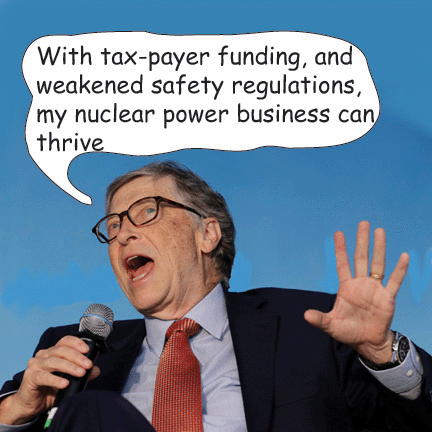
CASPER, Wyo. — TerraPower, the Bill Gates–founded company working toward building a new nuclear reactor in Kemmerer, Wyoming, said in a press release Monday that it has been awarded an $8.5 million grant from the U.S Department of Energy’s Advanced Research Project Agency – Energy (ARPA-E).
The grant funding is part of ARPA-E’s Optimizing Nuclear Waste and Advanced Reactor Disposal Systems (ONWARDS) program that aims to increase the use of nuclear power as a source of clean energy while limiting the amount of nuclear waste created by advanced reactors……
TerraPower and GE technology is going into the new Natrium nuclear reactor, which is expected to be built in Wyoming as part of the U.S. Department of Energy’s Advance Reactor Demonstration program.
“TerraPower is further demonstrating, through the Molten Chloride Reactor Experiment (MCRE), a uranium chloride salt–fueled concept with the DOE, Southern Company and other partners, and advancing medical research and innovation through its TerraPower Isotopes® subsidiary,” the press release states.
TerraPower President and CEO Chris Levesque added in the press release that “TerraPower continues to advance nuclear energy’s promise for our country and the world………… https://oilcity.news/wyoming/energy/2022/03/14/terrapower-receives-8-5m-grant-to-explore-recovering-uranium-from-used-nuclear-fuel/
Rolls Royce wants to hurry up the introduction of small nuclear reactors, but UK govt is focussed on a big one for Wylfa

Rolls-Royce calls for accelerated SMR rollout as Boris considers bigger plans for Wylfa
14 MAR, 2022 BY CATHERINE KENNEDY ROLLS-ROYCE IS APPEALING TO THE UK GOVERNMENT TO SPEED UP THE ROLLOUT OF SMALL MODULAR REACTORS (SMRS), WHILE PRIME MINISTER BORIS JOHNSON IS REPORTEDLY KEEN TO REVIVE PLANS FOR THE WYLFA NEWYDD NUCLEAR POWER PLANT IN RESPONSE TO THE UK ENERGY CRISIS.
There is a pressing need to improve the UK’s energy security, with prices soaring due to the Russian invasion of Ukraine, and alternative solutions are being explored to plug the gap.
Rolls-Royce submitted SMR designs for Wylfa and Trawsfynydd for assessment last week. However extensive safety checks are needed and these are not expected to come online until the 2030s. As such, government sources told the Telegraph that Rolls-Royce is frustrated with the lack of progress.
Meanwhile according to The Times, government sources have also said Johnson is determined to press ahead with plans for a large scale nuclear plant at Wylfa, with the government in talks with US nuclear reactor manufacturer Westinghouse and the engineering firm Bechtel about a proposal to develop the site. The government has so far set aside £120M to support the project………..
Ukraine war triggers debate on Japan’s nuclear option,
The Interpreter. PURNENDRA JAIN, 14 Mar 22,
In a new and volatile strategic environment, a decades-
old commitment on non-proliferation is up for discussion.
In the wake of the Ukraine conflict, Shinzo Abe, Japan’s former prime minister and now head of the largest faction of the ruling Liberal Democratic Party (LDP), has suggested that Japan consider hosting US nuclear weapons facilities on Japanese soil, similar to some European nations, such as Germany, which have nuclear sharing arrangements with the United States.
Abe’s suggestion was made in the context of Ukraine having renounced nuclear weapons in 1994, leaving itself vulnerable today. The announcement also comes on top of deepening concerns about China’s growing military assertiveness around Japan’s maritime space and beyond, and the dangerous situation on the Korean peninsula with threats from the nuclear-capable rocket-launching North Korea.
Debates over whether Japan should host nuclear weapons or even go fully nuclear are not new………….. Discussion has since continued among political and scholarly communities as to whether Japan should go nuclear, opt for a nuclear sharing arrangement with the United States by hosting nuclear weapons, or maintain its current non-nuclear weapons status.
This latest eruption though is in a different context. This time, chairman of the General Council of the LDP Tatsuo Fukuda, who like his father Yasuo Fukuda before him holds an influential ruling party post and is touted as a future prime minister, has suggested that “we must not shy away from any debate whatsoever”. Last year’s LDP party presidential candidate and current LDP policy chief Sanae Takaichi also favours a debate. Some smaller conservative opposition parties want to include nuclear options in policy discussions while considering Japan’s strategic objectives. The main opposition parties have, however, strongly resisted any such prospects, arguing in favour of Japan’s non-nuclear status.
Abe’s suggestion was promptly and solidly rejected by Prime Minister Fumio Kishida, as well as by the leader of the Komeito, the junior coalition partner of the ruling LDP. Even Defence Minister Nobuo Kishi, Abe’s younger brother, adopted into the Kishi family, also dismissed the idea of hosting nuclear weapons on Japanese shores. Kishi may have expressed this view in order to align with his boss, Prime Minister Kishida, rather than reflecting his true thinking on the matter, given his political pedigree.
Kishida quickly confirmed that Japan firmly adheres to the three non-nuclear principles adopted in 1967, to not possess, produce or permit the introduction of nuclear weapons into Japan’s territory. These principles remain sacrosanct, even though Japan has made substantial departures in defence and security matters in the past decade…………….
Not only has the Kishida government announced an intended update to the NSS, first issued in 2013, it has also promised to revise the National Defence Program Guidelines and Mid-Term Defence Program issued in 2013 and 2018. All these updates and revisions are undertaken in view of a rapid transformation in the strategic environment……………….
| Japan, along with Germany, has often been recognised as an example of a “civilian state”. Germany currently hosts US nuclear weapons facilities and, in view of the Ukraine conflict, has announced a significant increase to its defence budget. Calls are now being made to urge Japan to follow suit. The postwar US-Japan Treaty of Mutual Cooperation and Security has ensured that Japan has lived happily under US extended deterrence, including the nuclear umbrella. This arrangement is unlikely to change, barring an existential threat to Japan’s territory and sovereignty. But what seemed to be taboo in terms of Japan’s strategic policy – that is, breaching one per cent of GDP on defence spending and developing strike capabilities – is now being discussed seriously. No policy in international relations is eternal, it must change as a nation’s interests change. https://www.lowyinstitute.org/the-interpreter/ukraine-war-triggers-debate-japan-s-nuclear-option |
US to help Philippines develop nuclear power program; groups push renewable energy instead
US to help Philippines develop nuclear power program; groups push renewable energy instead
Angelica Y. Yang – Philstar.com
March 14, 2022 MANILA, Philippines — The Philippines and the United States signed a memorandum of understanding last week to work together to develop the Philippines’ nuclear power program.
The MOU was signed by Energy Undersecretary Gerardo Erguiza and US Undersecretary of State for Arms Control and International Security Bonnie Jenkins………….
The EO, which was signed on February 28, instructs the DOE to develop and implement the nuclear energy program under the Philippine Energy Plan, a comprehensive energy blueprint which details the energy sector’s goals in achieving a clean energy future.
Duterte said in the EO that nuclear power is a “viable alternative source” of baseload power that can bridge the gap between rising demand and supply.
The EO also instructed an interagency body — the Nuclear Energy Program Inter-Agency Committee —to study the possible use of the $2.2-billion Bataan Nuclear Power Plant, which was mothballed and never refueled.
Public policy think tank InfraWatch PH earlier told Philstar.com that Duterte’s EO comes a little too late as he has only a few months left in his term. This leaves the fate of his nuclear push to his successor who may choose to adopt or reverse the new energy policy.
‘Nuclear will not solve climate crisis’
Manila-based climate and energy policy group Institute for Climate and Sustainable Cities said that, contrary to the government’s claims, nuclear is no better than coal.
“Nuclear is even worse than coal for energy security and self-sufficiency. It has always been plagued with protracted construction timelines and gargantuan costs that require constant massive subsidies,” ICSC Executive Director Red Constantino told Philstar.com over email on Monday.
“[Nuclear] can only operate on a single level and cannot be ramped up or down. It is extremely rigid and completely unfit to respond to the country’s load profile,” he said.
Constantino said the DOE should take its power sector modernization goals more seriously and prioritize flexible generation by ramping up support for renewable energy.
Last week, activists from environmental group Greenpeace Philippines marched to the DOE and called the push for nuclear power a “questionable energy policy which is the last thing the country needs.”
The protest took place on March 11 during the commemoration of the Fukushima Daiichi nuclear disaster in 2011, which killed at least 20,000 people, contaminated 240,000 square kilometers of land and caused $235 billion (around P12 trillion) of damage.
“Greenpeace…maintains that nuclear power will not solve the climate crisis. The entire nuclear power plant life cycle contributes significantly to climate change, and these facilities take an average of 10 years to build,” the group said in a statement.
Citing findings by the Intergovernmental Panel on Climate Change, Greenpeace said humanity only has until 2030 to keep the global temperature rise within 1.5 degrees Celsius.
“Setting up the country’s nuclear program and building a plant will take decades. Meanwhile, Filipinos will continue to suffer from climate impacts,” it said.
nstead of focusing on a nuclear policy, the current administration should have instead doubled its efforts to ensure that renewable energy “gets a better foothold” in the country’s energy future, according to Greenpeace Campaigner Khevin Yu. https://www.philstar.com/headlines/2022/03/14/2167242/us-help-philippines-develop-nuclear-power-program-groups-push-renewable-energy-instead
US Republican senators say they will not back Iran nuclear deal
US Republican senators say they will not back Iran nuclear deal, Aljazeera, 14 Mar 22,
Republican lawmakers oppose, but lack power to block, an agreement with Tehran sought by US President Joe Biden. Forty-nine of the 50 Republicans in the US Senate have announced they will not back a new nuclear deal between Iran and world powers, underscoring their party’s opposition to attempts to revive a 2015 accord amid fears multilateral nuclear talks might collapse.
In a statement on Monday, the Republican senators pledged to do everything in their power to reverse an agreement that does not “completely block” Iran’s ability to develop a nuclear weapon, constrain its ballistic missile programme and “confront Iran’s support for terrorism”
………………………. US lawmaker Rand Paul was the only Senate Republican who did not sign Monday’s statement. In an emailed statement, he said, “Condemning a deal that is not yet formulated is akin to condemning diplomacy itself, not a very thoughtful position.”
No congressional Republicans supported the 2015 nuclear agreement between Tehran and the so-called “P5+1” countries, the five permanent members of the UN Security Council – the US, UK, Russia, China and France – plus Germany. A handful of Democrats also objected.
US Deputy Secretary of State Wendy Sherman said during the weekend that Biden administration officials believe an agreement is near and “we would like all of the parties – including Russia, which has indicated it’s got some concerns – to bring this to close.”…………………………
The 2015 Iran Nuclear Agreement Review Act gives Congress the right to review an agreement, but lawmakers are unlikely to be able to kill a deal outright after failing to do so in 2015 when Republicans controlled Congress.
Democrats now hold slim majorities in both the House of Representatives and Senate and are unlikely to turn against Biden in sufficient numbers to stop a major initiative like an Iran deal.
Nevertheless, the Republican opposition ensures Congress cannot adopt any nuclear agreement with Iran as a permanent treaty, which requires a two-thirds vote in favour, rendering it vulnerable to abandonment by a future Republican president.
A spokesperson for Iran’s foreign ministry said on Monday that Washington needs to decide to wrap up a deal……… https://www.aljazeera.com/news/2022/3/14/us-republican-senators-say-they-will-not-back-new-iran-nuclear
11 years on, Fukushima morass still poses danger
| 11 years on, Fukushima morass still poses danger By KARL WILSON in Sydney | CHINA DAILY 2022-03-14 ”…………………………. Little progress has been made on the most pivotal and hardest work of decommissioning the Fukushima Daiichi power plant-how to remove the nuclear residue from the meltdown. The plant owner, Tokyo Electric Power Co, has said it could take another 30 years to retrieve undamaged fuel, remove resolidified melted fuel debris, disassemble the reactors and dispose of contaminated cooling water.The International Research Institute for Nuclear Decommissioning of Japan estimated that the nuclear waste mix from melted fuel rods and other materials in pressure vessels that melted during the accident could weigh as much as 880 metric tons. Hiroaki Koide, a retired researcher at Kyoto University, said the Japanese government and Tokyo Electric Power Co’s 30-40 year plan for decommissioning the reactors could not be achieved because it would be “impossible even in 100 years” to remove the large amount of scattered nuclear debris, which would have to be sealed in a “sarcophagus”. Moreover, 11 years after the disaster, the reactors at Fukushima are still being cooled down, said associate professor Nigel Marks of the physics and astronomy department at Curtin University, Western Australia. “And this will continue for many years to come. A vast number of large storage tanks have been built on the site, but space is rapidly running out.” Despite resistance from locals and neighboring countries, the Japanese government is sticking with its decision in April last year to discharge the nuclear contaminated water into the sea starting in spring next year. About 1 million tons of radioactive wastewater, now stored in 1,000 tanks on the site, was used to cool the reactors and contains radioactive cesium, strontium, tritium and other radioactive substances……………. http://global.chinadaily.com.cn/a/202203/14/WS622e7e15a310cdd39bc8c4ef.html |
China continues to resist U.S. demand to join “global web to strangle Russia”
Global TimesMarch 15, 2022 US cannot expect China to cooperate under its suppression: Global Times editorial Edited On Monday, Member of the Political Bureau of the CPC Central Committee and Director of the Office of the Central Commission for Foreign Affairs Yang Jiechi met with US National Security Advisor Jake Sullivan in Rome, Italy. They […]
China continues to resist U.S. demand to join “global web to strangle Russia” — Anti-bellum Global Times editorial https://wordpress.com/read/feeds/113283937/posts/3888946559
Edited
On Monday, Member of the Political Bureau of the CPC Central Committee and Director of the Office of the Central Commission for Foreign Affairs Yang Jiechi met with US National Security Advisor Jake Sullivan in Rome, Italy. They conducted candid, deep and constructive communication on China-US relations and international and regional issues of common concern. Yang said the implementation of the consensus between the two heads of state is the most important task for China-US relations. He stressed that the Taiwan question concerns China’s sovereignty and territorial integrity, and expounded on China’s solemn position on issues related to Xinjiang, Tibet and Hong Kong, pointing out that these issues concern China’s core interests and are China’s internal affairs that allow no foreign interference. In addition, Yang also expounded on China’s position on the Ukraine issue. Readouts of the White House before and after the talks both mentioned Ukraine issue and maintaining open lines of communication between the US and China.
Some analysts believe that it is more likely that the US has proposed the meeting, because judging from the posture, it is the US that needs to ask China for help in the context of the Russia-Ukraine conflict.
…Washington has taken some petty actions a day before the meeting, all related to Ukraine issue. For example, US media quoted “anonymous senior US officials” as saying that Russia had asked China for “military aid,” including drones, after the Russia-Ukraine conflict escalated. Moreover, Sullivan on the same day claimed that there will “absolutely be consequences for large-scale sanctions evasion efforts or support to Russia to backfill them.” Washington’s intention to threaten Beijing is obvious. It is an old US diplomatic tactic to use disinformation and intimidation to secure a favorable position in negotiations. But China never buys it.
These actions from the US also show that Washington is quite anxious about the Ukraine issue. It wants China to dance to its tune. What the US hopes for is to weave a global web to strangle Russia, making all countries part of this web without any “loophole.” The US is the instigator of the Ukraine crisis; yet, it wants to exploit the whole world to expand its own strategic interests. This makes people wonder: Where does the US get its confidence from? Has it been dominating the world for so long that it thinks it even controls the lever of the Earth’s rotation? If Washington wants to forcibly tie China-US relations to the Russia-Ukraine crisis, it is on the wrong track and will definitely be disappointed.
The Russia-Ukraine crisis is worthy of talks, but not in this way. A Chinese saying goes, “Let he who tied the bell on the tiger’s neck take it off.” The problem that was created by the US cannot and should not be solved by China. Besides, China and the US should handle their relations well before they can better coordinate stances as the third parties. In other words, Washington should make practical moves to make China feel the US is a reliable major power.
Last year, US leaders and senior officials have stated that the US has no intention to seek a new Cold War or change China’s system, that the revitalization of US alliances is not anti-China, that the US does not support “Taiwan independence”, and that it is not looking for conflict or confrontation with China. But all these are still no more than empty words. The US Congress recently passed an act that is politically manipulating the map of the island of Taiwan, creating “two Chinas” and “one China, one Taiwan.” This was not only a blatant provocation of China’s territorial integrity but also another proof that Washington betrays its promises. There are many other examples. In this circumstance, why does the US think that China should “help” it out?
On the Ukraine issue, China has been independently making judgement in the spirit of objectivity and fairness and based on the merits of the matter itself. It has been playing a constructive role in facilitating peace talks. China has repeatedly called international community to jointly support Russia-Ukraine peace talks, achieve substantive results as soon as possible, and promote de-escalation of the situation. Such a responsible attitude will not budge, even slightly, under US pressure….
In terms of diplomacy, the US appears to be rather inconsistent now. The profound reason is Washington’s shortsightedness. This has led the US into a quagmire when dealing with foreign relations. It can only solve the problems superficially, and it arrogantly believes the world should be at its service. As a result, it always fails to handle relations with other major powers and leaves a mess in regional issues. If the policy elites in Washington cannot change their minds, it will never find the keys to solve these problems.
Hamid Karzai warns Ukraine against repeating Afghan tragedy
The HinduMarch 9, 2022 Ukraine should learn Afghanistan lessons, should not get involved in big power games, says Hamid Karzai Excerpt You’re drawing parallels between Ukraine and Afghanistan when it comes to the big power games. Many have warned that with its occupation or continuing invasion of Ukraine, Russia could face another version of what […]
Hamid Karzai warns Ukraine against repeating Afghan tragedy — Anti-bellum
The Hindu
March 9, 2022
Excerpt You’re drawing parallels between Ukraine and Afghanistan when it comes to the big power games. Many have warned that with its occupation or continuing invasion of Ukraine, Russia could face another version of what it had attempted in Afghanistan in 1979. Would you agree?
Karzai: There is already talk of mercenaries and foreign fighters coming from the rest of the world to Ukraine. In Afghanistan, some mercenaries came to our country. And the consequence of those coming from abroad, just like al–Qaeda and Osama bin Laden and the rest of them, you saw the consequences of that for Afghanistan. If I were Ukrainian, if I were making decisions in Ukraine, I would by all means stop the arrival of foreign mercenaries to my country, keeping Afghanistan’s tragic experience in mind. We’re suffering from that till today.
The money that the United States seized from Afghanistan, the Afghan assets in the U.S. banks. One reason given was that. So that should be a lesson that the Ukrainians should learn from and walk away from these extremely dangerous games that others may play on their soil.
March 14 Energy News — geoharvey

Opinion: ¶ “Why Putin Is Hell-Bent On Capturing Ukraine’s Nuclear Reactors” • “Turning off the power nationwide, as [Russian force] have done on a smaller scale in Mariupol, in the middle of winter creates mass hardship and suffering for the Ukrainian people, and that is apparently a weapon Putin feels free to utilize,” one expert […]
March 14 Energy News — geoharvey
The chickens come home to roost on UK energy policy — daryanenergyblog

For years I’ve warned of the dangers of the Tories policy on energy. Well now we see the inevitable end result. People in the UK are getting letters warning them of a massive increase in energy costs from April the 1st onwards. And I’m afraid, its not an April fools joke. Bills are going up […]
The chickens come home to roost on UK energy policy — daryanenergyblog
1 This Month
26 April – Chernobyl: Inside the Meltdown airs on National Geographic on Sunday 26th April from 4pm
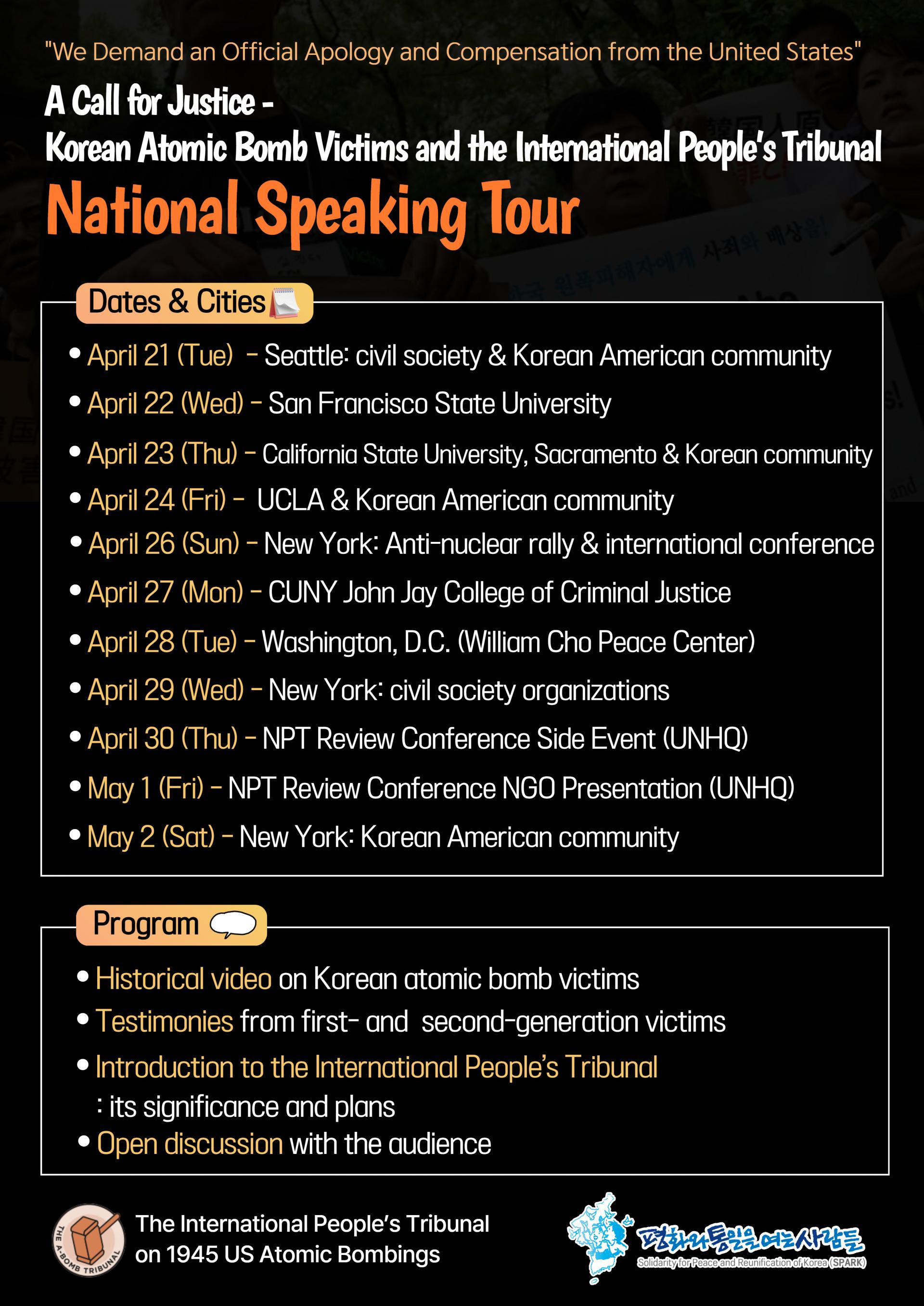

29 April – Nuclear Expert Webinar #1 – Radiation Impacts on Families with Mary Olson and Cindy Folkers
- 12:15 PM MT – 1:45 PM MT
- Location: Virtual – REGISTER TODAY

4 May -West Suburban Peace Coalition to discuss Iran war at May Educational Forum
Monday, May 4, 7:00 – 8:00 PM Central Standard Time
Title: : How Trump’s Narrative Tries to Shape the Reality of the War on Iran.
Contact Walt Zlotow, zlotow@hotmail.com 630 442 3045 for further information
14 May – online event From Bombs to Data Centres: the Face of Nuclear Colonialism
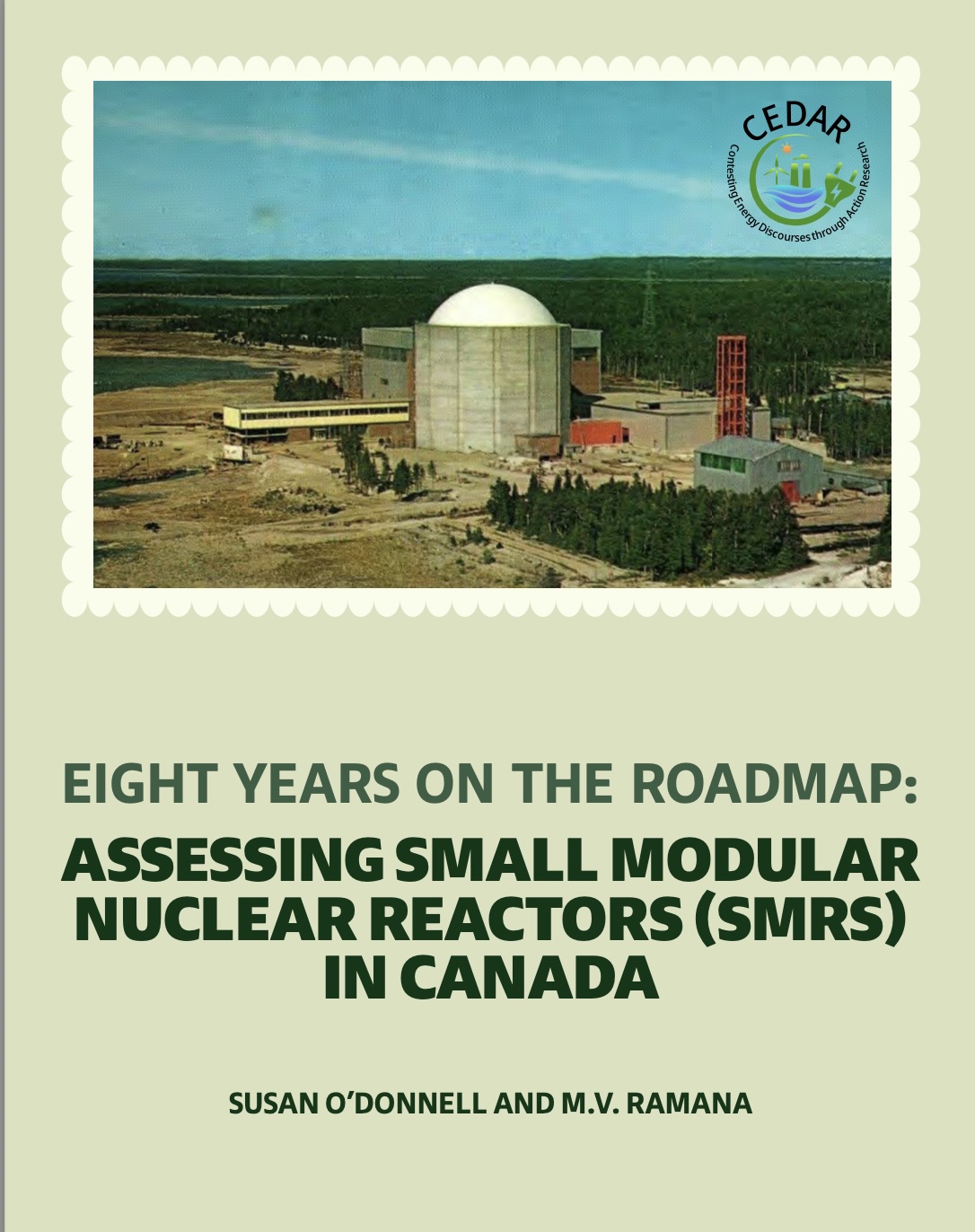

Pine Ridge Uranium is the real threat, not Tehran- Tell Burgum: Stop the Extraction.
Chernobyl: The Lost Tapes – A good documentary on Chernobyl on SBS available On Demand for the next 3 weeks– https://www.sbs.com.au/ondemand/tv-program/chernobyl-the-lost-tapes/2352741955560
To see nuclear-related stories in greater depth and intensity – go to https://nuclearinformation.wordpress.com
-
Archives
- April 2026 (317)
- March 2026 (251)
- February 2026 (268)
- January 2026 (308)
- December 2025 (358)
- November 2025 (359)
- October 2025 (376)
- September 2025 (257)
- August 2025 (319)
- July 2025 (230)
- June 2025 (348)
- May 2025 (261)
-
Categories
- 1
- 1 NUCLEAR ISSUES
- business and costs
- climate change
- culture and arts
- ENERGY
- environment
- health
- history
- indigenous issues
- Legal
- marketing of nuclear
- media
- opposition to nuclear
- PERSONAL STORIES
- politics
- politics international
- Religion and ethics
- safety
- secrets,lies and civil liberties
- spinbuster
- technology
- Uranium
- wastes
- weapons and war
- Women
- 2 WORLD
- ACTION
- AFRICA
- Atrocities
- AUSTRALIA
- Christina's notes
- Christina's themes
- culture and arts
- Events
- Fuk 2022
- Fuk 2023
- Fukushima 2017
- Fukushima 2018
- fukushima 2019
- Fukushima 2020
- Fukushima 2021
- general
- global warming
- Humour (God we need it)
- Nuclear
- RARE EARTHS
- Reference
- resources – print
- Resources -audiovicual
- Weekly Newsletter
- World
- World Nuclear
- YouTube
-
RSS
Entries RSS
Comments RSS
 nuclear-news