Fukushima 10 years on – an overview
Peace Boat 7th March 2021 Ten years have passed since the devastating earthquake and tsunami that struck eastern Japan on March 11, 2011, and the subsequent disaster at the TEPCO Fukushima Daiichi nuclear power plant.
This article outlines the current situation of the people impacted by this unprecedented nuclear
disaster, the prospects (or lack thereof) for the decommissioning of the plant that caused the disaster, and the possibility of using this experience as an opportunity to phase out nuclear power in Japan.
https://peaceboat.org/english/news/fukushima-10-years-on-an-overview
How to dispose of 50 tons of weapons-grade plutonium for 10,000 years?
 The need for a long-term commitment to plutonium disposal. The Energy Department faces the daunting and unprecedented task of geologically disposing of tens of tons of weapons-grade plutonium, so it can never be used again, while ensuring its toxic dangers do not threaten the environment over a time period longer than the existence of human civilization.
|
Can the Energy Department store 50 tons of weapons-grade plutonium for 10,000 years? Bulletin of the Atomic Scientists, By Robert Alvarez | March 8, 2021 The nuclear age is undergoing a paradigm shift. During much of the latter half of the past century, the nuclear enterprise was ascendant; now, it has entered a period of decline and uncertain long-term custodianship. This reversal of fortune is especially apparent in the United States’ efforts to rid itself of its unwanted reserves of plutonium. It’s been more than 75 years since a blinding flash lit up the pre-dawn sky at Alamogordo in the Chihuahua Desert of New Mexico. On July 16, 1945, a single gram of the grapefruit-size sphere of plutonium at the center of the world’s first nuclear explosion released three times the destructive force of the largest conventional bomb used during World War II. [1]
Thereafter, the United States government built a grossly oversized nuclear arsenal and never envisioned having to stop building it. Between 1944 and 1994, the Energy Department and its predecessors produced 99.5 metric tons of plutonium for use in an estimated 70,000 nuclear weapons. (An additional 11 tons were produced or acquired for research and development purposes.) The perverse logic of the nuclear arms race reached a point of ultimate absurdity during the early Reagan presidency, when it was asserted that the winner of a nuclear war would be the one with the most weapons left afterward. Now, 80 percent of the US nuclear arsenal has been discarded, and the United States is still struggling with the strategic mistake of producing so much fissile material to begin with. Currently, a total of 61.2 tons of plutonium is declared excess to the needs of the US government, of which 53.4 tons is designated for nuclear weapons. The Energy Department faces the daunting task of geologically disposing of this huge cache of weapons-grade plutonium, so it can never be used again, while ensuring that its does not threaten the environment over a time period longer than human civilization has existed. Achieving safe plutonium disposal will be a multifaceted challenge requiring both long-term commitments and large financial investments at a time when nuclear modernization programs are also competing for federal funding. But arms control and disarmament will not progress as they should unless the excess plutonium problem is solved. The scope of the problem. Safely ridding the nation of one of the world’s largest excess stockpiles of weapons-grade plutonium will be no minor feat. At issue is the US Energy Department’s 2016 decision to dilute and dispose of, all told, about 48.2 metric tons of plutonium, including 26.2 tons of components, known as “pits,” from several thousand dismantled thermonuclear warheads and 22 metric tons in other forms. These massive quantities of plutonium are destined for the Energy Department’s Waste Isolation Pilot Plant (WIPP), the nation’s only geologic burial site for radiological waste, dug into a deep-underground salt formation near Carlsbad New Mexico. WIPP was opened in 1999, originally for disposal of equipment, clothing, and soil contaminated with dilute amounts of transuranic elements, mostly plutonium, somewhere in the nation’s nuclear weapons complex. If one gram of soil contains as little as 1.587 micrograms of plutonium, the Energy Department is required by federal standards to geologically isolate it from the environment for at least 10,000 years at WIPP. The site is not without its problems. In 2014, a drum burst open deep underground, shooting contamination to the surface and leading to a three-year closure of the facility that cost about $2 billion. During the Cold War, the Energy Department facilities involved in weapons productions recovered residual plutonium from production processes—for example, the lathe turnings produced when spherical plutonium bomb cores were shaped—when the cost of doing so was less than the cost of making new plutonium in production reactors. After the downsizing of its Cold War warhead stockpile, in 1998 the Energy Department reclassified residues from the Rocky Flats Plant— some 3.5 metric tons of weapons-grade plutonium, or enough to fuel some 900 weapons—as waste that should also be disposed of in the WIPP. In fact, as of September 2019, more than two thirds of 5.36 metric tons of plutonium 239 placed in the repository originally had been set aside to make bombs. An additional 5.29 metric tons of this residual plutonium is awaiting disposal, and amount that is separate from and above what is generally considered as excess fissile material from the weapons stockpile. The government has not publicized the formidable challenges of protecting thousands of workers and members of the public during the process necessary to geologically dispose of this enormous stockpile of nuclear explosives. To put it bluntly, if not done with extreme care, plutonium is a waste-disposal nightmare. The isotope used in American nuclear weapons, plutonium 239, has a specific activity (that is, an amount of radiation produced per unit of mass) that is about 200,000 times greater than uranium 238’s, and plutonium 239 has a radioactive half-life of 24,110 years. Alpha particle emissions from plutonium and other transuranic elements are considered to be about 20 times more carcinogenic than x-rays. Particles of plutonium less than a few microns in diameter can penetrate deep in the lungs and lymph nodes and also be deposited, via the bloodstream, in the liver, on bone surfaces, and in other organs. If inhaled, extremely small amounts can lead to cancer. Stringent procedures—many involving large number of workers with specialized skills—are required to ensure that even small amounts of plutonium are properly processed. That processing often must be done by hand, using gloveboxes, to prevent the creation of a critical mass that initiates a nuclear chain reaction and the resulting highly dangerous bursts of energy and radioactivity. While technologies have existed for years to process plutonium, they come out of the Cold War era when safety was secondary to production. Over the years, dozens of workers around the world have been killed or seriously over- exposed from criticality accidents. Various safeguards—including a security system that carefully accounts for all plutonium and protects against theft and diversion—add another costly dimension to handling this nuclear explosive. Plutonium production ends, but problems continue. Years before the collapse of the Soviet Union, the growing cost of plutonium production led to its gradual cessation. By the 1980s, half of every dollar spent to make plutonium at the aged Energy Department nuclear complex went for its burgeoning waste-management and environmental-restoration problems. By 1988, production costs compelled Energy Secretary John Herrington to declare: “We’re awash with plutonium. We have more than we need.” By 1992, the United States had stopped making new nuclear weapons as the industrial base for producing them began to collapse; about 80 percent of the Energy Department’s sprawling nuclear weapons production complex was shuttered a few years later. This left behind a legacy of radioactive waste and human suffering, one that is still unfolding. The Energy Department’s recent baseline cost estimates for waste management and environmental remediation are about $435 billion for the two main plutonium production facilities, the Hanford Reservation in Washington and the Savannah River Site in South Carolina. The single largest portion of the entire US government’s environmental liability in 2019, including the Defense Department, is due to plutonium production at these two sites. In terms of the human legacy, 22,459 sick workers at three major plutonium and fabrication sites have been granted more than $4.2 billion in compensation and medical care…………….
|
|
|
The growing threat of space debris

|
Space Traffic Management https://www.spacedaily.com/reports/Space_Traffic_Management_999.html by Staff Writers for Launchspace, Bethesda MD (SPX) Mar 05, 2021 Those familiar with air traffic management architectures understand the constraints of aircraft flying in the atmosphere, vehicle dynamics and command and control techniques. Unfortunately, space traffic has many more degrees of freedom and much less control capability. Add to this the completely uncontrolled nature of space debris and the reality that most debris objects cannot be tracked and motion cannot be accurately measured or simulated.
In fact, orbiting debris is a product of negligence. Over the first 60 years of space flight, mission plans ended with the completion of in-space operations. Satellites were shut down and left in their orbits, subject to natural influences. Little thought was given to any collateral effects of objects “adrift” in space, because “space” was thought of as “big.”
An analogy might be the ocean disposal of waste items, where junk gets lost in the vastness of the seas, either by sinking to the bottom or by simply drifting with ocean currents. By contrast, a “drifting” satellite remnant in low orbit is travelling at a speed in excess of 7.3 km/sec (16,300 mph). Since orbiting objects can travel in all directions, collisions between satellites and debris can occur at speeds of over 14.6 km/sec (32,600 mph). Of the suspected hundreds-of-thousands of debris objects in low orbits, only about 35,000 are 5 cm (2 inches) or larger in size, and only these can be tracked. The vast majority of the 1014+ junk items remain beyond current tracking capabilities, but are dangerous in terms of causing significant damage to operating satellites. The detrimental effects of space junk grow worse each year, putting international space infrastructures increasingly at risk as our communications, science and security networks rely ever more heavily on the interconnected system of satellites orbiting the skies. While we understand weather and have learned techniques to deal with it, the impact and disposition of orbital debris are not fully understood. Unlike weather, space junk is man-made and, if not properly dealt with, will significantly hinder the world’s future economy and security. It is a growing threat to space-based communications, weather forecasting, banking processes, scientific exploration, Earth observation and future space tourism. Space commerce is growing, and as this industry expands the need for an effective traffic management system will become critical to commercial growth and exploitation of space. At the moment, there are no programs in place to deal with orbital debris, even though new satellites continue to be launched. In fact, more than 50,000 new satellites may enter service in the next few years. New launches contribute to the already-large orbital debris population. With over 60 countries operating in space, the exponentially growing problem of orbital debris will take international collaborations and partnerships to conceive and develop innovative solutions and strategies as part of a worldwide space traffic management architecture. |
|
10 years after Fukushima – still nuclear regulatory capture, and poor safety culture
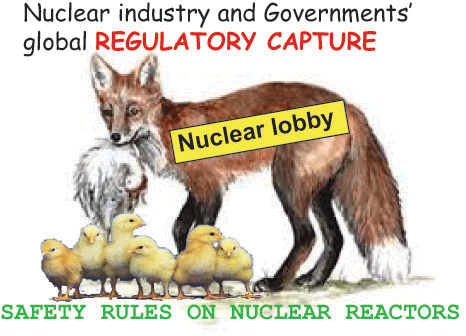 10 years after Fukushima, safety is still nuclear power’s greatest challenge The Conversation, March 6, 2021 Kiyoshi Kurokawa, Professor Emeritus, University of Tokyo, Najmedin Meshkati, Professor of Engineering and International Relations, University of Southern California ” …………A decade later, the nuclear industry has yet to fully to address safety concerns that Fukushima exposed.We are scholars specializing in engineering and medicine and public policy, and have advised our respective governments on nuclear power safety. Kiyoshi Kurokawa chaired an independent national commission, known as the NAIIC, created by the Diet of Japan to investigate the root causes of the Fukushima Daiichi accident. Najmedin Meshkati served as a member and technical adviser to a committee appointed by the U.S. National Academy of Sciences to identify lessons from this event for making U.S. nuclear plants safer and more secure. 10 years after Fukushima, safety is still nuclear power’s greatest challenge The Conversation, March 6, 2021 Kiyoshi Kurokawa, Professor Emeritus, University of Tokyo, Najmedin Meshkati, Professor of Engineering and International Relations, University of Southern California ” …………A decade later, the nuclear industry has yet to fully to address safety concerns that Fukushima exposed.We are scholars specializing in engineering and medicine and public policy, and have advised our respective governments on nuclear power safety. Kiyoshi Kurokawa chaired an independent national commission, known as the NAIIC, created by the Diet of Japan to investigate the root causes of the Fukushima Daiichi accident. Najmedin Meshkati served as a member and technical adviser to a committee appointed by the U.S. National Academy of Sciences to identify lessons from this event for making U.S. nuclear plants safer and more secure.
Those reviews and many others concluded that Fukushima was a man-made accident, triggered by natural hazards, that could and should have been avoided. Experts widely agreed that the root causes were lax regulatory oversight in Japan and an ineffective safety culture at the utility that operated the plant. These problems are far from unique to Japan. As long as commercial nuclear power plants operate anywhere in the world, we believe it is critical for all nations to learn from what happened at Fukushima and continue doubling down on nuclear safety. |
|
New Zealand groups oppose launch of U.S. military nuclear satellite

a security expert has suggested it puts New Zealand into “the kill chain” and makes New Zealand a military target.
|
NZ rocket launches may breach nuclear-free laws, say peace groups, The Spinoff
Ollie Neas | 8 Mar 21, Rocket Lab launches of satellites honing US military targeting capabilities have been criticised by the Peace Foundation, which is calling on the PM to step in.Peace groups are calling on the prime minister, Jacinda Ardern, to stop the launch of a controversial US military satellite that is scheduled for lift-off from Mahia this month, saying it may contravene nuclear-free legislation.Rocket Lab’s next mission is due to carry a satellite for the US Army’s Space and Missile Defence Command, called the Gunsmoke-J. The satellite is designed to improve US military targeting capabilities by improving how data is provided to “warfighters”.The satellite has previously been condemned by the Green Party, while a security expert has suggested it puts New Zealand into “the kill chain” and makes New Zealand a military target. Non-profit group The Peace Foundation has now added to those concerns: the launch may breach New Zealand’s nuclear-free laws. In an open letter to the prime minister, the Peace Foundation’s International Affairs and Disarmament Committee says Rocket Lab’s launches for US military agencies risk drawing New Zealand “into supporting the weaponisation of space and the related nuclear arms race”. Satellites contributing to nuclear weapons programmes cannot be approved under New Zealand law. But the Peace Foundation says New Zealand may lack the technical expertise and information necessary to properly assess whether a satellite is making such a contribution. As a result, the Peace Foundation says approvals of US military satellites should be suspended, and approval of the Gunsmoke-J satellite revoked, until greater oversight of space launches is implemented. The letter has been endorsed by 17 civic, peace and religious groups, as well as members of the public………… The US Army says the technology being demonstrated could, among other purposes, assist in “long-range precision fires” – a type of missile used to provide “precision surface-to-surface deep-strike capability”. The minister responsible for approving the satellite, Stuart Nash, told parliament last month that he was “unaware” of its “specific military capabilities”. Otago University conflict resolution and disarmament expert Kevin Clements said it is “astonishing” that Nash was unaware of the Gunsmoke-J’s specific military capabilities. “It is even worse that he is willing to rely on the US Army alone to provide the information required by him and New Zealand’s space agency in relation to the approval process,” Clements said in a statement. “Rocket Lab’s launch programme is increasingly opaque. The precise content of each payload seems intentionally ambiguous and approvals do not seem to take New Zealand’s anti-nuclear legislation into account.” Strong parallel’ with nuclear ships issue The Peace Foundation says there is a “strong parallel” between the launch of US military satellites from New Zealand and the “neither confirm nor deny” issue of the 1980s. The US policy of neither confirming nor denying whether its ships were nuclear armed led to a ban on US warships visiting New Zealand ports – the seminal moment in the anti-nuclear campaign. As with that issue, the Peace Foundation says New Zealand cannot be confident that US military satellites launched from New Zealand are not contributing to nuclear weapons systems. The Peace Foundation says assessing whether the Gunsmoke-J complies with the nuclear free law would require detailed technical knowledge of how the technology might be used in the future. “Increasingly, space-based US military assets are ‘dual-capable’ (can support nuclear and non-nuclear weapons), and dual-capable satellites used for non-nuclear targeting today can easily be used for nuclear targeting tomorrow………. Call to reform space law In light of its concerns, the Peace Foundation says greater oversight is needed over New Zealand’s space regime. It proposes assigning oversight of space launches to the prime minister, strengthening space regulations, and mandating oversight of space-launch activity to the Public Advisory Committee on Disarmament and Arms Control (PACDAC) – a body set up by the Nuclear Free Zone Act to advise the government on disarmament matters. Minutes of PACDAC meetings obtained by The Spinoff under the Official Information Act show the committee has had ongoing concerns about the consistency of space activity with New Zealand’s nuclear free law. Space Agency officials have met with the committee to assure members of the legality of launches. The Peace Foundation also calls for changes to the Technology Safeguards Agreement that New Zealand signed with the US to allow for the transfer of sensitive rocket technology. The treaty requires the US to provide “sufficient information” about its spacecraft to allow New Zealand to assess them, but also allows the US government to veto any space launch from New Zealand. “There are some very big moral questions at stake here,” says Clements. “Is this current Labour government willing for New Zealand soil to be used by Rocket Lab in order to assist US government targeting in conventional and nuclear warfare?” The Peace Foundation’s letter comes a week after Rocket Lab announced that it would list publicly on the Nasdaq stock exchange, with a valuation of $5.7 billion. Although its main launch site and production facility is in New Zealand, Rocket Lab is US owned. Its investors include major US venture capital firms as well as aerospace and defence company Lockheed Martin, which produces nuclear weapons. Rocket Lab also unveiled plans to launch a larger rocket called the Neutron, which will allow it to launch astronauts. Since 2018, Rocket Lab has launched military or intelligence payloads on seven different missions for agencies ranging from US Special Operations Command to the National Reconnaissance Office, a major US spy agency. Rocket Lab says around 30% of its business is for defence agencies. https://thespinoff.co.nz/politics/09-03-2021/nz-rocket-launches-may-breach-nuclear-free-laws-say-peace-groups/ |
|
The radiation danger to astronauts- cancer, heart disease -an ethical problem

“These are all crucial studies to be conducted in order to really understand the risks we’re exposing astronauts to,” says Meerman. “Therefore, we believe we are not there yet and we should debate whether it is safe to expand human space travel significantly
|
Long-distance space travel: addressing the radiation problem https://physicsworld.com/a/long-distance-space-travel-addressing-the-radiation-problem/ 08 Mar 2021 A team of US and Netherlands-based scientists has published a review paper highlighting ways to protect astronauts from the negative cardiovascular health impacts associated with exposure to space radiation during long-distance space travel.Cardiovascular impacts Space radiation is currently regarded as the most limiting factor for long-distance space travel because exposure to it is associated with significant negative effects on the human body. However, data on these effects are currently only available for those members of the Apollo programme that travelled as far as the Moon – too small a number from which to draw any significant conclusions about the effects of the space environment on the human body. In addition, although exposure to space radiation, including galactic cosmic rays and solar “proton storms”, has previously been linked to the development of cancer and neurological problems, data on the consequences of space radiation exposure for the cardiovascular system are lacking. In an effort to address these limitations, researchers based at the University Medical Center (UMC) Utrecht, Leiden University Medical Center, Radboud University and the Technical University Eindhoven in the Netherlands, as well as Stanford University School of Medicine and Rice University in the US, have carried out an exhaustive review of existing evidence to establish what we know about the cardiovascular risks of space radiation. They present their findings in the journal Frontiers in Cardiovascular Medicine.
“You can argue that if NASA, ESA and other space agencies want to expand space travel, both in terms of location – for example, to Mars – and time, astronauts will be exposed to the specific space environment for longer periods of time. However, we currently do not know what the effects of exposure to these space-specific factors are,” says Meerman. “NASA currently sees space radiation as the most limiting factor for long-distance space travel, but the exact short- and long-term effects are not fully understood yet. We are therefore exposing astronauts to extremely uncertain risks. However, research into the effects of space radiation has increased over the past few years and we’re constantly gaining more knowledge on this topic,” she adds. Advanced modelsAccording to Meerman, another important factor in this discussion is the fact that we currently cannot adequately protect astronauts from space radiation. Shielding with radiation-resistant materials is very difficult since exposure levels are far higher than on Earth and the type of radiation is much more penetrating. Pharmacological methods of protecting the cardiovascular system are hampered by the fact that no effective radioprotective compounds have yet been approved. “The most important conclusion is that we actually do not know enough about the exact risks that long-distance space travel pose for the human body. Therefore, in our opinion, we should keep looking for new ways to protect astronauts from the harmful space environment before we expand human space travel,” says Meerman. Moving forward, Meerman stresses that research on the effects of space radiation should incorporate advanced models that provide a more accurate representation of the cardiovascular impacts of space radiation – such as those based on lab-created human cardiac tissue and organ-on-a-chip testing technologies. Studies should also examine the effects of combinatorial exposure to different space radiation particles, as well as combined exposure to space radiation components and other space-specific factors, like microgravity, weightlessness and prolonged hypoxia. “These are all crucial studies to be conducted in order to really understand the risks we’re exposing astronauts to,” says Meerman. “Therefore, we believe we are not there yet and we should debate whether it is safe to expand human space travel significantly.” |
|
Sorry saga of America’s plutonium waste problems
Can the Energy Department store 50 tons of weapons-grade plutonium for 10,000 years? Robert Alvarez Bulletin of the Atomic Scientists, 8 Mar 21,
”…………The US-Russia plutonium disposal disagreement.
The end of the Cold War led to deep cuts in the US and Russian nuclear arsenals, and in 1993 President Clinton issued a directive declaring that the United States is “committed to eliminating, where possible, the accumulation of stockpiles of highly enriched uranium and plutonium.” In September 2000, the United States and Russia signed the Plutonium Management Disposition Agreement, under which 34 metric tons of plutonium from weapons would be blended with uranium and serve as mixed-oxide or MOX reactor fuel to produce electricity.
 Construction on the Mixed Oxide Fuel Fabrication Plant at the Savannah River Site began in 2007, but the United States abandoned the project because of delays and estimated cost overruns of $30 billion to $50 billion. After a “Red Team” expert review in 2015, the Energy Department decided to pursue a “dilute and dispose” option for storing plutonium, which, the team reported, would cost about half as much as the MOX project. Plutonium from weapons and other forms would be converted from metal to oxide, diluted with a secret adulterant, and then placed a special container for shipment and disposal at WIPP.
The dilute and dispose project.
The Energy Department optimistically estimates that its dilution and disposal project will start up in 2027 and store 34 metric tons of weapons-grade plutonium by 2049, at a cost of $18 billion. That time estimate seems likely to be unrealistic; according to the Institute for Defense Analysis, “we could find no successful historical major project that both costs more than $700 million and achieved [Energy Department project startup] … in less than 16 years.”
The dilute and dispose project i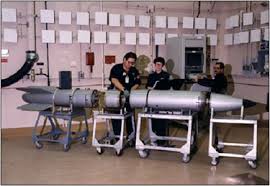
- The Pantex weapons assembly and disassembly plant near Amarillo, Texas, where thousands of pits and other forms of plutonium have to be prepared for safe and secure shipment to Los Alamos National Laboratory (LANL) in New Mexico. The majority of the plutonium at Pantex is stored in facilities at that were built in the 1940s. In 2010 and 2017, unexpected 2,000-year rains flooded a major plutonium storage area with several inches of water, which shut down the plant. It cost of hundreds of millions of dollars to deal with about 1,000 containers affected by the flooding.
 At the Los Alamos National Laboratory, pits will be converted from metal to an oxide that resembles a yellow-to-olive-green talcum-like powder, which is highly dispersible if it escapes from leaking glove boxes. The conversion process takes place at the PF-4 facility, a 69-year-old complex where the Energy Department has a major multibillion-dollar project underway to upgrade aged processes to produce new plutonium bomb triggers. In 2020, a panel of the National Academies of Science warned that “LANL may be a major bottleneck” impacting the plutonium disposal mission. The disposal and production projects could be on a collision course by the middle of this decade, when both are planned to scale up by 10 times.
 Once Los Alamos produces plutonium oxides, they will be sent to the Savannah River Site in South Carolina, where the plutonium will be diluted and mixed with a secret adulterant, sometimes via the use of mortars and pestles. About 166,000 specially designed drums will be filled with the dilute fissile material. This task is a tall order for the Savannah site, where the round-the-clock work is expected to scale up by 10 times in a facility that officially exceeded its design life years ago. The facility will be almost 100 years old by 2049 when the dilute and disposal project is expected to be completed.
- Once the drums are filled, commercial trucks are expected to transport them across
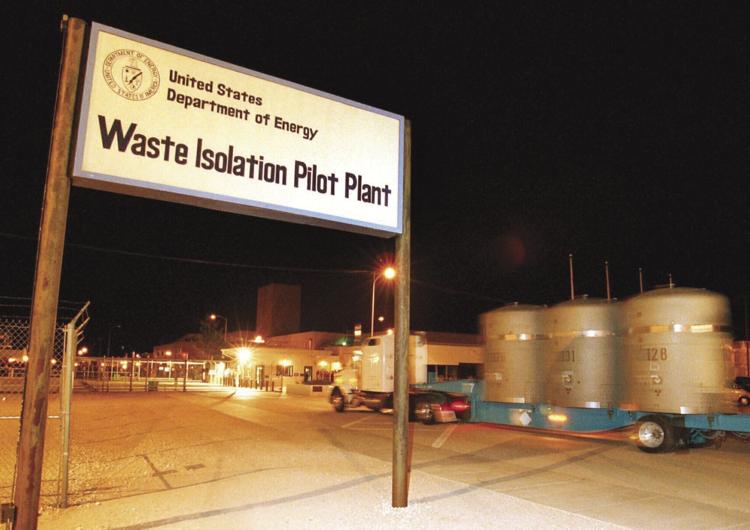
 the country, from South Carolina to New Mexico and WIPP, in more than 3,888 shipments.
 - As it plans to dispose of its excess plutonium, the Energy Department has, notably, paid little attention to inspections and verification by the International Atomic Energy Agency, a key element of the Nuclear Non-Proliferation Treaty. As noted by the report of an expert panel of the National Research Council, “IAEA monitoring and inspections are an important component of the [Plutonium Management and Disposition Agreement with Russia] requirements, and they could also provide enhanced public and international confidence that the material is properly accounted for and emplaced in WIPP.”
Plutonium disposal beyond dilute and dispose.
- Over the past three years, WIPP and the nearby area have become ground zero for several storage and disposal plans for the bulk of civilian and military radioactive wastes. In addition to trans-uranic wastes set for WIPP and plutonium related to weapons production, the Energy Department seeks to dispose of six tons of fuel-grade plutonium from its research and development program, sludge from 15 of Hanford’s high-level radioactive waste tanks, trans-uranic waste generated from the production of new plutonium pits, and other radioactive waste.
- Even after the Energy Department recently recalculated its excess plutonium and other radioactive wastes, resulting in a 30 percent reduction in the total volume to be sent to WIPP, the federal statutory limit set in the Land Withdrawal Act, which authorized the opening of WIPP, will be exceeded by these planned disposal efforts. Congress would have to amend the law to expand the volume, set for WIPP at 175,564 cubic feet, by as much as than 50 percent to accommodate all the waste. Moreover, it appears that new plutonium pit production is projected to generate huge amounts more waste.Lurking in the shadows, 71 miles from the WIPP, sits an Energy Department effort to dispose of as much as 500,000 gallons of grouted wastes from Hanford’s high-level radioactive waste tanks at the Waste Control Specialists landfill in Andrews County Texas.

- That firm is also seeking a license from the Nuclear Regulatory Commission to establish centralized interim storage of spent nuclear fuel from the nation’s power reactor fleet. So, too, is the Holtec Corporation with a proposed spent nuclear fuel storage site 16 miles from WIPP in Lea County, New Mexico.If these interim storage efforts succeed, by mid-century up to 10,000 spent fuel cannisters containing nearly the entire US commercial spent nuclear fuel inventory will be transported across the country for storage near WIPP. They may sit there for more than 100 years. (See sidebar: “The long-term problem of “peaceful” plutonium.) If these plans are realized, WIPP and the nearby area will have become the recipients of an enormous, decades-long, radioactive-waste-transport funnel directing the bulk of the nation’s commercial and military radioactive detritus to New Mexico and far West Texas……… https://thebulletin.org/2021/03/can-the-energy-department-store-50-tons-of-plutonium-for-10000-years/#.YEa37PTkUIk.twitter



Cash-strapped Japanese nuclear company funds road plans near idle nuclear plant
Cash-strapped JAPC funds road plans near idle nuclear plant, THE ASAHI SHIMBUN
March 8, 2021, TSURUGA, Fukui Prefecture—Multibillion-yen road projects continue on a peninsula here, funded in part by a nuclear power company that has gained no income from electricity for a decade.
The roads were planned decades ago for the expected expansion of the Tsuruga Nuclear Power Plant here. Although all nuclear operations and construction at the nuclear plant have long been halted, the work on the roads has not stopped.
“We are building a new road,” said a signboard near an area where heavy vehicles were removing dirt from the site of a planned tunnel in the city of Tsuruga, Fukui Prefecture, in mid-February.
The sign included an apology for causing an inconvenience to motorists.
The city roads being built are Nishiura Route No. 1 and No. 2 on the sparsely populated eastern side of a peninsula that juts out into the Sea of Japan separating Wakasa and Tsuruga bays.Japan Atomic Power Co. (JAPC) and Kansai Electric Power Co. (KEPCO) plan to provide 1.5 billion yen ($14 million) to Tsuruga for road construction from fiscal 2018 to fiscal 2021, according to sources.
JAPC owns three nuclear reactors, including two at the Tsuruga Nuclear Power Plant. But all three reactors have been shut down since the 2011 Fukushima disaster, meaning that JAPC has had zero income from electric power generation for a decade.
The neighboring town of Mihama hosts the KEPCO-run Mihama Nuclear Power Plant, which has also been shut down since 2011.
So where does JAPC’s money for the roads come from?
JAPC had derived income from selling its electricity to five major utilities—Tokyo Electric Power Co., KEPCO, Tohoku Electric Power Co., Hokuriku Electric Power Co. and Chubu Electric Power Co. After the Fukushima nuclear disaster, JAPC’s management has relied on the basic electricity rates paid by the five major electric companies.
The basic rates come mainly from electricity bills that consumers pay.
Some experts are concerned that JAPC’s continued generous aid for road construction could affect the electricity rates charged by the five utilities.
The plans to build the two city roads were hatched around 1993, when the Fukui prefectural assembly passed a resolution to build the No. 3 and No. 4 reactors at the Tsuruga plant.
The work was expected to increase traffic of large vehicles into the peninsula………..By fiscal 2021, JAPC and KEPCO will have provided 4.06 billion yen to the city for the road construction.
After fiscal 2022, the city government said it will tell the companies how much they should pay “from fiscal year to fiscal year.”
JAPC shoulders 58 percent of the costs, while KEPCO pays 42 percent. The ratio “was decided by the business operators,” and the city government “does not know how it was decided,” an official said.
After its reactors were shut down and its business conditions deteriorated, JAPC was criticized for providing such generous donations to Tsuruga.
JAPC in 2013 demanded that the city not list its donations in the financial document, and the payments were not recorded in fiscal 2012 and fiscal 2013, the sources said.
……… KEPCO’s public relations office said the company “will be actively involved in” the city’s road construction projects, but declined to reveal the amount it has provided.
As of the end of January this year, there were 520 people living in the peninsula registered as residents of Tsuruga. The peninsula has hosted seven nuclear reactors, of which five have been under decommissioning work.
The planned city-owned Nishiura Route No. 2 will be 800 meters long. The construction site is located north of the center of the Tsuruga city.
The estimated cost to build this road is 1.46 billion yen.
A former Fukui prefectural official who was familiar with the deal-making process said.
JAPC offered the money “as a quid pro quo for the city’s acceptance of the nuclear plant’s expansion plan.”
The innkeeper who wanted the roads in the area also noted that times have changed since the start of construction.
“The traffic of vehicles related to nuclear power plants has drastically decreased compared to the times before the Fukushima accident,” the innkeeper said. “I don’t know if the roads are really needed.”
(This article was written by Hideki Muroya and Tsunetaka Sato.) http://www.asahi.com/ajw/articles/14250714
Difficult time for Biden to sort out Iranian nuclear deal
Biden as a candidate promised to take the U.S. back to the deal and was confident of achieving it; however, his time in office has proved that this won’t be an easy task
Since the inauguration of U.S. President Joe Biden, one of the most frequently asked questions are about his position on the Iranian nuclear deal. The candidate Biden had called the U.S. withdrawal from the Joint Comprehensive Plan of Action (JCPOA) a significant mistake and promised to take the U.S. back to the deal.
However, his few weeks in office demonstrated that this process will not be as easy as many may have thought.
The negotiation process, the content of the potential deal and its possible impacts on the countries’ domestic policies started to be discussed even before the beginning of negotiations.
Now, after the appointment of a special envoy to Iran, everybody is expecting to hear about the process and its details. However, there will be five different challenges that the Biden administration and its negotiators need to pay attention to while reaching a new deal with regards to the Iranian nuclear program.
Deadlock at home
First of all, it will be critical for the Biden administration to gain majority support in the U.S. Congress for a new nuclear deal with Iran……….
Regional outcry
Secondly, some U.S. partners in the region have reacted negatively to the JCPOA. They felt like they were left in the dark about critical foreign policy issues in regard to their region……….
Alliance skepticism
Thirdly, the U.S. administration also needs to pay attention to the concerns of its allies and partners in the P5+1 – the U.S., the U.K., France, China, Russia and Germany……….
Iran’s internal concerns
Fourthly, there will also be domestic dynamics at play with Iran. In June of this year, presidential elections will be held in Iran. Quite possibly, the Iranian nuclear deal and the relations with the U.S. will be part of this election campaign………. https://www.dailysabah.com/opinion/columns/biden-on-horns-of-a-dilemma-for-iranian-nuclear-deal
Review of film ”Fukushima 50”
Fukushima 50 review – simmering tribute to power-plant heroes https://www.theguardian.com/film/2021/mar/08/fukushima-50-review-ken-watanabe-in-simmering-tribute-to-power-plant-heroes
There’s a touch of Hollywood in this dramatised account of the 50 workers who stayed at Fukushima Daiichi in an attempt to avert catastrophe Phil Hoad, @phlode, Tue 9 Mar 2021
It is possible director Setsurō Wakamatsu has taken the Hollywood route in portraying the staff as so infallibly courageous – though Fukushima 50 is adapted from journalist Ryusho Kadota’s book, which investigated the response to the earthquake and tsunami in more than 90 interviews. Possibly to avoid lawsuits from Tokyo Electric Power Company executives portrayed here as selfish and shamefully caught on a back foot, everyone in the film is fictionalised – except for prime minister Naoto Kan, though he is never referred to by name, and plant manager Masao Yoshida. Yoshida crucially defies orders and allows the reactors to be cooled with seawater – which prevented meltdown and the possible devastation of Japan’s entire eastern seaboard. The reactors also must be “vented” for pressure manually by workers agonisingly selected for the task. Played by Ken Watanabe as a man having the ultimate bad day at work, the simmering Yoshida looks in need of a similar intervention.
Wakamatsu treats his account of these critical hours – the first direct depiction of the disaster, though Sion Sono’s Himizu (2011) was a poetic first responder – like a machine to be kept running at all costs. Often it consists of little more than technicians pelting into crisis rooms, adhering to the Akira school of screaming, with shocking gas-pressure read-outs. The civilian backstories are token, and though the film is critical of the brass, it doesn’t let this anger break into climactic outrage. Yoshida died in 2013 of unrelated oesophageal cancer: Watanabe’s big-shouldered presence makes this an ample tribute to the man, but the film could have been more than an easy clap for his workers.
Fukushima 50 is available from 8 March on digital formats.
Nuclear news this week- Fukushima anniversary week
The global nuclear lobby will be glad when March is over. They were glad to see the end of January – too much public interest then in the U.N. Treaty for the Prohibition of Nuclear Weapons.
March is worse, especially because of the 10 year anniversary (11th March) of the Fukushima Daiichi nuclear meltdown, with clean-up nowhere in sight. The half-hearted hype is now on for the Olympic Games in July. The whole plan was for the Games to demonstrate that the nuclear catastrophe was actually nothing much to worry about, and yet again, to promise a ‘nuclear renaissance’.
International Women’s Day – today 8th March, is a bit of a worry for the nuclear industry. Ionising radiation is more damaging to women than to men, and polls consistently show that women oppose nuclear power. Women are rarely part of decision-making, and when they are – shock horror! With nearly equal female representation in Switzerland’s parliament – it decided to shut down the nuclear industry. In Germany, that very strong Chancellor Angela Merkel, was a supporter of nuclear power – but after the Fukushima catastrophe, she changed her mind. It’s all a dilemma for the nuke lobby – trying to get some (preferably young and glam) women into the nuclear career, – but oh dear, they might put too much emphasis on health, children’s future, etc – and hysterically change their mind, as Merkel did.
1st March – Nuclear Free and Independent Pacific Day. This day commemorates for Pacific islanders, the nuclear colonialism, that brought atomic bomb testing, radiatio-induced cancers, and continuing environmental pollution to their previously pristine lands and waters. Today, militaristic colonialism is still in full swing across the region, and is still resisted.
CLIMATE. I cannot resist referring you to the wonderful Katherine Hayhoe, interviewed on Radio Ecoshock. This woman, who is also a religious communicator, has the gift of explaining climate change entertainingly and with clarity.
Some bits of good news The first real-world data for COVID vaccines is in – and it’s really good news.
In a Japanese village ravaged by tsunami and nuclear disaster, two farmers grow indigo to rebuild community and heal
Elon Musk and Bill Gates: beware of gurus toting solutions to climate change.
Nuclear energy proponents downplay its unresolved moral and ethical concerns. Despite the problems, small nuclear reactor salesmen aggressively marketing: it’s make or break time for the nuclear industry.
Some bits of good news The first real-world data for COVID vaccines is in – and it’s really good news.
In a Japanese village ravaged by tsunami and nuclear disaster, two farmers grow indigo to rebuild community and heal
ANTARCTICA. Ominous news; Antarctic ice is melting at an accelerating rate.
JAPAN.
Ex-PMs Kan, Koizumi urge Japan to quit nuclear power generation . 10 years after Fukushima nuclear disaster, – poor prospects for nuclear revival in Japan.
- Fukushima. Reuters gives a timeline of events: Fukushuma 2011 – 2021 –Heroism of Fukushima’s nuclear emergency workers.
- Fukushima nuclear decommissioning not really under control- persistent highly radioactive debris remains. Japan’s daunting task – to decommission Fukushima nuclear plant, over many decades. Fukushima wrecked nuclear plant: area remains a health and environmental disaster. Fukushima resident still can’t return home 10 years after nuclear disaster. Most 2011 quake, Fukushima crisis survivors back ending nuclear power.
- Fukushima’s Olympic makeover: Will the ‘cursed’ area be safe from radioactivity in time for Games? Fukushima Daiichi 2011-2021: The decontamination myth and a decade of human rights violations.–
- Lawsuit over the exposure to radiation of residents of Litate, after Fukushima nuclear meltdown.
- The man who saves forgotten cats in Fukushima’s nuclear zone .
- Isolated and alone – Suguru’s story reveals bullying, ostracization and government whitewash
UK.
Opinion poll – 77% of Ayshire public support a total ban on all nuclear weapons.
Hinkley Point B nuclear station to close ‘early’ due to aging graphite blocks.
Concern about the marketing of radioactively contaminated scrap metal.
Proposed Cumbrian coalmine. But is the real purpose a high level nuclear waste dump?.
How Scotland’s Dunoon became an American nuclear base, and a target. Scottish Council calls on big pension fund to stop investing in weapons makers.
USA.
- Food for thought – The war-mongering lobby embraces AI (artificial intelligence)
- Biden’s illegal bombing of Iranian-backed militias in Syria jeopardises nuclear negotiations. The American media sanitises the Biden administration’s killings in Syria.
- Biden’s first budget should reduce excessive expenditure on nuclear weaponry. Why the US wastes $billions on nuclear weapons it doesn’t need. Bill in U.S. Congress to stop new nuclear-armed, sea-launched cruise missile. Battle coming in U.S. Congress over spending on nuclear weapons.
- Nuclear workers plagued by leukaemia, cancers and other illnesses.
- Ohio Senate votes unanimously to repeal nuclear plant bailout. Nuclear power bailout Bill to be eliminated by Ohio law-makers. Public Service Enterprise Group trying to force ratepayers to act as guarantors for nuclear power debts. Montana legislatures to review the law restricting nuclear developments.
- Michigan Attorney General wants review of nuclear plant license transfer to Holtec.
- Washington State and others want to overturn Trump rule that weakens Hanford nuclear waste rule.
- The Trump personality cult is still a threat.
IRAN. UN’s nuclear watchdog agency will not be ‘bargaining chip’ in Iran nuclear deal. President Rouhani says that Iran is prepared to fulfil nuclear deal commitments.
GERMANY. Germany to pay nuclear operators 2.4 bln euros for plant closures. Widespread public support for Germany’s nuclear phaseout, as renewable energy expands.
ALGERIA. French report on the unfairness of France’s nuclear history in Algeria.
RUSSIA. Russia’s most high-tech multi-purpose nuclear submarine further delayed.
CHINA. China to ramp up its nuclear weapons, in the interests of its own survival.
FRANCE. Safety expert recommends shutdown of several of France’s old, dubiously safe, nuclear reactors. France’s Nuclear Safety Authority (ASN) has safety concerns about Flamanville nuclear power plant . A new setback for France’s Flamanville nuclear reactor.
SWITZERLAND. Women in government – the key to getting rid of nuclear power.
LUXEMBOURG. Hopes in Luxembourg for the closure of Cattenom nuclear power plant.
ARMENIA. Armenia should shut down, not repair, its dangerous nuclear power station.
SOUTH AFRICA. South Africa, with no way to deal with radioactive waste, must not develop new nuclear power.
PACIFIC ISLANDS. Nuclear Free And Independent Pacific Day 2021.
TURKEY. Dust with French nuclear test residue threatens Turkey.
IRAN. Iran’s foreign minister says Tehran will offer a constructive plan for nuclear talks.
INDIA. In India, Google and Facebook help a vicious government campaign against environmental activists.
AUSTRALIA. Australia dodged a bullet in not getting nuclear power.
Isolated and alone — Beyond Nuclear International
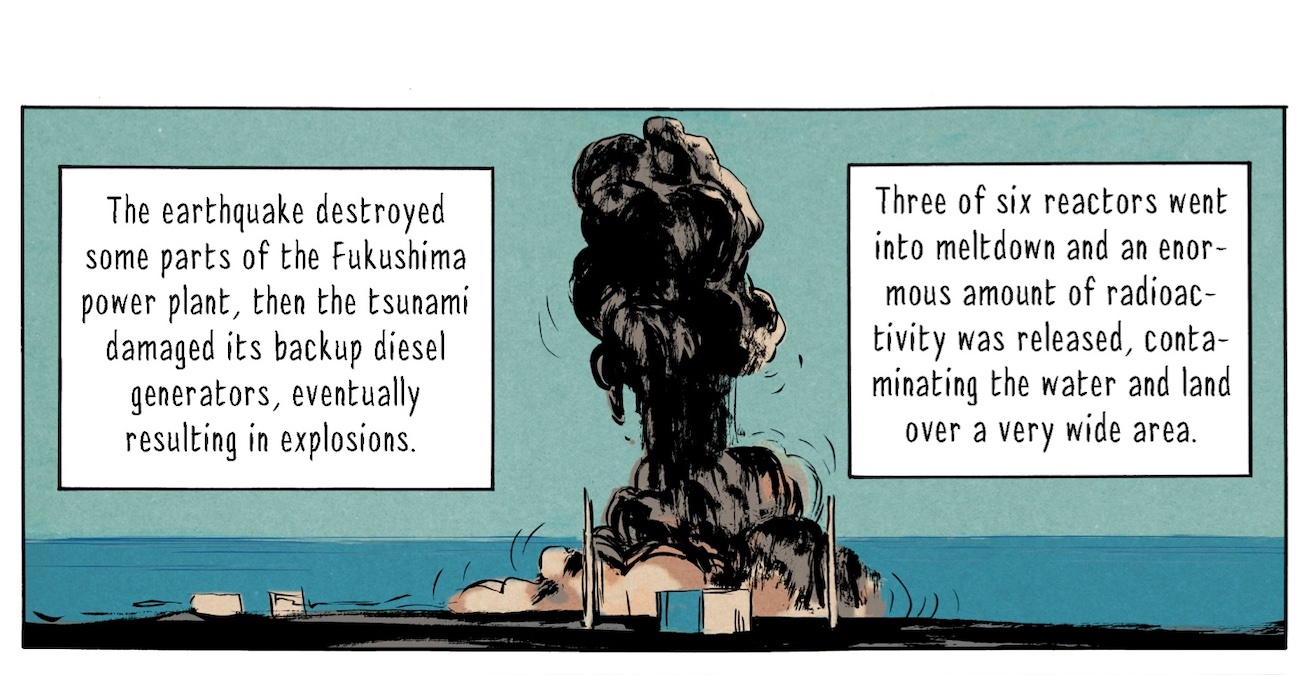
Suguru’s story reveals bullying, ostracization and government whitewash
Isolated and alone — Beyond Nuclear International

A teenager’s account of the Fukushima ordeal https://wordpress.com/read/feeds/72759838/posts/3219596582 By Linda Pentz Gunter, 7 Mar 21,Ten years after the March 2011 Fukushima nuclear disaster, how has the Japanese government responded and what is it like for the people affected, still struggling to return their lives to some semblance of normality? Here is how things look:
- Manuals are being distributed in schools explaining that radioactivity exists in nature and is therefore not something to be afraid of.
- The government is considering getting rid of radiation monitoring posts as these send the wrong message at a time of “reconstruction”.
- The Oversight Committee for Fukushima Prefecture Health Management Survey is discussing the possibility of stopping thyroid inspections at schools because they stress children out and overburden teachers and staff.
Depression and suicide rates among young people from Fukushima are likely to be triggered by being called “germs” and by being seen as “contaminated”.
- Those who speak out about radiation are more stigmatized today than they were 10 years ago.
- Those who “voluntarily” evacuated, recognizing that the so-called protection standards were not adequate for their region, are often ostracized from their new communities. They are seen as selfish for abandoning their homeland, friends and families “just to save themselves” and are bullied as parasites living on compensation funds, even though the “auto-evacuees” as they are known, received none.
- Those forced to evacuate are also bullied if they do not now return, accused of not trusting the government and its assertions that it is safe to do so.
- The taboo against speaking out for proper radiation protection and for compensation has grown worse as the rescheduled Olympics loom for this summer and Japan is determined to prove to the world it has fixed the radiation problem and beaten Covid-19.
- On March 1, 2021, it took three judges all of 30 seconds to dismiss a case brought by 160 parents and children who lived in Fukushima prefecture at the time of the nuclear accident, and known as the Children’s Trial Against Radiation Exposure. The class action suit sought 100,000 yen per person in damages from the government and the prefecture, due to the psychological stress brought on by the lack of measures to avoid radiation exposure after the accident.
These are some of the realities uncovered by France-based Japanese activist, Kurumi Sugita, as she interviewed those affected and began to compile a graphic short story about her findings, entitled Fukushima 3.11 and illustrated by French artist, Damien Vidal. The booklet is produced by the French NGO, Nos Voisins Lontains 3.11 (Our Distant Neighbors 3.11).
Fukushima 3.11, a long-form cartoon strip, is told in the first person by the youngest of Sugita’s interview subjects, Fukushima evacuee, Suguru Yokota, who was 13 at the time of the nuclear disaster.
Suguru was also one of the plaintiffs in the Children’s Trial, and noted after the devastating dismissal, just days before the Fukushima disaster’s 10th anniversary, that “we cannot give up” and that “the court hasn’t issued a legitimate verdict.”
In 2012, Sugita had traveled to Japan with a research project she helped create, financed by the French National Centre for Scientific Research where she worked, to set up an investigation into Japan’s nuclear victims. A list of 70 interview candidates was put together.
“I met Suguru in 2013 in Sapporo where he was living alone after he moved there from Fukushima,” said Sugita. “I also interviewed his mother and they were interviewed once a year over six years.”
A schoolboy at the time of the accident, the book follows Suguru’s account of his experiences. He encounters the refusal by his uncle to believe the dangers in the early days of the accident, “a typical denial case,” says Sugita, and he is ostracized at school where he is the only pupil to wear a mask.
Suguru’s only respite comes when his mother, who is equally alert to the radiation risks, sends him on a “radiation vacation” to Hokkaido, the first time he encounters peers who share his concerns.
Back at school and feeling isolated and alone, Suguru studies at home instead, eventually leaving the region for a different high school and then college.
The book weaves in essential information about radiation risks, and the clampdowns by the Japanese government, which withdrew support for auto-evacuees claiming, as Suguru relates it, that “these families are not victims. They are responsible for their fate.”
The book was first published in the magazine, TOPO, whose audience is predominantly teenagers and which reports on topics of current interest.
“It appealed to us to address an audience interested in world events, but not exclusively the nuclear issue,” said illustrator Vidal. “We thought our comic strip could be read by all those — and not necessarily just teenagers — who want to understand what the consequences of the nuclear accident were, and how it affected the inhabitants of Fukushima Prefecture.”
The book vividly brings home the psychological and emotional pain suffered by those who chose to recognize the true dangers posed by the Fukushima disaster, as well as the financial hardships and fracturing of families. And it exposes the depths of deliberate denial by authorities, more interested in heightened normalization of radiation exposure in the name of commerce and reputation.
Even as early as October 2011, an announcement is made that “rice produced in Fukushima Prefecture will supply school canteens again.” We see Suguru and his mother watching this news on their television, then the name-calling Suguru faces in school for bringing his own lunch. He is shown in the strip being called a “hikokumin”, which, explains Suguru, “is a really insulting word, used during the Second World War. It refers to people who are not worthy of being Japanese citizens.”
But that stigma has only become worse with time, Sugita says.
These days people are name-called “hoshano”. “Hoshano”(放射能) means radioactivity, but with a different Chinese character(放射脳) it means “radioactive brain – or brain contaminated by the fear of radioactivity”, she explains. And that is the slur in common circulation now.
Nevertheless, the book ends on a hopeful note. “Today,” concludes Suguru on the closing page, “I know I’m not alone. I hope other voices will be heard in Japan and around the world.”
It’s easy to say “never again.” But in order to ensure it, we must all continue to raise our voices, joining Suguru’s and others yearning to be heard.Read the English language version of Fukushima 3.11 on line for free. A version is also available in French. Hard copies (in French only), may be ordered from Nos Voisins Lontains 3.11 for 8€ plus shipping costs.
The war-mongering lobby embraces AI (artificial intelligence)


The testimony is generously spiked with the China threat thesis
the note of warning in not being too morally shackled becomes a screech.
War Mongering for Artificial Intelligence, https://www.counterpunch.org/2021/03/02/war-mongering-for-artificial-intelligence/ BY BINOY KAMPMARK-2 March 21,
The ghost of Edward Teller must have been doing the rounds between members of the National Commission on Artificial Intelligence. The father of the hydrogen bomb was never one too bothered by the ethical niggles that came with inventing murderous technology. It was not, for instance, “the scientist’s job to determine whether a hydrogen bomb should be constructed, whether it should be used, or how it should be used.” Responsibility, however exercised, rested with the American people and their elected officials.
The application of AI in military systems has plagued the ethicist but excited certain leaders and inventors. Russian President Vladimir Putin has grandiloquently asserted that “it would be impossible to secure the future of our civilization” without a mastery of artificial intelligence, genetics, unmanned weapons systems and hypersonic weapons.
Campaigners against the use of autonomous weapons systems in war have been growing in number. The UN Secretary-General António Guterres is one of them. “Autonomous machines with the power and discretion to select targets and take lives without human involvement,” he wrote on Twitter in March 2019, “are politically unacceptable, morally repugnant and should be prohibited by international law.” The International Committee for Robot Arms Control, the Campaign to Stop Killer Robots and Human Rights Watch are also dedicated to banning lethal autonomous weapons systems. Weapons analysts such as Zachary Kallenborn see that absolute position as untenable, preferring a more modest ban on “the highest-risk weapons: drone swarms and autonomous chemical, biological, radiological, and nuclear weapons”.
The critics of such weapons systems were far away in the Commission’s draft report for Congress. The document has more than a touch of the mad scientist in the bloody service of a master. This stood to reason, given its chairman was Eric Schmidt, technical advisor to Alphabet Inc., parent company of Google, which he was formerly CEO of. With Schmidt holding the reins, we would be guaranteed a show shorn of moral restraint. “The AI promise – that a machine can perceive, decide, and act more quickly, in a more complex environment, with more accuracy than a human – represents a competitive advantage in any field. It will be employed for military ends, by governments and non-state groups.”
In his testimony before the Senate Armed Services Committee on February 23, Schmidt was all about “fundamentals” in keeping the US ascendant.This involved preserving national competitiveness and shaping the military with those fundamentals in mind. But to do so required keeping the eyes of the security establishment wide open for any dangerous competitor. (Schmidt understands Congress well enough to know that spikes in funding and outlays tend to be attached to the promotion of threats.) He sees “the threat of Chinese leadership in key technology areas” as “a national crisis”. In terms of AI, “only the United States and China” had the necessary “resources, commercial might, talent pool, and innovation ecosystem to lead the world”. Within the next decade, Beijing could even “surpass the United States as the world’s AI superpower.”
The testimony is generously spiked with the China threat thesis. “Never before in my lifetime,” he claimed, “have I been more worried that we will soon be displaced by a rival or more aware of what second place means for our economy, our security, and the future of our nation.” He feared that such worries were not being shared by officials, with the DoD treating “software as a low priority”. Here, he could give advice on lessons learned in the spawning enterprises of Silicon Valley, where the principled live short lives. Those dedicated to defence could “form smart teams, drive hard deliverables, and move quickly.” Missiles, he argued, should be built “the way we now build cars: use a design studio to develop and simulate in software.”
This all meant necessarily praising a less repressible form of AI to the heavens, notably in its military applications. Two days of public discussion saw the panel’s vice chairman Robert Work extol the virtues of AI in battle. “It is a moral imperative to at least pursue this hypothesis” claiming that “autonomous weapons will not be indiscriminate unless we design them that way.” The devil is in the human, as it has always been.
In a manner reminiscent of the debates about sharing atomic technology in the aftermath of the Second World War, the Committee urges that the US “pursue a comprehensive strategy in close coordination with our allies and partners for artificial intelligence (AI) innovation and adoption that promotes values critical to free and open societies.” A proposed Emerging Technology Coalition of likeminded powers and partners would focus on the role of “emerging technologies according to democratic norms and values” and “coordinate policies to counter the malign use of these technologies by authoritarian regimes”. Fast forgotten is the fact that distinctions such as authoritarianism and democracy have little meaning at the end of a weapon.
Internal changes are also suggested to ruffle a few feathers. The US State Department comes in for special mention as needing reforms. “There is currently no clear lead for emerging technology policy or diplomacy within the State Department, which hinders the Department’s ability to make strategic technology decisions.” Allies and partners were confused when approaching the State Department as to “which senior official would be their primary point of contact” for a range of topics, be they AI, quantum computing, 5G, biotechnology or new emerging technologies.
Overall, the US government comes in for a battering, reproached for operating “at human speed not machine speed.” It was lagging relative to commercial development of AI. It suffered from “technical deficits that range from digital workforce shortages to inadequate acquisition policies, insufficient network architecture, and weak data practices.”
The official Pentagon policy, as it stands, is that autonomous and semi-autonomous weapons systems should be “designed to allow commanders and operators to exercise appropriate levels of human judgment over the use of force.” In October 2019, the Department of Defence adopted various ethical principles regarding the military use of AI, making the DoD Artificial Intelligence Centre the focal point. These include the provision that, “DoD personnel will exercise appropriate levels of judgment and care, while remaining responsible for the development, deployment, and use of AI capabilities.” The “traceable” principle is also shot through with the principle of human control, with personnel needing to “possess an appropriate understanding of the technology, development processes, and operational methods applicable to AI capabilities”.
The National Commission pays lip service to such protocols, acknowledging that operators, organisations and “the American people” would not support AI machines not “designed with predictability” and “clear principles” in mind. But the note of warning in not being too morally shackled becomes a screech. Risk was “inescapable” and not using AI “to solve real national security challenges risks putting the United States at a disadvantage”. Especially when it comes to China.
Binoy Kampmark was a Commonwealth Scholar at Selwyn College, Cambridge. He lectures at RMIT University, Melbourne. Email: bkampmark@gmail.com
Fukushima Daiichi 2011-2021 — Beyond Nuclear International

Greenpeace report reveals deception and abuse
Fukushima Daiichi 2011-2021 — Beyond Nuclear International
The following is the Executive Summary from the new Greenpeace report. Download the full report.
As a result of a catastrophic triple reactor meltdown at the Fukushima Daiichi nuclear plant on 11 March 2011, several tens of thousands of square kilometres in Fukushima Prefecture and wider Japan were contaminated with significant amounts of radioactive caesium and other radionuclides. The first Greenpeace radiation expert team arrived in Fukushima on 26 March 2011, and Greenpeace experts have since conducted 32 investigations into the radiological consequences of the disaster, the most recent in November 2020.
This report, the latest in a series, chronicles some of our principal findings over recent years, and shows how the government of Japan, largely under prime minister Shinzo Abe, has attempted to deceive the Japanese people by misrepresenting the effectiveness of the decontamination programme as well as the overall radiological risks in Fukushima Prefecture. As the latest Greenpeace surveys demonstrate, the contamination remains and is widespread, and is still a very real threat to long term human health and the environment.
The contaminated areas comprise rice fields and other farmland, as well as a large amount of forest. Many people who lived in these areas were employed as farmers or in forestry. Residents gathered wood, mushrooms, wild fruits and vegetables from the mountain forests, and children were free to play outdoors in the woodlands and streams. Since the disaster, tens of thousands of people have been displaced from their ancestral lands. The harm extends far beyond the immediate threat to health – as well as destroying livelihoods, it has destroyed an entire way of life.
Because of the government’s actions, many thousands of evacuees have been forced to make an impossible choice: to return to their radioactively contaminated homes or to abandon their homes and land and seek to establish a new life elsewhere without adequate compensation. This amounts to economic coercion and may force individuals and families to return against their will due to a lack of financial resources and viable alternatives. Given that these people lost their livelihoods, communities, and property as a result of a nuclear disaster they had no part in creating, this is grossly unjust.
Key findings………..https://wordpress.com/read/feeds/72759838/posts/3219595498
Nuclear workers plagued by leukaemia, cancers and other illnesses
Some workers developed cancer, leukemia and other illnesses. The same held true for workers at other nuclear facilities across the nation.
The number of potentially eligible workers across the nation is uncertain. Likewise, the number of employees potentially affected at West Valley could be in the thousands when accounting for temporary workers.
“This was particularly troubling if the same workers were hired repeatedly as temporaries and received high doses each time,”
In addition, the exposure of growing numbers of individuals increased the possibility of genetic consequences for the entire population.”
 Cancer plagues West Valley nuke workers https://www.investigativepost.org/2021/03/01/cancer-plagues-west-valley-nuke-workers/
“What we were doing was insane. We were dealing with so much radiation,” he told Investigative Post from his home in New Hampshire.
“I’ve got absolutely no joints left in my knees — my knees are gone, my ankles are gone and my hips are gone,” he said.
“I wonder if it’s from working in that bathtub full of radiation.”
Pyles was one of about 200 full-time employees who operated the former Nuclear Fuel Services reprocessing facility five decades ago in the hamlet of West Valley, where the company partnered with the federal government to recycle used radioactive fuel. Other workers were hired to contain and dispose of the dangerous waste the operation left behind.
Some workers developed cancer, leukemia and other illnesses. The same held true for workers at other nuclear facilities across the nation. As a result, Congress established the Energy Employees Occupational Illness and Compensation Program in 2000.
An Investigative Post review of the program found the government has paid $20.3 million over the last two decades in cases involving at least 59 people who worked at the West Valley site.
In all, individuals have submitted claims involving 280 employees who worked at the bygone reprocessing facility or during the ongoing $3.1 billion taxpayer-funded cleanup. An undetermined number of claims have been denied; the rest are being adjudicated.
Pyles said he was unaware of the program. He isn’t alone.
The Department of Labor’s Office of the Ombudsman has repeatedly criticized outreach efforts in its annual oversight reports. Most of it has been in the form of events held near former sites. Given the passage of time and people’s movement, reaching more eligible workers is a challenge.
The workforce at West Valley involved more than full-timers. About 1,000 temporary laborers were hired by the company in any given year, according to government and media reports from the time.
The use of temporary workers was a common labor practice at the time, but few operations needed to “raise quite so large an army” as Nuclear Fuel Services, according to a Science Magazine report from the era.
The industry had a nickname for them: “sponges.”
They were hired to “absorb radiation to do simple tasks,” according to Dr. Marvin Resnikoff, a radiological waste consultant who co-authored a study of West Valley.
While working at a site like West Valley does not guarantee later illnesses or genetic complications for offspring, each exposure to radiation increases the likelihood of cancer, Resnikoff said.
“It’s what I guess I would call a meat grinder,” he said.
Exposure to radiation
At its groundbreaking in 1963, the Nuclear Fuel Services reprocessing facility was thought to be a harbinger of a coming economic transformation. It closed in less than a decade, however.
Through six years of operation, at least 36 individuals in 13 incidents were exposed to “excessive concentrations” of radioactivity, according to a federal consultant’s report. Nevertheless, government officials at the time reported “no significant improvement in exposure controls or radiological safety conditions.”
The plant opened in the spring of 1966. Used fuel rods, thousands of which are assembled to power a nuclear reactor core, were transported to the plant by rail and truck. Upon arrival, containers were submerged in a 45-foot-deep cooling pool of demineralized water.
The fuel rods were then cut open, chopped up and placed in an acid bath. The solvent separated the used fuel from the reusable uranium and plutonium, which was collected for resale. The radioactive byproduct was pumped into underground tanks for storage.
The plant had handled 630 tons of fuel and produced 660,0000 gallons of liquid waste by 1972, when it was shut down in anticipation of making improvements to increase capacity and meet new regulatory standards.
That’s when Pyles quit.
The former lab supervisor said he was upset at management’s inaction concerning safety issues. Radioactive dust migrated through the ventilation system and accumulated in ducts, federal records said. A single duct was a “primary source of radiation” in the plant on three levels.
Pyles and coworkers absorbed radiation from that duct for five years, he said. They recognized that it posed a danger, but he said management ignored repeated requests to keep the airway flushed.
In response, Pyles said he and his coworkers hammered into the floor quarter-inch sheets of lead, used as temporary shields throughout the plant. When radiation levels went up, another sheet went down, he said. Finally, when the lead was an inch thick, Pyles said there were concerns they’d reached “the load bearing limit of the floor.”
Many unaware of program
Under the terms of its contract with the federal government, Nuclear Fuel Services pulled out of the operation in 1977. Federal and state officials battled over who was responsible for the site, until it was decided by Congressional action five years later.
In 1982, the newly formed U.S. Department of Energy took control of the 200 acres where the reprocessing facility operated. The New York State Energy Research and Development Authority, or NYSERDA, was charged with shutting down the site’s disposal area and stewardship of the 3,345 acres that surround it.
Nationally, the Department of Labor has received claims based on 129,488 former employees and paid $19.1 billion. While substantial, the department’s ombudsman has continually pushed for more resources and outreach efforts.
“While it is clear that those efforts have informed many individuals of the existence of the [program], it is likewise clear that there are still many who are unaware of [the program] and for whom more should be done to address this lack of awareness,” the office said in its most recent report to Congress.
The report cites an email from one frustrated former employee, who learned of the program with his wife by overhearing another couple’s conversation in the lobby of a hotel in Colorado.
“The husband was a former (energy employee),” the email said, concluding: “THIS IS HOW I WAS MADE AWARE OF THIS PROGRAM.”
The number of potentially eligible workers across the nation is uncertain. Likewise, the number of employees potentially affected at West Valley could be in the thousands when accounting for temporary workers. A 1985 report to Congress on workplace reproductive health threats noted 991 temporary workers were hired in West Valley in 1971. It was an “extreme case” of using such labor, the report said.
The 1974 report in Science Magazine said temporary laborers outnumbered operating staff 10 to 1 at times. According to federal records, media reports and interviews, temps were assigned tasks ranging from replacing light bulbs to “burying low-level nuclear waste.”
Records are typically scant for such subcontractor laborers, however. Companies, rather than the government, tended to retain those employment records, many of which no longer exist.
Science Magazine reported that former employees, members of the International Association of Machinists and Aerospace Workers, said “two contractors drew heavily on moonlighters, students and men seasonally employed at area automobile plants.”
A union official told the magazine then that between one-third and one-half of the Nuclear Fuel Services workforce were temporary hires that “could have been described as ‘down-and-out’ men from skid-row areas.”
How educated they were about the hazards of the job is an open question, according to J. Samuel Walker, a historian of the United States Nuclear Regulatory Commission whose published work includes research on nuclear transient workers. Use of the labor practice declined in time as safety concerns grew, Walker wrote in his book, “Permissible Dose.”
“This was particularly troubling if the same workers were hired repeatedly as temporaries and received high doses each time,” Walker said. “In addition, the exposure of growing numbers of individuals increased the possibility of genetic consequences for the entire population.”
Want to know more about the program? Call 716-832-6200 or visit this website.
1 This Month
26 April – Chernobyl: Inside the Meltdown airs on National Geographic on Sunday 26th April from 4pm

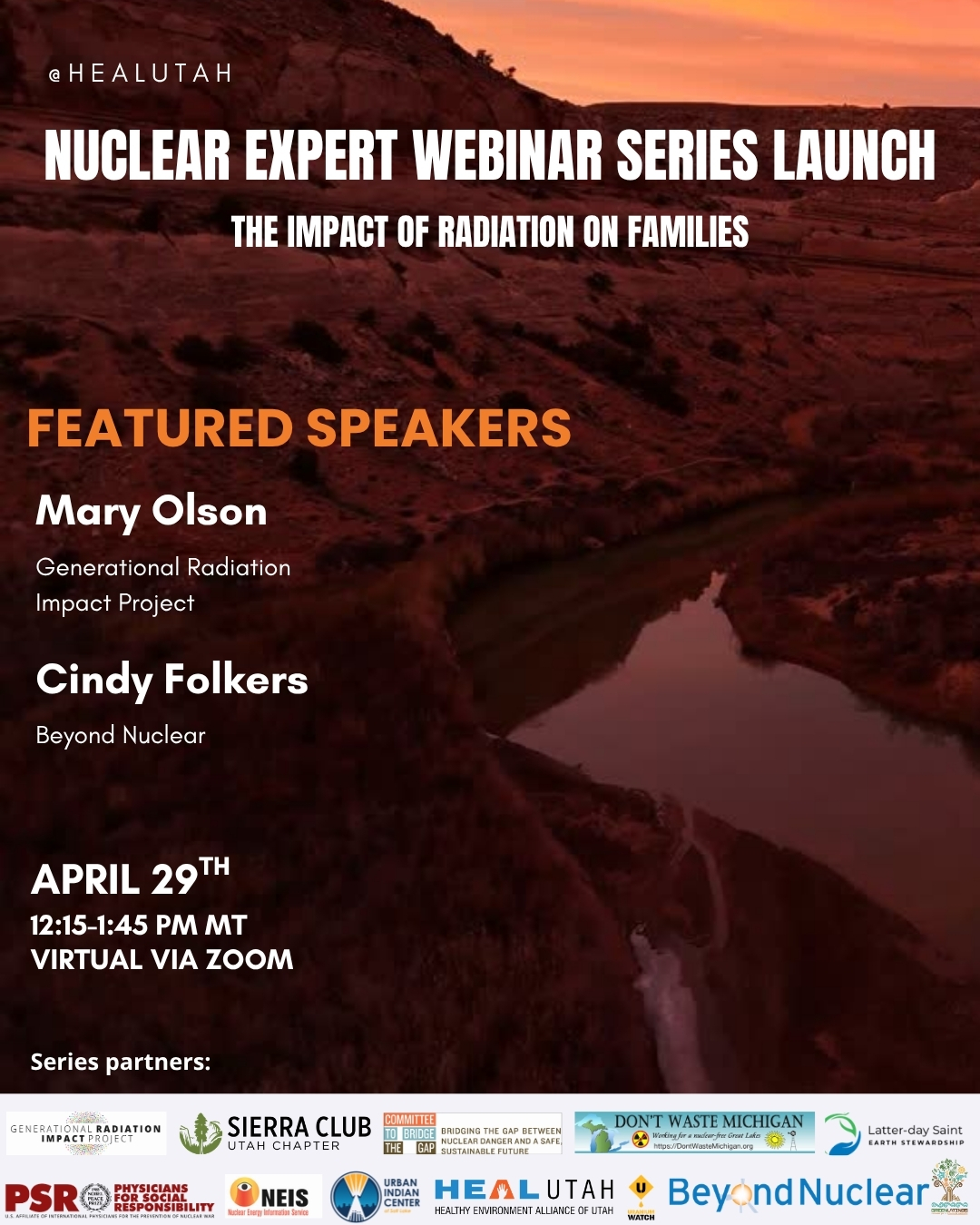
29 April – Nuclear Expert Webinar #1 – Radiation Impacts on Families with Mary Olson and Cindy Folkers
- 12:15 PM MT – 1:45 PM MT
- Location: Virtual – REGISTER TODAY

4 May -West Suburban Peace Coalition to discuss Iran war at May Educational Forum
Monday, May 4, 7:00 – 8:00 PM Central Standard Time
Title: : How Trump’s Narrative Tries to Shape the Reality of the War on Iran.
Contact Walt Zlotow, zlotow@hotmail.com 630 442 3045 for further information
14 May – online event From Bombs to Data Centres: the Face of Nuclear Colonialism

Pine Ridge Uranium is the real threat, not Tehran- Tell Burgum: Stop the Extraction.
Chernobyl: The Lost Tapes – A good documentary on Chernobyl on SBS available On Demand for the next 3 weeks– https://www.sbs.com.au/ondemand/tv-program/chernobyl-the-lost-tapes/2352741955560
To see nuclear-related stories in greater depth and intensity – go to https://nuclearinformation.wordpress.com
-
Archives
- April 2026 (327)
- March 2026 (251)
- February 2026 (268)
- January 2026 (308)
- December 2025 (358)
- November 2025 (359)
- October 2025 (376)
- September 2025 (257)
- August 2025 (319)
- July 2025 (230)
- June 2025 (348)
- May 2025 (261)
-
Categories
- 1
- 1 NUCLEAR ISSUES
- business and costs
- climate change
- culture and arts
- ENERGY
- environment
- health
- history
- indigenous issues
- Legal
- marketing of nuclear
- media
- opposition to nuclear
- PERSONAL STORIES
- politics
- politics international
- Religion and ethics
- safety
- secrets,lies and civil liberties
- spinbuster
- technology
- Uranium
- wastes
- weapons and war
- Women
- 2 WORLD
- ACTION
- AFRICA
- Atrocities
- AUSTRALIA
- Christina's notes
- Christina's themes
- culture and arts
- Events
- Fuk 2022
- Fuk 2023
- Fukushima 2017
- Fukushima 2018
- fukushima 2019
- Fukushima 2020
- Fukushima 2021
- general
- global warming
- Humour (God we need it)
- Nuclear
- RARE EARTHS
- Reference
- resources – print
- Resources -audiovicual
- Weekly Newsletter
- World
- World Nuclear
- YouTube
-
RSS
Entries RSS
Comments RSS
 nuclear-news