Japan may have to cancel the Olympics
Covid-19 could scupper Prime Minister Abe Shinzo’s pet project

March 7, 2020
IF BANYAN HAD to choose one country in which to ride out a pandemic, it would surely be Japan. Early 19th-century woodblock prints of bathing testify to Japan’s old and admirable cult of cleanliness. Modern Japanese have for years been quick to don a face mask at the first sniffle, out of consideration for others. And the population responds swiftly to public messaging.
Hygiene measures advocated against covid-19 since mid-January emphasise frequent washing of hands. This has surely helped slow the spread of the coronavirus, especially given that of Japan’s 1,035 covid-19 cases and 12 deaths, most are associated with a cruise ship held for weeks off Yokohoma. One striking and positive side-effect is already apparent: unlike in Europe or America, doctors report sharp falls in cases of ordinary flu, not only compared with previous years but also with the first part of the winter. Given that 3,300 deaths were attributed to flu in Japan in 2018, the good hygiene inculcated in recent months may well have saved far more lives than covid-19 has claimed.
For all that, social strains have shown in recent days. In Tokyo scuffles have broken out in queues for facemasks outside pharmacies. Panic-buying of toilet paper has left shelves bare. A photograph of toilet rolls in a public lavatory chained to their dispenser with a bicycle lock has done the rounds. While hardly “Lord of the Flies”, it is all highly unusual in such a well-behaved country.
Blame a squall of doubt over the government of the usually assertive prime minister, Abe Shinzo. His problems seem, precisely, to have begun with the cruise ship, the Diamond Princess. When cases of covid-19, contracted overseas, became clear among the 3,700 people aboard, measures to isolate them failed badly. The vessel was, as one passenger put it, a floating petri dish, as the number of infected soared to over 700, with seven deaths. Extraordinarily, crew were eventually let ashore from the infected vessel, and Japanese passengers allowed to return home on public transport, with no further quarantine measures.
When it comes to bumbling crisis management, Japan has form. After the Kobe earthquake in 1995, yakuza (gangsters) set up soup kitchens, so slow was government help to arrive. Bureaucratic disarray ruled in the Diamond Princess’s handling, too. European ambassadors with nationals aboard complained they did not know who in the government to call. Fans wondered whether Mr Abe, invisible during the crisis, had lost his touch. His hitherto unassailable poll ratings fell sharply.
To contain the damage to his reputation as well as the coronavirus, on February 27th Mr Abe took the initiative, telling all schools to close until April. Preparing for the worst, he rushed through legislation this week allowing a state of emergency to be declared. And he unveiled an emergency spending package.
The assertive Abe, then, is back. So much so that questions are growing about what expert advice, if any, he drew on for his schools decision. New social stresses will surely emerge, not least for working mothers (it never seems to be fathers) who must now drum up weeks of day-time childcare. “The government does not grasp what it’s like to raise children,” one mother complains.
The government claims that Japan will return to normal in April. That seems implausible. A state visit by China’s president, Xi Jinping, which was supposed to put the two countries’ listing relationship on an even keel, has already been postponed. There is little political cost to Mr Abe—after all, nationalists who backed his rise to power had been grumbling about his hosting the Chinese dictator.
Much more rides on the Olympic Games in Tokyo this summer. Mr Abe intends them to foster the patriotism whose absence among ordinary Japanese he laments. He wants the games to make Japan seem open, global and even multicultural. And, though vastly over budget, they are to crown the prime minister’s seven-year rule.
To cancel the games would generate not only disappointment among ordinary Japanese but anger at the wasted expense they have already had to bear. But a pandemic would take the decision out of his hands—not least, says Nakano Koichi of Sophia University, because the Olympic village would be “a cruise ship on land”. Bet on a postponement of the games at the very least, and on a long delay before the prime minister’s popularity shines again.
Will coronavirus cancel the Tokyo 2020 Olympics?
March 6, 2020
Games on? Or Games over?
It would be one of the biggest sports news stories ever.
The postponement – or cancellation – of the world’s greatest sporting mega-event because of coronavirus would be unprecedented in peacetime.
The 2020 Olympics are due to take place in Tokyo from 24 July to 9 August – here are some of the key questions as the Olympic movement faces up to unchartered territory.
What is the latest in Japan?
There is inevitably mounting concern; Japan’s proximity to China where the outbreak began, the postponement of Tokyo 2020 volunteer training, the restrictions placed on last weekend’s Tokyo marathon where only elite runners were allowed to participate, the suspension of J-League matches and other sports events, and the country’s closure of schools.
The Asia Sevens rugby tournament, which was due to be a pre-Games test event held in Tokyo next month, was cancelled on Wednesday.
The news came just as International Olympic Committee (IOC) president Thomas Bach was facing the media in Lausanne, after a two-day executive board meeting.
Tokyo 2020 organisers had also agreed to scale back the torch relay in response to coronavirus, with the lighting of the flame due to take place in Greece next week.
Japan’s Olympics minister broke ranks on Tuesday, saying that Tokyo’s contract with the IOC allowed for the Games to be postponed until later this year.
What has the IOC said?
 President Thomas Bach says the IOC remains ‘fully committed’ to Tokyo 2020
At the news conference on the banks of Lake Geneva, Bach fended off a barrage of questions about whether the Olympics could be delayed.
The admission 24 hours earlier from Japan’s Olympics minister perhaps forced Bach into a hastily arranged and unscheduled statement, in which he tried to make clear his confidence the event would proceed as planned, and urged athletes to prepare “full steam”.
At his news conference the following day, Bach struck an even more defiant tone.
He denied having a ‘Plan B’, refused to be drawn on when any decision could be made and remarkably insisted that the words “cancellation” and “postponement” were not even mentioned during the meeting.
The president did admit to a “challenge” when it came to the cancelling of some qualifying events, as has the International Paralympic Committee (IPC), which has also said qualification criteria will be reviewed as a result.
In a letter to athletes on Thursday, Bach seemed to reveal a little more realism, admitting the coronavirus was “a major concern for all of us” and was “a major subject of discussion” at the executive board meeting.
When asked what exactly his confidence was based on, Bach referred to the guidance the IOC is receiving from the World Health Organisation, part of a dedicated task-force that is now in regular dialogue, without explaining what that advice actually was.
Why no ‘Plan B’?
Bach’s reassuring messaging will no doubt be welcomed by many in Japan, the Olympic movement, its stakeholders, and many athletes.
But some may wonder whether the president is in denial. Or merely delaying the inevitable. Others will ask if it is irresponsible or naive not to have a contingency plan.
The reality is the IOC almost certainly does have a ‘Plan B’. Insiders explain that it always does for unforeseen events at the Olympics, ranging from terrorism and war to natural disasters and boycotts.
As Bach – a man who never gives the impression of panicking – explained in Lausanne, he has been faced with challenges ahead of previous Games before – from the Zika virus and Russia’s state-sponsored doping scandal before Rio 2016, to the threat of nuclear war on the Korean peninsular in the build-up to Pyeongchang 2018.
So perhaps his calm exterior should not come as too great a surprise. The IOC operates in something of a bubble after all, and will not be pushed into an expression of alarm just because some in the outside world expects it.
Perhaps this is wise. This crisis comes with the IOC facing a challenge to persuade cities to bid to host Games at the best of times. Bach is hardly going to rush into cancelling or delaying Tokyo 2020 – and perhaps in doing so deter other cities from bidding in the future – until it becomes absolutely necessary.
Why no decision yet?
 The 2020 Olympics are due to run from 24 July to 9 August
Firstly, because it may be premature. If the Games were being held now, it is hard to see how it could proceed as planned given the current approach of the Japanese authorities to mass gatherings and thousands of athletes in close proximity to each other in the village. But if, as many hope, the outbreak peaks, and then eases in the summer months, then it would be Games on.
And secondly, if the IOC were to publicly countenance a delay or cancellation, it would almost certainly have a detrimental effect, harming sales of tickets and hospitality packages, worrying athletes, and harming the all-important broadcast and sponsorship partners who ultimately bankroll the Olympic movement.
The only exception to this stance so far has come from long-serving IOC member Dick Pound, who last week admitted a decision to cancel could be made as late as May.
Ultimately, the situation is fluid and developing all the time, and just because Bach is confident now, it does not mean the situation will not change. So his words should be viewed with that in mind.
Who decides?
Under the heading ‘Termination’, clause 66 of the official Tokyo 2020 host city contract gives the IOC the authority to “withdraw the Games from the city” in the event of war (as happened in 1916, 1940 and 1944), civil disorder or boycott, or if the organisation believes that the safety of participants would be threatened “for any reason whatsoever”.
Significantly perhaps, the document states the IOC can also terminate if the Games do not take place in 2020. There is no reference to postponement.
The IOC then, is in control. But ultimately it will act on the advice of the experts at the World Health Organisation – and the Japanese government.
And with so much at stake, until they tell the IOC that to proceed would be irresponsible, expect the show of confidence to be maintained for as long as possible.
Could there be a short delay?
The distinct sense I picked up in Lausanne this week was that the kind of short-term three to four-month delay mooted by Japan’s Olympic Minister is highly unlikely. In fact, almost impossible.
It would certainly be very difficult trying to fit an autumn or winter Games into an already crowded sporting calendar, with so many other international events planned years in advance and potentially impacted.
Under a deal agreed four years ago, more than 5,000 apartments in the athletes’ village are due to be sold to private residents after the Paralympics, so it is unclear whether it would even be possible to accommodate 11,000 competitors and thousands more support staff at a later date in the event of a postponement. The availability of hotel rooms and volunteers would be uncertain.
The IOC’s most important live broadcast partner NBC – which has just announced it has sold a record £970m of advertising for Tokyo 2020 – may also take a dim view of the prospect of the Games clashing with the professional US basketball and NFL seasons, with the obvious negative knock-on effect that would have on audiences.
What are the other options?
- Stage the Games without fans and behind closed doors, as suggested this week by British Cycling performance director Stephen Park.
Intriguingly, this suggestion was not ruled out by a senior IOC insider when it was put to him in Lausanne as a possible worst-case scenario this week, and the medical directors of international federations have been consulted on their thoughts about this option.
It would make for a strange and diminished Olympic experience of course. TV cameras would be told to focus on the athletes, rather than the empty seats. The Tokyo authorities would have to refund the cost of millions of tickets, at a cost of hundreds of millions of pounds.
But at least the athletes would get to compete. And the IOC would have honoured its commitment to its broadcast partners to stage the event. In Japan, as elsewhere in the world, sports like baseball and sumo wrestling are currently being staged behind closed doors. Could this be the authorities preparing for and learning about how to handle such an approach later in the year? Is Plan B already being rehearsed?
- Delay it by a whole year.
- Try to re-locate the event elsewhere.
- Or cancel it altogether, which as Pound suggested last week, actually feels like the most likely outcome in the event the outbreak prevents the Games taking place as planned.
That may seem unthinkable. The impact would be hard to quantify, But interestingly, it may not be as cataclysmic to the IOC as you may imagine.
The host city contract states that in the event of a cancellation, the local organising committee “waive any claim and right to any form of indemnity, damages or other compensation or remedy of any kind”. So Tokyo could not sue the IOC for damages.
The IOC has built up reserves of about £700m in case a Games is lost, and which would enable it to still support international sports federations and national Olympic committees.
The IOC is thought to have spent about £20m on insurance to cover most of the £800m investment it pumps into each summer Olympics.
On the assumption that its policy covers diseases like coronavirus, the IOC could claim for lost income.
Who would be the biggest losers in the event of cancellation?
The insurance industry, which would suddenly face hundreds of millions of pounds’ worth of claims from broadcasters, advertisers, sponsors, hotels, and of course the local organisers themselves, all trying to claw back some of the losses they would incur.
Japan, which may have insurance for lost ticket sales, but would be unable to reclaim the estimated £10bn it has spent on infrastructure and preparation for the Games over the past seven years as it tries to use the event as a means of kickstarting a recovery from the 2011 Tohoku disaster. And it is too late to scale back now. The investment has been made. The loss in tourism revenue would also be a major blow to the country’s struggling economy.
And finally the athletes, men and women who have spent years dreaming of and training for the Games. For many, Tokyo will be their only chance of experiencing the Olympics.
When one considers just how much is at stake, perhaps it is no surprise that Bach seems so reluctant to even contemplate the suggestion of a delay or cancellation, and is in no rush to take a decision before he needs to.
Film lauding Japan’s Fukushima heroes warns against complacency
March 6, 2020
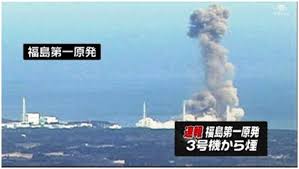
TOKYO (Reuters) – As aftershocks rock the Fukushima nuclear plant, a small band of workers defy their bosses to stay on and fight to stop an even bigger disaster from irradiating a wide swathe of Japan.
The scene is from a movie that opened on Friday – “Fukushima 50”, which tells the true story of the hours after a quake and tsunami set off meltdowns at the Fukushima Daiichi reactors on March 11, 2011.
Almost nine years to the day after that disaster, its depiction of individual heroism in the face of official bungling and overwhelming catastrophe has struck a chord with early viewers.
“I don’t think I’ve ever started crying so quickly during a movie. Partly that’s because I had flashbacks,” said a commenter called “n_n” on Yahoo’s movie review page.
Much has moved in on Japan since Fukushima, the world’s worst nuclear disaster since Chernobyl in 1986.
Authorities are now fighting another emergency, the spread of the new coronavirus. They are also pressing on with plans for the 2020 Olympics, which is due to kick off with a torch relay starting at Fukushima in three weeks’ time.
But, nine years on, workers in protective suits are still removing radioactive material from Fukushima’s reactors, and the film’s scenes – mixed in with news footage from the time – still pack an emotional punch.
“It sucked me right in within the first 10 minutes. The tension didn’t let up for the rest of the movie, and I was struck by the incompetence of the then-government,” wrote another Yahoo commentator, calling themselves “wan”.
“SURPRISED AND MOVED”
“Nobody in the country knew any of this was going on while it was happening. I was really surprised and moved,” said Yoshinori, a 56-year-old photographer, out for a noon showing of the film in Tokyo with his wife.
“Everybody in Japan should see this,” he added. “I think memories of that disaster are fading. I came to make sure I kept them fresh.”
“The Fukushima Fifty” was the name given to the group of workers and engineers who stayed behind after the tsunami knocked out the power and cooling systems at the plant, run by Tokyo Electric Power Co (TEPCO).
Led by Masao Yoshida – portrayed in the film by Ken Watanabe, one of the stars of “The Last Samurai” and “Letters from Iwo Jima” – they began running seawater into the reactors as an emergency cooling measure.
When their bosses back at TEPCO headquarters ordered them to stop, Yoshida ignored the order – rescinded hours later – and kept going.
He is shown yelling at his bosses during video conferences – scenes that Watanabe said were based on accounts from Yoshida’s colleagues. The engineer died in 2013 from esophageal cancer, aged just 58.
“When I made the film ‘Letters from Iwo Jima,’ I felt that Japan isn’t very good at learning lessons from the past,” Watanabe told a news conference after filming finished last year, referring to the Clint Eastwood film depicting the World War Two battle.
“I feel the same way about Fukushima,” he added.
Reporters Without Borders urges Japan to stop pressuring the media on Fukushima-related topics
March 6, 2020
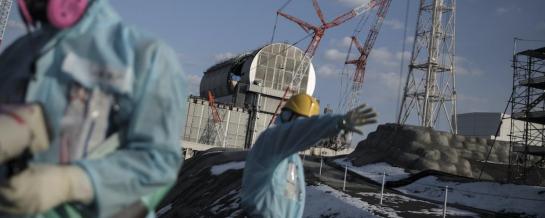
As Japan commemorates the 9th anniversary of the Fukushima disaster, Reporters Without Borders (RSF) urges the authorities to let journalists freely report on the topic.
On Wednesday, March 11th, Japan will commemorate the 9th anniversary of the Fukushima Daiichi nuclear plant accident, the worst atomic disaster after Chernobyl, caused by a tsunami and collectively resulting in 18,500 dead and missing, 160,000 evacuees and a continuous release of massive amounts of radioactive materials until today. Since the accident, the media have consistently encountered pressure and censorship attempts when trying to investigate the topic.
Reporters Without Borders (RSF) urges the Japanese authorities to ensure that the media can freely report on the Fukushima-related topics and requests a full access for all journalists, including foreign correspondents and freelancers, to the contaminated sites and to all raw data available.
“It is essential for the public to access independent information on the accurate radiation levels,” says Cédric Alviani, RSF’s East Asia bureau head. “The government is currently encouraging the remaining evacuees to settle back to the contaminated areas, but it must be fully transparent on the health hazard residents would be exposed to.”
Many Japanese journalists denounce heavy self-censorship in the media, which they attribute to the government and nuclear lobby’s efforts at concealing information seen as giving a “negative image” of Japan and hindering the preparation of the 2020 Olympic Games, set in Tokyo this summer.
A senior TV reporter who formerly worked for a major news program and wishes to remain anonymous recalls “intense pressure from the government and advertisers” to discourage his team from reporting on the long-term effects of the radioactive substances released by the plant. “We even heard of phone calls from Prime Minister Shinzo Abe’s cabinet asking our management to move some journalists they disliked to another department.”
In 2014, the board of daily newspaper The Asahi Shimbun even had to make a public apology for having published an article pointing out that 90% of the nuclear plant’s employees were offsite during the accident, drawing the government’s ire. The authors, award winning journalists Hideaki Kimura and Tomomi Miyazaki, were transferred to a non-writing section and later forced to resign.
Martin Fackler, who served as the New York Times Tokyo bureau chief from 2009 to 2015, considers that the authorities “clearly lack transparency” and believes that the Asahi Shimbun’s retraction case “successfully deterred other big media from investigating Fukushima-related stories.”
UN Special Rapporteur on Freedom of Expression David Kaye has expressed serious concerns about freedom of the press in Japan in 2017, and noted a further erosion in 2019.
Japan ranked 67th out of 180 in the 2019 World Press Freedom Index.
https://rsf.org/en/news/rsf-urges-japan-stop-pressuring-media-fukushima-related-topics
9 Years On: Fukushima N-Plant Lawsuits Await High Court Rulings
March 6, 2020
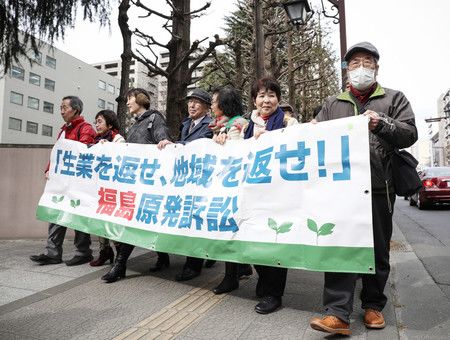
Tokyo, March 6 (Jiji Press)–High courts in Japan are hearing a series of damages lawsuits filed by evacuees from the country’s unprecedented nuclear accident that occurred in Fukushima Prefecture nine years ago.
The focal point is how the courts will assess the liability of the Japanese government, which has been flatly denying its responsibility over the accident at Tokyo Electric Power Company Holdings Inc.’s Fukushima No. 1 nuclear plant.
The plant suffered a triple reactor meltdown after being hit by a massive earthquake and tsunami on March 11, 2011, forcing many residents to evacuate.
So far, six of 10 district courts found the government responsible for the nuclear accident, while the other four did not recognize government liability.
Key issues are whether the government was able to predict the huge tsunami and was able to avert the catastrophe by taking preventive measures.
Proponents of Small Nuclear Reactors need a reality check – about the STAGGERING COST
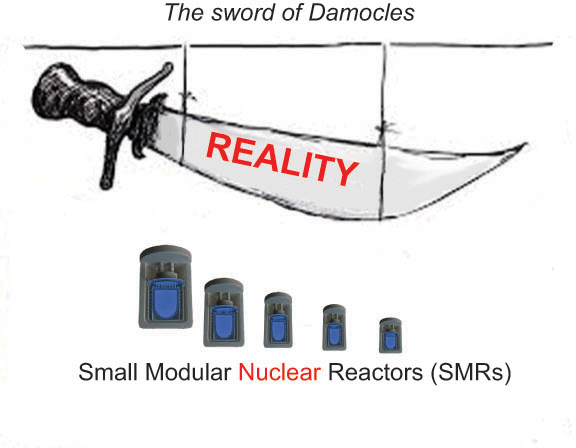 a reality check is in order. A handful of small reactors is under construction but they have been subject to huge cost overruns and delays. William Von Hoene, senior vice-president of Exelon ‒ the largest operator of nuclear power plants in the US ‒ says that no more large reactors will be built in the US and that the cost of small reactors is “prohibitive”.
Rolls-Royce sharply reduced its small-reactor investment to “a handful of salaries” in 2018 and is threatening to abandon its R&D altogether unless the British government agrees to an outrageous set of demands and subsidies.
|
Supporters of nuclear need a reality check: it’s staggeringly expensive, https://www.smh.com.au/environment/climate-change/supporters-of-nuclear-need-a-reality-check-it-s-staggeringly-expensive-20200308-p547wv.html, By Jim Green March 10, 2020 The NSW Parliament’s State Development Committee released its report into nuclear power last week. Conservative committee members recommended repeal of state laws banning uranium mining and nuclear power, while Labor members want to retain the legal bans.
What the conservatives and other supporters of nuclear power ignore is that it has priced itself out of the energy debate. Its costs are staggering and the worldwide pattern for the industry is one of stagnation and decline. In the US, the cost of the only two reactors under construction has skyrocketed to between $20.4 billion and $22.6 billion for one reactor. In 2006, Westinghouse said it could build a reactor for 10 times less than that amount. Another project in the US, a twin-reactor project in South Carolina, was abandoned in 2017 after the expenditure of at least $13.4 billion. Over in New Mexico, the world’s only deep underground nuclear waste repository was closed for three years following a chemical explosion in an underground nuclear waste barrel in 2014. In Britain, the estimated cost of the only two reactors under construction is $25.9 billion each. In the mid-2000s, the estimated cost was almost seven times lower. The British National Audit Office estimates that taxpayer subsidies for the project will amount to $58 billion. The cost of the only reactors under construction in France and Finland has nearly quadrupled and now stands at $17.7 billion to $20 billion per reactor. Both projects are 10 years behind schedule. Tomorrow, Japan will commemorate the ninth anniversary of the meltdowns, fires and explosions at the Fukushima nuclear plant. The Japanese government’s estimate of clean-up and compensation costs is over $300 billion, and rising. Insiders and lobbyists freely acknowledge that the nuclear power industry is in crisis and that worldwide decline is certain. But its Australian supporters are unfazed. Their only sideways nod to reality is to argue that even if large, conventional reactors are too expensive, the emerging “small modular reactors” would be a good fit for Australia. Continue reading |
The Virus of Nuclear Proliferation — limitless life

Demilitarization, Immorality, World The Virus of Nuclear Proliferation By Alice Slater, In Depth News, March 8, 2020 The writer serves on the Board of World BEYOND War, and represents the Nuclear Age Peace Foundation at the United Nations. NEW YORK (IDN) — In an avalanche of reporting we are now assaulted with information about how the world is […]
And they say that small nuclear reactors do not have military applications
Pentagon awards contracts to design mobile nuclear reactor Defense News
The department awarded contracts to BWX Technologies, Inc. of Virginia, for $13.5 million; Westinghouse Government Services of Washington, D.C. for $11.9 million; and X-energy, LLC of Maryland, for $14.3 million, to begin a two-year engineering design competition for a small nuclear microreactor designed to potentially be forward deployed with forces outside the continental United States.
The combined $39.7 million in contracts are from “Project Pele,” a project run through the Strategic Capabilities Office (SCO), located within the department’s research and engineering side. The prototype is looking at a 1-5 megawatt (MWe) power range. The Department of Energy has been supporting the project at its Idaho National Laboratory…….
If the testing goes well, a commercially developed, Nuclear Regulatory Commission licensed reactor will be demonstrated on a “permanent domestic military installation by 2027,” according to DoD spokesman Lt. Col. Mike Andrews. “If the full demonstration proves to be a cost effective energy resilience alternative, NRC-licensed [reactors] will provide an additional option for generating power provided to DoD through power purchase agreements.”
The best way to differentiate between the programs may be to think of the A&S effort as the domestic program, built off commercial technology, as part of an effort to get off of local power grids that are seen as weak targets, either via physical or cyber espionage. Pele is focused on the prototyping a new design, with forward operations in mind — and may never actually produce a reactor, if the prototype work proves too difficult…… https://www.defensenews.com/smr/nuclear-arsenal/2020/03/09/pentagon-to-award-mobile-nuclear-reactor-contracts-this-week/
High Courts in Japan to assess government liability for Fukushima nuclear disaster
|
Attention is on how the courts will assess the liability of the government, which has flatly denied responsibility over the accident at Tokyo Electric Power Company Holdings Inc.’s Fukushima No. 1 nuclear plant. The plant suffered meltdowns in three of its reactors after being hit by a massive earthquake and tsunami on March 11, 2011, forcing many residents to evacuate. So far, six of 10 district courts have found the government responsible for the nuclear accident, while the other four did not recognize government liability. The key issues are whether the government was able to predict the huge tsunami and was able to avert the catastrophe by taking preventive measures. The plaintiffs claim that the government could have prevented the accident if it had urged Tepco to take measures by exercising its regulatory power, based on its long-term earthquake prediction issued in 2002. All of the 10 district courts recognized Tepco’s responsibility to pay damages to the plaintiffs based on a law obliging a plant operator to pay damages over a nuclear accident, regardless of whether it was negligent or not. The Maebashi District Court and five others found that the long-term earthquake assessment was reliable, saying it was a reasonable prediction that should have been taken into account when considering tsunami countermeasures. The courts thus recognized the government’s responsibility, finding that it acted illegally by neglecting to order Tepco to take preventive measures — such as relocating power sources to a higher location at the plant. By contrast, two separate rulings issued by the Chiba District Court did not support the claim of government responsibility, reaching verdicts that the nuclear accident could not have been avoided even if preventive measures had been taken. Still, all district court rulings found that the government had been able to foresee the possibility of a huge tsunami hitting the plant. “Based on the premise that a nuclear plant should be protected at any cost, the government should exercise its regulatory power soon after it predicts a tsunami,” said Izutaro Managi, a lawyer involved in a case filed with the Fukushima District Court. The Fukushima case involves some 3,800 plaintiffs — the largest number among suits filed against Tepco and the government over the nuclear accident. The first high court ruling is expected later this year. “If high courts issue rulings in succession recognizing state responsibility over the nuclear accident, the Japanese government as a perpetrator should act to address damages from the accident,” Managi said. Specifically, he called on the government to review its compensation guidelines, which include measures such as monthly payments of ¥100,000 to each resident in evacuation zones. |
|

Iran continues to provide international inspectors access to its nuclear facilities
“The agency has not observed any changes to Iran’s implementation of its nuclear-related commitments under the JCPOA in connection with this announcement, or in the level of cooperation by Iran in relation to agency verification and monitoring activities under the JCPOA,” Grossi said in prepared remarks……..
The JCPOA promised Iran economic incentives in return for the curbs on its nuclear program, but since President Donald Trump pulled the U.S. out of the deal unilaterally in 2018 and imposed new sanctions, the country’s economy has been struggling.
Its violations of the pact are intended to pressure the other nations involved to increase economic incentives to make up for the American sanctions. So far, attempts by the other members of the JCPOA have fallen short of Iran’s demands.
In a separate report to members last week, the IAEA said it had identified three locations in Iran where the country possibly stored undeclared nuclear material or undertook nuclear-related activities without declaring it to international observers.
The activities at those locations are believed to have dated from the early 2000s, before the nuclear deal, and Iran responded to the report by suggesting that the IAEA had no legal basis to inspect those sites.
In his speech to the board members, Grossi called on “Iran to cooperate immediately and fully with the agency, including by providing prompt access to the locations specified by the agency.”
“The agency has identified a number of questions related to possible undeclared nuclear material and nuclear-related activities at three locations that have not been declared by Iran,” Grossi said, according to his prepared remarks. “The agency sought access to two of the locations. Iran has not provided access to these locations and has not engaged in substantive discussions to clarify the agency’s questions.” https://www.japantimes.co.jp/news/2020/03/09/world/u-n-atomic-watchdog-says-iran-still-providing-nuclear-access/#.XmbVIagzbIU
Snazzy little nuclear reactors the next big thing for Australia? I don’t think so

NUCLEAR PRICES ITSELF OUT OF THE FUTURE, HTTPS://WWW.AUMANUFACTURING.COM.AU/NUCLEAR-PRICES-ITSELF-OUT-OF-THE-FUTURE BY PETER ROBERTS, 9 Mar 20,
I was at lunch the other day and out came the familiar theme – Australia should go nuclear to de-carbonise the economy.
Well, a just-released report from the NSW Parliament’s State Development Committee should put an end to such talk – it is just too expensive and problematic.
The report, detailed in Channel 9 media, found the cost of the two reactors being built in the US is now thought to be between $20.4 billion and $22.6 billion for each reactor.
In the UK the cost of two reactors being build has jumped seven-fold to $25.9 billion each.
And those being built in France and Finland are now costed at upwards of $17.7 billion each.
Cost over-runs and delays mean that big nuclear power plants are only going to be built where there are massive government subsidies.
And this is even before factoring in the cost of the odd Fukushima or Chernobyl.
This morning on social media the pro-nuclear trolls were out in force – people are living happily now at Chernobyl one said.
Well I visited Chernobyl 18 months ago and there is nothing normal about it.
Maintaining the remains of the reactors at Chernobyl consumes 10 per cent of Ukraine’s admittedly modest GDP, and the long term effects of radiation continue to be felt.
This is why nuclear proponents now talk about snazzy new small reactors which are going to be the next big thing.
The same story is unfolding in small reactor construction as large – cost over-runs, very few small reactors actually under construction, and the need for massive, yes there’s that word again, government subsidies.
We already know what the answer to our carbon crisis is – renewables. Wind and solar plus storage is already cheaper and getting cheaper every day.
The future is not nuclear.
Uranium is also a feminist issue — IPPNW peace and health blog

by Angelika Claussen Around the world, women are resisting the civil and military use of nuclear technology Women have always and everywhere been part of the history of uranium processing and nuclear technology—as workers in uranium production, as residents in the vicinity of mines, or as victims of military and civilian nuclear disasters. Women are particularly vulnerable to the health […]
via Uranium is also a feminist issue — IPPNW peace and health blog
Peach Bottom nuclear station can struggle on for 80 years!

It’s getting a bit tiresome – this endless, mindless repetition of “carbon-free”  “clean energy” “zero-carbon” nuclear energy. Why don’t Larry Pearl and other writers, who otherwise provide thorough and well-researched information – why don’t they do their homework on the full carbon emissions of the entire nuclear fuel chain? Even the reactors themselves release a tiny an mount of Carbon 14. There is not only the chain of construction and demolition, but also the continuing fuel chain of mining through to radioactive waste disposal.
Exelon’s Peach Bottom becomes second US nuclear plant to get license 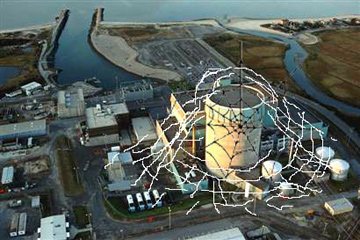 approval to 80 years, Utility Dive , By Larry Pearl March 9, 2020
Dive Brief:
- Exelon’s Peach Bottom plant became the second nuclear power reactor in the U.S. to get permission to operate out to 80 years, after the Nuclear Regulatory Commission approved another 20-year extension on Friday.
- Last December, Florida Power & Light’s Turkey Point units 3 and 4 got the first such approval as utilities work to retain a major source of carbon-free [?] as long as possible.
- Dominion has applied for a similar license extension for its Surry nuclear plant and plans to request for at least two more, while Duke plans to do the same for all 11 of its nuclear plants, Bloomberg reported last month.
Dive Insight:
Peach Bottom Unit 2 in York County, Pennsylvania, is now licensed to operate through August 2053 and Unit 3 through July 2054. The approvals come as more and more states move to adopt aggressive clean energy goals and the nuclear industry looks to advance a new generation of reactors.
But the economics of the current generation of U.S. reactors remains challenging, especially for new plants, and the industry and a number of states have adopted programs to recognize the zero emission attributes of nuclear.
While Exelon Nuclear’s Chief Nuclear Officer Bryan Hanson called the license extension, “good news for the environment, our employees and the community,” he noted that “nuclear plants must remain financially viable to continue to operate. ….
But FERC’s move in December to effectively raise the price floor for subsidized resources attempting to bid into the PJM wholesale capacity market complicates state efforts to support nuclear plants in Pennsylvania and elsewhere.
A variety of stakeholders have petitioned FERC to reconsider its decision.
The NRC’s decision to move forward with Peach Bottom’s license extension is also being challenged…. https://www.utilitydive.com/news/exelons-peach-bottom-becomes-second-us-nuclear-plant-to-get-license-approv/573690/
The price of staying — Beyond Nuclear International

Family who stayed in Fukushima was unwarned and exposed
The half lives of the abandoned — Beyond Nuclear International

The price paid by those who did not evacuate
via The half lives of the abandoned — Beyond Nuclear International
1 This Month

Pine Ridge Uranium is the real threat, not Tehran- Tell Burgum: Stop the Extraction.
Chernobyl: The Lost Tapes – A good documentary on Chernobyl on SBS available On Demand for the next 3 weeks– https://www.sbs.com.au/ondemand/tv-program/chernobyl-the-lost-tapes/2352741955560
To see nuclear-related stories in greater depth and intensity – go to https://nuclearinformation.wordpress.com
-
Archives
- April 2026 (288)
- March 2026 (251)
- February 2026 (268)
- January 2026 (308)
- December 2025 (358)
- November 2025 (359)
- October 2025 (376)
- September 2025 (257)
- August 2025 (319)
- July 2025 (230)
- June 2025 (348)
- May 2025 (261)
-
Categories
- 1
- 1 NUCLEAR ISSUES
- business and costs
- climate change
- culture and arts
- ENERGY
- environment
- health
- history
- indigenous issues
- Legal
- marketing of nuclear
- media
- opposition to nuclear
- PERSONAL STORIES
- politics
- politics international
- Religion and ethics
- safety
- secrets,lies and civil liberties
- spinbuster
- technology
- Uranium
- wastes
- weapons and war
- Women
- 2 WORLD
- ACTION
- AFRICA
- Atrocities
- AUSTRALIA
- Christina's notes
- Christina's themes
- culture and arts
- Events
- Fuk 2022
- Fuk 2023
- Fukushima 2017
- Fukushima 2018
- fukushima 2019
- Fukushima 2020
- Fukushima 2021
- general
- global warming
- Humour (God we need it)
- Nuclear
- RARE EARTHS
- Reference
- resources – print
- Resources -audiovicual
- Weekly Newsletter
- World
- World Nuclear
- YouTube
-
RSS
Entries RSS
Comments RSS
 nuclear-news