Nuclear and climate news in International Women’s Week
The nuclear industry took the opportunity to push itself as an equality-for-women champion. Also, in the media, parents were warned to see that their girls got STEM skills (Science Technology Engineering Maths), or else they’d be jobless dropouts.
Now I too believe that these skills are important. But I deplore the downgrading of the so-called “soft” studies, that is going on at the same time. With the crises facing the world now, surely for decision-making, we need people with knowledge of languages, history, sociology, ecology. On the health effects of nuclear radiation, and of global heating, the “soft” sciences of biology and genetics are essential. And, as social commentator Eva Cox has pointed out, the occupations with social values of caring and nurturing ought not to be downgraded and poorly paid, in comparison with the techno world and competitive occupations with macho values.
While climate and nuclear threats are the focus of this newsletter, the reality is that the planetary mess is made of many interconnecting factors, in the unsustainable economy of “endless growth”. A big reminder – investigative journalism – Planet Plastic.
A bit of good news -Farming in the Forest: A Chance to Reverse 1,000 Years of Destructive Land-Use Practices
Why don’t we treat the climate crisis with the same urgency as coronavirus?
Investigative journalism – Big Oil and Big Soda and plastically polluted Planet Earth.
The Nuclear Non Proliferation Treaty – now more important than ever.The Threat of a Nuclear War Between the US and Russia Is Now at Its Greatest Since 1983.
A sceptical look at NuScam’s small nuclear reactor plans.
RUSSIA. Nuclear reactors on the sea floor – Russia’s costly problem. Russia’s Poseidon thermonuclear torpedo being tested.
JAPAN.
- Negative reputation for Fukushima fishing industry – recovery is a long way away.
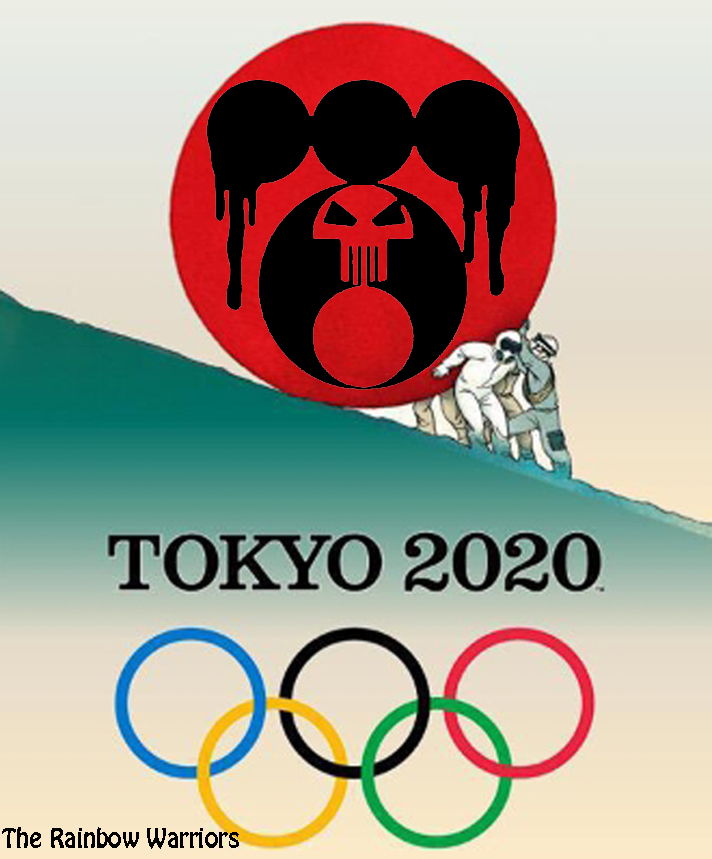
- Work on Fukushima plant, halted during 2016 G7 summit, to continue during Tokyo Olympics. The Coronavirus Exposes Why the Tokyo 2020 Olympics Should Be Canceled. Japan may have to cancel the Olympics – a “cruise ship on land”.
- Aoki, Ito and Nakamura: Radioactive Hotspots along Olympic Torch Relay Route. In Fukushima, Olympic torch relay faces cool welcome from nuclear evacuees.
- Japan pushes to remove Fukushima references from U.N. exhibition. Film lauding Japan’s Fukushima heroes warns against complacency.
- In pre-Olympics propaganda, Japan’s govt opens just 4% of Futaba town.
UK. Government advisers warn Britain against costly new nuclear reactors. Nuclear industry appeals for new funding model to support Sizewell C. 12 week public consultation on proposals for Bradwell B nuclear reactors. 50 years of uranium enrichment. Protesters call for Capenhurst Urenco nuclear plant to be closed down. Worker at Hinkley Point nuclear station has now developed coronavirus COVID-19. Nuclear and other toxic wastes dumped in Beaufort’s Dyke, which lies between Scotland and Northern Ireland.
USA. Investigative journalism – Deceit and Dark Money -Ohio’s nuclear subsidy saga. Dr Chris Busby exposes the facts on Cancer in US Navy Nuclear Powered Ships. Trump gives huge funding increase to nuclear agency that develops nuclear warheads. Trump’s America prepares to use low-level nuclear weapons as a “viable option“. – Russia fears. Trump picks nuclear envoy – Marshall Billingslea, formerly involved in torture program. Tennessee Valley Authority violated whistleblower protections for nuclear workers. Bill in California to call nuclear power “renewable“!.
UNITED ARAB EMIRATES. Middle East arms race to begin, as United Arab Emirates to open world’s largest nuclear reactor?
INDIA. Westinghouse nuclear reactors – a very poor deal for India. India retains its nuclear weapons no-first-use policy.
FRANCE. France starts a series of nuclear power shutdowns.
MARSHALL ISLANDS. Marshall islanders continue their fight for nuclear justice.
SOUTH AFRICA. Strange turnaround for South Africa’s EFF leader Julius Malema – nuclear best for blacks, renewables for white elites?
PHILIPPINES. Catholic prelate calls on President Duterte to reject nuclear energy. Nuclear power a very bad option for the Philippines.
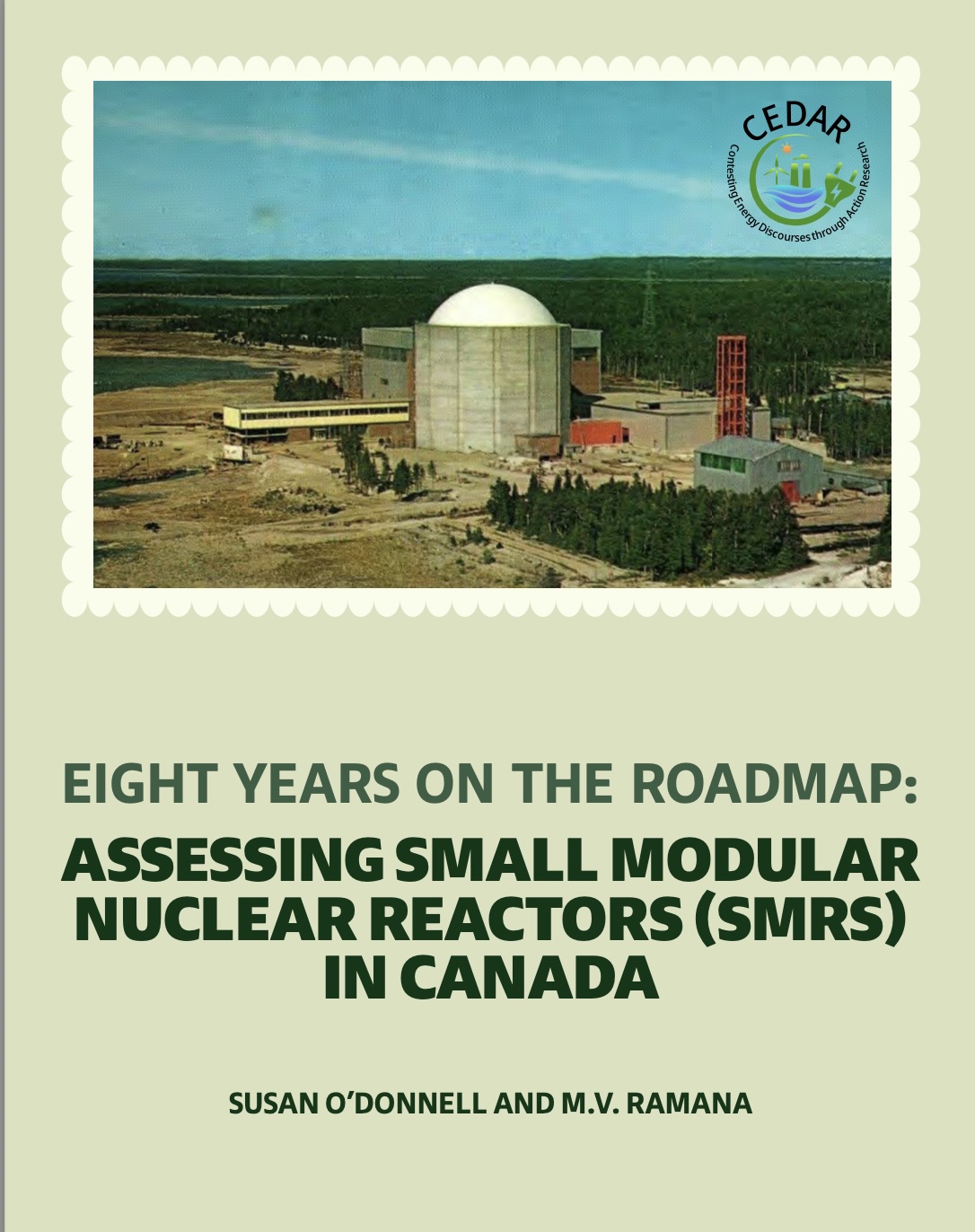
CANADA. Nuclear – a failing technology, example Canada’s risky CANDU reactors.
POLAND. Poland’s nuclear power development with USA to cost $15.56 billion.
AUSTRALIA. The demonisation of Julian Assange: Former foreign minister Carr calls on the Australian govt to intervene. Investigative journalism – Flinders University, South Australia: collusion with nuclear power promotion, Prof Pam Sykes, and the scam of “hormesis”,
A sceptical look at NuScam’s small nuclear reactor plans
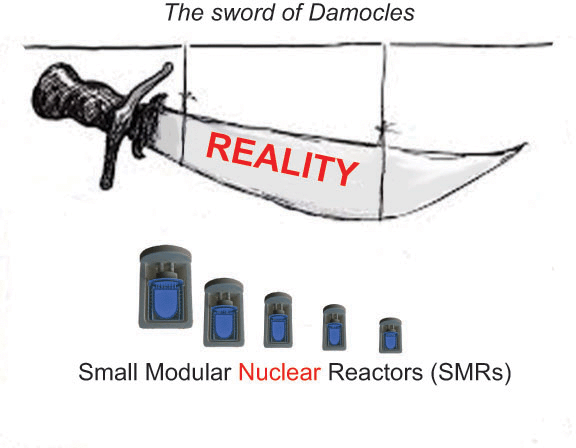
The Smaller Is Better Movement in Nuclear Power, Are miniature reactors  really safer? Mother Jones LOIS PARSHLEY, 8 Mar 20,
Huge computer screens line a dark, windowless control room in Corvallis, Oregon, where engineers at the company NuScale Power hope to define the next wave of nuclear energy. Glowing icons fill the screens, representing the power output of 12 miniature nuclear reactors. Together, these small modular reactors would generate about the same amount of power as one of the conventional nuclear plants that currently dot the United States—producing enough electricity to power 540,000 homes. On the glowing screens, a palm tree indicates which of the dozen units is on “island mode,” allowing a single reactor to run disconnected from the grid in case of an emergency.
Nuclear reactors on the sea floor – Russia’s costly problem

Lifting Russia’s accident reactors from the Arctic seafloor will cost nearly €300 million, https://thebarentsobserver.com/en/ecology/2020/03/lifting-russias-accident-reactors-arctic-seafloor-will-cost-nearly-eu300-millionExperts are discussing the framework for safe lifting of dumped reactors from four submarines and uranium fuel from one icebreaker reactor in the Kara Sea, in addition to one sunken nuclear submarine in the Barents Sea. By Thomas Nilsen 8 Mar, 20,
Russian and European experts agree that the dumped Soviet-era nuclear reactors in the Kara Sea can’t stay on the seafloor forever.
The Soviet Union used the waters east of Novaya Zemlya to dump accidental reactors, spent nuclear fuel and solid radioactive waste from both the navy and the fleet of nuclear-powered civilian icebreakers.
About 17,000 objects were dumped in the period from the late 1960s to the late 1980s.
Most of the objects are metal containers with low- and medium level radioactive waste. The challenge today, though, are the reactors with high-level waste and spent uranium fuel, objects that will pose a serious threat to the marine environment for tens of thousands of years if nothing is done to secure them.
According to the Institute for Safe Development of Nuclear Energy, part of Russia’s Academy of Science, the most urgent measures should be taken to secure six objects that contain more than 90% of all the radioactivity.
It is the information site for Russia’s submarine decommissioning program that informs about the plans.
The reactors from the submarines K-11, K-19 and K-140, plus the entire submarine K-27 and spent uranium fuel from one of the old reactors of the Lenin-icebreakers have to be lifted and secured.
Also, the submarine K-159 that sank north of Murmansk while being towed for decommissioning in 2003 have to be lifted from the seafloor, the experts conclude.
Special priority should be given to the two submarines K-27 in the Kara Sea and K-159 in the Barents Sea.
The study report made for Rosatom and the European Commission has evaluated the costs of lifting all six objects, bringing them safely to a yard for decommissioning and securing the reactors for long-term storage.
The estimated price-tag for all six will €278 millions, of which the K-159 is the most expensive with a cost of €57,5 millions. Unlike the submarines and reactors that are dumped in relatively shallow waters in the Kara Sea, the K-159 is at about 200 meters depth, and thus will be more difficult to lift.
Lifting the K-27, transporting to a shipyard for decommissioning and long-term storage in Saida Bay will come at a price of €47,7 millions the report reads.
The work can be done over an eight years period, according to the expert.
But, as the expert-group underlines, the €278 millions funding does not exist in any Russian Federal budgets today.
The Nuclear Non Proliferation Treaty – now more important than ever
 A landmark nuclear arms treaty shows its age https://www.axios.com/nuclear-weapons-treaty-50-d6ee3022-54f4-4853-bac8-89dfcb5a5f01.html Bryan Walsh, 8 Mar 20 March 5 marked the 50th anniversary of the Treaty on the Non-Proliferation of Nuclear Weapons (NPT) going into force. A landmark nuclear arms treaty shows its age https://www.axios.com/nuclear-weapons-treaty-50-d6ee3022-54f4-4853-bac8-89dfcb5a5f01.html Bryan Walsh, 8 Mar 20 March 5 marked the 50th anniversary of the Treaty on the Non-Proliferation of Nuclear Weapons (NPT) going into force.
Why it matters: While the number of atomic warheads in the world has fallen considerably since the darkest days of the Cold War, the club of nuclear-armed countries has expanded. With countries including the U.S. updating their nuclear arsenals and arms control treaties in danger of collapsing, many experts believe the risk of nuclear conflict is rising. Flashback: In the early days of the Cold War, it seemed inevitable that we would face “a world in which 15 or 20 or 25 nations may have [nuclear] weapons,” as President John F. Kennedy said in 1963.
Yes, but: More recently that commitment has wavered, as former U.S. ambassador to NATO Ivo Daalder wrote in the New York Times.
The bottom line: The NPT was one of the first steps the world took to reduce the risk of a global nuclear holocaust. If we forget its lessons, we will be risking our future. |
|
Government advisers warn Britain against costly new nuclear reactors

 Times 7th March 2020, Net Zero Report. Plans for nuclear plants in Britain face fresh uncertainty after government advisers warned against backing costly new reactors. The nuclear industry wants the government to commit to a funding system to back the construction of reactors, including EDF’s proposed Sizewell plant in Suffolk.
However, the National Infrastructure Commission, set up in 2015 to provide impartial advice to the government, reiterated concerns in a report about backing more nuclear plants. It noted that there had been cost reductions in renewable power technologies such as wind and solar over the past ten years, but “costs of building and running nuclear power stations have not
fallen consistently, even in countries that have built fleets of similar reactors”. Given the potential for other non-intermittent technologies to complement renewables, it said that this “weakened the case for committing to a new fleet of nuclear power stations”.
https://www.thetimes.co.uk/article/advisers-raise-doubts-over-new-nuclear-plants-8hd85cr6d
Negative reputation for Fukushima fishing industry – recovery is a long way away
 Fukushima Fishing Industry Still Far from Recovery https://www.nippon.com/en/japan-data/h00664/fukushima-fishing-industry-still-far-from-recovery.html Mar 9, 2020 [excellent graphs] While fishing ports and other infrastructure in Fukushima Prefecture have made progress toward recovery, the area still suffers from a negative reputation.
The coastal area off Ibaraki and Fukushima Prefectures, where the Oyashio and Kuroshio Currents meet in the Pacific Ocean, is an excellent fishing ground. The seafood caught in this area became known as Jōban-mono and was prized by professional chefs and Tsukiji Market connoisseurs. However, the 2011 Great East Japan Earthquake had a profound effect on the local fishing industry, when it caused a tsunami that destroyed all the fishing ports and led to an accident at the Fukushima Daiichi Nuclear Power Plant that damaged the reputation of the waters.
According to Fukushima Prefecture sea-fishing industry statistics, the total catch in 2010 stood at 38,600 tons, before plummeting in 2011. While fishing ports and other infrastructure have steadily recovered since, catches remain low. In 2018, 5,900 tons of fish were caught, equivalent to only 15% of the volume prior to the earthquake. This was worth ¥796 million, or only 7.3% of the ¥11.0 billion generated in 2010. (Aggregated data for 2019 is due to be released later in March 2020.)
After the nuclear accident, the fishing industry in Fukushima came to a standstill for approximately one year. Then, in June 2012, trial fishing operations began. Currently, there are still no catches within a 10-kilometer radius of the Daiichi plant and any made outside that area are subject to prefectural inspections for radioactive materials, alongside inspections by the fishing cooperatives themselves, in order to ensure safety. Although there have been zero cases of results for prefectural inspections outside acceptable levels for more than four years, the area’s negative reputation remains, so full recovery in the fishing industry is yet to be seen .
Nuclear industry appeals for new funding model to support Sizewell C.
 East Anglian Daily Times 8th March 2020, Campaigners say fresh funding fears have cast doubt on the viability of Suffolk’s new nuclear power station. The Theberton and Eastbridge Action Group on Sizewell C (TEAGS) said a letter from the nuclear industry urging government to support a new financing model for electricity infrastructure exposed the vulnerability of new projects.
TEAGS’ Alison Downes said the Nuclear Industry Association submissions to the Chancellor highlighted growing worries the Treasury may ditch plans for a new funding model, on which EDF Energy’s business case for Sizewell C depends. The NIA’s letterwarns it will be impossible to replace the nation’s ageing nuclear power stations and achieve carbon net zero targets without the right investment policy. It says there is an “urgent need” for a new financing mechanism to ensure “investor confidence, reduce the cost of capital and provide very significant value to the consumer.”
The letter goes onto say timing is “critical” – as the business case for Sizewell C depends on the timely transfer of operations from Hinkley Point C; EDF’s sister project in Somerset. It calls on government to respond to consultation on the
‘Regulated Asset Base’ model of funding, which was opened last year. RAB
grants companies rights to charge a fixed price to consumers in exchange
for providing the infrastructure. EDF said RAB could lead to lower
financing costs and “significant savings” for consumers.
However, opponents say RAB would expose bill-payers to huge costs. Paul Dorfman, founder of the Nuclear Consulting Group, said new nuclear projects had experienced “vast cost and time over-runs”. “Under RAB, the plan is for the burden of risk to pass to hard-press UK consumers and taxpayers,” he added. The RAB model, which has also been termed a “Sizewell surcharge”, sparked major opposition when consultation launched last year. More than 46,000 people have signed a petition opposing the plans.
Chris Wilson of Together Against Sizewell C said at the time of the petition that without massive subsidies, nuclear projects will “crash and burn”. Mrs Downes said the industry was right to worry that the Treasury may ditch RAB. “Based on its other projects, it will be impossible for EDF to accurately predict how much Sizewell C will cost and how long it will take to build,” she added. “EDF has made it clear that RAB is essential for Sizewell C to proceed, but it
will be too expensive, slow to deliver and is not the answer to our climate
emergency.
Dr Chris Busby exposes the facts on Cancer in US Navy Nuclear Powered Ships

Cancer in US Navy Nuclear Powered Ships https://www.counterpunch.org/2020/03/06/cancer-in-us-navy-nuclear-powered-ships/ by CHRIS BUSBY Here is a good one. In 2011, the nuclear-powered aircraft carrier USS Ronald Reagan was about 100km off the coast of Japan at the time of the Tsunami and the subsequent Fukushima reactor explosions. It was directed by the US government to ride to the rescue in what was later called Operation Tomodachi (friendship)–to provide assistance to the victims of the floods. What no-one on board was told was that the reactors had exploded and a plume of highly radioactive material was blowing east from the site into the path of the vessel. Of course, when this arrived, all the radiation monitors on the boat started screaming, and the planes and helicopters that had flown the rescue sorties were contaminated.
In 2014, following all the publicity about the cancers, a number of US Senators and important people were asking pertinent questions—the Navy had to do something to answer the accusations that the Fukushima radiation was killing those who sailed on Operation Tomodachi. They panicked. A big report was prepared by the US Defense Threat Reduction Agency (DTRA), entitled: Final Report to the Congressional Defense Committees in Response to the Joint Explanatory Statement Accompanying the Department of Defense Appropriations Act, 2014, page 90, “Radiation Exposure” [2]. Never use one word when ten will do
What I discuss in the paper to explain the result is my usual argument about how the radiation protection legislation is wildly incorrect when dealing with internal contamination from radionuclides. The legal limits in USA and the West are based on the comparison of cancers in those exposed to acute external gamma ray doses to the Japanese A-Bomb populations and cannot apply to internal exposures to substances which target DNA (Uranium, Strontium-90) or which provide huge local ionisation to some living cells but nothing at all to others (DU particles, reactor discharge particles).
Nuclear workers work outside at a nuclear site where the discharges get dispersed. Nuclear sailors live in a tin box that also contains the reactors. Nuclear worker studies are based on data that is provided by the nuclear industry to show there are no cancers. The DTRA study had to show more cancers in order to swamp the Ronald Reagan sailors’ cancers. But to do this, they brought out their Queen. And it was taken
Notes.
1) https://www.courthousenews.com/us-sailors-face-grim-diagnoses-after-fukushima-mission/
3) https://seer.cancer.gov/data/
4) https://www.tandfonline.com/doi/abs/10.1080/07357907.2020.1731526?journalCode=icnv20
5) https://www.genetics.org/content/204/4/1627
6) https://royalsocietypublishing.org/doi/10.1098/rspb.2017.1070
7) https://royalsocietypublishing.org/doi/10.1098/rspb.2017.1070
Dr Chris Busby is the Scientific Secretary of the European Committee on Radiation Riskand the author of Uranium and Health – The Health Effects of Exposure to Uranium and Uranium Weapons Fallout (Documents of the ECRR 2010 No 2, Brussels, 2010). For details and current CV see chrisbusbyexposed.org. For accounts of his work see greenaudit.org, llrc.org and nuclearjustice.org.
Trump’s America prepares to use low-level nuclear weapons as “a viable option” – Russia fears
 Russia Fears US Under Trump Now Ready to Use Nuclear Weapons as ‘Viable Political Option’ https://www.commondreams.org/news/2020/03/06/russia-fears-us-under-trump-now-ready-use-nuclear-weapons-viable-political-option“This dramatically increases the chance of a nuclear exchange due to miscalculation or human error.”by Eoin Higgins, staff writer
 |
“Washington is not just modernizing its nuclear forces, but is striving to give them new capabilities, which greatly expands the likelihood of their use,” Russian Foreign Ministry spokeswoman Maria Zakharova said Friday. Zakharova told reporters that the U.S. increase in nuclear weapons capabilities earlier in the year, when the military deployed a low-yield ballistic warhead to its submarines, reduces the threshhold for using the weapons and brings the world closer to the possibility of nuclear war. As Common Dreams reported, the move was seen by International Campaign to Abolish Nuclear Weapons treaty coordinator Tim Wright as “an alarming development that heightens the risk of nuclear war.” “Of particular concern is the expansion of the range of U.S. low-yield weapons in its nuclear arsenal, including the development and deployment of such munitions for strategic carriers,” said Zakharova. The U.S. in February angered Russian officials for a war game in which the Pentagon ran a scenario where Russia attacked a NATO ally with a low-yield nuclear weapon and the U.S. responed with a “limited” nuclear strike. According to RT, the Russian government’s concerns are based in part on the U.S.’s nuclear doctrines:
As the Washington Physicians for Social Responsibility’s Bruce Amundson and Joseph Berkson wrote for the Seattle Times in February after the U.S. deployment of low-yield weapons was announced, the deployment raises the risk of overreaction and escalation:
In her remarks Friday, Zakharova said Moscow was treating U.S. moves as a sign the country “has made a decision to consider a nuclear conflict as a viable political option and are creating the potential [scenario] necessary for it.” President Donald Trump and his administration have been reluctant to commit to renewing the Nuclear Nonproliferation Treaty in April 2021. The treaty turned 50-years-old on March 5, leading United Nations General Secretary António Guterres in a statement to call on treaty signatories to recommit to world peace. “The Secretary-General calls on States parties to make the most of this opportunity to strengthen international peace and security through the promotion of non-proliferation of nuclear weapons and nuclear disarmament, as well as measures to strengthen implementation of the NPT and achieve its universality,” said Guterres. |
Deceit and Dark Money -Ohio’s nuclear subsidy saga

Dark money dominated Ohio’s nuclear subsidy saga ENERGY NEWS NETWORK, Kathiann M. Kowalski, March 5, 2020
FirstEnergy Solutions paid nearly $2 million to at least one group, but  most other data remains hidden.

After-the-fact filings show that FirstEnergy’s generation subsidiary paid nearly $2 million to Generation Now, one of the special interest groups that orchestrated ads, political donations and other efforts behind Ohio’s nuclear and coal bailout.
But legal loopholes make it harder to find out the total spent and who else was behind xenophobic advertising, dueling voter petitions, alleged intimidation and other claims of foul play. And none of those actions fully disclosed who was behind them.
The scant public filings that are available show additional connections to FirstEnergy Solutions (now Energy Harbor), as well as the law firm of an outspoken legislator who has long fought the state’s clean energy standard, and others with high-level political influence.
House Bill 6 gutted Ohio’s renewable energy and energy efficiency standards while putting ratepayers on the hook for nearly $1 billion in subsidies for nuclear power plants, plus an additional amount for aging coal plants. Multiple groups spent heavily to promote HB 6 and prevent a referendum on the law following its passage.
In some cases, nonprofit and for-profit organizations funded each other or shared the same spokesperson. Groups active in the HB 6 campaign also had links to some of the same lobbyists and consultants who acted for companies that stood to benefit from HB 6, or unions with workers at their plants. But only limited amounts of funding could be traced.
ON ORIGINAL – INTRIGUING INTERACTIVE DIAGRAM HERE _ shows interrelationships of individuals and groups Continue reading
Big Oil Big Soda and plastically polluted Planet Earth.
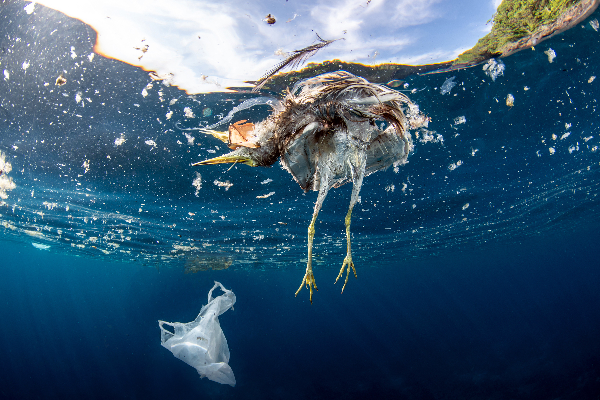
“They really sold people on the idea that plastics can be recycled because there’s a fraction of them that are,”..“It’s fraudulent. When you drill down into plastics recycling, you realize it’s a myth.” …… “Recycling delays, rather than avoids, final disposal,” the Science authors write. And most plastics persist for centuries. …….
We are all guinea pigs in this experiment, as plastics accumulate in the food web, appearing in seafood, table salt, and ironically even in bottled water. Many plastics are mixed with a toxic brew of colorants, flame retardants, and plasticizers.
 PLANET PLASTIC, How Big Oil and Big Soda kept a global environmental calamity a secret for decades, Rolling Stone, By TIM DICKINSON, MARCH 3, 2020
Every human on Earth is ingesting nearly 2,000 particles of plastic a week. These tiny pieces enter our unwitting bodies from tap water, food, and even the air, according to an alarming academic study sponsored by the World Wildlife Fund for Nature, dosing us with five grams of plastics, many cut with chemicals linked to cancers, hormone disruption, and developmental delays. Since the paper’s publication last year, Sen. Tom Udall, a plain-spoken New Mexico Democrat with a fondness for white cowboy hats and turquoise bolo ties, has been trumpeting the risk: “We are consuming a credit card’s worth of plastic each week,” Udall says. At events with constituents, he will brandish a Visa from his wallet and declare, “You’re eating this, folks!”
With new legislation, the Break Free From Plastic Pollution Act of 2020, Udall is attempting to marshal Washington into a confrontation with the plastics industry, and to force companies that profit from plastics to take accountability for the waste they create. …….
The battle pits Udall and his allies in Congress against some of the most powerful corporate interests on the planet, including the oil majors and chemical giants that produce the building blocks for our modern plastic world — think Exxon, Dow, and Shell — and consumer giants like Coca-Cola, Nestlé, and Unilever that package their products in the stuff. Big Plastic isn’t a single entity. It’s more like a corporate supergroup: Big Oil meets Big Soda — with a puff of Big Tobacco, responsible for trillions of plastic cigarette butts in the environment every year. And it combines the lobbying and public-relations might of all three………
Massive quantities of this forever material are spilling into the oceans — the equivalent of a dump-truck load every minute. Plastic is also fouling our mountains, our farmland, and spiraling into an unmitigatable environmental disaster. John Hocevar is a marine biologist who leads the Oceans Campaign for Greenpeace, and spearheaded the group’s response to the BP oil spill in the Gulf. Increasingly, his work has centered on plastics. “This is a much bigger problem than ‘just’ an ocean issue, or even a pollution issue,” he says. “We’ve found plastic everywhere we’ve ever looked. It’s in the Arctic and the Antarctic and in the middle of the Pacific. It’s in the Pyrenees and in the Rockies. It’s settling out of the air. It’s raining down on us.”
More than half the plastic now on Earth has been created since 2002, and plastic pollution is on pace to double by 2030. At its root, the global plastics crisis is a product of our addiction to fossil fuels. The private profit and public harm of the oil industry is well understood: Oil is refined and distributed to consumers, who benefit from gasoline’s short, useful lifespan in a combustion engine, leaving behind atmospheric pollution for generations. But this same pattern — and this same tragedy of the commons — is playing out with another gift of the oil-and-gas giants, whose drilling draws up the petroleum precursors for plastics. These are refined in industrial complexes and manufactured into bottles, bags, containers, textiles, and toys for consumers who benefit from their transient use — before throwing them away. Continue reading
Japan may have to cancel the Olympics – a “cruise ship on land”
|
Covid-19 could scupper Prime Minister Abe Shinzo’s pet project “……. To contain the damage to his reputation as well as the coronavirus, on February 27th Mr Abe took the initiative, telling all schools to close until April. Preparing for the worst, he rushed through legislation this week allowing a state of emergency to be declared. And he unveiled an emergency spending package…… The government claims that Japan will return to normal in April. That seems implausible. A state visit by China’s president, Xi Jinping, which was supposed to put the two countries’ listing relationship on an even keel, has already been postponed. ….. Much more rides on the Olympic Games in Tokyo this summer. Mr Abe intends them to foster the patriotism whose absence among ordinary Japanese he laments. He wants the games to make Japan seem open, global and even multicultural. And, though vastly over budget, they are to crown the prime minister’s seven-year rule. To cancel the games would generate not only disappointment among ordinary Japanese but anger at the wasted expense they have already had to bear. But a pandemic would take the decision out of his hands—not least, says Nakano Koichi of Sophia University, because the Olympic village would be “a cruise ship on land”. Bet on a postponement of the games at the very least, and on a long delay before the prime minister’s popularity shines again.https://www.economist.com/asia/2020/03/07/japan-may-have-to-cancel-the-olympics?cid1=cust/ednew/n/bl/n/2020/03/5n/owned/n/n/nwl/n/n/EU/420030/n |
|
Westinghouse nuclear reactors – a very poor deal for India
Pushing the wrong energy buttons, https://www.thehindu.com/opinion/op-ed/pushing-the-wrong-energy-buttons/article30965454.ece?fbclid=IwAR1ymOL6TLlSxlUKkVVSL6_ukPPeiSzDlI_JM-He3CMG2qBD4HaBU0vezog, M.V. Ramana, Suvrat Raju, MARCH 03, 2020
The idea of India importing nuclear reactors is a zombie one with serious concerns about their cost and safety
Red flags in the U.S. deal
Because of serious concerns about cost and safety, the two organisations should have been told to abandon, not finalise, the proposal.
Indeed, it has been clear for years that electricity from American reactors would be more expensive than competing sources of energy. Moreover, nuclear reactors can undergo serious accidents, as shown by the 2011 Fukushima disaster. Westinghouse has insisted on a prior assurance that India would not hold it responsible for the consequences of a nuclear disaster, which is effectively an admission that it is unable to guarantee the safety of its reactors.
The main beneficiaries from India’s import of reactors would be Westinghouse and India’s atomic energy establishment that is struggling to retain its relevance given the rapid growth of renewables. But Mr. Trump has reasons to press for the sale too. His re-election campaign for the U.S. presidential election in November, centrally involves the revival of U.S. manufacturing and he has been lobbied by several nuclear reactor vendors, including 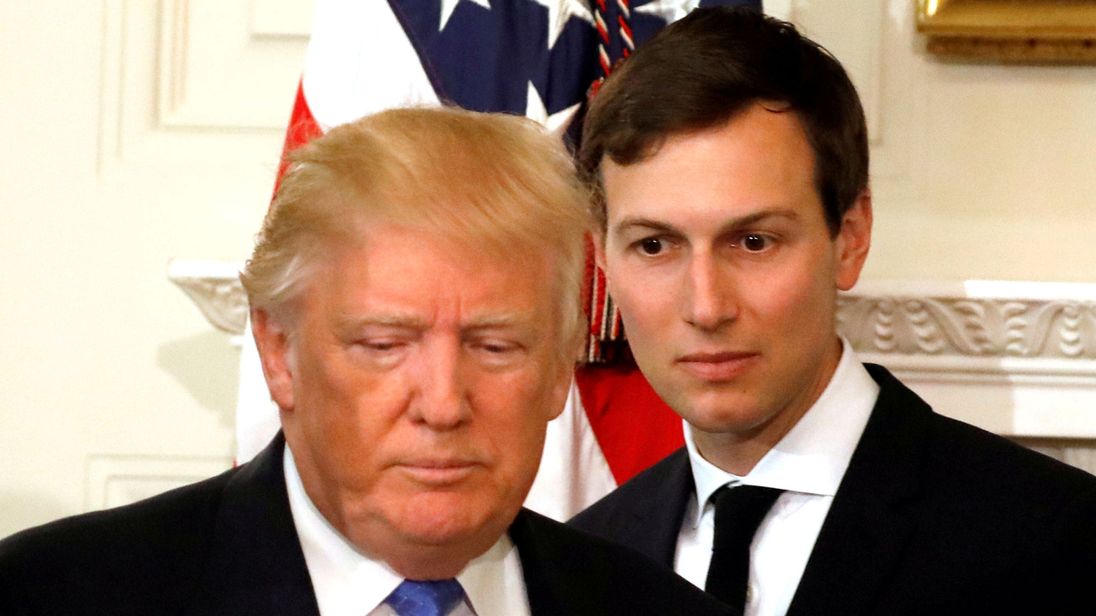 Westinghouse, reportedly to “highlight the role U.S. nuclear developers can play in providing power to other countries”. Finally, he also has a conflict-of-interest, thanks to his son-in-law and adviser, Jared Kushner, who accompanied him during the India visit.
In 2018, the Kushner family’s real-estate business was bailed out by a Canadian company that invested at least $1.1-billion in a highly unprofitable building in New York. Earlier that year, Brookfield Business Partners, a subsidiary of that Canadian company, acquired Westinghouse Electric Company. It violates all norms of propriety for Mr. Kushner to be anywhere near a multi-billion dollar sale that would profit Brookfield enormously.
What renewables can offer
Analysts estimate that each of the two AP1000 units being constructed in the U.S. state of Georgia may cost about $13.8 billion. At these rates, the six reactors being offered to India by Westinghouse would cost almost ₹6 lakh crore. If India purchases these reactors, the economic burden will fall upon consumers and taxpayers. In 2013, we estimated that even after reducing these prices by 30%, to account for lower construction costs in India, the first year tariff for electricity would be about ₹25 per unit. On the other hand, recent solar energy bids in India are around ₹3 per unit. Lazard, the Wall Street firm, estimates that wind and solar energy costs have declined by around 70% to 90% in just the last 10 years and may decline further in the future.
How safe?
Nuclear power can also impose long-term costs. Large areas continue to be contaminated with radioactive materials from the 1986 Chernobyl accident and thousands of square kilometres remain closed off for human inhabitation. Nearly a decade after the 2011 disaster, the Fukushima prefecture retains radioactive hotspots and the cost of clean-up has been variously estimated to range from $200-billion to over $600-billion.
The Fukushima accident was partly caused by weaknesses in the General Electric company’s Mark I nuclear reactor design. But that company paid nothing towards clean-up costs, or as compensation to the victims, due to an indemnity clause in Japanese law. Westinghouse wants a similar arrangement with India. Although the Indian liability law is heavily skewed towards manufacturers, it still does not completely indemnify them. So nuclear vendors have tried to chip away at the law. Instead of resisting foreign suppliers, the Indian government has tacitly supported this process.
Starting with the Tarapur 1 and 2 reactors, in Maharashtra, India’s experiences with imported reactors have been poor. The Kudankulam 1 and 2 reactors, in Tamil Nadu, the only ones to have been imported and commissioned in the last decade, have been repeatedly shut down. In 2018-19, these reactors produced just 32% and 38%, respectively, of the electricity they were designed to produce. These difficulties are illustrative of the dismal history of India’s nuclear establishment. In spite of its tall claims, the fraction of electricity generated by nuclear power in India has remained stagnant at about 3% for decades.
The idea of importing nuclear reactors is a “zombie idea” that, from a rational viewpoint, should have been dead long ago. In fact an earlier plan to install AP1000s in Mithi Virdi, Gujarat was cancelled because of strong local opposition. In 2018, Gujarat Chief Minister Vijay Rupani declared that the reactors “will never come up” in Gujarat. The Prime Minister should take a cue from his own State and make a similar announcement for the rest of the country.
Why don’t we treat the climate crisis with the same urgency as coronavirus?
Why don’t we treat the climate crisis with the same urgency as coronavirus? Owen Jones Guardian, 6 Mar 2020 No Cobra meetings, no sombre speeches from No 10, yet the consequences of runaway global heating are catastrophic, It is a global emergency that has already killed on a mass scale and threatens to send millions more to early graves. As its effects spread, it could destabilise entire economies and overwhelm poorer countries lacking resources and infrastructure. But this is the climate crisis, not the coronavirus. Governments are not assembling emergency national plans and you’re not getting push notifications transmitted to your phone breathlessly alerting you to dramatic twists and developments from South Korea to Italy.More than 3,000 people have succumbed to coronavirus yet, according to the World Health Organization, air pollution alone – just one aspect of our central planetary crisis – kills seven million people every year. There have been no Cobra meetings for the climate crisis, no sombre prime ministerial statements detailing the emergency action being taken to reassure the public. In time, we’ll overcome any coronavirus pandemic. With the climate crisis, we are already out of time, and are now left mitigating the inevitably disastrous consequences hurtling towards us. While coronavirus is understandably treated as an imminent danger, the climate crisis is still presented as an abstraction whose consequences are decades away. Unlike an illness, it is harder to visualise how climate breakdown will affect us each as individuals. Perhaps when unprecedented wildfires engulfed parts of the Arctic last summer there could have been an urgent conversation about how the climate crisis was fuelling extreme weather, yet there wasn’t. In 2018, more than 60 million people suffered the consequences of extreme weather and climate change, including more than 1,600 who perished in Europe, Japan and the US because of heatwaves and wildfires. Mozambique, Malawi and Zimbabwe were devastated by cyclone Idai, while hurricanes Florence and Michael inflicted $24bn (£18.7bn) worth of damage on the US economy, according to the World Meteorological Organization.As the recent Yorkshire floods illustrate, extreme weather – with its terrible human and economic costs – is ever more a fact of British life. Antarctic ice is melting more than six times faster than it was four decades ago and Greenland’s ice sheet four times faster than previously thought. According to the UN, we have 10 years to prevent a 1.5C rise above pre-industrial temperature but, whatever happens, we will suffer.
Pandemics and the climate crisis may go hand in hand, too: research suggests that changing weather patterns may drive species to higher altitudes, potentially putting them in contact with diseases for which they have little immunity. “It’s strange when people see the climate crisis as being in the future, compared to coronavirus, which we’re facing now,” says Friends of the Earth’s co-executive director, Miriam Turner. “It might be something that feels far away when sitting in an office in central London, but the emergency footing of the climate crisis is being felt by hundreds of millions already.”
Imagine, then, that we felt the same sense of emergency about the climate crisis as we do about coronavirus. What action would we take? ….. https://www.theguardian.com/commentisfree/2020/mar/05/governments-coronavirus-urgent-climate-crisis
Middle East nuclear arms race to begin, as United Arab Emirates to open world’s largest nuclear reactor?
State-run Korea Electric Power Corporation of South Korea is finishing work on four nuclear reactors in the Al Dhafra region of Abu Dhabi. Known as Barakah and owned by Emirates Nuclear Energy Corporation, the plant is scheduled to go online later this month with a capacity of 5.6 gigawatts.
Barakah is likely to fuel fears in the already tense region, given the uncertainty over the Joint Comprehensive Plan of Action, or Iran nuclear deal, and Israel’s lack of transparency over its nuclear program. Experts warn about more nuclear plants, increased uranium enrichment, and a possible nuclear arms race in what is arguably the most volatile region in the world……
the UAE’s neighbors are far from comfortable with the new plant.
Qatar expressed concern in a letter to the International Atomic Energy Agency, stating that an accidental discharge of radioactive material from Barakah could reach the capital of Doha in under 13 hours.
There are also concerns that the facility could be attacked. Paul Dorfman, researcher at University College London, told Nikkei that the risk of a missile attack on a nuclear facility is not to be discounted. Yemeni rebels claimed responsibility for just such an attack that targeted Barakah while still under construction in 2017. ……
Egypt and Jordan have also jumped on board the nuclear bandwagon. Egypt is set to build four nuclear reactors this year in collaboration with Russia in the El Dabaa region west of Cairo. Lawmaker Ahmed al Tantawi is wary of his country’s nuclear program, stating that Egypt already has a surplus of electricity.
Jordan’s nuclear program, however, faces problems such as financing and how to mitigate potential terrorist attacks. There is also a shortage of water needed to cool reactors, as it is one of the world’s most arid countries.
Iran’s nuclear ambitions are the most alarming. The country already has one nuclear power reactor at the Bushehr power plant and has two other Russian-designed reactors in the works. Construction on one began in November 2019 and is scheduled to finish in 2023. Another is still in the planning stage.
Tehran had curtailed enrichment under the nuclear deal, from which the U.S. withdrew in 2018. But the situation drastically changed in January after the U.S. drone assassination of Iranian Gen. Qassim Soleimani.
“Iran is still adhering to some of its duties under the JCPOA, such as International Atomic Energy Agency oversight,” Mohammed Marandi, political analyst at the University of Tehran, told Nikkei. “But with regards to research and development, the Iranians will no longer accept limitations due to the Europeans and Japanese [not cooperating],” he added.
The European Union tried to save the Iran Nuclear Deal after the administration of U.S. President Donald Trump withdrew. Later, however, the U.K., France and Germany invoked the dispute settlement framework in the deal after Iran increased enrichment activities on the heels of Soleimani’s assassination. Even Japan tried to help by mediating between Tehran and Washington but ultimately failed to ease tensions.
Israel, which is notably not a signatory to the Treaty on the Non-Proliferation of Nuclear Weapons, has a highly advanced military. The Nuclear Threat Initiative, a U.S. nuclear research entity, warns that Israel possesses nuclear weapons along with a large supply of ballistic and cruise missiles to deliver them. And there is no open consensus among experts as to the extent of Israel’s nuclear program.
Analysts say that U.S. policy is encouraging a Middle East nuclear arms race in two ways. First, the U.S. defense and nuclear industries view the region as a lucrative market, with Saudi Arabia being a key buyer. Second, the inaction of Europe, Russia and China to counter U.S. sanctions against Iran do not encourage Tehran to remain a party to the nuclear deal. https://asia.nikkei.com/Politics/International-relations/UAE-s-nuclear-plant-fuels-fears-of-Middle-East-arms-race
1 This Month
26 April – Chernobyl: Inside the Meltdown airs on National Geographic on Sunday 26th April from 4pm


4 May -West Suburban Peace Coalition to discuss Iran war at May Educational Forum
Monday, May 4, 7:00 – 8:00 PM Central Standard Time
Title: : How Trump’s Narrative Tries to Shape the Reality of the War on Iran.
Contact Walt Zlotow, zlotow@hotmail.com 630 442 3045 for further information
14 May – online event From Bombs to Data Centres: the Face of Nuclear Colonialism

Pine Ridge Uranium is the real threat, not Tehran- Tell Burgum: Stop the Extraction.
Chernobyl: The Lost Tapes – A good documentary on Chernobyl on SBS available On Demand for the next 3 weeks– https://www.sbs.com.au/ondemand/tv-program/chernobyl-the-lost-tapes/2352741955560
To see nuclear-related stories in greater depth and intensity – go to https://nuclearinformation.wordpress.com
-
Archives
- April 2026 (288)
- March 2026 (251)
- February 2026 (268)
- January 2026 (308)
- December 2025 (358)
- November 2025 (359)
- October 2025 (376)
- September 2025 (257)
- August 2025 (319)
- July 2025 (230)
- June 2025 (348)
- May 2025 (261)
-
Categories
- 1
- 1 NUCLEAR ISSUES
- business and costs
- climate change
- culture and arts
- ENERGY
- environment
- health
- history
- indigenous issues
- Legal
- marketing of nuclear
- media
- opposition to nuclear
- PERSONAL STORIES
- politics
- politics international
- Religion and ethics
- safety
- secrets,lies and civil liberties
- spinbuster
- technology
- Uranium
- wastes
- weapons and war
- Women
- 2 WORLD
- ACTION
- AFRICA
- Atrocities
- AUSTRALIA
- Christina's notes
- Christina's themes
- culture and arts
- Events
- Fuk 2022
- Fuk 2023
- Fukushima 2017
- Fukushima 2018
- fukushima 2019
- Fukushima 2020
- Fukushima 2021
- general
- global warming
- Humour (God we need it)
- Nuclear
- RARE EARTHS
- Reference
- resources – print
- Resources -audiovicual
- Weekly Newsletter
- World
- World Nuclear
- YouTube
-
RSS
Entries RSS
Comments RSS
 nuclear-news