Over 120 local and national organizations urge U.S. Congress to help nuclear frontline communities.
|
Groups Demand Relief for Nuclear Frontline Communities http://www.riograndesun.com/news/groups-demand-relief-for-nuclear-frontline-communities/article_e9562b26-96e1-11ea-8d76-17ac3338d2e6.html By Molly Montgomery SUN Staff , May 15, 2020
Over 120 local and national organizations are urging the U.S. Congress to provide assistance to nuclear frontline communities. The organizations sent a letter May 5 asking members of Congress to include provisions in the next federal COVID-19 economic relief bill for communities that have been exposed to radiation due to the federal government’s nuclear weapons activities. Those communities are more vulnerable to the effects of COVID-19 because of their exposure to radiation from activities including uranium mining, weapons production and atmospheric nuclear testing, the letter states. Members of the exposed populations often also face significant barriers to accessing health care–they are disproportionately indigenous, people of color, low-income, veterans and/or from rural areas, the letter states. “Those who sacrificed for our country’s national security, in some cases unknowingly, should not have to doubly fear this crisis,” it states. Local organizations that signed the letter include Concerned Citizens for Nuclear Safety, Tewa Women United and La Jicarita. Joni Arends, executive director of Concerned Citizens for Nuclear Safety, said the provisions would include people who live downwind and downstream of Los Alamos National Laboratory. “It’s time,” she said. “It’s past time.” The letter asks that members of Congress extend the Radiation Exposure Compensation Act (RECA) of 1990 past 2022, when it is set to expire. RECA aimed to offset the burden of health care costs to nuclear frontline communities. Currently, however, RECA does not include people impacted by nuclear weapon development, such as uranium workers, civilians downwind of the Trinity test site, the Nevada test site and nuclear production sites, veterans who cleaned up radioactive waste on the Marshall Islands and residents of Guam, the letter states. The letter asks members of Congress to provide compensation to these people as well. “RECA is crucial for the health and financial well-being of these communities, especially during the COVID-19 crisis,” it states. Recent studies show that people with cancer are three times as likely to die of COVID-19 than those without cancer, it states. Uranium miners–including members of the Navajo Nation and numerous residents of the Valley–are especially susceptible to cancer. Kathy Sanchez, a member of San Ildefonso Pueblo and Tewa Women United, said the letter is extremely important for elders in the Valley who participated in the country’s war efforts. She described the Laboratory as “a monster on a hill” that is destroying what is of value to local land-based people and that has made them feel ashamed about their ways of life. “This is just a blatant social injustice,” she said. “You have to live with a system that is always putting you down, always shaming you, guilting you, and making you fearful. They strip you of your humanity. And we need to say, ‘No.’” |
|
USA wants thousands of Hypersonic Missiles, using artificial intelligence
 The Coming Nuclear Menace: Hypersonic Missiles, CounterPunch, by KARL GROSSMAN 18 May 20, The United States is seeking to acquire “volumes of hundreds or even thousands” of nuclear-capable hypersonic missiles that are “stealthy” and can fly undetected at 3,600 miles per hour, five times faster than the speed of sound.Why so many? A Pentagon official is quoted in the current issue of Aviation Week & Space Technology as saying “we have to be careful we’re not building boutique weapons. If we build boutique weapons, we won’t—we’ll be very reluctant to—use them.” The Coming Nuclear Menace: Hypersonic Missiles, CounterPunch, by KARL GROSSMAN 18 May 20, The United States is seeking to acquire “volumes of hundreds or even thousands” of nuclear-capable hypersonic missiles that are “stealthy” and can fly undetected at 3,600 miles per hour, five times faster than the speed of sound.Why so many? A Pentagon official is quoted in the current issue of Aviation Week & Space Technology as saying “we have to be careful we’re not building boutique weapons. If we build boutique weapons, we won’t—we’ll be very reluctant to—use them.”
The article in the aerospace industry trade journal is headlined: “Hypersonic Mass Production.” A subhead reads: “Pentagon Forms Hypersonic Industry ‘War Room.’” On March 19, 2020, the U.S. conducted its first hypersonic missile test from its Pacific Missile Range Facility on Kauai, Hawaii. “Fast and Furiously Accurate” is the title of an article about hypersonic missiles written by a U.S. Navy officer which appeared last year on a U.S. Naval Institute website…….. The U.S. under President Trump withdrew last year from the INF treaty, a landmark agreement which had banned all land-based ballistic and cruise missiles with ranges of from 310 to 3,420 miles. It had been signed in 1987 by President Reagan and Soviet General Secretary Mikhail Gorbachev. The treaty “marked the first time the superpowers had agreed to reduce their nuclear arsenals, eliminate an entire category of nuclear weapons, and employ extensive on-site inspections for verification,” notes the Arms Control Association. “Hypersonic missiles may be unstoppable. Is society ready?” was the headline of an article in March in The Christian Science Monitor. This piece notes: “Hypersonic missiles are not just very fast, they are maneuverable and stealthy. This combination of speed and furtiveness means they can surprise an adversary in ways that conventional missiles cannot, while also evading radar detection. And they have injected an additional level of risk and ambiguity into what was already an accelerating arms race between nuclear-armed rivals.” The article raises the issue of the speed of hypersonic missiles miring military decisions. “For an incoming conventional missile, military commanders may have 30 minutes to detect and respond; a hypersonic missile could arrive at that same destination in 10 minutes.” Thus “artificial intelligence” or “AI” would be utilized…….. The hypersonic missiles will indeed likely be “invincible.” And they would be at the ready because of the withdrawal by the Trump administration of the INF treaty and other international arms control agreements, one after another. With the vast numbers of hypersonic nuclear-capable missiles being sought, the world will have fully returned to the madness in the depths the Cold War—as presented in the 1964 film Dr. Strangelove or: How I Learned to Stop Worrying and Love the Bomb. Apocalypse will be highly likely. Artificial intelligence is not going to save us. These weapons need to be outlawed, not produced and purchased en masse. And we must, indeed, “invest in diplomacy to develop community”—a global community at peace, not a world of horrific and unstoppable war. https://www.counterpunch.org/2020/05/18/the-coming-nuclear-menace-hypersonic-missiles/ More articles by:KARL GROSSMAN Karl Grossman, professor of journalism at State University of New York/College at Old Westbury, and is the author of the book, The Wrong Stuff: The Space’s Program’s Nuclear Threat to Our Planet. Grossman is an associate of the media watch group Fairness and Accuracy in Reporting (FAIR). He is a contributor to Hopeless: Barack Obama and the Politics of Illusion.
|
|
Coronavirus likely to put a dint in USA’s nuclear weapons spending
ORDER FROM CHAOS, How COVID-19 might affect US nuclear weapons and planning Brookings Institute, Steven Pifer, May 18, 2020 Editor’s Note: As it examines the administration’s proposed fiscal year 2021 defense budget, Congress should carefully consider the trade-offs and press the Pentagon to articulate how it weighed the trade-offs between nuclear and conventional forces, writes Steven Pifer. This piece original appeared in the National Interest.
NUCLEAR WEAPONS AND BUDGETS
For the foreseeable future, the United States will continue to rely on nuclear deterrence for its security and that of its allies (whether we should be comfortable with that prospect is another question). Many U.S. nuclear weapons systems are aging, and replacing them will cost money, lots of money. The Pentagon’s five-year plan for its nuclear weapons programs proposes $29 billion in fiscal year 2021, rising to $38 billion in fiscal year 2025, as programs move from research and development to procurement. The plan envisages a total of $167 billion over five years. And that total may be understated; weapons costs increase not just as they move to the procurement phase, but as cost overruns and other issues drive the costs up compared to earlier projections……….
Some look at these figures and the overall defense budget (the Pentagon wants a total of $740 billion for fiscal year 2021) and calculate that the cost of building and operating U.S. nuclear forces will amount to “only” 6-7 percent of the defense budget. That may be true, but how relevant is that figure?
By one estimate, the cost of building and operating the F-35 fighter program for the U.S. Air Force, U.S. Navy and U.S. Marines over the program’s lifetime will be $1 trillion. Amortized over 50 years, that amounts to $20 billion per year or “only” 2.7 percent of the Defense Department’s fiscal year 2021 budget request. The problem is that these percentages and lots of other “small” percentages add up. When one includes all of the programs, plus personnel and readiness costs as well as everything else that the Pentagon wants, the percentages will total to more than 100 percent of the figure that Congress is prepared to appropriate for defense.
OPPORTUNITY COSTS
The defense budget is unlikely to grow. Opportunity costs represent the things the Pentagon has to give up or forgo in order to fund its nuclear weapons programs. The military services gave an indication of these costs with their “unfunded priorities lists,” which this year total $18 billion. These show what the services would like to buy if they had additional funds, and that includes a lot of conventional weapons…………
These are the opportunity costs of more nuclear weapons: fewer dollars for aircraft, ships, attack submarines and ground combat equipment for conventional deterrence and defense…………..
If the United States and its allies have sufficiently robust conventional forces, they can prevail in a regional conflict at the conventional level and push any decision about first use of nuclear weapons onto the other side (Russia, or perhaps China or North Korea depending on the scenario).The other side would have to weigh carefully the likelihood that its first use of nuclear weapons would trigger a nuclear response, opening the decidedly grim prospect of further nuclear escalation and of things spinning out of control. The other side’s leader might calculate that he/she could control the escalation, but that gamble would come with no guarantee. It would appear a poor bet given the enormous consequences if things go wrong. Happily, the test has never been run.
This is why the opportunity costs of nuclear weapons programs matter. If those programs strip too much funding from conventional forces, they weaken the ability of the United States and its allies to prevail in a conventional conflict—or to deter that conflict in the first place—and increase the possibility that the United States might have to employ nuclear weapons to avert defeat………
The United States and NATO still retain the option of first use of nuclear weapons. If the U.S. president and NATO leaders were to consider resorting to that option, they then would be the ones to have to consider the dicey bet that the other side would not respond with nuclear arms or that, if it did, nuclear escalation somehow could be controlled.
Assuring NATO allies that the United States was prepared to risk Chicago for Bonn consumed a huge amount of time and fair amount of resources during the Cold War…….
In modernizing, maintaining and operating a safe, secure and effective nuclear deterrent, the United States should avoid underfunding conventional forces in ways that increase the prospect of conventional defeat and/or that might tempt an adversary to launch a conventional attack. If Washington gets the balance wildly out of sync, it increases the possibility that the president might face the decision of whether to use nuclear weapons first—knowing that first use would open a Pandora’s box of incalculable and potentially catastrophic consequences.
GETTING THE BALANCE RIGHT IN THE COVID19 ERA
This means that the Department of Defense and Congress should take a hard look at
|
the balance. The Pentagon presumably has weighed the trade-offs, though it is not a unitary actor. “Nuclear weapons are our top priority” has been the view of the leadership…….. The response to the virus and dealing with the economic disruption it has caused have generated a multi-trillion-dollar budget deficit in 2020 and likely will push up deficits in at least 2021. It would be wise now to consider the impact of COVID19. Having added trillions of dollars to the federal deficit, and facing an array of pressing health and social needs, will Congress be prepared to continue to devote some 50 percent of discretionary funding to the Department of Defense’s requirements? Quite possibly not. ………. https://www.brookings.edu/blog/order-from-chaos/2020/05/18/how-covid-19-might-affect-us-nuclear-weapons-and-planning/ |
|
USA’s F-35’s Nuclear Weapons Upgrade Delayed as Program Costs Top $1.6 Trillion
According to a new report by the Government Accountability Office (GAO), a congressional watchdog agency, the F-35’s planned Block 4 upgrade has been delayed by nine months, pushing the plane’s full-rate production decision back to sometime between September 2020 and March 2021
While Block 4 will integrate a number of new weapons into the F-35’s repertoire, such as Naval Strike Missile, the Meteor and SPEAR missiles and several laser-guided bombs, by far the most consequential weapon is the B61 nuclear gravity bomb, which is small enough to fit inside the F-35’s internal weapons bay.
Via the F-35 Block 4, NATO partners who wield US nuclear weapons thanks to nuclear sharing agreements will be able to continue to carry out nuclear strikes. With the Panavia Tornado exiting service with most European partners, a delay in fielding the F-35 Block 4 could leave a gap in NATO’s nuclear capabilities, especially for the Italian, Dutch and Belgian air forces.
However, the GAO report also notes the enormity of the Block 4 upgrade has driven up costs in the already colossal lifetime budget for the F-35. Noting that in 2019 it projected a baseline increase of $8 billion because of Block 4, the GAO stated in its Tuesday report that the update’s development and procurement costs are now estimated to be $13.9 billion and “that the sustainment costs to operate and maintain the F-35 fleet for its planned 66-year life cycle are $1.2 trillion, bringing the total cost of the F-35 program to over $1.6 trillion.”
“The planned $13.9 billion Block 4 effort exceeds the statutory and regulatory thresholds for what constitutes a major defense acquisition program, and Block 4 is more expensive than many of the other major weapon acquisitions already in DOD’s portfolio,” the GAO further states.
To provide better oversight into Block 4 activities, in 2016, we recommended that the Secretary of Defense hold a milestone B review – a critical point in an acquisition program leading to the engineering and manufacturing development phase – and manage it as a separate major defense acquisition program. DOD did not concur with our recommendation, and it continues to manage Block 4 within the larger F-35 program. We maintain that DOD should manage the Block 4 activities as a separate program.”The oversight office further advised the Pentagon to continue oversight reports on Block 4 upgrade progress through 2026, even though its budget only provides for updates through 2023.
Move to prevent dumping of Hinkley radioactive mud on the South Wales coast
|
The background shows that the Welsh Government believes concerns about the mud are irrational and are driven by “liars and scaremongers” (as the Environment Secretary said in 2018). In fact, in order to comply with the law, they need to address uncertainties and knowledge gaps and that is why we are recommending selection of members with a wide range of relevant knowledge. Please write to your elected representatives and circulate this widely, bearing in mind that Wales is not the only part of the UK affected. What little information the Welsh Government has issued suggests that announcement of the Expert Group’s membership may be imminent, so please act now. They will not want to look as if they’re backing down later. https://wanaarticles418353382.wordpress.com/category/hinkley-mud/ |
|
Dismantling of Norway’s nuclear research reactors – up to 25 years, about $billion
Norwegian reactor dismantling to cost almost USD2 billion, WNN , 18 May 2020 The decommissioning of Norway’s shut down research reactors at Halden and Kjeller will cost around NOK20 billion (USD1.96 billion) and take 20-25 years, according to a report commissioned by the Ministry of Trade and Industry. The report by Atkins and Oslo Economics mainly confirms assessments from the Institute for Energy Technology (IFE) and risk management and quality assurance consultants DNV GL that were made in 2019. It estimates that demolition of facilities and restoration of the areas will cost around NOK7 billion. There will also be costs of around NOK13 billion for the treatment of used fuel and the storage of radioactive waste. However, it notes there is “considerable uncertainty” around these costs…….
“There have been limited reactor operations in Norway, but we have complicated facilities and waste that will cost a lot,” said Minister of Industry Iselin Nybø. “The report shows how costly and lengthy that dismantling can be. The proposed measures will help to make the cleanup as efficient as possible.
“We will clean up to protect ourselves from harmful consequences for people and the environment from the radiation from this past industry,” Nybø added. “The investigation is part of the puzzle that is now being put in place to ensure a safe and effective cleanup. It will be considered thoroughly and planned to be addressed by the government in the autumn of 2020.”
Norway’s two research reactors – the nuclear fuel and materials testing reactor at Halden and the JEEP-II neutron scattering facility at Kjeller – were declared permanently shut down in June 2018 and April 2019, respectively. Their ownership and responsibility for them will move to Norwegian Nuclear Decommissioning (NND) from IFE……https://www.world-nuclear-news.org/Articles/Dismantling-of-Norwegian-reactors-to-cost-almost-U
Ministry of Defence’s poor management of contracts for nuclear infrastructure projects
 MPs slam MoD’s ‘utter failure’ to improve contract management as nuclear project costs soar
‘The department knows it can’t go on like this,’ says PAC chair The Ministry of Defence’s poor management of contracts has left taxpayers picking up the bill after nuclear infrastructure projects have swelled beyond their planned time and budget, a public spending watchdog has found.
The Public Accounts Committee found three nuclear infrastructure projects had together gone £1.45bn over budget and were each between 1.7 and 6.3 years because of problems with their contracts’ design and management.
The committee’s inquiry examined three projects: the building of a nuclear warhead assembly and disassembly facility, known as MENSA, at AWE Burghfield; the Rolls Royce-owned and operated Core Production Capability facilities at Raynesway, where the department is upgrading facilities for nuclear reactor core production; and the BAE Systems-owned Barrow shipyard facility to allow modular build of Dreadnought-class submarines.
The MoD was unable to explain why it had made repeated mistakes designing and managing the contracts – which represent the three biggest nuclear infrastructure projects it is managing – despite being warned about the same issues in the past, PAC said in a report last week.
The MPs said that both PAC and the National Audit Office had been warning of similar contracting mistakes for more than 30 years. The MoD had also “failed to learn lessons from comparable projects in the civil nuclear sector and in the United States”, they added.
The PAC report followed a NAO finding in January that “inherent uncertainties of early designs [in the three contracts] do not incentivise site operators, or their sub-contractors, to negotiate and share risks, increasing risks for the department”.
“It is therefore disappointing to see that in their early days the department made the same mistakes, also experienced by others, as were made more than 30 years ago,” the NAO report said.
The ministry said it “immensely regretted” the waste of money but admitted costs could keep rising because the contracts had left the government to assume financial risk……. https://www.civilserviceworld.com/articles/news/mps-slam-mods-utter-failure-improve-contract-management-nuclear-project-costs-soar
Coronavirus: How to prevent a new nuclear arms race – and future pandemics

Coronavirus: How to prevent a new nuclear arms race – and future pandemics, The National, Gavin Esler, May 18, 2020
Despite numerous warnings from virologists and epidemiologists that Sars and Mers would eventually be followed by something much worse, the world is still playing catch up on coronavirus.
Perhaps even more surprising, the danger of nuclear war has been forgotten in the public imagination but it has not gone away. The threat to the Gulf region and beyond from Iran’s nuclear programme has not been eliminated. North Korea has not abandoned its own extremely provocative missile programme. And figures released in the past few days have shown continuing reinvestment round the world in nuclear arsenals.
In 2019, according to the International Campaign to Abolish Nuclear Weapons (ICAN) the nine countries with nuclear weapons spent a total of $72.9 billion on those weapons, a 10 per cent increase on 2018. Of that sum, around half – $35.4bn – was spent by the Trump administration.
ICAN, as its name suggests, wants nuclear weapons to be banned. It points out that so much money that could be spent on making the world healthier – and preparing for the certainty of future pandemics – is being spent on the unlikelihood of a nuclear conflict.
|
While this argument is attention-grabbing, it does not face up to hard reality. Just because we were unprepared for Covid-19 does not of itself mean nuclear states should simply destroy their stockpiles. Events in the sea lanes of the Gulf remind us of the old Cold War saying, that the price of peace is eternal vigilance. Nevertheless, the dislocation caused by the virus has made many of us re-think our personal priorities – family, friends, work and what makes us happy. Perhaps the pandemic may also make governments reassess their own priorities. How many nuclear weapons are “enough”? Do we still believe in the doctrine of Mutually Assured Destruction – or MAD? Could we cut nuclear arsenals and put more effort into engagement with Iran and North Korea – difficult though that is – to try to prevent a new nuclear arms race? This year’s US presidential election, combined with an economic shock and the biggest threat to world health for a century, provides an opportunity to re-think our priorities. If we can spend billions every year on bunkers, missiles and early warning systems in the hope of preventing global conflict – and not see that investment as wasted – can we switch more investment to preventing and treating global health threats? https://www.thenational.ae/opinion/comment/coronavirus-how-to-prevent-a-new-nuclear-arms-race-and-future-pandemics-1.1021110 |
|
A mistaken idea, to put U.S. nuclear weapons in Poland
|
US nukes in Poland are a truly bad idea, Brookings Institute, Steven PiferMonday,May 18, 2020 On May 15, the U.S. Ambassador in Warsaw, Georgette Mosbacher, suggested relocating U.S. nuclear weapons based in Germany to Poland. One hopes this was just a mistake by a political appointee unfamiliar with NATO nuclear weapons issues, not a reflection of official U.S. government thinking. Moving nuclear weapons to Poland would prove very problematic.
The U.S. Air Force maintains 20 B61 nuclear gravity bombs at Buchel Air Base in Germany (as well as B61 bombs on the territory of four other NATO members). Kept under U.S. custody, the bombs could, with proper authorization in a conflict, be made available for delivery by German Tornado fighter-bombers. This is part of NATO’s “nuclear sharing” arrangements.
The Tornados are aging, and the German Ministry of Defense is considering purchasing F-18 aircraft to continue the German Air Force’s nuclear delivery capability. That has reopened debate within Germany about the presence of U.S. nuclear arms there, with Social Democratic Party (SPD) parliamentary leader Rolf Mützenich calling for their removal……….
First, moving U.S. nuclear weapons to Poland would be expensive……
Second, deploying the B61 bombs in Poland would make them more vulnerable to Russian preemptive attack in a crisis or conflict……
Third, placing nuclear weapons in Poland would be hugely provocative to Russia. …..
Fourth, a U.S. proposal to relocate its nuclear weapons to Poland would prove very divisive within NATO. The members of the alliance stated in 1997 that “they have no intention, no plan, and no reason to deploy nuclear weapons on the territory of new [NATO] members.” They incorporated that into the “Founding Act” that established relations between NATO and Russia…… https://www.brookings.edu/blog/order-from-chaos/2020/05/18/us-nukes-in-poland-are-a-truly-bad-idea/
|
|
Coalition pursues extra $7.25B for DOE nuclear cleanup, job creation
|
Coalition pursues extra $7.25B for DOE nuclear cleanup, job creation, Aiken Standard, By Colin Demarest cdemarest@aikenstandard.com, May 18, 2020
A bloc of local governments and nuclear industry, labor and community groups are pressing Congress to provide a one-time multibillion-dollar boost to the U.S. Department of Energy Office of Environmental Management, the remediation-focused Savannah River Site landlord. The organizations and officials – including Citizens For Nuclear Technology Awareness Executive Director Jim Marra and Savannah River Site Community Reuse Organization President and CEO Rick McLeod – sent a letter Friday to U.S. House and Senate leadership “strongly” supporting a $7.25 billion funding injection, arguing it “will help reignite the national economy,” help revive small businesses and create thousands of new jobs despite the novel coronavirus crisis…….. https://www.aikenstandard.com/coronavirus/coalition-pursues-extra-7-25b-for-doe-nuclear-cleanup-job-creation/article_9261d03c-991a-11ea-a5c2-87c9bf5d9ecf.html The requested money could, too, speed Environmental Management’s nuclear waste cleanup missions and be used to fix ailing infrastructure – some of which dates back to the Cold War – at sites across the country. That’s a “rare” opportunity, reads the letter, which prominently features the Energy Communities Alliance logo and its chairman’s signature. |
|
Removal of Fort Belvoir’s SM-1 nuclear reactor to proceed after Army finalizes environmental assessment
That is according to USACE Project Manager Brenda Barber, who provided an update by email to SM-1 stakeholders on May 18, 2020.
Following a public comment period, Barber announced that the SM-1 project’s Environmental Assessment (EA) and Finding of No Significant Impact (FNSI) have been finalized and published online:……..
“The team is now focused on completing the Decommissioning Planning in preparation for awarding a decommissioning contract,” Barber stated.
“The project team still anticipates awarding a decommissioning contract by September 2020 with mobilization work on site beginning in early 2021.”……….
Barber noted that the coronavirus (COVID-19) pandemic has not had any immediate significant impact on the project schedule, since most of the work at this administrative phase is being done virtually. The site remains secure and environmental and radiological monitoring and inspections continue.
For information about the project, visit: nab.usace.army.mil/Missions/Environmental/SM-1
Questions and comments can continue to be sent to the project’s corporate communications team by emailing Brenda.M.Barber@usace.army.mil or calling (410) 375-4565 https://forthuntherald.com/removal-of-fort-belvoirs-sm-1-nuclear-reactor-to-proceed-after-finalizing-environmental-assessment/
Shinfield residents urged to look out for update from nuclear weapons facility,
|
Shinfield residents urged to look out for update from nuclear weapons facility, Wokingham Today by Jess Warren Monday, May 18, 2020 RESIDENTS of Shinfield are being told to look out for an important communication coming from West Berkshire Council about the emergency planning zone around AWE Burghfield.People who live in Spencers Wood, Three Mile Cross and Grazeley will soon be updated about the enlarged emergency planning zone.
Although there has been no change in activities at AWE Burghfield, new legislation has required a review, and now the emergency plan for the facility must now cover a larger area.
This extended area — known as the Detailed Emergency Planning Zone (DEPZ) — now covers some homes and businesses in Spencers Wood, Three Mile Cross and Grazeley not previously included. “But there now has to be an emergency plan in place for a bigger area meaning some of our residents are in this DEPZ for the first time. …….Full details on the DEPZ can be found on West Berkshire’s website at: info.westberks.gov.uk/awe and more information can be found in their news release. |
|
US Congressman Engel Suggests Saudi Arms Sales Behind Firing of State Dept. Watchdog — Mining Awareness +
From VOA News: “Democrat Suggests Saudi Arms Sales Behind Firing of State Department Watchdog By Ken Bredemeier May 18, 2020 04:25 PM WASHINGTON – A key U.S. Democratic lawmaker suggested Monday that President Donald Trump may have abruptly fired the internal State Department watchdog last week at Secretary of State Mike Pompeo’s behest because he […]
The week in nuclear, climate, and yes, coronavirus news
There’s no avoiding coronavirus news, and it changes all the time. The focus has shifted to”post – virus”, though it is not clear that it is “post” now, or even within 2020. At present, New Zealand and Vietnam are looking like shining success stories. The secret of their success? – strategic testing, aggressive contact tracing and effective public communications campaigns. That last point -all important -that everyone, down to small kids, understands the basic story, the national plan and what they need to do. Planning needs to be national, and then, international.
Who knows whether the post-Covid-19 period will move towards a cleaner and more humane world, or back to “business as usual” or worse? Meanwhile the non-stop news cycle takes its toll, and of course, being news, it’s all bad. It’s probably good to (a) take lots of breaks from the news, and (b) follow good news. Some examples:
- The IEA says greenhouse gas emissions will fall by more than 8% this year, the largest annual decrease ever recorded. NPR
- A decade ago over 40% of the UK’s electricity came from coal. This week, it clocked up its first full coal free month since the advent of the power grid in 1882. Gizmodo
- Sweden has closed its last coal-fired power station two years ahead of schedule, becoming the third European country to exit coal. Independent .
- Freshwater insect species have risen by 11%, possibly due to efforts to clean up rivers and lakes. Science
You can find good news at FUTURE CRUNCH, and at GOOD NEWS NETWORK.
The torture that awaits Julian Assange in the US.
Latest climate models suggest global heating could be worse than we thought. Killer heat and humidity already with us. Covid-19 highlights risks of doing nothing on global heating. Water loss in northern peatlands threatens to intensify fires, global warming.
How much radioactive waste is stored on our planet?
The race to nuclear suicide continues despite Covid-19 crisis. $73 billion world spent in 2019 on nuclear weapons, half of it by USA. The Nuclear Non-Proliferation Treaty– its promise and its failure.
THE ATOM: A LOVE AFFAIR – nuclear dream to global nightmare.
USA.
- Profiteering from the pandemic, the Pentagon and nuclear industry exploit the situation. USA’s record $3.7 trillion budget gap threatens Pentagon’s costly nuclear plans. If You Like Covid-19, You’ll Love Nuclear War.
- Dirty tricks department – FirstEnergy Nuclear in Ohio as a prime example.
- The leaning tower of Vogtle nuclear reactor: yes it’s literally sinking,-and also further into debt. South Carolina nuclear fuel plant treatment pool leaking, polluting groundwater?
- Corona and nuclear power. Fermi 2 nuclear station struggles with large COVID-19 outbreak among workers.
- NuScam’s “small nuclear reactor” project runs into yet more trouble.
- Controlled Nuclear Fusion Not Reached .
- General Electric Avoids Japanese Plaintiffs’ Suit Over Fukushima Damages.
- Diablo Canyon nuclear plant to be shut down, power replaced by renewables, efficiency, storage .
- $41 billion for Hanford high level nuclear waste clean-up: Fiasco of Pretreatment Facility.
- Judge Puts Hold on Move to Drop Flynn Case .
JAPAN. 3600 working in Nuclear power plants in Japan – concerns raised over coronavirus. Worker infection halts anti-terror project at Genkai nuclear plant. Rokkasho nuclear reprocessing, a pointless effort , to postpone coping with plutonium trash. Korean navy to study impact of Fukushima Daiichi’s radioactive water leak. Onagawa 2 upgrade faces further delay. Fukushima Daiichi buildings pose safety risks. The Fukushima Nuclear Disaster and Civil Actions as a Social Movement.
UK.
- Sizewell and Bradwell nuclear projects unnecessary, but also security danger if Chinese company in control.
- Britain’s Ministry of Defence continues its costly mistakes in nuclear weapons and submarines. UK’s nuclear weapons programmes $1.67 billion over budget .
- University experts urge that UK promote renewable energy, drop expensive plans for small nuclear reactors.
- Pacific nuclear bomb tests interfered with rain patterns in UK.
- Preventing a climate catastrophe in the middle of a coronavirus catastrophe.
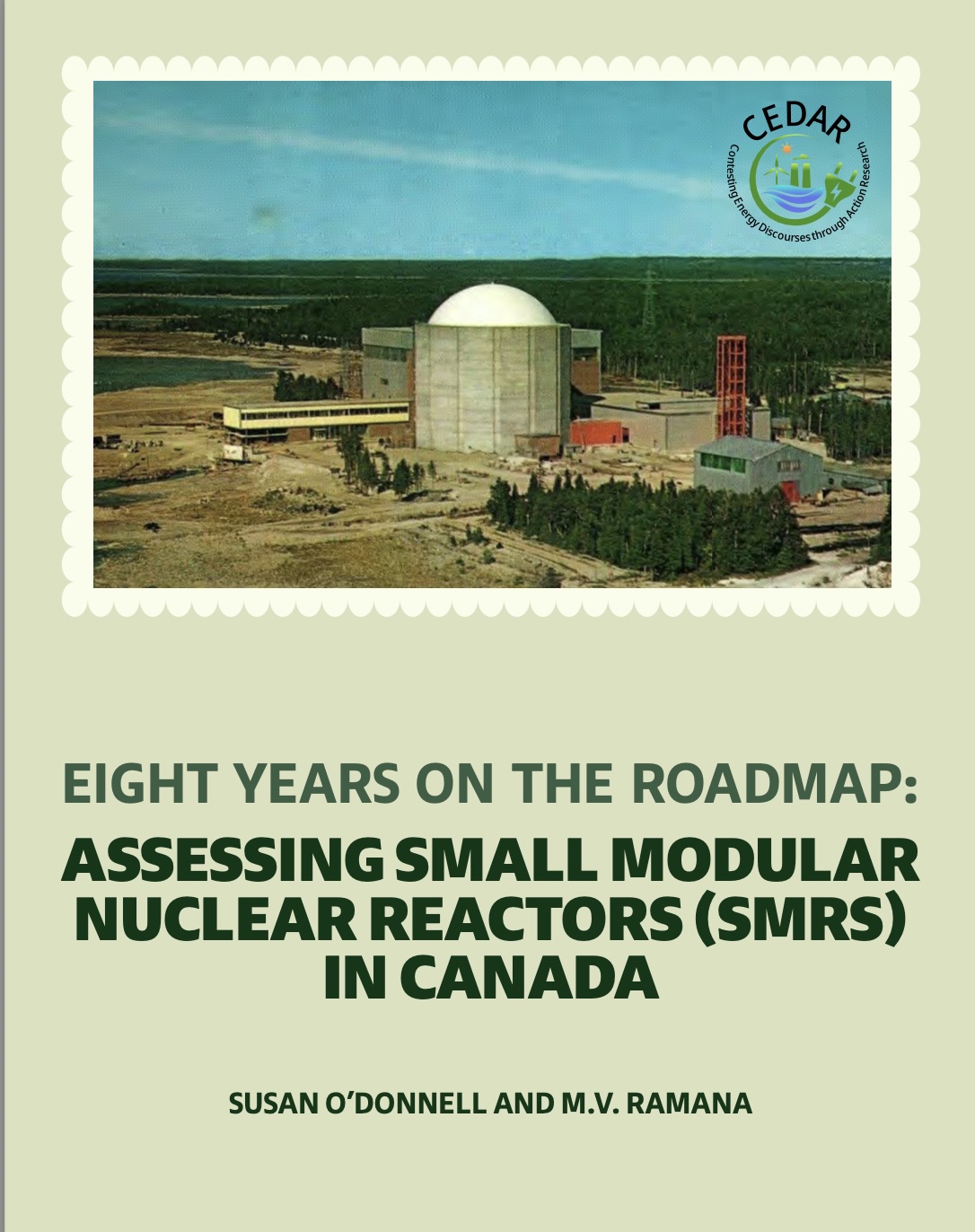
CANADA. ‘Small Modular Nuclear Reactor’ entrepreneurs trying to revive dangerous ‘plutonium economy’ dream. Investigative journalism –Nuclear waste plan divides South Bruce community.
RUSSIA. Russia proposes 3 year extension of Strategic Arms Reduction Treaty (Start-3): USA silent. Raising dangerously radioactive Russian submarines from the bottom of Arctic oceans.
NORWAY. Nuclear fraud in Norway could affect nuclear safety in other countries.
FRANCE. Coronavirus affecting France’s nuclear reactors’ safety and output. French government tries to downgrade radiation risk, avoid compensating Polynesian victims of nuclear testing.
SOUTH KOREA. South Korea, Germany to bolster ties in transition towards renewable energy.
IRAN. Iran’s Nuclear and Military Efforts in the Shadow of Coronavirus and Economic Collapse.
UKRAINE. How an innovative community overcame Ukraine’s nuclear trauma.
SOUTH AFRICA. South Africa’s nuclear waste problem– why plan to increase it?
GERMANY. Radiation leak at nuclear research reactor. As Germany transitions to renewables, massive nuclear cooling towers are demolished.
PAKISTAN. Nuclear war between India and Pakistan very unlikely.
AUSTRALIA. Catholic Religious Australia (CRA) question government’s plan for nuclear waste dump near Kimba, South Australia. 13 top Australian non government organisations say that the Kimba nuclear waste dump plan is illogical.
The leaning tower of Vogtle nuclear reactor: yes it’s literally sinking,-and also further into debt

Georgia Nuclear: Vogtle Unit 3 Is Sinking! [BREDL Petition] https://www.fairewinds.org/demystify/georgia-nuclear-vogtle-unit-3-is-sinking-bredl-petition 18 May 2020, You can find the Fairewinds Associates expert report and BREDL’s legal filing here and under the reports section of this Fairewinds site. You also may read BREDL’s legal filing and the other documents filed on BREDL’s home site, where you will also see the breadth and depth of the environmental work conducted by the Blue Ridge Environmental Defense League and its associated chapters in many states. What Does the Leaning Tower of Pisa Have In Common with the Vogtle Nuclear Reactor?
By The Fairewinds Crew
The famous tower in Pisa, Italy was designed to stand straight up, and like Vogtle, it began to lean during construction. During the ensuing years after construction, the Pisa tower continued to sink into the ground due to the inability of the failing foundation to sustain the tower’s heavy weight. It became known as the Leaning Tower of Pisa. Similarly, the Vogtle Unit 3 nuclear power plant was designed to be straight on its firm ‘basemat foundation’, which is designed with extra rebar and mathematical calculations to assure that the foundation can support an atomic reactor as heavy as the unique design of the AP1000 with 8-million-pounds of emergency cooling water sitting on top of the containment.
Last month, Vogtle’s owner, Sothern Nuclear Operating Company (SNC), tried to amend its operating license with information that had been kept secret from the public. When that now leaning wall was first built five years ago, SNC established a program to monitor the lack of stability in the foundation.
Honestly, truth is stranger than fiction – you can’t make this stuff up! Now we learn that the Vogtle Unit 3 atomic power reactor is sinking into the red Georgia clay causing an inner wall to tilt! Yes, this is the same Vogtle Unit 3 that is already billions of dollars over budget and at least 5-years behind schedule.
On Tuesday, May 12, 2020, the Blue Ridge Environmental Defense League [BREDL] announced that part of the Vogtle Unit 3 nuclear power plant currently under construction in Waynesboro, Georgia, is sinking. According to BREDL’s press release, “In a legal action filed Monday with the Nuclear Regulatory Commission (NRC), the group called on regulators to revoke the plant’s license for false statements made by its owners, Southern Nuclear Operating Company. On May 11, BREDL filed a nineteen-page legal petition requesting a hearing before the Atomic Safety and Licensing Board on a License Amendment for Plant Vogtle’s Unit 3. The petition is supported by detailed, specific expert opinion. Under rules of procedure, Southern Company has 25 days to respond.”
Fairewinds Associates, Inc Chief Engineer Arnie Gundersen wrote an expert witness report submitted by BREDL to the NRC in which he said that Southern Nuclear Operating Company (SNC) chose not to disclose that the Vogtle Unit 3 foundation was sinking faster in the middle than at the edges, in the shape of a dish, causing internal walls to lean. From our point of view, leaning walls may have created a tourist destination for the Tower in Pisa, however, a leaning tower and failing foundation at a nuke plant is a meltdown waiting to happen.
BREDL has informed the NRC that there must be an entire reevaluation of the seismic/structural integrity of the entire nuclear plant. This means that a completely new licensing review and full analysis of all new stress conditions placed on other components that are no longer level needs to be conducted and receive an independent engineering review as well, since SCE has not publicized this fact to the people of Georgia.
Vogtle Units 3 & 4 are notoriously over budget, and their construction has been delayed for years. Now with the Covid-19 Pandemic, and these newly uncovered flaws, the construction will slow further as a complete safety review must be conducted to ascertain whether the ‘basemat foundation’ meets the foundation integrity demanded for a nuclear island (NI). The Vogtle Unit 3 nuclear island underlies the strange heavy design of the AP1000 with its donut-shaped 8-million-pound water tank at the apex of the entire containment system that is meant to protect us from a meltdown.
Let’s look more closely at the history of Vogtle and the so-called nuclear renaissance that never happened. Complicit in this financial boondoggle is the Georgia Public Service Commission (GPSC) whose members have greenlighted all these cost overruns in return for campaign contributions from the nuclear industry. That’s why we wrote The Night The Lights Went Out in Georgia. At Vogtle, all the extensive cost overruns have been shifted to Georgia taxpayers and ratepayers, and originally these plants were built with federal loan guarantees – that is our money folks, and a story for another time in the Vogtle saga.
During the past decade Fairewinds joined with other nuclear risk and environmental advocacy groups to raise awareness about the numerous safety flaws and operational issues associated with the AP1000 reactor design. You can read more about those problems and issues here.
In its legal brief, based on this Fairewinds Associates report, BREDL asked for a formal investigation of the Southern Nuclear Operating Company for making “materially false statements” to the NRC by claiming that the leaning walls were caused by construction tolerance measurements when the real reason the walls have moved is that the ‘basemat foundation’ of the Vogtle nuclear island (NI) is sinking.
You can find the Fairewinds Associates expert report and BREDL’s legal filing here and under the reports section of this Fairewinds site. You also may read BREDL’s legal filing and the other documents filed on BREDL’s home site, where you will also see the breadth and depth of the environmental work conducted by the Blue Ridge Environmental Defense League and its associated chapters in many states.
1 This Month
23 April – WEBINAR – Why new nuclear reactors are the wrong tools for decarbonization Thursday, April 23 • 1 AM – 2 AM AEST

Pine Ridge Uranium is the real threat, not Tehran- Tell Burgum: Stop the Extraction.
Chernobyl: The Lost Tapes – A good documentary on Chernobyl on SBS available On Demand for the next 3 weeks– https://www.sbs.com.au/ondemand/tv-program/chernobyl-the-lost-tapes/2352741955560
To see nuclear-related stories in greater depth and intensity – go to https://nuclearinformation.wordpress.com
-
Archives
- April 2026 (241)
- March 2026 (251)
- February 2026 (268)
- January 2026 (308)
- December 2025 (358)
- November 2025 (359)
- October 2025 (376)
- September 2025 (257)
- August 2025 (319)
- July 2025 (230)
- June 2025 (348)
- May 2025 (261)
-
Categories
- 1
- 1 NUCLEAR ISSUES
- business and costs
- climate change
- culture and arts
- ENERGY
- environment
- health
- history
- indigenous issues
- Legal
- marketing of nuclear
- media
- opposition to nuclear
- PERSONAL STORIES
- politics
- politics international
- Religion and ethics
- safety
- secrets,lies and civil liberties
- spinbuster
- technology
- Uranium
- wastes
- weapons and war
- Women
- 2 WORLD
- ACTION
- AFRICA
- Atrocities
- AUSTRALIA
- Christina's notes
- Christina's themes
- culture and arts
- Events
- Fuk 2022
- Fuk 2023
- Fukushima 2017
- Fukushima 2018
- fukushima 2019
- Fukushima 2020
- Fukushima 2021
- general
- global warming
- Humour (God we need it)
- Nuclear
- RARE EARTHS
- Reference
- resources – print
- Resources -audiovicual
- Weekly Newsletter
- World
- World Nuclear
- YouTube
-
RSS
Entries RSS
Comments RSS
 nuclear-news