3600 working in Nuclear power plants in Japan – concerns raised over coronavirus
| N-reactor inspection cannot abide by physical distancing rules, causing coronavirus fear in locals |

 http://www.japan-press.co.jp/modules/news/index.php?id=12907, April 29 & May 3, 2020
Seven civil organizations in Fukui on April 28 jointly demanded that KEPCO suspend operations of reactors at all NPPs in the prefecture and cancel all work to bring offline reactors back online or decommission them in order to prevent the coronavirus from spreading further.
According to KEPCO, the number of workers will increase by about 1,800 to check on the No.3 reactor at the Oi NPP. Of them, about 900 will come from outside Fukui. At the Oi NPP, the Nos.1 and 2 reactors are currently under the process of decommissioning with about 1,800 workers working daily. Thus, the number of workers in three reactors combined will reach 3,600.
Japanese Communist Party member of the Oi Town Assembly, Saruhashi Takumi pointed out, “The reactor buildings are hermetically closed. Many workers work close together in a confined space. So, the ‘three Cs are unavoidable, but our town has a limited number of hospital beds to treat patients with coronavirus infection. If a mass infection occurs, medical facilities in the town will soon be overwhelmed.”
JCP member of the Fukui Prefectural Assembly Sato Masao criticized KEPCO by saying, “The utility places priority on the resumption of operations of reactors at its NPPs over preventive measures against the coronavirus.”
Apart from the Oi NPP, KEPCO has the Takahama NPP and the Mihama NPP in Fukui Prefecture, and about 4,500 workers and 3,000 workers work at those plants every day, respectively.
* * *
KEPCO postpones regular inspection of No.3 reactor
KEOCO on May 2 announced that it will postpone a regular inspection of the No.3 reactor at its Oi NPP for a few months.
Sizewell and Bradwell nuclear projects unnecessary, but also security danger if Chinese company in control
 Daily Mail 16th May 2020, White House official urges Britain not to hand China control of its electricity as Beijing-run nuclear energy company jostles for dominance. A senior US official has delivered a stark warning to Britain not to continue to let a Chinese state-run nuclear energy company control a large part of our electricity supply. Dr Christopher Ford, the US State Department’s assistant secretary for non-proliferation and international security, warned that China General Nuclear (CGN) is closely linked to the Communist regime’s military. Daily Mail 16th May 2020, White House official urges Britain not to hand China control of its electricity as Beijing-run nuclear energy company jostles for dominance. A senior US official has delivered a stark warning to Britain not to continue to let a Chinese state-run nuclear energy company control a large part of our electricity supply. Dr Christopher Ford, the US State Department’s assistant secretary for non-proliferation and international security, warned that China General Nuclear (CGN) is closely linked to the Communist regime’s military.Any involvement in UK power generation would jeopardise our political independence for many decades, he said. One of the company’s top engineers has previously been convicted and jailed in the US for running a spy network at the behest of Beijing.
Speaking exclusively to The Mail on Sunday, Dr Ford said: ‘We are trying to discourage our friends and partners from engaging with a Chinese nuclear company that is known for such acts.’ It is highly unusual for a serving US official to intervene so forcefully about an ally’s policy decisions but it shows how seriously the Trump administration views the Chinese threat.
Dr Ford’s fears are echoed by many senior figures in Britain, including Sir Richard Dearlove, the former head of MI6. He told The Mail on Sunday that if CGN was allowed a key role in building two vast nuclear power plants – at Sizewell in Suffolk and Bradwell in Essex – there would be a grave threat to national security. An analysis by this newspaper shows that the Chinese could have total or partial control over more than a quarter of Britain’s electricity needs. Dr Ford said this could result in ‘manipulation or coercion’, explaining: ‘China has not been shy about using economic levers as a political tool. Economic entanglements are being used for political purposes with greater frequency.’
He added that if Britain became dependent on CGN, China ‘could threaten to turn the switches on and off – and that can be a very powerful tool of influence.’ In Suffolk, the firm is in partnership with the French state-run company EDF, which is about to submit its final ‘consent order’ for permission to build a similar power station to Hinkley – even though an unfinished
prototype in northern France is eight years behind schedule and three times over budget. CGN’s share of the final project has yet to be determinedbut it has already agreed to take an 80 per cent stake in Bradwell, where it wants to build two of its own Hualong 1 reactors. Industry experts saythat although Hinkley, Sizewell and Bradwell could supply at least a fifth of the total power generated in Britain, it is not proved that they are really needed.
|
Fermi 2 nuclear station struggles with large COVID-19 outbreak among workers.
 Beyond Nuclear 14th May 2020, Fermi 2 struggles with large COVID-19 outbreak among workers. The large numbers of coronavirus test positives at Fermi nuclear power plant (the article reports more than 200 cases, but May 13 Facebook postings by Fermi employees have put the number as already grown worse, now at more than 300) is likely among the worst known (yet unreported, in the Michigan or U.S. national news media) at any single institution or workplace in Michigan.
NuScam’s “small nuclear reactor” project runs into yet more trouble

core cooling system that NuScale plans to submit to the NRC on May 20. Instead of resolving the steam generator design issue ahead of design certification, the NRC is deferring to the plant operator Energy Northwest
to resolve the issue during the licensing process, after construction.http://www.energyintel.com/pages/eig_article.aspx?DocId=1072564
Australian politician John Barilaro gets it so wrong about small nuclear reactors
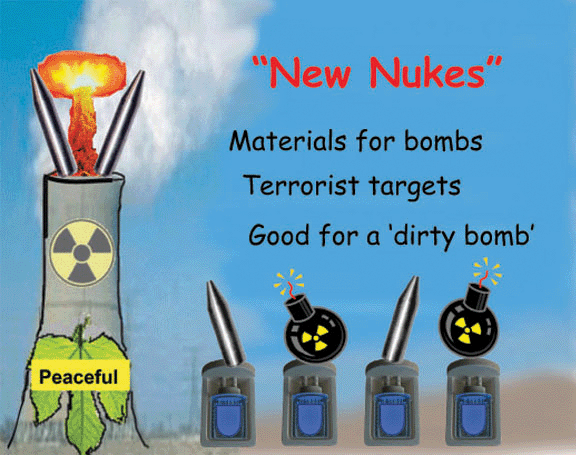
But there is as yet no sign of anything being oven-ready to come to the marketplace, let alone 15 up and running. But there remain some rather disturbing connections between small reactor projects and nuclear weapons proliferation. And Rolls-Royce does offer up one of the most glaring examples. Part of the company’s current sales pitch to the British government includes the argument that a civil small-reactor industry in the UK “would relieve the Ministry of Defence of the burden of developing and retaining skills and capability” for its weapons programme. It may be true. But it is not really Atoms for Peace, , is it?
https://electricalreview.co.uk/features-mm/13082-mystic-meg-from-down-under
Coronavirus affecting France’s nuclear reactors’ safety and output
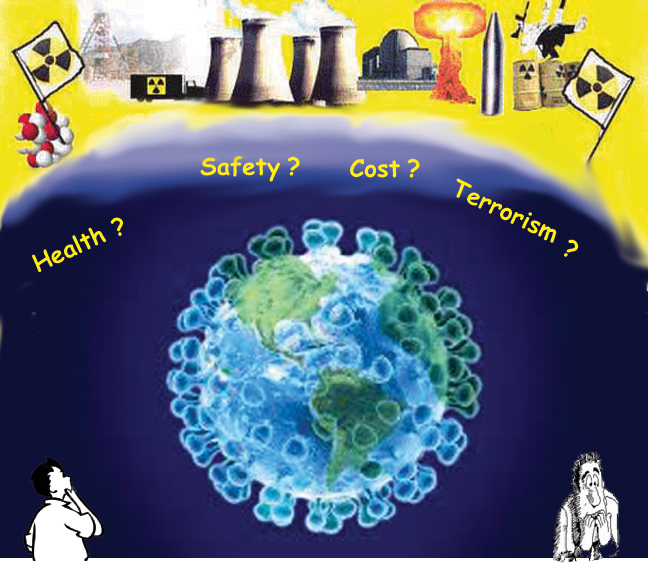 Montel News 14th May 2020, The overhaul of the schedule for shutdowns of EDF nuclear reactors during the Covid-19 pandemic will “considerably” reduce the safety margins of French power plants and will probably lead to further delays, experts told Montel. The nuclear agency is now under “potentially devastating pressure,” said Mycle Schneider, an independent energy consultant based in Paris and a critic of the nuclear industry.
problem that overlaps with another. This is what is so worrisome, the accumulation of difficult events and circumstances, “he said.
that it postponed maintenance to secure the electricity supply for the winter. Already last week, the company had extended shutdowns of more than 40 reactors.https://www.montelnews.com/fr/story/la-pression-sur-edf-fait-craindre-pour-la-sret-nuclaire/1114
Britain’s Ministry of Defence continues its costly mistakes in nuclear weapons and submarines
 Dundee Courier 16th May 2020, A Fife MP has lifted the lid on “astonishing and deeply worrying”
mistakes made by the Ministry of Defence, which have led to the costs of replacing Britain’s nuclear weapons and nuclear submarines soaring by a staggering £1.35 billion.
Glenrothes and Central Fife SNP MP Peter Grant, who sits on parliament’s Public Accounts Committee, has described the situation as “unacceptable” following the release of a new report that
suggests errors made by the MoD are being repeated more than 30 years after
they were first highlighted by Britain’s public spending watchdog.
French government tries to downgrade radiation risk, avoid compensating Polynesian victims of nuclear testing
Outrage in Tahiti over French nuclear law moves, https://www.rnz.co.nz/international/pacific-news/416865/outrage-in-tahiti-over-french-nuclear-law-moves There has been an outcry in French Polynesia over moves by the French National Assembly to slip a clause about compensation over nuclear weapons testing into Covid-19 legislation.
A French Polynesian member of the French Assembly Moetai Brotherson said it was a scandal that this was added into deliberations when French Polynesia’s members were away from Paris because of the pandemic.
The nuclear test veterans organisations, Moruroa e tatou and Association 193, also expressed outrage.
The French government wants to re-introduce the concept of neglible risk of the tests in compensation cases after a court ruling had done away with it.
Over a 30-year period of France’s weapons tests in the South Pacific some of the atmospheric blasts irradiated most islands.
Mr Brotherson said he had only just heard about the National Assembly move and wondered what the French Polynesian people had ever done to be so detested by the French state.
Hiro Tefaarere of Moruroa e tatou said he was outraged but not surprised about the way France was going about it.
He said all presidents, from de Gaulle to Macron, couldn’t care less about Polynesians, and although France was responsible for public health in Tahiti it failed to keep a register to see how many people died because of fallout from the weapons tests.
Auguste Uebe Carlson, who heads Association 193, said France kept refusing to recognise the impact of the tests, using instead propaganda to say they were clean or a thing of the past.
He said nothing was recognised, with health problems now being attributed to poor diet and life-style choices.
ast year, French Polynesia’s social security agency calculated that it had so far spent $US770 million on health care costs for people deemed to have radiation-induced illnesses.
Iran’s Nuclear and Military Efforts in the Shadow of Coronavirus and Economic Collapse
EXECUTIVE SUMMARY: Notwithstanding the difficult challenges of the coronavirus crisis and a deteriorating economy, Iran is pushing ahead with its uranium enrichment and missile and space programs as well as its activities in Syria. It also has yet to concede to the US in their clash over sailing in the Gulf. Tehran fears that any sign of weakness might endanger the Islamist regime, particularly as resentment continues to grow among ordinary Iranians. With that in mind, it is doing all it can to flex its muscles for both domestic and international audiences………
The latest IAEA report says the agency continues to liaise with Iranian authorities regarding IAEA inspections of natural (non-enriched) uranium particles of an anthropogenic (i.e., man-made) source from an Iranian site that has not yet been declared to IAEA: the warehouse in Turkuzabad, a suburb of Tehran, which was unveiled by Israeli PM Benjamin Netanyahu in a speech to the UN General Assembly on September 27, 2018. According to the BBC on March 3, the IAEA dispatched a document to several member states claiming that Iran has rejected a request to allow inspection access to three other unidentified sites as well. According to the document, the inspectors want to find out if natural uranium is being used at any of the sites from which they are being barred. At another site, the IAEA says there have been activities that are “consistent with efforts to sanitize part of the location.”
Iran’s violations of the nuclear agreement—its raising of the uranium enrichment rate to 4.5% and accumulation of uranium in excess of the 300 kg UF6 limit—does not currently have a military aspect. This is because uranium enriched at a rate of less than 5% is suitable solely as a nuclear fuel for power reactors and cannot be used for nuclear weapons (for which the enrichment degree required is at least 90%). Iranian officials claim these violations are meant to pressure the EU into neutralizing the sanctions imposed on Iran by the US……..
Iran’s overall situation is quite distressing. The Iranian people have lost faith in the regime—especially now, in view of the ravages of the coronavirus pandemic. The people (along with the rest of the world) doubt the official casualty figures. At this writing, the regime is claiming about 110,000 cases and about 6,800 deaths, but the true numbers are estimated to be much higher. This distrust became stronger against the backdrop of the authorities’ false reporting of the downing of a Ukrainian passenger jet on January 8 after takeoff from Tehran (most of its passengers were either Iranian or of Iranian origin).
The coronavirus outbreak has dealt a new blow to the Iranian economy, which had already collapsed in 2018 as a result of US sanctions. The real (the Iranian currency) plummeted to unprecedented lows, and the Iranian street expressed its anger that the regime had wasted so much money on its operations in Syria. According to the London Arab newspaper al-Sharq al-Awsat on January 1, 2020, Iranian president Rouhani said damage to the Iranian economy resulting from sanctions by the end of 2019 was $200 billion…….
It is highly doubtful that the Iranian people are ready to eat grass in order to bring the regime’s dreams of an Iranian nuclear bomb to fruition. Though the mullahs’ goal of becoming a regional power that controls Shiite Islam across the Middle East remains unfulfilled, the regime continues to do what it can to demonstrate its power. The object is to show the world that Iran is not capitulating to the US in any way—not regarding its nuclear and space programs, and not militarily. It also seeks to project an image of strength to the increasingly resentful Iranian people, as it fears that signs of weakness could bring an end to its rule. However, the regime’s investments in security at the expense of the nation’s welfare may turn out to boomerang against it. https://besacenter.org/perspectives-papers/iran-nuclear-military-efforts/
Latest climate models suggest global heating could be worse than we thought
 Just how hot will it get this century? Latest climate models suggest it could be worse than we thought, The Conversation, May 18, 2020 , Michael Grose, Climate Projections Scientist, CSIRO, Julie Arblaster, Associate Professor, Monash University Climate scientists use mathematical models to project the Earth’s future under a warming world, but a group of the latest models have included unexpectedly high values for a measure called “climate sensitivity”.
Climate sensitivity refers to the relationship between changes in carbon dioxide in the atmosphere and warming.
The high values are an unwelcome surprise. If they’re right, it means a hotter future than previously expected – warming of up to 7℃ for Australia by 2100 if emissions continue to rise unabated.
South Africa’s nuclear waste problem- why plan to increase it?
 The nuclear option https://www.businesslive.co.za/bd/opinion/letters/2020-05-17-letter-the-nuclear-option/ 17 MAY 2020, Keith Gottschalk, It is bizarre that a government department is advocating the building of more nuclear power stations with the slogan “a no-regret option”! (“ANC government is determined to pursue nuclear at any cost”, May 12).
Try selling that slogan to the people of Fukushima and Chernobyl.
University experts urge that UK promote renewable energy, drop expensive plans for small nuclear reactors
 Observer 17th May 2020. Professor Andy Stirling, Sussex University; Professor Andrew Blowers, OpenUniversity; Dr Phil Johnstone, Sussex University; Dr David Lowry, Institute
for Resource and Security Studies, Cambridge, Massachusetts; Dr Ian
Fairlie, formerly UK committee examining the radiation risks of internal
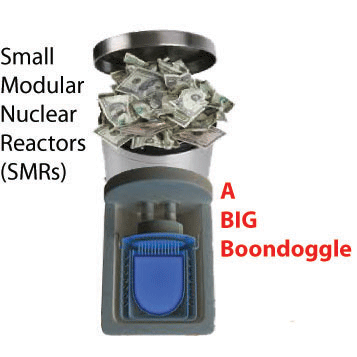 emitters.
 Even well-established forms of nuclear are rapidly declining in competitiveness worldwide. The nuclear industry has a track record of catastrophically expensive hype and disappointment on speculative new ventures like this, so there are no rational grounds to divert investment or employment away from renewables in the way you urge so strongly.
https://www.theguardian.com/commentisfree/2020/may/17/letters-isolated-in-care-home-lockdown-hell
How an innovative community overcame Ukraine’s nuclear trauma.
FoE Europe 15th May 2020 How an innovative community overcame Ukraine’s nuclear trauma. All over Europe, people are rising up to fix climate breakdown – demanding urgent
transformation to a fair, fossil free future. Communities, cities and
people are at the forefront of building community-owned renewable energy,
creating green jobs, and tackling energy poverty. Here is one such story
from the frontlines of climate hope, from Ukraine.
Pacific nuclear bomb tests interfered with rain patterns in UK
Pacific nuclear bomb tests made it rain 1,000s of miles away in UK, Reading University scientists find, Berkshire Live
During the Cold War, detonations in locations as remote as the Nevada Desert or Pacific islands had unforeseen consequences elsewhere in the world By Ian Hughes 17 MAY 2020
Nuclear bomb tests during the Cold War changed rainfall patterns thousands of miles from the detonation sites, according to scientists at the University of Reading.
They found electric charge released by radiation from detonations – carried out predominantly by the US and Soviet Union in the 1950s and 1960s – affected rain clouds at the time.
It means tests in remote locations such as the Nevada Desert or Pacific islands, had an effect on precipitation as far away as the Shetlands – 300 miles off the coast of Scotland.
A study used historic records between 1962-64 from a research station on the Scottish island.
Scientists compared days with high and low radioactively-generated charge, finding that clouds were visibly thicker, and there was 24 per cent more rain on average on the days with more radioactivity…………
It is thought researchers will now have a better understanding of important weather processes.
Although detonations were carried out in remote parts of the world during the Cold War, radioactive pollution spread widely throughout the atmosphere.
Radioactivity ionises the air, releasing electric charge.
The researchers, from the Universities of Reading, Bath and Bristol, studied records from well-equipped Met Office research weather stations at Kew near London and Lerwick in the Shetland Isles.
Shetland, in particular, was relatively unaffected by other sources of anthropogenic pollution. This made it well suited as a test site to observe rainfall effects which, although likely to have occurred elsewhere too, would be much more difficult to detect.
The Shetland rainfall on more than 150 days showed differences which vanished after the major radioactivity episodes were over.
The study was published in Physical Review Letters. https://www.getreading.co.uk/news/reading-berkshire-news/pacific-nuclear-bomb-tests-made-18248407
The race to nuclear suicide continues despite Covid-19 crisis
The race to nuclear suicide continues despite Covid-19 crisis https://www.thenational.scot/news/18453817.world-presses-race-suicide/, By Brian Quail. 17 May 20, Glasgow AT the dawn of the nuclear age, the Russell-Einstein Manifesto warned us all: “Remember your humanity and forget the rest. If you can do so, the way lies open to a new paradise; if you cannot, there lies before you the risk of universal death.”
That was back in 1955. Nobody listened. What did Albert Einstein known about the real world? Untold trillions were wasted on the nuclear arms race and unimaginable cruelty inflicted on our test victims – the aborigines of Australia at Maralinga and Montebello, the victims of the USSR in Semipalatinsk in Kazakhstan, and of the USA, the Shoshone people of Nevada whose land is now permanently contaminated. Add the long forgotten British servicemen used as human guinea pigs at Christmas Island, and the many other unnamed and unnumbered victims of our nuclear idolatry. Never mind all those we condemned to poverty and destitution by squandering our resources.I had hoped that the global threat of Covid-19 might call us back to the ineluctable truth of the dilemma posited in the Manifesto, but no. We press blindly on in the lunatic race to suicide.
While the rest of us are staying at home in lockdown, on Wednesday May 13 a convoy carrying nuclear warheads (eight Hiroshimas) left Burghfield. It came up the M6 and M74, over the Erskine Bridge and past Loch Lomond to arrive at Coulport at 9.20. Nukewatch was, for obvious reasons, unable to follow this or attempt to hinder its illegal ploys.
Will nothing open the eyes or touch the hearts of our nuclear jihadis? Must we surrender our future and the fate of the planet to these deranged souls?
Alice Walker said: “Our last five minutes on earth are running out. We can spend those minutes in meanness … or we can spend them consciously embracing every glowing soul who wanders within our reach” Can we not stop this madness now, at 90 seconds to midnight?
1 This Month
23 April – WEBINAR – Why new nuclear reactors are the wrong tools for decarbonization Thursday, April 23 • 1 AM – 2 AM AEST


Pine Ridge Uranium is the real threat, not Tehran- Tell Burgum: Stop the Extraction.
Chernobyl: The Lost Tapes – A good documentary on Chernobyl on SBS available On Demand for the next 3 weeks– https://www.sbs.com.au/ondemand/tv-program/chernobyl-the-lost-tapes/2352741955560
To see nuclear-related stories in greater depth and intensity – go to https://nuclearinformation.wordpress.com
-
Archives
- April 2026 (241)
- March 2026 (251)
- February 2026 (268)
- January 2026 (308)
- December 2025 (358)
- November 2025 (359)
- October 2025 (376)
- September 2025 (257)
- August 2025 (319)
- July 2025 (230)
- June 2025 (348)
- May 2025 (261)
-
Categories
- 1
- 1 NUCLEAR ISSUES
- business and costs
- climate change
- culture and arts
- ENERGY
- environment
- health
- history
- indigenous issues
- Legal
- marketing of nuclear
- media
- opposition to nuclear
- PERSONAL STORIES
- politics
- politics international
- Religion and ethics
- safety
- secrets,lies and civil liberties
- spinbuster
- technology
- Uranium
- wastes
- weapons and war
- Women
- 2 WORLD
- ACTION
- AFRICA
- Atrocities
- AUSTRALIA
- Christina's notes
- Christina's themes
- culture and arts
- Events
- Fuk 2022
- Fuk 2023
- Fukushima 2017
- Fukushima 2018
- fukushima 2019
- Fukushima 2020
- Fukushima 2021
- general
- global warming
- Humour (God we need it)
- Nuclear
- RARE EARTHS
- Reference
- resources – print
- Resources -audiovicual
- Weekly Newsletter
- World
- World Nuclear
- YouTube
-
RSS
Entries RSS
Comments RSS
 nuclear-news