It’s Up to us to stop the building of nuclear weapons
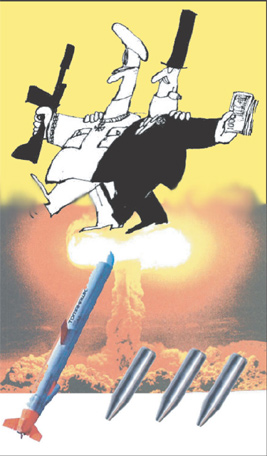 Up to us to stop the building of nuclear weapons, Greenfield Recorder, Sherrill Hogen , Charlemont. 6 Aug 20 https://www.recorder.com/my-turn-hogen-Hiroshima-35463074 Change! Finally, after 400 years, White America may be ready to start addressing the wrongs that brought our country into being. Racism and genocide are life-threatening poisons to our very soul. Yet there are other poisons that have not yet consumed us, but might still do so. For one, our planet might burn up from climate disasters before we can stop it. For another, human folly might unleash nuclear war — a more instantaneous incineration of all that we hold dear.
You might think that we are smarter than that. But we humans have not proven that we are so smart when it comes to settling our differences.
You might believe that war is inevitable and just hope that no one pushes the nuclear button. But hoping doesn’t keep it from happening. So, just as we are awaking to what it might take to address the legacies of slavery and the extermination of Native Americans, we must address the real possibility of nuclear annihilation. It is hard to do when the warnings are not in the news.
And isn’t that interesting…. Why isn’t such an enormous threat to our very existence in the media and in our daily conversations? I wonder if our arms industry and military superstructure would rather keep such knowledge buried.
If we do wake up to this danger, we might raise up another voice along with Black Lives Matter, Water is Life, Me Too, and Save our Planet: NO MORE WAR, NO NUCLEAR WEAPONS.
It has been 75 years since the U.S. dropped atomic bombs on Hiroshima and Nagasaki, Japan. For 75 years we humans have managed to ignore the reasons and results of that horrific act. I hope we can change course on this issue as we are doing on others.
One step in that direction is to recognize the dates the bombs fell, Aug. 6 and 9, 1945.
One event was already held Aug. 6 in Turners Falls. Join us Aug. 8, 11 a.m. to noon on the Greenfield Town Common; and Aug. 9 at the library in Easthampton at 7 p.m.
As we strive to recognize the value of every human being and every living thing, our government and arms industry are building nuclear weapons every day, and it is up to us to stop them.
Conservative politicians in UK gathering opposition to China’s involvement in nuclear projects
|
China tensions raise doubts over UK nuclear projects
After Huawei’s ban, rebel Tory MPs turn their sights on CGN and its plans to build a new plant Ft.com
Jonathan Ford and Jim Pickard in London and Nathalie Thomas in Edinburgh AUGUST 6 2020 Flushed with their success at changing UK government policy towards Huawei, rebel Conservative MPs are now turning their attention to a proposed Chinese project to build a nuclear power station at Bradwell-on-Sea in the south-east of England.
In their sights is an agreement forged by the government of David Cameron, that would allow the Chinese nuclear group CGN to build its own nuclear plant in return for backing two giant French-led nuclear projects in Britain. The first of those French projects — a plant at Hinkley Point in the south west of England that could cost £22.5bn — is well under way and CGN has already pumped billions into the scheme.
“There are an awful lot of Tory MPs who will use their summer break to get their heads around the CGN situation,” said one person close to the rebel MPs. “Bradwell will be the focus of attention.” Just as with the decision to remove telecoms company Huawei from Britain’s 5G mobile phone networks by 2027, they are being encouraged by a US administration vocal in its opposition to China’s involvement in Britain’s nuclear programme.
In 2018, the US assistant secretary for international security and non-proliferation, Christopher Ashley Ford, warned the UK against partnering with the company, saying Washington had evidence it was taking civilian technology and converting it to military uses. CGN declined to comment.
At a private meeting with MPs last month, the subject of CGN’s activities was raised by US secretary of state Mike Pompeo, according to one person in the room. The senior Tory MP, Iain Duncan Smith has called for a review of nuclear contracts on the grounds that China is not a “trusted vendor”, and has likened Britain’s commercial dealings with Beijing to 1930s appeasement.
The closer scrutiny of China’s role in Britain’s nuclear programme comes at a crucial moment. The UK’s Committee on Climate Change has said that the country might need 38 per cent of its power from non-weather-dependent sources to help achieve “net zero” carbon emissions by 2050. Supporters of nuclear say it is the only proven technology capable of delivering that target. Yet despite this, plans to build a fleet of new reactors using private sector funding have stalled. ……..
Some MPs believe that Britain no longer needs CGN’s money because Boris Johnson’s government may be willing to contemplate public subsidies. The government last year launched a consultation on an alternative funding model, Regulated Asset Base (RAB), which is used for other infrastructure such as the Thames Tideway “super sewer” and would see consumers pay for nuclear plants upfront via their energy bills. Some experts have also floated the idea of the state taking direct stakes in schemes. …….
So far CGN has invested £3.8bn in the UK, the majority in Hinkley. CGN is funding a third of the construction costs for Hinkley and 20 per cent of the development costs of Sizewell C in Suffolk. ………
Ministers are yet to deliver their verdict on the RAB funding model and have continuously delayed a white paper on energy, originally expected last year, and which nuclear industry executives hope will emerge in October.
Last week the managing director of Hinkley Point C, Stuart Crooks, said the UK government “needs to decide if it wants nuclear or not.” ……..
environment groups such as Greenpeace insist there are far cheaper, greener ways of meeting the future country’s energy needs, such as offshore wind power. …… https://www.ft.com/content/9d0d3a75-d3f4-4cab-9176-be582140987c
|
|
Opening the floodgates at Fukushima
- Ken O. Buesseler
See all authors and affiliations
Vol. 369, Issue 6504, pp. 621-622
DOI: 10.1126/science.abc1507
Summary
Summary
In the time since Japan’s triple earthquake, tsunami, and nuclear disaster in 2011, much has improved in the ocean offshore from the Fukushima Daiichi Nuclear Power Plant (FDNPP). Concentrations of cesium isotopes, some of the most abundant and long-lived contaminants released, are hundreds of thousands of times lower than at their peak in April 2011. Since mid-2015, none of the fish caught nearby exceed Japan’s strict limit for cesium of 100 Bq/kg (1, 2). Yet, enormous challenges remain in decommissioning the reactors and clean-up on land. Small, and sometimes unexpected, sources of contaminants still continue to enter the ocean to this day (3). Two of the biggest unresolved issues are what to do with the more than 1000 tanks at the site that contain contaminated water and the impact of releasing more than 1 million tons of this water into the ocean.
http://www.sciencemag.org/about/science-licenses-journal-article-reuse
This is an article distributed under the terms of the Science Journals Default License. View Full Text
Nuclear testing: ‘Why do we need to start a new arms race?’
|
Nuclear testing: ‘Why do we need to start a new arms race?’
Provision in National Defense Authorization Act to ban testing, Big Country, by: Alexandra Limon Aug 7, 2020 WASHINGTON (Nexstar) — The United States has not conducted live nuclear weapons tests for 28 years. But reports indicate the Trump Administration has discussed re-starting the nuclear testing program.
That has Democrats from the areas impacted by past testing — in Nevada and Utah — pushing a provision in this year’s National Defense Authorization Act to ban new nuclear tests. “It would prevent this administration or any in the future from using funds to restart nuclear weapons testing,” said Nevada Rep Dina Titus, who introduced the bill with support from Utah’s Ben McAdams. “Thousands and thousands of Utahns have developed cancer and died from those tests. And I think it’s important that we don’t see that testing resume,” he said. The ban on live nuclear testing was included in the House version of the NDAA, but it’s unclear if it will make it into the final version. “We can test our stockpile without doing tests with yield and our scientists have been doing it for over 20 years,” Titus said. “Why do we need to start a new arms race?”……. The National Defense Authorization Act likely won’t be finalized until after the November election. https://www.bigcountryhomepage.com/news/politics/nuclear-testing-why-do-we-need-to-start-a-new-arms-race/ |
|
Particles from Fukushima meltdown contained plutonium
 Local residents who live around the 20km exclusion zone around the Fukushima Dai-Ichi Nuclear Power Plant undergo a screening test for possible radiation at screening center on September 13, 2011 in Minamisoma, Fukushima Prefecture, Japan.
August 6th, 2020 Posted by Stanford
Microscopic particles emitted during the Fukushima nuclear disaster contained plutonium, according to a new study.
The microscopic radioactive particles formed inside the Fukushima reactors when the melting nuclear fuel interacted with the reactor’s structural concrete.
Nearly ten years after meltdown at the Fukushima Daiichi Nuclear Power Plant caused a nuclear disaster, the new information about the extent and severity of the meltdown and the distribution patterns of the plutonium have broad implications for understanding the mobility of plutonium during a nuclear accident.
“The study used an extraordinary array of analytical techniques in order to complete the description of the particles at the atomic-scale,” says coauthor Rod Ewing, co-director of the Center for International Security and Cooperation (CISAC) at Stanford University.
The researchers found that, due to loss of containment in the reactors, the particles were released into the atmosphere and many were then deposited many miles from the reactor sites.
Studies have shown that the cesium-rich microparticles, or CsMPs, are highly radioactive and primarily composed of glass (with silica from concrete) and radio-cesium (a volatile fission product formed in the reactors). But the environmental impact and their distribution is still an active subject of research and debate. The new work offers a much-needed insight into the Fukushima Daiichi Nuclear Power Plant (FDNPP) meltdowns.
The study used an extraordinary array of analytical techniques in order to complete the description of the particles at the atomic-scale.
The researchers used a combination of advanced analytical techniques, including synchrotron-based micro-X-ray analysis, secondary ion mass spectrometry, and high-resolution transmission electron microscopy, to find and characterize the plutonium that was present in the CsMP samples. They initially discovered incredibly small uranium-dioxide inclusions, of less than 10 nanometers in diameter, inside the CsMPs; this indicated possible inclusion of nuclear fuel inside the particles.
Detailed analysis revealed, for the first-time, that plutonium-oxide concentrates were associated with the uranium, and that the isotopic composition of the uranium and plutonium matched that calculated for the FDNPP irradiated fuel inventory.
“These results strongly suggest that the nano-scale heterogeneity that is common in normal nuclear fuels is still present in the fuel debris that remains inside the site’s damaged reactors,” says geochemist Satoshi Utsunomiya of Kyushu University, who led the team.
“This is important information as it tells us about the extent [and] severity of the meltdown. Further, this is important information for the eventual decommissioning of the damaged reactors and the long-term management of their wastes.”
With regards to environmental impact, Utsunomiya says, “as we already know that the CsMPs were distributed over a wide region in Japan, small amounts of plutonium were likely dispersed in the same way.”
This is important information for the eventual decommissioning of the damaged reactors and the long-term management of their wastes.
The team “will continue to experiment with the CsMPs, in an effort to better understand their long-term behavior and environmental impact,” says Gareth T. W. Law, a coauthor on the paper from the University of Helsinki. It is now clear that CsMPs are an important vector of radioactive contamination from nuclear accidents.”
“While the plutonium released from the damaged reactors is low compared to that of cesium; the investigation provides crucial information for studying the associated health impact,” says coauthor Bernd Grambow of Nantes/France.
Utsunomiya emphasizes that this is a great achievement of international collaboration. “It’s been almost ten years since the nuclear disaster at Fukushima,” he says, “but research on Fukushima’s environmental impact and its decommissioning are a long way from being over.”
The paper appears in Science of the Total Environment.
Additional researchers from Kyushu University, University of Tsukuba, Tokyo Institute of Technology, National Institute of Polar Research, University of Helsinki, Paul Scherrer Institute, Diamond Light Source, and SUBATECH (IMT Atlantique, CNRS, University of Nantes) contributed to the work.
Source: Stanford University via Kyushu University
Original Study DOI: 10.1016/j.scitotenv.2020.140539
https://www.futurity.org/fukushima-nuclear-disaster-plutonium-2417332-2/
Billing Olympics as ‘pandemic recovery games’ unfeasible: ex-Fukushima mayor
 Former Minamisoma Mayor Katsunobu Sakurai is seen talking to the Mainichi Shimbun in Minamisoma, Fukushima Prefecture, on July 3, 2020
August 5, 2020
MINAMISOMA, Fukushima — Katsunobu Sakurai, former mayor of Minamisoma, Fukushima Prefecture, who was in office during the March 2011 earthquake and tsunami disaster, firmly stated during a recent interview with the Mainichi Shimbun that it is unfeasible to dub the Tokyo Olympics a “sign of humanity’s triumph over the novel coronavirus,” as suggested by Prime Minister Shinzo Abe.
Sakurai, who was born in the city of Minamisoma himself, served two terms as mayor for his hometown between 2010 and 2018. Sakurai was picked as one of Time magazine’s 100 most influential people in 2011 following the disaster at Tokyo Electric Power Co.’s Fukushima Daiichi Nuclear Power Station.
The following is an excerpt of Sakurai’s remarks to the Mainichi Shimbun on July 3.
* * * * *
Following the postponement of the Tokyo Olympic and Paralympic Games, Prime Minister Shinzo Abe spoke of holding next year’s Olympics as a “sign of humanity’s triumph over the novel coronavirus.” Up until now, the prime minister may have thought that presenting the event with the title “disaster recovery” from the Great East Japan Earthquake would gather worldwide attention, but now he is trying to replace this slogan amid the global spread of the novel coronavirus. However, the concept of a “recovery Olympics,” let alone a “coronavirus Olympics” has no chance of success.
 Former Minamisoma Mayor Katsunobu Sakurai is seen talking to the Mainichi Shimbun in Minamisoma, Fukushima Prefecture, on July 3, 2020.
The torch relay for the 2020 Tokyo Olympics, which was eventually canceled due to the coronavirus outbreak, was just a performance put on for show. The relay was set to start at the J-Village national soccer training center in Fukushima Prefecture, which was used as a base to handle the Fukushima Daiichi nuclear disaster (after the Great East Japan Earthquake). However, the relay route was limited to areas that have been tidied up, and did not show the real nature of the disaster-hit areas. “Recovery” means restoring an environment to a state where people can return. At the very least, if residents have returned and can once again live in a state similar to before the disaster, this may be called a recovery. But the government is trying to show how far the recovery has progressed, when in fact there is much left to be achieved.
There is also talk that flowers grown in the disaster-stricken areas will be used for victory bouquets awarded to Olympic medalists, but would this actually help boost the recovery overall? In Fukushima Prefecture, baseball and softball matches for the Olympic Games are to be held in the prefectural Azuma ballpark in the suburbs of the city of Fukushima, but this site has almost no connection to the coastal areas of the prefecture (that were damaged in the tsunami following the magnitude-9.0 temblor). It appears that it is nothing more than a performance (by the Japanese government).
No matter how much you tout the games as a sign of recovery, the overall picture of only Tokyo prospering while the recovery of the disaster-hit areas in the Tohoku region remains undone will not change. I’ve been to Tokyo many times, and saw that there were more crane trucks at the construction site of the athletes’ village than in the disaster-hit areas. It was obvious at a glance where the national government was placing its resources.
It’s not that I am disapproving of the Olympics itself. It is a festivity celebrating peace, and I am aware that Japan had been long active in its bid to host the games. However, it doesn’t make sense when you start calling it a “recovery Olympics.” The inconsistency becomes clear when labeling the games an event “contributing to the recovery of the disaster-hit areas.”
During the Japan’s bid to host the 2020 Olympics, Prime Minister Abe described the polluted water generated by the nuclear disaster as being “under control,” and then Tokyo Games bid committee chairman Tsunekazu Takeda called Tokyo “safe,” as it is 250 kilometers away from Fukushima. Don’t these very statements run counter to a “recovery Olympics”?
At the time, I was confronted by an elderly resident of my city who asked, “It’s a dangerous place here, isn’t it? Why don’t you let us live in Tokyo?” A “recovery Olympics” should by nature be something that residents of the disaster-stricken areas can feel good about holding, but the authorities’ perceptions are inconsistent with those in such areas.
If a “recovery Olympics” in the true sense of the term is to be held, it will by restoring the coastal regions of disaster-hit areas to a state capable of hosting the events, such as marathons.
During the 2019 Rugby World Cup, matches were held in the city of Kamaishi, Iwate Prefecture, in northeastern Japan, (an area also hit hard by the tsunami) as a way to underscore the recovery. This must have been a large source of emotional strength for local residents. However, Fukushima Prefecture still has zones that people cannot even enter. It just doesn’t seem like it is in any condition to hold the Olympics. I can only presume that the large impact of the nuclear disaster is still being underestimated.
The Japanese government has prepared for the Olympics while upholding the “disaster recovery” label, even though a recovery is far from reality. It is superficial to declare a recovery with no actual progress. The government is now talking of an Olympics that could be a sign of humanity’s triumph over the pandemic, but vaccines have not yet been put into practical use, and the world has not yet been freed from the risk of infection. There is no chance of success by trying to box in reality to meet the labels the government upholds. The idea of a “coronavirus Olympics” may also likely end as a mere fantasy.
(Original Japanese interview by Jun Kaneko, City News Department)
https://mainichi.jp/english/articles/20200805/p2a/00m/0na/003000c
Fallout over Fukushima fallout papers continues as two are retracted
August 4, 2020
A radiology journal has retracted two papers about the fallout from the 2011 Fukushima nuclear disaster in Japan over concerns that the researchers used “ethically inappropriate data” from the people they studied.
The articles, which appeared in the Journal of Radiological Protection in 2017, were written by Makoto Miyazaki, of the Department of Radiation Health Management at Fukushima Medical University, and Ryugo Hayano, a professor of physics emeritus at the University of Tokyo. As we reported, both papers were initially subject to expressions of concern last year.
The papers have been cited a total of 26 times, according to Clarivate Analytics’ Web of Science.
The retraction notice for “Individual external dose monitoring of all citizens of Date City by passive dosimeter 5 to 51 months after the Fukushima NPP accident (series): 1. Comparison of individual dose with ambient dose rate monitored by aircraft surveys” reads:
Following the Expression of Concern issued on this article on 11 January 2019, IOP Publishing is now retracting this article. On 4 June 2020, IOP Publishing received confirmation from the authors of 2017 J. Radiol. Prot. 37 1 (the first in a series of two research articles) that ethically inappropriate data were used in the study reported in this article. This confirmation follows an investigation into the matter by Date City Citizen’s Exposure Data Provision Investigation Committee, which finds that some subjects within the study did not consent to their data being used for research, and it is unclear whether the unconsented data was provided to the author. IOP Publishing believes that the authors were unaware of the ethical problems with this data, which was supplied by a third party. The results of this investigation are available (in Japanese) at https://www.city.fukushima-date.lg.jp/soshiki/3/41833.html (IOP Publishing and the Society for Radiological Protection take no responsibility for the content at this link).
The readers are asked to note that, as part of the article submission process, the authors of the above referenced article confirmed that the research reported in the article adhered to the Ethical Policy of IOP Publishing and the Society for Radiological Protection.
As a member of the Committee on Publication Ethics (COPE), this matter has been investigated by IOP Publishing in accordance with COPE guidelines and it was decided that the article should be retracted. The authors agree with this retraction and have fully complied with all investigations.
More details are expected to be forthcoming. However, in line with COPE guidelines, we are retracting this article promptly and will update this retraction notice with more information, as necessary and as it is released.
Based on the investigation report it has also been found that there is an error in table 1 of this article. The figure relating to glass badge holders in 2014 3Q is incorrect and should be close to N = 12 011. These data were also provided to the authors by the same third party and the authors were not aware of this mistake in advance of publication of the article.
The second paper, “Individual external dose monitoring of all citizens of Date City by passive dosimeter 5 to 51 months after the Fukushima NPP accident (series): II. Prediction of lifetime additional effective dose and evaluating the effect of decontamination on individual dose,” carries an identical notice (minus the error).
Miyazaki, the corresponding author of the papers, has not responded to a request for comment.
Fallout over Fukushima fallout papers continues as two are retracted
A pair of radiation exposure studies on the people of Date City have been retracted. Authors Hayano and Miyazaki retracted the 2017 papers this week after years of dispute.
By early 2019 this issue had become too big to ignore. Hayano and Miyazaki attempted to claim unintentional mistakes and later tried to blame the city. An investigation into scientific misconduct at the University of Tokyo went nowhere as the statues required intent. Both researchers continued to claim the data manipulation that took months worth of data and applied it over years, making radiation exposures look less severe, was merely a spreadsheet accident.
Some of Hayano’s other Fukushima related studies raised questions about the methodology and potential biases. A 2014 study used a whole body counter scanning machine in small children but used an unusually short scan duration that may have grossly under counted their radiation exposures.
Japan’s plans for radioactive discharges violates principles of environmental protection and defies international maritime law
Aug.4,2020
The threat of a million tonnes of highly contaminated water from the Fukushima Daiichi being discharged into the Pacific Ocean includes the potential environmental and human impacts, but also how a decision by the Japanese government relates to international law. What we conclude is that such a decision poses a direct threat to the marine environment, including that of the jurisdictional waters of the Korean peninsula. As such, Japan would be in breach of its obligations as defined under international environmental law, including the United Nations Convention on the Law of the Sea (UNCLOS) that Korea government has rights to oppose the discharging in the legal perspective.
The discharge of radioactivity into the marine environment from Fukushima Daiichi nuclear plant will inevitably increase exposure to marine species. The level of exposure depends on multiple variables. The concentrations are of direct relevance to those who may consume them, including marine species, ultimately, humans. The 1.2 million tons of highly contaminated water in nearly 1000 storage tanks at the Fukushima Daiichi nuclear plant currently has concentrations of radioactive tritium much higher than is permitted under Japanese regulation permissible for discharge into the ocean. Concerns are that the high relative biological effectiveness (RBE) of tritium’s beta radiation, its ability to bind with cell constituents to form organically-bound tritium (OBT) and its short-range beta particle, meaning it can damage DNA.
It is more important to remember that 800,000 tons of this water contains not only tritium but also contains other hazardous radioactive materials, including strontium-90, as a result of the failure of the Advanced Liquid Processing System (ALPS) technology operating during the last 9 years. There are 30,000 megaBecquerels of strontium-90 in the storage now which is absorbed by the body in a similar manner to calcium where it increases the risk of developing leukemia cancer. To give some perspective on this amount of strontium-90, it is what an average Pressurized Water Reactor would discharge in its liquid waste every year if it were to operate for 120,000 years, more than half the number of years humans have inhabited the earth. Even more threatening is that these discharges are only a small fraction of the radioactive inventory of what remains at the site. Most strontium-90 still remains in the molten cores at the site, an amount 17.3 million times more than would be released under the Japanese government’s plans for the contaminated water. And there are many other radionuclides present in the contaminated water with even longer half lives – iodine-129 for example is 13 million years.
For South Korea, the impacts of this radiation exposure is of great importance to the fishing communities, the wider population and the Government. The toxic cocktail of radionuclides from Fukushima Daiichi will rapidly disperse through the strong coastal currents along Japan’s Pacific coast, and would enter the East Sea via the East China Sea, including the waters of the Korean peninsula. We know this as a result of sea water sampling following the March 2011 nuclear disaster.
The South Korean government has rightly challenged the Japanese government over its plans for the Fukushima contaminated water, including at the UN International Maritime Organization (IMO). In November 2019 at the IMO they were joined in their opposition by the People’s Republic of China. While the Japanese government is looking to make a decision later this year the actual discharges would not take place for several more years. It is vitally important that the Korean government continue its efforts to protect the marine environment and the health and livelihoods of its citizens, including fishing communities, by challenging in every way possible the plans of the Japanese government.
 Shaun Burnie
In addition to the requirements under the IMO, Japan is required to comply with international law that prohibits significant transboundary environmental harm, both to the territory of other States and to areas beyond national jurisdiction. Before any discharge into the Pacific Ocean, Japan is required to conduct an Environment Impact Assessment under Article 206 of UNCLOS. International radio-protection principles require that a decision to increase radioactivity in the environment must be justified, and if there is a viable alternative – in this case long term storage – it cannot be justified.
There is a clear alternative to discharging over 1.2 million tons of highly contaminated into the environment. There never was a justification for further deliberate radioactive pollution of the marine environment from Fukushima Daiichi; and, in the interests of protection of that environment as well as public safety, as well a compliance with its international legal obligations, the only acceptable way forward for the Japanese government is to terminate its discharge plans, commit to long term storage and processing.
 Duncan E. J. Currie
By Duncan E. J. Currie and Shaun Burnie
Duncan Currie is a practicing international and environmental lawyer. He has practiced international law and environmental law for nearly thirty years, and over that time has advised NGOs, corporations and governments on a wide range of environmental issues including the law of the sea, nuclear and waste issues.
Shaun Burnie is a senior nuclear specialist with Greenpeace Germany, with much of his time based in Japan. He has worked on nuclear issues in Asia, the former Soviet Union, Europe, North and South America and the Middle East for 35 years. He has worked against the operation of the TEPCO Fukushima Daiichi reactors since 1997.
http://english.hani.co.kr/arti/english_edition/english_editorials/956456.html
Japan needs to halt its plan to dump contaminated water from Fukushima immediately
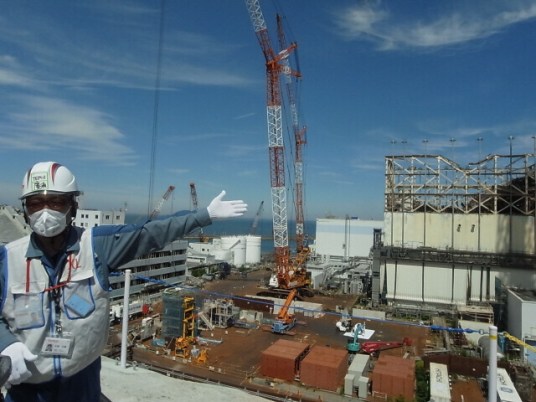 A TEPCO employee tells reporters about the Fukushima Daiichi Nuclear Power Plant in June 2017.
Aug.4,2020
With the world’s attention focused on the COVID-19 pandemic, the Japanese government has been pushing forward with its preparations to dump contaminated water from the Fukushima Daiichi Nuclear Power Plant into the ocean. After first announcing an initial plan last March for discharging the water into the sea over a period of 30 years, the Shinzo Abe administration held five hearings between April and July, with a final decision on the dump reportedly likely to come within the month of October. The Abe administration has disregarded the concerns and opposition of local residents and the international community while pursuing a measure that will cause irreversible contamination to our oceans. It must stop immediately.
In a recent hearing, Fukushima residents and fishermen voiced strong opposition to dumping radioactive water into the ocean, a plan that they labeled “unacceptable.” The position of the Japanese government is that the storage tanks that have held contaminated rainwater and groundwater since the nuclear accident will run out of room in the summer of 2022, forcing an ocean dump. But civic groups have criticized the government for attempting to ram through its dumping plan as the cheapest option, even though more tanks could be safely installed after re-zoning large tracts of land around the Fukushima reactor.
The Tokyo Electric Power Company (TEPCO), the operator of the reactor, argues that all radioactive matter but tritium has been removed from the contaminated water in the tanks through purification based on the Advanced Liquid Processing System (ALPS). TEPCO argues that the tritium that would be released along with the contaminated water is no worse than the tritium that’s already released into the ocean and atmosphere during the operation of nuclear reactors around the world. But the 1.2 million tons of contaminated water that TEPCO claims has been “processed” still contains between 100 and 20,000 times the permitted amount of cancer- and mutation-causing matter, according to international environmental group Greenpeace.
According to Greenpeace’s analysis, contaminated water from the reactor, once released into the ocean, would be carried by ocean currents to South Korea’s east coast within a year. Exposing the east coast to water contaminated with deadly radioactivity for 30 years would present a serious threat to the maritime ecosystem and to public health. The UN Human Rights Council released a statement in June expressing grave concern about reports indicating that the Japanese government is accelerating plans to dump radioactive water from Fukushima.
The Korean government has set up a task force under the Office of the Prime Minister to track the steps taken by the Japanese government, but it needs to ask for more information and work even harder to sound the alarm in the international community. As a neighbor, Korea has every right to raise the issue with the Japanese government. Seoul needs to press the issue, both in Tokyo and in other countries, for the sake of Koreans’ health and the future of East Asia.
http://english.hani.co.kr/arti/english_edition/english_editorials/956441.html
What can a pandemic teach us about nuclear threats?
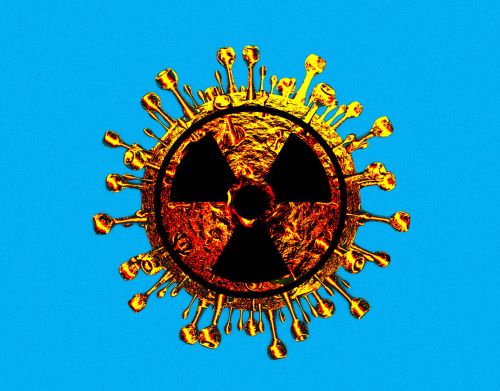 What can a pandemic teach us about nuclear threats? Bulletin of the Atomic Scientists, By Ted Lieu, August 7, 2020 “……. Over 700,000 people worldwide have died from COVID-19, including over 160,000 in the United States. SARS-CoV-2 spread like wildfire in part due to global and domestic travel made far easier by technological progress. At the same time, failures in human institutions allowed the virus to escalate out of control in numerous places. What can a pandemic teach us about nuclear threats? Bulletin of the Atomic Scientists, By Ted Lieu, August 7, 2020 “……. Over 700,000 people worldwide have died from COVID-19, including over 160,000 in the United States. SARS-CoV-2 spread like wildfire in part due to global and domestic travel made far easier by technological progress. At the same time, failures in human institutions allowed the virus to escalate out of control in numerous places.
The lessons learned from this pandemic make the case for re-thinking the United States’ national security framework to decide which investments truly improve US national security and which seek to win yesterday’s wars. Who would have thought that the equipment needed to fight an enemy that has already killed far more Americans than died in World War I was not the Trident missile or B-1 Bomber, but face masks and ventilators? Or that the heroes risking their lives this year are health care workers and grocery store employees? The United States has already learned three important lessons from its failed pandemic response that should inform its nuclear strategy, so it doesn’t repeat similar mistakes in the future: investing in prevention is key; experts matter; and America needs to adjust to a new communications environment. Investing in catastrophe prevention. Until 2017, both Democratic and Republican administrations understood the importance of preventing a pandemic. Before leaving office, the Obama administration set up the White House National Security Council Directorate for Global Health Security and Biodefense. In 2005, President George Bush spoke at the National Institutes of Health and said, “If we wait for a pandemic to appear, it will be too late to prepare.” Indeed, one of the principal reasons for the existence of the Centers for Disease Control and Prevention, which was created in 1946, is “detecting and confronting new germs and diseases around the globe to increase our national security.” Unfortunately, the Trump administration eliminated the NSC Directorate for Global Health Security and Biodefense in 2018. The administration declined to renew funding for a federal pandemic detection program in 2019. The administration also proposed budget cuts to the CDC. And the Trump Administration ignored a step-by-step guide the Obama administration created on how to prevent a pandemic. … … the budgets under the Trump administration have prioritized military spending over all other instruments of national power. We can already destroy the world several times over with our nuclear and conventional weapons. It is time to invest in our other instruments of national power. Unfortunately, in the last few years, our diplomatic capacity has withered. As a member of the House Foreign Affairs Committee, I have seen how, under the Trump Administration, the US State Department has been gutted, as employees depart and positions go unfilled; morale has fallen; and several ambassadors and the Secretary of State have come under investigation for inappropriate or illegal behavior. We need to reverse course and re-invest in a large, professional, and ethical diplomatic corps. We have also seen an unfortunate shift towards go-it-alone US nuclear policy that expands the risk of miscalculation and escalation. Withdrawing from nuclear arms control treaties and expanding the capabilities of our nuclear arsenal are destabilizing. The Trump administration’s decisions to withdraw from Intermediate-Range Nuclear Forces (INF) Treaty last year, to announce its formal intent to withdraw from the Open Skies Treaty this year, and to lay the groundwork for allowing the New START Treaty to expire early next year all amount to a regressive policy that increases the chances of a nuclear conflict. Similarly, the Trump administration’s decision to produce new low-yield warheads increases the risk that nuclear weapons will be used. And the use of a low-yield nuclear weapon can easily escalate a conflict to an all-out nuclear war that cannot be won. That’s one reason I and other members of Congress introduced the bicameral “Hold the LYNE Act” to prohibit low-yield nuclear weapons for submarine-launched ballistic missiles. nstead of moving away from a prevention strategy, the United States needs to move toward one. Among the more obvious ways a catastrophic nuclear war could start is if a president launched a nuclear first strike. In October 2016, Sen. Ed Markey and I introduced the “Restricting First Use of Nuclear Weapons Act” to mitigate that possibility and to reassert the war making authority that the framers of the Constitution gave to Congress alone. The current nuclear launch approval process gives the president the sole authority to decide whether and when to launch a nuclear first strike. No member of the cabinet, the judiciary, or Congress is required to be involved in that decision. And once the President orders the launch, the execution of the order would occur frighteningly fast……….. The value of expertise. Another reason America leads the world in COVID-19 cases and deaths involves the failure of far too many people, including government officials, to listen to experts. ……. In many ways, this pandemic has taught us exactly what not to do in a nuclear-armed world where the Doomsday Clock says it is 100 seconds to midnight. We need to stop rejecting science,,……….https://thebulletin.org/2020/08/what-can-a-pandemic-teach-us-about-nuclear-threats/# |
|
Anti-nuclear protests at Kings Bay Naval Submarine Base
Anti-nuclear protests at Kings Bay https://thebrunswicknews.com/news/local_news/anti-nuclear-protests-at-kings-bay/article_8ac11cdb-6416-579b-b298-961419776e2a.html By GORDON JACKSON gjackson@thebrunswicknews.com ST. MARYS 7 Aug 20,
Organizers of an annual protest against nuclear weapons at Naval Submarine Base Kings Bay expected a large crowd to commemorate the 75th anniversary of the first atomic bomb dropped on Hiroshima, Japan, to help hasten the end of World War II.
Five people ended up standing outside a base gate Thursday holding signs with anti-nuclear weapons messages.
Glenn Carroll, coordinator of Nuclear Watch South, said the ongoing COVID-19 pandemic compelled many who were planning to attend to stay home for health concerns. But Carroll said her trip from Atlanta to join others with concerns about nuclear weapons Thursday was worth the time.
“Our mission is to stop the arms race,” Carroll said. “It’s a security risk and phenomenally expensive. This has become a business model and it’s deadly.”
Kings Bay is home to six ballistic missile submarines and two guided missile submarines. The base employs more than 9,000 civilian workers and active-duty sailors. Supporters say the ballistic missile submarines are a vital deterrent to nuclear attack.
“Thank God they were non violent,” she said. “They did highlight you cannot secure this base with this kind of power. It’s called an illusion of security.”
Grady said the military’s priorities “are all messed up” by continuing to develop powerful nuclear weapons.
“There is nothing they can do but kill,” she said.
She also expressed concerns about the length of time the growing stockpile of nuclear waste will need to be contained.
Carroll said she and others will continue to share their concerns about nuclear weapons. While Carroll said she’s anti-nuclear, she’s not anti-military.
“We need a defense,” she said. “We don’t need a weapons system unmatched on this planet.”
Problems with Russia’s hype about “super weapons”- and risk of escalating war
|
The Hypersonic Hype and Russia’s Diminished Nuclear Threshold, Jamestown Foundation, Eurasia Daily Monitor Volume: 17 Issue: 116, By: Pavel Felgenhauer, August 6, 2020 President Vladimir Putin used the July 26, 2020, Navy Day and the Main Navy Parade in St. Petersburg to once again promote Russia’s “superweapons,” which will ostensibly give the Russian Military-Maritime Fleet (Voyenno-Morskoy Flot—VMF) “a unique advantage” over its Western counterparts. According to Putin, “The deployment of advanced technologies that have no equals in the world, including hypersonic strike systems and underwater drones, will increase naval combat capabilities” (Interfax, July 26). The Main Navy Parade displayed some 46 vessels. Smaller, satellite parades were also held in six other Russian naval base cities as well as at Russia’s foreign naval base in Tartus, Syria (Militarynews.ru, July 26).
The Ministry of Defense used the Navy Day festivities to announce that the nuclear-powered super-torpedo “Poseidon” is now in its final stages of development and will be soon tested using the specially designed nuclear submarine Belgorod—a modified Oscar II–class cruise missile submarine……… Together with the Poseidon, Russia’s president has been touting the Zircon hypersonic missile, which is also reportedly in its final stages of development. The Zircon, according to Putin, can fly at speeds exceeding Mach 9, with a range of up to 1,000 kilometers. …… The Zircon has been in development since the 1970s and 1980s. It is apparently a weapon specifically designed to strike US carriers or other large, high-value seaborne assets. Aiming the hypersonic missile at land targets would be impractical since its radar is apparently only able to distinguish large-contrast targets on the open sea. ……. its chances of hitting a moving ship directly seem to be remote—a carrier would have moved a mile or two away while the Russian hypersonic missile blindly traverses its distance to the original target (Vpk-news, March 24). The extended-range Zircon thus makes sense only as a nuclear weapon with a 200+ kiloton warhead—an underwater massive nuclear explosion would disable a carrier with shockwave even from a mile or two away. The Russian VMF had not received a new destroyer in 30 years, and it is presently struggling to build frigates like the Gorshkov because Ukraine stopped selling it frigate engines after 2014…….. The main problem with Putin’s superweapons is that they are truly doomsday devices, valuable only for deterrence. The Kremlin is constantly plying the deterrence game by trying to scare the West. But this situation has two dangerous ramifications. First, the nuclear threshold is becoming lower: in any serious skirmish, the Russian navy would either need to go nuclear or risk being sunk. And second, while the Russian leadership believes it has surpassed the West militarily thanks to its dazzling superweapons, Moscow’s threshold for employing military force in conflict situations may also drop further. https://jamestown.org/program/the-hypersonic-hype-and-russias-diminished-nuclear-threshold/ |
|
Another Hiroshima is Coming…Unless We Stop It Now
Today, an unprecedented campaign of propaganda is shooing us all off like rabbits. We are not meant to question the daily torrent of anti-Chinese rhetoric, which is rapidly overtaking the torrent of anti-Russia rhetoric. Anything Chinese is bad, anathema, a threat: Wuhan …. Huawei. How confusing it is when “our” most reviled leader says so.
The target is China. Today, more than 400 American military bases almost encircle China with missiles, bombers, warships and nuclear weapons. From Australia north through the Pacific to South-East Asia, Japan and Korea and across Eurasia to Afghanistan and India, the bases form, as one US strategist told me, “the perfect noose”.
In the Sydney Morning Herald, tireless China-basher Peter Hartcher described those who spread Chinese influence in Australia as “rats, flies, mosquitoes and sparrows”. Hartcher, who favourably quotes the American demagogue Steve Bannon, likes to interpret the “dreams” of the current Chinese elite, to which he is apparently privy. These are inspired by yearnings for the “Mandate of Heaven” of 2,000 years ago. Ad nausea.
To combat this “mandate”, the Australian government of Scott Morrison has committed one of the most secure countries on earth, whose major trading partner is China, to hundreds of billions of dollars’ worth of American missiles that can be fired at China.
At a quarter past eight on the morning of August 6, 1945, she and her silhouette were burned into the granite.
I stared at the shadow for an hour or more, then I walked down to the river where the survivors still lived in shanties.
I met a man called Yukio, whose chest was etched with the pattern of the shirt he was wearing when the atomic bomb was dropped.
He described a huge flash over the city, “a bluish light, something like an electrical short”, after which wind blew like a tornado and black rain fell. “I was thrown on the ground and noticed only the stalks of my flowers were left. Everything was still and quiet, and when I got up, there were people naked, not saying anything. Some of them had no skin or hair. I was certain I was dead.”
Nine years later, I returned to look for him and he was dead from leukaemia.
“No radioactivity in Hiroshima ruin” said The New York Times front page on 13 September, 1945, a classic of planted disinformation. “General Farrell,” reported William H. Lawrence, “denied categorically that [the atomic bomb] produced a dangerous, lingering radioactivity.”
Only one reporter, Wilfred Burchett, an Australian, had braved the perilous journey to Hiroshima in the immediate aftermath of the atomic bombing, in defiance of the Allied occupation authorities, which controlled the “press pack”.
“I write this as a warning to the world,” reported Burchett in the London Daily Express of September 5,1945. Sitting in the rubble with his Baby Hermes typewriter, he described hospital wards filled with people with no visible injuries who were dying from what he called “an atomic plague”.
For this, his press accreditation was withdrawn, he was pilloried and smeared. His witness to the truth was never forgiven.
The atomic bombing of Hiroshima and Nagasaki was an act of premeditated mass murder that unleashed a weapon of intrinsic criminality. It was justified by lies that form the bedrock of America’s war propaganda in the 21st century, casting a new enemy, and target – China.
During the 75 years since Hiroshima, the most enduring lie is that the atomic bomb was dropped to end the war in the Pacific and to save lives.
“Even without the atomic bombing attacks,” concluded the United States Strategic Bombing Survey of 1946, “air supremacy over Japan could have exerted sufficient pressure to bring about unconditional surrender and obviate the need for invasion. “Based on a detailed investigation of all the facts, and supported by the testimony of the surviving Japanese leaders involved, it is the Survey’s opinion that … Japan would have surrendered even if the atomic bombs had not been dropped, even if Russia had not entered the war [against Japan] and even if no invasion had been planned or contemplated.”
The National Archives in Washington contains documented Japanese peace overtures as early as 1943. None was pursued. A cable sent on May 5, 1945 by the German ambassador in Tokyo and intercepted by the US made clear the Japanese were desperate to sue for peace, including “capitulation even if the terms were hard”. Nothing was done.
The US Secretary of War, Henry Stimson, told President Truman he was “fearful” that the US Air Force would have Japan so “bombed out” that the new weapon would not be able “to show its strength”. Stimson later admitted that “no effort was made, and none was seriously considered, to achieve surrender merely in order not to have to use the [atomic] bomb”.
Stimson’s foreign policy colleagues — looking ahead to the post-war era they were then shaping “in our image”, as Cold War planner George Kennan famously put it — made clear they were eager “to browbeat the Russians with the [atomic] bomb held rather ostentatiously on our hip”. General Leslie Groves, director of the Manhattan Project that made the atomic bomb, testified: “There was never any illusion on my part that Russia was our enemy, and that the project was conducted on that basis.”
The day after Hiroshima was obliterated, President Harry Truman voiced his satisfaction with the “overwhelming success” of “the experiment”.
The “experiment” continued long after the war was over. Between 1946 and 1958, the United States exploded 67 nuclear bombs in the Marshall Islands in the Pacific: the equivalent of more than one Hiroshima every day for 12 years. Continue reading
NuScam’s (sort of) small nuclear reactors rejected by Utah Taxpayers Association

Critics of planned nuclear power project urge Utah cities to pull out before it’s too late, Utah Taxpayers Association warns it believes proposal is too costly, not transparent DeseretNews, By Amy Joi O’Donoghue@Amyjoi16 Aug 4, 2020 SALT LAKE CITY — The Utah Taxpayers Association and a former member of the U.S. Nuclear Regulatory Commission are urging cities that have signed on to a planned nuclear power plant in Idaho to get out while they can before costs become too great.
NuScale’s Small Modular Reactor is planned for construction at the Idaho National Laboratory near Idaho Falls and would provide 720 megawatts of power, or enough energy for 720,000 homes.
The Carbon Free Power Project is promoted as the next generation design for nuclear power, featuring 12 distinct modules, with the first scheduled to come online in 2029 with the 11 others following the next year.
The project is a collaborative effort involving the U.S. Department of Energy, NuScale and the Utah Associated Municipal Power Systems, a political subdivision of the state of Utah. ……
there are several off-ramps in those phases for cities to exit, one of which is coming up Sept. 14. That deadline prompted the taxpayers association to urge cities to get out now before they get trapped into paying millions for a technology it says is unproven.
“Small modular reactor power is just not cost competitive,” said Rusty Cannon, vice president of the taxpayer group, adding participating cities and districts should hold a public vote to withdraw from the project……..
Peter Bradford, a former member of the U.S. Nuclear Regulatory Commission, said enthusiasm over new developments in nuclear technology that turned out to be flawed have cost ratepayers and taxpayers in multiple states billions of dollars.
He said that of 31 projects pending before the commission in 2009, only two remain — with the rest canceled or indefinitely postponed.
“The stranded costs of nuclear plants paid off by customers in the 1990s exceeded $50 billion nationwide,” he said. “Each period of abject failure is followed by an array of new proposals.”…….
The project is backed heavily by the U.S. Department of Energy, which gave NuScale a competitive award of $226 million in 2013 to develop the technology. Two years later, the federal agency gave NuScale $16.7 million for licensing preparation……..
Cannon and Bradford also criticized the municipal power association for not being transparent enough because its briefing meetings are exempt from the Utah open meetings law and are closed……… https://www.deseret.com/utah/2020/8/4/21354171/critics-nuclear-power-project-urge-utah-cities-pull-out-nuscale-small-modular-reactor-idaho
Hiroshima survivor Koko Kondo met the man who dropped that atomic bomb
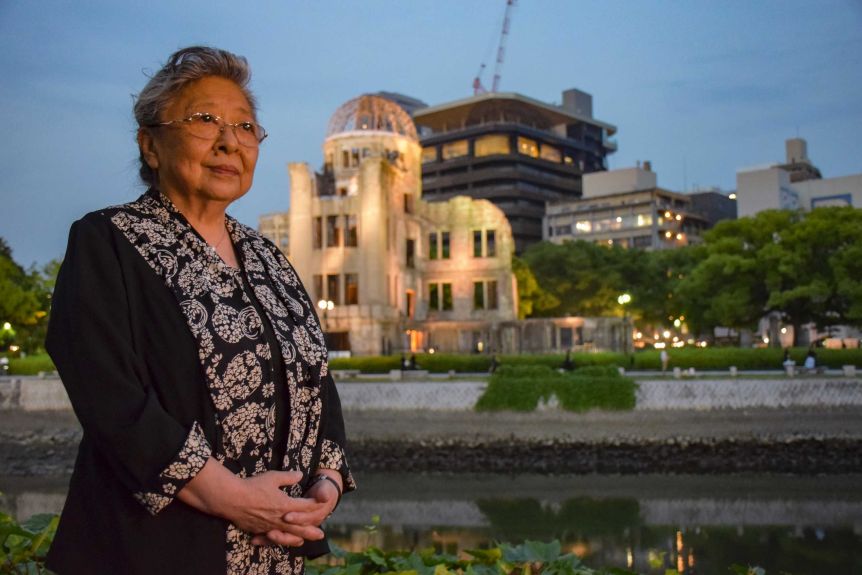
Hiroshima’s atomic bomb changed Koko Kondo’s life, but so did meeting the man who dropped it, ABC News,By Tracey Shelton, 6 August, 20, Eight-month-old Koko was in her mother’s arms the day the world’s first nuclear weapon was dropped on Hiroshima, bringing their family home crashing down on them on this day 75 years ago.
Key points:
Between 90,000 and 166,000 victims died within months of the Hiroshima bombing
Koko Kondo met pilot Robert Lewis on the set of This is Your Life
More than 150 denshosha volunteers are carrying on the memories of survivors
She was almost 40 years old before her mother finally sat her down and told her the full story of how she had inched through the rubble in darkness, with little Koko wrapped in her arms, towards a small pocket of dusty sunlight.
“She first pushed me out [through the opening], then next, she was able to get out … but the fire was all over the place according to my mother,” said Koko Kondo, who is now 75.
Ms Kondo’s father — Methodist minister Kiyoshi Tanimoto, who was visiting a parishioner across town — said in a US television interview “the whole city was on fire” as he ran through the streets to find his family.
He described people running in silence with skin hanging from their bodies “like a procession of ghosts”
In the sky above, pilot Robert Lewis was part of the United States Air Force crew who dropped the atomic bomb known as Little Boy that day, unleashing around 13 kilotons of force on the city below, where Ms Kondo’s family and about 290,000 other civilians lived, according to the Atomic Heritage Foundation.
Estimates on how many people died from the bomb either instantly or in the following months range between 90,000 and 166,000, but the Little Boy would go on to claim the lives of thousands more as the effects of radiation took their toll.
After looking back to see the once-flourishing city “disappear”, Captain Lewis wrote in his log book “My God, what have we done?”…….
While Ms Kondo said most people avoided speaking of the bombing in the decades that followed, her father made it his mission to help the injured, rebuild the city and ensure the world never forgot.
Her family had suffered from radiation sickness and Ms Kondo was subjected to years of tests and examinations to study the effects of radiation exposure.
One of Ms Kondo’s earliest memories — at around two or three years old — was of a group of teenage girls attending a sermon at her father’s church.
“Some girls could not close their eyes. Some girls — their lips were all melted with their chins so they could not close [their mouths],” she told the ABC.
While her manners did not permit her to ask questions, she would listen to her parents’ conversations and learned that the destruction and pain that surrounded her was caused by a single US B-29 bomber.
Ms Kondo said her childhood became consumed by hatred and thoughts of revenge.
“Someday when I grow up, I am definitely going to find the people who were on that B-29 bomber to do the revenge,” she said.
“That was my plan, that was my thinking. But life is interesting.”
When Koko was 10, her mother and siblings received a phone call from the then popular US television program This is Your Life.
They were immediately flown to the United States for an episode featuring the work of her father, who had taken a group of young survivors to the US for plastic surgery……
As Hiroshima mission pilot Robert Lewis was introduced, Koko glared at him with all the hatred a 10-year-old could muster.
“I was so shocked!” she recalled.
“What could I do? I wanted to run to the middle of the stage and give him a punch, a bite or a kick.”
But as he recalled his memories of that day, she saw tears begin to well in his eyes.
“I thought he was a monster, but monsters don’t have tears.”
Ms Kondo said she realised she had lived her short life full of hate for a man she knew nothing about……..
the life of this man was not easy, she said, and he “suffered greatly” not only with the weight of his involvement in the bombing, but he was also “harassed” for speaking about it publicly.at 75, she is among the youngest of a dwindling number of survivors who can tell the world first hand of the horrors these weapons unleashed……….
“My concern is today nuclear weapons are much, much stronger. We have to abolish them now,” urged Ms Kondo. ….
If these stories were lost, “probably our planet would be gone”, she said.
Doctoral candidate Tomoko Kubota is one of more than 150 denshosha — a designated keeper of the memories of a Hiroshima or Nagasaki survivor.
As a denshosha volunteer, she spent three years training and learning from survivor Sadae Kasaoka, so in the future she can “give testimony” on her behalf by sharing her “experiences, the reality of the atomic bombing, and desires for peace”.
That story includes how, at 12 years of age, Ms Kasaoka lost her mother and watched her father die — within days of the blast — in agony from horrific burns and wounds that became infested with maggots.
For other survivors, the memories were too painful to talk about, Ms Kasaoka said, while discrimination against those who did speak out had silenced many over the years…………. https://www.abc.net.au/news/2020-08-06/atomic-bomb-survivors-75-years-after-hiroshima-nuclear-attack/12501636
1 This Month

of the week – Shut Down Drone Warfare!


Tell the Ukrainian Government to Drop Prosecution of Peace Activist Yurii Sheliazhenko

Petition to revoke the licensing of the Near Surface Nuclear Disposal Facility (NSDF) at Chalk River. https://www.ourcommons.ca/petitions/en/Petition/Details?Petition=e-7247
To see nuclear-related stories in greater depth and intensity – go to https://nuclearinformation.wordpress.com
-
Archives
- April 2026 (114)
- March 2026 (251)
- February 2026 (268)
- January 2026 (308)
- December 2025 (358)
- November 2025 (359)
- October 2025 (376)
- September 2025 (257)
- August 2025 (319)
- July 2025 (230)
- June 2025 (348)
- May 2025 (261)
-
Categories
- 1
- 1 NUCLEAR ISSUES
- business and costs
- climate change
- culture and arts
- ENERGY
- environment
- health
- history
- indigenous issues
- Legal
- marketing of nuclear
- media
- opposition to nuclear
- PERSONAL STORIES
- politics
- politics international
- Religion and ethics
- safety
- secrets,lies and civil liberties
- spinbuster
- technology
- Uranium
- wastes
- weapons and war
- Women
- 2 WORLD
- ACTION
- AFRICA
- Atrocities
- AUSTRALIA
- Christina's notes
- Christina's themes
- culture and arts
- Events
- Fuk 2022
- Fuk 2023
- Fukushima 2017
- Fukushima 2018
- fukushima 2019
- Fukushima 2020
- Fukushima 2021
- general
- global warming
- Humour (God we need it)
- Nuclear
- RARE EARTHS
- Reference
- resources – print
- Resources -audiovicual
- Weekly Newsletter
- World
- World Nuclear
- YouTube
-
RSS
Entries RSS
Comments RSS
 nuclear-news