Russia’s Poseidon thermonuclear torpedo being tested
Russia’s New Nuclear Torpedo Is A Threat To More Than Just America’s Aircraft CarriersBut its coastal cities as well. National Interest. by Michael Peck, 4 Mar 20, Key point: Or is this just more hype? You make the call. Russia has begun underwater tests of its Poseidon thermonuclear torpedo.
The Poseidon is an 80-foot-long nuclear-powered submersible robot that is essentially an underwater ICBM. It is designed to travel autonomously across thousands of miles, detonate outside an enemy coastal city, and destroy it by generating a tsunami.
“In the sea area protected from a potential enemy’s reconnaissance means, the underwater trials of the nuclear propulsion unit of the Poseidon drone are underway,” an unnamed Russian defense official told the TASS news agency.
The source also said the “the reactor is installed in the hull of the operating drone but the tests are being held as part of experimental design work rather than full-fledged sea trials at this stage.”
TASS also reports the Poseidon, — the name was chosen in a Web contest held by Russia’s Ministry of Defense – will be armed with a 2-megaton warhead. That’s more than enough to destroy a city. But that leaves the question of why Russia would choose to nuke an American city with an underwater drone – even one that allegedly travels 100 miles an hour – when an ICBM can do the job in 30 minutes.
Russia suggests the Poseidon is a retaliatory weapon that would revenge a U.S. first strike even if American missile defenses were capable of stopping hundreds of Russian ICBMs. But even in the unlikely event that the U.S. could intercept 500 or more Russian ballistic missiles, a delivery system that could take days or weeks to reach its target seems hardly an efficient deterrent.
TASS also reports the Poseidon, — the name was chosen in a Web contest held by Russia’s Ministry of Defense – will be armed with a 2-megaton warhead. That’s more than enough to destroy a city. But that leaves the question of why Russia would choose to nuke an American city with an underwater drone – even one that allegedly travels 100 miles an hour – when an ICBM can do the job in 30 minutes.
Russia suggests the Poseidon is a retaliatory weapon that would revenge a U.S. first strike even if American missile defenses were capable of stopping hundreds of Russian ICBMs. But even in the unlikely event that the U.S. could intercept 500 or more Russian ballistic missiles, a delivery system that could take days or weeks to reach its target seems hardly an efficient deterrent…..
The puzzle is why a giant robot submarine would be needed to detonate a nuclear warhead near a U.S. aircraft carrier ….. https://nationalinterest.org/blog/buzz/russias-new-nuclear-torpedo-threat-more-just-americas-aircraft-carriers-129207
Nuclear power project Bradwell B public consultation to go live this week
 Nuclear power project Bradwell B public consultation to go live this week, Maldon Standard , 4 Mar 20, By Pape Gueye @PMGueye “……… Proposals for Bradwell B were unveiled today as the first stage of consultation gets under way.
The consultation will run for 12 weeks until May 27, with exhibitions taking place at 15 venues across Essex…..
Nuclear power project Bradwell B public consultation to go live this week, Maldon Standard , 4 Mar 20, By Pape Gueye @PMGueye “……… Proposals for Bradwell B were unveiled today as the first stage of consultation gets under way.
The consultation will run for 12 weeks until May 27, with exhibitions taking place at 15 venues across Essex…..
The proposals for Bradwell B will be developed over several years before the project submits an application to the UK Planning Inspectorate.
The final decision whether to grant permission will be taken by the Secretary of State.
A group campaigning against Bradwell B is urging residents to attend the EDF energy and Chinese General Nuclear stage one consultation events and make their views known.
Blackwater Against New Nuclear Group (BANNG) has been campaigning against the power station plan.
A spokesman said: “Any support will be gratefully welcome, ranging from just turning up to spending the whole time at a venue demonstrating your concern.”
The first consultation takes place tomorrow at Steeple Village Hall from 2pm until 8pm.
To see the other consultation dates, visit banng.info. https://www.maldonandburnhamstandard.co.uk/news/18280459.nuclear-power-project-bradwell-b-public-consultation-go-live-week/
Visit bradwellb.co.uk.
Poland’s nuclear power development with USA to cost $15.56 billion
|
Poland faces $15 bln nuclear power bill over 20 years – minister , https://www.reuters.com/article/poland-energy-nuclear/poland-faces-15-bln-nuclear-power-bill-over-20-years-minister-idUSL8N2AX3G7 RUDA SLASKA, Poland, March 4 (Reuters) – Poland will have to spend 60 billion zlotys ($15.56 billion) on its planned nuclear power plants over the next 20 years, the Polish minister responsible for energy infrastructure Piotr Naimski said on Wednesday.Poland generates most of its electricity from carbon-intensive coal and is the only EU state that has not pledged to achieve climate neutrality in 2050.
But facing pressure from the European Union to reduce emissions, it has planned to build 6-9 gigawatts (GW) of nuclear generation by 2040. “This will require spending 60 billion zlotys. These are huge amounts but our state can afford it,” Naimski told a conference in Silesia, a coal region in south of Poland. Poland hopes to cooperate with the United States on its nuclear energy project. Also French President Emmanuel Macron said last month that France supports Poland’s transition away from coal by using nuclear technology to produce electricity. ($1 = 3.8564 zlotys) (Reporting by Wojciech Zurawski; writing by Agnieszka Barteczko; editing by Barbara Lewis) |
|
The week in climate and nuclear news
This week there’s quite a lot of news about nuclear weapons development. Nobody seems very interested – all same-same? Weapons anxiety fatigue? UN disarmament chief hopes upcoming conference will address current nuclear challenges. Some experts think that the subject should get a mention in the USA 2020 election race.
The Coronavirus has gripped the media – with climate change taking a back seat. Bad though that epidemic is, global heating also moves on inexorably.
a bit of good news – Designer Works to Erect First Modern Village to Generate its Own Electricity–and Food–in 100% Sustainable Loop
Coronavirus – right-wing media reactions and conspiracy theories.
The Planet Is Screwed, Says Bank That Screwed the Planet. USA fails to stop G20 finance ministers and central bank governors‘ warning on climate change.
Nuclear testing left a signature of radioactive carbon all around the world. The Castle Bravo bomb and its effects on the soldiers, and on the planet.
A Brief Study of Molten Salt Reactors.
Climate action? – you simply couldn’t build enough nuclear reactors.
ANTARCTICA . Antarctic ice walls protect the climate.
IRAN. Iran Nuclear Accord Parties Meet to Try to Salvage Deal.
JAPAN.
- The Olympic torch relay promoting “radiation recovery” – not so popular in Fukushima. Radiation Disinformation and Human Rights Violations at the Heart of Fukushima and the Olympic Games. As If Nothing Had Occurred: Anti-Tokyo Olympics Protests and Concern Over Radiation Exposure. The Fukushima Nuclear Disaster and the Tokyo Olympics. An Olympic-Sized Disaster Is Brewing in Japan. Could the 2020 Tokyo Olympics Be a Victim of COVID-19?
- TEPCO ordered to cough up after it refused deal on compensation.
- International Atomic Energy Agency, run by 5 nuclear weapons nations, backs Fukushima water emptying to the Pacific. Releasing radioactive water would further damage Fukushima’s reputation. Is ocean discharge the best solution to Fukushima No. 1’s water crisis?
- No. 2 reactor at Onagawa nuclear plant in Miyagi, halted by 2011 tsunami, passes safety screening.
- Japan Lifts Shipment Restrictions on All Fish Species off Fukushima.
- TEPCO ordered to cough up after it refused deal on compensation.
- April 26 Hibakusha Signature Appeal – More than 10 Million Signatures.
USA. 2020 election – Big climate change policy unlikely no matter who wins the White House. Trump is using Yucca Mountain to drum up Republican votes.
Half the US population favors the nuclear abolition treaty. U.S. Pentagon demands $167 billion tax-payer nuclear funding through to 2025. Pentagon toys with a plan to win a “limited nuclear war” against Russia . USA’s nuclear insurance places the big responsibility on the tax-payer.
California’s Super Tuesday primary and Diablo nuclear station – symbol of USA’s nuclear corruption.
Hanford’s radioactive underground structures likely to collapse. New Mexico’s elected leaders waver on Holtec’s nuclear waste plan. No vote on high level nuclear waste storage in New Mexico, despite Memorial opposing the dump. Plans to remove Lewiston nuclear waste.
Safety check records falsified at SC nuclear plant. USA desperately pushing the fantasy of Small Nuclear Reactors to India. NuScam’s nuclear reactor looks suspiciously like an old design, (that melted down).
FRENCH POLYNESIA. Veterans groups not happy -France wants to abolish the National Commission for Monitoring the Consequences of Nuclear Tests.
INDIA. Trump’s toxic nuclear sales pitch to India- undermining India’s nuclear liability law.
UK. Radioactive wastes into River Clyde could have devastating effects on community and wildlife. Is Cumbria about to become the world’s plutonium dump? Outage’s at EDF’s Hinkley nuclear station extended until June.
AUSTRALIA. Investigative journalism – Legislation banning nuclear power in Australia should be retained.
EGYPT. Egypt going into $25 billion debt to Russia, to buy nuclear reactors.
KAZAKHSTAN. Kazakhstan local residents may be stuck with costs of decommissioning nuclear reactor.
SWEDEN. Sweden now faces years of nuclear reactor shutdowns and waste disposal problems.
UNITED ARAB EMIRATES. Nuclear power not economic, nor safe, but it bolsters a secretive autocratic regime, United Arab Emirates.
INDONESIA. Illegal radioactive substances found in South Tangerang house, Jakarta.
EXPERTS: NUCLEAR WEAPONS SHOULD BE FRONT-BURNER ISSUE IN 2020 RACE FOR WHITE HOUSE

Bulletin of the Atomic Scientist Briefing Audience Told: “We Are Living in a World Where the Next President Will Decide if the Number of Nuclear Weapons Go Up or Down.”
 CHICAGO, IL///March 2, 2020///Two leading experts raised serious concerns today about the lack of substantive discussion among U.S. presidential candidates about their plans for U.S. nuclear weapons and related threats around the globe. They noted that arms control agreements resulted in the number of nuclear weapons in the world being slashed from 70,000 to 14,000, with that progress now in danger of being reversed.
The Bulletin of the Atomic Scientists briefing held one day before Super Tuesday included an appeal to both candidates and the news media to move nuclear weapons to the forefront of the 2020 elections.
Former Obama science adviser John P. Holdren said: “We live in a soundbite and Twitter culture. It’s difficult to express nuclear weapons threats in 240 words or an eight-second quote … We should be talking about embracing a no-first-use policy. We have much cheaper and safer ways to deal with conventional and biological attacks than using nuclear weapons and therefore launching a much wider nuclear war. That threat is not worth it. Candidates should be talking about their views on ‘no first use.’”
Holdren now is the Teresa and John Heinz Professor of Environmental Policy at Harvard’s Kennedy School of Government, Co-Director of the School’s Science, Technology, and Public Policy program, Professor of Environmental Science and Policy in the Department of Earth and Planetary Sciences, and Affiliated Professor in the John A. Paulson School of Engineering and Applied Science. Holdren also is Visiting Distinguished Professor at Tsinghua University in Beijing, China, and Senior Advisor to the President at the Woods Hole Research Center, a pre-eminent scientific think tank focused on global climate change. From January 2009 to January 2017, he was President Obama’s Science Advisor and Senate-confirmed Director of the White House Office of Science and Technology Policy (OSTP).
Alexandra Bell, the senior policy director at the Center for Arms Control & Non-Proliferation, said: “There are well over 4,000 nuclear weapons in the U.S. stockpile. Anyone running for President is asking the public to trust them … The next President is going to decide if we live in a world when the number of nuclear weapons is going up or going down. If we lose the (arms control) agreements, we are definitely headed to a world where that number is going up. That is why this should be a major issue in the 2020 election cycle.”
Previously, Bell served as a senior adviser in the Office of the Under Secretary for Arms Control and International Security. She has also worked on nuclear policy issues at the Ploughshares Fund.
Holdren said that the issue of “no first use” was considered at length during the Obama Administration and that a decision was deferred in the President’s second term “on the assumption that Hillary Clinton would win” the 2016 election.
Bell noted that President Trump is the first U.S. president since John F. Kennedy to fail to initiate a major arms control agreement in their first term in office. She said: “Whoever the next person is to sit behind that Resolute Desk is going to having to deal with a number of issues that have been left behind to them.”
Both Holdren and Bell agreed that the news media (except for a handful of key outlets) are not paying enough attention to nuclear weapons issues. But they also agreed that it is incumbent on experts to find a way to talk about nuclear weapons that engages presidential candidates, elected officials, the media, and the public.
John Mecklin, editor-in-chief of the Bulletin of the Atomic Scientists, moderated the expert panel discussion.
For more background information, see Nuclear Weapons Policy and the U.S. Presidential Election, an edition of the Bulletin of the Atomic Scientists available free online until March 31, 2020.
ABOUT THE BULLETIN OF THE ATOMIC SCIENTISTS
December 2020 marks the 75th anniversary of the first edition of the Bulletin of the Atomic Scientists, initially a six-page, black-and-white bulletin and later a magazine, created in anticipation that the atom bomb would be “only the first of many dangerous presents from the Pandora’s Box of modern science.” The Bulletin of the Atomic Scientists’ iconic Doomsday Clock was reset on January 23, 2020 to 100 seconds to midnight. www.thebulletin.org.
MEDIA CONTACT: Max Karlin, (703) 276-3255 and mkarlin@hastingsgroup.com.
EDITOR’S NOTE: A streaming recording of the Bulletin of the Atomic Scientists’ briefing will be available at www.thebulletin.org/nukes2020vote as of 5 p.m. CST/6 p.m. EST/2300 GMT on March 2, 2020.
The Olympic torch relay promoting “radiation recovery” – not so popular in Fukushima
 In Fukushima, Olympic torch relay faces cool welcome from nuclear evacuees WTVB,
FUTABA, Japan (Reuters) – Dressed in protective plastic coveralls and white booties, Yuji Onuma stood in front of the row of derelict buildings that included his house, and sighed as he surveyed his old neighborhood.
On the once-bustling main street, reddish weeds poked out of cracked pavements in front of abandoned shops with caved-in walls and crumbling roofs. Nearby, thousands of black plastic bags filled with irradiated soil were stacked in a former rice field.
“It’s like visiting a graveyard,” he said.
Onuma, 43, was back in his hometown of Futaba to check on his house, less than 4 kilometers from the Fukushima nuclear power plant, which suffered a triple meltdown in 2011 following an earthquake and tsunami, leaking radiation across the region.
The authorities say it will be two more years before evacuees can live here again, an eternity for people who have been in temporary housing for nine years. But given the lingering radiation here, Onuma says he has decided not to move back with his wife and two young sons.
Most of his neighbors have moved on, abandoning their houses and renting smaller apartments in nearby cities or settling elsewhere in Japan.
Given the problems Futaba still faces, many evacuees are chafing over the government’s efforts to showcase the town as a shining example of Fukushima’s reconstruction for the 2020 Tokyo Olympics.
While there has been speculation that the global spread of the coronavirus that emerged in China last month might force the cancellation of the Olympics, Japanese officials have said they are confident the Games will go ahead.
The Olympic torch relay will take place in Fukushima in late March – although possibly in shortened form as a result of the coronavirus, Olympic organizers say – and will pass through Futaba. In preparation, construction crews have been hard at work repairing streets and decontaminating the center of town.
I wish they wouldn’t hold the relay here,” said Onuma. He pointed to workers repaving the road outside the train station, where the torch runners are likely to pass. “Their number one aim is to show people how much we’ve recovered.”
He said he hoped that the torch relay would also pass through the overgrown and ghostly parts of the town, to convey everything that the 7,100 residents uprooted of Futaba lost as a result of the accident.
“I don’t think people will understand anything by just seeing cleaned-up tracts of land.”
UNDER CONTROL”
In 2013, when Prime Minister Shinzo Abe was pitching Tokyo as the host of the 2020 Games to International Olympic Committee members, he declared that the situation at the Fukushima nuclear plant was “under control”.
The Games have been billed as the “Reconstruction Olympics” – an opportunity to laud Japan’s massive effort to rebuild the country’s northeastern region, ravaged by the earthquake and tsunami, as well as the meltdowns at the nuclear plant owned by Tokyo Electric Power Co.
After the disaster, the government created a new ministry to handle reconstruction efforts and pledged 32 trillion yen ($286.8 billion) in funding to rebuild affected areas.
Signs of the reconstruction efforts are everywhere near the plant: new roads have been built, apartment blocks for evacuee families have sprouted up, and an imposing tsunami wall now runs along the coastline. An army of workers commutes to the wrecked plant every day to decommission the reactors.
In March, just days before the Olympic relay is scheduled to be held across Fukushima, Japan will partially ease a restriction order for Futaba, the last town that remains off-limits for residents to return.
This means that residents like Onuma will be able to freely come and go from the town without passing through security or changing into protective clothing. Evacuees will still not be able to stay in their homes overnight.
After a few years bouncing between relatives’ homes and temporary apartments, Onuma decided to build a new house in Ibaraki, a nearby prefecture. His two sons are already enrolled in kindergarten and primary school there.
“You feel a sense of despair,” said Onuma. “Our whole life was here and we were just about to start our new life with our children.”
When Onuma was 12, he won a local competition to come up with a catchphrase promoting atomic energy. His words, “Nuclear Energy for a Brighter Future” was painted on an arch that welcomed visitors to Futaba.
After the nuclear meltdowns, the sign was removed against Onuma’s objections.
“It feels like they’re whitewashing the history of this town,” said Onuma, who now installs solar panels for a living.
The organizing committee for the Tokyo 2020 Olympics did not respond to requests for comment from Reuters.
“BACK BURNER”
Other residents and community leaders in nearby towns say the Olympics may have actually hindered the region’s recovery.
Yasushi Niitsuma, a 60-year-old restaurant owner in Namie, said the Olympics stalled local reconstruction projects because of surging demand and costs to secure workers and materials ahead of the games in Tokyo.
“We need to wait two years, three years to have a house built because of the lack of craftsmen,” said Niitsuma. “We are being put on the back burner.”
Fukushima’s agriculture and fisheries industries have also been devastated.
“I was astonished by the “under control” comment made in a pitch to win the Olympic Games,” said Takayuki Yanai, who directs a fisheries co-op in Iwaki, 50 kilometers south of the nuclear plant, referring to Abe’s statement.
“People in Fukushima have the impression that reconstruction was used as a bait to win the Olympic Games.”
A government panel recently recommended discharging contaminated water held at the Fukushima plant to the sea, which Yanai expects to further hurt what remains of the area’s fisheries industry……..
Radiation readings in the air taken in February near Futaba’s train station were around 0.28 microsieverts per hour, still approximately eight times the measurement taken on the same day in central Tokyo.
Another area in Futaba had a reading of 4.64 microsieverts per hour on the same day, meaning a person would reach the annual exposure upper limit of 1 millisievert, recommended by the International Commission on Radiological Protection, in just nine days.
Despite the official assurances, it’s hard to miss the signs of devastation and decay around town.
The block where Takahisa Ogawa’s house once stood is now just a row of overgrown lots, littered with concrete debris. A small statue of a stone frog is all that remains of his garden, which is also scattered with wild boar droppings.
He finally demolished his house last year after he failed to convince his wife and two sons to return to live in Futaba.
Ogawa doubts any of his childhood friends and neighbors would ever return to the town.
“I’ve passed the stage where I’m angry and I’m resigned,” he said.
(Reporting by Mari Saito and Kiyoshi Takenaka; Writing by Mari Saito; Editing by Philip McClellan) https://wtvbam.com/news/articles/2020/mar/02/in-fukushima-olympic-torch-relay-faces-cool-welcome-from-nuclear-evacuees/990039/
No advantage in ‘new’ back-to-the-future nuclear reactors for Australia. Is the real motive military?
Part 2 of A Study of the “Report of the inquiry into the prerequisites for nuclear energy in Australia” Australian Parliamentary Committee 2020. The Industry Push to Force Nuclear Power in Australia nuclearhistory 2 Mar 2020 https://wordpress.com/read/feeds/103698880/posts/2607926791 In progress, first draft, incomplete.
The Parliamentary Committee recommends, in part, the following: Recommendation 2
The Committee recommends that the Australian Government undertake a body of work to progress the understanding of nuclear energy technology by:
- Commissioning the Australian Nuclear Science and Technology Organisation (ANSTO), or other equivalent expert reviewer, to undertake a technological assessment on nuclear energy reactors to:
- produce a list of reactors that are defined under the categories of Generation I, II, III, III+ and IV;
- advise on the technological status of Generation III+ and Generation IV reactors including small modular reactors;
- advise on the feasibility and suitability of Generation III+ and Generation IV reactors including small modular reactors in the Australian context; and
- formulate a framework to be used by Government to monitor the status of new and emerging nuclear technologies.The first item of the recommendation – for ANTSO to compile of reactors according to each one’s status within the table of Generation – 1 to 4 might be a good idea, for many of the Generation IV reactor designs were first envisaged and trialled in the 1950s and 1960s before being discarded. Whereas, at the present time, and since the time the US Department of Energy sought ways of halting the decline of nuclear power’s percentage contribution to global energy supply in the 1990s. For that is the time that the idea of resurrecting old designs and calling them new and “Generation IV” and re marketing them first arose
The waste from the very first molten salt fuelled and cooled reactor, as we saw in the previous post, continues to cost US taxpayers money 60 years later.
In 2014 the Brookings Institute published an essay by Josh Freed entitled “Back to the Future, Advanced Nuclear Energy and the Battle Against Climate Change”. This essay is available to read at http://csweb.brookings.edu/content/research/essays/2014/backtothefuture.html The cover illustration is very interesting.

The titled cover includes the disclosure that the nuclear industry sees a future for previously discarded, old reactor designs. It shows a nuclear reactor sitting below sea level, protected by a combined Dyke / Causeway for levitating vehicles. Huge waves threaten the Dyke, vehicles, reactor and giant Science Woman, who is watching on with skilled impartiality. In the distance, buildings taken straight from the cartoon “The Jetsons” appear. The illustration is also, actually, a reinterpretation of the events which occurred in March 2011 at Fukushima. The sub text of the picture admits that nuclear industry cannot keep going in the way that it has done since the days between 1945 and now. The industry would disappear if it did not “modernise”.
The fission industry is dying as more and more competition arises in the form of alternative technologies in the energy generation technology market. Even Fusion research continues to make inroads toward the goal of successful and economic power generation, but it still a few years off. The 1930s fission patents of Szilard are long in the tooth and actually, in terms of economic energy production has always been a failure. Kick started by governments, the standard designs are trusted by fewer and fewer people, especially throughout Asia. Westinghouse Nuclear, GE Nuclear, Toshiba Nuclear are all bankrupt. British Nuclear Fuels Ltd is broke, Sellafield is broke and a growing cleanup cost liability.
So increasingly, the industry needs a unique selling point, something new and radical, something that solves the old nuclear problems. It needs a product which never fails or spills radioactive materials into the biosphere, it needs a product that will not fail because the grid goes down for a few days, it cannot melt down, catch fire like Windscale, Monju and Fermi 1 did.
Seeing as there actually no new concepts, why not look again, in desperation, at the rejected designs of the past? The essay by Josh Freed (his real name) mentions a company called Transatomic. In contrast to the contents of the Freed article, which claims the old new reactor envisioned by Transatomic run on nuclear waste, Transatomic make no such claim. They state that their proposed reactor would run on liquid uranium fuel. As per the original 50s/60s design. They claim that the Molten salt reactor would create less weight of high level waste.
Because the waste would be continuously removed from the reactor. he corporate website for Transatomic is here: http://www.transatomicpower.com/the-science/ And this, from their web site, is precisely what they promise: Molten salt reactors like Transatomic Power’s are fueled by uranium dissolved in a liquid salt. The fuel is not surrounded by cladding, making it possible to continuously remove the fission products that would otherwise stop the nuclear reaction. The liquid fuel is also much more resistant to structural damage from radiation than solid materials – simply, liquids have very little structure to be damaged. With proper filtration, liquid fuel can remain in a molten salt reactor for decades, allowing us to extract much more of its energy.” end quote. They claim their reactor design produces half the nuclear waste of a comparable conventional light water reactor.
This still does not solve the high level nuclear waste stockpile. It adds to it. Given the competition nuclear power has in the modern world, given that the need for ‘baseload’ energy is now shown to be nonsense, what would 1 or 2 small modular molten salt reactors add to Australia? Would they merely replace coal fire powered generation? SA has not had coal fired electricity for some years now. A combination of solar, wind and storage in SA means SA is a net electricity exporter to the Eastern States. We have back up of gas fired generation which very rarely needed.
Sadly for Transatomic, Green Tech Media state the following at https://www.greentechmedia.com/articles/read/transatomic-to-shutter-its-nuclear-reactor-plans-make-its-technology-public announced the following in 2018:
“Transatomic to Shutter It’s Nuclear Reactor Plans, Open-Source It’s Tecnology.
The startup backed by Peter Thiel won’t be able to build its advanced reactor designs—but it’s making its IP available for others to carry on the work.” Source: Jeff St. John, 25 Sept 2018.as given above.
This gift to the world by Transatomic occurred at the time in Australia when various people began a bombastic and highly enthused campaign to convince Australians that Molten Salt Reactors, fuelled with either Uranium or Lithium or nuclear waste, were Jesus Mark 2. “We’ll Save Yer, just like we did in the Cold War. Solar and batteries are for whimps. We Can’t have solar and wind power in Australia, its a threat to Queensland Coal. Let’s nuclear instead and all make a quick a buck with IP”.
Funny that. Talk about drumming up business prospects and investment funds, and in 2020, floating a float on the back of sympathetic and one eyed Parliamentary Inquiry!
Double or Nothing?
The promise made by Transatomics is that molten fuel/molten salt reactors made with modern techniques will reduce by roughly half the amount of high level nuclear waste generated per unit of power generated. However, at the current time the amount of high level nuclear waste (ie, fission products -the transmutation products described in Szilard’s 1930s patents) and the release of the gaseous forms of these substances into the atmosphere, generated by Australian electricity generation is ZERO.
So the introduction of Molten Salt Reactor into Australia for electricity production will RAISE the production of high level nuclear waste from this activity by 100%. It won’t half, it won’t double, it will increase by x grams per watt. It is a spurious argument to say any reactor type will reduce Australia’s power industry high level nuclear waste when we produce zero at the moment. And if Australia continues on its non nuclear path, that zero rate of power related high level waste will remain zero forever. So where is the advantage for Australia in introducing power reactors in the civilian sphere?
I am led to believe that it will take between 10 – 20 years for any Australian nuclear power reactor to come on line from the time it is approved. By that stage the competition from other forms of low carbon power production will be much, much more severe than it is now. And today, in my opinion, only a devotee of nuclear power would see any advantage in introducing any type of nuclear reactor to Australia. Unless the real motive for such a reactor is a military motive. If so, the O’Brien Committee and the government needs to come clean on that. Not that they will. Such an admission is likely to be impossible for several reasons. Besides, no nuclear industry is free to fully disclose the corporate production and disposition of “special nuclear materials”.
So, I suppose in the end the Committee recommend ANTSO compile a list of reactor types and nominate the current industry PR terms for each type. For the Generational types (1 through IV) have actually very little to do with the chronological order and date range over which each type first manifest as a prototype. The small World War 2 German reactors, of which there were many, are little known, and the US ALSOS project has not disclosed that much about them. Germany had at least 4 reactor programs, 7 ways of enriching uranium. Japan had an Army fission project, a Navy fission project, an Air Force Fission project. All were formally abandoned, ironically , in July 1945. Germany was able to enrich uranium.
This is ancient history, but the world remains fairly ignorant I think, as to which reactor type is the safest, most economic, most reliable and so on. So far, all I have heard from the nuclear industry is PR manufactured originally by the US Department of Energy which relabelled the various reactor designs originated in the US according to a “Generation Number” which is completely detached from the chronological sequence in which they occurred.
In World War 2 Germany was working on heavy water reactors. Does that mean Hitler’s heavy water reactors were Generation III+ ? Of course not. They were Gen 1. As was the Canadian heavy water reactor of World War 2 which supplemented the US plutonium production at Hansford. If the Candu reactor is Gen III+ I’m Father Christmas. What the US DOE is doing with its naming is using marketing techniques to sell old concepts as new ideas.
Car companies do the same when naming cars. Makers of garbage trucks send salesmen around to Council depots extolling the virtues of the Gen IV 2 ton rubbish truck, complete with compactor, a tilt tray and 8 track stereo sound. And Depot managers get given toy model rubbish trucks they sit on their book cases to show how technically astute they are in the field of garbage.
Same deal here. It’s a no brainer. Yet, start collecting lists from ANSTO Mr. O’Brien. Great idea sir. It’ll keep you off the streets for awhile.
Busting the lies of the Australian Government about “new” nuclear reactors
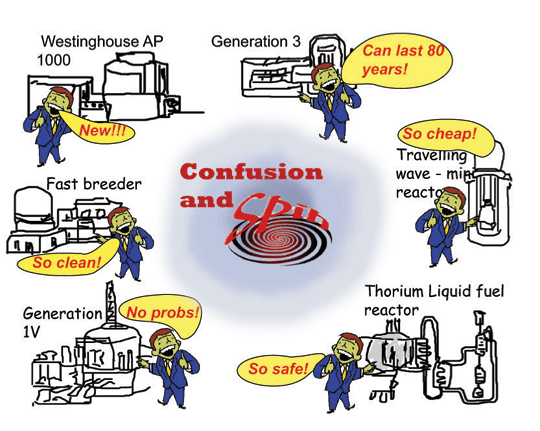
The core propositions of non-traditional reactor proponents – improved economics, proliferation resistance, safety margins, and waste management – should be reevaluated.
Before construction of non-traditional reactors begins, the economic implications of the back end of these nontraditional fuel cycles must be analyzed in detail; disposal costs may be unpalatable………. reprocessing remains a security liability of dubious economic benefit
Non-traditional” is used to encompass both small modular light water reactors (Generation III+) and Generation IV reactors (including fast reactors, thermal-spectrum molten salt reactors, and high temperature gas reactors)
|
Burning waste or playing with fire? Waste management considerations for non-traditional reactors Full Text
The Industry Push to Force Nuclear Power in Australia https://nonuclearpowerinaustralia.wordpress.com/2020/03/02/burning-waste-or-playing-with-fire-waste-management-considerations-for-non-traditional-reactors-full-text/ by nuclearhistory March 2, 2020 The following paper is copied here in order to counter the false, incorrect and erroneous propaganda published by the Australian Government and its Parliamentary Committee for lying to the Australian people about so-called new nuclear reactor designs, all of which were rejected by competent authorities in the 1950s, 1960s, and 1970s. The residues produced by these test reactors continue to cost the American taxpayer money and continue to present the American people with stored, hazardous radioactive waste which is also high chemically reactive. |
Nuclear testing left a signature of radioactive carbon all around the world
Even after childhood, bomb radiocarbon chronicles the history of our body.
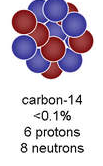 Your Inner H-Bomb Nuclear testing left a signature of radioactive carbon all around the world—in trees and sharks, in oceans and human bodies. Even as that signal disappears, it’s revealing new secrets to scientists. The Atlantic, Story by Carl Zimmer, 2 Mar 20,
 Big climate change policy unlikely no matter who wins the White House

Big climate change policy unlikely no matter who wins the White House
Amy Harder Don’t hold your breath for big climate policy changes — even if a Democrat wins the White House.Why it matters: Congress is likely to remain gridlocked on the matter, leading to either more of the same with President Trump’s re-election or a regulatory swing back to the left no matter which Democrat wins — but far short of a legislative overhaul.
The big picture: Climate change is reaching a new high-water mark as a political concern for American voters, and Democratic presidential nominees are promising aggressive policies.
- That in and of itself is a sea change from prior elections. Even still, these worries and pledges are unlikely to translate into any major new laws in the next few years (at least).
Here’s why, with potential scenarios mapped out.
Trump wins re-election
While Trump is uniquely unpredictable in presidential history, he’s made it clear since moving into the White House that he’s not interested in pursuing any sort of actual climate legislation on Capitol Hill.
More of the same is most likely, in two important ways:
- More curtailing of environmental regulations — and defending them in court.
- More pressure on other actors — like companies, states and other countries — to take bigger action on their own as the void of U.S. presidential leadership grows.
Any Democrat wins
All Democrats have aggressive climate plans, but it’s an open question whether any would first push climate legislation over other priorities — especially health care………
Regardless of congressional priority, any Democratic president would swing Washington’s executive-action pendulum far back in the other direction. …..
A progressive Democrat wins
… like Bernie Sanders or Elizabeth Warren. ……This type of all-encompassing and hyper-aggressive legislation is unlikely to get universal support among Democrats (to say nothing of universal Republican opposition) — which makes them extremely unlikely to get through the Senate.
- This is because Democrats with more moderate ideologies or those representing energy-intensive states are unlikely to support the broader socioeconomic measures and such aggressive moves away from fossil fuels, partly because many of those jobs are represented by unions……..
A more moderate Democrat wins
… like Joe Biden, Amy Klobuchar or Michael Bloomberg.
I anticipate these politicians would be (relatively) more open to trying to work with Republicans on climate change than their progressive counterparts……
As Congress talks climate policy, carbon price gets no love
New lobbying urging Congress to support a price on carbon emissions is not convincing lawmakers to warm up to the policy.
Why it matters: A carbon price is widely considered one of the most economically efficient ways to tackle climate change. But, economics be damned, its politics remain deeply unpopular. https://www.axios.com/climate-policy-changes-unlikely-7ecf6cc3-c42c-4d7c-b492-41d73433a015.html?utm_source=newsletter&utm_medium=email&utm_campaign=newsletter_axiosam&stream=top
The Castle Bravo bomb and its effects on the soldiers, and on the planet
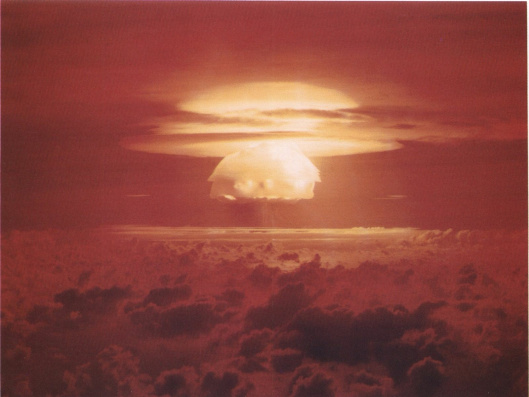
In the morning of March 1, 1954, a hydrogen bomb went off in the middle of the Pacific Ocean. John Clark was only 20 miles away when he issued the order, huddled with his crew inside a windowless concrete blockhouse on Bikini Atoll. But seconds went by, and all was silent. He wondered if the bomb had failed. Eventually, he radioed a Navy ship monitoring the test explosion.
“It’s a good one,” they told him.
Then the blockhouse began to lurch. At least one crew member got seasick—“landsick” might be the better descriptor. A minute later, when the bomb blast reached them, the walls creaked and water shot out of the bathroom pipes. And then, once more, nothing. Clark waited for another impact—perhaps a tidal wave—but after 15 minutes he decided it was safe for the crew to venture outside.
The mushroom cloud towered into the sky. The explosion, dubbed “Castle Bravo,” was the largest nuclear-weapons test up to that point..
It was intended to try out the first hydrogen bomb ready to be dropped from a plane. Many in Washington felt that the future of the free world depended on it, and Clark was the natural pick to oversee such a vital blast. He was the deputy test director for the Atomic Energy Commission, and had already participated in more than 40 test shots. Now he gazed up at the cloud in awe. But then his Geiger counter began to crackle.
“It could mean only one thing,” Clark later wrote. “We were already getting fallout.”
That wasn’t supposed to happen. The Castle Bravo team had been sure that the radiation from the blast would go up to the stratosphere or get carried away by the winds safely out to sea. In fact, the chain reactions unleashed during the explosion produced a blast almost three times as big as predicted—1,000 times bigger than the Hiroshima bomb.
Clark rushed his team back into the blockhouse, but even within the thick walls, the level of radiation was still climbing. Clark radioed for a rescue but was denied: It would be too dangerous for the helicopter pilots to come to the island. The team hunkered down, wondering if they were being poisoned to death. The generators failed, and the lights winked out.
“We were not a happy bunch,” Clark recalled.
Veterans groups not happy -France wants to abolish the National Commission for Monitoring the Consequences of Nuclear Tests.
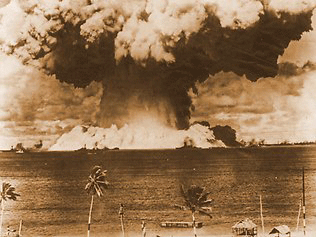 Dismay over plans to scrap French nuclear monitoring commission, https://www.rnz.co.nz/international/pacific-news/410780/dismay-over-plans-to-scrap-french-nuclear-monitoring-commission 2 March 2020 Nuclear test veterans groups in French Polynesia have reacted with dismay at reports that Paris wants to abolish the National Commission for Monitoring the Consequences of Nuclear Tests.
Last week, the French publication Canard Enchaine reported that as part of administrative changes and cost-cutting measures, dozens of commissions would be disestablished.
The commission is the body bringing together state authorities, representatives of the French Polynesian government and veterans associations to work on the list of radiation-induced illnesses deemed to be relevant for compensation.
The head of the group Moruroa e tatou Hiro Tefaarere has told the broadcaster La Premiere the move was inadmissible yet not surprising for the Macron government.
He said the French president on one hand described colonialism as a crime against humanity and on the other everything was suppressed which would recognise the consequences of the tests.
France carried out more than 190 nuclear weapons tests in the Pacific and until 2010 maintained that they were clean and posed no threat to human health.
Nuclear power not economic, nor safe, but it bolsters a secretive autocratic regime, United Arab Emirates
|
In February, the UAE government in Abu Dhabi licensed the first of four 1.4 gigawatt nuclear reactors after 12 years of construction on the Persian Gulf coast at Barakah, just east of the UAE border with Saudi Arabia. When the remaining three reactors at the $25 billion plant are completed, Barakah will reach its total nameplate capacity of 5.6 gigawatts. As the South Korea-led consortium loads fuel rods and tests the reactor’s output, the UAE will finally have a major source of zero-carbon [?] electricity on a power grid that relies upon fossil fuels—mainly natural gas—for 97 percent of its electric power generation, a much higher percentage than that of other countries where consumption is high. …… The UAE is now the third nuclear-competent state in the Middle East. Israel, with its stockpiles of nuclear weapons, was the first. Iran, with its single one-gigawatt nuclear power plant at Bushehr (just across the Gulf from the UAE’s) was second. Iran’s uranium enrichment program has extended to levels beyond that needed for electricity production, suggesting that it might follow the secretive Israeli path toward weaponization. The UAE is leveraging nuclear power in a different way. It has committed to the nuclear Non-Proliferation Treaty and the International Atomic Energy Agency’s Convention on Nuclear Safety to secure international cooperation. The UAE’s 2009 agreement with the United States explicitly bans the Gulf country from developing technologies needed to enrich uranium and reprocess spent reactor fuel. Advocates tout the “Abu Dhabi model” as a path to climate-friendly electricity while safeguarding against proliferation and the potential for development of a breakout nuclear weapons capability. The drawbacks. Abu Dhabi’s experience with nuclear power has been difficult, and the country’s National Energy Strategy 2050 suggests that no further nuclear development is in the cards. Cost thresholds and completion deadlines fell by the wayside years prior to completion of the first reactor. The complexity, toxicity, and strategic sensitivity of nuclear power make it an uncompetitive choice based solely on competitive cost calculations. Abu Dhabi’s difficulties with Barakah began at launch in 2008 with the over-ambitious nine-year start-up deadline, then set for 2017. Unrealistic expectations were undermined during construction by revelations that the main South Korean contractor KEPCO justified its low bid for the plant by dropping post-Chernobyl safety features, including an extra wall in the reactor containment building. KEPCO was also said to have built Barakah’s prototype reactor in South Korea using counterfeit cables and other parts procured using forged safety documents. Retrofitting of the Korean plant delayed the training of the team of UAE operators. Some counterfeit Korean parts were apparently installed in the Barakah plant as well, but few details have emerged about whether they have been replaced. Separately, inspectors were said to have found that all four reactor containment buildings suffered cracks in concrete walls that required repair. These issues contributed to the three-year delay in bringing the all four Barakah rectors online. The project has been subject to criticism by analysts who argue that the plant’s reduced safety features and other deficiencies render it more susceptible to a radiation release, including in the event of a military strike. The latter is not a remote possibility; in 2017, Houthi rebels battling UAE forces inside Yemen claimed to have targeted the Barakah plant in an apparently unsuccessful cruise missile strike…….. From the perspective of an autocratic regime like that in Abu Dhabi, there are further political benefits from civil nuclear power. Nuclearization tends to involve measures that bolster the strength and control of the state through increased internal security and enhanced coercive apparatus, justified by the technology’s inherent hazards. Vulnerabilities in nuclear systems also create new requirements for secrecy and surveillance, and less tolerance for dissent. In these ways, protecting the fuel cycle does double duty in bolstering regime security and vigilance..….. https://thebulletin.org/2020/03/for-uae-the-political-perks-of-nuclear-power-eclipse-economics/# |
|

April 26 Hibakusha Signature Appeal – More than 10 Million Signatures — limitless life
April 26 Hibakusha Signature Appeal – More than 10 Million Signatures 10 million votes for the abolition of nuclear arms. —–Forwarded Message—– From: ‘Joseph Gerson’ Sent: Mar 2, 2020 11:42 AM To: gar.smith@earthlink.net Subject: Hibakusha Signature Appeal – Beyond 10 Million Help Us Build the Petitions Presentation April 26 Ceremony at Rally’s End Friends, Our […]
via April 26 Hibakusha Signature Appeal – More than 10 Million Signatures — limitless life
Radiation Disinformation and Human Rights Violations at the Heart of Fukushima and the Olympic Games
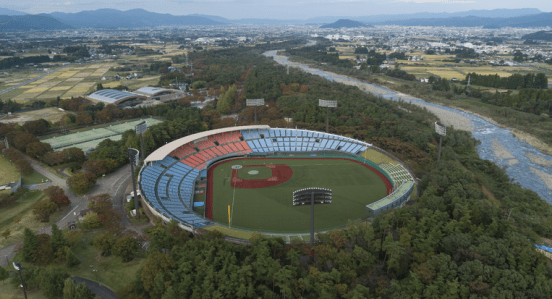 Azuma Stadium and Arakawa River, Fukushima City, Christian Aslund/Greenpeace, October 2019
March 1, 2020
Abstract: In the run up to the 2020 summer Olympics / Paralympics, multiple violations of the human rights of citizens and workers impacted by the Fukushima nuclear disaster persist. UN human rights experts have continued to challenge the Abe government over its record. Ignoring basic scientific principles of radiation protection, the government is deliberately distorting reality on actual contamination, the limited effectiveness and scope of decontamination and risks in Fukushima prefecture. Abe’s disinformation narrative on Fukushima is aimed at erasing the image of Fukushima as the location of one of the world’s nuclear disasters, and, by so doing, reviving the prospects for the nation’s nuclear industry. There remains a window in the coming months for a wider understanding of the complex reality in Fukushima, the ongoing radiological conditions and impacts, and the struggle of tens of thousands of evacuees and workers to secure their legal rights.
Ever since the start of the Fukushima Daiichi nuclear disaster in March 2011, many of the issues concerning the rights of evacuees (particularly women and children), citizens, and workers have been raised by United Nations human rights bodies and experts. One of the earliest and most comprehensive was the 2012 Mission Report of Special Rapporteur (SR) Anand Grover. (OHCR 2013) Eight years later, and in the run up to Japan hosting the 2020 summer Olympics / Paralympics, the violations of citizens’ and workers’ rights continue.
The Abe government has framed the games as the reconstruction Olympics, with a near explicit aim of erasing the image of Fukushima as the location of one of the world’s worst nuclear disasters. During the games themselves, Abe may achieve his objective (at least temporarily) as there is almost no prospect that the wider context of an ongoing radiological emergency will be reported. It’s all about the games and Abe’s disinformation narrative on Fukushima is about to go into hyperdrive. But in the run up to the opening of the Olympics there is a window of opportunity for a wider understanding of the complex reality in Fukushima, the ongoing radiological impact and the struggle of tens of thousands of evacuees and workers to secure their legal rights.
Taking their lead from Grover, during the last two years UN Special Rapporteurs have extended the depth and range of issues they have raised with the Abe government. This escalation of intervention by the Special Rapporteurs (SR) has not been well received by the Japanese government. Official country visits by these leading experts in their fields, despite multiple requests sent from the UN in Geneva, remain blocked by the Abe government. A visit to Japan by a UN human rights SR to investigate the conditions for Fukushima citizens and workers impacted by the nuclear disaster would directly challenge Abe’s Fukushima whitewash strategy and it’s not going to happen in the year of the reconstruction games.
One of the central issues raised by the United Nations is the higher radiation exposure limit set for Fukushima citizens. As a consequence of the widespread contamination resulting from the reactor meltdowns, in particular from radio-cesium, large areas of Fukushima prefecture exceeded the 1milliSievert per year (mSv/y) recommended maximum dose limit for the public. Given the half-life of cesium-137 is 30 years, there is no prospect that in many of the evacuated areas of Fukushima dose rates would return to pre 3/11 levels for several decades and longer. By revising the upper limit to 20mSv/y, and dismissing radiation risks at that level, the government proceeded with lifting evacuation orders for some of the most contaminated areas of Fukushima, including the towns of Namie and Iitate.
There is no scientific basis for the Japanese government to dismiss low dose radiation risks. Dr David Richardson, co-author of the world’s largest cohort studies on leukemia risk from low dose radiation exposure (Lancet 2015), has recently stated that five years exposure at 20mSv a year would confer about a 30% excess risk of fatal leukemia.(HBO 2020) The Japanese government is well aware of the risks from low dose radiation – not least as it was one of the funders of the 2015 INWORKS study which found an increase in leukemia rates amongst nuclear workers with annual exposure in the range of 3-5mSv/y.
Adding to the pressure from the international community over the Abe government’s Fukushima policies, a human rights Special Rapporteur at the UN General Assembly in October 2018 warned that, “The recommendation to lower acceptable levels of exposure back to 1 mSv/yr was proposed by the Government of Germany and the Government of Japan ‘accepted to follow up’ on it, according to the UN database. However…the recommendation is not being implemented. Japan has a duty to prevent and minimize childhood exposure to radiation.” (OHCHRa 2018). The Rapporteur, Baskut Tuncak, further stated that “The UN Convention on the Rights of the Child, to which Japan is a Party, contains a clear obligation on States to respect, protect and fulfill the right of the child to life, to maximum development and to the highest attainable standard of health, taking their best interests into account. This requires State parties such as Japan to prevent and minimize avoidable exposure to radiation and other hazardous substances…(and that) Japan should provide full details as to how its policy decisions in relation to the Fukushima Daiichi nuclear accident, including the lifting of evacuation orders and the setting of radiation limits at 20mSv/y, are not in contravention of the guiding principles of the Convention, including the best interests of the child…The combination of the Government’s decision to lift evacuation orders and the prefectural authorities’ decision to cease the provision of housing subsidies, places a large number of self-evacuees under immense pressure to return.”(OHCHRa 2018)
In conclusion, Baskut stated that, “The gradual lifting of evacuation orders has created enormous strains on people whose lives have already been affected by the worst nuclear disaster of this century. Many feel they are being forced to return to areas that are unsafe, including those with radiation levels above what the Government previously considered safe.”
Yet, for the Japanese government there is no acknowledgement that their policies are in violation of the basic human rights their citizens are entitled to have respected. According to Japan’s Foreign Ministry, “Lifting of the evacuation order is a measure to make return possible for those who prefer to return, and not a measure to force evacuees to return…the decision of the evacuees as to whether to return to their original places to live or not is entirely up to them. The GoJ does not force them to return nor put any pressure on them to do so…”(MOFA 2018)
The radiological conditions in Fukushima are highly complex and varied but the Abe government has no intention of explaining this reality in the year of the Olympics. Expect to hear a lot more of the distorted and wholly inaccurate propaganda as stated by Reconstruction Minister Watanabe Hiromichi, when he recently told HBO TV, “With the exception of areas deemed difficult to return we have decontaminated the entire area.”(HBO 2020)
At least seventy percent of Fukushima is mountainous forest, and with the exception of a few meters along roads there has been no decontamination during the past nine years. Perhaps the largest nuclear decontamination program in history has succeeding in generating 16 million tons of nuclear waste soil(Greenpeace 2017), while failing to decontaminate the majority of the contaminated land and exposing tens of thousands of poorly trained workers to radiation (OHCHRb) at a cost of US$28 billion (as of FY2018). The contaminated forests remain a long-term source for radio-cesium, including for downstream migration and recontamination. (Ulrich 2016)
When my colleagues and I at Greenpeace surveyed the J-Village sports complex in October 2019, we were not expecting to find radiation hot spots at over 72 micro-Sieverts per hour – equal to over 1750 times background levels pre 3/11. We notified the Environment Ministry as well as domestic and international Olympic Committees.(Greenpeace 2019a) Although, Tokyo Electric Power Company (TEPCO) was ordered to remove this contamination in early December (TEPCO 2019), two weeks later we still measured hotspots in the public areas of J-Village.(Greenpeace 2019b) The chosen location for the start of the Olympic Torch route, the J-Village, lies 20km south of Fukushima Daiichi and in an area considered to have relatively low contamination. From our observations, decontamination has been conducted in this area during the last nine years – yet there are levels of radiation that would be declared an emergency requiring urgent action if inside a nuclear facility. They have yet to be explained by the government. This clearly does not match with Minister Watanabe’s claim that “we have decontaminated the entire area”, but just as legal obligations to uphold the domestic and international human rights of their citizens are of little concern to the Tokyo government, the radioactive reality of Fukushima can be airbrushed out of existence. The Olympics as seen by Abe provide the perfect platform to advance further its Fukushima nuclear disaster disinformation campaign on the people of Japan and beyond.
The underlying motive for Abe’s Fukushima Olympic strategy is to promote a nuclear renaissance. He and many of his colleagues in the Liberal Democratic Party are nostalgic for the pre-3/11 situation when commercial reactors generated nearly 30 percent of the nation’s electricity.(Schneider 2019) Compared to 2011, when 54 reactors were available, today only nine reactors have returned to operation (with three of these shutdown due to maintenance and legal challenges), and the industry remains in crisis. Despite passing some of the nuclear regulator safety requirements, (McCurry 2017) TEPCO’s prospects for restarting two of its reactors at the Kashiwazaki-Kariwa nuclear plant remain uncertain. The majority of the citizens of Niigata prefecture, which hosts the seven reactor site, remain strongly opposed to any operations, not least due to the major seismic risks to the safety of the reactors.(Ryall 2017) The causes and consequences of the Fukushima nuclear disaster have been a major factor in framing the thinking of Niigata citizens and this extends throughout Japan where utilities are struggling to restart reactors. The triple reactor meltdown really was a defining moment for public opinion regarding nuclear energy in Japan. Resetting this mindset for Abe, by pretending conditions in Fukushima have returned to normal and welcoming the world’s elite athletes to the largest sporting event on the planet is one way to blot out images of explosions sending radioactive plumes spewing from damaged reactors, abandoned towns and hazmat suits. In the short-term Fukushima will receive a positive makeover this summer, but a resumption of large- scale nuclear generation in Japan remains unlikely. The industry is aiming to operate 30-35 reactors by 2030, but a combination of unresolvable safety issues, legal challenges, an aging reactor fleet, and the dire financials of utilities will block this scenario. (Burnie 2016, Mainichi 2020, Schneider 2019, Nikkei 2020). In this sense, Abe’s strategy is doomed to failure and there is no sign that the Japanese public can be persuaded to support nuclear energy. Meanwhile, the human rights violations of tens of thousands of evacuees and decontamination workers will continue.
References
Burnie, Shaun, 2016. “TEPCO Prosecution: A Sign That Japan’s Nuclear Industry Is in Free Fall”, The Diplomat, 4 March 2016.
Greenpeace, 2017. “Nuclear Waste Crisis In Fukushima Decontamination Program”, December 2017.
Greenpeace, 2019a. “High levels of radiation observed at J-Village in Fukushima Prefecture”, Letter to Mr. Shinjiro Koizumi Minister Ministry of the Environment Government of Japan, 18 November.
Greenpeace, 2019b. “J-Village still contaminated – major uncertainties over decontamination and Olympic torch route”, 17 December.
HBO, “Fukushima” Real Sports 274, January 2020.
The Lancet, 2015. “Ionizing radiation and risk of death from leukemia and lymphoma in radiation- monitored workers (INWORKS): an international cohort study”, Klervi Leuraud, David B Richardson, Elisabeth Cardis, Robert D Daniels, Michael Gillies, Jacqueline A O’Hagan, Ghassan B Hamra, Richard Haylock, Dominique Laurier, Monika Moissonnier, Mary K Schubauer-Berigan, Isabelle Thierry-Chef, Ausrele Kesminiene, National Institute for Occupational Safety and Health (NIOSH) Public Health England’s Centre for Radiation, Chemical and Environmental Hazards (PHE-CRCE), University of North Carolina (UNC), Center for Research in Environmental Epidemiology (CREAL), Drexel University – School of Public Health, Pompeu Fabra University (UPF), CIBER- BBN, IRSN laboratory Ionizing Radiation Epidemiology Laboratory (LEPID), Lancet Haematol, 22 June.
Mainichi Shimbun, 2020. “Plaintiffs, supporters rejoice over court’s decision to suspend Ehime nuclear reactor”, Misa Koyama and Akari Terouchi, Hiroshima Bureau, and Yongho Lee, Fukuyama Bureau, 18 January 2020.
McCurry, Justin, 2017. “Fukushima operator can restart nuclear reactors at world’s biggest plant”, The Guardian, 4 October 2017.
Ministry of Foreign Affairs, 2018. “Response from the Government of Japan to the Joint Communication by the United Nations Human Rights Council”, MOFA, 6 November.
Nikkei, 2020. “TEPCO lending troubles Japanese banks Climate change risks cannot be ignored”, Jun Watanabe, 14 February.
OHCHR, 2013. “Report of the Special Rapporteur on the right of everyone to the enjoyment of the highest attainable standard of physical and mental health”, Anand Grover Addendum Mission to Japan (15 – 26 November 2012), A/HRC/23/41/Add.3 Distr.: General 2 May 2013
OHCHR, 2018a, “Japan must halt returns to Fukushima, radiation remains a concern, says UN rights expert”, 25 October.
OHCHR, 2018b, “Human rights and the protection of workers from exposure to toxic substances.”
Ryall, Julian, 2017.”Japan’s TEPCO nuclear plant restarts fear of new Fukushima” Deutche Welle, 5 October.
Schneider, Mycle, ed., 2019. “World Nuclear Status Report 2019”, 27 September.
TEPCO, 2019. “Decontamination work at vicinity of J-Village”, 4 December.
Ulrich, Kendra, 2016. “Radiation Reloaded: Ecological Impacts of the Fukushima Daiichi Nuclear Accident 5 years later”, Greenpeace Japan.
1 This Month
26 April – Chernobyl: Inside the Meltdown airs on National Geographic on Sunday 26th April from 4pm

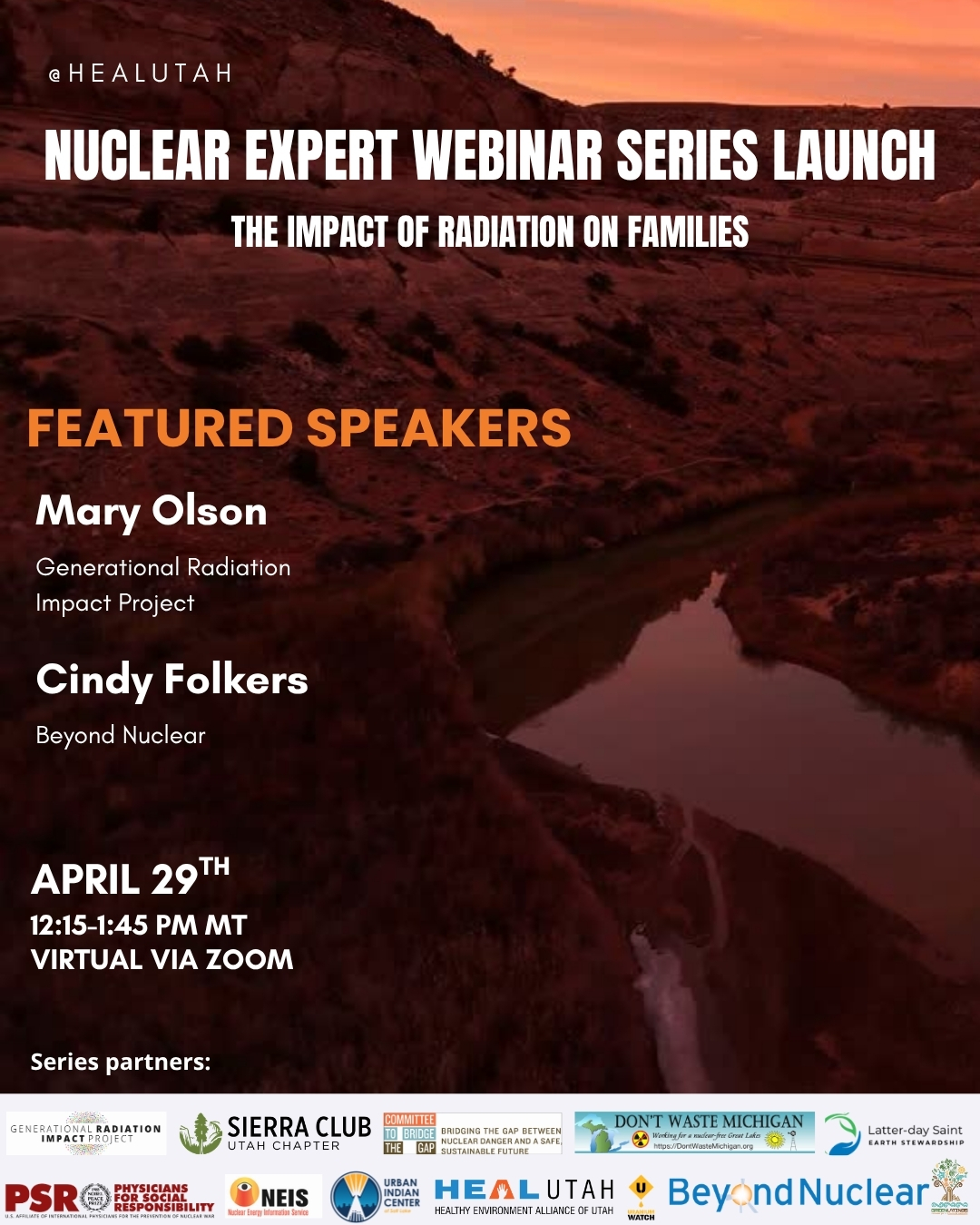
29 April – Nuclear Expert Webinar #1 – Radiation Impacts on Families with Mary Olson and Cindy Folkers
- 12:15 PM MT – 1:45 PM MT
- Location: Virtual – REGISTER TODAY

4 May -West Suburban Peace Coalition to discuss Iran war at May Educational Forum
Monday, May 4, 7:00 – 8:00 PM Central Standard Time
Title: : How Trump’s Narrative Tries to Shape the Reality of the War on Iran.
Contact Walt Zlotow, zlotow@hotmail.com 630 442 3045 for further information
14 May – online event From Bombs to Data Centres: the Face of Nuclear Colonialism

Pine Ridge Uranium is the real threat, not Tehran- Tell Burgum: Stop the Extraction.
Chernobyl: The Lost Tapes – A good documentary on Chernobyl on SBS available On Demand for the next 3 weeks– https://www.sbs.com.au/ondemand/tv-program/chernobyl-the-lost-tapes/2352741955560
To see nuclear-related stories in greater depth and intensity – go to https://nuclearinformation.wordpress.com
-
Archives
- April 2026 (317)
- March 2026 (251)
- February 2026 (268)
- January 2026 (308)
- December 2025 (358)
- November 2025 (359)
- October 2025 (376)
- September 2025 (257)
- August 2025 (319)
- July 2025 (230)
- June 2025 (348)
- May 2025 (261)
-
Categories
- 1
- 1 NUCLEAR ISSUES
- business and costs
- climate change
- culture and arts
- ENERGY
- environment
- health
- history
- indigenous issues
- Legal
- marketing of nuclear
- media
- opposition to nuclear
- PERSONAL STORIES
- politics
- politics international
- Religion and ethics
- safety
- secrets,lies and civil liberties
- spinbuster
- technology
- Uranium
- wastes
- weapons and war
- Women
- 2 WORLD
- ACTION
- AFRICA
- Atrocities
- AUSTRALIA
- Christina's notes
- Christina's themes
- culture and arts
- Events
- Fuk 2022
- Fuk 2023
- Fukushima 2017
- Fukushima 2018
- fukushima 2019
- Fukushima 2020
- Fukushima 2021
- general
- global warming
- Humour (God we need it)
- Nuclear
- RARE EARTHS
- Reference
- resources – print
- Resources -audiovicual
- Weekly Newsletter
- World
- World Nuclear
- YouTube
-
RSS
Entries RSS
Comments RSS
 nuclear-news