Fukushima Radiation causing U.S. Insurance Companies to EXCLUDE all Coverage for Radiation Claims
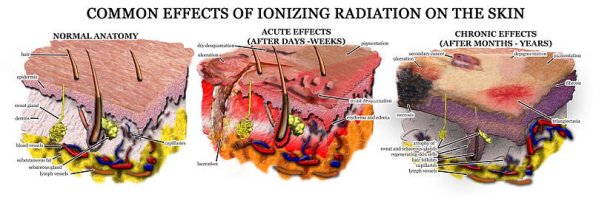
Japan Has Enough Nuclear Material to Build an Arsenal. Its Plan: Recycle.

Dairy farmer resumes operations 7 1/2 years after Fukushima disaster

In spite of Donald Trump, Iran is keeping its nuclear commitments
 Iran is keeping its nuclear commitments — despite Trump, MEHR, President Rouhani 24 Sept 18:
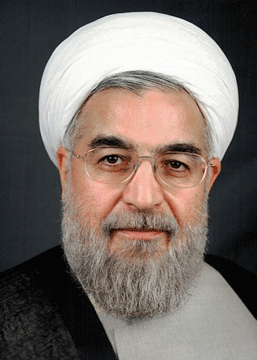
‘It has now become crystal clear that most countries in the world oppose US unilateralism and abhor being bullied. Even if in the short term we face difficulties in our economic relations, we, along with our partners, will try to resolve those problems, and these days will pass,’ Washington Post quoted Hassan Rouhani as saying on Friday.
The full text of Rouhani’s article that originally appeared in Washingtonpost.com is as follows:
I faced two options on May 8, when President Trump announced the United States’ official withdrawal from the nuclear agreement with Iran, officially known as the Joint Comprehensive Plan of Action (JCPOA). I could have reciprocated and announced Iran’s withdrawal, which was certain to throw the region into further insecurity and instability. Or I could have considered a short grace period for the remaining parties to compensate for the adverse effects of the United States’ decision on the valuable accord that had been achieved after 12 years of tough, intensive negotiations. In keeping with our tradition of respect for the rule of law and norms of international law, and to safeguard peace and security in the region, I opted for the latter………
Current US foreign policy toward Iran is out of step with the realities on the ground — in Iran, in the region and around the world. I would argue that it is not even in line with US national interests. Fed by disinformation and fake analysis from terrorist groups and Israel, the US administration is under the illusion that resorting to sanctions will lead to concessions from Iran. Iranians, though, are known to close ranks and put up stiff resistance in the face of external pressure. The United States, through its pervasive sanctions regime, failed to force Iranians to yield during the pre-JCPOA period. It was the United States that changed tack and opted for negotiations. ………
We are committed to talks and dialogue — that’s why we entered the negotiations on the nuclear issue in the first place, and ultimately arrived at a solid and mutually beneficial deal. The proof of good intentions on the part of all parties to the deal, particularly the United States, lies in the honest and full compliance with its provisions. It is on the record that during the negotiations on the nuclear dossier, our supreme leader said that the other side’s honesty would pave the way for further talks on issues of mutual interest. Washington’s insincere approach toward the implementation of the deal, from day one all the way through its ultimate illegal exit, is indicative of the lack of honesty in the implementation of its international obligations.
Modern history attests to the fact that Iran has not engaged in any external aggression during the past 250 years. It has, however, fiercely resisted foreign aggression and intervention. Peace is our arsenal, and we are committed to reciprocate each and every genuine and honest peaceful gesture and measure. On this we are resolute and steadfast.
This article was originally published by The Washington Post. http://en.mehrnews.com/news/137942/Iran-is-keeping-its-nuclear-commitments-despite-Trump
Japan’s Environment Ministry forced to change its forecast in order to make the nuclear industry look better
|
Ministry retracts estimate of ratio of nuclear power in fiscal 2050,THE ASAHI SHIMBUN, September 24, 2018
The Environment Ministry was forced to retract its trial calculation that the ratio of nuclear power generation to Japan’s total electricity generation will be less than 10 percent in fiscal 2050.
The ministry made the retraction in February in response to backlash from the Ministry of Economy, Trade and Industry, which is supervising the electric power industry, several sources of the two ministries said. At the time, the economy ministry was proceeding with a revision of the government’s basic energy plan. It apparently feared that the trial calculation could influence discussions on the future ratio of nuclear power generation, the sources added. “We didn’t put pressure (on the Environment Ministry),” an economy ministry official said. However, an Environment Ministry official said, “We couldn’t help but retract (the original trial calculation).” After the retraction, the contents of the basic energy plan were decided as had been worked out by the economy ministry and were approved in a Cabinet meeting in July. The Abe administration regards nuclear power generation as “an important baseload electric source” and is promoting the restarts of nuclear reactors. Under the policy, the economy ministry has apparently adopted a stance of concealing data that is inconvenient for the administration. The Asahi Shimbun obtained the trial calculation, which was shown to the economy ministry by the Environment Ministry. According to the estimate, the ratio of nuclear power generation to Japan’s total electricity generation will be 21 percent in fiscal 2030 in accordance with the Abe administration’s policies. The ratio will decrease to 11 to 12 percent in fiscal 2040 and to 7 to 9 percent in fiscal 2050. In addition, the ratio of renewable energies will increase to 57 to 66 percent in fiscal 2040 and further to 72 to 80 percent in fiscal 2050. The Environment Ministry compiled the trial calculation by setting up a team with Mitsubishi Research Institute Inc. and experts to examine measures to reduce greenhouse gases. In the trial calculation, the team assumed that renewable energies will be introduced as much as possible. The Asahi Shimbun obtained the trial calculation, which was shown to the economy ministry by the Environment Ministry. According to the estimate, the ratio of nuclear power generation to Japan’s total electricity generation will be 21 percent in fiscal 2030 in accordance with the Abe administration’s policies. The ratio will decrease to 11 to 12 percent in fiscal 2040 and to 7 to 9 percent in fiscal 2050. In addition, the ratio of renewable energies will increase to 57 to 66 percent in fiscal 2040 and further to 72 to 80 percent in fiscal 2050. The Environment Ministry compiled the trial calculation by setting up a team with Mitsubishi Research Institute Inc. and experts to examine measures to reduce greenhouse gases……….http://www.asahi.com/ajw/articles/AJ201809240032.html |
|
America’s last nuclear power project at risk of cancellation

 Last U.S. Nuclear Project Faces `Jeopardy’ as Owners Mull Exit, Bloomberg, By Mark Chediak, Margaret Newkirk, and Ari Natter, September 24, 2018,
-
Costs of Southern’s Vogtle project have doubled to $28 billion
-
orida utility seeking to cancel contract to buy Vogtle powerThe only nuclear power plant under construction in the U.S. is facing stiff headwinds, as two minority owners are mulling whether to pull out of the $28 billion project led by Southern Co.
Vogtle’s primary municipal co-owners, Oglethorpe Power Corp. and Municipal Electric Authority of Georgia, are scheduled to vote Monday whether to move forward with construction on the Vogtle plant in Georgia after Southern’s Georgia Power utility disclosed in August that costs had increased by $2.3 billion.
As the vote looms, a Florida utility is suing to get out of a contract to buy electricity from the plant. Georgia lawmakers, meanwhile, called this week for a price cap on the project.
If one of the major parties decides not to continue, that could put the project in serious jeopardy,” said Kit Konolige, an analyst for Bloomberg Intelligence.
The Vogtle decision comes at a critical time for the U.S. nuclear industry. Existing reactors are struggling to compete with cheap natural gas and renewables, and efforts to build new ones have all but dried up. Cost overruns forced Scana Corp. to abandon a half-built project in South Carolina last year, leaving Southern and its partners as the only companies left building reactors in the U.S……….https://www.bloomberg.com/news/articles/2018-09-21/last-u-s-nuclear-project-faces-jeopardy-as-owners-mull-exit
North, South Korean Leaders in Fact Proclaimed End of State of War – Seoul
North Korea and South Korea signed an agreement in defence sector as well as a joint statement following the results of the summit in Pyongyang.
South Korean President Moon Jae-in and North Korean leader Kim Jong Un have in fact proclaimed the end of the state of war, the South Korean presidential spokesperson said on Wednesday.
“Leaders of the South and the North have in fact announced the end of the war on the Korean Peninsula by their agreements,” the spokesperson said.
Leaders of North Korea and South Korea have signed a joint agreement following the summit in Pyongyang. Also, the agreement in military sphere was signed by South Korean Defense Minister, Song Young-moo, and North Korean Defense Minister of People’s Armed Forces, No Kwang Chol in the presence of the two states’ leaders.
According to the joint statement by the leaders, North Korea decided to fully dismantle its rocket testing field in Tonchkhan-ni and will let international observers visit the field.
The statement also said that North Korea was going to dismantle its nuclear reactor in Yonbyon within the framework of agreements with the United States.

After the meeting, North Korean leader promised to visit Seoul in near future. He also said that both nations agreed to make efforts to denuclearize the peninsula. Meanwhile, South Korean president said that Seoul an Pyongyang agreed to remove threat of war on Korean Peninsula.The joint statement also said that the works on connection of roads and railways between the two nations would start before the year’s end.
Seoul and Pyongyang also agreed to send joint team to 2020 Olympic games as well as to submit joint bid to host 2032 games.
The meeting of the nations’ leaders took place on Wednesday in the “one-on-one” format in the official residence for the honorable guests. The persons accompanying the leaders were waiting for the end of their conversation in the corridor.
The two nations agreed to cease large-scale artillery exercises and military flights near demarcation line. They also agreed to withdraw servicemen from the demilitarised zone and disarm personnel in Panmunjom truce village. Two Koreas agreed to create 80-kilometre zone free from military exercises in Yellow sea, sea of Japan.
Earlier, a spokesperson for Seoul administration confirmed that DPRK and South Korea would sign a military agreement and a joint statement after the summit.
South Korean President Moon Jae-in is on a three-day visit in Pyongyang, which the first visit by a president of South Korea to Pyongyang in nearly 11 years, as former president Roh Moo-hyun travelled to North Korea back in October 2007.
READ MORE: Seoul, Pyongyang Open Joint Liaison Office in North Korea — Reports
During South Korean President’s visit it was planned that the leader would twice hold talks with Kim Jong-un and discuss further improvement of relations, denuclearization and development of dialogue between North Korea and the United States.
https://sputniknews.com/asia/201809191068152005-north-south-korea-will-sign-agreement/
39th HRC Session: Oral Statement on the Hazardous Working Conditions Faced by Fukushima Cleanup Workers
September 20, 2018
On 12 September 2018, Human Rights Now gave an oral statement on the Hazardous Working Conditions Faced by Fukushima Cleanup Workers at the 39th Session of the Human Rights Council in Geneva.
Fukushima cleanup workers have been subjected to hazardous working conditions and misled about the negative health impacts involved. In the statement we called on the Japanese government to expand its verification system to ensure contractors are following relevant duties and to verify the effectiveness of existing inspections by a credible independent party or by publicly releasing for evaluation their criteria and procedures. We also asked the government to accept the Special Rapporteur on toxic waste’s request to visit Japan in 2019.
The video and the full text of the statement can be accessed below.
Thank you, Mr. Vice President.
Human Rights Now is concerned about the negative health impacts and labour exploitation of cleanup workers at the decommissioned Fukushima nuclear power plant, where 76,951 workers were reported doing cleanup and related work up to 2016. The Japanese government recently acknowledged the death of a cleanup worker by cancer due to radiation exposure, as well as three others who developed leukemia and thyroid cancer.
The August 16 communication by three special rapporteurs also voiced concern with reports of deception of cleanup workers about health risks and other issues by recruitment brokers and insufficient training and protective
measures by contractors and subcontractors. Such practices threaten workers’ rights to health, a safe working environment, and relevant labour rights.
The Japanese government’s response mentioned several measures; obligating contractors to provide special training and medical checks, providing them group guidance on workers’ rights, surveys to identify deception and other employment violations, urging improvements of malicious companies, and inspections by various agencies to identify violations in labour standards, working conditions, and payments. These measures have common shortcomings: Reciting obligations and providing guidance and instruction does not ensure they are respected, and the effectiveness of surveys and inspections is at best merely assumptive.
Mr. Vice President,
We call on the Japanese government to expand its verification system to ensure contractors are following relevant duties and verify the effectiveness of existing inspections by a credible independent party or by publicly releasing for evaluation their criteria and procedures. We also ask the government to accept the Special Rapporteur on toxic waste’s request to visit Japan in 2019.
Thank you.
Further reading here;
#Fukushima United Nations #OHCR report update 18th September 2018 #IDP
The week in nuclear news
 Huge clean-up tasks face areas affected by Super Typhoon Mangkhut and Hurricane Florence. In the many reports of these extreme weather events, climate change is rarely mentioned. Also played down is the effect on the nuclear industry. Thankfully, there seems to have been no big nuclear disaster. But there is little or no coverage of the effects on hazardous radioactive waste dumps.
Investigative journalism: Authorities deceive the public on radiation from Fukushima Daiichi
Sea levels could rise by up to 30 feet, due to Antarctic melting.
U.N. looks forward to more countries signing and ratifying nuclear ban treaty.
Civil and military nuclear industries locked in dependence on each other.
Heavy radiation effect on astronauts to Mars – now can be measured.
The big lie of ionising radiation hormesis.
NORTH and SOUTH KOREA . Peaceful agreement between North and South Korea – but little of substance on denuclearization. North Korea is willing to allow outside inspectors to check its closed nuclear weapons test site.
IRAN and ISRAEL. UN is being pressed by Iran and Israel – each wanting action against the other.
JAPAN. Tepco to build finally extra sea wall to reinforce Fukushima Daiichi nuclear plant. Fukushima United Nations OHCR report update 18th September 2018 IDP. Japan tries to dilute tritium danger. Massive flow of money into Japanese coal and nuclear power.
CANADA. The second nuclear industry stillbirth – Small Modular Nuclear Reactors (SMRs). Canada’s Brookfield in talks with Toshiba, about buying British new nuclear init NuGen.
EUROPE. Big companies including Facebook, Google and Microsoft not supporting EU’s plan for more ambitious climate change goals.
USA.
- Trump to address U.N. on nuclear non proliferation (pardon my mirth) $13 billion space military force for USA?
- Trump keen to have Crown Prince Mohammad bin Salman of Saudi Arabia to speak at UN nuclear meeting.
- USA Democrats’ Bill to ban new low-yield nuclear weapons.
- Effect of Hurricane Florence on nuclear power stations – ruins the Trump administration’s case for supporting nuclear power. Electricity being restored to Brunswick nuclear power station in North Carolina flooded area. As flooding recedes around Brunswick nuclear power station, NRC considers when it can restart. Emergency lifted at Brunswick nuclear plant.
- The danger in transporting nuclear wastes to just a “temporary” nuclear morgue. EnergySolutions wants exemption from Utah law restricting import of depleted uranium.
- Cost of Georgia’s Vogtle nuclear power project is becoming a big worry to law-makers. Vogtle Nuclear Power plant – last hope of the industry, might not be completed: opposition grows. U.S.Cogress seeks funds to compensate communities affected by nuclear power plant shutdowns.
- USA Bill to allow private-public partnerships for new nuclear power technologies.
- California law to protect workers, community and environment, as Diablo nuclear power plant to close.
- Exploding Michael Shellenberger’s extraordinary sales pitch for nuclear weapons.
- Hanford: Plutonium a risk to humans and environment for thousands of years.
- Renowned Uranium Film Festival 2018 headed for the American SouthWest.
- Radiation oncologists and conflicts of interest.
FRANCE. French nuclear industry in turmoil, – inadequate welds at Flamanville nuclear reactor. The EPR, France and EDF’s nuclear nightmare.
French court orders EDF to release risk analysis about Hinkley nuclear project. It’s not too late to stop it. Financiers desert France’s EPR nuclear power plan for UK’s Hinkley Point C project.
UK.
- UK’s fleet of nuclear submarines: infrastructure supporting it is no longer “fit for purpose”.– UK Government delayed scrapping potentially unsafe nuclear submarines in bid to cut costs.-
- “I’ll fight tooth and nail” to salvage Moorside nuclear power project – says NuGen chief.
- Britain’s Nuclear Decommissioning Authority partnering with Japan Atomic Energy Agency.
- Scottish peace campaigners pressing big financial institutions to divest from nuclear weapons.
- Judge calls for developers to clarify whether Hinkley radioactive mud dumping is covered by an environmental impact assessment (EIA). UK: Labour parliamentarians raise concerns about Nuclear plant mud dumping. EDF subsidiary NNB Generation Company (HPC) Ltd argued that Hinkley nuclear station mud dumping near Cardiff did not need an environmental impact assessment.
- Frazer-Nash, engineering consultants, going for new nuclear power in a big way.
INDIA. Community in Madhya Pradesh protest against proposed nuclear plant .
BELGIUM. Engie warns on profit following Belgian nuclear outages. Five Out of 7 Nuclear Reactors in Belgium Halted – National Regulator.
MALAYSIA. A good move – Malaysia rejecting nuclear energy. Theft of radioactive materials.
CHINA. Typhoon Mangkhut headed straight for 2 Chinese nuclear power stations.
SLOVAKIA. Several nuclear reactors in Slovakia are out of operation.
Authorities deceive the public on radiation from Fukushima Daiichi
 Informal Labour, Local Citizens and the Tokyo Electric Fukushima
  Daiichi Nuclear Crisis: Responses to Neoliberal Disaster Management Adam Broinowski {extensive footnotes and references on original] September 2018, “……… (Official Medicine: The (Il)logic of Radiation Dosimetry On what basis have these policies on radiation from Fukushima Daiichi been made? Instead of containing contamination, the authorities have mounted a concerted campaign to convince the public that it is safe to live with radiation in areas that should be considered uninhabitable and unusable according to internationally accepted standards. To do so, they have concealed from public knowledge the material conditions of radiation contamination so as to facilitate the return of the evacuee population to ‘normalcy’, or life as it was before 3.11. This position has been further supported by the International Atomic Energy Agency (IAEA), which stated annual doses of up to 20 mSv/y are safe for the total population including women and children.43 The World Health Organisation (WHO) and United Nations Scientific Commission on the Effects of Atomic Radiation (UNSCEAR) also asserted that there were no ‘immediate’ radiation related illnesses or deaths (genpatsu kanren shi 原発 関連死) and declared the major health impact to be psychological.
While the central and prefectural governments have repeatedly reassured the public since the beginning of the disaster that there is no immediate health risk, in May 2011 access to official statistics for cancer-related illnesses (including leukaemia) in Fukushima and southern Miyagi prefectures was shut down. On 6 December 2013, the Special Secrets Protection Law (Tokutei Himitsu Hogo Hō 特定秘密保護法) aimed at restricting government employees and experts from giving journalists access to information deemed sensitive to national security was passed (effective December 2014). Passed at the same time was the Cancer Registration Law (Gan Tōroku Hō 癌登録法), which made it illegal to share medical data or information on radiation-related issues including evaluation of medical data obtained through screenings, and denied public access to certain medical records, with violations punishable with a 2 million yen fine or 5–10 years’ imprisonment. In January 2014, the IAEA, UNSCEAR and Fukushima Prefecture and Fukushima Medical University (FMU) signed a confidentiality agreement to control medical data on radiation. All medical personnel (hospitals) must submit data (mortality, morbidity, general illnesses from radiation exposures) to a central repository run by the FMU and IAEA.44 It is likely this data has been collected in the large Fukushima Centre for Environmental Creation, which opened in Minami-Sōma in late 2015 to communicate ‘accurate information on radiation to the public and dispel anxiety’. This official position contrasts with the results of the first round of the Fukushima Health Management Survey (October 2011 – April 2015) of 370,000 young people (under 18 at the time of the disaster) in Fukushima prefecture since 3.11, as mandated in the Children and Disaster Victims Support Act (June 2012).45 The survey report admitted that paediatric thyroid cancers were ‘several tens of times larger’ (suitei sareru yūbyōsū ni kurabete sūjūbai no ōdā de ōi 推定される有病数に比べて数十倍の オーダーで多い) than the amount estimated.46 By 30 September 2015, as part of the second-round screening (April 2014– March 2016) to be conducted once every two years until the age of 20 and once every five years after 20, there were 15 additional confirmed thyroid cancers coming to a total of 152 malignant or suspected paediatric thyroid cancer cases with 115 surgically confirmed and 37 awaiting surgical confirmation. Almost all have been papillary thyroid cancer with only three as poorly differentiated thyroid cancer (these are no less dangerous). By June 2016, this had increased to 173 confirmed (131) or suspected (42) paediatric thyroid cancer cases.47
The National Cancer Research Center also estimated an increase of childhood thyroid cancer by 61 times, from the 2010 national average of 1–3 per million to 1 in 3,000 children. Continue reading
Peaceful agreement between North and South Korea – but little of substance on denuclearization
North Korea agrees to dismantle nuclear site if U.S. takes steps too
At inter-Korean summit, little of substance on denuclearization https://thebulletin.org/2018/09/at-inter-korean-summit-little-of-substance-on-denuclearization/?utm_source=Bulletin%20Newsletter&utm_medium=iContact%20Email&utm_campaign=September21
By Elisabeth Eaves, September 19, 2018 The leaders of North and South Korea met again this week, ostensibly with a goal of moving the peninsula they share towards denuclearization. Unfortunately they don’t seem to have done so, says Bulletin columnist Duyeon Kim, who followed the summit from Seoul. She shared her analysis with CNN.
“I hate to pour cold water on the situation, but … we have to wait and see what details come out of Moon’s meeting with Trump,” she told CNN anchor Kristie Lu Stout. Moon and US President Donald Trump are expected to speak next week.
The joint statement the Korean leaders issued on Wednesday was short on specifics and new information, Duyeon Kim says—which was as expected. North Korea said it would dismantle a missile engine-test facility and launch pad, a promise it had already made in June. It also said it was willing to dismantle the country’s Yongbyon nuclear complex—if the United States took unspecified “corresponding” measures first.
“Based on the joint statements and the press conference—what is known to us publicly—it does not move the ball forward at all,” Duyeon Kim told CNN. “We’re still in the same place.”
This is the third summit between the North’s hereditary dictator, Kim Jong-un, and the South’s elected President Moon Jae-in. Moon has become a sort of peace broker between the North and the United States, whose leaders were threatening each other with destruction just last year, and many observers still hope he will be able to bring them together.
Earlier, Duyeon Kim shared her expectations for this week’s summit with the BBC, available on this Twitter video thread. As she notes, North Korea and the United States have yet to agree on a definition of “denuclearization.”
UN is being pressed by Iran and Israel – each wanting action against the other

 Iran and Israel call each other nuclear threats, ask U.N. to take action, Bozorgmehr Sharafedin, Dan WilliamsLONDON/JERUSALEM (Reuters) 21 Sept 18, – Iran asked the United Nations to condemn what it described as Israeli nuclear threats against it on Thursday, while Israel said it was stepping up security around its atomic sites as a precaution against threats from Tehran and its regional allies.
Israeli Prime Minister Benjamin Netanyahu used a visit to a secretive Israeli atomic reactor in August to warn the country’s enemies that it has the means to destroy them, in what appeared to be a reference to its assumed nuclear arsenal.
“The United Nations’ members should not turn a blind eye to these threats and must take firms actions to eliminate all Israeli nuclear weapons,” Iran’s ambassador to the United Nations, Gholamali Khoshrou said in letters to the U.N. secretary general and the security council, was quoted as saying by Fars news agency. Khoshrou asked the United Nations to force Israel to join the Nuclear Non-Proliferation Treaty (NPT) and bring its nuclear program under supervision of the International Atomic Energy Agency (IAEA), a U.N. atomic watchdog.
The director general of Israel’s Atomic Energy Commission said on Tuesday that Iran and Syria posed significant proliferation threats to the region and called for U.N. action at the 62nd General Conference of the International Atomic Energy Agency now taking place in Vienna.
………Israel, which is outside the NPT, neither confirms nor denies having a nuclear arsenal, a decades-old “ambiguity” policy. It is trying to lobby world powers to follow the United States in withdrawing from the 2015 deal with Iran that capped the Islamic Republic’s nuclear capabilities in return for lifting of sanctions. The Israelis say the agreement does not do enough to denying their arch-foe the means to eventually build a bomb. Tehran, which is a signatory to the 1970 nuclear Non-Proliferation Treaty (NPT), denies wanting to so…….. https://www.reuters.com/article/us-iran-nuclear-israel/iran-and-israel-call-each-other-nuclear-threats-ask-u-n-to-take-action-idUSKCN1M00ML
1
Electricity being restored to Brunswick nuclear power station in North Carolina flooded area
 Utility begins restoring power to only nuclear plant to shut down during Hurricane Florence https://www.washingtonexaminer.com/policy/energy/utility-begins-restoring-power-to-only-nuclear-plant-to-shut-down-during-hurricane-florence, by Josh Siegel September 20, 2018 Utility company Duke Energy is restoring power at Brunswick nuclear plant in North Carolina after the site closed because of Hurricane Florence, with one reactor in service and the other set to restart soon.
Shannon Brushe, a Duke spokeswoman, confirmed to the Washington Examiner that it returned power Thursday to one of two units at the 1,978-megawatt Brunswick nuclear plant near Wilmington.
Duke had shut down the two reactors as a precaution before Florence hit. It was the only nuclear plant to close in either North or South Carolina because of the storm.
Over the weekend, Duke workers had limited access to the Brunswick plant because of flooding.
The Nuclear Regulatory Commission said Monday that the plant was completely surrounded by water, with no way in or out of the facility.
Duke issued an emergency alert to the nuclear watchdog commission on Saturday, called an “unusual event” notice, which is the lowest emergency alert that the power plant is required to issue.
Roads in and out of the power plant’s 1,200-acre campus were impassable, making it impossible to relieve the Duke Energy and federal NRC staff stationed at the plant to ride out Hurricane Florence.
But a NRC spokesperson told the Washington Examiner on Thursday that there is now “adequate access to the plant and no other concerns related to flooding at the Brunsw
As of 5:30 p.m. Wednesday, 114,000 Duke customers — most of them in North Carolina — remained without power.
The big lie of ionising radiation hormesis.
 Ken Raskin, 22 Sept 18, Hormesis Crapola
Radionuclide hormesis assertions, are fraudulent. They are fraudulent, mainly because exposure to poisons do not in the future, decrease vulnerability to more poison. Quite the contrary, exposure to radionuclide particles and boluses, cause bioccumulation. They cause damage. They makes chronic illness and early death much more likely.. Hormesis is the same nonsense used for cigarrette smoking.
One word is common, to the tactics of the professional corporate poisoners, from a long time ago. One word, runs through their vocabulary of legalese and fraudulent science. Hormesis. It is an old con. Perhaps as old as the worlds oldest profession, prostitution. Quite appropo in light of the corporate lawyers and public relation firms, that work for the nuclear industries, pesticide industries, tobacco industries, asbestos industry, and corporate America. Now it is a thousand times as bad, with Chuko-the-clown in power.
Radionuclide Hormesis is just bogus . Genetic engineers cannot even make CRISPR work, when they try to repair dna in people with genetic illness. That is because of the errors, made by cells and enzymes in living cells. Errors made trying to repair DNA, with CRISPR. The cells themselves are damaged . They cannot do dna repair, with enzyme cleavings and insertions properly because of multiple flaws in enzyme induction and appropriation.. Dna polymerases in these cells cannot repair damaged dna and chromosones.
There are many mechanisms, of damage from radionuclides to the body. Radionucides do, to the body and tissue, more than acting as mutagens, causing dna cleavages and chromosone breaks. Their global damage is ravaging across all systems and cell types in the human body.
Radionuclides are cytotoxic. They can act as heavy metal poisons, to breakdown the machinery of enzymes and metabolism in cells. They fry nerve cells and heart tissue, important for transmission of electrical signals in the heart and nerves. They destroy important endogenous process like insulin secretion in the pancreas and thyroid secretion.
Dr Busby talked about a study at Los Alamos, where dogs were exposed to small amounts of plutonium, in their lungs. They all got lung cancer, in a couple of weeks. They all died. The dogs at Los Alamos died of lung cancer because, a microscopic dose above, threshold- acute caused damage. Just a small amount, of the plutonium caused irreversible damage to the dogs lungs leading to cancer, very quickly!
Does that sound like hormesis to you? 30 billionths of a gram of iodine 131 in a cocktail , will destroy a thyroid gland. Look it up in a pharmacology book. That is what pharmaceutical iodine 131 is used for .
Corporate lawyers, that have pushed the fraudulent scientists, that have pushed the fraudulent and murderous lies of nuclear hormesis, tobacco-smoking hormesis, coal hormesis, pesticide hormesis, mercury hormesis. They say poison did not kill your brother. They say poison will make you stronger and better. They will say it to your face, as you lay on your death-bed!
Radionuclides are The most Deadly Poisons on Earth! Do Not Simply Obsess About The Radiation They Emit
Dr. Busby is concerned with radiation modeling, because of his work with the European Commision. Dr Busby understands that radionuclide toxicology and bioccumulation, are far more important than external radiation exposure. External radiation diminishes to the square of distance. Ingested radionuclides are inside you, irradiating and poisoning you. Prof Busby talks about how they did not even have instruments, during the test era to measure what radionuclides were in fallout. They do now.
Pr Chris Busby on Fukushima kids nose bleeds
We know how teratogenic, mutagenic, carcinogenic, cytotoxic, radionuclides are.
We know they cause heritable defects. Environmental toxicologists and professionals like Marco Kaltofen and physicians like Dr. Conrad Miller know the doses of cesium 137 in the environment, that lead to specific heart damage. MILLER AND Bandechevsky studied cesium137 in chernobyl victims, in Ukraine and Belarus.
Aside from being a superalpha emitter, that induces lung cancer quite easily Plutonium has other txicity
Plutonium is quite toxic to the liver, and brain. It is because of the way, it mimics iron. Strontium has strong affinity and toxicity, to the bone tissue. Californium ruins the bodies ability to make redblood cells. RADIOACTIVE iodine RUINS the thyroid.
There are many more radionuclides with examples of specialized toxic effects. They all cause cancer because of their mutagenic nature to dna and chromosomes!
The danger in transporting nuclear wastes to just a “temporary” nuclear morgue
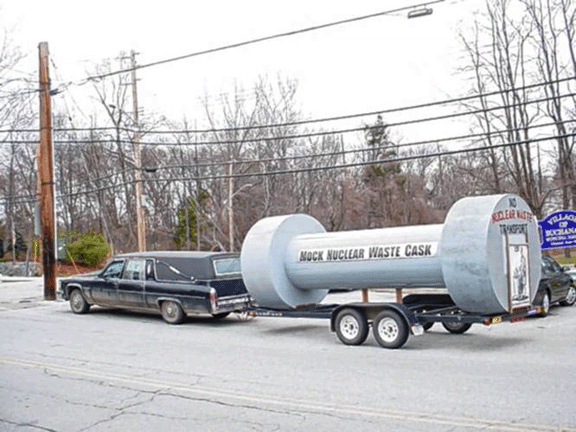
Activists rally against nuclear waste transport,
Staff Writer,Greenfield Recorder September 21, 2018 GREENFIELD — In a lot of ways it was like a party, celebrating the accomplishments of the past few years: The closures of the Vermont and Rowe nuclear plants. ……..The theme of the night? The high-level nuclear power plant waste being stored in Rowe and Vernon, Vt., must go — but only once the right and final safe place for it is decided.
“I haven’t bothered you for three or four years at this point,” leader of CAN and Rowe resident Deb Katz said. “But we’ve come back to our community to say: We need to be involved again. And I wish it wasn’t so.”
Katz and CAN just begun a tour of New England, and after spending their first two nights in Vermont, they came to Greenfield Thursday. On Friday, they will take the tour to the Statehouse on Beacon Hill.
Currently, the anti-nuclear activists are rallying against a bill that could allow for the high-level nuclear waste in Rowe and Vernon, Vt., to be shipped in canisters across the country to Texas or New Mexico. It would place the waste in what CAN is calling “parking lots” that are seen as more temporary holdings than anything else, but could be pitched as helping tthe economy in these regions in the Southwest of the country.
“Why shouldn’t we just say ‘yes, wow. Thank you so much’? The trouble is this is a really bad idea,” Katz said. “We all want the waste off the site, but we want it done right. And we want it done once.” ………
At the moment there isn’t a distinct solution on where to move the high-level nuclear waste, but Katz and fellow lead organizer Chris Williams of Vermont advovated for more science to figure out the best solution to storing waste that remains toxic for thousands of years.
“It took a lot of hard science to create this mess,” Williams said. “To get rid of this stuff properly, we’re going to have to apply real science and not just political expediency.”
The goal is to look to scientists to find the place for “deep geological storage,” Williams said.
Preaching to find a better, scientific solution was organizer and activist Kerstin Rudek from the Peoples Initiative, based out of Germany, where her neighbors have faced similar issues.
“It’s an international thing,” Rudek said, pointing to the lack of answers of what to do with the nuclear waste and the need for answers. “It’s not just a local thing.”
The meeting, which Williams described as a “little more lively than your usual nuclear waste meeting,” also included the speaker Leona Morgan, from the Navajo Nation and an Albuquerque, N.M. resident.
“It’s great news when we hear a nuclear power plant has been shut down, but it makes me nervous because it makes the push for these false solutions even harder,” Morgan said.
She described the political climate in New Mexico as pitching to residents that moving the nuclear waste there would be good for their economy, creating jobs, but ignoring the will of the residents who might be affected by it most.
“I’m here tonight to tell you we don’t want it,” Morgan said. “We don’t want this waste.”………
You can reach Joshua Solomon at: jsolomon@recorder.com 413-772-0261, ext. 264 https://www.recorder.com/Anti-nuclear-group-CAN-advocated-for-one-final-location-for-waste-at-tour-event-at-Hawks—Reed-20333471
1 This Month
Chernobyl: The Lost Tapes – A good documentary on Chernobyl on SBS available On Demand for the next 3 weeks– https://www.sbs.com.au/ondemand/tv-program/chernobyl-the-lost-tapes/2352741955560

of the week–London Campaign for Nuclear Disarmament

Tell the Ukrainian Government to Drop Prosecution of Peace Activist Yurii Sheliazhenko
To see nuclear-related stories in greater depth and intensity – go to https://nuclearinformation.wordpress.com
-
Archives
- April 2026 (126)
- March 2026 (251)
- February 2026 (268)
- January 2026 (308)
- December 2025 (358)
- November 2025 (359)
- October 2025 (376)
- September 2025 (257)
- August 2025 (319)
- July 2025 (230)
- June 2025 (348)
- May 2025 (261)
-
Categories
- 1
- 1 NUCLEAR ISSUES
- business and costs
- climate change
- culture and arts
- ENERGY
- environment
- health
- history
- indigenous issues
- Legal
- marketing of nuclear
- media
- opposition to nuclear
- PERSONAL STORIES
- politics
- politics international
- Religion and ethics
- safety
- secrets,lies and civil liberties
- spinbuster
- technology
- Uranium
- wastes
- weapons and war
- Women
- 2 WORLD
- ACTION
- AFRICA
- Atrocities
- AUSTRALIA
- Christina's notes
- Christina's themes
- culture and arts
- Events
- Fuk 2022
- Fuk 2023
- Fukushima 2017
- Fukushima 2018
- fukushima 2019
- Fukushima 2020
- Fukushima 2021
- general
- global warming
- Humour (God we need it)
- Nuclear
- RARE EARTHS
- Reference
- resources – print
- Resources -audiovicual
- Weekly Newsletter
- World
- World Nuclear
- YouTube
-
RSS
Entries RSS
Comments RSS
 nuclear-news