South Africa not planning for nuclear power, as renewable energy costs go down
Instead, he says the country’s energy demands have decreased.
Briefing Parliament’s energy committee on Tuesday, Radebe also pointed out that the cost of renewable energy technology has also come down.
According to the draft IRP, nuclear energy will only account for about 4% of the country’s energy mix by 2030.
This means no nuclear build programme is being envisaged.
Radebe says there are some misunderstandings about the decision taken on nuclear energy.
“It is not in the plan together with a number of other technologies for the period ending 2030 due to lower demand and lower cost of other technologies.”
MPs say they are relieved a new nuclear project has been scrapped for now, because it is not only unaffordable but would open the door to corruption.
(Edited by Thapelo Lekabe)
Solar power industry gives opportunity for retraining coal workers for good alternative employment
 An alternative to propping up coal power plants: Retrain workers for solar, The Conversation,Joshua M. Pearce, Professor of Materials Science and Engineering, and Electrical and Computer Engineering, Michigan Technological University, August 23, 2018The Trump administration announced new pollution rules for coal-fired power plants designed to keep existing coal power plants operating more and save American coal mining jobs.
Profitability for U.S. coal power plants has plummeted, and one major coal company after another has filed for bankruptcy, including the world’s largest private-sector coal company, Peabody Energy.
The main reason coal is in decline is less expensive natural gas and renewable energy like solar. Coal employment has dropped so low there are fewer than 53,000 coal miners in total in the U.S. (for comparison, the failing retailer J.C. Penny has about twice as many workers).
The EPA estimates the new rules will cause about 1,400 more premature deaths a year from coal-related air pollution by 2030. The Trump administration could avoid the premature American deaths from coal pollution – which amount to about 52,000 per year in total – and still help the coal miners themselves by retraining them for a more profitable industry, such as the solar industry.
A study I co-authored analyzed the question of retraining current coal workers for employment in the solar industry. We found that this transition is feasible in most cases and would even result in better pay for nearly all of the current coal workers.
How to make the jump?
What is left of the coal mining industry represents a unique demographic compared to the rest of America. It is white (96.4 percent); male (96.2 percent); aging, with an average age of 43.8 years old; and relatively uneducated, with 76.7 percent having earned only a high school degree or equivalent. Many are highly skilled, however, with the largest sector of jobs being equipment operators at 27 percent. Many of these skills can be transferred directly into the solar industry.
In the study, we evaluated the skill sets of current coal workers and tabulated salaries. For each type of coal position, we determined the closest equivalent solar position and tried to match current coal salaries. We then quantified the time and investment required to retrain each worker.
Our results show there is a wide variety of employment opportunities in solar – the industry overall already employs more than five times more people than in coal mining, at over 250,000 by one industry group estimate. We also found the annual pay is generally better at all levels of education, even with the lowest-skilled jobs. For example, janitors in the coal industry could increase their salaries by 7 percent by becoming low-skilled mechanical assemblers in the solar industry.
Overall, we found that after retraining, technical workers (the vast majority) would make more money in the solar industry than they do in coal. Also note this study was about careers and was done before an uptick in the practice of hiring temporary coal workers. The only downside on salaries we found are that managers and particularly executives would make less in solar than coal. This represents only about 3.2 percent of coal workers that are professional administrators.
Retraining needs
How would coal workers make this transition? There are over 40 types of solar jobs which the DOE has mapped out. They range from entry-level jobs, such as installers, to more advanced positions in engineering and technical design. Most coal workers could not simply walk into a solar job; they would need some retraining. But certain positions require less training…………https://theconversation.com/an-alternative-to-propping-up-coal-power-plants-retrain-workers-for-solar-101961
Luxembourg supports Austria against Hinkley Point C in European Court challenge.
Luxembourg supports Austria against Hinkley Point C in European Court
challenge, RTL 6th Sept 2018
http://www.rtl.lu/letzebuerg/1234030.html
Anti nuclear activists to seek injunction to stop the dumping of radioactive mud at Cardiff
Penarth Times 6th Sept 2018 , THE dumping of mud from a nuclear plant site off the coast of Penarth is
due to start today. Around 300,000 tonnes will be dredged from the seabed
near the Hinkley Point C site and will be moved to Cardiff Grounds, not far
from Penarth.
Although the grounds are a licensed disposal site for
sediment, the plan has been met with anger and thousands of people have
protested against it. Around 7,000 people signed a petition sent in to the
National Assembly and now anti-nuclear power activists say they are
prepared to go to court to get an injunction.
http://www.penarthtimes.co.uk/news/16693340.mud-dumping-to-begin-today/
Spiralling costs make Hinkley C nuclear project a risky test case for the global industry
Montel 4th Sept 2018 UK plans to build a nuclear plant in Anglesey – an outline agreement has
been struck – and the under construction Hinkley Point C are test cases
in the nuclear industry’s ability to compete, said a report on Tuesday.
The biggest danger was spiralling costs, with the controversial Hinkley
Point in southwest England set to cost GBP 20bn, and given cheap and
plentiful gas and the rise of renewable power, many industry observers
wonder how nuclear power can compete, according to The Energy Transition
Report in the Financial Times. “We’ve seen a substantive decline in the
share of nuclear of total electricity generation worldwide,” said Paul
Dorfman, of the Energy Institute at University College London.
https://www.montelnews.com/en/story/costs-renewables-set-to-derail-nuclear-renaissance–report/931254
“Five Eyes” – countries increasing surveillance of social media
Big Brother is keeping ‘Five Eyes’ on you, Darius Shahtahmasebi is a New Zealand-based legal and political analyst, currently specialising in immigration, refugee and humanitarian law. Rt.com 7 Sep, 2018 Just last week, the world’s leading snooping powers quietly and without notice issued a disturbing warning to tech giants, telling them to surrender unprecedented backdoor access to their citizens’ data.
Not many people know this, but the United Kingdom has some of the most extreme spying powers in the developed world. At the end of 2016, passing what some people called the “Snooper’s Charter,” the UK put into law some of the most draconian anti-privacy laws that we have ever known, allowing its government to compel companies to break their own encryption.
The UK plays a pivotal part in the so-called Five Eyes alliance, which also includes the US, Canada, Australia and New Zealand. Nobody knew it at the time, but the American military base which my family and I grew up next to has played a crucial role in delivering US drone strikes across the Middle East and beyond. America’s drone-strike regime, largely considered illegal for numerous reasons, is not something that countries should willingly participate in lightly and without public scrutiny.
Why am I mentioning this? Because it goes to the very heart of my point: the extent to which we know or do not know what our governments are doing behind closed doors is quite literally a matter of life and death.
Now, it has been revealed that the Five Eyes alliance, dedicated to a global “collect-it-all”surveillance task, has issued a memo calling on their governments to demand that tech companies build backdoor access for states to access users’ encrypted data or face measures that will force companies to comply.
The memo was released quietly with little media coverage last week by the Australian Department of Home Affairs, and essentially demanded that providers “create customized solutions, tailored to their individual system architectures that are capable of meeting lawful access requirements.” The memo was reportedly released after ministers for the intelligence agencies of the Five Eyes nations met on Australia’s Gold Coast last week……
Will those tech companies cave in to these government’s demands? You can bet your bottom dollar that eventually, yes, they very well might. ……
It is worth noting that there has been next to no criticism of these Five Eyes powers for delivering such a blatant attack on our right to privacy. Remember that, of course, Russian President Vladimir Putin is attempting to “wrest control of the internet,” as the Guardian wrote approximately three years ago. But these same Western media companies are awkwardly silent about what their own governments are proposing to do, something which other nations could only dream about achieving on such a global scale. …….https://www.rt.com/op-ed/437895-privacy-five-eyes-encryption/
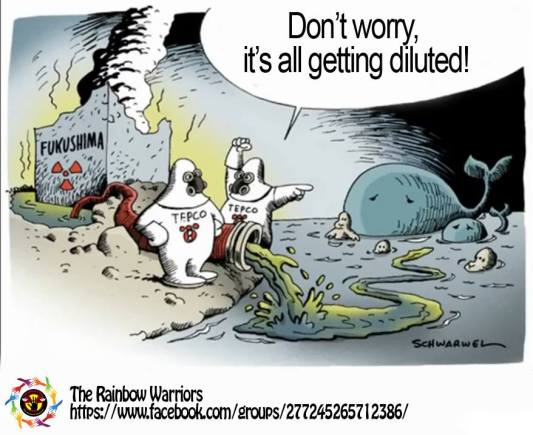
#Fukushima #Nuclear testimony, #OHCHR #UNHRC #CRIN #Safecast September 2018 Part 1
Repost
In this video (part 1 of a series) Junko, a mother and ex decommissioning worker describes the health situation in answer to a question put to her by Rachel Clark (Japanese translator) on behalf of the team at nuclear-news.net and Nuclear Hotseat.
Junko describes the health effects on her children and workers cleaning up the soil in contaminated areas.
Please share and like the video on You Tube to show support for the internally displaced people in Japan #OHRC #OSCE

Posted to nuclear-news.net
Posted by Shaun McGee aka Arclight2011
posted on 5th September 2018
The plight of the internally displaced people (IDPs) of Japan has largely gone unrecognised by most media sources. IDP`s though, have been recognised in the last UN Plenary session concerning Japan, here is a link for that;
In this video (part 1 of a series) Junko, a mother and ex decommissioning worker describes the health situation in answer to a question put to her by Rachel Clark (Japanese translator) on behalf of the team at nuclear-news.net and Nuclear Hotseat.
Junko describes the health effects on her children and workers cleaning up the soil in contaminated areas.
This is the first part of a series of testimonies. Please share widely. This video and copy is creative commons with normal attrib.
NOTE ; During the early months of the disaster a health survey was conducted by a…
View original post 117 more words
A report on #Sellafield highlights the likely #nuclear damage to #Ireland. Exclusive to nuclear-news.net
REPOST
Introduction by Shaun McGee (aka arclight2011)
Published exclusive to nuclear-news.net (Creative Commons applies)
2 February 2018
The Irish Sellafield nuclear accident fallout projection report has some issues, in my opinion.
In December 2016 the Irish Environmental Protection Agency (EPA) published in Irish Media Sources a report on radioactive fallout from a “worse case” scenario.
At the time, I was in contact with the Irish EPA concerning new evidence that shows a larger health effect from radiation sources and I was trying to challenge the pro nuclear bias that underestimated the health and environmental problems using mechanisms from the EURATOM nuclear treaty in Europe. I have to say that the Irish EPA were forthcoming in their many responses to my inquiries but eventually we reached a stale mate as the EPA claimed that the specific Isotopes relevant to the Euratom Treaty are not to be found in Ireland with the exception of Iodine 131 which they claimed was unlikely to be a health problem. They said that other fission (from a nuclear reactor) isotopes were not found on the island of Ireland.
The 2016 report from the Irish EPA (link) shows, what I think, is a minimal dispersion of radioactive fallout with little impact to health or the environment. However, there are other reports of fallout plumes from the Sellafield site that show much worse contamination than the 2016 EPA report posits and I requested Prof Chris Busby (who had been involved with Irish activists and government groups concerning Sellafield) to do a report (Full report below) on the problems that seemed to be highlighted with the Irish EPA report.
Prof Chris Busby first consulted the online NOAA Hy-Split atmospheric projection software with the same date as the EPA report and got a completely different scenario showing most of Ireland being covered with meandering waves of highly radioactive particles and gases. He then consulted 2 other reports, one of which the Irish Government commissioned that was completed by 2014 using the European gold standard software fallout projection model that showed a large plume covering large sways of Ireland (reaching the south west coast).
It would seem that the 2016 report completely runs counter to the 2014 and earlier report as well as the Hy-Split projection whilst using the same date as the 2016 Irish report.
So the issue of the types of accident that the Irish EPA thought to be worse case scenario. A direct hit by a Meteorite was seen to be plausible but if a meteorite hit sellafield then much of the nuclear site would be lofted high into the atmosphere and more evenly spread around the globe. This would fudge the numbers for plumes that are moving nearer the ground.
No where in the report was the more likely and and more dangerous scenario of terrorists attacking the spent fuel pools causing low altitude fallout over many weeks that would cause a larger pollution incident that would effect local countries to the UK border such as Ireland, Norway etc.In fact such concerns have been reported in main stream media sources as well as government/private think tanks.
Thanks to Prof Chris Busby for taking the time off his busy schedule to compile a response to the Irish EPA report on Sellafields projected damage to Ireland.
Please feel free to leave a comment belowif you agree or disagree with any of the points raised, a discussion about this issue needs to be had.
Shaun McGee (aka arclight2011)
………………………………………………………………………………..
Conclusion to report
The EPA 2016 report is unsafe and cannot be relied upon by the public, the media or administrators. The anonymous authors have shown extraordinary bias in every aspect of the report. They made elementary mistakes in their source term listing of isotopes, by including those which had short half-lives and will clearly not have been present in any significant concentration. They omitted a whole series of nuclides which are present in the tanks and the fuel pools. They choose a source term which is demonstrably too low based on available data, they choose a worst-case accident which involves only one HAST tank and only Caesium-137. They omit mentioning the spent fuel pools which are a highly likely site of a major coolant loss and subsequent fire or explosion. Their air modelling results are extremely unusual with implausibly narrow plumes, whilst a NOAA HYSPLIT model for the same day shows a completely different dispersion covering most of highly populated Ireland. Their surface contamination levels are 200 times lower than a previous computer model by Dr Taylor, which they must have had access to, and they fail to calculate the increased levels of cancer in the exposed population. This has been rectified here.
Historic releases from Sellafield to the Irish Sea have caused measurable increases in cancer and leukemia in coastal populations of Ireland. There is no doubt that the existence of Sellafield represents a potential catastrophic danger to the Irish Republic. A serious accident there could destroy the country and also most of Britain. As the Chernobyl accident effects showed, and the Fukushima accident effects will reveal (and in the case of Thyroid cancer have revealed) the ICRP risk model is unsafe for explaining or predicting health effects from such contamination. The Authors of the EPA 2016 report should be sanctioned in some way for producing such a travesty of the real picture, especially since they will have had access to the earlier study and modelling by Peter Taylor and the details of the COSYMA model employed by him.
Christopher Busby
August 17th 2017

…………………………………………………………………….
The health impact on Ireland of a severe accident at Sellafield.
A criticism of the report “Potential radiological impact on Ireland of postulated severe accidents at Sellafield” Anon. (Radiological Protection Institute of Ireland: September 2016) with a re-assessment of the range of health outcomes.
Christopher Busby PhD
There are things we know that we know. There are known unknowns. That is to say there are things that we now know we don’t know. But there are also unknown unknowns. There are things we do not know we don’t know.
Donald Rumsfeld
Murphy’s Law is an adage or epigram that is typically stated as:
Anything that can go wrong will go wrong.
[https://en.wikipedia.org/wiki/Murphy%27s_law]
Introduction
The nuclear complex at Sellafield in Cumbria, UK, has always represented a real danger to the Republic of Ireland. There has been and remains a chronic danger to the people of the East Coast of Ireland. First, radioactivity released from Sellafield under licence to the Irish Sea, particularly in the 1970s did not, as had been hoped, dilute and disperse in the sea, but instead became attached to sediment particles along the coasts and inlets of Ireland (e.g. Carlingford Lough, Drogheda) and the particles represented a cause of cancer and illnesses in coastal populations and those exposed through eating fish and shellfish. A court case (Herr and Ors. Vs BNFL) was supported by the Irish State and my organisation was funded by the Irish State for 3 years from 1998 to examine the contamination and health issue. Green Audit examined the cancer rates in small areas in North and mid Wales, and also in Ireland by distance from the contaminated coasts. Results were published in Busby 2006 and showed that there had been a significant 30% increase in cancer and leukemia in coastal populations of the Irish Sea [1]. The second issue of continuing interest is the danger of a serious accident at Sellafield at a time when the wind direction is from the East and airborne material passes across Ireland. This issue became more urgent and of interest to the Irish public after the Fukushima Daiichi reactor explosions and melt-downs in Japan in 2011. However, the potential outcome of such an accident had been part of a report by Peter Taylor [2] written in 1999 for McGuill and Company, the solicitors representing the Herr and Ors vs. BNFL case which was abandoned by the Irish State for reasons which remain unclear.
In September 2016, a report was produced by the EPA Office of Radiological Protection entitled Potential radiological impact on Ireland of postulated severe accidents at Sellafield. [3]. This anonymous report has serious shortcomings and errors which will be addressed here. A more realistic assessment of the potential impact of a serious accident at Sellafield on the Republic of Ireland will be presented here using the radiological risk models both of the International Commission on Radiological Protection (ICRP, [4]) and also the Model of the European Committee on Radiation Risk (ECRR [5]).
2. The baseline assumptions of maximum release.
2.1 The EPA worst case.
The EPA report discussed some possible accidents involving releases of radionuclides. It examined some potential sources of radionuclides but not others. It chose a number of possible scenarios, but excluded others. In general terms (and referring to Murphy’s Law, appropriately in this case of Ireland) it could not assess accidents which are totally unforeseen. Therefore, also in general, we should consider a worst case-scenario in which most of the radioactivity inventory of the Sellafield site becomes airborne at a time when the weather patterns were most unfavourable for Ireland.
For example, in Busby 2007 [1] the Windscale reactor fire was examined in some detail. At the time of the fire, which continued for some days, the main releases were initially offshore towards Ireland. This is contrary to the discourse promoted by the British Radiological Protection Board in 1974. It is, however confirmed by Air Ministry historical data. But the point is that at the time a cold front laying North East to South West was moving from Ireland towards England across the Irish Sea. This meant the releases from the fire and heavy radioactive rain fell along the front. This rain fell on the Isle of Man, and historical mortality data show a large increase in the death rate after this event. There have also been reports of significant birth effects (Downs Syndrome cluster) in County Louth reported by the Irish GP Patricia Sheehan, who died in an automobile accident shortly after beginning to follow this up.
In order to estimate the effects of a worst case, initially there must be a choice of the source term, that is, the quantity and radionuclide identity of the material released to the atmosphere.
The EPA report decided that this could be modelled as the contents of one of the 21 High Active Storage Tanks (HAST). The true content of one of these is unknown, probably also to the operators BNFL. The estimate for the contents was taken from a report by Turvey and Hone [6]. This is shown in Table 1 below where I note a number of concerns. In Table 2 I provide examples of some hazardous radionuclides not listed in the EPA source term table. In Table 3 I copy the source terms used by the British 1976 Royal Commission (the Flowers Report) [7]. Note that all these estimates are for a single or multiple HAST tanks on the tank farm and exclude explosions of the spent fuel ponds which could dry up and suffer prompt criticality. This could result from a domino scenario (see below).
Table 1 EPA assumed release source term. (E-notation, thus 1 x 10¹⁴ is written 1 E+14_
|
Radio nuclide |
Total activity Bq |
Half Life |
Comment |
|
Zr-95 |
1.4 E+15 |
64days |
All decayed away; almost none there |
|
Nb-95 |
5.8 E+14 |
35 days |
Daughter of Zr-95; all decayed away; none there |
|
Ru-106 |
1.33 E+16 |
366 days |
All decayed away; almost none there |
|
Sb-125 |
1.6 E+15 |
2.7 years |
All decayed away; almost none there |
|
Cs-134 |
1.04 E+16 |
2.0 years |
All decayed away; almost none there |
|
Cs-137 |
5.26 E+17 |
30 years |
Significant |
|
Ce-144 |
9.65 E+15 |
284 days |
All decayed away; almost none there |
|
Eu-154 |
4.41 E+15 |
8.5years |
Minor significance now |
|
Eu-155 |
3.39 E+15 |
5 years |
Minor significance now |
|
Sr-90 |
3.6 E+17 |
28.8 years |
Highly Significant; DNA seeker |
|
Am-241 |
2.72 E+15 |
432 years |
Highly Significant alpha; decays to Np-237 alpha; daughter of Plutonium-241 |
|
Cm-242 |
4.57 E+13 |
162 days |
All decayed away; almost none there |
|
Cm-243 |
1.92 E+14 |
32 years |
Highly Significant alpha; decays to Plutonium-239, so there must be approximately the same or more Plutonium-239 (fissionable) in the mix |
2.2 Concerns about the source term table of the EPA 2016 report
Table 1 gives the source terms employed by the EPA report. It lists 13 isotopes. The table is an astonishing example of bad science, produced either through bias or ignorance. Since the table is apparently taken from another report by Turvey and Hone 2000, we can perhaps blame them for the original mistakes. I have included a column showing the half-lives of their isotopes. The main concerns are as follows:
It is perfectly clear than all but four of the thirteen will have physically decayed away by 2016. For example, a half life of Zr-95 of 65 days, at 1980 would by now have had 36 x 365 days to decay. This is 202 half-lives. There would be virtually none left of the listed quantity.
A significant number of seriously hazardous radionuclides which must be in the tanks are not listed. In particular we have Plutonium-239, Plutonium- 238, Plutonium-241, Uranium and other actinide alpha emitters including Neptunium-237, Radium-226, Carbon-14 and Tritium.
The overall total activity tabulated the EPA report is about 4 times less than the quantity in a HAST tank given in the report of the UK Royal Commission 1976 (Flowers) and the 1977 Windscale Enquiry which totalled 1.8 x 10¹⁸ Becquerels of Caesium-137 plus 1.4 x 10¹⁸ Bq of Strontium-90 plus 1.1 x 10¹⁸ Bq of Ruthenium-106 [8].
Why did the EPA report reduce the quantities assumed by the earlier reports? Why did it omit the dangerous actinides Uranium, Plutonium and Neptunium with the exception of Americium-241? Why did it omit a whole range of other radionuclides like Tritium and Carbon-14?
Table 2 Some Missing isotopes from the EPA Source term with longer half-lives or present as daughters
|
Isotope |
Half Life |
|
|
U-238 |
4.5 E+9y |
Alpha |
|
U-235 |
7.1 E+8y |
Alpha |
|
U-234 |
2.4 E+5y |
Alpha |
|
Th-230 |
8 E+4y |
Alpha |
|
Ra-226 |
1599y |
Alpha |
|
Pu-238 |
86.4y |
Alpha |
|
Pu-239 |
2.4 E+4y |
Alpha |
|
Pu-241 |
14.4y |
Decays to Am-241 listed by EPA |
|
Np-237 |
2.1 E+6y |
Am-241 daughter |
|
Mn-54 |
312d |
Activation |
|
Co-60 |
5.27y |
Activation |
|
Y-90 |
64h |
In equilibrium with Sr-90 |
|
H-3 |
12.3y |
Life component; radioactive water |
|
C-14 |
5730y |
Life component |
Table 3 HAST tank content according to Windscale Enquiry 1977 and Royal Commission 1976
Russia’s nuclear wastes, and the clean-up of Andreeva Bay
 What is the situation at Russia’s biggest dump site for spent nuclear fuel?

Three shiploads with spent nuclear fuel are to be sent from site this year and the whole cleanup is to be completed in year 2024, representatives of nuclear power company Rosatom said in this week’s meeting in the Joint Russian-Norwegian Commission Nuclear Safety.
The cleanup of the Andreeva Bay is one of the biggest ongoing bilateral cooperation projects between Norway and Russia and Norwegian tax payers have over the years covered project expenses worth hundreds of millions of kroner.
The nuclear waste storage, which is located only about 55 km from the border to Norway, holds about 22,000 spent nuclear fuel elements, and was long considered a ticking environmental bomb.
Shipments to Mayak
The cooperation on site marked a milestone in late June 2017, when the first batch with 470 spent fuel elements left Andreeva Bay. Present were a number of dignitaries, among them Norway’s then foreign minister Berge Brende. They all waved as special purpose vessel «Rossita» set course for Murmansk, where the deadly materials will be reloaded onto special trains and sent to reprocessing plant Mayak.
«It is a big day for the environment, for Russian-Norwegian cooperation, for people in Finnmark and the Kola Peninsula and all the ones who care about the Barents Sea,» Brende told the Barents Observer at a press briefing following the event.
However, far from everything is smooth and easy in cooperation over the complex and highly sensitive nuclear wastes. Access to site by independent controllers is strictly regulated and information sparse. The Norwegian journalists that have been invited to take part in official visits have not been allowed to bring cameras.
Growing concern
The situation might have become ever more complicated this week, after two leading Norwegian officials on nuclear safety were held back on the Russian border.
One of the two people is Per-Einar Fiskebeck, the long-serving special adviser at the Finnmark County Governor’s office, who for decades have closely followed up the Andreeva Bay project.
The Norwegian Ministry of Foreign Affairs describes the incident as «serious» and confirms that it is concerned about the situation.
«It is worrying if this would affect the further progress in the nuclear safety cooperation, which otherwise has been a success story in the Norwegian-Russian relationship in the north,» a comment from the ministry reads. Continue reading
If Democrats take over Congress in November, there’ll be cuts to USA’s nuclear weapons spending
 Cuts to nuclear spending and special ops oversight: Expectations for new congressional leadership https://www.defensenews.com/smr/defense-news-conference/2018/09/05/cuts-to-nuclear-spending-and-oversight-of-socom-what-to-expect-from-a-democratic-hasc/
Third summit this year between Moon Jae-in and Kim Jong-un

 Koreas’ Kim and Moon to meet again as Trump nuclear agenda sidelined, Guardian, Benjamin Haas in Seoul @haasbenjamin, 6 Sep 2018
Third summit this year between Moon Jae-in and Kim Jong-un stands in contrast to rift with Washington, South Korea’s president, Moon Jae-in, will travel to North Korea for a third meeting with the country’s leader, Kim Jong-un, as denuclearisation talks with the US stall.Moon would travel to Pyongyang between 18 and 20 September, said Chung Eui-yong, head of the South’s National Security Office, as he returned from a one-day meeting with Kim in North Korea. It will be the third time this year the leaders of the two Koreas have met, after talks in the border village of Panmunjom in April and May.
“Chairman Kim Jong-un reaffirmed his firm commitment to complete denuclearisation of the Korean Peninsula, and expressed his willingness to closely cooperate with not only South Korea but also the United States to that end,” Chung said according to the South’s Yonhap news agency.
The third meeting comes with talks between the US and North Korea over Pyongyang’s nuclear programme having made little progress since a summit between Donald Trump and Kim in June. Trump cancelled a trip by his top diplomat last month. While North Korea has repeatedly agreed to working towards the “complete denuclearisation of the Korean Peninsula”, experts warn the language is vague and fails to address key US demands that the North give up its nuclear weapon unilaterally and allow weapons inspectors into the country…………
South Korea’s diplomatic overtures have also highlighted a growing rift between Seoul and Washington, with US officials frustrated by the pace of nuclear negotiations and South Korean authorities focused on improving ties with their unpredictable neighbour.
North Korean state media echoed many of the same statements conveyed by officials in Seoul, with language that emphasised denuclearisation as a shared responsibility, not one for Pyongyang alone.
The North’s official Korean Central News Agency said: “Noting that it is our fixed stand and his will to completely remove the danger of armed conflict and horror of war from the Korean Peninsula and turn it into the cradle of peace without nuclear weapons and free from nuclear threat, he said that the North and the South should further their efforts to realise the denuclearisation of the Korean peninsula.”
North and South Korea will also open a long-planned liaison office in the North Korean city of Kaesong before Moon and Kim meet, according to Chung. Officials from the two countries will hold talks early next week to finalise details for Moon’s trip. https://www.theguardian.com/world/2018/sep/06/north-korea-kim-moon-meeting-trump-nuclear
 |
ReplyForward
|
“Modest but detectable level(s)” of radioactive material found in Hanford workers’ cars
Tri City Herald 4th Sept 2018 , Hanford Challenge is calling for an independent study of the threat that
radioactive contamination might pose to the Tri-Cities from the Hanford
nuclear reservation. On Tuesday it released a research report by Marco
Kaltofen, an engineer with Boston Chemical Data Corp., who has been
collecting Hanford-area samples at times since at least 2008.
His latest report found “modest but detectable level(s)” of radioactive material
that had collected on the air filters of three vehicles belonging to
Hanford workers. The vehicles had been checked and cleared to leave the
Hanford nuclear reservation, where they had been at the Plutonium Finishing
Plant.
https://www.tri-cityherald.com/news/local/hanford/article217827665.html
USA and Russia – in 20th Century -devised hideously elaborate ways of blowing each other up
 Top-secret ‘doomsday machine’ documents reveal terrifying nuclear apocalypse plans https://metro.co.uk/2018/09/04/top-secret-doomsday-machine-documents-reveal-terrifying-nuclear-apocalypse-plans-7911916/ Jasper Hamill 4 Sep 2018 It’s no secret that the US and Russia spent much of the 20th century devising hideously elaborate ways of blowing each other up. Now declassified documents written in 1964 have revealed the true extent of the apocalyptic atomic broadside Washington planned to unleash against its greatest enemy. A pair of top-secret memos written by top military chiefs shows the US was intending to implement an ‘overkill’ strategy which would have flattened Russian cities and killed tens of millions of people.
They demonstrate how generals were considering the possibility of unleashing thousands of nukes in a bid to cause ‘95% damage’ to targets such as military facilities and ‘urban-industrial centres’ including major cities. The files also document plans to blow up 30% of all the people living in 30 Chinese cities, saying this outcome would be ‘desirable’. The secret files were unearthed by George Washington University’s National Security Archive and shed light on a secret nuclear strategy called the Single Integrated Operational Plan (SIOP), which is often referred to as a ‘doomsday machine’ and has never been declassified. Researchers are only able to learn about this highly disturbing scheme by reading other documents which discuss it, meaning the release of the two memorandums is a major step forward in understanding the grim fate which would have befallen the world if a nuclear war erupted.
‘US nuclear war plans [made] during the Johnson administration included the option of a retaliatory strike against nuclear, conventional military, and urban-industrial targets with the purpose of removing the Soviet Union “from the category of a major industrial power” and destroying it as a “viable” society,’ wrote the National Security Archive in a statement. ‘The document, the Joint Staff’s review of SIOP guidance in June 1964, showed continued acceptance by policymakers of the cataclysmic nuclear strike options that had been integral to the plan since its inception. Accordingly, the SIOP set high damage requirements – 95% for the top priority nuclear targets – ensuring that it remained an “overkill” plan, referring to its massively destructive effects. ‘Prepared and continually updated by the Joint Strategic Target Planning Staff, the SIOP has been characterized by some as a “doomsday machine”.’ The latest declassified document is a review of SIOP conducted by the Joint Staff, a group of senior military leaders.
It lays out plans for retaliatory and preemptive strikes against Russia or China which range in severity from an assault aimed at knocking out nuclear weapons facilities to a blitzkrieg designed to ‘destroy the will and ability of the Sino-Soviet bloc to wage, remove the enemy from the category of a major industrial power and assure a post-war balance of power favourable to the United States’. The plans also expose a scheme to use ‘population loss as the primary yardstick for effectiveness in destroying the enemy society with only collateral attention to industrial damage’, the National Security Archive added. What this means is that the US was willing to bomb Russia back to the Stone Age and viewed the destruction of its population as a valid strategy of war…. https://metro.co.uk/2018/09/04/top-secret-doomsday-machine-documents-reveal-terrifying-nuclear-apocalypse-plans-7911916/?ito=cbshare
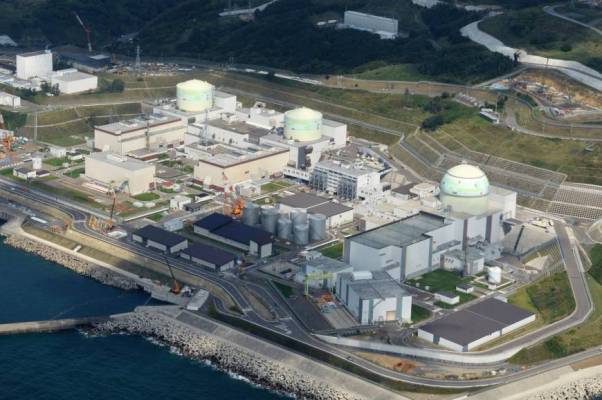
Japan nuclear plant’s power restored after quake triggers Hokkaido blackout

Hokkaido’s Tomari NPP using emergency generators after powerful M6.7 earthquake
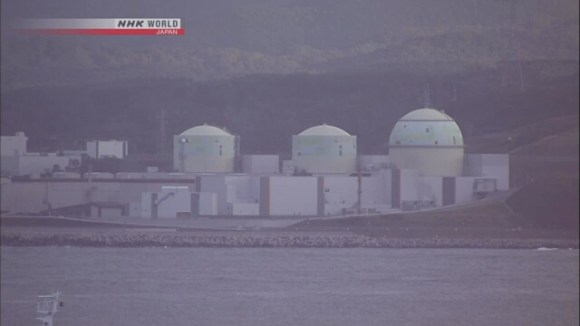
Tomari nuclear plant using emergency generators
Hokkaido nuclear plant on backup power after quake, reviving memories of Fukushima disaster
1 This Month
Chernobyl: The Lost Tapes – A good documentary on Chernobyl on SBS available On Demand for the next 3 weeks– https://www.sbs.com.au/ondemand/tv-program/chernobyl-the-lost-tapes/2352741955560

of the week–London Campaign for Nuclear Disarmament

Tell the Ukrainian Government to Drop Prosecution of Peace Activist Yurii Sheliazhenko
To see nuclear-related stories in greater depth and intensity – go to https://nuclearinformation.wordpress.com
-
Archives
- April 2026 (139)
- March 2026 (251)
- February 2026 (268)
- January 2026 (308)
- December 2025 (358)
- November 2025 (359)
- October 2025 (376)
- September 2025 (257)
- August 2025 (319)
- July 2025 (230)
- June 2025 (348)
- May 2025 (261)
-
Categories
- 1
- 1 NUCLEAR ISSUES
- business and costs
- climate change
- culture and arts
- ENERGY
- environment
- health
- history
- indigenous issues
- Legal
- marketing of nuclear
- media
- opposition to nuclear
- PERSONAL STORIES
- politics
- politics international
- Religion and ethics
- safety
- secrets,lies and civil liberties
- spinbuster
- technology
- Uranium
- wastes
- weapons and war
- Women
- 2 WORLD
- ACTION
- AFRICA
- Atrocities
- AUSTRALIA
- Christina's notes
- Christina's themes
- culture and arts
- Events
- Fuk 2022
- Fuk 2023
- Fukushima 2017
- Fukushima 2018
- fukushima 2019
- Fukushima 2020
- Fukushima 2021
- general
- global warming
- Humour (God we need it)
- Nuclear
- RARE EARTHS
- Reference
- resources – print
- Resources -audiovicual
- Weekly Newsletter
- World
- World Nuclear
- YouTube
-
RSS
Entries RSS
Comments RSS
 nuclear-news