Chris Busby interview with Richie Allen on the recent Police raid on his home.
 The audio is from the Richie Allen show and the video is from a Fukushima based TV station who were the only people to do any Epidemiology questionaires to find out what health effects were presented just after the Fukushima nuclear disaster. The video is from June 2011 (with subtitles and the audio is from this weeks interview with Richie Allen
By tokyobrowntabby This video is from a webcast program called “ContAct,” webcasted on July 14, 2011 by OurPlanet-TV ( http://www.ourplanet-tv.org/?q=node/287 ) an independent net-based media. Translation by EX-SKF( http//:ex-skf.blospot.jp ) & tokyobrowntabby and captioning by tokyobrowntabby.
#Fukushima truth #nuclear testimony, #OHCHR #UNHRC September 2018 Part 3
 Posted to nuclear-news.net
Posted by Shaun McGee
Posted on the 19 September 2018

In this 3rd video in the series (with more to come) we ask the Japanese evacuees about their children and if the Japanese are assessing their childrens health.
There is an understandable lack of trust in the government program and one of the evacuees did not want to give the Fukushima medical Hospital any personal information preferably.
Dr Oshyama does do an independent research on evacuees and is more trusted. She discovered the 2 thyroid abnormalities in the Mother and Daughter from the second video.
Other private doctors are used by evacuees even if they do avail themselves of the Fukushima Medical Hospital survey as the indepndent dictors are prepared to do more comprehensive testing.
One mother said she would continue getting the tests done twice a year so people in the future could use the data. This flies in the face of the nuclear lobby plans to reduce or stop testing teh Fukushima Medical Hospital survey and this campaign is headed by Prof Geraldine Thomas the “nuclear expert” (for the UK Ministry of Defense).
Also a question is asked about financial losses due to the nuclear disaster and the evacuation. One of the participants said that they had costs of about 45,000 dollars and only got about 30,000 compensation and loss of earnings were not included That came to another 45,000 dollars.
And a link here to the other 2 videos (more to come) and an update on the status of the campaign to support the evacuees in the United nations.
#Fukushima United Nations #OHCR report update 18th September 2018 #IDP
Effect of Hurricane Florence on nuclear power stations – ruins the Trump administration’s case for supporting nuclear power
The Energy 202: Hurricane Florence blows hole in Trump team’s case for helping coal and nuclear power, critics say, WP, By Dino Grandoni,18 September 18 Hurricane Florence has blown a hole in the Trump administration’s argument that bolstering nuclear and coal-fired power is essential to providing reliable electricity to homes and businesses, especially during times of crisis, according to energy experts long critical of the plan.
For months, the Department of Energy has considered throwing a lifelineto that sector of the power market to make the electric grid more resilient to natural and man-made disasters. The Trump administration has been preparing to use a Cold War-era law, once marshaled by President Harry S. Truman to secure U.S. steel production, to compel regional grid operators to buy electricity from nuclear and coal plants.
The rationale is that only these two types of generation regularly have enough fuel on site to run for when national security is threatened. Wind turbines and solar panels only generate electricity when the weather is right while natural gas stations often have their fuel pipelined in from afar.
But hours before the once powerful hurricane made landfall in North Carolina on Friday, Duke Energy shut down its two reactors at the Brunswick Nuclear Plant near Wilmington, N.C. in anticipation of high winds. The temporary shutdown illustrates how many other factors beyond just fuel stored on site affect grid reliability.
“There are so many flaws to their argument, we hardly need this to add,” said David Hart, professor of public policy at George Mason University. “There are lots of better ways to get reliability than to stockpile a lot of fuel.”
……..The Energy Department has yet to detail exactly what the plan to bolster coal and nuclear will look like after Trump ordered aid in June. The request comes as expensive coal and nuclear assets are retiring across the country in the face of competition from cheaper natural gas and renewable energy resources……..https://www.washingtonpost.com/news/powerpost/paloma/the-energy-202/2018/09/18/the-energy-202-hurricane-florence-blows-hole-in-trump-team-s-case-for-helping-coal-and-nuclear-power-critics-say/5ba022621b326b47ec9596b9/?noredirect=on&utm_term=.66a830d4f690
Malaysia won’t use nuclear power, says Dr M [NSTTV]
KUALA LUMPUR: Malaysia will not use nuclear power plants to generate energy, as science has yet to find ways to manage nuclear waste and the effects of radiation, says Tun Dr Mahathir Mohamad.
The prime minister said there have been numerous incidents related to nuclear use worldwide, such as in Chernobyl, Ukraine and the latest being Fukushima, Japan which led to people suffering from radiation.
Malaysia, he said, will continue to rely on existing fuel sources to generate electricity, such as fossil fuel, coal, hydroelectric dams and wind power, which he said is stable and environmentally-friendly.
“There are two things I am against. Smokers are not allowed to come near me and nuclear is not the solution to generating electricity,” he said in his keynote address at the launch of the Conference of the Electric Power Supply Industry (CEPSI) 2018 at the Kuala Lumpur Convention Centre here on Tuesday.
Also present was Minister of Energy, Technology, Science and Environment, Yeo Bee Yin, and Tenaga Nasional Bhd chairman Tan Sri Leo Moggie.
Dr Mahathir said the country’s fifth and sixth prime ministers may have agreed to nuclear energy but “now I am back.”
He said despite advancements in science, a solution to nuclear radiation and waste has yet to be discovered. He said it is based on these factors that Malaysia is rejecting the use of nuclear energy, despite it being cheaper than fossil fuel.
Malaysia, he said, had a “bad experience” with amang, a type of irradiated ore once used to make colour televisions.
“Amang needs to be activated before being used. This however led to problems in the form of residue, which is radioactive.
“The radiation effects triggered fear among the community, we don’t want a repeat of this.
“Eventually, we agreed to bury this substance in an area which was one square kilometre large. We had to bury it under thick cement to prevent the radiation from affecting people,” said Dr Mahathir.
The prime minister said Malaysia lost one square kilometre of land as the area was still not safe, which also led to losses in terms of areas meant for development.
Dr Mahathir also touched on developments in the transportation sector, and said the price of electric cars could be double that of conventional vehicles.
Among the issues in the electric car market, he said, was the durability of the batteries which as of now, can only power the vehicle for a maximum of 200 km on a full charge.
“We could perhaps merge ICE (internal combustion engine) and an electric-based engine to tackle the battery durability issue.
“These are all in the research and development phase, so I hope that it will be successful thus helping Malaysia enter a new automotive industry era,” he said.
https://www.nst.com.my/news/nation/2018/09/412608/malaysia-wont-use-nuclear-power-says-dr-m-nsttv
Korean defense chiefs sign ‘military pact’ after Kim & Moon adopt denuclearization roadmap
As part of the military agreement, the neighbors will halt border drills from November 1, Yonhap reports. South Korean Defense Minister Song Young-moo and North Korea’s No Kwang-chol also agreed to stop military flights in the vicinity of the demarcation line. In addition, the agreement envisions setting up a buffer zone in the Yellow Sea and suspending maritime drills.
As a clear sign of mutual trust, the Pyongyang military agreement also calls for the withdrawal of soldiers from the demilitarized zone and disarming the servicemen keeping watch at Panmunjom border village. The nations also agreed that each would close eleven border guard posts by the end of 2018.
The Koreas’ armed forces will establish and operate a “joint military committee” to discuss the implementation of the military agreement on a “permanent basis,” Moon Jae-in noted.
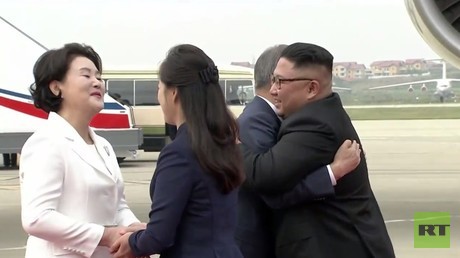
Speaking to the press on the outcome of Moon’s visit to North Korea, Kim noted that the “agreement at Pyongyang summit will advance an era of peace, prosperity.” Kim especially noted that the military agreement will help to denuclearize the peninsula and reach a lasting peace. He also agreed to travel soon to South Korea to meet Moon for the fourth time since the reconciliation effort between the neighbors began with the Olympic Peace diplomacy earlier this year. To emphasize their commitment to peace, the nations have decided to send a united team to the 2020 Olympic Games in Tokyo, and will submit a joint bid for the 2032 Summer Olympics.
Moon meanwhile told reporters that the neighbors finally managed to agree to “specific denuclearization steps.” The South Korean president also noted that the leaders are striving to turn the demilitarized zone into a zone of peace, and that work will soon begin to reconnect cross-border rails and roads before the end of the year.
Moon arrived in North Korea on Tuesday morning for the third face-to-face meeting with his counterpart. Previously, the leaders held talks on April 27 and May 26 in the border village of Panmunjom, in an unprecedented effort to reconcile the two nations following the Korean War (1950-53). Part of Moon’s agenda for the trip was restarting the US-Korean dialogue that hit a brick wall last month, after Secretary of State Mike Pompeo canceled his visit to Pyongyang.
READ MORE: ‘Very exciting!’ Trump praises Pyongyang summit results & declarations
One of the major breakthroughs of the Pyongyang summit was the consent given by the North to allow international inspectors to document a “permanent dismantlement” of its key missile facilities. North Korea also agreed to closing its main nuclear complex in Yongbyon – although only if the United States takes reciprocal conciliatory steps, Moon told reporters. The Korean Peninsula should turn into a “land of peace without nuclear weapons and nuclear threats,” he noted.
The North expressed its willingness to continue taking additional steps, such as permanent shutdown of the Yongbyon nuclear facility, should the United States take corresponding measures under the spirit of the June 12 North Korea-US joint statement,” the joint statement said.
Geraldine Thomas calls an for all out CyberWar against those successful anti #nuclear #UNSCEAR

Geraldine, dear Geraldine is at it again! Notwithstanding her recent debunking from Prof Keith Baverstock who claimed her advice to be dangerous forcing the BBC to eventually delete her Fukushima videos from their website after many complaints from both pro and anti nuclear individuals.
In her latest call to arms Geraldine points out that radiation has no effect on wildlife but ignores the 70 + Peer reviewed papers of Prof Timothy Mousseau and his team that show many effects in wildlife and FLora and Fauna etc.
So , General Geraldine hopes to match anti nuclear activists on the internet whist ignoring the plethora of evidence that says there are problems, with little funding to find the problems.
Even so, using the ICRP model (that is highly contested in the Scientific community but is the standard) her measurements and advice were seen to be wanting, in fact dangerously so (See Fissionlines Damning condemnation on her with Prof Keith Baverstock). The nub of the problem lies in a 2014 (approx) meeting in Russia where the UK/USA contingent of UNSCEAR wanted to increase the dose allowed whilst others wanted it lowered. So, a status quo was agreed with the 1 mSv/y instead of 100mSv/y!
Here is her call to arms and her admission that the anti nuclear campaign online is beating millions of Dollars/Pounds of tax payers money of the nuclear PR machine (aside from unfair Google filtering, FB filtering and what ever the hell Twitter is doing etc). Roughly, at the same time Prof Chris Busby who has sat opposite her in court had his home raided and was arrested for 19 hours with huge media fanfare of the negative kind with little right of reply (Again), this is hardly a level playing field?
“…Thomas told delegates: “Start a dialogue now with all levels in society about why nuclear matters. The internet means everyone has a voice and expects their voice to be heard; we need to get our message out there as effectively as the anti-nuclear brigade do. There’s a need to put real evidence-based risks into a context that [people] can relate to. And hearts and minds will only change by dialogue.”….”
Return to Fukushima, Big Story CGTN
Typhoon Mangkhut heading straight for 2 Chinese nuclear power stations
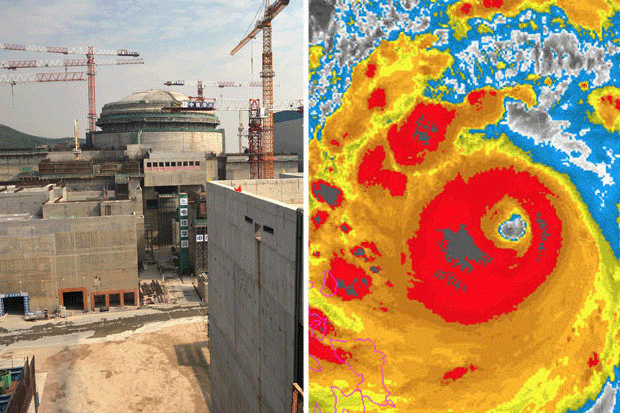
RED ALERT: Typhoon Mangkhut to SMASH into TWO nuclear plants as MILLIONS evacuate in panic https://www.express.co.uk/news/world/1018412/Typhoon-Mangkhut-Hong-Kong-China-nuclear-plants-red-alert-worst-storm
TYPHOON MANGKHUT – the most powerful storm of the year – is expected to directly hit two nuclear power plants later today with shocking 120mph winds, as officials issue a red alert warning.
The typhoon is the world’s most powerful storm of the year, with winds as high as 170 miles per hour – twice as powerful as Hurricane Florence which has struck the US east coast. At least 64 people have died in the wake of the typhoon in the Phillipines while so far two are reportedly dead in Hong Kong.
Officials have issued a red alert warning amid mounting fears over two nuclear power stations in the direct path of the typhoon.There are concerns the typhoon will damage the nuclear reactors and efforts are underway to avoid a repeat of the Japanese Fukushima catastrophe, when an earthquake and tsunami sent three nuclear reactors into meltdown.
The Taishan Nuclear Power Plant and Yangjiang Nuclear Power Station, both in Guangdong, mainland China, confirmed they were “combat ready” and in emergency lockdown as the superstorm nears.
Emergency safety investigations have been carried out at both plants for last-minute preparations behind the typhoon strikes this evening with 120mph winds.
A spokesman for the Taishan facility said: “All emergency personnel are at their posts and have conducted their preparatory work.The plant is fully prepared for the typhoon, and everything is in its place.”
Workers at the Yangjiang plant also secured the facility’s five generating units but fears remain for the sixth, which remains under construction.
Plant manager Chen Weizhong added that all doors and windows were tightly closed.
Mangkhut has already caused mass devastation in the Philippines, where around 40 gold miners are feared trapped following a landslide.The Hong Kong Observatory (HKO) raised the storm signal to T10 – the highest level possible, as the city shut down.
Footage from Hong Kong shows the scale of devastation, including a high-rise construction crane collapsing and windows in skyscrapers breaking under pressure.
One video shows a father and son swept off their feet and thrown into a wall due to the sheer power of the winds
After the typhoon passes over Hong Kong, the powerful storm is expected to wreak havoc across several Chinese megacities.
Brunswick Nuke Plant: STATE OF EMERGENCY — flying cuttlefish picayune

Duke Energy’s Brunswick nuclear plant, about 30 miles south of Wilmington, has declared a state of emergency as the 1,200-acre complex remains cut off by flood waters and and is inaccessible to outside personnel. – Zero Hedge
via Brunswick Nuke Plant: STATE OF EMERGENCY — flying cuttlefish picayune
#Fukushima United Nations #OHCR report update 18th September 2018 #IDP
Posted to nuclear-news.net
Posted by Shaun McGee aka arclight
Posted on 18 September 2018
Baskut Tuncuk has finished his report on workers (globally) who are exploited here
A vicious form of exploitation: workers poisoned by toxic substances, says UN expert
GENEVA (12 September 2018) – Exposure of workers to toxic substances can and should be considered a form of exploitation and is a global health crisis, says a UN expert.
On Wednesday, UN Special Rapporteur on hazardous substances and wastes, Baskut Tuncak, told the UN Human Rights Council that governments and companies must strengthen protection for workers, their families
“and their communities from any exposure to toxic chemicals”.
https://www.ohchr.org/EN/NewsEvents/Pages/DisplayNews.aspx?NewsID=23543&LangID=E
Here is some background and upcoming reports with some recent activity;
SR on internally displaced persons due in first quarter of 2019 requested in first half of 2016 and confirmed in August 2017
Due on first quarter of 2019 https://spinternet.ohchr.org/_Layouts/SpecialProceduresInternet/ViewCountryVisits.aspx?Lang=en&country=JPN
SR on toxic waste
Sent Reminder but not confirmed
2019
Due in 2019 Link on the same as above.
37th HRC Session: Oral Statement on the Situation of the People Affected by the Fukushima Nuclear Disaster
The video and the full text of the statement can be accessed below.
Japan: Fukushima clean-up workers, including homeless, at grave risk of exploitation, say UN experts
GENEVA (16 August 2018)
“Detailed reports that the decontamination contracts were granted to several large contractors, and that hundreds of small companies, without relevant experience, were subcontracted, are of concern. These arrangements, together with the use of brokers to recruit a considerable number of the workers, may have created favourable conditions for the abuse and violation of workers’ rights.”
The UN rights experts have engaged in a dialogue with the Government since last year and have taken into account a recent reply to their most recent concerns.
As part of its Universal Periodic Review, Japan recently ”accepted to follow up” on a recommendation from other States to restore radiation levels to those before the disaster to protect the human right to health of pregnant women and children, among several other recommendations.
“The experts strongly urge the Government to lower the allowable dose of radiation to 1 mSv/year to protect children and women who may become pregnant.”
The UN experts remain available to advise on how best to address the ongoing issue of exposure of workers to toxic radiation following a previous response by the Japanese Government, and on the need to strengthen protection for workers.
In September, one of the UN experts, Baskut Tuncak, will present a report to the UN Human Rights Council, calling on States and employers to strengthen protection for workers from exposure to toxic substances, and proposing principles in that regard.
Link https://www.ohchr.org/en/NewsEvents/Pages/DisplayNews.aspx?NewsID=23458&LangID=E
Link to exclusive to nuclear-news.net video testimony from Internally Displaced People from Japan. This is part of a series of videos upcoming to this blog over the next few weeks. In the first video we hear from a Decontamination worker and Mother about the working conditions she experienced and the health effects she obseved with her family.
The second video highlights an issue with the nuclear industries “Stay in Place” orders to civilians downwind of a nuclear disaster by showing the different health effects of 2 families who take different approaches. One family removes themselves from the prefecture within days (with few health effects noticed) and another family who stayed in Fukushima Prefecture for another year and a half and both mother and daughter was found to have Thyroid abnormalities effecting their well being.
The third video covers health effects and costs (Just released)
More videos to come including a family who moved to another part of Japan and the nosebleeds started again when the new Prefecture started burning nuclear waste from the Fukushima cleanup! No escape! Here are the links to the first two short video testimonies of the first three families.
And finally a new report has come out concerning unreported deaths during the nuclear accident evacuation. Breaking!
TEPCO lawsuit: Futaba Hospital Patient Death is caused by the Nuclear Accident – Nurse’s Testimony
Google translated
Mainichi Newspaper September 18, 2018 22:01 (Last updated September 18 at 22: 1)
The Tokyo District Court (Kenichi Nagabuchi), the 26th trial of the three former management teams who were forcibly charged with negligence resulting in death and injury in business around Tokyo Electric Power Fukushima Daiichi Nuclear Power Plant incident, caused the accident damage The situation was first heard. A woman who was a nurse at Futaba Hospital (Okuma Town, Fukushima Prefecture) where many patients died from the evacuation shelter appeared as a witness and presented the view that “the patient died was caused by a nuclear accident” It was.
According to the indictment and others, the former management team neglected countermeasures even though a massive tsunami struck the nuclear plant and it could be predicted that an accident would occur, three former management teams invited an accident in March 2011, About 44 kilometers away from the hospital in the same hospital were reported to have died.
On the morning of this morning, the appointed attorney for the prosecutor’s office recited the record written by the prosecutors about doctors and staff of the hospital, self-defense officers and police officers who rescued immediately after the earthquake to listen to the prosecution. He insisted that the patient died due to lack of cooperation among related organizations, long-term movement, the medical environment of the evacuation destination, and so on.
In the afternoon’s trial, a woman who was deputy general manager of the hospital of the same hospital testified the evacuation situation of the patient. “If nuclear accidents did not occur and the patient was able to return to Futaba Hospital from the evacuation destination, I could keep a few more (life) because I could use medical instruments and medicines.”
The deputy director of nursing also revealed that he was already aware of the patient who had already died in the bus while traveling for a long time before arriving at the evacuation destination, and explained that “the face was so like it and it was shocking” [ie her patients looked shockingly pale (a sign of a critical condition or being very ill)] . “There were also patients wrapped in white protective clothing and falling under the seat” and looked back on the harsh conditions at the time.
In the trial, since the second deadline of January this year, witness interrogation continued, the hearing has been continued over the recognition of the former management team’s tsunami countermeasure. 【Iida Ken, Okada Ei】
[NOTE This is a poignant summary of the article from a Japanese speaker (to help clarify the articles bad translation )
“Nuclear accident occurred –> patients evacuated from the hospital –> patients were removed to a location without required medical treatments or equipment –> patients died ie killed” ]
https://mainichi.jp/articles/20180919/k00/00m/040/120000c
The second nuclear industry stillbirth – Small Modular Nuclear Reactors (SMRs)
 SMR – The Second Make-Believe Renaissance – Gordon Edwards, 18 Sept 18 SMR stands for “Small Modular Reactor(s)”. It is the latest effort by an increasingly desperate nuclear industry to create a “Nuclear Renaissance”. Nuclear Renaissance I
Duke Energy’s Brunswick Nuclear Plant declares an”unusual event”

 Florence floodwaters limit access to nuclear power plant, ‘unusual event’ declared By Travis Fedschun | Fox News, 18 Sept 18, A nuclear power plant just outside of Wilmington, North Carolina declared an “unusual event” Monday after rising floodwaters and storm damage caused limited access to the facility, officials said.
Duke Energy’s Brunswick Nuclear Plant – located about 30 miles south of Wilmington – declared the state of emergency, the lowest required by the Nuclear Regulatory Commission, after roads surrounding the 1,200-acre complex were impacted by flooding and downed trees.
“None of the roads are passable,” NRC spokesman Joey Ledford told the News & Observer. “The plant is safe. The reactors are in hot stand-by mode 3 shutdown.”………
The Brunswick plant’s two reactors are of the same design as those in Fukushima, Japan, which infamously exploded and leaked radiation following a 2011 magnitude 9 earthquake and tsunami. Following that disaster, federal regulators required all U.S. nuclear plants to perform upgrades to better withstand earthquakes and flooding.
Ledford told Fox News that both units still have offsite power, and that essential plant employees and NRC inspectors remain on site, though storm damage is “limiting access to the site by personal vehicles.”
Before the storm arrived, the NRC sent additional inspectors and provided staff to give around-the-clock support during the storm…….. http://www.foxnews.com/us/2018/09/17/florence-floodwaters-cut-off-nuclear-power-plant-unusual-event-declared.html
Civil and military nuclear industries locked in dependence on each other
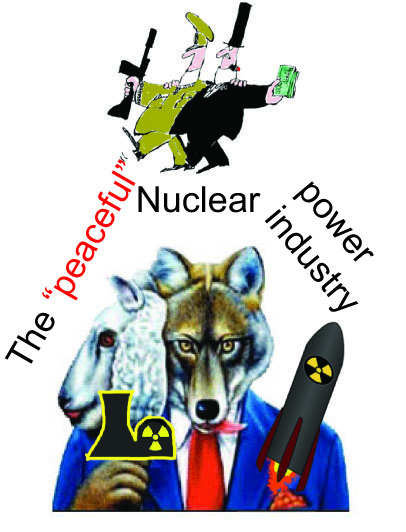 questions arise over many well-documented military entanglements of nuclear power
the “reliable provision of Russia’s defense capability is the main priority of the nuclear industry” – Rosatom
a host of other defense policy discussions are very clear that the UK nuclear ‘submarine industrial base’ would not be sustainable, if a decision were taken to discontinue civil nuclear power…statements from UK submarine industry sources note incentives to “mask” the costs of this military programme behind the related civilian industrial infrastructure…. a programme of submarine-derived small modular reactors should be adopted in UK energy policy in order to “relieve the Ministry of the burden of developing and retaining skills and capability” on the military side. – Rolls Royce
focused on facilitating ‘mobility’ between the civil and defense nuclear workforce – UK
In the USA, powerful imperatives have recently been openly declared in high level policy debate, to maintain support for otherwise-uncompetitive nuclear power in order to sustain a continuing nuclear navy.
How much of the costs of these shared underpinnings for military nuclear ambitions, are being concealed by otherwise uneconomic joint civil-military nuclear infrastructures?
A Global Picture of Industrial Interdependencies Between Civil and Military Nuclear Infrastructures https://www.sussex.ac.uk/webteam/gateway/file.php?name=2018-13-swps-stirling-and-johnstone.pdf&site=25 (this paper is richly supplied with comprehensive footnotes and references. Andy Stirling, Phil Johnstone, SPRU, August 2018 (This is an extended, updated and more fully referenced version of a chapter appearing in M. Schneider, A. Froggatt, J. Hazemann, T. Katsuta, M.V. Ramana, A. Stirling, P. Johnstone, C. von Hirschhausen, B. Wealer, The World Nuclear Industry Status Report 2018, Mycle Schneider Consulting, Paris, 2018)
Abstract
Noting the increasingly unfavourable economic and operational position of nuclear power around the world, this paper reviews evidence for a hitherto neglected connection between international commitments to civil and military nuclear infrastructures. Continue reading
French nuclear industry in turmoil, – inadequate welds at Flamanville nuclear reactor
 Le Monde 16th Sept 2018 [Machine Translation] Nuclear: In Flamanville, the welds of the discord.
The manufacturing difficulties of the French EPR have cruelly recalled the pitfalls that threaten the tricolor nuclear industry: an extremely ambitious initial vision and implementation difficulties with heavy consequences.
generators.
As a result, the group has to take back fifty-eight welds, knowing that a single weld represents eight weeks of extra work.
https://www.lemonde.fr/economie/article/2018/09/16/nucleaire-a-flamanville-les-soudures-de-la-discorde_5355892_3234.html
THE HIGH TOXICITY AND RADIOTOXICITY OF TRITIUM
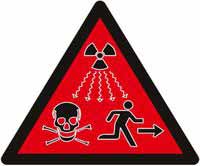 Ken Raskin, Tritium is mostly what the Japanese want to dump from Fukushima. Millions of tons of water with tritium in it. Massive amounts of nuclear waste from Fukushima.
Tritium bombards, and even attaches to tissue covalently. There is usually a lot of UNACCOUNTED FOR RADIONUCLIDE-TRITIUM, around nuclear reactors. That is because the nucleoapes that run the reactors are psychopaths. They have little value for life, human or otherwise. Like radioactice Carbon 14 can, Tritium, binds to tissue. TRITIUM then permanently bombards the heck out of surrounding tissue, with beta rays!
 There was a large study, that showed tritium increases cancer 20 times. It is teratogenic. There are several case studies, of workers with increased rates of granulomas and lymphomas who were chronically exposed for years.
The pronukers go on and on, about k40 which is a nonstart. Even the gaslighters do it. It is Irrelevent, then they trurn around and lie their asses off about the extreme radiotoxicity and biological toxicity of tritium!
The nuclearists encourage the myth of how harmless tritium is. It does not just mostly pass through the body in water. Another blatant lie. It biocumulates in worse ways than radioactive, iodine, cesium, uranium because it becomes a part of the human body. It impairs and destroys reproductive capabilities. There is a comprehensive study done showing it increased cancer several times. It can covalently take the place of hydrogen in the body, in tissue.
1 This Month
Chernobyl: The Lost Tapes – A good documentary on Chernobyl on SBS available On Demand for the next 3 weeks– https://www.sbs.com.au/ondemand/tv-program/chernobyl-the-lost-tapes/2352741955560

of the week–London Campaign for Nuclear Disarmament

Tell the Ukrainian Government to Drop Prosecution of Peace Activist Yurii Sheliazhenko
To see nuclear-related stories in greater depth and intensity – go to https://nuclearinformation.wordpress.com
-
Archives
- April 2026 (126)
- March 2026 (251)
- February 2026 (268)
- January 2026 (308)
- December 2025 (358)
- November 2025 (359)
- October 2025 (376)
- September 2025 (257)
- August 2025 (319)
- July 2025 (230)
- June 2025 (348)
- May 2025 (261)
-
Categories
- 1
- 1 NUCLEAR ISSUES
- business and costs
- climate change
- culture and arts
- ENERGY
- environment
- health
- history
- indigenous issues
- Legal
- marketing of nuclear
- media
- opposition to nuclear
- PERSONAL STORIES
- politics
- politics international
- Religion and ethics
- safety
- secrets,lies and civil liberties
- spinbuster
- technology
- Uranium
- wastes
- weapons and war
- Women
- 2 WORLD
- ACTION
- AFRICA
- Atrocities
- AUSTRALIA
- Christina's notes
- Christina's themes
- culture and arts
- Events
- Fuk 2022
- Fuk 2023
- Fukushima 2017
- Fukushima 2018
- fukushima 2019
- Fukushima 2020
- Fukushima 2021
- general
- global warming
- Humour (God we need it)
- Nuclear
- RARE EARTHS
- Reference
- resources – print
- Resources -audiovicual
- Weekly Newsletter
- World
- World Nuclear
- YouTube
-
RSS
Entries RSS
Comments RSS
 nuclear-news