#Fukushima : First recognized lung #cancer in #nuclear worker, but what is being hidden? #Jebi #unhrc

Former employees of the nuclear power plant operator TEPCO repeatedly struggling to recognize their illnesses as a consequence of their labor input – but sometimes the recognition comes too late, as a case from Fukushima shows today.
Meanwhile, Japan is currently busy with Typhoon Jebi, and after moving north, Fukushima News on the storm is expected soon. The first news is already in the Spreadnews Japan ticker on 4 September 2018.
Our current topics at a glance:
For the first time lung cancer recognized by ex-nuclear workers as a result
Fukushima prefecture prepares for typhoon Jebi
For the first time lung cancer recognized by ex-nuclear workers as a result
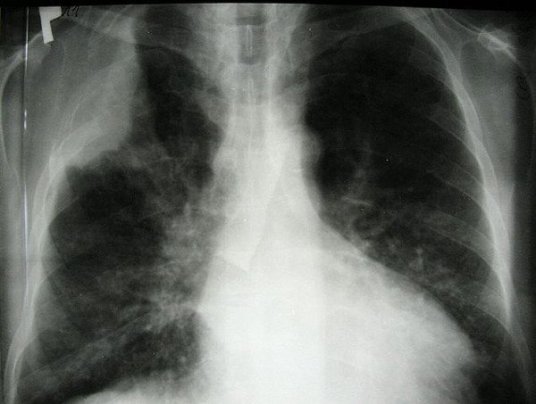
As announced by the Japanese Ministry of Health, Labor and Social Affairs (MHLW) on Tuesday, lung cancer was first recognized as a result of labor input during the disaster at the Fukushima Daiichi nuclear power plant.
The man in his mid-50s was employed at various nuclear power plants since June 1980. After the start of the Fukushima crisis in March 2011, he was commissioned with radiation measurements, but also dealt with the planning and the first measurement in decontamination work.
As the MHLW announced, the former power plant worker has since died. It is the first case in which lung cancer is recognized as a “catastrophic death”.
So far, only three cases of leukemia and one case of thyroid cancer have been recognized by former nuclear workers as a causal consequence of their work on the Fukushima Daiichi nuclear power plant. Prefecture media reported this late recognition of the lung cancer case.
Fukushima prefecture prepares for typhoon Jebi
After Typhoon Jebi landed in West Japan and shut down Kansai International Airport for at least two days, and caused power cuts in Osaka and claimed eight lives, the country’s northeast is also preparing for the storm.
In Fukushima prefecture, the biggest winds are expected from Wednesday morning. Due to the severity of the typhoon, it is assumed that the precipitation numbers will be even higher than is otherwise the case with a typhoon.
There is also a risk of landslides, as well as the risk of rivers overflowing and flooding of low-lying areas in coastal areas. Farmers prepare for the storm winds by securing their fields with windbreakers.
The weather authority demands that the house should not leave the house as much as possible and that information about possible weather warnings and evacuation orders should be tracked. Shelters are already prepared.
A total of five flights have already been canceled at Fukushima Airport. The flight cancellations affected 231 passengers.
Meanwhile, local electricity company TEPCO, the operator of the Fukushima Daiichi nuclear power plant, issued the usual standard warning of overhead power cables and called for these sightings to be reported.
About the preparations reported Prefekturmedien.
Translated from German, original source here;
http://www.spreadnews.de/fukushima-aktuell-erstmals-lungenkrebs-bei-akw-arbeiter-anerkannt/
BUT THE HEALTH EFFECTS HAVE BEEN REPORTED BEFORE!!
Shocking health effects in Fukushima nuclear workers found under the official radiation dose limits
“….The First male Daichi nuclear site worker had an official total dose of 50mSv.
“I suffered damages to kidneys, heart, etc. — all important organs in my body.”
The second male Daichi nuclear site worker had an official total dose of 56mSv. He said
“I went to such a severe accident site and worked at the risk of my life, but all I’ve got was this cruel reality and treatment!”
I suffered thyroid damage, and had all my stomach removed.
The third male Daichi nuclear site worker had an official total dose of just 19.2mSv.
He was diagnosed as having acute myelogenous leukemia.
My doctor said that “70% of the cells in your bone marrow were occupied by cancer. Without any treatment, you will die for sure.” …..” https://europeannewsweekly.wordpress.com/2016/03/18/shocking-health-effects-in-fukushima-nuclear-workers-found-under-the-official-radiation-dose-limits/
AND
Campaign to stop bad nuclear health practice in Fukushima concerning thyroid cancer epidemic
Safety checks delay construction of #MOX #nuclear fuel plant in #Aomori for the third time!
AOMORI – Construction in Aomori Prefecture of the world’s first commercial reactor to operate solely on plutonium-uranium mixed oxide fuel will be pushed back for the third time due to prolonged safety checks, the utility building the reactor said Tuesday.
Electric Power Development Co. had been planning to begin construction of major facilities at the Oma nuclear power plant in the prefecture during the latter half of this year, but told the Oma Municipal Assembly on Tuesday it has decided to delay the work by about two years. The delay means the new target for the reactor to begin operations is fiscal now 2026.
The move clouds the course of Japan’s policy for the nuclear fuel cycle, in which the reactor was supposed to play a key role. Mixed oxide (MOX) fuel is produced by extracting plutonium from spent nuclear fuel and mixing it with uranium. Tokyo is also under international pressure to slash its stockpile of plutonium, which has the potential to be used to produce nuclear weapons.
“We would like Electric Power Development to put top priority on safety and respond appropriately to the Nuclear Regulation Authority’s screening,” industry minister Hiroshige Seko said at a news conference.
The company, also known as J-Power, initially sought to start operations at the nuclear plant, to be located in the Aomori town of Oma with an output of 1.38 million kilowatts, in fiscal 2021, but put it back by one year in 2015 and then postponed it to fiscal 2024 in 2016.
Construction of the reactor began in 2008 after gaining state approval, but was stalled following the nuclear meltdowns at the Fukushima No. 1 power plant triggered by the 2011 earthquake and tsunami disaster.
About 40 percent of the construction has been completed, but work so far has centered on setting up office buildings and conducting road repairs.
J-Power applied for safety checks in December 2014, but NRA examinations have focused on assumptions about tsunami and earthquake risk at the overall complex and not at its nuclear facilities. An official at the company told the Oma Municipal Assembly that it may take two more years for the reactor to pass the screening.
J-Power said it hopes to start construction of the reactor and other facilities in the latter half of 2020 and complete it by the second half of 2025.
“It’s very regrettable that the project will be postponed once again. I hope (J-Power) will strive to swiftly pass the screening and help revitalize the regional economy,” Oma Mayor Mitsuharu Kanazawa said at the assembly meeting after hearing from the company official.
The Oma plant has also faced lawsuits seeking suspension of the project.
Residents in Hakodate, Hokkaido, which is some 23 kilometers northwest of Oma across the Tsugaru Strait, filed a lawsuit against the company and the central government with the Hakodate District Court in July 2010, claiming they are concerned about the large amount of highly toxic plutonium that will be used as reactor fuel.
The city of Hakodate also filed suit against the two parties with the Tokyo District Court in April 2014, saying it fears the impact of an accident at a so-called full-MOX reactor will be far more devastating than that of the Fukushima disaster, which led to the long-term evacuation of many local residents.
Letter to the International Olympic Committee #IOC from #Japan #Fukushima #UNHRC #IAEA #ICRP
Nuclear reactors shutting down faster than ones are being built
 Nuclear plant decommissioning outpacing new-build – report https://www.reuters.com/article/energy-nuclearpower/nuclear-plant-decommissioning-outpacing-new-build-report-idUSL8N1VM4EC
PARIS, Sept 4 (Reuters) – The decommissioning of nuclear reactors is far outpacing the construction of new plants, as the pace of Chinese reactor building has slowed and several developing countries have scrapped nuclear projects, an industry report showed.
In mid-2018, a total of 115 reactors were being decommissioned, about 70 percent of the world’s 173 reactors that have been permanently shut down, according to the annual World Nuclear Industry Status Report (WNISR).
Only 19 reactor units have been fully decommissioned – of which 13 are in the United States, five in Germany, and one in Japan – and just 10 have been returned to greenfield sites.
Many utilities prefer to let reactor cores cool off for decades on-site.
“Unscrewing a nuclear installation by workers who know how it was put together makes more sense than cutting it apart decades later by people who know nothing about it,” said Mycle Schneider, lead author of the report.
Decommissioning has become a major activity for many reactor builders and operators here, turning the costly process into a business opportunity.
By comparison, 15 countries are currently building nuclear power plants, two more than in mid-2017, as newcomer countries Bangladesh and Turkey started building their first units. Belarus and United Arab Emirates (UAE) have nuclear new-build projects that are well under way.
Nuclear new-build plans have been cancelled, including in Jordan, Malaysia and the United States, or postponed such as in Argentina, Indonesia and Kazakhstan, the WNISR report said.
Last week, South Africa scrapped a plan here to add nearly 10 gigawatt (GW) of nuclear power by 2030.
At the end of June, 50 reactors were being built worldwide — of which 16 are in China – with total capacity of 48.5 GW. Following the 2011 Fukushima disaster, the number of reactors under construction topped at 68 in 2013 but has trended downward since then.
A total of 413 reactors were in operation in 31 countries in mid-2018, ten more than a year ago and compared with a peak of 438 in 2002. The increase was due to the restart of several reactors that had suffered long-term outages.
The amount of electricity generated with nuclear energy worldwide rose one percent to 2,500 terawatt hours in 2017 and the share of nuclear power in power generation was 10.3 percent, virtually stable over the past five years. (Reporting by Geert De Clercq; Editing by Mark Potter)
| ReplyForward |
Climate change talks – in Bangkok – sinking below rising sea

With rising sea levels, Bangkok struggles to stay afloat https://www.afp.com/en/news/2265/rising-sea-levels-bangkok-struggles-stay-afloat-doc-18o4x91As Bangkok prepares to host climate-change talks, the sprawling city of more than 10 million is itself under siege from the environment, with dire forecasts warning it could be partially submerged in just over a decade.
A preparatory meeting begins Tuesday in Thailand’s capital for the next UN climate conference, a crunch summit in Poland at the end of 2018 to set rules on reducing greenhouse emissions and providing aid to vulnerable countries.
As temperatures rise, abnormal weather patterns — like more powerful cyclones, erratic rainfall, and intense droughts and floods — are predicted to worsen over time, adding pressure on governments tasked with bringing the 2015 Paris climate treaty to life.
Bangkok, built on once-marshy land about 1.5 metres (five feet) above sea level, is projected to be one of the world’s hardest hit urban areas, alongside fellow Southeast Asian behemoths Jakarta and Manila.
“Nearly 40 percent” of Bangkok will be inundated by as early as 2030 due to extreme rainfall and changes in weather patterns, according to a World Bank report.
Currently, the capital “is sinking one to two centimetres a year and there is a risk of massive flooding in the near future,” said Tara Buakamsri of Greenpeace.
Seas in the nearby Gulf of Thailand are rising by four millimetres a year, above the global average.
The city “is already largely under sea level”, said Buakamsri.
In 2011, when the monsoon season brought the worst floods in decades, a fifth of the city was under water. The business district was spared thanks to hastily constructed dikes.
But the rest of Thailand was not so fortunate and the death toll passed 500 by the end of the season.
Experts say unchecked urbanisation and eroding shorelines will leave Bangkok and its residents in a critical situation.
– ‘Venice of the East’ –
With the weight of skyscrapers contributing to the city’s gradual descent into water, Bangkok has become a victim of its own frenetic development.
Making things worse, the canals which used to traverse the city have now been replaced by intricate road networks, said Suppakorn Chinvanno, a climate expert at Chulalongkorn University in Bangkok.
“They had contributed to a natural drainage system,” he said, adding that the water pathways earned the city the nickname ‘Venice of the East’.
Shrimp farms and other aquacultural development — sometimes replacing mangrove forests that protected against storm surges — have also caused significant erosion to the coastline nearest the capital.
This means that Bangkok could be penned in by flooding from the sea in the south and monsoon floods from the north, said Chinvanno.
“Specialists anticipate more intense storms in this region in the years to come. Narong Raungsri, director of Bangkok’s Department of Drainage and Sewage, admitted that the city’s “weaknesses” stem from its small tunnels and the hyper-development of neighbourhoods.
“What used to act as water basins are now no more,” Raungsri said.
“Our system can only handle so much — we need to enlarge it.”
Today, the government is scrambling to mitigate the effects of climate change, constructing a municipal canal network of up to 2,600 kilometres with pumping stations and eight underground tunnels to evacuate water if disaster strikes.
Chulalongkorn University in 2017 also built in central Bangkok an 11-acre park specially designed to drain several million litres of rain and redirect it so surrounding neighbourhoods are not flooded.
But these ad-hoc fixes may not be enough.
“We need a clear policy of land management,” said Greenpeace’s Buakamsri, adding that the need for increased green spaces is outweighed by developers’ interests.
“The high price of land in Bangkok makes economic interests a priority.”
Nuclear power- detrimental to UK now, and to future generations
 Power technology 3rd Sept 2018 Nuclear power is high on the agenda for the UK Government, with a spate of projects planned in the coming years. But just how beneficial will it be to
the country?
Industry experts offer their views. Dr Ian Fairlie, member of
the Campaign for Nuclear Disarmament’s National Council “The reality is
that we don’t need new nuclear. As many studies indicate, renewables will
do the job. “The economics of nuclear are dire, with the cost of
renewables steadily falling whereas those of new nuclear are always rising.
Hinkley C would cost over £21bn if it were ever finished, while new
offshore wind turbines are already supplying electricity at less than half
the estimated cost of electricity of the mooted Hinkley C station if it
were ever built.
“Some nuclear proponents think that nuclear is the
answer to climate change. But nuclear lifecycle analyses prove the
contrary, as uranium mining and milling are highly carbon-intensive.
“Additionally, even after 50 years’ research, no government has found a
sure-fire way of keeping nuclear’s dangerous waste safe for hundreds of
thousands of years.
Finally, there is the incontrovertible evidence in over
40 studies of raised levels of childhood leukemia near nuclear reactors
worldwide. “We don’t need nuclear. It’s unsafe, uneconomic, and it
creates dangerous waste. Much better alternatives are already here. Nuclear
can hardly be said to be a benefit to the UK, more like a serious detriment
to us and to future generations.”
https://www.power-technology.com/features/67772/
Will UK’s House of Lords agree to force a geological nuclear dump on Cumbria
 Radiation Free Lakeland 2nd Sept 2018 , Will These Lords Leap to Cumbria’s Defence? Will They Shout About the
“Implementation” of Geological Dumping of Nuclear Wastes. On the 6th
September the House of Lords will be debating the Government’s cunning
plan to implement Geological Disposal of Nuclear Wastes. Radiation Free
Lakeland have sent a letter to all of the Cumbrian Lords to urge them to
tear up this policy which seeks to force a geological nuclear dump on
Cumbria and instead to scrap the whole “Implementation” plan. Our
letter is below [on original] and we urge all those who love Cumbria to write a similar
letter to any or all of the Cumbrian members of the House of Lords.
https://mariannewildart.wordpress.com/2018/09/02/will-these-lords-leap-to-cumbrias-defence-will-they-shout-about-the-implementation-of-geological-dumping-of-nuclear-wastes/
Want clear information on nuclear issues? Go to Beyond Nuclear International
 Beyond Nuclear 2nd Sept 2018 What is the difference between an open pit and an in-situ leach uranium mine? How does a nuclear power plant produce electricity? What happens to reactor fuel once it’s no longer usable? What is the difference between high-level and low-level radioactive waste and where is it stored? Why isn’t reprocessing really “recycling”?
the basics are understood, we need to move people. And that is why the
Beyond Nuclear International website came to be born, providing a natural
home for the Handbook and expanding from facts to compelling narratives.
the nuclear fuel chain; Radiation and harm to human health, which lays out
the detriments to health of every phase of nuclear power operations; and
Climate change and why nuclear power can’t fix it. More chapters are in
the works.
https://beyondnuclearinternational.org/2018/09/02/an-a-z-against-nuclear-power/
Austria will appeal EU ruling on UK’s Hinkley Point nuclear plant
 Austria plans to appeal EU ruling on UK’s Hinkley Point nuclear plant https://www.reuters.com/article/us-eu-nuclear-uk-austria/austria-plans-to-appeal-eu-ruling-on-uks-hinkley-point-nuclear-plant-idUSKCN1LJ0Y5
VIENNA (Reuters) – Austria plans to appeal against a ruling by Europe’s second-highest court which rejected its objections to Britain’s plans for a nuclear power plant at Hinkley Point, the country’s sustainability minister said on Monday.
“Our lawyers have examined this in detail in the past weeks. We believe the chances of an appeal remain intact,” Sustainability Minister Elisabeth Koestinger said in an interview with newspaper Kronen Zeitung.
The ministry said it expects Austria’s cabinet to formally give the go-ahead for an appeal when it meets on Wednesday.
French utility EDF and China General Nuclear Power Corp aim to have the Hinkley Point C nuclear power station on line in 2025 with costs for the project seen at 19.6 billion pounds ($25.3 billion).
The European Commission cleared the project in 2014, saying it did not see any competition issues. But Austria took its objections to the General Court in Luxembourg, which dismissed them in July.
One aspect Vienna objects to is a guaranteed price for electricity from the plant which is higher than market rates. It also opposes state credit guarantees of up to 17 billion pounds being provided for the project.
Austria can appeal to the European Court of Justice but only on matters of law.
Opposition to nuclear power is widespread in Austria, which built a nuclear reactor but never brought it on line.
Voters rejected plans to bring it into operation in a referendum in 1978 and the reactor, at Zwentendorf on the Danube northwest of Vienna, now serves as a training center.
($1 = 0.7757 pounds) Reporting by Francois Murphy; editing by Jason Neely
1 This Month



Tell the Ukrainian Government to Drop Prosecution of Peace Activist Yurii Sheliazhenko

Petition to revoke the licensing of the Near Surface Nuclear Disposal Facility (NSDF) at Chalk River. https://www.ourcommons.ca/petitions/en/Petition/Details?Petition=e-7247


of the week – STOP SMALL MODULAR REACTORS IN CANADA
To see nuclear-related stories in greater depth and intensity – go to https://nuclearinformation.wordpress.com
-
Archives
- March 2026 (222)
- February 2026 (268)
- January 2026 (308)
- December 2025 (358)
- November 2025 (359)
- October 2025 (376)
- September 2025 (258)
- August 2025 (319)
- July 2025 (230)
- June 2025 (348)
- May 2025 (261)
- April 2025 (305)
-
Categories
- 1
- 1 NUCLEAR ISSUES
- business and costs
- climate change
- culture and arts
- ENERGY
- environment
- health
- history
- indigenous issues
- Legal
- marketing of nuclear
- media
- opposition to nuclear
- PERSONAL STORIES
- politics
- politics international
- Religion and ethics
- safety
- secrets,lies and civil liberties
- spinbuster
- technology
- Uranium
- wastes
- weapons and war
- Women
- 2 WORLD
- ACTION
- AFRICA
- Atrocities
- AUSTRALIA
- Christina's notes
- Christina's themes
- culture and arts
- Events
- Fuk 2022
- Fuk 2023
- Fukushima 2017
- Fukushima 2018
- fukushima 2019
- Fukushima 2020
- Fukushima 2021
- general
- global warming
- Humour (God we need it)
- Nuclear
- RARE EARTHS
- Reference
- resources – print
- Resources -audiovicual
- Weekly Newsletter
- World
- World Nuclear
- YouTube
-
RSS
Entries RSS
Comments RSS
 nuclear-news