Wayne JonesDon’t forget that Saturday is World Anti Nuclear Day (WAND) . I will be in Cardiff City Centre at 3pm at the confluence of Queen Street and Duke Street . Hoping you can join me . Others may wish to meet at the Houses of Parliament in London , and outside the Minster in York
Asked by Zahalka if Israel had a nuclear plant in Dimona, Energy Minister Yuval Steinitz said Israel made sure there would be no nuclear weapons in Iraq and Syria.
The Knesset voted 73 to 8 Wednesday afternoon to reject MK Jamal Zahalka’s proposal for international monitoring over Israel’s alleged nuclear facility in Dimona.
Only MKs from Zahalka’s Joint List faction voted for the bill, which would have compelled Israel to sign the Treaty on the Non-Proliferation of Nuclear Weapons within a month and then submit the Dimona facility to the oversight of the International Atomic Energy Agency.
Zahalka warned in the Knesset debate that the facility endangered the region, its people, and property, especially if there would be an earthquake. He noted that there was a small earthquake in Tiberias overnight and that a small earthquake near a nuclear facility in Japan six years ago caused significant damage.
The bill was co-sponsored by Joint List MKs Haneen Zoabi and Juma Azbarga. Zahalka warned that the Dimoana facility encouraged neighboring countries to build similar facilities.
“As long as Israel has nuclear weapons, other countries in the region will try to acquire them as well, and they will get them sooner or later,” Zahalka said. “The only way to prevent that from happening is to denuclearize the entire Middle East from weapons of mass destruction, including Israel.”
Asked by Zahalka if Israel had a nuclear plant in Dimona, Energy Minister Yuval Steinitz said Israel made sure there would be no nuclear weapons in Iraq and Syria and would ensure Iran would not get a nuclear capability. Steinitz said that if Iran stops being militant, there will be Middle East peace but if Israel stops fighting for its existence, it will be destroyed.
The minister added that the IAEA had nothing to do with earthquakes. Zahalka rebutted him that if there would be an earthquake, there could be damage to the reactor, and then the IAEA would have to get involved to deal with the repercussions.
Turning to the MKs who voted against the bill, Zahalka said: “You are responsible for the disaster that could come because the reactor is unsupervised.”
Steinitz called the bill “a joke,” because Zahalka focuses on safety from earthquakes while the IAEA “didn’t prevent Fukushima,” referencing the 2011 disaster at a nuclear plant in Japan.
The minister stressed a difference between a “research reactor” and a reactor used as a power plant. He further explained the plant was upgraded several times over since the 90s and said Zahalka was wrong to call it old and outdated. He stressed it would also be safe even in the event of an earthquake.
Israel is widely believed to be the Middle East’s only nuclear power, though it has never confirmed or denied that it has a nuclear arsenal. The country has refused to sign on to international nonproliferation treaties and arrested Mordechai Vanunu in 1986 for leaking information about a facility in Dimona.
Vanunu was jailed as a traitor in 1986 after discussing his work as a technician at the Dimona nuclear reactor facility with Britain’s Sunday Times newspaper, an interview that led experts to conclude that the facility had produced fissile material for as many as 200 atomic warheads.
Lahav Harkov, Avraham Gold and Yonah Jeremy Bob contributed to this report.
Katsurao Village contamination map: the latest map of Fukuichi (Fukushima Daiichi) Area Environmental Radiation Monitoring Project.
In English & in Japanese.
PLEASE SHARE !
Katsurao Village: its whereabouts and evacuation/return policy history
In June 2016, the evacuation order applied to Katsurao village after the Fukushima Daiichi Nuclear accident was lifted for 80% of its territory. The northeast part of the village in the vicinity of Namie town is still classed as a ”difficult-to-return” zone, where the annual airborne radiation dose is over 20mSv. The lifting of the evacuation order of this area is not planned.
Katsurao in relation to the crippled Fukushima Daiichi NPP
In June 2018, approximately 300 people are living in the village, which is about 20% of the population before the accident. In April 2018, primary and junior high schools opened where 18 children are currently studying, whereas in 2010, before the accident, 112 children were attending schools.
The village is covered by hilly forests as you can see in the Google Earth below.
グーグルアースの地図で見れるように、葛尾は緑豊かな山村です。
Picture Google Earth
Katsurao village contamination map 葛尾村土壌汚染マップ
Since last year, Fukuichi (Fukushima Daiichi) Area Environmental Radiation Monitoring Project Team has been measuring contamination in Namie Town, Tomioka Town and in a part of Okuma Town (the-not-permitted-to-live zone). Compared to these areas, the radio-contamination of Katsurao village is relatively low. However, the soil contamination is still well above 185000Bq/m2, the value over which Chernobyl law grants the inhabitants the right to evacuate. Allowing, or more exactly forcing the population to live in such highly contaminated areas by cutting public aid and therefore depriving the financial means for evacuees to live outside of the contaminated area is a strong violation of human rights. (See the article in Beyond Nuclear International: Fukushima mothers at UN tell their story).
チームは昨年から、浪江町・富岡町・大熊町の1部(居住制限区域)とモニタリングをおこなってきましたが、それと比較すると放射能汚染の程度は低いと感じられます。それでも、土壌汚染密度の平均は、チェルノブイリ法の「移住の権利」基準(185,000Bq/㎡)を大きく超えています。このような高度汚染地域の避難指示を解除し、公的支援を打ち切り、汚染地域の外で生活することが経済的に困難な状況を作り出すことで人々を帰還させるのは基本的人権の侵害に他なりません。(Beyond Nuclear Internationalの以下の記事をご参照ください。 Fukushima mothers at UN tell their story)
Project team at work モニタリングチームの作業
As we can see in the pictures, the team members are elderly or relatively elderly, therefore less radio-sensitive than younger people. They have volunteered to enter in highly contaminated areas to do the measuring work since neither central nor local governments are willing to carry out such work. We thank them greatly for their help and devotion.
The appearance of the temporary depositories of radioactive soil from the decontamination efforts is different. In Minamisoma or in Namie, they are surrounded by 2m high fences, whereas those of Katsurao village are covered by dark green sheeting without conspicuous fencing. As one of the monitoring team members says sarcastically, ”they melt perfectly in their natural environment.”
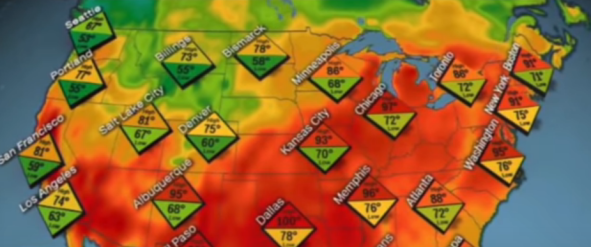
The failure to link the increasing frequency and intensity of heat waves means that the general population remains relatively unaware of the urgency of climate change, says Jennifer Marlon of the Yale Program on Climate Change Communication Visit http://therealnews.com for more stories and help support our work by donating at http://therealnews.com/donate.
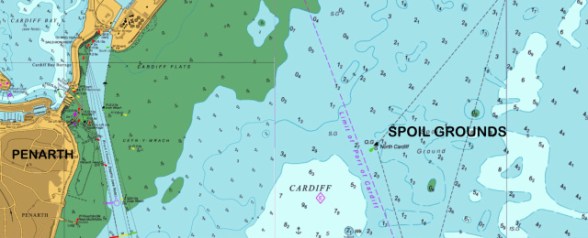
Natural Resources Wales is in a very difficult position. They are responsible for issuing the Marine Licence that Electricité de France needs before they can dredge 300,000 tonnes of sediment from the Severn Estuary and dump it on Cardiff. But NRW knows almost nothing about how much radioactivity is in the mud.
CEFAS, a laboratory sponsored by Westminster Government, tested the mud but destroyed the data. Later they took samples only from the top layer although EdF proposes to scrape down to bed rock. They examined the samples only with a technique that cannot detect Uranium and Plutonium.
NRW says the mud is safe but they have no expertise on radiation and health. They rely on the English Environment Agency. But the Environment Agency told us and other NGOs they aren’t competent to talk about new evidence of the dangers of Uranium. They say we must discuss it with COMARE and Public Health England.
NRW claims to be open to fresh approaches and new information. We have reported to them on the evasion and dishonesty of COMARE and PHE when addressing new evidence. We have emphasised the sociological angle, telling them that a classic Scientific Revolution is happening in front of their eyes. We have pointed out that, rather than engaging with the science, COMARE has recruited a sociologist to help them deal with challenging dialogues (peep behind the scenes in Minute 2.5 of COMARE’s meeting in November 2017).
The majority of AMs who spoke in the Welsh Assembly mud dump debate on 23rd May emphasised the precautionary principle. Suspending the licence is an obvious first move so that proper tests can be done. Full reports.
Deception is RIFE
Recently we paid Harwell a lot of money to analyse sediment from Newbiggin near Sellafield. It turns out to be ten times as hot as CEFAS says in Radioactivity in Food and the Environment for the same location. If CEFAS is lying about Newbiggin we must infer that all the millions the Government has spent on RIFE reports over the last 23 years have been wasted. It also casts further doubt on what they have told Natural Resources Wales about the Cardiff Mud Dump.
I just published a new report (www.llrc.org) on the bogus science behind the Cardiff mud dump. It’s for Natural Resources Wales, forwarded by my AM Kirsty Williams.
Scientists have been protesting at the bogus modeling of radiation risk since WW2 but now it’s totally bizarre. The English Environment Agency has backed away from discussing it, leaving Natural Resources Wales, who relied on them, with no science but a dumping decision to defend. My report reproduces official responses from the people who can’t avoid discussing it because it’s their job — Public Health England, COMARE, and Westminster’s Department of Business, Energy and Industrial Strategy (BEIS) — together with my replies dissecting their total b….x, sorry I mean “unscientific reasoning”.
I have alerted Sophie Howe, the Future Generations Commissioner for Wales, that the dump is imminent. I have asked her to persuade NRW to withdraw or suspend the licence until new samples have been taken from the full depth of the sediment and tested with protocols that EdF’s critics agree with and can scrutinise. Please, Get with.…”
Japan’s government on July 3 approved a new Basic Energy Plan for the country, saying it is committed to increasing the role of renewable resources for power generation while also confirming it wants nuclear power to remain a vital part of the nation’s energy strategy.
Japan issues a revised Basic Energy Plan, which outlines the country’s mid- and long-term energy policy, every few years as required by law. The plan issued today is the second under the administration of Prime Minister Shinzo Abe. The new plan is first time Japan has announced a commitment to renewable energy such as solar and wind, though it noted widespread adoption of renewable resources could be limited by the country’s fluctuating weather. The plan also says renewables will include batteries and hydrogen-based technologies.
The new plan says the country will continue to rely on coal-fired power generation as a baseload energy source, even as it discusses ways to reduce carbon emissions in its energy sector. Japan has a goal of an 80% reduction in greenhouse gas emissions in fiscal 2050 from 2013 levels.
At least eight new coal-fired plants have come online in Japan over the past two years, and there are plans to build at least three dozen more over the next decade. The government in early 2017 said it wanted to build new plants using high energy, low emissions (HELE) technology, which some experts say enables a plant to produce half the emissions of a traditional coal plant.
The Abe administration’s first energy plan in 2014 promoted nuclear energy and reversed the policy of the previous government, which pledged to phase out nuclear power by 2039 due to public concern about safety after the Fukushima nuclear disaster in 2011. Japan took all its nuclear units offline after Fukushima, rewrote its safety regulations, and said reactors needed to pass rigorous inspectionsbefore being allowed to re-enter commercial operation. The new energy plan does say safety is a priority and says the nation will cut dependence on nuclear power generation “as much as possible.”
The new plan lists targets for the country’s energy mix in 2030, with nuclear at 20-22%, renewables at 22-24%, and coal at 26%, mostly in line with previous levels. Energy analysts said about 30 of the country’s reactors would need to be restarted to reach the nuclear target; just eight have come back onlinepost-Fukushima; a ninth, Unit 4 at Genkai, is expected to re-enter commercial operation this month. Some companies have discussed building new reactors—Tokyo Electric Power Co. Holdings Inc. (TEPCO) last week said it plans to resume its planned Higashidori nuclear plant project in Aomori Prefecture, which was suspended after Fukushima—though the new plan makes no mention of new nuclear facilities.
Construction of the first of two reactors at Higashidori began in January 2011 but was stopped after March 2011 Fukushima incident. TEPCO said its plans for the plant still include two advanced boiling water reactors with total generation capacity of 2.77 gigawatts.
The latest energy plan says the government will maintain its nuclear policy, noting its importance to the Abe’s administration’s strategy for expanding the Japanese economy. According to the Basic Energy Plan, “Japan is determined to make a positive contribution to enhancing the safety of nuclear energy and the peaceful use of nuclear energy” through exports of nuclear plants.
The government’s plan for more coal plants is part of a strategy developed due to concerns about power demand outstripping power supply as nuclear plants went offline after Fukushima. The country’s coal strategy includes funding for new technologies to reduce emissions; Japan earlier this year said the Japan Coal Energy Center and Kawasaki Heavy Industries would spend $9 million to fund research into carbon capture at a facility near Gillette, Wyoming. It follows a 2016 agreement Wyoming Gov. Matt Mead signed to collaborate with the Japan Coal Energy Center for research and technology.
The country also is participating in research for using coal as an energy source for hydrogen-powered vehicles. Kawasaki Heavy Industries and Australia are working together at a $390 million pilot plant in Melbourne, Australia, that would turn coal into hydrogen gas.
It’s not a secret that nuclear radiation is dangerous: Not only does it cause cancer, even seemingly small amounts of the stuff can be lethal. Exposure to high enough levels can be deadly in frighteningly short periods of time. But for the survivors of the Fukushima disaster, and those living in surrounding areas, radiation and cancer aren’t the only health concerns. New research has shown that in communities nearest the power plant, cases of type 2 diabetes are on the rise.
Researchers have been analyzing the secondary health effects of the nuclear disaster, which took place seven years ago now. Dr. Masaharu Tsubokura, from the Department of Radiation Protection at Minamisoma Municipal General Hospital in Fukushima, has been working alongside other researchers to better understand the full scope of Fukushima’s health consequences. Their findings indicate both an increase in the number of cases, and a rise in severity of, health conditions like diabetes, high blood pressure, obesity and depression.
Dr. Tsubokura says that the social disruption caused by the evacuation has played an under-reported role on public health. As the research reveals, the elderly in particular have been hardest hit by the disaster — especially when it comes to diabetes. In the wake of Fukushima, “diabetes trumps radiation as a threat to life expectancy by a factor of 33,” sources say.
This is not to say that diabetes is more dangerous than radiation — but the finding shows that the number of people being afflicted by diabetes post-disaster is surprisingly high. The risk of type 2 diabetes, and poor diabetes management, as an indirect effect of the nuclear spill is substantial.
More than just a disrupted lifestyle?
The 2017 research paper highlights the fact that the effects of such disasters extend far beyond the acute: Indirect health issues abound after such an extreme disruption to normal life. But, is that really the only explanation?
Dr. Vivian Fonseca, assistant dean for clinical research at Tulane University in New Orleans reported similar effects in her post-Hurricane Katrina research. She noted that diabetes management “goes haywire” during the aftermath of a disaster — and the condition is heavily influenced by lifestyle factors like diet and exercise. The social stress of an evacuation and potential social isolation also weigh quite heavily on people who’ve already been diagnosed with the condition.
Scientists say the full scope of health ramifications is difficult to accurately ascertain; it’s hard to say what the mediating factors are (outside of the radiation, of course). But, that hasn’t stopped the Japanese government from wanting to build roads out of radioactive Fukushima dirt.
Some research from the Ukraine has documented a staggering increase in cases of diabetes and other non-cancer endocrine disorders. Even 30 years after the Chernobyl power plant incident, increased cases of diabetes and other conditions in survivors are still being documented. Scientists from the Ukraine reported in 2017 that levels of diabetes in radiation-exposed survivors (including site clean-up workers) remain noticeably higher than the rest of the population.
This finding could raise questions about the purported increase of diabetes in Fukushima survivors. While scientists say that this increase is due to the massive social disruption caused by the evacuation, one might wonder if there’s more to it than that. As the Ukrainian scientists note, research has shown that the endocrine system may be more affected by exposure to radiation than previously thought, especially the pancreas.
A Warming World Creates Desperate People, NYT, By Lauren Markham, Ms. Markham is a freelance reporter who writes about migration and the environment. June 29, 2018 Last year I traveled to southern Guatemala, the source of one of the largest migrations of unauthorized immigrants to the United States in recent years. It’s clear why people are leaving: Guatemala is a country rife with political conflict, endemic racism against indigenous people, poverty and, increasingly, gang violence.
But there’s another, lesser-known dimension to this migration. Drought and rising temperatures in Guatemala are making it harder for people to make a living or even survive, thus compounding the already tenuous political situation for the 16.6 million people who live there.
……….. Long before the unconscionable family-separation catastrophe at our southern border, President Trump had made the battle against illegal immigrants the rallying cry of his campaign and administration. He wants to lock up more immigrants — including toddlers — as a deterrent while casting all new unauthorized immigrants as potential, if not probable, violent criminals. Simultaneously, the president’s team has taken on the environment, doing nearly everything it can to walk back decades of regulation intended to protect our air, water and land. Last June, Mr. Trump pulled out of the Paris climate accord. Meanwhile, Scott Pruitt, the administrator of the Environmental Protection Agency, is doggedly eviscerating the agency he runs.
Today, according to global relief agencies, over 68 million people worldwide have been forced to flee their homes, often because of war, poverty and political persecution. As a writer, I focus largely on issues of forced migration. The hundreds of migrants I’ve interviewed in the past few years — whether from Gambia, Pakistan, El Salvador, Guatemala, Yemen or Eritrea — are most often leaving because of some acute political problem at home. But I’ve also noticed something else in my years of reporting. If you talk to these migrants long enough, you’ll hear about another, more subtle but still profound dimension to the problems they are leaving behind: environmental degradation or climate change.
The United Nations High Commissioner for Refugees estimates that since 2008, 22.5 million people have been displaced by climate-related or extreme weather events. This includes tragedies like the widespread famine in Darfur, monsoons and flooding in Bangladesh and the catastrophic hurricane in Puerto Rico. The more out of whack our climate becomes, the more people up and leave their homes. As our world heats up and sea levels rise, the problem of forced migration around the world is projected to become far worse.
And in refusing to take climate change or responsibility for our planet seriously, the Trump administration is encouraging the conditions that will increase unauthorized migrations to the United States and elsewhere.
…….. Many things are exacerbating the effects of the drought in Central America, including pervasive deforestation and farmers overtaxing their land. But according to Climatelinks, a project of the United States Agency for International Development, the average temperature in El Salvador has risen 2.34 degrees Fahrenheit since the 1950s, and droughts have become longer and more intense. The sea has risen by three inches since the 1950s, and is projected to rise seven more by 2050. Between 2000 and 2009, 39 hurricanes hit El Salvador, compared with 15 in the 1980s. This, too, is predicted to get worse………..
Like El Salvador, Gambia, Bangladesh and Guatemala, Ethiopia has been hit hard by climate change, though it is not even in the top 100 emitters of greenhouse gases. But the problem with climate change, of course, is that it is a problem that crosses borders.
The anti-immigrant rhetoric of the Trump administration has made for elaborate and bombastic theater — but with real, and sometimes deadly, human consequences (see again the children separated from their parents at the border). But Mr. Trump means what he says: He wants immigration from poor countries to stop. He sees the problems in those countries as theirs, not ours — never mind the centuries of catastrophic foreign intervention in places like El Salvador and the rest of the Americas, the Arab world and sub-Saharan Africa, or the growing menace of the changing climate.
If President Trump really wants to curb “illegal” migration to the United States for the long haul, he’d better get serious about climate change. The Trump administration can continue to eviscerate the E.P.A. and thumb its nose at global efforts to protect the climate. Or he can work responsibly to try to curb international migration by addressing the challenges of a warming planet.
North Korea agreed at the summit to “work toward denuclearization of the Korean Peninsula,” but the joint statement signed by Mr Kim and Mr Trump gave no details on how or when Pyongyang might surrender its nuclear weapons.
Ahead of the summit, North Korea rejected unilaterally abandoning an arsenal it has called an essential deterrent against US aggression.
US intelligence agencies believe North Korea has increased production of fuel for nuclear weapons at multiple secret sites in recent months and may try to hide these while seeking concessions in nuclear talks with the United States, NBC News has quoted US officials as saying.
Key points:
Unidentified US officials told NBC North Korea had stepped up production of enriched uranium
North Korea may have three or more secret nuclear sites
Mr Trump said last week North Korea was blowing up four of its big test sites
Beneath the surface, a quiet superpower race for nuclear supremacy, USA Today Yingjie Gu and Matt Sussis, Medill News Service June 30, 2018
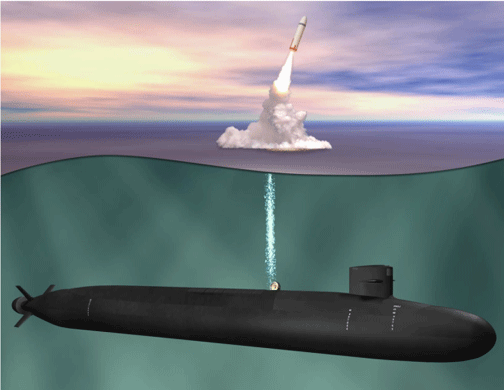
WASHINGTON — The world’s three largest naval powers are all developing the next generation of their nuclear submarine fleets, accelerating the underwater arms race between the United States, China and Russia.
For now, at least, analysts say America remains by far the most dominant submarine force, even as its chief rivals work feverishly to overcome the U.S. advantages. Each country appears to have different strategic goals, with the U.S. bent on gaining greater cost and operating efficiencies while the Chinese and Russian are keenly focused on technological advances and achieving greater stealth.
As tensions escalated in the South China Sea, these three countries — which boast the world’s largest navies — are aggressively preparing for any potential undersea or nuclear conflict, as they develop or perfect nuclear ballistic submarines (SSBNs) and attack submarines (SSNs). These nations have engaged in territorial disputes in those waters, and China has increased its submarine-intensive military drills as a show of force………
Mutually Assured Destruction
SSBNs, or “boomers,” hide in the ocean and can launch nuclear ballistic missiles at an enemy anywhere in the world even if the rest of a nation’s nuclear triad of air- and ground-based missiles is destroyed. They are the guarantors of mutually assured destruction in the event of nuclear war.
Some analysts say that these boomers will be increasingly crucial to the national security strategy of all three nations in the coming decade………..
Attack subs designed for versatility
The U.S., Russia and China are locked in an intense competition to develop the most sophisticated next generation of SSNs.
Because attack submarines carry cruise missiles, they constitute a navy’s most crucial and versatile weapon in any frontal assault. Cruise missiles are designed to deliver a large warhead over long distances with high accuracy, and they are intended to hit both land and sea targets.
The U.S. has built 13 Virginia-class attack submarines and is expecting 15 more by the end of 2018. China and Russia are also expanding their attack submarine fleets, albeit at a slower pace. China is currently constructing two additional Type 095 submarines and has five more planned, while Russia expects to have six more of its Yasen-M class submarines by 2020.
an inspection in 2017, after most of the waste was retrieved from the tank, found widespread pitting on the bottom of the inner shell, allowing waste to seep through. The finding pointed to a corrosion problem.
Experts don’t know enough about the issue yet to tell if the thinning is recent or definitely say what caused it.
More of Hanford’s newest waste storage tanks could be at risk of developing leaks, according to a new evaluation.
Tank farm contractor Washington River Protection Solutions compared the chemistry of the waste in the nuclear reservation’s oldest double-shell tank, which was discovered to be leaking, to the waste in the nuclear reservation’s other double-shell tanks.
The evaluation’s conclusion and other findings about the condition of the Hanford Site’s double-shell tanks suggest a need to build more waste storage tanks for 56 million gallons of waste, according to the Washington Department of Ecology.
“We need to start doing something, the sooner the better,” said Steve Lowe, Ecology’s double-shell tank lead engineer. “Cleanup depends on it.”
He characterized three of the double-shell tanks that still hold waste as having “very high risk factors” for corrosion, based on information in the new study.
But the finding doesn’t mean the three tanks are leaking or will leak, said Jeremy Johnson, deputy DOE project director for the Hanford tank farms, at a recent Hanford Advisory Board committee meeting.
The Department of Energy is emptying the radioactive and hazardous chemical waste from 149 leak-prone single-shell tanks into 28 newer double-shell tanks for storage until the waste can be treated for disposal. The waste is left from the past production of plutonium for the nation’s nuclear weapons program.
But the first of the double-shell tanks — Tank AY-102, which dates to 1971 — has been taken out of service and emptied after developing a slow leak from its inner shell into the space between its shells.
Corrosion risks identified
Initially, officials suspected the leak was caused by construction problems, including welds that had to be reworked as many as four times.
But an inspection in 2017, after most of the waste was retrieved from the tank, found widespread pitting on the bottom of the inner shell, allowing waste to seep through. The finding pointed to a corrosion problem.
Now the new study finds three other of the double-shell tanks — AY-101, AZ-101 and AZ-102 — have held waste with similar chemistry to what’s suspected of corroding the bottom of the inner shell of Tank AY-102.
Among the issues with the three tanks, as well as the tank that leaked and has been emptied, is a history of holding waste that generates high heat, which could accelerate corrosion.
The waste chemistry is one of three potential problems in the 27 remaining double-shell tanks that Johnson discussed with advisory board committee members.
Two of the tanks with possible waste chemistry issues also have spots with thinning in a ring around the wall of the inner shell. The ring is where condensate, or water from ventilation systems in the tank farms, was added and interacted with the air before it mixed into the rest of the waste.
In addition, ultrasonic testing has found thinning of the steel in the bottom of the outer shell of nine of 11 of the double-shell tanks checked.
In one spot of Tank AP-102, the steel bottom of the shell had thinned up to 70 percent, according to DOE.
Experts don’t know enough about the issue yet to tell if the thinning is recent or definitely say what caused it.
However, DOE suspects that moisture may be infiltrating and corroding the outside of the tank where it sits underground on a concrete foundation. The foundation has drains to a sump system.
High pressure water is sprayed to move waste around on the bottom of the inner shell of Hanford Tank AY-102. Bubbles may indicate some of the seven leaks found inside the inner shell. No waste is believed to have escaped the tank’s outer shell. Ed
McClatchyCourtesy Washington River Protection Solutions
DOE has relied on an independent Tank Integrity Expert Panel, which met last week, to provide recommendations on the Hanford tanks.
The panel has “found areas of interest in time to take action before they become a problem,” Johnson said.
Ecology raises concerns
But the state is concerned that double-shell tank space already is in short supply, with several of the tanks at risk.
Every double-shell tank that fails will take two out of use — the one that failed and the one that is filled with waste from the failed tank, Lowe said. Double-shell tanks have a capacity of at least 1 million gallons.
DOE has said that once the vitrification plant starts turning low-activity radioactive waste into a stable glass form, as soon as 2021, about 12 million gallons of space will be freed up during the following decade in the double-shell tanks to empty more single-shell tanks.
But by the time the vitrification plant starts treating waste, the oldest of the double shell tanks will already be 50 years old. And some of the tanks will remain in service as the plant operates for another 40 years, Ecology officials pointed out.
One of the tanks identified as at high risk for corrosion, Tank AZ-101, holds waste that is expected to be treated as high-level radioactive waste, according to Ecology officials. The waste is expected to remain in the tank until 2036, when the vit plant is expected to be fully operational.
The Tank Integrity Expert Panel discussed the new study on tanks at risk of corrosion this week, and members said they were concerned that it underestimated risk, according to the Department of Ecology’s account of the meeting.
The study did not consider that multiple risks, such as waste that generates high temperatures and waste with certain chemistry, could be synergistic, creating faster corrosion than predicted, according to Ecology.
DOE taking action
DOE and its tank farm contractor are taking steps both to prevent further deterioration and to learn more.
A chemistry-control program for the double shell tanks will be revised, DOE said. Core samples will be collected to analyze the waste at the bottom of the three most at-risk tanks.
To prevent pitting in a ring around tanks from ventilation system condensate, the liquid now will be treated elsewhere at the nuclear reservation, rather than going into the tanks.
DOE also is evaluating ways to prevent moisture from collecting under outer shells and is considering whether corrosion inhibitor could be added.
New robots small enough to be used in the ventilation spaces between the bottoms of the two shells are being developed and could be used later this year to learn more about the condition of the tanks.
There also is a possibility that some repairs could be made on the outer shell.
“Nuke ‘Em All, and Let Allah Sort It Out”, History News Network by William Schroder, 1 June 18
“……….A left over by-product of Cold War weapons building, thousands of tons of Depleted Uranium(DU) – only 60% as powerful as natural uranium and therefore useless to the thermonuclear arms industry – pile up in temporary storage facilities such as Yucca Mountain, Nevada and the Hanford Nuclear Reservation in Washington. What to do with it? In the late 1950s, U.S. and U.K. weapons experts discovered a use for at least some of it. Far denser than lead, a DU coating gives conventional rockets, missiles and small arms ammunition extraordinary armor penetrating capability, a definite advantage against Soviet tanks and other “hard targets.” In the 1990s, as the Cold War waned, the U.S. and British arms manufacturers continued to produce DU ordinance. First used in combat in the Gulf War, an estimated250-300 tons of DU ammunition was expended during Operation Desert Storm and many times that in Bosnia, Kosovo and the 2003 invasion and occupation of Iraq.
DU munitions persist despite the fact their use violates the Geneva and Hague Conventions and the 1925 Geneva Poison Gas Protocol. DU also meets the definition of a WMD in US Code Title 50, Chapter 40 Sec. 2302: “The term ‘weapon of mass destruction’ means any weapon or device that is intended, or has the capability, to cause death or serious bodily injury to a significant number of people through the release, dissemination, or impact of (A) toxic or poisonous chemicals or their precursors; (B) a disease organism; or (C) radiation or radioactivity.”
Although only 40 percent as radioactive as natural uranium, DU has a half-life of 4.5 billion years and places all life forms at risk. As the material decays, alpha, beta and gamma radiation is released into the environment and contaminates the air, water and soil. Laboratory tests on animals show internalized alpha particles do more chromosome damage than 100 times that of an equivalent amount of other radiation. In an article published in the International Journal of Health Services, Dr. Rosalie Bertell wrote during the height of the war in Iraq, “The chief radiological hazard from DU is alpha radiation. In one day, one microgram (one millionth of a gram) of DU can release 107,000 alpha particles, each particle charged with more than four million electron volts of energy – and it only requires 6 to10 electron volts to break a DNA strand in a cell.
In the years following the 1991 Gulf War, tissue analysis reports from a hospital in Basra, Iraq showed a 160 percent increase in uterine cancer among Iraqi civilians, a 143 percent increase in thyroid cancer, a 102 percent increase in breast cancer and an 82 percent increase in leukemia. Doug Weir, the Coordinator of the International Campaign to Ban Uranium Weapons, quotes Iraqi oncologist, Dr. Jawad Al-Ali: “We have also seen a rise in the presence of double and triple cancers in patients. We know many carcinogenic factors are available in our environment, but the (cancer) rates increased only a few years after the 1991 war, and now after the 2003 conflict, we have started to have another alarming increase.”
While the U.S. is by far the largest user of DU munitions, a score of other countries have DU weapons in their arsenals. Why? Who profits? In the United States, three companies produce uranium enhanced ordinance – Alliant Techsystems of Edina, Minnesota, Day & Zimmermann of Philadelphia, Pennsylvania and General Dynamics of Falls Church, Virginia. According to a November 2007 article in theNew Internationalist, “DU is expensive and hazardous to store, so it is produced at a very low cost to arms manufacturers. Arms manufacturer, Alliant Techsystems has produced more than 15 million 30mm PGU-14 shells for the U.S. Air Force and over a million M829 rounds for the U.S. Army. They also produce small caliber rounds (25mm, 30mm) for guns on U.S. aircraft and fighting vehicles… In February 2006, the U.S. Army placed an order for $38 million of M829 rounds, bringing the total order from Alliant Techsystems to $77 million for that fiscal year.”
Despite the huge profit motive behind the manufacture and use of DU ordinance, the movement to ban radioactive weapons grows. The International Coalition to Ban Uranium Weapons (ICBUW) has 80 member organizations worldwide and campaigns “for an explicit international treaty that would not only ban uranium weapons but also cover the decontamination of battlefields and rules on compensation for victims.” The European Organization of Military Associations (EUROMIL), consisting of 34 military associations from 22 countries, also calls for a ban. “EUROMIL recognizes that there may be long-term implications for the health of soldiers performing duties in areas where DU weapons were used. To counteract such effects, governments should ensure measures are put into place that guarantee the safety and protection of troops during their missions in areas contaminated as a result of the use of DU. EUROMIL also recognizes that there may be long-term implications for the health of the population in the area where DU weapons were used. Therefore, EUROMIL strongly urges governments to ban the use of DU weapons and to use their influence to appeal to their worldwide partners to abandon the use of these weapons.”
Disseminating nuclear waste among the innocent civilians of the Balkans, Iraq, Afghanistan and now Syria is malfeasance of the highest order. For America to hold her reputation as a nation of justice and high moral purpose, it must reverse present policy and take the lead in a worldwide ban on depleted uranium weaponry. https://historynewsnetwork.org/article/169193
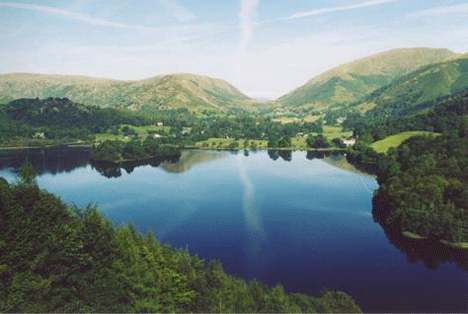
The road winds steeply up through bucolic countryside, some of the most spectacular in Britain. There are sheep bleating in the distant meadows. Then suddenly, you are out on the fell, stripped almost barren, black, empty. But still there are sheep, their wool the same smoky color as the landscape, dotted like the rocks that are scattered across these bleak tops, the hallmark of the storied Lake District. Then down we go again, past a stone-walled pub, up another hill, and we are pulling up in front of a whitewashed cottage straight from a Beatrix Potter film.
And indeed, that is where we are — in Potter country — about as far removed in atmosphere and idyll as it is possible to be from the ugly, industrial, and deadly blight that sits just a few miles away on the Cumbria shore. That would be the Sellafield nuclear fuel reprocessing facility, which spews radioactive waste into the sea, pumps it into the air, and has accumulated 140 tonnes of plutonium to absolutely no purpose.
A sheepdog runs out to greet us. A pair of elderly cats languish contentedly on a warm stone wall, basking in some late afternoon sunshine. Later, we are introduced to a small flock of Herdwick sheep who are “pets,” and a flock of pigeons, of which more later.
The people who live in the house are Janine Allis-Smith and Martin Forwood, the heart of the aptly named small activist group CORE — Cumbrians Opposed to a Radioactive Environment. They have dedicated more than three decades to challenging the continued operation of Sellafield and calling out the harm it has caused.
Martin and Janine, partners in life as well as activism, embody the longstanding and tenacious anti-nuclear fight in Cumbria, the most nuclear county in the United Kingdom. Without their watchdog vigilance and their educational advocacy, far less would be known about the dangers posed by the British nuclear industry, and particularly by the Sellafield reprocessing and nuclear waste site.
Martin and Janine have been at the heart of the struggle against the Sellafield operations since the mid-1980s. They have exposed the facility’s clandestine activities, especially emissions of radioactive wastes into the environment. For Janine, formerly from the Netherlands, this hit home especially hard when her own son was diagnosed with leukemia in 1983. He survived, but as Janine began to look into the issue, she found far too many other instances of childhood leukemias among children living close to Sellafield, many fatal.
The pair began to suspect that radioactive discharges from Sellafield were contaminating local beaches and tide pools where children loved to play. And, as Allis-Smith, recounted, “it was not just leukemia, but other cancers. Some were stillborn, while other suffered unexplained deaths at a very young age.”
This launched Janine and Martin on a relentless campaign to expose the on-going violations at the Sellafield site where radioactive discharges have made the Irish Sea one of the most radioactively contaminated bodies of water in the world. In 2017, CORE released a damning report which showed how, “during the 1995-2013 period, the radioactive discharges to the marine environment from Sellafield’s reprocessing facilities B205 (magnox) and THORP (oxide) have dominated those from all other UK facilities and are recognized as being the major contributor to the levels of radioactive substances recorded in the Irish Sea and wider oceans.”
Both Martin and Janine were new to the issue when they began their work. But they quickly educated themselves, then others. They perfected an ideal and complementary presentation style — with Martin offering a simple, lay explanation of reprocessing itself, then Janine describing its impact, especially on the health of children. They quickly moved hearts and minds in equal measure. Politicians, the media, and the public at large were forced to take notice.
Over the years, the pair have collected numerous mud samples from local beaches and estuaries that have been analyzed for radioactive contamination, confirming their suspicions.
The pair uncovered scandals involving illegal activities at the Sellafield site. They fought the THORP reprocessing plant, due to close permanently in 2018; the rash decision to develop a MOX fuel manufacturing plant, which closed after just 10 years of operation; and the global transport of radioactive materials.
In 1990 Martin gave his first guided “Alternative Sellafield Tour”, highlighting the spots where the reprocessing plant endangers the environment.
More recently, the pair were part of a successful effort to prevent the Nuclear Waste Agency NIREX from building a subterranean depository for British and international nuclear waste at the edge of the Lake District National Park.
Currently, they are at the forefront of the fight to block new nuclear power plants planned for Moorside adjacent to Sellafield. Their landmark 2015 report, “Moorside Build & Job Projections – All Spin and No Substance,” has proven an essential tool for the broad opposition to this deadly scheme.
The couple are not without a sense of fun either. In 2005, Martin made and delivered a radioactive “Pizza Cumbriana” to the Italian Embassy in London — Italy was shipping radioactive waste to Sellafield for reprocessing at the time. The box was marked “Best before 26005”, a reference to plutonium 239, which has a half-life of 24,400 years. The pizza was immediately seized by the Environment Agency, stored, then buried eight years later at the Drigg nuclear waste dump in Cumbria, adjacent to the Sellafield site.
Also buried as radioactive waste was the garden of two elderly ladies living along the sea front in the drab town of Seascale adjacent to the Sellafield plant. The sisters had devotedly fed flocks of pigeons who visited their garden — birds that also roosted on the Sellafiled roofs. After the guesthouse next door complained about excessive bird poop and called for the birds’ removal, the entire garden had to be excavated down to several feet and hauled away as radioactive waste. Martin and Janine took in a few of those pigeons. Their descendants still live with them today and appear each morning and evening on the garage roof for feeding time.
Last year, Forwood and Allis-Smith received some long-overdue recognition for their commitment to a safer, cleaner, greener environment when they received the Nuclear-Free Future Award in the category of Education, a prize that carries a $10,000 cheque, a rare and much needed boon in a movement largely deprived of meaningful or consistent funding. (Disclaimer, I nominated them for the award.)
The couple were unable to attend the ceremony, but wrote in a press release: “We are honoured to have received NFFA’s Education Award for 2017 and humbled to be joining the list of diverse and distinguished winners of the past. Since the 1980s, when Sellafield was preparing to double its commercial reprocessing activities, we have focused not only on acting locally but also being the ‘eyes and ears’ for the many interested parties world-wide on Sellafield and its many detriments which include site accidents, environmental contamination, health risks, plutonium stockpiles and nuclear transports.
“With decades of uniquely difficult decommissioning yet to come, and with plans for new-build at Moorside, we still have much to do and will face the challenges with the same determination that has seen us through the many highs and lows experienced over the last thirty years in our campaign against an industry we believe still has much to answer for.” (You can view their full acceptance remarks in the video higher up in this article.)
A forgotten community The little town in Niger keeping the lights on in France, Beyond Nuclear By Lucas Destrijcker & Mahadi Diouara, 1 July 18 Reprinted with kind permission from African Arguments
Welcome to Arlit, the impoverished uranium capital of Africa.
From Niamey, the capital of the landlocked West African nation of Niger, we call ahead to a desert town in the remote north of the country.
“Journalists? On their way here? It’s been a while”, we hear down the phone from our contact. “We welcome you with open arms, but only on the pretence that you’re visiting to interview migrants on their way to Algeria. If they find out you’re poking your nose in their business, it’s a lost cause.”
That same evening, the public bus jolts as it sets off. Destination: the gates of the Sahara.
The stuffy subtropical heat gradually fades into scorching drought and plains of seemingly endless ochre sands. About two days later, we pass through a gateway with “Arlit” written on it in rusty letters.
The town of about 120,000 inhabitants is located in one of the Sahel’s most remote regions, not far from the Algerian border. The surrounding area is known to be the operating territory of numerous bandits and armed groups, including Islamist militants. It is like an island in the middle of the desert, an artificial oasis with only one raison d’être: uranium………
approximately 150,000 tonnes of uranium have been extracted by the majority state-owned French company Areva, which is now one of the largest uranium producers in the world. The two mines around Arlit – Somaïr and Cominak – account for around a third of the multi-billion-dollar company’s total global production.
France uses this uranium to generate nuclear power, some of which is sold on to other European countries. According to Oxfam, over one-third of all lamps in France light up thanks to uranium from Niger.
However, in contrast to France, Niger has failed to see similar benefits. The West African country has become the world’s fourth largest producer of uranium, which contributes tens of millions to the nation’s budget each year. Yet it has remained one of the world’s poorest and least developed countries, with almost half its 20 million population living below the poverty line. Its annual budget has typically been a fraction of Areva’s yearly revenue.
The main reason for this is the deal struck between Areva and Niger. The details have not been made public, but some journalists and activists such as Ali Idrissa, who campaigns for more transparency in the industry, have seen the agreement. Amongst other things, the documents suggest that the original deal generously exempted Areva from customs, export, fuel, materials and revenue taxes………
Apart from criticising the Nigerien government for not spending its uranium revenue where it is most needed – such as in health care, education and agriculture – Idrissa ( Ali Idrissa, who campaigns for more transparency in the industry ) emphasises the bigger geopolitical picture: “Don’t forget that Niger isn’t just negotiating with a regular company, but with the French state. Their development aid, military and political support means that we cannot ignore our former coloniser. Our dependency from France goes hand in hand with crooked business deals.”
Forgotten in the desert
Exhausted from the long journey to Arlit, we’re received in the dingy office of Mouvement Unique des Organisations de la Société Civile d’Arlit (MUOSCA), a local umbrella group for environmental and humanitarian NGOs.
“If either Areva or the government were to find out you’re poking your nose in their business, they’ll go to any length to make your work very difficult”, says MUOSCA’s director Dan Ballan Mahaman Sani as he wipes the sweat from his brow. “Besides that, Westerners are attractive targets in this region.”
Indeed, there is a history of Islamist militant attacks and kidnappings in the area, including some directly targeting Areva. In 2010, seven of the company’s employees were abducted, including five French nationals. In 2013, an attack on the Somaïr mine left one dead and 16 injured.
While the world held its breath as armed groups stepped up operations in the region, Areva, managed to extract over 4,000 tons of uranium, up from two years before, without too much trouble.
Dan Ballan says this illustrates how far the Nigerien uranium industry stands apart from the country’s social environment and how isolated Arlit has become especially amidst regional insecurity.
“International NGOs or UN agencies don’t exist here, and Areva has nothing to fear from the Nigerien government,” he says. “We’re literally a forgotten community, completely left to the mercy of the multinational.”
Finding water
According to Dan Ballan and others, the uranium mining industry has taken a huge toll on Arlit and the region. While Areva has a multi-billion-dollar turnover, the majority of people here live in a patchwork of corrugated iron shelters on sandstone foundations. Poverty is rife. Power outages lasting two or more days are regarded as normal.
Moreover, while the uranium mines consume millions of litres each day, only a small proportion of Arlit’s Nigerien population enjoy running water. A 2010 Greenpeace study estimated that 270 billion litres of water had been used by the mines over decades of operations, draining a fossil aquifer more than 150 metres deep. The depletion of these ancient water reserves has contributed to desertification and the drying up of vegetation.
The water in Arlit, however, is not only scarce. Researchers over the years also suggest that, along with the soil and air, it contains alarming levels of radiotoxins.
Bruno Chareyon, director of the French Commission for Independent Research and Information on Radiation (CRIIAD), has been measuring radioactivity in and around Arlit for over a decade. His studies from 2003 and 2004 suggested that the drinking water contains levels of uranium at ten to hundred times the World Health Organisation’s recommended safety standards.
“Despite these findings, Areva has stated continuously that they haven’t measured any excess radioactivity during their biannual examinations,” he says.
In 2009, Greenpeace conducted their own tests and found that five of six examined wells – all used to get drinking water – contained excess radioactivity as well as traces of toxins such as sulphates and nitrates.
……… Toxic waste
At the bustling local market in Arlit, down some meandering alleyways, there are the normal wares, but among them one finds some more peculiar items: large industrial cogs; parts of metal cranes; digging equipment; and even a dump truck.
“All of these are cast-downs from the mines,” says Dan Ballan. “Useless material finds its way to local merchants, who recuperate it and sell it on. Most of them have no idea of the risks.”
CRIIRAD readings of goods at the market from 2003 and 2004 showed radioactivity levels at up to 25 times the maximum standards. “People buy radioactive material to cook with, build their homes with, or raise their children with,” says Dan Ballan…….
Greenpeace and CRIIRAD confirm that radioactive dust spreads far and wide, sometimes to hundreds of kilometres away. But contrary to claims of a “superfast decay”, they say that while some products have half-lives of just days, others have half-lives of tens of years.
Furthermore, researchers say that radioactive waste is not simply dispersed. “The same radioactive rubble was used in Arlit on more than one occasion for landfills or building roads and homes”, alleges Chareyron. In 2007, CRIIRAD found that some road surfaces had radioactive values over a hundred times standard values.
………. Living with uranium
It is not difficult to come across Arlit residents suffering from serious health problems. ………..
The only hospitals in Arlit are run by Areva, with all the medical staff on the company payroll. The government provides no healthcare here. At the Cominak facility, Dr Alassane Seydou claims to have never diagnosed someone with a disease that could be linked to radiation or toxins. He says that in more than 40 years, not a single case of cancer has been discovered. “All employees are systematically examined, but we haven’t encountered any strange diseases,” he claims.
In 2005, the French law association Sherpa launched an investigation into Areva’s activities in Arlit. Speaking to them, one former employee at Somaïr hospital alleged that patients with cancer had been knowingly miscategorised as having HIV or malaria. The surgeon-in-chief at the hospital denied those claims.
There have been no official, large-scale health studies conducted in Arlit, but some smaller-scale studies give an indication of the prevalence of illness among residents and former Areva employees.
In 2013, the Nigerien organisation Réseau Nationale Dette et Développement interviewed 688 former Areva workers. Almost one quarter of them had suffered severe medical issues, ranging from cancer and respiratory problems to pains in their joints and bones. At least 125 had stopped work because of these health issues.
A similar survey was carried out on French former employees around the same time. In 2012, Areva was found culpable in the death of Serge Venel, an engineer in Arlit from 1978-1985. A few months before his passing, doctors had found that his cancer was caused by the “breathing of uranium particles”. The case went to court, with the judge ordering Areva to pay compensation for its “inexcusable fault”. Before the court of appeals, only the Cominak mine was found responsible.
Following the verdict, Venel’s daughter, Peggy Catrin-Venel, founded an organisation to protect the rights of former Areva employees. As part of this project, she managed to trace around 130 of about 350 French workers who had lived in Arlit at the same time as her father. 60% of those she was able to find information on had already died, most of them from the same cancer as her father.
Standing up
Catrin-Venel continues to fight against Areva, but she is not alone. As shown in the documentary Uranium, L’héritage Empoisonné, Jacqueline Gaudet is also standing up to the company.
She founded the organisation Mounana after she lost her father, mother and husband all to cancer in the space of just a few years. Her husband and father had worked at an Areva uranium mine in Gabon, while her mother lived there in a house built from mining rubble. Their cancers were reportedly caused by excessive exposure to radon, which is released during uranium extraction. In collaboration with lawyers from Sherpa and Doctors of the World, Gaudet’s organisation works to collect testimonies from former employees in order to build cases.
For Michel Brugière, former director of Doctors of the World, it’s still unthinkable that so many employees of the French state-owned company could fall ill like this. Speaking in the documentary, he commented: “How can one allow one’s staff to live and work in such a polluted environment? This is unbelievable. It’s reminiscent of long gone abuses.”
In the same vein, Greenpeace describes Arlit as a forgotten battlefield of the nuclear industry. “There are few places where the catastrophic effects of uranium mining on nearby communities and the environment are felt more distinctly than in Niger”, said researcher Andrea Dixon.
Back in Arlit, the stories of French former employees standing up to Areva are well-known. But the struggle for Nigerien workers to get recognised is even steeper than in Europe. “Both the legal system and the financial means to stand up for our rights are lacking”, says Dan Ballan. “In a couple of years, the uranium reserves will be depleted and Areva will leave, however the pollution and underdevelopment will stay behind.”
He may be right, but Areva will not be going far. About 80km away, a third and enormous new Nigerien uranium mine called Imouraren is being developed. “Lacking any perspective of another job, the workers will eventually move
wherever the mine is”, says the local activist……..













 nuclear-news