Starting from Tuesday, every Belgian citizen can come to a pharmacy and get free iodine pills, the association said. This move is part of the government’s nuclear safety policy.
Before March 6, only those living within 20 kilometers (12 miles) from nuclear sites were entitled to receive the medication free of charge, while now the area of distribution has been increased to 100 kilometers (62 miles).
Belgium has two nuclear plants, Tihange and Doel, with a total number of seven reactors. Only in 2017, there were seven incidents at the facilities.
Belgium’s neighbors, Germany and the Netherlands, are concerned over the safety of the kingdom’s ageing nuclear reactors.
In 2016, Germany requested Belgium to shut down its two reactors because of defects found in their pressure vessels, but the kingdom refused. In September 2017, citizens of Aachen, a western German city located 70 kilometers (43 miles) away from the Belgian Tihange, started getting free iodine tablets.
In 2016, the Netherlands started distributing the pills to people who lived within a 100-kilometre (62-mile) radius of the neighboring Dutch Borsselle and Belgian Doel plants.
The station’s operator, Engie-Electrabe, found “instability” in the reinforced concrete ceiling of the reactor’s armored bunker during a planned check that started on March 30, the newspaper Soir reported on Thursday.
According to the newspaper, company specialists also determined that the “anomalies” in the reinforced concrete had been there since the time the bunker was built.
They fear that the defect may potentially weaken the structural strength of the unit.
Soir said that the reactors of the Doel nuclear power plant in Flanders have not been affected as they have different architecture.
Belgium’s nuclear safety agency (AFCN) said that the Tihange reactor will not be restarted before the bunker has been pronounced safe.
According to a preliminary estimate, this may not happen before September, the newspaper wrote.
The Tihange plant is located just 60 kilometers (37 miles) from the country’s border with Germany and the Netherlands, while the Doel plant is located near the Belgian port city of Antwerp, next to the Dutch border.
About half of Belgium’s power is supplied by nuclear energy from the country’s seven operating reactors, three at Tihange and four at Doel.
Jul 4, 2018 LACEY TOWNSHIP — The Nuclear Regulatory Commission staff will hold a public meeting July 17 to discuss the $1.4 billion, 60-year plan for decommissioning the Oyster Creek Nuclear Generation Station here.
The plant is due to close for good Sept. 17, after operating for about 50 years.
The meeting will be held at 6 p.m. in the Lacey Township Community Hall, 101 N. Main St., in Forked River.
Under the SAFESTOR plan chosen by owner Exelon Generation Co., plant shutdown and defueling will start Sept. 17 and finish Sept. 30.
That would be followed by about 1.5 years of preparing for 55 years of dormancy, during which time spent fuel would be stored in wet pools for five years, then moved to dry storage and ultimately removed to a facility approved by the U.S. Department of Energy.
Exelon submitted the Oyster Creek Post-Shutdown Decommissioning Activities Report to the NRC on May 21. A copy of the report is available on the NRC website in the electronic documents section, ADAMS accession number ML18141A775.
NRC will accept public comments on the report until Sept. 10. A Federal Register notice provides more information. Mail comments to: May Ma, Office of Administration, Mail Stop: TWFN-7-A60M, U.S. Nuclear Regulatory Commission, Washington, DC 20555-0001.
The Conversation 4 July 18 Rebecca Harris, Climate Research Fellow, University of Tasmania, David Bowman , Professor, Environmental Change Biology, University of Tasmania, Linda Beaumont, Senior Lecturer, Macquarie University,
To the chagrin of the tourist industry, the Great Barrier Reef has become a notorious victim of climate change. But it is not the only Australian ecosystem on the brink of collapse.
Our research, recently published in Nature Climate Change, describes a series of sudden and catastrophic ecosystem shifts that have occurred recently across Australia.
These changes, caused by the combined stress of gradual climate change and extreme weather events, are overwhelming ecosystems’ natural resilience.
Variable climate
Australia is one of the most climatically variable places in the world. It is filled with ecosystems adapted to this variability, whether that means living in scorching heat, bitter cold or a climate that cycles between the two.
Despite land clearing, mining and other activities that transform the natural landscape, Australia retains large tracts of near-pristine natural systems.
Many of these regions are iconic, sustaining tourism and outdoor activities and providing valuable ecological services – particularly fisheries and water resources. Yet even here, the combined stress of gradual climate change and extreme weather events is causing environmental changes. These changes are often abrupt and potentially irreversible.
They include wildlife and plant population collapses, the local extinction of native species, the loss of ancient, highly diverse ecosystems and the creation of previously unseen ecological communities invaded by new plants and animals.
Gradual climate change can be thought of as an ongoing “press”, on which the “pulse” of extreme events are now superimposed. In combination, “presses” and “pulses” are more likely to push systems to collapse.
We identified ecosystems across Australia that have recently experienced catastrophic changes, including:
not all examples can be directly linked to a single weather event, or a series of events. These are most likely caused by multiple interactingclimate “presses” and “pulses”. It’s worth remembering that extreme biological responses do not always manifest as an impact on the dominant species. Cascading interactions can trigger ecosystem-wide responses to extreme events.
The cost of intervention
Once an ecosystem goes into steep decline – with key species dying out and crucial interactions no longer possible – there are important consequences.
Apart from their intrinsic worth, these areas can no longer supply fish, forest resources, or carbon storage. It may affect livestock and pasture quality, tourism, and water quality and supply.
Unfortunately, the sheer number of variables – between the species and terrain in each area, and the timing and severity of extreme weather events – makes predicting ecosystem collapses essentially impossible.
Targeted interventions, like the assisted recolonisation of plants and animals, reseeding an area that’s suffered forest loss, and actively protecting vulnerable ecosystems from destructive bushfires, may prevent a system from collapsing, but at considerable financial cost. And as the interval between extreme events shorten, the chance of a successful intervention falls.
Critically, intervention plans may need to be decided upon quickly, without full understanding of the ecological and evolutionary consequences.
How much are we willing to risk failure and any unintended consequences of active intervention? How much do we value “natural” and “pristine” ecosystems that will increasingly depend on protection from threats like invasive plants and more frequent fires?
We suspect the pervasive effects of the press and pulse of climate change means that, increasingly, the risks of doing nothing may outweigh the risks of acting.
The beginning of this century has seen an unprecedented number of widespread, catastrophic biological transformations in response to extreme weather events.
Durham Region.com NEWS Jul 04, 2018 by Kristen Calis Pickering News Advertiser
PICKERING — Questions from concerned advocacy groups regarding the Pickering Nuclear Generating Station remain, while Ontario Power Generation continues to defend its position to justify the plant’s continued operation.This was the scene at the second round of Canadian Nuclear Safety Commission hearings regarding OPG’s request for a licence extension to operate the Pickering power plant to 2024, followed by safe storage activities until 2028. The plant is currently scheduled to close on Aug. 31.
Shawn-Patrick Stensil, senior energy analyst for Greenpeace, spoke Thursday at the Pickering Recreation Complex during the hearings. The CNSC will make the decision on the extension request.
In his submission on behalf of Greenpeace, Stensil said there is no justification for Pickering’s operation and the commission should reject OPG’s “request to expose millions of people within the (Greater Toronto Area) to the possibility of a nuclear accident.”
The week of hearings wrapped up on Friday. The first round took place in Ottawa in April.
……….The advocacy group was granted funding from the CNSC to poll the public on specific issues for the purpose of the hearing and presented its results.
The poll found 93 per cent of those surveyed want detailed nuclear emergency plans in place to protect residents from a possible large-scale accident at Pickering (or Darlington).
“Population density around the Pickering station is already too high yet intensification is being stepped up,” McNeill said.
Science Mag 3rd July 2018 , Plans for a controversial multibillion-dollar U.S. nuclear research reactor
are coming together at lightning speed—much too fast, say some nuclear policy experts. With a push from Congress, the Department of Energy (DOE) has begun designing the Versatile Fast Neutron Source, which would be the first DOE-built reactor since the 1970s.
It would generate high-energy neutrons for testing materials and fuels for so-called fast reactors. But U.S. utilities have no plans to deploy such reactors, which some nuclear proliferation analysts say pose a risk because they use plutonium, the
stuff of atomic bombs.
Researchers are divided on whether the reactor, which would likely be built at Idaho National Laboratory (INL) near Idaho
Falls, is badly needed or a boondoggle. “Definitely, there is a lack of capability in the U.S. and a shortage of such facilities worldwide,” says Massimiliano Fratoni, a nuclear engineer at the University of California, Berkeley. But Frank von Hippel, a nuclear physicist at Princeton University, says, “It’s a pork-barrel project.” http://www.sciencemag.org/news/2018/07/congress-pushes-multibillion-dollar-nuclear-reactor-critics-call-boondoggle
David Lowry’s Blog 4th July 2018, On 3 July 1958 the United States Government signed a bilateral agreement
with the UK, the effect of which has for sixty years to completely undermine the moral authority of Washington and London to preach to atomic aspirant countries that nuclear weapons are bad for national security; and civilian nuclear activities should be kept separate from any military uses.
This deal – often called the US-UK Mutual Defense Agreement (MDA) on atomic energy matters (in which the word defence is spelled with an ‘s’, even in the official UK Treaty series version, indicating its political provenance) – is the agreement that provided the underpinning framework for the subsequent Polaris and Trident nuclear weapons of mass destruction deals with US, as well as facilitating the testing of British nuclear warheads in Nevada, after the 1963 partial nuclear test ban treaty halted the atmospheric testing of nuclear explosive devices. http://drdavidlowry.blogspot.com/2018/07/how-us-uk-mutual-defense-agreement.html
World Nuclear News 4th July 2018 , French engineering group Assystem is to conduct site characterisation and
impact studies for Saudi Arabia’s first nuclear power plant under a
contract from the King Abdullah City for Atomic and Renewable Energy
(KA-CARE). The contract was awarded recently following an international
call for tenders launched by KA-CARE. Assystem said the services to be
provided under the contract include site characterisation studies –
including geological and seismic analyses – as well as studies on the
impact of a nuclear power plant on the environment, demographics and on
electricity grids. These services will be provided over an 18-month period. http://www.world-nuclear-news.org/NN-Assystem-to-assess-potential-Saudi-sites-0407185.html
Natural gas pipelines can be targeted by cyberattacks. So can electric grids. And power plants. And hospitals, city governments, banks, entertainment companies, and virtually anything else that exists in the digital age.
Like most of those entities, pipeline companies have taken aggressive steps to better shield their infrastructure from hackers, isolate critical systems, and beef up physical security. Recent allegations by some that the natural gas industry is increasingly vulnerable to cyberattack are unsubstantiated and not based on any factual evidence.
A recent incident affecting a third-party service provider, used for scheduling and nominations by some pipeline operators, demonstrates how the industry’s preparedness protects consumers. After an attack in March halted data exchanges from the company, the operators that used their services to facilitate gas deliveries and billing sprang into action. There was no impact on natural gas deliveries and gas never stopped moving through pipelines as a result of this incident.
Natural gas pipeline companies have a long standing track record of reliable service, and are dedicated to meeting the highest industry and federal standards for safety, security and resilience, ensuring the flow of natural gas. This is par for the course in an industry where the number of threats are increasing, but advances in security and system resilience have made inflicting any real damage increasingly difficult.
Compared to cyberattacks that shut down entire electric grids in the Ukraine and a ransomware virus that hobbled services in Atlanta for days, the natural gas industry has avoided any attacks causing a halt in services. Preparedness is key, and the industry has demonstrated its commitment through participation in programs like the Downstream Natural Gas Information Sharing and Analysis Center, as well as real-world training exercises like the NERC GridEx. There is still work to be done, but we are on the right track.
Despite this progress, a recently leaked “pre-decisional” memo from the U.S. Department of Energy and the National Security Council argues that natural gas cybersecurity threats are proof that aging coal and nuclear power plants need to be propped up through unprecedented and legally-questionable use of federal national security powers.
This represents a solution to a problem that does not exist. If the Energy Department acts, consumers will be saddled with as much as $11.8 billion to pay for the uneconomic coal and nuclear plants.
That might be justifiable if these facilities increased the reliability of the grid. But they don’t. That’s why threepreviousattempts to find legal justification to subsidize these plants have failed. That’s also why PJM, the non-profit electric grid operator for the region that has seen most coal and nuclear retirements, dismissed the proposal as “damaging to markets and therefore costly to consumers.”
5 July 18 Emirates Nuclear Energy Corporation now says first reactor to come online in late 2019 or early 2020, The United Arab Emirates said Wednesday that its first nuclear reactor would come online in late 2019 or early 2020, further delaying the launch of the Arab World’s first atomic power station….https://www.arabianbusiness.com/energy/400041-uae-further-delays-launch-of-first-nuclear-reactor
The International Energy Agency (IEA) has held a high-level meeting to identify the key issues faced by nuclear energy and to explore its future. Under current policies, together with limited investment in new reactors, nuclear’s contribution to the energy mix in developed economies is set to decline significantly, the meeting heard.
“For more than 40 years, nuclear energy has been an important contributor in several countries to energy security and a key source of zero-emissions generation,” the IEA said. “But the future of nuclear energy is facing growing challenges, increased competition with renewables and gas and, in some cases, public opposition.”
The IEA held a high-level meeting in Paris on 28 June – titled Nuclear Energy: Today and Tomorrow – to examine the role of nuclear energy in mature power markets and the challenges and future for nuclear energy for energy security, the economy and the environment. The event was attended by ministers and senior government officials from IEA member countries, industry leaders and experts.
“Nuclear power is continuing to play an important role in electricity security along with other conventional generating technologies,” said IEA Executive Director Fatih Birol in his opening remarks. “Despite this, with current policies there is little prospect for significant growth for nuclear power in developed economies on the horizon – although there are new efforts to spur innovations that could change this picture.”
The workshop focused on three themes: the challenges of meeting nuclear-specific policy targets while balancing overall economic, environmental and energy security goals; the position of nuclear power in mature power markets; and the potential of nuclear technologies to address future power flexibility challenges and emissions reduction targets.
In a keynote address, US Deputy Secretary of Energy Dan Brouillette said: “In the United States, we are committed to reviving, revitalising, and ultimately expanding the use of nuclear energy because we know its benefits.” He added, “We are just starting to see the potential of nuclear power in meeting our energy security needs and our clean energy goals. The advanced reactors, the advanced fuels, and the advanced materials being developed in the US, France and around the world all offer the promise of lessened emissions and increased reliability.”
“The sessions highlighted how, under current policy frameworks, and with limited investment in new plants, the contribution of nuclear to the power mix in mature markets is set to decline significantly,” the IEA said. Most new construction is in Asia, with China and India accounting for over half of the new reactors under construction. In the IEA’s World Energy Outlook New Policies Scenario, nuclear power production grows with two countries – China and India – responsible for over 90% of net growth to 2040. By contrast, outside of Japan, nuclear power generation in developed economies is set to decline 20% by 2040.
The meeting also heard about new initiatives to advance innovative nuclear power technologies, including those that can address better the need for greater power systems flexibility, spurred by the rise of generation from variable renewables.
The nuclear industry has set the Harmony goal for nuclear energy to provide 25% of global electricity by 2050. This will require a tripling of nuclear generation from its present level. Some 1000 GWe of new nuclear generating capacity will need to be constructed by then to achieve that goal. World Nuclear Association has identified three areas for action to achieve this: establishing a level playing field in electricity markets, building harmonised regulatory processes, and an effective safety paradigm.
Protests at the Halden Reactor in 1990. Credit: bellona
In a major victory for radiation safety in Europe, the Norwegian government announced Wednesday that it would be permanently shutting down the financially and technically troubled Halden research reactor, which experienced a leak in 2016.
The 25 megawatt installation, which is the world’s oldest heavy-water reactor, is located in a mountain cave in the southern Norwegian town of Halden, and has been under a temporary closure since March due to a valve failure.
It is the second of Norway’s two reactors, the first of which is the Kjeller reactor, near Oslo, which began operations in 1951.
Bellona has for three decades questioned the Halden reactor’s sometimes hazardous operations, and demanded that the government stop subsiding its continued use.
During its operation, Halden has contributed some 10 tons of spent nuclear fuel to the 17 tons the country has amassed since the middle of the last century.
The announcement of Halden’s closure came Wednesday after a much-anticipated meeting of the board of the Institute of Energy Technology (IFE), which has overseen the reactor’s operation since it opened in 1958.
Norway’s industry ministry issued the announcement late in the afternoon, saying the closure came “for reasons of economic and technical risk in further operations.”
“This is a happy day for Bellona,” said Nils Bøhmer, Bellona’s general manager and nuclear physicist. “We have fought for the shutdown of the Halden Reactor for about 30 years.”
The Halden Reactor. Credit: Bellona
Bøhmer urged the Norwegian government to develop a detailed dismantlement plan financed over the long term – and which would draw on the knowledge and expertise of technicians that currently operate the reactor.“Their jobs must be ensured during this transition phase,” Bøhmer said.
According to government projections, dismantling both the Halden and Kjeller reactors, as well as safely storing their radioactive waste, will cost some $1.5 billion, only a fraction of which has been accounted for by funding from the IFE. It is thus expected that the bulk of dismantling and storage costs will fall to the state.
Halden’s closure caps a luckless run for the reactor. In October 2016, a small leak of iodine 131 was detected at Halden, which prompted the evacuation of its staff, but caused no injuries or environmental damage outside the facility.
Yet the incident had the makings of something more serious. The iodine release caused a hydrogen buildup in Halden’s reactor core not unlike what occurred in 2011 at Fukushima. There were likewise concerns that the core of the reactor might become unstable, as well as other worrying issues surrounding its cooling system.
Most hazardous of all, however, was the lag-time between when the error occurred and when the IFE informed Norwegian radiation protection officials. The IFE later apologized for sitting on the news. But still, the incident fueled a rash of conspiracy theories charging that Norway was hiding a major nuclear disaster.
On less fantastical footing, however, the reactor had long ago fallen into costly obsolescence.
In April, government documents showed the reactor was operating at a loss of several million dollars, despite hefty operation grants to IFE from the government. At the same time, the reactor was drawing fewer and fewer paying customers for its nuclear research, and would have demanded another $18 billion in new revenues next year simply to stay solvent.
Wednesday’s decision to close the reactor stopped that financial bleed and Bellona is hopeful that the costs of operating the Halden reactor will now be put toward the safe dismantlement and storage of its radioactive legacy.
New Mexico becomes #Nuclear battleground over proposed “interim” storage (60-120 YEARS?!?) #Radioactive waste dump. #SierraClub’s John Buchser details the story and the activist push-back to #NuclearHotseat host #LibbeHaLevy


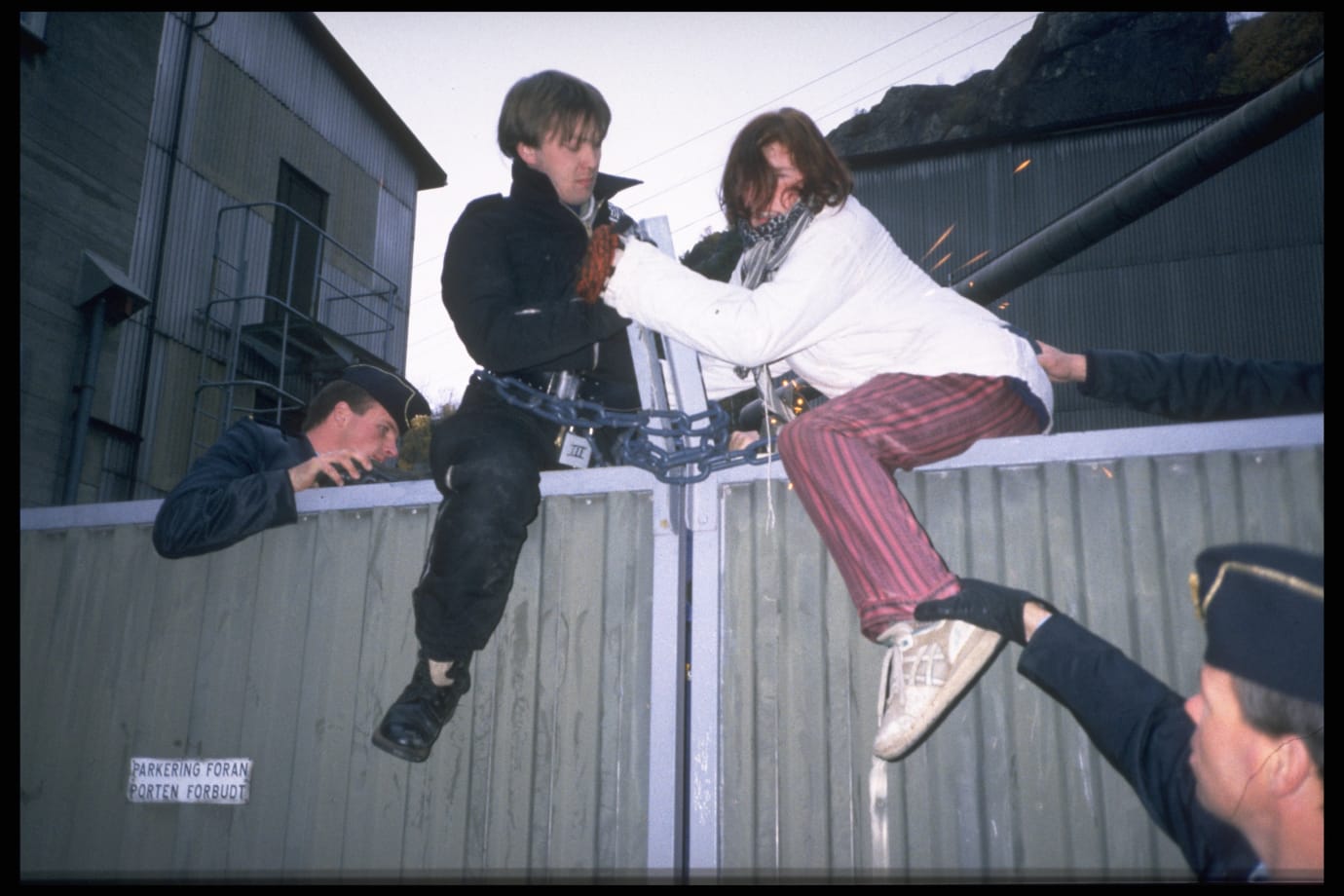 Protests at the Halden Reactor in 1990. Credit: bellona
  The Halden Reactor. Credit: Bellona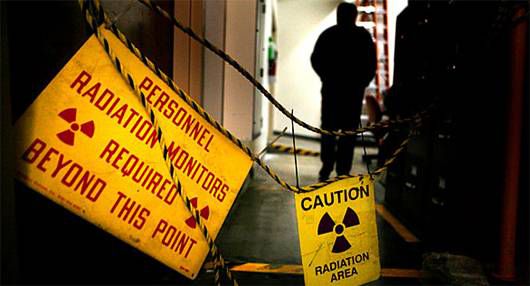



 nuclear-news