BBC 20th March 2018, The government has been defeated twice in the House of Lords over its plans for nuclear co-operation after Brexit. Peers voted by 265 to 194 to insist the UK should not withdraw from the European nuclear agreement, Euratom, until a replacement deal is in place. They also backed a plan requiring the UK to report to Parliament regularly on its future arrangements with Euratom.
MPs are likely to try and overturn the changes to the Nuclear Safeguards Bill when it returns to the Commons. Euratom, an association which is legally separate from the EU but governed by the EU’s institutions, covers issues such as the transport of radioactive materials, including those used in medical treatments, or in nuclear power stations.
The government has said it wants to establish a new domestic nuclear regime as well as negotiate a nuclear agreement with the EU once the UK leaves on 29 March 2019. http://www.bbc.com/news/uk-politics-43476337
La Libre 19th March 2018, More than 40 scientists, intellectuals, engineers and artists: “It is time
for the political world to assume Fukushima” (OPINION).It is time for the
political world to take its mistakes and put an end to the nuclear
industry.
This is not only illegitimate, but it is also an extreme threat
to our future. On June 25 last year, 50,000 people joined hands to demand
the closure of the Tihange plant. The number of protesters surprised many.
Also notable was the lack of reaction from the political world as a result
of this extraordinary event.
There are reasons for this apparent lethargy of the leaders of this country, in the face of this popular demonstration,
perhaps starting with a feeling of guilt, which would be quite appropriate.
Indeed, what has prevailed in the implementation of the nuclear industry is
the lack of democratic debate and false state propaganda, that of an energy
that would be unlimited, cheap and safe; as we recalled the commemoration
of the seventh anniversary of Fukushima, the second accident of a nuclear
power station which has no end, after that of Chernobyl in 1986.
More serious still, in 1960, the leaders of 16 European countries, including Belgium, agreed to sign the Paris Convention which was intended to limit the financial liability of the operator in the event of a nuclear accident, no insurance company willing to cover the nuclear risk considered too high.
Without this unique Convention, the nuclear industry could never have developed in Europe.
It is worth mentioning here that a major accident in Tihange would mean the end of life as we know it and, in fact, the end of Wallonia as a region. That the cost of such an accident would amount to
several trillions of euros, without it being possible to quantify the
sanitary and psychological misery into which the Walloons, sentenced,
either to leave their country abandoning all their property – but to go
where, or to live in a contaminated territory for the poorest of them. That
on this amount, the operator, Engie-Electrabel, would have to pay only 1.2
billion, less than its profit of certain years and less than one thousandth
of the cost of the disaster. http://www.lalibre.be/debats/opinions/plus-de-40-scientifiques-intellectuels-ingenieurs-et-artistes-il-est-temps-que-le-monde-politique-assume-fukushima-opinion-5aae9319cd702f0c1a63ffda
Aral described Cambridge Analytica as “a nefarious actor with a very skewed understanding of what’s morally right and wrong.” He pointed out that there’s an important line to be drawn between the appropriate uses of technology “to produce social welfare” through platforms like Facebook, and the work that Cambridge Analytica did. “It would be a real shame if the outcome was to, in essence, throw the baby out with the bathwater and say that the only solution to this problem is to pull the plug on Facebook and all of these social technologies because you know there’s no way to tell the difference between a bad actor and a good actor.”
All said, sophisticated data analytics “may also be used for generating a lot of good,” said Nave. “Personalized communication may help people to keep up with their long-term goals [such as] exercise or eating healthier, and get products that better match one’s needs. The technology by itself is not evil.”http://knowledge.wharton.upenn.edu/article/fallout-cambridge-analytica/
Why the Cambridge Analytica Scandal Is a Watershed Moment for Social Media, Wharton University of Pennsylvania, 24 March 18 (MIC LISTEN TO THE PODCAST – on original) Jennifer Golbeck from the Univeristy of Maryland and MIT’s Sinan Aral discuss the fallout from the Cambridge Analytica scandal.
Serious concerns have arisen in the past week over how social media firms guard the privacy of their users’ personal data, and how the analytics of such data can influence voter preferences and turnout. Those worries follow a whistleblower’s account to The Observer newspaper in the U.K. about how Cambridge Analytica, a data analytics firm with offices in London and New York City, had unauthorized access to more than 50 million Facebook profiles as it micro-targeted voters to benefit Donald Trump in the 2016 U.S. presidential election.
In the fallout, Facebook faces its toughest test on privacy safeguards, and its founder and CEO, Mark Zuckerberg, has been summoned by MPs in the U.K.He faces similar calls from the U.S. Congress and from India, with revelations that Cambridge Analytica worked to influence the 2016 Brexit referendum and elections in India, Nigeria and other countries as well.
U.S. special counsel Robert Mueller is already examining Cambridge Analytica’s ties with the Trump campaign as part of his probe into Russia’s alleged meddling in the 2016 presidential election. Significantly, U.S. billionaire and conservative fundraiser Robert Mercer had helped found Cambridge Analytica with a $15 million investment, and he recruited former Trump advisor Steve Bannon, who has since left the firm. The firm initially sought to steer voters towards presidential candidate Ted Cruz, and after he dropped out of the race, it redirected its efforts to help the Trump campaign.
In order to gain insights into the fallout from the Cambridge Analytica scandal, Knowledge@Wharton spoke to Wharton marketing professors Ron Berman and Gideon Nave; Jennifer Golbeck, director of the social intelligence lab and professor of information studies at the University of Maryland; and Sinan Aral, management professor at MIT’s Sloan School of Management. Golbeck and Aral shared their views on the Knowledge@Wharton show on SiriusXM channel 111. (Listen to the full podcast using the player at the top of this page.)
“We’re experiencing a watershed moment with regard to social media,” said Aral. “People are now beginning to realize that social media is not just either a fun plaything or a nuisance. It can have potentially real consequences in society.”
The Cambridge Analytica scandal underscores how little consumers know about the potential uses of their data, according to Berman. He recalled a scene in the film Minority Report where Tom Cruise enters a mall and sees holograms of personally targeted ads. “Online advertising today has reached about the same level of sophistication, in terms of targeting, and also some level of prediction,” he said. “It’s not only that the advertiser can tell what you bought in the past, but also what you may be looking to buy.” ……..
Nave said the Cambridge Analytica scandal exposes exactly those types of risks, even as they existed before the internet era. “Propaganda is not a new invention, and neither is targeted messaging in marketing,” he said. “What this scandal demonstrates, however, is that our online behavior exposes a lot about our personality, fears and weaknesses – and that this information can be used for influencing our behavior.”
In Golbeck’s research projects involving the use of algorithms, she found that people “are really shocked that we’re able to get these insights like what your personality traits are, what your political preferences are, how influenced you can be, and how much of that data we’re able to harvest.”
………….An Expanding Scandal
Although Cambridge Analytica’s work in using data to influence elections has been controversial for at least three years, the enormity of its impact emerged last Saturday. The whistleblower, Christopher Wylie, who had worked with Cambridge Analytica, revealed to TheObserver how the firm harvested profiles of some 50 million Facebook users. The same day, the New York Timesdetailed the role of Cambridge Analytica in the Trump campaign.
Facebook had allowed Cambridge University researcher Aleksandr Kogan access to data for an innocuous personality quiz, but Kogan had passed it on without authorization to Cambridge Analytica. Wylie told The Observer: “We exploited Facebook to harvest millions of people’s profiles. And built models to exploit what we knew about them and target their inner demons. That was the basis the entire company was built on.”
Meanwhile, the U.K.’s Channel 4 News captured in a video sting the strategies Cambridge Analytica used in its work to “change audience behavior,”………
Finding a Solution
Golbeck called for ways to codify how researchers could ethically go about their work using social media data, “and give people some of those rights in a broader space that they don’t have now.” Aral expected the solution to emerge in the form of “a middle ground where we learn to use these technologies ethically in order to enhance our society, our access to information, our ability to cooperate and coordinate with one another, and our ability to spread positive social change in the world.” At the same time, he advocated tightening use requirements for the data, and bringing back “the notion of informed consent and consent in a meaningful way, so that we can realize the promise of social media while avoiding the peril.”
Regulation, such as limiting the data about people that could be stored, could help prevent “mass persuasion” that could lead them to take action against their own best interests, said Nave. “Many times, it is difficult to define what one’s ‘best interest’ is – ……
Legitimate Uses of Data
Golbeck worries that in trying to deal with the fallout from the Cambridge Analytica scandal, Facebook might restrict the data it makes available to researchers. “You don’t want this big piece of how society operates just blocked off, accessible only to Facebook and basically the people who are going to help them make money,” she said. “You want academic researchers to be able to study this.” But balancing that with the potential for some academic researchers to misuse it to make money or gain power is a challenge, she added
Aral described Cambridge Analytica as “a nefarious actor with a very skewed understanding of what’s morally right and wrong.” He pointed out that there’s an important line to be drawn between the appropriate uses of technology “to produce social welfare” through platforms like Facebook, and the work that Cambridge Analytica did. “It would be a real shame if the outcome was to, in essence, throw the baby out with the bathwater and say that the only solution to this problem is to pull the plug on Facebook and all of these social technologies because you know there’s no way to tell the difference between a bad actor and a good actor.”
All said, sophisticated data analytics “may also be used for generating a lot of good,” said Nave. “Personalized communication may help people to keep up with their long-term goals [such as] exercise or eating healthier, and get products that better match one’s needs. The technology by itself is not evil.”http://knowledge.wharton.upenn.edu/article/fallout-cambridge-analytica/
Close to a year after evacuation orders were lifted in four municipalities near the Fukushima No. 1 nuclear power plant, only 6.1 percent of evacuees have returned to live in their former communities.
According to a survey of displaced residents, the top reasons cited for not returning were the condition of their homes, concerns about radiation and the lack of hospitals and stores.
The Asahi Shimbun has conducted annual surveys of evacuees since June 2011 with Akira Imai, a senior researcher at the Japan Research Institute for Local Government.
In the latest survey, questionnaires were sent in mid-January to 329 individuals who participated in past surveys. Valid responses were received from 161 individuals now residing in 19 prefectures around Japan aged between 28 and 91.
Of the respondents, 114 were still living as evacuees.
Close to 70 percent of the respondents said the measures taken by the central and local governments leading up to the lifting of the evacuation order on March 31 and April 1, 2017, were insufficient.
Regarding those results, Imai said, “The lifting of the evacuation order was conducted without adequate consideration for the hopes of the evacuees to have their communities returned to their former condition.”
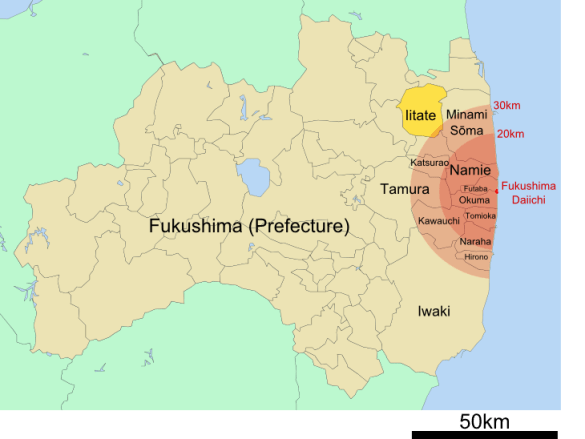
Last year’s lifting of the evacuation order covered areas of the four municipalities of Namie, Tomioka, Iitate and Kawamata that were outside the difficult-to-return zones.
In the joint survey, respondents were asked about measures taken by the central and local governments to decontaminate irradiated areas and construct social infrastructure. A combined 109 respondents said the measures were insufficient or somewhat insufficient.
They were asked their reasons for not returning.
Multiple answers were allowed, and the most popular response given by 59 people was because their homes were not habitable. Forty-eight people raised concerns about radiation exposure on their health.
The inconvenience of not having shops and hospitals nearby was cited by 56 people.
One 46-year-old resident of Namie who lives as an evacuee with her husband and two children in central Fukushima Prefecture has no plans to return because there are no hospitals in the community capable of looking after her oldest daughter, who has an illness that could require emergency care.
While the rates at which evacuees have returned to the four municipalities range between 3.5 percent and 31.1 percent, the rates have not necessarily increased dramatically in the other municipalities where evacuation orders were lifted before spring 2017.
While the rates are between 80 and 81 percent for Tamura and Kawauchi, it is only between 19 and 34 percent in the three other municipalities where the orders were lifted prior to spring 2017.
So they say…..But why should we believe such study coming from the Japanese Health, Labor and Welfare Ministry research team to be true? Especially when we know that their main policy has been a constant denial of the existing risks for the past 7 years…..
March 22, 2018
The number of cases in which radioactive cesium exceeding Japanese government standards was found in food items dropped to less than 20 percent over a five-year period from fiscal 2012, a health ministry study has found.
The government standards for radioactive cesium came into effect in April 2012, which assumed that half of distributed food products contained the radioactive element generated by the 2011 disaster at the Fukushima No. 1 Nuclear Power Plant. It is set at 100 becquerels per kilogram for common food items, 50 becquerels per kilogram for baby food and cow milk and 10 becquerels for drinking water.
Based on central government guidelines, 17 prefectural governments, counting Tokyo, check food products in which radioactive cesium is likely to be detected, including items that have been distributed, for the radioactive element. Other local governments have also been independently inspecting such food products to confirm their safety. A Health, Labor and Welfare Ministry research team analyzed data compiled by local governments, excluding that of beef, which has an extremely low detection rate for cesium, as well as products that go through bag-by-bag inspections such as rice from Fukushima Prefecture.
As a result, the number of cases that exceeded the threshold set under the Food Sanitation Act totaled 2,359 of 91,547 food products inspected in fiscal 2012. In fiscal 2013, it was 1,025 out of 90,824 products, 565 out of 79,067 in fiscal 2014, 291 out of 66,663 in fiscal 2015 and 460 out of 63,121 in fiscal 2016.
Broken down by categories, 641 cases of food items among agricultural produce were found to have exceeded the government standards for radioactive cesium and 1,072 cases were detected among fishery products in fiscal 2012, but the figure had dropped to 71 and 11, respectively, in fiscal 2016. For fishery products, this is believed to be attributed to the reduction of cesium concentration in the seawater as the element had diffused in the ocean. It is also believed that the concentration in agricultural items had dropped as a result of decontamination work and other efforts.
At the same time, the number of cases exceeding national standards totaled 493 for game meat in fiscal 2012, and 378 in fiscal 2016. Researchers suspect that because wild animals continue to feed on wild mushrooms and plants with high concentrations of radioactive cesium growing in forests that have not been decontaminated, the figure does not drop among game meat products.
Almost all the foods that exceeded the government standards for radioactive cesium had not been available to consumers as the contamination was detected during inspections before being shipped to markets. However, Akiko Hachisuka of the National Institute of Health Sciences Biochemistry Division who headed the Health, Labor and Welfare Ministry research team says game meat and wild mushrooms need to be prioritized in inspections for the time being and also in the future.
Among wild mushrooms and other products that had been distributed to markets, 19 cases exceeding government standards were reported in fiscal 2012, seven in fiscal 2013, 11 in fiscal 2014, 12 in fiscal 2015 and 10 in fiscal 2016.
The Recyclable-Fuel Storage Co. interim storage facility is seen fenced off in Mutsu, Aomori Prefecture, on March 6, 2018
March 22, 2018
The selection of a site to house an interim storage facility for spent fuel from nuclear power plants operated by Kansai Electric Power Co. (KEPCO) has run into rough waters. In January, the Aomori Prefecture city of Mutsu surfaced as a candidate, but resistance quickly emerged from locals.
With KEPCO’s nuclear power plants being concentrated in Fukui Prefecture, the prefectural government has set a basic premise of storing spent nuclear fuel outside the prefecture. The utility aims to announce a candidate site this year, but there remains fierce opposition to accepting nuclear fuel from other prefectures, and because of this, its prospects of settling on a site are unclear.
After a 20-minute drive along a national route from central Mutsu during a visit by the Mainichi Shimbun in early March, an imposing fence could be seen along a snowy field. Beyond the fence was a square building — an interim storage facility that is being built by Recyclable-Fuel Storage Co. (RFS), a company founded by Tokyo Electric Power Company Holdings, Inc. and Japan Atomic Power Co. The facility’s storage capacity is around 3,000 tons of spent fuel. There are plans to build a second building in the future.
In January, this facility gained nationwide attention. As the Nuclear Regulation Authority (NRA) came to the final stage of its screening of the facility, news organizations reported that KEPCO was considering transporting spent nuclear fuel from its plants to the facility.
Mutsu Mayor Soichiro Miyashita immediately held a news conference, saying he had heard no such thing from the central government, KEPCO, or RFS. “The feelings of the region are being completely ignored,” he said.
In an interview with the Mainichi Shimbun on March 6, Miyashita suggested it was unlikely KEPCO would bring its nuclear fuel into the facility as things stand. “Operations at the site haven’t started yet. Without the facility having cleared the NRA’s screening, it’s unthinkable that they could change the status quo,” he said.
The Shimokita Peninsula in northern Aomori Prefecture, where the city of Mutsu is located, not only houses the interim storage building, but has a collection of other nuclear facilities including the Higashidori Nuclear Power Plant in the Aomori Prefecture village of Higashidori, the Oma Nuclear Power Plant in the town of Oma and the reprocessing plant for spent nuclear fuel in the village of Rokkasho. But since the outbreak of the Fukushima nuclear disaster in March 2011, construction of nuclear facilities has been suspended or delayed.
“We had expected our nonresident population to increase in line with nuclear power plant construction and inspections. But taxi companies are going out of business, and the economic chill is severe,” Miyashita said.
Alongside concerns about the storage of nuclear fuel, there are also deeply rooted aspirations regarding the operation of nuclear power plants in the region. Katsura Sonoda, head of the Mutsu Chamber of Commerce and Industry, commented, “In local economic circles, there is little resistance to reactivating nuclear power plants, and we want the interim storage facility to go into operation quickly. Fixed property taxes and subsidies will also increase.
A figure in the energy industry commented, “The mayor is up for election for a second term in June. It’s not the case that he lacks understanding of nuclear power-related projects; I guess it’s just that he had to be sensitive toward antinuclear public sentiment in the wake of the nuclear disaster (in Fukushima).”
In late January, KEPCO announced that it would set up an office in Aomori in June to handle payment-related issues, employing about 70 people. A public relations representative for the company maintained that this had nothing to do with the interim storage facility, but this has not swept away the view that the company is entering Aomori Prefecture to warm the region to the idea of hosting the facility.
The governor of nuclear disaster-hit Fukushima Prefecture appears likely to soon reach an agreement with a French trading house to export rice to France.
Fukushima Governor Masao Uchibori is starting his 4-day visit to France and Britain on Thursday to promote local produce, including rice, beef, and processed fruit.
He seeks to dispel concern about the safety of food products from Fukushima following the nuclear accident in 2011 and expand its sales channels.
Prefectural sources say Uchibori is likely to reach an agreement to ship to France a locally produced rice variety called Tennotsubu . Rice from Fukushima will be exported to France for the first time.
Sources say the governor is also likely to cement a plan to increase Fukushima’s shipments of rice to Britain.
The prefecture exported 19 tons of rice to the country in the fiscal year ending in March 2017.
An official involved in Fukushima trade affairs says the exports will have a significant impact as Britain and France play a central role in passing on information in Europe.
FUKUSHIMA — Only some 30 percent of businesses have resumed operations in areas within a 30-kilometer radius of the Fukushima No. 1 Nuclear Power Plant or in districts that were previously marked as evacuation zones, a Fukushima Federation of Societies of Commerce and Industry survey has found.
As for the stagnation in the region’s economic renaissance, a representative from the federation said, “There are few residents, and along with anxiety over whether or not business will be able to turn a profit, it is also hard to secure young workers.”
The investigation covered 14 local societies of commerce and industry, recording the business climate as of Feb. 20, 2018. The percentage was particularly low in the four municipalities of Namie, Tomioka, Iitate and Kawamata, for which evacuation orders was partially lifted between March and April 2017.
In the town of Namie, of the 597 members of the local society of commerce, 262 operators, or 44 percent, restarted their companies or shops — but only 34, or roughly 6 percent of the total, did so in Namie itself. The remaining 228 businesses all reopened in the locations to which their owners evacuated after the disaster.
Meanwhile, in Tomioka, 277 businesses of the 478 society members reopened, but only 60, or 13 percent, did so in the town. The numbers were slightly higher for Iitate, where 130 of the 167 operators restarted their businesses — 51 of whom did so in the same area, for 31 percent.
Of 2,804 total members of the prefectural-level federation as a whole, 1,840 companies and shops reopened (66 percent), with 31 percent or 860 businesses returning to open shop in the affected areas. By industry, construction saw the biggest revival rate at 37 percent, followed by manufacturing at 35 percent, stone work and miscellaneous businesses at 32 percent and the service industry at 28 percent, no doubt boosted by reconstruction efforts.
The evacuation locations for the residents of Namie are divided into inland areas like Fukushima city and coastal areas, and it is reportedly hard for owners to restart businesses while commuting from these locations. At the end of February 2018, the population of Namie was 17,954 people, but only 516 people actually lived in the town along with reconstruction workers.
The operator of a supermarket before the disaster commented, “If people don’t return, then it’s difficult to secure enough employees and impossible to run a business.”
Ruiko Muto is a well-known community activist in Fukushima, associated with ‘Fukushima Women Against Nukes’ and several other citizens’ platforms. She has played a pivotal role in the arduous legal battle to ensure compensation and justice for the Fukushima residents.
DiaNuke.org: It is 7 years of the ongoing accident in Fukushima and the disaster has slipped out of the international media. How serious is the situation now?
Ruiko Muto: The media in Japan is the same with reduced coverage nationwide. Even within Fukushima Prefecture, most of the news coverage focuses on recovery efforts and there are hardly any important articles on the accident or the damage and sometimes nothing at all. However, the reality is that this accident is very far from over and the damage it has caused, while taking on different shapes and forms, is only becoming more severe.
Within the Fukushima Daiichi site, it hasn’t even been confirmed where the melted fuel actually fell to. Every hour 88,000 bequerels of cesium is emitted from the destroyed reactors into the atmosphere. The fuel still has to be cooled and the water used for this becomes radioactive. There is now approximately 1 million tons of contaminated water and it is stored in 900 tanks on the site. METI and the NRA want to release water containing tritium, a radioactive substance which cannot be removed from the water, into the ocean. Filters, which are used in the ALPS system to remove other radioactive substances from the water and which are highly radioactive, are placed in specialized containers and are piling up. The metal structures holding up the Units 1 and 2 exhaust towers have stress fractures and even TEPCO has acknowledged the danger.
At present, there are approximately 5,000 workers at Fukushima Daiichi every day. Giving the reason that radiation levels have dropped somewhat, these workers are not required to wear heavy protective clothing. Even though there are some places which measure dozens of microsieverts per hour (μSv/h), work must be carried out there and on top of this, wages are set to be reduced.
Thyroid cancer testing on children who were under 18 years old at the time of the accident has revealed 193 cases of confirmed or suspected cancer. Even though this is dozens of times higher than before the accident, the authorities say that the accident is unlikely to have had an impact on cancer rates. Private groups have clearly shown that there are thyroid cancer patients who are not included in these figures and there are serious doubts about the entire testing system.
As a result of decontamination, there are 22 million tons of radioactive waste within Fukushima Prefecture. Only 3% of it has been transported to designated storage facilities, the rest is lying around in ‘temporary dumps’ or has been buried in school grounds or parks or in gardens of private houses.
High school and university students are taken on tours of Fukushima Daiichi to see the decommissioning work. They play scissor/paper/rock type games with radiation as the subject and are exposed to advertising and education that makes them believe that radiation is harmless.
DiaNuke.org: You have been working on the legal front, to ensure just compensation for the victims. What have been the challenges in this regard?
Ruiko Muto: Our court case is not a civil action to demand compensation, but rather a criminal case to determine who was responsible for this accident.
In 2012 we collected about 1,500 plaintiffs and lodged a criminal complaint with the Prosecutor’s Office against TEPCO executives, the Director of the Nuclear and Industrial Safety Agency (NISA) and those responsible in regulatory bodies, etc. However, the Prosecutor’s Office dismissed our claim, saying there was insufficient grounds for charges to be laid.
In Japan, in principle, it is the Prosecutor’s Office which lays charges, but it is possible to appeal to a judicial review panel which is made up of ordinary citizens. We did this and the panel ruled that just the 3 TEPCO officials were liable to stand trial.
In this trial, the victims were designated as only the 44 people who lost their lives in the evacuation process immediately after the accident. This means that, myself included, most of the plaintiffs are not officially part of the case and cannot directly participate in proceedings. I have attended each of the trials so far as an observer and make every effort to make sure what happens in the court is made public.
DiaNuke.org: Do you see the ‘nuclear village’ reviving its control since the accident? How have the government and TEPCo undermined their responsibilities?
Ruiko Muto: In the many court cases demanding compensation, administrative tribunals and criminal cases that have been filed, TEPCO has claimed that the nuclear accident was caused by a natural disaster which was impossible to predict, so it does not bear any responsibility. However, it has become clear in subsequent investigations and trials that TEPCO had done simulations and was aware of the threat of a large tsunami flooding the Fukushima Daiichi NPS and that counter measures must be prepared in order to protect the reactors, yet because of the large sums of money required for this, they had simply put it off.
Following the disaster, utilities had voluntarily refrained from advertising but recently they have started again in full force. They claim that if nuclear reactors aren’t re-started then electricity bills will go up. METI continues to underestimate the cost of nuclear power generation.
The giant construction corporations which built the nuclear reactors in the first place are now getting contracts worth tens of billions of yen for decommissioning and decontamination work. They have built multiple massive incinerators and are again reaping huge profits.
DiaNuke.org: The Japanese government has declared newer areas contamination-free last year and has asked people to return. What are the risks involved in such policy?
Ruiko Muto: In March and April last year evacuation orders over large areas were lifted. This policy of trying to make people return is not an invitation to return to a place that is as safe as when you lived there. Before the accident, the annual radiation exposure limit was 1 milli-sievert (mSv), but now the government is saying ‘We’ve decontaminated to below 20 mSv so please go home.’ Last year I went to some of the ‘decontaminated’ areas and there were several places with air dose readings of over 1μSv per hour.
Most of the people who have decided to return are elderly, the younger generation with children have mostly decided not to return. There is no provision for recreation or protection from radiation. And there are not sufficient transport, shopping, hospital or aged care facilities. The areas are infested with wild boars and other wild animals as well as thieves.
DiaNuke.org: Besides compensation, Fukushima evacuees also face problems of social disruption and mental trauma. What are the challenges and how should the governments respond?
Ruiko Muto: After such a long time as an evacuee, many have been unable to find anything to do and have withdrawn into their small temporary homes, some have developed alcohol or gambling addictions and many have become clinically depressed. It’s very difficult to know how to make decisions about the future and there have also been cases of suicide due to the extremely stressful conditions. People who used to live in big extended families have been split up and many family relationships have become difficult due to different opinions on whether or not to return to their homes. There are many cases of divorce between couples where the mother and her children have evacuated.
Also, housing allowances for evacuees from areas where official evacuation orders were not issued have been cut, so the only form of compensation these people received is now unavailable. Many have lost their accommodation and are living in very difficult conditions. Some have received court-orders to vacate because they decided to remain in their evacuee housing.
DiaNuke.org: The Japanese government signed the Convention on Supplementary Compensation(CSC) in 2015, after Fukushima, which has no provision for holding nuclear manufacturers accountable. What has been your experience of the legal fight in this regard?
Ruiko Muto: Within Japan also nuclear manufacturers cannot be held responsible for accidents. A court case was launched claiming that manufacturers did have responsibility, but it was dismissed. However, in a system where manufacturers cannot be held responsible, when there is an accident, there is a real danger that facts will be covered up and important questions will be deliberately unanswered.
DiaNuke.org: The Japanese government continues to export reactor technologies to other countries, besides restarting reactors domestically. How do people in Fukushima see this?
Ruiko Muto: The people in Fukushima Prefecture who are living though the nuclear disaster don’t want anyone in the world to have to experience the massive damage and the suffering that they have experienced. I believe that most of the people of Fukushima are opposed to domestic restarts as well as exports of nuclear technology to other countries.
In this regard, however, the Fukushima Prefecture Governor, although he is opposed to nuclear reactors in Fukushima, has not expressed opposition or even concern regarding nuclear reactors in other prefectures or overseas exports. This is extremely disappointing.
Times 21st March 2018,Onshore wind and solar farms capable of generating more than three times as much power as the new Hinkley Point C nuclear plant could be built without any subsidy from taxpayers in Britain by 2030, energy analysts have forecast.
The plunging costs of the technologies, which were reliant on very high subsidies just a few years ago, could enable investors to build them without any government intervention by the early 2020s, said Aurora Energy Research.
The government has ended subsidy schemes for new onshore wind and solar farms, slowing their development, amid concern about their cost to consumers. Aurora, an Oxford-based consultancy, predicts that the fall in costs has brought the industry to the “cusp of breakthrough in Britain”, whereby such projects could be commercially viable even without subsidies.
It predicts that solar farms capable of generating up to 9 gigawatts and onshore wind farms with a maximum output of 5 gigawatts are likely to be built on this basis by 2030. The prediction is likely to further increase pressure on nuclear developers to show they can be cost competitive. The 3.2-gigawatt Hinkley Point C plant is only viable thanks to a subsidy contract that commits consumers to pay its developers well above the market price for power for 35 years — potentially costing tens of billions of pounds. Renewables have only been made viable by similar commitments from government. https://www.thetimes.co.uk/edition/business/wind-farms-on-course-to-be-free-of-subsidy-qfmpmm8dh
NBC 20th March 2018, With reports of American power plants across the country having their
systems accessed by hackers, one group of scientists are calling out the
Nuclear Regulatory Commission (NRC) and Southern California Edison for
their recent decision to remove enhanced cyber-security systems at the San
Onofre Nuclear Generating Station.
Reactor’s neighbours alarmed over radioactive toxins in river, Report details dumping water contaminated with tritium PCBs, other toxins from Rolphton, Ont., site By Julie Ireton, CBC NewsMar 21, 2018 Indigenous communities, environmental groups and other concerned citizens who monitor toxic waste are increasingly concerned about the dumping of radioactive matter and other contaminants into the Ottawa River from an inactive nuclear reactor northwest of the capital.
A scientific report released in February details the dumping of thousands of litres of water contaminated with radioactive tritium, PCBs and other toxins into the river from the inactive nuclear power demonstration (NPD) reactor in Rolphton. Ont., about 200 kilometres from Ottawa.
The contaminants are at levels above Ontario and Canadian surface water quality standards, according to the report.
It was written by geoscientist Wilf Ruland, who was retained by the Algonquin Anishinabeg Nation Tribal Council to review the proposed decommissioning of the demonstration reactor.
Radioactive tritium dumped
“The site is so close to the Ottawa River, only being 100 metres [away], and for us the environment and the water are two of our priorities,” said Norm Odjick, the tribal council’s director general.
In the report, Ruland notes releases of contaminated water into the river “appear to have been ongoing for decades and [continue] to the present day.”
“The regulatory guidelines for surface water quality were vastly exceeded in the contaminated water being dumped untreated into the Ottawa River from the NPD facility in 2015.”
Ottawa Riverkeeper Meredith Brown said radioactive tritium has been dumped into and diluted by the river, but cannot be filtered out or treated like other toxins.
……. Ole Hendrickson, a scientist and researcher for the group Concerned Citizens of Renfrew County and Area, questions the safety of the discharge limits for the facility.
Regulations vs. impact
“Aquatic organisms are being exposed to very high concentrations of toxic substances, and there’s nothing to stop boaters from drawing and filtering river water near the discharge point for drinking,” Hendrickson said.
Daily Energy Insider 20th March 2018, Energy Secretary Rick Perry testified to a Senate panel on Tuesday about the Trump administration’s Department of Energy (DOE) budget request for fiscal year 2019, a plan that prioritizes nuclear security while making
large cuts to energy efficiency and renewable energy programs.
The budget proposal, a $500 million increase in funds over FY 2017, promotes
innovations like a new Office of Cybersecurity, Energy Security, and
Emergency Response (CESER) and gains for the Office of Fossil Energy.
Investments would be made to strengthen the National Nuclear Security
Administration and modernize the nuclear force, as well as in weapons
activities and advanced computing.
Energy Watch Group 20th March 2018, During his state visit to India, France’s President Macron agreed with
India’s Prime Minister Narendra Modi last week to sell six French EPR
reactors for the largest nuclear power plant planned in Jaitapur.
Regardless of the fact that India has not yet signed the Nuclear
Non-Proliferation Treaty. The plutonium from the reactors could be
completely used for the construction of nuclear weapons without
international control. In terms of energy, too, all EPR construction
projects in recent years are highly problematic. http://energywatchgroup.org/new-european-nuclear-reactors-prove-financial-technically-dangerous-disast













 nuclear-news