The Fukushima tragedy, seven years later, is still flooding the Pacific with tons of intensely radioactive water daily. Not to mention this report re disbursed radioactive airborne particles, some lasting billions of years.
March 5th, 2018
A new study by a team of international researchers has for the first time “explicitly revealed” uranium and other radioactive materials in the surrounding environment of the damaged Fukushima Daiichi nuclear reactors following the nuclear accident at the site in 2011.
In a study published in the journal Environmental Science & Technology last month based on research conducted by an international team of scientists, explicit evidence of uranium and other radioactive materials — such as caesium and technetium — have been found in the surrounding environment of the Fukushima Daiichi nuclear reactors after being released from the damaged reactor.
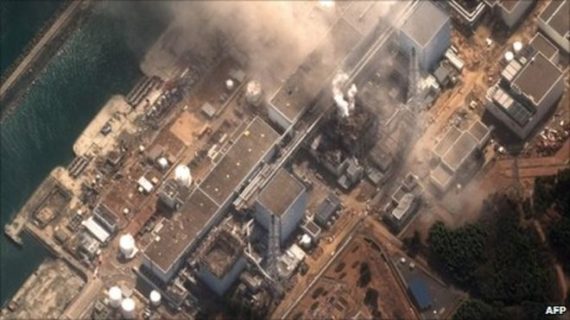
We have to turn our attention all the way back to March of 2011 when the magnitude 9 Tōhoku earthquake unleashed a tsunami on the east coast of Japan which, unfortunately, caused an accident at the Fukushima Daiichi Nuclear Power Plant. A cascade of issues resulted in three nuclear meltdowns, hydrogen-air explosions, and the release of radioactive materials from Units 1, 2, and 3.
Ever since, scientists have been keenly observing the site and its surrounding environment for signs of nuclear radiation, and it was almost a year ago that we received our first direct images of the damaged nuclear fuel rods.
The new study published last month, however, focuses further afield from the Fukushima Daiichi Nuclear Power Plant in the search for nuclear materials. While there have been various discoveries in the immediate vicinity of the nuclear meltdown, this is the first time that nuclear reactor fuel debris has been “explicitly revealed” in the surrounding environment, which means that the impact from the fallout might last much longer than had previously been expected.
Among the international team of scientists were experts from The University of Manchester, who explained their research late last month:
“The scientists have been looking at extremely small pieces of debris, known as micro-particles, which were released into the environment during the initial disaster in 2011. The researchers discovered uranium from nuclear fuel embedded in or associated with caesium-rich micro particles that were emitted from the plant’s reactors during the meltdowns. The particles found measure just five micrometres or less; approximately 20 times smaller than the width of a human hair. The size of the particles means humans could inhale them.”
“Our research strongly suggests there is a need for further detailed investigation on Fukushima fuel debris, inside, and potentially outside the nuclear exclusion zone,” further explained Dr Gareth Law, Senior Lecturer in Analytical Radiochemistry at The University of Manchester, and an author on the paper. “Whilst it is extremely difficult to get samples from such an inhospitable environment, further work will enhance our understanding of the long-term behaviour of the fuel debris nano-particles and their impact.”
Prior to this most recent research, it had been assumed that only volatile, gaseous radionuclides such as caesium and iodine were released from the damaged reactors. However, the new research is clarifying that small, solid particles were also emitted from the fallout and that some of these particles contain long-lived radionuclides.
How long lived is “long lived”? Uranium, for example, has a half-life of billions of years.
(The following is an excerpt from a longer article on the subject of evacuations after severe nuclear accidents. While this section focuses on Fukushima, there are lessons here for all nuclear sites and the likely failure of “on paper” evacuation plans.)
If another severe nuclear accident, such as Windscale (in 1957), Chernobyl (1986) or Fukushima (2011) were to occur, then the most important response, in terms of preventing future cancer epidemics, is evacuation. The other main responses are shelter and stable iodine prophylaxis. Adverse health effects would primarily depend on wind direction and on the nature of the accident. This article looks primarily at the Fukushima evacuation and its after-effects.
When the Fukushima-Daiichi, Japan nuclear disaster began on March 11, 2011, evacuations were not immediate and some were hampered by the destructive after-effects of the Tsunami and earthquake that precipitated the nuclear crisis.
Once people were evacuated, little, if any, consideration seems to have been given to how long such evacuations would last. For example, the large majority of the 160,000 people who left or were evacuated from Fukushima Prefecture are still living outside the Prefecture. Many are living in makeshift shelters such as shipping containers or prefabricated houses.
Deserted town of Futaba, with ironic welcome banner: “nuclear, a bright and future energy source.”
At present, the Japanese Government is attempting to force evacuees (by withdrawing state compensation) to return to less contaminated areas, with little success. Currently, seven years after the accident, an area of about 1,000 square kilometers is still subject to evacuation and no entry orders. This compares with the area of 2,700 square kilometers still evacuated and subject to no or restricted entry at Chernobyl, almost 32 years after the accident.
Experience of the Fukushima Evacuation
In 2015 and 2016, I visited Fukushima Prefecture in Japan with international study teams. These study tours were informative as they revealed information about the evacuations that differed from official accounts by TEPCO and the Japanese Government. From many discussions with local mayors, councillors, local health groups and small community groups, the following information was revealed.
An evacuation shelter used by Fukushima refugees.
The most common figure cited for evacuees is 160,000, of which 80,000 were evacuated by the authorities and the rest left to evacuate on their own, often on foot, cycles and carts. It took about two weeks to evacuate all parts of the initial 20 km (later 30 km) radius evacuation areas around the Fukushima reactors.
The main reason for the delays was that many roads in the Prefecture were jammed with gridlocks which sometimes lasted 24 hours a day, for several days on end on some roads. These traffic jams were partly due to the poor existing road infrastructure and partly due to many road accidents. These jams were of such severity that safety crews for the Fukushima nuclear station had to be moved in and out mostly by helicopter. All public transport by trains and buses ceased. Mobile telephone networks and the internet crashed due to massive demand.
Thousands of people either refused to leave their homelands or returned later. Older farmers often refused to leave their animals behind or be moved from their ancestral lands. In at least a dozen recorded cases, older farmers slaughtered their cow herds rather than leave them behind (dairy cows need to be milked daily): they then committed suicide themselves in several instances.
A cow wanders down a deserted street in Namie. (Herman, VOA).
According to Hachiya et al (2014), the disaster adversely affected the telecommunications system, water supplies, and electricity supplies including radiation monitoring systems. The local hospital system was dysfunctional; hospitals designated as radiation-emergency facilities were unable to operate because of damage from the earthquake and tsunami, and some were located within designated evacuation zones. Emergency personnel, including fire department personnel, were often asked to leave the area.
At hospitals, evacuations were sometimes carried out hurriedly with the unfortunate result that patients died due to intravenous drips being ripped out, medicaments being left behind, the absence of doctors and nurses who had left, and ambulance road accidents. Many hastily-allocated reception centres (often primary schools) were either unable or ill-equipped to deal with seriously ill patients.
Much confusion resulted when school children were being bussed home, while their parents were trying to reach schools to collect their children. Government officials, doctors, nurses, care workers, police, firepersons, ambulance drivers, emergency crews, teachers, and others faced the dilemma of whether to stay at their posts or return to look after their families. In the event, many emergency crews refused to enter evacuation zones for fear of radiation exposure.
Stable iodine was not issued to most people. Official evacuation plans were either non-existent or inadequate and, in the event, next to useless. In many cases, local mayors took the lead and ordered and supervised evacuations in their villages without waiting for orders or in defiance of them. Apparently, the higher up the administrative level, the greater the levels of indecision and lack of responsibility.
In the years after the accident, the longer-lasting effects of the evacuations have become apparent. These include family separations, marital break-ups, widespread depression, and further suicides. These are discussed in a recent publication (Morimatsu et al, 2017) which relates the sad, often eloquent, stories of the Fukushima people. They differ sharply from the accounts disseminated by TEPCO.
Deaths from evacuations at Fukushima
Official Japanese Government data reveal that nearly 2,000 people died from the effects of evacuations necessary to avoid high radiation exposures from the Fukushima disaster, including from suicides.
The uprooting to unfamiliar areas, cutting of family ties, loss of social support networks, disruption, exhaustion, poor physical conditions and disorientation resulted in many people, in particular older people, apparently losing their will to live.
The evacuations also resulted in increased levels of illnesses among evacuees such as hypertension, diabetes mellitus and dyslipidaemia, psychiatric and mental health problems, polycythaemia — a slow growing blood cancer — cardiovascular disease, liver dysfunction, and severe psychological distress.
Radiation dosimeter, Japan.
Increased suicide rates occurred among younger and older people following the Fukushima evacuations, but the trends are unclear. A 2014 Japanese Cabinet Office report stated that, between March 2011 and July 2014, 56 suicides in Fukushima Prefecture were linked to the nuclear accident.
Should evacuations be ordered?
The above account should not be taken as arguments against evacuations as they constitute an important dose-saving and life-saving strategy during emergencies. Instead, the toll from evacuations should be considered part of the overall toll from nuclear accidents.
In future, deaths from evacuation-related ill-heath and suicides should be included in assessments of the fatality numbers from nuclear disasters.
For example, although about 2,000 deaths occurred during and immediately after the evacuations, it can be calculated from UNSCEAR (2013) collective dose estimates that about 5,000 fatal cancers will arise from the radiation exposures at Fukushima, i.e. taking into account the evacuations. Many more fatal cancers would have occurred if the evacuations had not been carried out.
There is an acute planning dilemma here: if evacuations are carried out (even with good planning) then illnesses and deaths will undoubtedly occur. But if they are not carried out, even more people could die. In such situations, it is necessary to identify the real cause of the problem. And here it is the existence of nuclear power plants near large population centres. In such cases, consideration should be given to the early closure of the nuclear power plants, and switching to safer means of electricity generation.
Conclusions
The experiences of Japanese evacuees after Fukushima are distressing to read. Their experiences were terrible, so much so that it requires Governments of large cities with nearby nuclear power plants to reconsider their own situations and to address the question…. what would happen if radioactive fallout heavily contaminated large areas of their city and required millions of residents to leave for long periods of time, for example several decades?
And how long would evacuations need to continue…. weeks, months, years, or decades? The time length of evacuations is usually avoided in the evacuation plans seen so far. In reality, the answer would depend on cesium-137 concentrations in surface soils. The time period could be decades, as the half-life of the principal radionuclide, Cs-137, is 30 years. This raises the possibility of large cities becoming uninhabited ‘ghost’ towns like Tomioka, Okuma, Namie, Futaba, etc in Japan and Pripyat in Ukraine.
This bleak reality is hard to accept or even comprehend. However it is a matter that some governments need to address after Fukushima. It is unsurprising therefore, that after Fukushima, several major European states including Germany and Switzerland have decided to phase out their nuclear reactors.
JUST when the world thought they had him pegged, Kim Jong Un has stunned with an apparent about face on nuclear weapons. News.com.au Victoria Craw@Victoria_Craw 7 Mar 18NORTH Korea has vowed not to use nuclear weapons against South Korea and could impose a ban on further nuclear and missile tests during talks with the US, South Korean media reports.
The stunning about face followed the first meeting between North Korean leader Kim Jong Un and South Korean officials since 2011.
It led to claims Kim Jong Un would not use conventional weapons against South Korea and had no reason to possesses nuclear weapons if it has a security guarantee.
The leaders also agreed to establish a “hotline” between the countries to reduce military tensions and will meet for another summit in late April at the border village of Panmunjom.
President Trump weighed in on the news on Twitter, saying “the US is ready to go hard in either direction”.
“The North side clearly affirmed its commitment to the denuclearisation of the Korean Peninsula and said it would have no reason to possess nuclear weapons should the safety of its regime be guaranteed and military threats against North Korea removed,” he said.
But understanding exactly which companies your funds invest in – and how those entities make money for you – is anything but straightforward.
A new financial report, titled “Don’t Bank on the Bomb,” hopes to shed light on one pervasive and profitable industry that’s powered in part by 401(k)s, pensions, individual retirement accounts, and other private funds: nuclear weapons.
“Financial institutions have a choice, either to contribute to the end of nuclear weapons, or to provide the financing that will allow nuclear weapons to end us,” said the authors of the 2018 report, which was provided to Business Insider in advance of its publication.
Peace organisations have assembled the report each year since 2013. This year, the report covers publicly disclosed investments made by financial institutions from January 2014 through October 2017, and it excludes those “made by governments, universities, or churches.”
About $US525 billion was managed by “329 significant investors” that include “banks, insurance companies, pension funds and asset managers from 24 countries” – all of which, according to the report, “invest significantly in the top 20 nuclear weapon producers.”
What the report found
Below is the report’s list of companies that perform nuclear-weapons work, and how much investment they received over about 3.75 years.
“The research includes all outstanding loans and credit facilities during the research period, not only new loans issued,” the report said.
“Don’t Bank on the Bomb” also includes a “Hall of Shame” list that covers the hundreds of investors which contributed to these 20 companies.
The chart below – created by Business Insider using report data – highlights the top 20 of these financial institutions and their total contributions.
These total amounts, in the tens of billions, are impressive. But the nuclear-weapons-producing companies listed above dabble in all sorts of industries, so they use the money to create everything from air conditioners and aeroplanes to rockets and satellites.
The 2018 “Don’t Bank on the Bomb” report does not specify how much of the investments it listed specifically went toward the business of nuclear weapons – work that includes research,development, and maintenance. Similarly, details on the investing side also weren’t provided, and some investors listed above manage trillions of dollars in assets per year.
Business Insider contacted the top three companies and top-three financial institutions listed above to determine funding allocations. Most did not return our calls or respond to our emails in time for publication.
A Honeywell representative did respond, though he declined to comment and instead directed us to the company’s latest financial report. Along with the financial statements of other companies, it does not provide a detailed ledger of business related to work on nuclear weapons.
Beatrice Fihn, the executive director of the International Campaign to Abolish Nuclear Weapons (ICAN) and 2017 Nobel Peace Prize winner, wrote a forward to the “Don’t Bank on the Bomb” report.
“Nuclear weapons, like other weapons of mass destruction, are now forbidden by international treaty,” Fihn said
Fihn’s comment refers to the Treaty on the Prohibition of Nuclear Weapons – a legally-binding ban that she helped the United Nations pass in July 2017. (The US and eight other nuclear-armed nations have yet to sign or ratify the treaty.)
“By divesting from nuclear weapon producers,” she added, “we can make it harder for those that profit from weapons of mass destruction and encourage them to cut the production of nuclear weapons from their business strategies.”
Yet lack of government investment data is notable in terms of an effort to ban nuclear weapons. That’s because US taxpayers fund a significant amount of the work: about $US16-$US25 billion a year through the Department of Defence’s enormous and growing budget.
President Donald Trump also plans to modify and expand a Obama-era nuclear weapons modernisation program that may cost US taxpayers more than $US1.7 trillion over 30 years.
The report also excludes government investments made by China, Israel, Pakistan, North Korea, and Russia – the latter of which recently claimed that it has created “invincible” nuclear armaments.
Iran’s Rouhani: West will regret collapse of nuclear deal
Iran’s president accuses US of sabotaging 2015 pact as other officials say Tehran’s missile programme is non-negotiable. Aljazeera, 7 Mar 18
Iranian President Hassan Rouhani has warned the West will come to “regret” the day the nuclear agreement collapses, laying blame on the United States for trying to sabotage the historic deal.
Rouhani’s comment came as a senior Revolutionary Guard official vowed on Tuesday that Iran will defy pressure to scale back the country’s ballistic missile programme – part of a new push by US President Donald Trump to renegotiate the original pact signed in 2015.
Following a meeting with France’s Foreign Minister Jean-Yves Le Drian in Tehran on Monday, Rouhani said while Iran is ready for any “unfavourable” consequences, negotiations and diplomacy remain the best options to save the agreement.
“Remaining committed to the accord would prove to the world that the negotiation and diplomacy is the best way to solve problems, but the collapse of the deal means that political talks are a waste of time,” he said.
Rouhani stressed it is necessary for all signatories of the deal to adhere to their commitments, adding Tehran will never be the first party to violate the agreement, Tasnim News agency quoted him as saying.
Trace U was released from the Fukushima Daiichi Nuclear Power Plant (FDNPP) during the meltdowns, but the speciation of the released components of the nuclear fuel remains unknown.
We report, for the first time, the atomic-scale characteristics of nanofragments of the nuclear fuels that were released from the FDNPP into the environment.
Nanofragments of an intrinsic U-phase were discovered to be closely associated with radioactive cesium-rich microparticles (CsMPs) in paddy soils collected ∼4 km from the FDNPP. The nanoscale fuel fragments were either encapsulated by or attached to CsMPs and occurred in two different forms: (i) UO2+X nanocrystals of ∼70 nm size, which are embedded into magnetite associated with Tc and Mo on the surface and (ii) Isometric (U,Zr)O2+X nanocrystals of ∼200 nm size, with the U/(U+Zr) molar ratio ranging from 0.14 to 0.91, with intrinsic pores (∼6 nm), indicating the entrapment of vapors or fission-product gases during crystallization.
These results document the heterogeneous physical and chemical properties of debris at the nanoscale, which is a mixture of melted fuel and reactor materials, reflecting the complex thermal processes within the FDNPP reactor during meltdown.
Still CsMPs are an important medium for the transport of debris fragments into the environment in a respirable form.
Japan appears to have won the latest World Trade Organization (WTO) battle over South Korea’s post-Fukushima disaster food import ban and restrictions, but the trade spat between the East Asian giants looks set to continue.
A gradual lessening of fears about the effects of radiation from the 2011 nuclear disaster reversed itself slightly as the seventh anniversary of the accident looms.
A joint survey by The Asahi Shimbun and Fukushima Broadcasting Co. found that 66 percent of Fukushima Prefecture residents still feel anxiety over radioactive substances spewed out of the Fukushima No. 1 nuclear power plant after it went into triple meltdown.
The figure, which had been on a downward trend in recent years, was up from 63 percent in the previous survey in 2017.
The Feb. 24-25 survey canvassed the views of 1,888 eligible voters living in the prefecture, excluding some areas that remained off-limits due to high levels of radiation. Respondents were randomly chosen by computer and contacted by landline. Valid responses were given by 1,004 voters, or 53 percent.
It was the eighth such survey since the nuclear disaster triggered by the Great East Japan Earthquake that unleashed devastating tsunami on March 11, 2011.
Twenty-one percent of respondents said they are “very much” anxious about the effects of radiation, and 45 percent replied that they are feeling anxiety “to some degree.”
Against that total of 66 percent, 33 percent replied “not very much” or “not at all” with regard to anxiety.
To a question about the course of recovery from the disaster, 45 percent of respondents agreed that it has been set. The breakdown was 3 percent saying “very much” and the remaining 42 percent answering “to some degree.”
On the other hand, 52 percent said the course has not been set yet. The figure included the categories of “not very much” and “not at all.”
Asked when residents will be able to live as they did before the disaster, 54 percent replied “more than 20 years later,” followed by 19 percent with “about 20 years,” 16 percent with “about 10 years” and 4 percent with “about five years.”
Even among those who replied that the course of recovery has been set, 47 percent answered “more than 20 years later.”
On the issue of whether to back the restart of idled nuclear reactors, 11 percent said they support it while 75 percent replied that they are opposed.
The percentage figure of those opposed to restarts was much higher than in a nationwide survey in February, in which 61 percent expressed that sentiment against 27 percent who were in favor.
Another question focused on plant operator Tokyo Electric Power Co.’s on-site storage of water containing difficult-to-remove tritium. As the number of storage tanks continues to pile up, TEPCO wants to discharge the water into the sea, a plan that won the support of the nation’s nuclear watchdog body.
Sixty-seven percent of respondents were opposed to diluting the water and discharging it into the sea, while 19 percent supported it.
Besides, 87 percent said they felt anxiety “very much” or “to some degree” about contamination of the sea caused by the discharge.
In addition, 52 percent said they felt anxiety “very much” over damages from rumors without substance about the safety of local seafood.
While 64 percent of respondents did not rate TEPCO’s handling of the nuclear accident highly, 17 percent rated it highly.
Another question centered on moves by Fukushima prefectural authorities to switch from blanket testing for radiation of all bags of harvested rice to random checks.
Forty-nine percent were in favor of switching to a new system, while 44 percent were opposed.
The ratio of opposition was higher than in a nationwide survey in February in which 35 percent expressed opposition against 54 percent who supported it.
Eighty-six percent of the respondents answered that blanket testing had eased consumer concerns. The categories for this were “very much” and “to some degree.”
Proving that covering up, disinformation and censorship are working very well. Those tourists are certainly unaware that they might bring back from Fukushima more than just wrapped souvenirs….wrapped inside their body.
5 March, 2018
Nearly seven years after the triple disasters of earthquake, tsunami and nuclear meltdown virtually crippled Fukushima’s tourism industry, the number of foreign overnight travellers has recovered to levels last seen before the disaster.
In the first 10 months of calendar 2017, a total of 78,680 foreign visitors spent at least one night in the prefecture, surpassing the 77,890 visitors in the same period in 2010. Final statistics for the full year are not available, but prefectural authorities expect the 2017 figure to eclipse 2010’s figure of 87,170 foreigners who stayed in the prefecture.
Tourist visiting Ouchijuku Village, a former post town along the Aizu-Nishi Kaido trade route in Fukushima
Visitor numbers collapsed in the months after the March 11 earthquake and a mere 23,990 foreigners stayed in calendar 2011.
“We have been working with the Fukushima government to promote the prefecture at international events, focusing on events in countries where we have already seen visitor numbers recover, such as Taiwan, Thailand and Australia,” said Kazuhiko Yoshioka, director of overseas promotion for the Fukushima Prefecture Tourism and Local Products Association.
Yoshioka shared that the organisation plugs the prefecture’s samurai history, onsen, fruit, scenery and seasonal highlights as part of overseas promotion. Information on the destination is also shared online.
“Getting the message across can be difficult,” he admitted. “We have found that the best way to overcome worries about safety is to ensure that up-to-date and accurate information is accessible and then to share that information as widely as possible.”
Travel operators concur that visitor numbers have bounced back strongly.
Paul Christie, CEO of Walk Japan, said the company’s walking tour in the footsteps of famous poet Basho in Tohoku are “selling very well – so well, in fact, that they are sold out months in advance.”
“We have found that whatever problems happened in Fukushima seven years ago are no longer in the forefront of people’s minds,” he said. “I have been quite surprised, but it is really not an issue for the vast majority of people.”
At Nippon Travel Agency, Kaho Mori, assistant manager of the inbound division, observed: “There is interest in Fukushima Prefecture as part of our tours of the Tohoku region. We are getting a lot of interest in that part of the country from visitors from North America, although less from European countries.”
Almost one year has passed since the evacuation order for four municipalities around the ruined Fukushima No. 1 nuclear power plant was lifted to make it possible for local residents to return home.
But the harsh reality of life in towns and villages devastated by the 2011 Great East Japan Earthquake and tsunami and the consequences are clearly visible to anyone who visits these areas.
These towns and villages lack many of the functions and facilities to meet the essential needs of people such as housing, shopping, health and nursing care, jobs and communities. This is the reason why many of the local residents have not returned home despite an end to forced evacuation. A survey of evacuees by one local government found nearly 50 percent of the residents have no plan to return.
But it is also true that many of the people who left their towns and villages in the wake of the catastrophic accident want to eventually return home or are of two minds.
It is the government’s important role to make things easier for evacuees to return to their former communities if they want to do so while supporting their current lives.
The government needs to review the measures that have been taken so far and, if necessary, adjust them to better suit the actual circumstances.
A myriad of challenges are threatening to thwart the efforts to rebuild towns and villages ravaged by the disaster. But progress is only possible through hard, tenacious work and constant adjustments for the better.
REALITIES DETER RETURN OF EVACUEES
In Namie, a town located north of the nuclear plant, the newly built Namie Sosei elementary and junior high school, which is to open this spring, held a school enrollment briefing at the end of January.
“Each child receives more sufficient attention at a school with a small number of students, I believe,” says a father of two in his 30s who left Namie with his family following the disaster and now lives in Iwaki, a city in the prefecture farther from the nuclear plant. He has decided to return to Namie so that his children can attend the new school.
The opening of the school will be “an important step forward in the efforts to rebuild Namie back into a normal town where we can hear the voices of children,” says Kiichiro Hatakeyama, head of the municipal board of education.
But the number of such families is still small. Only about 10 students are expected to enter the elementary and junior high school in the first year.
Before the 2011 disaster, more than 20,000 people lived in the town. Only about 500 of them had returned by the end of January since the evacuation order was lifted.
Many evacuated residents have been discouraged from returning to the town by the slow progress in the restoration of the living environment.
There are convenience stores in the town but not a supermarket. Local residents have to drive dozens of minutes to shop at the nearest supermarket.
The municipal government is courting supermarket operators to open a store in the town, but the population is still too small to support this kind of business.
There are only clinics for surgery and internal medicine in Namie. Many of the residents who have returned are elderly people, and they are asking for dentists and eye doctors.
NEW APPROACH NEEDED TO ESCAPE FROM SITUATION
The situation is more or less similar in Tomioka and Iitate, two other municipalities where the evacuation order was called off at the same time with Namie. The government’s strategy aimed at encouraging evacuated residents of these communities to return home by stepping up the decontamination efforts has failed to work as expected.
As the living circumstances remain poor, evacuated residents don’t go back to their homes. As the population thus remains small, services necessary for daily life remain unavailable.
To break this never-ending cycle, the central and local governments need to come up with better ideas to improve the living environment.
As for medical and nursing care services, the Fukushima prefectural government and the administration need to work together with organizations involved to provide active support for the efforts to secure service providers instead of leaving the task entirely to the municipalities.
A system should be created to provide policy support for retailers, not just for their preparations to restart their businesses, but also for their actual operations for a certain period of time.
There are obviously limits to what individual municipal governments can do independently to regenerate their cities, towns and villages.
Cooperation among areas, such as joint efforts by multiple municipalities to restore necessary functions and facilities, is essential.
There have been troubling signs that the government’s policy to support the reconstruction of disaster-hit areas tends to focus on the building of new facilities.
Costly projects to build various facilities, such as research and development institutions in the areas of energy and robotics and large sports facilities, are under way in the region.
“Some local government chiefs are forging ahead with public works projects to build facilities in a rush to take advantage of the central government budget for post-disaster reconstruction while the money is available, but they are failing to think about the ongoing costs,” says a senior official at the municipal government of one affected town. “The central government is also acting in a somewhat senseless manner.”
The administration stresses the importance of helping rebuild the lives of local residents. But its priorities in allocating the financial and human resources seem to be messed up.
SUPPORT FROM ENTIRE SOCIETY
In disaster-stricken areas, the vital bonds between people have been totally destroyed by the effects of prolonged periods of living as evacuees. Local communities have also been hurt by conflict and division over such issues as the status of evacuees as to whether they can return home or how much compensation they have received.
Rebuilding the broken human ties is no easy task. But there are some encouraging signs as well.
In Naraha, where about 30 percent of the residents have returned since the evacuation order was lifted two and a half years ago, a small and casual Japanese restaurant named Yui no Hajimari, which opened in September last year, is thriving. At night, it is thronged with residents in the neighborhood and nuclear workers.
Kaori Furuya, the 33-year-old woman who runs the restaurant, used to work in the Tokyo metropolitan area but decided to start the business in the town after she became involved in a project to help people acquire the skills and abilities needed for the reconstruction of affected communities.
“I want to keep operating the restaurant as a place where local residents and people from outside the town develop contacts and enjoy spending time together naturally,” Furuya says.
Iitate will soon launch a program to expand ties and communication with other parts of the nation. The program, dubbed “Furusato Juminhyo” (hometown certificate of residence), will involve various attempts to convey information about Iitate to people outside who want to support the town and provide them with opportunities to mix with local residents, according to the municipal government.
“We will test various ideas designed to build a new village instead of trying to restore the village to its former state,” says Iitate Mayor Norio Kanno.
Seven years since the calamitous nuclear accident, people in Fukushima are still facing a grim reality and fighting an uphill battle to find a way to regain an environment that enables them to enjoy a peaceful and quiet daily life.
What must not be forgotten is the grave fact that the accident occurred in connection with the government’s long-running policy of promoting nuclear power generation.
Our society is facing a serious test of whether it can keep this in mind and commit itself as a whole to supporting the affected communities’ struggles to rebuild themselves.
Bags containing radioactive soil and other waste are piled up high at an interim storage facility in Futaba, Fukushima Prefecture, on Feb. 17.
FUTABA, Fukushima Prefecture–Stacks of soil and other waste contaminated by the Fukushima nuclear disaster continue to grow at an interim storage facility here.
Black bags filled with radioactive debris collected during decontamination work in various locations in the prefecture have been brought to the facility since October, when operations started.
Heavy machinery is used to stack the bags, and green sheets now cover some of the piles.
The town of Futaba co-hosts the crippled Fukushima No. 1 nuclear plant. The interim facility is expected to eventually cover about 1,600 hectares of land in Futaba and Okuma, the other co-host of the plant.
The government has acquired 801 hectares as of Jan. 29, and 70 percent of that space is already covered with contaminated debris.
Negotiations between the government and landowners are continuing for the remaining hectares.
The government plans to move the contaminated debris to a final disposal site outside the prefecture by March 2045. However, it has had difficulties finding local governments willing to accept the waste.
Yuki Kokatsu, left, smiles as she finds her Japanese dictionary in Ono Elementary School in Okuma, Fukushima Prefecture, on March 2. She was a second-grader of the school at the time of the 2011 Fukushima nuclear disaster.
OKUMA, Fukushima Prefecture–Seven years after being forced to leave her belongings behind, Yuki Kokatsu returned to her second-grade elementary school classroom here for the first time.
Yuki, now 15, spotted her melodica instrument on the floor, and said, “I found it.”
The third-year junior high school student also found 30 other items she had left when her family was forced to evacuate due to the Fukushima nuclear disaster, including a Japanese dictionary and a jump rope. She put them all into her cloth bag to take home.
“I feel that I was able to recover my lost possessions. I will keep and treasure them,” said Yuki, who had evacuated to Tsukuba, Ibaraki Prefecture.
Yuki and other former Ono Elementary School students at the time of the disaster returned to their school on March 2 to retrieve their belongings.
After the accident at the Fukushima No. 1 nuclear power plant in March 2011, which was triggered by the Great East Japan Earthquake and tsunami, all the residents of Okuma town evacuated to other areas.
Ono Elementary School is located in an area that remains designated as a difficult-to-return zone. However, the radiation level around the school has been lowered due to decontamination work. Because of that, former students and related people have asked the Okuma town government to allow them to enter the school building.
According to the Okuma town government, six groups visited Ono Elementary School on March 2. A total of 39 groups are expected to do so through March 4.
Normalisation of the health risks, the Japanese government continues is denial policy.
Rice is checked for radiation in Koriyama, Fukushima Prefecture, in October 2016.
March 3, 2018
FUKUSHIMA – Fukushima Prefecture will begin scaling back its blanket radiation checks on rice as early as 2020 amid growing signs the safety fears sparked by the March 2011 nuclear crisis are disappearing, it has been learned.
All rice will remain subject to checks for the time being in 12 municipalities where evacuation orders were issued following the triple core meltdown at the Fukushima No. 1 nuclear plant, but other areas will switch to random checks. All locally grown rice has been subject to the checks since 2012.
Fukushima Gov. Masao Uchibori told the prefectural assembly that checks will become random if no excessive radiation is detected for five years.
All local rice grown between 2015 and 2017 came in below the safety limit of 100 becquerels per kilogram. If the 2018 and 2019 harvests are also found to be within the standards, the checks will go random starting in 2020 in areas outside the 12 evacuated municipalities.
Some have criticized the blanket checks as too costly.
The manager of the Fukushima No. 1 plant is Tokyo Electric Power Company Holdings Inc.
Congress’s failure to debate and vote on our current wars has led to a total abdication of its duties to declare war. As a result, many Americans are unclear about our objectives, and the 2001 authorization following 9/11 has been used to justify military operations in 14 different countries at least 37 times. Questions surrounding U.S. actions in Yemen—currently being challenged in Congress by Senators Mike Lee (R-UT), Bernie Sanders (I-VT), and Chris Murphy (D-CT)—are raising additional questions about how the White House and the Department of Defense are using that authorization for endless war. “The blank check just got bigger,” Center for Defense Information Military Advisory Board Member and Defense Priorities Senior Fellow Lt. Col. Daniel Davis, USA (Ret.) recently told Members of Congress.
Leadership in both parties have continually resisted calls to hold a vote on our current wars. The Senate Foreign Relations Committee held a hearing on the need to revise the authority for our current wars—known as the Authorization for the Use of Military Force (AUMF)—last year, but there’s been no similar debate in House. So for the first time that I can remember the Progressive Caucus and the Liberty Caucus, led by Representatives Barbara Lee (D-CA) and Justin Amash (R-MI) respectively, held a joint ad-hoc hearing on whether the 2001 AUMF needs to repealed or revised.
Lt. Col. Davis was deployed into combat zones four times in his career, beginning with Operation Desert Storm in 1991, and then to Iraq in 2009 and Afghanistan twice (2005, 2011). In 2012 he published a report showing that military leaders were misleading Congress and the American public about conditions on the ground in Afghanistan. His testimony about the need for Congress to have the integrity to do their job and vote on our current wars is compelling, and I hope you’ll watch it in full below.
Davis, opening remarks 27 February 2018 before members of Congress
BY DAVID KRIEGER,OPINION CONTRIBUTOR — 03/03/18In Secretary of Defense Jim Mattis’ preface to the 2018 U.S. Nuclear Posture Review (NPR), he describes its purpose as “to ensure a safe, secure, and effective nuclear deterrent that protects the homeland, assures allies and, above all, deters adversaries.” These are worthy goals, but likely impossible to achieve so long as nuclear weapons exist.
Of course, it is preferable that nuclear weapons be safe in the sense that they will not detonate accidentally, and that they be secure in the sense that they cannot be stolen by others or triggered by a cyber attack. These are basically physical problems which can be engineered and guarded against, although surely not perfectly.
Despite the desire to achieve perfection, it is not possible for humans to do so, as demonstrated through the years of the Nuclear Age by many accidents, miscalculations and close calls.
The nuclear deterrent force of a country relies instead on creating psychological barriers. If a nuclear deterrent force is effective in protecting a country and its allies, an adversary would refrain from attacking due to fear of retaliation. Since nuclear deterrence operates at the psychological level, one can never be sure it is effective. Or, it may only appear to be effective until it fails and failure could be catastrophic.
Mattis also refers to a “credible” nuclear deterrent. Presumably, to be effective, a nuclear deterrent force would need to be credible to an adversary, but credibility is also a psychological term. It encompasses not only the size and power of a nuclear arsenal, but a belief in a particular leader’s willingness to actually use the nuclear weapons should deterrence fail.
It is interesting that in the 2018 NPR (the Trump NPR), as with previous NPRs, there is allowance for the possible failure of nuclear deterrence. This should not be reassuring to anyone. Mattis ties the need to modernize the U.S. nuclear arsenal to the credibility of the nuclear deterrent force. He also ties credibility to “ensuring that our diplomats continue to speak from a position of strength on matters of war and peace.”
The 2018 NPR points the finger at Russia, China, North Korea and Iran. Russia and China are accused of modernizing their nuclear arsenals, making it necessary for the U.S. to do the same. It points out that Russia, in addition to its seizure of Crimea, has military strategies reliant on nuclear escalation. It talks about China “expanding its already considerable forces,” but fails to mention that China has a policy of minimum deterrence and has made a pledge of No First Use of nuclear weapons.
Nor does the 2018 NPR mention that both Russia and China have reacted to the U.S. placing missile defense installations strategically near their borders, or that this has only been possible due to the 2002 U.S. unilateral withdrawal from the 1972 Anti-Ballistic Missile (ABM) Treaty, which severely limited ABM deployments.
Despite the promising interactions between North and South Korean athletes at the 2018 Winter Olympics, Trump has imposed tough sanctions on North Korea and upped his threats toward the country. Personalizing his message, Trump menacingly stated, “If the sanctions don’t work, we’ll have to go to Phase 2. Phase 2 may be a very rough thing. May be very, very unfortunate for the world.” This is the dangerous and threatening rhetoric of a madman.
Trump has also failed to certify Iran’s compliance with the nuclear deal, leaving open the possibility of killing the deal and increasing the odds of yet another war and Iran’s return to its previous nuclear program.
Mattis concludes his preface to the Trump NPR by acknowledging the vital role played by U.S. servicemen and civilians “in maintaining a safe, secure, and ready nuclear force.” The fact that the U.S. nuclear deterrent force is “ready” is not necessarily a blessing and should be of little comfort to Americans or anyone else. We are all part of “the world” that Trump is threatening to punish if North Korea does not submit to his will. He should be impeached now, before he does something “very, very unfortunate for the world.”
The 2018 NPR calls for new and smaller nuclear weapons, those that would make it easier to cross the barrier into nuclear war. The NPR also chooses to keep all three legs of the nuclear triad: intercontinental ballistic missiles, bomber aircraft and submarine launched ballistic missiles.
There can be little doubt that the U.S. nuclear posture will spur other nuclear-armed countries to do the same, thus assuring new arms races and increased nuclear dangers ahead. One has to wonder if the expensive and provocative technological modernization of the U.S. nuclear arsenal and other nuclear policies set forth in the 2018 NPR will be what takes us from the Nuclear Age back to the dark ages.
The biggest problem with a nuclear deterrent force arises from any attempt to determine its effectiveness. How can possessors of nuclear weapons assure that their nuclear weapons are effective in providing a deterrent to another nuclear-armed country? The answer is that they cannot do so in any physical sense.







 nuclear-news