7 years after 3/11 / Fukushima towns face uncertainty

7 years later, why hasn’t Japan learned from Fukushima?


7 years after 3/11 / Public servants face massive workload


Fukushima Ice Wall Failing, Water Seepage Into Nuclear Reactors Still A Problem

March 9th, 2018 by James Ayre
7 Years On: Fukushima Aims to Lure Young People with New Industries

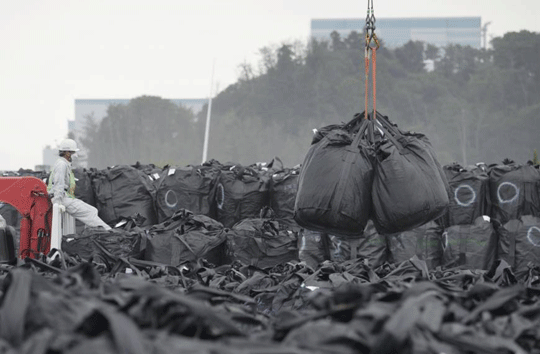
Clearing the Radioactive Rubble Heap That Was Fukushima Daiichi, 7 Years On

Fukushima: A Human-Made Disaster Brought on by Bad Faith

Japanese government accepts United Nations Fukushima recommendations – current policies now must change to stop violation of evacuee human rights
March 8, 2018

Fukushima’s giant ice wall fails to stop water leaking into radioactive area

Support Most Common Reason for Buying ‘Fukushima Food’

March 8, 2018
Evacuees from 2011 disaster number over 73,000

Olympic Games Spin – Based on Olympic Sized Lies – theme for March 2018
Fukushima today is the focus of the nuclear lobby’s most egregious lies. It’s hard to know where to start in examining them.



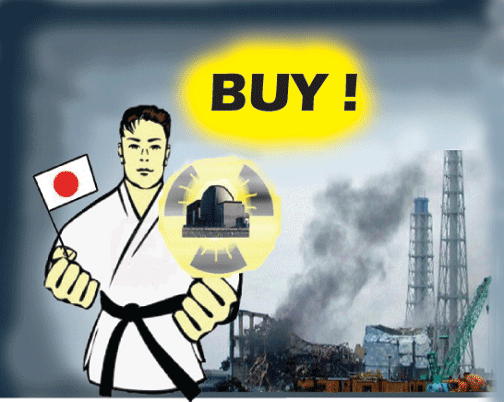

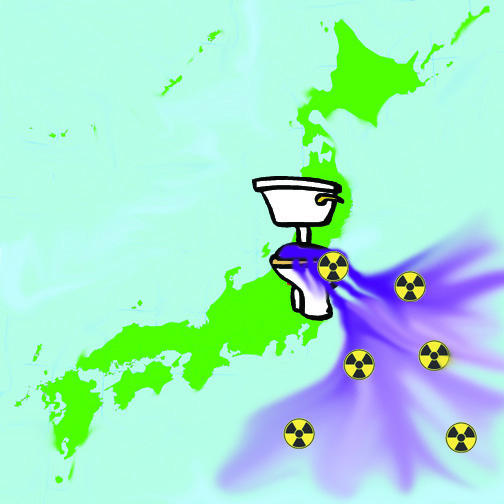

Let’s start with ionising radiation. This year’s March 11 report, by Shin-ichi Hayama, on the macaque monkeys of Fukushima reveals that they have radioactive cesium in their muscles, and significantly low white and red blood cell counts. They have reduced growth rate and smaller head sizes. These “snow monkeys” are close relatives to humans. Hayama’s 10 year study of the macaque provides a unique examination of the effects of chronic low level radiation affecting generations of monkeys.
New nuclear power for Japan, and nuclear technology as a profitable export? A visitor from another planet might well marvel at these fantasies – noting Fukushima’s radioactive shattered reactors, and ever growing masses of radioactive water – with Japan’s vulnerability to earthquakes.
The social costs continue – the rise in childhood and adolescent thyroid cancer, the worried evacuees, the stigma to Fukushim survivors. The financial costs of it all are unimaginable – and will be exacerbated by many legal cases won against the nuclear industry.
So – how does the global nuclear industry, backed by banks and governments respond?
 Why – by deciding to hold the 2020 Olympic Games in Tokyo, and pretending that everything is safe, clean green under control in North Eastern Japan!
LET THE OLYMPIC SPIN BEGIN – the survival of the nuclear industry depends on it!!
Harmful effects of radiation on Fukushima’s macaque monkeys
Stark health findings for Fukushima monkeys https://beyondnuclearinternational.org/2018/03/11/stark-health-findings-for-fukushima-monkeys-of-concern-for-humans/ By Cindy Folkers
Successful legal action against nuclear power, and more court cases to come

 Nuclear Power Facing a Tsunami of Litigation, Nippon, Shizume Saiji
  , [2018.03.12] In March 2011, a magnitude-9 earthquake triggered a giant tsunami that crippled the cooling system at the Fukushima Daiichi Nuclear Power Station, leading to a catastrophic accident that continues to reverberate seven years later. Science reporter Shizume Saiji surveys the legal fallout from the meltdown, from claims against the government and the operator to a raft of actions aimed at permanently shutting down the nation’s nuclear power industry………….
Complacency and Opacity
In the wake of the Fukushima accident, NISA (since replaced by the Nuclear Regulation Authority) was faulted for its lack of independence. The agency was under the authority of the Ministry of Economy, Trade, and Industry, which promotes the use of nuclear power, and officials maintain that its regulatory powers were limited. In addition, a closed, inbred environment encouraged unhealthy ties between NISA and the electric power industry. As a consequence, NISA had fallen into the habit of accommodating and supporting the utilities instead of overseeing them. TEPCO, for its part, had developed a deeply rooted culture of denial, habitually concealing information that might supply ammunition to anti-nuclear activists or fuel fears among the local citizenry. The company brushed off the warnings, convincing itself that the danger from a giant tsunami was purely hypothetical.
So far, district courts have reached decisions on three major class-action suits, and in each case they have agreed with the plaintiffs that the state and TEPCO could have foreseen the danger from a major tsunami once the 2002 report on earthquake risks was released. Two of the district courts, Maebashi and Fukushima, found both the state and TEPCO negligent for failing to prevent the meltdowns. The Chiba District Court, on the other hand, dismissed claims against the state on the grounds that the government was focusing on earthquake safety at the time and may not have been able to formulate effective measures in time to protect Fukushima Daiichi against the March 2011 tsunami. With the government and TEPCO girding up to appeal the lower courts’ decisions, the cases could drag on for years……….
Fighting Nuclear Power, One Plant at a Time
On a different but related front, citizens’ groups and other plaintiffs are vigorously pursuing lawsuits and injunctions aimed directly at shutting down nuclear power plants around the country.
Efforts to block nuclear energy development through legal action date all the way back to the 1970s.
………. At present, almost all of Japan’s operable nuclear power plants are in the midst of some kind of litigation. In one case, the plaintiff is a local government: The city of Hakodate in Hokkaidō has filed a lawsuit to block the construction and operation of the Ōma Nuclear Power Station across the Tsugaru Strait in Aomori Prefecture.[Excellent graphs show 38 nuclear reactors suspended, and 3 operating]
Lawyers on a Mission
Lawyers Kawai Hiroyuki and Kaido Yūichi have been key figures in the fight against nuclear power since before the Fukushima accident. In the wake of the disaster, they founded the National Network of Counsels in Cases against Nuclear Power Plants, a group that has been pursuing legal action against nuclear facilities on behalf of citizens and other plaintiffs nationwide.
Kawai and Kaido are also representing the shareholders of TEPCO, who are suing the company’s former executives for an unprecedented ¥5.5 trillion. In addition, as lawyers for the Complainants for the Criminal Prosecution of the Fukushima Nuclear Disaster, the two attorneys are working alongside the prosecuting team in the criminal case against three TEPCO executives, which parallels the civil suit in terms of arguments, evidence, and testimony.
Even so, the trial—which officially opened last June and is expected to continue at least through the coming summer—is expected to attract intense media coverage as witness examinations begin this spring. More than 20 witnesses are scheduled to testify. The case also involves a massive volume of documentary evidence, including records of interviews conducted by the government’s Investigation Committee on the Accident at the Fukushima Nuclear Power Station, along with countless pages of emails, internal memos, meeting minutes, and reports. Will all this information shed new light on the human factors behind the Fukushima accident? The nation will be watching closely.
(Originally published in Japanese on February 19, 2018). https://www.nippon.com/en/currents/d00388/?pnum=2
Long expensive ?intractable, task of cleaning up Fukushima’s radioactive water and rubble

Clearing the Radioactive Rubble Heap That Was Fukushima Daiichi, 7 Years On
The water is tainted, the wreckage is dangerous, and disposing of it will be a prolonged, complex and costly process, Scientific American, By Tim Hornyak on March 9, 2018 Seven years after one of the largest earthquakes on record unleashed a massive tsunami and triggered a meltdown at Japan’s Fukushima Daiichi nuclear power plant, officials say they are at last getting a handle on the mammoth task of cleaning the site before it is ultimately dismantled. But the process is still expected to be a long, expensive slog, requiring as-yet untried feats of engineering—and not all the details have yet been worked out………
In the years since the disaster and the immediate effort to stanch the release of radioactive material, officials have been working out how to decontaminate the site without unleashing more radiation into the environment. It will take a complex engineering effort to deal with thousands of fuel rods, along with the mangled debris of the reactors and the water used to cool them. Despite setbacks, that effort is now moving forward in earnest, officials say. “We are still conducting studies on the location of the molten fuel, but despite this we have made the judgment that the units are stable,” says Naohiro Masuda, TEPCO’s chief decommissioning officer for Daiichi.
Completely cleaning up and taking apart the plant could take a generation or more, and comes with a hefty price tag. In 2016 the government increased its cost estimate to about $75.7 billion, part of the overall Fukushima disaster price tag of $202.5 billion. The Japan Center for Economic Research, a private think tank, said the cleanup costs could mount to some $470 billion to $660 billion, however. ……….
The considerable time and expense are due to the cleanup being a veritable hydra that involves unprecedented engineering. TEPCO and its many contractors will be focusing on several battlefronts.
WATERWORKS
Water is being deliberately circulated through each reactor every day to cool the fuel within—but the plant lies on a slope, and water from precipitation keeps flowing into the buildings as well. Workers built an elaborate scrubbing system that removes cesium, strontium and dozens of other radioactive particles from the water; some of it is recirculated into the reactors, and some goes into row upon row of giant tanks at the site. There’s about one million tons of water kept in 1,000 tanks and the volume grows by 100 tons a day, down from 400 tons four years ago……….
FUEL MOP-UP
A second major issue at Fukushima is how to handle the fuel¾the melted uranium cores as well as spent and unused fuel rods stored at the reactors. Using robotic probes and 3-D imaging with muons (a type of subatomic particle), workers have found pebbly deposits and debris at various areas inside the primary containment vessels in the three of the plant’s reactor units. These highly radioactive remains are thought to be melted fuel as well as supporting structures. TEPCO has not yet worked out how it can remove the remains, but it wants to start the job in 2021. There are few precedents for the task………
Shaun Burnie, senior nuclear specialist with Greenpeace Germany, doubts the ambitious cleanup effort can be completed in the time cited, and questions whether the radioactivity can be completely contained. Until TEPCO can verify the conditions of the molten fuel, he says, “there can be no confirmation of what impact and damage the material has had” on the various components of the reactors—and therefore how radiation might leak into the environment in the future.
Although the utility managed to safely remove all 1,533 fuel bundles from the plant’s unit No. 4 reactor by December 2014, it still has to do the same for the hundreds of rods stored at the other three units. This involves clearing rubble, installing shields, dismantling the building roofs, and setting up platforms and special rooftop equipment to remove the rods. Last month a 55-ton dome roof was installed on unit No. 3 to facilitate the safe removal of the 533 fuel bundles that remain in a storage pool there. Whereas removal should begin at No. 3 sometime before April 2019, the fuel at units No. 1 and 2 will not be ready for transfer before 2023, according to TEPCO. And just where all the fuel and other radioactive solid debris on the site will be stored or disposed of long-term has yet to be decided; last month the site’s ninth solid waste storage building, with a capacity of about 61,000 cubic meters, went into operation.
As for what the site itself might look like decades from now, cleanup officials refuse to say. …….https://www.scientificamerican.com/article/clearing-the-radioactive-rubble-heap-that-was-fukushima-daiichi-7-years-on/
1 This Month
Chernobyl: The Lost Tapes – A good documentary on Chernobyl on SBS available On Demand for the next 3 weeks– https://www.sbs.com.au/ondemand/tv-program/chernobyl-the-lost-tapes/2352741955560

of the week–London Campaign for Nuclear Disarmament

Tell the Ukrainian Government to Drop Prosecution of Peace Activist Yurii Sheliazhenko
To see nuclear-related stories in greater depth and intensity – go to https://nuclearinformation.wordpress.com
-
Archives
- April 2026 (132)
- March 2026 (251)
- February 2026 (268)
- January 2026 (308)
- December 2025 (358)
- November 2025 (359)
- October 2025 (376)
- September 2025 (257)
- August 2025 (319)
- July 2025 (230)
- June 2025 (348)
- May 2025 (261)
-
Categories
- 1
- 1 NUCLEAR ISSUES
- business and costs
- climate change
- culture and arts
- ENERGY
- environment
- health
- history
- indigenous issues
- Legal
- marketing of nuclear
- media
- opposition to nuclear
- PERSONAL STORIES
- politics
- politics international
- Religion and ethics
- safety
- secrets,lies and civil liberties
- spinbuster
- technology
- Uranium
- wastes
- weapons and war
- Women
- 2 WORLD
- ACTION
- AFRICA
- Atrocities
- AUSTRALIA
- Christina's notes
- Christina's themes
- culture and arts
- Events
- Fuk 2022
- Fuk 2023
- Fukushima 2017
- Fukushima 2018
- fukushima 2019
- Fukushima 2020
- Fukushima 2021
- general
- global warming
- Humour (God we need it)
- Nuclear
- RARE EARTHS
- Reference
- resources – print
- Resources -audiovicual
- Weekly Newsletter
- World
- World Nuclear
- YouTube
-
RSS
Entries RSS
Comments RSS
 nuclear-news