A team of six experts in the nuclear energy sector has been assembled to find a way to move the 3.55 million pounds of nuclear waste at the San Onofre Nuclear Generating Station.
The group includes a former chairman of the Nuclear Regulatory Commission, the independent agency in charge of all safety-related matters surrounding nuclear energy in the U.S., and a former director of policy at the U.S. Department of Energy.
The panel was put together as part of an out-of-court settlement negotiated last summer between Southern California Edison — the utility that operates SONGS — and attorneys for two San Diego-area plaintiffs who opposed a permit granted by the California Coastal Commission allowing waste to be stored on the plant’s premises.
One of the terms in the settlement called for creating a team of authorities in engineering, radiation detection and nuclear waste siting and transportation to learn if any alternative sites exist to store SONGS’ spent fuel.
“This is a very significant step; this hasn’t been done before,” Aguirre said. “There hasn’t been an owner of nuclear waste that has brought together a panel working with the community that’s focused on figuring out how to move (the waste) to a safer location.”
SONGS sits between the Pacific Ocean and one of the busiest freeways in the country — Interstate 5. About 8.4 million people live in a 50-mile radius of the plant in an area with a history of seismic activity.
Among the members of the panel is Allison Macfarlane, who chaired the Nuclear Regulatory Commission from 2012 to 2014, and Thomas Issacs, whose time at the Department of Energy included policymaking regarding waste management and security.
Speaking in general terms about nuclear waste, Macfarlane told the audience, “It is our ethical responsibility to deal with this material and not leave it for future generations.”
The other members of the panel are:
Kristopher W. Cummings, a fuel storage expert and engineer with Curtis-Wright Nuclear Division.
Gary Lanthrum, the former director of the National Transportation Program for Yucca Mountain.
Richard C. Moore, a consultant specializing in transportation of radiological materials who works for the Western Interstate Energy Board.
Josephine Piccone, a health physics and radiation control expert with regulatory compliance experience
“We believe this distinguished panel of experts will make significant contributions to a growing industry-wide effort to achieve off-site storage of nuclear fuel,” Tom Palmisano, vice president of decommissioning and chief nuclear officer at SONGS said in a letter to members of the facility’s Community Engagement Panel.
“We have a long road ahead as we undertake this difficult task but selection of these experts is an important step,” Palmisano said, adding that the panel will begin its work “in the coming weeks.”
The team of experts was assembled with input from the attorneys involved in the settlement and from Edison officials.
About 80,000 metric tons of spent fuel has accumulated at nuclear reactor sites across the country.
The Yucca Mountain repository in Nevada was supposed to accept large amounts of waste, but Nevada lawmakers, especially then-Senate Majority Leader Harry Reid, were firmly against opening the site. The Obama administration cut off funding for Yucca Mountain in 2010.
KIEV, March 15 (Xinhua) — The Ukrainian government has included the facility for nuclear waste near the destroyed Chernobyl nuclear power plant into a list of heavily guarded objects, local media reported Thursday, citing a government decree.
The decree, which was adopted by the cabinet earlier this week, envisages that the central spent fuel storage facility (CSFSF) will be guarded by the officers of the National Guard of Ukraine.
The building of the CSFSF, which will store spent nuclear fuel from three Ukrainian nuclear power plants, is currently underway at the 30-km-radius exclusion zone around the plant.
The construction of the facility has started in November 2017 and its first stage is due to be completed in 2019.
The building of the CSFSF is aimed at boosting Ukraine’s capabilities in managing and storing its nuclear waste. Currently, the East European country relies heavily on Russia for storing spent fuel from its power plants.
Ukraine generates over half of its electricity from nuclear energy. Currently, 15 reactors in four nuclear power plants are operating in the East European country.
The Chernobyl plant, located some 130 km from Kiev, witnessed one of the worst nuclear accidents in human history on April 26, 1986.
The blasts at the No. 4 reactor spread radiation across Ukraine, Belarus, Russia and other European countries.
An Albuquerque-based nonprofit that advocates for nuclear disarmament filed a lawsuit this week asking a U.S. District Court judge to order the release of federal documents detailing the costs and risks of plutonium work planned at Los Alamos National Laboratory.
In its lawsuit, filed Wednesday in the federal District Court in Albuquerque, the Los Alamos Study Group accuses the National Nuclear Security Administration of improperly withholding a study that it says should be released upon request under the federal Freedom of Information Act.
While congressional staff members and some lab officials have been briefed on the document, argues the nonprofit — a longtime critic of the lab and the U.S. Department of Energy — the unclassified study has not been released to the public and has not been provided to the group, despite a request made under the public records law more than three months ago.
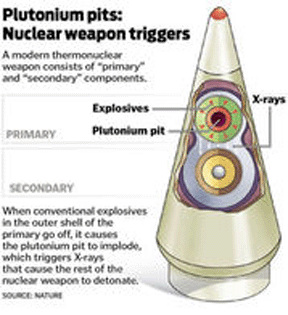
The National Nuclear Security Administration in November completed the roughly 400-page study comparing the potential costs, time frame and risks of creating a proposed assembly-line factory for plutonium pit production at various Energy Department sites.
The Los Alamos lab has been producing pits — the grapefruit-size fission triggers that ignite nuclear weapons — on a smaller scale for decades, and New Mexico’s congressional delegation has been pushing to keep that work in the state as the nation’s mission to modernize its nuclear weapons arsenal ramps up.
A summary of the National Nuclear Security Administration’s study, leaked in December, shows that Los Alamos and the Savannah River Site in South Carolina are the final contenders for the pit factory, expected to cost up to $7.5 billion and take 10 to 20 years to complete.
According to the leaked material, which was reviewed by The New Mexican, the work would take longer to complete in Los Alamos and costs would be higher there.
The Los Alamos Study Group also contends the risks of pit production at Los Alamos are significant and should be disclosed to the public.
The nonprofit’s director, Greg Mello, said in a statement Thursday, “We believe [pit production] is proceeding ‘under cover of darkness’ on purely ideological grounds, and not on any defensible managerial basis. … It is a vast waste of resources, though lucrative for a few contractors.”
The organization believes the U.S. already has an excess of pits in its weapons stockpile and that future production would present a grave risk to the public while wasting public funds. The U.S. arsenal contains 23,000 pits, the group says in its suit, at least a third of which its says are viable and would last through 2063.
Los Alamos began producing plutonium pits after the Rocky Flats Plant in Colorado was shut down in the early 1990s, following a federal raid that found the plant rife with environmental contamination and nuclear safety violations.
Residents in the Rocky Flats area spent more than two decades entangled in a lawsuit with the plant’s operators after plutonium was found to have traveled to thousands of homes.
Los Alamos has had its share of nuclear safety violations, as well.
The lab’s plutonium facility, which restarted pit production in 2015 following a yearslong pause over safety concerns, was cited for a series of violations in the last year alone. Several workers were contaminated with radiation in 2017, and a small fire burned one worker. The lab was fined several million dollars for mishandling an out-of-state shipment of plutonium, and federal inspectors raised concerns recently about how the lab manages the toxic metal beryllium.
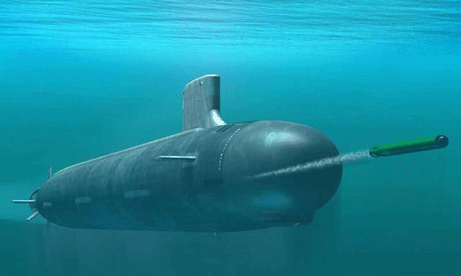
Britain Sends Nuclear Sub Under Arctic Ice As Tensions With Russia Heat Up, Sputnik News, 16 Mar 18,One British and two US nuclear submarines are taking part in a joint naval exercise currently underway in the icy waters of the Arctic Ocean.
Armed with Tomahawk cruise missiles and Spearfish heavy torpedoes, the HMS Trenchant is the first British nuclear sub to be deployed under the Arctic ice in a decade.
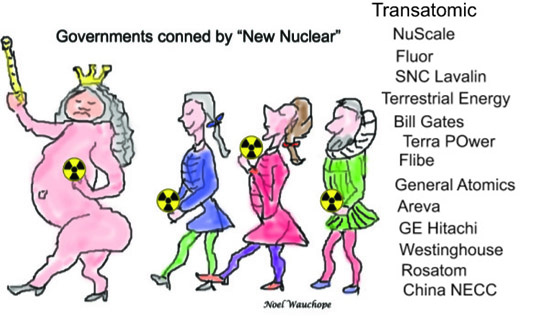
France considers developing mini nuclear reactors, eyes cost Euro News , ByREUTERS 15/03/2018 PARIS – The French nuclear industry is considering developing Small Modular Reactors (SMRs), but will have to ensure these miniaturised generators are not only technically feasible but also financially viable, executives said.
CEA head of nuclear energy François Gauché said the agency would study the technical and financial feasibility of SMRs in the coming 18 months.
He said some organisations – notably NuScale, majority-owned by U.S. Fluor Corp – had submitted SMRmodels to their nuclear regulators for design approval.
Critics say SMR economies of scale will be limited because each reactor will need its own control and safety systems. They also point at the danger of spreading radioactive material more widely, increasing radiation and security risks.The British government said in December it would provide funding for research into mini nuclear plants. Rolls-Royce is part of a consortium of UK firms developing SMR technology…….. Reporting by Benjamin Mallet; Writing by Geert De Clercq; Editing by Dale Hudsonhttp://www.euronews.com/2018/03/15/france-considers-developing-mini-nuclear-reactors-eyes-cost
Queen Elizabeth’s WWIII speech revealed, AS RELATIONS between the UK and Russia plummet and talk of a new Cold War spreads, these are the chilling words we hope are never said.News.com.au, 15 Mar 18, Alexis Carey alexis.carey@news.com.auQUEEN Elizabeth has a pre-written speech prepared for the outbreak of World War 3.
And as tensions between the UK and Russia continue to escalate, some believe the threat of nuclear war is more real than it has been since the Cold War.
The current crisis began on March 4, when former Russian spy Sergei Skripal and his daughter Yulia were found slumped on a bench in Salisbury, England.
UK Prime Minister Theresa May said they had been poisoned by a nerve agent called Novichok, one of the world’s deadliest.
While the pair remain in hospital, their prognosis is grim.
Novichok has been made in Russia for many years, and Ms May said it was “highly likely” Russia was involved in the poisoning. She demanded that Russia explain what happened, but when the country didn’t comply, she said: “There is no alternative conclusion other than that the Russian State was culpable for the attempted murder of Mr Skripal and his daughter — and for threatening the lives of other British citizens.”
As a result, the government has ordered 23 Russian diplomats to leave UK soil by next Wednesday, which is the UK’s biggest removal of foreign representatives in three decades.
UK government ministers and members of the Royal Family will also not attend the World Cup in Russia in June in a further show of retaliation.
As the dispute grows, UK media have republished Queen Elizabeth’s speech, which she will deliver if a nuclear war is ever declared.
The monarch’s speech was initially written in 1983 during the peak of the Cold War.
It had previously been kept a strict secret under the National Archives’ 30-year rule.
The sombre speech was written as if it was delivered at midday on Friday, March 4, 1983 — and while some aspects are now outdated, such as the reference to Queen Elizabeth’s son Prince Andrew serving in the Royal navy, the majority remains relevant.
The speech begins by referencing Queen Elizabeth’s recent Christmas message, before detailing her childhood during World War II.
It goes on to encourage British citizens to “fight off the new evil”.
The speech was previously published by the BBC and has been reproduced here in full:
Dave Toke’s Blog 14th March 2018, How Labour can really put the wind up the Tories. Labour is well placed to
embarrass the Tories by attacking the Government’s war on the onshore
wind industry in the UK.
Despite onshore wind now being the cheapest widely
available electricity source the Government is actively sabotaging the
industry by refusing to allow long term contracts to be issued to wind
developers. Meanwhile large subsidies are being offered to gas, coal and
nuclear power stations.
Under the last Labour Government incentives were
given to build up a large increase in onshore wind power, which now
supplies around a tenth of UK’s electricity supply, with offshore wind
and solar farms now supplying around another ten per cent of UK
electricity.
But right wing English Tory pressure has prevented any move
towards enabling long term contracts to be issued so that new windfarms can
be financed. Meanwhile the UK risks becoming increasingly dependent on
supplies of gas from places like Russia and Qatar.
The Labour frontbench is beginning to realise that young people in particular want to see green
energy being given a chance, and, for example, John McDonnell has recently
attacked the Tories for failing to doing anything to revive support for the
feed-in tariff scheme that helped people install solar panels on their
roofs.
But attention ought also to be turned to promoting onshore
windfarms. Doing so would embarrass the Government and also sow division
inside the Tory ranks. More practically, it would offer hope to people who
are working in the industry that they might have a future.
Places like Grimsby are benefitting from offshore wind projects which are still being
built, but onshore wind factories are being closed down, the latest being
the Glasgow based Gaia Wind. The Minister of State for Energy, Claire
Perry, has, in recent months, been making some encouraging noises about
providing some ‘contracts for differences’, but appears to lack the
required political clout to do much that changes anything, especially to
overcome the vocal hostility of the climate-and-wind sceptical group of
Tory MPs. http://realfeed-intariffs.blogspot.co.uk/2018/03/how-labour-can-really-put-wind-up-tories.html
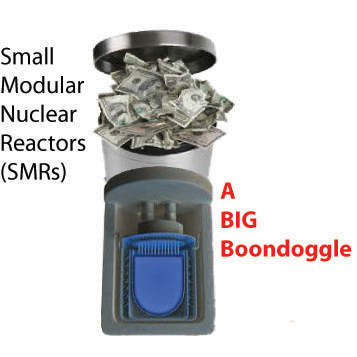
Interest in Small Modular Nuclear Reactors Is Growing. So Are Fears They Aren’t Viable
SMRs are the future of nuclear. Will they always be the future? Greentech Media JASON DEIGNMARCH 14, 2018
The slow-moving small modular reactor (SMR) market saw some positive activity in recent weeks, even as one expert predicted the technology would never achieve commercialization.
Earlier this month, the World Nuclear Association reported that Ukraine had signed a memorandum of understanding with SMR developer Holtec International, aiming to turn the Eastern European nation into a manufacturing hub for Holtec’s SMR-160 reactors.
The Association said Holtec is planning a Ukrainian manufacturing plant to allow for partial localization of its 160-megawatt SMRs, so Ukraine’s nuclear operator Energoatom can use the design to replace two aging Russian VVER-440 reactors at its Rivne nuclear power plant.
The news came a week after the government of Canada announced a road-mapping exercise to explore the potential of SMRs in the country.
“The road map will be an important step in positioning Canada to advance next-generation technologies and become a global leader in the emerging SMR market,” said Natural Resources Canada, a federal institution.
This was welcome news for a technology that has been slow to achieve commercialization — and which some believe might never take off.
In the December 2017 edition of the National University of Singapore’s Energy Studies Institute Bulletin, for example, Canadian academic Professor M.V. Ramana provided a detailed argument for why SMRs could never be a viable technology. Nuclear plants in general require high levels of capital, he noted, and high construction costs mean the electricity they provide ends up being more expensive than coal, gas and, more recently, wind and solar.
SMRs may be able to overcome the first problem, said Ramana, who is a professor at the University of British Columbia’s School of Public Policy and Global Affairs.
But SMRs could end up with even higher energy costs because the smaller reactors can’t take advantage of economies of scale unless they’re manufactured “by the thousands, even under very optimistic assumptions about rates of learning.”
Experience indicates such rates of learning may be rare in the nuclear industry. In France and the U.S., according to Ramana, reactor construction costs have historically risen rather than falling.
Also, mass production would need the industry to settle on a single SMR design. As of 2016 there were 48 listed by the International Atomic Energy Agency.
Finally, said Ramana, for all the interest in SMRs, no country has yet got behind the technology enough for it to be commercialized. This likely indicates demand for the reactors is not as solid as proponents imagine.
“SMRs seem appealing to many countries at first sight,” Ramana told GTM. “But once they get into the actual nitty gritty of planning an SMR project, they realize that there are numerous problems.
Japan introduced the training programme for foreign workers in 1993 with the aim of transferring skills to developing countries. But the scheme has drawn criticism for giving Japanese companies a cover to import cheap labour
A Vietnamese man who came to Japan under a foreign trainee programme was made to engage in radioactive decontamination work in Fukushima Prefecture without his knowledge, a foreign workers support group heard.
At an event organised by the Solidarity Network with Migrants Japan, the 24-year-old man, who declined to be named, said he would have “never come to Japan” if he had known he would be doing that work near where a nuclear disaster occurred in 2011.
The Vietnamese said a construction company in Morioka, Iwate Prefecture, hired him as a trainee, but did not tell him the work involved removing decontaminated material from around where the worst nuclear disaster since Chernobyl occurred at the Fukushima Daiichi nuclear power plant in the days after a massive earthquake and tsunami struck northeastern Japan in March 2011.
Japan introduced the training programme for foreign workers in 1993 with the aim of transferring skills to developing countries. But the scheme, applicable to agriculture and manufacturing among other sectors, has drawn criticism at home and abroad for giving Japanese companies a cover to import cheap labour.
According to the network, the Vietnamese man arrived in Japan in September 2015, and his contract only stated he would be engaging in work involving “construction machinery, dismantling, and civil engineering.”
Without any explanation about decontamination, he was told to remove the surface soil from roads and nearby residences in Koriyama, Fukushima Prefecture, between October 2015 and March 2016.
He also took part in dismantling buildings in the town of Kawamata in the prefecture between September and December in 2016 before an evacuation order for the area was lifted.
The man became suspicious about the work after seeing someone measuring radiation levels at the work sites, and he discovered the nature of the work after contacting the Zentoitsu Workers Union, an organisation helping foreign workers in Japan.
He also received only 2,000 yen (US$19) a day for decontamination work, less than a third of the 6,600 yen set as the standard by the Environment Ministry, in addition to his monthly salary of about 150,000 yen as a foreign trainee.
According to the union, this is the first known case of a foreign trainee’s involvement in decontamination work.
The Justice Ministry’s immigration bureau and the Ministry of Health, Labour and Welfare released statements on Wednesday, saying decontamination work does not fit the purpose of the trainee programme.
“If the content of training is significantly different from the plan, it can be illegal,” the immigration bureau said.
TEPCO, state told to pay 3/11 evacuees who left on their own
March 15, 2018
The legal team for evacuees of the 2011 Fukushima nuclear disaster hold signs stating partial victory at the Kyoto District Court on March 15.
KYOTO–The district court here ordered the government and the operator of the Fukushima No. 1 nuclear plant on March 15 to pay a combined 110 million yen ($1 million) to 110 evacuees who fled voluntarily after the 2011 nuclear disaster.
Presiding Judge Nobuyoshi Asami at the Kyoto District Court ruled that the government and plant operator Tokyo Electric Power Co. were liable on grounds that they failed to take adequate measures to protect the plant from the tsunami that inundated the facility after the Great East Japan Earthquake.
The court noted the government’s “long-term assessment” for possible earthquakes unleashing tsunami compiled in 2002. The report pointed to the possibility of a powerful earthquake and tsunami striking the plant.
All of the 174 plaintiffs from 57 families had evacuated to Kyoto Prefecture without an evacuation order except for one individual from Tomioka, Fukushima Prefecture.
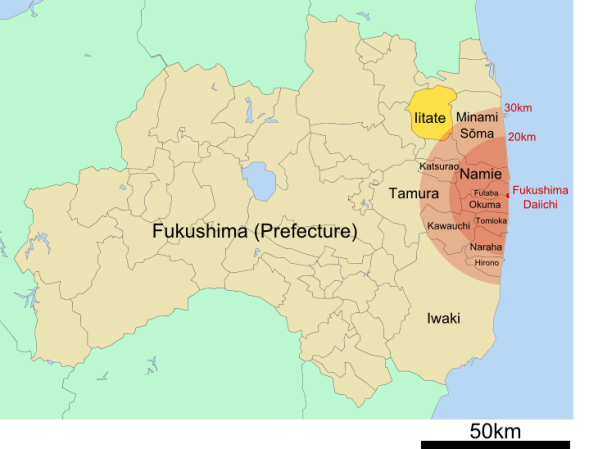
Tomioka was within the 20-kilometer radius from the plant ordered to evacuate after the crisis unfolded on March 11, 2011, triggered by the magnitude-9.0 quake and tsunami.
Apart from Fukushima, the plaintiffs were from Miyagi, Ibaraki, Tochigi and Chiba prefectures.
The plaintiffs plan to appeal the court decision, as 64 were not awarded compensation.
The plaintiffs sought 846.6 million yen collectively in damages from the government and the utility.
The district court ruling marked the fifth in a series of similar lawsuits brought across the nation.
In all five cases, the respective courts acknowledged TEPCO’s responsibility to pay damages to the plaintiffs.
The Kyoto District Court’s decision was the third to acknowledge the government’s responsibility.
The key issues in the Kyoto case were if the towering tsunami that swamped the plant was foreseen, if the government had authority to force TEPCO to take countermeasures against such an event, and if the amount of compensation paid by TEPCO to voluntary evacuees based on the government’s guidelines was appropriate.
Most of the plaintiffs sought 5.5 million yen each in damages.
In the ruling, the district court determined that TEPCO should pay additional compensation on top of the amount set in the government guidelines to 109 plaintiffs who fled voluntarily despite not being subject to evacuation orders.
The criteria for extra payment are distance from the plant, radiation levels around homes, and family members who require medical attention due to the exposure to radiation.
Among the plaintiffs who were awarded additional compensation were those from Chiba Prefecture, just east of Tokyo and roughly 240 km from Fukushima Prefecture.
The court stated that the extra payment should be based on damage they suffered over two years after they began evacuating.
In the lawsuits filed at three other districts, some of the plaintiffs who evacuated voluntarily were awarded additional compensation, ranging from 10,000 yen to 730,000 yen per person.
Third court rules Tepco, govt liable over Fukushima disaster-media
TOKYO, March 15 (Reuters) –
* Kyoto district court on Thursday ruled that Tokyo Electric Power (Tepco) and the Japanese government were liable for damages arising from the Fukushima nuclear disaster of 2011, the Asahi newspaper said
* The ruling is the third court decision assigning liability to both Tepco and the government for the disaster that led to the evacuation of around 160,000 people
* A group of 174 claimants sought 850 million yen ($8 million)in damages arising from the disaster
* The court in western Japan did not accept that all plaintiffs should be awarded damages ($1 = 105.9900 yen) (Reporting by Aaron Sheldrick Editing by Shri Navaratnam)
Court orders Japan government to pay new Fukushima damages
TOKYO (AFP)-A Japanese court on Thursday ordered the government to pay one million dollars in new damages over the 2011 Fukushima nuclear disaster, ruling it should have predicted and avoided the meltdown.
The Kyoto district court ordered the government and power plant operator Tokyo Electric Power Co (TEPCO) to pay 110 million yen in damages to 110 local residents who had to leave the Fukushima region, a court official and local media said.
Thursday’s verdict was the third time the government has been ruled liable for the meltdown in eastern Japan, the world’s most serious nuclear accident since Chernobyl in 1986.
In October, a court in Fukushima city ruled that both the government and TEPCO were responsible, following a similar ruling in March in the eastern city of Maebashi.
However, another court, in Chiba near Tokyo, ruled in September that only the operator was liable.
On Thursday, presiding judge Nobuyoshi Asami ordered that 110 plaintiffs who saw their lives ruined and their property destroyed by the disaster be awarded compensation, Jiji Press and other media reported.
Contacted by AFP, a court spokesman confirmed the reports, adding that the ruling denied damages to several dozen additional plaintiffs.
“That damages for 64 people were not recognised was unexpected and regrettable,” a lawyer for the plaintiffs said, adding that they would appeal, according to public broadcaster NHK.
Around 12,000 people who fled after the disaster due to radiation fears have filed various lawsuits against the government and TEPCO.
Cases have revolved around whether the government and TEPCO, both of whom are responsible for disaster prevention measures, could have foreseen the scale of the tsunami and subsequent meltdown.
Dozens of class-action lawsuits have been filed seeking compensation from the government.
In June, former TEPCO executives went on trial in the only criminal case in connection with the disaster.
The hearing is continuing.
Triggered by a 9.1-magnitude earthquake, the tsunami overwhelmed reactor cooling systems, sending three into meltdown and sending radiation over a large area.
Japan faces questions from abroad about its handling of the lingering aftereffects of the triple disaster.
March 11 marked the seventh anniversary of the earthquake and tsunami disaster that devastated Japan’s northeast coastal regions in 2011. While the resulting accident at the Fukushima Daiichi nuclear power plant continues to cause a great deal of disruption within the country, it also poses ongoing challenges for Japan’s diplomacy.
The Japanese government recently came under pressure in a United Nations human rights forum over the adequacy of its support for people who fled the disaster zone – and faced scrutiny about radiation levels in places where evacuees have returned. At the same time, Japanese diplomats have been waging a long battle to persuade other countries to ease import restrictions on food from the surrounding areas.
The Fukushima prefectural government says that the number of evacuees peaked at 164,865 in 2012, the year after the disaster, but that figure has now fallen to about 50,000 with decontamination work progressing and the lifting of evacuation orders in a number of towns.
Several countries took up the issue of the rights of Fukushima residents and evacuees as part of the UN’s universal periodic review of Japan. Austria, for example, urged the government to continue to provide housing support to so-called voluntary evacuees. These are people who had been living outside officially designated evacuation zones but fled because of their fears about radiation. Their housing aid ended about a year ago. Portugal, meanwhile, called on Japan to ensure women and men had equal participation in decision-making processes about their resettlement and Mexico urged the government to guarantee access to health services.
Germany’s representatives focused on radiation levels. Under Japanese government policies, evacuation orders can be lifted if the level of exposure for residents is estimated to be below 20 millisievert (mSv) per year. Germany called on the government to “respect the rights of persons living in the area of Fukushima, in particular of pregnant women and children, to the highest level of physical and mental health, notably by restoring the allowable dose of radiation to the 1 mSv/year limit, and by a continuing support to the evacuees and residents.” Incidentally, the International Commission on Radiological Protection recommends that the level for people in contaminated areas should be in the lower part of the 1 to 20 mSv/year range, with a long-term post-accident target of 1 mSv/year.
In a response dated March 1, the Japanese government said it accepted these four recommendations for follow-up, while arguing that it was providing necessary support to affected people under the relevant laws. The minister for reconstruction, Masayoshi Yoshino, subsequently told foreign journalists and diplomats that the government was effectively already committed to the long-term target advocated by Germany. “We have proceeded with decontamination efforts and as a long-term goal the government has indicated 1 mSv per annum,” he said during a briefing at the Foreign Press Center Japan on March 7.
The problem, according to environmental activists, is that the time-frame for achieving that goal is vague. Shaun Burnie, a nuclear specialist at Greenpeace Germany, said the raising of the issue in the UN process was important for evacuees as the recommendations could not simply be ignored. “The German government’s intervention on behalf of tens of thousands of Japanese citizens is absolutely welcome,” he said during a visit to Tokyo. Burnie and others plan to closely monitor how the recommendations are implemented.
Meanwhile, the Japanese government has been seeking to promote the safety of food products from Fukushima and other nearby regions, as a handful of places (including China and Taiwan) still impose import restrictions.
Tokyo last month enjoyed a significant win when a World Trade Organization dispute panel ruled that South Korea’s broad restrictions targeting eight prefectures were “unjustifiably discriminate.” Seoul is appealing the finding.
The Japanese government emphasizes the integrity of its food screening measures. In a recent report to the International Atomic Energy Agency, the government said 25,864 food samples were taken and analyzed in January 2018, of which 19 samples or 0.07 percent were found to be above the limits for cesium-134 and cesium-137.
Yoshino, the reconstruction minister, said vegetables, tea, and livestock products had not exceeded the standard limits over the past five years. No bags of rice produced in Fukushima prefecture had breached the limit since 2015, he added. Yoshino further described the “elimination of negative reputation” as the biggest challenge in promoting reconstruction of disaster-affected areas.
“Hoping that overseas consumers would also experience our delicious foods, I would be grateful if you would tell the people of your country about these initiatives for food safety that I have presented here today,” Yoshino said in a press briefing that was also attended by diplomats.
Solidarity Network with Migrants Japan expressed concern that foreign ‘interns’ working in Japan under the Technical Intern Training Programme (TITP) were being made to engage in dangerous radioactive decontamination work at locations close to the Fukushima Dai-ichi nuclear power plant. ‘A’, a Vietnamese national, had worked for over two years at decontamination sites before, fearing for his health, he escaped from his company dormitory. ‘A’ states he was never told he was engaged in decontamination work, and never received any special training. He was paid just above the minimum wage (JPY 145,000, or approximately USD 1,400 per month), apparently less than what Japanese nationals doing the same work were receiving. In addition, the company he worked for paid him only one third of the JPY 6,000 (approximately USD 60) daily bonus for decontamination work provided by the government, in violation of government policy.
Though ostensibly a programme to transfer advanced skills to developing countries, TITP has been widely criticized as a means for Japanese companies to exploit cheap labour. Domestic and international human rights NGOs, UN human rights bodies, and even the US State Department has expressed concern that the programme results in human trafficking. ‘A’ paid USD 15,000 to brokers and other middle men in Vietnam before arriving in Japan on the TITP, ensuring that he was in debt bondage from the outset.
The No. 1 to No. 4 reactors (from top to bottom) at the Oi Nuclear Power Plant are seen from a Mainichi Shimbun helicopter, in Oi, Fukui Prefecture, on March 14, 2018.
March 14, 2018
FUKUI, Japan (Kyodo) — Kansai Electric Power Co. restarted Wednesday a reactor at its Oi plant on the Sea of Japan coast, located close to two other units already online, amid lingering safety concerns following the Fukushima disaster.
It is the first time that multiple nuclear reactors within the same vicinity have been in operation since the crisis at the Fukushima Daiichi plant, triggered by the March 2011 earthquake and tsunami.
The No. 3 reactor at the Oi plant is a mere 14 kilometers from the No. 3 and 4 units at the Takahama plant, all in the central Japan prefecture of Fukui.
Local residents are worried about the lack of an effective evacuation plan in the event accidents hit both the Takahama and Oi complexes at the same time.
The No. 3 Oi unit is the sixth reactor to resume operations in Japan after clearing stricter safety regulations implemented in the wake of the Fukushima disaster.
The government of Prime Minister Shinzo Abe, seeing nuclear power as an “important base-load power source,” is promoting the restart of nuclear reactors considered safe by regulators.
Under the current national energy policy, the government plans to generate between 20 and 22 percent of total electricity using nuclear power in fiscal 2030.
Kansai Electric aims to start commercial operations of the No. 3 Oi reactor in early April. The No. 4 reactor at the Oi plant is also expected to restart in May, having cleared the Nuclear Regulation Authority’s safety review along with the No. 3 unit in May 2017.
Toyoshi Fuketa, chairman of the Nuclear Regulation Authority (NRA), told a news conference last week that the Fukushima nuclear accident is far from over, and that it would be a mistake to think of it solely as something that occurred seven years ago.
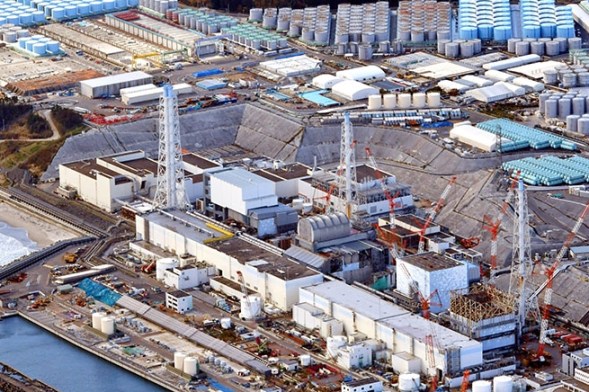
On the surface, it appears as if a semblance of order has been restored at the Fukushima No. 1 nuclear power plant, the site of one of the most catastrophic nuclear accidents in history. Except for in and around the crippled reactor buildings, workers can now go almost anywhere on the premises without protective clothing.
Measures have been set in place to cool debris from the reactor cores and spent nuclear fuel in storage pools.
The NRA has considerably downgraded the risk of the plant spewing massive amounts of radioactive substances again.
In reality, however, the road to reactor decommissioning is long and arduous.
“We are still in no state to see the peak of the mountain,” Fuketa said. “We don’t even know what sort of uphill slope awaits us.”
The government last year revised its timetable for reactor decommissioning. The basic target of “decommissioning in 30 to 40 years” has not changed, but the removal of spent fuel from the No. 1 and No. 2 reactor pools will not begin until fiscal 2023, three years later than initially projected.
With the state of the immediate surroundings of the reactor cores still being understood only vaguely, any decision on concrete steps for the removal of debris has been postponed by one year to fiscal 2019.
The volume of water containing radioactive substances, stored in 850 tanks, has reached 1 million tons, and it will only keep growing with the passage of time. The bloating costs of reactor decommissioning will translate into a heavier taxpayer burden. But trying to rush the job will raise the risk of exposing workers to radiation and inviting accidents.
Tokyo Electric Power Co. (TEPCO), the operator of the Fukushima No. 1 plant, started last summer to publicly announce troubles encountered by cleanup crews as “deviations from the norm.”
Such issues include injuries or acute illnesses suffered by workers, vehicular collisions while multiple operations are being simultaneously run, and the deterioration of machinery used in emergencies. While most of these cases do not constitute legal violations, they are being reported almost daily.
Ensuring the safety of workers is TEPCO’s top priority. The utility must also pay close attention to other factors while proceeding steadily with reactor decommissioning, such as reducing the risks of environmental pollution. It is also crucial for the company to explain the situation to local residents as well as the general public and heed their voices.
However, some within the NRA, as well as the Nuclear Reform Monitoring Committee, a group of domestic and overseas experts who advise TEPCO’s board of directors, have frequently expressed concern that TEPCO may start prioritizing its corporate profitability.
For TEPCO, which has been bailed out effectively under government control, decommissioning the reactors at the Fukushima No. 1 plant should be its foremost task. As the very party that allowed the nuclear disaster to occur, it is obviously its responsibility to invest sufficient capital and manpower in this undertaking.
In 2013, when Tokyo was bidding for the 2020 Olympics, Prime Minister Shinzo Abe declared in his speech that the issue of contaminated water at the Fukushima plant was “under control.”
But such optimism was hardly warranted, given the difficulty that became clear in disposing of the radioactive water.
This must be firmly borne in mind by TEPCO, as well as the Ministry of Economy, Trade and Industry, which oversees the utility, and the NRA.
Media have been allowed to watch decontamination work at a post-disaster reconstruction hub inside the no-entry zone set up after the 2011 nuclear accident in Fukushima Prefecture, northeastern Japan.
Reporters were invited on Wednesday to a kindergarten in the town of Okuma, about 7 kilometers from the damaged Fukushima Daiichi nuclear power plant.
Work began there last Friday to remove radioactive substances from the kindergarten’s 7,000-square-meter playground. Workers will weed grass as tall as an adult, and replace contaminated topsoil with new earth.
The central government has recognized an 860-hectare zone around the railway station in Okuma as a reconstruction hub based on the local administration’s plan.
Utilities and other infrastructure will be rebuilt and some houses will be demolished at the request of residents to provide them with a livable environment.
Okuma was designated as an area where residents could not return due to high radiation levels. Authorities plan to lift the evacuation order in about 4 years.
Okuma is the second municipality in the prefecture after the town of Futaba where decontamination work has begun at reconstruction hubs.
Similar projects are set to kick off in other municipalities in the fiscal year starting in April.
 Panel of nuclear experts assembled to get waste out of San Onofre http://www.sandiegouniontribune.com/business/energy-green/sd-fi-songs-experts-20180315-story.html, Rob Nikolewski Contact Reporter
 Lawsuit seeks LANL study detailing costs, risks of plutonium work http://www.santafenewmexican.com/news/local_news/lawsuit-seeks-lanl-study-detailing-costs-risks-of-plutonium-work/article_89fdccf6-41fd-5ff0-9577-fc9a94fb1844.html By Rebecca Moss | The New Mexican, 15 Mar 18
 Energy Department sites.
 Britain Sends Nuclear Sub Under Arctic Ice As Tensions With Russia Heat Up, Sputnik News, 16 Mar 18, One British and two US nuclear submarines are taking part in a joint naval exercise currently underway in the icy waters of the Arctic Ocean.
 France considers developing mini nuclear reactors, eyes cost Euro News , 15/03/2018 PARIS – The French nuclear industry is considering developing Small Modular Reactors (SMRs), but will have to ensure these miniaturised generators are not only technically feasible but also financially viable, executives said.
 Interest in Small Modular Nuclear Reactors Is Growing. So Are Fears They Aren’t Viable




 nuclear-news