Facebook now willing to be censored by U.S. government
 FACEBOOK NOW SEEMS to be explicitly admitting that it also intends to follow the censorship orders of the U.S. government.
the Trump administration — has the unilateral and unchecked power to force the removal of anyone it wants from Facebook and Instagram by simply including them on a sanctions list.
Facebook Says It Is Deleting Accounts at the Direction of the U.S. and Israeli Governments, The  Intercept, IN SEPTEMBER OF last year, we noted that Facebook representatives were meeting with the Israeli government to determine which Facebook accounts of Palestinians should be deleted on the ground that they constituted “incitement.” The meetings — called for and presided over by one of the most extremist and authoritarian Israeli officials, pro-settlement Justice Minister Ayelet Shaked — came after Israel threatened Facebook that its failure to voluntarily comply with Israeli deletion orders would result in the enactment of laws requiring Facebook to do so, upon pain of being severely fined or even blocked in the country.
The predictable results of those meetings are now clear and well-documented. Ever since, Facebook has been on a censorship rampage against Palestinian activists who protest the decades-long, illegal Israeli occupation, all directed and determined by Israeli officials. Indeed, Israeli officials have been publicly boasting about how obedient Facebook is when it comes to Israeli censorship orders:
Shortly after news broke earlier this month of the agreement between the Israeli government and Facebook, Israeli Justice Minister Ayelet Shaked said Tel Aviv had submitted 158 requests to the social media giant over the previous four months asking it to remove content it deemed “incitement.” She said Facebook had granted 95 percent of the requests.
She’s right. The submission to Israeli dictates is hard to overstate: As the New York Times put it in December of last year, “Israeli security agencies monitor Facebook and send the company posts they consider incitement. Facebook has responded by removing most of them.”
What makes this censorship particularly consequential is that “96 percent of Palestinians said their primary use of Facebook was for following news.” That means that Israeli officials have virtually unfettered control over a key communications forum of Palestinians.
In the weeks following those Facebook-Israel meetings, reported The Independent, “the activist collective Palestinian Information Center reported that at least 10 of their administrators’ accounts for their Arabic and English Facebook pages — followed by more than 2 million people — have been suspended, seven of them permanently, which they say is a result of new measures put in place in the wake of Facebook’s meeting with Israel.” Last March, Facebook briefly shut down the Facebook page of the political party, Fatah, followed by millions, “because of an old photo posted of former leader Yasser Arafat holding a rifle.”
A 2016 report from the Palestinian Center for Development and Media Freedoms detailed how extensive the Facebook censorship was:……….
Though some of the most inflammatory and explicit calls for murder are sometimes removed, Facebook continues to allow the most extremist calls for incitement against Palestinians to flourish. Indeed, Israel’s leader, Benjamin Netanyahu, has often used social media to post what is clearly incitement to violence against Palestinians generally…….
FACEBOOK NOW SEEMS to be explicitly admitting that it also intends to follow the censorship orders of the U.S. government. Earlier this week, the company deleted the Facebook and Instagram accounts of Ramzan Kadyrov, the repressive, brutal, and authoritarian leader of the Chechen Republic, who had a combined 4 million followers on those accounts. To put it mildly, Kadyrov — who is given free rein to rule the province in exchange for ultimate loyalty to Moscow — is the opposite of a sympathetic figure: He has been credibly accused of a wide range of horrific human rights violations, from the imprisonment and torture of LGBTs to the kidnapping and killing of dissidents.
But none of that dilutes how disturbing and dangerous Facebook’s rationale for its deletion of his accounts is…….
What this means is obvious: that the U.S. government — meaning, at the moment, the Trump administration — has the unilateral and unchecked power to force the removal of anyone it wants from Facebook and Instagram by simply including them on a sanctions list. Does anyone think this is a good outcome? Does anyone trust the Trump administration — or any other government — to compel social media platforms to delete and block anyone it wants to be silenced? ……..
Does Facebook’s policy of blocking people from its platform who are sanctioned apply to all governments? Obviously not. It goes without saying that if, say, Iran decided to impose sanctions on Chuck Schumer for his support of Trump’s policy of recognizing Jerusalem as the Israeli capital, Facebook would never delete the accounts of the Democratic Party Senate minority leader — just as Facebook would never delete the accounts of Israeli officials who incite violence against Palestinians or who are sanctioned by Palestinian officials. Just last month, Russia announced retaliatory sanctions against various Canadian officials and executives, but needless to say, Facebook took no action to censor them or block their accounts.
Similarly, would Facebook ever dare censor American politicians or journalists who use social media to call for violence against America’s enemies? To ask the question is to answer it. https://theintercept.com/2017/12/30/facebook-says-it-is-deleting-accounts-at-the-direction-of-the-u-s-and-israeli-governments/
Nuclear financial meltdown in Britain – Moorside in doubt

Blunders, catastrophic, delays, even bankruptcy… ANOTHER nuclear power plant is going into financial  meltdown http://www.thisismoney.co.uk/money/article-5223475/ANOTHER-nuclear-power-plant-enerting-financial-meltdown.html Neil Craven for The Mail on Sunday, 1 January 2018 The company behind one of Britain’s biggest nuclear power projects has plunged to a £266 million loss citing ‘uncertainties’ over its future and the viability of crucial technology.
Japanese firm Toshiba said the huge loss incurred by one of its UK subsidiaries was due to writing off hundreds of millions of pounds of investment in the proposed Moorside plant, in west Cumbria.
It is the latest sign of financial strain at the Tokyo-based firm amid wider concerns over the spiralling costs and catastrophic delays that have beset the UK’s nuclear industry.
Britons were last week supposed to be cooking their turkeys with power from EDF’s nuclear plant at Hinkley Point in Somerset, which is now not expected to be in use for another decade. ‘EDF will turn on its first nuclear plant in Britain before Christmas 2017,’ said Vincent de Rivaz in 2007, who stepped down as group chief executive in November. ‘It is the moment of the power crunch. Without it, the lights will go out.’
It was envisaged that new nuclear plants at Moorside, Hinkley Point and Wylfa in Anglesey would between them generate a fifth of the UK’s electricity.
This may still happen. But right now, nuclear firms are struggling with the expense, stringent regulatory hurdles and costly project delays – just as the cost of other forms of electricity fall. Toshiba won the contract to build the nuclear power plant at Moorside, on land next to the Sellafield nuclear fuel reprocessing site.
But it was forced in March to place its US nuclear division Westinghouse into bankruptcy protection. Last month, it said it would sell Westinghouse for £4 billion. Troubled Toshiba is now in talks to sell its interests in the Moorside project to Kepco, majority-owned by the South Korean government.
Toshiba has two UK subsidiaries: Advance Energy UK, which incurred the £266 million loss; and NuGeneration, which is directly responsible for running Moorside.
With a cloud of uncertainty over the project, the Japanese firm has admitted in reports issued by its UK subsidiaries: ‘The directors do not know whether a sale of the shares of [NuGeneration] will be completed nor how any successful bidder will frame the deal.’
Kepco said it hoped to complete a deal to take over the running of the project early next year.
Uncertainties are understood to include the use of Westinghouse’s AP1000 reactor. Approval for use at Moorside was first sought from UK regulators in 2011. It was granted approval by the Office for Nuclear Regulation in March – just days after Westinghouse entered bankruptcy protection.
Should Kepco decide to ditch the design and use its own, the project would likely be delayed for years until a new design is approved. Some estimates say that could put any launch back from 2025 to the late 2020s at the very earliest. ‘The whole thing is a mess,’ said Martin Forwood of campaign group Core, which opposes the Moorside development.
‘Kepco would almost certainly push to use its own reactors so the big question is whether they would have to start afresh on consultation.
‘A lot of people around Moorside believe it will never take off.’
Forwood said the costs of other forms of renewable energy are falling and energy storage systems are being developed. ‘The longer these plans get delayed the less nuclear is needed,’ he added.
And, according to Forwood, the firms involved in the projects at Moorside and Wylfa ‘are not going to get anywhere near what the Government signed up for at Hinkley’.
The House of Commons Public Accounts Select Committee last month said there had been ‘grave strategic errors’ awarding French government-backed EDF the Hinkley Point contract.
It said ‘the economics of nuclear power in the UK have deteriorated’ and a ‘blinkered determination’ to agree the 35-year Hinkley deal, ‘regardless of changing circumstances’ had lumbered consumers with £30 billion payments over market rates for electricity.
U.S. Congressional Budget Office fails to consider costs of nuclear-weapons making clean-up

CBO Cost Estimation of Nuclear Modernization Omits Hazardous Cleanup https://washingtonspectator.org/alvarez-nuclear-cleanup/ High-level radioactive waste pose threats to environment around nuclear management facilities , By Robert Alvarez, ith its $1.2 trillion price tag for the modernization of the U.S. nuclear weapons arsenal and production complex, the U.S. Congressional Budget Office has induced “sticker shock” on Capitol Hill. Yet despite this enormous projected cost for rebuilding the U.S. triad of land, submarine, and bomber nuclear forces, the CBO has in fact lowballed its estimate by excluding the costs for environmental restoration and waste management of the Energy Department’s nuclear weapons complex.
Even though the cleanup of nuclear weapons sites comes from the same congressional spending account as DOE nuclear weapons modernization, the CBO chose to exclude an additional $541 billion in legacy costs. If these costs are included, the total price tag goes to $1.74 trillion over three decades.
The largest of these cleanup costs, at $179.5 billion, is attributed to the stabilization and disposal of high-level radioactive wastes generated from the production of plutonium. The U.S. Government Accountability Office (GAO) informed Congress in 2013 that these wastes are “considered one of the most hazardous substances on earth.”
About 100 million gallons are stored in 227 underground tanks, many larger than state capitol domes and ranging in age from 43 to 73 years. Over 1 million gallons of these contaminants have leaked at the DOE’s Hanford site in Washington state, threatening the Columbia River.
The removal and stabilization of these wastes at Hanford by mixing them with molten glass, at an estimated cost of as much as $72.3 billion, represents the single largest, most expensive, and potentially riskiest nuclear cleanup project ever undertaken by the United States. It’s roughly comparable to the Apollo moon program in cost and risk, except there’s no moon.
Even without factoring in cleanup, an analysis of the DOE costs for the nuclear warheads program shows that while the U.S. nuclear weapons stockpile has shrunk by 56 percent since 2003, the annual per-warhead cost has increased by about 422 percent. This huge cost growth in the nuclear stockpile budget is largely due to ever-growing overhead expenses for abandoned and antiquated structures not formally part of the DOE cleanup program. Many of these facilities contain hazardous materials and have been ignored for several decades.
To keep the lights on, the DOE weapons complex must pay for things like collapses, flooding, fires, and preventing roofs from falling in. In 2015, the DOE Inspector General warned that, “delays in the cleanup and disposition of contaminated excess facilities expose the Department, its employees, and the public to ever-increasing levels of risk [and] lead to escalating disposition costs.”
The Y-12 National Security Complex in Oak Ridge, Tennessee, for instance, has a high-risk “footprint” of abandoned contaminated structures, mostly built in the 1940s, that is 2.5 times larger than the Pentagon building. Although Y-12 has not produced weapons for more than 25 years, its annual budgets have increased by nearly 50 percent since 1997, to more than $1 billion a year.
Over the past 20 years, there have been dozens of fires and explosions at Y-12 involving electrical equipment, glove boxes, pumps, waste containers, and nuclear and hazardous chemicals. Several of these incidents resulted in worker injuries and destruction of property.
As late as September of this year, unstable amounts of highly enriched uranium, called “material at risk” have spontaneously combusted. For more than 20 years, Y-12 has not been able to stabilize its backlog of “materials at risk.”
In a December 2016 DOE report to Congress, the unaccounted-for liability of getting rid of 2,349 of the DOE’s abandoned facilities over the next 10 years was roughly estimated at $32 billion. The DOE finds that among those are 203 unattended “high-risk” facilities and estimates a cost of $11.6 billion to close them down safely.
The most recent high-profile examples of aging-infrastructure risks include the collapse, last May, of a section of tunnel at the Plutonium and Uranium Extraction Facility, known as PUREX, a long-idle component of the sprawling Hanford nuclear site, 200 miles east of Seattle. The tunnel holds an enormous amount of radioactive wastes, and hundreds of workers were forced to seek cover.
And in June of this year, during the process of tearing down a building that was known to contain countless respirable plutonium particles, 31 workers inhaled or ingested plutonium during a work shift, after failing to take necessary precautions. It took four months for the DOE’s contractor to inform the public about the mishap and to tell the workers about their doses.
he costs for the disposition of excess plutonium from the nuclear weapons programs is pegged by GAO at $56 billion. In 2012, the U.S. Government determined that it no longer needed 43.4 metric tons of plutonium for military needs.
The majority of that plutonium is stored in facilities at the DOE’s Pantex Plant near Amarillo, Texas, that were built in the 1940s. The plutonium is densely packed in special containers that are only meant for “interim” storage.
In 2010 and 2017, unexpected 2,000-year rains flooded a major plutonium storage area with several inches of water, which shut down the plant and impacted about 1,000 containers at a cost of hundreds of millions of dollars in recovery funds.
Because plutonium weapon components can become dangerous if mishandled or improperly stored, a Pantex worker told me, while I was working for the DOE’s Secretary, that it was like “having a zoo full of wild animals.”
Because the plutonium disposition program is way over budget and is stalled without a credible path forward, tens of tons of plutonium are likely to remain in these 70-plus-year-old structures awaiting further floods and additional threats to their safety and integrity.
While an ever-growing amount of plutonium will be stored in antiquated structures at the Pantex plant, another 1,000 abandoned facilities will be added to the list of sites requiring specialized disposition over the coming decade. Costs for the disposal of large amounts of hazardous wastes in the abandoned structures are not included in the DOE’s 2016 estimate and are likely to add several billions of dollars more.
When the DOE cleanup program was created in 1990, Congress made sure that it would be paid for from the same pot of money designated for the U.S. arsenal of nuclear warheads. These legacy costs should not be isolated from estimates of the nation’s nuclear weapons budget.
The need to protect the safety and health of workers and the American public from the mess produced by the current and previous nuclear weapons stockpiles should not be ignored as we proceed to deal with the future of nuclear weapons in the 21st century. As former Senator John Glenn of Ohio, a staunch supporter of the Cold War, would often say, “What good is it to protect our nation with nuclear weapons if we poison our people in the process?”
A senior scholar at the Institute for Policy Studies, Robert Alvarez served as senior policy adviser to the Energy Department’s secretary and deputy assistant secretary for national security and the environment from 1993 to 1999. During this tenure, he coordinated the Energy Department’s nuclear material strategic planning and established the department’s first asset management program.
Former US UN Ambassador John Bolton says that only US military action can stop North Korea’s nuclear arsenal
 North Korea SHOCK warning: US military action only option to DESTROY Kim’s nuclear arsenal, Sunday Express, AURORA BOSOTTI, 31 Dec 17, NORTH KOREA will not give up its nuclear arsenal unless the United States military intervenes to “pre-emptively destroy” it, former US UN Ambassador John Bolton said.
North Korea has refused to heed calls to stop its nuclear development programme and continues to fuel fears of World War 3 within the international community.
Mr Bolton warned that military action from the US would be the only possibility to ultimately end Kim Jong-un’s threat campaign.
He said: “I think we are going to come down to a binary choice. That is the use of military force is one possibility to pre-emptively destroy North Korea’s nuclear and ballistic missile capabilities. Or we allow North Korea to have nuclear weapons.”
Mr Bolton warned Pyongyang would not give up its weapons as it nears full nuclear capability.
The former US ambassador told Fox News: “There’s zero chance that after 25 years of pressure, this close to the finish line, they are going to give it up.
“It’s not going to happen.”
North Korea was hit with a swathe of new sanctions after defying orders to terminate its nuclear development programme and conducting several missile tests – threatening both Japan and the US overseas territory of Guam…..
Is Fukushima a healthy place to play Olympic ball games?
 The Japanese government wants to show the fake side of Fukushima,”
Large swaths of Fukushima remain uninhabitable, with cleanup at the plant estimated to take up to 40 years and cost almost $200 billion
Would You Play Ball at Fukushima?, NYT, FUKUSHIMA, Japan — A sea of brightly colored banners and advertisements decorated Fukushima train station in early November to celebrate coming road races and Fukushima United, the local soccer club.
United Nations Treaty on the Prohibition of Nuclear Weapons – not so unrealistic
 Nuclear disarmament unrealistic? So is keeping the bombs and surviving, https://www.brisbanetimes.com.au/world/asia/nuclear-disarmament-unrealistic-so-is-keeping-the-bombs-and-surviving-20171231-h0bqot.html By Margaret Beavis
As we look back on the past year, one issue that abruptly came into focus was nuclear weapons. On the one hand, North Korea aggressively tested new weapons and both Kim Jong-un and Donald Trump threatened catastrophe; on the other, we have a new United Nations Treaty on the Prohibition of Nuclear Weapons and a Nobel peace prize to the Australian-founded organisation the International Campaign to Abolish Nuclear weapons.How will these two extremes meet?
Let’s start with the “ugly”. We are assured that nuclear weapons keep us safe, but with almost 15,000 in existence and more than 4000 deployed, the reverse is true. To say they will never be used is magical thinking, the stuff of fairy stories. It is only a matter of time. There have been many near misses, due to human or technical error, where only luck has stopped a nuclear launch. This luck cannot hold indefinitely.
The extent of destruction is so vast it’s difficult to contemplate. The fears of the 1950s and ’60s have given way to a sort of collective denial. But the horrors of the past are just a pale shadow of what lies ahead, with current weapons 30 to 50 times more powerful than those used on Hiroshima and Nagasaki.
No response will be possible. All hospitals and health workers will be destroyed. The thermonuclear blast will be followed by a massive firestorm, reaching temperatures of 800 degrees. All oxygen within a radius of 25 kilometres will be consumed, killing anyone who survives the fire.
After the blast, the soot in the atmosphere will create a decade-long nuclear winter, damaging crop yields and resulting in global famine. Careful modelling has found up to 2 billion lives will be put at risk from starvation.
Jong-un and Trump are unequivocally “bad”, way beyond the Twitter use of the word. They have horrified millions with their immature brinkmanship, name-calling and threats. Not since the Cuban missile crisis has there been such public concern.
The United States blames North Korea for acquiring these weapons yet, given the fate of Iraq and Libya, it’s unsurprising that the North feels it needs them. Clearly, as long as these weapons are regarded as legitimate, nations will try to acquire them. Indeed, the US is spending $US1.2 trillion($A1.5 trillion) to update its nuclear arsenal.
It’s appalling that North Korea has them yet, in many ways, inevitable given the nuclear-armed states’ abject failure to honour their undertakings to disarm under the non-proliferation treaty.
So where is the “good” in all this? The new UN treaty finally places nuclear weapons on the same footing as biological and chemical weapons. Stigmatising these weapons and holding governments to account is a critical next step in restarting the disarmament process. One-hundred-and-twenty-two countries voted in favour of this treaty and, once 50 countries sign and ratify it, it will become international law. Fifty-six countries have signed so far.
Once it is international law, using these weapons will constitute a war crime. Major divestment and a shift in how the public and the military view these weapons will follow. There needs to be serious negotiations, with an agreed, verifiable, balanced, stepwise reduction in stockpiles, with a specific timetable. No one is saying the new treaty is a magic wand. All this will take time and extensive diplomacy.
In Australia, the government continues to cling to the belief that nuclear weapons make us safer. By legitimising these weapons, it ultimately encourages proliferation. Japan, South Korea, Saudi Arabia and the United Arab Emirates are all considering becoming nuclear-armed.
We are at a turning point. New Zealand, Thailand and the Philippines were among the first to sign the treaty, and all remain US allies.
People say nuclear disarmament is unrealistic, but what is truly unrealistic is to pretend our luck will continue to hold, and that these appalling weapons will never be used. The humanitarian impacts are too great, and the risks too high. The treaty offers a new impetus and renewed hope for a safer world. It’s high time for our government to acknowledge this, and sign it.
Dr Margaret Beavis, a GP, is a board member of ICAN (Australia) and the Medical Association for Prevention of War.
Chernobyl nuclear disaster might have been started by a nuclear, not a steam, explosion
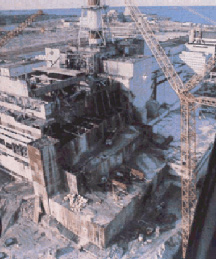 Scientists might have been wrong about the Chernobyl disaster, New York Post ,By James Rogers, November 20, 2017 A new theory on the Chernobyl disaster could shed fresh light on the world’s worst nuclear accident.
In an article published in the journal Nuclear Technology, scientists argue that the first of two explosions reported by eyewitnesses was a nuclear, not a steam explosion, as is widely thought. Instead, the researchers believe that the first explosive event noted by eyewitnesses was a jet of debris ejected to an altitude of almost 2 miles by a series of nuclear explosions within the Chernobyl reactor. Some 2.7 seconds later, they say, a steam explosion ruptured the reactor and sent yet more debris into the atmosphere at lower altitudes.
“We realized that we, based on real measurements and observations, could explain details in the Chernobyl accident scenario and the nature of the two major explosions that occurred during a few seconds that unfortunate night more than 31 years ago,” explained the report’s lead author Lars-Erik De Geer, in an email to Fox News.
The 1986 explosion at the Chernobyl nuclear plant in Ukraine sparked a widespread environmental disaster. Thirty workers died either from the explosion at the number four reactor or from acute radiation sickness within several months. The accident exposed millions in the region to dangerous levels of radiation and forced a wide-scale, permanent evacuation of hundreds of towns and villages in Ukraine and Belarus.
A cloud of radioactive particles from the disaster reached other parts of parts of Europe, such as Sweden.
The report cites xenon isotopes detected by the VG Khlopin Radium Institute in Leningrad four days after the accident. Leningrad, now known as Saint Petersburg, is about 599 miles north of Chernobyl. Xenon isotopes were also reported in Cherepovets, about 622 miles north of Chernobyl.
The result of recent nuclear fission, the isotopes were likely caused by a recent nuclear explosion, according to the experts. This is in contrast to the main Chernobyl debris that contained equilibrium xenon isotopes from the reactor’s rupture and drifted toward Scandinavia.
This new theory presented by experts from the Swedish Defense Research Agency, the Swedish Meteorological and Hydrological Institute and Stockholm University, could offer fresh insight into the disaster. The new analysis could help prevent similar incidents from occurring, experts say.
The destroyed reactor tank suggests that the first explosion caused temperatures high enough to melt a 6.6-foot bottom plate in part of the core, the researchers said, noting that this damage is consistent with a nuclear explosion. In the rest of the core, the bottom plate was relatively intact, but had dropped by nearly 13 feet. This, they say, is consistent with a steam explosion, noting that the temperature would not be sufficient to melt the plate, but could generate enough pressure to force it down.
Additionally, seismic measurements and eyewitness reports of a blue flash above the reactor a few seconds after the first explosion could also support the new theory of a nuclear explosion followed by a steam explosion……..
The disaster shone a spotlight on lax safety standards and government secrecy in the former Soviet Union. The explosion on April 26, 1986, was not reported by Soviet authorities for two days and then only after winds had carried the fallout across Europe and Swedish experts had gone public with their concerns.
The final death toll from Chernobyl is subject to speculation, due to the long-term effects of radiation. Estimates range from 9,000 by the World Health Organization to one of a possible 90,000 by the environmental group Greenpeace.
The terrible environmental fallout of Chernobyl is still being felt. A wild boar with more than 10 times the safe limit of radiation, for example, was recently killed by hunters hundreds of miles away in Sweden. https://nypost.com/2017/11/20/scientists-might-have-been-wrong-about-the-chernobyl-disaster/
South Carolina’s Base Load Review Act, even Florida’s, – a licence for the nuclear industry to rip off the people
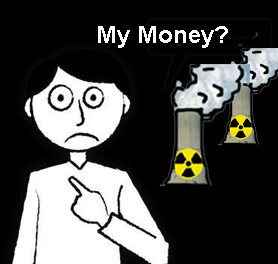
 Lessons from Florida’s nuclear failure, https://www.aikenstandard.com/guest-editorial-lessons-from-florida-s-nuclear-failure/article_d9f06eea-ec33-11e7-9362-eb50c4bd1cba.html 31 Dec 17, It’s a story all too familiar to millions of South Carolina electric ratepayers.Some $381 million in lost construction costs; $1.3 billion to shut down an existing nuclear power plant; $871 million for a nuclear project that never even broke ground. Those and other disasters will cost Florida ratepayers about $6 billion over the next few decades.
Here in South Carolina, Santee Cooper and SCE&G customers could be stuck paying as much as $9 billion over the next six decades for two new nuclear reactors that will never generate electricity unless lawmakers and regulators effectively intervene on their behalf.
In South Carolina, that law led to one massive failure. In Florida it contributed to a handful.
The lesson from Florida is that South Carolinians remain vulnerable until the Base Load Review Act is either repealed or significantly modified. Until then, utilities in the state could theoretically use it to advance other major projects while leaving customers on the hook for the cost.
That shouldn’t be allowed to happen.
Interestingly, Florida never actually repealed its law. Instead, lawmakers added two key words in 2013 that set a much higher bar for getting new projects off the ground – “reasonable” and “feasible.” No nuclear projects have been proposed since then.
It’s almost inconceivable that a law should have to state that building a new nuclear reactor on the backs of millions of ratepayers should be “reasonable” and “feasible.” Any business would be incredibly foolish to pursue such a massive investment that didn’t meet such a minimal standard.
But the BLRA and its Florida equivalent allow, and in fact encourage, utilities to go big by removing any economic risk associated with inherently risky investments.
That was deeply misguided in 2007. It seems unfathomably wrongheaded now in the wake of so many high-profile failures across the Southeast.
In South Carolina, utilities must prove that their nuclear costs were “prudently incurred” before passing them on to customers under the BLRA. SCE&G and Santee Cooper did not likely meet even that low bar.
But work proceeded, customers continued to pay higher rates, and utility executives kept telling lawmakers and regulators that construction on the reactors was proceeding appropriately. That’s certainly not “prudent.”
Lawmakers must now make it a priority when they return to session in January to help SCE&G and Santee Cooper customers recover as much money as possible and avoid paying higher electric bills for decades for a failure that was entirely out of their hands.
They must also undo the law that made that failure possible in the first place. Otherwise – as in Florida – South Carolina’s first nuclear disaster might not be its last.
UK rejected Irish minister’s nuclear power complaints.
Times 29th Dec 2017, In 1987 Ray Burke,
then environment minister, received a firm reply from his British
counterpart after calling for the closure of the Sellafield nuclear
processing plant.
State papers showed that Peter Walker, the UK energy
secretary, rejected what he claimed were the Fianna Fáil TD’s unfounded
allegations about the safety of British nuclear energy facilities,
including Sellafield. Walker, who died in 2010, said that the Nuclear
Installations Inspectorate, the British nuclear watchdog at the time, was
satisfied that closure of the plant would be “out of all proportion to
the very low risks which arose from a few minor incidents”.
Mr Burke wrote to Walker on March 24, 1987 to raise concerns about the threat posed
to Irish citizens by nuclear installations in Britain. He also criticised
the British government’s decision to proceed with the construction of
another nuclear reactor at Sizewell in Suffolk given the number of
incidents at British nuclear plants.
https://www.thetimes.co.uk/article/uk-rejected-irish-ministers-nuclear-power-complaints-7fvbnhmh7
Russia’s nuclear corporation Rosatom extending its grip on Uzbekistan
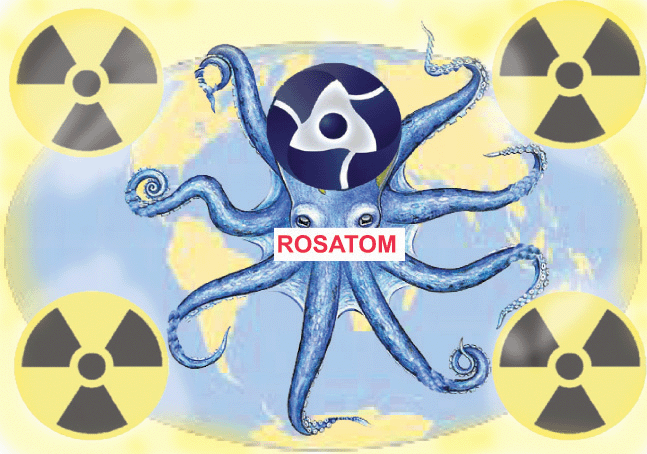 Russia And Uzbekistan Sign Nuclear Energy Deal, Rosatom said the agreement was signed on December 29 by its Director-General Aleksei Likhachyov and Uzbek Deputy Prime Minister Nodir Otajonov.
“The collaboration could include creation and development of infrastructure in Uzbekistan, training, construction of nuclear power plants and research reactors, as well as operational and maintenance support during their life cycle,” the Rosatom statement said.
“It could also cover exploration and mining of uranium, handling of uranium waste, and the production of radioisotopes for use in medicine, agriculture, and academic research,” the state-owned firm said.
Likhachyov said Rosatom was ready to build a two-unit nuclear power plant in Uzbekistan and has offered to start training Uzbek nuclear experts-to-be at Moscow’s expense beginning in September 2018.
In early November, during a visit to Tashkent by Russian Prime Minister Dmitry Medvedev, a memorandum on cooperation between Rosatom and Uzbekistan’s Academy of Science was signed, along with an agreement on production and provision of nuclear fuel by Uzbekistan for Rosatom.
First nuclear reactor was secretly built under the University of Chicago
The Experimental Nuclear Reactor Secretly Built Under the University of Chicago Chicago Pile-1, the first reactor to reach criticality, was built under a football field. Atlas Obscura, JULY 27, 2016
The Chicago Pile-1 (CP-1), as it came to be known was monolith made of carefully stacked graphite blocks, interlaced with cubes of uranium. Control rods made of cadmium were inserted to absorb any errant radiation from the reaction. It looked, from the outside, like not much more than a pile of black bricks.
Radioactive leak in German nuc lear reactor
Suddeutsche Zeitung 29th Dec 2017, [Machine Translation] In the nuclear power plant Neckarwestheim a leak hasbeen discovered during a tour in Block II in the control area. This was
announced by the Ministry of the Environment on Friday in Stuttgart. As a
result of the leak on a pipeline behind a circulation pump discovered on 22
December, about 100 liters of radioactive concentrate had leaked into the
control area of the reactor auxiliary building. However, this has no or
only a very low safety significance, said the Ministry. The operator had
shut off the pump. The affected area had been decontaminated, people were
not harmed. The cause will be further investigated. The system will be out
of service until the repair is complete.
http://www.sueddeutsche.de/news/wirtschaft/atomkraft—stuttgart-leck-in-rohrleitung-bei-atomkraftwerk-neckarwestheim-dpa.urn-newsml-dpa-com-20090101-171229-99-447002
1 This Month

of the week – Shut Down Drone Warfare!


Tell the Ukrainian Government to Drop Prosecution of Peace Activist Yurii Sheliazhenko

Petition to revoke the licensing of the Near Surface Nuclear Disposal Facility (NSDF) at Chalk River. https://www.ourcommons.ca/petitions/en/Petition/Details?Petition=e-7247
To see nuclear-related stories in greater depth and intensity – go to https://nuclearinformation.wordpress.com
-
Archives
- April 2026 (79)
- March 2026 (251)
- February 2026 (268)
- January 2026 (308)
- December 2025 (358)
- November 2025 (359)
- October 2025 (376)
- September 2025 (257)
- August 2025 (319)
- July 2025 (230)
- June 2025 (348)
- May 2025 (261)
-
Categories
- 1
- 1 NUCLEAR ISSUES
- business and costs
- climate change
- culture and arts
- ENERGY
- environment
- health
- history
- indigenous issues
- Legal
- marketing of nuclear
- media
- opposition to nuclear
- PERSONAL STORIES
- politics
- politics international
- Religion and ethics
- safety
- secrets,lies and civil liberties
- spinbuster
- technology
- Uranium
- wastes
- weapons and war
- Women
- 2 WORLD
- ACTION
- AFRICA
- Atrocities
- AUSTRALIA
- Christina's notes
- Christina's themes
- culture and arts
- Events
- Fuk 2022
- Fuk 2023
- Fukushima 2017
- Fukushima 2018
- fukushima 2019
- Fukushima 2020
- Fukushima 2021
- general
- global warming
- Humour (God we need it)
- Nuclear
- RARE EARTHS
- Reference
- resources – print
- Resources -audiovicual
- Weekly Newsletter
- World
- World Nuclear
- YouTube
-
RSS
Entries RSS
Comments RSS
 nuclear-news