28 September 2017
EU member states risk undermining the diminishing confidence Europeans have in the Union by playing a two-faced game on climate change, warns Wendel Trio.
Wendel Trio is Director of the Climate Action Network (CAN) Europe.
Governments are trying to pull the wool over our eyes by claiming climate leadership and talking up their commitment to the Paris Agreement. However, ongoing negotiations on new climate targets for Member States reveal the reality of their dangerous stance on tackling the climate crisis.
President Trump’s decision to withdraw the US from the Paris Agreement in June created a groundswell of support for climate action among EU politicians.
Directly after his announcement, during the European Council, all EU heads of state and government confirmed their commitment to swiftly and fully implementing the Paris Agreement.
“I think that the Paris Agreement is so important that there should not be compromises,” German Chancellor Angela Merkel said. And French President Emmanuel Macron called on the world to “Make Our Planet Great Again”.
Now comes the first test of these commitments: the negotiations on one of the EU’s cornerstone measures for implementing the Paris Agreement, the Effort Sharing Regulation, which sets targets for member states to reduce emissions from transport, waste, agriculture, buildings and small industry.
On 13 October, EU Environment Ministers will meet to decide on the revision of this policy for 2021-2030. The text which lays out the conditions for their position, discussed and to a large extent endorsed on Wednesday (27 September) by countries’ ambassadors in Brussels, reveals national priorities in the negotiations so far.
Rather than discussing how to correct for the flaws of the original proposal from the Commission, governments are favouring loopholes which would allow them to use accounting tricks and avoid real action.
So far none of the governments has advocated for raising the level of ambition of emission reductions, despite the fact that the current ESR target of -30% by 2030 is too low to match the Paris Agreement’s long-term objective to keep global average temperature rise well below 2 degrees Celsius.
None of the governments has proposed provisions stringent enough to align the starting point for emission reductions with real emission levels in 2021. This is despite the fact that an inflated starting point would allow countries to use surplus allowances to make it look like they are on track to achieve their target, instead of really reducing emissions.
This problem was recognised by the European Parliament which corrected the starting point in its position on the file.
As if that was not enough, most governments have not argued against loopholes which would allow them to reduce their efforts instead of taking real action.
Instead, countries have introduced a new loophole that would allow some of them to carry over unused pollution permits from the past. These loopholes, together with an inflated starting point, would lower an already weak -30% target to a mere -23%.
Sweden for example would only have to undertake 29% real emission cuts, instead of its 40% target as proposed by the Commission. For France, the engineer of the Paris Agreement, the target would stand at -28% instead of -37%.
Ireland would receive the most staggering concessions. The country has a target of -30% but under the current rules it would have to cut as little as 1% of its emissions in the transport, agriculture and buildings sectors.
EU member states may talk a good game on climate action, but behind closed doors government representatives are doing as much as they can to ensure their country avoids taking real action.
A serious response to the threat of climate change could help EU leaders address feelings of alienation and mistrust between citizens and the EU. Europeans want stronger action from the EU on tackling the climate crisis. They understand that effective climate action is key to improving and safeguarding the lives of millions of people.
Right now, they seem to be getting the opposite. This two-faced stance on the climate crisis is not going to restore public confidence in politics or limit Euroscepticism. Nor will it stem the rise of populists who benefit from public distrust in mainstream politics’ ability to address their most pressing problems.
There are more than two weeks before the Environment Council, so Ministers still have the opportunity to step up and improve the proposals on the table. They must commit to a deal that at the very least, aligns the starting point with real emissions levels. This two-faced game on climate action must end because it has no winners.
September 28, 2017
Posted by arclight2011part2 |
Uncategorized |
Leave a comment
Image source; http://www.mining.com/radioactive-fish-found-in-fukushimas-waters-63106/
http://www.asahi.com/ajw/articles/AJ201709270035.html
September 27, 2017
The European Commission is set to relax import restrictions on rice from Fukushima Prefecture that were imposed after the 2011 nuclear disaster, sources said.
The import curbs could be eased as early as this year and prompt other countries, including major markets like China, to follow suit, the sources added.
In addition to rice from Fukushima Prefecture, the EU is expected to remove restrictions on some seafood products from Iwate, Miyagi and other prefectures.
All restrictions on products from Akita Prefecture will likely also be lifted, thereby abolishing all curbs on rice grown in Japan.
The United States on Sept. 22 decided to allow imports of milk and dairy products from Fukushima, Iwate, Miyagi, Tochigi and Gunma prefectures without inspection certificates stating they are free of radioactive materials.
The EU move follows a general agreement on an economic partnership in July, during which EU officials informed Japan of plans to relax import restrictions on agricultural products. The two sides have been discussing the issue since then.
(This article was written by Naoki Tsuzaka in Brussels and Tetsushi Yamamura in Tokyo.)
September 28, 2017
Posted by arclight2011part2 |
Uncategorized |
Leave a comment
The network, according to police, would have received at least 10 million yen ($ 88,500) for recruiting people to work in Fukushima. It is investigating if the money went to the coffers of the yakuza

Image from 2015 “Japan’s Nuclear Gypsies: The Homeless, Jobless and Fukushima” Source link for image; https://intpolicydigest.org/2015/08/21/japan-s-nuclear-gypsies-the-homeless-jobless-and-fukushima/
Article source Translated from Spanish; https://internationalpress.jp/2017/09/28/yakuza-arrestado-enviar-trabajadores-fukushima/
09/28/2017
Between February 2015 and April 2016, three men, including a yakuza, received at least 160,000 yen ($ 1,400) commission for sending two people to companies performing decontamination work in Fukushima.
The three men, who were acting without authorization from the Ministry of Labor, were arrested by Tokyo police, Tokyo Reporter reported.
The mafioso, Hidenobu Maruta (48), is head of a band affiliated with Yamaguchi-gumi, Japan’s largest criminal organization.
The two workers who sent the prefecture struck by the nuclear disaster were not the only ones.
The network, according to police, would have received at least 10 million yen ($ 88,500) for recruiting people to work in Fukushima. It is investigating if the money went to the coffers of the yakuza band. (International Press)
September 28, 2017
Posted by arclight2011part2 |
Uncategorized |
Leave a comment
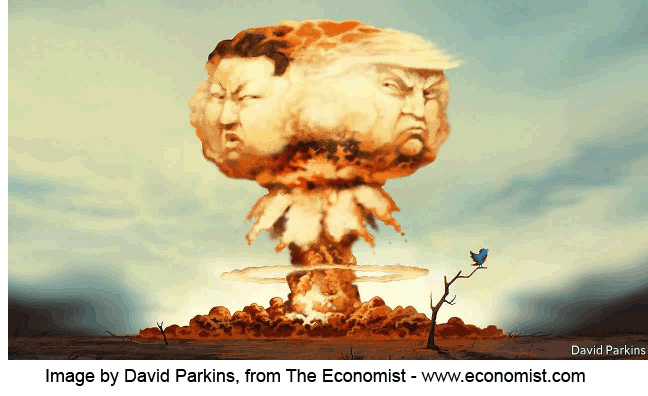
North Korea’s foreign minister, Ri Yong Ho, said Monday that President Donald Trump had “declared war” on his country and that it had the right to shoot down U.S. bombers. Ri cited a tweet by Trump on Friday threatening the annihilation of Kim Jong Un’s regime. The White House rejected that it had declared war on North Korea, calling the claim “absurd.”
With that war of words and North Korea’s claim of a successful hydrogen bomb test this month as a backdrop, the United Nations again pressed for the end of nuclear weapons worldwide and specifically called on Trump and Kim to end the volley of threats.
“The prevailing security challenges cannot be an excuse for continued reliance on nuclear weapons and for abrogating our shared responsibility to seek a more peaceful international society,” U.N. Secretary-General Antonio Guterres said in a statement.
As North Korea seeks to join the community of nuclear armed nations, this is what’s known about the current state of nuclear arsenals around the world.
How many nuclear weapons are there?
Since the Cold War ended, nuclear-armed countries have significantly reduced the number of weapons from more than 70,000 in 1986 to nearly 15,000 in 2017, according to FAS.
The U.S. and Russia own and control 93 percent of all nuclear warheads in the world, according to the watchdog. Although the vast majority of weapons are either stockpiled or retired, FAS currently estimates that the U.S. has 1,800 nuclear weapons at the ready, compared to Russia’s 1,950.
The remaining nuclear-armed states hold only a few hundred weapons.
Hans Kristensen, director of the Nuclear Information Project at FAS, said there’s still a great deal of work to be done to reduce nuclear stockpiles. Kristensen said he believes both the U.S. and Russia are continuing to create and store weapons in an attempt to compete with each other.
“Clearly there is a special responsibility on the part of the U.S. and Russia to continue to draw down their weapons,” he said. “It is an enormous overkill and vastly in excess of what we need for national security and international commitments.”
What’s being done to reduce nuclear weapons?
On Sept. 20, more than 50 U.N. member states signed the first legally binding international treaty to prohibit the use of nuclear weapons. The document, called the Treaty on the Prohibition of Nuclear Weapons, represents a historic step in the decades-long crusade to rid the world of nuclear weapons — but not a single nuclear-armed state signed the treaty.
But that doesn’t mean other armed nations aren’t also working to reduce their global nuclear arsenal.
Hans Kristensen, director of the Nuclear Information Project at FAS, said there’s still a great deal of work to be done to reduce nuclear stockpiles. Kristensen said he believes both the U.S. and Russia are continuing to create and store weapons in an attempt to compete with each other.
“Clearly there is a special responsibility on the part of the U.S. and Russia to continue to draw down their weapons,” he said. “It is an enormous overkill and vastly in excess of what we need for national security and international commitments.”
What’s being done to reduce nuclear weapons?
On Sept. 20, more than 50 U.N. member states signed the first legally binding international treaty to prohibit the use of nuclear weapons. The document, called the Treaty on the Prohibition of Nuclear Weapons, represents a historic step in the decades-long crusade to rid the world of nuclear weapons — but not a single nuclear-armed state signed the treaty.
But that doesn’t mean other armed nations aren’t also working to reduce their global nuclear arsenal.
But he also inherited from the Obama administration a commitment to modernize the U.S. nuclear program. Kristensen said he believes that that will form the basis of Trump’s approach to the U.S. nuclear program.
In January, Trump directed the secretary of defense to begin a review of the country’s nuclear posture. That process officially began in April, and a final report will be issued at the end of the year, according to the Pentagon.
What about North Korea?
There are no concrete estimates on the number of nuclear warheads in North Korea, but Kristensen and other analysts agree that Kim Jong Un’s regime has produced enough nuclear fissile material to arm and assemble a ballistic missile.
“They’re making progress,” Kristensen said. “And if they don’t already have the capability to launch a nuclear weapon, they will certainly have it in the near future.”
Related: U.S. Has Discussed Nuclear Weapons in South Korea
Kristensen estimates that Kim could have from 20 to 40 nuclear weapons in his arsenal. But he said he’s more worried about the unpredictability of the ongoing war of words between Trump and Kim than he is about the North Korean dictator launching a missile.
“It’s spinning out of control, that’s the fear,” he said. “Every single time Trump puts out one of his tweets and starts his boxing-ring kind of arguments, it feeds totally into the North Korean agenda back home.
“There doesn’t seem to be much strategy to what the administration is doing, other than the gut-reaction kind of responses.”
September 27, 2017
Posted by Christina Macpherson |
2 WORLD, weapons and war |
Leave a comment
North Korea Says It Has the Right to Shoot Down U.S. Warplanes, NYT, 25 Sept 17,
查看繁體中文版 By RICK GLADSTONE and DAVID E. SANGER, North Korea threatened on Monday to shoot down American warplanes even if they were not in the country’s airspace, stating that President Trump’s comments suggesting he would eradicate North Korea and its leaders were “a declaration of war.”
September 27, 2017
Posted by Christina Macpherson |
North Korea, weapons and war |
Leave a comment
 No2 Nuclear Power 25th Sept 2017, A new report by Emeritus Professor of Energy Policy, Steve Thomas, says it
is time to cancel Hinkley Point C. EDF and the French and UK governments
may try to suggest that it’s too late to stop and will talk up the costs
which have already been incurred. But the start of construction, when the
first structural concrete is poured, is still between 2 and 4 years away.
Preliminary works are conspicuous but relatively cheap. EDF Energy will
have incurred expenses since signing the deal with the UK Government in
October 2016 and some of these may be compensatable. But these costs would
be dwarfed by the costs of going ahead.
http://www.no2nuclearpower.org.uk/news/campaign-update/time-to-cancel-hinkley-point-c/
September 27, 2017
Posted by Christina Macpherson |
business and costs, politics, UK |
Leave a comment
Top general says Iran complying with nuclear deal, The Hill, BY REBECCA KHEEL – 09/26/17 The top general in the U.S. military said Tuesday that Iran is complying with a landmark nuclear deal and that the agreement has achieved its intended result of curbing Iran’s nuclear program…….
“The briefings I have received indicate that Iran is adhering to its [plan of action] obligations,” Dunford wrote in answers to policy questions in advance of his Senate Armed Services Committee confirmation hearing to serve a second term as chairman of the Joint Chiefs.
“The [plan] has delayed Iran’s development of nuclear weapons,” he wrote…….. Asked during the hearing by Sen. Jack Reed (D-R.I.) to elaborate, Dunford said the deal was specifically designed to address only Iran’s nuclear program and not the other four threats he sees emanating from Iran: its missile program, its maritime threat, its support for proxies and its cyber activities…..
Dunford also said it would “make sense to him” that withdrawing from the deal would have ripple effects on the North Korea crisis.
“It makes sense to me that our holding up agreements that we have signed, unless there’s a material breach, would have an impact on others’ willingness to sign agreements,” Dunford said……. http://thehill.com/policy/defense/352463-top-general-says-iran-complying-with-nuclear-deal
September 27, 2017
Posted by Christina Macpherson |
Iran, politics international |
Leave a comment

This Sept. 4, 2017 aerial photo shows Fukushima Dai-ichi nuclear power plant reactors, from bottom at right, Unit 1, Unit 2 and Unit 3, in Okuma, Fukushima Prefecture, northeastern Japan. The three reactors that had meltdowns together have 1,573 units of mostly used nuclear fuel rods that are still inside and must be kept cool in pools of water. They are considered among the highest risks in the event of another major earthquake, because the pools are uncovered. The plant operator, Tokyo Electric Power Co. or TEPCO, plans to begin removing the rods from reactor unit 3 in the fiscal year beginning next April 1. However, the latest roadmap delays removal of the rods from units 1 and 2 for three years until fiscal 2023, because further decontamination work and additional safety measures are needed.
Japan’s government approved on Tuesday, Sept. 26, 2017 a revision to the decommissioning plan for the Fukushima nuclear plant, delaying by two more years the removal of radioactive fuel rods in two of the three reactors damaged in the 2011 disaster. It still plans for melted fuel to be removed starting in 2021, but the lack of details about the duration raises doubts if the cleanup can be completed within 40 years. Kyodo News via AP, File)
TOKYO – Japan’s government approved a revised road map Tuesday to clean up the radioactive mess left at the Fukushima nuclear power plant after it was damaged beyond repair by an earthquake and tsunami in 2011. Decommissioning the damaged reactors is an uncertain process that is expected to take 30 to 40 years.
A look at some of the challenges:
THE FUEL RODS
The three reactors that had meltdowns together have 1,573 units of mostly used nuclear fuel rods that are still inside and must be kept cool in pools of water. They are considered among the highest risks in the event of another major earthquake that could trigger fuel rods to melt and release massive radiation due to loss of water from sloshing or structural damage because the pools are uncovered. The plant operator, Tokyo Electric Power Co., or TEPCO, plans to begin moving the rods from reactor Unit 3 in the fiscal year beginning April 1.
However, the latest road map delays removal of the rods from units 1 and 2 for three years until fiscal 2023, because further decontamination work and additional safety measures are needed. Ironically, because the building housing reactor 3 was more heavily damaged, it is easier to remove that unit’s fuel rods. The fuel rods will be moved to a storage pool outside the reactors, and eventually sent for long-term storage in what are known as dry casks.
___
THE MELTED FUEL
By far the hardest part of decommissioning Fukushima will be removing the fuel that melted and presumably spilled out of the reactor cores. In July, an underwater robot for the first time captured images inside the primary containment chamber of Unit 3. They showed a large number of solidified lava-like rocks and lumps on the chamber’s floor, believed to be melted fuel mixed with melted and mangled equipment and parts of the structure.
The search for melted fuel in units 1 and 2 has so far been unsuccessful. The water level is lower, so crawling robots have been tried, but they have been obstructed by debris as well as extremely high radiation levels. Despite the unknowns about the melted fuel and debris and their whereabouts, the road map calls for finalizing the removal method in 2019, and starting actual removal at one of the reactors in 2021. The government-funded International Research Institute for Nuclear Decommissioning is developing robots and other technology to carry out the work.
___
CONTAMINATED WATER
TEPCO has treated and stored a massive amount of radioactive water — about 800,000 tons — and the volume is growing every day. Cooling water leaks out of the damaged reactors and mixes with groundwater that seeps into the basements of the reactor building, increasing the amount of contaminated water. The utility has managed to halve the volume to 200 tons per day by pumping up groundwater via dozens of wells dug upstream from the reactors, as well as installing a costly “ice wall” by freezing the ground to block some of the water from coming in and going out.
The water is stored in hundreds of tanks that cover much of the plant property. They get in the way of decommissioning work and pose another risk if they were to spill out their contents in another major earthquake or tsunami. After treatment, the water still contains radioactive tritium, which cannot be removed but is not considered harmful in small amounts. Experts say controlled release of the water into the ocean is the only realistic option, but TEPCO has not moved forward with that plan because of opposition from fishermen and residents who fear a negative image and possible health impact.
___
RADIOACTIVE WASTE
Japan has yet to develop a plan to dispose of the highly radioactive waste that will come out of the Fukushima reactors. Under the road map, the government and TEPCO will compile a basic plan during fiscal 2018. Managing the waste will require new technologies to compact it and reduce its toxicity. Finding a storage site for the waste seems virtually impossible, as the government has not been able to find a site even for the normal radioactive waste from its nuclear power plants. The prospect raises doubts about whether the cleanup can really be completed within 40 years.
___
http://www.miamiherald.com/news/business/article175387901.html
September 26, 2017
Posted by dunrenard |
Fukushima 2017 | Delayed, Fuel Removal, Fukushima Daiichi, Roadmap |
Leave a comment
Japan muddles on with Fukushima’s melted and “spent” fuel. The three year delay for emptying the reactors “spent” irradiated nuclear fuel into a dry cask storage runs the risk of another major earthquake causing a loss of cooling in the pools without containments and another major release of radiation. Plans for removing the melted reactor cores from Units 1, 2 and 3 still defied by inability to locate it.

Fukushima Nuclear Plant Scrapping Plan Faces Another Delay
A key decision in decommissioning the crippled Fukushima Daiichi nuclear plant is being delayed. The Japanese government and operator made the announcement on Tuesday while giving an update on the roadmap for scrapping the plant.
In their first such update in 2 years, officials said they will postpone their decision on the method for removing molten fuel debris by one year, until fiscal 2019.
Experts believe that when the plant went into triple meltdown in 2011, most of the fuel inside the reactors collected at the bottom of containment vessels. They still don’t know the exact location, but possible molten fuel debris was caught on camera in July. The removal of this debris is considered the most challenging part of the plant’s decommissioning.
Originally, officials considered filling the containment vessels with water to block radiation while removing the debris. But now, they say they’re leaning towards a method called dry removal.
Experts say that method comes with safety challenges. “Because the containment vessel will not be filled with water, there is a possibility that radioactive substances may leak and get dispersed,” says Hosei University Visiting Professor Hiroshi Miyano.
Officials also gave an update on plans for the removal of spent nuclear fuel rods in 2 of the plants reactors. The rods are in storage pools and won’t be removed until fiscal 2023. That’s 3 years later than planned. The official timeline for scrapping the plant remains the same — about 30 to 40 years in total.
https://www3.nhk.or.jp/nhkworld/nhknewsline/nuclearwatch/fukushimanuclearplantscrapping/
Spent nuclear fuel removal at Fukushima plant pushed back again
 Cabinet ministers attend a meeting at the Prime Minister’s Office on Tuesday to discuss a delay in the road map for decommissioning the Fukushima No. 1 nuclear power plant.
The government and Tokyo Electric Power Company Holdings Inc. decided Tuesday to further delay the removal of spent nuclear fuel left near two of the three reactors that suffered meltdowns at the Fukushima No. 1 nuclear plant.
In the road map for decommissioning the plant, revised for the fourth time since it was first crafted in 2011, highly radioactive spent fuel will be extracted from the cooling pools of reactors 1 and 2 starting in fiscal 2023 instead of fiscal 2020.
The decision marks the third delay for the removal plan, with the last adjustment coming in June 2015. The government said new technical issues and the need to take safety precautions led to the latest change.
The cleanup process is set to be completed in around 30 to 40 years.
Spent fuel removal at the plant’s reactor 3 will go ahead in fiscal 2018 as planned, having already been pushed back earlier this year.
In the decommissioning process, the removal of fuel rod assemblies from the spent fuel pools in reactor buildings is one of the key steps before extracting melted fuel debris. Reactors 1, 2 and 3 suffered core meltdowns following the March 2011 earthquake and tsunami disaster.
The removal of melted fuel debris has also been delayed, with an extraction plan set to be decided in fiscal 2019, pushed back from the first half of fiscal 2018.
Despite the delay in finalizing specific methods, the road map maintains a 2021 start for debris extraction, the most challenging part of the decommissioning process.
A method currently considered feasible by the government involves removing debris from the sides of the reactors after partially filling them with water.
The road map newly sets the goal of cutting the amount of underground water at the plant to address contaminated water buildup. Underground water — which gets mixed with accumulated radioactive water generated in the process of cooling the damaged reactors — is to be cut to around 150 tons per day in 2020 from the current 200 tons.
The road map does not mention a specific schedule for the disposal of processed water that still contains radioactive tritium.
The plan was first crafted in December 2011 in the wake of the meltdowns, the world’s worst nuclear crisis since the 1986 Chernobyl disaster.
Attempts have been made to confirm the situation inside the damaged reactors using specialized robots. A survey in July this year captured for the first time images of what is likely to be melted nuclear fuel at the bottom of reactor 3.
Isamu Kaneda, deputy mayor of the Fukushima Prefecture town of Futaba, expressed regret over the delay.
“The town’s rebuilding depends on the development of decommissioning. It’s unfortunate,” Kaneda said. “But at the same time, the decommissioning process is an unprecedented project. It needs to be conducted carefully, so we can’t just ask them to speed it up.”
https://www.japantimes.co.jp/news/2017/09/26/national/spent-nuclear-fuel-removal-fukushima-plant-pushed-back/#.WcqxGxdx3rc
Spent nuclear fuel removal at Fukushima plant to be delayed again

TOKYO (Kyodo) — The government and Tokyo Electric Power Company Holdings Inc. decided Tuesday to delay again the start of removing spent nuclear fuel left near two of the three reactors which suffered a meltdown at the Fukushima complex.
In the road map for decommissioning the Fukushima Daiichi plant, revised for the fourth time since it was first crafted in December 2011, highly radioactive spent nuclear fuel will be extracted from the Nos. 1 and 2 units’ cooling pools starting in fiscal 2023 instead of fiscal 2020.
It is the third time that the schedule for spent fuel removal has been pushed back at the Nos. 1 and 2 reactors, with the previous postponement taking place in June 2015. The government said new technical issues and the need to take safety precautions led to the latest schedule change.
The cleanup process is to be completed in around 30 to 40 years.
For the No. 3 reactor at the Fukushima plant, the schedule to remove spent nuclear fuel during fiscal 2018 is unchanged after having already been pushed back earlier this year.
In the decommissioning process, taking out fuel rod assemblies from the spent fuel pools inside reactor buildings is one of the key steps before extracting melted fuel debris from the Nos. 1 to 3 reactors, all of which suffered core meltdowns following the March 2011 earthquake and tsunami disaster.
The schedule for extraction of the melted fuel debris at the reactors was also revised, with the determination of a specific approach to remove the debris to be made in fiscal 2019, rather than in the originally planned first half of fiscal 2018.
Despite the delay in finalizing specific methods, the road map kept the start of the debris extraction, the most challenging part of the decommissioning process, at 2021.
A method currently considered feasible by the government is debris removal from the side of the three crippled reactors by partially filling them with water.
The road map newly sets the goal of cutting the amount of underground water at the plant to address contaminated water buildup at the site. Underground water, which gets mixed with accumulated radioactive water generated in the process of cooling the damaged reactors — is to be cut to around 150 tons per day in 2020 from the current 200 tons.
It did not mention a specific schedule for disposal of processed water that still contains radioactive tritium.
The road map was first crafted in December 2011 in the wake of the 2011 disaster which triggered at the Fukushima plant the world’s worst nuclear crisis since the 1986 Chernobyl disaster.
Attempts have been made to confirm internal conditions of the damaged reactors using robots. A survey robot captured images of what is likely to be melted nuclear fuel at the bottom of the No. 3 reactor for the first time in July this year.
http://mainichi.jp/english/articles/20170926/p2g/00m/0dm/064000c
September 26, 2017
Posted by dunrenard |
Fukushima 2017 | Delayed, Fuel Removal, Fukushima Daiichi |
Leave a comment
 geoharvey
Opinion:
¶ “Wholesale market crisis” • Sustained low wholesale power prices are driving coal, nuclear and even gas plant retirements, pushing independent power producers into the red, and spurring reforms of wholesale market structures. But even PV is not immune to these trends. pv magazine looks at the implications for the solar industry. [pv magazine USA]
 Natural gas and electric power
¶ “How Renewable Energy Can Accelerate the Microgrid Revolution” • Since Hurricane Harvey made landfall in Texas the US Energy Department has been flooding the media with news about its work on grid resiliency. Much of the message is about the importance of the microgrids that integrate distributed renewable energy resources. [Triple Pundit]
World:
¶ BYD, an auto and battery manufacturer based in China, is expecting that China’s shift to “new energy vehicles” – battery electric vehicles, hydrogen fuel cell vehicles, etc – will be…
View original post 777 more words
September 26, 2017
Posted by Christina Macpherson |
Uncategorized |
Leave a comment
 Summit County Citizens Voice
 Vesuvius is part of a volcanic region that became more active when the Mediterranean Sea dried up about 5 million years ago. A study of the era suggests climate change can influence volcanic activity. @bberwyn photo.
Study suggests link between sea level and eruptions
Staff Report
European researchers say they’ve found more evidence supporting links between climate change and volcanic activity.
Geologists from Switzerland, France and Spain studied compared data on eruptions and climate from about 5 million years ago, finding that volcanic activity in southern Europe doubled during a time when the Mediterranean Sea dried up. They suspect that the changes on the surface contributed to the way magma behaves deep in the Earth.
The era they studied is known as the Messinian salinity crisis, when the Strait of Gibraltar was blocked and the Mediterranean temporarily isolated from the Atlantic, according to the study published in Nature Geoscience.
View original post 307 more words
September 26, 2017
Posted by Christina Macpherson |
Uncategorized |
Leave a comment
 Mining Awareness +
Residents near the proposed French nuclear waste facility in Bure France have demonstrated that within 16 minutes the “argillite” clay of this high level nuclear storage site dissolves into gravel clumps. This is because it is hard materials held together by soft materials. If that isn’t insane enough, it is also on top of a geothermal resource site, apparently a hot springs. So, nuclear waste, clay and hot springs! As there are well-known hot springs within the region, including at Nancy, it shouldn’t come as a complete surprise.

Google Streetview of Bure, France (Images saved Jan. 2015.) Note anti-nuclear house and how much the lab and proposed nuclear waste dump has done (NOT) for Bure’s economy, as illustrated in the housing.
Cows near Bure-l’Andra. The French government is picking on a poor rural area with apparently little voting or economic clout.

While there is no good place or means of…
View original post 1,694 more words
September 26, 2017
Posted by Christina Macpherson |
Uncategorized |
Leave a comment
Documentary: A young Japanese filmaker expatriated in France goes back to her birthplace near Fukushima City.
Six years after the nuclear disaster, she’s aiming to re-open the debate
with her family on this catastrophe which became a taboo topic.
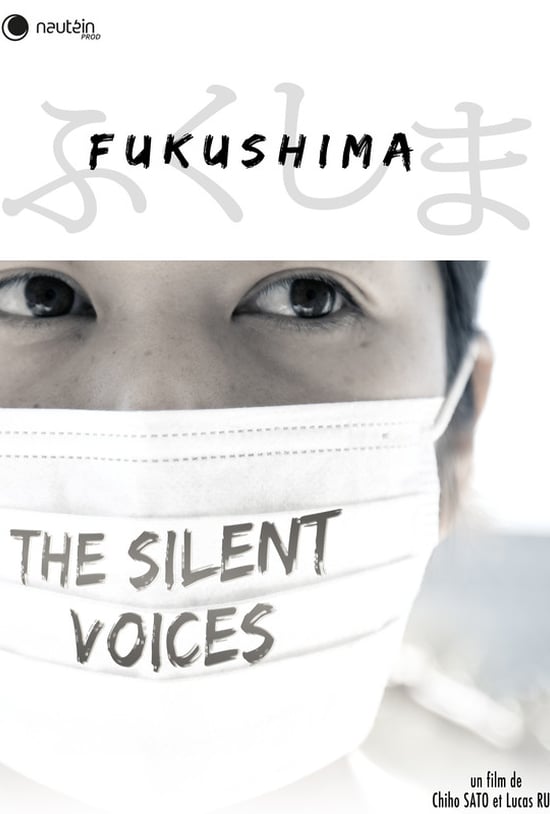
“” My name is Chiho SATO, I live in France for 5 years and I was born in Fukushima.
My parents and grandparents still live 60 km from the Fukushima Daiichi nuclear plant in what is called “the voluntary evacuation zone”.
More than four years after the disaster, radioactivity, invisible but omnipresent, has gradually disappeared from the minds of the inhabitants of the region.
Far from the dramatic and anxiogenic images frequently shown in Europe, I directed an intimate documentary.
A touching testimony about the inhabitants of one of the most radioactive regions in the world.
My objective: Re-open the debate on the situation in Fukushima by including the voice of the inhabitants themselves. “”
https://vimeo.com/ondemand/fukushimathesilentvoices/213498053
Please read also my previous articles about this excellent documentary, the best about Fukushima in my humble opinion:
“The Silent Voices”: what is really to be living within the Fukushima disaster
About the documentary film “Fukushima the silent voices”
“Fukushima, the Silent Voices”, a documentary with the Japanese culture in the background through the lens of a disaster
September 25, 2017
Posted by dunrenard |
Fukushima 2017 | Documentary Film, Fukushima |
Leave a comment


 The nuclear threat can be contained by diplomacy, These issues are manageable if they are given the right degree of priority, John Sawers Ft.com 25 Sep 17 “……… North Korea is the issue of the day. The objective of a denuclearised Korean peninsula, pursued by the previous US administrations, is no longer an achievable goal.
The best that can be hoped for is the suspension of nuclear and missile testing in return for security assurances and practical aid. Sanctions are designed to draw Kim Jong Un into a negotiation with that aim, and to pressure China to take a more active part. But it is very hard to see President Kim pulling back now. And China is more concerned about a new US-led war in Korea or the north collapsing and sending millions of refugees into China, than it is about living with a nuclear armed Pyongyang.
The US only really has two strategic options: contain and deter the threat; or destroy it, which would require regime change. There are always military options. But all who have studied the secret Pentagon plans are sobered by the scale of loss of life in South Korea these would entail. There is also a risk of China reluctantly coming to the aid of the north as it did in the 1950s.
Realistically, it seems the only practical option is containment. That requires missile defence systems to create uncertainty that nuclear-tipped missiles would ever get through to their target, and to deter any use of such weapons by being clear that North Korea would be destroyed if it ever tried to use them.
Mr Kim may be hard for us to comprehend, but he is a rational actor and he is certainly not suicidal. US concern about this isn’t exaggerated by the Trump administration: it has a serious problem on its hands.
However much we may view containment as the only sensible answer, there are still dangers of miscalculation. Mr Kim may be tempted to use his nuclear arsenal to hold others to ransom. There is also a proliferation threat. We have seen how Pyongyang has used its nuclear technology as an export earner. In 2007, the Israelis destroyed a secret nuclear reactor in the Syrian desert that had been designed and built by the North Koreans. Is it conceivable that a future terrorist organisation might be able to obtain such a device? Unlikely. But if they had the means, then Pyongyang would be the first place to go to get it. Pakistan’s ambivalent relationship with terrorist organisations adds to the dangers.
One country where our nuclear weapons concerns had eased is Iran. The nuclear agreement has its weaknesses, especially that it only applies for 10 years. But it is worth having, and Tehran is complying by its technical requirements. If Donald Trump walks from the nuclear deal — as he threatened at the UN last week — then before long he could find he has another North Korea to deal with, this one in the Gulf.
The outlook on nuclear weapons might look grim. But as we showed in the cold war, these issues are manageable with skilful diplomacy and the right investments in defence. We just have to give it the right degree of priority. When I was at MI6, and before that our negotiator with Iran on its nuclear programme, I was always mindful of the nuclear threat. The only issue that can seriously threaten our way of life must be among our top international security priorities. The writer is chairman of Macro Advisory Partners and a former chief of MI6, the British Secret Intelligence Service
https://www.ft.com/content/02c58f70-9c80-11e7-8b50-0b9f565a23e1
September 25, 2017
Posted by Christina Macpherson |
North Korea, politics international, USA |
Leave a comment
 Kim Jong-un ‘won’t be around much longer’ http://www.skynews.com.au/news/politics/international/2017/09/24/trump-insult-makes-attack–inevitable—korea.html Donald Trump has made fresh threats against the North Korean regime after it branded him a ‘mentally deranged megalomaniac’.
The US President warned Pyongyang’s foreign minister that if he if ‘he echoes thoughts’ of the country’s leader Kim Jong Un they both ‘won’t be around much longer’.
He was responding after Ri Yong Ho told the United Nations General Assembly on Saturday that targeting the US mainland with its rockets was inevitable after ‘Mr Evil President’ made an ‘irreversible mistake’ by calling Mr Kim ‘rocket man’.
Describing Mr Trump as a ‘mentally deranged person full of megalomania,’ Mr Ri went on to tell the annual gathering of world leaders that the country was now ‘only a few steps away from the final gate of completion of the state’s nuclear force’.
Hitting back on Twitter, Mr Trump wrote: ‘Just heard Foreign Minister of North Korea speak at UN If he echoes thoughts of Little Rocket Man, they won’t be around much longer!’
Shortly before Mr Ri was scheduled to speak at the assembly, the Pentagon announced a fleet of US bombers and fighter jets had flown off North Korea’s coast, in what it called a ‘clear message’ to Pyongyang.
Pentagon spokeswoman Dana White said it underlined the range of military options available to the US.
September 25, 2017
Posted by Christina Macpherson |
North Korea, politics international, USA |
Leave a comment





 nuclear-news