 Mining Awareness +
![1989 Exxon Valdez Spill Beginning 3 days after the vessel grounded, a storm pushed large quantities of fresh oil onto the rocky shores of many of the beaches in the Knight Island chain. In this photograph, pooled oil is shown stranded in the rocks. [[NOAA]] photo and text.](https://nuclear-news.net/wp-content/uploads/2017/01/img_95051.jpg?w=1024&h=683)
1989 Exxon Valdez Spill
As Charles Digges of Norwegian NGO Bellona explains, in 2011 US Secretary of State nominee Rex Tillerson obtained a $500 billion deal with Russia’s state owned Rosneft, which is “run by Putin’s KGB crony Igor Sechin“. The 63.7 million acres “could be worth as much as $8.2 trillion“. Rosneft would get access to Exxon technology.
A few excerpts from the excellent article:
“Putin hacks his own election, tarring Paris Accord with ExxonMobil oil“,
Published on January 5, 2017 by Charles Digges
“As unholy alliances between US president-elect Donald Trump and the Kremlin go, none are more potentially disastrous for the environment, or critical to Vladimir Putin’s future, than his tapping of ExxonMobil CEO Rex Tillerson for Secretary of State.
The windfall Putin’s wretched economy would reap as a result of the appointment doesn’t take any dusting for digital fingerprints…
View original post 157 more words
January 11, 2017
Posted by Christina Macpherson |
Uncategorized |
Leave a comment
 jpratt27
More than two-thirds of the world’s polar bears will be killed off by 2050 — the species completely gone from Alaska — because of thinning sea ice from global warming in the Arctic, government scientists forecast. (Subhankar Banerjee/Associated Press)
As the Arctic warms faster than any other place on the planet and sea ice declines, there is only one sure way to save polar bears from extinction, the government announced Monday: decisive action on climate change.
In a final plan to save an animal that greatly depends on ice to catch prey and survive, the U.S. Fish and Wildlife Service identified the rapid decline of sea ice as “the primary threat to polar bears” and said “the single most important achievement for polar bear conservation is decisive action to address Arctic warming” driven by the human emission of greenhouse gases into the atmosphere.
“Short of action that effectively addresses the…
View original post 1,037 more words
January 11, 2017
Posted by Christina Macpherson |
Uncategorized |
Leave a comment
jpratt27
The risks of climate change are not easy to communicate clearly.
Since the atmosphere affects everything, everything will be affected by its warming — there’s no single risk, but a wide and varied array of risks, of different severities and scales, affecting different systems, unfolding on different timelines. It’s difficult to convey to a layperson, at least without droning on and on.
One of the better-known and more controversial attempts to address this problem is a graphic from the reports by the Intergovernmental Panel on Climate Change. The so-called “burning embers” graph attempts to render the various risks of climate change — “reasons for concern,” or RFCs — in an easy-to-grasp visual form.
In a new paper in the journal Nature Climate Change, a group of 17 scholars examines the RFC conceptual framework and reviews the latest science. (Because IPCC reports take so long to produce, the science they contain…
View original post 802 more words
January 11, 2017
Posted by Christina Macpherson |
Uncategorized |
Leave a comment
This Week’s Featured Interview:
- Paul Gunter is Director, Reactor Oversight Project for Beyond Nuclear specializing in all aspects of reactor hazards and security. We discuss France’s Areva Le Creusot forge and the faulty major nuclear reactor parts produced there which are reported to be in use by 19 US nuclear reactors on 11 sites.
- LINK to Beyond Nuclear’s petition calling for Nuclear Regulatory Commission action will be posted here as soon as it’s up.
Numnutz of the Week (for Nuclear Boneheadedness):
When is a new nuclear bomb NOT a “new” nuclear bomb? When the government says so, silly! Not even when it comes with – I kid you not – “Dial-a-yield” technology! (SEE: Featured Image at top)
Link to full podcast here;
http://nuclearhotseat.com/2017/01/11/nuclear-hotseat-290-omg-defective-french-nuke-parts-in-19-us-reactors-paul-gunter-of-beyond-nuclear/
European Report with Shaun McGee:
- Belarus, Hungary, France and the UK challenged the European Commission and common sense!
- Some history and another recent report on Paks 2 in Hungary
- Tourism campaign to Belarus
- …and more! LINK to the full stories here.
January 11, 2017
Posted by arclight2011part2 |
Uncategorized |
Leave a comment
2017年1月中には、春頃の帰還が決まる冨岡町の市街地。地表面は7μSv/h超え‼
こんなところに帰還、バカじゃないの‼
In January 2017, the urban district of tomioka-Cho, which was on the end of the spring. The surface of the ground is 7 Μsv / h.
I don’t know what you’re talking about?
On March 25, 2013, the nuclear evacuation zone in Tomioka was lifted by the central government, and the town was re-zoned into three areas according to different levels of radiation. However, the town government elected to keep the evacuation in place for at least another four years due to the need to rebuild damaged infrastructure
Tomioka was severely affected by the Fukushima Daiichi nuclear disaster, and the 2011 Tōhoku earthquake and tsunami on March 11, 2011. Besides sustaining considerable damage from the earthquake, and the tsunami (which devastated the coastal area), the town was evacuated en masse on the morning of March 12 as it is located well within the 20 kilometer exclusion radius around the damaged Fukushima Daiichi nuclear power plant. Only one man, 56–57-year-old fifth-generation rice farmer Naoto Matsumura, with his dog, refused to evacuate, and remained behind to feed the pets and livestock left behind in his neighborhood with supplies donated by support groups.[3][4][5]
On March 25, 2013, the nuclear evacuation zone in Tomioka was lifted by the central government, and the town was re-zoned into three areas according to different levels of radiation. However, the town government elected to keep the evacuation in place for at least another four years due to the need to rebuild damaged infrastructure. In the zone with the highest radiation levels residents will not be allowed to return home at least for five years. People other than registered residents are banned from entry. This zone, which covers the northeastern part of the town, had about 4,500 people residents. The central part of the town, which used to have 10,000 residents was designated as a residence restriction zone, in which the residents could return during daytime hours but have to leave at night. The remaining zone, which mainly covers southern Tomioka had about 1,500 residents, and remaining restrictions are expected to be lifted.[6]
However, in a survey taken in 2013, some 40 percent of the town’s residents responded that they had decided never to return, and 43 percent were undecided. Concerns over radiation exposure, and the loss of compensation money from TEPCO should they decide to return, coupled with uncertainty over whether or not they could make a living in Tomioka were major issues.[7] https://en.wikipedia.org/wiki/Tomioka,_Fukushima
January 11, 2017
Posted by arclight2011part2 |
Uncategorized |
1 Comment
 Alexei Yablokov speaking at a Bellona conference. (Photo: Bellona)
Alexei Yablokov, the towering grandfather of Russian ecology who worked with Bellona to unmask Cold War nuclear dumping practices in the Arctic, has died in Moscow after a long illness. He was 83.
As a member of the Russian Academy of Sciences, he was also the lead author of the seminal 2007 book, “Chernobyl: Consequences of the Catastrophe for People and the Environment.”
The book presented the conclusion that the 1986 Chernobyl disaster was responsible for 985,000 premature deaths – the boldest mortality tally to date – by analyzing 6,000 source materials on the accident.
Bellona President Frederic Hauge Tuesday remembered Yablokov as a friend of three decades standing.
“He was an inspiration, a great friend and a great scientist, one of the world’s most significant environmental heroes,” said Hauge. “To know him and to work with him, someone of such cool and keen intellect is a memory we should all take care of and treasure.”
 Alexei Yablokov at a protest. (Photo: Wikipedia)
Yablokov commanded a broad environmental and political mandate in Russia, and published over 500 papers on biology, ecology, natural conservation and numerous textbooks on each of these subjects. He founded Russia’s branch of Greenpeace and was the leader of the Green Russia faction of the Yabloko opposition party.
While serving as environmental advisor to President Boris Yeltsin’s from 1989 to 1992, Yablokov published a searing white paper that detailed the gravity of the radiological threat posed by dumped military reactors and scuttled nuclear submarines in the Arctic.
The catalogue of waste dumped at sea by the Soviets, includes some 17,000 containers of radioactive waste, 19 ships containing radioactive waste, 14 nuclear reactors, including five that still contain spent nuclear fuel; 735 other pieces of radioactively contaminated heavy machinery, and the K-27 nuclear submarine with its two reactors loaded with nuclear fuel.
Yablokov’s white paper spearheaded an epoch of environmental openness that led to more than $3 billion in international aid to Russia to clean up 200 decommissioned submarines and to secure decades of military nuclear waste.
The paper’s findings dovetailed an early Bellona report in 1992 on radioactive waste dumped by the Russian Navy in the Kara Sea.
Hauge said that Yablokov was “the first person in a position of power in Russia who was brave enough to step forward and support our conclusions.”
“He helped open serious discussion about what was a Chernobyl in slow motion,” said Hauge.
The partnership became critical. In 1995, Bellona’s Alexander Nikitin was charged with treason for his contribution to a report expanding on Bellona’s conclusions about nuclear dangers in the Arctic. The report was called “The Russian Northern Fleet: Source of Radioactive Contamination.”
Throughout the endless hearings leading up to Nikitin’s eventual acquittal, Hauge said Yablokov’s “calm, collected” knowledge of the Russian constitution helped guide the defense.
“His coolness during the Nikitin case was remarkable,” said Hauge on Tuesday. “He really emphasized that the constitution was the way to Nikitin’s acquittal.”
 A nuclear submarine being dismantled. (Photo: Bellona Archive)
In 2000, Russia’s Supreme Court agreed, and acquitted Nikitin on all counts, making him the first person to ever fight a treason charge in Russia and win.
Yablokov was a constant luminary at Bellona presentations in Russia, the European Union, the United States and Norway, most recently presenting his 2007 book in Oslo on the 30th anniversary of the Chernobyl disaster.
He was also a tireless defender of environmental activists in Russia, suggesting at a 2014 Bellona conference in St. Petersburg that ecological groups should publish a list of those government officials who harass them.
“We must constantly support our comrades who have been forced to leave the country or who have ended up in jail on account of their environmental activism,” he told the conference.
That same year, Yablokov championed the presentation of a report on environmental violations that took place at Russia’s showcase Winter Olympics in Sochi.
Yablokov arranged for activists from the Environmental Watch on the Northern Caucasus – many of whom were jailed, exiled or otherwise harassed into silence – to present their shocking report on Olympic environmental corruption in Moscow when every other venue had turned them away.
“He was a friend and advisor to us from the beginning and in a large part we owe the success of our Russian work to his steady advice and guidance,” said Hauge.
Yablokov’s death was mourned across the spectrum in Moscow. Igor Chestin, head of the WWF called Yablokov Russia’s “environmental knight.”
Valery Borschsev, Yablokov’s colleague in the human rights faction of the Yabloko party said of him that “he was a person on whom the authorities had no influence.”
January 11, 2017
Posted by arclight2011part2 |
Uncategorized |
Leave a comment

Bags containing contaminated soil and other materials produced through decontamination work are seen at a provisional storage site in Tomioka, Fukushima Prefecture.
The Nuclear Regulation Authority (NRA) has raised questions about the Environment Ministry’s proposal to reuse radioactive soil resulting from decontamination work around the crippled Fukushima No. 1 Nuclear Power Plant due to the insufficiency of information on how such material would be managed, it has been learned.
As the ministry has not provided a sufficient amount of information, the nuclear watchdog has not allowed the ministry to seek advice from its Radiation Council — a necessary step in determining standards for radiation exposure associated with the reuse of contaminated materials.
The Ministry of the Environment discussed the reuse of contaminated soil in closed-door meetings with radiation experts between January and May last year. The standard for the reuse of such materials as metal produced in the process of decommissioning nuclear reactors is set at 100 becquerels of radioactive cesium per kilogram. Materials with a contamination level topping 8,000 becquerels are handled as “designated waste” requiring special treatment. In examining the reuse of contaminated soil, the ministry in June decided on a policy of reusing soil containing up to 8,000 becquerels of radioactive cesium per kilogram as a base for roads with concrete coverings.
According to sources close to the matter, the ministry sounded the NRA out on consulting with the Radiation Council over the upper limit of 8,000 becquerels and other issues. An official from the NRA requested the ministry to provide a detailed explanation on how such soil would be handled, including the prospect of when the ministry would end its management of the reused soil, and how it would prevent illegal dumping. The official then told the ministry that the rule of 100-becquerel-per-kilogram rule would need to be guaranteed if contaminated soil were reused without ministry oversight.
The official is also said to have expressed concerns over the ministry plan, questioning the possibility of contaminated soil being used in somebody’s yard in a regular neighborhood. Since the ministry failed to respond with a detailed explanation, the NRA did not allow the ministry to consult with the Radiation Council.
Government bodies are required to consult with the council under law when establishing standards for prevention of radiation hazards. It was the Radiation Council that set up the 8,000-becquerel rule for designated waste.
An official from the NRA’s Radiation Protection and Safeguards Division told the Mainichi Shimbun, “We told the ministry that unless it provides a detailed explanation on how contaminated soil would be used and on how it will manage such material, we cannot judge if its plan would be safe.”
http://mainichi.jp/english/articles/20170109/p2a/00m/0na/012000c
January 10, 2017
Posted by dunrenard |
Fukushima 2017 | Contaminated Soil, Fukushima, recycling, Reuse |
Leave a comment
Atsuko Kumagai, owner of Asako House is one of the candidates!

AOMORI – Official campaigning began Tuesday for the first mayoral election in 16 years in the town of Oma, Aomori Prefecture, with four candidates battling it out over whether an under-construction nuclear plant is good for the community.
Voters will cast ballots Sunday for the first time since January 2001. The current mayor, Mitsuharu Kanazawa, 66, faced no challengers in the three previous elections.
Kanazawa, who is seeking re-election once again, supports the early completion of the nuclear plant that Electric Power Development Co., more commonly known as J-Power, started building in 2008 on the coast of the Tsugaru Strait between Aomori and Hokkaido.

Two of the three other candidates oppose the construction, which was suspended in the aftermath of the 2011 Fukushima nuclear crisis. The plant’s targeted start for commercial operation is currently set for fiscal 2024.
One of the candidates is Hideki Sasaki, 67, a former member of the municipal assembly in Hakodate, Hokkaido, located about 30 km across the Tsugaru Strait from the construction site. Sakaki, who moved to Oma, opposes the construction.

Another is Atsuko Kumagai, 62, the head of a citizens’ group who owns land near the construction site. She also objects to the plant’s construction and proposes reinvigorating the town through fishing and tourism.

The final candidate is Naofumi Nozaki, a 61-year-old former Oma town official. He has criticized the current town administration for excessive dependence on government nuclear power plant subsidies and has pledged to restore the town’s fiscal health and revitalize the local community.
http://www.japantimes.co.jp/news/2017/01/10/national/politics-diplomacy/nuclear-plant-construction-center-towns-first-mayoral-race-16-years/#.WHT8e1zia-d
January 10, 2017
Posted by dunrenard |
Japan | antinuclear, Construction, Mayoral Election, Nuclear Plant, Oma city |
Leave a comment
https://blogs.mediapart.fr/ano/blog/221216/la-petite-poussiere-de-plutonium-melox-astrid
Translation from french by Hervé Courtois (Dun Renard)
1, What does a small grain of invisible dust of plutonium arrived in a lung?
2) Why are the lungs of French people at risk?
3) and their wallets?
The small grain of plutonium in a lung
The following text * was written by Maurice Eugène ANDRÉ, commandant, honorary instructor in NBCR, Nuclear, Biological, Chemical and Radiological, of the Royal Air Force of Belgium.
He made a great effort of pedagogy:
“The technical aspect developed below shows that a plutonium dust with a diameter of the order of a micron (millionth of a meter) kills by simply lodging in a lung: this dust in fact delivers more than 100 000 rad [see at the end the notes about units] in one year to a lung area surrounding the dust, a very small area delimited by a sphere with a diameter of the order of one tenth of a millimeter having radioactive dust as the center.
I believe that I must reveal the artifice of calculation used by pronuclear scientists to deceive scientists from other disciplines and the public. Before exposing the calculations themselves, I would give an example of this artifice of calculation by applying it to a domain where the vice of reasoning is more apparent.
Here is the example: one can argue that a rifle bullet is not dangerous. It is sufficient to disregard the point of impact (which, of course, absorbs all the kinetic energy of the projectile) and to assume that all the kinetic energy of the ball will be absorbed by a larger area, as for example the whole surface of the body, in which case it is demonstrable that no point of rupture of the flesh will be found. In this example, you will immediately understand the flaw of reasoning which is to disregard the actual fact that the bullet attacks a specific location and not the whole body or a whole organ. It forces rupture at a point because it concentrates all its energy on a small surface or area, and, with equal energy, the smaller this zone, the more certain is the rupture.
Thus, in the case studied for plutonium dust, they seriously deceive the public if they suppose, in the calculations, that the energy released in a determined time by the radioactive dust is diffused throughout the lung, when in reality, it attacks with great precision a well-defined zone of the lung and is therefore very dangerous because it can cause death.
Lus add for non-scientists that, in the case of Pu 239 dust with a diameter of the order of one micron, lodged in a lung, the area to be considered (the small sphere of flesh surrounding the dust) is injured at the rate of one particle shot (ejection of a nucleus of helium projected into the flesh at about 20,000 km per second) every minute (more exactly 1414 shots per one thousand minutes).
Under these repeated conditions of aggression, the body is unable to restore the area, however small it may be, constantly destroyed. Everything happens, in fact, as if they were asking masons to build a house around a submachine gun that would shoot in any direction, and without warning, about a shot every minute.
In this example, it will be understood that the “masons” are the biological materials drained by the body towards the destroyed zone in order to carry out repairs, while the “house to build” is the area of the lung to be restored. Finally, it will be understood that the role of the “submachine gun” is brilliantly held by the radioactive dust of plutonium which can shoot, without interruption, at the same rate, many years (a plutonium dust only decreases its rate of fire very slowly reaching half that rate only after the enormous period of twenty-four thousand years, a very long period in relation to the duration of a man’s life). […] The phenomenon of the considered intensive and uninterrupted shooting is played on a very small scale, but this does not change the reality, which leads, no more and no less, to the onset of lung cancer.
It is the finding that a local and repeated irradiation is harmful and presents necrosing effects: The cancer will proliferate throughout the body from the area, however small it may be, subjected to intense ionization for a sufficient time. In fact, it is a question, on the part of the body, of a reaction to the exhaustion of the faculty of reparation in a very precise place which has been destroyed a very large number of times. “
* It was published in “Studies and expansion”, Quarterly, No. 276, May-June 1978, and reproduced in the book of Wladimir Tchertkoff, “The Crime of Chernobyl-The Nuclear Gulag”, Actes Sud, 2006, p. 83-5.
Illustration
An autoradiographic study (auto because it is the sample that produces the radiation itself) was done on alveolar macrophages extracted by pulmonary lavage of rats exposed to MOX Massiot et al., 1997, “Physico-chemical characterization of inhalable powders of mixed oxides U, Pu)O2 from the COCA and MIMAS processes “ , Radiation protection vol. 32, No. 5: 617-24; https://www.cambridge.org/core/journals/radioprotection/article/div-classtitlecaracterisation-physico-chimiques-des-poudres-inhalables-dandaposoxydes-mixtes-u-puospan-classsub2span-issues-des-procedes-coca-et-mimasdiv/8FFB37C9DCB12F360802D9099C0E3761). To ± save La Hague and Areva, this powder consisting of 3 to 12% plutonium is used in the atomic reactors ~ 900 Megawatt of EDF.
It was found that “a great heterogeneity of the dose distribution within the pulmonary tissues after inhalation” (Figure 1)

Stars Traces alpha Pu emissions, lung cells © Massiot et al 1997, ffig. 3
Fig. 1. Autoradiography of rat alveolar macrophages extracted by pulmonary lavage after MOX powder inhalation; exposure time 24h; (Massiot et al 1997, figure 3).The small lines starting from the particles are the traces of alpha disintegrations which destroy the biological tissue on their route.
The authors write: “Autoradiographic analysis confirms the presence of hot spots (Figure 3) whose activity is compatible with the presence of pure PuO2 particles and shows the presence of numerous particles with Low specific activity (1 to 2 traces per day). ” (…) “Thus, in terms of radiotoxicology, the problem posed is not limited to the presence of hot spots, but to their association with a much more homogeneous irradiation due to particles of low specific activity. It should be emphasized here that no experimental data are currently available to assess the risks associated with such exposure.” (Massiot et al., 1997, pp. 622-23). This remark was made two years after the opening of MELOX. The future may leave us some funny surprises …
Melox, tons of fine plutonium powder
MELOX, a project carried out since 1986 by the powerful member of the “corps des mines” Jean Syrota, started in 1994-95 and has the right to produce 115 tons of MOX oxide per year (about 100 tons of heavy metal) for France, for Germany (1/3 of the production of MELOX in 2001), Switzerland and before Fukushima for Japan … which also store plutonium at La Hague.
Indeed, plutonium, which is produced in all reactors, can only come from a chemical reprocessing plant of the La Hague type. It must be extracted: fuming nitric acid, massive discharges of krypton-85 etc. MELOX is in some ways the obligatory after-sales service of such a factory. It takes the two or nothing.

MELOX chimney© Areva
Fig. 2. One of the two chimneys of MELOX in Marcoule. The air extracted from the depressurized workshops handling the ultra-fine Uranium and the plutonium powder, is expelled through cascade filters by these chimneys
The plutonium powder (80 μm, mass area 3.5-5 m2 / g) comes from La Hague and the uranium powder from Pierrelatte. There are on-site buffer storages. A primary mixture of 30% PuO2 is put into ball mills for 90 minutes and go thru a 15 μm granolumetry. Posterior fit with uranium powder. The powder is therefore very thin and fluid to be able to be poured like a liquid in tiny dices of one centimeter. It is eminently dispersible by any breath. There were echoes during the dismantling of the Marcoule AT-Pu which preceded MELOX: “The entire internal surface of the machine is covered with a thin black film,uranium and plutonium powder. with grains of a few microns, the highly volatile plutonium and uranium powder was deposited everywhere. On the surfaces of the boxes, on, under and inside the equipments, in all interstices. “ (Libération 28/10/09, S. Huet). In October 2009, after hiding it for several months,The CEA announced that the plutonium fuel dust that had slipped through the interstices over the years was not about 8 kg As they had “estimated” but “about” 39 kg.There was a theoretical risk, that the CEA was unaware, of a criticity accident (the “critical mass” announced being about 16 kg) for its staff.
Such plants must be completely sealed and it is imperative that the expelled air (air drawn from the workshops to be depressurized) to be filtered with great finesse. The cascading filters presented in the flyers like the top of the top, are an absolute, the least, of necessity. That said if (or when) it flees nobody knows it if the operator does not say it. It is completely impossible for an individual, and even many laboratories, to identify plutonium.
MELOX uses about 7 tons of plutonium per year that passes in powder form and therefore any situation of non-containment represents an enormous risk on the Cotes du Rhône and the Valley (Aircraft, explosion, earthquakes with very probable liquefaction on such a site with sandbanks, breaking the waterproofing, etc.). This would require the evacuation of very large areas (Wise-Paris : http://www.wise-paris.org/francais/rapports/030305MeloxEP-Resume-fin.pdf p.6)..
The CEA-Astrid project, three handfuls of billions
While Phenix in Marcoule still has a part of its irradiated fuel in the belly under its storage shed, its sodium heated by electrical resistances (until 2030), The CEA wants to build another Superphenix (with the same metallic sodium), project which it renamed Astrid.
This one, they want it with a fuel more and more “hot”: 25% of plutonium.
Unfortunately Areva-MELOX being very automated can not do that … So they need another MELOX. The National Commission of Evaluation, CNE, set up by the Bataille-Revol-Birraux laws of 1991 and 2006 was tasked to help with the task. In its 2010 report (Appendix p.28) the CNE wrote: “The construction of the Astrid reactor must be accompanied by the commissioning of a Mox fuel fabrication plant (AFC) in La Hague …” And the first page of the summary of its 2013 report for decision-makers: “In a tense economic context, the Commission considers a top priority … Astrid as well as the fabrication plant for the manufacture of its fuel”.
Then after that ? What should be done with this very “very hot” irradiated fuel from an Astrid? Areva-La Hague, UP2-800 and UP3 can not handle it.
The 2011 CNE Report (p.14): “… Astrid reactor and a reprocessing pilot that allow to test the different operations related to the recycling of plutonium and americium … Demonstrate that the dissolution of irradiated fuel … with much higher levels of actinides than in PWR fuel is controlled “And in its 2012 report, chapter on Astrid p.13: “Passage to the realization of the project … it is essential to conduct the following actions: – Construction of a reprocessing pilot … “; And CNE 1st page of last report (Nov 2013): “In a tense economic context … In a second stage a reprocessing plant for the fuel Mox irradiated in Astrid”. Yes, what could not go wrong…
In fact the “Astrid project of the CEA” is simply that it wants to reconstructs its entire cycle in brand new.
It would not in any way of any use for the wastes that the nuclear industry of the moment manufactures which are glasses, bitumens and concretes. For proof, for those the government sends to Bure the mobile gendarmes. The CEA needs for its triple project, three handfuls of billions of euros: one for the Melox-Astrid, one for the Astrid reactor and one for the reprocessing-Astrid. The CEA eagerly seeks, and thanks to one of their own, they may have already found a part of it via the “CO2 tax of the IPCC” on the households (Astrid would be “non-carbon”, so “clean”, he-he …https://blogs.mediapart.fr/ano/blog/151116/jean-jouzel-iii-le-collecteur-de-fonds-le-fioul-lourd-et-les-employe-e-s-jetables) But a bundle of billions is needed, And they are also looking for the japanese taxpayers of Fukushima (France wants Japan to share 570 billion yen ASTRID reactor development cost http://mainichi.jp/english/articles/20161022/p2a/00m/0na/005000c).
Reminders :
1, A plutonium 239 dust with a diameter of 1 μm weighs 0.000 000 000 015 gram or 15 picograms. Invisible but quite destructive …
2, Units: Gray (rad) Sievert
The rad (which is mentioned once in the small text of Maurice Eugene ANDRÉ at the head of this post) is an energy unit that has been replaced by a larger unit, the gray, Gy (100 rad = 1 Gy).
Often one speaks in Sievert, Sv, or in milliSievert (mSv, thousandths of Sv). The Sievert is a measure of “damage” (gross translation of the gray on the living). We pass from one to the other by a factor Wr:
Dose in Gy × Wr = dose in Sv
The factor Wr is 1 for the X and gamma radiations. For the alpha radiation (Pu, U, Am …) it was 10, I think it became 20 at least for some. It is also increasing for beta (was 1, an English institute switches to 2 for tritium for example). This means that their deleterious effects were underestimated.
3, Another reminder: For the public the current standard, it is by its definition of a limit between the admissible and the inadmissible, of an added artificial dose (total of all the anthropic exposures, except medical) of 1 mSv / year. It is an arbitrary choice based on the principle that all human activity has consequences.
This value indicates from the official factors that this dose received by 1 million people must produce 50 fatal cancers, 13 serious genetic abnormalities and 10 curable cancers. It is not as one sometimes reads a dose of safety.
January 10, 2017
Posted by dunrenard |
radiation | plutonium |
2 Comments
“I’m more and more coming around to the idea that we’re so very very fucked,” Gizmodo’s source said.
Tom Cahill | January 9, 2017
http://usuncut.com/politics/trump-just-fired-people-charge-nuclear-weapons/
President-elect Donald Trump’s latest move regarding the United States’ nuclear arsenal is likely to stoke fears both at home and abroad.
Gizmodo reported Monday afternoon that the Trump transition team has apparently fired the National Nuclear Security Administration’s (NNSA) head and deputy chief, effective immediately. The NNSA is an agency within the U.S. Department of Energy (DOE) that “maintains and enhances the safety, security, and effectiveness of the U.S. nuclear weapons stockpile.” Citing an unnamed source within the DOE, Gizmodo reported it could be well into the spring or summer when the U.S. has a nuclear weapons chief again:
Trump has ordered Under Secretary for Nuclear Security Frank Klotz and his deputy, Madelyn Creedon—both Obama appointees—to leave their posts, even if it means no one is in charge of maintaining the country’s nuclear weapons. According to our Energy Department source, Trump’s team has yet to nominate anyone to succeed them. Since both positions require Senate confirmation, if could be months before their chairs are filled. And the vacancies may extend beyond the leadership roles.
While the Trump administration is expected to hire an estimated 4,000 people to work in the executive branch, and while political appointees of a previous administration traditionally resign from their positions at 12 PM on Inauguration Day (January 20), the NNSA is one of a select few federal agencies whose staff traditionally remains after previous appointees have left, given the world-ending capability of the U.S. nuclear arsenal, which is said to be up to 7,700 warheads strong. President Obama kept George W. Bush’s NNSA chief into his second term.
January 20 will mark the first time in the NNSA’s history that the agency has been without a head. President-elect Trump has so far not said who he would appoint to replace the two NNSA officials.
“I’m more and more coming around to the idea that we’re so very very fucked,” Gizmodo’s source said.
Tom Cahill is a writer for US Uncut based in the Pacific Northwest. He specializes in coverage of political, economic, and environmental news. You can contact him via email at tom.v.cahill@gmail.com,
January 10, 2017
Posted by arclight2011part2 |
Uncategorized |
2 Comments

Citizen scientists at work! This is what we can all do to ensure the truth remains clear, in spite of the barrage of corporate propaganda. Thanks Ray Masalas
Ray Masalas found this early picture in his files {May 8th 2011 still a road west of reactor #1} and of course the later {Late July 2011} below picture showing the huge concrete pour west of reactor #1.
You can guess what got dumped in there and cemented over? No wonder the aquifer is hot. Anyway, at least we have a timeline on the mysterious boat shaped, concrete pour. By Aug. 2011 it became covered with sand and they pretended they were just regrading the road.
Ray Masalas guesses the blob from the north wall of reactor #4 and a pile of blown out fuel rod chunks went in there. He really wishes he had a picture of how deep they dug it but we know how the Japanese media release only films where Tepco lets them. If he didn’t go frame by frame we never even would have had this. You know how they like to swing the camera past the important stuff.
And in both pics you can see the 45 degree angle of the roof of Reactor #1 collapsing from south to north after the blast. It’s sitting on the fuel pool. No one has been in there since they put the tent over it in Oct 2011. Maybe some poor slob has to go check the hoses in the fuel pool but the reactor core is long gone. This one was blown by the earthquake {Shhh big secret} and might have been in meltdown before the tsunami hit, an hour and a half later.
Special credits and thanks to Ray Masalas.
January 9, 2017
Posted by dunrenard |
Fukushima 2017 | 2011, Fukushima Daiichi, Reactor 1 |
Leave a comment

Young people in colorful kimono and other attire pose for a commemorative photo after being reunited with an elementary school teacher during Coming-of-Age Day event on Jan. 8 in Iitate, Fukushima Prefecture.
IITATE, Fukushima Prefecture–Young people dressed to the nines to celebrate Coming-of-Age Day on Jan. 8, the first time the ceremony has been held here since the Fukushima nuclear accident in 2011.
For many, the public holiday was an opportunity to reunite with old friends also reaching the age of majority, 20 years old, during the year ending in March.
Iitate remains one of the most heavily contaminated areas where evacuation orders still remain in effect because of the triple meltdown at the Fukushima No. 1 nuclear power plant triggered by the earthquake and tsunami disaster.
Despite the catastrophe, the village went ahead with the ceremony in light of the government’s decision to lift the evacuation orders in the most of the village at the end of March.
“With its abundant nature, Iitate is our home and where our lives are rooted,” said Keita Matsushita, a sophomore at the Miyagi University of Education in Sendai, during his speech at the ceremony he delivered on behalf of 61 “shin-seijin,” literally new adults.
“I am grateful for those who are committing themselves to the rebuilding of Iitate,” he said.
Matsushita, who was a second-year junior high school student when the 2011 disaster struck, expressed delight at running in to old friends again and catching up on their lives.
He also expressed concern about the future of the village.
“I am not sure whether the dose of radiation in the village is at a safe limit yet,” Matsushita said.
“The infrastructure has not been rebuilt yet, so I won’t be going back.”
Thirty-nine municipalities in Fukushima Prefecture held Coming-of-Age Day ceremonies.
For areas where evacuation orders still remain in effect–Okuma, Namie, Tomioka—the ceremonies were held outside the towns.
http://www.asahi.com/ajw/articles/AJ201701090038.html
Young people in colorful kimono and other attire pose for a commemorative photo after being reunited with an elementary school teacher during Coming-of-Age Day event on Jan. 8 in Iitate, Fukushima Prefecture.
January 9, 2017
Posted by dunrenard |
Fukushima 2017 | Fukushima, Iitate |
Leave a comment

Many people visited a daruma fair to buy Futaba darumas in Iwaki, Fukushima Prefecture, on Jan. 7.
Daruma dolls, traditional round-shaped representations of the Indian priest Bodhidharma used as charms for the fulfillment of special wishes, are typically painted red, the color of his religious vestment, and have black eyebrows and a wispy beard painted on a white face.
But Futaba daruma, produced in Futaba, Fukushima Prefecture, feature blue-rimmed faces. The blue represents the Pacific Ocean, which stretches to the east of the town.
On the New Year’s Day, many of the townsfolk would go to the seaside to watch the first sunrise of the year turning the vast expanse of water into a sea of shiny gold.
But the 2011 Great East Japan Earthquake, which generated massive tsunami and the catastrophic accident at the nuclear power plant partly located in the town, drastically changed the fate of Futaba.
All of the residents were evacuated. Even now, 6,000 or so townsfolk live in 38 prefectures across the nation.
When I asked evacuees what they missed about life in the town before the nuclear disaster, they cited tea they would drink together with other members of the community after farm work, the local Bon Festival dance and local “kagura,” or sacred Shinto music and dancing. They also talked nostalgically about the rice and vegetable fields which they took great care of, the croaking of frogs, flying fireflies and the sweet taste of freshly picked tomatoes.
What was lost is the richness of life that cannot be bought.
Kaori Araki, who has just celebrated reaching adulthood, cited the smell of the sea. “But what I miss most is my relationships with people,” she added.
After leaving Futaba, Araki lived in Tokyo and Fukui, Saitama and Kanagawa prefectures before settling down in the city of Iwaki, Fukushima Prefecture. Her current residence is her seventh since she left an evacuation center.
On that day in March 2011, Araki, then a second-year junior high school student, escaped the tsunami with a friend. At a Coming-of-Age ceremony on Jan. 3, she met the friend, who also ended up living in a remote community, for the first time in about six years.
The government plans to ensure that some areas in Futaba will be inhabitable in five years. The municipal government has estimated that the town’s population a decade from now will be between 2,000 and 3,000.
In a survey of heads of families from Futaba conducted last fall, however, only 13 percent of the respondents said they wanted to return to the town.
A daruma fair to sell Futaba daruma started in front of temporary housing in Iwaki on Jan. 7.
The fair has been organized by volunteers since 2012 to keep this local New Year tradition alive. On Jan. 8, special buses brought people to the event from various locations both inside and outside the prefecture. There must have been many emotional reunions at the fair.
There were some green-colored daruma dolls sold at the fair as well. Green is the color of the school emblem of Futaba High School, which is to be closed at the end of March.
I hope that the daruma sold at the fair will help the purchasers fulfill their respective wishes.
http://www.asahi.com/ajw/articles/AJ201701090024.html
January 9, 2017
Posted by dunrenard |
Fukushima 2017 | Fukushima, Futaba, Iwaki City |
Leave a comment

Tamotsu Sugenami, left, a staff member of the office for JBC CSR Fund, hands over a list of donation to Imari Mayor Yoshikazu Tsukabe in the Imari city government office in Saga Prefecture on Jan. 6.
IMARI, Saga Prefecture–In seeking something scholarship recipients can sink their teeth into, five staff members of a nonprofit organization in Tokyo searched for a worthy recipient of their tax payments.
Impressed with the Imari mayor’s anti-nuclear stance, the staffers contributed 12 million yen (about $102,600) of their tax money to the city government here.
In return, they’ll receive about 380 kilograms of delicious Imari beef to distribute to scholarship winners, including many affected by the Kumamoto earthquakes.
The five used the “Furusato nozei” (Hometown tax) system, which allows people to divert part of their local tax payments to their favorite local governments. In return, many of those governments send local specialties to donors.
The NPO, named JBC CSR Fund, a scholarship organization, plans to distribute the meat to 223 high school students, including 129 impacted by the powerful earthquakes in Kumamoto last April.
The NPO gives scholarships to high school students who have academic capabilities but are in financial difficulties due to their family circumstances.
The organization considered presenting the beef it would receive to scholarship recipients by utilizing the Furusato nozei system. In consideration, it chose Imari, a production center of the brand beef.
The NPO decided on the city as its mayor, Yoshikazu Tsukabe, expressed opposition to the restart of the Genkai nuclear power plant in Genkai, Saga Prefecture, in 2016. Imari is located within a 30-kilometer radius of the nuclear plant.
On Jan. 6, Tamotsu Sugenami, a staff member of the office for the fund, visited the Imari government and handed over the documentation for the donation to Tsukabe.
While referring to an interview that ran in the Jan. 3 Asahi Shimbun in which Tsukabe expressed his opposition to the restart, Sugenami complimented the mayor, saying, “We quickly became fans of Imari.”
In response, Tsukabe said, “I was encouraged, although I tend to be isolated (due to my opposition to the nuclear plant).”
The mayor also said, “Once the nuclear power plant is restarted, it will be difficult to stop again. As the plant’s operations are suspended now, it is time to switch to anti-nuclear policies.”
He added, “I will deliver delicious Imari beef to high school students (through the NPO).”
Each of the 223 students will be able to enjoy about 1.7 kilograms of beef.
http://www.asahi.com/ajw/articles/AJ201701080018.html
January 9, 2017
Posted by dunrenard |
Japan |
Leave a comment
 Interview: U.S., Australia left behind as China, India leads clean energy advancement http://www.china.org.cn/world/Off_the_Wire/2017-01/06/content_40053872.htm, January 6, 2017 While the U.S.-centric world questions renewable energy, China is leading the world in clean-power investment, driving the fledgling industry further and leverage future growth as the sane world looks to transition away from fossil fuels.
China’s domestic investment in renewable energy lifted to 103 billion U.S. dollars in 2015, outbound investment surged 60 percent year-on-year to 32 billion U.S. dollars in 2016, an Institute for Economics and Financial Analysis report showed Friday.
“This is a massive pivot by the Chinese to capitalise on technology control, industry leadership and to take their position global,” the report’s author, IEEFA’s Australasia director of energy finance studies, Tim Buckley told Xinhua.
China wants to “dominate” these industries in a positive way, Buckley said, deploying technology which is now considered the “best in the world” after years of investment.
“Chinese wind turbines are the best in the world, China produces 50-60 percent of the world’s solar modules, they are producing or installing probably half of the world’s dams as we speak,” Buckley said, adding Chinese hydroelectricity engineers are also world leaders.
China’s neighbor India has also showed ambitions on clear energy development.
Its latest national energy plan shows there will be no new coal fired power plants — other than those already under construction — over the next decade, which puts up red flags for Australia’s coal industry and Adani’s recently approved project in Australia’s Galilee Basin.
“When China is moving very very aggressively as a world leader, India is looking to replicate that and accelerate that trend as well and become the low cost manufacturer of this industry transformation, America and Australia risk getting left behind,” Buckley said.
As agreed at the COP21 Paris climate talks in 2015, the countries involved promised to ensure global warming is limited to a two degree Celsius rise through their respective emissions reductions targets. So, investment in new, clean energy technologies is critical.
Western governments such as Australia and the incoming regime of U.S. President-elect Donald Trump however are still championing fossil fuels.
Trump has named former ExxonMobil Corp. chief Rex Tillerson as his nominee for U.S. Secretary of State, while Australia’s ruling lawmakers have backed a 100 billion Australian dollar investment target to expand the local coal industry.
Buckley issued a wake-up-call to the U.S. (and Australia), stating following a mandate to move back to fossil fuels might have some short term opportunity, but it will come at significant cost to jobs, technology and investment in the future.
Buckley says Asia will pivot to renewable energy within the next decade for economic reasons, taking the lowest cost energy source going forward, which is solar.
“It’s technology driven, its policy driven, it’s unstoppable.”
Australia’s state governments are now filling the void from the lack of guidance from federal authorities to meet their self-imposed targets, the reduction in the cost of renewable energy is also making it commercially viable.
“The cost of renewables are dropping in double digit declines in cost per megawatt every year,” Buckley said.
“The cost of solar is now down to 80 or 90 Australian dollars per megawatt hour, the cost of wind is similar, only a year ago it was 30 percent higher.”
Green energy critics however contend the intermittent nature of renewables heightens energy security concerns. Australia’s government blamed the intermittent nature of renewable energy for the state-wide blackout in South Australia on Sept. 28 2016 following a violent storm.
Buckley — like previous statements by former State Grid Corp. chairman Liu Zhenya — said grid stability is not an issue, there is no technical barrier to the use of renewable energy, it just needs investment to prepare for future energy needs. Endit
January 9, 2017
Posted by Christina Macpherson |
general |
Leave a comment
 Alexei Yablokov speaking at a Bellona conference. (Photo: Bellona)
  Alexei Yablokov at a protest. (Photo: Wikipedia)
 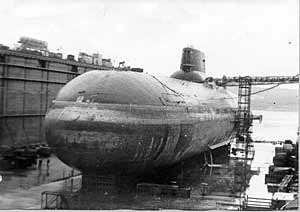 A nuclear submarine being dismantled. (Photo: Bellona Archive)


 nuclear-news