Toshiba Says Nuclear Writedown May Reach Billions of Dollars, Bloomberg, by Pavel Alpeyev, Finbarr Flynn, and Tesun Oh December 27, 2016,
Nikkei, NHK report charges related to Westinghouse acquisition
Writedowns may be more than company’s projected profit
Toshiba Corp. can’t get past its accounting problems.
The Japanese company, which paid a record fine a year ago for its bookkeeping practices, warned that it may now have to take another charge of several billion dollars related to an acquisition made by U.S. unit Westinghouse Electric.
The company’s shares fell 12 percent to 392 yen at the close in Tokyo on Tuesday, the biggest decline since December 2015, after earlier reports that it may book a loss of as much as 500 billion yen ($4.3 billion). Toshiba issued a statement after the market closed, saying that while the final writedown was yet to be determined, it would affect earnings.
The loss is related to a dispute over the value of an acquisition by Westinghouse of a nuclear construction company called CB&I Stone & Webster Inc. The Nikkei newspaper said the writedown would come to about 100 billion yen, while Japanese broadcaster NHK said the charge may total as much as 500 billion yen. Such a loss would eclipse the 168 billion yen in net income that analysts had been projecting for Toshiba’s current fiscal year through March. The Tokyo-based company booked a loss of 460 billion yen last year.
While the company can probably offset a one-time loss of 100 billion yen, a charge of 500 billion yen would be “severe” given its potential impact on shareholders’ equity, said Takao Matsuzaka, a credit analyst in Tokyo at Daiwa Securities Group Inc.
“It comes down to how much they can counterbalance any loss,” Matsuzaka said by phone. “Improving the financial base of the company is a top priority.”………
AN earthquake in Fukushima has put the city’s nuclear power plant owners on alert.
By JON AUSTIN Dec 28, 2016 A magnitude 6.3 quake has hit Japan’s Kanto region, according to the Japanese Meteorological Agency. The area borders the Tōhoku region, where the Fukushima Power Plant had a devastating meltdown in 2011 after a mega earthquake caused a massive tsunami wave.
Japan’s NHK news agency said the tremors were felt throughout “wide areas” of the east coast, though the epicentre was not at sea, meaning a tsunami is unlikely.
The Japan News said it was powerful enough to be felt in the same region as the nuclear plant, which is part of Honshu Island.
The Tokyo Electric Power Company, which is still decommissioning Fukushima’s ruined reactors, is investigating any impact of the quake there. The firm said in a statement: “At the moment, we have not confirmed the impact of the earthquake on our main power facilities (including nuclear power plants).”
The quake struck Ibaraki Prefecture at 9.38pm local time (12.38pm UK time). There were no immediate reports of damages or injuries.
There was a 7.3 magnitude earthquake which hit Fukushima last month.
Japan has a long history of powerful earthquakes and sits within the world’s most active volcano and earthquake zone in the Pacific Ring of Fire.
The zone is home to 90 percent of earthquakes and 81 percent of the most powerful quakes on earth.
It comes after a series of large quakes hit the US near the Nevada-California state line, sparking fears that the long-feared Big One was coming.
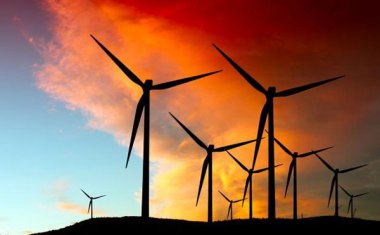
Over the past three days wind power accounted for 26 percent of total electricity consumption, almost as much as six nuclear power plants, says Anders Enqvist, Director of Risk Management at Bixia.
Sweden currently has three nuclear plants with ten nuclear reactors in commercial operation, making it the only country in the world that has more than one reactor per million inhabitants, says the Swedish Institute.
In 2015 Sweden added 200 more wind turbines. More wind blows in Sweden during the winter.
New York State and Germany are poised to give billions to nuclear power companies — but for completely opposite reasons.
While Gov. Cuomo wants to bail out three upstate nuclear facilities, saying they are vital to his clean energy agenda, Germany’s constitutional court earlier this month ruled the country must compensate energy companies as Germany shuts down its nuclear plants.
The phaseout there is rooted in an anti-nuclear power movement that arose after the Chernobyl nuclear disaster in 1986. The meltdown and spread of harmful material into the atmosphere mobilized Germans.
“It’s technology of the past,” said Katharina Umpfenbach of the nonprofit Ecologic Institute in Berlin………
Other than their approaches to nuclear power, New York State and Germany have similar energy goals.
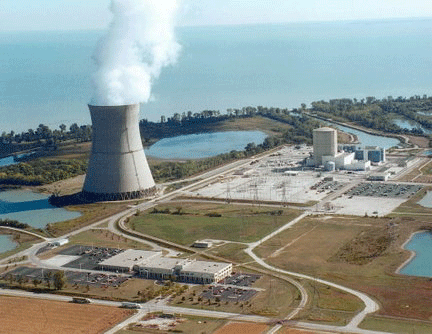
Davis-Besse Nuclear Power Station Could Soon be Closed or Sold by FirstEnergy , CleverScene, Sam Allard on Thu, Dec 29, 2016USA Today reports that the Davis-Besse Nuclear Power Station might soon be shuttered or sold by FirstEnergy Corp.
FirstEnergy CEO Chuck Jones said in an industry conference that due to cheap energy sources like natural gas, and the state of Ohio’s unwillingness to set energy prices above market rate, operating some power plants is no longer profitable. Davis-Besse is one of several plant in Ohio and Pennsylvania potentially on the chopping block…….
Cabinet files reveal plan to shoot nuclear intruders By Nick Higham, BBC News, 30 Dec 16 Sentries at Faslane naval base were ordered to shoot suspected intruders after three people broke into a nuclear submarine, cabinet papers show.
PM Margaret Thatcher, who was told of the order, said she was “horrified” that the intrusion had succeeded.
The papers are among records filed in 1989 and 1990 and released on Friday……..
‘Grave danger’ at Faslane
Three anti-nuclear demonstrators successfully cut through the perimeter fence at Faslane, on the Clyde, in the early hours of 10 October 1988. The demonstrators went through an open submarine hatch to reach the control room of HMS Repulse, a ballistic missile submarine, where they sprayed anti-nuclear slogans before being arrested.
A fourth demonstrator attempted to swim into the base, but was caught…….
General Atomics has some explaining to do http://www.sandiegoreader.com/news/2016/dec/28/radar-general-atomics-hot-potato/# GA’s hot potato By Matt Potter, Dec. 28, 2016 La Jolla–based military contractor General Atomics, maker of the Predator drone and other lucrative pieces of battle-ready hardware, also provides radiation monitoring systems for atomic reactors. The company’s latest installation came in July of this year at Watts Bar Unit 2 in Tennessee, “the first new U.S. nuclear power plant scheduled to be put into operation since 1996,” says a news release by the firm. “Since 1965, we’ve maintained a solid reputation for designing and manufacturing the highest quality, most reliable safety-related products, and for continually supporting our products and our customers throughout a plant’s lifecycle,” executive Scott Forney was quoted as saying.
But the story is different in a November 29 Notice of Nonconformance, sent to the company’s Electromagnetic Systems Group here by the U.S. Nuclear Regulatory Commission. That document says the quality of the detection devices is questionable, leading to potentially mistaken radiation readings. Among other omissions listed in the 38-page document, General Atomics “did not perform periodic testing of the chemical composition of the [detectors’] coating material…nor did [General Atomics] verify the shelf life of the coating material.” In addition, the company failed to “verify the adequacy of the calibration services…which could adversely affect the accuracy of [radiation monitoring system’s] detectors.” On top of that, inspectors witnessed “staff adding and removing lead shields from the stack of lead bricks below the platform without documenting the change in configuration.”
Per the report, “staff were unaware of the amount of scattered radiation in the area, and the effect of adding and removing lead from the cart on the amount of scattered radiation.” Said the notice, “verification of the material-critical characteristics specified [for use] in safety-related applications was not performed and the connector was not adequately dedicated for operation in harsh environments.”
Concludes the document, “Please provide a written statement or explanation within 30 days from the date of this letter in accordance with the instructions specified in the enclosed Notice of Nonconformance. The NRC will consider extending the response time if you show good cause for the agency to do so.”
For anyone interested I have managed to get copies of all the court proceedings of the British Nuclear Test Veterans case from the High Court that occurred in the summer of 2016. To search through these lengthy documents for Keywords, press CTRL F when the PDF is in your browser and enter the search term in the bottom Left of the screen where the search option opens up. You can also do the same thing with the downloaded copy. Here is a list of the PDF n the daily running order beginning with the;
An observation…..while activist and NGO attention has been (deliberately?) ratcheted up and focussed on fracking the nuclear industry has been lining up its myriad ducks from the South of England to Wales to Cumbria with a view to poisoning our water, land, sea and our DNA.. People often say to me “Why bother, its too big to fight, Moorside is a done deal” but this is true only if we are so cowed and intimidated by the entrenched and violent (yes violent) nuclear industry that we let their evil ambitions be a done deal. RESIST! Here is to containing Sellafield and Stopping Moorside in order to ensure many many more New Years being seen in – here in our beautiful, vulnerable Cumbria. Thanks to All Nuclear Resisters Everywhere!!
¶ “Solar is Clean, Popular and Under Attack” • Let’s start with the good news. Solar energy is growing and more popular than ever. … Now here’s the bad news. As solar power has grown, it has increasingly been attacked by entrenched energy interests who see rooftop solar as an existential threat to their bottom line. [Gotham Gazette]
Solar panel installation (SolarCity)
¶ “The French nuclear outages of 2016: the backstory” • While nuclear power is often presented as the only reliable and stable low-carbon alternative to fossil fuels, the technology can also be subject to long periods of uncertainty. This year, 22 French nuclear reactors were taken offline unexpectedly due to a single common safety issue. [ICIS]
Science and Technology:
¶ Momentum for the climate is building in more ways than one. Earth’s climate flashed red alert several times this year with symptoms of…
*BRITAIN’S nuclear regulator has been accused of downplaying almost 1,000
dangerous incidents that have been recorded as “anomalies” at power plants
and military bases across the country. *
The nuclear regulator has been accused of turning a blind eye to incidents
The events appear to be serious and include a torpedo accidentally being
fired by HMS Argyll when it was moored at Devonport Naval base in Plymouth.
The 9ft missile shot through the air before blowing a hole in a perimeter
fence and smashing into a storage container.
Other incidents involve workers being contaminated at a nuclear warhead
base, the discarding of uranium sludge and the radioactive element caesium
in bin bags and more than 30 power station fires.
And it appears incidents have more than doubled since 2010 and…
2016 was a milestone year in the continued warming of the planet. From unstable agriculture to the drought in California to melting ice sheets to extreme weather events and heat waves, climate change has disrupted virtually every corner of the world.
It’s impossible to exhaustively list all the ways in which climate change was felt in 2016, but here’s a guide to understanding the year that was for the planet:
A carbon dioxide milestone
“In the centuries to come, history books will likely look back on September 2016 as a major milestone for the world’s climate,” Brian Kahn of Climate Central wrote earlier this year. That’s because, during September, a month in which atmospheric carbon dioxide — a heat-trapping greenhouse gas —is usually at its lowest, the monthly value failed to drop below 400 parts per million. The 400 ppm mark has sad significance in the climate community, as it…
Power and Symbolism for Putin? Symbolic Power? The old Creusot Forge. There was an attempt to set up a “Le Creusot Commune”, along with the Paris Commune, which inspired Karl Marx: https://en.wikipedia.org/wiki/Paris_Commune Lenin used the aftermath of the Paris Commune to justify harsh treatment of enemies. Rosatom answers to Putin. Putin is a product of Communist Russia and its KGB.
If you thought things couldn’t get worse: Russia State owned Rosatom wants to help bail-out French State owned Areva warns Reuters: “Rosatom says could consider equity stake in Areva“. Posted:Tue, 27 Dec 2016 11:09:48 -0500. http://feeds.reuters.com/~r/reuters/utilitiesNews/~3/yx0n95iavPQ/rosatom-areva-idUSL5N1EM211. Rosatom answers more directly to Putin, than some Russian state owned entities: “State Corporations are not obliged to submit to public authorities documents accounting for activities (except for a number of documents submitted to the Russian government) and, as a rule, are subordinate not to the government, but to the…
¶ “The Arctic Year in Review” • Rising temperatures, dropping oil prices, and tightening ties between the United States and Canada all helped create some of the Arctic’s most noteworthy happenings in 2016. At the start of the year, the world had just gone through a record-breaking year for heat. But things just go hotter. Here’s a recap. [News Deeply]
Ulukhaktok, Northwest Territories (Photo by Elaine Anselmi)
World:
¶ Sweden has generated more energy from wind power than
it ever has before. Nearly 5.7 million kWh of wind power was generated as the country harvested the effects of “Storm Urd” and intense weather across the southern parts of the country. It smashed through the previous record, beating it by more than half a million kWh. [The Independent]
¶ Work on 22 wind power projects is underway at Gharo-Keti Bandar and Hyderabad in Sindh, in Pakistan…










 nuclear-news