Corruption in Japan and UK hides Thyroid Cancers!

Corruption in Japan and UK hides Thyroid Cancers!
As an introduction to this translated article from Japan, I would like to say that the nuclear industry has been manipulating and lying about statistics for decades concerning the health effects of radiation on human and environmental life. Concerning the recent furor about Thyroid cancers in Fukushima, we see that the UK and Japanese specialists in thyroid cancer, have been manipulating the figures to play down the role of radiation from the Fukushima 2011 nuclear disaster. Some points to note concerning the new article from Japan;
1 The age group that the Fukushima Medical Hospital give did not include the 10 to 17 years olds that were effected in the first year of the disaster, thereby skewing the public figures.
2 The lack of early testing on with sophisticated equipment led to the distortion of figures and continues to do so (And at least a recent report one child had cancer spread to their lungs because of the late testing)
3 Ignoring the findings from Chernobyl has been criminally negligent,
4 Figures of actual cancer rates are played down in the media who state 147 cancers when there are actually 183. Also, no reporting of the cancers found in outlying prefectures are reported.
5 Because of the miss-reporting and skewing of the data the UK`s Thyroid expert Prof Geraldine Anne Thomas and Japans expert Prof Yamashita are now trying to limit testing to hide these cancers to reduce the compensation and support to the victims and their families on behalf of TEPCO (Who is financially culpable) and to limit the damage to the UK and Japanese nuclear lobby.
Summary to article post by Shaun McGee aka Arclight
Date of post 31 December 2016
The translation was done through Google translate but the main points and statistics can be easily derived from the below translation, I place it here as documented evidence for you all. The source for this article and material below can be found here in Japanese;
Fukushima Nuclear Accident 2017 Children’s Thyroid Cancer Close to the mystery of thyroid cancer frequently occurring in children in Fukushima Prefecture → Organize by municipality-specific map
Current situation of Fukushima thyroid cancer problem
Release date: December 29, 2016
Close to the mystery of thyroid cancer frequently occurring in children in Fukushima Prefecture → Organize by municipality-specific map

According to the latest Fukushima prefectural survey report released on 27th December 2016, childhood thyroid cancer and suspect children in Fukushima prefecture were three months ago … 9 people increased from the previous 174 people totaling 183 I became a person. ※ 1 ※ 2
Comparison of 30 September 2016 version and 30 June 2016 version of Fukushima kid’s thyroid cancer map by municipality
Then, since it was confirmed that there was a benign nodule by surgery and one who was not a thyroid cancer was originally counted in this thyroid cancer and suspicion, this one counts thyroid cancer and suspicion total of 184 people.
Presentation in Fukushima prefecture is thyroid cancer, malignant … Malignant is cancer, but use the word “malignant or malignant suspicion” as if the children who are not thyroid cancer are also included in this By writing, it blurs the focus making comparison with Chernobyl nuclear accident difficult.
However, among 146 people who completed surgery, only one was a benign nodule, 143 papillary carcinomas, 1 person is poorly differentiated cancer, 1 person is diagnosed with other thyroid carcinoma.
In other words, 99% of “suspicion of malignancy or malignancy” was pediatric thyroid cancer.
So overestimating the word of doubt and reassuring is dangerous.

Table of contents
【1】 Preliminary inspection and full inspection
【2】 Compare by municipality ← ★ Comparison map available!
【3】 Compare by accident year by year
【4】 Compare by gender
【5】 Comparison by age
[1] For the preliminary inspection and the full inspection, it is sufficient if you understand the definition of the preceding inspection and the full inspection.
【2】 ~ 【4】 classified 183 people considered to be thyroid cancer of Fukushima by municipalities, accident years by age from accident, by gender, by age at the time of accident, respectively, Chernobyl nuclear accident It compares with past data of Japan and Fukushima prefecture.
In addition, this article was published on this site on March 14, 2014 [emergency] sudden increase in childhood thyroid cancer? New facts in Fukushima prefecture → 2008 patients 0 people! This is the eleventh revised version that reflects the latest data.
On the northern side of Soma City, Fukushima Prefecture … About two cases of thyroid cancer and suspected children found in Maruomori-cho, Miyagi prefecture 【urgent feature】 2 children in Miyagi prefecture Marumori-machi thyroid cancer → Fukushima prefecture and Please see the comparison.
Fukushima prefecture on the south side of Iwaki City … About 3 children with thyroid cancer found in Kitaibaraki, Ibaraki Prefecture 3 children in Kitaibaraki city, Ibaraki Prefecture → thyroid cancer! Please see the comparison between Kita Kanto and Fukushima prefecture.
【1】 Preliminary inspection and full inspection
Let’s first define the definition of preliminary inspection and full inspection. Otherwise it is now to the children in Fukushima prefecture … what is going on? I can not understand exactly.
That is, many newspaper companies and television stations that publish nationwide newspapers since the start of full-scale inspection … The number of people who confirmed new thyroid cancer in the preceding examination and thyroid cancer found in the preceding examination It is because I am reporting on the total number of patients cleanly and carelessly.
Let’s suppress the definition of the preliminary inspection and the full inspection to know the truth.
The preliminary inspection was conducted at the time of the Fukushima nuclear power plant accident in 2011 … It took about 330 years of 2011, 2012, 2013 for the about 360,000 children who were under the age of 18 who lived in Fukushima prefecture It was. Since it is the first inspection, it may be expressed as “first round” or “first round” inspection.
The objective of this preliminary examination is to assume that the increase in pediatric thyroid cancer of the Chernobyl nuclear accident which is the theory is minimum for 4 to 5 years and which is in one to three years before nuclear accident causes childhood thyroid cancer to increase Is there children in thyroid cancer childhood in Fukushima Prefecture only? It was aimed at investigating.
Full-scale inspection, at the time of the Fukushima Nuclear Accident in 2011 … children who were born in Fukushima Prefecture for about one year after the nuclear accident in addition to the “children who were under 18” who lived in Fukushima prefecture will be covered So the number of people to be examined will increase to about 380,000. It will be held in Fukushima prefecture over the two years of 2014 and 2015. Since it is the second inspection, it may be expressed as “second round” or “second round” inspection.
The objective of this full-scale inspection is that the increase in childhood thyroid cancer of the established Chernobyl nuclear accident is assumed to be a minimum of 4 to 5 years, and there is a possibility that childhood thyroid cancer may increase due to a nuclear accident 4 years later, in Fukushima prefecture Do thyroid cancer actually increase for children? It is aimed at investigating.
Preliminary inspection full-scale inspection
Fiscal Year 2011 – 2013 Fiscal 2014 –
One week in Fukushima Prefecture within 3 years of inspection period One round in Fukushima Prefecture
Target number 367,000 people 381,000 people
As I mentioned earlier in the article, “Childhood thyroid cancer in Fukushima prefecture and suspected children, three months ago … increased from nine people last time to nine people totaling 183 people” The breakdown of the nine people who increased was +0 in the preceding examination and +9 in the full-scale examination. The list of 9 people who increased this time by municipality is as follows.
I distinguished the coloring as follows so that I can understand the incidence rate.
■ 1 person ~ 999 people 1
■ 1000 people ~ 1999 people have a disease onset
■ … one in 2000 to 2999 people
■ 3000 people ~ 1 3999 people have disease onset
■ 1 person in 4000 to 6,999 people developed illness
Full inspection Municipal name June 30, 2016 → September 30, 2016 increase Number of people
Kitakata City 0 person → 3 people + 3 people
Iwaki City 29 people → 31 people + 2 people
Fukushima city 20 people → 22 people + 2 people
Tanagura-cho 1 → 2 people + 1 person
Saigo Town → 2 people + 1 person
Total + 9 people
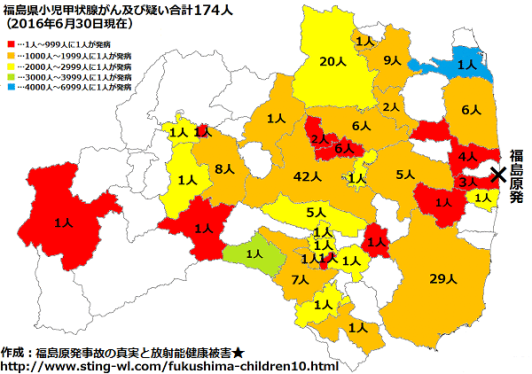
As I mentioned earlier in the article, “Childhood thyroid cancer in Fukushima prefecture and suspected children, three months ago … increased from nine people last time to nine people totaling 183 people” Of the 183 people in total, 115 people were found in the preceding examination, 68 in the full examination. Let’s make a list.
Fukushima Prefecture Childhood thyroid cancer examination Summary Preliminary examination Full-scale examination examination
Thyroid cancer and suspicion 115 people 68 people 183 people
There are two problems with this childhood thyroid cancer test result.
2017 in climate and nuclear news
Here are my predictions for 2017 . They are not all that cheerful. But I am comforted by that fact that I usually predict most unreliably. I pronounced that Hillary Clinton would win the US presidency by a landslide.
But – here goes, anyway :
CLIMATE news. The anthropocene is here with a vengeance, and will be evidenced by continued weather extremes – droughts in Africa, India and other places, floods elsewhere, the continued creeping sea level rise, affecting island nations, and low-lying ones, like Bangladesh. Most worrying of all, the continuance of extraordinary changes in temperature in the Arctic, with effects on ocean currents.
With climate-denying politicians in power, at the national level, action on climate change will be stalled, to some degree. However, at the level of states, local councils, and cities, increased adoption of renewable energy will mean that meaningful climate action goes on with renewed vigour. At the grassroots level, more homes and businesses will adopt solar and wind technologies, as well as smart energy conservation – a trend already apparent in Australia, and parts of Europe and USA, as well as in developing countries, where off-grid energy becomes a boon to millions. Public disillusion with climate denying leaders will rise.
NUCLEAR news. The world will limp on, avoiding nuclear war by a whisker, especially in relation to India and Pakistan. However, there will be encouraging developments in the international nuclear disarmament movement, with an impressive conference in March.
In America, more nuclear power stations will close, due to their diseconomics. Nuclear power development in China will continue to slow down, for reasons of cost, water shortage, and even public opposition. India’s growing solar energy success will threaten its nuclear development. Britain, however, will be a focus, as France, China, South Korea, even Russia will push desperately for Hinkley, Moorside, Bradwell nuclear projects, which will have to be subsidised by taxpayers.
Fukushima will continue to be a running sore with no cure in sight, while Japan and the world happily look forward to the 2020 Olympics.
The nuclear waste problem will continue to dog USA, and efforts to even trial new solutions like deep bore drilling will meet public opposition, even without any radioactive trash. Some countries, e.g. France, with existing nuclear power stations will look to closing them down. At the same time, there’ll be a continuing frenzy to try to market nuclear power to non nuclear countries.
The proponents of “New Nuclear”, particularly of Thorium and of Small Modular Nuclear Reactors will continue to pretend that they help Big Nuclear by supposedly dealing with the waste problem. But in reality, they’ll be rejoicing at the plight of Big Nuclear, and toting their still non existent new gimmicks to governments. In particular, they’ll want America to weaken its safety regulations.
Above all, the nuclear lobbyists and publicists will hammer their lie that nuclear power can stop climate change. Not only is that not true, but also, that claim becomes increasingly irrelevant as climate change races ahead. – simply no time for that “solution” anyway.
But that won’t stop the “New Nuclear” lobby. They’ll bring out a film – THE NEW FIRE glossy, expensively made, sophisticated – to push the new gee whiz nuclear kids on the block. Their various front groups, e.g Weinberg Next Nuclear , “Breakthrough Energy Coalition” and Australia’s “Bright New World” will continue to pose as charities, and gain tax exempt status.
I’d love to think that journalists and academics will see through the spin. But I am not optimistic, following a year when spin brought Brexit and Donald Trump’s rise. (Even if Trump gets bored, and chucks the job in to run a personal media circus, the USA will still be run by climate denying Republicans. )
Journalists and academics will continue to spout the nuclear lies – about low dose ionising radiation being OK , and above all, keep hammering the message of nuclear being “clean” and “low carbon” . They know where the money is. The public at large will believe them, despite the efforts of the anti nuclear movement, and of a few brave, outspoken journalists and academics.
THE NEW CON – film “THE NEW FIRE” -nuclear advertising for 2017

The “New Nuclear” lobby is kicking off its New Nuclear propaganda for 2017 with its favourite tactic – FILM.
They started this method with great success in 2013 with a very glossy and quite seductive advertisement calld “Pandora’s Promise” That has now been rehashed many times, e.g on Youtube. It pretends to be a documentary about c limate change, but is really a hymn to new nuclear “Generation IV” technology, especially Small Nuclear Reac
tors, and to endless consumption of electricity.
Then came the even more sophisticated and glossier television series, “Twisting the Dragon’s Tail”, a subtle nuclear advertisement promotion that featured Australia quite strongly. Cleverly introducing the negative aspects of the nuclear industry, it finishes with that same message for boundless energy consumption via New Nuclear.
These so-called “independent documentaries” are quite lavishly and expensively produced. Who pays for them? That is a well-kept secret. Do presenters like Derek Muller (Dragon’s Tail) understand how they are being used?
“The New Fire” is currently under production, using, as those other ads did, very capable media professionals. We have no idea who is behind this project, but, with billionaires now in the Small Nuclear Reactor business, we can suspect those in the nuclear front group “Breakthrough Energy Coalition”
The theme of those first two nuclear propaganda films was about the “need for ever-rocketing electricity consumption,  and how new small nuclear reactors will meet that need.”
Thee theme of this 2017 nuclear advertisement will be that “only via new nuclear power can the world be saved from climate change” It will focus on the new smart young people who reject the boring old people’s anxiety about nuclear power.
THE NEW FIRE describes itself as ” an independent documentary that will introduce audiences to young nuclear engineers who are developing next-generation reactors which they hope will provide clean and safe solutions to the world’s future energy needs. Could these audacious innovators be the agents of change the world has been waiting for? With unprecedented access to key people, places and events, award-winning filmmaker David Schumacher has traveled the globe to capture a powerful, eye-opening story that needs to be told now—before it’s too late.”
Solar and wind power have practical benefits, other than being least expensive
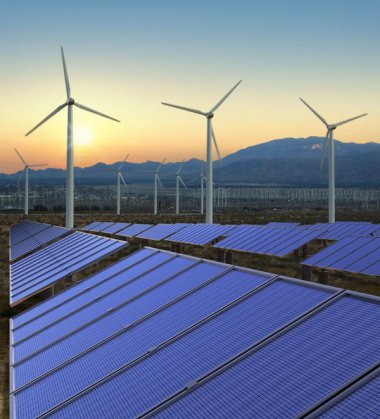 Solar Power Is Not Merely Least Expensive https://cleantechnica.com/2016/12/29/solar-
 power-not-merely-least-expensive/ December 29th, 2016 by George Harvey
We’ve seen a lot of commentary on the fact that utility-scale solar power has become the least expensive source of electricity in many places. There is more than that to be found in the data in Lazard’s Levelized Cost of Energy Analysis, Version 10.0, however, and what it tells us is that solar and wind power have benefits apart from the simple facts that their costs are low.
We have always needed a variety of power sources. Conventional baseload power provided by coal-burning and nuclear plants lacks flexibility and is, in fact, a really bad match for grid demand. Baseload generation cannot be ramped up or down as demand changes, and this is one reason why such power plants never provided all of our electricity. There always had to be other, more flexible generating facilities available.
The greatest need for power is often on warm, sunny afternoons, when air conditioners are running in work spaces, stores, and homes, in addition to normal human activities. These have been the times when peaking plants could make their money. With high demand, come the high prices they need to be profitable.
As solar photovoltaics (PV) have come on the market in quantity, however, sunny afternoons suddenly bring the sun as a competing power source. The early evening, after the sun has gone down, is still potentially a time of high demand, when solar power does not cut into the use of fossil-fuel peaking plants. This situation, however, is clearly coming to an end.
According to Lazard, the levelized cost of utility-scale solar power with storage is $92 per megawatt-hour (MWh). This means that solar-plus-storage can be highly competitive, even after dark, with natural gas peaking plants, which have levelized costs ranging from $165 to $217 per MWh. It is even competitive to a degree with gas-powered reciprocating engines, whose costs are from $68 to $101 per MWh.
There is more to this story, however. It happens that wind power is usually strongest when the sun is not shining brightly, and solar power output is often highest when the wind does not blow much. A storage system that is charged by the sun could be charged by the wind when the sun does not shine. This means that a solar-plus-storage system can be made more valuable by storing excess power from wind as needed.
The fact that power from solar-plus-storage is becoming relatively inexpensive makes it likely that the combination will increasingly be used instead of peaking plants using fossil fuels. This will increase production of batteries, and it will increase research and development into storage technologies. And these changes imply further reductions in costs.
The declines in costs of energy storage have already been impressive. Tesla lithium-ion batteries are delivering about double the amount of electricity that they had been providing when they were first introduced, and their cost has not increased appreciably. This implies that the cost of the electricity from them has been roughly halved. Other battery technologies have alsoseen exciting developments. For example the ViZn flow battery shows a number of improvements over earlier designs at considerably lower costs. Salt water batteries, such as those from Aquion Energy, also come to mind. As fast as the price of electricity from solar PVs has been dropping, we should not be surprised if the costs of solar-plus-storage or wind-plus-storage drop considerably faster.
There are other advantages implicit in adding storage to the power supply. One is that the power can be ramped up or down much faster than it can be with conventional approaches to equipment. Power demands on batteries and some other storage solutions can be ramped up or down in fractions of a second.
Indeed, the storage component moves us into a situation where solar and wind, with support from other types of renewable energy, can take on larger baseload power systems. Clearly, if utility-scale solar + storage = $92/MWh, it will always be less expensive than the $97 to $136 per MWh cost of nuclear power. It is competitive with power from coal. The only fossil fuel remaining in Lazard’s analysis that is clearly less expensive than solar-plus-storage is combined cycle natural gas, with a cost range of $48 to $78 MWh, and we have no guarantees those prices will last. And remember, this is not solar power alone, but solar with energy storage.
We seem to be moving into a new age, and it is not merely an age when the sun and wind provide the least expensive power we have. It is an age when the sun and the wind may replace baseload power altogether, not only as the least expensive solution, but as the best general solution. And we might come to that faster than we dreamed possible.
Toshiba’s financial crisis puts Britain’s nuclear power plans into doubt
 Toshiba puts UK’s nuclear power plans under threat: Fears that crisis will halt Japanese firm’s investment in British plant http://www.thisismoney.co.uk/money/markets/article-4074492/Toshiba-puts-UK-s-nuclear-power-plans-threat-Fears-crisis-halt-Japanese-firm-s-investment-British-plant.html By Rachel Millard For The Daily Mail Britain’s nuclear power plans have been thrown into doubt as a financial crisis grips the company behind one of the country’s biggest projects.
Japanese company Toshiba owns a 60 per cent stake in the planned £10billion NuGen nuclear power project in Moorside, Cumbria, which aims to supply power for about 6million homes from 2025.
But shares plunged at Toshiba for the third day running yesterday after it warned of a multi-billion dollar write-down involving its US nuclear subsidiary.
Forty per cent has been wiped off the company’s value since it said on Monday that its US nuclear subsidiary Westinghouse Electric may have overpaid by several billions of dollars for another nuclear construction and services business.
Westinghouse UK is providing the reactors for the planned project in Cumbria, the rest of which is owned by French company Engie, and would be one of Europe’s largest nuclear power plants.

Moody’s investor service has downgraded Toshiba’s ratings and warned the writedown could affect the company’s ability to pay its debts, little over a year after its finances were seriously hit by an accounting scandal.
Justin Bowden, the GMB union’s national secretary for energy, said: ‘It needs to be established as soon as possible whether or not the collapsing Toshiba share price, in particular in relation to its Westinghouse operation, has any implications, and if so what these are for the extremely important Westinghouse project.’
Masako Kuwahara, a Moody’s vice-president, said: ‘The downgrade of Toshiba’s ratings principally reflects Moody’s deepening concerns over the sustainability of Toshiba’s near-term liquidity, as well as the substantive and rapid erosion of its equity base.
‘Although Toshiba is still assessing the exact amount of the impairment loss, its financial metrics will likely deteriorate further, potentially resulting in a negative equity position.’
Moody’s added that if Toshiba breached its debt obligations, its ability to stay solvent would depend on banks’ support.
‘The availability of such support in such a situation, is currently uncertain,’ Moody’s added.
Bankers and analysts said the latest shock could force Toshiba to trim down its businesses.
‘If the company wants to survive, it needs to go through a scrap-and-build process,’ said Norihiro Fujito, senior investment strategist at Mitsubishi UFJ Morgan Stanley Securities.
Toshiba’s problems come after NuGen said it was in talks with potential investors for the Cumbria site, with a final investment decision due in 2018.
It is potentially a blow to the Government after ministers had described 2016 as a ‘year for the industry to look back on’ following backing for a new plant at Hinkley Point in Somerset.
Then UK energy minister Lucy Neville-Rolfe said Hinkley Point would ‘trigger this country’s nuclear renaissance’. But the GMB’s Bowden said: ‘We are one step away from the lights going out.’
NuGen yesterday declined to comment and Toshiba could not be reached for comment.
A Department for Business, Energy and Industrial Strategy spokesman said: ‘We are working closely with developers on a number of proposed new nuclear projects in the UK, as they develop their plans.’
Nuclear Energy Institute urges incoming Trump administration to promote nuclear
 NEI asks incoming Trump administration to promote nuclear power, http://www.elp.com/articles/2016/12/nei-asks-incoming-trump-administration-to-promote-nuclear-power.html By Wayne Barber Chief Analyst, GenerationHub “….
the Nuclear Energy Institute (NEI), is asking the incoming Donald Trump administration to take steps to both improve the economic prospects of the existing domestic fleet and improve the chances for new nuclear reactors.
The energy sector has always been heavily shaped by government policy, NEI said in its policy memorandum to the Trump administration.
Several key policies are needed in the immediate future and in the longer term to ensure the benefits of nuclear power for the long-term, NEI said.
Government at all levels should rewrite policy to have federal agencies buy nuclear power when they buy other forms of zero carbon energy.
The previous administration’s Executive Order 13693, a clean air strategy which requires the federal government to buy more renewable energy, should be rewritten by the White House to allow nuclear energy to participate, NEI said.
NEI also states should be encouraged to have renewable portfolio standards (RPS) become clean power standards.
NEI said the Federal Energy Regulatory Commission (FERC): Existing reactors must be recognized for all the benefits they bring to the electric system, through the following changes:
· FERC should clarify that its requirement for “just and reasonable” rates that are not “unduly discriminatory or preferential” implies compensation for all of these benefits: high reliability and availability, increased grid resiliency due to operability under all weather conditions and no need for continuous fuel supply, and virtually zero emissions.
· FERC should work with the Independent System Operators and Regional Transmission Organizations to ensure that the competitive markets fully value all the attributes of existing nuclear plants, and the services they provide to the grid.
· FERC should address flaws in the structure of the markets it governs. Among these, the system makes “uplift” payments to generators that are not economic but are needed to assure reliability, but the cost of those payments does not enter into the price paid to other producers, including reactors.
· The agency should make clear that generation sources that by their nature tend to stabilize electricity prices and limit the risks from fuel price volatility should be compensated for protecting consumers by improving the diversity of the system.
Beyond Nuclear calls on Nuclear Regulatory Commission to publish list of flawed reactors
 Beyond Nuclear: NRC Must Publish Flawed Reactor List http://www.ladailypost.com/content/beyond-nuclear-nrc-must-publish-flawed-reactor-list by Chris Clark December 27, 2016 TAKOMA PARK, Md. ― Beyond Nuclear (BN), a leading national anti-nuclear advocacy group, last week called on the U.S. Nuclear Regulatory Commission (NRC) to make public the full list of U.S nuclear power plants that are known to be operating with potentially defective parts imported from France.
Trump’s unorthodox and erratic comments on nuclear policy bring real danger
 Trump’s Madman Gambit History shows his nuclear threats will fail. US News.com By Jeffrey P. Kimball | Dec. 30, 2016, President-elect Donald Trump’s recent Tweet that “the United States must greatly strengthen and expand its nuclear arsenal” and comments to MSNBC welcoming an “arms race” could signal a radical shift away from decades of bipartisan U.S. policy to reduce nuclear tensions and stockpiles. His spokesperson Sean Spicer tried to explain the comments to NBC’s Matt Lauer as a “warning” to other countries “that this president’s going to take action.”
USA military does not need a numerical increase or new nuclear weapons in Europe
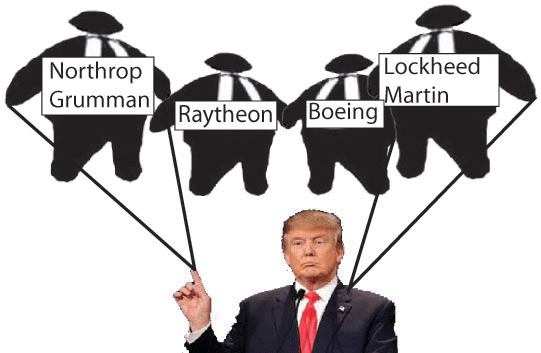 No, the U.S. Doesn’t Need to Expand Its Nuclear Weapons Program, Politico By STEVEN PIFER December 29, 2016
December 23, President-elect Donald Trump tweeted that the United States must “expand its nuclear capability.” Had he written modernize, upgrade, update or renew, no one would have paid much attention. But he seemed to call for a quantitative increase, something Matthew Kroenig endorsed in a December 23 Politico Magazine article.
Nuclear energy business failure wipes $6.6 billion off Toshiba’s market value
Investors wipe $6.6 billion off Toshiba’s market value http://www.wfmz.com/news/investors-wipe-66-billion-off-toshibas-market-value/238091402
Losses over last 3 trading sessions total 42% By: SHERISSE PHAM Dec 30, 2016 HONG KONG (CNNMoney) – Toshiba’s dreams of becoming a nuclear energy leader have turned into a nightmare.
Diablo Canyon nuclear reactor cooling system knocked out for 18 months?
 Diablo Canyon nuclear plant cited for cooling system problem, Orange County Register Dec. 30, 2016 SAN LUIS OBISPO – Federal regulators have cited the Diablo Canyon nuclear power plant for a problem that may have knocked out a reactor cooling system for a year-and-a-half.
During a test in May, workers found that an emergency cooling system for one of the two reactors wasn’t working – and may not have been operating since it was last checked in October 2014….http://www.ocregister.com/articles/problem-739810-plant-nuclear.html
The very real danger of India-Pakistan War In 2017
India-Pakistan War In 2017? Nuclear Neighbors Still Locked In Conflict Approaching New Year http://www.ibtimes.com/india-pakistan-war-2017-nuclear-neighbors-still-locked-conflict-approaching-new-year-2467636 BY ON 12/30/16 As much of the world focuses on the growing hostilities between the United States and Russia as well as the war in Syria heading into 2017, it would be easy to forget about an ongoing conflict between two nuclear-armed neighbors.
For Indian and Pakistan, which have fought three wars since becoming independent states in 1947, 2016 was a year of drastically deteriorating relations. And as they prepare to welcome in the new year, the two countries continue to be locked in an exchange of fire along the border separating the disputed region of Kashmir.
A ceasefire agreement signed between the two countries in Kashmir in 2003 has been rendered effectively redundant. That was evident just this week when India claimed that the Pakistani army engaged in heavy fire targeting Indian positions across the Line of Control, killing one civilian. India made clear it would retaliate strongly.
The latest spike in tensions between India and Pakistan began when an Indian army base in Kashmir was attacked on Sept. 18, killing 19. India claimed that the attack was carried out by militants hailing from Pakistan and retaliated by carrying out what it called “surgical strikes” on a terrorist stronghold on the Pakistan side of the Line of Control. Pakistan vigorously disputed that version of events.
Pakistan also claimed this week that India was violating a 1947 United Nations Security Council Resolution on Kashmir by attempting to change the demography of Kashmir through the settling of non-locals in the region.
Escalating fears yet further, India successfully tested Monday its most powerful nuclear-capable missile.
Debunking Trump’s nonsense talk about wind energy
Trump: “I have a problem with wind” https://blog.bulb.co.uk/trump-wind-problem/ by hayden November 2016 In a recent interview with the New York Times, President-elect Trump claimed there are three reasons to oppose wind power. Perhaps unsurprisingly, we disagree with each of them. We thought we’d break them down and add some facts to a discussion that threatens to undermine one of the most important global efforts of our time.
Here are Trump’s three main points:
- Wind turbines kill birds (even the golden eagle)
- Wind turbines are bad for the atmosphere due to their steel construction
- Energy from wind isn’t commercially viable
You can read the full transcript of the NYT interview here but here’s an excerpt:
TRUMP: The wind is a very deceiving thing. First of all, we don’t make the windmills in the United States. They’re made in Germany and Japan. They’re made out of massive amounts of steel, which goes into the atmosphere, whether it’s in our country or not, it goes into the atmosphere.
The windmills kill birds and the windmills need massive subsidies. In other words, we’re subsidizing wind mills all over this country. I mean, for the most part they don’t work. I don’t think they work at all without subsidy, and that bothers me, and they kill all the birds. You go to a windmill, you know in California they have the, what is it? The golden eagle? And they’re like, if you shoot a golden eagle, they go to jail for five years and yet they kill them by, they actually have to get permits that they’re only allowed to kill 30 or something in one year. The windmills are devastating to the bird population, OK.
With that being said, there’s a place for them. But they do need subsidy. So, if I talk negatively. I’ve been saying the same thing for years about you know, the wind industry. I wouldn’t want to subsidize it. Some environmentalists agree with me very much because of all of the things I just said, including the birds, and some don’t. But it’s hard to explain. I don’t care about anything having to do with anything having to do with anything other than the country.
We wouldn’t normally include such a long quote, but we thought you’d enjoy President-elect Trump’s turn of phrase in its full, unfiltered glory.
Bird protection groups are in favour of wind
To quote the Royal Society for the Protection of Birds; “the RSPB supports a significant growth in offshore and onshore wind power generation in the UK”. It couldn’t be put more succinctly than that.
Climate change is set to have a devastating impact on the environment, which is a far greater threat to birds than wind farms. Of course, governments and wind farm investors should do all they can to minimise the danger to birds. However, this is not a significant hurdle. The RSBP scrutinises hundreds of UK wind farm applications each year, and 94% of those are safe enough for the RSPB to give their blessing.
You can read more about the RSPB’s policies here.
Wind has very low carbon intensity
Steel, of course, takes energy to produce. However, the carbon cost of this energy is dwarfed when other factors are taken into consideration. We can do this by considering the lifecycle carbon emissions associated with each type of electricity generation. This is a common method used to compare technologies on an environmental basis and is recommended by bodies such as Defra because it considers the full impact of each technology by calculating the emissions associated with it from cradle to grave, not just the period where it’s generating electricity.
Over the course of its lifetime, a wind turbine will produce 400 times less carbon per kWh than coal. A study conducted by the Intergovernmental Panel on Climate Change (IPCC) in 2014 put the median carbon cost of onshore wind at an equivalent of 11 grammes of CO2 per kWh over its lifetime. Which is similar to nuclear, hydro, solar and a lot lower than the 820 grammes per kWh of Mr Trump’s beloved coal power.
You can read the full IPCC report here. The key figures are on the right-hand side of page seven.
Wind is commercially viable
The cost of wind per unit of electricity is already on par with the likes of new-build coal and nuclear. According to Lazard Investment Bank, coal costs $65-150 per MWh, compared to $32-77 for wind. This cost advantage already gives wind the edge over coal, before the carbon cost is even considered. It’s easy to criticise wind, claiming the supply is unreliable and dependent on the weather, but this is solved through energy storage. When Denmark was generating 140% of its energy needs through wind power, it simply exported it to be stored as potential energy in Germany and Sweden’s hydro dams.
Plus, the efficiency of wind power is improving at a rate of knots. Bloomberg New Energy Finance estimates the cost of wind will decrease by 19% for every doubling of installed capacity. By comparison, the cost reduction for existing technologies, like coal, is a fraction of a percent.
How much can Trump actually change?
Experts aren’t yet in agreement about the extent to which Trump will be able to reverse recent climate change policy. He could repeal President Obama’s executive orders, which he seems set to do. This would likely move US climate policy decisions from national decision makers to individual states. When Reagan starved the EPA of funding in the 1980s, most policies were made at the state level, rather than federal.
Perhaps the biggest concern, though, is Trump’s inconsistency. He has shown a willingness to reverse direction, which makes it difficult to know quite what’s going to happen. He has previously stated he would pull out of the Paris agreement. But in the New York Times interview above he said he would just “take a look at it.” Everyone is closely watching this space. As Trump tells us, he’s a businessman, so it’s possible he may end up seeing the benefits of new and competitive technology.
Here’s hoping.
Emerging Markets Lead the way to Cheapest-Ever Solar Energy #auspol

Emerging Markets Lead the Way to Cheapest-Ever Solar Energy
By Vanessa Bates Ramirez
Energy experts have long predicted we’d eventually shift from fossil fuels to clean energy. They were right, but there have been a few surprises along the way.
The shift is happening faster than anyone thought it would, particularly in solar energy. Solar is now the cheapest form of new electricity there is. And an unexpected sector of the market is leading the way: the developing world. This market comes with its own set of opportunities and challenges, and they need to be navigated wisely.

Predictions were too conservative
Nine to ten years ago, predictions from the International Energy Agency and Greenpeace pegged global installed photovoltaic capacity by 2013 at 20 and 60 gigawatts, respectively. The actual 2013 figure? 140 gigawatts, more than double the most aggressive projection. By 2015, that was up to more than 227 gigawatts.
View original post 893 more words
Dr Paul Dorfman on BBC – TOSHIBA Paid Over the Odds for Westinghouse

http://www.bbc.co.uk/programmes/p04kt3g4
Here’s a quite long interview with Dr Paul Dorfman on the implications of Toshiba nuclear collapse in Yesterdays BBC Business Report, 11.18 mins into the programme:

View original post 11 more words
-
Archives
- February 2026 (211)
- January 2026 (308)
- December 2025 (358)
- November 2025 (359)
- October 2025 (376)
- September 2025 (258)
- August 2025 (319)
- July 2025 (230)
- June 2025 (348)
- May 2025 (261)
- April 2025 (305)
- March 2025 (319)
-
Categories
- 1
- 1 NUCLEAR ISSUES
- business and costs
- climate change
- culture and arts
- ENERGY
- environment
- health
- history
- indigenous issues
- Legal
- marketing of nuclear
- media
- opposition to nuclear
- PERSONAL STORIES
- politics
- politics international
- Religion and ethics
- safety
- secrets,lies and civil liberties
- spinbuster
- technology
- Uranium
- wastes
- weapons and war
- Women
- 2 WORLD
- ACTION
- AFRICA
- Atrocities
- AUSTRALIA
- Christina's notes
- Christina's themes
- culture and arts
- Events
- Fuk 2022
- Fuk 2023
- Fukushima 2017
- Fukushima 2018
- fukushima 2019
- Fukushima 2020
- Fukushima 2021
- general
- global warming
- Humour (God we need it)
- Nuclear
- RARE EARTHS
- Reference
- resources – print
- Resources -audiovicual
- Weekly Newsletter
- World
- World Nuclear
- YouTube
-
RSS
Entries RSS
Comments RSS
 nuclear-news