Advances and hurdles in nuclear weapons control
 Nuclear arms control in a globalized world OUP Blog BY JOHN BAYLIS OCTOBER 23RD 2016 We live in a dangerous and uncertain world. While terrorism is the most immediate contemporary threat, the dangers of nuclear weapons remain an ever present concern. During the Cold War a series of nuclear arms control agreements helped to mitigate the worst excesses of the arms race and contributed to the easing of tensions between the United States and the Soviet Union, and their respective alliances. Since 1985, however, the salience of nuclear weapons in international relations has declined, even though the nine nuclear weapons states continue to possess in excess of 10,000 nuclear weapons between them. Many other states have the potential to develop nuclear arms, and fears exist that terrorist groups might acquire some form of nuclear capability. A key question in global security is whether nuclear arms control still has a future?
In 2010 the United States and Russia signed the New Strategic Arms Reduction Treaty (New START) which involved significant cuts to be made in strategic delivery vehicles (SDVs) and in nuclear warheads in the period up to February 2018. SDVs were to be cut to 700 and nuclear warheads to 1500. Despite the problems over the Ukraine and deteriorating US-Russian relations, both countries by 2016 are very close to these targets, and key provisions of the Treaty including data exchanges, notifications, and on-site inspections have all been met.
As well as New START, the Nuclear Security Summit (NSS) Process, initiated by President Obama has also resulted in some important improvements. Starting in 2010, 53 countries have participated in a series of meetings designed to reduce the amount of dangerous nuclear materials (enriched uranium and plutonium) and to improve security of these materials. 12 of 22 NSS participating states are now free of enriched uranium, and 35 states have signed up to a joint statement binding them to strengthen their nuclear security. These summits have helped to set the foundations for a global nuclear security regime.
South Africa’s foolish gamble with nuclear power
The time for us to stand up and put South Africa first is now. We have to oppose the nuclear deal now. We have to stand up and defend the integrity of the Treasury team now..
 Nuclear deal is nothing but a fool’s gamble with our future Times Live 23 Oct 16
Jay Naidoo opposes the Zuma cabinet’s controversial power plans. Here’s why.
At the heart of the cancerous rot in our state is the greed of a predatory faction. In their unceasing efforts to enrich themselves, they are targeting the management of mega-projects, our state-owned enterprises, government procurements and, in particular, the proposed nuclear deal.
This is a nuclear deal that we don’t need. The proposal has little to do with our energy security, given that our growth projections have been torpedoed by a rudderless leadership and policy uncertainty and do not match the energy requirements of our future economy.
It brings no long-term benefits of job creation or local industrial development – this in a country where already one in four South Africans are formally unemployed. A more efficient economy is one that is first and foremost based on reducing waste (demand), then on diversity in its sources (supply).
Going with the nuclear option – at a time when most of the industrialised world is abandoning fossil fuels and nuclear energy – with all its inherent environmental threats and risks, is a fool’s gamble. We see major global financial investment rapidly switching to the renewables industry, specifically to solar-based solutions.
One has to ask: which serious observer can believe there is no political agenda in pushing nuclear energy so strongly?
In a clear case of curious timing, on the very day that frivolous charges were read out on national TV against Finance Minister Pravin Gordhan, Minister of Energy Tina Joemat-Pettersson announced that the nuclear build – which we don’t need or want – would be led by Eskom – which we don’t trust or believe – and would not need the permission of the National Treasury.
In my mind, the current team at the Treasury stands between the predatory elite and the state coffers. Let us examine the facts.
In the next 10 years, rapidly growing renewable energy sources all over the world will add more than 100 nuclear reactors’ worth of electricity. This assumes no advances in wind, solar, geothermal and biomass efficiency – and if we assume that rapid innovation in technology will continue apace, major advances will be made.
Coal-fired and nuclear mega-projects are always expensive, behind schedule and way beyond their original cost estimates. One just needs to look at our experience with the Medupi and Kusile coal-fired power stations.
So let’s ask ourselves the following big question: why are renewables growing faster than nuclear everywhere, including in the US, China, Japan and Europe?
This is happening not just because of militant environmental groups or community action, even though these are important. The real answers lie in three factors: Risk. Cost. Time.
It is also the start of a massive divestment movement that is only going to increase in speed. As Michael Bloomberg said at the Paris climate meeting: the money is moving
In terms of jobs, investment in renewables is about 300% more effective than fossil fuels or nuclear. This is what the Pear Energy team headed by Robert Pollin, a professor of economics at the University of Massachusetts, had to say: “The basic facts are simple. When we invest $1-million [R14-million] in building the green economy in the United States, it creates 17 jobs, compared to five in nuclear and fossil fuels.
“That’s 300% more jobs. And it reduces our dependence on dirty and dangerous oil, coal, natural gas and nuclear power.”……..
Be it through a basic added tax put directly on carbon emissions or via a cap-and-trade approach where polluters pay per level of emissions, there is no doubt anymore: it will happen. More than two-thirds of Africa’s population, 700 million people, live without electricity.
On a continent where we have more than 300 days of sunlight a year, we shouldn’t hesitate for a second about the use of solar in all its forms. That’s why Nigeria is investing in solar mini-grids and Kenya is leading the way in geothermal energy.
The investment we can drive to an energy mix that will maximise our greatest assets – the ever-present sunshine and the potential of solar power, our hydro, wind and geothermal potential – will have long-lasting effects on our workforce and our overall economy.
These are the game-changers in delivering South Africa’s energy security………..The time for us to stand up and put South Africa first is now. We have to oppose the nuclear deal now. We have to stand up and defend the integrity of the Treasury team now……http://www.timeslive.co.za/sundaytimes/opinion/2016/10/23/Nuclear-deal-is-nothing-but-a-fools-gamble-with-our-future
Spain – the cradle of renewable energy
Not willing to Lie, the Chairman of the Fukushima Thyroid Examination Assessment Subcommittee Resigned
Of course this news was not released in the Japanese national main media nor in the Fukushima local media, it was only released in the Hokkaido Shimbun, a local media from the northern island Hokkaido.
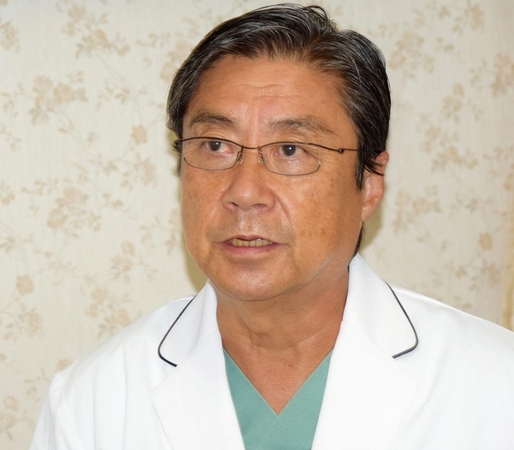
Dr. Kazuo Shimizu
Dr. Kazuo Shimizu, Chairman of the Thyroid Examination Assessment Subcommittee and member of the Oversight Committee for the Fukushima Health Management Survey, a thyroid surgeon and Honorary Director at Kanaji Hospital, and Professor Emeritus at Nippon Medical School, and former chair of the board of the Japanese Society of Thyroid Surgery, submitted his resignation as Chairman of the Thyroid Examination Assessment Subcommittee.
As Chairman of the Thyroid Examination Assessment Subcommittee, he does not personally agree with the interim report conclusion that “it is unlikely that the effects of radiation” caused the high incidence of thyroid cancer found in the Fukushima Prefecture. Not agreeing with the drawn conclusions of the interim report and as Chairman not free to have a personal opinion, nor to express it, he decided to resign.
Dr. Kazuo Shimizu is a doctor, a leading authority in endoscopic surgery of the thyroid gland. Within the Fukushima population, 380,000 children below 18 years old at the time of the Fukushima Daiichi nuclear plant accident in March 2011 have been examined. 174 people have been so far diagnosed with thyroid cancer or suspected thyroid cancer.
Dr. Kazuo Shimizu says that such high incidence of thyroid cancer, from his long clinical experience, is unnatural. That frequency is a fact, which should not be explained, nor discarded by just the “It is unlikely that the effects of radiation.” caused that high incidence conclusion.
In the former Soviet Union after the 1986 Chernobyl nuclear accident, thyroid cancer was frequent in children due the released iodine-131.
http://headlines.yahoo.co.jp/hl?a=20161021-00010003-doshin-soci
However, it is not that surprising. When Oshidori Mako interviewing Dr. Kazuo Shimizu in May 2015 asked « Is it really overdiagnosis that is going on? », Dr. Kazuo Shimizu answered :“I am not in a position to be able to say, ‘It is not due to overdiagnosis.’ As chair of the Subcommittee, I cannot validate opinions of either side. It is hard for me. I would have been able to voice my opinions more clearly if I hadn’t been elected chair of the Subcommittee.”
http://fukushimavoice-eng2.blogspot.fr/2015/08/oshidori-mako-interviews-experts.html
October 23 Energy News

Opinion:
¶ “India’s Solar Power Is Set to Outshine Coal” • India wants to provide its entire population with electricity and lift millions out of poverty, but in order to prevent the world overheating it also needs to switch away from fossil fuels. Different analysts disagree on the future of Indian power generation, but solar power costs are dropping. [Truthdig]
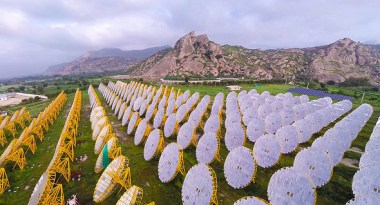 India One Solar Thermal Power Plant
(Brahma Kumaris via Flickr)
¶ “Coal will not recover” • As recently as 10 years ago, coal provided half of America’s electric power needs. Today that number is closer to 30% and falling. Coal is not likely to fade entirely from the scene any time soon, but informed analysts see its share of the US energy mix dropping to less than 20% in the near future. [Pittsburgh Post-Gazette]
World:
¶ Infinity Solar and the Egyptian Electricity Transmission Company have signed…
View original post 556 more words
Iranian-American VP of TVA Watts Bar Nuclear Unit 2 (During Construction): Guilty of Illegally Sending Money to Iran; Discriminating Against Nuclear Whistleblower; Watts Bar Makes Tritium for US Nuclear Weapons

“The Tennessee Valley Authority (TVA) is a federally owned corporation in the United States created by congressional charter on May 18, 1933 to provide navigation, flood control, electricity generation, fertilizer manufacturing, and economic development to the Tennessee Valley, a region particularly affected by the Great Depression.” https://en.wikipedia.org/wiki/Tennessee_Valley_Authority
TVA Power Stations Map

In 2005, it was believed that Iran was trying to obtain tritium: http://www.iranwatch.org/library/ncri-project-acquire-deuterium-and-tritium-8-25-05 The TVA’s nuclear reactors play a key role in tritium production for US weapons upkeep. Masoud Bajestani worked throughout the TVA system for decades, including as Assistant Plant Manager at Watts Bar Nuclear Power Unit 1; Plant Manager at Browns Ferry Nuclear Plant; Site VP at Sequoyah Nuclear Plant: http://pbadupws.nrc.gov/docs/ML0123/ML012320261.pdf
“Tritium is a heavy isotope of hydrogen and a key component of nuclear weapons, but it decays radioactively at the rate of 5.5 percent each year and must be replenished continually. This is…
View original post 1,972 more words
Taiwan to End Nuclear Power Generation in 2025
A very wise decision, we wish that other governments also would be wise enough to do the same. Congratulations to you Taiwan!

Taiwan’s fourth nuclear power plant in New Taipei City in the northern part of the island. Its construction has been suspended due to an anti-nuclear movement that has intensified since the Fukushima nuclear disaster.
TAIPEI–In a rare move for power-hungry Asia, the Taiwanese government has decided to abolish nuclear power generation by 2025 to meet the public’s demand for a nuclear-free society following the Fukushima nuclear disaster.
Taiwan’s Executive Yuan, equivalent to the Cabinet in Japan, approved revisions to the electricity business law, which aim to promote the private-sector’s participation in renewable energy projects, on Oct. 20.
“Revising the law shows our determination to promote the move toward the abolition of nuclear power generation and change the ratios of electricity sources,” said President Tsai Ing-wen.
The government plans to start deliberations on the revised bill in the Legislative Yuan, or the parliament, in the near future, with the goal of passing it within this year.
Movements toward a nuclear-free society are active in Europe. For example, Germany has decided to abolish nuclear power generation by 2022.
On the other hand, China and India are increasing nuclear power generation to meet the growing demand for electricity. In Taiwan, nuclear power accounted for 14.1 percent of all the electricity generated in 2015. At present, three nuclear power plants are operating.
However, the March 2011 accident at the Fukushima No. 1 nuclear power plant heightened public opinion against nuclear power generation. In response to the sentiment, Tsai, who assumed the presidency in May with a vow of establishing a nuclear-free society, led the government’s effort to abolish nuclear power.
Like Japan, Taiwan is hit by many earthquakes. The three nuclear power plants currently in operation will reach their service lives of 40 years by 2025. The revised bill will clearly stipulate that operations of all the nuclear plants will be suspended by that year. The stipulation will close the possible extension of their operations.
The government is looking to solar power and wind power as the pillars of renewable energies. It aims to increase their total ratio among all electricity sources from the current 4 percent to 20 percent in 2025.
However, meeting the goal assumes that electricity generated by solar power will increase 24-fold in 10 years. Because of that, some people harbor doubts on the viability of the plan.
“A hurdle to overcome to achieve the goal is very high,” said an electric power industry source.
0,353 µSv/hour on a Fukushima Train

This is taken on a train in Nihonmatsu, Fukushima. Nihonmatsu is located in a straight line or air distance at 52.75 km west of Okuma (Fukushima Daiichi).
On a running train, inside of a train, radiation is measured already at 0,353 µSv/hour, you can imagine how much more outside of the train, on the ground.
PM Abe’s government forces the population to return despite the obvious contamination, and people are getting fed up with the given continuous lies.
Credit to Kuniko Yamanoi for that information and photo.
Outside power temporarily cut to Okayama uranium processing facility after quake
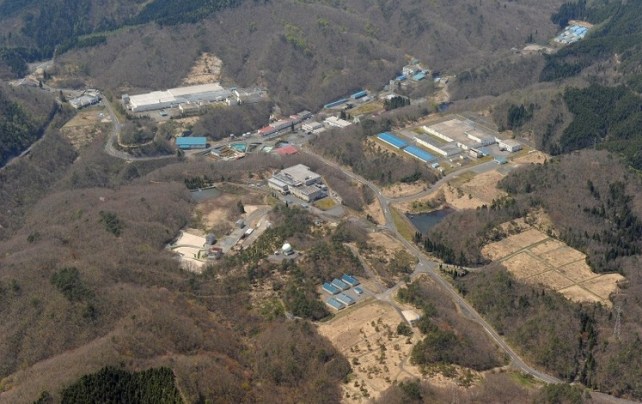
The Japan Atomic Energy Agency’s Ningyo-toge Environmental Engineering Center in Kagamino, Okayama Prefecture, is pictured in this May 2013
The external power supply to a uranium processing facility in Okayama Prefecture was temporarily cut following a powerful Oct. 21 earthquake that hit Tottori Prefecture and surrounding areas, the Nuclear Regulation Authority (NRA) said.
External power was lost for a time at the Japan Atomic Energy Agency’s Ningyo-toge Environmental Engineering Center in Kagamino, Okayama Prefecture, after the magnitude-6.6 quake. Locally, the quake registered an upper 5 on the 7-point Japanese seismic intensity scale, according to the NRA.
However, no problems were reported at the plant, as an emergency power supply system kicked in immediately. The facility was not in operation at the time of the quake.
In related news, operations at the No. 3 reactor at Shikoku Electric Power Co.’s Ikata Nuclear Power Plant in Ehime Prefecture have not been disrupted. There is reportedly no problem with Chugoku Electric Power Co.’s Shimane nuclear plant in Shimane Prefecture, which is not in operation.
http://mainichi.jp/english/articles/20161021/p2a/00m/0na/013000c
The week to October 22 in nuclear and climate news
 NUCLEAR weapons and the risk of nuclear conflict very much in the news. One view – that this risk has been overstated lately. Final presidential debate reveals sobering facts on how fast nuclear war could happen. UN again to study the effects of depleted uranium contamination. Hans Blix warns on nuclear power stations as terrorist bait.
CLIMATE. Scary possibilities of Trump style demagogues as the world faces the consequences of climate change. Arctic Sea Ice Falls into Record Low Ranges — Again. East Africa’s water resources threatened as a result of climate change.
- Climate Change barely mentioned in the US presidential debates. Hillary Clinton’s Climate Change and Renewable Energy policies. Seas Are Now So High it Only Takes a King Tide to Flood the US East Coast. American governments’huge new clean energy purchase.
- Final presidential debate reveals sobering facts on how fast nuclear war could happen. Pick Your Poison?Presidential Politics and Planetary Prospects Fact checking Donald Trump – got his facts wrong on USA-Russia nuclear START Treaty.
- USA wants meeting with Russia Over Missile Treaty Dispute.
- Financial disaster of America’s failed Mixed Oxide Fuel Fabrication Facility (MOX).
- What happens if you stand up to the fossil fuel industry: the Amy Goodman saga.
- Energy utilities sue New York Public Service Commission’s (PSC) over subsidies to nuclear industry.
- America moves to silence Wikileaks. Climate Change —
RUSSIA indicates readiness for World War 111- bomb shelters and gas masks The rise and political rise of Russia’ssecretive nuclear tsar Sergey Kirienko.
SOUTH AFRICA. Cabinet to DISCUSS ESKOM’S ROLE IN NUCLEAR DEAL. How Eskom paid for Gupta mine.
JAPAN. Ruling Party LDP may lose next election if nuclear exit becomes main issue. Abe’s Nuclear Japan Goals FaceMore Ballot-Box Battles in 2017. New Niigata governor puts up additional hurdle for TEPCO. Rainwater flood in Shika nuclear plant raises concerns at NRA.
AUSTRALIA. SOUTH AUSTRALIA had a massive rally. Aboriginal landowners were joined by thousands in protest against nuclear waste dumping. https://www.youtube.com/watch?v=GBVm6FtZirc. Australia will, for the first time ever, vote “NO” in the UN, to negotiating a new treaty that prohibits nuclear weapons.
GERMANY . Germany’s leading utilities to start contributing to nuclear waste storage fund.
UK. blocks bank accounts of news media RT. Britain’s old dead nuclear submarines – no way to dispose of them for decades.
FRANCE. Nuclear power plant maintenance stoppages cause France’s electricity prices to rise.
OCEANIA. When the law really IS an ass – International Court of Justice rejects Marshall Islands’ nuclear weapons case.
NORTH KOREA . U.S. and South Korea Say North Korean Missile Exploded Soon After Liftoff. A little good sense –Japanese and North Korean students make friends.
Opposition to nuclear energy grows in Japan
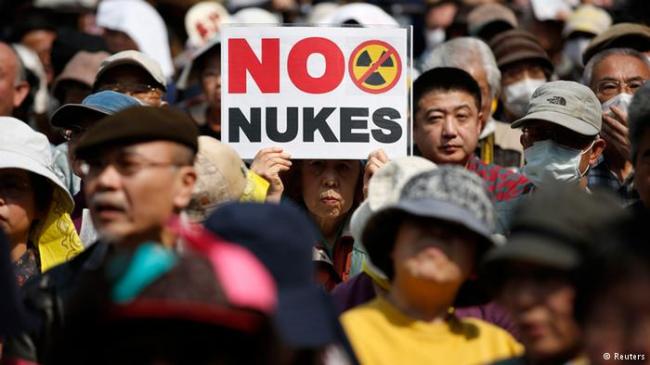
”Opinion polls show the Japanese people oppose nuclear plants going back into operation. It underlines the scale of the problem facing the government in convincing everyone that it’s safe. Julian Ryall reports from Tokyo.”
Before October 16, Ryuichi Yoneyama had contested four regional elections and been soundly beaten each time. Now, however, the 49-year-old qualified doctor and lawyer is to be sworn in as governor of Niigata Prefecture after defeating a candidate who had the backing of the ruling Liberal Democratic Party (LDP) and was considered the firm favorite.
Yoneyama worked hard for his victory over Tamio Mori, a former bureaucrat with the construction ministry, but when the voters stepped into the voting booths there was a single issue that occupied their minds.
Mori and the LDP want to restart the world’s largest nuclear power station, the sprawling Kashiwazaki-Kariwa plant, which lies on the prefecture’s coast. They insist that as Japan moves towards the sixth anniversary of the March 2011 earthquake and tsunami that crippled the Fukushima Dai-Ichi nuclear plant, triggering the second-worst nuclear crisis in history, new safety measures have been implemented that ensure the same thing could not happen in Niigata.
The voters did not agree, with 528,455 supporting Yoneyama’s pledge to not grant approval for Tokyo Electric Power Co.’s (TEPCO) Kashiwazaki-Kariwa plant to be restarted. In comparison, 465,044 voted for Mori.
Nationwide opposition
Those figures are broadly replicated across Japan, with a poll conducted by the Asahi Shimbun newspaper on October 15 and 16 determining that 57 percent of the public is against the nation’s nuclear power plants being restarted, and just 29 percent supporting the resumption of reactors that have nearly all been mothballed since 2011.
At present, only two of the nation’s 54 reactors have been restarted – and that after much wrangling through the courts after local residents and environmental groups expressed their opposition.
Nevertheless, a report issued by the Institute of Energy Economics, Japan (IEEJ) in July predicts that seven additional reactors will be on-line by the end of March next year and a further 12 will be operational one year later.
But as the opinion polls show, the majority of the public is against a policy that the government tells them is in the nation’s best interests.
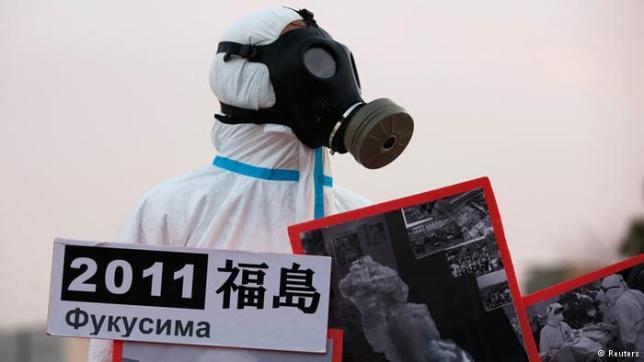
“Since the accident at Fukushima, many people have realized the negatives that go along with the positives of nuclear power, and they simply do not want to take that sort of risk again,” said Hiroko Moriwaki, a librarian who lives in Tokyo.
“And many think that we do not need to,” she added. “Since the disaster, the reactors have not been operational and look around you; we have all the electricity that we need, there are no blackouts and everything is normal.
“Just after the earthquake, we were told to do everything we could to save energy, but not any more,” Moriwaki told DW.
“So maybe we have reached the point where we don’t actually need nuclear energy and that this is in fact an opportunity that the country can take advantage of,” she said.
Japan is an advanced and industrialized nation with vast amounts of skills and technologies that could be put to use to develop and then commercialize new sources of safe, environment-friendly energy, she said.
As well as solar and wind power, which are already visible across Japan, there are moves afoot to harness Japan’s tidal and wave energy, while vast amounts of potential geothermal energy remain virtually untapped.
“We have so much technology, so wouldn’t it be best to divert some of that away from more investment in nuclear energy and put it into fuel sources that are safer and do not harm the environment at all?” Moriwaki asked.
Japan’s energy needs
Critics of this approach – of which the government is one – say Japanese industry needs a secure supply of energy right now and that Japan is presently importing 84 percent of its energy needs, primarily in the form of coal, gas and oil. And that is both expensive and to blame for the nation’s emissions of carbon dioxide and other harmful greenhouse gases climbing.
Still, the Japanese public is far from convinced that nuclear energy is the answer.
“It’s complicated and we keep hearing from the government how important it is to have the nuclear plants operating again, but after Fukushima, I think, a lot of people no longer trust the operators or the government,” said Kanako Hosomura, a housewife whose family home is north of Tokyo and only about 250 km from the Fukushima plant.
Inquiries after the disaster revealed that TEPCO ignored experts’ warnings about the potential size and power of tsunami and had failed to take precautions such as ensuring a backup power supply in the event the generators used to cool the reactors were out of operation.
The government also came under fire after the media reported that it did not have a full understanding of the severity of the crisis, while it was also issuing statements that the situation was completely under control at the same time as drawing up plans to evacuate tens of millions of people from a huge swathe of eastern Japan.
“When it comes down to it, I have a young son and a family and their safety is my number one priority,” said Hosomura. “Maybe Japan was lucky the Fukushima disaster was not worse than it was. Maybe next time we will not be so lucky.”
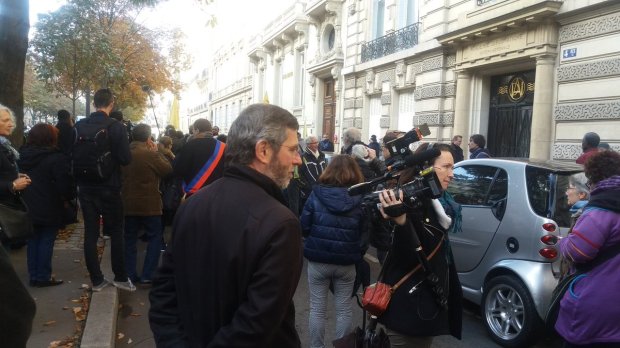
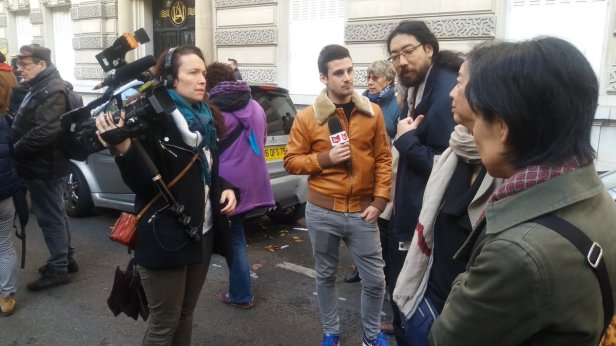
Protest at Japanese Embassy in Paris Against Fukushima Evacuees Forced Return and the 2020 Tokyo Olympics

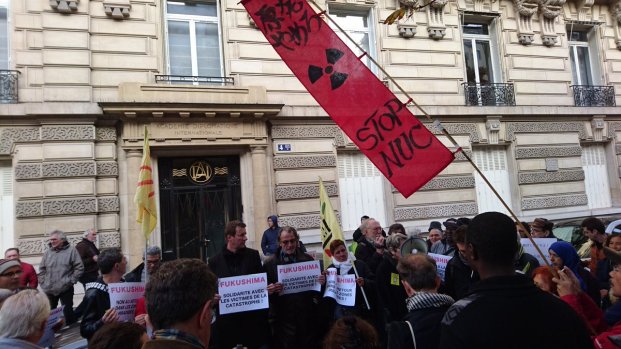
Today October 22, 2016, in Paris, the French Green Ecology Party (EELV), Green Peace France and Réseau Sortir du Nucléaire, joined together to organize a Fukushima protest in front of the Japanese Embassy.
They denounced the Fukushima evacuees forced return by the Japanese government, and insisted that no one should be compelled to live in irradiated town with high level of radiation. That it is plainly criminal on the part of the Japanese Government.
Since Eastern Japan and Tokyo included, have been contaminated by the now five years and a half ongoing nuclear catastrophe at Tepco’s Fukushima Daiichi nuclear plant, a catastrophe yet neither under control nor resolved, the 2020 Olympics should be relocated somewhere else.
Some officials of the French Green Ecology Party (EELV) and personalities of Green Peace France and Réseau Sortir du Nucléaire attended the protest. Among those were also present Yannick Jadot and Michele Rivasi, both Europe Ecology deputies at the European Parliament, one of the two to be the French Ecology Party presidential candidate at the coming French presidential election in 2017. Were also present members of the Japanese community.
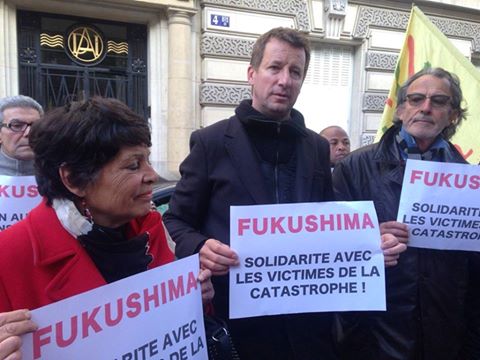
Michele Rivasi and Yannick Jadot
Risk of a military conflict between Moscow and Washington has been overstated
The risk of a military conflict between Moscow and Washington has been overstated. However, both sides should think about prevention mechanisms to minimize the risk of accidents that could lead to an open conflict. The expert community has been crying wolf for a long time now: “War is at the doorstep!” The gloomy predictions indicate that Russia and the United States are at the brink of direct military clashes, as if they were trying to celebrate the 54th anniversary of the Cuban Missile Crisis in some perverse way. However, any conflict, if it happens, will most probably be accidental – the parties are not yet ready for full-scale military confrontation.
In the last few years, Russia has been modernizing its armed forces to replace the outdated Soviet-era materiel and structure. Numerous exercises, trillions of rubles spent, new equipment and combat vehicles emerging out of the blue, and a charismatic defense minister who changed the entire image of the Russian Army and brought back its popularity with society – all these steps provided for the fast (and real) growth of national military might.
However, it remains rather limited in comparison with the overall total potential of theNATO states. Some would say that the alliance is reluctant to take any serious decisions and is nothing more than a paper tiger. Nonetheless, the brainwashing of the last two years has significantly improved the decision-making capacity of NATO and the chances for achieving consensus over the “Russian threat.”
The ability to mobilize quickly strong conventional forces is still low, as NATO generals admit themselves. However, active recent revival of the nuclear sharing arrangements and the consolidation of U.S. troops in various countries of Central and Eastern Europe present enough deterrence against any light-minded action. It is clear that the war will not happen in Europe (and not even in Ukraine with its unpredictable leadership). However, wherever it occurs, NATO forces can eventually be mobilized to help their allies.
Moreover, Moscow has largely been pursuing a defensive policy over the past 16 years. Even now, when “the Russians are (seemingly) coming,” an independent observer would probably notice that the lion’s share of the activities of Moscow are reactive rather than proactive. …….
Two factors raise the probability of an armed clash between Russia and the U.S. One of them is rhetoric. There have been more words than action so far and there is a clear trend– nobody is responsible for their words any longer. Any of the statements of the last few months would mean immediate war in the 19th or even in the 20th century. Nowadays, politicians throw thousands of words against each other and the struggle is with the minds and hearts and not with bodies. However, such belligerent rhetoric creates the climate of antagonism and public anticipation of a conflict. As a result, such atmosphere may facilitate prompt steps “in response” to another accident.
The second factor is, paradoxically, the low importance of the regional conflicts. Syria is so far away from Moscow and Washington that the parties do not really care about its future, its population and even its militants. Both Russia and the United States can afford there much more than they could in Ukraine, for instance (where actually none of them cared about the fate of Ukraine, but the proximity of Europe made it more difficult to fight). And such lack of significance may lead to a dangerous neglect of dramatic consequences of any armed clash and make the decision-making process easier to go to war.
Nowadays, Russia and the United States demonstrate wisdom and restraint. Given the current leadership in both countries, the expectations of war will hopefully stay just that– expectations. However, the situation may change next year and it would be better for the parties to think about some minimal confidence-building measures and provide for the prevention of accidents, any of which may become fatal, just like an accidental missile launch during the Cold War era. http://www.russia-direct.org/opinion/why-military-conflict-between-russia-and-us-unlikely
Can we afford to just laugh off the absurdities of Trumpism in this age of the Anthropocene?
The fervent Trump supporter has told his viewers that the both US president, Barack Obama, and the Democrat nominee, Hilary Clinton, were “literal demons” who smelt of sulphur. I kid you not.
In Australia, we have a senator who similarly sees climate change as a thing made up by the UN. Our top-rating radio host, Alan Jones (no relation), has said climate science is “witchcraft”.
There’s now a whole media ecosystem that climate science denialism can exist inside, where there’s little scrutiny of the views of deniers. US-based sites like the Drudge Report, Infowars, Breitbart and Daily Caller are part of that ecosystem.
For a while, maybe the Trumpocene and the Anthropocene can coexist.
But even though they exist on separate plains, can we really afford to dismiss the impact of either of them?
 We are approaching the Trumpocene, a new epoch where climate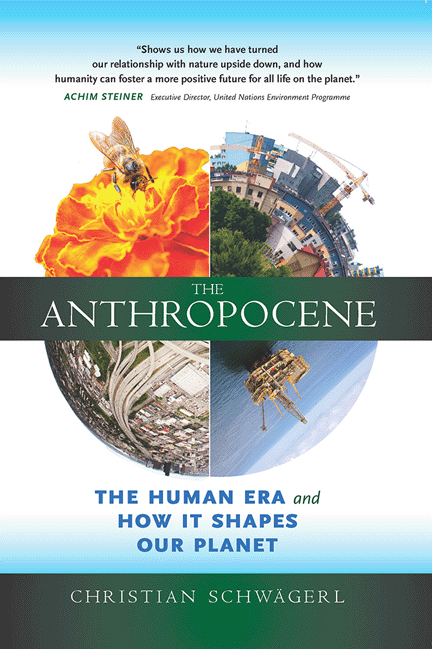
change is just a big scary conspiracy https://www.theguardian.com/environment/planet-oz/2016/oct/21/we-are-approaching-the-trumpocene-a-new-epoch-where-climate-change-is-just-a-big-scary-conspiracy Graham Readfearn
Websites pushing climate science denial are growing their audience in an era where populist rhetoric and the rejection of expertise is gaining traction For years now geologists have been politely but forcefully arguing over the existence or otherwise of a new epoch – one that might have started decades ago.
Some of the world’s most respected geologists and scientists reckon humans have had such a profound impact on the Earth that we’ve now moved out of the Holocene and into the Anthropocene.
It’s not official. But it’s close.
Dropping nuclear bombs and burning billions of tonnes of fossil fuels will do that to a planet, as will clearing swaths of forests to make way for food production and supermarket car parks and the like.
That’s all in the real world though, and sometimes you might get the horrible, chilling idea that when it comes to the production of our thoughts and ideas, that’s not the place a lot of us live anymore.
So I’d like to also propose the idea of an impending new epoch – the Trumpocene – that in the spirit of the era itself is based solely on a few thoughts held loosely together with hyperlinks and a general feeling of malaise.
In the Trumpocene, the epoch-defining impacts of climate change are nothing more than a conspiracy. Even if these impacts are real, then they’re probably good for us.
The era is named, of course, for the phenomenon that is Donald Trump, the Republican pick for US president whose candidacy has been defined by a loose grasp of facts, jingoistic posturing, populist rhetoric, his amazing hair and his treatment of women.
So what are the things that might define the Trumpocene?
Is it the point at which large numbers of people started to reject the views of large groups of actual experts – people with university qualifications and things – in exchange for the views of anyone who agrees with them? (Brexit, anyone?) Continue reading
World’s leaders’ love affair with nuclear weapons will eliminate us all, if we don’t eliminate those weapons
 Eliminate nuclear weapons – or they’ll eliminate us http://www.citizen-times.com/story/opinion/contributors/2016/10/21/guest-columnist-eliminate-nuclear-weapons-eliminate-us/92510602/Will you help end our terrible love affair with nuclear weapons that threatens us all?
“Our species faces the stark choice of either eliminating the world’s nuclear weapons, or they will eliminate us”, so said Joseph Rotblat, senior Manhattan Project scientist who quit the project for ethical reasons after the Hiroshima bombing in 1945. These dangers are now greater than ever. Dealing with this threat to human survival is the main reason that Physicians for Social Responsibility (PSR) exists.
The 2016 World Conference against atomic and hydrogen bombs confirmed that nuclear powers still maintain more than 15,000 nuclear warheads, half ours. About 1,000 of them are ready for immediate launch.
Dr. Ira Helfand, active with PSR and International Physicians for Prevention of Nuclear War, has provided evidence that detonating even 100 nuclear weapons in a limited nuclear war could cause the deaths of as many as 2 billion people from massive starvation due to crop failures caused by a prolonged nuclear winter.
Recently, the risk of outbreak of nuclear war has sharply increased due to deteriorating relations between Russia and the U.S. Both nations are building smaller, more usable nuclear weapons.
Competing U.S./NATO and Russian military exercises have raised international tensions. Former U.S. Secretary of Defense William Perry has stated that nuclear war is more likely than during the Cold War. Russia has invaded and annexed Crimea and supports the Assad regime’s bombing attack in Syria. Eastern European countries feel threatened. NATO has expanded its presence on Russia’s border; increased military deployments and military exercises across Eastern Europe, Scandinavia and the Black Sea. The U.S. has quadrupled its military spending for Europe and U.S. first-strike related missile defenses in Romania and Poland. Russia has been threatened by operation “Anaconda”, in which the U.S. and NATO put 35,000 armed troops, warships and warplanes close to Russia’s border. Russia, Eastern European counties and the U.S. all feel threatened and are communicating less with each other.
How would we feel if Russia placed such weapons systems bordering the United States?
Our relationship with China has also deteriorated in part due to China’s aggressive behavior, such as island building. They feel threatened by our naval exercises increasingly close to China, including our construction of a new naval base in South Korea. According to Global Network, the Pentagon is sending ships, planes and special forces to the Philippines which concerns China. The U.S. already encircles China with many military bases that curve in an arc up from Australia, to Asia and across to Afghanistan.
Our presidential candidates largely ignore such dangers. President Obama has been considering initiatives to reduce the dangers from nuclear weapons. PSR is urging him to establish a clear policy of no-first-use and eliminate plans for spending a trillion dollars on nuclear weapons over the next 30 years. This includes the planned production of a new generation of smaller nuclear weapons, a development that increases the likelihood that they will be used.
Lowering the need for “first strike” weapons, including the next-generation of nuclear-armed cruise missiles would save billions of U.S. dollars and likely encourage other nuclear-armed states to follow suit. Benefits would also include reducing risks of miscalculation by adversaries by alleviating concerns about U.S. intentions of using nuclear weapons.
Since our media and our leadership largely ignore our threatening behavior toward Russia and China, it is essential that masses of citizens act immediately to press for reducing these dangers to our survival.
At 5 p.m. Tuesday, Oct. 25, PSR will join Asheville’s Veterans for Peace, Chapter 099, at their Pack Square vigil, to increase awareness of the need to strive for peaceful relations with Russia and China. Reducing the risk of the use of nuclear weapons dangers is an urgent task for our survival.
Please attend the vigil and lobby candidates and Congress for an end to wars of mass self-destruction.
I ask that you consider this information as you vote for president.
Lew Patrie, M.D. is with Western N.C. Physicians for Social Responsibility. He lives in Asheville.
1 This Month

of the week – Shut Down Drone Warfare!


Tell the Ukrainian Government to Drop Prosecution of Peace Activist Yurii Sheliazhenko

Petition to revoke the licensing of the Near Surface Nuclear Disposal Facility (NSDF) at Chalk River. https://www.ourcommons.ca/petitions/en/Petition/Details?Petition=e-7247
To see nuclear-related stories in greater depth and intensity – go to https://nuclearinformation.wordpress.com
-
Archives
- April 2026 (114)
- March 2026 (251)
- February 2026 (268)
- January 2026 (308)
- December 2025 (358)
- November 2025 (359)
- October 2025 (376)
- September 2025 (257)
- August 2025 (319)
- July 2025 (230)
- June 2025 (348)
- May 2025 (261)
-
Categories
- 1
- 1 NUCLEAR ISSUES
- business and costs
- climate change
- culture and arts
- ENERGY
- environment
- health
- history
- indigenous issues
- Legal
- marketing of nuclear
- media
- opposition to nuclear
- PERSONAL STORIES
- politics
- politics international
- Religion and ethics
- safety
- secrets,lies and civil liberties
- spinbuster
- technology
- Uranium
- wastes
- weapons and war
- Women
- 2 WORLD
- ACTION
- AFRICA
- Atrocities
- AUSTRALIA
- Christina's notes
- Christina's themes
- culture and arts
- Events
- Fuk 2022
- Fuk 2023
- Fukushima 2017
- Fukushima 2018
- fukushima 2019
- Fukushima 2020
- Fukushima 2021
- general
- global warming
- Humour (God we need it)
- Nuclear
- RARE EARTHS
- Reference
- resources – print
- Resources -audiovicual
- Weekly Newsletter
- World
- World Nuclear
- YouTube
-
RSS
Entries RSS
Comments RSS
 nuclear-news