Nuclear weapons transports through Lancashire a safety risk
 Is Lancashire ‘at risk of nuclear contamination’? Langashire Evening Post , 12 Oct 16 Nuclear convoys carrying warheads routinely drive on the M6. If one crashed, or was attacked by terrorists, more than 260,000 people could be in danger of contamination, according to a new report. Nuclear bomb convoys on the M6 are putting more than a quarter of a million people at risk from radioactive contamination in Lancashire, according to a report by campaigners.
Russia anxious to sell huge amount of nuclear technology to India
 Russia to Continue Assisting India in Developing Nuclear Energy Industry (Sputnik) – Russia will go on providing assistance to India in developing nuclear energy industry, Russian President Vladimir Putin said Saturday after signing a set of documents on cooperation with India as he met with Indian Prime Minister Narendra Modi. https://sputniknews.com/news/201610151046360579-russia-india-nuclear-energy/
For auction – Abandoned nuclear reactor complex in Alabama
TVA sets auction date for Bellefonte nuclear power plant, Abandoned twin-reactor complex in Alabama to go on block Nov. 14, Times Free Press,
TVA said Friday it has set an auction date of Nov. 14 at 9 a.m. central time to sell its unfinished Bellefonte nuclear power plant. Concentric Energy Advisors Inc., a property consulting firm TVA hired this spring to market the 1,400-acre power plant site on the Tennessee River in Hollywood, Ala., will conduct the sale at the plant site.
TVA directors declared the unfinished nuclear plant to be surplus property earlier this year — 43 years after construction began on the twin-reactor complex. TVA said in a statement Friday the “primary goal in selling the site is to provide the best long-term economic return to the surrounding communities.” The minimum bid price is $36.4 million, which is the appraised value of the riverfront property, but the bids will be evaluated on both the price offered and the economic gains any sale would generate for the region.
TVA has invested more than $5 billion in capital and interest costs at Bellefonte since work began on two Babcock and Wilcox reactors in 1973. Work was suspended in the 1980s when TVA’s growth in power demand slowed and TVA determined it didn’t need either of the 1,200-megawatt units…….http://www.timesfreepress.com/news/business/aroundregion/story/2016/oct/14/tva-sets-bellefonte-nuclear-plant-auction-date-next-month/392167/
Establishment of a no-fly zone (NFZ) in Syria? A step towards allout war?
Going Beyond Propaganda. Nuclear Conflict, Deception or Real Threat? Pentagon: A “Preemptive” Nuclear Strike against Russia is still Valid By Federico Pieraccini Global Research, October 16, 2016 The events in the Middle East, Syria and Aleppo are the focus of global attention. Rarely has a battle been so decisive to the outcome of a war and the fate of hundreds of millions of people around the world
Solar power in Australian desert farm – producing tons of tomatoes
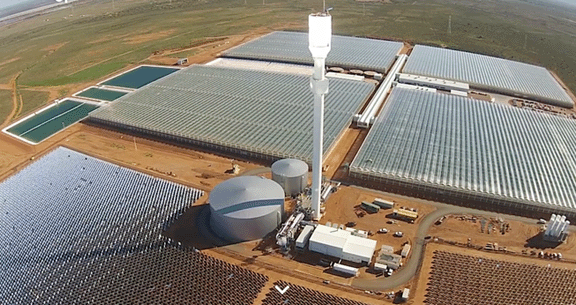
Desert farm grows 180,000 tomato plants using only sun and seawater http://www.mnn.com/your-home/organic-farming-gardening/stories/desert-farm-grows-180000-tomato-plants-using-only-sun-and-seawater
Farms that grow food in arid deserts, without groundwater or fossil fuels, could be the future of agriculture. BRYAN NELSON October 10, 2016, No soil, no pesticides, no fossil fuels, and no groundwater. And yet, a thriving farm in the heart of the arid Australian desert. How is this possible?
An international team of scientists has spent the last six years fine-tuning a system that pipes seawater in from the ocean and desalinates it using a state-of-the-art concentrated solar energy plant. The water is then used to irrigate 180,000 tomato plants grown in coconut husks instead of soil, kept in a network of greenhouses.
 The result is Sundrop Farms, a commercial-scale facility located just off the Spencer Gulf in South Australia that began construction in 2014. Today it’s producing an estimated 17,000 tons of tomatoes per year to be sold in Australian supermarkets.
Given the increasing demand for fresh water around the world — a problem that’s particularly apparent in the sunburned landscape of South Australia — this might just represent future of large-scale farming, especially in coastal desert regions that have previously been non-arable.
The heart of the farm is the 23,000 mirrors that reflect sunlight towards a 115-meter high receiver tower. All of that concentrated sunlight produces an immense amount of power, up to 39 megawatts. That’s more than enough to cover the desalination needs of the farm and supply all the electricity needs of the greenhouses.
The seawater, too, has other purposes besides just irrigation. During scorching hot summers, seawater-soaked cardboard lines the greenhouses to help keep the plants at optimal temperature. Seawater also has the remarkable effect of sterilizing the air, meaning that chemical pesticides are unnecessary.
All in all, the facility cost around 200 million dollars to get up and running. That might sound excessive, but in the long run the facility should save money compared to the costs of conventional greenhouses that require fossil fuels for power. It’s a self-sustaining, cost-efficient design so long as the initial investment can be provided. Facilities similar to the Australian one are already being planned for Portugal and the U.S., as well as another in Australia. Desert areas like those seen in Oman, Qatar and the United Arab Emirates could be next in line.
“These closed production systems are very clever,” said Robert Park of the University of Sydney, Australia, to New Scientist. “I believe that systems using renewable energy sources will become better and better and increase in the future, contributing even more of some of our foods.”
With progressive policies, Scotland could be 50% fuelled by solar and wind, within 15 years
Half of Scotland’s energy could be produced by wind and sunlight in less than 15 years, report says http://www.independent.co.uk/environment/scotland-energy-renewables-half-by-2030-report-wind-solar-a7353831.html Analysis paints a picture of Scotland where fuel poverty is ‘eradicated’, air pollution is slashed and green electricity is a major export Ian Johnston Environment Correspondent, Monday 10 October 2016 Half of all the energy used in Scotland could be produced by renewable technology in less than 15 years, according to a new report.
It painted a picture of a country that exports vast amounts of electricity to the rest of the UK by producing 40 per cent more than it needs, where half of the buses and a third of cars are electric – improving air quality and public health – and where fuel poverty is “eradicated”.
However the report, called The Energy of Scotland, warned that while a low-carbon future was “achievable and desirable”, Scotland was currently on track to miss its climate targets, getting less than 30 per cent of energy from renewables by 2030. title=”10 October 2016 11:03 London”>Writing in the report, commissioned by the Scottish branches of WWF, Friends of the Earth and the RSPB, Lang Banks, WWF-Scotland’s director, said: “Scotland is in the enviable position of having fantastic renewable energy potential.
“Successfully unlocking this potential will not only secure our climate goals but provide the means to deliver economic opportunities across Scotland, bring social benefits and improve public health.”
However he said bringing about this future would require “significant changes to the way we heat our homes and organise our transport” and “new, bold policies”.The report, by consultants Ricardo Energy and Environment, found emissions from electricity power stations could drop to near zero with an “almost entirely renewable” supply, creating 14,000 new jobs.
“A 40 per cent drop in the use of petrol and diesel improves air quality in cities, resulting in better public health,” the report said.
“People are also fitter and healthier thanks to more walking and cycling in renewed cityscapes that are less dominated by cars.
“There is less congestion, with fewer and quieter vehicles on the road.”
Niigata Newly Elected Governor Says No Restart for Kashiwazaki-Kariwa NPP, Tepco’s World Biggest Nuclear Power Plant
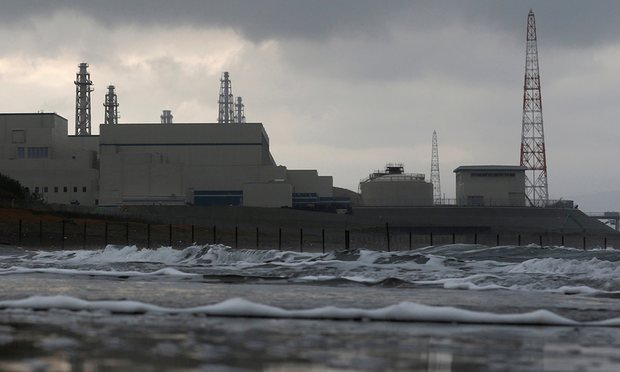
Japanese anti-nuclear candidate wins election at site of world’s biggest atomic power station
Ryuichi Yoneyama, the newly elected governor of Niigata, says he will not restart Kashiwazaki-Kariwa power station shut down after Fukushima
An anti-nuclear candidate has been elected in a region of Japan that houses the world’s biggest atomic power station, striking a blow to Tokyo Electric Power’s attempts to restart the plant in the wake of the Fukushima disaster.
Ryuichi Yoneyama, a doctor-lawyer who has never held office and is backed mostly by leftwing parties, won the race for governor of Niigata, north of Tokyo, Japanese media projected on Sunday. Shares in Tokyo Electric Power fell 8% on Monday after the news broke.
The vote was dominated by concerns about the future of the Kashiwazaki-Kariwa power station and nuclear safety more than five years after the Fukushima catastrophe. The result represents a challenge to the government’s energy policy.
“As I have promised all of you, under current circumstances where we can’t protect your lives and your way of life, I declare clearly that I can’t approve a restart,” the 49-year-old told supporters at his campaign headquarters.
Cheers of “Banzai!” erupted as media began projecting him the winner over former mayor Tamio Mori, 67, backed by prime minister Shinzo Abe’s pro-nuclear Liberal Democratic party (LDP).
Yoneyama had more than 500,000 votes to about 430,000 for Mori with 93% of the vote counted, public broadcaster NHK said. Voters opposed restarting the plant by 73% to 27%, according to an exit poll by the broadcaster.
Mori, a former construction ministry bureaucrat, apologised to his supporters for failing to win the election.
Yoneyama, who has run unsuccessfully for office four times, promised to continue the policy of the outgoing governor who had long thwarted the ambitions of Tepco, as the company supplying about a third of Japan’s electricity is known, to restart the plant.
Reviving the seven-reactor site, which has a capacity of 8 gigawatts, is key to saving the utility, which was brought low by the Fukushima explosions and meltdowns, and then the repeated admissions of cover-ups and safety lapses after the world’s worst nuclear disaster since Chernobyl in 1986.
Tepco, put under government control in 2012, is vital to Abe’s energy policy, which relies on rebooting more of the reactors that once met about 30% of the nation’s needs.
The election became a litmus test for nuclear safety and put Abe’s energy policy and Tepco’s handling of Fukushima back under the spotlight.
The government wants to restart units that pass safety checks, also promoting renewables and burning more coal and natural gas.
Only two of Japan’s 42 reactors are running, more than five years after Fukushima, but the Niigata plant’s troubles go back further.
Several reactors at Kashiwazaki-Kariwa have been out of action since an earthquake in 2007 caused radiation leaks and fires in a disaster that prefigured the Fukushima calamity and Tepco’s bungled response.
Yoneyama, who has worked as a radiological researcher, said on the campaign trail that Tepco didn’t have the means to prevent Niigata children from getting thyroid cancer in a nuclear accident, as he said had happened in Fukushima. He said the company didn’t have a solid evacuation plan.
The LDP’s Mori, meanwhile, was forced to tone down his support for restarting the plant as the race tightened, media said, insisting safety was the priority for Kashiwazaki-Kariwa, while promoting the use of natural gas and solar power in Niigata.
Setback for operator of world’s largest atomic plant as anti-nuclear doctor elected Niigata governor
NIIGATA – Sunday’s victory of an anti-nuclear activist in the Niigata gubernatorial election is a setback for Prime Minister Shinzo Abe’s energy policy.
Doctor-lawyer Ryuichi Yoneyama, 49, defeated the candidate endorsed by Abe’s Liberal Democratic Party. Former construction ministry bureaucrat Tamio Mori, 67, was expected until the last moment to cruise to victory.
Yoneyama has never held office.
Campaigning for Sunday’s vote was dominated by concerns over the future of the world’s biggest atomic power station, the seven-reactor Kashiwazaki-Kariwa complex. Nationwide, all but two reactors are shut down in the wake of the Fukushima nuclear disaster, and Abe has pushed hard for restarts.
“Under current circumstances where we can’t protect the lives and the way of life of citizens in the prefecture, I can’t approve a restart,” Yoneyama told reporters on Monday.
Supported by the Japanese Communist Party and two other small parties, Yoneyama secured close to 530,000 votes. Mori trailed with 465,000.
The focus will now be how Yoneyama will be able to cooperate with local municipalities and the central government in creating evacuation plans for nuclear disasters. These will be key before restarts can take place.
Abe, meanwhile, told a Diet committee that he will respect the choice of Niigata and that he will cooperate with the new governor.
Shares in Tokyo Electric Power Company Holdings Inc., which operates the Kashiwazaki-Kariwa reactors, fell 8 percent on Monday.
The complex has a capacity of 8 gigawatts. Its revival is key to saving Tepco, which was brought low by the Fukushima meltdowns and hydrogen explosions, and then repeated admissions of cover-ups and safety lapses after the world’s worst nuclear disaster since Chernobyl in 1986.
“Senior management at Tepco have made it clear that restarting the Kashiwazaki reactors is fundamentally important to restoring their finances,” Tom O’Sullivan, founder of Tokyo-based consultant Mathyos, said by email. “There now has to be significant uncertainty over restarting those reactors.”
Yoneyama’s victory came after Tepco President Naomi Hirose highlighted the utility’s financial vulnerability this month. He said it may face insolvency if it were to recognize the cost of decommissioning the crippled Fukushima nuclear plant.
Resumption of operations at just one of Kashiwazaki Kariwa’s reactors would boost the utility’s profit by about ¥10 billion a month, the company has said.
Yoneyama previously tried to run for office four times. He was unsuccessful.
In this election, he promised to continue the policy of the outgoing governor who had long thwarted the ambitions of Tepco to restart the plant. Tepco supplies about a third of Japan’s electricity.
As the race tightened, the election became a litmus test for nuclear safety and put Abe’s energy policy and Tepco’s handling of Fukushima back under the spotlight.
“The talk was of Kashiwazaki-Kariwa, but I think the result will affect nuclear restarts across the country,” said Shigeaki Koga, a former trade and industry ministry official who is a critic of nuclear restarts and the Abe administration.
Koga said it was important that Yoneyama join forces with another newly elected governor skeptical of nuclear restarts, Satoshi Mitazono of Kagoshima Prefecture.
“Without strong support from others, it won’t be easy to take on Tepco,” he said.
The government wants to restart units that pass safety checks, also promoting renewables and burning more coal and natural gas.
Only two of Japan’s 42 reactors are running more than five years after Fukushima, but the Niigata plant’s troubles go back further.
Several reactors at Kashiwazaki-Kariwa have been out of action since an earthquake in 2007 caused radiation leaks and fires in a disaster that prefigured the Fukushima calamity and Tepco’s bungled response.
Yoneyama, who has worked as a radiological researcher, said on the campaign trail that Tepco lacks the means to prevent Niigata children from getting thyroid cancer in a nuclear accident, as he said happened in Fukushima. He said the company did not have a solid evacuation plan.
The LDP’s Mori, meanwhile, was forced to tone down his support for restarting the plant as the race tightened, media said, insisting safety was the top priority for Kashiwazaki-Kariwa, while promoting the use of natural gas and solar power in Niigata.
Tepco Tumbles 7% After Anti-Nuclear Candidate’s Surprise Governor Election Win

Japan’s public is not ready to restart nuclear power generation.
Ryuichi Yoneyama, a doctor-lawyer who has never previously held office, won the race for governor of Niigata on Sunday. He ran on the platform that he would not allow the Kashiwazaki-Kariwa power station, owned by Tokyo Electric Power Company, or TEPCO (9501.Japan), to restart operations.
Yoneyama had more than 500,000 votes versus rival candidate’s 430,000 votes with 93% of the votes counted.
TEPCO was put under government control the year after the traumatic Fukushima catastrophe in March 2011 and is vital to Prime Minister Shinzo Abe‘s energy policy. Abe hopes to revive nuclear power generation to provide for 30% of Japan’s energy needs.
TEPCO tumbled 6.7% in Tokyo.
Anti-nuclear Candidate wins Japan Regional Election, Blow to Nuclear Restarts
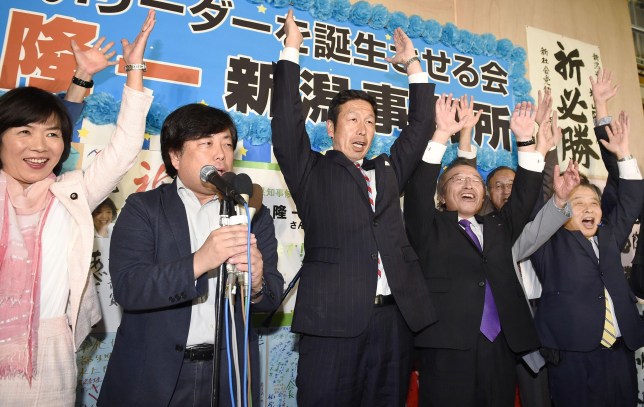
Nuclear foe Ryuichi Yoneyama wins Niigata gubernatorial poll, threatening Tepco reactor restart hopes
NIIGATA – An anti-nuclear candidate won Niigata’s gubernatorial election Sunday, dealing a potential blow to Tokyo Electric Power Co.’s attempts to restart the world’s biggest atomic power station.
Ryuichi Yoneyama, 49, a doctor-lawyer who has never held office and was backed mostly by left-wing parties, won the race for governor, an election dominated by concerns over the future of the Kashiwazaki-Kariwa nuclear power station and nuclear safety more than five years after the Fukushima catastrophe of March 2011.
Final results show Yoneyama beat former Nagaoka Mayor Tamio Mori, 67, who was backed by Prime Minister Shinzo Abe’s ruling pro-nuclear Liberal Democratic Party.
Yoneyama gathered more than 528,000 votes, about 60,000 more than Mori. Voter turnout was 53.05 percent, up significantly from the 43.95 percent in the previous gubernatorial poll, held in 2012.
“It’s really regrettable. We will take the judgment of voters very seriously,”said Keiji Furuya, a Lower House member who served as head of Mori’s election campaign office.
Yoneyama promised to continue the policy of the departing governor, who had long thwarted the ambitions of Tepco, the company supplying about a third of Japan’s electricity, to restart the plant.
Reviving the seven-reactor giant, with capacity of 8 gigawatts, is key to saving the utility, which was battered by the Fukushima explosions and meltdowns, and then the repeated admissions of coverups and safety lapses after the world’s worst nuclear disaster since Chernobyl in 1986.
Tepco is vital to Abe’s energy policy, which relies on rebooting more of the reactors that once provided about 30 percent of the nation’s electricity needs.
Anti-nuclear novice wins Japan election, blow to nuclear restarts
An anti-nuclear candidate won an upset victory in a Japanese regional election on Sunday, a blow to Tokyo Electric Power’s attempts to restart the world’s biggest atomic power station and a challenge to the government’s energy policy.
Ryuichi Yoneyama, 49, a doctor-lawyer who has never held office and is backed mostly by left-wing parties, won the race for governor of Niigata north of Tokyo, Japanese media projected, in a vote dominated by concerns over the future of the Kashiwazaki-Kariwa power station and nuclear safety more than five years after the Fukushima catastrophe of March 2011.
“As I have promised all of you, under current circumstances where we can’t protect your lives and your way of life, I declare clearly that I can’t approve a restart,” Yoneyama told supporters at his campaign headquarters.
Cheers of “Banzai!” erupted as media began projecting him the winner over former mayor Tamio Mori, 67, backed by Prime Minister Shinzo Abe’s pro-nuclear Liberal Democratic Party (LDP) and initially favored for an easy victory.
Yoneyama had more than 500,000 votes to about 430,000 for Mori with 93 percent of the vote counted in the region on the Japan Sea coast, public broadcaster NHK said.
Mori, a former construction ministry bureaucrat, apologized to his supporters for failing to win the election.
Yoneyama, who had run unsuccessfully for office four times, promised to continue the policy of the outgoing governor who had long thwarted the ambitions of Tepco, as the company supplying about a third of Japan’s electricity is known, to restart the plant.
Reviving the seven-reactor giant, with capacity of 8 gigawatts, is key to saving the utility, which was brought low by the Fukushima explosions and meltdowns, and then the repeated admissions of cover-ups and safety lapses after the world’s worst nuclear disaster since Chernobyl in 1986.
Tepco, put under government control in 2012, is vital to Abe’s energy policy, which relies on rebooting more of the reactors that once met about 30 percent of the nation’s needs.
As the race tightened, the election became a litmus test for nuclear safety and put Abe’s energy policy and Tepco’s handling of Fukushima back under the spotlight.
“The talk was of Kashiwazaki-Kariwa, but I think the result will affect nuclear restarts across the country,” said Shigeaki Koga, a former trade and industry ministry official turned critic of nuclear restarts and the Abe administration.
Koga told Reuters it was important that Yoneyama join forces with another newly elected governor skeptical of nuclear restarts, Satoshi Mitazono of Kagoshima Prefecture in southern Japan. “Without strong support from others, it won’t be easy to take on Tepco,” he said.
Tepco spokesman Tatsuhiro Yamagishi said the company couldn’t comment on the choice of Niigata governor but respected the vote and would strive to apply the lessons of the Fukushima disaster to its management of Kashiwazaki-Kariwa.
The government wants to restart units that pass safety checks, also promoting renewables and burning more coal and natural gas.
Only two of Japan’s 42 reactors are running more than five years after Fukushima, but the Niigata plant’s troubles go back further.
Several reactors at Kashiwazaki-Kariwa have been out of action since an earthquake in 2007 caused radiation leaks and fires in a disaster that prefigured the Fukushima calamity and Tepco’s bungled response.
Niigata voters opposed restarting the plant by 73 percent to 27 percent, according to an NHK exit poll.
Yoneyama, who has worked as a radiological researcher, said on the campaign trail that Tepco didn’t have the means to prevent Niigata children from getting thyroid cancer in a nuclear accident, as he said had happened in Fukushima. He said the company didn’t have a solid evacuation plan.
The LDP’s Mori, meanwhile, was forced to tone down his support for restarting the plant as the race tightened, media said, insisting safety was the top priority for Kashiwazaki-Kariwa, while promoting the use of natural gas and solar power in Niigata.
http://www.reuters.com/article/us-japan-nuclear-election-idUSKBN12G0HM
Yoneyama, backed by opposition, wins in Niigata
NIIGATA–Ryuichi Yoneyama, a doctor backed by the opposition parties, including the Japanese Communist Party and the Social Democratic Party, was set to win the Niigata gubernatorial election on Oct. 16, defeating three independent rookie candidates, including Tamio Mori, who was supported by the ruling coalition.
The main issue of the election was Tokyo Electric Power Co.’s plan to restart the Kashiwazaki-Kariwa nuclear power plant in the prefecture, the world’s largest facility. The Nuclear Regulation Authority’s safety inspections of the offline reactors are in their final stages.
Yoneyama, 49, was also an independent rookie. He has expressed his intention to continue the stance of Governor Hirohiko Izumida, saying that he would not approve the restart of the reactors unless the 2011 disaster at TEPCO’s Fukushima No. 1 plant is fully scrutinized. In addition, he called for a workable evacuation plan to secure the safety of local residents in the event of a serious accident.
Izumida, who is in his third term as Niigata governor, didn’t seek re-election.
Mori, 67, was backed by the the ruling Liberal Democratic Party and its junior coalition partner, Komeito. Although the LDP promotes nuclear energy, Mori showed cautiousness during the campaign, saying that he would say no to a restart if the prefectural government finds a problem with it even after the NRA gives the green light to TEPCO.
http://www.asahi.com/ajw/articles/AJ201610160047.html
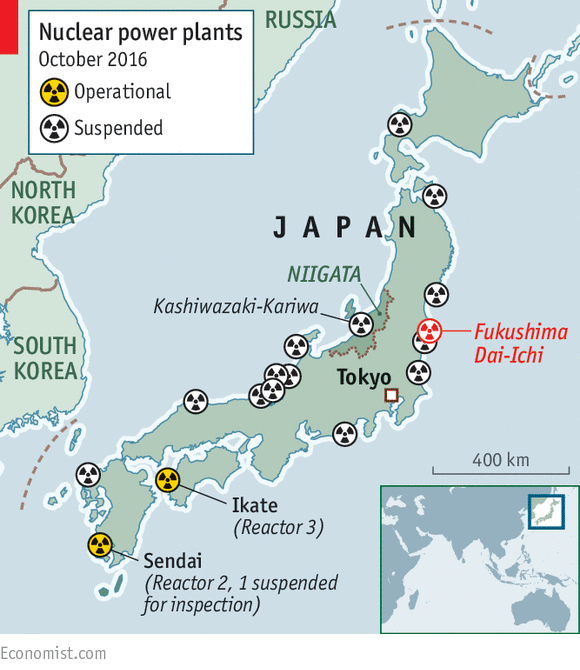
Strong quake rattles Tohoku region
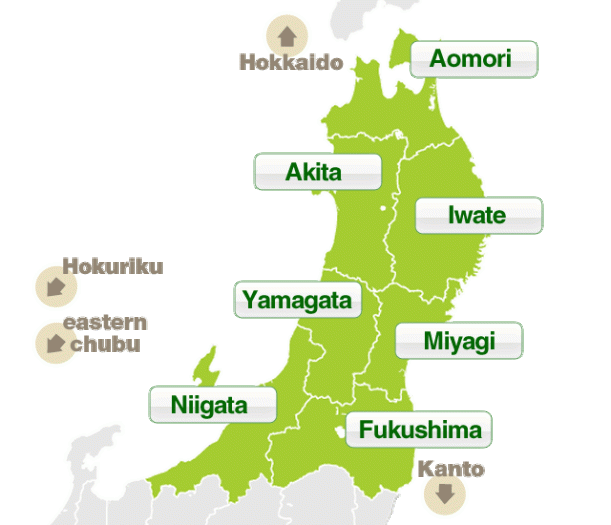
Tohoku region
An earthquake with a preliminary magnitude of 5.3 jolted northeastern Japan on Sunday, the Meteorological Agency agency said. No tsunami warning was issued.
There were no immediate reports of casualties or damage from the 4:37 p.m. quake. The focus of the quake was about 20 km (12 miles) underground in the Pacific Ocean off Miyagi Prefecture, the agency said.
Tohoku Electric Power Co. reported no abnormalities at the Onagawa nuclear power plant in Miyagi Prefecture.
The quake measured 4 on the Japanese seismic intensity scale of 7 in some areas of Miyagi, including the city of Ishinomaki, and a 3 in areas including neighboring Iwate and Yamagata prefectures.
http://www.japantimes.co.jp/news/2016/10/16/national/strong-quake-rattles-tohoku-region/
High-school Students Continuously Put at Risk for Propaganda Use
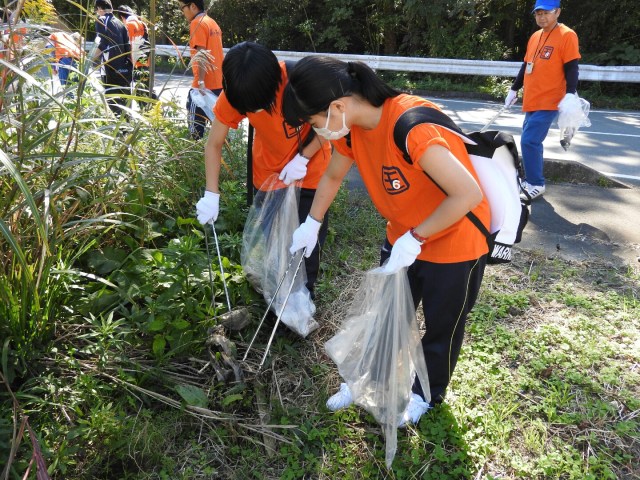
National route 6 which runs only a few km parallel to the coast where stands what is left of Daiichi Nuclear power plant, high-school students are cleaning up radiation.
14 high school students were picking up trash. 0.7μSv / h radiation measured by some citizens’ group at some of the places. With dust being blown, many high school students were walking still without a mask.
The criticism that it could endanger the children, was ignored by Yumiko Nishimoto, president of the NPO “Happy load net” which organized that acttion, answering “we are living here every day.” .
Clean-up activities with an eye to the torch relay of the Tokyo Olympics. The priority is the “reconstruction”, and the health of children is secondary, completely neglected.
The NPO responsible for such insanity argues that it helps them studying about radiation, that they do that every year.
Children are continuously being used to help the propaganda that everything is back to normal. But it’s a lie and it is borderline criminal. Shame on you Japan.
http://taminokoeshimbun.blog.fc2.com/blog-entry-61.html
Tokyo governor visits alternative site in Miyagi Prefecture for 2020 Games’ rowing and canoe sprint
We are many to think that it is shocking, disgusting and very sad that after over5 & a half years they are still putting their greed above the health of those people who would participate and go to watch these games, not to mention their own people. They should have relinquished as soon as they knew that the Fukushima Daiichi nuclear disaster had contaminated a good third of the country.

Tokyo Gov. Yuriko Koike (left front) and Miyagi Gov. Yoshihiro Murai (left back) wave to the press as they inspect the Naganuma rowing course in the city of Tome, Miyagi Prefecture, on Saturday.
Tokyo Gov. Yuriko Koike on Saturday visited a boat race course in Miyagi Prefecture, a facility emerging as an alternative venue for the rowing and canoe sprint events at the 2020 Tokyo Olympic games.
“Based on this visit, I will start considering venues,” Koike told reporters after inspecting facilities at the Naganuma rowing course in the city of Tome, more than 400 kilometers from Tokyo. Miyagi is one of the prefectures in northeastern Japan hit hardest by the March 2011 earthquake and tsunami.
Games organizers and the International Rowing Federation had already approved the Sea Forest Waterway venue to be constructed on Tokyo Bay, but a metropolitan government cost review panel recommended last month that plan be reconsidered.
The Tokyo Olympic and Paralympic organizing committee has raised concerns that costs could top ¥35.1 billion ($337 million) even if the rowing and canoe sprint events were held at the Naganuma rowing course. But Miyagi Prefecture Gov. Yoshihiro Murai argued Saturday in a television appearance that the overall cost is “estimated at around ¥15 to ¥20 billion.”
On the TV program, Murai also emphasized that most of the costs will be for “permanent facilities” after the Olympic Games, and that the prefectural government would shoulder the cost to remove temporary housing.
Last Wednesday, Murai visited Koike in Tokyo to convey his wish to hold the rowing and canoe events in Miyagi to show the world the recovery Japan has made since the 2011 quake and tsunami disaster.
Koike had told Murai that the Naganuma boat course was an option and she would “make a comprehensive decision” after visiting the site.
The organizing committee, however, has questioned the feasibility of holding those events at the Miyagi site, raising what they said are “nine problems,” including transportation, infrastructure and costs.
Saitama Gov. Kiyoshi Ueda has also said his prefecture is ready to host the rowing and canoe sprint events at Saiko Doman Green Park in the city of Toda.
October 16 Energy News

Opinion:
¶ “In Scotland, ray of hope for future of clean power” • For the first time ever, on August 7, the army of spinning white turbines that has sprouted across the lush countryside generated enough electricity to power all of Scotland. Scotland has joined Portugal, Denmark, and Costa Rica among those that have achieved this goal. [The Columbian]
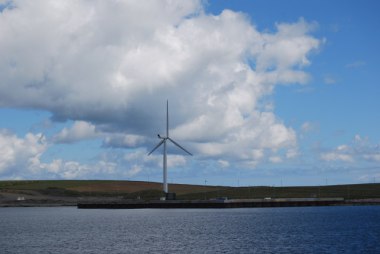 Wind turbine, on Sanday, in the Orkney Islands
(Photo by hayley green, CC BY-SA, Wikimedia Commons)
¶ “400 ppm CO2: The Case For Renewable Energy” • Climate change is a ticking time bomb. If left unchecked, it will spare no one. But we can counter it successfully through the renewable energy revolution. And it can start with the single step of spreading climate change education and awareness in our communities. [CounterCurrents.org]
Science and Technology:
¶ Removing carbon dioxide emissions from the atmosphere to prevent global warming…
View original post 641 more words
UK Navy Nuclear Sub Hits Fishing Boat; Drags It Across Irish Sea: “Joint Warrior” Training for “Complex” Environments

“Eighteen months ago, the actions of the command team of a Royal Navy submarine placed the lives of the crew of the trawler Karen in danger. Regrettably, the reluctance of the Royal Navy to fully engage in the subsequent investigation resulted in this report taking significantly longer to deliver than would normally be the case. The accident happened because of insufficient passage planning by the submarine’s command team and their failure to follow guidance on fishing vessel avoidance. Had its trawl warps not parted, it is almost inevitable that Karen would have capsized and sunk; the collision also presented a very significant risk to the submarine” (Chief Inspector of Marine Accidents, emphasis added.) https://www.gov.uk/maib-reports/collision-between-the-stern-trawler-karen-and-a-dived-royal-navy-submarine
“Joint Warrior provides a complex environment in which UK, NATO and allied units can go through training together in tactics and skills for use in a combined joint task force.” http://www.royalnavy.mod.uk/news-and-latest-activity/news/2015/may/15/150515-845-nas-on-exercise-joint-warrior-151
View original post 2,034 more words
Why Climate Change Is the Biggest Threat to National Security #Auspol

Climate change is creating a perfect storm for global conflict.
The following is an excerpt from the new book The Madhouse Effect by Michael E. Mann & Tom Toles (Columbia University Press, 2016):
The most unfortunate part of the societal debate over climate change has been the ease of imagining a warming climate as an essentially unthreatening occurrence, the status quo.
“Global warming” sounds almost pleasant. Like a day in springtime. You may have heard someone say in response to a nice day in winter, “If this is global warming, I’ll take it!” A smooth, comfortable adjustment in living circumstances, not unlike turning up the thermostat by a degree or two. Not to worry!
Unfortunately, it is also entirely wrong.
Although the increase in CO2 in the atmosphere is gradual and steady, the results of that increase will be anything but. People assume that noticeable effects will be far off…
View original post 1,465 more words
1 This Month

of the week – Shut Down Drone Warfare!


Tell the Ukrainian Government to Drop Prosecution of Peace Activist Yurii Sheliazhenko

Petition to revoke the licensing of the Near Surface Nuclear Disposal Facility (NSDF) at Chalk River. https://www.ourcommons.ca/petitions/en/Petition/Details?Petition=e-7247
To see nuclear-related stories in greater depth and intensity – go to https://nuclearinformation.wordpress.com
-
Archives
- April 2026 (114)
- March 2026 (251)
- February 2026 (268)
- January 2026 (308)
- December 2025 (358)
- November 2025 (359)
- October 2025 (376)
- September 2025 (257)
- August 2025 (319)
- July 2025 (230)
- June 2025 (348)
- May 2025 (261)
-
Categories
- 1
- 1 NUCLEAR ISSUES
- business and costs
- climate change
- culture and arts
- ENERGY
- environment
- health
- history
- indigenous issues
- Legal
- marketing of nuclear
- media
- opposition to nuclear
- PERSONAL STORIES
- politics
- politics international
- Religion and ethics
- safety
- secrets,lies and civil liberties
- spinbuster
- technology
- Uranium
- wastes
- weapons and war
- Women
- 2 WORLD
- ACTION
- AFRICA
- Atrocities
- AUSTRALIA
- Christina's notes
- Christina's themes
- culture and arts
- Events
- Fuk 2022
- Fuk 2023
- Fukushima 2017
- Fukushima 2018
- fukushima 2019
- Fukushima 2020
- Fukushima 2021
- general
- global warming
- Humour (God we need it)
- Nuclear
- RARE EARTHS
- Reference
- resources – print
- Resources -audiovicual
- Weekly Newsletter
- World
- World Nuclear
- YouTube
-
RSS
Entries RSS
Comments RSS
 nuclear-news
