United Nations calls on U.S., China, others to ratify nuclear test ban treaty
 U.N. urges U.S., China, others to ratify nuclear test ban treaty , Reuters By Michelle Nichols | UNITED NATIONS, 23 SEPT 16,
The United Nations Security Council urged China, the United States, North Korea, Egypt, India, Iran, Israel and Pakistan to ratify a treaty banning nuclear explosions, which would allow the deal negotiated 20 years ago to come into force.
More than 160 countries have ratified the 1996 Comprehensive Nuclear-Test-Ban Treaty (CTBT). Since then India, Pakistan and North Korea have conducted nuclear tests. This month Pyongyang conducted its fifth and largest test.
The 15-member Security Council adopted a U.S.-drafted resolution on Friday with 14 votes in favor and an abstention by Egypt. It does not impose any legal obligations but adds political weight to the push for the treaty to be enacted.
The U.N. resolution calls on all states to refrain from conducting any nuclear explosions……..http://www.reuters.com/article/us-un-nuclear-idUSKCN11T29J
Thousands of Japanese protestors want an end to nuclear power, as well as shutdown of Monju reprocessing plant
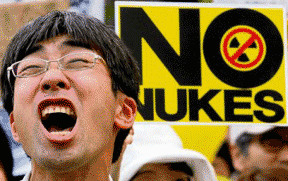 Anti-nuclear rally calls for more than just a Monju shutdown http://www.asahi.com/ajw/articles/AJ201609230047.html By RYUJI KUDO/ Staff Writer September 23, 2016 Thousands of anti-nuclear demonstrators gathered in Tokyo on Sept. 22 to demand the government go beyond decommissioning the troubled Monju prototype fast-breeder reactor and abandon its plans to restart other nuclear power plants.
“We definitely don’t need the money-sucking and dangerous Monju,” said Hisae Sawachi, a writer and a member of the organizing committee of the demonstration, which took place under the banner “No nukes, No war.” “Why don’t government officials have the courage to close down all the other nuclear power plants?”
The rally, at Yoyogi Park in Tokyo’s Shibuya Ward, followed the government’s decision this week to unplug the reactor, which has hardly generated any electricity despite the more than 1 trillion yen ($9.9 billion) spent on it over two decades.
Masaichi Miyashita, who heads the secretariat of an anti-nuclear group in Fukui Prefecture, told the rally that officials in Tsuruga in the prefecture, where the reactor is situated, are opposed to the government decision to decommission the reactor and want to keep it.
“I wonder how local leaders calling for the continuation of the Monju program consider the health and lives of residents,” he said. “I would like you, demonstrators, to continue to demand the decommissioning of Monju by pressuring the government not to waste taxpayers’ money.”
An estimated 9,500 people attended the rally, according to the organizer, which identifies itself as a citizens’ group that is collecting 10 million signatures for a petition to say “sayonara” to nuclear power. Satoshi Kamata, a journalist who has written about the nuclear industry and a member of the committee, said the government should phase out the entire nuclear program.
“Unplugging Monju is just a starting point in ending Japan’s nuclear fuel recycling policy and the restart of nuclear power plants, as well as in changing the course of the nation’s nuclear power policy,” he said.
Professor Geraldine Thomas and nuclear scientific misconduct
 This is part of a very important article, in which Dr Baverstock thoroughly refutes the claims that Professor Geraldine Thomas’ made in a BBC interview, about Fukushima ionising radiation not being much to worry about. The BBC has since withdrawn her statements.
But that hasn’t stopped the South Australian government bringing Thomas out here to spin her stuff, in  support of Weatherill’s push for SA as the global nuclear waste dump.
Thomas’ comments in the video were insulting to the intelligence of the Japanese authorities and their advisors, and extremely ill-judged from a professional radiological point of view. The BBC was right to withdraw her comments as incorrect.
 ‘This was quite clearly scientific misconduct’ by Dr Keith Baverstock, Fissiononline 23 Sept 16 . I will take the BBC interview first. In this interview Thomas questions the whole basis of the Japanese response to the Fukushima accident in terms of its evacuation policy. Is one to imagine that those authorities and the Japanese scientific establishment are so stupid as not to recognise that there is no risk entailing living in those areas?
The internationally agreed public dose limit is 1 mSv per year in addition to approximately 2 mSv per year from natural background radiation. The single measurement made in that television interview indicate 2.8 microsieverts per hour, which is close to 25 mSv per year. That includes the natural background doses o at that point the dose rate is at least 20 times the public dose limit.
Surely Thomas can recognise that this must demand serious consideration by the appropriate authorities as to the safety of those who would live there? However, to determine the safety or otherwise of living there it would be necessary to do a comprehensive survey of the area. My guess is that five years after the deposition of the radioactivity there will be a high degree of variability in measurements: some may be less in the measurement made on the programme, but others more and perhaps considerably more. Furthermore, if one were looking at a situation, for example in the UK, one would have to ensure that the most exposed person could not receive more that 1 mSv per annum. Therefore promises arguments that being indoors for example would reduce the dose rate are not valid in the context of the radiological protection of the public in general.
Whether a special dispensation applies when determining the return of evacuees to their homes is a question that I believe needs to be discussed, because as far as I’m aware the current situation in Japan is unique. Furthermore, we are not talking about a total dose of 20 mSv for someone who returns to live in this village. In many such villages remedial measures to reduce the dose rate are being taken, but only for the main “living areas”. Straying beyond these areas could lead to much higher doses, and eating natural produce, mushrooms etc, to even higher doses.
In the light of these considerations, Thomas’ comments in the video were insulting to the intelligence of the Japanese authorities and their advisors, and extremely ill-judged from a professional radiological point of view. The BBC was right to withdraw her comments as incorrect if that is indeed what they did.
Watching the video I am inclined to believe that Thomas is being disingenuous when she says she made a numeric al error when calculating the dose from the interviewer’s measurement. She made no attempt to do any kind of calculation: the figure she cited was something she clearly had in mond at the outset: she was delivering propaganda for the nuclear industry
That in the context in which the interview took place and the way in which she was introduced to the audience, is clearly scientific misconduct. One must also say here that the ninterviewer must have been, for an experienced journalist, amazingly gullible to have allowed the interview to be broadcast……….. https://issuu.com/fission/docs/fissionline_44
Dr Keith Baverstock led the Radiation Programme at the World Health Organisation’s Regional Office for Europe from 1991 to 2003.
EDF’s shares down as nuclear reactor outages cut profits
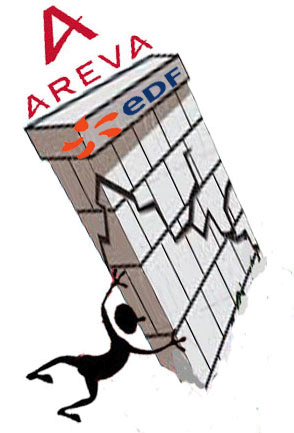 EDF Warns on Profit as Nuclear Plant Outages Increase http://www.wsj.com/articles/edf-warns-on-profit-as-nuclear-plant-outages-increase-1474535674
Standard & Poor’s downgrade of EDF’s debt rating also weighs on share price By INTI LANDAURO and WILLIAM HOROBIN Sept. 22, 2016
PARIS—State-controlled power utility Electricite de France cut its earnings outlook on expectations of lower nuclear output from an increase of plant outages, sending its share price down.
EDF, which last week got the go-ahead from the British government to build the £18 billion ($23.4 billion) Hinkley Point nuclear plant in the U.K., said it expects earnings before interest, taxes, depreciation and amortization of between €16.3 billion ($18.3 billion) and €16.6 billion.
It previously had forecast a range of €16.3 billion to €16.8 billion. The company had already lowered its nuclear output forecast in July, but had maintained its earnings target.
The profit warning, which sent EDF’s shares down 1.8% to €10.62, is another blow for shareholders, who have seen the value of the company lose more than 20% this year. The utility, which already suffers from low electricity prices in its home country and losses of market share, has recently embarked on expensive new projects that are deemed a political priority.
The French government, which owns about 85% of EDF, pressured the company to take a majority stake in beleaguered nuclear reactor manufacturer Areva NP. The government also pushed EDF to make the final investment decision to build the Hinkley Project in the U.K.
Some senior EDF officials and labor unions worried about the project’s impact on the company’s net debt which already stood at €37 billion last year. One board member resigned over the issue in July as did Chief Financial Officer Thomas Piquemal in March.
The U.K. government’s approval of the Hinkley Point project prompted Standard & Poor’s to downgrade EDF’s debt rating to A- on Wednesday evening, further pressuring the share price on Thursday morning.
To help utility with such onerous projects, the French government has decided to inject €3 billion in new equity in EDF.
EDF’s revised profitability forecast takes into account a decision by the country’s top administrative court to allow the company to raise the regulated prices it charges to some of its customers, despite the opposition from the government.
Write to Inti Landauro at inti.landauro@wsj.com and William Horobin at William.Horobin@wsj.com
‘Going nuclear’ – the only option says North Korea
Speaking to the General Assembly, Ri Yong-ho said his country will “continue to take measures to strengthen its national nuclear armed forces in both quantity and quality.”
He spoke just two weeks after North Korea’s fifth and most powerful nuclear test provoked worldwide condemnation, prompting the UN Security Council to begin work on a new sanctions resolution.
“Going nuclear armed is the policy of our state,” Ri, who has been foreign minister since May, told the world gathering.
“As long as there exists a nuclear weapon state in hostile relations with the DPRK (North Korea), our national security and the peace on the Korean peninsula can be defended only with reliable nuclear deterrence,” he said……..http://www.sbs.com.au/news/article/2016/09/24/north-korea-tells-un-going-nuclear-only-option
Danger of radioactive groundwater leak at Kashiwazaki-Kariwa nuclear power plant.
JCP reveals risk of contaminated water leakage at Kashiwazaki-Kariwa NPP http://www.japan-press.co.jp/modules/news/index.php?id=9945 September 16, 2016
The JCP investigation team consisting of JCP Dietmembers, Fujino Yasufumi (Lower House) and Takeda Ryosuke (Upper House), on September 15 visited the Kashiwazaki-Kariwa NPP to examine its safety measures.
The group investigated Nos. 6 and 7 reactors, which the Nuclear Regulation Authority is examining TEPCO’s application for restart, and sites of subsidence damage caused by liquefaction due to the 2007 Chuestu Offshore Earthquake.
It has come to light that the amount of groundwater being used at the Kashiwazaki-Kariwa NPP is much larger than the amount at other NPPs in Japan. However, TEPCO explained to the JCP group that it has no idea why so much groundwater is being pumped into the nuclear power station. After the investigation, JCP member of the House of Representatives Fujino Yasufumi said to reporters, “The utility has yet to implement measures to control its use of groundwater.” Given the fact that at the Fukushima nuclear power plant, TEPCO is struggling with a serious leakage of radioactively-contaminated water which is caused by groundwater entering the crippled NPP, it is unacceptable for the power company to bring the Kashiwazaki-Kariwa power station back online.
Professor Emeritus of Seismology at Niigata University Tateishi Masaaki, who joined the JCP investigation team, pointed out that the NRA should examine the amount of groundwater used at the NPP and asses the seismic capacity of wells pumping up the groundwater.”
In 10 years or less, climate change could pass the 1.5 degrees Celsius rise
 Climate change could cross key threshold in a decade: scientists By Laurie Goering 23 Sept 16, OXFORD, England (Thomson Reuters Foundation) – The planet could pass a key target on world temperature rise in about a decade, prompting accelerating loss of glaciers, steep declines in water availability, worsening land conflicts and deepening poverty, scientists said this week.
Last December, 195 nations agreed to try to hold world temperature rise to “well below” 2 degrees Celsius, with an aim of 1.5 degrees Celsius.
But the planet is already two-thirds of the way to that lower and safer goal, and could begin to pass it in about a decade, according to Richard Betts, head of climate impacts research at the UK Met Office’s Hadley Centre.
With world emissions unlikely to slow quickly enough to hit that target, it will probably be necessary to remove some carbon pollution from the atmosphere to stabilize the planet, scientists said at a University of Oxford conference on how to achieve the 1.5 degree goal.
That could happen by planting forests or by capturing and then pumping underground emissions from power plants. Or countries could turn to controversial “geoengineering” techniques, such as blocking some of the sunlight arriving on the planet, to hold down temperatures, they said.
“Negative emission technologies are likely to be needed, whether we like them or not,” said Pete Smith, a plant and soil scientist at the University of Aberdeen.
But other changes – such as reducing food waste and creating more sustainable diets, with less beef and fewer imported greenhouse vegetables – could also play a big role in meeting the goal, without so many risks, he said.
“There are lots of behavioral changes required, not just by the government … but by us,” Smith said……..http://www.reuters.com/article/us-climatechange-impacts-conference-idUSKCN11S1FE
South Africa’s Eskom makes unreliable prediction of its future cash reserves
Eskom’s R150 billion cash-reserves claim is wishful thinking – Natahsa Mazzone http://www.politicsweb.co.za/politics/eskoms-r150-billion-cashreserves-claim-is-wishful- Natasha Mazzone | 23 September 2016
DA says power utility’s profit of R4,6 billion a far cry from the R15 billion need a year to make up amount. The claim by Head of Generation for Eskom, Mr Matshela Koko, that Eskom could pay for the nuclear build programme by using cash-reserves, which he indicated could be R150 billion in 10 years’ time, is wishful thinking.
Eskom recorded a R4.6 billion profit in the 2015/16 financial year, a far cry from the R15 billion in profits it would need to generate consistently for the next 10 years to make up R150 billion.
Considering that by Eskom’s admission electricity demand is down, coupled with economic growth projected at a mere 0.6%, this raises serious questions about the assumptions underlying their projections.
I will therefore be submitting parliamentary questions to Eskom to find out how they intend to generate these massive cash reserves.
The validity of their projections notwithstanding, spending any cash reserves on a nuclear build program would be financially irresponsible. Eskom currently owes its creditors R322 billion underwritten by R350 billion in government guarantees. The entity should rather use excess cash reserves to decrease these liabilities.
Moreover, the fact that Eskom believe they can generate these massive profits whilst pushing for well-above inflation tariff increases on electricity, should be a slap in the face of the majority of poor citizens in our country. Energy and electricity costs are eating into their limited budget and now with these tariff increases, their pockets will be hurting even more.
The big question is why Eskom needs to be building nuclear in the first place when future electricity shortages would be better addressed by cheaper and more sustainable renewable and gas projects. With advancements in storage and battery technologies, these would be the better alternative by 2035.
The Minister is the only person with the prerogative to choose nuclear over any other form of energy, in this vein Mr Koko is overstepping his fiduciary duties to even suggest that Eskom would be investing in Nuclear.
In the context of its massive debt, and repeated requests for above inflation tariff increases, it is irrational to utilise any cash reserves in pursuit of the much maligned nuclear “wonder” programme and once again calls the motivation for the nuke deal into question.
Issued by Natasha Mazzone, DA Shadow Minister of Public Enterprises, 23 September 2016
Uranium Prices at 11-Year Low
Economic Calendar, September 23, 2016 Uranium prices remain under pressure, and are currently at an 11-year low, as demand for the commodity remains weak with nuclear power in a hiatus while new plants come online. Even though demand is depressed, miners continue to explore for the commodity, which is adding sentimental pressure over concerns that new uranium supplies will come online before demand takes off
USA House committee voted to remove a 2020 deadline for a nuclear power plant tax credit
 House committee votes to lift 2020 deadline on nuclear power tax credit http://www.utilitydive.com/news/house-committee-votes-to-lift-2020-deadline-on-nuclear-power-tax-credit/426850/ By Peter Maloney | September 23, 2016
Dive Brief:
- The House Ways and Means Committee has voted 23-9 on a bill to remove a 2020 deadline for a nuclear power plant tax credit, The Hill reports.
- The credit, enacted in 2005, will likely benefit the Vogtle nuclear reactors being built by Southern Co. in Georgia and the Summer reactors being built by SCANA in South Carolina.
- The bill would not change the 6,000-MW cap on the tax credit. Nuclear opponents called the bill a bailout for plant owners who have failed to deliver new reactor projects on time.
Dive Insight:
Nuclear plants are expensive to build — so expensive that until recently a nuclear plant had not entered construction for nearly 30 years. Notably the nuclear plants now under construction are all being done by regulated utilities, and they benefit from federal loans and tax credits.
That federal support is a key component for the financing of the projects, even if they are otherwise supported, ultimately, by ratepayers.
Both the Vogtle and Summer projects have been plagued by delays and cost overruns. The Vogtle units were originally due online in 2016 and 2017 and are now looking at a 2020 online date. The Summer reactors were originally due online in 2017 and are now slated for operation in 2019 and 2020.
If the revised timelines slip and the 2020 deadline on the tax credits remains, it could prove costly for the plant owners. The bill lifting the tax credit deadline would remove that risk.
“When Congress passed the 2005 act, it could not have contemplated the effort it would take to get a nuclear plant designed and licensed,” Rep. Tom Rice (R-SC) told The Hill.
China wants its nuclear industry to grow dauntingly fast
The Economist Sep 24th 2016 | LIANYUNGANG UPON learning (via a terse government statement) that their bustling port city in eastern China had been tipped as the likely site of a plant to recycle used nuclear fuel, residents of Lianyungang took to the streets last month in their thousands. Police, whose warnings against demonstrations were ignored, deployed with riot gear in large numbers but only scuffled with the protesters, who rallied, chanted and waved banners in the city centre for several days. “No one consulted us about this,” says one woman who participated in the protests. “We love our city. We have very little pollution and we don’t want a nuclear-fuel plant anywhere near us. The government says it is totally safe, but how can they be sure? How can we believe them?” she asks.Such scepticism is shared by many in Lianyungang, which already hosts a nuclear-power plant , and elsewhere in China, where the government plans to expand nuclear power massively. ……
The World Nuclear Industry Status Report 2016 (HTML) Fukushima and Chernobyl radiation effects explained
This year, special chapters on Chernobyl and Fukushima confirm that nuclear accidents bear not only significant human and environmental but also economic risks. These, however, are risks the nuclear industry has been sheltered from by political decisions limiting their liability.

The World Nuclear Industry Status Report 2016 (HTML)
Foreword
by Tomas Kåberger [1]
The World Nuclear Industry Status Report (WNISR) is the best compilation of data, trends and facts about the nuclear industry available. This is all the more impressive considering the competition from resource-rich commercial or intergovernmental institutions. It is free from the political constraints, e. g. those leading the International Atomic Energy Agency (IAEA) to the false claim there are more than 40 reactors operating in Japan. Nor does it suffer from the anti-nuclear exaggerations or pro-nuclear enthusiasm so often tainting descriptions of this industry’s status.
This year, special chapters on Chernobyl and Fukushima confirm that nuclear accidents bear not only significant human and environmental but also economic risks. These, however, are risks the nuclear industry has been sheltered from by political decisions limiting their liability.
The WNISR this year is more about a risk the industry will not easily be protected from: The economic and financial risks from nuclear power being irreversibly out-competed by renewable power.
The year 2015 seems to be the best year for the nuclear industry in the last quarter of a century. A record 10 new reactors with a total capacity of over 9 GW were put into operation. This was less than new solar and less than wind capacity, which increased five and six times as much respectively. In actual electricity produced, nuclear increased by 31 TWh, while fossil fuels based electricity generation decreased. The main reason why fossil fuels decreased was the expansion in renewable power generation, an increase of more than 250 TWh compared to 2014, seven times more than the modest nuclear increase.
The development of installations and generation is a result of renewable energy cost reductions. As we may also read in this report, nuclear construction is not only costly, it is often more costly, and requires more time, than envisioned when investment decisions were taken. Solar and wind, on the other hand, have come down in price to an extent that new wind and solar are often providing new generation that is clearly cheaper than new nuclear power.
Even more challenging to the nuclear industry is the way renewables are bringing down electricity prices in mature industrial countries to the extent that an increasing number of reactors operate with economic losses despite producing electricity as planned.
But a foreword is not meant to be another summary. My appreciation of the report is already clearly stated. Let me use the final paragraphs on what implications may follow from the facts laid out in this report:
First: A nuclear industry under economic stress may become an even more dangerous industry. Owners do what they can to reduce operating costs to avoid making economic loss. Reduce staff, reduce maintenance, and reduce any monitoring and inspection that may be avoided. While a stated ambition of “safety first” and demands of safety authorities will be heard, the conflict is always there and reduced margins of safety may prove to be mistakes.
Secondly: The economic losses of nuclear come as fossil fuel based electricity generation is also suffering under climate protection policies and competition from less costly renewable power. The incumbent power companies are often loosing net cash-flow as well as asset values. As a result, many power companies are downgraded by credit-rating agencies and their very existence threatened. Electric power companies’ ability to actually manage the back-end cost of the nuclear industry is increasingly uncertain. As the estimates of these costs become more important, and receive attention they tend to grow.
Reading the WNISR2016, a premonition appears of what may lay ahead of this industry and the 31 governments hosting it.
Let us hope WNISR will help many people understand the situation and contribute to responsible regulation and management of the industry in the critical period ahead of us.
Full report here;
http://www.worldnuclearreport.org/The-World-Nuclear-Industry-Status-Report-2016-HTML.html
September 23 Energy News

Opinion:
¶ “Celebrate national parks by fighting climate change” • This year our country is celebrating 100 years of national parks. They are special places woven into the fabric of American life, from the iconic view of California’s Yosemite Valley to our own Crater Lake. Yet these places are increasingly threatened by climate change. [OregonLive.com]
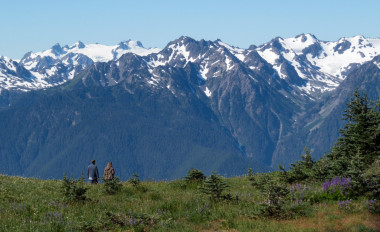 Hikers in Olympic National Park. (Ralph Arvesen / Flickr)
¶ “Distributed Biogas: $11.8 Billion Market Hidden in Plain
Sight” • Every year in the US, 37 million tons of food waste are sent to landfills. At a $125-per-ton tipping fee, this costs $4.6 billion annually. Used to make biogas, at 4,200 cubic feet per ton, this same amount of waste could power five million homes for an entire year. [Biomass Magazine]
World:
¶ The European Commission cleared the way for plans by the Swedish state-owned electricity company Vattenfall to sell its…
View original post 634 more words
Are U.S. Tax Dollars Financing Destruction of World’s Largest Mangrove Forest?

GR: We US taxpayers just don’t quit! We finance wars, subsidize fossil fuels, and sacrifice the environment for profit. Our education system sucks, but we do have the most expensive health care and we do sell more arms and ammunition than any other nation on Earth.
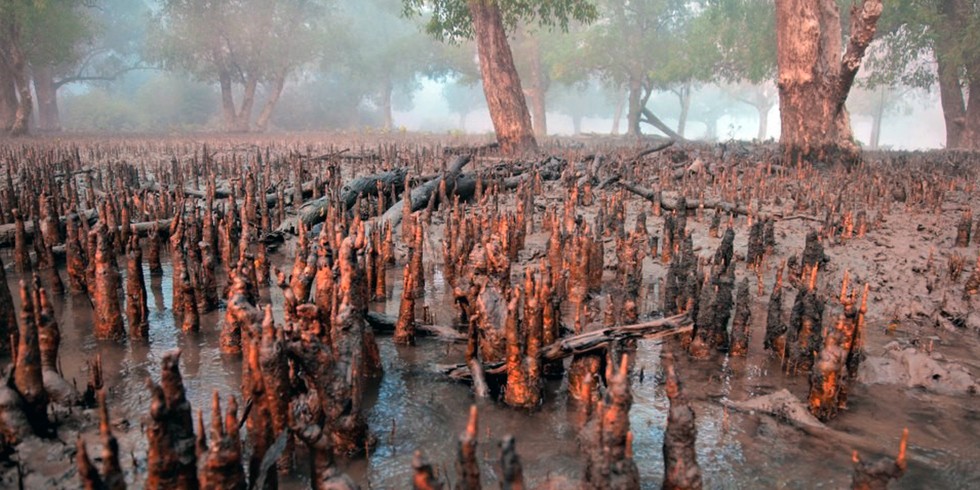 EcoWatch: “In conjunction with the Save the Sundarbans protest today at the UN’s headquarters in New York City, we’re revealing in this EcoWatch exclusive that Friends of the Earth U.S. obtained documents that suggest the U.S. Export-Import Bank, Ex-Im Bank, which is supported by taxpayer dollars, is considering financing the Orion-Khulna coal plant near the Sundarbans in Bangladesh.
“The struggle for climate justice in Bangladesh, however, did win an important battle in July. Responding to public pressure from advocacy groups, Ex-Im Bank is no longer considering financing for a coal plant proposed to be built outside Bangladesh’s capital city of Dhaka, one of…
View original post 73 more words
Cows in Fukushima Radiation Zone Find New Purpose: Science

NAMIE, Japan — In an abandoned Japanese village, cows grazing in lush green plains begin to gather when they hear the familiar rumble of the ranch owner’s mini-pickup. This isn’t feeding time, though.
Instead, the animals are about to be measured for how they’re affected by living in radiation — radioactivity that is 15 times the safe benchmark. For these cows’ pasture sits near Fukushima, a name now synonymous with nuclear disaster.
The area was once a haven for agriculture with more than 3,500 cattle and other livestock. Ranchers who refused a government order to kill their cows continue to feed and tend about 200 of them. The herds won’t be used as food; now science is their mission.
Researchers visit every three months to test livestock living within a 20-kilometer (12-mile) radius of the Fukushima plant, where three reactors had core meltdowns after the facility was swamped by a tsunami in 2011. It is the first-ever study of the impact on large mammals of extended exposure to low-level radiation.
The ranchers are breeders, as opposed to those raising cattle to sell for beef, and tend to be attached to their animals. They treat them almost as if they were children, even giving them names. The research gives them a reason to keep their beloved cows alive, and to hope that someday ranching might safely return here.
Under a drizzling rain, doctors and volunteers wearing blue Tyvek protective suits draw the cows into a handmade pen of aluminum pipes. Five to six cows line up in the cage and are tied with a rope around their head and through their nose ring for solid support, so they won’t be hurt when the needle draws blood from their neck.
The gentle beasts moo from discomfort. The doctors work swiftly, drawing blood, collecting urine and checking for lumps or swollen lymph nodes. The check-up takes five minutes or less per cow.
Namie, 11 kilometers (7 miles) northwest of the plant, is a ghost town with no prospect of being habitable for years. But 57-year-old Fumikazu Watanabe comes every day to a ranch to feed 30 to 40 cows owned by seven farmers.
“What is the meaning of slaughtering the cows?” Watanabe said at a worn-out barn where healthy cows used to spend the night tending to their calves. The bones of animals that have died litter the ground outside.
“Keeping the cows alive for research purposes means that we can pass on the study to our next generation instead of simply leaving a negative legacy,” he said.
The research team, made up of veterinary and radiation experts from Iwate University, Tokai University and Kitasato University, was established a year after the meltdowns. They formed a nonprofit group called Society for Animal Refugee & Environment post Nuclear Disaster. Members volunteer to take the blood and urine samples and test them.
In 2012, the Japanese government ordered all livestock in the restricted area killed for fear that the breeding cows would continue to reproduce, and that cows exposed to radiation would have no sale value.
Keiji Okada, associate professor of veterinary medicine and agriculture at Iwate University, said the government considered it pointless to study the animals, since it couldn’t determine how much radiation they were exposed to immediately after the disaster.
Okada disagrees. He said the data will help researchers learn whether farmers can eventually work in affected zones.
“There are no precedent studies of animals being exposed to low-dose radiation, and we have no idea what results we are going to get,” he said. “That is exactly why it needs to be monitored.”
So far, the animals’ internal organs and reproductive functions have shown no significant abnormality particularly linked to radiation exposure, Okada said, but it’s too early to draw conclusions about thyroid cancer and leukemia.
Radiation could cause leukemia, but so could mosquitoes, which have infected cattle around the world with bovine leukemia virus.
“Even if we detect leukemia in the cows, we don’t know whether it’s caused by radiation or if it’s a bovine leukemia from a virus,” Okada said. “It is this year’s objective to be able to differentiate the two.”
Many cows have died during the study period, but food shortages have played a role, making it all the more difficult the doctors to determine causes. The dead cows are dissected and the radiation dosage in their organs is measured.
Is radiation killing the cows, or making them sick? Okada said the research team is working toward reaching a conclusion by March. The team worries that the study results could spark overly broad fears that the region will no longer be habitable or fit for agriculture.
Ultimately, Okada said, the team believes that further monitoring of the animals will show under what conditions it is safe to raise livestock exposed to low-level radiation, and how best to deal with such a leak should it happen again.
Yukio Yamamoto, owner of the large Yamamoto Ranch surrounded by a mountain, a river and a vast plain, travels three hours roundtrip from his temporary home to feed his remaining cows.
Yamamoto initially followed government orders to kill his cattle. He watched a mother cow being killed while a calf was still suckling on its milk, and then the calf following that.
“The cows are my family. How do I dare kill them?” Yamamoto said. “If there is a God, I’m sure some day we would be rewarded for the sacrifice we are making.”
He hopes one day to see his barn come to life again, filled with a hundred cows and calves cared for by his children and grandchildren.
http://www.nytimes.com/aponline/2016/09/22/world/asia/ap-as-japan-fukushima-cows.html?_r=0
1 This Month

of the week – Shut Down Drone Warfare!


Tell the Ukrainian Government to Drop Prosecution of Peace Activist Yurii Sheliazhenko

Petition to revoke the licensing of the Near Surface Nuclear Disposal Facility (NSDF) at Chalk River. https://www.ourcommons.ca/petitions/en/Petition/Details?Petition=e-7247
To see nuclear-related stories in greater depth and intensity – go to https://nuclearinformation.wordpress.com
-
Archives
- April 2026 (114)
- March 2026 (251)
- February 2026 (268)
- January 2026 (308)
- December 2025 (358)
- November 2025 (359)
- October 2025 (376)
- September 2025 (257)
- August 2025 (319)
- July 2025 (230)
- June 2025 (348)
- May 2025 (261)
-
Categories
- 1
- 1 NUCLEAR ISSUES
- business and costs
- climate change
- culture and arts
- ENERGY
- environment
- health
- history
- indigenous issues
- Legal
- marketing of nuclear
- media
- opposition to nuclear
- PERSONAL STORIES
- politics
- politics international
- Religion and ethics
- safety
- secrets,lies and civil liberties
- spinbuster
- technology
- Uranium
- wastes
- weapons and war
- Women
- 2 WORLD
- ACTION
- AFRICA
- Atrocities
- AUSTRALIA
- Christina's notes
- Christina's themes
- culture and arts
- Events
- Fuk 2022
- Fuk 2023
- Fukushima 2017
- Fukushima 2018
- fukushima 2019
- Fukushima 2020
- Fukushima 2021
- general
- global warming
- Humour (God we need it)
- Nuclear
- RARE EARTHS
- Reference
- resources – print
- Resources -audiovicual
- Weekly Newsletter
- World
- World Nuclear
- YouTube
-
RSS
Entries RSS
Comments RSS
 nuclear-news