 The snow-covered Himalaya-Hindu Kush mountains and the Tibetan Plateau, spanning a broad area in Central and East Asia, together contain the largest ice mass on the planet outside of the polar regions. In fact, it’s earned itself the nickname of the “Third Pole.” But as in Greenland and Antarctica, there’s trouble afoot: Glaciers in the Third Pole are also shrinking.
According to remote sensing data collected and analyzed by the Chinese Academy of Sciences, about 18 percent of China’s glaciers alone have disappeared over the past 50 years. And that’s a big problem because meltwater from these glaciers feeds a network of rivers that supply water, directly or indirectly, to more than a billion people downstream.
Rising temperatures, the product of global warming, are certainly one threat facing the glaciers, said Shichang Kang, a professor at the Chinese Academy of Sciences’ Institute of Tibetan Plateau Research. But air pollution in the region is also helping to accelerate the melting. And now, Kang and a group of colleagues have helped shed some new light on where all this pollution is coming from and how it could be stopped.
In a new study, published Tuesday in the journal Nature Communications, the researchers collected samples of black carbon — a particulate matter created through the burning of fossil fuels and biomass — throughout the Third Pole and analyzed them using a special chemical “fingerprinting” process that identifies what kind of burning produced them and where they originated.
Black carbon might be most famous for the range of adverse health effects it’s believed to cause, including respiratory and cardiovascular problems and even premature death. But in terms of its effects on glaciers, it’s known to cause snow and ice melt in a number of different ways. First, black carbon floating in the atmosphere is able to absorb sunlight and cause at least temporary regional warming as a result, Kang noted. Additionally, when black carbon deposits itself on snow and ice masses, it tends to darken their surfaces, causing them to absorb more sunlight and melt faster.
Until now, scientists have had trouble pinpointing which places are contributing pollution to which regions of the Himalayas and the Tibetan Plateau and which types of sources are causing the most damage. That’s important information, not only for constructing accurate ice models to predict how the glaciers might change in the future, but also for writing new policies aimed at cutting pollution in the places that need it most.
In their new study, the researchers found evidence that both the burning of fossil fuels and the burning of biomass — materials such as plant matter and animal dung — have contributed to the black carbon that ended up in the Third Pole. In the Himalayas, it was split about evenly between the two sources, with most of it coming from the Indo-Gangetic Plain in northern India, while in the northern part of the Tibetan Plateau, most of the black carbon came from fossil fuel burning in China.
But in the inner, central part of the plateau, about two thirds of the sampled black carbon came from biomass burning rather than fossil fuels — a finding that Kang noted is “very surprising.” This suggests that internal Tibetan fuel-burning practices, such as burning yak dung for daily cooking and heating, are contributing more pollutants to certain parts of the Third Pole than experts previously suspected.
This is valuable data that can better inform the models used to simulate ice melt in the Third Pole and make predictions about what the region’s future might look like. But according to Kang, “the most important thing is that we can provide mitigation [advice] to policymakers.”
Because most biomass burning on the Tibetan Plateau is used for home energy, including cooking and heating, government investments in improving the efficiency of stoves and expanding the availability of cleaner energy sources to households in the region could make a big difference, Kang noted.
This advice isn’t meant to overshadow efforts to reduce fossil fuel burning, which also has big implications for the fight against global climate change. And wider efforts to address the burning of fossil fuels in Central and East Asia are already under way in some places. In China, for instance, coal-burning still remains the country’s dominant power source — but reports suggest that coal consumption hasn’t grown since 2013 and may have even declined in the last year, while the government has also placed a moratorium on new coal mine approvals for at least the next three years.
The study’s results may have helped reveal some new ways governments can add to or prioritize their current efforts to cut down on black carbon production. In the meantime, careful monitoring of the Third Pole’s glaciers will be critical, Kang said, especially when it comes to keeping an eye on the region’s water resources and making projections for the future.
“In the future, we’re definitely going to see glaciers shrink, but different regions with different climate regimes have different responses,” Kang said. “This is what we want to try to figure out.”
August 29, 2016
Posted by Christina Macpherson |
China, climate change |
Leave a comment

 Nuclear scientists push for freedom to express views without fear of reprisals http://www.theglobeandmail.com/news/politics/nuclear-scientists-push-for-freedom-to-express-views-without-fear-of-reprisals/article31219139/ GLORIA GALLOWAYOTTAWA — The Globe and Mail, Aug. 01, 2016 Scientists working for the Canadian Nuclear Safety Commission have asked their union to negotiate a policy on scientific integrity that would allow them to express their views about nuclear-safety issues without fear of reprisals from management.
The unionized professional employees at the nuclear regulator and two nuclear research facilities – Chalk River in Ontario and Whiteshell in Manitoba – have been negotiating a new contract for the past three years, a process that was significantly delayed as a result of last year’s federal election.
The labour talks have continued as the two reactors are gradually being decommissioned.
Sources familiar with the bargaining say the CNSC workers decided that, with all of the changes that will be occurring at the two facilities, this is the time they should negotiate for the right to point out potential problems without fear of embarrassing their managers or being told to keep problems under wraps.
The Professional Institute of the Public Service of Canada (PIPSC), the union that represents them, says the aim is to secure scientific integrity in the workplace. Allowing more freedom for government scientists to speak to the public and the media has been a central theme of the PIPSC’s negotiations with many government departments.
“When our members fight for scientific integrity to be in the collective agreement, they’re not just fighting for their own right as regulatory scientists, they’re also fighting for the rights of every Canadian to live in safety,” Debi Daviau, president of PIPSC.
“The situation with specialists at the nuclear regulator is a clear case of that,” she said. “After a decade of disregard for the advice of public service professionals, we want to see real change reflected in our collective agreements.”
The effort to free the CNSC’s scientific staff to voice concerns comes as the regulator investigates allegations contained in an anonymous letter, purportedly written by employees at the nuclear regulator, that says information was withheld from commissioners while they were making critical decisions about the licensing of this country’s nuclear plants.
The letter, which was sent several weeks ago to CNSC president Michael Binder, points to five separate cases in which the commission’s staff sat on relevant material about risk or non-compliance that might have called the safety of a plant into question.
Environmental groups have complained for many years that the CNSC acts more as a booster for nuclear energy than as a watchdog for public safety. In response to the union’s demands, the CNSC created a working group, composed largely of managers, to develop ways to resolve scientific or regulatory disagreements, to establish the rules for publishing research and to discuss the scope of a potential policy on scientific integrity.
A document, obtained under Access to Information by the environmental group Greenpeace, says one of the aims of that working group is to “provide mechanisms for staff to express dissenting views without fear of reprisal in a respectful environment.”
That document says the CNSC would benefit from having a science policy and recommends the creation of a science adviser position to ensure compliance with that policy.
The CNSC said in an e-mail that its staff have always had scientific freedom to publish their research, that healthy debate is encouraged, that a formal process for resolving differences of professional opinion already exists and that whistle blowers can raise concerns anonymously.
But the union says CNSC scientists are extremely fearful of the repercussions they might face for speaking out. Although management is open to creating its own internal policy around scientific integrity, the union says it wants to the policy written into the collective agreement to ensure that its members are protected.
August 29, 2016
Posted by Christina Macpherson |
Canada, civil liberties |
Leave a comment

 Renewable Energy Generation Breaks Records Every Month in 2016 http://www.ecowatch.com/renewable-energy-breaks-records-1987755555.html DeSmogBlog By Mike Gaworecki, 29 Aug 16
Electricity generation from wind, solar and other renewable energy technologies have set monthly records every month so far in 2016, based on data through June released by the U.S. Energy Information Administration (EIA) Wednesday.
“Both hydroelectric and nonhydroelectric renewables have contributed to this trend, but in different ways. After a lengthy West Coast drought, hydro generation has increased and is now closer to historical levels. Nonhydro renewable generation continues to increase year-over-year and has exceeded hydro generation in each month since February 2016,” the EIA said.
According to EIA’s data, net U.S. electricity generation from non-hydroelectric, utility-scale renewables—biomass, geothermal, solar and wind—through June 2016 was 17 percent higher than in the first half of 2015. Electricity generation from conventional hydropower also rose, by nearly 12 percent. Combined, production from all utility-scale renewable sources was up 14.5 percent compared to the same period in 2015.
Not only has electricity generated by renewables exceeded previous levels in every month so far in 2016—in other words, more renewable energy was produced in January 2016 than any other January on record, more renewable energy was produced in February 2016 than any other February and so on—but renewable utility-scale electricity generation hit an all-time high of 16.55 percent of total domestic generation.
Those weren’t the only records broken, either. Utility-scale wind rose 23.5 percent in the first half of 2016, setting a new six-month record of 5.96 percent of total generation.
Meanwhile, generation from utility-scale solar thermal and photovoltaics grew by 30.3 percent and accounted for 0.87 percent of total utility-scale electrical output. The EIA also estimates that distributed solar photovoltaics or rooftop solar systems, expanded by 34.3 percent. Combined, utility-scale and distributed solar comprised 1.26 percent of total generation. A year ago, solar was responsible for just 0.94 percent of electricity generation.
Together, wind and solar grew by nearly 25 percent over the first half of 2015 and now provide almost as much electricity as conventional hydropower. Biomass and geothermal were the only renewable sources tracked by the EIA that have experienced declines so far in 2016.
Of course, renewables aren’t the only record-breakers out there. July 2016 was the 15th record-breaking month in a row in terms of global temperatures, data from the U.S. National Oceanic and Atmospheric Association showed. And Gavin Schmidt, director of NASA’s Goddard Institute for Space Studies, reported that July 2016 was also “absolutely the hottest month since the instrumental records began.”
Electricity generated from coal plummeted by more than 20 percent and nuclear power stagnated, growing just one percent, per the EIA data. Generation fueled by natural gas, on the other hand, was up by 7.7 percent.
Still, Ken Bossong, executive director of the SUN DAY Campaign, noted that renewable energy has continued to defy projections.
“Renewable energy’s share of net electrical generation for the balance of 2016 may dip a little because electrical output from wind and hydropower sources tends to be highest during the first six months of each year,” Bossong said. “Nonetheless, the data thus far is swamping EIA’s earlier forecast of just 9.5 percent growth by renewables in 2016.”
August 29, 2016
Posted by Christina Macpherson |
renewable, USA |
Leave a comment
How Google and other tech giants are betting big on clean energy, https://www.weforum.org/agenda/2016/08/google-is-betting-big-on-clean-energy?utm_content=buffer34c08&utm_medium=social&utm_source=twitter.com&utm_campaign=buffer Joe Myers, Google has bought the future output from two huge wind farms in Norway and Sweden.
Part of the company’s drive to power itself entirely using renewable sources, the electricity will be used to run its European data centres. The farms are yet to be built though.
The Norwegian project, consisting of 50 turbines near Stavanger, will be ready late next year. The 22 turbines near Mariestad in Sweden, are set to be completed in early 2018.
Google going green The announcement is the latest in a series of power purchase agreements completed by the Silicon Valley giant. With seven agreements in place in Europe, and 18 deals across the globe, Google is set to have 2.5 gigawatts of energy at its disposal.
This is “the equivalent of taking over 1 million cars off the road,” said Marc Oman, EU Energy Lead, Google Global Infrastructure, in a blog post.
In fact, Apple is generating so much energy that it wants to start selling some directly to consumers, reported USA Today in June.
August 29, 2016
Posted by Christina Macpherson |
2 WORLD, renewable |
Leave a comment
 The Unlimited Power of Ocean Winds, NYT By THE EDITORIAL BOARD, AUG. 27, 2016 The first offshore wind farm in American waters, near Block Island, R.I., was completed this month. With just five turbines, the farm won’t make much of a dent in the nation’s reliance on fossil fuels, but it shows the promise this renewable energy source could have. When the turbines start spinning in November, they will power the island, which currently relies on diesel generators, and will also send electricity to the rest of Rhode Island.
Putting windmills offshore, where the wind is stronger and more reliable than on land, could theoretically provide about four times the amount of electricity as is generated on the American grid today from all sources. This resource could be readily accessible to areas on the coasts, where 53 percent of Americans live.This technology is already used extensively in Britain, Denmark, Germany and other European countries, which have in the last 15 years invested billions of dollars in offshore wind farms in the North, Baltic and Irish Seas. In 2013, offshore wind accounted for 1.5 percent of all electricity used in the European Union, with all wind sources contributing 9.9 percent of electricity. By contrast, wind power made up only 4.7 percent of electricity in the United States last year.While electricity generated by offshore wind farms is more expensive than land-based turbines, costs have fallen with larger offshore turbines that can generate more electricity. Construction firms have also become more efficient in installing offshore farms……
http://www.nytimes.com/2016/08/28/opinion/the-unlimited-power-of-ocean-winds.html?ref=opinion&mtrref=www.nytimes.com&assetType=opinion&_r=0
August 29, 2016
Posted by Christina Macpherson |
renewable, USA |
Leave a comment
 Indian Scientists Design Solar Tree to Save Space for Solar Power Generation VOA, 26 Aug 16 NEW DELHI— Indian scientists have designed a “solar tree” that they hope will help overcome one of the key challenges the country faces in the generation of solar power.
With photovoltaic panels placed at different levels on branches made of steel, “solar trees” could dramatically reduce the amount of land needed to develop solar parks.
“It takes about four-square meters of space to produce energy which otherwise would have required 400 square meters of space. So almost 100 times the space is saved, which as you know is very valuable,” said Daljit Singh Bedi, chief scientist at the Council of Scientific and Industrial Research (CSIR) in New Delhi, whose laboratory in Kolkata developed the tree.
A scarce resource in India, acquisition of land to develop roads, factories and other infrastructure is a sensitive issue that has led to frequent and sometimes violent protests from displaced people.
Scientists estimate the energy generated by a solar tree would be sufficient to light up five homes. They say the space-saving tree would not only make it easier to increase solar power generation to light up homes and streets in cities, but also in rural areas where farmers are unwilling to give up large tracts of land for solar panel installations.
The solar tree will also harness more energy compared to rooftop panels. “This design, it facilitates placement of solar panels in a way that they are exposed more towards sun and that way they are able to harness 10 to 15 per cent more energy, which is more or less equivalent to one hour more than the conventional format,” said Bedi……http://www.voanews.com/a/indian-scientists-design-solar-tree-to-save-space-for-solar-power-generation/3481641.html
August 29, 2016
Posted by Christina Macpherson |
India, renewable |
Leave a comment
https://www.technologyreview.com/s/601218/desk-size-turbine-could-power-a-town/ GE sees its new turbine as a strong rival to batteries for storing power from the grid. by David Talbot, April 11, 2016 GE Global Research is testing a desk-size turbine that could power a small town of about 10,000 homes. The unit is driven by “supercritical carbon dioxide,” which is in a state that at very high pressure and up to 700 °C exists as neither a liquid nor a gas. After the carbon dioxide passes through the turbine, it’s cooled and then repressurized before returning for another pass.
The unit’s compact size and ability to turn on and off rapidly could make it useful in grid storage. It’s about one-tenth the size of a steam turbine of comparable output, and has the potential to be 50 percent efficient at turning heat into electricity. Steam-based systems are typically in the mid-40 percent range; the improvement is achieved because of the better heat-transfer properties and reduced need for compression in a system that uses supercritical carbon dioxide compared to one that uses steam. The GE prototype is 10 megawatts, but the company hopes to scale it to 33 megawatts.
In addition to being more efficient, the technology could be more nimble—in a grid-storage scenario, heat from solar energy, nuclear power, or combustion could first be stored as molten salt and the heat later used to drive the process.
While such a heat reservoir could also be used to boil water to power a steam turbine, a steam system could take 30 minutes to get cranked up, while a carbon dioxide turbine might take only a minute or two—making it well-suited for on-the-spot power generation needed during peak demand periods.
GE’s system might also be better than huge arrays of batteries. Adding more hours of operation just means having a larger or hotter reservoir of the molten salt, rather than adding additional arrays of giant batteries. “The key thing will come down to economics,” says Doug Hofer, the GE engineer in charge of the project. While there’s work ahead, he says, “at this point we think our economic story is favorable compared to batteries.”
August 29, 2016
Posted by Christina Macpherson |
2 WORLD, energy storage |
Leave a comment
 geoharvey
Opinion:
¶ “Backers hope nation’s first offshore wind farm will jump-start an
industry” • At 30 MW, America’s first foray into offshore wind power is modest compared with sprawling European developments. It will provide enough power for about 17,000 homes, but there is one truly momentous thing about it: It exists. [Yakima Herald-Republic]
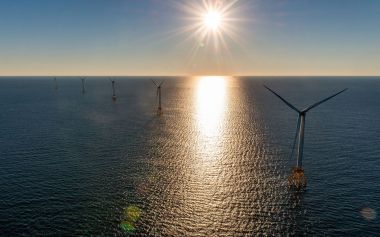 The Block Island Wind Farm. Photo courtesy of Deepwater Wind.
¶ “Why Theresa May should plug the plug on the Hinkley Point nuclear power plant” • Britain’s new Prime Minister should understand what was clear to many. Courting Chinese investment was opening the doors to an undemocratic, expansionist regime, with an appalling human rights record, that has long been a strategic enemy. [This is Money]
World:
¶ Over the last five years, French oil and gas giant Total has acquired stakes in solar giant SunPower and battery integrators Stem and Sunverge, and has…
View original post 519 more words
August 28, 2016
Posted by Christina Macpherson |
Uncategorized |
Leave a comment
 Mining Awareness +
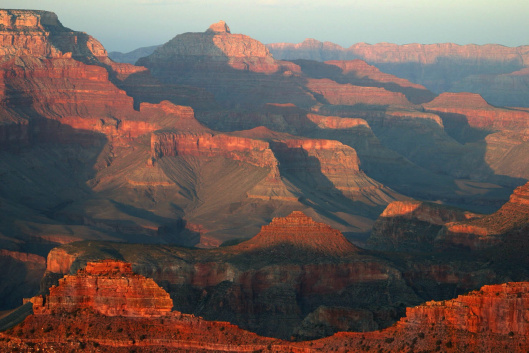
Grand Canyon US National Park Service
By the Sierra Club:
“State of Arizona Asked to Reject Permit Renewals for Uranium Mines Near Grand Canyon National Park August 16, 2016
FLAGSTAFF, Ariz.— Conservation groups today asked the Arizona Department of Environmental Quality (ADEQ) to deny air permits for three uranium mines near Grand Canyon and to continue monitoring a mine that is no longer active. All of these mines are located within watersheds (surface and ground) that drain directly into Grand Canyon National Park and threaten water, air and other important resources of the greater Grand Canyon ecoregion, including soil, wildlife, sacred Native American sites and the health of people who are exposed to the heavy metals and radiation associated with these mines.
Grand Canyon Trust, Sierra Club and the Center for Biological Diversity filed comments [1] with ADEQ outlining ongoing concerns with the four uranium mines. The…
View original post 506 more words
August 28, 2016
Posted by Christina Macpherson |
Uncategorized |
Leave a comment
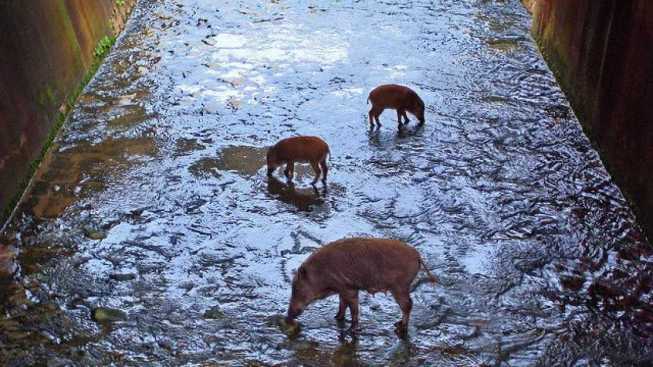
It’s been over five years since tsunami waves crashed into the Fukushima Daiichi power plant and led to its nuclear meltdown. While 20 kilometers (12 miles) of the land around the plant remains a dangerous exclusion zone, the area’s wildlife is taking full advantage of the peace.
Since the nuclear disaster, the population of wild boars has rocketed, much to the dismay of surrounding communities, The Times has reported. In the four years following the disaster, the population of boars is thought to have boomed from 3,000 to 13,000. You might think this ancient Japanese symbol of prosperity and fertility might be welcomed, but it’s estimated they have caused $15 million worth of damage to local agriculture.
Assistant ecology professor Okuda Keitokunin told the Japanese Mainichi newspaper that wild boar, along with racoons, have been using the abandoned houses and emptied buildings in the evacuation zone as a place to breed and shelter.
However, this post-nuclear meltdown town isn’t exactly a safe haven for the boars. It’s thought their diet of roots, nuts, berries and water all contain particularly high concentrations of radiation. The animals show no immediate signs of harm from the radiation, however samples from Fukushima’s wild boar meat has shown they contain 300 times the safe amount of the radioactive element caesium-137. Another study on the area’s fir trees showed evidence of growth mutations.
Hunters have been offered rewards to cull the boars by local authorities. However, the animals are breeding so quickly they can’t keep up. The city of Nihonmatsu, around 56 kilometers (35 miles) from the Fukushima plant, has dug three mass graves capable of holding 1,800 dead boars. Recently, these have become overfilled and authorities are now struggling to cope with the influx of culled beasts.
The boom in boars is a similar story to Chernobyl’s post-meltdown wildlife. A study from late last year showed that the populations of deer and wild boar are thriving in the area surrounding the Ukrainian nuclear power plant.
In a statement Jim Smith, one of the authors of the Chernobyl study, explained, “It’s very likely that wildlife numbers at Chernobyl are much higher than they were before the accident. This doesn’t mean radiation is good for wildlife, just that the effects of human habitation, including hunting, farming, and forestry, are a lot worse.”
http://www.iflscience.com/plants-and-animals/wild-boar-are-thriving-and-causing-havoc-near-fukushima-power-plant/
August 28, 2016
Posted by dunrenard |
Fukushima 2016 | Fukushima continuing, radiation, Wild Boar, Wildlife |
Leave a comment
geoharvey
Science and Technology:
¶ Hydraulic fracturing and unconventional natural gas development may be associated with health issues such as sinus problems, migraines, and fatigue, according to a peer-reviewed study. The study acknowledges its own limitations and says more research is necessary to determine whether fracturing caused the symptoms. [Bloomberg BNA]
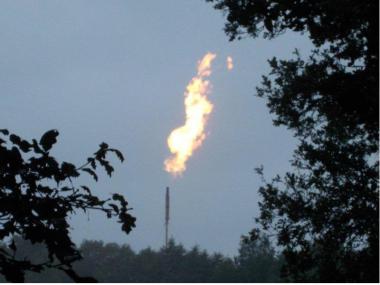 Photo by Battenbrook. CC BY-SA 3.0. Wikimedia Commons.
World:
¶ The UK can meet its energy and climate change targets without the Hinkley Point C nuclear plant, an Energy and Climate Intelligence Unit report found. More wind farms, gas-fired power stations, and demand management could save £1 billion a year “while keeping the lights on and meeting climate targets.” [This is The West Country]
¶ Sun Brilliance says it plans to build a 100-MW solar farm east of Perth. It would be the biggest solar system in West Australia by size, and biggest to date…
View original post 425 more words
August 28, 2016
Posted by Christina Macpherson |
Uncategorized |
Leave a comment
 Nuclear Australia

The global nuclear lobby surely does not care about whether or not the South Australian nuclear waste importing scheme is economically viable. Their fairly desperate need is to sell nuclear reactors to those countries that don’t already have them. In particular, the ‘small nuclear” lobby sees an urgency now, with ‘big nuclear’ failing, to get their industry happening.
A commitment by an Australian State to take in nuclear waste could do the trick for them – as Oscar Archer put it – by unblocking the back end of the nuclear fuel cycle.
Mixed motives in South Australia’s nuclear waste import plan. Online Opinion, Noel Wauchope, 23 Aug 16 In South Australia the continued nuclear push focusses solely on a nuclear waste importing industry. Yet that might not be economically viable. Behind the scenes, another agenda is being pursued – that of developing new generation nuclear reactors.
First…
View original post 888 more words
August 28, 2016
Posted by Christina Macpherson |
Uncategorized |
Leave a comment
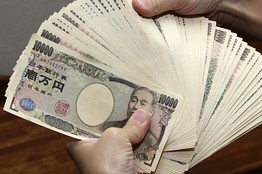
Electric Power Company Holdings Inc.’s stricken Fukushima No. 1 plant topped ¥4.2 trillion by the end of fiscal 2015, it was learned Sunday.
The cumulative total at the end of last March, including costs for radioactive decontamination, reactor decommissioning and compensation payments to affected people and organizations, translate into about ¥33,000 per capita.
The public financial burden is expected to increase, with Tepco seeking further government assistance.
Jiji Press scrutinized the government’s special-account budgets through fiscal 2015 for the reconstruction of areas affected by the March 2011 earthquake and tsunami. It summed up the amounts of executed budgets related to the nuclear disaster and additional electricity rates consumers and businesses were charged by Tepco and seven other regional power utilities to help finance compensation payments, among other costs.
According to the study, a total of ¥2.34 trillion was disbursed for decontamination of affected areas, disposal of contaminated waste and an interim storage facility for tainted soil. The expense was shouldered by the government, mainly through affiliated Nuclear Damage Compensation and Decommissioning Facilitation Corp.
The costs for decontamination and tainted waste disposal will eventually be financed by the proceeds from the sale of Tepco shares held by the government-backed organization. The government guaranteed the loans provided by banks for the acquisition of Tepco shares, and if the lending becomes irrecoverable due to weakness of the Tepco stock price, tax revenue will be used to repay the loans.
The government estimates the proceeds from Tepco share sale at ¥2.5 trillion, but to generate the estimated gain, the Tepco stock price needs to trade at around ¥1,050, up sharply from current market levels of some ¥360.
In addition, the Environment Ministry expects that the cumulative total of decontamination and related costs could surpass the estimated share proceeds by the March 2017 end of the current fiscal year.
A total of ¥1.1 trillion will be used from the energy special account to finance the costs related to the interim storage facility for contaminated soil. The account mostly consists of revenue of the tax for the promotion of power resources development, which is included in electricity bills.
Elsewhere, the government spent ¥1.38 trillion on projects including the decommissioning of reactors at the disaster-crippled Fukushima No. 1 plant, checks on food for radioactive contamination and building a research and development facility.
Tepco and six other power utilities charged their customers at least ¥327 billion in electricity rate hikes after Japan’s worst-ever nuclear accident. Moreover, consumers paid ¥219.3 billion or more for Tepco, chiefly to finance the maintenance of equipment to clean up radioactive water at the plant and the operation of call centers to deal with inquiries about compensation payments.
http://www.japantimes.co.jp/news/2016/08/28/national/public-cost-fukushima-nuclear-accident-cleanup-topped-%C2%A54-2-trillion-end-march/#.V8MWHTXKO-c
August 28, 2016
Posted by dunrenard |
Fukushima 2016 | Catastrophe, Clean-up, Cost, Fukushima continuing |
1 Comment
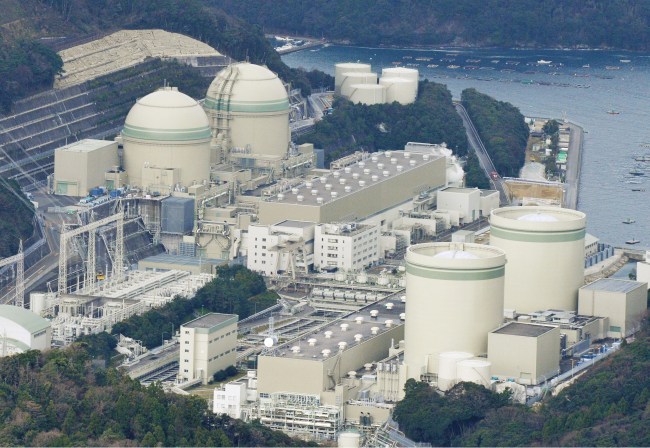
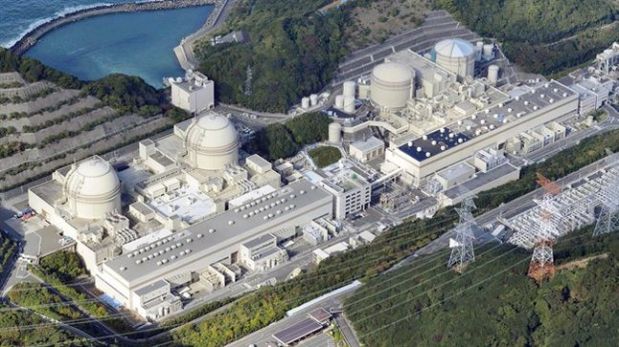
TAKAHAMA, FUKUI PREF. – Some 11,000 residents of Fukui and Kyoto prefectures participated in two major disaster drills on Saturday and Sunday centered on hypothetical nuclear accidents at Kansai Electric Power Co.’s Takahama and Oi nuclear power stations.
The exercises were jointly organized by the central government and the prefectural governments of Fukui, Shiga and Kyoto.
Saturday’s drill at Takahama involved about 9,000 residents. It was intended to examine the workability of evacuation plans approved by the national government last December.
The scenario was a strong earthquake off Wakasa Bay, near the plant. The tremor measured a lower 6 on the Japanese seismic intensity scale of 0 to 7.
The facility’s No. 3 reactor was assumed to have lost all power, leading to the release of radioactive substances — as happened at the Fukushima No. 1 plant in 2011.
Evacuation plans require residents within 5 km of plants to evacuate immediately upon an accident occurring. Those living up to 30 km away are meant to stay indoors until radiation alarms detect fallout in the air.
Some experts have cast doubt on whether it is a good idea to order people to stay indoors when reactors are spewing radiation.
For example, when quakes pummeled Kyushu this spring, about 160,000 houses and buildings collapsed. If that were to occur in Fukui, many residents would find it difficult to shelter indoors.
In the Kumamoto earthquake, there were cases where people returned to their homes after the initial quake, only to be hit when houses collapsed in the second quake, said Hirotada Hirose, a professor emeritus at Tokyo Woman’s Christian University, a specialist in disaster risk management.
“If a severe nuclear disaster occurs, evacuating in phases isn’t likely to go well,” he said. “The evacuation plan should assume many scenarios.”
These could include cases where an earthquake cuts traffic, jamming the roads with panicking residents who ignore advice and are trying to flee in large numbers.
Nonetheless, Saturday’s exercise finished without any major hiccups.
“By doing the drills with local governments and residents over and over again, disaster-prevention skills will improve,” said Fukui Gov. Issei Nishikawa.
As part of the exercise, at the town hall of Mihama, Fukui Prefecture, Kansai Electric workers screened evacuees for radiation exposure. They also checked the buses for contamination.
One of the would-be evacuees was Masatoshi Nose, 46, a city government employee from Obama, Fukui Prefecture.
“As this is a drill, I was able to come here smoothly,” Nose said. “But in a real disaster situation, it may take an entire day.”
Also, poor visibility scrubbed plans to use a Ground Self-Defense Force helicopter to extract 20 residents from near Takahama.About 180,000 people live within 30 km of the plant whose No. 3 and No. 4 reactors were restarted in January and February, only to be halted again after the Otsu District Court in Shiga in March issued a provisional injunction following a petition by residents.
Meanwhile, on Sunday about 2,000 local residents participated in an evacuation drill under a scenario where Kansai Electric’s Oi nuclear power plant in Fukui Prefecture experiences a catastrophic accident.
The drill was organized by the Fukui Prefectural Government.
The residents took shelter in their homes or evacuated to elsewhere in the prefecture as part of an effort to test response times to an accident.
The evacuation drill was only carried out within Fukui Prefecture itself as no evacuation plan covering a wider area has been drawn up for the plant, located in the town of Oi.
Residents within 5 km of the plant fled to the city of Tsuruga, and Oi residents within 30 km of the plant moved to the city of Ono, about 100 km away.
For the evacuees from Oi, a facility was set up for the distribution of iodine tablets to mitigate radiation exposure and to check for contamination.
http://www.japantimes.co.jp/news/2016/08/28/national/fukushima-scenarios-used-evacuation-drills-two-japanese-nuclear-plants/#.V8MWOTXKO-c
August 28, 2016
Posted by dunrenard |
Japan | Evacuation Drill, Oi NPP, Takahama NPP |
Leave a comment
“I put on sunscreen against the sun, but I haven’t found anything against radiation,” said one surfer. “We will only know the true consequences of our time in the water 20 years from now.”
Fukushima, Japan – On 11 March 2011, at 2:46 pm, Japan was hit by a magnitude 9.0 earthquake which generated a tsunami along the coast. The casualties of the disaster included 18,500 dead, 90 percent of whom drowned in the tsunami wave. The bodies of 2,561 people were never recovered.
The tsunami hit the Daaichi nuclear power plant as well, a level-7 catastrophe that was the equivalent of the Chernobyl nuclear power plant meltdown disaster.
Over the course of five years, nearly 50,000 people have worked to decontaminate the plant and stop leaks according to government press releases. They remove between 5 and 30 cm of contaminated soil every day and place them in plastic bags, which are stored on the outskirts of town, pending a better solution.
In Tairatoyoma beach, a prefecture of Fukushima and some 50km from the nuclear plant, was among the most popular areas for Japanese surfers prior to the nuclear accident.
Surprisingly, despite the presence of radiation in the sand and water, some dedicated surfers continue to come here to catch some waves. They are aware of the risks, and the hundreds of bags of contaminated sand piled up on the beach serve as a constant reminder of the health risks to them.
“I put on sunscreen against the sun, but I haven’t found anything against radiation,” said one surfer. “We will only know the true consequences of our time in the water 20 years from now.”
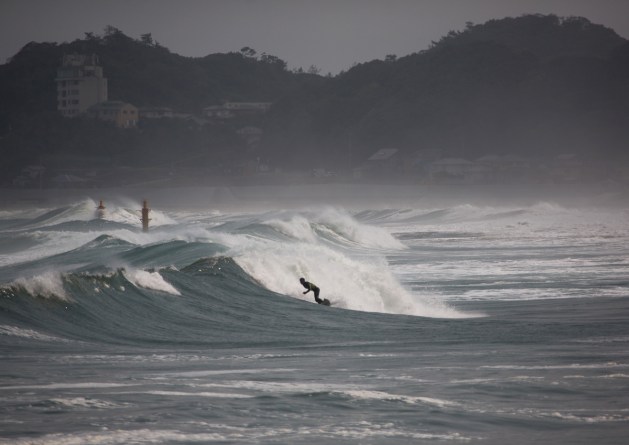
Tairatoyoma beach, in the prefecture of Fukushima, 50km from the nuclear plant, was among the most popular areas with Japanese surfers before the accident.

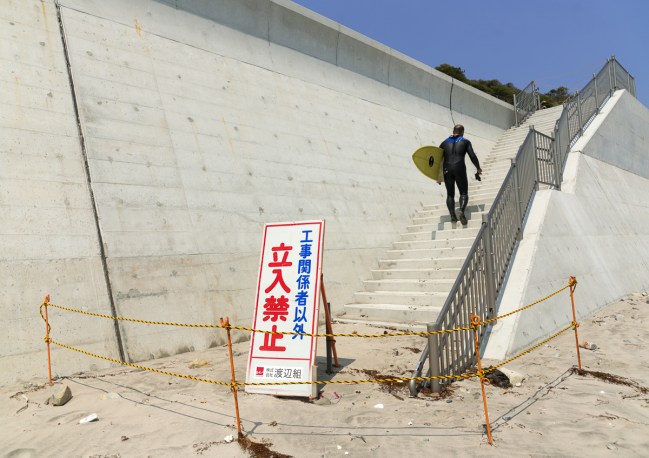
“I come to Tairatoyoma beach and surf several times a week. it is my passion, I can’t stop surfinhg”, says this surfer. The sign next to him in Japanese indicates that the area is restricted area.
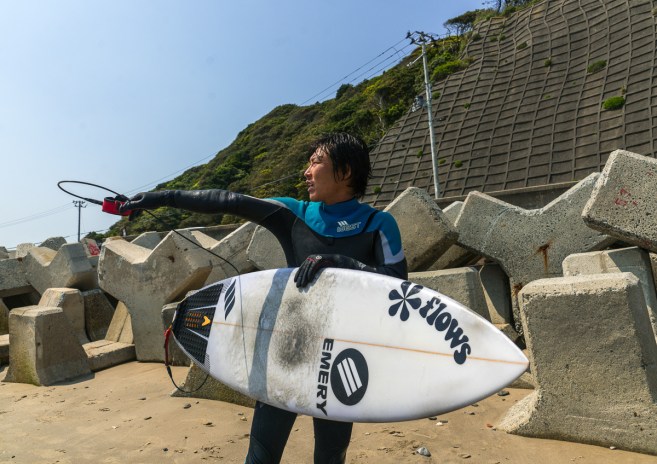
Some surfers were on the beach when the tsunami struck. ‘The earth shook, we came back on Tairatoyoma beach, and a few minutes later, the tsunami wave arrived,’ recalls one surfer. ‘None of the surfers who were on the beach died, as we had time to escape. Those who were in their homes were taken by the waves by surprise and they died.’
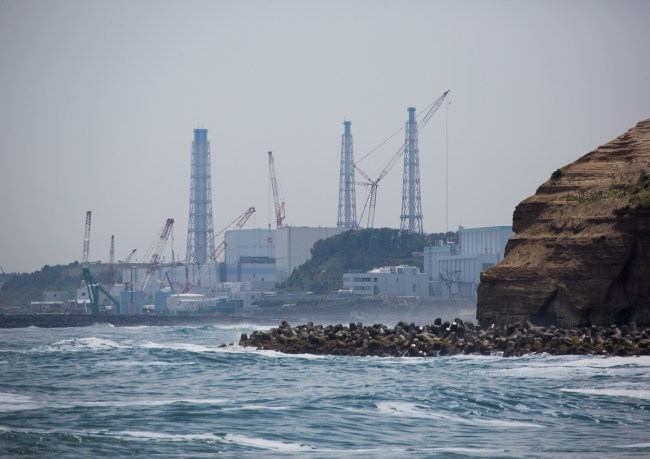
Over the course of five years, nearly 50,000 people have worked to decontaminate the plant and stop leaks. Nearly 500,000 people were evacuated because of the tsunami and the nuclear accident.
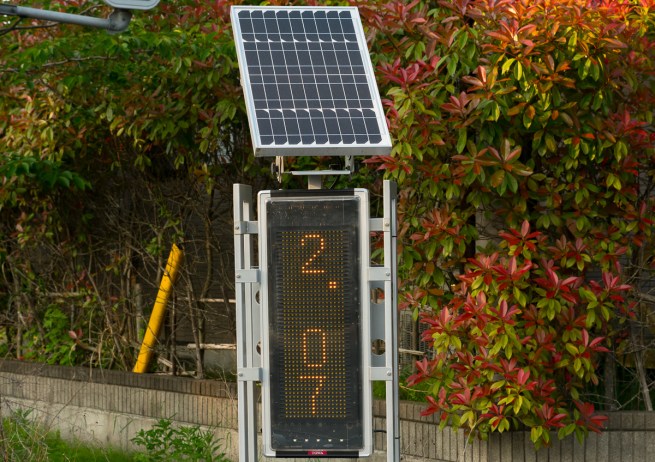
A radiation dosimeter placed in the difficult-to-return zone after the Daiichi nuclear power plant irradiation, Fukushima prefecture, Tomioka, Japan
Radiation sensors indicate the level of radioactivity. But no one is present to read the sensors in the red zones, classified as ‘difficult to return to zones’ by the government.

Roadblock in the difficult-to-return zone after the daiichi nuclear power plant irradiation, Fukushima prefecture, Tomioka, Japan
Residents receive compensation from Tepco company based on the degree of contamination of their homes. In the red zone they receive 1,000$ a month per person. That has created tensions in the population because those who live on the other side of the barrier, like here in Tomioka, do not receive as much.
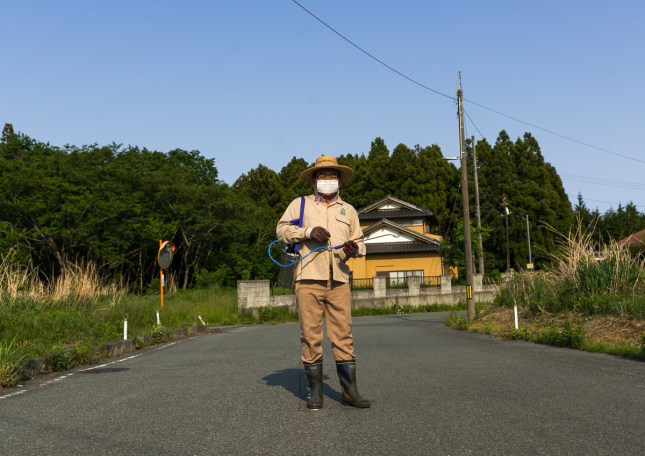
In the ‘orange zone’, residents have the right to visit their home if they wish to take care of it. In the town of Naraha. This man has come to weed his garden. His wife refuses to come back, and he will not bring his children. He never sleeps in his contaminated home. He knows the dangers well as he has worked at the nuclear plant.
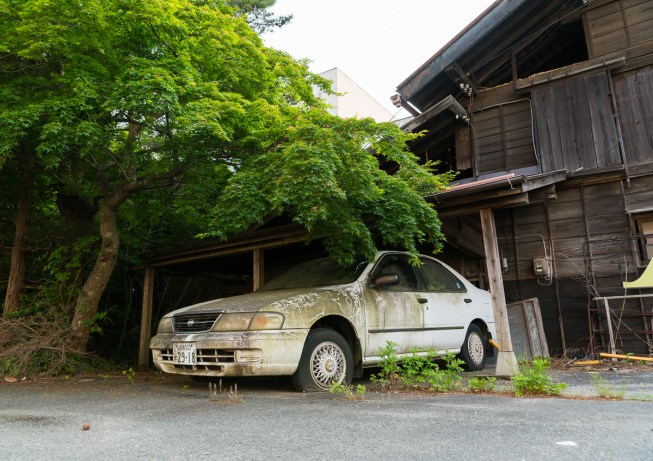
Abandoned car after the 2011 earthquake and tsunami five years after in the difficult-to-return zone, Fukushima prefecture, Tomioka, Japan
Cities distant from the sea, like Tomioka, were only affected by the earthquake and the radiation, not by the tsunami. They have now turned into ghost towns.
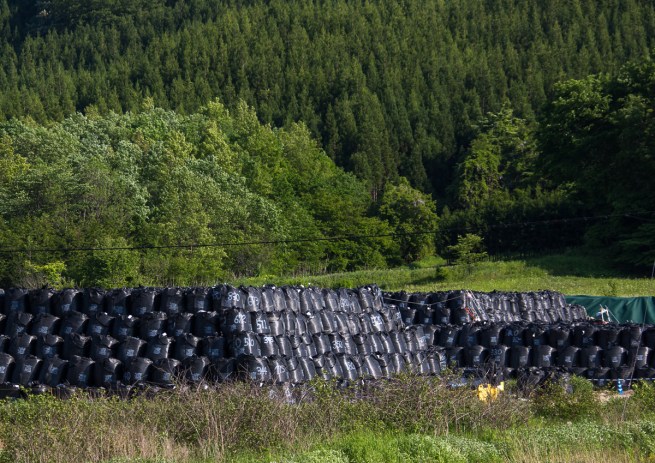
Thirty million tonnes of contaminated soil are stocked in open-air sites.

The Tairatoyoma beach was popular for its sand, but the tsunami washed this sand away. Now, a concrete wall offers protection against the waves. A few rare foreigners venture here to surf according to the Japanese surfers.
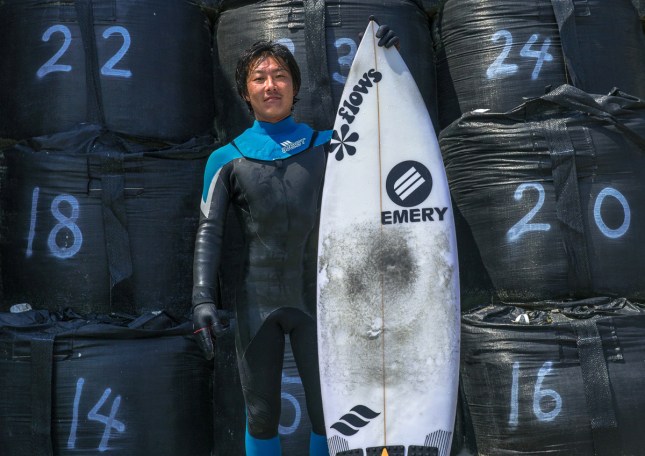
The surfers cannot ignore the riskS. There are hundreds of bags of contaminated sand piled up on the beach. ‘The government keeps telling us that things are back to normal in the region. But we can see that few people have come back. There are only elderly people. Children are kept away,’ said one surfer.
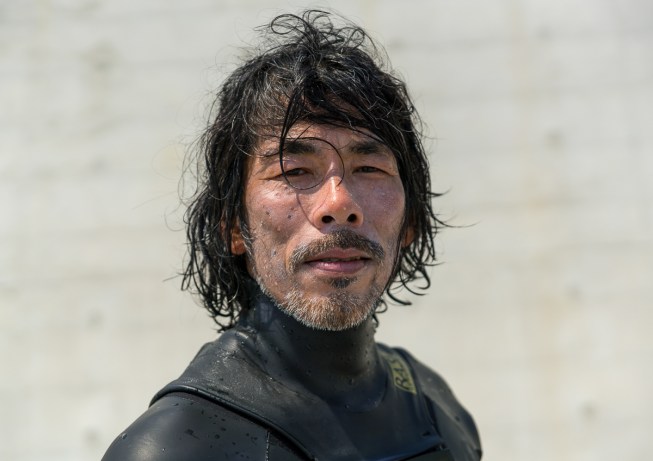
Despite knowing the risks, surfers are undeterred and willing to take the risk to surf in these waters. ‘I put on sunscreen against the sun, but I haven’t found anything against radiation. We will only know the true consequences of our time in the water 20 years from now,’said one surfer.
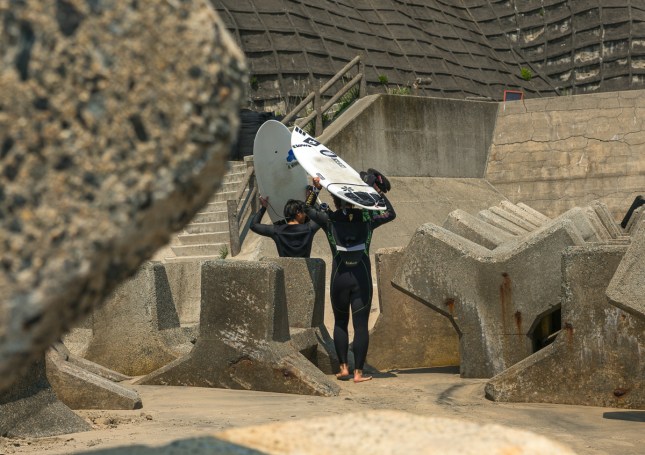
The people from the Fukushima prefecture had supported the construction of the nuclear power plants in the region because this brought jobs and prosperity to this rural area.
An employee of the nuclear plant said that he would never swim there as the water is too contaminated. Five of his friends who worked at the plant have now brain damage.
http://www.aljazeera.com/indepth/inpictures/2016/08/fukushima-surfers-riding-radioactive-waves-160826095748798.html
August 28, 2016
Posted by dunrenard |
Fukushima 2016 | Contamination, Fukushima continuing, radiation |
1 Comment








 nuclear-news
