960 Bq/kg of Cs-134/137 detected from wild boar in Fukushima

According to MHLW (Ministry of Health, Labour and Welfare), 960 Bq/Kg of Cesium-134/137 was measured from the meat of wild boar in Fukushima.
The sampling date was 6/11/2016. This reading is over 9 times much as food safety limit.
Cs-134 density was 154 Bq/Kg to prove it is contaminated from Fukushima accident.
From this report MHLW released on 7/19/2016, significant density of Cs-134/137 was detected from all of 33 wild boar samples and it exceeded the food safety limit (100 Bq/Kg) in 2/3 samples.
MHLW reports none of these wild boar meat was distributed for sale.
http://www.mhlw.go.jp/file/04-Houdouhappyou-11135000-Shokuhinanzenbu-Kanshianzenka/0000123667_18.pdf
http://fukushima-diary.com/2016/07/960-bqkg-of-cs-134137-detected-from-wild-boar-in-fukushima/
Surf Contest in Minamisoma, Fukushima

On July 17, 2012, they had a national surf contest in Minami Soma city, Fukushima..
In Fukushima, Minami Soma City, after the nuclear accident, for the first time a surfing tournament took place.
Competition in Minami Soma after the nuclear accident had been canceled. It was held for the first time in six years.
Before March 2011, Minami Soma was known as one of Japan’s leading surfing spots.
The evacuation order having been lifted in most of Minami Soma city, Minami Soma city aimed to boost its reconstruction by reviving its surf contest on its Kitaizumi coast.
200 participants from all over Japan came to engage in that surf contest.
Memo: Residents got 3 billion yen to host Hamaoka nuclear plant
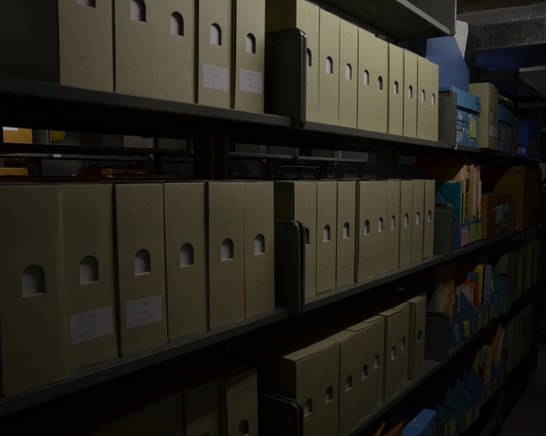
Holders of documents and memos of a residents group run 16 meters in length. The papers, related to Chubu Electric Power Co.’s Hamaoka nuclear power plant, are stored at Rikkyo University’s Research Center for Cooperative Civil Societies in Tokyo’s Toshima Ward.
Researchers now have a clearer idea of how much it costs to win over residents in a town hosting the most dangerous nuclear facility in Japan. The price is at least 3 billion yen ($28.3 million) over two decades, according to a memo on display at a university in Tokyo.
The memo was part of a trove of documents kept by the head of a residents group in Hamaoka, Shizuoka Prefecture, where Chubu Electric Power Co.’s Hamaoka nuclear power plant is located.
The documents, on display at Rikkyo University’s Research Center for Cooperative Civil Societies in Toshima Ward since May, also show how the “cooperation money” was used to improve the town, including infrastructure projects, and add beauty to a festival.
In addition, the documents provide details of the residents’ demands and how the money was distributed.
“As far as I know, this is the first time that a series of documents produced by the party that accepted hosting the nuclear plant has been disclosed,” said Tomohiro Okada, professor of local economy at Kyoto University’s graduate school. “Utilities were struggling to secure land for a nuclear power station, so it was their old trick to win over opponents with money.”
He said researchers are aware that electric companies have used such tactics across the nation. But they were largely in the dark about details of this approach because the utilities’ financial statements have not provided any information on the topic.
Genkichi Kamogawa, who chaired the Sakura district council for countermeasures for the Hamaoka nuclear power plant, preserved the memo and the in-house documents in 723 folders.
Kamogawa died in 1999 at the age of 84. His relatives offered the papers to the university after his death.
The town of Hamaoka is now part of Omaezaki.
The Hamaoka plant has been described as the most dangerous nuclear plant in Japan because of its proximity to a long-expected huge earthquake off the prefecture.
The nuclear plant was shut down in May 2011 under the request of then Prime Minister Naoto Kan, following the disaster at the Fukushima No. 1 nuclear power plant. Chubu Electric now plans to restart reactors at the Hamaoka plant.
The Nagoya-based utility approached the town of Hamaoka in 1967 about plans to build the nuclear power plant there. The residents council was formed in August 1968 to gather opinions about the project.
Kamogawa had held a senior position at the council from the start, including chairman between fiscal 1978 and fiscal 1990. He also served as a member of the Hamaoka town assembly.
The in-house documents include the council’s financial reports. They also show minutes of meetings where requests were compiled in relation to construction of new reactors at the plant.
The council had enormous sway over the fate of Chubu Electric’s plans to add reactors to the plant. The utility’s donations for each reactor were listed in the documents.
Kamogawa’s memo showed that the donations had reached 3 billion yen by the end of August 1989, after construction of the No. 4 reactor had started.
The council also devised its own system to receive the flow of money coming from Chubu Electric and other organizations.
The council’s terms stipulated that the donations should be used to contribute to the welfare of residents and development of their community.
The money was spent to build roads, a sewage system, parks, a disaster-preparedness facility, and lights for security.
One of the documents also stated that 10 million yen each was given to four neighborhood associations in the town to create gorgeous floats for a festival.
Kazuo Shimizu, 91, who succeeded Kamogawa in fiscal 1991 as the council’s chairman, said the acceptance of donations was meant for the betterment of the local community.
“We should benefit from the nuclear power plant project,” said Shimizu, a former Hamaoka assemblyman. “We genuinely wanted to improve the town’s infrastructure.”
A Chubu Electric official in charge of local community affairs acknowledged that the company offered the money to the council.
“It was expected of us to help invigorate the host community since we were causing local residents trouble,” the official said. “But we cannot give details, such as the amount of money.”
The two oldest reactors at the Hamaoka plant are now being decommissioned.
Chubu Electric plans to bring the remaining three reactors online by spending 400 billion yen to build 22-meter high sea walls to protect the plant from a powerful tsunami.
Was US Govt. Web Site Overwhelmed By Opposition to EPA Radioactive Drinking Water Recommendations?

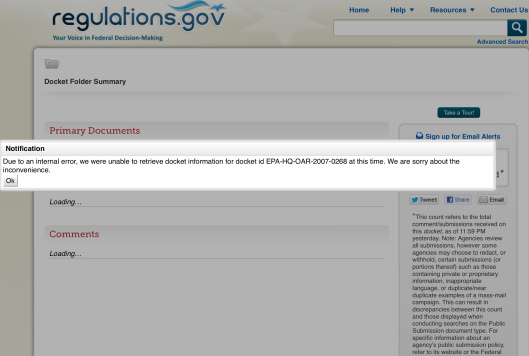

https://www.regulations.gov/docket?D=EPA-HQ-OAR-2007-0268 Docket EPA-HQ-OAR-2007-0268, “Guide for Drinking Water after a Radiological Incident”
Was the US Government’s Regulations.gov website overwhelmed by opposition to the EPA’s Radioactive Drinking Water Recommendations? It appears so. Over the course of Monday evening it was difficult or even impossible to get on the web site to place a comment. After trying numerous times in a row, we were finally able to successfully post a comment. Even while posting the first time the web site failed with “an unexpected error”. Lucky the comment was pre-typed and only pasted into the form. We even attempted to get in from multiple directions. So, either it was overwhelmed with traffic, or it was programmed so that one had to try multiple times to get on, in an effort to block participation. None of the recently uploaded comments are by people wanting more radiation in their drinking water. Hence, we conclude that…
View original post 139 more words
Sierra Club Notes Apparent Anomalies & Contradictions in EPA Radioactive Drinking Water PAG: Requests Comment Period Extension
“Within the proposed draft Protective Action Guide (PAG) for drinking water following a nuclear accident are numerous apparent anomalies and contradictions that should and could be identified and rectified. Therefore, the Sierra Club, with over 2 million members and supporters respectfully requests that the EPA extend the public comment period, scheduled to end July 25, 2016, to November 25, 2016, a 120 day extension.”
Emphasis our own. Sierra Club comment: https://www.regulations.gov/contentStreamer?documentId=EPA-HQ-OAR-2007-0268-0329&attachmentNumber=1&disposition=attachment&contentType=pdf This is apparently being ignored by the US EPA.
“The Sierra Club is an environmental organization in the United States. It was founded on May 28, 1892, in San Francisco, California, by the Scottish-American preservationist John Muir, who became its first president.” https://en.wikipedia.org/wiki/Sierra_Club
Current President Aaron Mair https://en.wikipedia.org/wiki/Aaron_Mair
Mair’s testimony re Indian Point: http://www.clearwater.org/wp-content/uploads/2009/11/Summary-Clearwaters-Indian-Point-EJ-Contention_testimony_10.23.12_MJG_FINAL.pdf
An excerpt: “Evacuation: If there is an incident, he said, you can’t leave Peekskill from the south because you’d be…
View original post 98 more words
Independent nuclear analyst David Noonan scrutinises South Australia’s nuclear waste import plan

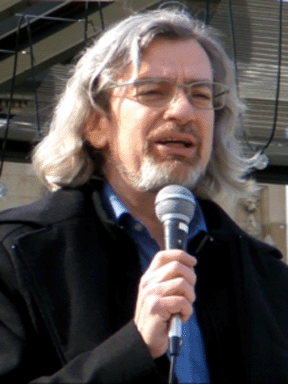
SA is targeted for five nuclear dumps and high level waste processing
Brief by David Noonan, Independent Environment Campaigner
The Nuclear Royal Commission recommended SA pursue nuclear waste storage and disposal “as soon as possible” – requiring five waste dumps and a high level nuclear waste encapsulation processing facility.
The Final Report Ch.5 “nuclear waste” and the Findings Report (p.16-20) are reliant on a consultancy “Radioactive waste storage and disposal facilities in SA” by Jacobs MCM, summarised in Appendix J.
SA is targeted for above ground high level nuclear waste storage, without a capacity to dispose of wastes, exposing our society to the risk of profound adverse impacts, potential terrorism and ongoing liabilities.
The State government is in denial on the importance of nuclear waste dump siting by claiming social consent could be granted before we know what’s involved in siting up to five nuclear dumps across…
View original post 425 more words
Climate Change, Drought Fan Massive Sand Fire, Forcing 20,000 Californians to Flee

On Friday, amidst temperatures exceeding 100 degrees Fahrenheit, and at a time when California is now entering its fifth year of drought in a decade when seven out of the last ten years have been drought years, a rapidly growing and dangerous wildfire erupted in the hills north of Los Angeles.
(Sand Fire looms over Santa Clarita, California. Video source: Sand Fire Time Lapse.)
The Sand Fire, which some firefighters are calling practically unprecedented, sparked before typical wildfire season peak and began a rapid spread that consumed 10,000 acres per day from Friday through early Monday. Nearly 3,000 firefighters scrambled to gain a foothold against the blaze, but were somewhat unprepared as contracted water-bomb aircraft from Canada won’t be available until next month, during what is usually the worst part of fire season. The aircraft assistance was planned as extra fire-suppression capability for Santa Clarita, but typical fire…
View original post 594 more words
July 25 Energy News

Opinion:
¶ “Why fossil fuel industry needs South Australia ‘experiment’ to fail” • Price spikes, such as what recently happened in South Australia, used to be an important part of the business model for coal and gas generators. With the advent of renewable power, the spikes have all but gone away, so when one comes, they blame renewables. [RenewEconomy]
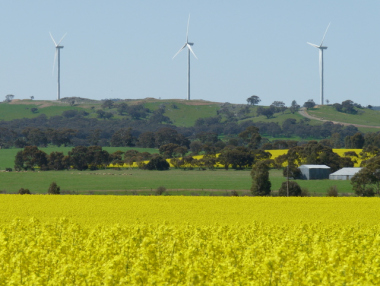 Wind turbines in South Australia.
Photo by Fairv8. CC BY-SA 4.0. Wikimedia Commons.
World:
¶ Profits at Bord na Móna, a company originally formed to harvest Irish peat for fuel, were dented as the group took a €23.6 million impairment charge against the carrying value of its two thermal power stations at Edenderry. The company will become an alternative energy provider, centered on biomass, wind and solar power. [Irish Times]
¶ The UK’s Marine Management Organisation granted approval for deployment and operation of a 30-MW tidal…
View original post 530 more words
USA’s African Methodist Episcopal church speaks out on climate change
 World can’t afford to silence us’: black church leaders address climate
change
One of the largest and oldest black churches in the US warns that black people are disproportionally harmed by global warming and fossil fuel pollution, Guardian, Oliver Milman, 24 July 16, African American religious leaders have added their weight to calls for action on climate change, with one of the largest and oldest black churches in the US warning that black people are disproportionally harmed by global warming and fossil fuel pollution.
The African Methodist Episcopal church has passed its first resolution in its 200-year history devoted to climate change, calling for a swift transition to renewable energy.
“We can move away from the dirty fuels that make us sick and shift toward safe, clean energy like wind and solar that help make every breath our neighbors and families take a healthy one,” states the resolution, which also points to research showing that black children are four times as likely as white children to die from asthma.
“Damage to our climate puts the health of children, elderly, and those with chronic illnesses at greater risk and disproportionately impacts African Americans. We believe it is our duty to commit to taking action and promoting solutions that will help make our families and communities healthier and stronger,” stated Bishop John White, president of the council of bishops of the AME church.
The resolution follows an open letter sent by African American clergy last year that called for political leaders to take “bold action to address climate change”……..
Dupont-Walker said that the church’s voter mobilization campaign will work throughout the 2016 election cycle to question candidates on climate change. Local officials and landlords will also be put under pressure over inadequate housing and infrastructure that helps spread pollution to black communities.
According to the NAACP, African Americans emit far less carbon dioxide per person compared with white people and yet will bear the brunt of heat-related deaths, due to the concentration of black people in cities…….https://www.theguardian.com/environment/2016/jul/24/african-methodist-episcopal-church-climate-change-letter
B61 thermonuclear warheads in Turkey – a worry in the light of coup attempt
Coup attempt in Turkey raises a nuclear concern at US air base Incirlik Air Base was an operational centre of the attempted coup. It is also America’s largest foreign stockpile of nuclear weapons. South China Morning Post, 24 July, 2016 A little more than 100 miles from the territory held by Islamic State, there is a little piece of Americana. It has an eight-lane swimming pool, a baseball diamond and housing tracts built on carefully manicured cul-de-sacs.
The Incirlik Air Force Base in Turkey has some other American assets: several dozen B61 thermonuclear warheads. The base has been a linchpin in Nato’s southern flank for more than half a century, the staging ground for US anti-terrorism missions and the fight against Islamic State.
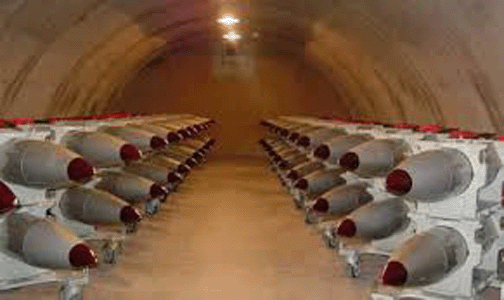
But the failed military coup against Turkish President Recep Tayyip Erdogan has increased long-standing concerns about the military usefulness and security of the Incirlik armoury, America’s largest foreign stockpile of nuclear weapons. Security remains at the highest level. Electrical power was restored Friday after a weeklong blackout that strained living conditions at the base. The 3,000 US service personnel stationed there have been ordered to remain inside the gates. Hundreds of dependents were sent home months ago because of fears of a terrorist attack.
The base was an operational centre of the attempted coup. Its commander and his subordinates were arrested on suspicion of trying to overthrow the Turkish government, leaving junior officers in control. The developments have shocked US military experts who say they demonstrate a worrying level of instability in Turkey’s military command close to the B61s.
Defence officials have never acknowledged the existence of these weapons on the base and refused at news briefings after the coup attempt to answer questions about them…….
The weapons are in underground vaults in a mile-long security zone at the base, protected by an Air Force guard unit with attack dogs. The nearly 12-foot-long weapons have devices that are supposed to prevent unauthorised detonation, but experts are divided on the effectiveness of those controls.
Unlike the strategic weapons that the US deploys in missile silos, submarines and intercontinental bombers, the B61s at Incirlik are tactical weapons that can be deployed at low altitude in the battlefield……..
“The weapons should be pulled back,” said Hans Kristensen, a nuclear weapons expert at the Federation of American Scientists. “They have been in excess of what is needed in Europe for the past two decades. And now we have this new situation. This is the US nuclear base closest to a war zone. The country has a deeply fractured political and military system.” http://www.scmp.com/news/world/europe/article/1994052/coup-attempt-turkey-raises-nuclear-concern-us-air-base
Hillary Clinton selects pro nuclear advocate Tim Kaine as running mate
 GOP. 22 July 16 “………Kaine Supported Nuclear Power As A Solution To Meeting Virginia’s Energy Needs. “In Virginia last week, a panel on reducing climate change appointed by Gov. Timothy M. Kaine (D) considered adding nuclear power to its menu of recommendations. The governor’s energy plan also supports nuclear power as one solution to meeting the state’s energy needs, which are expected to grow by the equivalent of a million homes in the next decade.” (Lisa Rein and Christy Goodman, “Little Outcry On Nuclear Reactor Proposal,” The Washington Post, 8/4/08)…..https://gop.com/meet-tim-kaine/
UK proposal to offer subsidy contracts to Russia, China and South Korea to build nuclear power stations!




Russia, China and South Korea ‘should be invited to build UK nuclear plants’, Telegraph Emily
Gosden, energy editor 23 JULY 2016
Russian, Chinese and South Korean nuclear companies should be offered subsidy contracts to build reactors in the UK if they are cheaper than other projects already under development, a prominent nuclear lobbyist has said.

Tim Yeo, the former chairman of the House of Commons energy select committee, said EDF’s proposed £18bn plant at Hinkley Point, which is expected to get the go-ahead this week, should be allowed to proceed, but he urged the Government to rethink its approach to future projects.The Japanese-owned Horizon and Franco-Japanese NuGen consortia are both developing plans for reactors at sites in the UK and hope to secure approval for their technologies and subsidy deals from the Government.
Mr Yeo, the MP for South Suffolk for 32 years until the 2015 general election, now chairs New Nuclear Watch Europe, a lobby group whose members include the Korean nuclear firm Kepco. He urged the Government to “urgently examine which nuclear vendors can deliver the cheapest electricity, maximise the number of UK supply chain jobs and minimise the risk of construction delays”………..
He also advocated a new funding approach under which “most of the construction costs are funded by government borrowing throughout the construction period” to help cut financing costs. http://www.telegraph.co.uk/business/2016/07/23/russia-china-and-south-korea-should-be-invited-to-build-uk-nucle/
Rail transport of nuclear wastes across North Wales is opposed by residents
 The People against Wylfa B (PAWB) group leafleted railway stations across North Wales Demonstrations have been held against radioactive waste being transported by rail along the North Wales coast. Daily Post,, 24 JUL 2016 BY GARETH WYN-WILLIAMS

Members of PAWB (People Against Wylfa B) handed out leaflets at train stations including Bangor, Llandudno Junction, Colwyn Bay and Rhyl on Saturday morning, alerting commuters of the nuclear waste that is transported up to twice a week from Wylfa to Sellafield in Cumbria. The Nuclear Decomissioning Authority (NDA) say such waste has been transported since 1962 without a single accident.
But PAWB argues that if a train carrying waste was to be involved in a collision, residents would be exposed to “highly dangerous and lasting radiation”. Anti-nuclear campaigner Dylan Morgan, who has been protesting for years against a new nuclear plant on Anglesey, said: “The Wylfa trains go weekly on the North Wales coast line through our towns and villages, often at peak times and within three metres of ordinary passenger trains.
“Each of these waste flasks contain hundreds of extremely radioactive atomic fuel rods. Should one of these flasks become damaged, we would be exposed to highly dangerous and long lasting radiation.
“At Sellafield, some of that nuclear waste is reprocessed. That waste contains plutonium, which can be used for nuclear bombs like Trident.
“Sellafield receives far more waste than it can manage and has become a highly radioactive waste dump, which will pollute the environment for centuries to come and cannot be stopped from radiating.”…….http://www.dailypost.co.uk/news/north-wales-news/campaign-against-anglesey-nuclear-train-11652484
Legal dispute in Britain over £7bn nuclear waste clean-up contract
 High court to rule on £7bn nuclear clean-up contract https://next.ft.com/content/5c2dbe24-4f39-11e6-8172-e39ecd3b86fc A win for Energy Solutions would raise questions about procurement process y: Gill Plimmer, 24 July 16
Britain’s Nuclear Decommissioning Authority is in the High Court this week for the final ruling in a long-running damages claim on a £7bn deal to clean up Britain’s oldest nuclear power plants.
Energy Solutions, a US-based company, filed a high court writ in 2014 after losing the contract to engineering company Babcock and Texas-based Fluor. It had been managing the nuclear sites for 14 years and in documents filed to the court alleged that the NDA did not follow its own procedures when the new contract was awarded and that its point scoring system was flawed.
At the heart of the dispute is one of the largest contracts ever put out to tender by the government, which involves about 3,000 workers cleaning 12 of Britain’s 25 nuclear sites. These include Sizewell, Hinkley and Dungeness — built in the 1960s to produce plutonium to make nuclear weapons but now at the end of their lives.
If the NDA loses the case it could cost the government hundreds of millions of pounds and will again raise questions over the way large and sensitive public-sector contractsare awarded.
The judgment is expected on July 29 and will rule whether the NDA made serious errors in awarding the contract. If so, there will be further hearings, which could stretch into 2017, to decide any payment for damages.
Although Energy Solutions competed for the contract in partnership with the US company Bechtel, Energy Solutions is taking legal action alone.
Energy Solutions, which has since been taken over by the construction and support services company Atkins, declined to comment. Atkins said it had “no economic interest in or any control over the resolution of the … claim, which has been retained by the remaining part of the Energy Solutions business”.
A series of botched contracts has raised concerns over the government’s procurement processes. The referral of G4S and Serco to the Serious Fraud Office for overcharging on electronic tagging contracts for offenders and the West Coast main line rail franchising debacle two years ago are among examples.
In 2012, FirstGroup won a 13-year deal to manage the rail network linking London to Scotland, only for Virgin Trains to challenge the decision in court and eventually force a government U-turn.
An NDA spokesperson said: “We continue to await the judgment being handed down and cannot comment before this time.”
EPA’S OWN EXPERTS DISAGREE ON ASSESSMENT OF WASTES AND SOLUTION AT WEST LAKE LANDFILL
 NEW REPORT SHOWS EPA’S OWN EXPERTS DISAGREE ON REGION 7 ASSESSMENT OF WASTES AND SOLUTION AT WEST LAKE LANDFILL, Just Moms St Louis, 07/22/2016
New Report shows EPA’s own experts disagree on Region 7 assessment of wastes and solution at West Lake Landfill.A new report released by Bob Alvarez and Lucas Hixson draws conclusion from the newly released EPA National Remedy and Review Board critique as well as documents and emails discussing the 2008 decision to cap-and-leave the wastes at West Lake Landfill. This report is short and a must read for everyone. There are links to source documents at the end of the report.This report clearly describes the disastrous decisions being made by Region 7, despite EPA’s own top scientists.
This, in fact, is why Missouri’s Federal Representatives and Senators all cast a vote of no confidence in EPA’s ability to successfully manage and remediate the atomic weapons waste at the landfill. Thus, prompting legislation this past fall to take control of the radioactive wastes away from EPA and give jurisdiction to the Army Corps of Engineers FUSRAP.
Based on the linked report, It sounds like EPA’s review board and top scientists have also cast their own vote of no confidence in Region 7.
You can find the report here.
To learn more about FUSRAP and its involvement in St. Louis clickhere.
To follow the status of bipartisan legislation, HR4100, click here.
Dangerous events that were not considered in the 2008 EPA Record of Decision.
An underground fire, or smoldering subsurface event, has been burning since 2010 and is expected to burn for another 5-10 years. This underground fire is the size of 6 football fields. Everyday this fire burns it is inching its way closer to the known nuclear waste. Attorney General Chris Koster warned that a Chernobyl-like event could occur if the fire meets the radioactive waste, i.e. radioactive particles could attach to steam or smoke and be released into the atmosphere……… http://www.stlradwastelegacy.com/new-report-shows-epas-own-experts-disagree-on-region-7-assessment-of-wastes-and-solution-at-west-lake-landfill-07222016/
-
Archives
- February 2026 (211)
- January 2026 (308)
- December 2025 (358)
- November 2025 (359)
- October 2025 (376)
- September 2025 (258)
- August 2025 (319)
- July 2025 (230)
- June 2025 (348)
- May 2025 (261)
- April 2025 (305)
- March 2025 (319)
-
Categories
- 1
- 1 NUCLEAR ISSUES
- business and costs
- climate change
- culture and arts
- ENERGY
- environment
- health
- history
- indigenous issues
- Legal
- marketing of nuclear
- media
- opposition to nuclear
- PERSONAL STORIES
- politics
- politics international
- Religion and ethics
- safety
- secrets,lies and civil liberties
- spinbuster
- technology
- Uranium
- wastes
- weapons and war
- Women
- 2 WORLD
- ACTION
- AFRICA
- Atrocities
- AUSTRALIA
- Christina's notes
- Christina's themes
- culture and arts
- Events
- Fuk 2022
- Fuk 2023
- Fukushima 2017
- Fukushima 2018
- fukushima 2019
- Fukushima 2020
- Fukushima 2021
- general
- global warming
- Humour (God we need it)
- Nuclear
- RARE EARTHS
- Reference
- resources – print
- Resources -audiovicual
- Weekly Newsletter
- World
- World Nuclear
- YouTube
-
RSS
Entries RSS
Comments RSS
 nuclear-news
