

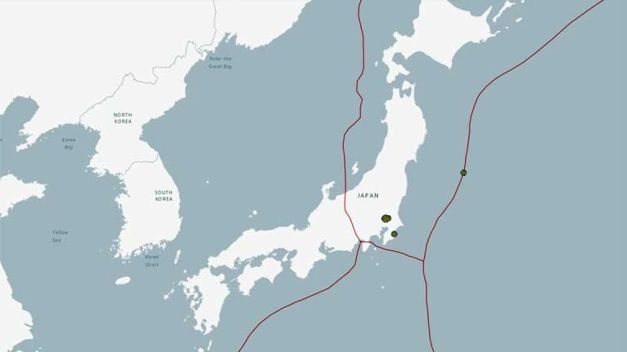
Tokyo was struck by a third quake in four days on Jul 20, but there were no reports of damage or casualties.

 Russia Offers India Nuclear Aircraft Carrier Vivek Raghuvanshi, Defense July 11, 2016 NEW DELHI — Russia has offered its nuclear aircraft carrier, dubbed “Storm,” to India for purchase, a senior Indian Navy official said. The offer comes as India and the US discuss the transfer of technology for India’s future nuclear aircraft carrier, the INS Vishal.
A diplomat with the Russian Embassy confirmed that a Russian team visiting India last week made the offer.
Krylov State Research Center (KSRC), a Russian shipbuilding research and development institute, is designing the carrier, also known as Shtorm or Project 23000E…….http://www.defensenews.com/story/defense/naval/navy/2016/07/11/russia-india-nuclear-aircraft-carrier-storm/86937106/
Will solar, batteries and electric cars re-shape the electricity system?, UBS, 20 July 16,
¶ Lark Energy has secured a UK patent for a new renewable solar thermal technology that uses a Fresnel lens to concentrate solar irradiation, which in turn heats tubes containing water to make steam. The angle of the lens can also be adjusted using a vertical axis to track the sun’s rays, maximizing the levels of irradiation. [Solar Power Portal]
 Simone Perini, renewable energy
development engineer, and the Larkfleet thermal system
¶ It’s no news that Greenland is in serious trouble, but now, research has helped quantify just how bad its problems are. A satellite study, published last week in the journal Geophysical Research Letters, suggests that the Greenland ice sheet lost a whopping 1 trillion tonnes of ice between the years 2011 and 2014 alone. [The Independent]
¶ Energy consumed at data centers could account for as much as 2%…
View original post 782 more words

What I’m worried about is the amount of tax-payers’ money that is going into this State-wide nuclear brainwash. Is Premier Jay Weatherill squandering so much of the State’s coffers on this fool’s enterprise that he and the rest of the politicians will feel that they MUST go on and complete the damn thing – commit to an international nuclear waste dump? Current estimate is $13 million. But will it be more?
From July 29 to October 20 they will be sending teams of nuclear spruikers all over the State of South Australia.
Teams from Nuclear Fuel Cycle Royal Commission Consultation and Response Agency will be there to spread the jolly word of the biased Nuclear Fuel Chain Royal Commission. Who’s on this Agency anyway? Can we expect to hear, yet again, from Greg Ward and Chad Jacobi giving theirr polished pro nuclear spiel? Will there be deceptive and trivialised…
View original post 17 more words
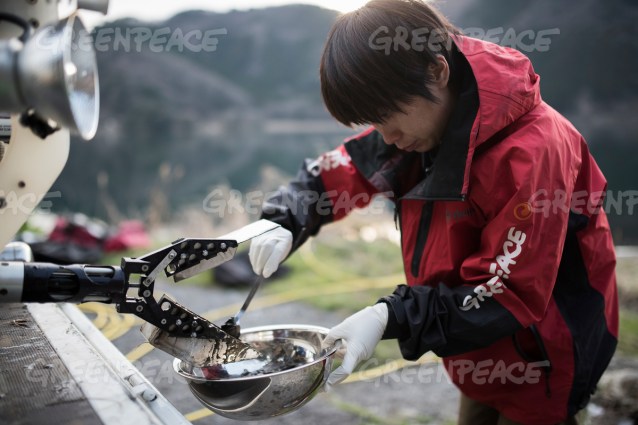
Sediment Sampling at Lake Biwa in Japan: Mai Suzuki from Greenpeace Japan, removes sediment samples from the ROV grabber (Remote Operated Vehicle), at Lake Biwa. Greenpeace has been surveying lake Biwa to conduct baseline sampling. The lake is located as close as 30 km from the Takahama nuclear plant owned by Kansai Electric. In the event of a severe accident Lake Biwa would be at risk of major radioactive contamination. The lake provides the drinking water for 14,5 million people in Shiga Prefecture, the city of Kyoto and the wider Kansai region. The citizens of Shiga recently won a historic legal action that forced the immediate shutdown of Takahama reactor #3, Kansai electric is determined to overturn the legal action on appeal and restart both Takahama 3 and 4 reactor.
Tokyo, 21 July 2016 – Radioactive contamination in the seabed off the Fukushima coast is hundreds of times above pre-2011 levels, while contamination in local rivers is up to 200 times higher than ocean sediment, according to results from Greenpeace Japan survey work released today.
“The extremely high levels of radioactivity we found along the river systems highlights the enormity and longevity of both the environmental contamination and the public health risks resulting from the Fukushima disaster,” said Ai Kashiwagi, Energy Campaigner at Greenpeace Japan.
“These river samples were taken in areas where the Abe government is stating it is safe for people to live. But the results show there is no return to normal after this nuclear catastrophe,” said Kashiwagi.
Riverbank sediment samples taken along the Niida River in Minami Soma, measured as high as 29,800 Bq/kg for radiocaesium (Cs-134 and 137). The Niida samples were taken where there are no restrictions on people living, as were other river samples. At the estuary of the Abukuma River in Miyagi prefecture, which lies more than 90km north of the Fukushima Daiichi plant, levels measured in sediment samples were as high as 6,500 Bq/kg.
The lifting of evacuation orders in March 2017 for areas that remain highly contaminated is a looming human rights crisis and cannot be permitted to stand. The vast expanses of contaminated forests and freshwater systems will remain a perennial source of radioactivity for the foreseeable future, as these ecosystems cannot simply be decontaminated.
Caesium-137 has a half life of 30 years, and will continue to pose a risks to the the environment and human health for hundreds of years. Cs-137 contamination in seabed samples near the Fukushima plant was measured at up to 120 Bq/kg – compared to levels pre-2011 of 0.26 Bq/kg. Further, the levels of contamination found 60km south of the Fukushima Daiichi nuclear plant were comparable with those found within 4km of the plant. Numerous marine science investigations, have concluded that these higher levels are one explanation for some marine species still showing higher cesium levels than the background levels in seawater.
“The radiation levels in the sediment off the coast of Fukushima are low compared to land contamination, which is what we expected and consistent with other research,” said Kendra Ulrich, Senior Global Energy Campaigner at Greenpeace Japan. “The sheer size of the Pacific Ocean combined with powerful complex currents means the largest single release of radioactivity into the marine environment has led to the widespread dispersal of contamination.”
Most of the radioactivity in Fukushima Daiichi reactor units 1-3 core fuel in March 2011 remains at the site.
“The scientific community must receive all necessary support to continue their research into the impacts of this disaster,” said Ulrich.
“In addition to the ongoing contamination from forests and rivers, the vast amount of radioactivity onsite at the destroyed nuclear plant remains one of the greatest nuclear threats to Fukushima coastal communities and the Pacific Ocean. The hundreds of thousands of tonnes of highly contaminated water, the apparent failure of the ice wall to reduce groundwater contamination, and the unprecedented challenge of three molten reactor cores all add up to a nuclear crisis that is far from over,” said Ulrich.
A radiation survey team onboard the research vessel Asakaze, supported by the Greenpeace flagship Rainbow Warrior, conducted underwater survey work along the Fukushima coastline from 21 February to 11 March this year, as well collecting samples in river systems. The samples were measured at an independent laboratory in Tokyo.
Link to the report, Atomic Depths, can be found here http://www.greenpeace.org/japan/Global/japan/pdf/20160721_AtomicDepths_ENG.pdf
http://www.greenpeace.org/japan/ja/news/press/2016/pr201607211/
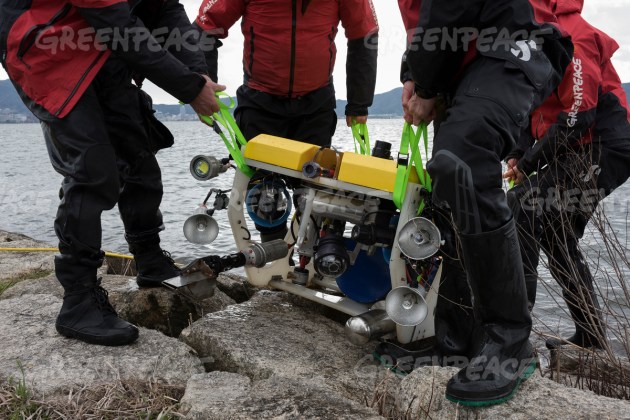
Greenpeace Japan members carry out ROV (Remote Operated Vehicle) operations at Lake Biwa, Shiga Prefecture in Japan. Greenpeace has been surveying lake Biwa to conduct baseline sampling.
Greenpeace Japan member Mai Suzuki removes sediment samples from a remotely operated grabber at Lake Biwa in Shiga Prefecture on March 22.
OSAKA – Greenpeace Japan on Thursday said it has discovered radioactive contamination in Fukushima’s riverbanks, estuaries and coastal waters at a scale hundreds of times higher than pre-2011 levels.
One sample of sediment taken along the Niida River, less than 30 km northwest of the crippled Fukushima No. 1 power plant, revealed the presence of cesium-134 and cesium-137 at levels of 29,800 becquerels per kilogram.
That was just one of 19 samples of dried sediment and soil the environmental activist group took and analyzed from the banks of the Abukuma, Niida, and Ota rivers. The samples were collected by Greenpeace in February and March.
All of the samples but one exhibited more than 1,000 Bq/kg of radioactive material. The lowest level, 309 Bq/kg, was logged at a spot along the Abukuma River.
Cesium-134 has a half-life of about two years, but cesium-137 has a half-life of 30 years and is considered particularly hazardous. The standard limits set for radioactive cesium in Japan are 100 Bq/kg for general foods and 10 Bq/kg for drinking water.
“The radiological impacts of the Fukushima nuclear disaster on the marine environment, with consequences for both human and nonhuman health, are not only the first years. They are both ongoing and future threats, principally the continued releases from the Fukushima No. 1 plant itself and translocation of land-based contamination throughout Fukushima Prefecture, including upland forests, rivers, lakes and coastal estuaries,” the report said.
Greenpeace Japan also published the results of tests on dried marine sediment samples collected at 25 points off the Fukushima coastal area, including three river estuaries, during this same period, at depths of between 7.4 and 30.6 meters. The results showed that the highest level of cesium was 144 Bq/kg taken from a sample collected off the coast from the Fukushima power plant, while the lowest total cesium figure was 6.5 Bq/kg off Nakanosaku, well to the south of the plant.
In addition to Fukushima, Greenpeace Japan took dried sediment samples from Lake Biwa at three locations near the shore. The results showed cesium levels to be between 7.1 Bq/kg and 13 Bq/kg at two locations, and negligible at the other two.
The safety of Lake Biwa, which provides drinking water for about 14 million people in the Kansai region, has become a major bone of contention between Kansai Electric Power Co., which wants to restart reactors in neighboring Fukui Prefecture, and residents in and around Lake Biwa who are fighting to keep them shut down.
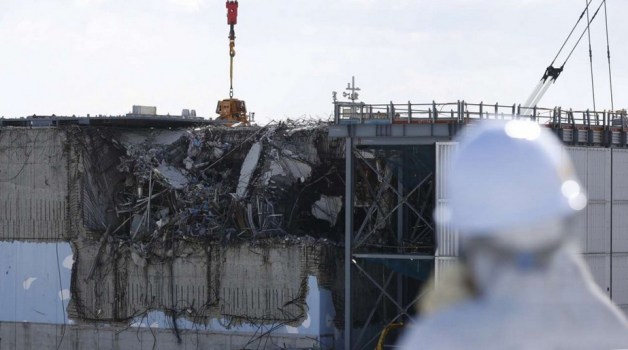
A study published in March of 2016 found insoluble cesium lodged in the lungs of some of the highly exposed Fukushima disaster response workers. After doing additional scans they found most of that persistent cesium contamination resided in the workers lungs.
Direct measurements of seven highly exposed workers at the Tokyo Electric Power Company Fukushima Daiichi Nuclear Power Station accident have been performed continuously since June2011.
Caesium clearance in the monitored workers is in agreement with the biokinetic models proposed by the International Commission on Radiological Protection. After 500 days from the initial measurement, however, the caesium clearance slowed.
It was thought to be unlikely that additional Cs intake had occurred after the initial intake, as activity in foods was kept low. And, the contribution from the detector over the chest was enhanced with time. This indicates that insoluble Cs particles were inhaled and along metabolic rate showed.
The study concludes that insoluble cesium particles lodged in the workers lungs, preventing them from leaving the body through normal processes.
“The subjects seem to have inhaled insoluble caesium particles, even though it was only a small amount. At present, it is more plausible that the retention curves reported here were due to inhalation of a mixture of type F caesium (soluble particle) and type S caesium (insoluble particle).”
This finding is significant as it shows how the various kinds of insoluble radioactive cesium materials discovered after the initial disaster, both black substances and the glass spheres could contaminate the human body.
Read more:
http://rpd.oxfordjournals.org/content/early/2016/03/14/rpd.ncw036
http://rpd.oxfordjournals.org/content/early/2016/03/14/rpd.ncw036.full.pdf+html
http://www.fukuleaks.org/web/?p=15616
A Japanese court has ordered Tokyo Electric Power Company, or TEPCO, to compensate a golf course operator for damages caused by rumors after the Fukushima Daiichi nuclear accident in 2011.
This is the first ruling in Japan that recognizes rumor-caused damages related to a nuclear accident.
The golf course operator’s suit claimed that revenues from its course in Tochigi Prefecture, north of Tokyo, dropped due to harmful rumors related to the nuclear accident.
TEPCO argued that there was no danger from radiation because the golf course is more than 100 kilometers from the nuclear plant.
In the ruling on Wednesday, Tokyo District Court Judge Tetsuro Nakayoshi said the public did not have sufficient knowledge about radiation around the time of the accident.
He noted that it was not unreasonable for ordinary people to worry about health risks.
The court determined that harmful rumors were responsible for 30 to 50 percent of the decline in revenue for more than 5 months following the accident.
The court ordered the utility to pay about 180,000 dollars in compensation.
TEPCO says the company will deal with the matter sincerely after studying the ruling.
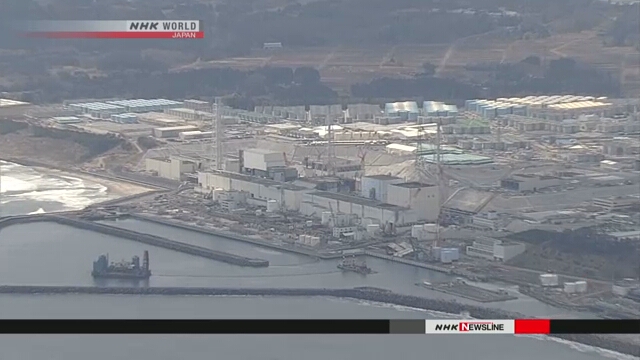
A Japanese government body has revised its plan to decommission the reactors at the Fukushima Daiichi nuclear plant in response to local opposition.
The revision ruled out the option of adopting a Chernobyl-style “sarcophagus” method that seals off disabled reactors with nuclear fuel inside.
The Nuclear Damage Compensation and Decommissioning Facilitation Corporation released the revised plan on Wednesday.
The body presented a technical report a week ago that mentioned the possibility of adopting the sarcophagus method for the first time, while saying it remained committed to removing fuel debris from the reactors.
The report faced backlash from the people in Fukushima Prefecture. Economy, Trade and Industry Minister Motoo Hayashi instructed the body to revise the plan.
The word “sarcophagus” has been deleted from the revised plan, which states that the method will not be adopted in the decommissioning process at the plant.
Shunsuke Kondo, the head of the body’s technical committee, says he regrets the body’s lack of consideration for the locals.
He said he will make sure the body communicates with the locals properly and places top priority on their thoughts.
Fukushima Governor Masao Uchibori said he wants the body to realize how shocked the Fukushima residents were with the word “sarcophagus.”
He said he wants the body to proceed with the removal of fuel debris from the reactors in a safe manner, in line with the locals’ desires.

The much-hyped ice wall at the crippled Fukushima No. 1 nuclear power plant has failed to stop groundwater from flowing in and mixing with highly radioactive water inside the wrecked reactor buildings, operator Tokyo Electric Power Co. Holdings Inc. has admitted.
Tepco officials also said at a meeting of the Nuclear Regulation Authority in Tokyo that it is not the utility’s ultimate goal to shut out groundwater with the ice wall, which has been built around the four damaged reactor buildings at the plant.
Tuesday’s announcement was apparently the first time the utility publicly said it is technically incapable of blocking off groundwater with the frozen wall.
Five years after the March 2011 quake and tsunami triggered the nuclear crisis, Tepco continues to be plagued by radiation-tainted groundwater, mostly rainwater that is mixing with contaminated water in the basement of the damaged reactor buildings.
In response, Tepco has completed most of the 1.5-km-long sunken wall of frozen soil around the stricken reactors to keep groundwater out. It has also built “subdrain” wells around the buildings to pump up the tainted groundwater for treatment and ultimate discharge into the Pacific.
While the completed sections of the ice wall began operating in March, it has not made a visible impact in reducing the amount of groundwater inflows. According to Tepco, the amount of groundwater pumped up from subdrains averaged 321 tons per day in June, just 31 tons less than the daily average in May.
Asked whether Tepco plans to eventually block rainwater from seeping through the ice wall, a Tepco official said it is not technically feasible “to keep out the groundwater 100 percent,” according to a video of the meeting released Tuesday by the NRA.
“We are aiming to control the amount of water going into the reactor buildings, with the ice wall and subdrains,” said Tomohiko Isogai, an official in charge of dismantling the plant.
Kiyoshi Takasaka, a nuclear expert at the Fukushima Prefectural Government, said it was the first time he had heard such a comment from Tepco, pressing the firm on whether it marked a “change of policy.”
A Tepco official denied this, saying that while it wants to “close off the wall as much as possible,” its ultimate goal has been to “curtail” groundwater inflow, not halt it.
Also at the meeting, NRA acting head Toyoshi Fuketa demanded that Tepco move quickly to reduce the amount of highly radioactive water inside the reactor buildings, saying such water presents the risk of escaping in the event of another monster tsunami. Some 60,000 tons of highly tainted water remain in the leaking basements of reactor buildings 1, 2, 3 and 4.
“We want the amount of (radioactive water) inside the buildings to be reduced as much as possible,” he said.

TOKYO – Tokyo was struck by a third earthquake in four days on Wednesday, but there were no reports of damage or casualties.
The 5.0 magnitude jolt was felt in Tokyo and areas of eastern Japan at 7.25am (5.25am Thailand time), the US Geological Survey said.
It was the third quake to shake the capital’s high-rise buildings in recent days — following a 4.8 magnitude quake on Tuesday and one of 5.0 on Sunday — but an official with the Japan Meteorological Agency said they weren’t a precursor of a major jolt.
“This is an area that sees frequent earthquakes” of a moderate size, Nariaki Ohkawara told AFP, adding that the latest quakes were part of that trend.
The epicentre of Wednesday’s quake was east of the capital in Ibaraki prefecture at a depth of about 44 kilometres, the USGS said.
There was no threat of a tsunami, the Japan Meteorological Agency said.
Japan sits at the junction of four tectonic plates and experiences a number of relatively violent quakes every year, but rigid building codes and strict enforcement mean even powerful tremors frequently do little damage.
A massive undersea quake that hit in March 2011 sent a tsunami barrelling into Japan’s northeast coast, leaving more than 18,000 people dead or missing, and sending three reactors into meltdown at the Fukushima nuclear plant.
In April, two strong earthquakes hit southern Japan’s Kumamoto prefecture followed by more than 1,700 aftershocks, and left 49 dead and caused widespread damage.
The country routinely holds emergency drills to prepare for a major jolt, and the government stepped up its disaster response in the wake of the 2011 devastation.
http://www.bangkokpost.com/news/asia/1039805/tokyo-jolted-by-third-quake-in-four-days
 Thousands take to streets as Scotland voices its opposition to “ghastly” Trident
 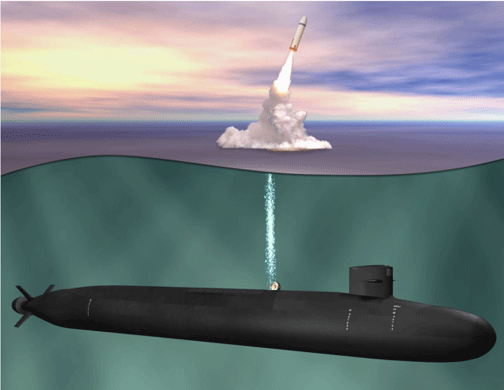 weapons, Herald Scotland, Andrew Whitaker, 17 July 16, IN what was thought to be the biggest national peace demonstration north of the Border since the last Iraq war, more than 10,000 Scots have taken part in anti-Trident protests ahead of tomorrow’s Commons vote on renewing the nuclear weapons system.
Anti-Trident protests were held yesterday (Sat) in 36 Scottish cities, towns and villages, with locations including Glasgow, Edinburgh, Aberdeen, Dundee, Inverness, Dumfries and Largs, which were all organised within days of it being announced the Westminster vote would take place.
Armed forces veterans, anti-war campaigners, students, parents and their children carrying anti-nuclear banners and singing pro-peace songs sent a clear message to MPs that Scotland was overwhelmingly against renewing the Trident system, which the Ministry of Defence estimates will cost £31bn over 20 years.
The Scottish Scrap Trident coalition, which organised the demonstrations, said events in areas such as Edinburgh, Aberdeen and Paisley attracted hundreds, with others protests also held in Largs and Cromarty.
Coalition spokesman David Mackenzie suggested that the demonstrations were among the biggest since the 2003 Iraq war, and said: “Early calculations indicate that this is one of the biggest public demonstrations in Scotland for many years, showing just how people outraged people feel about this ghastly business.”………http://www.heraldscotland.com/news/14624176.Thousands_take_to_streets_as_Scotland_voices_its_opposition_to__quot_ghastly_quot__Trident_weapons/
The Myth of the Nuclear Renaissance The game is already over for nuclear energy. U.S. News Linda Pentz Gunter July 18, 2016, Desperate times for the nuclear industry call for desperate rhetoric. Hence the reach, once again, for “renaissance,” even though the facts support no such thing and the industry itself dare not even resurrect the mythological moniker. [“The New Nuclear Renaissance,” 6/11/2016]
With nuclear power priced out of the market – not only by natural gas but, more importantly for climate, by renewables – die-hard nuclear proponents are dressing up old reactors in new propaganda.
Sodium-cooled, fast and even small modular reactors are all designs that have been around – and rejected – for decades.

Sodium-cooled reactors are prone to fires, explosions and super-criticality accidents. A rapid power increase inside the core of such a reactor could vaporize the fuel and blow the core apart. Far from “walk away safe,” these on-paper designs have not been submitted to the kind of rigorous “all scenarios” testing that could definitively designate them as meltdown proof.
Small modular reactors that deliver lower amounts of electricity than large ones present an economy of scale that has proven to be a deterrent to investors. Capitol costs per kilowatt for these reactors are estimated at double those for a traditional light water reactor.
Furthermore, so-called “new” designs that are still on the drawing board will remain there for years to come, too late for climate change that can be answered quickly and far more cheaply by immediate and widespread implementation of wind and solar energy, whose prices are falling precipitously.
The real race the U.S. is letting China win is in the renewable energy field. China’s renewable investments in 2015 totaled $100 billion, according to the just released “2016 World Nuclear Industry Status Report,” more than five times the amount the country invested for new reactors, which was $18 billion.
The game is over for nuclear energy and there is no extra time, even in China. “Construction starts for new nuclear reactors fell to zero globally in the first half of 2016 as the atomic industry struggles against falling costs for renewables and a slowdown in Chinese building” the report found.
The Renaissance was a cultural movement that bridged Medieval times to the so-called Early Modern Age. Like nuclear energy, it is of the past, not the future. http://www.usnews.com/opinion/articles/2016-07-18/stop-perpetuating-the-myth-of-the-nuclear-renaissance

 According to the House of Lords register of interests, around 15% of sitting members are directors of, or shareholders in, companies that are either directly contracted to the Trident programme or invest in it.
Specifically Barclays and HSBC. A report by Don’t Bank on the Bomb details the involvement of major financial institutions in the western nuclear weapons industry.
 The truth about Trident: the shocking fact that would turn us all against paying for nukes, The Canary, JULY 18TH, 2016 STEVE TOPPLE As parliament debates the renewal of Trident, the UK’s “nuclear deterrent” – the arguments surrounding the controversial weapons system rage as fiercely as ever. But there’s one aspect which has been repeatedly overlooked. UK banks not only finance our nuclear deterrent, but also our supposed “enemy” Russia’s as well, and senior politicians enjoy a direct financial profit through keeping Trident.
The name Trident refers to the nuclear missiles that are carried on four Vanguard-Class submarines. Based out of Faslane, on the Clyde in Scotland, at any one time, there is one submarine on active patrol, another in service, another preparing to patrol and a final one on exercise.
Each submarine can carry 16 Trident missiles (but since 2010 this has been reduced to eight), and each missile can hold 40 warheads.
The cost of replacing the Trident system with “Successor” (which is what the parliamentary debate on Monday is about) is disputed. The official Ministry of Defence (MoD) line is £41 bn per submarine. The Campaign for Nuclear Disarmament (CND) says the true cost is around £205 bn for all four, when you included the cost of their upkeep.
The mainstream arguments for and against Trident are fairly clear cut………
However, there are two arguments that both sides fail to acknowledge – maybe because if they did, it would bring the whole military industry into question. The role of multinational banks and senior UK politicians.
The main companies involved in Trident are US multinational Lockheed Martin (who produce the missiles), BAE Systems, Babcock & Wilcox and Rolls-Royce – who are involved in the Successor programme – and also names like Bechtel, Honeywell, Raytheon and Serco who are contracted or subcontracted in relation to the current Trident system.
According to the House of Lords register of interests, around 15% of sitting members are directors of, or shareholders in, companies that are either directly contracted to the Trident programme or invest in it.
Prominent names include Lord Hollick, a Labour Peer who is a director of Honeywell. Lord (William) Hague, chair of the Royal United Services Institute (RUSI). RUSI, who are supposedly impartial US and UK government defence advisors, are sponsored by Babcock, Lockheed Martin, Raytheon and Rolls-Royce.
But one of the most telling individuals is Labour’s Lord Hutton, defence secretary under Gordon Brown. He is an adviser to Bechtel, consultant for Lockheed Martin and chair of the Nuclear Industries Association (NIA). The revolving door (the phrase used to describe MP’s who, once finished in parliament, go into jobs related to their previous role) has never spun so quickly.
It may be no wonder then, that the majority of parliament (excluding the SNP and the Green party) are supportive of renewing Trident.
With reference to the role of multinational financial institutions, all the companies listed above, aside from being involved in Trident, share one other common denominator. They are all financed, or owned, by UK banks. Specifically Barclays and HSBC. A report by Don’t Bank on the Bomb details the involvement of major financial institutions in the western nuclear weapons industry. http://www.thecanary.co/2016/07/18/truth-trident-shocking-fact-turn-us-paying-nukes/

 CNSC head to meet with officials to tackle allegations in anonymous letter, GLORIA GALLOWAY, OTTAWA — The Globe and Mail, Jul. 19, 2016 Natural Resources officials will meet with the head of the Canadian Nuclear Safety Commission to discuss allegations that information was withheld from commissioners as they made critical decisions about the licensing of the country’s nuclear plants.
An anonymous letter, purportedly written by specialists at the nuclear regulator, was sent five weeks ago to CNSC president Michael Binder. It points to five separate cases in which the commission’s staff sat on relevant information about risk or non-compliance that might have called the safety of a nuclear plant into question…….
The anonymous letter writers say nuclear hazards have been underestimated, plant operators have been permitted to skip requirements of the licensing regime, and assessments outlining what could happen in the event of a major nuclear disaster – such as the one that occurred in Fukushima, Japan in 2011 – have been withheld from the commissioners and the public……
Among other allegations, the writers of the anonymous letter to Mr. Binder say an evaluation of the effects of a Fukushima-scale nuclear disaster in Canada has never been released to the commissioners or the public.
In a 2014 e-mail obtained by the environmental group Greenpeace under access to information laws, François Rinfret, a director at the regulator, said a scenario for a Fukushima-size disaster would “become the focal point of a licence renewal and, despite brilliant attempts to caution readers … would be used malevolently at a public hearing” by people concerned about nuclear energy. http://www.theglobeandmail.com/news/politics/anonymous-letter-accuses-cnsc-of-withholding-critical-information/article30998523/

of the week – Shut Down Drone Warfare!


Tell the Ukrainian Government to Drop Prosecution of Peace Activist Yurii Sheliazhenko

Petition to revoke the licensing of the Near Surface Nuclear Disposal Facility (NSDF) at Chalk River. https://www.ourcommons.ca/petitions/en/Petition/Details?Petition=e-7247
To see nuclear-related stories in greater depth and intensity – go to https://nuclearinformation.wordpress.com
 nuclear-news