Radioactive contamination “in a variety of marine products” harvested off USA’s West Coast
New Gov’t Report: Fukushima radiation found in US marine life — Investigators detect radioactive contamination “in a variety of marine products” harvested off West Coast — Effects of exposure need to be studied and understood in coming yearshttp://enenews.com/new-govt-study-finds-fukushima-radiation-marine-life-investigators-detect-radioactive-contamination-variety-marine-products-harvested-west-coast-effects-exposure-marine-life-be-studied-understoo?utm_source=feedburner&utm_medium=email&utm_campaign=Feed%3A+ENENews+%28Energy+News%29
U.S. Department of Commerce – NOAA National Marine Fisheries Service (pdf), Dec 2015 (emphasis added): Results of testing for Fukushima Radiation in northern fur seals on St. Paul Island, AK – In summer 2014, NOAA Fisheries in partnership with Colorado State University collected tissue from northern fur seals harvested from St. Paul Island for lab testing.
We detected very small amounts of Fukushima-derived radioactive material in the seal tissue…
Journal of Environmental Radioactivity, Feb 2016: Fukushima-derived radiocesium was detected in migratory northern fur seal… In July 2014, our investigative team traveled to St. Paul Island, Alaska to measure concentrations of radiocesium in wild-caught food… [O]ther investigators have detected Fukushima-derived radionuclides in a variety of marine products harvested off the western coast of North America. We tested… 54 northern fur seal… when composited, northern fur seal tissues tested positive for trace quantities of [Cesium-134 adn Cesium-137]. Radiocesium was detected at an activity concentration of 37.2 mBq 134Cs kg [fresh weight, not dried] and 141.2 mBq 137Cs kg… indicating that this population of seals has been exposed to small quantities of Fukushima-derived radiocesium… [The] 2011 Tohoku earthquake… led to loss of containment [at the Fukushima nuclear power plant] and releases of radionuclides to the atmosphere and the marine environment… [M]arine releases may be ongoing due to groundwater seepage… The atmospheric plume from the Fukushima Daiichi reactors traveled east and passed over North America days after the initial release… The arrival of the Fukushima marine plume has aroused concern for some North American stakeholders, particularly those living near the coast and those who consume seafood from the Pacific Ocean. Additionally, the potential effects of exposure to Fukushima derived radionuclides on sensitive marine species will need to be studied and understood in the coming years… Radiocesium biomagnifies through marine foodwebs…Thus the northern fur seal, a predator, should be an excellent sentinel of marine radiocesium in the North Pacific… Northern fur seal exposure to Fukushima radionuclides likely occurred via the consumption of fish or other prey from areas of the Pacific Ocean contaminated by the Fukushima marine release… the population likely has not been exposed to the higher concentrations found within the main body of the Fukushima marine plume… Radiocesium is unlikely to cause health impacts in northern fur seal or the human populations consuming this species.
Russia marketing nuclear reactors to Bolivia
 Bolivia agrees $300 million nuclear complex with Russia’s Rosatom, Reuters, 6 Mar 16, LA PAZ Bolivia and Russia’s state-owned atomic energy corporation Rosatom said on Sunday they had signed a provisional agreement for the construction of $300 million nuclear complex in the Andean nation.
Under the terms of the accord, which needs to be approved by Bolivia’s Congress, Rosatom will help Bolivia develop infrastructure for its embryonic nuclear program.
The center will include a research reactor, a cyclotron for radiopharmaceuticals and a multi-purpose gamma irradiation plant. Opposition politicians have criticized the project over fears of environmental risks……..http://www.reuters.com/article/us-bolivia-rosatom-idUSKCN0W80R3
Pacific islands take on the world’s nuclear powers in court action
Tiny Marshall Islands take on world nuclear powers in court, SMH, March 5, 2016 Amsterdam: A small chain of Pacific islands will face off against Britain, India and Pakistan in court next week to try and get an international ruling ordering them to start work on dismantling their nuclear arsenals.
While nobody expects the Marshall Islands to force the three powers to disarm at Monday’s hearing, the archipelago’s dogged campaign at the International Court of Justice highlights the growing scope for political minnows to get a hearing through global tribunals.
All three are expected to argue that the Marshall Islands’ claims are beyond the Hague court’s jurisdiction and should be thrown out. But many activists and academics believe getting them into court is a victory in itself.
The island republic, a US protectorate until 1986 and home to just 50,000 people, was the site of 67 nuclear tests by 1958, the health impacts of which linger to this day……
In another David-and-Goliath case, the Pacific island state of Palau, that is threatened by rising sea levels, is pushing for the United Nations General Assembly to ask the ICJ for an advisory opinion on the obligation of the world’s nations to combat climate change. http://www.smh.com.au/world/tiny-marshall-islands-take-on-world-nuclear-powers-in-court-20160305-gnbacp.html#ixzz429kkshuW
Eerie situation at Futaba – abandoned town in Fukushima prefecture
Fukushima: Five years on from nuclear meltdown locals still in the dark about future, ABC News, By Rachel Mealey 6 Mar 16 The town of Futaba lies six kilometres from the Fukushima nuclear power plant.
There is an eerie feeling there. Shoes sit in the doorway of houses, as they do in houses across Japan — neatly placed together, waiting for feet to walk them out the door.
Bicycles rest against fences — waiting for the next journey………
Yuji Ohnuma ‘s slogan, “Nuclear Energy: The Energy of a Bright Future” won the day (competition years ago for pro nuclear slogan) .
Mr Ohnuma recalls being very proud when the billboard was erected — it stretched across the road on the way to the train station — seen by all who passed under it.
But now the bright future he foresaw has been ripped away. Council workers peeled the words off the billboard in December last year.
Mr Ohnuma campaigned for the sign to remain where it was — to serve as an ironic reminder to future generations of the dangers of nuclear power. But in a nation that has heavily invested in atomic energy, the billboard was not ironic — it was embarrassing.
The ABC filmed an interview with Mr Ohnuma under his sign on February 27 — the outline of the words could still be seen.
Last week on March 3, the entire structure was demolished.
The town is a chaotic mess and lives are in ruin — yet this job was given immediate priority.
“Nuclear energy has taken away my dream and my life and the bright future has become a catastrophe for us. I had a vision that my children would some day graduate from the same school as me, but all my plans are destroyed and there are no future prospects,” Mr Ohnuma said.http://www.abc.net.au/news/2016-03-06/fukushima-five-year-anniversay/7218734
Sucked into nuclear power plant pie – scuba diver
Scuba diver sucked into nuclear power plant pipe relives horrific experience living in ‘complete darkness’ , Mirror UK, 6 MAR 2016 BY DAVID RAVEN
Christopher Le Cun was in complete darkness when he was sucked through a 16ft-wide nuclear plant water pipe. A scuba diver broke down in tears after reliving the harrowing ordeal of when he was sucked into a nuclear plant water pipe and was forced to contemplate suicide.
Christopher Le Cun was diving off the coast of Hutchinson Island in South Florida when he was suddenly gulped “like a wet noodle” into the huge pipe – which pulls through 500,000 gallons of water a minute and is used to cool nuclear reactors.
The pipe is 16ft wide and a quarter of a mile long.
Christopher – who is launching a legal case against the owners of the nuclear plant, Florida Power and Light (FPL) – said he was in complete darkness when he was sucked into the giant tube, and couldn’t see a hand in front of his face.
Because the pipe at the St Lucie Nuclear Power Plant is so long it took Christopher five whole minutes before he reached its end………. http://www.mirror.co.uk/news/uk-news/scuba-diver-sucked-nuclear-power-7504504
Radiation exposure to 20 workers at Faslane nuclear base
Workers exposed to radiation at Faslane nuclear base, Scotsman, 5 Mar 16 Twenty workers were exposed to radiation at the Faslane nuclear base as a result of a safety breach, according to newly released documents.
The workers were inadvertently exposed to a low dose of ionising radiation as they were repairing a leaking tank on a Trident nuclear weapons submarine at the same time a nearby reactor was undergoing trials………[other radiation incidents at Faslane] ……
SNP defence spokesperson Brendan O’Hara MP said: “The MoD – once again – stands accused of a very poor approach to radiation safety at the Faslane base……..
‘’These incidents and how they were subsequently handled, pose real and serious questions , not just about nuclear safety procedures at the base – but also whether the regulator the ONR is doing enough – and quickly enough – to address these concerns.
‘’The MoD must investigate and explain why these failings occur and lay out precisely what it is doing to get it sorted.’’……..http://www.scotsman.com/news/workers-exposed-to-radiation-at-faslane-nuclear-base-1-4046659
transformer on fire at Oconee Nuclear Station
Transformer at Oconee Nuclear Station catches fire Mar 07, 2016 By Amanda Shaw SENECA, SC (FOX Carolina) – Oconee County Emergency Management said a transformer caught fire at the Oconee Nuclear Station. A transformer caught fire at the Oconee Nuclear Plant on Sunday.
Fire Chief Charlie King aid the transformer was away from a reactive building. Firefighters responded to the fire at 3:19 p.m. and said when they arrived on scene, the transformer outside the building was well involved in fire.
The fire was declared an unusual event, the lowest of four nuclear emergency classifications. An alert was also declared, the second level of emergency classification, due to a downed power line associated with the oil-filled transformer……..http://www.foxcarolina.com/story/31398906/transformer-at-oconee-nuclear-station-catches-fire#.Vty8iY8h4q0.twitter
March 6 Energy News

Science and Technology:
¶ The National Snow and Ice Data Center reports that Arctic sea ice extent is running not only well below average, but also below levels seen during 2012, which went on to set the all-time record for lowest Arctic ice extent (which occurs in the late summer or early fall). [Bowling Green Daily News]
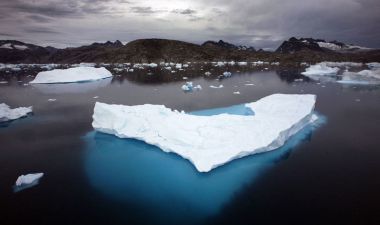 Icebergs float in a bay off Ammassalik Island,
Greenland. (AP photo / John McConnico)
World:
¶ Electrification has been done in 6,000 of the 18,500 villages in India that had been without electricity, and the renewable energy capacity has reached 39.5 GW, a meeting chaired by Prime Minister Narendra Modi was told. Progress of the initiative is being tracked in real-time. [The Hindu]
¶ South Africa has ramped up its green credentials by unveiling the continent’s first solar-powered airport. George Airport will meet 41% of its energy demand from…
View original post 498 more words
March 5 Energy News
World:
¶ Alberta plans to issue its first competition for renewable electricity projects in late 2016. The provincial government has asked the Alberta Electric System Operator to develop a renewable electricity incentive program. Engagement with interested parties will start immediately. [reNews]
 The Oldman 2 wind farm in Alberta (Mainstream image)
¶ Germany demanded that France close down its oldest nuclear plant, Fessenheim, near the German and Swiss borders. It is just one of several ageing atomic plants that are unsettling France’s neighbours. Reports claimed a 2014 incident at Fessenheim was more serious than earlier reported. [The Daily Star]
¶ A parliamentary committee in Sweden proposed a way to bring the nation to carbon neutrality by 2045. It would achieve this huge goal by reducing domestic emissions by 85% from 1990 levels. The rest could be offset by investing in international projects that cut carbon emissions. [
View original post 571 more words
Germany to Empty 93% of Concrete Bunker of Nuclear Waste to Send to USA to Sit Outside Under Tarp-Bury: Oppose by March 11th at 11.59 PM (Deadline Looms)

Oppose here (It is easy; Can be anonymous; Can be very short.):
http://www.regulations.gov/#!documentDetail;D=DOE_FRDOC_0001-3020 (Regulations.gov will undergo system maintenance and be unavailable Saturday, March 5, from 6:00 pm through 11:00 pm (ET)).
Germany wants to empty 93% of high level nuclear waste from an above ground concrete bunker (Ahaus) and send to it to America to sit out on concrete or gravel, probably under a tarp, for a decade, or longer, before processing-dilution. More will be removed from another comparatively solid facility (Juelich), as well. What a neat trick to get rid of most of their nuclear waste! What great German technology and innovation to just dump on others!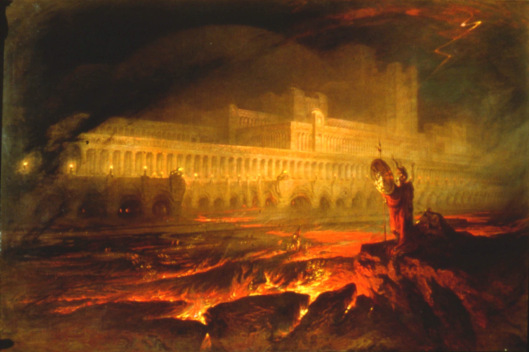
Pandemonium by John Martin
Most likely some will end up buried in Texas, Utah, or elsewhere. Reading the EA it looks like a dilute to deceive scam. It could end up staying in South Carolina, too. Some of the processes proposed and…
View original post 1,624 more words
Fukushima Disaster Will Wreak Environmental Havoc for Centuries
A report from Greenpeace reveals that the destruction of ecosystems caused by the Fukushima meltdown is worse than the government lets on.
Radiation from the Fukushima nuclear disaster in Japan will have a long legacy of environmental destruction with up to hundreds of years of devastating impacts on the ocean, waterways, plants, and animals, according to a new Greenpeace Japan report released Friday.
The report, titled “Radiation Reloaded: Ecological Impacts of the Fukushima Daiichi Nuclear Accident 5 Years Later,” reveals that radiation from the 2011 nuclear plant meltdown has found its way into trees, butterflies, birds, fish, and the important coastal estuary ecosystem in the region.
The findings also shed light on the “flawed assumptions” that have been shared as official information by the government of Shinzo Abe and the International Atomic Energy Agency.
“The Abe government is perpetuating a myth that five years after the start of the nuclear accident the situation is returning to normal,” said Kendra Ulrich, Senior Nuclear Campaigner at Greenpeace Japan, in a statement on Friday. “The evidence exposes this as political rhetoric, not scientific fact.”
While local flora and fauna show radiation levels have increased since the disaster, some residents have been told it is safe to return to contaminated areas.
“There is no end in sight for communities in Fukushima — nearly 100,000 people haven’t returned home and many won’t be able to,” Ulrich added.
Fukushima was the largest nuclear disaster since the 1986 Chernobyl nuclear accident, and the single largest incident of radiation contamination in an ocean in history.
According to Greenpeace, Fukushima has seen radioactive water seep into the ocean on nearly a daily basis for five years, and the government’s response has inadequately managed the crisis.
“The government’s massive decontamination program will have almost no impact on reducing the ecological threat from the enormous amount of radiation from the Fukushima nuclear disaster,” Ulrich said.
The report calls on the Japanese government to consider alternative options to nuclear power and work towards transitioning to sustainable and clean energy.
Greenpeace reports that over 317 million cubic feet (9 million cubic meters) of nuclear waste have spread around Fukushima.
The report is based on 25 radiological investigations carried out by Greenpeace since March 2011, when the earthquake hit and wreaked havoc on Fukushima.
NEW REPORT: Ecological Impacts of the Fukushima Daiichi Nuclear Accident 5years Later
http://www.greenpeace.org/japan/ja/library/publication/20160304_report/
TEPCO Prosecution: A Sign That Japan’s Nuclear Industry Is in Free Fall
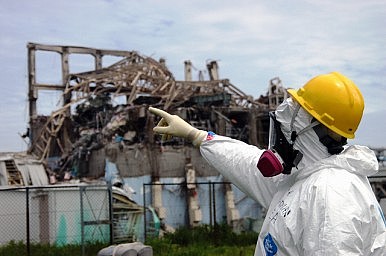
The criminal prosecution of TEPCO is another step in the process to end nuclear power in Japan.
By Shaun Burnie
The decision this week to indict executives of Japan’s largest energy utility, Tokyo Electric Power Company (TEPCO), for their failure to prevent the meltdown of three reactors at Fukushima Daiichi is a major step forward for the people of Japan.
The fact that this criminal prosecution is taking place at all is a vindication for the thousands of citizens and their dedicated lawyers who are challenging the nation’s largest power company and the establishment system. It is a devastating blow to the obsessively pro-nuclear Abe government, which is truly fearful of the effects the trial will have on nuclear policy and public opinion over the coming years.
For the eight other nuclear power companies in Japan, including their executives, the signal is clear – ignore nuclear safety and there is every prospect that when the next nuclear accident happens at your plant you will end up in court. For an industry that disregarded safety violations and falsified inspection results through its entire existence, the prosecution of TEPCO will be shocking.
But it would be naive to think that profound behavioral change will inevitably follow. In fact, in the five years after the accident, Japan’s nuclear industry has not just failed to learn the lessons of the accident, it is still actively ignoring them. In the three years since nuclear plant operators applied to restart their shutdown nuclear fleet, the evidence shows that when it comes to nuclear safety the bottom line is not safety, but money.
Leaving aside the inherent risks of another severe nuclear accident, the new safety agency in Japan, the Nuclear Regulation Authority (NRA) is overwhelmed, incapable and inadequate.
Back in 2008, TEPCO produced an internal report that predicted a maximum credible tsunami of 15.7 meters, but continued to insist that it would not reach the nuclear plant at Fukushima, which sits at a height of 10 meters. The cooling pumps for the reactor cores and spent fuel pools were located at just four metres above sea level.
Historical evidence that a major tsunami would impact the eastern Pacific coast of Ibaraki, Fukushima and Miyagi was well known. Modelling suggested that the next major tsunami was overdue and would inundate the coastal plain about 2.5 to 3 km inland. In 2009, Japanese nuclear regulators questioned the vulnerability of the Fukushima Daiichi reactors to a large-scale tsunami and asked TEPCO to “consider” concrete steps against tsunami waves at the plant. TEPCO responded: “Do you think you can stop the reactors?”
This relaxed attitude is not just limited to TEPCO. In recent weeks, Kyushu Electric informed the NRA that the emergency seismic proof isolation building that they committed to build by March of this year would not be built after all, despite being a condition to secure approval to restart the two Sendai reactors. The NRA expressed its disappointment, but the Sendai reactors restarted in August and continue to operate.
At the Takahama nuclear plant, owned by Kansai Electric the NRA admitted in the last month that they do not know if the reactors comply with fire safety regulations requiring essential electric safety cabling to be adequately separated and protected.
The loss of safety cable function sounds mundane, but the risks are considered more severe than all other failures at a nuclear plant combined. Without electricity, vital safety systems do not work and control of the reactor is lost. A severe accident at Takahama would threaten millions of residents of Kyoto, Osaka, Kobe and the wider Kansai region.
Nonetheless, the NRA granted Kansai Electric an exemption to avoid delaying restart. Takahama reactor-3 resumed operation in late January, while Reactor 4 at Takahama resumed operations for less than three days before shutting down again on 29 February due to an electrical failure.
These examples are the tip of the atomic iceberg that threatens the next nuclear disaster in Japan. With three reactors now operating, the industry remains in crisis. Having sat on idle assets for the last few years, the utilities are desperate to resume operations, while the nuclear obsessed Abe government is happy to support them. It’s time to put people first.
Nuclear power is a financial disaster which will only get worse as the electricity market opens to new suppliers and renewable energies out-price them. And the vast majority in Japan realize this: 60 percent of Japanese are opposed to the phase-in of nuclear, and there are more than 300 lawyers fighting reactor by reactor to prevent restart on behalf of citizens. At this rate, the Abe government and the nuclear industry will never see the target of 35 reactors restarted by 2030.
The criminal prosecution of TEPCO, long in coming, is another step in the process to end nuclear power in Japan and for a transformation of its energy system to renewables.
Shaun Burnie is a nuclear specialist at Greenpeace Germany, currently working as part of a Greenpeace radiation survey team in the Pacific Ocean off the coast of Fukushima
‘Dark tourism’ grows at 3/11 sites

Participants in a ‘dark tourism’ tour check out vacant Ukedo Elementary School in the abandoned town of Namie, Fukushima Prefecture, in early February. As the fifth anniversary of the 2011 calamity approaches, a growing number of visitors are taking part in Fukushima-related tours
Shinichi Niitsuma is enthusiastic about showing visitors the attractions of the small town of Namie: its tsunami-hit coastline, abandoned houses and hills overlooking the radiation-soaked reactors of the disabled Fukushima nuclear power plant.
Five years after the nuclear disaster emptied this stretch of Honshu’s northeastern coastline, tourism is giving residents of the abandoned town a chance to exorcise the horrors of the past.
Like the Nazi concentration camps in Poland or Ground Zero in New York, the areas devastated by the Fukushima disaster have recently become hot spots for “dark tourism” and drawn more than 2,000 visitors keen to see the aftermath of the worst nuclear accident in a quarter century.
“There is no place like Fukushima — except maybe Chernobyl — to see how terrible a nuclear accident is,” Niitsuma said, referring to the 1986 disaster in Ukraine.
“I want visitors to see this ghost town, which is not just a mere legacy but clear and present despair,” he added as he drove visitors down Namie’s main street just 8 km (5 miles) from the stricken nuclear plant.
On March 11, 2011, a magnitude-9 earthquake off Tohoku’s coast spawned massive tsunami that swept ashore, leaving an estimated 18,000 people dead or missing.
Namie’s residents were evacuated after the tsunami tipped the nuclear power plant into meltdown, and no-one has yet been allowed to move back due to the radiation.
Niitsuma, 70, is one of 10 local volunteer guides who organize tours to sights in Namie and other communities in Fukushima, including the tightly regulated areas.
The volunteers take visitors through the shells of buildings left untouched as extremely high radiation discouraged demolition work. The guides use dosimeters to avoid any hot spots.
A tsunami-hit elementary school is another stop on the morbid tour.
The clocks in the classrooms stopped at 3:38 p.m., the exact moment the killer waves swept ashore.
In the gymnasium, a banner for the 2011 graduation ceremony still hangs over a stage and the crippled nuclear plant is visible through shattered windows.
Former high school teacher Akiko Onuki, who survived tsunami that claimed six of her students and a colleague, and is now one of the volunteer guides.
“We must ensure there are no more Fukushimas,” Onuki, 61, said in explaining the reasons behind the tours of her devastated home.
Tourist Chika Kanezawa of Saitama Prefecture said she was shocked by the conditions.
“TV and newspapers report reconstruction is making progress and life is returning to normal,” Kanezawa, 42, said. “But in reality, nothing has changed here.”
Dairy farmer Masami Yoshizawa is still raising about 300 cows in Namie that are subsisting on radiation-contaminated grass in defiance of a government slaughter order.
As Yoshizawa showed off his herd, he explained that he’s keeping the cattle alive as a protest against Tokyo Electric Power Co., which manages the plant, and the government.
“I want to tell people all over the world, ‘What happened to me may happen to you tomorrow’,” Yoshizawa said.
The disaster shattered the government’s carefully cultivated nuclear safety myth and kept its dozens of commercial reactors offline for about two years amid nuclear safety radiation exposure fears.
But the government is gradually restarting them, claiming the resource-poor country needs nuclear power.
English teacher Tom Bridges, who also lives in Saitama, said he could share the victims’ anger and frustration through the tour.
“It’s not a happy trip but it’s a necessary trip,” he said.
Some residents still grieving their loved ones and their inability to return to their homes, say they have mixed feelings watching sightseers tramping through their former hometown.
But Philip Stone, executive director of the Institute for Dark Tourism Research at Britain’s University of Central Lancashire, said recently that such tangible reminders of disasters serve as “warnings from history.”
Niitsuma, who is from Soma, a coastal city some 35 km (just over 20 miles) north of the Fukushima No. 1 plant, says he feels haunted by regret for not having been active in the anti-nuclear movement, even though he opposed reactor construction.
“I should have acted a little more seriously,” he said.
“I’m working as a guide partially to atone.”
http://www.japantimes.co.jp/news/2016/03/06/national/dark-tourism-grows-311-sites/#.VtxHIfl95D8
FIVE YEARS AFTER: 45% of mayors in affected areas see delayed recovery
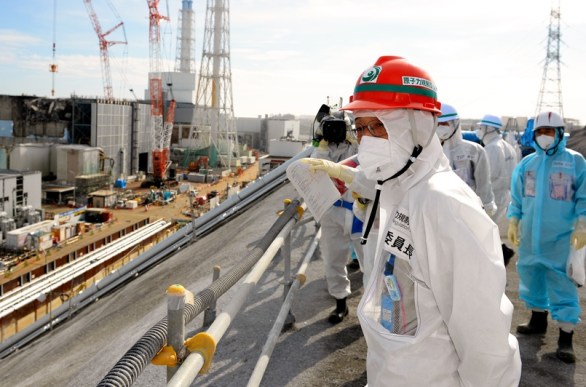
In a new survey, 19 of the 42 mayors in Iwate, Miyagi and Fukushima prefectures, or 45 percent, said that recovery from the Great East Japan Earthquake, tsunami and nuclear accident will take longer than predicted three years ago.
The Asahi Shimbun survey also shows that the accident at the Fukushima No. 1 nuclear power plant is continuing to hamper recovery efforts in Fukushima Prefecture, compared with the other two prefectures.
As for 15 mayors in Fukushima Prefecture, nine, or 60 percent, said that their projected completion period of recovery will be in fiscal 2023 or later, according to the survey.
In contrast, almost all the mayors in Iwate and Miyagi prefectures said the recovery process will be completed by the end of fiscal 2022.
The survey is the fourth of its kind since The Asahi Shimbun started it in 2013. The 42 mayors were chosen as their municipalities were located in coastal areas damaged by the tsunami or ordered to evacuate due to the nuclear accident.
The Asahi Shimbun surveyed the mayors in writing and in interviews. As for the recovery completion period, they were asked to choose from “fiscal 2015,” “fiscal 2016 to fiscal 2017,” “fiscal 2018 to fiscal 2022” and “in fiscal 2023 or later.”
Two of the 15 mayors in Fukushima Prefecture chose “fiscal 2015” in the survey held in 2013 but selected “in fiscal 2023 or later” in the latest survey. In addition to the two, five other mayors gave the same response in the latest survey although they had projected an earlier completion of the recovery process.
The 15 mayors were also asked about factors obstructing the recovery. They were allowed to list up to three. Fourteen cited having to deal with the nuclear accident.
“It is realistic to think that recovery will take 20 or 30 years even if the evacuation order is lifted,” said Namie Mayor Tamotsu Baba. All the residents of Namie are currently living outside the town due to the evacuation order.
“The challenge is what we should do to maintain our town,” he added.
“Residents in my village cannot plan their future,” said Katsurao Mayor Masahide Matsumoto. All the residents in Katsurao have also evacuated the village.
“I want the central government to present its policies as early as possible on what to do with the (high radiation) ‘difficult-to-return’ zones,” Matsumoto added.
Of the 27 mayors in Iwate and Miyagi prefectures, 26 replied that the recovery will be completed by the end of fiscal 2022. The figure shows the seriousness of the delay of recovery efforts in Fukushima Prefecture.
As a factor that is obstructing their recovery, nine mayors in Miyagi Prefecture cited a “shortage of staff members for their municipal governments.” Meanwhile, in Iwate Prefecture, seven mayors cited a “shortage of businesses and workers,” but six chose a “shortage of staff members for their municipal governments.”
According to the internal affairs ministry, 39 municipalities of the three prefectures were demanding additional staff members as of January this year. The number of insufficient staff members stood at 196 in total.
http://ajw.asahi.com/article/0311disaster/recovery/AJ201603060036

Fire At Namie Nuclear Waste Site In Fukushima

TV Asahi (ANN) March 5th (Sat) 19:15
There was a fire at the temporary storage of decontamination waste in Namie , Fukushima Prefecture, for about 5 hours.
According to the police, at 5:00 in the morning, a fire started at the temporary storage of decontamination waste in Namie, dead branches and dead grass coming from decontamination which had been stacked on site before to be packed in bags.
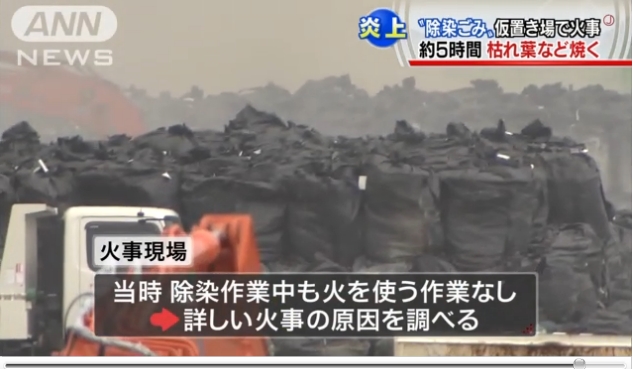
It took about five hours to extinguish it. Although there was decontamination work at that time, no fire was being used, the police will look to determine the cause of the fire.
http://headlines.yahoo.co.jp/videonews/ann?a=20160305-00000034-ann-soci

1 This Month
23 April – WEBINAR – Why new nuclear reactors are the wrong tools for decarbonization Thursday, April 23 • 1 AM – 2 AM AEST
World Nuclear Power. Reactors 1951-2026, 75 Years of Nuclear Power.
Interactive Map– https://dv.worldnuclearreport.org/

Chernobyl: The Lost Tapes – A good documentary on Chernobyl on SBS available On Demand for the next 3 weeks– https://www.sbs.com.au/ondemand/tv-program/chernobyl-the-lost-tapes/2352741955560

of the week–London Campaign for Nuclear Disarmament

Tell the Ukrainian Government to Drop Prosecution of Peace Activist Yurii Sheliazhenko
To see nuclear-related stories in greater depth and intensity – go to https://nuclearinformation.wordpress.com
-
Archives
- April 2026 (231)
- March 2026 (251)
- February 2026 (268)
- January 2026 (308)
- December 2025 (358)
- November 2025 (359)
- October 2025 (376)
- September 2025 (257)
- August 2025 (319)
- July 2025 (230)
- June 2025 (348)
- May 2025 (261)
-
Categories
- 1
- 1 NUCLEAR ISSUES
- business and costs
- climate change
- culture and arts
- ENERGY
- environment
- health
- history
- indigenous issues
- Legal
- marketing of nuclear
- media
- opposition to nuclear
- PERSONAL STORIES
- politics
- politics international
- Religion and ethics
- safety
- secrets,lies and civil liberties
- spinbuster
- technology
- Uranium
- wastes
- weapons and war
- Women
- 2 WORLD
- ACTION
- AFRICA
- Atrocities
- AUSTRALIA
- Christina's notes
- Christina's themes
- culture and arts
- Events
- Fuk 2022
- Fuk 2023
- Fukushima 2017
- Fukushima 2018
- fukushima 2019
- Fukushima 2020
- Fukushima 2021
- general
- global warming
- Humour (God we need it)
- Nuclear
- RARE EARTHS
- Reference
- resources – print
- Resources -audiovicual
- Weekly Newsletter
- World
- World Nuclear
- YouTube
-
RSS
Entries RSS
Comments RSS
 nuclear-news