Subsidies for UK’s Hinkley nuclear plant – appealed in court by 10 companies
 10 Companies Appealing €100 Billion In Subsidies For UK’s Hinkley Nuclear Project http://cleantechnica.com/2015/07/23/10-companies-appealing-e100-billion-subsidies-uks-hinkley-nuclear-project/ by James Ayre
The relatively recent decision by the European Commission to approve roughly €100 billion in subsidies for the Hinkley Point C nuclear energy project in the UK is already being legally challenged, according to recent reports. The legal challenge is coming via an alliance of 10 companies — which includes various renewable energy suppliers and municipal utility companies, as well as Greenpeace Energy. The plea for an annulment of the approval is being made via the European Union Court of Justice in Luxembourg.
Reportedly, according to the German Ministry for Economic Affairs and Energy, the chances that the challenge will be successful are low. Based on recent events, one could argue that Germany is essentially the de facto head of the Commission, so that doesn’t seem to bode well for the legal challenge.
The challenge is being handled by Dörte Fouquet, of the Becker Büttner Held law firm. He commented on the situation thusly: “(The European Commission used) an incorrect evaluation benchmark because these British subsidies are an unlawful State Aid and not an investment aid. Moreover … there is no general failure of the energy market which could justify these proposed subsidies.”
For some background here, the subsidies call for the European Commission to provide £92.5/megawatt-hour (MWh) in support for 35 years to the 3.2 gigawatt (GW) nuclear project.
Figures provided by Greenpeace show that subsidies for the Hinkley Point C project will total some €108.6 billion over that period if inflation is taken into account (€53.7 billion without taking inflation into account). These subsidies are in addition to more than €20 billion in credit guarantees made by the UK.
That’s certainly quite a lot of state support for nuclear energy, is it not? And people are still claiming that it’s economically viable?
“This high level of subsidization means that Hinkley Point C can generate power at negative prices without suffering financial losses. Hinkley Point C lowers the wholesale price of power in the UK. Lower prices lead to an increased import of electricity from the UK to Germany. These imports lower the price of power in Germany, reducing the profits of its conventional and renewable power plants. This effect can lower the price of electricity in Germany by as much as 20 euro cents per megawatt-hour,” as Greenpeace put it in a recent statement.
The companies involved in the legal challenge are oekostrom AG, Greenpeace Energy, and Energieversorgung Filstal. The municipal utilities involved in the appeal are Bochum, Mainz, Schwäbisch Hall, Tübingen, Mühlacker, Aalen, and Bietigheim-Bissingen.
Secrecy adds to growing distrust about the Trans Pacific Partnership (TPP)
 Secrecy Around TPP Fuels Suspicions, Worries, http://www.industryweek.com/trade/secrecy-around-tpp-fuels-suspicions-worries, 27 July 15, After chapters of the Trans-Pacific Partnership are leaked to Wikileaks, critics and backers of the controversial proposal are out in full force. With a Maui meeting looming, how will it affect the country and its industry? WASHINGTON, D.C. — Higher costs for needed generic drugs. Longer copyright protections than the global standard. Foreign investors empowered to overrule governments. A more tightly-regulated Internet.
Those are some of the potential pitfalls from any deal that could emerge from the Trans-Pacific Partnership, the 12-country free-trade and investment pact shrouded in secrecy as negotiations head into the final stage in Hawaii next week.
A handful of draft chapters of the TPP, leaked via Wikileaks, have highlighted the proposed treaty’s heavy emphasis on expanding protections for corporate rights and assets like intellectual property — patents, copyrights and databases — that are far more valuable to advanced economy corporations than traditional cargo trade.
For critics, the proposals show a deal moving more toward protection than free trade, one more about corporate benefits than boosting economies and development. ut backers say the modern global economy needs a new framework of rules to protect intellectual property-dependent 21st century industries that aren’t covered in traditional free trade pacts like the World Trade Organization.
The 12 countries involved — Australia, Brunei, Canada, Chile, Japan, Malaysia, Mexico, New Zealand, Peru, Singapore, the United States and Vietnam — have agreed to deliberate in great secrecy, with the goal of producing a deal that can either be accepted or rejected as a whole.
The leaked documents, too, show great disagreement on many issues still under negotiation.
Nevertheless, what is known from the leaks has left a whole range of politicians, academics and civil society groups deeply worried.
Higher drug costs
Many public health organizations say the intellectual property protections proposed would raise the costs of health care and drugs to many millions around the world.
TPP drafts from last year show a proposed 12-year protection for new biologic drugs, when even the administration of President Barack Obama now wants that US standard reduced to seven years to keep prices lower and foment more competition.
They also show efforts to make it harder for poorer countries to produce generic versions of other drugs, to extend patent protections to new versions of existing drugs and to force governments — particularly New Zealand — to reveal their internal pricing data on pharmaceuticals.
Critics say this will only strengthen the hand of big drug companies.
Simpler climate document for UN Paris negotiations

 New UN document seeks to simplify Paris climate negotiations http://www.abc.net.au/news/2015-07-28/new-un-document-seeks-to-simplify-paris-climate/6653016 The United Nations has released a streamlined negotiating text in a bid to help nations agree on a climate deal during talks in Paris later this year.
UN officials say the 83-page document delivers a clearer picture of a possible agreement, by offering an insight into which parts of a treaty could be enshrined in international law.
But while some organisations say the move will help to cut through red tape, others say the UN paper failed to address human rights.
Oxfam Australia is one organisation that’s examined the plan, and its Food, Climate and Humanitarian Advocacy manager Kelly Dent says while some aspects of the paper are positive, there is not enough mention of climate adaptation – an increasingly important issue for the Pacific.
US Navy Sailors: Third death from exposure to Fukushima fallout
Attorney for US Navy Sailors: Third death from exposure to Fukushima fallout — Baby with brain cancer has died — Reporters afraid to publish stories related to case — Professor: USS Reagan sailors were first people to be hit by plume outside of plant (VIDEOS) http://enenews.com/attorney-navy-sailors-third-death-exposure-fukushima-fallout-baby-brain-cancer-died-reporters-worried-about-publishing-stories-related-case-professor-uss-reagan-sailors-first-be-hit-plume-plant?utm_source=feedburner&utm_medium=email&utm_campaign=Feed%3A+ENENews+%28Energy+News%29
Attorney Charles Bonner, representing US service members exposed to Fukushima fallout, Jul 21, 2015 (at 10:45 in): We now have a 250+ young sailors with all kinds of illnesses, we’ve had three die. We had one of the sailors who came home and impregnated his wife. They gave birth to a little baby born with brain cancer and cancer down the spine, lived for two years, and just died in March of this year.
Q&A with Charles Bonner, Jul 21, 2015 (at 4:45 in): I was just interviewed by some reporter about this case, he said, “Now, I want to interview you about this case and the current status of your lawsuit — but, you all have won, so do I have anything to worry about? Do I have to look over my shoulder if I do this story, if I publish this story?” I said, “Yeah you do.” Because trillions of dollars do not go away easily. It’s amazing that people are afraid to even do a story on this because they’re afraid of these corporations.
Kyle Cleveland, sociologist at Temple University’s Japan Campus, published Apr 29, 2015 (at 2:00 in): Like everyone else we were seeing what was on the media. The media was very alarmist, and I think ironically, some of what were taken as an overreaction or a panic in the first couple of weeks of the crisis subsequently have been vindicated to be in some ways quite reasonable claims and worries as more information have been revealed, as gov’t reports have been written… Those reports have demonstrated that the situation was really quite more serious at the time than certainly what the government was saying, and certainly what TEPCO was saying at the time. My starting point for my research was looking into the government’s FOIA documents. I was very surprised to see that there is a big difference within the United States government as they were trying to determine just how bad this was. And what I realized in those documents is that the Nuclear Regulatory Commission… was recommending a 50-mile (80 km)exclusionary zone. This was an stark contrast to the Japanese government’s recommendation of 30 km. And also I was very interested to see that the the US Navy Pacific Command and particularly naval reactors, was recommending a 200-mile exclusionary zone. So that’s a rather profound gap between 30 kilometers on the one hand with the Japanese government 80 km from the NRC [and] something like over 300 km for the US Navy… But ironically aside from the staff at the Daiichi plant maybe some at the very first people who were hit by the radioactive plume were sailors who run the United States Ronald Reagan Carrier Strike Group… They detected the plume at about 132 miles distance from the Daiichi plant. The FOIA documents… demonstrate that these government officials… were very concerned about the levels that they were reading. They were indicating that they were about 30 times above background levels, and that they would exceed a ‘protective action guideline’ criteria within about a 10 hour period… The reason the US Navy had recommended a 200-mile exclusionary zone was that the Yokosuka naval base is about a 163 miles from the Daiichi plant… at the same time that the Ronald Reagan aircraft carrier was detecting the nuclear plume, the George Washington aircraft carrier which was ported down near Yokosuka was also detecting a plume and the result that they were getting were really quite alarming to them.
Bleak outlook for Generation IV nuclear reactors, as Generation III look like failing
Construction starts and delays. Deconstructing the nuclear industry
Myle Schneider,Antony Froggatt, 27 July 15 “…………WNISR 2015 goes further and deeper than previous reports in analyzing the pace of nuclear power plant construction: the length of the process, the reasons for delays, the number of projects that have been cancelled or suspended, and how construction trends vary from country to country. These are limiting factors in any plan for a global scale-up of nuclear power.
The average construction time of the 40 units that started up in nine countries since 2005—all but one (in Argentina) in Asia or Eastern Europe—was 9.4 years, with a large range from 4 to 36 years. Construction starts plunged from 15 in 2010 to three in 2014. There are currently 62 reactors under construction, five fewer than a year ago, and at least three-quarters of these projects are facing delays. In 10 of 14 countries that are building new reactors, all projects are delayed, many by years. Five reactors that are “under construction” are projects that began more than 30 years ago.
For the first time, this year’s report devotes a full chapter to Generation III+ reactors such as the Westinghouse AP1000, Rosatom AES-2006, and Areva EPR—advanced reactors designed to improve the safety and economics of nuclear power. These reactors are not proving easy to build: By May 2015, 18 next-generation reactors were under construction, but only two projects were still on schedule; the rest were running behind by two to nine years. This includes the AP1000s being built at the Summer and Vogtle nuclear plants in the United States, which after only two years of construction are late by at least two years.
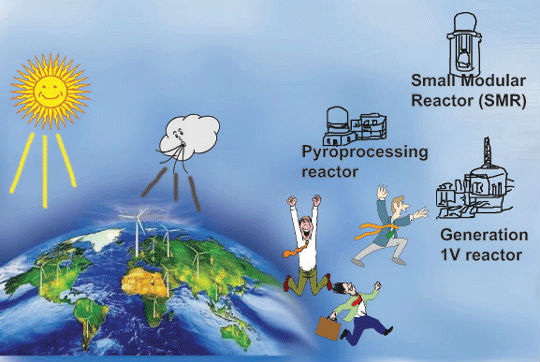
Generation III+ reactors were originally seen as a transition to even more advanced Generation IV reactors, but if Generation III+ reactors fail, the future for the nuclear industry looks bleak. Small Modular Reactors (SMRs) or radically new reactor designs, known as Generation IV and optimistically touted by some nuclear lobbyists as the key to de-carbonizing the global economy, are still decades away from commercial deployment. Meantime, existing nuclear plants around the world are edging toward retirement, with an average age that has been increasing steadily and now stands at 28.8 years……. http://thebulletin.org/deconstructing-nuclear-industry8565
Taiwan FDA cracks down on import from Fukushima
Taiwan has announced that those companies that falsified origin labels to bypass importation regulations on Japanese foods will be banned from future importation. They could also face $100,000 USD fines for their law violations.
It was also mentioned by the same source that Hong Kong is currently one of the largest importers of Japanese food products.
Source: Food Navigator Asia
http://www.foodnavigator-asia.com/Policy/Taiwan-FDA-cracks-down-on-imports-from-Fukushima
Removal starts of protective shroud over reactor at Fukushima No. 1
Tepco on Tuesday began dismantling the temporary shroud covering the wrecked reactor 1 building at the Fukushima No 1 nuclear plant.
Tokyo Electric Power Co. installed the cover in October 2011 to keep radioactive materials from dispersing.
Workers used a crane Tuesday to remove one of the six panels that form the shroud’s roof. Each panel is about 7 meters wide and about 42 meters long.
As the panel came off, the upper part of the reactor building could be seen for the first time since December, when part of the cover was temporarily removed. The building’s exterior was shattered in a hydrogen explosion in March 2011, in the first few days of the crisis.
Tepco plans to complete removing the shroud in fiscal 2016 and to clear debris and install equipment for the sensitive process of removing the 392 spent fuel assemblies currently lying in the building’s storage pool. That procedure is expected to begin in fiscal 2020.
Takao Kikori, a senior nuclear safety official in the Fukushima Prefectural Government, called for care to be taken in the dismantling work to ensure the safety of local people.
The utility plans to remove the second panel in early August or later and complete the removal of all six panels by the end of this year. Later it will remove the side panels and install windbreaker sheets ahead of clearing the debris.
The cover was installed as an emergency measure to keep radioactive dust from scattering. Tepco initially planned to dismantle it in fiscal 2013 or 2014 but was forced to delay the work to take additional dust control and other measures.
Source: Japan Times
http://www.japantimes.co.jp/news/2015/07/28/national/removal-starts-protective-shroud-reactor-fukushima-no-1/#.VbelrPmFSM9
THIS WEEK – news about nuclear and climate issues

Christina Macpherson’s websites & blogs
I muse on Toshiba’s ECO and his shame. He apologised for faking the accounts on nuclear (supposed) profits. However, he gained no personal income from this. It was done out of loyalty to the company. Wouldn’t happen in Australia, – they’d all do it for themselves here!
JAPAN: Fukushima:
- the Evacuees Situation .
- Confirmed equipment failure for ice wall – Ice wall building resumed.
- Fukushima fishermen OK TEPCO plan to release decontaminated water into sea.
- Tepco to start removing the largest debris from Reactor 3 pool / Worker “The most dangerous process”.
- Fukushima will likely go down in history as the biggest cover-up of the 21st Century.
- Tepco finally admitted irregular sinking in Fukushima plant.
- Fukushima scrub-down aims to make villages safe, although woods may remain no-go zones.
- Japanese Government – aided by the IAEA – puts nuclear victims at risk with forced resettlement scheme.
Crucial emergency test begins at Sendai nuclear plant ahead of upcoming restart on August 10, 2015.
No idea what to do with the radioactive trash, but Japan still plans to make more of it.
CEO of Toshiba took loyalty to the company too far – resigns over doctored accounts. How Toshiba cooked the nuclear books.
IRAN: Nuclear experts explain how the Iran nuclear deal cuts off pathways to nuclear weapons.
SWITZERLAND: Thorough analysis of Switzerland’s plan for exit from nuclear power.
CANADA: Canada Environment Minister to decide on Lake Huron nuclear waste plan before court case happens? Stephen Harper, Canada’s PM blocking action on climate change.
CLIMATE CHANGE: New UN document seeks to simplify Paris climate negotiations. Climate change danger hangs overChina’s coastal cities (and their nukes!).
INDIA: As Areva Goes Belly Up, Modi’s French Nuclear Plans May Start Unravelling.
USA: Nuclear Regulatory Commission seriously considering quack science of “radiation hormesis”! Potassium Iodide pills to be distributed to residents in area of nuclear facility.
FRANCE: quadruples carbon price, will move towards renewable energy.
About the Evacuees Situation in Fukushima

Fukushima has a population of a little above 2 millions people.
Out of which 118,862 have evacuated : 73,077 within the prefecture, 45,735 outside the prefecture, and current adresses unknown 50,
Four years after an earthquake and tsunami touched off the nuclear meltdown, Japanese Prime Minister Shinzo Abe is pressing to lift evacuation orders by March 2017 and cut off compensation to victims of the disaster by 2018. The move would allow—and some say force—tens of thousands of refugees to go back to their homes.
The pro-nuclear prime minister says that the move, proposed in June, is aimed at speeding up Fukushima’s “reconstruction.”
Under the national government guidelines, residents in government-ordered evacuation zones and “specific spots recommended for evacuation,” where radiation dosage is regionally high, are entitled to 100,000 yen each a month under TEPCO’s compensation for mental distress.
According to a partial estimate – there is no total public estimate of the cost of Fukushima disaster so far – but a partial estimate says it’s about $100 billion. Sixty percent of that has been spent for compensation measures. So compensating people for their loss of land and jobs is very expensive to the government and since the government has bailed out the company that ran the Fukushima reactors it’s basically now the government that is liable.
Tokyo’s preparing to declare some parts of the evacuation zone around the crippled Fukushima nuclear plant, a safe place to live. Tokyo wants people back in the area as a matter of reducing the overall cost of the disaster, However environmentalists warn many areas still show radiation levels 20 times the globally accepted limit.
I don’t think it is possible to clean up in the real sense of the word, meaning that you take away the added radioactivity that has been contaminating the soil, the roofs, everything. It’s impossible. So what you can do is you can reduce the radioactive contamination in some of the areas. You can take off soil; you can decontaminate what has been done by water sprayed. But keep in mind that 80 percent of Japan is mountains and in this area as well there is a lot of mountains, there is a lot of dense forest, there is absolutely no way even to slightly decontaminate that region. So you will not have a stable situation of contamination but it will move all the time and a new radiation will wash down from the mountains and forests into the other lands.
A number of opinion polls, surveys have shown that the percentage that is decided to go back might be around a fifth of all people evacuated, many people are still undecided and about half decided not to go back. People have to imagine – besides the radiation situation – what are they going back to. We should not forget that many of the homes in Japan are made of wood and they are basically in extremely bad shape and would have to be completely redone. There is not much to go back to and on top of it there is the radiation issue. There is also the issue of going back to their homes but what about their neighbors, what about collectivity, what about the services? So there are all kinds of other social issues besides the pure health issue.
Prime Minister Abe would like the people of Japan to believe that they are decontaminating vast areas of Fukushima to levels safe enough for people to live in. The reality is that this is a policy doomed to failure. The forests of Fukushima prefecture (80% of the land) are a vast stock of radioactivity that will remain both a direct hazard and source of potential recontamination for hundreds of years. It’s impossible to decontaminate.
The elimination of compensation would effectively force people back into an environment that is dangerous for their health.
Stripping nuclear victims of their already inadequate compensation, which may force them to have to return to unsafe, highly radioactive areas for financial reasons, amounts to economic coercion. Let’s be clear: this is a political decision by the Abe Government, not one based on science, data, or public health.
Residents across Japan have staged protests and filed lawsuits to block nuclear restarts, and polls show that, in the aftermath of the 2011 disaster, a clear majority of the Japanese public opposes nuclear power. In addition, surveys reveal low public confidence in the Japanese government and the Tokyo Electric Power Co.—the company behind the Fukushima Daiichi plant that continues to release radiation into the ecosystem.
Despite public opposition, Abe is aggressively pursuing a return to nuclear power. Earlier this month, Abe’s Liberal Democratic Party revealed that it aims to have 20 percent of the country’s electricity supplied by nuclear power by 2030.
Over four years after the triple reactor core meltdowns and exploded containment buildings at the Fukushima Daiichi nuclear power plant, the majority of the Japanese public has remained opposed to any nuclear restart. The country has been completely nuclear-free for nearly two years, thanks in large part to significant public opposition, in spite of the massive pressure from nuclear utilities and the Abe government on local city governments.
However, these utilities are massively powerful and the Abe government is wholly in bed with them.
In an effort to reduce public opposition, Abe has been pushing forward the pro-nuclear agenda to ‘normalize’ a nuclear disaster. If the public can be convinced that less than five years after the worst nuclear disaster in a generation, citizens can go home and return to life the way it was before the disaster – with no additional health risks – then that is a powerful argument against the majority of Japanese citizens who oppose nuclear reactor restarts.
The effort to minimize the impact of the disaster on the nuclear industry has been aided by the International Atomic Energy Agency (IAEA), an agency charged with the promotion of nuclear energy in its charter. The IAEA has sought to downplay the radiological risks to the population since the early days in 2011. In fact, it produced two documents that can be said to have laid the foundation and justification for Abe’s current policy of de facto forced resettlement.
The reality is this myth making requires that the people of Fukushima prefecture be the sacrificial lambs for the nuclear industry. This is not only wholly unjust, but is a violation of their human rights.
After all, this is not the confusion that ensues after a nuclear disaster. This is a thought-out plan of forcing people back into their heavily contaminated former homes, no matter what the cost – both in wasteful, ineffective decontamination of these areas and in human health risks.
Compounding the gross injustice of the Abe Government’s forced resettlement policy, by focusing on creating a myth of a return to normalcy – and therefore investing vast amounts in expensive and futile decontamination – it is therefore utterly neglecting the contaminated areas that were never evacuated. Rather than addressing this urgent need to reduce the radiation risks to these populations, whom are currently living in contaminated areas, the government is more interested in deceiving the public in Japan and globally by creating illusions.
What is clear is that the damage done to the people of Fukushima prefecture, and especially Iitate, is irreversible and irreparable. Their entire communities and way of life were destroyed by the nuclear disaster at Fukushima Daiichi, with no prospect for a safe return in the foreseeable future.
To keep the victims of the Fukushima Daiichi nuclear disaster in limbo, many crammed into tiny temporary housing cubicles, for nearly five years is inhumane. To force these citizens back into such heavily contaminated areas via the economic leverage the Government holds over them is a gross iniquity. And for the International Atomic Energy Agency to assist the Japanese Government in the propaganda war being waged on Fukushima victims not only undermines whatever credibility it may have, but amounts to it being an accomplice in a crime against the people of Japan.
Sources:
Fukushima nuclear disaster: ‘Radiation will wash down from mountains, forests into other lands’
http://www.rt.com/op-edge/310595-fukushima-nuclear-radiation-area/#.VbFcSy3oBmA.facebook
20 μSv/h still detected in Fukushima city
Revenir ou pas, le dilemme des évacués de Fukushima
http://www.liberation.fr/monde/2015/07/21/revenir-ou-pas-le-dilemme-des-evacues-de-fukushima_1351224
Japan Accused of Coercing Fukushima Refugees to Return to Unsafe Homes
Greenpeace: “The forests of Iitate are a vast stock of radioactivity that will remain both a direct hazard and source of potential recontamination for hundreds of years. It’s impossible to decontaminate.”
http://www.commondreams.org/news/2015/07/21/japan-accused-coercing-fukushima-refugees-return-unsafe-homes
Japanese Government – aided by the IAEA – puts nuclear victims at risk with forced resettlement scheme
http://www.greenpeace.org/international/en/news/Blogs/nuclear-reaction/Fukushima-nuclear-victims-forced-resettlement-Iitate/blog/53584/
Press Release: Greenpeace investigation exposes failure of Fukushima decontamination program
http://www.greenpeace.org/japan/ja/news/press/2015/pr20150721/20150721-Press-Release-Greenpeace-investigation-exposes-failure-of-Fukushima-decontamination-program-/
Confirmed equipment failure for ice wall – Ice wall building resumed
TEPCO confirms equipment failure for ice wall
The operator of the Fukushima Daiichi nuclear plant says the equipment to build an underground ice wall has stopped working due to power failure.
Tokyo Electric Power Company has been conducting trials to create a barrier of frozen soil around the reactor buildings that will keep groundwater from seeping into them.
An alarm was set off on Tuesday morning signaling trouble with a power panel at the plant. Workers then found white smoke rising from a power cable.
Officials at TEPCO also found that part of a system to send nitrogen into the containment vessels of 3 reactors had stopped working.
The equipment has been building the subsoil ice wall by pumping liquid coolant of minus 30 degrees Celsius into pipes installed in the ground around the reactor buildings.
The officials say they do not know when they can restart the equipment. But they say the ice wall will not melt for several days, even without coolant running from the equipment.
Source: NHK
http://www3.nhk.or.jp/nhkworld/english/news/20150728_25.html
Ice wall building resumes
The operator of the damaged Fukushima Daiichi nuclear plant has resumed building an underground ice wall after a brief equipment failure.
Tokyo Electric Power Company has been conducting trials to create a barrier of frozen soil around the reactor buildings to keep groundwater from seeping into them.
On Tuesday morning, workers responding to an alarm found smoke rising from a power cable.
They confirmed that all the equipment to build the ice wall had stopped working due to a power failure.
The staff found no problems with the equipment and resumed work in the afternoon using another power system.
The power failure also partially stopped a system that sends nitrogen into the containment vessels of 3 reactors. That work has been resumed as well.
TEPCO says the power cable that was emitting smoke had short-circuited.
The utility is investigating what may have triggered the problem.
Source: NHK
http://www3.nhk.or.jp/nhkworld/english/news/20150728_34.html
TEPCO removes canopy panel from Fukushima reactor N°1 building
 The interior of the No. 1 reactor building of the Fukushima No. 1 nuclear power plant can be seen from above after a canopy panel was removed on July 28.
OKUMA, Fukushima Prefecture–Tokyo Electric Power Co. on July 28 started removing a canopy covering a damaged reactor building at the Fukushima No. 1 nuclear plant to prepare for the eventual extraction of spent nuclear fuel inside.
Around 7 a.m., workers using a giant crane lifted away the first of six canopy panels, each measuring 40 meters long and 7 meters wide, from the No. 1 reactor building.
The 30-minute removal of the panel left a large hole in the canopy through which steel beams on the damaged upper part of structure could be seen from above. Workers closely monitored radiation levels in the surrounding areas during the removal process.
The utility plans to remove the remaining five panels from next week.
The removal of the canopy will allow TEPCO to clear debris inside the building, possibly in the latter half of fiscal 2016. That process should pave the way for the removal of nuclear fuel rods from the spent fuel pool in the building.
Before removing the canopy panel, the utility sprayed the inside of the reactor building with liquid resin through holes drilled in the cover to prevent radioactive materials from being stirred up during the dismantling work.
TEPCO initially planned to start removing the canopy panels from the No. 1 reactor building in summer 2014, but the schedule was delayed because a large amount of radioactive substances was released into the environment when the utility removed debris from the No. 3 reactor building in August 2013.
Even after the anti-scattering resin was sprayed into the No. 1 reactor building in May, removal of the canopy panel was postponed by a problem inside the building.
Source: Asahi Shimbun
http://ajw.asahi.com/article/0311disaster/fukushima/AJ201507280071
Fukushima fishermen OK TEPCO plan to release decontaminated water into sea

SOMA, Fukushima Prefecture–Fishermen in northern Fukushima Prefecture gave Tokyo Electric Power Co. the green light on July 27 to release radioactive groundwater from the crippled Fukushima No. 1 nuclear power plant into the ocean after it undergoes decontamination treatment.
The Soma-Futaba fisheries cooperative association approved TEPCO’s “subdrain plan” at a board member meeting after earlier approval by the Iwaki fisheries union, which brings together fishermen operating on the southern Fukushima coast, to back the plant operator’s plan.
After the decisions by the two fisheries unions, the Fukushima Prefectural Federation of Fisheries Cooperative Associations is expected to formally approve the subdrain plan in mid-August at the earliest.
To deal with the accumulation of contaminated groundwater at the plant, TEPCO and the central government implemented from May last year a “groundwater bypass” that intercepts clean groundwater before it flows into contaminated reactor buildings and reroutes it safely around the facility into the ocean.
Under the subdrain plan, the utility will pump 500 tons of water from 41 subdrain wells around the premises of the plant’s four crippled reactors each day. It expects that the amount of groundwater flowing into the reactor buildings will be drastically reduced, and the amount of contaminated water generated at the plant will be halved from the current levels.
The water will be released into the sea after it undergoes decontamination treatment to reduce cesium levels to below 1 becquerel and beta ray-emitting radioactive materials to less than 3 becquerels.
Because the decontamination equipment cannot remove tritium, water contaminated with the radioactive isotope that emits 1,500 becquerels or more of radiation will not be released into the sea.
TEPCO has sought the fisheries cooperatives’ approval of the subdrain plan.
But TEPCO’s delay in disclosing the flow of radioactive water into the ocean whenever it rained–which came to light in February–hampered negotiations with the fisheries unions, which felt the incident undermined their confidence in the utility.
At the meeting of the board members of the Soma-Futaba fisheries union, TEPCO officials explained that the subdrain plan was essential in reducing the flow of contaminated water into the ocean, according to Hiroyuki Sato, the union president.
The members who had remained strongly opposed eventually recognized the need for the subdrain plan and agreed to approve it, Sato said.
Based on requests from the two local fisheries cooperatives, the prefectural federation of fisheries unions will demand that TEPCO and the central government conduct periodic checks on waters emitted from the subdrain program.
The prefectural union will also request that a third-party watchdog monitor the process to prevent contaminated water from flowing into the ocean.
It will also request that TEPCO and the government to continue to provide compensation to local fishermen, while taking effective measures when the subdrain project causes harmful rumors about their products.
Source: Asahi Shimbun
http://ajw.asahi.com/article/0311disaster/fukushima/AJ201507280063
Scientist: Whale deaths off Alaska island remains mystery
« Other test results also are pending, however. A muscle-tissue sample is being tested for the possibility of radionuclides from the 2011 Fukushima nuclear disaster. Scientists also have looked at other possibilities, including sonar and seismic exploration. »
 In this June 8, 2015 photo, provided by the University of Alaska Fairbanks Gulf Apex Predator Prey project, a fin whale lies dead on Kodiak Island, Alaska. Researchers may never solve the recent deaths of 18 endangered whales whose carcasses were found floating near Alaska’s Kodiak Island, a scientist working on the case said Monday, July 27. (Bree Witteveen/University of Alaska Fairbanks via AP)
ANCHORAGE, Alaska (AP) — Researchers may never solve the recent deaths of 18 endangered whales whose carcasses were found floating near Alaska’s Kodiak Island, a scientist working on the case said Monday.
Samples taken from one of the 10 fin whales were at least a week old, which could throw off test results, said Kate Wynne, a marine mammal specialist for the University of Alaska Sea Grant Program. The carcasses of eight humpback whales also were found.
The carcasses of the marine mammals were discovered between Memorial Day weekend and early July. Most of the animals were too decomposed for sampling.
Both species of whales feed close together, and scientists speculate the animals might have eaten something toxic in waters that were significantly warmer than average at the time. One test came back negative for one toxin that would be present in harmful algal blooms, and another test is still pending, Wynne said.
“That’s my leading hypothesis,” Wynne said of an environmental toxin as a cause. “The carcasses unfortunately are getting older and less sample-able. So we never will find out what killed those whales, in my mind.”
Other test results also are pending, however. A muscle-tissue sample is being tested for the possibility of radionuclides from the 2011 Fukushima nuclear disaster. Scientists also have looked at other possibilities, including sonar and seismic exploration.
The deaths are an unusual occurrence, Wynne said. She said she’s never heard of anything similar occurring among large baleen whales in the U.S.
The National Oceanic and Atmospheric Administration also is looking into the deaths of a slightly larger number of whales over a larger area. NOAA is requesting the deaths to be designated nationally as an unusual mortality event, which would free of federal funding for further studying the deaths, NOAA spokeswoman Julie Speegle said.
Along with the dead whales, dead birds including murres and shearwaters were reported earlier in the investigation. Tests showed the shearwaters had a high parasite count and were starving, Wynne said. The murres were not sampled, but Wynne said those deaths could be part of a die-off that occurs periodically.
Source: Tucson.com, Arizona Daily Star
Construction of seawall begins in Naraha
Construction of a new seawall has begun in a town near the Fukushima Daiichi nuclear plant, as authorities prepare to lift an evacuation order covering the area in September.
The seawall in Naraha Town was seriously damaged by the March 2011 tsunami. Construction of a new one had been delayed as radiation from the nuclear accident restricted entry to the town for about a year and a half.
Local government officials took part in a groundbreaking ceremony in the town on Monday ahead of the construction. Three trucks unloaded soil at the site after the ceremony.
The new seawall will be about 1.8 kilometers long. It will be built more inland than the previous one.
Its height will be 8.7 meters above sea level. That’s 2.5 meters higher than the previous one.
The construction will cost about 67 million dollars, and will be completed by March 2018.
The town of Naraha has a population of about 7,400. The evacuation order, covering almost the entire town, is scheduled to be lifted on September 5th.
Town Mayor Yukiei Matsumoto says some residents still suffer from memories of the tsunami, but he expects the construction to give them relief about returning home.
Source : NHK
http://www3.nhk.or.jp/nhkworld/english/news/20150727_27.html
“Only Just Beginning…” – Arnie Gundersen & Paul Gunter on Fukushima’s Nuclear Crisis.
These two YouTube videos give a basic overview of the severity of the current situation in the ongoing Fukushima Nuclear Catastrophe. Recommended:
Paul Gunter of Beyond Nuclear, Fukushima June 2015:
See also: http://www.beyondnuclear.org/
Arnie Gunderson, July 2015:
See also: http://www.fairewinds.org/
1 This Month
Chernobyl: The Lost Tapes – A good documentary on Chernobyl on SBS available On Demand for the next 3 weeks– https://www.sbs.com.au/ondemand/tv-program/chernobyl-the-lost-tapes/2352741955560

of the week–London Campaign for Nuclear Disarmament

Tell the Ukrainian Government to Drop Prosecution of Peace Activist Yurii Sheliazhenko
To see nuclear-related stories in greater depth and intensity – go to https://nuclearinformation.wordpress.com
-
Archives
- April 2026 (114)
- March 2026 (251)
- February 2026 (268)
- January 2026 (308)
- December 2025 (358)
- November 2025 (359)
- October 2025 (376)
- September 2025 (257)
- August 2025 (319)
- July 2025 (230)
- June 2025 (348)
- May 2025 (261)
-
Categories
- 1
- 1 NUCLEAR ISSUES
- business and costs
- climate change
- culture and arts
- ENERGY
- environment
- health
- history
- indigenous issues
- Legal
- marketing of nuclear
- media
- opposition to nuclear
- PERSONAL STORIES
- politics
- politics international
- Religion and ethics
- safety
- secrets,lies and civil liberties
- spinbuster
- technology
- Uranium
- wastes
- weapons and war
- Women
- 2 WORLD
- ACTION
- AFRICA
- Atrocities
- AUSTRALIA
- Christina's notes
- Christina's themes
- culture and arts
- Events
- Fuk 2022
- Fuk 2023
- Fukushima 2017
- Fukushima 2018
- fukushima 2019
- Fukushima 2020
- Fukushima 2021
- general
- global warming
- Humour (God we need it)
- Nuclear
- RARE EARTHS
- Reference
- resources – print
- Resources -audiovicual
- Weekly Newsletter
- World
- World Nuclear
- YouTube
-
RSS
Entries RSS
Comments RSS
 nuclear-news